Category Archives: Journal of Pollination Ecology

A new study examines why data quality matters in plant–pollinator databases

Imagine trying to put together a giant puzzle where each piece represents an interaction between a flower and the insect, bird, bat or other animal that helps it reproduce. In recent years, scientists have gathered millions of these “puzzle pieces” into massive online databases, offering an unprecedented view of how plants and their pollinators connect around the world.

But there’s a catch: not every entry in these databases is equally reliable. Did the researcher actually watch the insect brush pollen against the flower’s stigma? Or did they simply note that the insect visited the blossom and assume pollination happened? Without clues about how each plant–pollinator link was documented, users can’t tell solid evidence from a best guess.

That’s why a growing number of projects are now tagging every interaction with a “data quality badge”—a short note explaining the exact kind of proof behind the record. For example:

  • Direct observation: A scientist observed an animal pollinating a specific flower.
  • Pollen analysis: Pollen grains matching that flower were found on the insect’s body.
  • Inferred pollinator: The animal regularly visits those flowers and shares similar traits with known pollinators.

Initiatives like the Pollinators of Apocynaceae Database and the Database of Pollinator Interactions (DoPI) have already adopted these quality flags. The upcoming USDA-NRCS PLANTS database is doing the same, and Brazil’s REBIPP network has developed a standardized set of terms—rooted in the global Darwin Core standard—to make sure everyone speaks the same “pollinator language.”

Why is this important? When you know the strength of the evidence behind each plant–pollinator link, you can:

  • Fill in real knowledge gaps with confidence.
  • Identify weak spots in our understanding that need more fieldwork.
  • Build better conservation plans, targeting the most critical pollinators for at-risk plants.

Ultimately, adding clear data-quality labels turns these massive collections of observations into powerful tools for science, restoration, and education. And that’s good news not only for researchers, but for every garden, farm, and wild ecosystem that depends on diverse and abundant pollinator communities.

These issues are explored in a new, open-access paper written by colleagues from Brazil, the USA and myself. In the paper we discuss the importance of data quality in plant-pollinator databases and suggest methodologies for improving it. Here’s the reference with a link to the paper:

Ollerton, J., Taliga, C., Salim, J.A., Poelen, J.H., & Drucker, D.P. (2025) Incorporating measures of data quality into plant-pollinator databases. Journal of Pollination Ecology 38: 151-160

This paper is a direct output from the EU-funded WorldFAIR Project in which I was involved, though we also acknowledge the SURPASS2 project as a precursor to this. Looking ahead, we’re also going to be adopting the recommendations from our paper in the new Butterfly Project (also EU-funded). Finally, by way of a teaser, I can tell you that our new paper will also be relevant to another large project in which I’m involved, that has successfully secured funding…but you’ll have to wait until later in the year to hear about that!

Thanks to Chris Taliga for the photo.
A new review of ‘Birds & Flowers’ in the Journal of Pollination Ecology

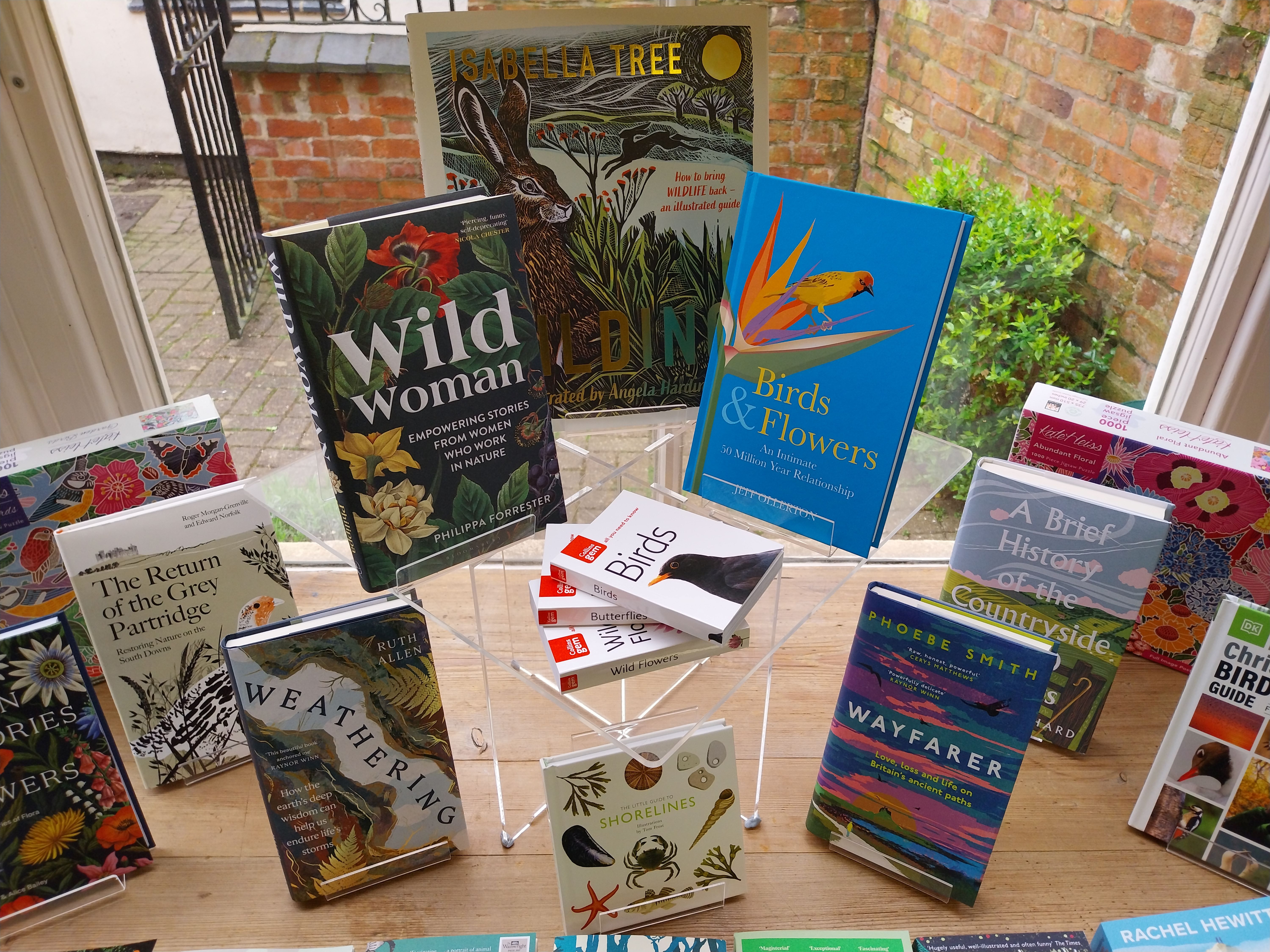
The reviews of Birds & Flowers: An Intimate 50 Million Year Relationship are starting to appear in blogs, magazines and journals. The latest, by Diane Campbell, has just been published in the Journal of Pollination Ecology and I’m so pleased that it was positive! I’ve only met Diane a couple of times at conferences but I have a lot of respect for her work. The review is fair and balanced, and gratifyingly enthusiastic, for example:

In this delightful book, [Ollerton] describes the ways that birds and flowers interact. As in his previous book, Pollinators & Pollination: Nature and Society, [he] takes a deeply personal approach to the subject. He combines anecdotes from his research travels around the world, to mountains of Kenya and Tanzania, the Andes of Peru, Brazil, and Nepal, among other places, with his contributions to, and masterful knowledge of, the recent literature…

The review is free to read and download from Journal of Pollination Ecology. I’m so glad that people are enjoying the book – if you’ve bought or borrowed a copy, please do leave a comment and let me know what you think.

Pollinator-flower interactions in gardens during the COVID-19 pandemic lockdown of 2020: the data paper has just been published!

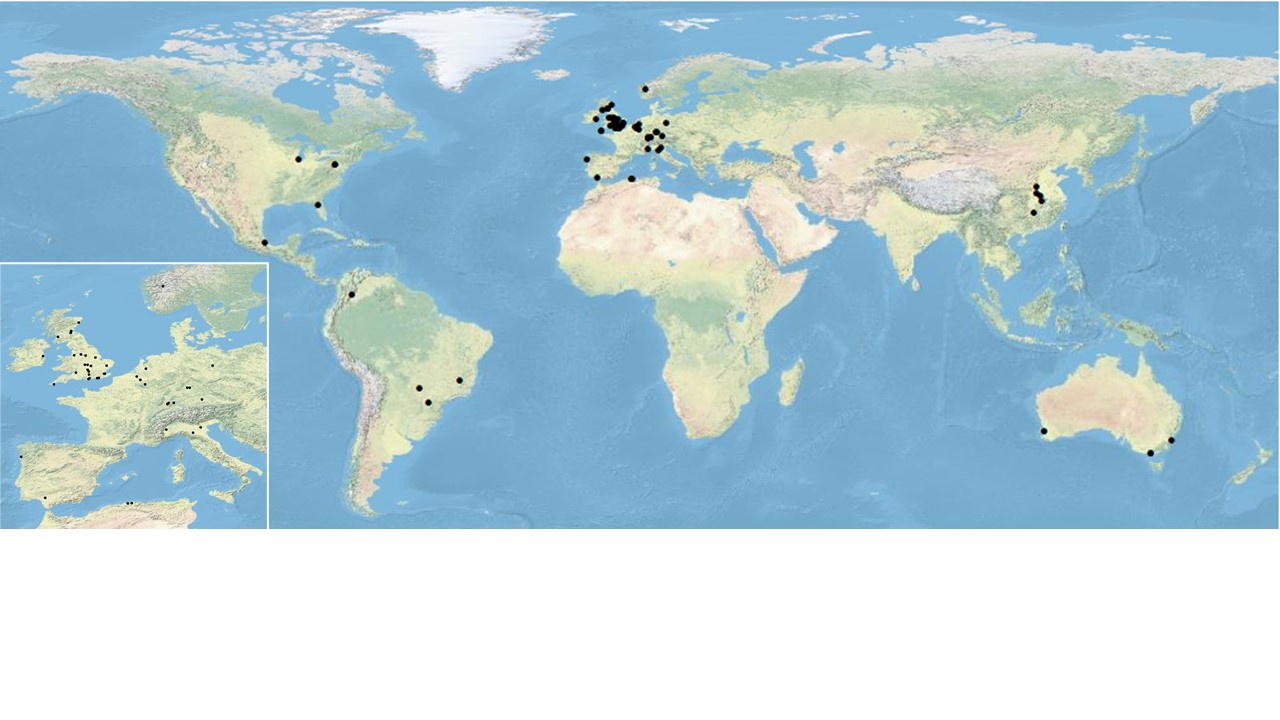
During the lockdown period of the COVID-19 pandemic in 2020, many pollination ecologists were stuck at home: universities and research institutes were closed and restrictions on travel meant that it was not possible to get out and do field work. In order to keep active and motivated, and to turn adversity into an opportunity, an ad hoc network of more than 70 researchers from 15 different countries (see the map above) decided to collect standardised data on the plant-pollinator networks in their own gardens and nearby public spaces.

When combined with information about location, size of garden, floral diversity, how the garden is managed, and so forth, this would provide some useful data about how gardens support pollinators. For those with kids at home it could also be a good way of getting them out into fresh air and giving them something to do!

Following discussions, several different protocols were instigated which depended upon the time available to the researchers, including one that mirrored the UK Pollinator Monitoring Scheme’s  FIT (Flower-Insect Timed) counts.

The resulting data set of almost 47,000 visits by insects and birds to flowers, as well as information about flowers that were never visited, is freely available and will be an invaluable resource for pollination ecologists. For example, analysing the links between ornamental flowers that share pollinators with fruits and vegetables such as apples and beans, will allow us to make recommendations for the best plants to grow in home gardens that can increase yields of crops.  

There’s an old saying about turning adversity into a positive outcome: “When life gives you lemons, make lemonade”, and the researchers were pleased to find that there’s one record of Citrus limon in the data set!

The paper describing the data set has just been published in the Journal of Pollination Ecology and you can download a PDF of the paper and the associated data for free by following this link.

Sincere thanks to all of my co-authors for their commitment to the project!

The chapter titles for my book: Pollinators & Pollination: Nature and Society

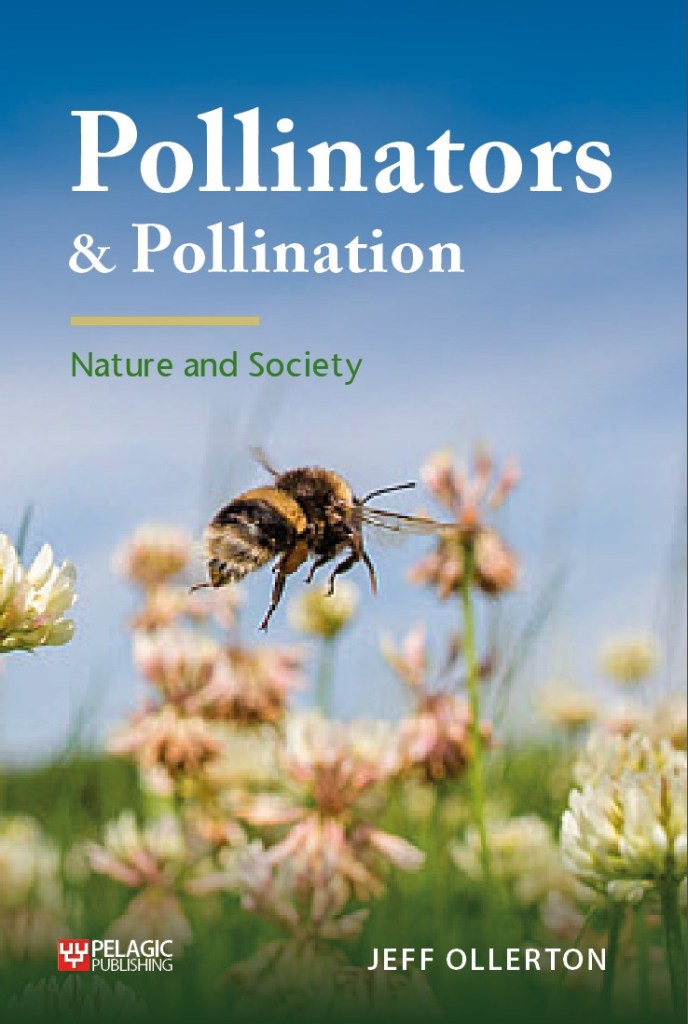
A few people have asked me about what’s covered in my book which is being published by Pelagic and is currently in production. Here’s the chapter titles:

Preface                                                                                                                        

1         The importance of pollinators and pollination                               

2         More than just bees: the diversity of pollinators                           

3         To be a flower                                                                                               

4         Fidelity and promiscuity in Darwin’s entangled bank                 

5         The evolution of pollination strategies                                              

6         A matter of time: from daily cycles to climate change                 

7         Agricultural perspectives                                                                        

8         Urban environments                                                                                  

9         The significance of gardens                                                                    

10      The shifting fates of pollinators                                                            

11      New bees on the block                                                                              

12      Managing, restoring and connecting habitats                                 

13      The politics of pollination                                                                        

14      Studying pollinators and pollination                                                  

As you can see it’s a very wide-ranging overview of the subject, and written to be accessible to both specialists and non-specialists alike. To quote what I wrote in the Preface:

“While the book is aimed at a very broad audience, and is intended to be comprehensible to anyone with an interest in science and the environment, and their intersection with human societies, I hope it will also be of interest to those dealing professionally with plants and pollinators. The subject is vast, and those working on bee or hoverfly biology, for example, or plant reproductive ecology, may learn something new about topics adjacent to their specialisms. I certainly learned a lot from writing the book.”

The book is about 100,000 words in length, lots of illustrations, and there will be an index. My copy editor reckons there’s 450 references cited, though I haven’t counted. I do know that they run to 28 pages in the manuscript, and that’s with 11pt text. All going well it will be published before Christmas.

Climate change at Christmas: did the hot, dry summer of 2018 cause the record-breaking prices of holly and mistletoe?

Over the past two festive seasons I have posted about the research we published assessing the auction prices of holly and mistletoe, two culturally important seasonal crops that are 100% pollinator dependent for berry production.  The first post was called Insect pollinators boost the market price of holly and mistletoe: a new study just published; the second was The holly, the mistletoe, and the pollinators: an update on an old story.

Follow those two links to get the full background to this research and a link to the original paper published in the Journal of Pollination Ecology.

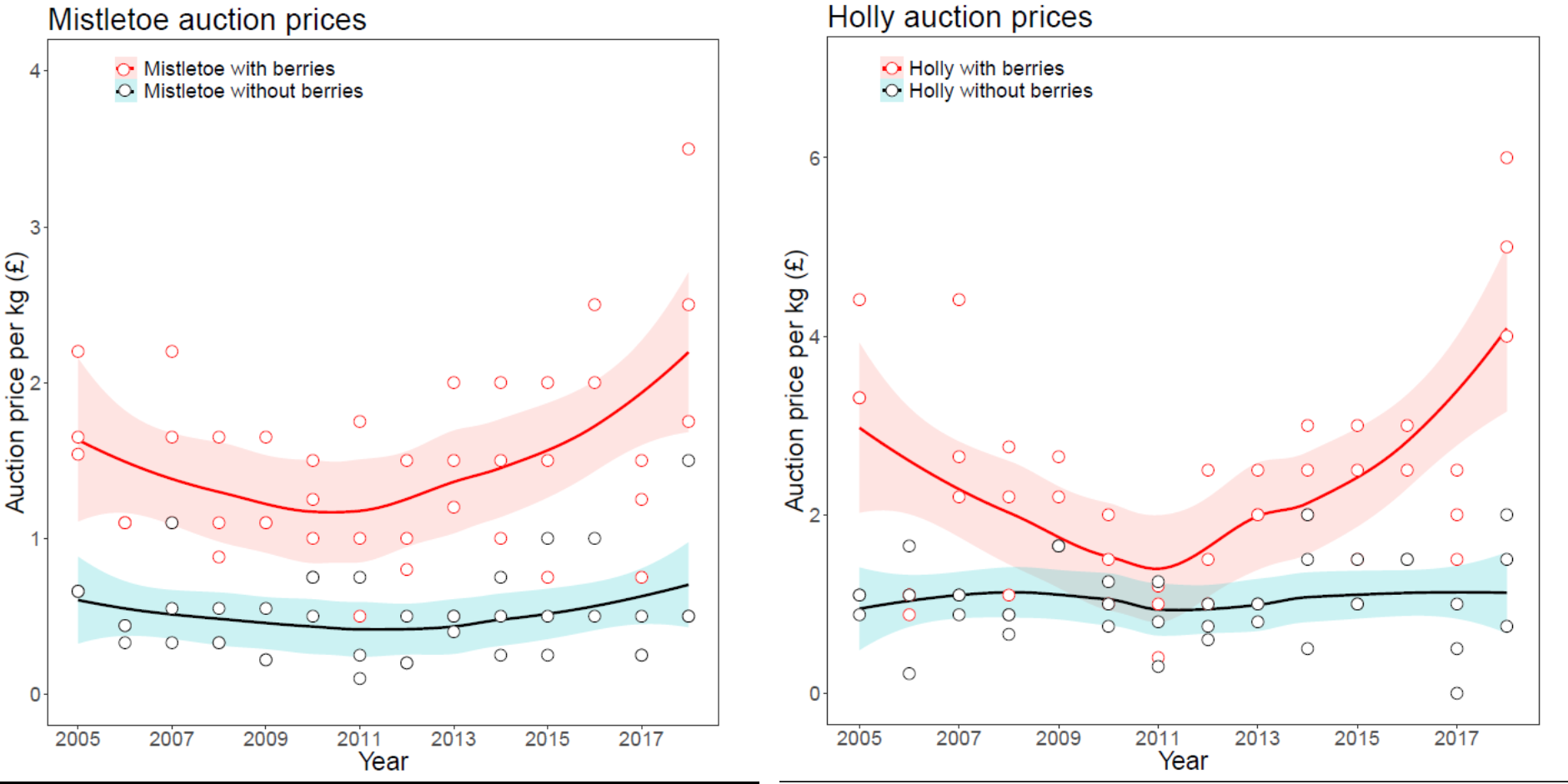
I’ve collated the auction prices for the 2018 season and added them to the time series data set, and it’s clear that something very interesting has occurred.  Both berried holly and mistletoe have achieved record-breaking average prices, whilst auction prices for material without berries have hardly changed at all.  Here are the updated graphs; each data point is the average price per kilo paid at an auction:

Holly and mistletoe prices 2018

So what’s gone on this year?  What could have affected the auction prices?  One interesting possibility is that the long, dry summer of 2018, a likely consequence of climate change, has negatively affected berry production in these two species.  This could come about if the holly or the mistletoe host trees are water stressed and shed part of their berry crops.  It’s unlikely to be a consequence of too few pollinators as these species flower too early in the year to have been affected by the dry weather.   We have more work planned in the future using these data and this will be an interesting question to address.

Yesterday I popped out to do some Christmas shopping and tried to buy mistletoe at a local garden centre.  That’s the second time I’ve tried this year (the first was at a nearby green grocer’s) and the second time that I’ve been told that they have none because it’s very expensive this year and not worth stocking.  That seems predictable from the wholesale auction results I’ve just described.  Has anyone else in the UK had similar experiences this year?

The British holly and mistletoe market is relatively small and clearly seasonal, and probably not worth more than a few millions of pounds each year.  However it seems to be very sensitive to external factors and may be a microcosm for how some crops, at least, might respond to future extreme weather brought about by climate change.  Brexit might also have an effect in the coming years as we import a large amount of mistletoe from northern France.  But then Brexit is going to have an effect on large areas of British society…..

On that sour note, Happy Christmas to all of my readers, however you voted in the referendum.  I hope you have a restful holiday, spending it as you wish, with the people you want to!  And if you, or someone you know, are spending the festive season on your own this year, take a look at Karin’s latest blog post:  Preparing a Christmas Just For You.

Journal of Pollination Ecology – new volume announced

JPE homeHeaderLogoImage_en_US

The latest volume of the international, peer-reviewed  Journal of Pollination Ecology, of which I’m an editor, has just been published.  All papers are free to download – here’s a link.

Unlike most open access journals there are no page charges for authors, so if you are a researcher involved in pollination ecology, please consider submitting a manuscript.


Pollination syndromes: a brief update on recent developments, and news that Stefan Vogel has passed away

Bee on Salvia - OBG - November 2015

In a recent post I discussed the current debates about “pollination syndromes”, which I described as “sets of flower characteristics that have repeatedly evolved in different plant families due to the convergent selection pressures applied by some groups of pollinators”.

The authors of the Ecology Letters paper that I discussed (Rosas-Guerrero et al. 2014) have now replied to our original critique of their approach and you can read that reply (Aguilar et al. 2015) in Journal of Pollination Ecology by following this link.  Readers can make up their own minds as to whether the authors have responded adequately to our concerns, but I just briefly wanted to raise three points.

The first is that much of these authors’ response is focused on an earlier paper of ours (Ollerton et al. 2009) rather than on our critique per se.  Nick Waser, Mary Price and myself have therefore written a second response that deals with some of the misunderstandings apparent in that piece; it’s available to download here.

The second point relates to the existing literature on pollination syndromes and pollinator effectiveness used by Rosas-Guerrero et al. (2014); as we demonstrated in our critique this is clearly a biased data set that is skewed towards groups of plants with relatively large flowers, “interesting” pollination systems, and text book examples of classical pollination syndromes such as bird and bat pollination.  Researchers who study flowers and their pollinators choose their subjects based on a whole set of criteria, but random selection is not one of them.  However as far as we can judge, Aguilar et al. (2015) seem to be arguing that drawing strong, “universal” conclusions about syndromes from this highly biased data set is perfectly acceptable because of the statistical rigour of formal meta-analysis. I’d re-iterate our main point that no amount of statistical rigour and exhaustive literature searching can take into account inherent biases within the primary data (i.e. the literature itself).

Finally, Aguilar et al. (2015) claim that “human disturbance of natural habitats has caused disruptions in patterns of mutualistic interactions that may partly explain the presence of the diverse pollinator assemblages that are frequently found in pollination studies”.   It seems to us to be disingenuous to argue that pollination syndromes are universally valid and then to essentially concede that there are lots of wrong visitors (“secondary” pollinators), and to explain that with the idea that everything is disturbed in the Anthropocene.  If this is really the case then we probably need to throw out a lot of our understanding of evolutionary ecology as a whole, not just studies of plant-pollinator interactions.

Clearly we don’t accept this argument and in fact it has echoes of arguments that have been going on since the 19th century (Waser et al. 2011): more than 130 years ago the Darwinian biologist Hermann Muller was criticising Federico Delpino (one of the original architects of the idea of pollination syndromes) for ignoring the “wrong” flower visitors.  Interestingly, Delpino was a fundamentally a teleologist who saw purpose in nature, expressed through (as he perceived them) the highly ordered relationships between flowers and pollinators.

As we discuss in the Waser et al. (2011) paper, Stefan Vogel was another prominent pollination biologist, and advocate of the importance of pollination syndromes, who was also fundamentally teleological in his thinking.  I was sad to learn that Stefan passed away very recently, in what I believe is his 90th year.  I was fortunate enough to meet Stefan at a symposium in honour of his 80th birthday at the International Botanical Congress in Vienna in 2005.  He graciously signed my copy of The Role of Scent Glands in Pollination and said, with a twinkle in his eye, “you and I have probably got a lot to discuss”. Unfortunately we never got the opportunity, but later I dedicated our 2009 paper on Ceropegia pollination to him “in honour of his pioneering work on pollination” in the genus.  Stefan’s legacy of research, particularly in the tropical regions of South America, is a fitting tribute to his memory.

Pollination syndromes clearly continue to attract much interest in the scientific literature, and just this week I was intrigued to see a paper by John Benning showing that a species of Ericaceae that looks as though it “should” be pollinated by bees is actually moth pollinated.  No doubt the discussion of the evolutionary extent and predictability of pollination syndromes will continue for some time to come.

The Walls of the Garden

Old stone walls have always held a fascination for me.  Growing up in Sunderland I’d see substantial walls made of the local Magnesian Limestone, rough cut blocks often patterned with impressions and ridges that to my child’s mind looked like exotic coral or fossils of weird animals.  A friend reliably informed me that an odd shaped piece we had found was a “fossil dog’s skull”.  I didn’t believe him.  Even then I was skeptical of unsubstantiated claims.  When I understood more about the intriguing geology of that part of England I discovered that these patterned rocks were of chemical rather than biological origin, but no less interesting for that.

Walls then seemed to become a continuing back drop to my life.  As an undergraduate my final year research project involved clambering around on the 17th century walls of Oxford University’s Botanic Garden, surveying the plants that had naturally colonised them.  The wall flora was an odd mix of exotics and natives, many of which had no obvious means of dispersing on to the walls.  I joked at the time that perhaps the dispersal was by gardeners and ecologists working on the walls.  That may have been close to the truth.

Stone walls provide unique habitats for many plants and animals as they mimic rocky out crops and cliff faces.  Perhaps less obviously, so too do brick walls, as I saw on Friday morning which I spent having a grateful break from the office with Hilary Erenler.  Hils is one of my research students and is funded by the Finnis Scott Foundation.  For the past couple of years she has been surveying the pollinating insects found in the gardens of large country houses around Northamptonshire and into adjacent counties.  Our county is particularly rich in these estates (it’s known as the County of Spires and Squires, a nod to both the large number of churches and the historical pattern of land ownership).  So on Friday we conducted a couple of surveys of some large walled gardens on two private estates.  Amongst other things we measured the lengths and heights of the walls, counted a sample of the density of mortar holes that may have been nest sites for solitary bees such as Osmia rufa.  We also returned some soon-to-emerge bee cocoons to artificial nests as part of an experiment Hils is conducting.

For reasons of privacy and security I’m not allowed to divulge which estates we visited.  But I can say that the walled gardens were fascinating relics of a time when such large households and their staff relied on these sheltered,  productive patches to provide food twelve months of the year.  One garden had retained an avenue of some of the oldest espalier apple trees I’ve ever seen.  Thick and gnarled and festooned with epiphytic lichens and mosses, they must have been planted at least 100 years ago.  Whether the household appreciated it or not, the wild native bees that the walls hosted, and those coming in from the surrounding estate, also played their role by pollinating these apples, as well as pears, cherries, nectarines, beans, squashes and other insect reliant crops.

On the way back to the car we found a small patch of violas, primulas and celandines in a dry spot under a tree.  We counted at least 6 species of bees: two bumblebees (Bombus species); at least two (possibly three) andrenids, including the tawny mining bee Andrena fulvaAnthophora plumipes; and what may have been a Colletes species.  The bumblebees were queens, of course, filling up on nectar to give them energy to look for nesting sites.  But some of the solitary bees were males and exhibited their typical behaviour of patrolling the flowers in search of females with whom to mate.

Back in the office that afternoon I dealt with emails.  One was an unexpected communication from Steve Buchmann regarding a recent paper I’d published with Nick Waser and Andreas Erhardt in Journal of Pollination Ecology.  The paper deals with the historical development of some ideas pertaining to pollination syndromes.  I’ve admired Steve’s work for a long time; together with Gary Nabhan, Steve wrote the now classic book Forgotten Pollinators which can be credited with playing an important role in raising the issue of pollinator extinctions and declines in the public and scientific consciousness.  The JPE paper gives a historical perspective on understanding the interaction between Solanum flowers and their pollinators.  The long standing assumption is that Solanum flowers are pollinated by bees that vibrate their bodies at a particular frequency to shake out the pollen from the anthers, a reproductive strategy termed “buzz pollination”.   Steve was writing to tell me that many years ago he published a paper showing that some Solanum species are buzz pollinated by hoverflies.  I’d missed that paper so am looking forward to reading it when he scans it and sends me a PDF.  It worries me that much of the primary literature from before the widespread use of information technology is going to get neglected like this, because it’s not easy to access electronically.  Depositories that have started to archive older work, such as JSTOR, Biodiversity Heritage Library and Google Books, are great, but there’s still a lot of material to retro-input into these systems.

On the way to invigilate a one hour test for my second year Habitat Ecology and Management students later that afternoon I bumped into Muzafar Hussain, another of my research students, who had been out surveying solitary bees in the urban centre of Northampton.   His first year of surveying in 2011 revealed a surprisingly high diversity of species and he’s continuing that work this year.  Some of these bees are nesting in old stone and brick walls in the back streets behind the main thoroughfares of the town and are exploiting wall plants as pollen and nectar sources, a topic that’s being researched by Lorna, one of my final year project students.  Everything was coming back to walls today…..