Category Archives: Ecosystem services

Nature and national security: some recent developments

Back in January I wrote a post entitled Pollination as a matter of national security, prompted by the UK Government’s rather extraordinary publication of this report: Global biodiversity loss, ecosystem collapse and national security: a national security assessment. My argument was that although pollination is obviously not a national security issue in the traditional sense of defending a country against hostile states or terrorist attacks, the loss of pollinators threatens food production, supply chains and the functioning of ecosystems upon which societies ultimately depend. In other words, it is a threat to national resilience, which we can define a country’s capacity to anticipate, withstand, adapt to, and recover from major shocks or long-term pressures while maintaining the essential functions of society, the economy, government, and critical infrastructure. I’ll come back to this national-level framing at the end.

I concluded that post by suggesting that the real question was not whether pollination could be regarded as a national security issue, but whether national security thinking had fully adapted to the biological foundations on which societies depend.

Since January, several reports, papers and policy developments have convinced me that this is becoming a much wider and more serious discussion. Pollination is only one component of it. What is emerging is a view of nature itself as part of the infrastructure that makes societies secure.

Nature as infrastructure

Perhaps the clearest expression of this idea comes from a paper by Bradley Cardinale, Emmett Duffy and Rod Schoonover entitled Nature’s role in national security, published this summer in the journal Nature-Based Solutions.

The authors consider five areas where ecological disruption can generate national security risks: food security, water scarcity, health security, protection from natural disasters, and environmental crime. In each case, environmental degradation can create or amplify economic and social pressures which, under some circumstances, translate into political instability and security problems.

What I particularly like about the paper is its use of the term “natural infrastructure”. Functioning ecosystems, the authors argue, operate rather like electricity grids, communications systems and transport networks. They provide services and, crucially, buffer societies against shocks.

This is an important shift in emphasis. We usually talk about the benefits or ecosystem services that nature provides. Both are perfectly useful concepts, but describing ecosystems as infrastructure changes how we think about their loss. A degraded wetland is then not simply a conservation problem. It may represent the deterioration of flood-control infrastructure. Similarly, a damaged watershed is a weakening of water-security infrastructure, whilst a decline in pollinators can be understood as damage to parts of our food-production infrastructure.

Seen in that way, restoring ecosystems begins to look less like discretionary environmental spending and more like preventive investment in resilience.

Rewilding as defence

An even more striking example appeared in April in The RUSI Journal, published by the Royal United Services Institute, one of the world’s oldest defence and security think tanks.

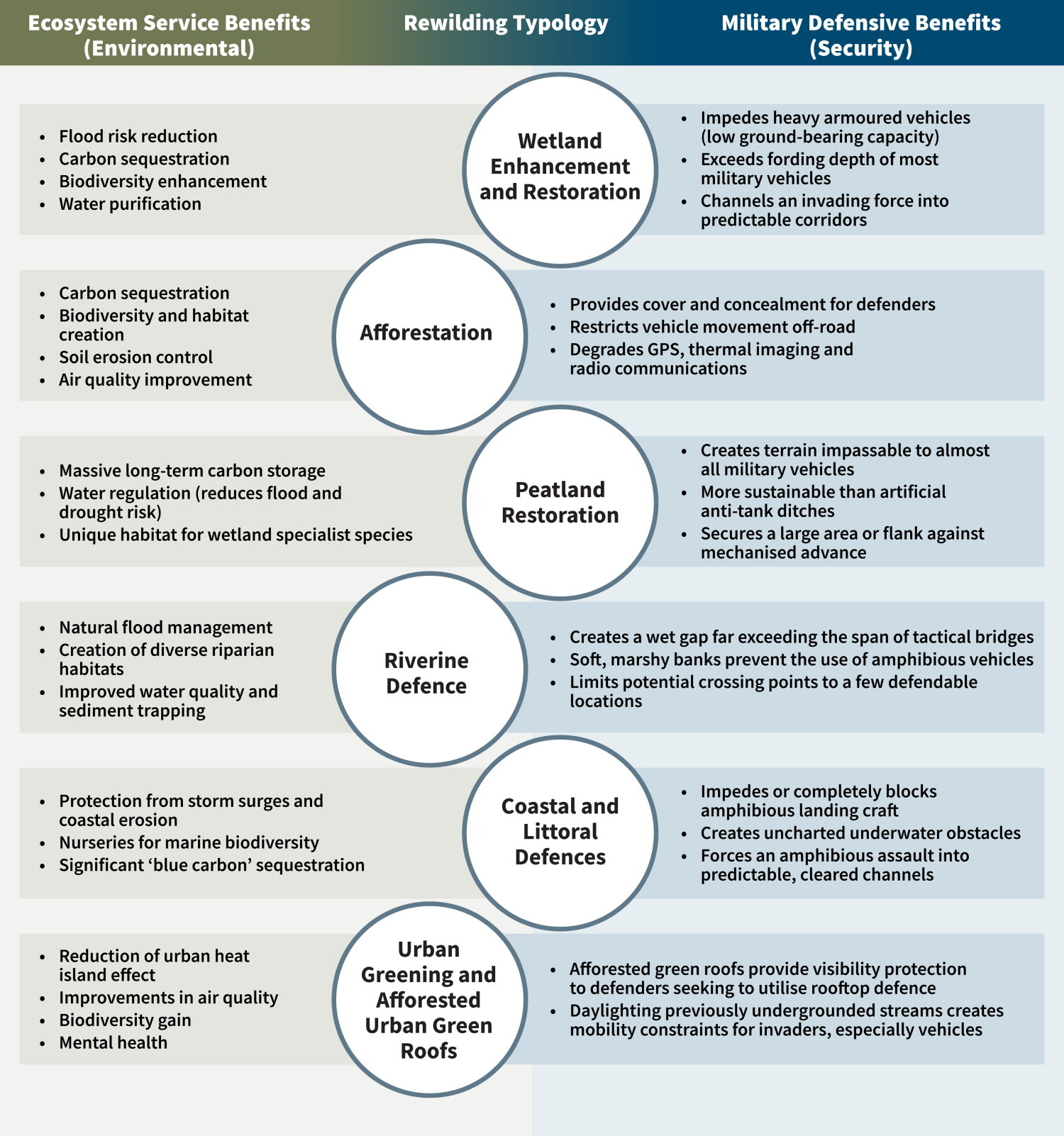
Sam Jelliman, Brian Schmidt and Alan Chandler propose the concept of “defensive rewilding”: strategically restoring forests, wetlands, peatlands and other ecosystems in locations where they could also impede, divert or slow an invading military force. This infographic from the paper outlines their argument quite persuasively:

At first sight this sounds rather eccentric, but the logic is straightforward. Military planners since at least the time of Alexander the Great have always understood that terrain matters. At the Battle of Issus in 333 BCE, for example, Alexander fought the much larger Persian army on a narrow strip of land between the sea and the mountains, restricting its ability to manoeuvre and helping to neutralise its numerical advantage. Wetlands, forests, rivers, hedgerows and boggy ground can also provide advantage by restricting visibility and movement and make the passage of vehicles and troops much more difficult. We have seen examples of this during the war in Ukraine, just as we did in numerous earlier conflicts.

What Jelliman and colleagues suggest is that this defensive function could sometimes be deliberately combined with ecological restoration. Rewetting peatlands or restoring floodplains near vulnerable borders might simultaneously enhance biodiversity, store carbon, reduce flooding and create terrain that is difficult for armoured vehicles to cross. A win-win for both national defence and this wider concept of national security.

Clearly this is a concept that requires much more testing, and ecological restoration should not be distorted into a military land-management programme. There would also be difficult questions about land ownership, farming and the ecological appropriateness of particular interventions. But that is almost beside the point. The fact that rewilding is now being seriously discussed in a defence journal as potential security infrastructure is itself significant.

It challenges the assumption that spending on defence and spending on nature necessarily compete with one another, though we’ve long known that some areas of the UK than are used by the military are also important wildlife sites, Salisbury Plain being an obvious example, the largest known expanse of unimproved chalk grassland in north-west Europe precisely because it is used for military purposes rather than being converted to agriculture.

Losing nature can make countries poorer and less financially secure

Another recent study extends the argument into the financial system. Matthew Agarwala and colleagues published a paper in Nature Ecology & Evolution examining how losses of ecosystem services might affect the creditworthiness of nations, which is the degree to which lenders and investors judge that a country’s government can reliably meet its debt obligations in full and on time. Their model incorporated scenarios involving the deterioration of three services – wild pollination, marine fisheries and tropical timber – into sovereign credit assessments for 23 countries containing about 5.5 billion people.

The numbers produced by their scenarios are striking. Under partial ecosystem collapse, additional annual sovereign interest payments across the countries studied could reach around US$162 billion. India and China alone could experience tens of billions of dollars in increased annual debt-servicing costs. Some countries could suffer very large reductions in GDP.

These are modelled scenarios rather than predictions, of course, and the ecological assumptions that sit beneath such economic modelling need careful scrutiny. But the basic mechanism is compelling.

Governments depend upon functioning economies to raise taxes, borrow money and respond to crises. If ecological degradation reduces agricultural output, fisheries production and other forms of economic activity, the fiscal position of a country deteriorates. Borrowing becomes more expensive precisely when governments may need to spend more money adapting to environmental change.

This summer’s record breaking drought and wildfires in the UK, and the promise of further disruption due to a mega El Nino event, make such adaptation all the more urgent. Nature loss can create a nasty feedback loop: ecological degradation weakens economies, weaker economies have less capacity to invest in resilience and restoration, and that in turn increases their vulnerability to further ecological degradation.

All of this moves biodiversity loss well beyond the conventional environmental policy box and there are positive signs that these ideas are becoming embedded in government.

The UK security machinery is beginning to respond

In June the UK Government established its first Climate Security Taskforce, bringing together experts from the security, military, academic and environmental communities. Significantly, its remit explicitly encompasses not only climate change but nature loss. This is important as many of us have been arguing for years that you cannot disentangle the two and they should not be treated as separate domains of environmental concern. The Government’s announcement stated that climate change and nature loss are drivers of instability, economic disruption and security risk, and linked the Taskforce to the broader approach set out in the UK’s National Security Strategy.

That matters because one of the perennial problems with biodiversity has been institutional fragmentation. Nature tends to be dealt with by environment ministries, while finance ministries think about economic stability, agriculture departments think about food production, health ministries think about disease, and defence and intelligence agencies think about security. But ecological risks do not respect departmental boundaries.

A collapsing ecosystem can simultaneously affect food prices, water availability, infectious disease risks, migration, trade, government finances and geopolitical stability. Treating each of these consequences separately misses the common ecological cause.

China, where I’ve been spending quite a bit of time in recent years, provides an interesting comparison with the UK. Whereas the explicit framing of biodiversity loss as a national-security risk is relatively new in Britain, China has for some years incorporated “ecological security” into its much broader concept of national security. Its first national-security white paper, published in 2025, explicitly listed ecological security alongside military, economic, food, resource, biological and other forms of security. This has been reinforced in 2026 by China’s new Five-Year Plans for ecological protection and the construction of a “Beautiful China”, both of which link biodiversity conservation, ecosystem restoration and resilience to national ecological security. Chinese researchers have meanwhile developed an extensive literature on “ecological security patterns”, identifying the habitats, corridors and ecosystem services required to maintain resilient landscapes. The Chinese use of the term is not identical to the emerging British idea of “nature security”, but the overlap is striking: both ultimately recognise that the security of a state rests partly upon the ecological systems that support it.

From an intelligence assessment to Parliament

The UK Government’s January assessment has continued to reverberate through Westminster. On 2 September, the House of Commons Library published a new briefing ahead of a parliamentary debate on the assessment. The briefing does not constitute a new security assessment, but usefully brings together the original findings with subsequent parliamentary scrutiny, stakeholder responses and government action, including the creation of the Climate Security Taskforce and a new three-year Nature Security R&D Programme.

The briefing rightly emphasises an important point about the original security assessment. It is based on a reasonable worst-case scenario. It is not predicting that these ecosystems will suddenly collapse tomorrow. National security planning routinely explores high-impact possibilities precisely because governments need to understand what would happen if severe events occurred.

On 3 September the subject was then debated in Westminster Hall, following a cross-party initiative led by Adrian Ramsay MP. Whatever ultimately comes from that debate, this represents an interesting political transition. In January, biodiversity loss appeared in a national security assessment, and eight months later it had become the subject of a dedicated parliamentary research briefing and debate. That does not mean that nature has suddenly moved to the centre of British security policy. Far from it. But it suggests that the language of nature security is beginning to acquire institutional traction.

And then there is food

As if to underline the point, today (4 September) the National Audit Office has published a report on the Resilience of the food supply chain to disruptions. This is not primarily a biodiversity report. It examines the resilience of the UK food system to a much wider range of threats, including extreme weather, energy disruption, cyber-attacks, pandemics and animal and plant diseases. But there is a direct connection with the nature-security debate.

Food is one of the UK’s 13 designated Critical National Infrastructure sectors. The NAO concludes that although the food system has proved resilient to previous disruptions, the ability of the sector to withstand catastrophic events has not been tested and that Defra’s actions have not yet been sufficient to ensure resilience to such events.

This brings us back to where I started in January with pollination. Food security is not simply about having enough farms. It depends on soils, water, climatic stability, pollinators, pest regulation, genetic diversity, functioning supply chains, energy, transport and international trade. Pull at enough of those threads simultaneously and resilience begins to unravel.

So where does this leave us?

What interests me most about these developments is that they come from very different intellectual and institutional directions. Ecologists are describing ecosystems as natural infrastructure. Economists are beginning to incorporate biodiversity into sovereign financial risk. Defence researchers are thinking about restored landscapes as strategic assets. Government has created a taskforce dealing with climate and nature security. Parliament is discussing ecosystem collapse as a national security problem. And the National Audit Office is warning that one of the country’s most fundamental pieces of critical infrastructure, its food system, needs greater resilience.

These are not separate conversations, they are pieces of the same emerging picture.

There is, of course, a danger in pushing the national-security framing too far. Nature deserves protection for many reasons that have nothing to do with its usefulness to states, economies or human societies. I would be very uncomfortable with biodiversity conservation being justified solely because it makes Britain, or any other country, more secure.

But that is not the argument I am making. Rather, I think we have systematically underestimated the extent to which national security is built upon ecological stability. Forests, soils, rivers, wetlands, oceans, pollinators and the millions of other species that make ecosystems function are not scenery surrounding the human economy, they are part of its physical foundations.

Earlier this year I argued that conserving pollinators could be regarded as a form of preventive security investment. The developments since then suggest that the same argument can be made much more broadly: Protecting and restoring nature is not an alternative to investing in national resilience. It is one of the ways in which we invest in national resilience.

That feels like an idea whose time has arrived.

There is, however, an obvious limitation to framing all of this in purely national terms. Modern states are embedded in a globalised economy in which food, energy, raw materials, finance, manufactured goods and ecological impacts cross borders continuously. A country may strengthen the resilience of its own landscapes and infrastructure yet remain highly vulnerable to ecosystem degradation, crop failures or political instability elsewhere. In that sense, “national resilience” is also dependent on international ecological resilience: security at home increasingly rests on the stability of environmental and economic systems far beyond national borders. Just as individual trees in a forest are dependent upon one another to create the conditions in which all can thrive, regardless of species, so the too are countries mutually dependent. The leaders of the world’s nations would do well to remember that.

Press release: Europe risks a crisis if it fails to halt pollinator loss, researchers warn

NOTE FROM JEFF: This press release came out at the start of the week and I am involved in two of the EU-funded projects that are mentioned, Butterfly and ProPollSoil, and I’m a co-author of the White Paper.

For immediate release

University of Bergen Brussels office, Rue Guimard 1040, Brussels, Belgium, 22 June 2026

Eight EU-funded research consortia warn that Europe risks a crisis if it fails to halt pollinator loss. Their solution: a roadmap to reverse wild pollinator decline and protect managed bees.

new White Paper from eight major EU-funded pollinator projects warns that the resilience of Europe’s vital societal functions and food security are at stake if the EU fails to halt and reverse wild pollinator declines, and to support managed pollinators. Behind the report is an interdisciplinary team of 135 leading researchers with expertise ranging from ecosystem ecology, pollinator ecology, ecological economics, social science, environmental history, behavioural psychology, political science, and environmental law. The report flags the EU’s siloed governance structures and resulting policy incoherence as the major barrier to pollinator restoration. It states that the EU and its Member States urgently need to act by making Pollinator Stewardship an explicit and measurable top-priority across policies on agriculture, environment, chemicals, research and innovation, trade, finance, planning, legislation, and education.

The report diagnoses the looming pollinator crisis as arising from a dysfunctional relationship between humans and nature. Seeing humans as separate from and superior to nature, and thinking of nature as an object for human use as a resource, reinforces institutional structures that exploit nature for short-term individual and material gain. This leads to unsustainable agricultural practices that risk jeopardising the resilience of the ecosystems on which humanity critically depends.

There is more at stake than food security, the report warns. Indeed, many of Europe’s economic supply chains and sectors depend on pollination of flowering plants. Think of medicinal plants, food supplements, biomass energy crops, biomaterials, textiles, fodder, cosmetics, decoration, art, culture, and tourism.

The report also highlights the low pollinator literacy of key societal actors whose daily actions can make the difference for pollinators. It advocates mandating ecoliteracy in the education of professionals in all key sectors that affect pollinators and their habitats.

According to the report’s lead author, Professor Jeroen van der Sluijs, many people whose actions affect pollinators and their habitat are already doing their best to help save the bees. But most lack the literacy to understand how their practices cascade into pollinator loss.

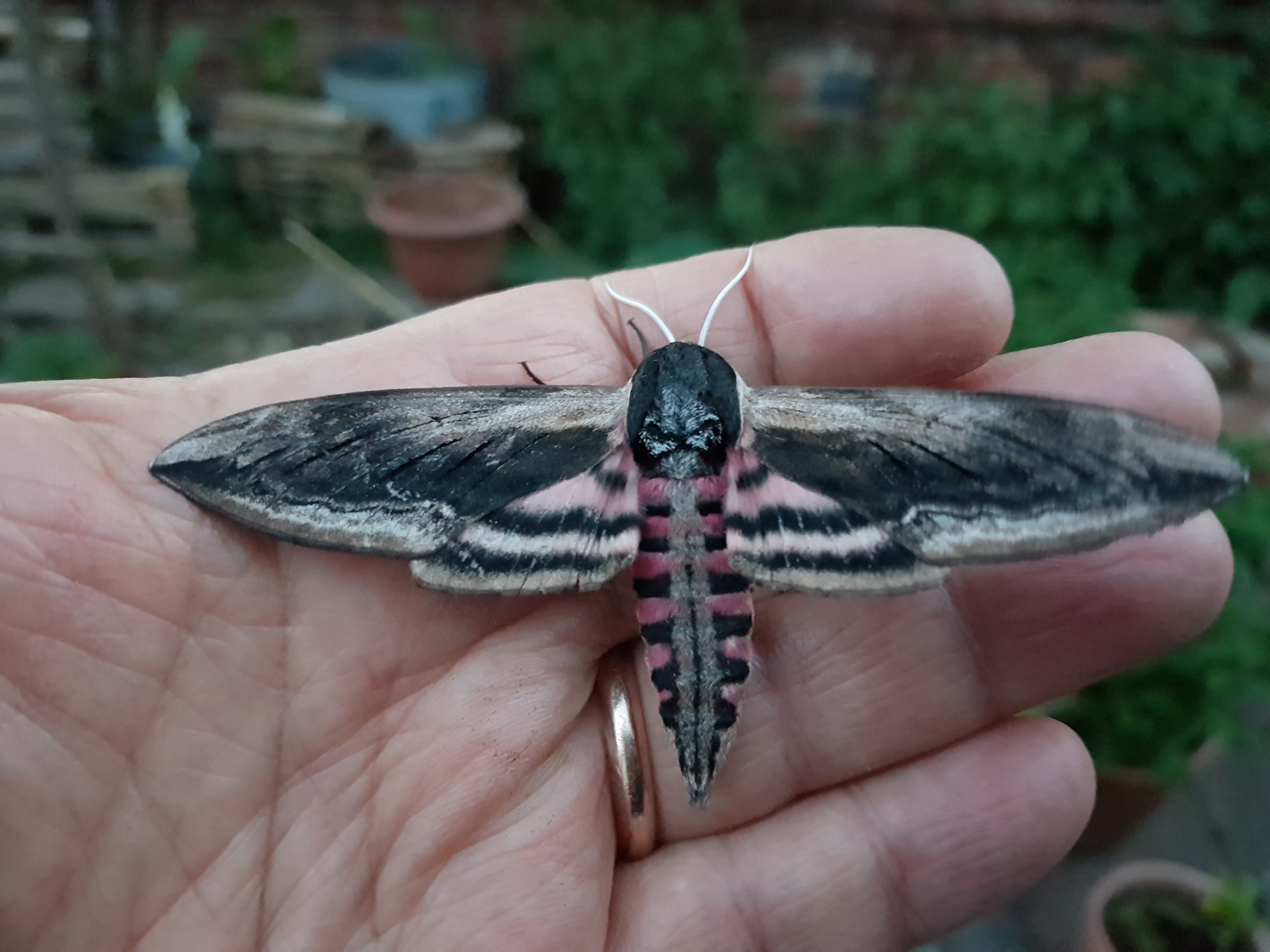
“Many farmers plant wildflower strips along their fields, but almost no one knows that some moths are more effective pollinators than honeybees. These little creatures of the night, clothed in velvet and moonlit dust, need host plants for their larvae, not only flowers. Host plants for pollinating hoverflies, beetles and moths are missing in most seed-mixtures for flower strips.”

Avoiding a scenario in which Europe is hit by a pollination crisis requires addressing the EU’s functioning and moving away from its siloed governance structures. This requires addressing fragmented responsibilities across sectors, top-down policy design, and weak coordination among administrations that currently hinders effective pollinator restoration. According to the authors, the conflict between short-term production goals and the need to maintain pollination services as a public good must be solved as soon as possible.

The report ends with a detailed roadmap of 15 urgent, evidence-informed recommendations for action that, when fully implemented, can reverse pollinator decline in Europe.

Full White Paper: https://zenodo.org/records/20715669

Pollinator decline for legal professionals – a new article explains this complex and important issue

Oxford University Press recently commissioned me to write a piece for their Expert Essentials series, which is designed to give legal professionals an overview of complex topics that increasingly affect their clients, their sectors, and the regulatory landscape in which they operate. My contribution, on pollinator decline, has now been published. That might seem an unusual topic for lawyers at first glance. Pollinators are usually framed as part of a conservation story: bees, butterflies, hoverflies, birds, bats and other animals that help flowering plants to reproduce. But as I argue in the article, pollinator decline is no longer just an ecological issue. It is becoming a legal, financial, and governance issue too.

Why should the legal profession care? Because pollinators sit right at the intersection of biodiversity loss, food security, business risk, and emerging regulation. Many of the crops that underpin global supply chains depend on animal pollination, especially fruits, nuts, oilseeds, coffee, and cocoa. If pollination services become less reliable, then yields can fall, costs can rise, and supply chains can become more fragile. That matters not only to farmers and food companies, but also to the lawyers advising businesses on disclosure, due diligence, liability, investment risk, and long-term resilience. As the article explains, pollinator decline has moved from being a “silent natural problem” to a boardroom issue with concrete legal hooks.

This shift is being driven in part by the rapid development of biodiversity-related reporting frameworks and regulatory expectations. Companies are increasingly expected to understand both how they depend upon nature and how they affect it. Pollinators are a particularly good example of this “double materiality”. A business may depend on pollinators for the crops and raw materials it sources, while also contributing to pollinator decline through land-use change, pesticide use, pollution, or habitat destruction. Under emerging sustainability and disclosure frameworks, that is no longer something that can be waved away as somebody else’s problem.

The legal implications are broad. They include advice on compliance with biodiversity reporting rules, contracts and due diligence across supply chains, litigation and liability relating to environmental harm, and the interpretation of new standards around nature-related risk. My article discusses frameworks such as the Kunming–Montreal Global Biodiversity Framework, the EU’s Corporate Sustainability Reporting Directive and associated standards, and the Taskforce on Nature-related Financial Disclosures. Together, these are helping to pull biodiversity, including pollinators, out of the margins of environmental discussion and into mainstream conversations about governance, accountability, and fiduciary responsibility.

What makes this especially important for legal professionals and others is that pollinator decline is not caused by one simple factor. It is driven by a web of interacting pressures: habitat loss, agricultural intensification, pesticides, diseases, invasive species, pollution, and climate change. That complexity makes it difficult to regulate neatly, but also impossible to ignore. For lawyers, this is precisely the kind of scientifically complex, economically significant, and legally fast-moving issue that is becoming more common in the age of ESG (Environmental, Social and Governance) reporting, biodiversity disclosure, and nature-related financial risk.

In other words, this is not about turning lawyers into ecologists. It is about ensuring that legal professionals understand enough of the science to advise clients intelligently in a world where biodiversity loss is becoming embedded in regulation, reporting, corporate strategy, and litigation. Pollinators may be small, but the consequences of losing them are anything but.

Here’s the full reference with a link to the article:

Ollerton, J. (2026) Pollinator decline: a global issue with social, legal, and economic implications. In: Kimutai, J. & O’Donovan, C. (eds), Environmental Science; in De Silva, S. et al. (eds), Expert Essentials (Oxford, online edn, Oxford Law Pro) https://doi.org/10.1093/9780198972877.003.0080.

Here’s the abstract:

This article aims to equip legal professionals with an understanding of pollinator decline, why this is important to business and finance, and the relevant emerging standards and regulatory frameworks. Pollinators – including insects, birds, reptiles, and mammals – are essential to the reproduction of most flowering plants and underpin global food production, biodiversity, and ecosystem functioning. Global evidence shows that many pollinator populations are declining, raising concerns that extend well beyond conservation into agriculture, business, and the economy. These declines are driven by multiple interacting pressures, including habitat loss, intensive land use, pesticide exposure, parasites and diseases, invasive species, pollution, and climate change. No single factor is responsible, and responses must therefore be systemic. Pollinators support the yields and quality of many food crops, particularly fruits, nuts, and seeds that are central to human nutrition, contributing hundreds of billions of dollars annually to global agricultural output. Yet pollinators are often overlooked in risk assessments, despite growing evidence that their decline can disrupt supply chains, increase production costs, and weaken ecosystem services. Monitoring data reveal mixed but troubling trends, though data gaps remain substantial, complicating assessment and response. Regardless of uncertainties, pollinator decline is increasingly relevant to law and governance. Emerging global and regional frameworks – including biodiversity targets, sustainability reporting standards, and nature-related disclosure initiatives – are bringing pollinators into corporate reporting, due diligence, and liability discussions. As a result, pollinators are no longer solely an ecological concern, but a material issue for businesses, investors, and legal professionals navigating sustainability, disclosure, and long-term risk.

Join me for two webinars exploring the links between biodiversity, pollinators and the UN Sustainable Development Goals

The diversity of life on Earth, and the interactions between the species that make up that diversity, are fundamentally important to the functioning of ecosystems and to human well-being. Yet these connections are often poorly appreciated, despite the fact that biodiversity supports everything from food production and clean water to climate resilience and human health.

At the end of March and the end of May I will be presenting two lunchtime webinars which explore this as part of the Biological Recording Company’s Skills for Ecology series. These talks will look at how biodiversity in general, and plant–pollinator interactions in particular, connect to the United Nations Sustainable Development Goals (UN SDGs), showing why the conservation of nature is central to a just, healthy, and sustainable future.

Here are the dates and the links for booking:

  1. Biodiversity and the UN Sustainable Development Goals – Tuesday 31st March, 12:30-14:00
  2. Plant-Pollinator Interactions and the UN Sustainable Development Goals – Tuesday 26th May, 12:30 to 14:00 

I look forward to seeing some of you there!

Pollination as a matter of national security

In these turbulent times it’s hard to know where to focus one’s gaze. Do we concentrate on Ukraine? Greenland? Venezuela? Sudan? China? Russia? The Middle East? The rise of the far right and religious fundamentalism? Cyber security? Global organised crime? If it’s confusing and worrying for the average person, imagine what it’s like for national security services who are charged with assessing and responding to such threats.

It is increasingly recognised that national security in the 21st century extends beyond military threats to encompass food systems, economic resilience, public health, and the stability of critical ecological infrastructure. Which is why it’s no surprise to learn that the UK’s national security organisations – MI5 and MI6 – have just released a report titled Global biodiversity loss, ecosystem collapse and national security: A national security assessment.

The report has been covered by The Guardian under the heading “Biodiversity collapse threatens UK security, intelligence chiefs warn” and the article begins:

The global attack on nature is threatening the UK’s national security, government intelligence chiefs have warned, as the increasingly likely collapse of vitally important natural systems would bring mass migration, food shortages and price rises, and global disorder.

This framing explicitly treats biodiversity loss not as an environmental side issue, but as a systemic risk multiplier capable of amplifying existing geopolitical, economic, and social stresses. I have emboldened two words in that quote in order to emphasise that this report is very much about the state of the world, not just the state of my home country. In an interconnected global food and trade system, ecological collapse in one region rapidly propagates elsewhere through markets, migration, and political instability. What happens globally has implications locally; not just food security from imports, but “geopolitical instability, economic insecurity, conflict, migration and increased inter-state competition for resources”, to quote the report.

Where does pollination fit into this? As far as I know, pollination has never been singled out in security analyses, yet it underpins many of the very food systems, rural economies, and ecosystem functions upon which national resilience depends. In my book Pollinators & Pollination: Nature and Society I mention “food security” about ten times, as I firmly believe that loss of pollinators is a serious issue to food supply chains. The report similarly states that:

UK food production is vulnerable to ecosystem degradation and collapse. Biodiversity loss, alongside climate change, is amongst the biggest medium to long term threat to domestic food production – through depleted soils, loss of pollinators, drought and flood conditions.

But I would go further and state that loss of pollination by insects and vertebrates poses a national security threat that extends far beyond just their role in food production.

Let me explain why I believe this.

The Global biodiversity loss report focuses on six different parts of the world (and seven ecosystems) that it considers “critical ecosystems…at risk of collapsing”. One of those areas – the coral reefs of Southeast Asia – is not directly dependent upon pollinators to support its long-term functioning. Two areas – the boreal forests of Canada and Russia – are dominated mainly (though not exclusively) by wind-pollinated trees, such as conifers and birches. The other four ecosystems, however, have a dependence on pollinators that ranges from significant to enormous. These are the Mangroves of Southeast Asia and the Himalayas (both significant) and the Amazon Rainforest and Congo Basin (both enormous).

What do I mean here by words like “significant” and “enormous”? What is my measure? What I mean is the number and proportion of flowering plants—particularly dominant species, often trees—that underpin most ecosystem functions, such as photosynthesis and carbon storage, and that rely to some extent on pollinators to reproduce.

In high elevation areas such as the Himalayas, I know from experience that it’s common for there to be a mixture of wind and animal pollinated species in communities. Similarly, mangrove species include some which are wind pollinated – see this review for example. In other words, the long-term population stability of Himalayan woodland and Southeast Asian mangrove forests is, in large part, dependent on the pollinators that those ecosystems support. If those pollinators were lost, in the long term (decades to centuries) wind-pollinated trees would dominate and biodiversity would significantly decline.

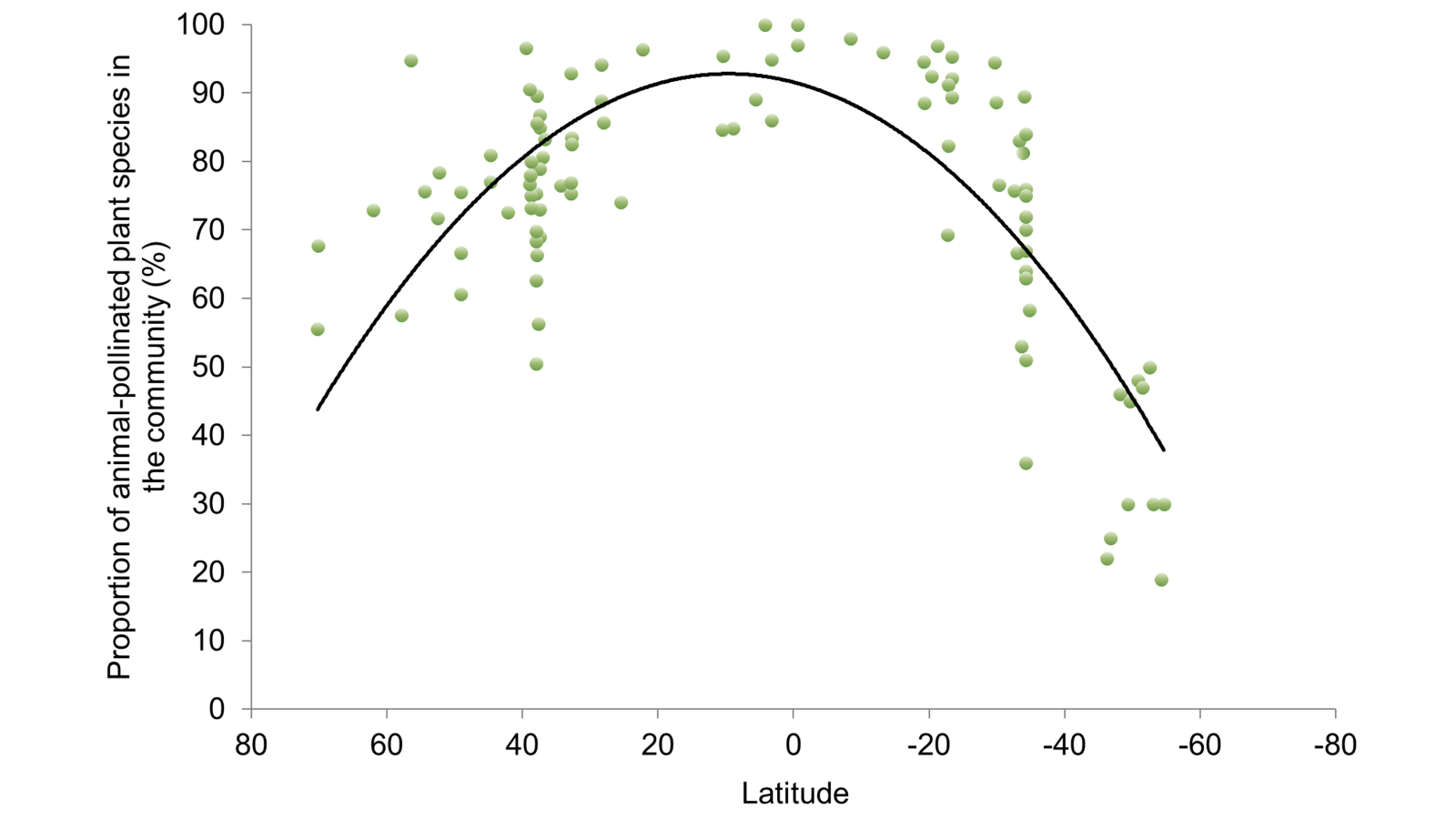
The situation in the forests of tropical South America and west Africa is rather different. Not only is there a much greater diversity of plant species in these ecosystems, but in these largely rainforest regions, often all of them are animal pollinated, as we showed in this paper and which is reflected in the graph above, which comes from my book. Lose the pollinators and we lose the long-term viability of ecosystems that provide regionally- and globally-vital functions.

Ultimately, if we are to protect pollinator communities, and the ecosystem functions and services they provide, we need to take their conservation more seriously than we do at the moment. Framed this way, pollinator conservation becomes a form of preventive security investment, analogous to maintaining flood defences or safeguarding energy and cyber infrastructure. The European Union’s Pollinator Initiative and the projects that it supports, including Butterfly and ProPollSoil in which I’m involved, is a good example. Likewise, there are policy movements appearing in China, as I recently reported. But biodiversity conservation is a global issue, as the security services report makes clear, and that applies to pollinators.

There will no doubt be sceptics out there who think that I am over-playing the importance of pollinators and pollination. That’s fine, it’s good to have these debates. Pollination is not a national security issue in the narrow, traditional sense of defence against hostile actors. But in the 21st-century security landscape, where threats are systemic, slow-burning, and ecologically grounded, pollination loss clearly qualifies as a strategic risk to national stability and resilience.

In that respect, I believe that the question is not whether pollination is a national security issue—but whether national security thinking has yet fully adapted to the biological foundations on which societies depend.

Pollinators need more space and 10% habitat is not enough says a new study just published in Science

Pollinators such as wild bees, butterflies, and hoverflies are in trouble worldwide. A major new study, published in Science and led by Gabriella Bishop and other scientists at Wageningen University & Research, shows that the oft-quoted figure of 10% semi-natural habitat in farmland landscapes is far too little to safeguard pollinators. Instead, the evidence points to a need for somewhere between 16% and 37% habitat cover, depending on the type of pollinator, if we are serious about halting declines. Suitable habitats include hedgerows, patches of woodland, species-rich grasslands, and flowering margins, and as a general rule, hoverflies need less of it whilst bumblebees and butterflies require more.

I was fortunate to play a part in this global assessment, contributing an unpublished dataset collected with my former PhD student, Sam Tarrant, who studied plant-pollinator interactions on restored landfill and established grassland sites. Seeing those data joined with dozens of other studies from around the world underlines something we have known for years: no single dataset, however carefully gathered, can give us the whole picture. To really understand what is happening to biodiversity—and to design conservation solutions that work—we need these kinds of global, mega-author syntheses that draw together evidence from many landscapes, taxa, and approaches.

The message from this analysis is stark but hopeful. More habitat means more pollinators, across all groups. Richer habitats with abundant flowers give an additional boost, but the overriding priority must be to increase the sheer area of natural habitat in farmed landscapes. Small-scale fixes like wildflower strips offer short-term benefits, but without enough space they can’t deliver recovery at scale. Long-term, secure habitat creation—on the order of decades, not seasons—is what pollinators, farmers, and ecosystems need.

Although the policy debate in Europe provided the backdrop for this study, the lessons (and the data) are global. Wherever agriculture dominates, the health of pollinator populations—and by extension our food security and biodiversity—depends on our willingness to give these insects the space and quality of habitat they require.

Looking ahead, we need to think bigger and work together. That means more international collaborations, more sharing of data, and more commitment to long-term solutions that transcend borders. The image at the start of this post is from my trip back to China in July this year. I deliberately chose it because, as you’ll see from the map below which is taken from the paper, there was no suitable data available for the study from that country. Or from Africa. Or Australasia. Or from most of tropical South America. That shows that as pollination ecologists we need to coordinate more in advance on these types of syntheses, and maximise the value of the kinds of data that we collect. The main take away from this study, however, is that if we want to reverse the declines in biodiversity, scientists, policymakers, businesses, farmers, and citizens all have a role to play. Pollinators remind us that nature is interconnected and global—our conservation efforts must be, too.

Here’s the full reference with a link to the study:

Bishop, G.A., Kleijn, D., Albrecht, M., Bartomeus, I., Isaacs, R., Kremen, C., Magrach, A., Ponisio, L.C., Potts, S.G., Scheper, J., Smith, H.G., Tscharntke, T., Albrecht, J., Badenhausser, I., Åström, J., Báldi, A., Basu, P., Berggren, N., Beyer, N., Blüthgen, R., Bommarco, B.J., Brosi, H., Cohen, L.J., Cole, K.R., Denning, M., Devoto, J., Ekroos, F., Fornoff, B.L., Foster, M.A.K., Gillespie, J.L., Gonzalez-Andujar, J.P., González-Varo, J.P., Goulson, D., Grass, I., Hass, A.L., Herrera, J.M., Holzschuh, A., Hopfenmüller, S., Izquierdo, J., Jauker, B., Kallioniemi, E.P., Kirsch, F., Klein, A.-M., Kovács-Hostyánszki, A., Krauss, J., Krimmer, E., Kunin, B., Laha, S.A.M., Lindström, Y., Mandelik, G., Marcacci, D.I., McCracken, M., Monasterolo, L.A., Morandin, J., Morrison, S., Mudri Stojnic, J., Ollerton, J., Persson, A.S., Phillips, B.B., Piko, J.I., Power, E.F., Quinlan, G.M., Rundlöf, M., Raderschall, C.A., Riggi, L.G.A., Roberts, S.P.M., Roth, T., Senapathi, D., Stanley, D.A., Steffan-Dewenter, I., Stout, J.C., Sutter, L., Tanis, M.F., Tarrant, S., van Kolfschoten, L., Vanbergen, A.J., Vilà, M., von Königslöw, V., Vujic, A., WallisDeVries, M.F., Wen, A., Westphal, C., Wickens, J.B., Wickens, V.J., Wilkinson, N.I., Wood, T.J., Fijen, T.P.M. (2025) Critical habitat thresholds for effective pollinator conservation in agricultural landscapes. Science 389: 1314-1319

Here’s the abstract:

Biodiversity in human-dominated landscapes is declining, but evidence-based conservation targets to guide international policies for such landscapes are lacking. We present a framework for informing habitat conservation policies based on the enhancement of habitat quantity and quality and define thresholds of habitat quantity at which it becomes effective to also prioritize habitat quality. We applied this framework to insect pollinators, an important part 5 of agroecosystem biodiversity, by synthesizing 59 studies from 19 countries. Given low habitat quality, hoverflies had the lowest threshold at 6% semi-natural habitat cover, followed by solitary bees (16%), bumble bees (18%), and butterflies (37%). These figures represent minimum habitat thresholds in agricultural landscapes, but when habitat quantity is restricted, marked increases in quality are required to reach similar outcomes.

Have we passed “peak honey bee” in Britain? An update of hive numbers for World Bee Day 2025

Since publishing what I believe are the most comprehensive data on the number of honey bee hives in Britain in my book Pollinators & Pollination: Nature and Society, I’ve posted occasional updates on my blog as more recent data become available. I believe that the last of these was in 2022 – see Have honey bees declined in Britain? An update of the numbers – so it feels like it’s time for another. And what’s more appropriate than to post this on World Bee Day 2025?!

Rather than the complex, multi-coloured graph that I’ve produced in the past, I’ve decided to streamline the presentation and simply fit a smoothed LOESS line with a 95% confidence ribbon to the (sometimes contradictory) data points, in order to show the overall trend (see the graph above). If you compare it with the 2022 update you’ll see that the general message from the data is the same: a peak in numbers of hives in the late 1940s (which may or may not be an artefact*), then a steep decline into the 1970s and 1980s, followed by recovery from the 1990s onwards. Note that I’ve removed the two very early data points because I don’t think that they are at all accurate.

The most recent data (2015 to 2024) come from the National Bee Unit which relies on beekeepers to submit their own records, but are probably no less accurate than some of the other data that’s available! If we take a close look at that time period we see something interesting – honey bee hive numbers are decreasing:

What are we to make of this? In an analogy with peak oil, why do we seem to have passed ‘peak honey bee’? If this is a real pattern (and only time will tell) I suspect that it’s because of at least two factors. The first is that interest in beekeeping reached a peak in the early 2020s, after which some initial enthusiasts discovered that beekeeping is actually quite a technical and demanding hobby, and gave it up. The second factor is that word has spread that, globally, managed Western honey bees are not declining, and too many bee hives in an area can have negative impacts on other, wild pollinators. This may have convinced those people who were persuaded by “Save the Bee” campaigns to take up the hobby, to give up beekeeping.

There could well be other reasons that I’ve not considered and, as always, I’d be interested in your thoughts – please leave a comment below. I’ll finish by saying that I make no judgement on this. There’s no doubt that there are too many hives in some parts of Britain, especially in London, and if the trend I describe reduces the pressures on wild pollinators, that’s a good thing. At the same time, honey bees are important agricultural pollinators in some circumstances, especially where there’s mass-flowering crops that require huge numbers of pollinating bees to be available over a short time period. And I like honey as much as the next person.

Happy World Bee Day to my readers!

*There’s a long-standing suggestion that beekeepers in the post-war years inflated the number of hives that they kept in order to obtain a larger sugar ration.

Project ‘Butterfly’ takes flight in Paris!

At the end of last week I joined researchers from across Europe and beyond who gathered at Norway House on the campus of the Cité Internationale Universitaire de Paris, for the official launch of the EU-funded project ‘Butterfly’. This bold, four-year interdisciplinary initiative is focused on the future of pollinators and the ecosystems that depend on them, and is one of a series of projects that have spun out from the EU’s Pollinators Initiative.

Over two days of lively discussion, the project’s key themes came into focus: the urgent need to restore pollinator populations, the value of integrating ecological and economic data, and the importance of including people—farmers, citizens, policymakers—in shaping practical, long-term solutions to pollinator decline.

Connecting Science and Policy

I arrived in Paris early Wednesday evening to be fresh for the meeting’s opening session the following morning. This set the stage by grounding the project in real-world policy contexts, including the EU Pollinators Initiative and the Nature Restoration Law. These frameworks are increasingly recognising the vital role pollinators play not just in nature, but in the economy and public well-being.

Nine Work Packages, One Mission

Participants got a crash course in the project’s structure through short presentations from each of the nine work packages. These range from ecological modelling and ecosystem valuation to resilience thinking, communication tools, and understanding human relationships with pollinators. A strong emphasis was placed on collaboration—how each work package connects with the others and contributes to the project’s broader vision. For example, one of my roles will be to work closely with Maria Clara Castellanos and her team at the University of Sussex on the integration of the UK-focused Database of Pollinator Interactions (DoPI) and the Global Biotic Interactions (GloBI) platform, to create an online European Atlas of Plant-Pollinator Associations (EuroAPPA). This in turn will feed plant-pollinator data into the modelling and economic valuation tasks in some of the other work packages.

Living Labs and Global Perspectives

One of the most exciting aspects of the Butterfly project is the network of “Living Labs” being established across Europe and the test sites in overseas territories. From Murcia to Martinique, each site represents a unique ecological and cultural landscape with its own pollination challenges. These test sites, some of which are shared with a parallel project called RestPoll, will serve as experimental spaces to co-develop and test strategies for enhancing pollinator resilience in real-world contexts. Another of my roles in the project is to help with the field work on the Caribbean island of Curaçao, where we will be assessing birds and bats as pollinators, as well as insects.

Thematic Sessions and Cross-Pollination

The meeting featured targeted discussion sessions on everything from economic modelling chains and ecosystem indicators to human dimensions like eco-literacy, historical agency, and “slow hope.” Again, one of my contributions will be to the work package dedicated to understanding and reacting to the human dimensions of pollinator decline, where I hope to provide a case study that builds on the work I published almost a decade ago on how the auction prices of holly and mistletoe are a reflection of the work of wild pollinators. In the evening we had a “cross-pollination” networking buffet dinner, themed around pollinator-dependent food crops, that provided an opportunity for participants to mix across disciplines, brainstorm, and spark new collaborations in an informal setting.

Laying the Groundwork for Action

Day two shifted toward practicalities—data sharing, financial management, ethics, and stakeholder engagement—as well as discussions about how Butterfly will connect with other major EU-funded projects, including VALOR, which is Butterfly’s partner and with which we will closely collaborate. Thematic sessions continued to dive deep into topics like mainstreaming pollinator stewardship and developing indicators to track the societal impacts of pollinator loss.

Looking Ahead

The meeting wrapped up with a plenary session with the project’s Advisory Board, reinforcing the importance of external perspectives in guiding the project’s evolution. Dinner that evening was an informal affair (not funded by the project!) at a really wonderful, traditionally French restaurant – Le Temps des Cerises – where service was slow, the food and wine were delicious, and the conversations continued to flow.

For those of us who stayed an extra day, a field visit on Saturday offered a first-hand look at urban pollinator research at the Jardin Écologique within the Jardin des Plantes—a fitting reminder of why this work matters! Here’s some photographs from that trip:

My sincere thanks to all of the colleagues who made the Butterfly kick-off meeting such a success: I look forward to working with you all over the next four years! Particular thanks to Paolo Biella who allowed me to use the photo at the top of the post, of a female mason bee outside our venue. We kept an eye on her during the meeting and I’m pleased to report that she successfully sealed up her nest. May her offspring thrive!

If you’d like to delve deeper into Butterfly’s objectives, here’s the project summary from our funding application:

Butterfly aims to significantly enhance society’s capacity to appraise, foresee, and respond to the threats posed by cascading impacts of pollinator decline. To reach that goal it will establish a test system of geographically well spread multi-actor communities across sectors for co-creating proactive pollinator restoration solutions and: (1) collect, integrate, manage and share ecological and spatial information on a wide range of known and lesser known pollinators and pollination services provided for wild and cultivated plants, across Europe and selected overseas territories; (2) advance the monetary and non-monetary valuation of marketed and not marketed direct and indirect ecosystem functions and services provided by pollinators, and advance ecosystem accounting; (3) comprehensively model and quantify the macro-economic implications of pollinator decline and country-specific economic butterfly effects of dependencies on pollinators, and assess policy options and scenarios; (4) assess how five key biomass supply chains (food/micronutrients, pharmaceuticals, cosmetics, biomaterials, biomass energy) depend on pollination and co-create pollinator restoration options that increase resilience of these supply chains; (5) devise, co-create, test and implement transferable tools, interactive atlases and guidelines that enable systematic mainstreaming of proactive pollinator stewardship in vulnerable sectors; (6) conceive indicators for human dimensions and assess and exploit the socio-cultural capacity of the concepts: ‘pollinator stewardship’, ‘ecoliteracy’, ‘historical agency’ and ‘slow hope’ in reversing pollinator decline. It will inform EU policy processes and build strategic alliances for high-level impact. The Butterfly network of Living Labs will accelerate knowledge transfer and uptake of new business models and serve as breeding place for multi-actor co-creation of knowledge and sustainable solutions, paving the way to pollinator stewardship in all sectors.

How urban spaces support pollinators – a new study just published

Bees play a vital role in pollination, supporting both natural ecosystems and our food supply. However, their numbers are declining globally due to multiple threats—including urbanisation. As cities expand, understanding how different habitats within urban areas affect pollinator populations is crucial for conservation efforts and for supporting urban and peri-urban agriculture. It’s a topic to which I devoted whole chapters in my books Pollinators & Pollination: Nature and Society and Birds & Flowers: An Intimate 50 Million Year Relationship.

The latest paper from Muzafar Sirohi‘s PhD thesis has just been published in the journal Urban Ecosystems. It follows on from his two other recent papers on plant–bee interactions and resource utilisation and how the timing of emergence of solitary bees varies between urban and non-urban settings.

This element of Muzafar’s work explored how solitary and primitively eusocial bees (those that live alone or in simple social groups) respond to different aspects of city landscapes. He examined local habitat factors such as floral diversity, bare soil availability, and sunlight exposure, alongside broader urban features like green spaces, roads, and paved areas.

The findings highlight that small-scale habitat conditions—especially the variety of flowering plants and access to sunlight—had a greater influence on bee diversity and abundance than overall habitat size. While larger landscape features, such as urban green spaces, played a role at a broader scale, even small patches of wild vegetation and roadsides were found to be important for bees.

These results challenge the idea that bees need large, uninterrupted green spaces to thrive. Instead, even fragmented urban habitats, when managed thoughtfully, can support pollinators. By planting diverse flowers, preserving patches of wild vegetation, and maintaining sunlit areas, cities can become havens for these essential insects.

Simple changes—like creating wildflower-rich roadside verges or maintaining natural pockets of greenery—can make a significant difference. As urbanisation continues, ensuring that bees have the resources they need to survive will be key to supporting biodiversity and maintaining the critical pollination services they provide.

Here’s the reference with a link to the published study; if you are not able to access it, send me a request for a PDF via my Contact page:

Sirohi, M.H., Jackson, J. & Ollerton, J. (2025) Influence of urban land cover and habitat quality on wild bees. Urban Ecosystems 28:78 – https://doi.org/10.1007/s11252-025-01687-6

Here’s the abstract:

Solitary and primitively eusocial bees are important pollinators of plants, which are experiencing a global decline. Urbanisation is one of the contributing factors to this decline. It is crucial to understand the complex community dynamics of solitary and primitively eusocial bees in urban areas as urbanization grows globally. For bee communities, the local habitat as well as the surrounding urban landscape play an important role. The study considered four local habitat variables: habitat size, floral species richness, bare soil and shade. Moreover, five common land cover types (green space, buildings, roads, car parks, and paved surfaces) were assessed at multiple spatial scales from 40 m to 200 m from the centre of the sites with 20 m steps, analysing their potential impacts on the bee community. The study found a greater effect of local habitat compared to landscape variables at a smaller spatial scale. However, landscapes affected the bee community at larger spatial scales. The size of the habitat did not affect the bee community in urban areas. However, habitats with a higher number of plant species and exposed to sunlight attracted relatively more bees. This study suggests that urban areas are capable of conserving solitary and primitively eusocial bees. Although green space is important for the dispersal of species at larger landscape scales, small patches of wild, leftover vegetation and roadsides are equally important for bees. The management of bee friendly open vegetation with wildflowers would be beneficial for the successful conservation of solitary and primitively eusocial bees in urban areas.

Biodiversity Net Gain and pollinators – join me for a FREE webinar next Monday!

Biodiversity Net Gain is generating a lot of attention in the UK at the moment, some of it positive*:

“when designed and delivered well, BNG can secure benefits for nature, people and places, and for the economy”

“[BNG is] a game-changer for health and wellbeing”

And some of it extremely negative*:

“Biodiversity Net Gain is a lie but most people without enough ecological knowledge cannot see this & are fooled by the lie”

“[BNG is] a horrible legalistic contrivance, and it means nothing”

Regardless of how you feel about BNG, it’s here to stay, at least for the foreseeable future, and so we need to explore it and understand how (or whether) it can positively improve the state of nature in Britain.

Although I don’t pretend to be an expert on BNG**, I have thought a lot about how it might impact the group that I do have some expertise in, pollinators, and the implications for the pollination services that they provide to wild and crop plants.

Last October I produced a short report that considered the implications of BNG for insect pollinators – you can download a copy from the original blog post, though do be aware that some of the dates I mentioned were later revised by the then government and I have yet to revise the document.

As a follow up to this I have been invited by the Biological Recording Company to lead a one-hour webinar discussing this topic on Monday 28th October at 1pm. It’s free to attend and you can book a ticket by following this link. There’ll be a short presentation (30 minutes or so) followed by a live Q&A.

I hope that some of you can join me!

——————————————————————

*Real quotes, culled from reports and social media.

**Indeed, it’s such a new approach to development and nature conservation, can anybody consider themselves an expert?