Tag Archives: Wildlife

A century of genetic erosion in a British bumblebee – a new study just published

Back in 2022 I wrote about a project in which I’d been involved with colleagues at the Natural History Museum, Imperial College London and several regional museums. We were using preserved bumblebees to ask a deceptively simple question: what can insects collected decades ago tell us about the environmental changes that their populations have experienced?

The first papers from that project showed two important things. One found increasing signs of developmental stress in the wings of museum bumblebees over the course of the 20th century, associated particularly with hotter and wetter conditions. The other demonstrated that it was possible to recover and sequence surprisingly good-quality DNA from insects collected more than a century ago, in some cases using just a single leg.

At the time I wrote that this opened up the possibility of looking at how the genomes of bee populations had changed through time. Well, we’ve now done it.

Published this week in Molecular Biology and Evolution, our new study focuses on the Moss Carder Bumblebee (Bombus muscorum), a beautiful species of flower-rich grasslands, heaths, marshes and coastal habitats. Once much more widespread across Britain, it is now largely concentrated in Scotland and the Scottish islands, with scattered populations surviving around the coasts of England and Wales.

Led by Victoria Mullin, the team generated whole-genome data from museum specimens collected between 1894 and 2019. The results provide a rather sobering picture of what has happened inside these bee populations as their geographical distribution has contracted.

Comparing bees collected before 1926 with those collected after 1975, we found about a 25% reduction in genome-wide genetic diversity. Looking at the full time series gives the same basic message: heterozygosity declined progressively through the 20th century, with no obvious sign of recovery.

That matters because losing a species is not the only way that biodiversity can decline. Long before extinction, populations can become smaller and more isolated and begin to lose genetic variation. That variation is part of the raw material that allows populations to respond to environmental change, disease and other challenges.

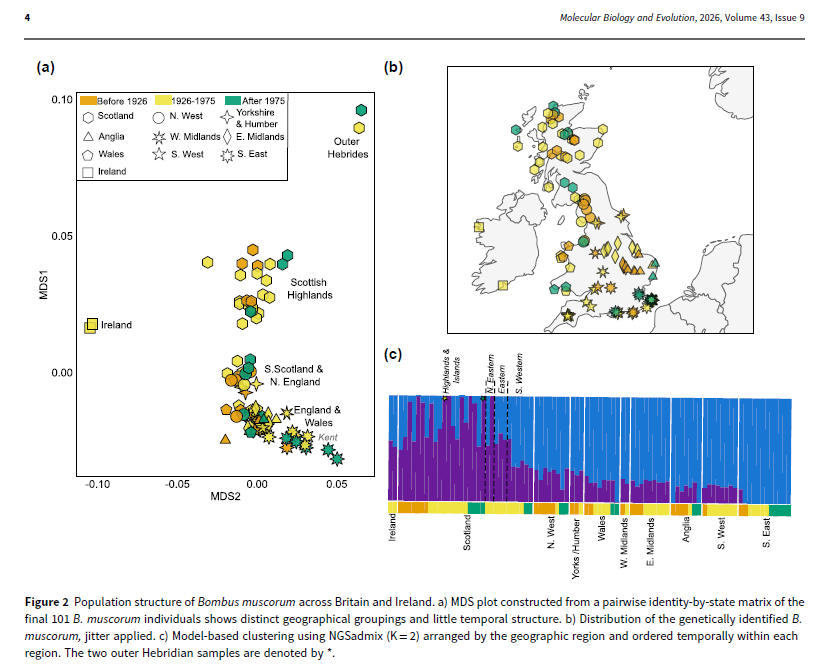
There was also a striking geographical pattern. In England and Wales, the amount of the genome occurring in long stretches of homozygosity increased by about 186% – in other words, almost threefold. These “runs of homozygosity” are consistent with populations becoming smaller, more fragmented and increasingly isolated from one another. Scotland showed a much weaker change, reflecting the fact that B. muscorum remains considerably more widespread there.

Importantly, however, the population structure is not simply “Scottish bees versus English bees”. The genomic data reveal a broad north-to-south gradient across Britain – what population geneticists call isolation by distance – rather than a set of sharply separated populations. That has implications for conservation because fragmentation may be breaking what was once a more continuously connected population into increasingly isolated regional groups.

There’s another interesting connection here with work that I published with colleagues more than a decade ago. In our 2014 Science paper we used historical records to show that Britain had lost 23 species of bees and flower-visiting wasps, with the fastest rate of extinction occurring from roughly the late 1920s to the late 1950s. We argued that large-scale changes in British agriculture, beginning just after the First World War, were an important part of that story.

The new study is looking at genetic change within a surviving species rather than the disappearance of whole species and it cannot pin that change on a single cause. But the parallels are difficult to ignore. The loss and fragmentation of flower-rich habitats associated with agricultural intensification is a likely contributor, alongside pesticides, climate change and other environmental pressures. The genomic erosion appears to have accumulated progressively across much of the same century in which Britain’s pollinator landscapes were being radically transformed.

One unexpected finding was also a useful warning about museum data. Of the 130 specimens originally labelled as Bombus muscorum, genetic analysis showed that 29 (almost a quarter) were actually two other, morphologically similar bumblebee species. Museum collections are extraordinarily valuable, but identifications cannot always simply be taken at face value, particularly for difficult groups. Genomics provides both a historical record and a way of checking the identity of the specimens supplying that record.

And that brings me back to what I think is one of the wider messages of this whole project: natural history collections are not dusty archives of dead organisms, they are biological time series.

A pinned bumblebee collected more than a century ago preserves information about where a species occurred, what environmental stresses it experienced, and, as we can now show, the genetic diversity of the population from which it came. Combined with modern genomic techniques, the millions of insects sitting in museum drawers around the world represent an extraordinary resource for understanding biological change.

The conservation message for the Moss Carder Bumblebee itself is fairly straightforward. Protecting the remaining populations is not enough if they become progressively smaller and more isolated. Restoring large areas of suitable, flower-rich habitat and reconnecting populations should help maintain population sizes and gene flow. More interventionist approaches such as translocation or assisted gene flow may eventually have a role, but would need careful assessment because of issues such as local genetic structure and disease transmission.

Four years ago, when I blogged about the first papers from this project, I finished with the idea that museum genomics might allow us to understand how insect populations had adapted, or failed to adapt, to a century of environmental change. We now have part of that answer. And it shows that beneath the visible contraction of a species’ range, another quieter form of biodiversity loss can be taking place: the erosion of diversity within its genome.

The paper is open access and you can download a copy here:

Mullin, V.E., Merchant, H.N., Arce, A.N., Nash, W. et al. (2026) Museum specimens reveal the genomic consequences of long-term population decline in an insect pollinator. Molecular Biology and Evolution 43: 1-11.

Fake figs, fooled wasps, and another extraordinary Apocynaceae pollination system

One of the things I love about working on the milkweed and dogbane family (Apocynaceae) is that it has an apparently inexhaustible capacity to produce strange and wonderful interactions with animals. Just when you think that the family’s pollination biology has yielded most of its surprises, along comes something like this.

A paper just out in New Phytologist, led by Aroonrat Kidyoo, describes the pollination of Heterostemma ficoides, an unusual climbing plant from northern Thailand. The title rather neatly gives away the story: “Fake figs, fooled fig wasps and rewarded phorid flies: brood-site mimicry and mutualism in Heterostemma ficoides (Apocynaceae)”.

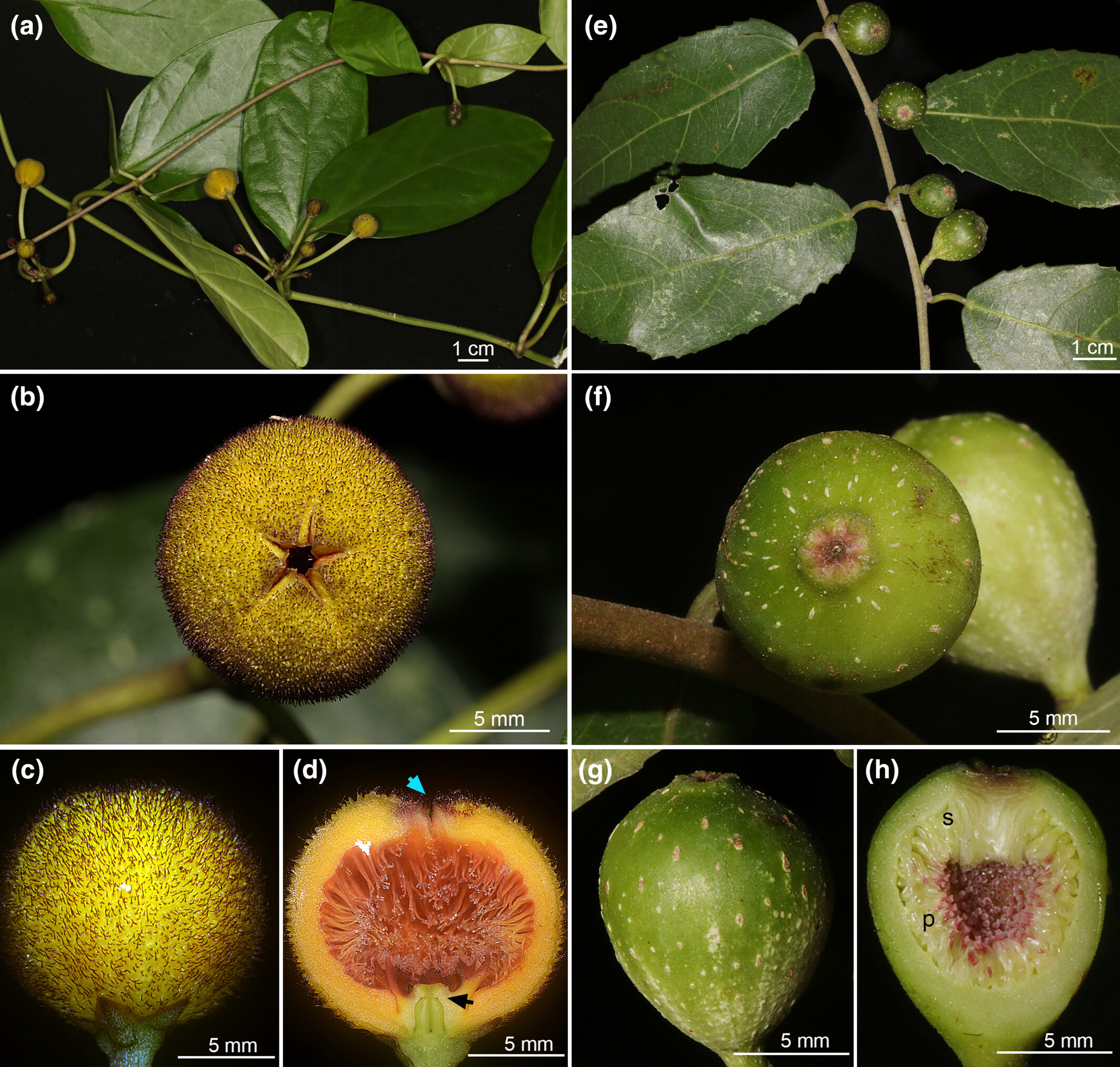
And “fake figs” is not journalistic exaggeration, as you can see from the photos above, which are taken from the paper. The flowers of H. ficoides are globose, fleshy structures, about 1.5–2 cm across, with a small opening at the top. Superficially they look remarkably like the enclosed inflorescences (the syconia) that we normally call figs. Indeed, when the species was first described in 2019, its resemblance to a fig was obvious enough to inspire the name ficoides: fig-like. But looking like a fig is only the beginning of the story.

Fooling one of nature’s most specialised pollinators

The relationship between figs (Ficus) and their tiny agaonid wasps is one of the classic examples of an intimate plant–pollinator mutualism. Female fig wasps locate receptive figs using their scent, squeeze through the tiny opening or ostiole, and pollinate the enclosed flowers while attempting to reproduce inside. These relationships can be remarkably specific, in some cases representing rare examples of one-to-one plant-pollinator interactions.

So it was genuinely surprising to discover female Kradibia fig wasps entering flowers of Heterostemma ficoides. These wasps normally pollinate Ficus heterophylla, not an Apocynaceae, and the authors believe that nothing comparable, i.e., a fig wasp being fooled into visiting a completely unrelated flowering plant, has previously been documented. I have to concur, this relationship is (so far) unique.

The authors have neatly demonstrated that the deception of these wasps is not simply visual. The chemical bouquet produced by H. ficoides is closer to that of receptive Ficus heterophylla figs than it is to the flowers of its relative H. siamicum. More importantly, behavioural experiments showed that Kradibia wasps were significantly attracted to the scent of open H. ficoides flowers, though not to unopened flower buds. In other words, the plant seems to switch on its misleading olfactory advertisement at just the right time.

Once inside, however, the wasps discover that they have made a serious mistake. They wander around probing the inner surface, searching for egg-laying opportunities that simply aren’t there. Some die inside the flower, although more than 80% of observed individuals managed to get out again, and often went on to visit another Heterostemma flower.

In the process, pollen can be transferred between flowers, but as in other members of the Asclepiadoideae, Heterostemma does not dust its visitors with loose pollen grains. Instead, pollen is packaged into pollinia which become attached to the legs of the fig wasps.

So from the fig wasp’s perspective this is straightforward deception: the plant promises a breeding site that doesn’t exist, and the flowers get pollinated in return. But that is only half of the system.

The flies are not being fooled by the fake fig

The most important pollinator of H. ficoides appears to be a tiny phorid fly in the genus Megaselia, and its relationship with the plant is quite different. Female Megaselia enter the flowers and lay their eggs there. Mating may even take place on the flower beforehand. Their larvae then develop inside the fallen flowers, eventually completing their development in the decomposing floral tissue on the forest floor. For these flies the promise made by the flower is therefore an honest one: this really is a brood site.

Pollinaria become attached to the flies’ mouthparts, then the flies carry them to another flower, where pollen can be deposited. Interestingly, Megaselia are also important pollinators of some species of the related Ceropegia in Africa (both genera are members of the tribe Ceropegieae).

This creates an ecological combination that is one of the most distinct examples of a “bimodal pollination system” that I’m aware of, in which the same flower operates simultaneously as a brood-site mutualism and as a brood-site deception, involving two completely distinct groups of insects.

Back to our 2019 Apocynaceae review

For me, there is a satisfying connection here with the large review of Apocynaceae pollination systems that we published in Annals of Botany in 2019: The diversity and evolution of pollination systems in large plant clades: Apocynaceae as a case study. Aroonrat Kidyoo, lead author of this new study, was also one of the large international team involved in that paper.

We assembled usable pollination information for 567 species (a bit more than 10% of the family) and found an extraordinary diversity of interactions. About 73% of the species for which we had information were associated predominantly with a single broad pollinator group, whether bees and wasps, butterflies and moths, flies, beetles or birds. However, about 7% of the species had distinct bimodal pollination systems, such as bee + butterfly. Whether this is an unusually high proportion for such a family is currently unclear as there are few comparative statistics.

One of our broader conclusions from the study was that this interaction diversity was not randomly scattered across the Apocynaceae evolutionary tree. Pollination systems show strong phylogenetic structure and some transitions between pollinator types have occurred much more readily than others. The new Heterostemma study puts some wonderfully detailed natural history onto that much larger evolutionary picture.

Aroonrat and her colleagues suggest that Heterostemma ficoides may represent a shift away from the more open, nectar-producing flowers found in other parts of the genus. In section Oianthus, to which H. ficoides belongs, the flowers have become progressively more closed. In the extreme case represented here, the result is a globose chamber entered through a small opening, nectar production has apparently disappeared, and the plant has moved towards brood-site pollination by flies and deception of fig wasps.

Whether that evolutionary scenario survives a proper phylogeny and detailed pollination studies of the remaining species is an obvious question for the future. As the authors themselves acknowledge, both are currently lacking. But it is exactly the sort of transition that our 2019 study suggested we should be looking for.

And what does any of this have to do with eating Apocynaceae?

Quite a lot, in a roundabout way. Earlier this year my colleagues and I published another large synthesis of the family, this time asking a very different question: which Apocynaceae do people eat?

We documented 440 edible species, spread widely across the evolutionary tree of the family. That sounds like a lot, although statistically Apocynaceae are actually under-represented among the world’s food plants, probably in part because the family is so well endowed with toxic and pharmacologically active chemistry.

One point that emerged strongly from that work was that our knowledge of how those useful plants reproduce is remarkably incomplete. Many edible Apocynaceae are harvested for their fruits and seeds, which of course ultimately means that successful reproduction matters. Yet for most of those species we still know little or nothing about their pollinators.

That matters if we are serious about conserving wild food plants or developing some of them as future crops. You cannot fully understand the biology of a fruit-producing plant without understanding how the flowers get pollinated in the first place.

There are no Heterostemma species documented in our edible-plant study (though it appears that we missed one – see the comment below), so H. ficoides is not some promising new food species. But that isn’t my point. Rather, this new research is a reminder of just how much biological complexity can lie behind the production of an Apocynaceae seed. And we still know the pollination biology of only a fraction of this enormous family.

That, perhaps, is the broader lesson from all three papers. Large databases and family-wide syntheses are valuable because they reveal general patterns and, equally importantly, the gaps in our knowledge. But filling those gaps still depends on researchers spending time watching individual plants and individual insects, dissecting flowers, rearing larvae and asking exactly what the animals are doing. Sometimes what they find is stranger than anyone would have predicted.

Join me for “Pollinator Conservation: Threats and Opportunities” in Bedfordshire on Tuesday 15th September

Bedfordshire Natural History Society (BNHS) has invited me to give a talk on the theme of “Pollinator Conservation: Threats and Opportunities” at Maulden Village Hall (MK45 2DP) on Tuesday 15th September. It starts at 8pm and non-members are encouraged to attend.

More details are available at the BNHS web site.

I’ll have signed copies of my books available to purchase, so if you’re in the area, please do come along.

Press release: Europe risks a crisis if it fails to halt pollinator loss, researchers warn

NOTE FROM JEFF: This press release came out at the start of the week and I am involved in two of the EU-funded projects that are mentioned, Butterfly and ProPollSoil, and I’m a co-author of the White Paper.

For immediate release

University of Bergen Brussels office, Rue Guimard 1040, Brussels, Belgium, 22 June 2026

Eight EU-funded research consortia warn that Europe risks a crisis if it fails to halt pollinator loss. Their solution: a roadmap to reverse wild pollinator decline and protect managed bees.

A new White Paper from eight major EU-funded pollinator projects warns that the resilience of Europe’s vital societal functions and food security are at stake if the EU fails to halt and reverse wild pollinator declines, and to support managed pollinators. Behind the report is an interdisciplinary team of 135 leading researchers with expertise ranging from ecosystem ecology, pollinator ecology, ecological economics, social science, environmental history, behavioural psychology, political science, and environmental law. The report flags the EU’s siloed governance structures and resulting policy incoherence as the major barrier to pollinator restoration. It states that the EU and its Member States urgently need to act by making Pollinator Stewardship an explicit and measurable top-priority across policies on agriculture, environment, chemicals, research and innovation, trade, finance, planning, legislation, and education.

The report diagnoses the looming pollinator crisis as arising from a dysfunctional relationship between humans and nature. Seeing humans as separate from and superior to nature, and thinking of nature as an object for human use as a resource, reinforces institutional structures that exploit nature for short-term individual and material gain. This leads to unsustainable agricultural practices that risk jeopardising the resilience of the ecosystems on which humanity critically depends.

There is more at stake than food security, the report warns. Indeed, many of Europe’s economic supply chains and sectors depend on pollination of flowering plants. Think of medicinal plants, food supplements, biomass energy crops, biomaterials, textiles, fodder, cosmetics, decoration, art, culture, and tourism.

The report also highlights the low pollinator literacy of key societal actors whose daily actions can make the difference for pollinators. It advocates mandating ecoliteracy in the education of professionals in all key sectors that affect pollinators and their habitats.

According to the report’s lead author, Professor Jeroen van der Sluijs, many people whose actions affect pollinators and their habitat are already doing their best to help save the bees. But most lack the literacy to understand how their practices cascade into pollinator loss.

“Many farmers plant wildflower strips along their fields, but almost no one knows that some moths are more effective pollinators than honeybees. These little creatures of the night, clothed in velvet and moonlit dust, need host plants for their larvae, not only flowers. Host plants for pollinating hoverflies, beetles and moths are missing in most seed-mixtures for flower strips.”

Avoiding a scenario in which Europe is hit by a pollination crisis requires addressing the EU’s functioning and moving away from its siloed governance structures. This requires addressing fragmented responsibilities across sectors, top-down policy design, and weak coordination among administrations that currently hinders effective pollinator restoration. According to the authors, the conflict between short-term production goals and the need to maintain pollination services as a public good must be solved as soon as possible.

The report ends with a detailed roadmap of 15 urgent, evidence-informed recommendations for action that, when fully implemented, can reverse pollinator decline in Europe.

Full White Paper: https://zenodo.org/records/20715669

When an old experiment revealed a new story about flowers

Sometimes, science does not go the way you plan.

That is usually framed as failure: the experiment did not work, the results were inconclusive, the story was unclear. But science can also advance when we go back to old data and ask a different question. That is exactly what happened with a study of Field Scabious, Knautia arvensis, a familiar wildflower of meadows and grasslands.

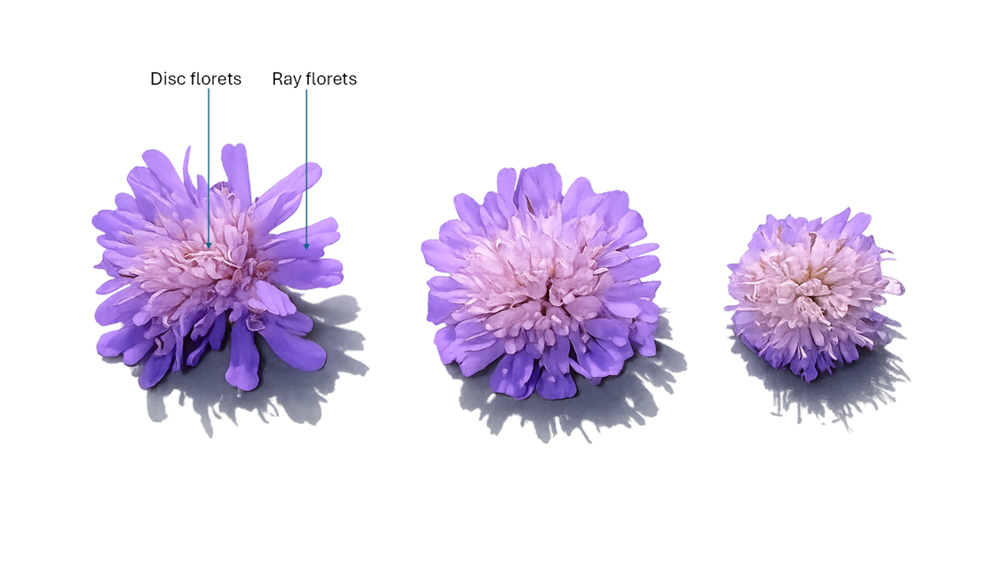
Back in 2001, I carried out an experiment to test the function of the showy outer florets around the edge of the flower head. These enlarged “ray florets” look as though they ought to be important in attracting pollinators. The idea was simple: trim them in different ways and see whether pollinating insects responded – you can see the results of that trimming in the photo above.

The answer, at the time, was baffling. Bumblebees, hoverflies and butterflies (all of which are effective pollinators of this plant) did not seem to care very much. Visitation rates by the insects hardly changed, and neither did seed set. But seed weight did change, as did the amount of sugar being produced by the trimmed flower heads. At the time I could not make sense of this in relation to the question I had asked, so the data were archived and left alone.

But not forgotten.

Fast forward 25 years, and I was chatting about this data set with colleagues when I was at the Kunming Institute of Botany in China. That got me reading some more recent work about florivory -the damage done to flowers by animals – and I realised that this old experiment might make more sense if viewed from another angle. Perhaps I had not really been testing floral attraction at all. Perhaps, without intending to, I had carried out a simulated florivory experiment.

Seen in that light, the results became much more interesting.

Cutting the ray florets did not stop pollinators from visiting. Nor did it reduce the number of seeds produced. But it did change the plant’s internal economics. Nectar quality declined in the most heavily cut flowers, and the seeds that those flower heads produced were consistently lighter. In other words, the flowers still functioned well enough to get pollinated, but the plant appeared to invest less in rewards for pollinators and less in each of its offspring.

That matters because lighter seeds may have poorer prospects later in life, even if the plant initially appears to reproduce successfully. The damage did not cause total reproductive failure. Instead, it produced a subtler effect: hidden costs that only become visible when you look beyond simple seed counts.

Newly contexualised in this way, we wrote up this work, being completely honest about the history of the study, submitted it to the Journal of Pollination Ecology, where it received very positive reviews. It’s now been published and you can download a copy by following the link in the reference:

Ollerton, J., Xu, X. & Ren, Z.-X. (2026) Misconceived experiments may yield valuable insights: simulated florivory has unpredictable consequences for plant reproduction in Knautia arvensis (Caprifoliaceae). Journal of Pollination Ecology (in press)

I like this study because it tells two stories at once. One is ecological: florivory may not always reduce pollinator visits, but it can still alter plant reproduction in potentially important ways. The other is about how science actually works. Not every good paper begins with a perfect hypothesis and a clean result. Sometimes the value lies in returning to an awkward, neglected dataset and realising that it was trying to tell you something different all along.

Science does not always go the way you plan. But occasionally that is when it becomes most revealing.

What the COVID lockdowns taught us about plant-pollinator specialisation in gardens

One of the few positive things to come out of the COVID lockdowns was the unexpected opportunity to look much more closely at the nature right outside our doors. In 2020 I coordinated the Lockdown Gardens initiative, bringing together pollination ecologists from around the world to carry out standardised surveys of flower visitors in the gardens they could access during that strange and constrained period. That project generated an unusually rich global dataset: 67 gardens, almost 47,000 flower visits, and records from more than 650 pollinator species.

Since then, the dataset has started to yield some really interesting insights. A new paper led by Luis Perugini uses the Lockdown Gardens data to ask a deceptively simple question: what determines how specialised plant–pollinator interactions are in gardens? In other words, are garden flowers in some places visited by a narrow set of pollinators, while elsewhere they are more generalist?

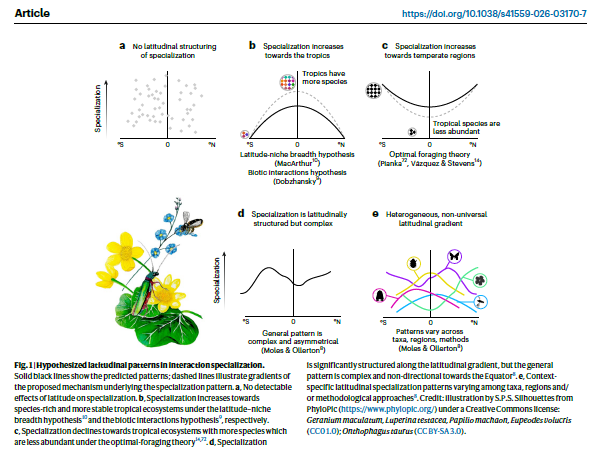
The answers are not quite what we expected. Looking at 40 garden networks from four continents, we found that larger gardens support more plant species, and that suburban gardens tended to be richer in plant species than either rural or urban gardens. We also found that pollinator richness increased with plant richness and with precipitation. But when it came to the actual specialisation of interactions, climate and species richness did not seem to matter very much at all. Instead, variation in specialisation was mostly species-specific and showed no clear phylogenetic pattern.

That’s an important result, because it suggests that the factors that drive biodiversity in gardens are not necessarily the same factors that shape the ecological relationships within those gardens. Put more simply: having more species does not automatically mean having more specialised interactions.

For me, this is a nice example of how a project born out of a global crisis can continue to produce useful science. The Lockdown Gardens surveys began as an improvised response to an extraordinary moment, but the data are now helping us to understand how gardens function as ecological systems, and how they might better support pollinators in an increasingly human-dominated world.

Here’s the full reference with a link to the paper, which is open access:

Perugini, L., Rech, A., Ollerton, J. & Jorge, L. (2026) Global drivers of plant-pollinator interaction specialization in gardens. Ecology and Evolution (in press)

Help us uncover the hidden lives of Europe’s ground-nesting bees

When most people think about pollinators, they picture bees visiting flowers. But for many species, a large part of life happens elsewhere: in the soil. Many pollinators do not just feed above ground, they also nest, shelter or develop below it

Discovering more about this aspect of pollinator life histories is the focus of ProPollSoil, a major new European research project exploring the links between soil health and pollinator health that kicked off last year. I’m excited to be part of it because the soil component of pollinator ecology and conservation is important but often overlooked.

As part of ProPollSoil, we are asking the public to help us find and document ground-nesting bees through a citizen science initiative called EuroBeeSoil. If you spot a bee nest in soil, sand, a lawn, a path edge or a sunlit bank, you can photograph it and upload your record to iNaturalist.

It’s a simple idea, but potentially a very powerful one. These observations will help us understand where bees are nesting, what kinds of soils they use, and how we can better conserve them.

We often talk about pollinator-friendly flowers. But bees need more than food, they also need somewhere to live. For many species, that means the ground beneath our feet.

So please follow this link and consider how you might take part if you can. You do not need to be a bee expert. You just need to look down a little more often.

What China’s mountain meadows and forests can teach us about pollinators

For several years now I have been fortunate to collaborate with colleagues in China on the ecology of plant–pollinator interactions. One of the things that makes that work so exciting is the sheer variety of landscapes in which these interactions play out. In a newly published paper led by Dr Xin Xu, we have studied pollination networks on Yulong Snow Mountain in Yunnan, in south-west China, a place where forests and flower-rich meadows sit side by side in a spectacular high-elevation environment.

The question we asked was simple enough: how do these adjacent habitats – woodland and grassland – differ in the way that plants and pollinators interact? But answering it required a huge amount of field effort. Over two flowering seasons, the team recorded more than 11,000 interactions between 229 pollinating insect species and 89 flowering plant species. That is an extraordinary reminder of how much ecological complexity can be packed into a relatively small area of mountain landscape.

What emerged was a very clear pattern. The open meadows supported far more activity than the neighbouring forests: more visits, more pollinator species, more plant species, and more interaction links. In fact, nearly 9,700 of the recorded interactions took place in meadow habitat, compared with about 1,365 in forest. Meadows were especially important for bumblebees, which are among the key pollinators in these cool, high-elevation systems.

But the forests were not simply poor relations. They supported their own distinctive subset of the wider pollinator community, and the network of interactions there was structured differently. Some pollinator species altered their daily foraging schedules depending on whether they were in meadow or forest, suggesting that they are responding flexibly to changes in light, temperature, floral resources, and perhaps competition. That is one of the aspects of pollination ecology that fascinates me most: these are not static systems, but living networks that shift across space and time.

More broadly, the study reinforces something that has become increasingly clear from ecological research: habitat heterogeneity matters. A landscape made up of different, connected habitat types can support a richer and more resilient community than one that is uniform. On Yulong Snow Mountain, the meadows seem to act as hotspots of pollinator diversity, while the forests add further complexity and help shape how those pollinators behave. Conserving that mosaic is therefore likely to be crucial if we want to maintain pollination services and biodiversity in mountain regions facing rapid environmental change.

For me personally, this paper is also a reminder of why international collaboration is so valuable. Working with Chinese colleagues has opened a window onto ecological systems that are both scientifically important and visually stunning. Yunnan is one of the world’s great biodiversity regions, and studying pollination there helps us understand not only how these mountain ecosystems function, but also how species interactions may respond to climate change and habitat alteration in the future.

Pollination ecology is about more than just bees, birds, or other animals visiting flowers. As a focus of study, it is much richer. It is about networks of interactions, about the timing of activity through the day, about the way species respond to different habitats, and about how whole ecosystems are stitched together. High on a Chinese mountain, among meadows and forests, we can see that complexity in action.

Here’s the full reference:

Xu, X., Maruyama, P.K., Ollerton, J., Wang, H. & Ren, Z.-X. (2026) Spatio-temporal variation in plant–pollinator networks between adjacent meadow and forest habitats in a high-elevation environment. Oecologia (in press)

Here’s the abstract:

Understanding how habitat heterogeneity influences the structure and stability of ecological networks is critical for predicting ecosystem responses to environmental change. In alpine ecosystems, open meadows and forests represent contrasting habitats with distinct vegetation structures, resource availability, and microclimatic conditions. In this study, we integrated spatial and temporal data on pollinator-plant interactions to investigate network structure, species roles, and diurnal foraging dynamics across meadow and surrounding forest habitats during two flowering seasons on Yulong Snow Mountain, Yunnan, China. A total of 11,094 plant–pollinator interactions were recorded, involving 229 pollinator and 89 flowering plant species. Meadows supported significantly higher interaction frequencies, species richness, and α-diversity for both plants and pollinators, although they showed a striking numerical dominance of a single key pollinator, Bombus friseanus. Network dissimilarity analyses revealed substantial differences between habitats, with both species turnover and rewiring contributing to interaction dissimilarity. Diurnal foraging dynamic analysis revealed that some key species, such as Bombus lepidus, displayed distinct foraging patterns across habitats indicating behavioral adaptation and temporal niche partitioning to microclimate. Our findings highlight the strong influence of habitat type on pollination network architecture and reveal many shared pollinator species, indicating some degree of cross-habitat linkage. These results underscore the importance of habitat heterogeneity and spatial coupling in shaping pollination services and sustaining biodiversity in mountain ecosystems under environmental change.

Pollination as a matter of national security

In these turbulent times it’s hard to know where to focus one’s gaze. Do we concentrate on Ukraine? Greenland? Venezuela? Sudan? China? Russia? The Middle East? The rise of the far right and religious fundamentalism? Cyber security? Global organised crime? If it’s confusing and worrying for the average person, imagine what it’s like for national security services who are charged with assessing and responding to such threats.

It is increasingly recognised that national security in the 21st century extends beyond military threats to encompass food systems, economic resilience, public health, and the stability of critical ecological infrastructure. Which is why it’s no surprise to learn that the UK’s national security organisations – MI5 and MI6 – have just released a report titled Global biodiversity loss, ecosystem collapse and national security: A national security assessment.

The report has been covered by The Guardian under the heading “Biodiversity collapse threatens UK security, intelligence chiefs warn” and the article begins:

The global attack on nature is threatening the UK’s national security, government intelligence chiefs have warned, as the increasingly likely collapse of vitally important natural systems would bring mass migration, food shortages and price rises, and global disorder.

This framing explicitly treats biodiversity loss not as an environmental side issue, but as a systemic risk multiplier capable of amplifying existing geopolitical, economic, and social stresses. I have emboldened two words in that quote in order to emphasise that this report is very much about the state of the world, not just the state of my home country. In an interconnected global food and trade system, ecological collapse in one region rapidly propagates elsewhere through markets, migration, and political instability. What happens globally has implications locally; not just food security from imports, but “geopolitical instability, economic insecurity, conflict, migration and increased inter-state competition for resources”, to quote the report.

Where does pollination fit into this? As far as I know, pollination has never been singled out in security analyses, yet it underpins many of the very food systems, rural economies, and ecosystem functions upon which national resilience depends. In my book Pollinators & Pollination: Nature and Society I mention “food security” about ten times, as I firmly believe that loss of pollinators is a serious issue to food supply chains. The report similarly states that:

UK food production is vulnerable to ecosystem degradation and collapse. Biodiversity loss, alongside climate change, is amongst the biggest medium to long term threat to domestic food production – through depleted soils, loss of pollinators, drought and flood conditions.

But I would go further and state that loss of pollination by insects and vertebrates poses a national security threat that extends far beyond just their role in food production.

Let me explain why I believe this.

The Global biodiversity loss report focuses on six different parts of the world (and seven ecosystems) that it considers “critical ecosystems…at risk of collapsing”. One of those areas – the coral reefs of Southeast Asia – is not directly dependent upon pollinators to support its long-term functioning. Two areas – the boreal forests of Canada and Russia – are dominated mainly (though not exclusively) by wind-pollinated trees, such as conifers and birches. The other four ecosystems, however, have a dependence on pollinators that ranges from significant to enormous. These are the Mangroves of Southeast Asia and the Himalayas (both significant) and the Amazon Rainforest and Congo Basin (both enormous).

What do I mean here by words like “significant” and “enormous”? What is my measure? What I mean is the number and proportion of flowering plants—particularly dominant species, often trees—that underpin most ecosystem functions, such as photosynthesis and carbon storage, and that rely to some extent on pollinators to reproduce.

In high elevation areas such as the Himalayas, I know from experience that it’s common for there to be a mixture of wind and animal pollinated species in communities. Similarly, mangrove species include some which are wind pollinated – see this review for example. In other words, the long-term population stability of Himalayan woodland and Southeast Asian mangrove forests is, in large part, dependent on the pollinators that those ecosystems support. If those pollinators were lost, in the long term (decades to centuries) wind-pollinated trees would dominate and biodiversity would significantly decline.

The situation in the forests of tropical South America and west Africa is rather different. Not only is there a much greater diversity of plant species in these ecosystems, but in these largely rainforest regions, often all of them are animal pollinated, as we showed in this paper and which is reflected in the graph above, which comes from my book. Lose the pollinators and we lose the long-term viability of ecosystems that provide regionally- and globally-vital functions.

Ultimately, if we are to protect pollinator communities, and the ecosystem functions and services they provide, we need to take their conservation more seriously than we do at the moment. Framed this way, pollinator conservation becomes a form of preventive security investment, analogous to maintaining flood defences or safeguarding energy and cyber infrastructure. The European Union’s Pollinator Initiative and the projects that it supports, including Butterfly and ProPollSoil in which I’m involved, is a good example. Likewise, there are policy movements appearing in China, as I recently reported. But biodiversity conservation is a global issue, as the security services report makes clear, and that applies to pollinators.

There will no doubt be sceptics out there who think that I am over-playing the importance of pollinators and pollination. That’s fine, it’s good to have these debates. Pollination is not a national security issue in the narrow, traditional sense of defence against hostile actors. But in the 21st-century security landscape, where threats are systemic, slow-burning, and ecologically grounded, pollination loss clearly qualifies as a strategic risk to national stability and resilience.

In that respect, I believe that the question is not whether pollination is a national security issue—but whether national security thinking has yet fully adapted to the biological foundations on which societies depend.

Join me at the Wildlife Gardening Virtual Symposium 14th January 2026 – Registration Now Open!

At a time when the UK’s wildlife is under increasing pressure, the everyday spaces we manage—especially gardens—are becoming ever more important. Although interest in wildlife-friendly gardening has grown enormously in recent years, the evidence behind different approaches is not always clear. Well-meaning interventions can be highly effective, but some can miss the mark without a grounding in sound ecological knowledge.

That’s exactly why the Wildlife Gardening Virtual Symposium has become such a valuable annual event. It brings together researchers, practitioners, and anyone involved in managing green spaces to explore what the science is actually telling us about creating gardens that support biodiversity.

This year’s programme, chaired by Hafsah Hafeji of the Wildlife Gardening Forum, features four invited talks covering ponds, pollinators, fungi, and urban mammals, along with an update on emerging policies and projects shaping the wildlife-gardening landscape.

2026 Speaker Programme

  • Fragments of Paradise: Garden Ponds as Wildlife Habitat
    Dr Mike Jeffries – Northumbria University
  • Gardening for Pollinators: It’s About More Than Just Flowers!
    Prof Jeff Ollerton – University of Northampton & Kunming Institute of Botany
  • How Fungi Make Gardens Flourish
    Dr Jassy Drakulic – Royal Horticultural Society
  • Recording Wild Mammals in Urban Spaces: A Multidecadal Study
    David Wembridge – People’s Trust for Endangered Species

Whether you’re involved in ecology, horticulture, landscaping, consultancy, education, or simply interested in the future of wildlife in our gardens, the symposium offers a concise way to catch up on current evidence and emerging thinking.

Reserve your place here: https://www.eventbrite.co.uk/e/wildlife-gardening-virtual-symposium-2026-tickets-1419239717199