Category Archives: Climate change

Nature and national security: some recent developments

Back in January I wrote a post entitled Pollination as a matter of national security, prompted by the UK Government’s rather extraordinary publication of this report: Global biodiversity loss, ecosystem collapse and national security: a national security assessment. My argument was that although pollination is obviously not a national security issue in the traditional sense of defending a country against hostile states or terrorist attacks, the loss of pollinators threatens food production, supply chains and the functioning of ecosystems upon which societies ultimately depend. In other words, it is a threat to national resilience, which we can define a country’s capacity to anticipate, withstand, adapt to, and recover from major shocks or long-term pressures while maintaining the essential functions of society, the economy, government, and critical infrastructure. I’ll come back to this national-level framing at the end.

I concluded that post by suggesting that the real question was not whether pollination could be regarded as a national security issue, but whether national security thinking had fully adapted to the biological foundations on which societies depend.

Since January, several reports, papers and policy developments have convinced me that this is becoming a much wider and more serious discussion. Pollination is only one component of it. What is emerging is a view of nature itself as part of the infrastructure that makes societies secure.

Nature as infrastructure

Perhaps the clearest expression of this idea comes from a paper by Bradley Cardinale, Emmett Duffy and Rod Schoonover entitled Nature’s role in national security, published this summer in the journal Nature-Based Solutions.

The authors consider five areas where ecological disruption can generate national security risks: food security, water scarcity, health security, protection from natural disasters, and environmental crime. In each case, environmental degradation can create or amplify economic and social pressures which, under some circumstances, translate into political instability and security problems.

What I particularly like about the paper is its use of the term “natural infrastructure”. Functioning ecosystems, the authors argue, operate rather like electricity grids, communications systems and transport networks. They provide services and, crucially, buffer societies against shocks.

This is an important shift in emphasis. We usually talk about the benefits or ecosystem services that nature provides. Both are perfectly useful concepts, but describing ecosystems as infrastructure changes how we think about their loss. A degraded wetland is then not simply a conservation problem. It may represent the deterioration of flood-control infrastructure. Similarly, a damaged watershed is a weakening of water-security infrastructure, whilst a decline in pollinators can be understood as damage to parts of our food-production infrastructure.

Seen in that way, restoring ecosystems begins to look less like discretionary environmental spending and more like preventive investment in resilience.

Rewilding as defence

An even more striking example appeared in April in The RUSI Journal, published by the Royal United Services Institute, one of the world’s oldest defence and security think tanks.

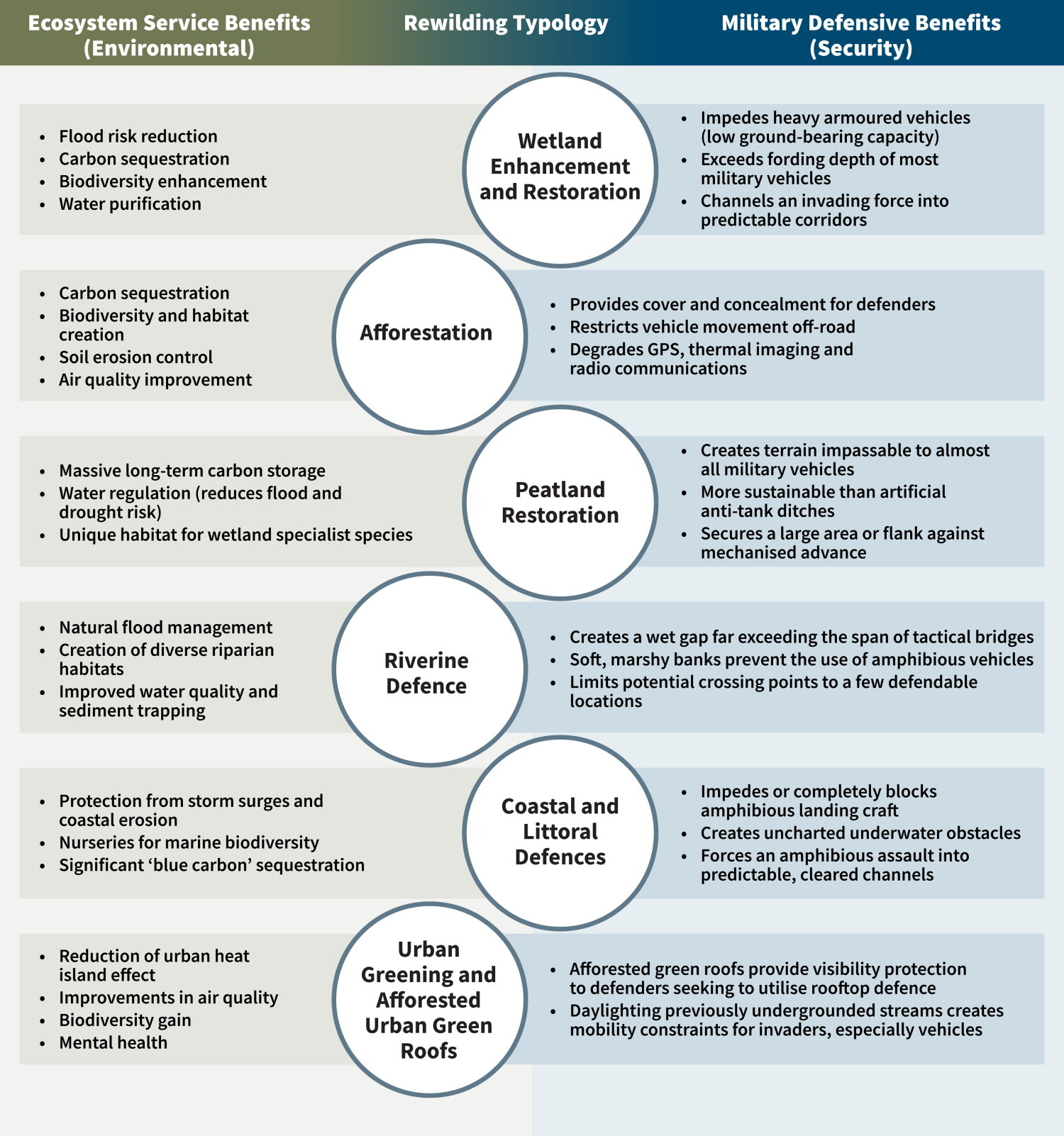
Sam Jelliman, Brian Schmidt and Alan Chandler propose the concept of “defensive rewilding”: strategically restoring forests, wetlands, peatlands and other ecosystems in locations where they could also impede, divert or slow an invading military force. This infographic from the paper outlines their argument quite persuasively:

At first sight this sounds rather eccentric, but the logic is straightforward. Military planners since at least the time of Alexander the Great have always understood that terrain matters. At the Battle of Issus in 333 BCE, for example, Alexander fought the much larger Persian army on a narrow strip of land between the sea and the mountains, restricting its ability to manoeuvre and helping to neutralise its numerical advantage. Wetlands, forests, rivers, hedgerows and boggy ground can also provide advantage by restricting visibility and movement and make the passage of vehicles and troops much more difficult. We have seen examples of this during the war in Ukraine, just as we did in numerous earlier conflicts.

What Jelliman and colleagues suggest is that this defensive function could sometimes be deliberately combined with ecological restoration. Rewetting peatlands or restoring floodplains near vulnerable borders might simultaneously enhance biodiversity, store carbon, reduce flooding and create terrain that is difficult for armoured vehicles to cross. A win-win for both national defence and this wider concept of national security.

Clearly this is a concept that requires much more testing, and ecological restoration should not be distorted into a military land-management programme. There would also be difficult questions about land ownership, farming and the ecological appropriateness of particular interventions. But that is almost beside the point. The fact that rewilding is now being seriously discussed in a defence journal as potential security infrastructure is itself significant.

It challenges the assumption that spending on defence and spending on nature necessarily compete with one another, though we’ve long known that some areas of the UK than are used by the military are also important wildlife sites, Salisbury Plain being an obvious example, the largest known expanse of unimproved chalk grassland in north-west Europe precisely because it is used for military purposes rather than being converted to agriculture.

Losing nature can make countries poorer and less financially secure

Another recent study extends the argument into the financial system. Matthew Agarwala and colleagues published a paper in Nature Ecology & Evolution examining how losses of ecosystem services might affect the creditworthiness of nations, which is the degree to which lenders and investors judge that a country’s government can reliably meet its debt obligations in full and on time. Their model incorporated scenarios involving the deterioration of three services – wild pollination, marine fisheries and tropical timber – into sovereign credit assessments for 23 countries containing about 5.5 billion people.

The numbers produced by their scenarios are striking. Under partial ecosystem collapse, additional annual sovereign interest payments across the countries studied could reach around US$162 billion. India and China alone could experience tens of billions of dollars in increased annual debt-servicing costs. Some countries could suffer very large reductions in GDP.

These are modelled scenarios rather than predictions, of course, and the ecological assumptions that sit beneath such economic modelling need careful scrutiny. But the basic mechanism is compelling.

Governments depend upon functioning economies to raise taxes, borrow money and respond to crises. If ecological degradation reduces agricultural output, fisheries production and other forms of economic activity, the fiscal position of a country deteriorates. Borrowing becomes more expensive precisely when governments may need to spend more money adapting to environmental change.

This summer’s record breaking drought and wildfires in the UK, and the promise of further disruption due to a mega El Nino event, make such adaptation all the more urgent. Nature loss can create a nasty feedback loop: ecological degradation weakens economies, weaker economies have less capacity to invest in resilience and restoration, and that in turn increases their vulnerability to further ecological degradation.

All of this moves biodiversity loss well beyond the conventional environmental policy box and there are positive signs that these ideas are becoming embedded in government.

The UK security machinery is beginning to respond

In June the UK Government established its first Climate Security Taskforce, bringing together experts from the security, military, academic and environmental communities. Significantly, its remit explicitly encompasses not only climate change but nature loss. This is important as many of us have been arguing for years that you cannot disentangle the two and they should not be treated as separate domains of environmental concern. The Government’s announcement stated that climate change and nature loss are drivers of instability, economic disruption and security risk, and linked the Taskforce to the broader approach set out in the UK’s National Security Strategy.

That matters because one of the perennial problems with biodiversity has been institutional fragmentation. Nature tends to be dealt with by environment ministries, while finance ministries think about economic stability, agriculture departments think about food production, health ministries think about disease, and defence and intelligence agencies think about security. But ecological risks do not respect departmental boundaries.

A collapsing ecosystem can simultaneously affect food prices, water availability, infectious disease risks, migration, trade, government finances and geopolitical stability. Treating each of these consequences separately misses the common ecological cause.

China, where I’ve been spending quite a bit of time in recent years, provides an interesting comparison with the UK. Whereas the explicit framing of biodiversity loss as a national-security risk is relatively new in Britain, China has for some years incorporated “ecological security” into its much broader concept of national security. Its first national-security white paper, published in 2025, explicitly listed ecological security alongside military, economic, food, resource, biological and other forms of security. This has been reinforced in 2026 by China’s new Five-Year Plans for ecological protection and the construction of a “Beautiful China”, both of which link biodiversity conservation, ecosystem restoration and resilience to national ecological security. Chinese researchers have meanwhile developed an extensive literature on “ecological security patterns”, identifying the habitats, corridors and ecosystem services required to maintain resilient landscapes. The Chinese use of the term is not identical to the emerging British idea of “nature security”, but the overlap is striking: both ultimately recognise that the security of a state rests partly upon the ecological systems that support it.

From an intelligence assessment to Parliament

The UK Government’s January assessment has continued to reverberate through Westminster. On 2 September, the House of Commons Library published a new briefing ahead of a parliamentary debate on the assessment. The briefing does not constitute a new security assessment, but usefully brings together the original findings with subsequent parliamentary scrutiny, stakeholder responses and government action, including the creation of the Climate Security Taskforce and a new three-year Nature Security R&D Programme.

The briefing rightly emphasises an important point about the original security assessment. It is based on a reasonable worst-case scenario. It is not predicting that these ecosystems will suddenly collapse tomorrow. National security planning routinely explores high-impact possibilities precisely because governments need to understand what would happen if severe events occurred.

On 3 September the subject was then debated in Westminster Hall, following a cross-party initiative led by Adrian Ramsay MP. Whatever ultimately comes from that debate, this represents an interesting political transition. In January, biodiversity loss appeared in a national security assessment, and eight months later it had become the subject of a dedicated parliamentary research briefing and debate. That does not mean that nature has suddenly moved to the centre of British security policy. Far from it. But it suggests that the language of nature security is beginning to acquire institutional traction.

And then there is food

As if to underline the point, today (4 September) the National Audit Office has published a report on the Resilience of the food supply chain to disruptions. This is not primarily a biodiversity report. It examines the resilience of the UK food system to a much wider range of threats, including extreme weather, energy disruption, cyber-attacks, pandemics and animal and plant diseases. But there is a direct connection with the nature-security debate.

Food is one of the UK’s 13 designated Critical National Infrastructure sectors. The NAO concludes that although the food system has proved resilient to previous disruptions, the ability of the sector to withstand catastrophic events has not been tested and that Defra’s actions have not yet been sufficient to ensure resilience to such events.

This brings us back to where I started in January with pollination. Food security is not simply about having enough farms. It depends on soils, water, climatic stability, pollinators, pest regulation, genetic diversity, functioning supply chains, energy, transport and international trade. Pull at enough of those threads simultaneously and resilience begins to unravel.

So where does this leave us?

What interests me most about these developments is that they come from very different intellectual and institutional directions. Ecologists are describing ecosystems as natural infrastructure. Economists are beginning to incorporate biodiversity into sovereign financial risk. Defence researchers are thinking about restored landscapes as strategic assets. Government has created a taskforce dealing with climate and nature security. Parliament is discussing ecosystem collapse as a national security problem. And the National Audit Office is warning that one of the country’s most fundamental pieces of critical infrastructure, its food system, needs greater resilience.

These are not separate conversations, they are pieces of the same emerging picture.

There is, of course, a danger in pushing the national-security framing too far. Nature deserves protection for many reasons that have nothing to do with its usefulness to states, economies or human societies. I would be very uncomfortable with biodiversity conservation being justified solely because it makes Britain, or any other country, more secure.

But that is not the argument I am making. Rather, I think we have systematically underestimated the extent to which national security is built upon ecological stability. Forests, soils, rivers, wetlands, oceans, pollinators and the millions of other species that make ecosystems function are not scenery surrounding the human economy, they are part of its physical foundations.

Earlier this year I argued that conserving pollinators could be regarded as a form of preventive security investment. The developments since then suggest that the same argument can be made much more broadly: Protecting and restoring nature is not an alternative to investing in national resilience. It is one of the ways in which we invest in national resilience.

That feels like an idea whose time has arrived.

There is, however, an obvious limitation to framing all of this in purely national terms. Modern states are embedded in a globalised economy in which food, energy, raw materials, finance, manufactured goods and ecological impacts cross borders continuously. A country may strengthen the resilience of its own landscapes and infrastructure yet remain highly vulnerable to ecosystem degradation, crop failures or political instability elsewhere. In that sense, “national resilience” is also dependent on international ecological resilience: security at home increasingly rests on the stability of environmental and economic systems far beyond national borders. Just as individual trees in a forest are dependent upon one another to create the conditions in which all can thrive, regardless of species, so the too are countries mutually dependent. The leaders of the world’s nations would do well to remember that.

What China’s mountain meadows and forests can teach us about pollinators

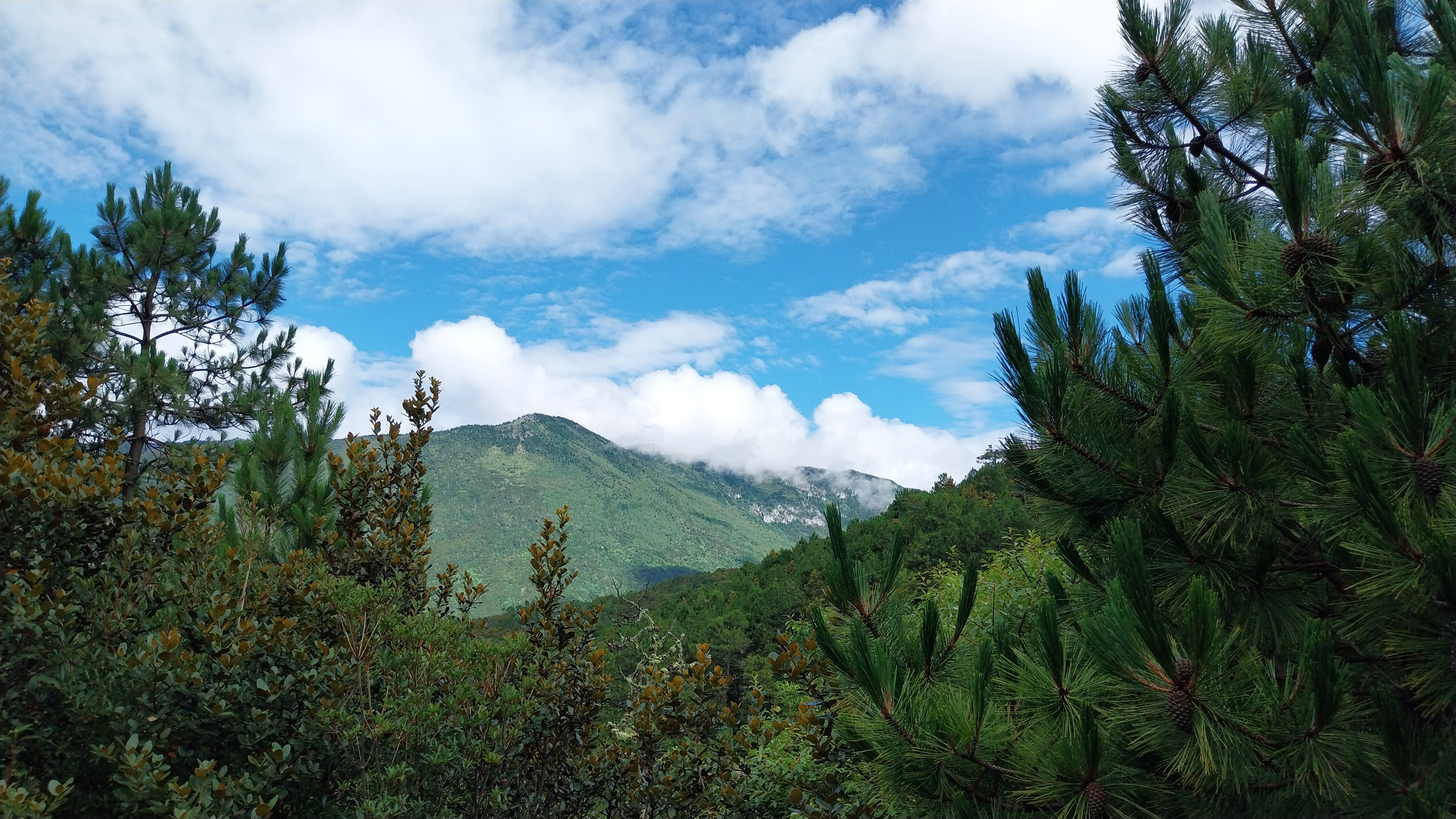
For several years now I have been fortunate to collaborate with colleagues in China on the ecology of plant–pollinator interactions. One of the things that makes that work so exciting is the sheer variety of landscapes in which these interactions play out. In a newly published paper led by Dr Xin Xu, we have studied pollination networks on Yulong Snow Mountain in Yunnan, in south-west China, a place where forests and flower-rich meadows sit side by side in a spectacular high-elevation environment.

The question we asked was simple enough: how do these adjacent habitats – woodland and grassland – differ in the way that plants and pollinators interact? But answering it required a huge amount of field effort. Over two flowering seasons, the team recorded more than 11,000 interactions between 229 pollinating insect species and 89 flowering plant species. That is an extraordinary reminder of how much ecological complexity can be packed into a relatively small area of mountain landscape.

What emerged was a very clear pattern. The open meadows supported far more activity than the neighbouring forests: more visits, more pollinator species, more plant species, and more interaction links. In fact, nearly 9,700 of the recorded interactions took place in meadow habitat, compared with about 1,365 in forest. Meadows were especially important for bumblebees, which are among the key pollinators in these cool, high-elevation systems.

But the forests were not simply poor relations. They supported their own distinctive subset of the wider pollinator community, and the network of interactions there was structured differently. Some pollinator species altered their daily foraging schedules depending on whether they were in meadow or forest, suggesting that they are responding flexibly to changes in light, temperature, floral resources, and perhaps competition. That is one of the aspects of pollination ecology that fascinates me most: these are not static systems, but living networks that shift across space and time.

More broadly, the study reinforces something that has become increasingly clear from ecological research: habitat heterogeneity matters. A landscape made up of different, connected habitat types can support a richer and more resilient community than one that is uniform. On Yulong Snow Mountain, the meadows seem to act as hotspots of pollinator diversity, while the forests add further complexity and help shape how those pollinators behave. Conserving that mosaic is therefore likely to be crucial if we want to maintain pollination services and biodiversity in mountain regions facing rapid environmental change.

For me personally, this paper is also a reminder of why international collaboration is so valuable. Working with Chinese colleagues has opened a window onto ecological systems that are both scientifically important and visually stunning. Yunnan is one of the world’s great biodiversity regions, and studying pollination there helps us understand not only how these mountain ecosystems function, but also how species interactions may respond to climate change and habitat alteration in the future.

Pollination ecology is about more than just bees, birds, or other animals visiting flowers. As a focus of study, it is much richer. It is about networks of interactions, about the timing of activity through the day, about the way species respond to different habitats, and about how whole ecosystems are stitched together. High on a Chinese mountain, among meadows and forests, we can see that complexity in action.

Here’s the full reference:

Xu, X., Maruyama, P.K., Ollerton, J., Wang, H. & Ren, Z.-X. (2026) Spatio-temporal variation in plant–pollinator networks between adjacent meadow and forest habitats in a high-elevation environment. Oecologia (in press)

Here’s the abstract:

Understanding how habitat heterogeneity influences the structure and stability of ecological networks is critical for predicting ecosystem responses to environmental change. In alpine ecosystems, open meadows and forests represent contrasting habitats with distinct vegetation structures, resource availability, and microclimatic conditions. In this study, we integrated spatial and temporal data on pollinator-plant interactions to investigate network structure, species roles, and diurnal foraging dynamics across meadow and surrounding forest habitats during two flowering seasons on Yulong Snow Mountain, Yunnan, China. A total of 11,094 plant–pollinator interactions were recorded, involving 229 pollinator and 89 flowering plant species. Meadows supported significantly higher interaction frequencies, species richness, and α-diversity for both plants and pollinators, although they showed a striking numerical dominance of a single key pollinator, Bombus friseanus. Network dissimilarity analyses revealed substantial differences between habitats, with both species turnover and rewiring contributing to interaction dissimilarity. Diurnal foraging dynamic analysis revealed that some key species, such as Bombus lepidus, displayed distinct foraging patterns across habitats indicating behavioral adaptation and temporal niche partitioning to microclimate. Our findings highlight the strong influence of habitat type on pollination network architecture and reveal many shared pollinator species, indicating some degree of cross-habitat linkage. These results underscore the importance of habitat heterogeneity and spatial coupling in shaping pollination services and sustaining biodiversity in mountain ecosystems under environmental change.

Urban bees are often early bees says a new study

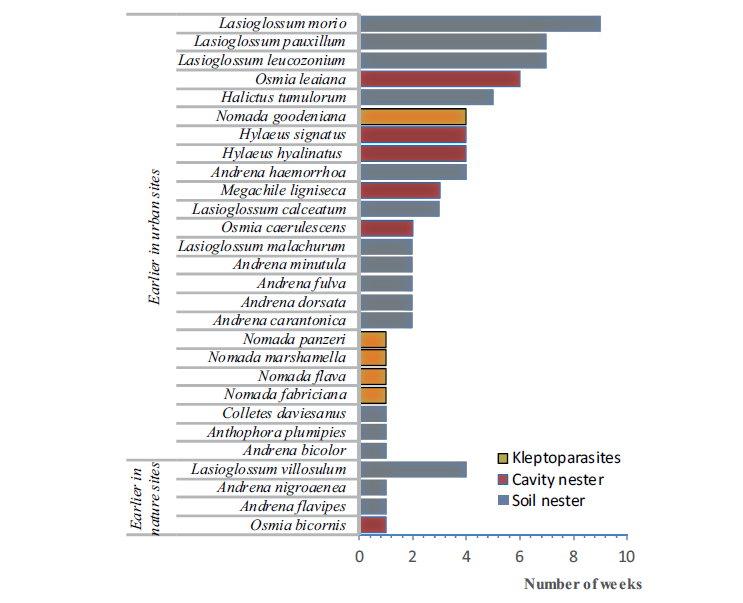
The latest paper from Muzafar Sirohi‘s PhD work on urban solitary bees has just been published in the journal Zoodiversity, a publication of the National Academy of Sciences of Ukraine. In this paper we looked at how the flight periods of urban populations of bees differ from those in surrounding nature reserves and other “natural” settings. One of the most interesting findings is that urban bees tend to emerge earlier, and be active longer, than their rural counterparts. The quote the study:

“We observed a substantial effect of urban microclimate on bee flight periods. A total of 153 individuals of nine bee species were recorded one to nine weeks before or after their expected flight periods. In contrast, only 14 individuals of four species were seen at unusual flight periods in nature sites.”

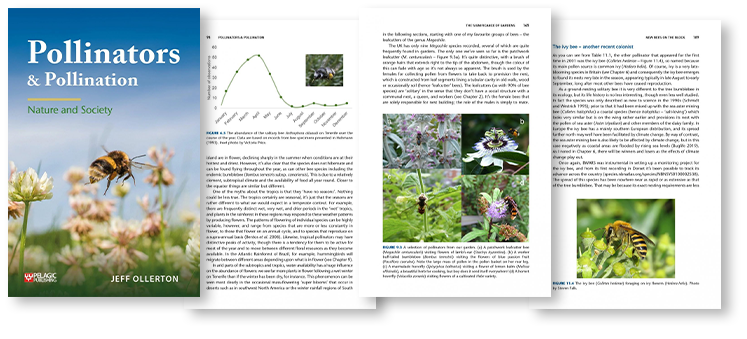
In my book Pollinators & Pollination: Nature and Society I discussed the importance of towns and cities for supporting pollinator populations, and conversely how important those populations are for urban food production. Likewise, in Birds and Flowers: An Intimate 50 Million Year Relationship I have a chapter entitled “Urban flowers for urban birds”. The relationship between our built environment and pollinators is a fascinating topic, but there’s still much we don’t understand about how these insects and vertebrates respond behaviorally to urbanisation. Are they adapting in an evolutionary sense, or simply responding flexibly to the different conditions that cities impose on their biologies? Will future climate change make towns and cities uninhabitable for these animals? Hopefully our paper will stimulate further work on these and other topics.

Here’s the full reference with a link to the paper (which is open access):

Sirohi, M. H., Jackson, J., & Ollerton, J. (2024). Comparison of Flight Periods of Solitary and Primitively Eusocial Bees in Urban Environments and Nature Conservation Areas: a Preliminary Report. Zoodiversity 58: 317-334

Here’s the abstract:

Solitary and primitively eusocial bees, an important group of pollinators, have declined in the past few decades. In view of the recent focus on safeguarding pollinating insects, it is vital to understand the basic ecology of species for their conservation, for example their phenologies. We observed the flight periods of solitary and primitively eusocial bees in both the urban core of a large British town and nearby nature conservation areas. The bee surveys were conducted with standardised methods, on warm sunny days from the first appearance of bees in March 2012 and continued until October 2012. This study confirmed that a high number of species are active in the spring season. The emergence dates of species in urban areas and nature sites varied; about 26 of the 35 species were recorded at least one week earlier in urban areas; in contrast, only four species were seen earlier in nature conservation sites. When comparing this with the expected flight periods recorded (largely in nature sites) in the literature, many species were recorded at their expected time. However, a few individuals were recorded after their usual flight activity time, suggesting that the populations were possibly affected by the microclimate in urban areas. More urban phenological data are needed to understand the phenological trends in bees in urban habitats.

Key tropical crops at risk from pollinator loss due to climate change and land use – a new study just published

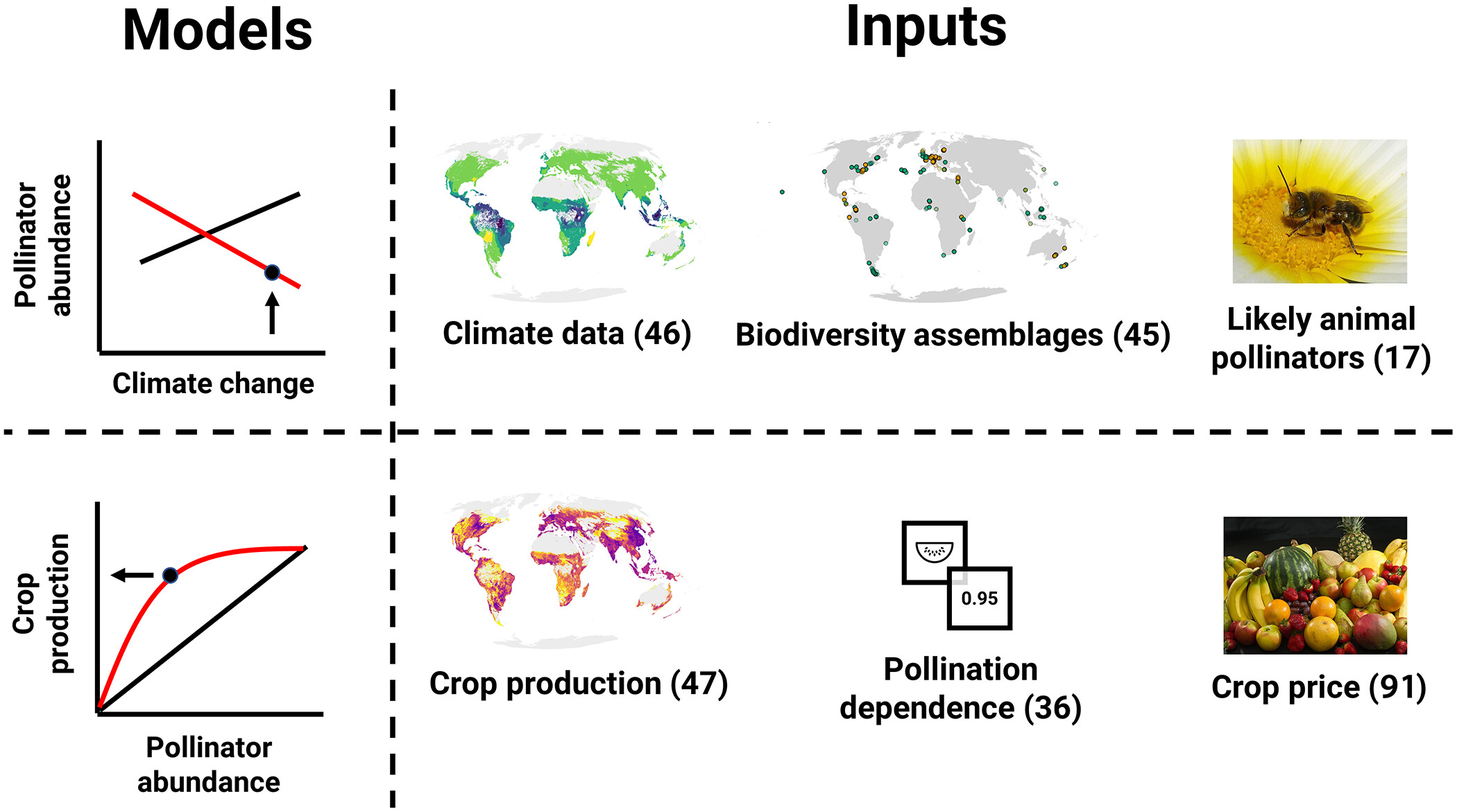
PREDICTS (Projecting Responses of Ecological Diversity In Changing Terrestrial Systems) is one of the most important sources of data for large-scale modelling of how changes in land use is impacting biodiversity. Marry that with future climate models and you have a powerful tool for understanding how these two major factors in global change will shape both biodiversity and human society over the coming decades.

In recent years it’s been a privilege to be part of a project led by Joe Millard and Tim Newbold that’s using PREDICTS to model how pollinators and pollination services are likely to be impacted by human activities. The first paper from that work (which was Joe’s PhD) was entitled ‘Global effects of land-use intensity on local pollinator biodiversity’ and came out in 2021, as I documented on my blog at the time.

Yesterday a second paper was published, this time focused on how land use and anthropogenic climate change interact to potentially affect insect-pollinated crops across the world.

Our main finding is that it’s tropical crops, especially cocoa, mango, watermelon, and coffee, that in the future will suffer the greatest negative impacts from loss of pollinators. Although we can have perfectly healthy diets without consuming any of those, they currently support tens of millions of farmers across the tropics and are part of global supply chains worth billions of dollars per year.

Here’s the full reference with a link to the paper, which is open access:

Millard, J., Outhwaite, C.L., Ceaușu, S., Luísa G. Carvalheiro, da Silva e Silva, F.D., Dicks, L.V., Ollerton, J. & Newbold, T. (2023) Key tropical crops at risk from pollinator loss due to climate change and land use. Science Advances 9, eadh0756

Here’s the abstract:

Insect pollinator biodiversity is changing rapidly, with potential consequences for the provision of crop pollination. However, the role of land use–climate interactions in pollinator biodiversity changes, as well as consequent economic effects via changes in crop pollination, remains poorly understood. We present a global assessment of the interactive effects of climate change and land use on pollinator abundance and richness and predictions of the risk to crop pollination from the inferred changes. Using a dataset containing 2673 sites and 3080 insect pollinator species, we show that the interactive combination of agriculture and climate change is associated with large reductions in insect pollinators. As a result, it is expected that the tropics will experience the greatest risk to crop production from pollinator losses. Localized risk is highest and predicted to increase most rapidly, in regions of sub-Saharan Africa, northern South America, and Southeast Asia. Via pollinator loss alone, climate change and agricultural land use could be a risk to human well-being.

Week-long Master’s course in Italy – March 2024 – on Pollination as an Ecosystem Service

I’m excited to announce that in March 2024 I will teach a week-long, Master’s-level residential course entitled “Pollination as an Ecosystem Service” at the University of Pavia in Italy. It will be taught in English. Here’s a summary of the course and a brief description of the the syllabus, which is broadly accurate but subject to change as it develops:

POLLINATION AS AN ECOSYSTEM SERVICE

A 3 credit Master’s course for the University of Pavia

Overview

The pollination of crops by bees, flies, birds, bats and other animals, is an ecosystem service that increases crop yields and quality. This is valued at hundreds of billions of Euros each year to European and global agriculture. In addition, these same animals pollinate around 90% of the world’s wild plants which in turn provide us with ecosystem services such as wild food, flood alleviation, microclimate modification, and carbon capture.

In this course, students will explore pollination as an ecosystem service from its first principles and historical roots through to the latest research findings around the consequences of pollinator decline and climate change. The emphasis of the course is on the students learning by actively participating during classes. Each day has a particular theme and will be a mix of interactive lectures, short video clips to illustrate particular points, discussion seminars (for which they will be expected to do some guided reading) and local excursions.

At the end of the course the students will have a developed a deep understanding of the diversity of pollinators, the ecological nature of their interactions with flowers, and the importance of these relationships to nature and to society.  

Assessment

            At the end of the course, the students will be asked to give a 10 minute presentation based on one of the topics covered in the course, and posed as a question such as “What is….?”, “Why does….?”, “What would happen if….?”, and so forth. The questions will be agreed with me in advance. Presentations will take place on the final day of the course and at the end of each presentation the students will have 5 minutes to answer questions posed by their peers and myself.

Syllabus

Day 1

Theme: Pollinators and pollination – first principles; including historical perspectives, the diversity of pollinators and flowers, and the biology of pollination. Introducing the course assessment.

Excursion: a walk around the local area to observe flowers and pollinators in action.

Day 2

Theme: Pollination as an ecosystem service; including the types of crops that are animal pollinated, how we calculate the value of pollination, and going beyond agriculture to look at the other ecosystem services provided by pollinators; approaches to studying pollinators and pollination.

Day 3

Theme: Pollinator conservation: including reasons for pollinator decline, impacts of climate change, the “politics of pollination”, the consequences of that decline for crop and wild plant pollination, how we can manage and restore habitats for pollinators.

Day 4

Theme: Urban pollinators: understanding the importance of pollinators in an urban setting and in gardens, and how towns and cities support pollinators. Excursion: How is the city of Pavia supporting pollinator populations and what could be improved?

Day 5

Theme: Summing up what we’ve learned, followed by assessed student presentations.

The course is open to all and there’s details of how to apply (in Italian and English) in the following link: https://portale.unipv.it/it/didattica/corsi-di-laurea/ammissioni/casi-particolari-di-iscrizione/iscriversi-ai-corsi-singoli

The brochure with all available courses can be downloaded here: http://news.unipv.it/?p=84031

I’d be very happy to talk with other universities who might be interested in running such a course.

If you have any questions, please use my Contact page to get in touch.

Books as gifts this Christmas – here’s some ideas for adults and children

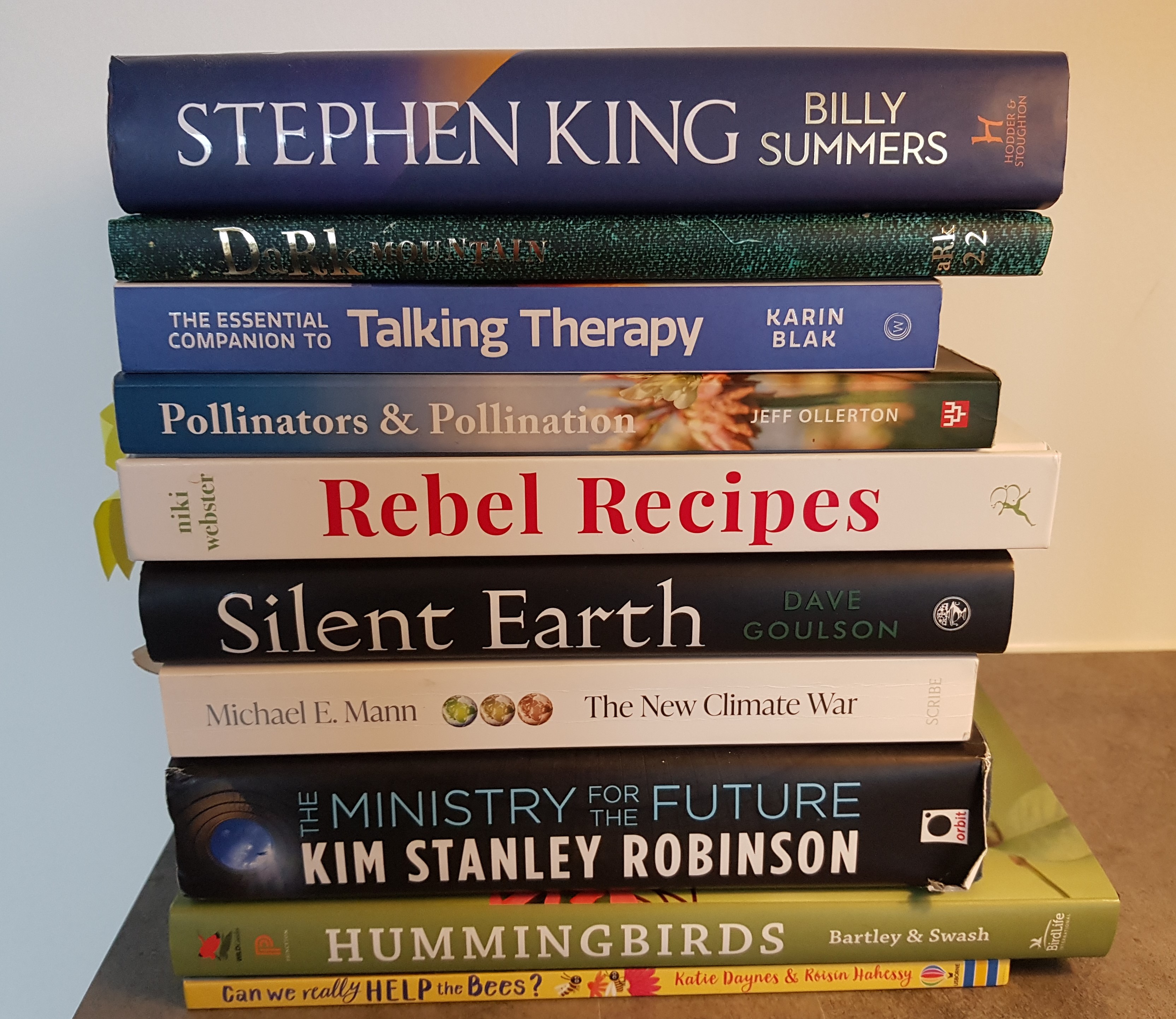
Although we are still in the early part of November, it’s never too soon to be thinking about buying Christmas gifts for friends and family. And what better gift than a book? Here’s a few suggestions for some that I’ve read this year that I think will make fine presents.

Who doesn’t love a good story, and Stephen King is a master storyteller. I’ve really enjoyed his more recent novels and Billy Summers stands out for me. It’s part thriller, part romance, and as always there’s a little touch of the uncanny. Very different, but just as much a page turner, is The Ministry for the Future by Kim Stanley Robinson. Although Robinson is known as a science fiction writer, this novel is set in the near future when climate change breakdown is forcing governments and businesses into making radical changes. As much as anything this is a road map for how we can get ourselves out of the current climate crisis.

Talking of which, Michael Mann’s The New Climate War should be read by everyone interested in understanding how big corporations have colluded with the media and governments to trivialise and misrepresent the problems that we currently face. I reviewed this and a book about the insect biodiversity crisis, Silent Earth by Dave Goulson, in this blog post.

If you are looking for a book to help young children understand the importance of bees and other pollinators then I can highly recommend Can We Really Help the Bees? by Katie Daynes and Róisín Hahessy, for which I acted as science advisor.

For the ornithologically minded you might want to consider the lavishly illustrated Hummingbirds: A Celebration of Nature’s Jewels by Glenn Bartley and Andy Swash. Those who love writing and art with an environmental focus would appreciate an annual subscription to Dark Mountain, which gives you two beautifully produced volumes every year. A couple of my essays appeared in earlier volumes and the quality of the contributions never fails to impress me.

There’s lots of great natural history authors and books to choose from on Pelagic Publishing’s list, including of course my own Pollinators & Pollination: Nature and Society! I especially enjoyed Ian Carter’s recent memoir Human, Nature: A Naturalist’s Thoughts on Wildlife and Wild Places.

For the budding or experienced cook, Niki Webster’s Rebel Recipes serves up some amazing vegan dishes that Karin and I have really enjoyed trying. And speaking of my wife, of course I have to include her Essential Companion to Talking Therapy as the perfect gift for anyone considering or currently undergoing counselling or therapy, or who is thinking about becoming a practitioner.

Finally, if you’re looking for particular book ideas or just like browsing through lists of what others recommend, there’s lots of inspiration over at the independent Shepherd site.

I hope that you’ve found this useful. Feel free to comment with suggestions for other books that you’ve enjoyed.

Using museum specimens to look at long-term stresses on pollinator populations: two new papers just published

One of the projects with which I’ve been involved over the past few years has been a collaboration with researchers at Imperial College and the Natural History Museum, alongside regional collections in the UK, to assess how museum specimens of bumblebees (Bombus spp.) can be used to look at long-term ecological changes in pollinator populations. The first two papers from that project were published in August but because of my trip to Kenya I’ve only now been able to post about them.

The details of the papers (both of which are open access and free to download) are below, followed by the official press release:

Arce, A., Cantwell-Jones, A., Tansley, M., Barnes, I., Brace, S., Mullin, V., Notton, D., Ollerton, J., Eatough, E., Rhodes, M., Bian, X., Hogan, J., Hunter, T., Jackson, S., Whiffin, A., Blagoderov, V., Broad, G., Judd, S., Kokkini, P., Livermore, L., Dixit, M., Pearse, W. & Gill, R. (2022) Signatures of increasing environmental stress in bumblebee wings over the past century: Insights from museum specimens. Journal of Animal Ecology 00, 1– 13. https://doi.org/10.1111/1365-2656.13788

Mullin, V. E., Stephen, W., Arce, A. N., Nash, W., Raine, C., Notton, D. G., Whiffin, A., Blagderov, V., Gharbi, K., Hogan, J., Hunter, T., Irish, N., Jackson, S., Judd, S., Watkins, C., Haerty, W., Ollerton, J., Brace, S., Gill, R. J., & Barnes, I. (2022). First large-scale quantification study of DNA preservation in insects from natural history collections using genome-wide sequencing. Methods in Ecology and Evolution, 00, 1– 12. https://doi.org/10.1111/2041-210X.13945

OFFICIAL PRESS RELEASE: Museum collections indicate bees increasingly stressed by changes in climate over the past 100 years


• An analysis of bumblebee wings from a network of UK museums shows signs of stress linked to increasingly hotter and wetter conditions.
• As well as revealing what is linked to stress in bees in the past, the study can help predict when and where bees will face most stress and potential decline in the future.
• Bumblebees and other insect pollinators have faced population declines in recent years.
• The researchers have also for the first time used ancient DNA techniques to sequence bumblebee genomes dating back over 100 years.
Scientists from Imperial College London and the Natural History Museum today published two concurrent papers analysing UK bumblebee populations.

The first investigated the morphology (body shapes) of bee specimens dating back to 1900. Using digital images, the group first investigated the asymmetry in bumblebee wings as an indicator of stress. High asymmetry (very differently shaped right and left wings) indicates the bees experienced stress during development – an external factor that affected their normal growth.

Studying four UK bumblebee species, the group found evidence for stress getting higher as the century progressed from its lowest point around 1925. Further analysis showed that each bee species displayed a consistently higher proxy of stress in the latter half of the century.

Learning from the past to predict the future
By taking the climate conditions during the year of collection – namely annual mean temperature and annual rainfall – the team found that in hotter and wetter years bees showed higher wing asymmetry. The study is published today in the Journal of Animal Ecology.

Author Aoife Cantwell-Jones, from the Department of Life Sciences (Silwood Park) at Imperial, said: “By using a proxy of stress visible on the bee’s external anatomy and caused by stress during development just days or weeks before, we can look to more accurately track factors placing populations under pressure through historic space and time.”

Author Dr Andres Arce, now at the University of Suffolk, stated: “Our goal is to better understand responses to specific environmental factors and learn from the past to predict the future. We hope to be able to forecast where and when bumblebees will be most at risk and target effective conservation action.”

Senior author Dr Richard Gill, from the Department of Life Sciences (Silwood Park) at Imperial, said: “With hotter and wetter conditions predicted to place bumblebees under higher stress, the fact these conditions will become more frequent under climate change means bumblebees may be in for a rough time over the 21st century.”

DNA from a single leg
As well as measuring the wing shapes of bees, in a second parallel study the team successfully sequenced the genomes of over a hundred bumblebee museum specimens dating back more than 130 years. In a pioneering advance, ancient DNA methods typically used for studying woolly mammoths and ancient humans, were for the first time used on an insect population.

Scientists from the Natural History Museum and the Earlham Institute quantified DNA preservation using just a single bee leg from each of the bees studied to create a baseline genome for each of the four species.

From these developments, published today in Methods in Ecology & Evolution, the researchers can now look to determine how the reported stress may lead to genetic diversity loss.

In conjunction with providing a new reference genome, the team will now use this data to study how bee genomes have changed over time, gaining an understanding of how whole populations have adapted – or not – to changing environments.

The value of museum collections
Focusing on bumblebee collections, the team worked with curators from the Natural History Museum London, National Museums Scotland, Oxford University Museum of Natural History, World Museum Liverpool, and Tullie House Museum Carlisle.

Author Dr Victoria Mullin, from the Natural History Museum, said: “Museum insect collections offer an unparalleled opportunity to directly study how the genomes of populations and species have been affected by environmental changes through time. However, they are a finite resource and understanding how best to utilise them for genetic studies is important.”

Senior author Professor Ian Barnes, from the Natural History Museum, said: “One of the main problems with museum collections is that the quality of DNA can be very variable, making it difficult to predict which type of analyses we should do. We now have a much better idea about DNA preservation in insect collections, which is a massive boost to our ongoing work to understand the history and future of insect populations.”

Dr Gill concluded: “These studies showcase the value of leveraging museums specimens to go back in time and unlock the past’s secrets. But what we have done is just the beginning, and by continuing our work with these vital public collections and collaborating with curators we can only discover more. All this work was part of a Natural Environment Research Council-funded project and could not have been achieved without the commitment, hard work, and diligence of the museum curators, and our other collaborators”.

PRESS RELEASE ENDS

Some seaweeds have “pollinators”! New research published this week

Most of us have at some time stared in fascination at the life contained within the pools that form on rocky shores at low tide. But none of us realized that a whole new class of ecological interaction was taking place!

The 12,000 or so described (and many un-named) seaweeds are incredibly important organisms. Their diverse and abundant photosynthesizing fronds make them one of the main primary producers in coastal seas, creating food and habitat for a huge range of animals. Not only that, but some – the coralline seaweeds – lock up vast amount of CO2 as calcium carbonate and help to create reef systems in the same way as coral.

Although scientists have studied seaweeds for hundreds of years, many aspects of their ecology are still unknown. Their detailed mode of reproduction, for example has only been studied in a small proportion of species.

In a newly published study in the journal Science, French PhD researcher Emma Lavaut and her colleagues have shown that small isopod crustaceans – relatives of woodlice and sea slaters – facilitate the movement of the equivalent of seaweed sperm (termed “spermatia”) from male to female reproductive structures in just the same way that bees and other pollinators move pollen between flowers, so fertilizing female gametes.

Your read that correctly: some seaweeds have pollinators!

It’s an incredible finding! And the implications of this are enormous: Emma and her colleagues have added a whole new branch of life to the examples of sedentary (fixed-place) organisms that require a third party to enable their reproduction. In addition to being a fascinating biological discovery, it has significant environmental and sustainability implications.  

Seaweeds are a diverse group of macroalgae that appeared more than one billion years ago, at least 500 million years before the evolution of what we think of as “true” plants, such as the flowering plants, conifers, cycads, ferns and mosses. Sexual reproduction in the brown and green seaweeds, which include kelps, wracks and sea lettuces, involves spermatia that are mobile and use a flagellum to swim through the water to seek out female reproductive structures. However, Emma studied a seaweed, Gracilaria gracilis, which belongs to the Rhodophyta or red seaweeds, and none of the species in this group have these swimming sperm equivalents.

Sexual reproduction in the red seaweeds has therefore always been something of a mystery. Three quarters of species have separate male and female individuals and so they cannot mate with themselves. It was assumed that the gametes were just released into water currents that haphazardly transported them to the female reproductive organs, much as wind pollinated grasses and pine trees release their vast clouds of pollen on land. The authors of this new study, however, point out that most sexual reproduction by these red seaweeds takes place in the relatively still waters of rock pools, a habitat that they mimicked in the laboratory in a series of elegant aquarium experiments.

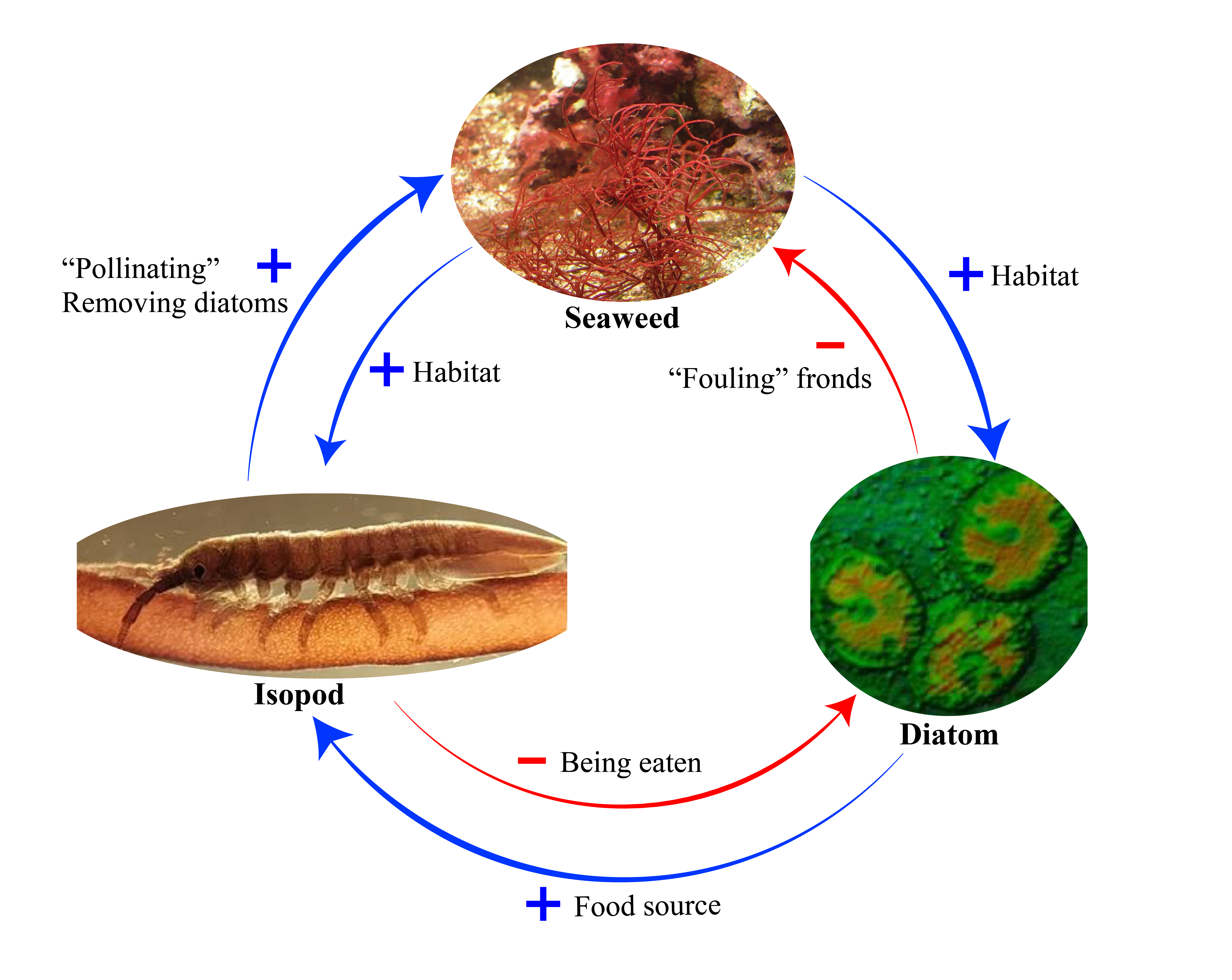
The isopod crustaceans are attracted to the seaweed because they provide a habitat away from predators and a supply of food: they graze on the microalgae that colonise the seaweed’s fronds. Picking up spermatia and moving them between fronds is a side-effect of this activity by the small invertebrates. As you can see from the illustration above, the isopods and the seaweed are engaged in a “double mutualism“: a plus sign (+) indicates a positive effect of one species on another, while a minus sign (-) indicates a negative impact. 

What I find especially fascinating about this research is that both the seaweed (Gracilaria gracilis) and the isopod (Idotea balthica) were originally described as species more than 200 years ago. They also have an extremely wide distribution. The isopod is found around the coasts of Europe and down the eastern seaboard of the Americas. The seaweed is pretty much found globally. These are not rare, unusual species, yet the interaction between them has only just been discovered! This is a point that I made in my recent book Pollinators & Pollination: Nature and Society: quite often, species that are well known interact in previously undocumented ways because no one has had the time or inspiration to look closely at them.

Although the idea that small sea creatures might be helping seaweeds to reproduce sounds very fanciful, there is a precedence for this discovery. Back in 2016, in a paper published in Nature Communications, a group of Mexican researchers led by Brigitta van Tussenbroek showed that a species of seagrass is pollinated by a diverse assemblage of small crustaceans and polychaete worms. Seagrasses are flowering plants, not seaweeds, but clearly this type of mutually beneficial relationship can exist between different species in the oceans.

Rhodophyta are the most diverse group of seaweeds, with more than 7,000 known species. They are especially abundant on coastal shores, oceanic habitats that are under huge pressure from infrastructure development, pollution, and climate change. At the same time, these seaweeds are economically important and millions of tonnes of them are collected every year as food, as nutritional and pharmaceutical supplements, and to produce agar. In order to conserve these seaweed populations, we need to better understand their ecology and their environmental requirements.

The work by Emma Lavaut and colleagues suggests that interactions with their “pollinators” may be a critical aspect of this understanding. In the same way that “Save the Bees” has been a rallying call for conserving interactions between species on land, we may soon hear this message echoed in “Save the Isopods”. At the very least, I have to add a new section to the second edition of my book!

Full disclosure: I was one of the reviewers of the original manuscript submitted to Science by Emma and her co-authors. It’s a rare privilege to review a study and think: “Wow! This is a game-changer!” and including this paper it’s happened to me only a handful of times. The editors at Science kindly invited my colleague Dr Zong-Xin Ren and myself to write a Perspective piece about the work and we were delighted to do so.


Image credits: Isopod and diatom images from Lavaut et al (2022). Gracilaria image by Emoody26 at English Wikipedia CC BY 3.0 https://commons.wikimedia.org/w/index.php?curid=3455016. Design by Shijia Wen and Jeff Ollerton.

Deforestation grabs the headlines: but what about the grasslands?

Perhaps it’s because we don’t have a fancy name for it? “Deforestation” rolls off the tongue in a rather satisfying way that emphasises the importance of conserving old growth and ancient woodlands. But how do we describe destruction of grasslands? “Degrasslandation” doesn’t really work, even though at its root is trying to describe the same effect: the loss of important, carbon-storing and biodiversity-preserving ecosystems. Grasslands, remember, are the world’s largest single terrestrial ecosystem.

Of course it’s not just grasslands that are disappearing: shrublands and savannahs such as the Brazilian cerrado are being lost even faster than forests are being cut down. But again “deshrublandisation” or “decerradoisation” just don’t have the same ring. Nor the political clout: Boris Johnson cannot wax lyrical about the “cathedrals of nature” of chalk grassland on Salisbury Plain or the species rich flood meadows along the Thames. However Britain has lost far more of them than we have of ancient woodlands: over 90% of such species diverse grasslands have now gone according to some estimates.

It’s clear that forests have great PR, are highly photogenic, and are ecologically incredibly important. So today’s announcement at COP26 that world leaders have committed to stopping deforestation by 2030 is welcome news: if they come through with their promises, which they didn’t following a similar announcement in 2014. But I’m in agreement with Gill Perkins who has just published this opinion piece in New Scientist. A commitment to stop grasslands, and other types of habitat, being built on, ploughed up or agriculturally “improved” could go a long way towards ensuring that carbon remains locked up in the world’s soils and vegetation. It doesn’t all have to be about the forests.

UPDATE: for more about the importance of grasslands and how they are being degraded worldwide, see this recent piece by Richard Bardgett, James Bullock, and colleagues entitled “Combatting global grassland degradation“.

If you read only two books this year make them The New Climate War and Silent Earth

My summer reading this year has included two books that I’ve really looked forward to, and which have not disappointed. These books are on the one hand very different and yet share enough similarities for me to review them together. Michael E. Mann’s The New Climate War focuses on the ‘climate emergency’ whilst Dave Goulson’s Silent Earth is about the ‘ecological emergency’, and specifically the decline of insect populations. As I pointed out in a recent New Scientist opinion piece: “the climate emergency often overshadows the ecological emergency, even though the two overlap both in their causes and their solutions”. Reading these two volumes in parallel has given me a much deeper understanding of just how true that statement is, and it’s why I’m suggesting that of the many, many books that have been recently written about our current environmental crisis, these deserve to be the ones that you read.

Silent Earth deals with the billions of small things – the insects and other invertebrates – that make the world function the way it does. These creatures facilitate the recycling of organic material, the pollination of wild and crop plants, the regulation of populations of other species, and play a host of additional ecological roles. The central thesis of the book is that the growing evidence of declines and extinctions of these small animals should give us cause for concern. In contrast, The New Climate War is about the big stuff – how the world’s atmosphere and oceans are heating up, the contribution of human activities to that warming, and what this means for weather patterns and sea levels across the globe. And how industry and politicians have conspired to deny, obfuscate, and divide, undermining efforts to decarbonise the world’s economy.

It matters not whether we view the world through a microscope or via an Earth observation satellite, both of these ways of seeing and understanding are important to our future as a species. The flap of a butterfly’s wings may only rarely be the indirect cause of a hurricane in the Caribbean, but reading these books nonetheless reminds us of the connections between the world’s biosphere and its physical domains.

The science underlying both books acts as a background to their main purpose: convincing the reader that there are urgent issues with which we, as a society, must deal. In this respect they are unapologetically political, and the point at which science meets environmentalism. The books are written by scientists who are respected experts in their respective fields, but who are not content with sitting back on their award- and citation-laden laurels, and allowing their science to speak for itself (as important as that is). Both Mann and Goulson have entered the more public arenas of politics and social commentary to argue the case for fundamental restructuring of some aspects of our societies. Their reward has been near constant criticism, much of it personal, vindictive and even threatening, by the vested interests of the fossil fuel industry (Mann) and agro-chemical & farming interests (Goulson) and the keyboard warriors who labour on their behalf, wittingly or not. That Mann and Goulson persist in voicing their concerns in this way, at the same time continuing to publish high quality science, says much about them as people and their commitment to these important causes.

The stereotype of the cold, calculating, emotionless scientist is shattered by these authors as they frequently refer to their families, especially their children, as a prime motivation for their activism. In an emotive chapter, Goulson imagines his son as an old man sitting up through the night to defend the vegetables that he’s growing with his family in a Britain that has experienced not an apocalyptic collapse of society and basic infrastructure, but “a slow unravelling over decades”. As he remembers back to the world of his youth he wonders: “Why did we fail to act? We humans do not seem to be very good at grasping the big picture”.

The Big Picture is certainly an underlying theme of both books, despite the different scales at which these scientists work, and both are revelatory in their descriptions of what’s occurring behind the scenes. Pull aside the curtain and we see the financial connections between various anti-environmental think tanks and lobby groups (Mann) and the hypocrisy of large business corporations which continue to manufacture highly toxic pesticides that, although banned in the west, can be profitably exported to developing countries (Goulson). All of these messages of corruption and environmental degradation could make the books pessimistic reads. But in fact both have an optimistic undertone, a sense that we know what the issues are, we know what’s got us into this mess, and there are routes out of it. But only if (and it is a huge if) there is the willingness of governments and large corporations to act.

Both writers share a belief in humour and personal anecdotes as vehicles for emphasising important points. For example Mann describing the fearsome and brutal attention given by climate deniers to Greta Thunberg and other youthful activists as being like the Eye of Sauron (one of several Lord of the Rings analogies). Or Goulson’s description of giving a phone interview to Australian radio while lurking in the piss-smelling toilet of a British pub. These books are brought to life by the authors’ experiences as scientists and as advocates, and their passionate wish for a better future.

Full disclosure: this can hardly be considered an objective review as both Dave Goulson and Mike Mann are friends of mine. Dave I met over thirty years ago when we were graduate students in the same department, and we’ve published a few things together. Mike I encountered much more recently, as I described in this post, when we were concurrently on sabbatical at the University of New South Wales and discovered that we were living in adjacent apartment blocks. In some respects the world of science is a very small one. Despite these personal connections I don’t think that I would have said much that’s different about either book had I not known their writers. But who knows, that’s not the way things are. There are certainly things to criticise in both books, and I don’t agree with all of the writers’ conclusions and could debate several points of interpretation with them, especially in Silent Earth where I’m in more comfortable territory. But those would be minor criticisms in light of the conclusions that these important books draw: that our world is changing rapidly, that we are responsible, and that we have a duty to act immediately. It’s not too late, but we need to listen to the science and what scientists such as Mann and Goulson are telling us.