Tag Archives: Pollinators

Are plant-pollinator interactions more specialised in the tropics? A new global analysis suggests that it’s complicated…

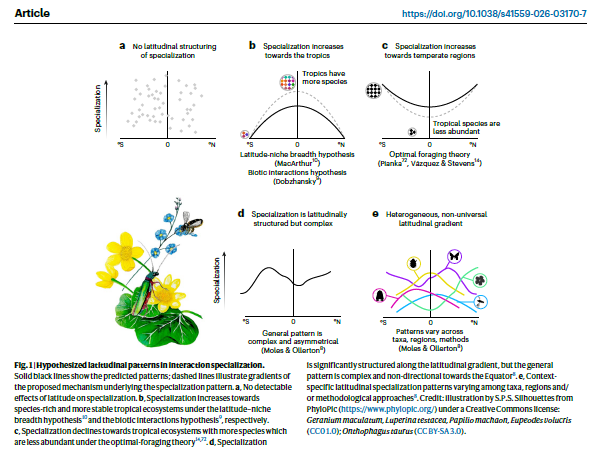
Some scientific questions have a habit of following you around for much of your career. Back in 2002, Louise Cranmer and I published a paper in the journal Oikos asking a deceptively simple question: are tropical plants more specialised in terms of their pollinators?

At the time there was a widespread assumption in ecology that interactions between species become increasingly specialised as you move from the poles towards the tropics. It’s an attractive idea which had some (quite vague) theoretical support. Tropical ecosystems contain more species, have experienced relatively stable climates over long periods of evolutionary time, and seem like just the sort of places where tightly specialised interactions ought to evolve.

The trouble was that the evidence wasn’t especially convincing, in part because it hadn’t actually been well studied. In preparing the 2002 paper, Louise and I found only a handful of empirical studies that had addressed the question, not just for plants and pollinators, but for ALL kinds of interactions.

The question of tropical specialisation has subsequently cropped up repeatedly in my research. In 2014, Angela Moles and I went considerably further and asked whether the broader claim that species interactions are stronger and more specialised in the tropics might actually be a “zombie idea” – one of those scientific notions that persists despite accumulating evidence that the reality is considerably more complicated. That guest post on the Dynamic Ecology blog was then written up as an invited paper for Biotropica see: Tropical Zombies: Moles & Ollerton (2016) is now published.

Twenty-four years after that first Oikos paper, we can now address the question with a dataset that Louise and I could scarcely have imagined in 2002. A huge international collaboration led by Sailee Sakhalkar and Robert Tropek has just published “Global patterns in plant–pollinator specialization” in Nature Ecology & Evolution.

I’m delighted to be one of the co-authors and I find the answer to the question that we posed 24 years ago to be fascinating.

More than 110,000 interactions

The scale of the new study is worth emphasising. It assembled 3,415 quantitative plant-pollinator networks from 162 studies, covering 110,571 pairwise interactions between 5,343 pollinator species and 6,126 plant species. The data span almost all of the world’s terrestrial biogeographic regions, from 43.6°S to 81°N and from sea level to more than 4,000 metres elevation.

That makes this the most comprehensive attempt yet to examine the geography of specialisation in plant-pollinator interactions. But simply throwing thousands of networks into a statistical analysis would potentially create as many problems as it solves. Different researchers study pollination networks in very different ways. Some attempt to sample whole communities, while others concentrate on particular groups such as bees, hummingbirds or particular plants.

So an important feature of this study was that we explicitly separated these different types of datasets and accounted for sampling completeness and methodological differences. We also looked separately at different functional groups of pollinators rather than assuming that bees, beetles, butterflies, moths, flies and birds should all behave in the same way. That turned out to be important in ways that we could not predict.

So, are interactions more specialised in the tropics?

The short answer is no, not in any simple sense. There is geographical structure to plant-pollinator specialisation. But there is no straightforward increase in specialisation as you approach the Equator – nor, for that matter, a straightforward decrease. Instead, the patterns are distinctly nonlinear.

Network-level specialisation and pollinator specialisation tended to peak at relatively low northern latitudes, at around 20°–30°N, close to the tropical-subtropical boundary. I find this particularly interesting as I think the subtropics have been a bit neglected as a focus of ecological research: no one ever refers to themselves as a “subtropical ecologist” and there is no Journal of Subtropical Ecology. Yet the subtropics are not simply a transitional zone between the tropical and temperate worlds. They encompass an extraordinary range of ecosystems, including deserts, Mediterranean-type vegetation, subtropical forests, and some major centres of biodiversity and endemism. This includes the distinctive habitats in Yunnan that I’m exploring during my visits to China. Perhaps we need to start thinking of the subtropics as an important biogeographical region in their own right, rather than as the ecological space between two better-studied zones?

Plant specialisation showed a different and weak hemispherically asymmetric pattern. And once individual pollinator groups were examined separately, the picture became more complicated still. Hoverflies, for example, came closest to the traditional expectation of increasing specialisation towards the Equator. Birds showed something closer to the opposite pattern, while moths did something much more complicated.

In other words, there isn’t a latitudinal specialisation gradient. There are several overlapping geographical patterns whose shapes depend upon what organisms you study and what measure of specialisation you are considering.

That conclusion feels satisfying given the arguments Angela Moles and I made ten years ago. We suggested that attempts to find a universal latitudinal gradient could obscure the fact that different groups of organisms have different evolutionary histories, physiologies and ecologies. That is very close to what emerges from this much larger analysis.

Perhaps latitude was never really the interesting variable

One of the most intriguing results is what happens when we stop asking about latitude itself. We compared latitude with a suite of possible explanatory variables, including temperature, precipitation, environmental productivity, and plant and pollinator diversity. Climate generally did a better job of explaining specialisation than latitude, biodiversity or productivity. Again, however, there wasn’t a single climatic rule.

At the whole-network level, specialisation generally declined as mean annual temperature increased, which was not expected at all and runs counter to the argument that the tropics are always more specialised. Precipitation produced strongly nonlinear relationships, and plants and different pollinator groups responded differently. Birds, insects and even different groups of insects could show contrasting responses to the same climatic gradient.

There are some plausible biological explanations for these patterns. Warmer conditions may extend flowering periods and pollinator activity, creating more opportunities for species to encounter alternative partners and therefore encouraging generalisation. Colder or more seasonal environments might compress flowering and pollinator activity into shorter periods, producing tighter temporal matching between species. Rainfall adds another layer of complexity because it can influence flowering but also directly constrain pollinator activity.

These are hypotheses rather than demonstrated mechanisms, however. As we stress in the paper, these are correlational global patterns and climate covaries strongly with latitude. The results shouldn’t therefore be interpreted as demonstrating simple causal effects of temperature or rainfall.

Specialisation depends on how you look at it

There’s another connection here to research I’ve discussed previously on the blog. In work with Danish and Brazilian colleagues, for example, we showed that the apparent specialisation of plants and pollinators depends partly on the spatial scale at which interactions are examined – see Local and regional specialization in plant–pollinator networks. More recently I’ve written about why scale matters when analysing plant-pollinator networks.

And earlier this year, our global analysis of plant-pollinator interactions in gardens found that the factors explaining species richness were not necessarily those explaining interaction specialisation: Global drivers of plant-pollinator interaction specialization in gardens.

There’s also a nice connection to another study that I wrote about here in 2022. With Pablo Gorostiague and Pablo Ortega-Baes, I looked specifically at whether cactus pollination systems become more specialised towards the tropics. Our answer was yes and no: tropical cacti were visited by somewhat fewer pollinator species, but there was no latitudinal pattern in the number of functional pollinator groups that they used. As I wrote at the time, the answer depended on what we meant by “specialised”: Are cactus pollination systems more specialised in the tropics? A new study suggests yes…and no!

All of these studies point towards a similar conclusion: “specialisation” is not a single, fixed property of an ecological community. What we detect depends upon biological scale, geographical scale, the organisms being considered, and how the interactions have been sampled. That doesn’t make specialisation meaningless. Quite the opposite, it means we need to be precise about what sort of specialisation we’re talking about and at what scale.

The new global study puts that result into a much broader context. Different groups really can display different geographical patterns of specialisation, so studies focused on a particular lineage aren’t necessarily contradicting one another when they produce different answers. They may simply be measuring different pieces of a much larger ecological puzzle.

Why does any of this matter?

Specialisation is not just an esoteric property of ecological networks. It affects how plants and pollinators partition resources, how species coexist, how communities are assembled, and potentially how ecological systems respond when species disappear.

That becomes especially important in a changing climate. Our results suggest that changing temperature and rainfall regimes could restructure plant-pollinator networks, but they are unlikely to do so uniformly. Different pollinator groups and different parts of the world may respond in very different ways. Highly specialised interactions may also be particularly vulnerable to changes in phenology or the loss of interaction partners. Predicting the consequences therefore requires us to move beyond simple statements about “tropical” and “temperate” ecosystems.

For me, though, there is also a broader lesson here about how science progresses. In 2002, Louise Cranmer and I questioned whether the available evidence really supported the assumption that tropical plant-pollinator interactions were more specialised. Fourteen years later, Angela Moles and I argued that the wider claim about stronger and more specialised tropical interactions might be a zombie idea. Now, with more than 110,000 plant-pollinator interactions available for analysis, the answer is much clearer. Latitude matters; climate matters; the identity of the organisms matters; and ecology, as usual, refuses to obey a simple rule.

My particular thanks to Sailee and Rob for the monumental efforts they made to pull this work together, and cudos to all of the co-authors who helped to make the study possible.

A century of genetic erosion in a British bumblebee – a new study just published

Back in 2022 I wrote about a project in which I’d been involved with colleagues at the Natural History Museum, Imperial College London and several regional museums. We were using preserved bumblebees to ask a deceptively simple question: what can insects collected decades ago tell us about the environmental changes that their populations have experienced?

The first papers from that project showed two important things. One found increasing signs of developmental stress in the wings of museum bumblebees over the course of the 20th century, associated particularly with hotter and wetter conditions. The other demonstrated that it was possible to recover and sequence surprisingly good-quality DNA from insects collected more than a century ago, in some cases using just a single leg.

At the time I wrote that this opened up the possibility of looking at how the genomes of bee populations had changed through time. Well, we’ve now done it.

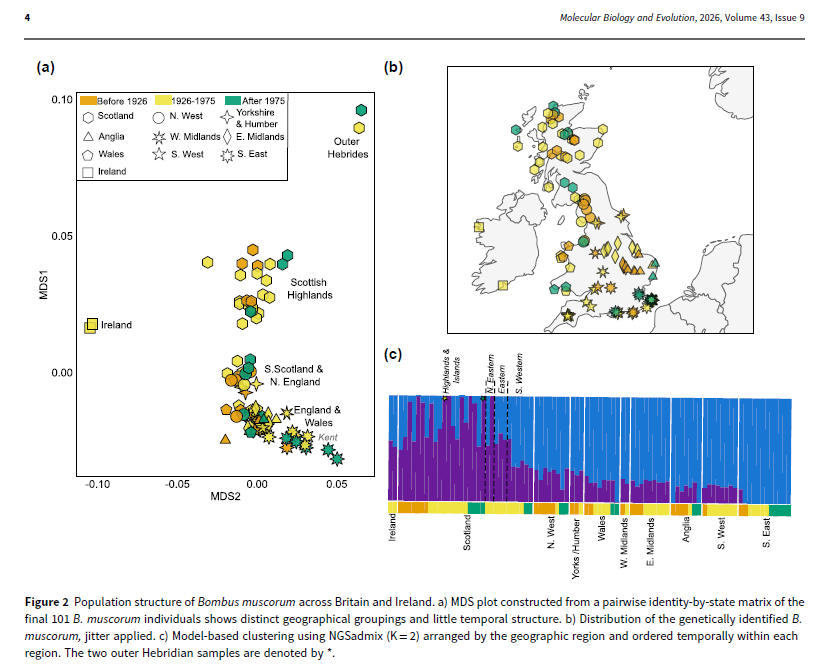
Published this week in Molecular Biology and Evolution, our new study focuses on the Moss Carder Bumblebee (Bombus muscorum), a beautiful species of flower-rich grasslands, heaths, marshes and coastal habitats. Once much more widespread across Britain, it is now largely concentrated in Scotland and the Scottish islands, with scattered populations surviving around the coasts of England and Wales.

Led by Victoria Mullin, the team generated whole-genome data from museum specimens collected between 1894 and 2019. The results provide a rather sobering picture of what has happened inside these bee populations as their geographical distribution has contracted.

Comparing bees collected before 1926 with those collected after 1975, we found about a 25% reduction in genome-wide genetic diversity. Looking at the full time series gives the same basic message: heterozygosity declined progressively through the 20th century, with no obvious sign of recovery.

That matters because losing a species is not the only way that biodiversity can decline. Long before extinction, populations can become smaller and more isolated and begin to lose genetic variation. That variation is part of the raw material that allows populations to respond to environmental change, disease and other challenges.

There was also a striking geographical pattern. In England and Wales, the amount of the genome occurring in long stretches of homozygosity increased by about 186% – in other words, almost threefold. These “runs of homozygosity” are consistent with populations becoming smaller, more fragmented and increasingly isolated from one another. Scotland showed a much weaker change, reflecting the fact that B. muscorum remains considerably more widespread there.

Importantly, however, the population structure is not simply “Scottish bees versus English bees”. The genomic data reveal a broad north-to-south gradient across Britain – what population geneticists call isolation by distance – rather than a set of sharply separated populations. That has implications for conservation because fragmentation may be breaking what was once a more continuously connected population into increasingly isolated regional groups.

There’s another interesting connection here with work that I published with colleagues more than a decade ago. In our 2014 Science paper we used historical records to show that Britain had lost 23 species of bees and flower-visiting wasps, with the fastest rate of extinction occurring from roughly the late 1920s to the late 1950s. We argued that large-scale changes in British agriculture, beginning just after the First World War, were an important part of that story.

The new study is looking at genetic change within a surviving species rather than the disappearance of whole species and it cannot pin that change on a single cause. But the parallels are difficult to ignore. The loss and fragmentation of flower-rich habitats associated with agricultural intensification is a likely contributor, alongside pesticides, climate change and other environmental pressures. The genomic erosion appears to have accumulated progressively across much of the same century in which Britain’s pollinator landscapes were being radically transformed.

One unexpected finding was also a useful warning about museum data. Of the 130 specimens originally labelled as Bombus muscorum, genetic analysis showed that 29 (almost a quarter) were actually two other, morphologically similar bumblebee species. Museum collections are extraordinarily valuable, but identifications cannot always simply be taken at face value, particularly for difficult groups. Genomics provides both a historical record and a way of checking the identity of the specimens supplying that record.

And that brings me back to what I think is one of the wider messages of this whole project: natural history collections are not dusty archives of dead organisms, they are biological time series.

A pinned bumblebee collected more than a century ago preserves information about where a species occurred, what environmental stresses it experienced, and, as we can now show, the genetic diversity of the population from which it came. Combined with modern genomic techniques, the millions of insects sitting in museum drawers around the world represent an extraordinary resource for understanding biological change.

The conservation message for the Moss Carder Bumblebee itself is fairly straightforward. Protecting the remaining populations is not enough if they become progressively smaller and more isolated. Restoring large areas of suitable, flower-rich habitat and reconnecting populations should help maintain population sizes and gene flow. More interventionist approaches such as translocation or assisted gene flow may eventually have a role, but would need careful assessment because of issues such as local genetic structure and disease transmission.

Four years ago, when I blogged about the first papers from this project, I finished with the idea that museum genomics might allow us to understand how insect populations had adapted, or failed to adapt, to a century of environmental change. We now have part of that answer. And it shows that beneath the visible contraction of a species’ range, another quieter form of biodiversity loss can be taking place: the erosion of diversity within its genome.

The paper is open access and you can download a copy here:

Mullin, V.E., Merchant, H.N., Arce, A.N., Nash, W. et al. (2026) Museum specimens reveal the genomic consequences of long-term population decline in an insect pollinator. Molecular Biology and Evolution 43: 1-11.

Fake figs, fooled wasps, and another extraordinary Apocynaceae pollination system

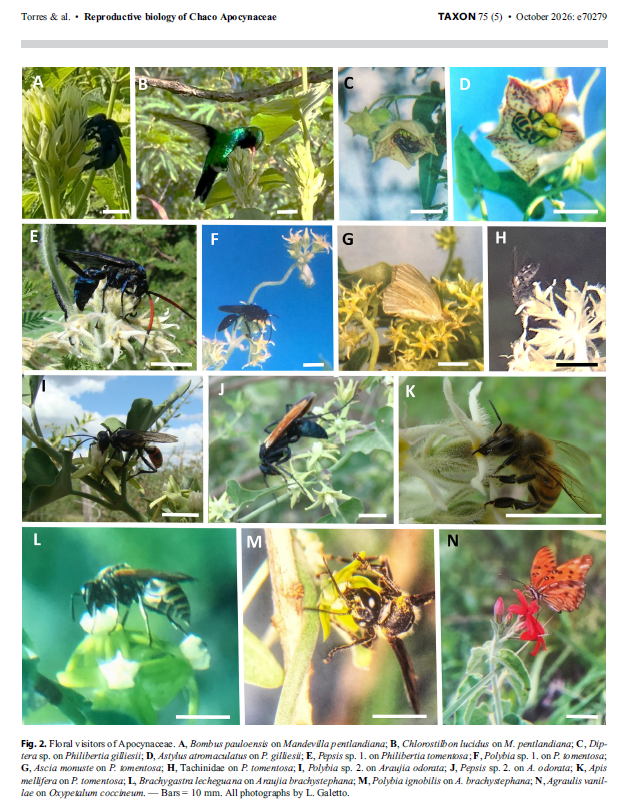
One of the things I love about working on the milkweed and dogbane family (Apocynaceae) is that it has an apparently inexhaustible capacity to produce strange and wonderful interactions with animals. Just when you think that the family’s pollination biology has yielded most of its surprises, along comes something like this.

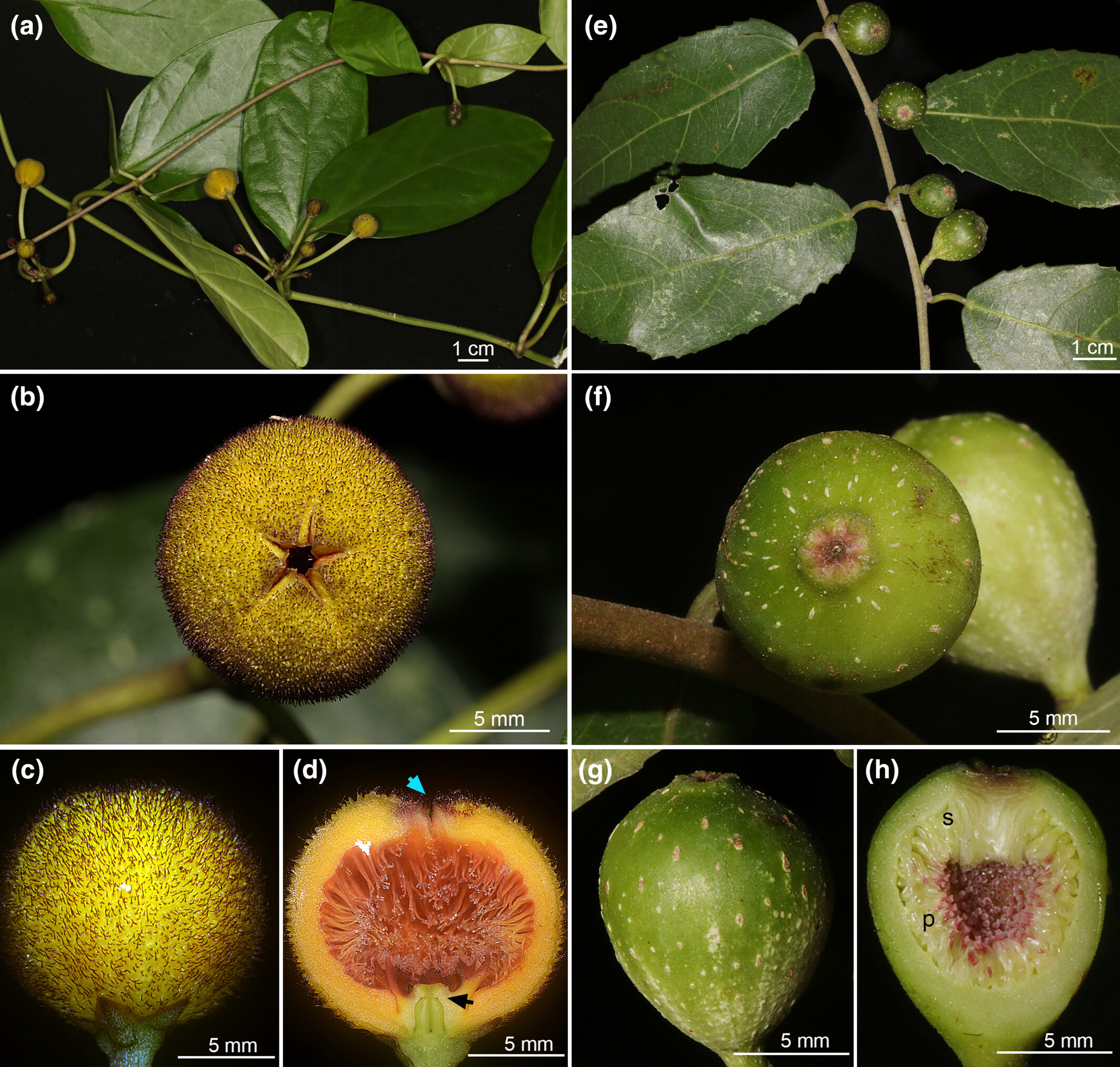
A paper just out in New Phytologist, led by Aroonrat Kidyoo, describes the pollination of Heterostemma ficoides, an unusual climbing plant from northern Thailand. The title rather neatly gives away the story: “Fake figs, fooled fig wasps and rewarded phorid flies: brood-site mimicry and mutualism in Heterostemma ficoides (Apocynaceae)”.

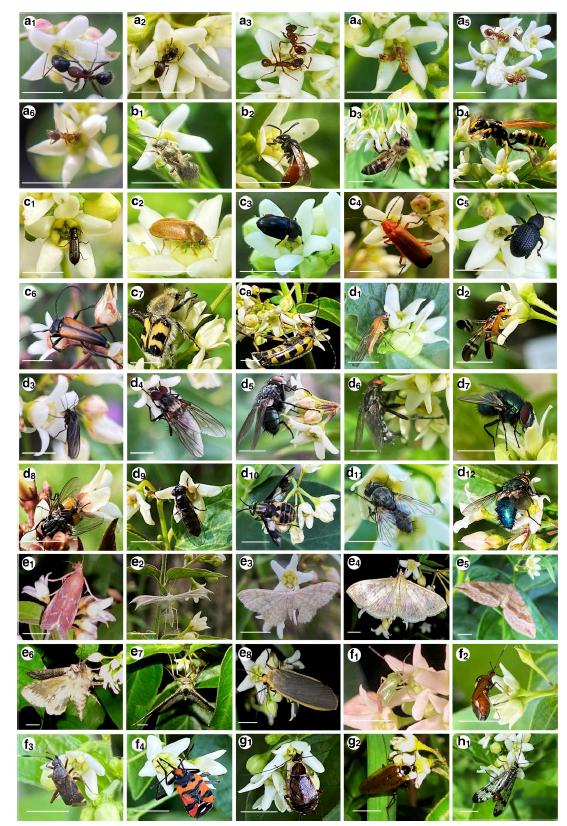
And “fake figs” is not journalistic exaggeration, as you can see from the photos above, which are taken from the paper. The flowers of H. ficoides are globose, fleshy structures, about 1.5–2 cm across, with a small opening at the top. Superficially they look remarkably like the enclosed inflorescences (the syconia) that we normally call figs. Indeed, when the species was first described in 2019, its resemblance to a fig was obvious enough to inspire the name ficoides: fig-like. But looking like a fig is only the beginning of the story.

Fooling one of nature’s most specialised pollinators

The relationship between figs (Ficus) and their tiny agaonid wasps is one of the classic examples of an intimate plant–pollinator mutualism. Female fig wasps locate receptive figs using their scent, squeeze through the tiny opening or ostiole, and pollinate the enclosed flowers while attempting to reproduce inside. These relationships can be remarkably specific, in some cases representing rare examples of one-to-one plant-pollinator interactions.

So it was genuinely surprising to discover female Kradibia fig wasps entering flowers of Heterostemma ficoides. These wasps normally pollinate Ficus heterophylla, not an Apocynaceae, and the authors believe that nothing comparable, i.e., a fig wasp being fooled into visiting a completely unrelated flowering plant, has previously been documented. I have to concur, this relationship is (so far) unique.

The authors have neatly demonstrated that the deception of these wasps is not simply visual. The chemical bouquet produced by H. ficoides is closer to that of receptive Ficus heterophylla figs than it is to the flowers of its relative H. siamicum. More importantly, behavioural experiments showed that Kradibia wasps were significantly attracted to the scent of open H. ficoides flowers, though not to unopened flower buds. In other words, the plant seems to switch on its misleading olfactory advertisement at just the right time.

Once inside, however, the wasps discover that they have made a serious mistake. They wander around probing the inner surface, searching for egg-laying opportunities that simply aren’t there. Some die inside the flower, although more than 80% of observed individuals managed to get out again, and often went on to visit another Heterostemma flower.

In the process, pollen can be transferred between flowers, but as in other members of the Asclepiadoideae, Heterostemma does not dust its visitors with loose pollen grains. Instead, pollen is packaged into pollinia which become attached to the legs of the fig wasps.

So from the fig wasp’s perspective this is straightforward deception: the plant promises a breeding site that doesn’t exist, and the flowers get pollinated in return. But that is only half of the system.

The flies are not being fooled by the fake fig

The most important pollinator of H. ficoides appears to be a tiny phorid fly in the genus Megaselia, and its relationship with the plant is quite different. Female Megaselia enter the flowers and lay their eggs there. Mating may even take place on the flower beforehand. Their larvae then develop inside the fallen flowers, eventually completing their development in the decomposing floral tissue on the forest floor. For these flies the promise made by the flower is therefore an honest one: this really is a brood site.

Pollinaria become attached to the flies’ mouthparts, then the flies carry them to another flower, where pollen can be deposited. Interestingly, Megaselia are also important pollinators of some species of the related Ceropegia in Africa (both genera are members of the tribe Ceropegieae).

This creates an ecological combination that is one of the most distinct examples of a “bimodal pollination system” that I’m aware of, in which the same flower operates simultaneously as a brood-site mutualism and as a brood-site deception, involving two completely distinct groups of insects.

Back to our 2019 Apocynaceae review

For me, there is a satisfying connection here with the large review of Apocynaceae pollination systems that we published in Annals of Botany in 2019: The diversity and evolution of pollination systems in large plant clades: Apocynaceae as a case study. Aroonrat Kidyoo, lead author of this new study, was also one of the large international team involved in that paper.

We assembled usable pollination information for 567 species (a bit more than 10% of the family) and found an extraordinary diversity of interactions. About 73% of the species for which we had information were associated predominantly with a single broad pollinator group, whether bees and wasps, butterflies and moths, flies, beetles or birds. However, about 7% of the species had distinct bimodal pollination systems, such as bee + butterfly. Whether this is an unusually high proportion for such a family is currently unclear as there are few comparative statistics.

One of our broader conclusions from the study was that this interaction diversity was not randomly scattered across the Apocynaceae evolutionary tree. Pollination systems show strong phylogenetic structure and some transitions between pollinator types have occurred much more readily than others. The new Heterostemma study puts some wonderfully detailed natural history onto that much larger evolutionary picture.

Aroonrat and her colleagues suggest that Heterostemma ficoides may represent a shift away from the more open, nectar-producing flowers found in other parts of the genus. In section Oianthus, to which H. ficoides belongs, the flowers have become progressively more closed. In the extreme case represented here, the result is a globose chamber entered through a small opening, nectar production has apparently disappeared, and the plant has moved towards brood-site pollination by flies and deception of fig wasps.

Whether that evolutionary scenario survives a proper phylogeny and detailed pollination studies of the remaining species is an obvious question for the future. As the authors themselves acknowledge, both are currently lacking. But it is exactly the sort of transition that our 2019 study suggested we should be looking for.

And what does any of this have to do with eating Apocynaceae?

Quite a lot, in a roundabout way. Earlier this year my colleagues and I published another large synthesis of the family, this time asking a very different question: which Apocynaceae do people eat?

We documented 440 edible species, spread widely across the evolutionary tree of the family. That sounds like a lot, although statistically Apocynaceae are actually under-represented among the world’s food plants, probably in part because the family is so well endowed with toxic and pharmacologically active chemistry.

One point that emerged strongly from that work was that our knowledge of how those useful plants reproduce is remarkably incomplete. Many edible Apocynaceae are harvested for their fruits and seeds, which of course ultimately means that successful reproduction matters. Yet for most of those species we still know little or nothing about their pollinators.

That matters if we are serious about conserving wild food plants or developing some of them as future crops. You cannot fully understand the biology of a fruit-producing plant without understanding how the flowers get pollinated in the first place.

There are no Heterostemma species documented in our edible-plant study (though it appears that we missed one – see the comment below), so H. ficoides is not some promising new food species. But that isn’t my point. Rather, this new research is a reminder of just how much biological complexity can lie behind the production of an Apocynaceae seed. And we still know the pollination biology of only a fraction of this enormous family.

That, perhaps, is the broader lesson from all three papers. Large databases and family-wide syntheses are valuable because they reveal general patterns and, equally importantly, the gaps in our knowledge. But filling those gaps still depends on researchers spending time watching individual plants and individual insects, dissecting flowers, rearing larvae and asking exactly what the animals are doing. Sometimes what they find is stranger than anyone would have predicted.

Join me for “Pollinator Conservation: Threats and Opportunities” in Bedfordshire on Tuesday 15th September

Bedfordshire Natural History Society (BNHS) has invited me to give a talk on the theme of “Pollinator Conservation: Threats and Opportunities” at Maulden Village Hall (MK45 2DP) on Tuesday 15th September. It starts at 8pm and non-members are encouraged to attend.

More details are available at the BNHS web site.

I’ll have signed copies of my books available to purchase, so if you’re in the area, please do come along.

Keeping up with pollination: using ChatGPT as a research alert

There is too much science.

That is not a complaint about the quantity of research being done. Quite the opposite: it is remarkable how much good work is now being published across the world. But the sheer volume creates a serious practical problem. How can any researcher keep track of what is relevant to their field, let alone read and properly absorb it?

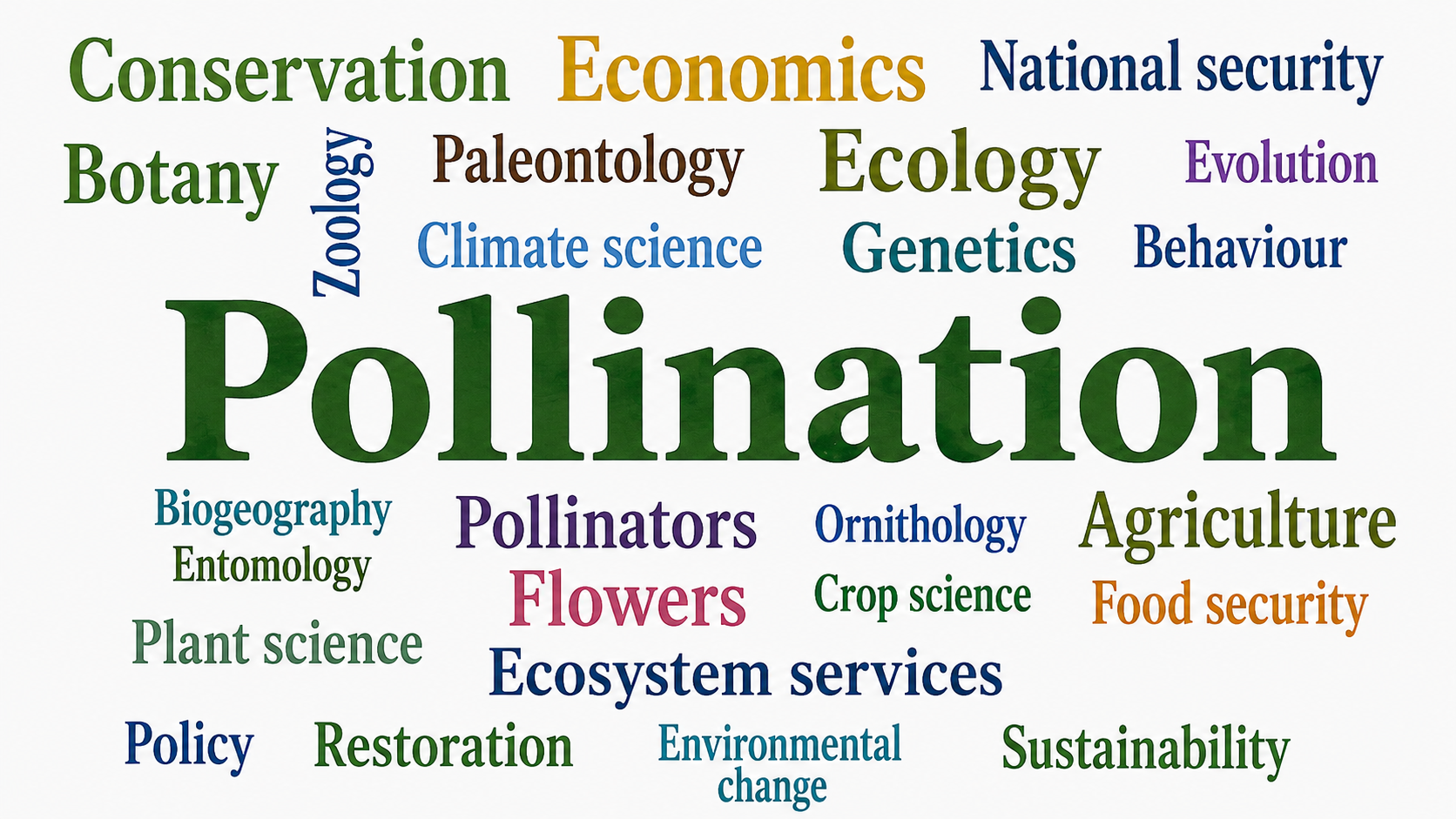
For someone interested in pollination, the difficulty is compounded by the extraordinary breadth of the subject. Pollination is not confined to a single academic discipline, or even to a small cluster of them. It cuts across botany, zoology, ecology, evolution, conservation biology, agriculture, economics, food security, national security, palaeontology, biogeography, genetics, behaviour, climate science and many other areas.

A paper that changes how I think about pollination might appear in a specialist plant journal, an entomological publication, or journals covering conservation, agricultural economics, or palaeontology. It might concern the structure of ecological networks, the nutritional quality of crops, the evolution of flowers, pesticide regulation, the movements of migratory birds or the fossil record of insects. It may not even use the word “pollination” prominently in its title or abstract.

That breadth is one of the great attractions of a subject that has kept me fascinated for 35 years, and which I tried to capture in my book Pollinators & Pollination: Nature and Society. It is also what makes keeping up with it so challenging.

The limitations of conventional alerts

There are, of course, many ways to receive information about new research. Journals send tables of contents. Google Scholar provides alerts based on keywords or authors. ResearchGate regularly tells me that someone has cited one of my publications.

These services have their place, but they tend to provide a rather narrow window onto the literature.

For example, Google Scholar can alert researchers to newly indexed material matching a search query. This is useful, but it is neither a comprehensive record of everything published nor a carefully curated selection: broad searches produce noise, while narrow ones inevitably miss relevant work.

A citation alert from ResearchGate tells me about research connected to work that I have already published. That can be valuable, and occasionally flattering, but it inevitably looks backwards. It shows me the expanding wake of my own research rather than offering a broad view of where the subject is moving.

Keyword alerts have a different problem. They can generate large quantities of material with very little discrimination. A search for “pollination”, “pollinator” or “plant–pollinator interactions” will retrieve many relevant papers, but also conference notices, marginally related studies, duplicate records and work of highly variable importance.

More restrictive searches reduce the noise but risk excluding the unexpected paper that turns out to be especially interesting.

What I need is not simply a larger stream of titles. I want something closer to an informed research assistant: a system that could search widely, exercise some judgement, explain why particular items might matter, and alter its approach in response to my comments.

I have therefore been experimenting with ChatGPT’s scheduling function as a weekly research-alert system.

A scheduled conversation

My current instruction is for ChatGPT to provide a shortlist every Friday morning of the most worthwhile new papers, preprints, reports and substantive analyses relating to plant–pollinator interactions, pollination networks, bird pollination and related broader biodiversity topics.

I have asked it to include no more than ten items, and fewer when the available material is weak. That final qualification is important: I do not need ten references merely to fill ten spaces, I’d rather receive four genuinely interesting papers than a padded list containing six that I will never read.

For each item, the system can provide the citation, a short account of the main finding and an explanation of why it may be relevant to my interests. It can also distinguish between peer-reviewed research, preprints, reports and other forms of analysis.

In that sense, the alert is already more useful than a conventional automated search. But the most important difference is that it is a conversation.

I can tell it that a particular paper was especially useful and ask it to look for more work of that kind. I can point out that another item was only marginally relevant. I can ask it to widen its search into palaeontology, ecological economics or agricultural policy, or to pay closer attention to a particular taxonomic group.

I can also tell it what not to do. When a major European pollinator-research white paper appeared, for example, the alert quite reasonably identified it as relevant. But I was one of its co-authors and did not need an artificial intelligence system to introduce it to me as a new discovery. I could therefore instruct the system to recognise my own publications and either omit them or flag them only when they were strategically relevant.

That adaptability is difficult to reproduce with conventional keyword alerts. The scheduled search is therefore not a fixed filter, it can be refined as my interests, projects and frustrations change.

From retrieval to assessment

The distinction between finding research and assessing it is also important.

A long list of newly published papers transfers the problem of selection from the search engine to the researcher. A useful alert should do more than retrieve documents. It should offer some preliminary judgement about novelty, relevance and significance.

Does a paper introduce a genuinely new idea, or does it repackage a familiar concept in new terminology? Is a striking conclusion supported by a strong study design? Does a paper matter because of its empirical results, its methods, its conceptual framework or its policy implications? Is it directly relevant to my work, or merely adjacent to it?

ChatGPT cannot answer such questions infallibly. Nor should its assessment be accepted without scrutiny. But it can help to triage the literature and identify which papers deserve closer attention.

This is particularly valuable outside one’s immediate specialism. I can usually make a rapid initial judgement about a field study of flower visitors or a paper on pollination networks. I may need more assistance in deciding whether a new economic analysis, remote-sensing method or palaeontological reconstruction is likely to be important.

The purpose is not to delegate scientific judgement, it is to direct that judgement more efficiently.

A few necessary cautions

There are obvious limitations.

An AI-generated research brief is only as good as the literature it can locate and the instructions it has been given. It may miss relevant work, misunderstand a paper, exaggerate novelty or place too much weight on a fashionable topic.

There is also a danger of creating an intellectual echo chamber. If I repeatedly tell the system what interests me, it may become increasingly good at confirming those interests while overlooking research that sits outside them. A useful alert needs some permission to surprise.

For that reason, I think the instructions should combine a clear core remit with an explicit request to include occasional unexpected items that could change how the field is viewed.

The summaries themselves must also remain starting points. Important papers need to be read, methods inspected and conclusions considered in relation to the evidence. An articulate paragraph generated by ChatGPT is not a substitute for engaging with the original study.

A better kind of alert

Used carefully, however, scheduled ChatGPT alerts offer something that conventional notification services do not: an iterative relationship between the researcher and the search process.

The system can learn that I am interested not only in pollination as an ecological interaction, but also in its agricultural, economic, evolutionary, historical and political dimensions. It can respond when I say that a particular area is becoming more important to a project. It can explain its selections, accept criticism and search differently the following week.

That makes it less like an electronic table of contents and more like a research assistant who arrives on Friday morning with a small pile of papers and a cup of coffee and says: “These are the ones I think you should look at, and this is why.”

Like any research assistant, it will sometimes be wrong. It may overlook something obvious, become overenthusiastic about a weak paper or misunderstand why a study matters. But it can be corrected. The conversation continues, and the next briefing can be better.

For a field as broad and rapidly expanding as pollination research, that may be the most useful feature of all.

I will finish with an example. Today’s alert arrived at the scheduled 08:00 (though I had to make my own coffee…) and included four items for me to look at; this was the fourth, which I’m reproducing verbatim:

4. Agarwala et al. — Biodiversity loss will decrease the future creditworthiness of nations

The authors incorporate projected losses of wild pollination, tropical timber and marine fisheries into sovereign credit-risk models for 23 countries. Their scenarios suggest that partial ecosystem collapse could substantially increase national borrowing costs and expose a major omission in conventional credit ratings.

Why it matters: This is one of the clearer attempts to translate pollination loss from ecosystem-service valuation into a decision framework already used by governments and financial markets. For ecological-economics work, the methodological bridge—from spatial ecosystem-service scenarios through macroeconomic models to sovereign credit ratings—is more important than the headline monetary totals.

The ecological assumptions deserve scrutiny. “Wild pollination” is compressed into a tractable economic input, so uncertainty in crop dependence, substitution, adaptation and spatial mismatch may be obscured once propagated through the financial model.

Assessment: Strategically consequential interdisciplinary analysis, not new pollination biology.

The paper actually appeared on 4th June but I missed it, even though it cites this paper by Millard et al., in which I was involved, and presumably appeared on a ResearchGate citation alert last month. ChatGPT rightly spotted that it was something which would interest me and that’s what’s so fascinating about this approach to keeping up with the literature – this system is intelligent enough to “understand” my needs, even if it’s not conscious of precisely why it understands them.

As always, I’d be pleased to hear your views on this topic – feel free to comment below.

Bird pollination finally confirmed in Britain!

In my book Birds & Flowers, I included a chapter called “The curious case of Europe”. The point of that chapter was simple enough: compared with much of the rest of the world, Europe appears to be oddly deficient in bird pollination. There are no hummingbirds, no sunbirds, no honeyeaters, and very few native plants that obviously look as though they have evolved with birds as their main pollinators. And it Britain, it appears that bird pollination is totally absent.

But “appears” is doing a lot of work there.

For decades, European bird–flower interactions have tended to be treated as marginal curiosities: Blue Tits taking nectar from willow catkins, warblers dusted with pollen, finches messing about in blossom. Interesting natural history, certainly, but not necessarily pollination. The assumption has usually been that insects do the serious work, and birds are at best incidental visitors.

A new paper in Journal of Ecology called “Generalist passerine birds perform a functional role as pollinators in temperate Europe“, by Sandra Anderson, George Perry and Rose Thorogood challenges that assumption in a very useful way. Working at Wicken Fen in Cambridgeshire, they found that pollen transport by passerine birds was widespread. Most of the birds they sampled carried pollen, and several species — including Blue Tit, Blackcap, Chiffchaff, Wren, Redpoll and Bullfinch — regularly carried meaningful loads.

More importantly, they tested whether this mattered to the plants. By excluding birds from flowers while allowing insects access, they showed that fruit-set was reduced in several early-flowering woody plants, including Blackthorn (Prunus spinosa), Hawthorn (Crataegus monogyna) and Buckthorn (Rhamnus cathartica). In other words, the birds were not just getting dusty faces. They were contributing to plant reproduction.

I should say that I was one of the reviewers of this paper, so I have followed its development with particular interest. What I like about it is that it does not try to claim that Europe secretly has a hidden flora of classic “bird flowers”. These are not red tubular blossoms adapted to hummingbirds or sunbirds. They are familiar, open, pale, spring-flowering shrubs and trees. Nor are the birds specialised nectar-feeders. They are generalist passerines making use of seasonal resources.

That is precisely why the paper is interesting. It shifts the question from “does this look like bird pollination?” to “does bird visitation actually function as pollination?” That distinction matters. Pollination syndromes can be useful, but they can also blind us to interactions that do not fit the textbook categories.

The seasonal context is also important. These interactions peak early in spring, when willows, blackthorn and other woody plants are flowering, temperatures are still cool, insects may be unreliable, and birds are preparing to breed or arriving from migration. Under those conditions, even occasional bird visits could be valuable to plants needing pollen moved between individuals.

For me, this paper strengthens the argument I made in “The curious case of Europe”: Europe is not devoid of bird–flower interactions; rather, we have been looking for the wrong kind of bird pollination. Instead of obvious “ornithophilous” specialisation, we may have overlooked a more diffuse, opportunistic, generalist system involving common birds and common spring-flowering woody plants.

That may not be as spectacular as a hummingbird hovering at a tropical flower, but ecologically it is just as revealing.

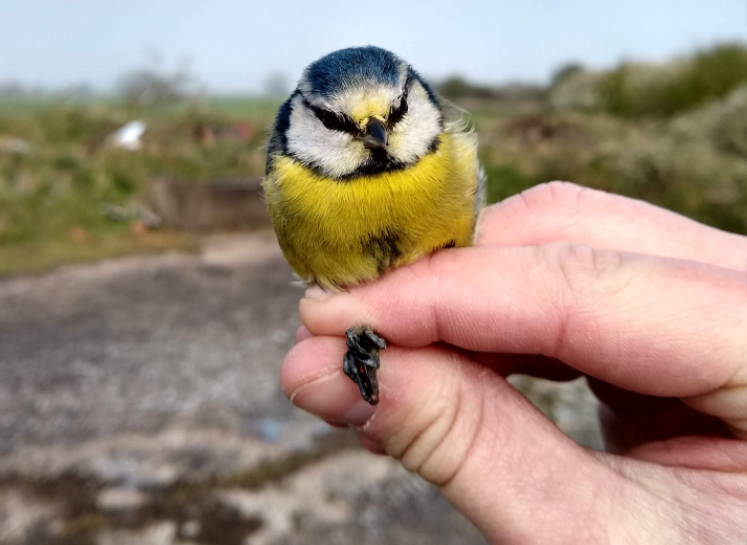
The photo above is from Birds & Flowers and shows pollen on the face of a Eurasian Blue Tit in the early spring. Bird mist-netted under licence in Northamptonshire, UK. (© Lynne Barnett)

When an old experiment revealed a new story about flowers

Sometimes, science does not go the way you plan.

That is usually framed as failure: the experiment did not work, the results were inconclusive, the story was unclear. But science can also advance when we go back to old data and ask a different question. That is exactly what happened with a study of Field Scabious, Knautia arvensis, a familiar wildflower of meadows and grasslands.

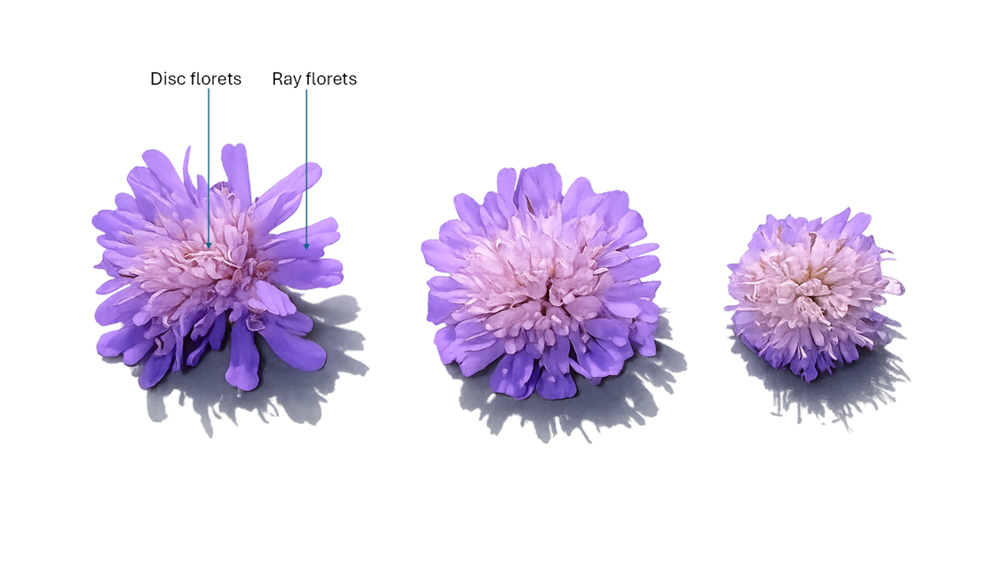
Back in 2001, I carried out an experiment to test the function of the showy outer florets around the edge of the flower head. These enlarged “ray florets” look as though they ought to be important in attracting pollinators. The idea was simple: trim them in different ways and see whether pollinating insects responded – you can see the results of that trimming in the photo above.

The answer, at the time, was baffling. Bumblebees, hoverflies and butterflies (all of which are effective pollinators of this plant) did not seem to care very much. Visitation rates by the insects hardly changed, and neither did seed set. But seed weight did change, as did the amount of sugar being produced by the trimmed flower heads. At the time I could not make sense of this in relation to the question I had asked, so the data were archived and left alone.

But not forgotten.

Fast forward 25 years, and I was chatting about this data set with colleagues when I was at the Kunming Institute of Botany in China. That got me reading some more recent work about florivory -the damage done to flowers by animals – and I realised that this old experiment might make more sense if viewed from another angle. Perhaps I had not really been testing floral attraction at all. Perhaps, without intending to, I had carried out a simulated florivory experiment.

Seen in that light, the results became much more interesting.

Cutting the ray florets did not stop pollinators from visiting. Nor did it reduce the number of seeds produced. But it did change the plant’s internal economics. Nectar quality declined in the most heavily cut flowers, and the seeds that those flower heads produced were consistently lighter. In other words, the flowers still functioned well enough to get pollinated, but the plant appeared to invest less in rewards for pollinators and less in each of its offspring.

That matters because lighter seeds may have poorer prospects later in life, even if the plant initially appears to reproduce successfully. The damage did not cause total reproductive failure. Instead, it produced a subtler effect: hidden costs that only become visible when you look beyond simple seed counts.

Newly contexualised in this way, we wrote up this work, being completely honest about the history of the study, submitted it to the Journal of Pollination Ecology, where it received very positive reviews. It’s now been published and you can download a copy by following the link in the reference:

Ollerton, J., Xu, X. & Ren, Z.-X. (2026) Misconceived experiments may yield valuable insights: simulated florivory has unpredictable consequences for plant reproduction in Knautia arvensis (Caprifoliaceae). Journal of Pollination Ecology (in press)

I like this study because it tells two stories at once. One is ecological: florivory may not always reduce pollinator visits, but it can still alter plant reproduction in potentially important ways. The other is about how science actually works. Not every good paper begins with a perfect hypothesis and a clean result. Sometimes the value lies in returning to an awkward, neglected dataset and realising that it was trying to tell you something different all along.

Science does not always go the way you plan. But occasionally that is when it becomes most revealing.

Help us uncover the hidden lives of Europe’s ground-nesting bees

When most people think about pollinators, they picture bees visiting flowers. But for many species, a large part of life happens elsewhere: in the soil. Many pollinators do not just feed above ground, they also nest, shelter or develop below it

Discovering more about this aspect of pollinator life histories is the focus of ProPollSoil, a major new European research project exploring the links between soil health and pollinator health that kicked off last year. I’m excited to be part of it because the soil component of pollinator ecology and conservation is important but often overlooked.

As part of ProPollSoil, we are asking the public to help us find and document ground-nesting bees through a citizen science initiative called EuroBeeSoil. If you spot a bee nest in soil, sand, a lawn, a path edge or a sunlit bank, you can photograph it and upload your record to iNaturalist.

It’s a simple idea, but potentially a very powerful one. These observations will help us understand where bees are nesting, what kinds of soils they use, and how we can better conserve them.

We often talk about pollinator-friendly flowers. But bees need more than food, they also need somewhere to live. For many species, that means the ground beneath our feet.

So please follow this link and consider how you might take part if you can. You do not need to be a bee expert. You just need to look down a little more often.

What China’s mountain meadows and forests can teach us about pollinators

For several years now I have been fortunate to collaborate with colleagues in China on the ecology of plant–pollinator interactions. One of the things that makes that work so exciting is the sheer variety of landscapes in which these interactions play out. In a newly published paper led by Dr Xin Xu, we have studied pollination networks on Yulong Snow Mountain in Yunnan, in south-west China, a place where forests and flower-rich meadows sit side by side in a spectacular high-elevation environment.

The question we asked was simple enough: how do these adjacent habitats – woodland and grassland – differ in the way that plants and pollinators interact? But answering it required a huge amount of field effort. Over two flowering seasons, the team recorded more than 11,000 interactions between 229 pollinating insect species and 89 flowering plant species. That is an extraordinary reminder of how much ecological complexity can be packed into a relatively small area of mountain landscape.

What emerged was a very clear pattern. The open meadows supported far more activity than the neighbouring forests: more visits, more pollinator species, more plant species, and more interaction links. In fact, nearly 9,700 of the recorded interactions took place in meadow habitat, compared with about 1,365 in forest. Meadows were especially important for bumblebees, which are among the key pollinators in these cool, high-elevation systems.

But the forests were not simply poor relations. They supported their own distinctive subset of the wider pollinator community, and the network of interactions there was structured differently. Some pollinator species altered their daily foraging schedules depending on whether they were in meadow or forest, suggesting that they are responding flexibly to changes in light, temperature, floral resources, and perhaps competition. That is one of the aspects of pollination ecology that fascinates me most: these are not static systems, but living networks that shift across space and time.

More broadly, the study reinforces something that has become increasingly clear from ecological research: habitat heterogeneity matters. A landscape made up of different, connected habitat types can support a richer and more resilient community than one that is uniform. On Yulong Snow Mountain, the meadows seem to act as hotspots of pollinator diversity, while the forests add further complexity and help shape how those pollinators behave. Conserving that mosaic is therefore likely to be crucial if we want to maintain pollination services and biodiversity in mountain regions facing rapid environmental change.

For me personally, this paper is also a reminder of why international collaboration is so valuable. Working with Chinese colleagues has opened a window onto ecological systems that are both scientifically important and visually stunning. Yunnan is one of the world’s great biodiversity regions, and studying pollination there helps us understand not only how these mountain ecosystems function, but also how species interactions may respond to climate change and habitat alteration in the future.

Pollination ecology is about more than just bees, birds, or other animals visiting flowers. As a focus of study, it is much richer. It is about networks of interactions, about the timing of activity through the day, about the way species respond to different habitats, and about how whole ecosystems are stitched together. High on a Chinese mountain, among meadows and forests, we can see that complexity in action.

Here’s the full reference:

Xu, X., Maruyama, P.K., Ollerton, J., Wang, H. & Ren, Z.-X. (2026) Spatio-temporal variation in plant–pollinator networks between adjacent meadow and forest habitats in a high-elevation environment. Oecologia (in press)

Here’s the abstract:

Understanding how habitat heterogeneity influences the structure and stability of ecological networks is critical for predicting ecosystem responses to environmental change. In alpine ecosystems, open meadows and forests represent contrasting habitats with distinct vegetation structures, resource availability, and microclimatic conditions. In this study, we integrated spatial and temporal data on pollinator-plant interactions to investigate network structure, species roles, and diurnal foraging dynamics across meadow and surrounding forest habitats during two flowering seasons on Yulong Snow Mountain, Yunnan, China. A total of 11,094 plant–pollinator interactions were recorded, involving 229 pollinator and 89 flowering plant species. Meadows supported significantly higher interaction frequencies, species richness, and α-diversity for both plants and pollinators, although they showed a striking numerical dominance of a single key pollinator, Bombus friseanus. Network dissimilarity analyses revealed substantial differences between habitats, with both species turnover and rewiring contributing to interaction dissimilarity. Diurnal foraging dynamic analysis revealed that some key species, such as Bombus lepidus, displayed distinct foraging patterns across habitats indicating behavioral adaptation and temporal niche partitioning to microclimate. Our findings highlight the strong influence of habitat type on pollination network architecture and reveal many shared pollinator species, indicating some degree of cross-habitat linkage. These results underscore the importance of habitat heterogeneity and spatial coupling in shaping pollination services and sustaining biodiversity in mountain ecosystems under environmental change.

Join me for two webinars exploring the links between biodiversity, pollinators and the UN Sustainable Development Goals

The diversity of life on Earth, and the interactions between the species that make up that diversity, are fundamentally important to the functioning of ecosystems and to human well-being. Yet these connections are often poorly appreciated, despite the fact that biodiversity supports everything from food production and clean water to climate resilience and human health.

At the end of March and the end of May I will be presenting two lunchtime webinars which explore this as part of the Biological Recording Company’s Skills for Ecology series. These talks will look at how biodiversity in general, and plant–pollinator interactions in particular, connect to the United Nations Sustainable Development Goals (UN SDGs), showing why the conservation of nature is central to a just, healthy, and sustainable future.

Here are the dates and the links for booking:

  1. Biodiversity and the UN Sustainable Development Goals – Tuesday 31st March, 12:30-14:00
  2. Plant-Pollinator Interactions and the UN Sustainable Development Goals – Tuesday 26th May, 12:30 to 14:00 

I look forward to seeing some of you there!