Category Archives: Wasps

Fake figs, fooled wasps, and another extraordinary Apocynaceae pollination system

One of the things I love about working on the milkweed and dogbane family (Apocynaceae) is that it has an apparently inexhaustible capacity to produce strange and wonderful interactions with animals. Just when you think that the family’s pollination biology has yielded most of its surprises, along comes something like this.

A paper just out in New Phytologist, led by Aroonrat Kidyoo, describes the pollination of Heterostemma ficoides, an unusual climbing plant from northern Thailand. The title rather neatly gives away the story: “Fake figs, fooled fig wasps and rewarded phorid flies: brood-site mimicry and mutualism in Heterostemma ficoides (Apocynaceae)”.

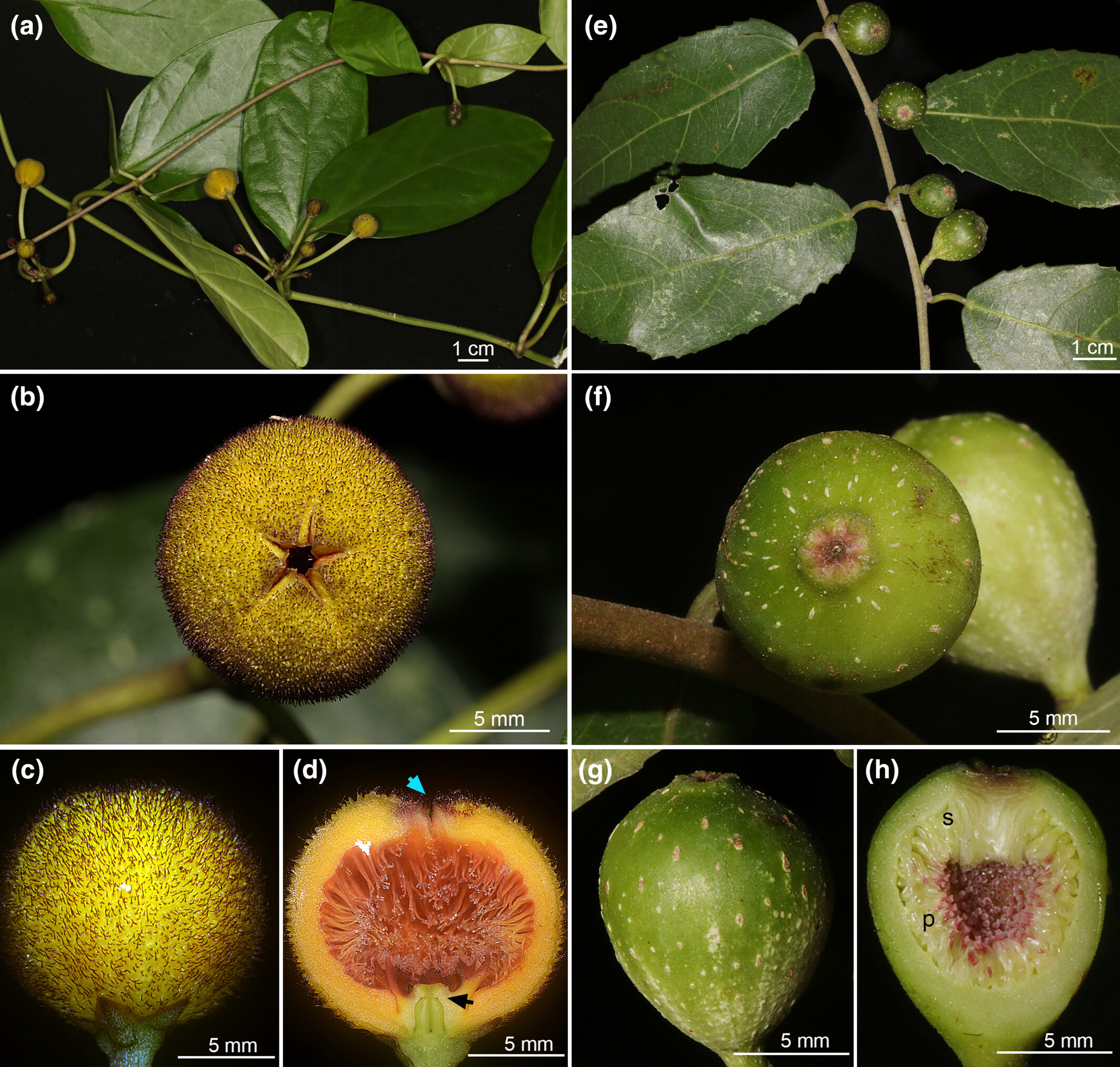
And “fake figs” is not journalistic exaggeration, as you can see from the photos above, which are taken from the paper. The flowers of H. ficoides are globose, fleshy structures, about 1.5–2 cm across, with a small opening at the top. Superficially they look remarkably like the enclosed inflorescences (the syconia) that we normally call figs. Indeed, when the species was first described in 2019, its resemblance to a fig was obvious enough to inspire the name ficoides: fig-like. But looking like a fig is only the beginning of the story.

Fooling one of nature’s most specialised pollinators

The relationship between figs (Ficus) and their tiny agaonid wasps is one of the classic examples of an intimate plant–pollinator mutualism. Female fig wasps locate receptive figs using their scent, squeeze through the tiny opening or ostiole, and pollinate the enclosed flowers while attempting to reproduce inside. These relationships can be remarkably specific, in some cases representing rare examples of one-to-one plant-pollinator interactions.

So it was genuinely surprising to discover female Kradibia fig wasps entering flowers of Heterostemma ficoides. These wasps normally pollinate Ficus heterophylla, not an Apocynaceae, and the authors believe that nothing comparable, i.e., a fig wasp being fooled into visiting a completely unrelated flowering plant, has previously been documented. I have to concur, this relationship is (so far) unique.

The authors have neatly demonstrated that the deception of these wasps is not simply visual. The chemical bouquet produced by H. ficoides is closer to that of receptive Ficus heterophylla figs than it is to the flowers of its relative H. siamicum. More importantly, behavioural experiments showed that Kradibia wasps were significantly attracted to the scent of open H. ficoides flowers, though not to unopened flower buds. In other words, the plant seems to switch on its misleading olfactory advertisement at just the right time.

Once inside, however, the wasps discover that they have made a serious mistake. They wander around probing the inner surface, searching for egg-laying opportunities that simply aren’t there. Some die inside the flower, although more than 80% of observed individuals managed to get out again, and often went on to visit another Heterostemma flower.

In the process, pollen can be transferred between flowers, but as in other members of the Asclepiadoideae, Heterostemma does not dust its visitors with loose pollen grains. Instead, pollen is packaged into pollinia which become attached to the legs of the fig wasps.

So from the fig wasp’s perspective this is straightforward deception: the plant promises a breeding site that doesn’t exist, and the flowers get pollinated in return. But that is only half of the system.

The flies are not being fooled by the fake fig

The most important pollinator of H. ficoides appears to be a tiny phorid fly in the genus Megaselia, and its relationship with the plant is quite different. Female Megaselia enter the flowers and lay their eggs there. Mating may even take place on the flower beforehand. Their larvae then develop inside the fallen flowers, eventually completing their development in the decomposing floral tissue on the forest floor. For these flies the promise made by the flower is therefore an honest one: this really is a brood site.

Pollinaria become attached to the flies’ mouthparts, then the flies carry them to another flower, where pollen can be deposited. Interestingly, Megaselia are also important pollinators of some species of the related Ceropegia in Africa (both genera are members of the tribe Ceropegieae).

This creates an ecological combination that is one of the most distinct examples of a “bimodal pollination system” that I’m aware of, in which the same flower operates simultaneously as a brood-site mutualism and as a brood-site deception, involving two completely distinct groups of insects.

Back to our 2019 Apocynaceae review

For me, there is a satisfying connection here with the large review of Apocynaceae pollination systems that we published in Annals of Botany in 2019: The diversity and evolution of pollination systems in large plant clades: Apocynaceae as a case study. Aroonrat Kidyoo, lead author of this new study, was also one of the large international team involved in that paper.

We assembled usable pollination information for 567 species (a bit more than 10% of the family) and found an extraordinary diversity of interactions. About 73% of the species for which we had information were associated predominantly with a single broad pollinator group, whether bees and wasps, butterflies and moths, flies, beetles or birds. However, about 7% of the species had distinct bimodal pollination systems, such as bee + butterfly. Whether this is an unusually high proportion for such a family is currently unclear as there are few comparative statistics.

One of our broader conclusions from the study was that this interaction diversity was not randomly scattered across the Apocynaceae evolutionary tree. Pollination systems show strong phylogenetic structure and some transitions between pollinator types have occurred much more readily than others. The new Heterostemma study puts some wonderfully detailed natural history onto that much larger evolutionary picture.

Aroonrat and her colleagues suggest that Heterostemma ficoides may represent a shift away from the more open, nectar-producing flowers found in other parts of the genus. In section Oianthus, to which H. ficoides belongs, the flowers have become progressively more closed. In the extreme case represented here, the result is a globose chamber entered through a small opening, nectar production has apparently disappeared, and the plant has moved towards brood-site pollination by flies and deception of fig wasps.

Whether that evolutionary scenario survives a proper phylogeny and detailed pollination studies of the remaining species is an obvious question for the future. As the authors themselves acknowledge, both are currently lacking. But it is exactly the sort of transition that our 2019 study suggested we should be looking for.

And what does any of this have to do with eating Apocynaceae?

Quite a lot, in a roundabout way. Earlier this year my colleagues and I published another large synthesis of the family, this time asking a very different question: which Apocynaceae do people eat?

We documented 440 edible species, spread widely across the evolutionary tree of the family. That sounds like a lot, although statistically Apocynaceae are actually under-represented among the world’s food plants, probably in part because the family is so well endowed with toxic and pharmacologically active chemistry.

One point that emerged strongly from that work was that our knowledge of how those useful plants reproduce is remarkably incomplete. Many edible Apocynaceae are harvested for their fruits and seeds, which of course ultimately means that successful reproduction matters. Yet for most of those species we still know little or nothing about their pollinators.

That matters if we are serious about conserving wild food plants or developing some of them as future crops. You cannot fully understand the biology of a fruit-producing plant without understanding how the flowers get pollinated in the first place.

There are no Heterostemma species documented in our edible-plant study (though it appears that we missed one – see the comment below), so H. ficoides is not some promising new food species. But that isn’t my point. Rather, this new research is a reminder of just how much biological complexity can lie behind the production of an Apocynaceae seed. And we still know the pollination biology of only a fraction of this enormous family.

That, perhaps, is the broader lesson from all three papers. Large databases and family-wide syntheses are valuable because they reveal general patterns and, equally importantly, the gaps in our knowledge. But filling those gaps still depends on researchers spending time watching individual plants and individual insects, dissecting flowers, rearing larvae and asking exactly what the animals are doing. Sometimes what they find is stranger than anyone would have predicted.

Join me for “Pollinator Conservation: Threats and Opportunities” in Bedfordshire on Tuesday 15th September

Bedfordshire Natural History Society (BNHS) has invited me to give a talk on the theme of “Pollinator Conservation: Threats and Opportunities” at Maulden Village Hall (MK45 2DP) on Tuesday 15th September. It starts at 8pm and non-members are encouraged to attend.

More details are available at the BNHS web site.

I’ll have signed copies of my books available to purchase, so if you’re in the area, please do come along.

Press release: Europe risks a crisis if it fails to halt pollinator loss, researchers warn

NOTE FROM JEFF: This press release came out at the start of the week and I am involved in two of the EU-funded projects that are mentioned, Butterfly and ProPollSoil, and I’m a co-author of the White Paper.

For immediate release

University of Bergen Brussels office, Rue Guimard 1040, Brussels, Belgium, 22 June 2026

Eight EU-funded research consortia warn that Europe risks a crisis if it fails to halt pollinator loss. Their solution: a roadmap to reverse wild pollinator decline and protect managed bees.

A new White Paper from eight major EU-funded pollinator projects warns that the resilience of Europe’s vital societal functions and food security are at stake if the EU fails to halt and reverse wild pollinator declines, and to support managed pollinators. Behind the report is an interdisciplinary team of 135 leading researchers with expertise ranging from ecosystem ecology, pollinator ecology, ecological economics, social science, environmental history, behavioural psychology, political science, and environmental law. The report flags the EU’s siloed governance structures and resulting policy incoherence as the major barrier to pollinator restoration. It states that the EU and its Member States urgently need to act by making Pollinator Stewardship an explicit and measurable top-priority across policies on agriculture, environment, chemicals, research and innovation, trade, finance, planning, legislation, and education.

The report diagnoses the looming pollinator crisis as arising from a dysfunctional relationship between humans and nature. Seeing humans as separate from and superior to nature, and thinking of nature as an object for human use as a resource, reinforces institutional structures that exploit nature for short-term individual and material gain. This leads to unsustainable agricultural practices that risk jeopardising the resilience of the ecosystems on which humanity critically depends.

There is more at stake than food security, the report warns. Indeed, many of Europe’s economic supply chains and sectors depend on pollination of flowering plants. Think of medicinal plants, food supplements, biomass energy crops, biomaterials, textiles, fodder, cosmetics, decoration, art, culture, and tourism.

The report also highlights the low pollinator literacy of key societal actors whose daily actions can make the difference for pollinators. It advocates mandating ecoliteracy in the education of professionals in all key sectors that affect pollinators and their habitats.

According to the report’s lead author, Professor Jeroen van der Sluijs, many people whose actions affect pollinators and their habitat are already doing their best to help save the bees. But most lack the literacy to understand how their practices cascade into pollinator loss.

“Many farmers plant wildflower strips along their fields, but almost no one knows that some moths are more effective pollinators than honeybees. These little creatures of the night, clothed in velvet and moonlit dust, need host plants for their larvae, not only flowers. Host plants for pollinating hoverflies, beetles and moths are missing in most seed-mixtures for flower strips.”

Avoiding a scenario in which Europe is hit by a pollination crisis requires addressing the EU’s functioning and moving away from its siloed governance structures. This requires addressing fragmented responsibilities across sectors, top-down policy design, and weak coordination among administrations that currently hinders effective pollinator restoration. According to the authors, the conflict between short-term production goals and the need to maintain pollination services as a public good must be solved as soon as possible.

The report ends with a detailed roadmap of 15 urgent, evidence-informed recommendations for action that, when fully implemented, can reverse pollinator decline in Europe.

Full White Paper: https://zenodo.org/records/20715669

Surveying for Pollinators: join me for an online live webinar on 2nd October!

On Thursday, October 2 at 6:30pm, I’m running an online webinar on the theme of Surveying for Pollinators. Follow that link for more details and to book a ticket.

Here’s an overview of what I’ll be covering:

Pollinators like bees, butterflies, hoverflies and even beetles play a vital role in keeping our ecosystems thriving. They help plants reproduce, support biodiversity, boost food production, and contribute billions to the global economy. Beyond their ecological importance, they’re also excellent indicators of environmental health — when pollinators are doing well, nature usually is too.

But how do we actually find out what’s happening with pollinators?

In this webinar, we’ll explore the fascinating world of pollinator surveys — from simple, hands-on methods anyone can try, to more advanced techniques used by experienced entomologists and ecologists. You’ll get an overview of popular approaches, including:

  • Flower-Insect Timed Counts – A quick and accessible method inspired by the UK Pollinator Monitoring Scheme (PoMS).
  • Transect Walks – Great for spotting pollinators along a fixed route and comparing habitats.
  • Plant-focused sampling – for when you really want to delve deep into the pollinators of a species.
  • Trapping methods – including pan traps, vane traps, Malaise traps, and moth traps.
  • Camera Traps – A non-intrusive way to capture who’s visiting flowers when you’re not looking.

We’ll break down the pros and cons of each technique, which approaches are best suited to the question being asked, what to consider before starting your own survey, and how your efforts can feed into national monitoring schemes like PoMS, the UK Butterfly Monitoring Scheme, and BeeWalk.

Whether you’re a curious beginner, a budding citizen scientist, a research student, or a conservation professional, this session will give you the knowledge and tools to design a pollinator survey that fits your goals — and helps protect the buzz behind biodiversity.

The 90-minute event will consist of a 1-hour presentation followed by a Q&A with the tutor using questions provided by the live audience.

The presentations will be recorded and shared with those who booked, alongside Q&A transcripts and relevant links following the event via a password-protected website.

Biodiversity Net Gain and pollinators: catch up with my talk on YouTube

Yesterday I delivered a webinar for the Biological Recording Company on the topic of what Biodiversity Net Gain (BNG) could mean for pollinator conservation. It’s a topic that clearly has a lot of resonance for the ecology community: almost one thousand people (994 to be precise) booked to attend, of which 380 actually watched. That’s a fairly typical ratio for free webinars, in my experience – many people book a place in the expectation that they will receive a link to watch the recording later.

The talk was indeed recorded and can be viewed by following this link to YouTube. There was a Q&A session afterwards which is not part of the recording but the questions and my answers have been transcribed and can be viewed on the Biological Recording Company’s blog, together with links to all of the references and data sources that I cited. Here’s the link to the blog.

I had a lot of really positive feedback during and after my talk, plus some extremely useful comments about where my interpretation of BNG was incorrect (or at least didn’t tell the whole story). As I stressed during my talk, BNG is a journey not an end point and we are all at the start of that journey! It’s going to be fascinating and important to see whether BNG can positively impact declining pollinator populations.

Biodiversity Net Gain and pollinators – join me for a FREE webinar next Monday!

Biodiversity Net Gain is generating a lot of attention in the UK at the moment, some of it positive*:

“when designed and delivered well, BNG can secure benefits for nature, people and places, and for the economy”

“[BNG is] a game-changer for health and wellbeing”

And some of it extremely negative*:

“Biodiversity Net Gain is a lie but most people without enough ecological knowledge cannot see this & are fooled by the lie”

“[BNG is] a horrible legalistic contrivance, and it means nothing”

Regardless of how you feel about BNG, it’s here to stay, at least for the foreseeable future, and so we need to explore it and understand how (or whether) it can positively improve the state of nature in Britain.

Although I don’t pretend to be an expert on BNG**, I have thought a lot about how it might impact the group that I do have some expertise in, pollinators, and the implications for the pollination services that they provide to wild and crop plants.

Last October I produced a short report that considered the implications of BNG for insect pollinators – you can download a copy from the original blog post, though do be aware that some of the dates I mentioned were later revised by the then government and I have yet to revise the document.

As a follow up to this I have been invited by the Biological Recording Company to lead a one-hour webinar discussing this topic on Monday 28th October at 1pm. It’s free to attend and you can book a ticket by following this link. There’ll be a short presentation (30 minutes or so) followed by a live Q&A.

I hope that some of you can join me!

——————————————————————

*Real quotes, culled from reports and social media.

**Indeed, it’s such a new approach to development and nature conservation, can anybody consider themselves an expert?

What are the limits to pollinator diversity? A new article poses the question

The most globally significant groups of pollinators are well known and have been studied for a long time: bees and wasps, flies, butterflies and moths, birds, bats and beetles are all familiar to those of us with an interest in pollination ecology. However, every few years a new type of pollinator or a novel pollination system is described from nature or from the fossil record, or we add further examples of previously neglected pollinator groups such as cockroaches.

This begs the question: how much is there still to discover? How close are we to describing the full diversity of animals that act as pollen vectors? Can looking at the past help us to predict what we might find in the future? That’s the topic of a Perspective article that I was invited to write for the special issue of the Journal of Applied Entomology on the theme of  The Neglected Pollinators that I mentioned last month. It’s a subject that I’ve thought about a lot over the last few decades and it was great to get an opportunity to air some ideas and speculation.

The article is open access and you can download a copy by following the link in this reference:

Ollerton, J. (2024) What are the phylogenetic limits to pollinator diversity? Journal of Applied Entomology (in press)

Here’s the abstract:

Although huge progress has been made over the past 200 years in identifying the diversity of pollinators of angiosperms and other plants, new discoveries continue to be made each year, especially in tropical areas and in the fossil record. In this perspective article I address the following questions: Just how diverse are the pollinators and what are the phylogenetic limits to that diversity? Which other groups of animals, not currently known to regularly engage with flowers, might be found to be pollinators in the future? Can we predict, from the fossil record and from discoveries in under-researched parts of the world, which animal groups might turn out in the future to contain pollinators? I also discuss why adding to our knowledge of plant–pollinator interactions is important, but also stress that an incomplete knowledge may not be a bad thing if it means that remote, inaccessible and relatively pristine parts of the world remain that way.

A use for invasive Yellow-legged Hornets? – China Diary 4

The UK media has fueled something of a moral panic over the last couple of years, in relation to the Yellow-legged Hornet (Vespa velutina) which has become established as an invasive species in Europe. It also looks likely to become established in Britain and Ireland, where beekeepers have claimed that it poses “a severe threat to pollinators“. The only study that I know of that’s tested this idea in Britain – by Thomas O’Shea-Wheller, Juliet Osborne, et al. – suggests that the impact on bumblebees, at least, is not as great as feared.

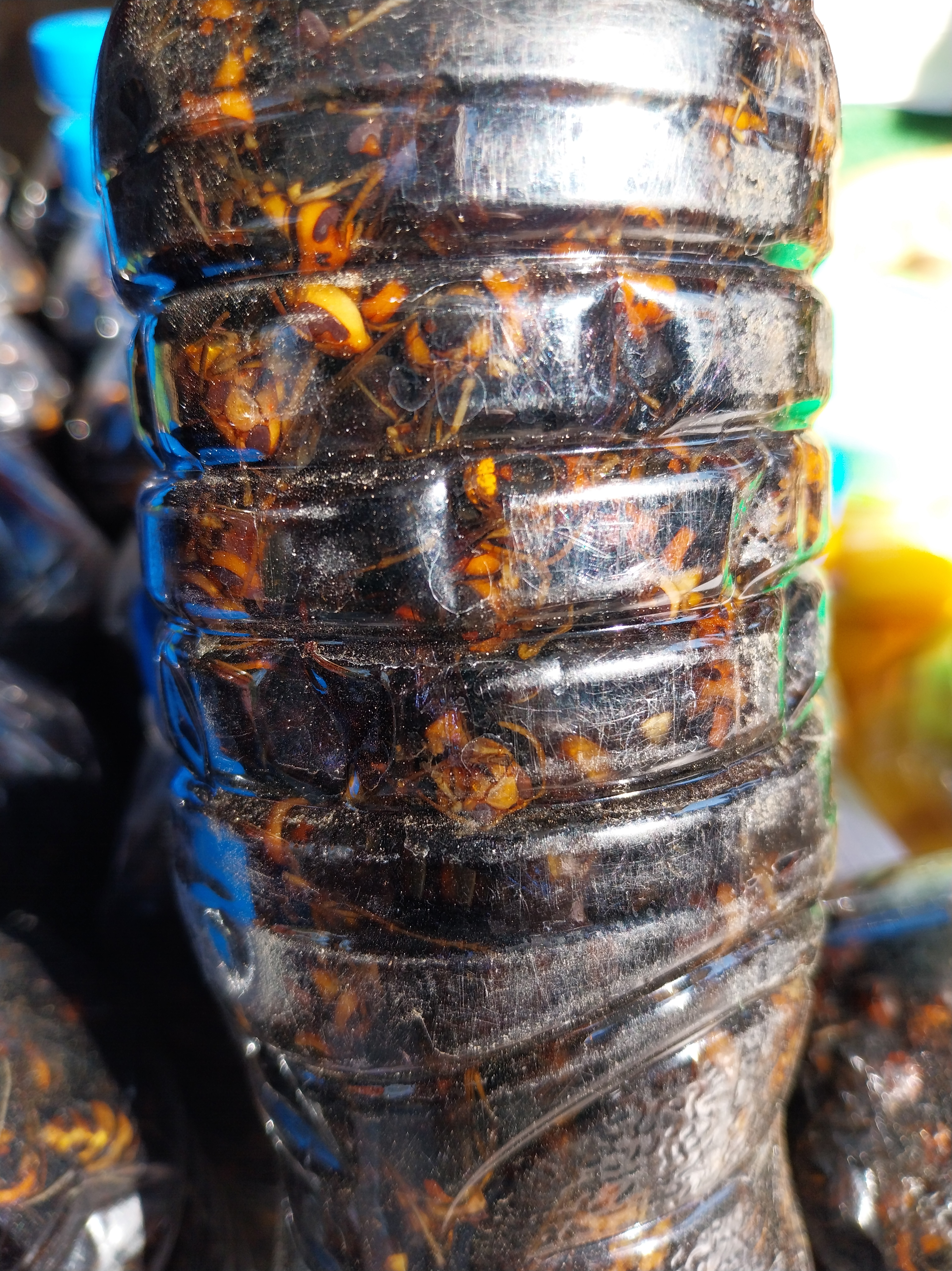
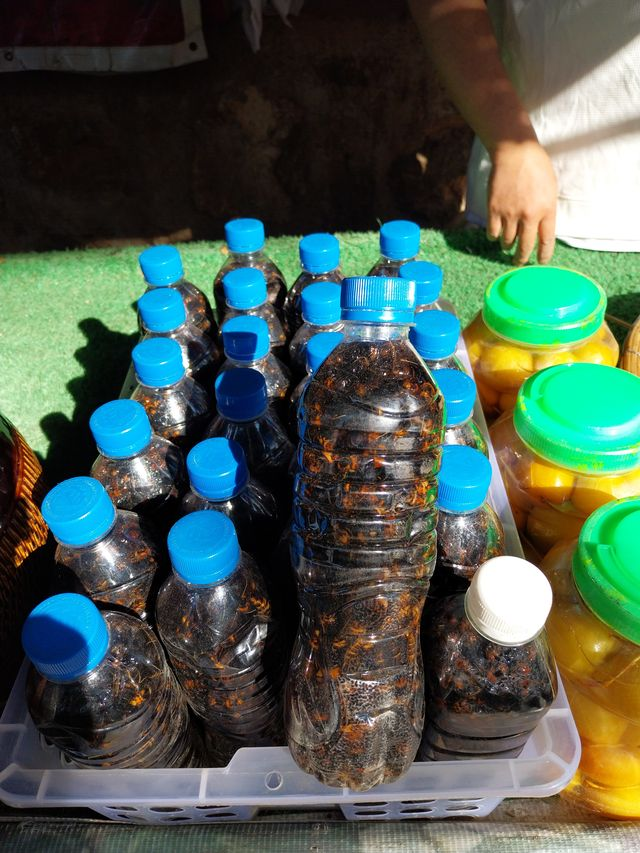
In Asia, where the species originates, they’ve lived with this hornet for centuries and learned to exploit it. On a visit to a recent farmer’s market near Kunming we encountered a local man selling bottles of adult hornets steeped in alcohol, to be used as a liniment. It’s rubbed on arthritic joints and (apparently) soothes the pain.

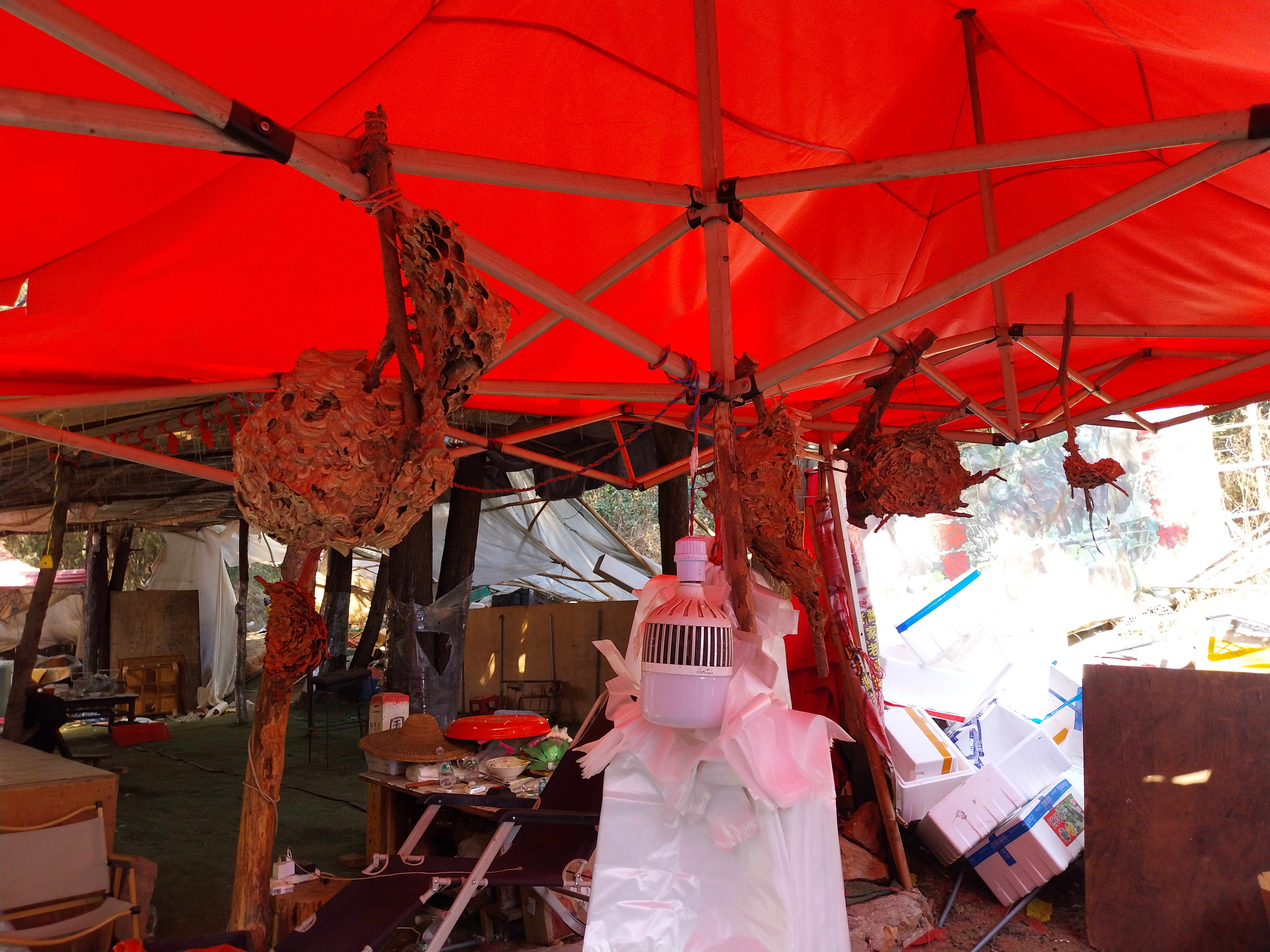
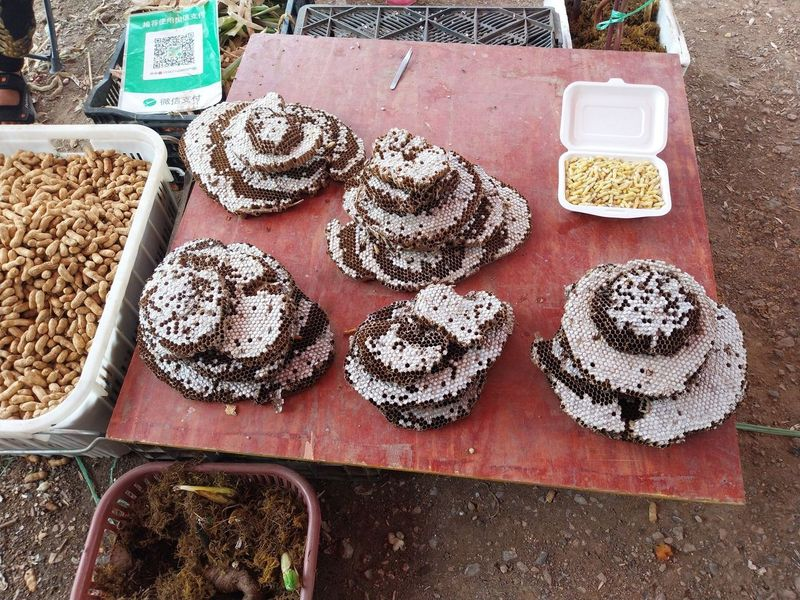
The guy who was selling the bottles of embrocation had several hornet’s nests on display:

Later, on a trip to Lijiang I also spotted a hornet’s nest on a building, not the usual place you expect to see one:

The other use for hornets is as food – the larvae are apparently quite delicious and very nutritious. This is from a different market and is a different species:

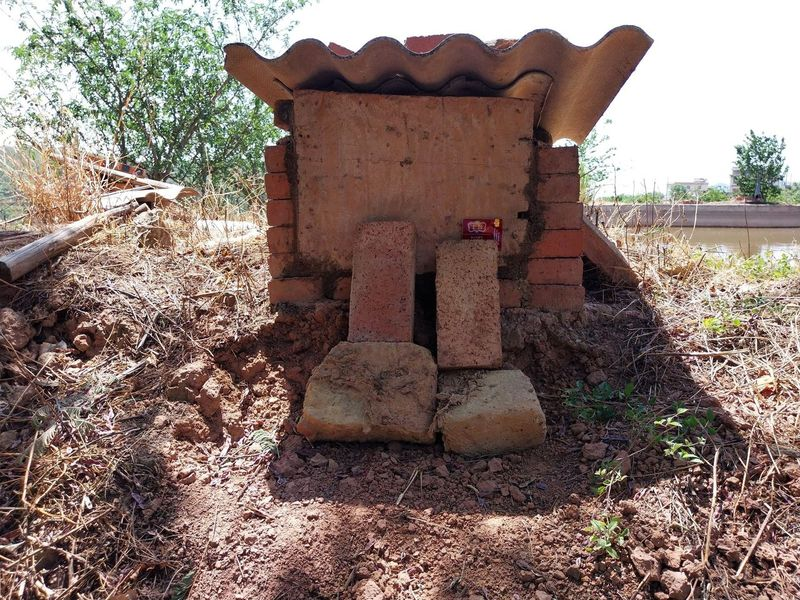
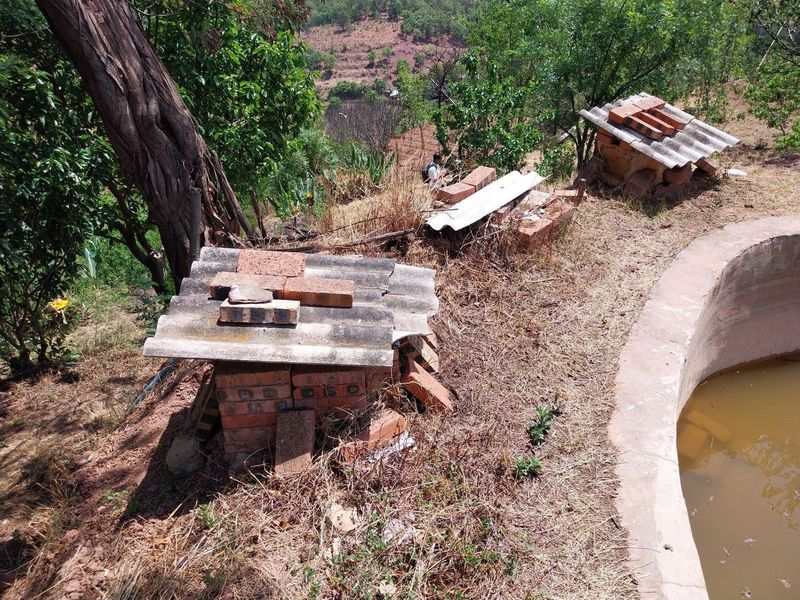
Later on the Lijiang trip we visited a farm that was part of a Yi community, one of the local ethnic minorities. They keep the indigenous honey bees (Apis cerana) in these small hives:

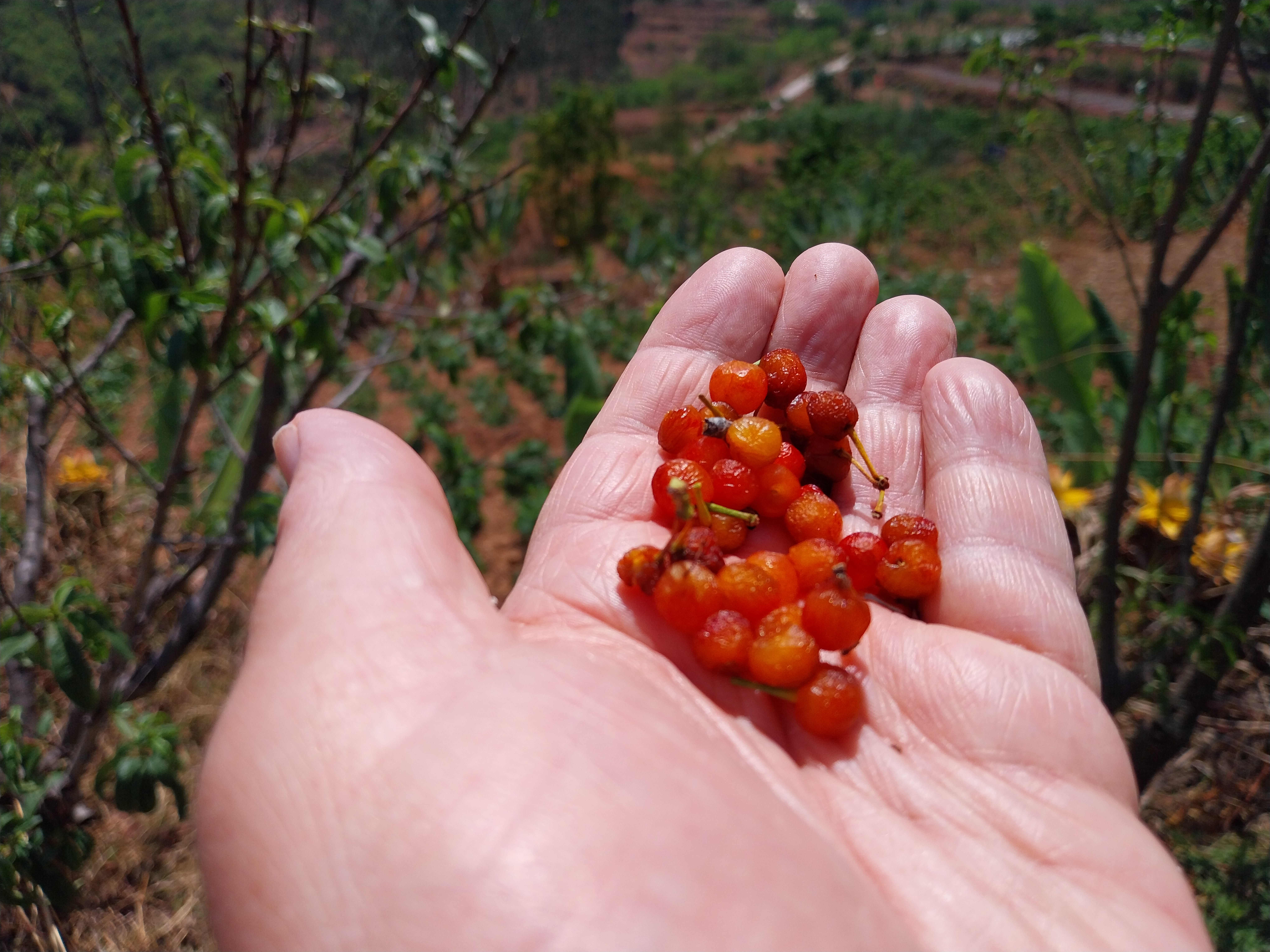
The honey bees pollinate an early-flowering local cherry variety that farmers grow in small orchards. The fruit is extremely small but also extraordinarily sweet:

These ones are past their best though still edible:

Much fresher cherries were being sold in farmer’s markets and at the roadside:

We’re still trying to work out what variety of cherry this is – possibly a landrace of the highly variable Chinese Cherry (Prunus pseudocerasus).

Of course, hornets can be pollinators too, though a study last year of the Yellow-legged Hornet in Spain showed that they negatively impact pollination of ivy in that region. These insects are definitely a cause for concern, though whether their impacts will be as great as some fear remains to be seen.

New study just published: The effect of elevation, latitude, and plant richness on robustness of pollination networks at a global scale

During the 2020 lockdown caused by the COVID-19 pandemic, I coordinated an international network of pollination ecologists who used standardised methods to collect data in their gardens. I blogged about it at the time – see here and here for instance – and also put up a post when the data paper from that work was published.

Several research groups are now working with that huge data set and interrogating it for answers to a wide range of questions. The first group to actually publish a paper from the data is a largely Chinese set of researchers from the Key Laboratory of Plant Resources, Conservation and Sustainable Utilization, at the South China Botanical Garden in Guangzhou, assisted by Kit Prendergast and myself.

In this paper we’ve considered how robust these plant-pollinator networks are to simulated extinctions of species, and how this is affected by the elevation, latitude, and plant species diversity of the network.

Here’s the full reference with a link to the study:

Wang, X.-P., Ollerton, J., Prendergast, K.S., Cai, J.-C., Tong, M.-Y., Shi, M.-M., Zhao, Z.-T., Li, S.-J. & Tu, T.-Y. (2024) The effect of elevation, latitude, and plant richness on robustness of pollination networks at a global scale. Arthropod-Plant Interactions (in press) https://doi.org/10.1007/s11829-024-10056-7

If you can’t access it and need a PDF, please send me a request via my Contact page.

Here’s the abstract:

Plant-pollinator interactions play a vital role in the maintenance of biodiversity and ecosystem function. Geographical variation in environmental factors can influence the diversity of pollinators and thus, affect the structure of pollination networks. Given the current global climate change, understanding the variation of pollination network structure along environmental gradients is vital to predict how global change will affect the ecological interaction processes. Here, we used a global plant-pollinator interaction data collection by the same sampling method at the same period to explore the effects of elevation, latitude, and plant richness on the structure and robustness of pollination networks. We analyzed a total of 87 networks of plant-pollinator interactions on 47 sites from 14 countries. We conducted a piecewise structural equation model to examine the direct and indirect effects of elevation, latitude, and plant richness on the network robustness and analyzed the function of network structure in elucidating the relationship between robustness and these gradients. We found that plant richness had both positive effects on robustness under random and specialist-first scenarios. Elevation, latitude, and plant richness affected network connectance and modularity, and ultimately affected network robustness which were mediated by nestedness under specialist-first and random scenarios, and by connectance under the generalist-first scenario. This study reveals the indirect effects of elevation, latitude, and plant richness on pollination network robustness were mediated by nestedness or connectance depended on the order of species extinctions, implying that communities with different pollination network structures can resist different extinction scenarios.

Reusing Plant-Pollinator Datasets – a free WorldFAIR webinar on 18th April

A message from Dr Debora Drucker, WorldFAIR Agricultural Biodiversity Case Study Lead:

Registration is open to our contribution to the WorldFAIR webinar series – “Reusing Plant-Pollinator Datasets: a Global Perspective with Guidelines and Recommendations inspired by Pilot Studies from Africa, the Americas and Europe”.

It will be held on April 18 at 2:00 pm – 3:00 pm (Times in UTC) – https://worldfair-project.eu/event/the-worldfair-webinar-series-reusing-plant-pollinator-datasets-a-global-perspective-with-guidelines-and-recommendations-inspired-by-pilot-studies-from-africa-the-americas-and-europe/

We will present results from Deliverables 10.2 & 10.3, with focus on our pilot studies:

Drucker, D., Salim, J. A., Poelen, J., Soares, F. M., Gonzalez-Vaquero, R. A., Ollerton, J., Devoto, M., Rünzel, M., Robinson, D., Kasina, M., Taliga, C., Parr, C., Cox-Foster, D., Hill, E., Maues, M. M., Saraiva, A. M., Agostini, K., Carvalheiro, L. G., Bergamo, P., Varassin, I.; Alves, D. A., Marques, B., Tinoco, F. C., Rech, A. R., Cardona-Duque, J., Idárraga, M., Agudelo-Zapata, M. C., Marentes Herrera, E. Trekels, M. (2024). WorldFAIR (D10.2) Agricultural Biodiversity Standards, Best Practices and Guidelines Recommendations (Version 1). Zenodo. https://doi.org/10.5281/zenodo.10666593

Drucker, D. P., Salim, J. A., Poelen, J., Soares, F. M., Gonzalez-Vaquero, R. A., Devoto, M., Ollerton, J., Kasina, M., Carvalheiro, L. G., Bergamo, P. J., Alves, D. A., Varassin, I., Tinoco, F. C., Rünzel, M., Robinson, D., Cardona-Duque, J., Idárraga, M., Agudelo-Zapata, M. C., Marentes Herrera, E., Taliga, C., Parr, C.S., Cox-Foster, D., Hill, E., Maués, M.M. Agostini, K. Rech, A.R., Saraiva, A. (2024). WorldFAIR (D10.3) Agricultural biodiversity FAIR data assessment rubrics (Version 1). Zenodo. https://doi.org/10.5281/zenodo.10719265

We reserved a good amount of time for Q&A – I hope to see you there and have a nice discussion!