The most globally significant groups of pollinators are well known and have been studied for a long time: bees and wasps, flies, butterflies and moths, birds, bats and beetles are all familiar to those of us with an interest in pollination ecology. However, every few years a new type of pollinator or a novel pollination system is described from nature or from the fossil record, or we add further examples of previously neglected pollinator groups such as cockroaches.
This begs the question: how much is there still to discover? How close are we to describing the full diversity of animals that act as pollen vectors? Can looking at the past help us to predict what we might find in the future? That’s the topic of a Perspective article that I was invited to write for the special issue of the Journal of Applied Entomology on the theme of The Neglected Pollinators that I mentioned last month. It’s a subject that I’ve thought about a lot over the last few decades and it was great to get an opportunity to air some ideas and speculation.
The article is open access and you can download a copy by following the link in this reference:
Although huge progress has been made over the past 200 years in identifying the diversity of pollinators of angiosperms and other plants, new discoveries continue to be made each year, especially in tropical areas and in the fossil record. In this perspective article I address the following questions: Just how diverse are the pollinators and what are the phylogenetic limits to that diversity? Which other groups of animals, not currently known to regularly engage with flowers, might be found to be pollinators in the future? Can we predict, from the fossil record and from discoveries in under-researched parts of the world, which animal groups might turn out in the future to contain pollinators? I also discuss why adding to our knowledge of plant–pollinator interactions is important, but also stress that an incomplete knowledge may not be a bad thing if it means that remote, inaccessible and relatively pristine parts of the world remain that way.
Just after I arrived in Northampton in 1995, I set about looking for suitable local sites for conducting pollination ecology field work for myself and students. The campus on which we were situated at the time was adjacent to an urban park – Bradlaugh* Fields – parts of which were designated as local nature reserves. In the intervening years, data from that area have made their way into a wide range of published studies, including:
I still have data collected during that time that have never been published, but good data are hard won and they may see the light of day at some point. Case in point is that we’ve just published a paper based on data from Bradlaugh Fields, the first of which were collected in 2001!
In this paper we’ve tested how effective hoverflies, butterflies and bumblebees are at pollinating the flowers of a common generalist grassland plant, colloquially called Field Scabious (Knautia arvensis). The expectation was that bumblebees, being generally larger, hairier and more flower-focused than the other groups, would be the most effective at transferring pollen to stigmas. To our surprise, they were not: hoverflies and butterflies performed just as well! In fact we argue that butterflies may be MORE important as pollinators of this plant because they fly further distances between individual plants, rather than hopping between the inflorescences of the same plants, as bumblebees tend to do.
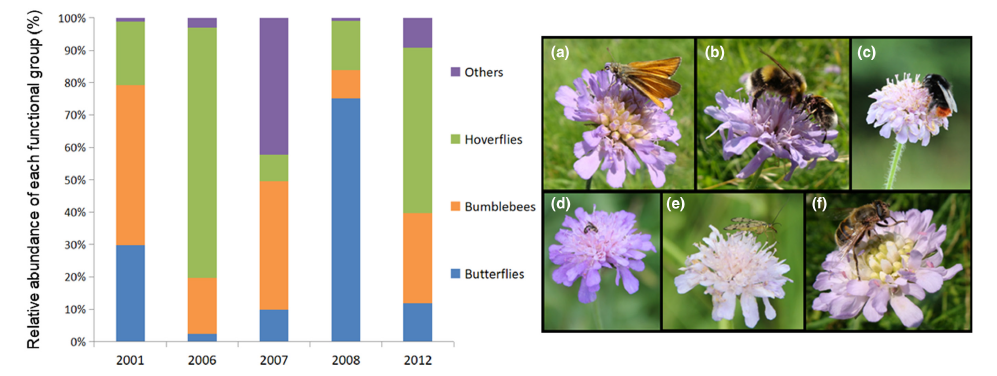
Crucially, the importance of these different groups of pollinators varies enormously as the relative abundance of the insects visiting the flowers differs between seasons. In some years butterflies dominate as pollinators, in other years bumblebees or hoverflies. This is driven, we think, both by fluctuations in the populations of these insects and by the availability of other, more preferred flowers that may bloom at the same time.
The paper is part of a special issue of the Journal of Applied Entomology devoted to The Neglected Pollinators. It’s open access and you can download a copy by following the link in this reference:
Plant-pollinator interactions exist along a continuum from complete specialisation to highly generalised, that may vary in time and space. A long-held assumption is that large bees are usually the most effective pollinators of generalist plants. We tested this by studying the relative importance of different groups of pollinators of Knautia arvensis (L.) Coult. (Caprifoliaceae: Dipsacoideae). This plant is suitable for such a study because it attracts a diversity of flower visitors, belonging to different functional groups. We asked whether all functional groups of pollinators are equally effective, or if one group is most effective, which has been documented in other species with apparently generalised pollination systems. We studied two subpopulations of K. arvensis, one at low and one at high density in Northampton, UK. To assess pollinator importance we exposed unvisited inflorescences to single visits by different groups of pollinators (butterflies, bumblebees, hoverflies and others) and assessed the proportion of pollinated stigmas. We then multiplied the effectiveness of each pollinator group with their proportional visitation frequency in five different years. For each group we also compared time spent on flowers and flight distance between visits. The relative importance of each pollinator group varied between years, as did their flight distances between flower visits. Butterflies were the best pollinators on a per visit basis (in terms of the proportion of stigmas pollinated) and flew further after visiting an inflorescence. Different measures and proxies of pollinator effectiveness varied between taxa, subpopulations, and years, and no one group of pollinators was consistently more effective than the others. Our results demonstrate the adaptive value of generalised pollination strategies when variation in relative abundance of different types of pollinators is considered. Such strategies may have buffered the ability of plants to reproduce during past periods of environmental change and may do so in the future.
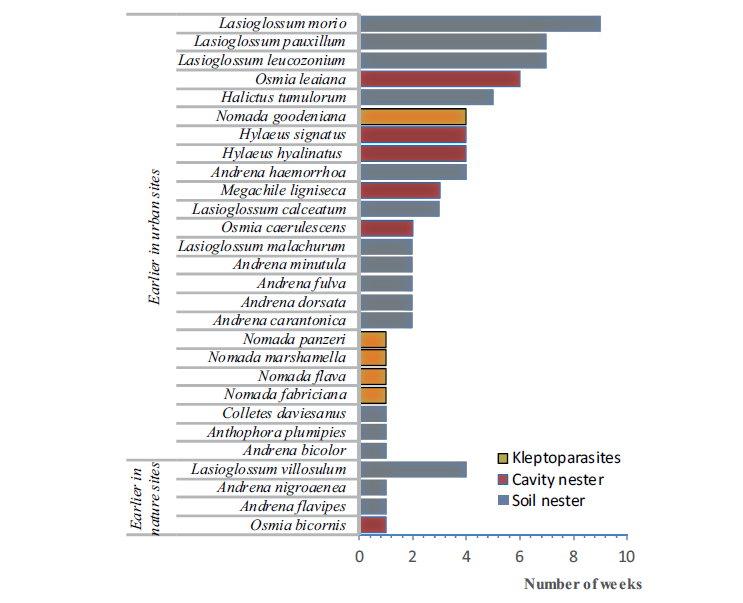
The latest paper from Muzafar Sirohi‘s PhD work on urban solitary bees has just been published in the journal Zoodiversity, a publication of the National Academy of Sciences of Ukraine. In this paper we looked at how the flight periods of urban populations of bees differ from those in surrounding nature reserves and other “natural” settings. One of the most interesting findings is that urban bees tend to emerge earlier, and be active longer, than their rural counterparts. The quote the study:
“We observed a substantial effect of urban microclimate on bee flight periods. A total of 153 individuals of nine bee species were recorded one to nine weeks before or after their expected flight periods. In contrast, only 14 individuals of four species were seen at unusual flight periods in nature sites.”
In my book Pollinators & Pollination: Nature and Society I discussed the importance of towns and cities for supporting pollinator populations, and conversely how important those populations are for urban food production. Likewise, in Birds and Flowers: An Intimate 50 Million Year Relationship I have a chapter entitled “Urban flowers for urban birds”. The relationship between our built environment and pollinators is a fascinating topic, but there’s still much we don’t understand about how these insects and vertebrates respond behaviorally to urbanisation. Are they adapting in an evolutionary sense, or simply responding flexibly to the different conditions that cities impose on their biologies? Will future climate change make towns and cities uninhabitable for these animals? Hopefully our paper will stimulate further work on these and other topics.
Here’s the full reference with a link to the paper (which is open access):
Solitary and primitively eusocial bees, an important group of pollinators, have declined in the past few decades. In view of the recent focus on safeguarding pollinating insects, it is vital to understand the basic ecology of species for their conservation, for example their phenologies. We observed the flight periods of solitary and primitively eusocial bees in both the urban core of a large British town and nearby nature conservation areas. The bee surveys were conducted with standardised methods, on warm sunny days from the first appearance of bees in March 2012 and continued until October 2012. This study confirmed that a high number of species are active in the spring season. The emergence dates of species in urban areas and nature sites varied; about 26 of the 35 species were recorded at least one week earlier in urban areas; in contrast, only four species were seen earlier in nature conservation sites. When comparing this with the expected flight periods recorded (largely in nature sites) in the literature, many species were recorded at their expected time. However, a few individuals were recorded after their usual flight activity time, suggesting that the populations were possibly affected by the microclimate in urban areas. More urban phenological data are needed to understand the phenological trends in bees in urban habitats.
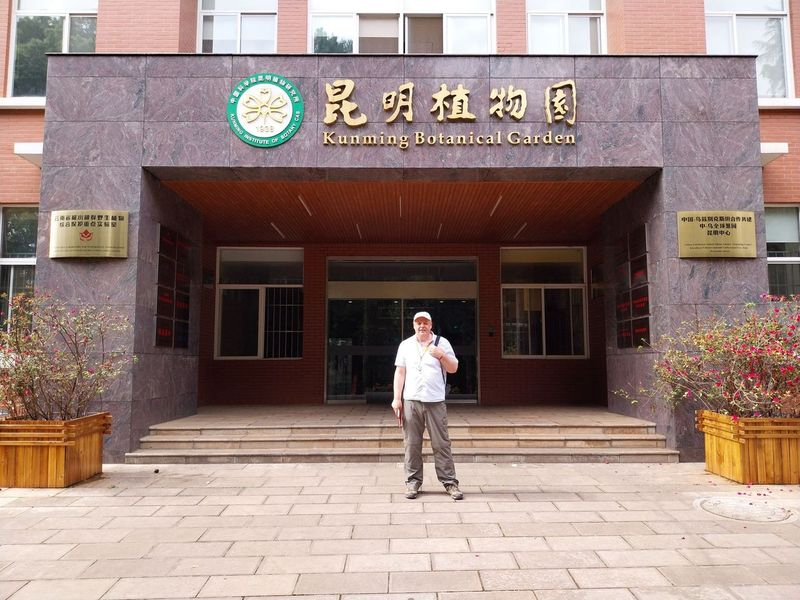
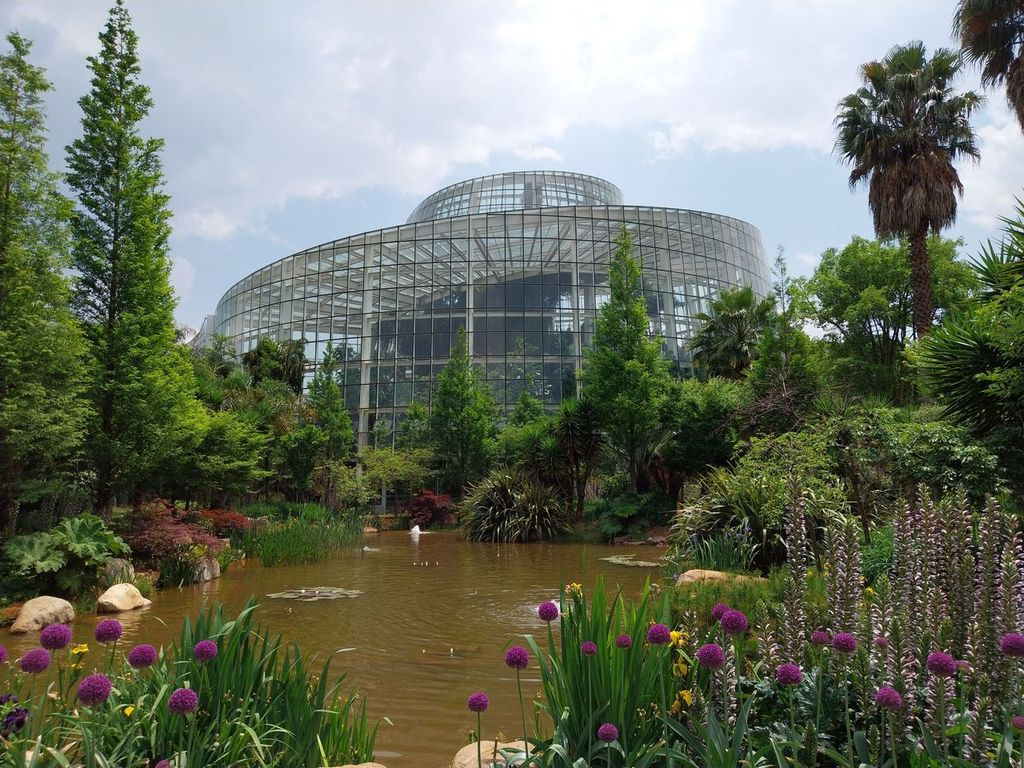
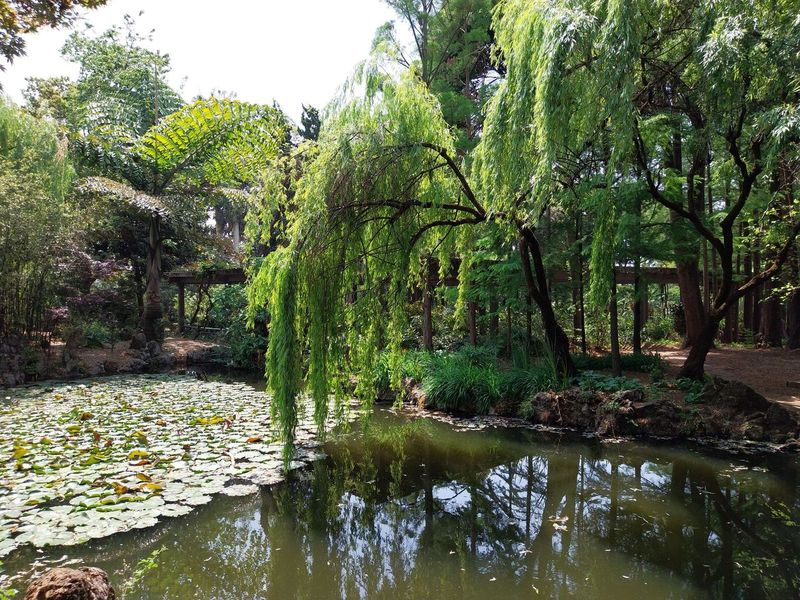
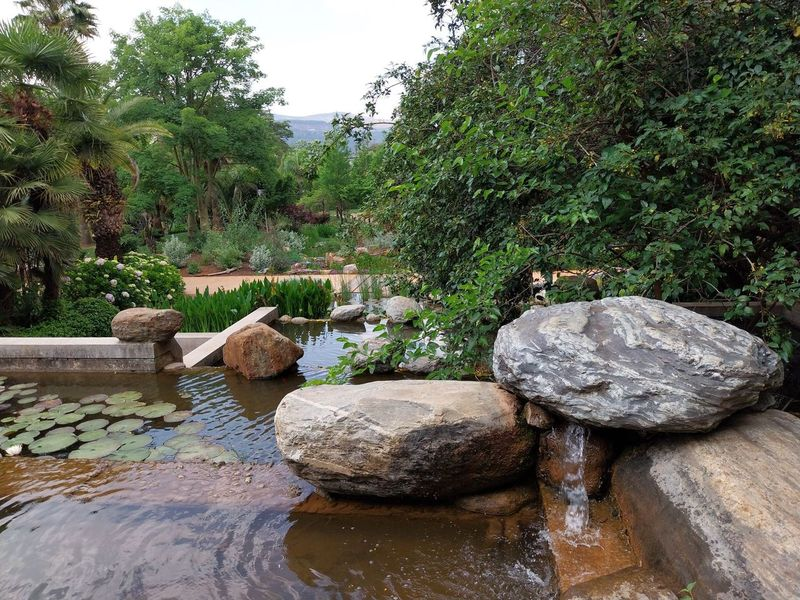
Just over a week ago I arrived in China to spend three months as a visiting professor at the Kunming Institute of Botany (KIB), of the Chinese Academy of Sciences. I am being hosted by my colleague Dr Zong-Xin Ren, and I will repeat this trip each year over the next three years. This is my first visit to Kunming because my last visiting professorship here had to be conducted remotely due to the COVID-19 pandemic. As you can see above, KIB is adjacent to, and works closely with, Kunming Botanical Garden and I have the good fortune of being able to walk to work each day through the gardens:
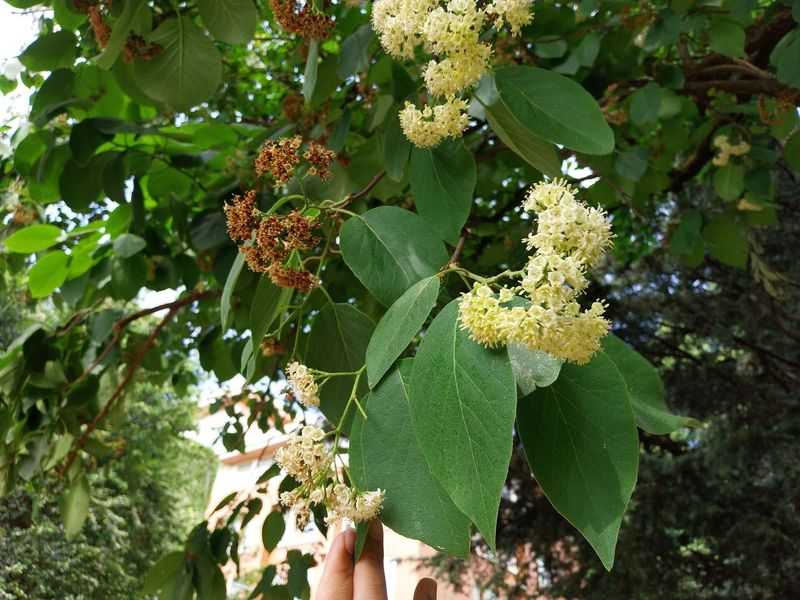
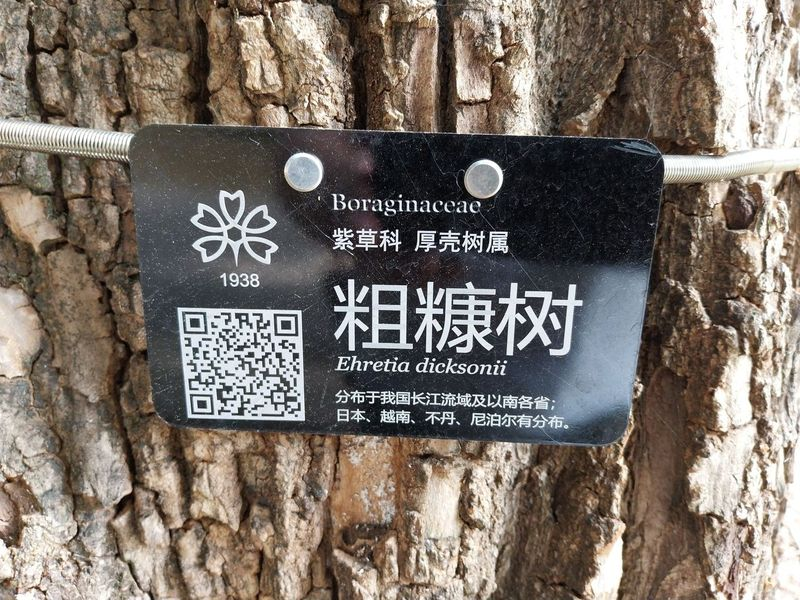
As I’ve said before, I love botanic gardens because I always, always see plants that amaze and surprise me. For example, I struggled to recognise the family that this very large tree belonged to – and was surprised by the answer!
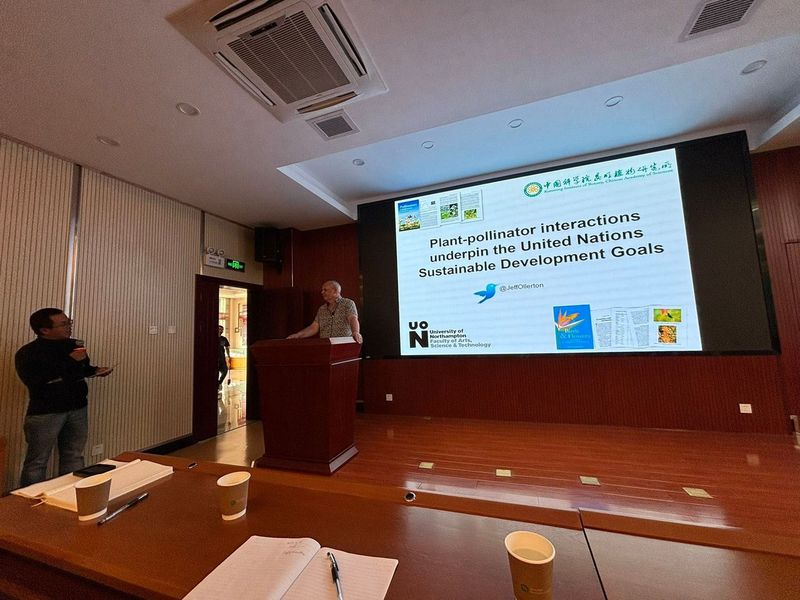
I’ll be spending my time working on some data and writing manuscripts, carrying out field work, and talking with KIB postgrads and postdocs about their projects. I’ll also give some lectures here and at other institutions in China. The first of these was last Thursday where I spoke about the role of plant-pollinator interactions in underpinning the United Nations Sustainable Development Goals:
Thanks to Brazilian researcher Sinzinando ‘Nando’ Albuquerque-Lima for those last two photographs. As part of a Brazilian-funded project, Nando is here for about 8 months studying a range of plants and their pollinators.
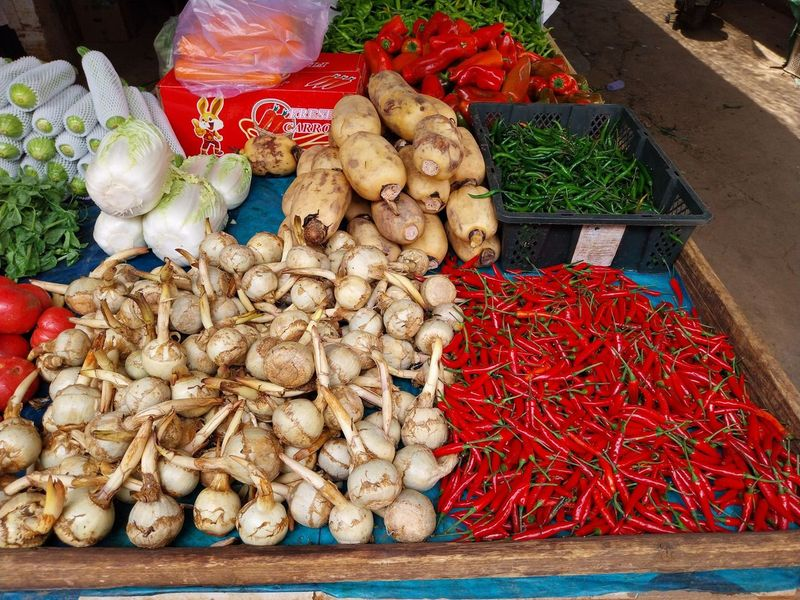
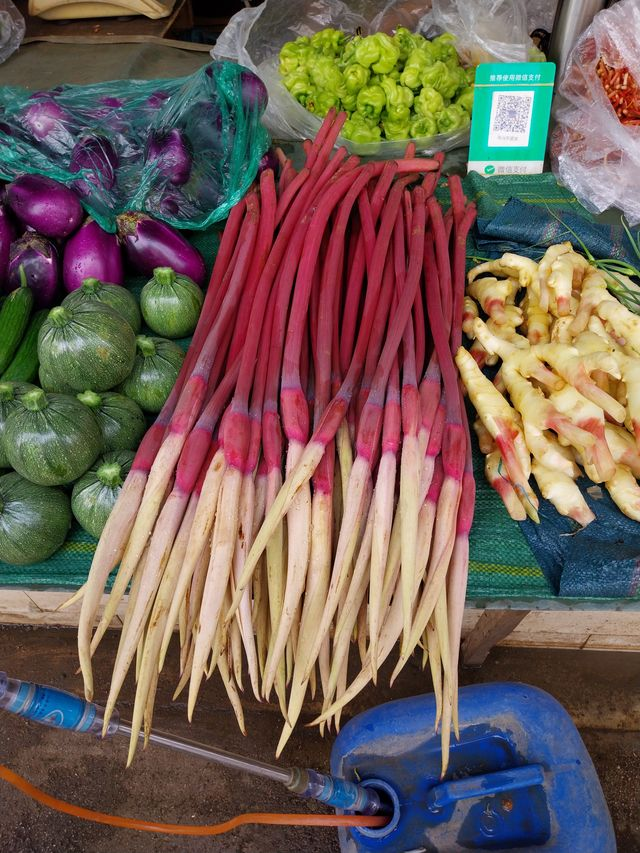
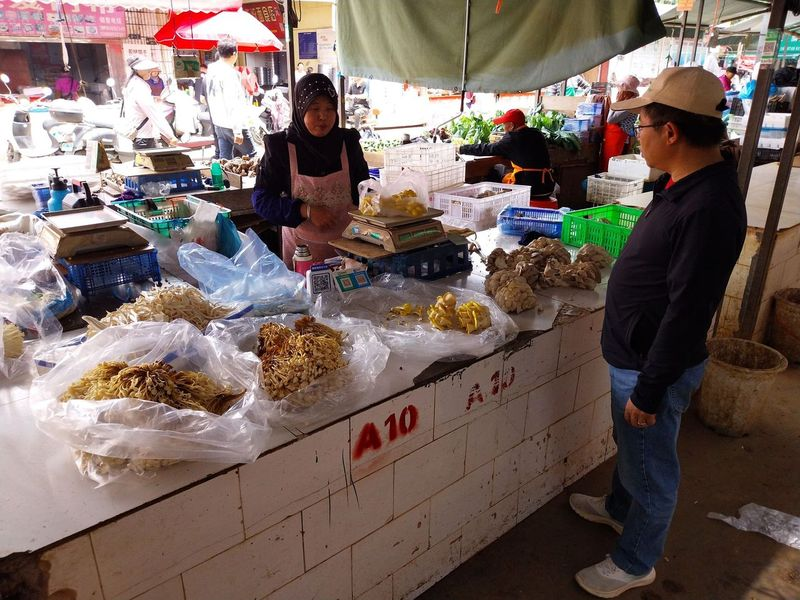
Further afield, Zong-Xin and Nando have introduced me to some of the amazing markets and restaurants in the city and I’ve already added three new plant families to my life list of those I’ve consumed: Phyllanthaceae (the rather sour fruit of a Phyllanthus species); Alismataceae (deep-fried, ‘crisped’ roots of a Sagittaria species); and Meliaceae (the young leaves of Toona sinensis are used as a spinach):
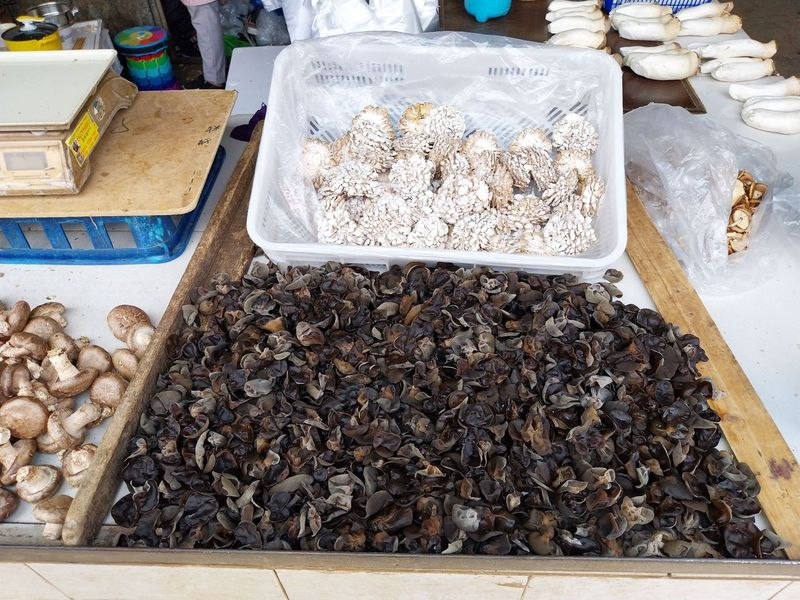
That last photo does not show rhubarb! They are the stems of a variety of taro (Colocasia esculenta) an Araceae species. Yunnan is especially famous for its wild-collected fungi:
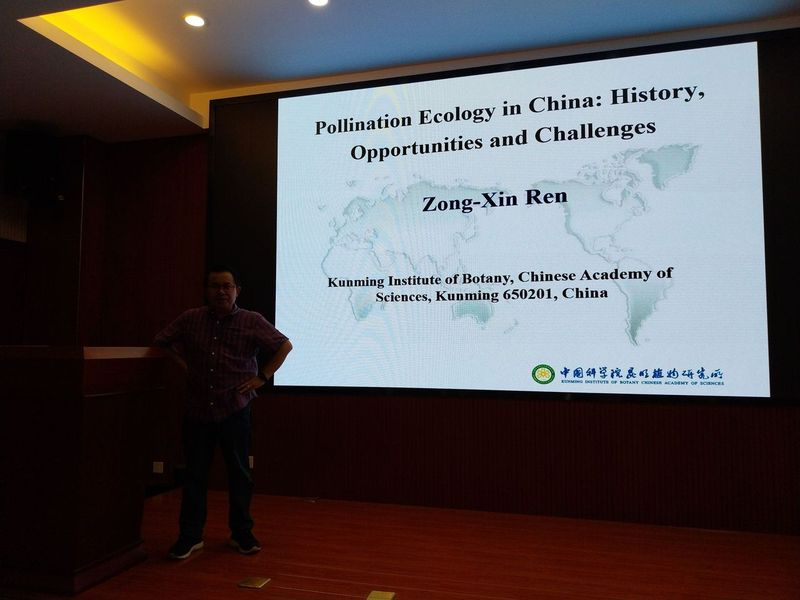
On Sunday afternoon Zong-Xin’s research group gave some presentations about their research, which is diverse and exciting and I look forward to discussing it with them some more in the coming months. The afternoon started with a talk by Zong-Xin himself about the history and opportunities of studying pollinators and pollination in China:
And then we all went to dinner!
That’s all for now, I’ll add updates as the weeks go by.
In my new book Birds & Flowers: An Intimate 50 Million Year Relationship I spend a bit of time discussing the idea of the bird pollination syndrome that we refer to as ‘ornithophily’, its limitations, and the fact that it has two distinct meanings that are often conflated. One of the problems with ornithophily, and indeed all of the syndromes, is that historically it’s sometimes blinkered scientists to the extent that they only look at the flower visitors that are “right” for the syndrome, ignoring the rest or dismissing them as “secondary pollinators”, a term I dislike.
Why do I dislike that term? Because it fails to capture the complexity of flower-pollinator interactions and relegates an important component of plant reproduction to a subsidiary role. I could go on about this at some length, but if you’re interested in discovering more, look at pages 62-65 of Birds & Flowers. There I contrast the classical Most Effective Pollinator Principle with the equally valid (but much less well studied) Least Effective Pollinator Principle, with a segue into one of my favourite tracks from Led Zeppelin’s second album: What is and What Should Never Be.
But back to the real subject of this post – a flower that corresponds to the classical bird pollination syndrome BUT is also pollinated by bees and (very surprisingly) wind! It’s such an interesting paper by Brazilian ecologists Amanda Pacheco, Pedro Bergamo & Leandro Freitas – here’s the reference and a link to the study:
For over 100 years the classical pollination syndromes have acted as a framework for understanding the ecology and evolution of plant-pollinator interactions. But we’ve long known that while they can be a useful shorthand, they do not fully reflect the complexity of how pollination systems evolve. That shouldn’t surprise us because, as I point out in my two recent books, we have data (of any quality) on no more than 10% of the 350,000 or so species of flowering plants!
In addition, those plants for which we do have good data are NOT a random subset of the flowering plants: they have been specifically chosen by researchers because they look to be good systems with which to address particular ecological or evolutionary questions.
Which is fine, but we MUST recognise that this imposes significant restrictions on our understanding of the biodiversity of plant-pollinator interactions. The authors of this paper expressed it very well when they wrote that assumptions about:
“predictability may cause researchers to take for granted that only birds pollinate ornithophilous flowers, hindering research on the contribution of other vectors.”
To which I’d add: it also hinders our understanding of how these interactions evolve over long time scales and across multiple populations.
An obvious question is: how frequent are these sorts of complex pollination systems, involving different pollen vectors of an apparently specialised flower? The answer is that we simply don’t know, because most researchers would have not gone into this level of detail. So a huge congratulations to the authors for a great study – I hope it stimulates others to look beyond the ‘expected’ pollinators of flowers.
Photos: Nathália Susin Streher from the original paper.
One of the most productive research collaborations in which I’ve had the pleasure to be involved has been with André Rodrigo Rech in Brazil. It started when he was a postgrad working on his PhD, and has now continued as André has developed into fully-fledged academic with his own research group. That productivity has been fueled by a lot of coffee, of course, as you’ll know if you’ve read my book Pollinators & Pollination: Nature and Society!
Here’s the reference – if you want a PDF of the paper, please send me a message via my Contact page:
Pereira Machado, A.C., Baronio, G., Soares Novaes, C., Ollerton, J., Wolowski, M., Natalina Silva Lopes, D. & Rech, A. (2024) Optimizing coffee production: Increased floral visitation and bean quality at plantation edges with wild pollinators and natural vegetation. Journal of Applied Ecology (in press)
Here’s the abstract:
Animal pollination is important for more than 75% of agricultural crops, including coffee, whose productivity can increase with adequate pollination. Bees, including many solitary species, are diverse pollinators, with around 85% of them considered more effective than honeybees in pollen transfer. We assessed the coffee plantation and its surrounding vegetation for solitary bee nesting throughout the coffee flowering season and measured their impact on coffee productivity.
We installed collection stations with trap nests inside a coffee plantation, on the border and inside the native vegetation in a farm in Diamantina, MG, Brazil. We used 10 weekly monitored replicates at least 1 km apart. We evaluated fruiting by autogamy in relation to natural pollination and used the increase in fruit set from pollinators to calculate the farmer’s monetary gain. We recorded bee visits to the exposed flowers during coffee flowering considering both on the edge and inside the coffee plantation. Ripe fruits were dried, counted and weighed.
We discovered 132 solitary bee nests outside the plantation, with 54% containing coffee pollen grains, indicating coffee as an essential resource for bees even outside the crop area. More bee visits occurred at the coffee plantation’s edge, resulting in increased fruit production, denser fruits, and rounder fruits in that area. Bagged flowers produced consistent seeds in all locations. The farmer could earn an extra US$1736.37 per hectare if the entire area received the same level of pollination contribution from bees as observed at the coffee border.
Synthesis and applications. Our study emphasises the key role of pollinators in coffee production and their impact on fruit and seed characteristics. Bee visits were more frequent on border areas, emphasising their reliance on natural nesting sites. Bee-mediated pollination positively affected fruit traits and self-pollinated fruits in plantation borders had reduced mass. Solitary bee nesting was primarily observed in native vegetation, underlining its importance for bee populations. Pollen composition in nests varied with proximity to coffee plantations, indicating landscape vegetation influences pollinator foraging. These findings support optimising coffee plantation design by preserving native vegetation to increase coffee yields and conserve biodiversity.
In recent months, Karin and I have worked with the charity MONASIA and their Bee Camino project to develop a joint webinar. Here are the details, taken directly from MONASIA’s publicity:
In the intricate choreography of nature, the honey bee’s life mirrors the enchantment of a mystical well: ‘The more you draw from it, the more it fills with water.’ Karl Von Frisch’s profound words beautifully capture the essence of the honey bee’s existence. Honey bees are only one type of bee, however, and there are many other pollinators, whose tireless efforts sustain the delicate balance of ecosystems. Much like a well that replenishes when quenched, the pollinator’s purpose appears boundless, offering a timeless wellspring of inspiration for those attuned to the marvels of the natural world.
Inspired by the Bee Camino project, MONASIA brings you a transformative experience connecting nature and mindfulness.
Join us on this transformative journey named ‘Nurturing Mental Health in Nature’s Embrace,’ as we draw from the enchanting well of the bee’s life—a source of wisdom, sustainability, and a profound connection to the intricate rhythms of our planet.
Obviously the title of this post is click-bait, as there’s LOTS of things that I wish more people knew about pollination! But here’s one that really gets my (Yule) goat.
I’ve lost track of the number of times that I’ve read statements in books and research papers such as “bees collect lots of pollen from flowers therefore they are good pollinators”. Even worse, I sometimes see studies where pollen has been removed from “pollen baskets” or other scopae, then used as a measure of the importance of those bees as pollinators.
In both cases it seems to have been forgotten that bees are collecting pollen to feed their larvae and pollen that ends up in scopae is generally not available for pollination.
That’s the purpose of the Venn diagram at the top of this short post, to remind us that there can be a disconnect between what bees are doing and what plants require: foraging for pollen only partly correlates with flower pollination. Indeed, the same argument applies to any animal that feeds itself or its young on pollen, including pollen wasps (Maserinae), Heliconia butterflies, and some flower-visiting hoverflies, birds and bats.
It’s not only loss of pollen from reproduction that’s important here: depending on the size and behaviour of the bees relative to the shape and size of the flower, they may go nowhere near the stigma, so even if they are carrying viable pollen, it can be lost as far as the plant is concerned.
Note also that many bee species will collect pollen from wind-pollinated plants such as grasses, oaks, etc. Indeed in some species the availability of such pollen is extremely important – see Manu Saunders’ review on this topic and more recent papers that cite it. Again, it emphasises the partial disconnect between pollen collecting by bees and pollination of flowers by bees.
Assessing which flower visitors are actually pollinators is not technically demanding but it can be time consuming. The minimum that you need is single visit deposition (SVD) experiments in which you expose unvisited flowers to one visit by the potential pollinator. Then you assess how much pollen has landed on the stigma or (better) whether the visit results in seed set.
If you want to know more about the evidence that’s required to determine if a flower visitor is or is not a pollinator, they are codified in the “Cox-Knox Postulates” that I discuss in my book Pollinators & Pollination: Nature and Society.
There’s so much good science and so many great talks coming out of the (broad) field of pollinator and pollination research at the moment! Here’s a few things that have come up on my radar. Feel free to comment and add your own examples of things I may have missed.
Full disclosure, I was one of the reviewers of Pollinators and plants as ecosystem engineers: post-dispersal fruits provide new habitats for other organisms by João Cardoso et al., and I know that there was quite a bit of back and forth between authors, editor and reviewers about what the findings really meant and how best to frame them. My view was that this study should be published because it’s another demonstration of the importance of pollinators and their interactions with plants that goes beyond the obvious outcomes of plant reproduction and support of pollinator populations.
One of the projects in which I’m currently involved is the WorldFAIR project. Funded by the European Commission, WorldFAIR is exploring how to make data FAIR – Findable, Accessible, Interoperable and Reusable – across a range of different disciplines in the sciences and humanities.
My involvement is specifically with Work Package 10, which is focused on data standards for plant-pollinator interactions, particularly as they relate to pollination of agricultural crops. After a year of hard work, I’m delighted to announce that our interim draft report from this Work Package has just been published! You can read the summary and download the report from Zenodo – here’s the link: https://zenodo.org/record/8176978
There’s more to come over the next twelve months and I’ll post updates as and when they appear. In the meantime, do check out the WorldFAIR website for information about the other Work Packages, their webinar series, FAIR data standards, and so forth.