Category Archives: Biogeography

Tracking trends in Neotropical pollinators: how good is our understanding and is more data always better?

In my recent book Pollinators & Pollination: Nature and Society I discussed the current state of our knowledge of how populations of pollinators have changed over time. Although we have some quite detailed data for particular, often charismatic, species or for certain geographic localities or regions, for most species we know almost nothing. As I wrote in the chapter “The shifting fates of pollinators”:

“For most pollinators we are ‘data deficient’, in other words, we don’t know how their populations are performing. They could be doing well, but they may not be”

This is particularly true for those regions for the world that hold the greatest terrestrial biodiversity: the tropics. For the vast majority of species in the tropics we know precious little about trends in their populations and how their distributions have changed over time in the face of wide-scale land transformation and recent climatic shifts. Filling in some of the gaps in our knowledge of Neotropical pollinator distributions is one of its aims of SURPASS2, a collaboration between South American and UK ecologists, and one of several research and outreach projects with which I’m involved.

In a new study that’s come out of that work, led by Rob Boyd from the UK Centre for Ecology and Hydrology, we’ve used the GBIF database to look at the changing distributions of four important groups of pollinators: bees, hoverflies, leaf-nosed bats and hummingbirds. In particular we were interested in understanding the kinds of biases that come with such publicly available data, and whether recent efforts to add data to GBIF has improved our understanding of trends.

Our overall conclusion is that there are significant limitations and biases inherent in all of these data sets even for groups like hummingbirds which one would imagine are well documented by scientists and bird-watching naturalists. In addition, having more data does not necessarily help matters: it can introduce its own biases.

The paper is open access and feely available; here’s the reference with a link:

Boyd, R. J., Aizen, M.A., Barahona-Segovia, R.M., Flores-Prado, L., Fontúrbel, F.E., Francoy, T.M., Lopez-Aliste, M., Martinez, L., Morales, C.L., Ollerton, J., Pescott, O.L., Powney, G.D., Saraiva, A.M., Schmucki, R., Zattara, E.E., & Carvell, C. (2022) Inferring trends in pollinator distributions across the Neotropics from publicly available data remains challenging despite mobilization efforts. Diversity and Distributions (in press)

Here’s the abstract:

Aim
Aggregated species occurrence data are increasingly accessible through public databases for the analysis of temporal trends in the geographic distributions of species. However, biases in these data present challenges for statistical inference. We assessed potential biases in data available through GBIF on the occurrences of four flower-visiting taxa: bees (Anthophila), hoverflies (Syrphidae), leaf-nosed bats (Phyllostomidae) and hummingbirds (Trochilidae). We also assessed whether and to what extent data mobilization efforts improved our ability to estimate trends in species’ distributions.

Location
The Neotropics.

Methods
We used five data-driven heuristics to screen the data for potential geographic, temporal and taxonomic biases. We began with a continental-scale assessment of the data for all four taxa. We then identified two recent data mobilization efforts (2021) that drastically increased the quantity of records of bees collected in Chile available through GBIF. We compared the dataset before and after the addition of these new records in terms of their biases and estimated trends in species’ distributions.

Results
We found evidence of potential sampling biases for all taxa. The addition of newly-mobilized records of bees in Chile decreased some biases but introduced others. Despite increasing the quantity of data for bees in Chile sixfold, estimates of trends in species’ distributions derived using the postmobilization dataset were broadly similar to what would have been estimated before their introduction, albeit more precise.

Main conclusions
Our results highlight the challenges associated with drawing robust inferences about trends in species’ distributions using publicly available data. Mobilizing historic records will not always enable trend estimation because more data do not necessarily equal less bias. Analysts should carefully assess their data before conducting analyses: this might enable the estimation of more robust trends and help to identify strategies for effective data mobilization. Our study also reinforces the need for targeted monitoring of pollinators worldwide.

——————————————————–

SURPASS2 has been a hugely productive project as you’ll see if you look at the Publications page of the website. There’s much more to come and I’ll report on those research papers as they appear.

Wild mushrooms, tragic deaths, and the importance of understanding nature

A sad and timely news story caught our eye this morning: the death of two young Afghan boys in Poland who were poisoned after their family collected wild mushrooms to make a soup. Other members of the family were hospitalised. As Karin read out the story to me, I was moved by the tragedy of these events for a family fleeing a war zone, but also angered by pointlessness of the loss of those brothers’ lives, just more death-by-wild-mushroom statistics. In Europe we read about such events every year in the autumn, the peak of wild fungus foraging. And quite often the deaths are of people who have recently moved to an area and mistake poisonous mushrooms for edible ones from their country of origin.

At their root, these tragic stories of lost lives and broken families are stories of misunderstandings about nature. In particular, they are about not appreciating that plants, mushrooms, animals, and other wildlife, are not the same all over the world. There are biogeographic differences between regions that reflect the long-term history of life on our planet. Plants or mushrooms that look superficially similar in different parts of the world may have very different evolutionary histories. Histories that can make the difference between good to eat and deadly poisonous, between life and death.

The mushroom which killed the boys was a Death Cap (Amanita phalloides) which is found across Europe and the Mediterranean basin. As far as I can tell from its GBIF records, it does not occur in Afghanistan. The family presumably mistook this mushroom for one with which they were familiar, perhaps a different species of Amanita, which contains both deadly types and some that are good to eat. This terrible and fatal mix up could so easily have been avoided.

I’m not certain if resettlement agencies provide information about the foraging of wild food, or if basic facts about local nature are provided to those new to these areas. This is a simple action that could save lives and further tragedies for families trying to recover after the disruption of moving to a new country. It may be that this family was trying to carry on traditions of foraging in an effort to feel at home.

Since we arrived in the Odsherred region of Denmark, where Karin and I intend to settle, we have been exploring the woods and beaches on our newly bought bicycles. Much of the natural history is familiar to me from Britain, but there’s also some interesting differences and in future blog posts I’ll discuss this further. Last week we happened across a Lithuanian woman and her mother who had been foraging for mushrooms in the forest around their summer house. They were pushing a baby’s pram, the lower basket of which was stuffed with fungi. Picking and eating wild mushrooms has been something I’ve enjoyed since I was a teenager, so I had to stop and chat with them. They showed us some of their finds, including species with which I wasn’t familiar and that I will research further.

Lithuania and Denmark are of course quite close to each other geographically. Nonetheless the younger woman was still discovering which of the local mushrooms were good to eat: ‘I learn one new edible species each year’ she told us ‘That’s a good rule, then you don’t get confused’.

Since that meeting we’ve had several meals from mushrooms collected in the area, including some very fine ceps (Boletus edulus). I will keep in mind the woman’s words and proceed cautiously when it comes to discovering what is edible and what is not.

To end this rather sad but hopefully thought provoking post, Karin and I send our deepest condolences to the Afghan family and our heartfelt wishes that they can recover from these tragedies that must have deeply affected their lives.

Global effects of land-use intensity on pollinator biodiversity: a new study just published

Humans affect the land on which they live in many different ways, and this in turn influences local biodiversity. Sometimes this has positive effects on local wildlife: consider the diversity of birds to be found in well-managed suburban gardens, for example. But often the effect is negative, especially when the land is intensively managed or habitats are destroyed, for example via deforestation or urban development.

This is not a new phenomenon – according to a recent study, most of the habitable parts of the planet have been shaped by humans for at least 12,000 years (see Ellis et al. 2021). What is new, however, is the scale and the speed with which land-use is changing, which are far greater than they have been historically. An important question is the extent to which this change in land-use intensity is affecting pollinator diversity in different parts of the world. Over the past 18 months I’ve been collaborating on a project led by Joe Millard (as part of his PhD) and Tim Newbold which uses the Projecting Responses of Ecological Diversity In Changing Terrestrial Systems (PREDICTS) database to address that very question.

A paper from that collaboration is published today in the journal Nature Communications; it’s open access and can be downloaded by following this link.

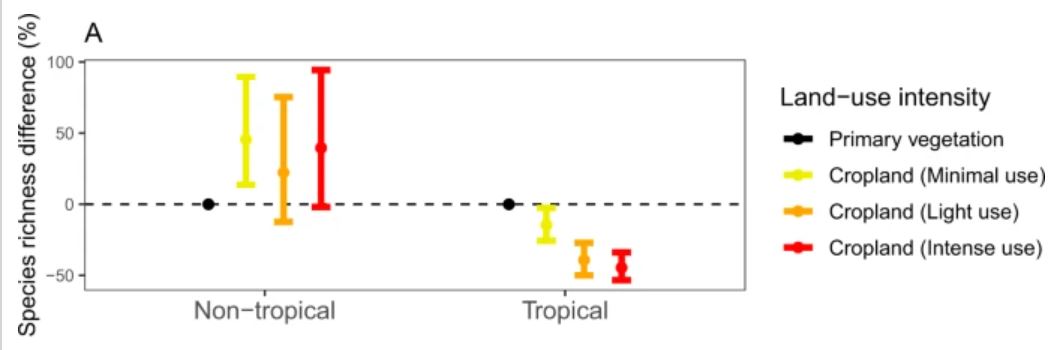
The study was global in scale and used data from 12,170 sites to assess the affect of land-use intensity on 4502 pollinating species. The findings are really fascinating; highlights include:

  • In comparison to natural vegetation, low levels of land-use intensity can have a positive effect on the diversity of pollinators.
  • For most land categories, greater intensity of land-use results in significant reductions in diversity and abundance of pollinators, however. For example, for urban sites there’s a 43% drop in number of species and a drop in 62% pollinator abundance from the least to the most intensive urban sites.
  • On cropland, strong negative responses of pollinators to increasing intensity are only found in tropical areas, although different taxonomic groups vary in their responses.
  • The latter finding is especially concerning given that: (i) most pollinator diversity is found in the tropics; (ii) the majority of tropical crops are insect pollinated; and (3) tropical agriculture is becoming increasingly intensive and land use is likely to rapidly change in the coming decades.

The full reference for the study, with all authors, is:

Millard, J., Outhwaite, C.L., Kinnersley, R., Freeman, R., Gregory, R.D., Adedoja, O., Gavini, S., Kioko, E., Kuhlmann, M., Ollerton, J., Ren, Z.-X. & Newbold, T. (2021) Global effects of land-use intensity on local pollinator biodiversity. Nature Communications 12, 2902. https://doi.org/10.1038/s41467-021-23228-3

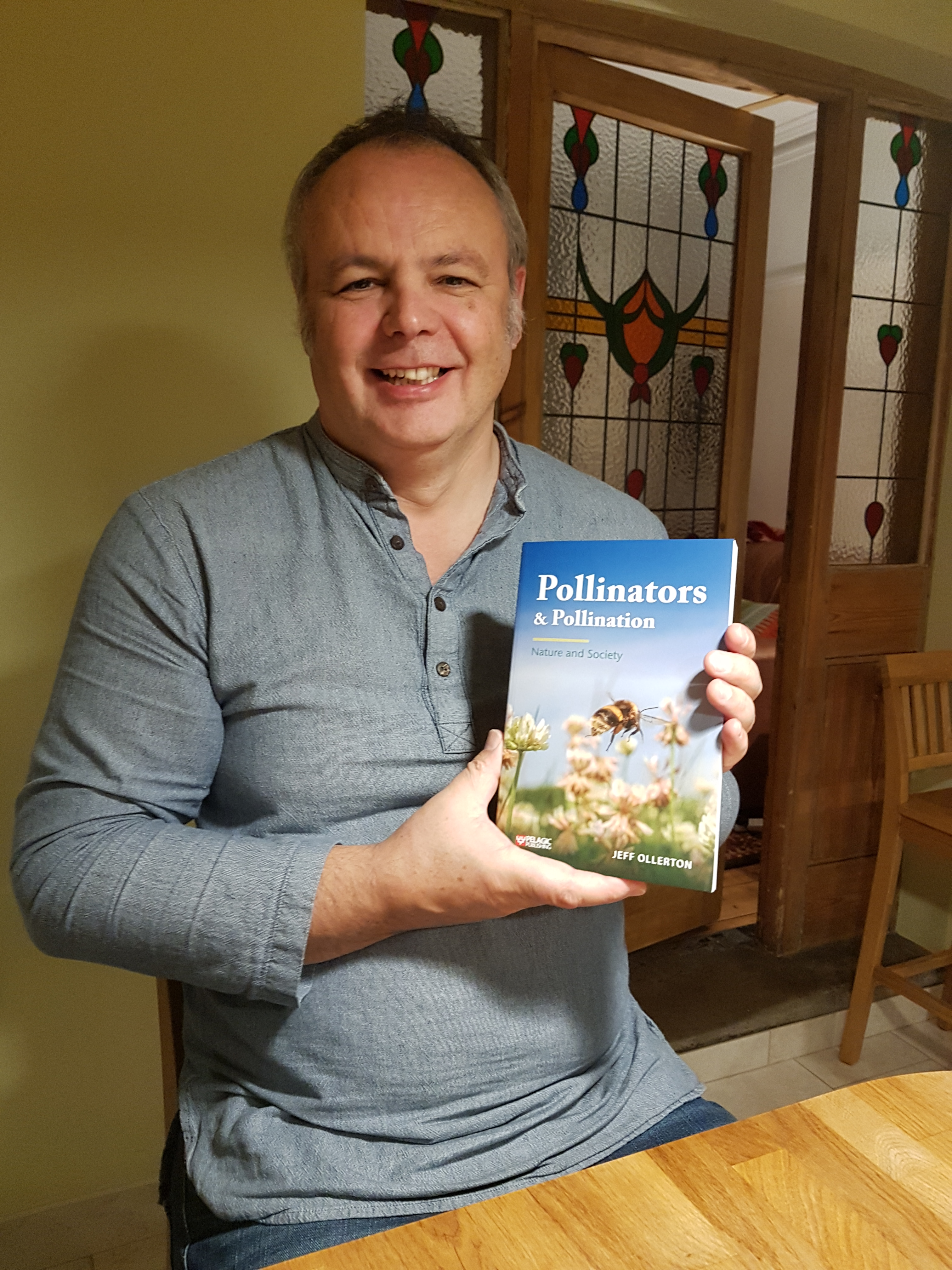
Finally, a physical copy of my book!

Yesterday I was delighted to finally receive an advance copy of my book Pollinators & Pollination: Nature and Society! It’s been over three years in the writing and production, much longer than I had anticipated. But, as I describe in its pages, the book is the culmination of >50 years of experience, study and research. So perhaps three years isn’t so bad…

If you’re interested in buying a copy you can order it direct from Pelagic Publishing and from most of the large online booksellers. Let me know what you think.

Why are bees like Bactrian camels? Because they both have two humps!

It was eminent bee biologist Charles Michener who first* pointed out that there was something odd about the global distribution of bees. In his 1979 paper Biogeography of the bees he writes:

“unlike many groups which abound in the tropics, bees attain their greatest abundance in warm temperate areas”

Think about that for a moment: in contrast to most other groups of insects, birds, mammals, flowering plants, fish, indeed the majority of the Earth’s biodiversity, bees are NOT generally at their most species rich in tropical areas. Rather, we have to move north and south of the equator to find them at their highest diversity. This is an odd pattern of distribution for such a successful (> 20,000 species), globally widespread and ecologically important group of organisms.

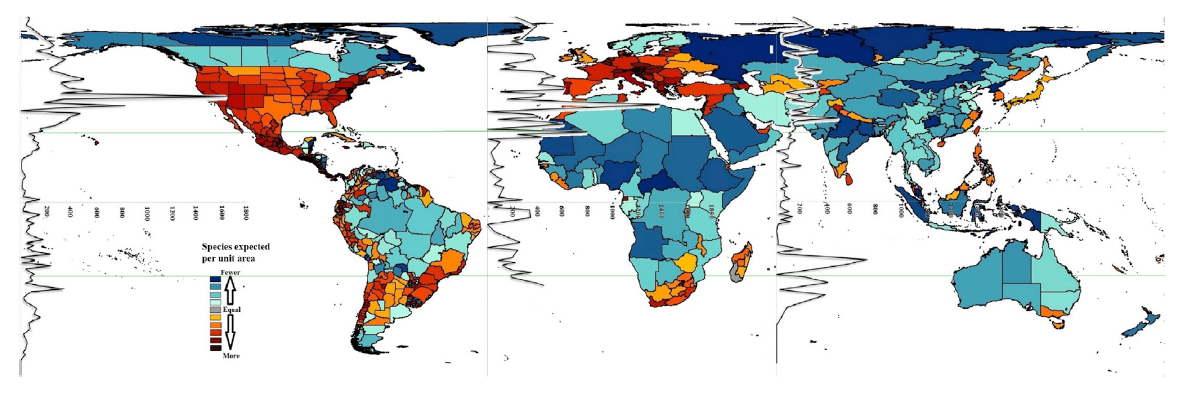
Some 15 years ago I was inspired by Michener’s comments when, together with colleagues Steve Johnson and Andrew Hingston, we wrote a chapter called Geographical variation in diversity and specificity of pollination systems for the 2006 Waser & Ollerton edited volume Plant-pollinator Interactions: from Specialization to Generalization. In that chapter we presented a rough analysis of how bee diversity per unit area in different countries changes with latitude. This, and a follow-up that appeared in my 2017 Annual Review of Ecology, Evolution and Systematics paper, confirmed Michener’s view that there’s an unusual relationship between bee diversity and latitude, with peak species richness outside of the tropics, in warm, dry environments.

What I really hoped over this time was that some serious bee biologists would follow up Michener’s insights and produce a full analysis of how bee diversity changes across the planet. Yesterday that hope was realised when Michael Orr, Alice Hughes, Douglas Chesters, John Pickering, Chao-Dong Zhu and John Ascher published the first analysis of bee diversity across the whole planet, and its underlying causes, in their open-access paper Global Patterns and Drivers of Bee Distribution.

Their analyses are based on a data set of >5,800,000 records of where bees occur and it’s been an incredible achievement to bring all of that together into a planet-wide view of where bees are found, and why. I highly recommend that you download and read it, it’s an impressive piece of work.

What have camels got to do with all of this? Well, as the authors show in their paper (from which the image above is taken), if you graph up the increase in bee species richness with latitude from the poles in each hemisphere, you get two humps at about 35 degrees north and south of the equator: like a Bactrian camel. In contrast, as I noted above, if you were to do the same for for most other species you’d get a single hump at the equator: like a dromedary camel.

One of the key drivers of this bimodal pattern seems to be the amount of rainfall in an environment – bees do not like it too wet, in contrast to their relatives the ants which do show the more typical tropical peak in diversity. As the authors put it:

“humidity may play a key role in limiting bee distribution, such as through spoilage of pollen resources”

One of the implications of this for the biogeography of plant-pollinator interactions is that we might expect there to be a greater diversity of different types of pollinators in areas where bees are not so abundant. And indeed that is exactly what we find: in that Ollerton, Johnson and Hingston book chapter I mentioned we showed that there’s a step-change in the diversity of functionally specialised pollination systems as one moves from the sub-tropics into the tropics. There could be many reason for that but I suspect that one is a relative lack of bees compared to the number of plants species; thus you get tropical “oddities” such as specialised cockroach pollination in some plants.

Orr et al.’s paper is a milestone in bee biogeography and opens up new opportunities for conserving these insects, and their vital relationships with the flowering plants. To give just one example: these analyses provide a framework for predicting bee diversity hotspots in parts of the world that have been poorly explored by bee taxonomists, but which are nevertheless severely threatened by habitat degradation and conversion to agriculture. It could also be used for predicting how climate change might affect future bee distributions, especially in parts of the world that are expected to become wetter. I’m looking forward to seeing how the team’s work develops in the future.

——————————————–

*It’s always risky to state “first”, but Michener was certainly the first that I am aware of. Let me know if you’ve come across any precedents.

Recent pollinator and pollination related research that’s caught my eye

2020-07-30 16.25.26

As I near completion of the copy-editing phase of my forthcoming book it’s frustrating to see all of the great research that’s been produced in recent weeks that I probably won’t be able to cite!  Here’s a few things that caught my eye:

Damon Hall and Dino Martins have a short piece on Human dimensions of insect pollinator conservation in Current Opinion in Insect Science.  My favourite line is: “any call to ‘save the bees’ must be a call to stabilize agriculture”.  Amen to that.

In the journal New Phytologist, Rhiannon Dalrymple and colleagues, including Angela Moles who hosted me during my recent stay in Australia, have a great study entitled Macroecological patterns in flower colour are shaped by both biotic and abiotic factors.  The title pretty much sums it up: in order to fully understand how flowers evolve we need to consider more than just their interactions with pollinators.  It’s another demonstration of how we must look beyond simplistic ideas about pollination syndromes to fully understand the complexities of the relationship between flowering plants and pollinators…..

…..talking of which, again in New Phytologist, Agnes Dellinger asks: Pollination syndromes in the 21st century: where do we stand and where may we go?  It’s an insightful and far-reaching review of a topic that has intrigued me for more than 25 years.  There are still a lot of questions that need to be asked about a conceptual framework that, up until the 1990s, most people in ecology and biology accepted rather uncritically.  One of the main unanswered questions for me is how further study of largely unexplored floras will reveal the existence of new pollination systems/syndromes.  Which leads nicely to….

…..an amazing paper in Nature this week by Rodrigo Cámara-Leret et al. showing that New Guinea has the world’s richest island flora.  The described flora includes 13,634 plant species, 68% of which are endemic to New Guinea!  And the description of new species each year is not leveling off, there’s still more to be discovered.  A commentary on the paper by Vojtech Novotny and Kenneth Molem sets some wider context to the work, and quite a number of media outlets have covered the story.  Why is this relevant to pollinators and pollination?  Well, we actually know very little about this critical aspect of the ecology of the island: there’s only a handful of published studies of plant-pollinator interactions from New Guinea, mostly focused on figs, bird-flower interactions, and a couple of crops.  For such a biodiverse part of the world that’s a big gap in our understanding.

Finally, James Reilly, Rachael Winfree and colleagues have a paper in Proceedings of the Royal Society series B showing that: Crop production in the USA is frequently limited by a lack of pollinators.  Most significant findings to me were that of the seven crops studied, five of them have their yields limited by lack of pollinators, and that even in areas of highly intensive farming, wild bees provided as much pollination service as honeybees.

That’s a few of the things that I spotted this week; what have you seen that’s excited or intrigued you?  Feel free to comment.


How are the Australian bushfires affecting biodiversity? Australia reflections part 4

2019-12-24 14.10.52

Australia’s vast, unprecedented wildfires are going to have a devastating effect on the biodiversity of the country.  To fully understand why this is the case, you need to know something about where species occur and why.

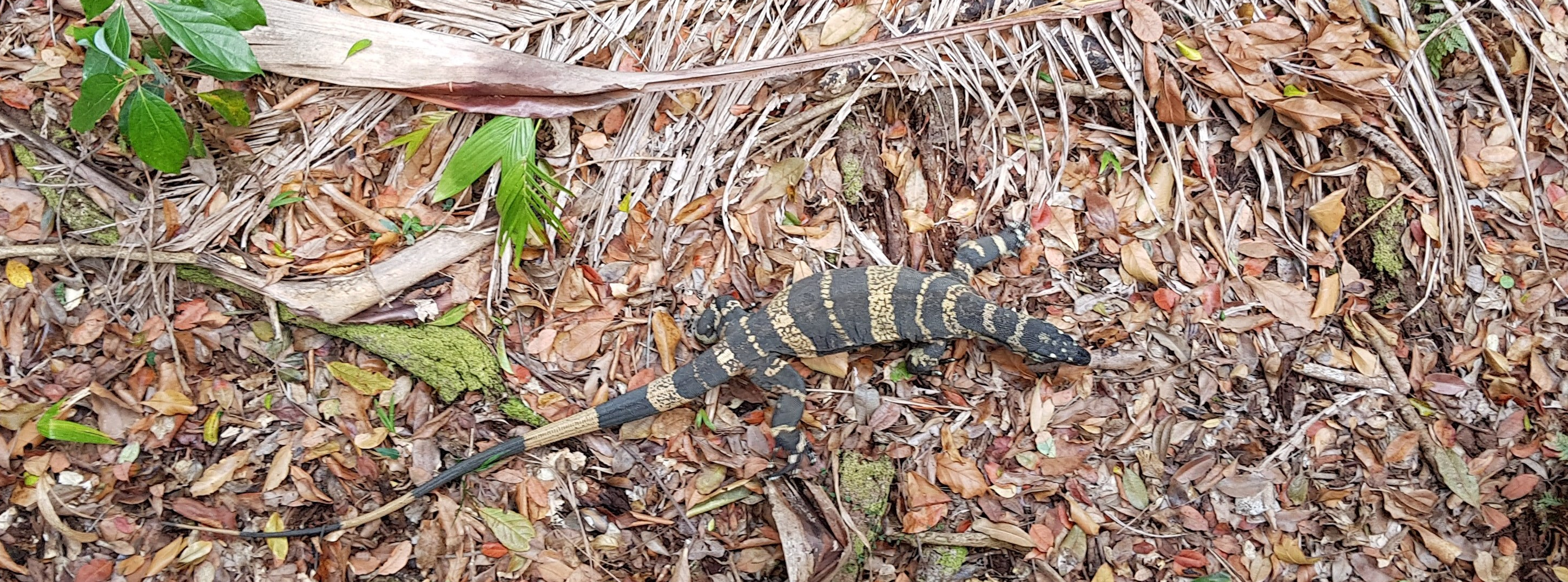
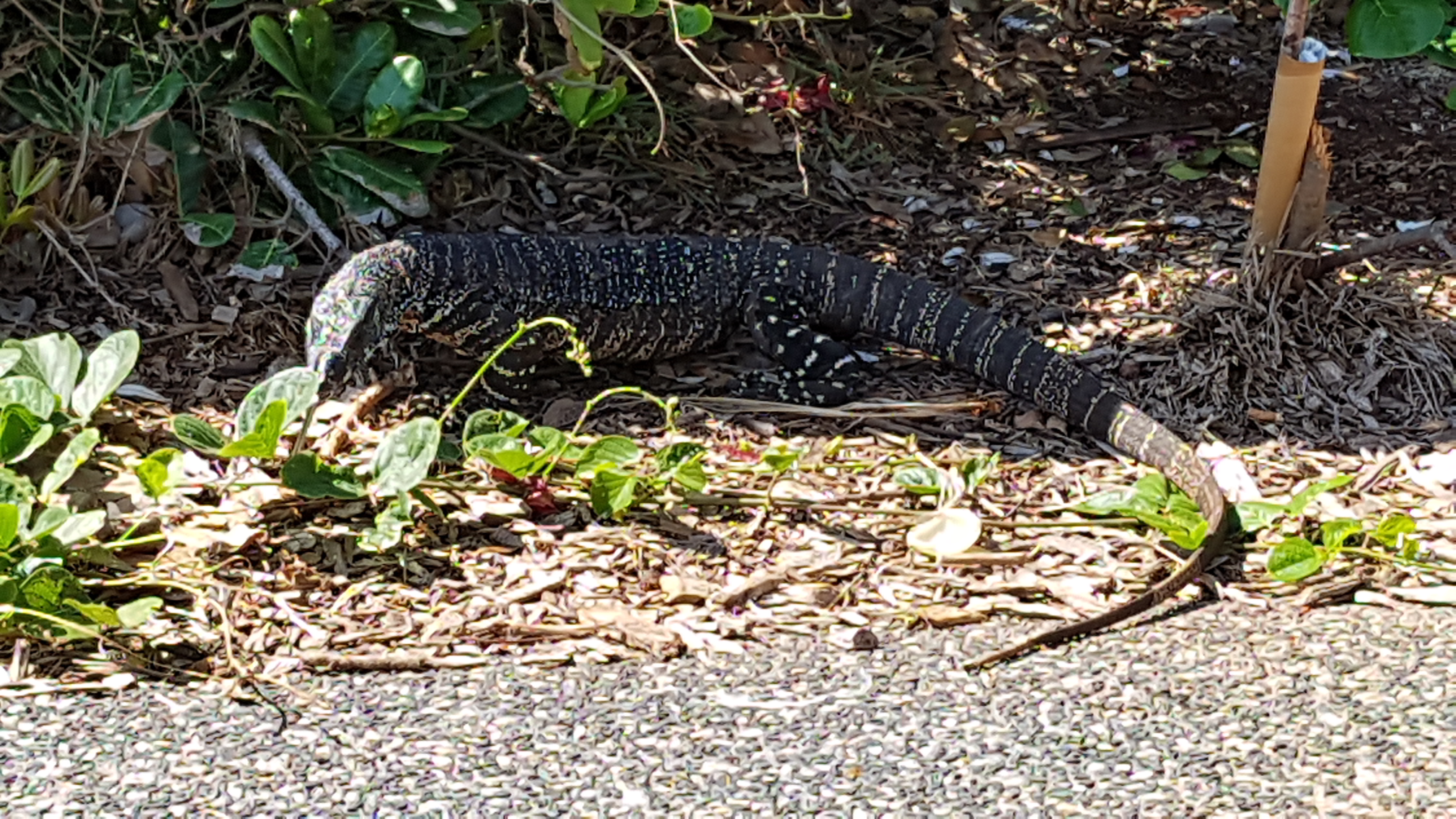
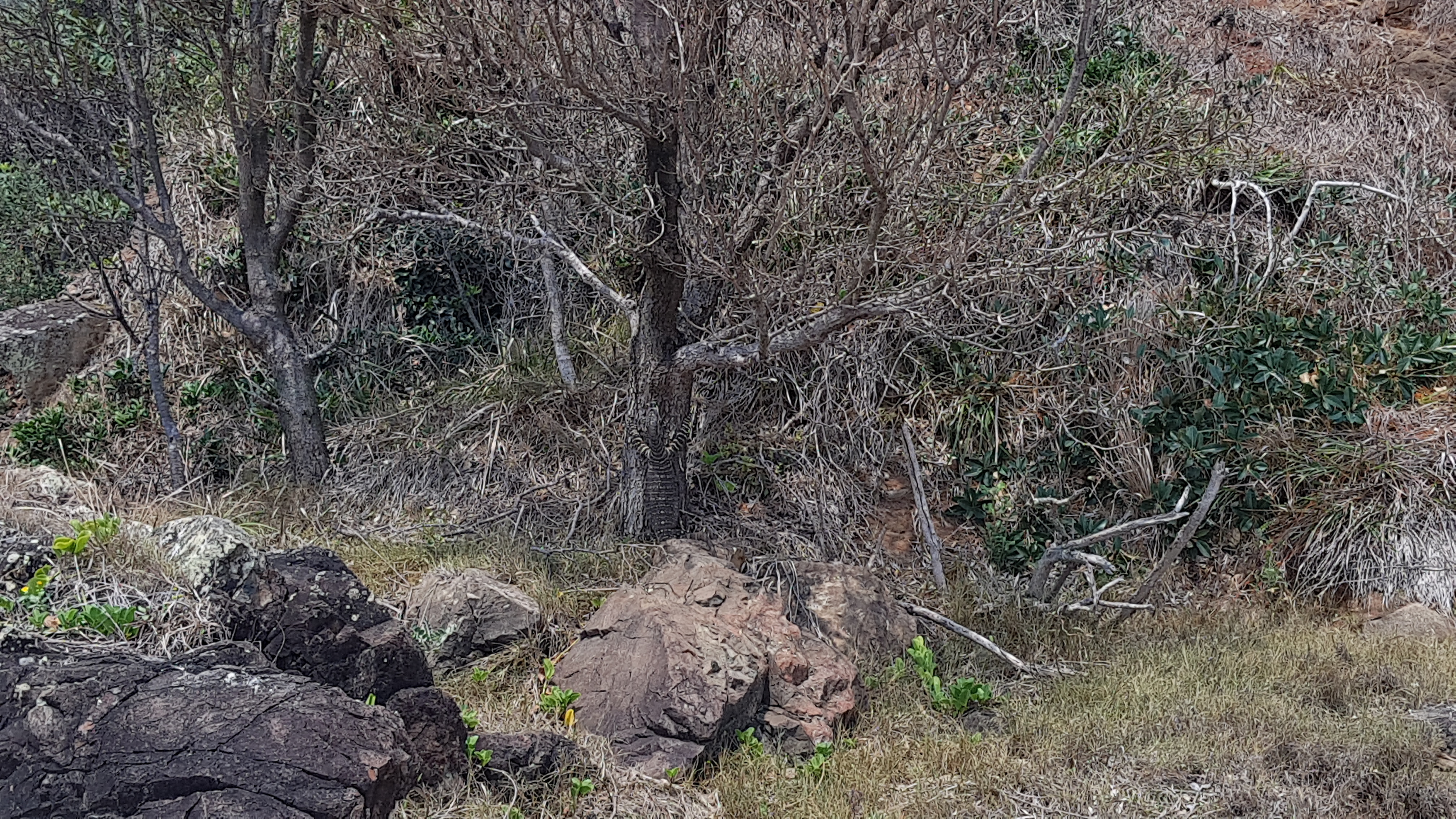
Australia is a land of lizards.  Karin and I see them everywhere we walk and frequently encounter them in gardens.  Reptiles are the most diverse group of vertebrates in Australia, with more than 1000 described species.  Of these, over half are lizards.  One family alone, the skinks (Scincidae) accounts for almost 440 species, with species new to science being described every year.  Some of these lizards are physically extremely impressive, particularly the dragons (Agamidae – about 90 species) and the monitors or goannas (Varanidae – 30 species).  We encountered lace monitors (Varanus varius) over Christmas at Port Macquarie, in coastal bushland and (very dry) rainforest at Sea Acres National Park (see photos above and below):

2019-12-26 10.06.02

Spot the goanna:

2019-12-24 11.10.25

Growing up to two metres in length, they seem to arrogantly swagger through the bush as though they own it; which of course they sort of do – they were here millions of years before people arrived.  Smaller but still impressive are the Eastern water dragons (Intellagama lesueurii) – here’s male and female checking one another out:

2019-12-24 11.23.26

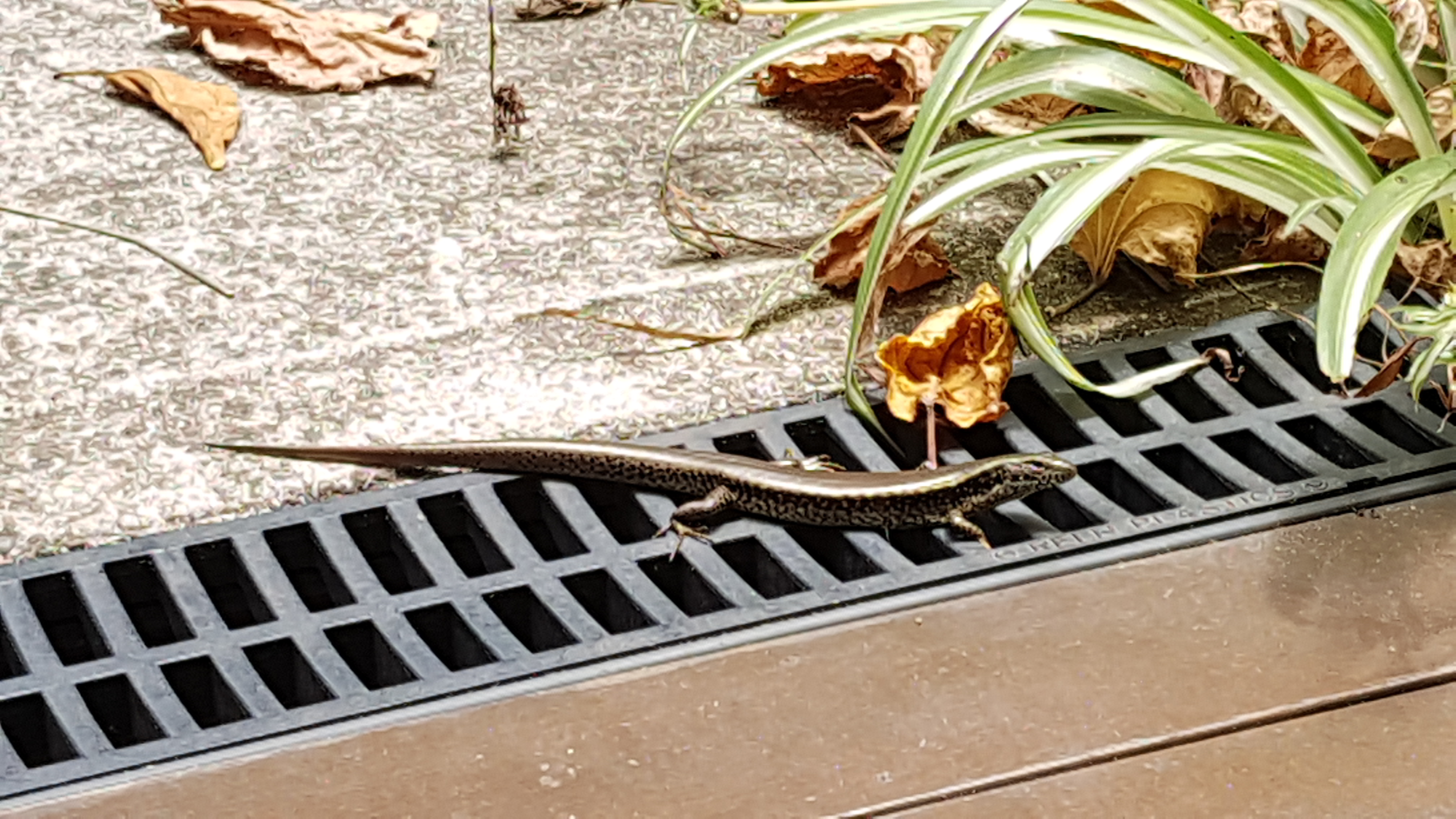
Much smaller but more charming are the various skinks that seem to inhabit every garden and green space in the city; this one seems to be the Eastern water skink (Eulamprus quoyii):

2020-01-02 13.02.24

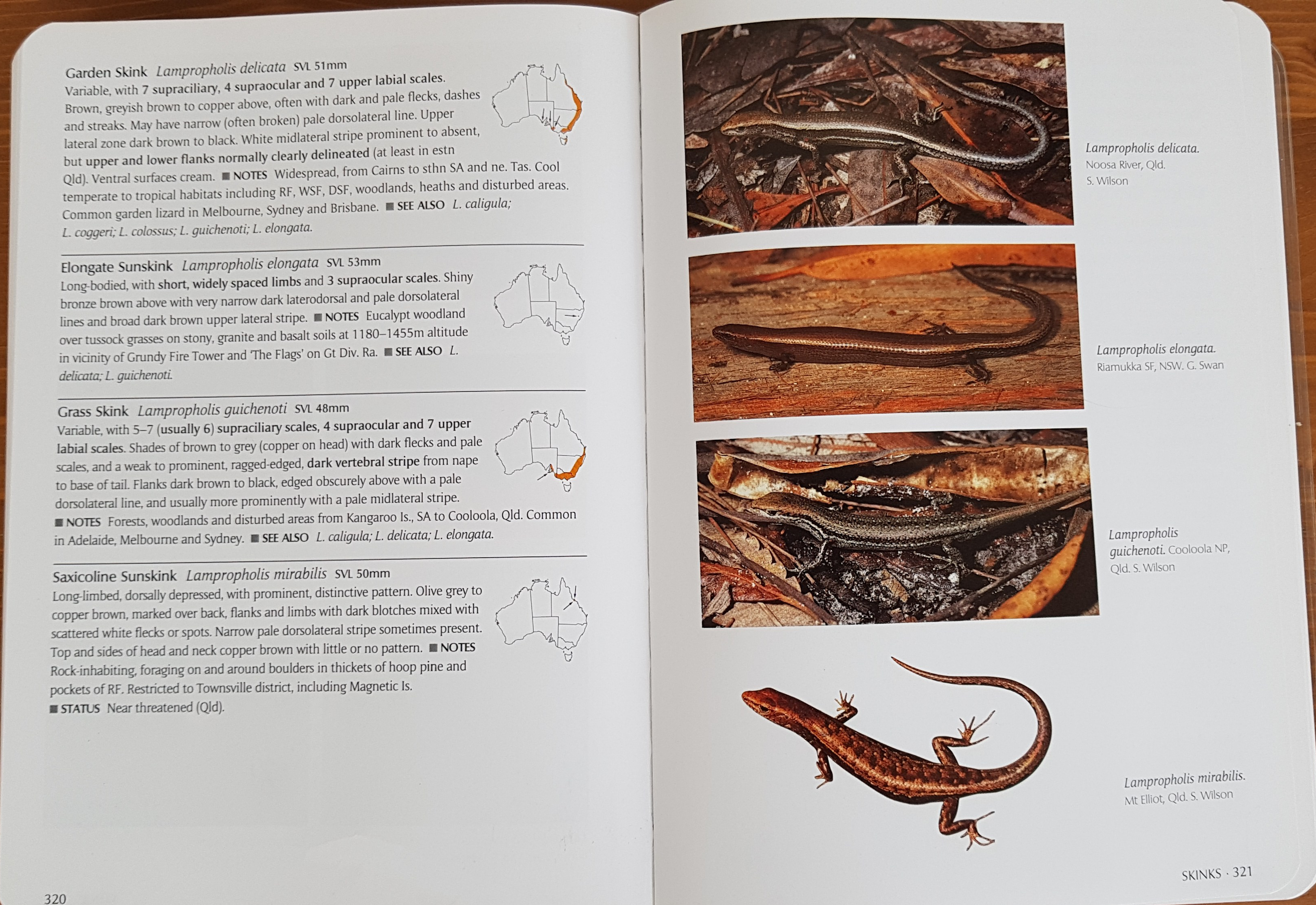
And here’s where we get to the main point of this post.  All of the lizards I mentioned above are endemic to Australia, it’s the only place on Earth where they naturally occur.  But they are all widespread species found across a huge area in the east of the country, from Queensland to Victoria, a linear distance of over 2,000 km.  This is unusual for species in Australia, and indeed in the rest of the world; most organisms naturally occur over a much smaller area.  To see what I mean, look at the image below from Steve Wilson & Gerry Swan’s book A Complete Guide to Reptiles of Australia:

2020-01-02 18.44.18 (1)

The maps adjacent to each species description illustrate the distribution of these organisms. The garden skink and the grass skink live in suitable habitat over vast areas. But the other two species are much more restricted in their ranges, which are so small that they need to be highlighted with arrows.  The elongate sunskink (Lampropholus elongata) for instance is found only “in the vicinity of Grundy Fire Tower and “The Flags”” at 1180-1455 m in the Great Dividing Range.  This is more typical of species distributions in Australia: most are restricted, and some are extremely restricted.  This is true of other reptiles, plants, birds, insects and fungi, in fact all major groups, not just the lizards.  Such a skewed distribution of species occurrences, with many rare and localised, and a few common and widespread, is natural; it’s an outcome of the processes of natural selection and evolution.  But it’s been exacerbated by habitat loss across the world, including Australia.  According to the Wilderness Society of Australia, the country “has lost 25% of rainforest, 45% of open forest, 32% of woodland forest and 30% of mallee forest in 200 years”.

But even these figures do not reflect the full scale of the loss: I’ve seen estimates that more than 90% of the temperate rainforest exemplified by Sea Acres National Park has been destroyed.  Given what I’ve said about the limited distribution of many species, that must mean that locally endemic species have gone extinct in the past.  The huge extent of some of the Australian bushfires, individually covering tens of thousands of hectares and collectively around 6 million hectares, means that most or all of a species’ population could be wiped out.  To give just one example, a small marsupial mammal, the Kangaroo Island dunnart (Sminthopsis aitkeni), is found only on Kangaroo Island.  Indeed, it’s restricted to the western part of the island, where a large bushfire has been raging out of control in recent days.  We will only know whether this species has survived, and in what numbers, once ecologists are able to survey the area once the danger is over.

However even for widespread species the fires can have a massive effect on their genetic diversity, which is an important component of biodiversity.  When we lose individuals from a population we lose genetic variants too.  A recent assessment by ecologists at the University of Sydney has suggested that almost half a billion reptiles, mammals and birds have been killed so far by the fires.  Losses of trees and other flowering plants, as well as insects, spiders and so forth, will be much, much greater of course.

This destruction of biodiversity has a human impact too.  On television news reports we’ve heard farmers and fire fighters describing the emotional trauma of seeing animals on fire and hearing the screams of koalas as they burn in the tree tops.  All of this biodiversity serves to ensure that Australian ecosystems function effectively and sustainably now and in the future. Ecosystems which are crucial for reducing the future effects of climate change, for ensuring supplies of fresh water, supporting agriculturally-important pollinators and predators of pests, and bringing in billions of tourist dollars.  All in all these fires are a tragedy for Australian biodiversity, as well as for the human population of this fabulous country.

Monarchs and Milkweeds Workshop summary, Oak Spring, Virginia, June 2019

2019-06-12 09.24.58

As I recounted in my last post about a train ride through American climate change, my wife Karin and I have been in the USA for the past couple of weeks, visiting colleagues in the west and ultimately heading eastwards to Virginia for a workshop on monarch butterflies and their milkweed hosts.  The meeting was organised by Anurag Agrawal, professor at Cornell University and author of the recent book Monarchs and Milkweed, highly recommended to anyone interested in the natural history of plants and insects.  The monarch (Danaus plexippus) is an iconic migrating  species that travels from Mexico to Canada and back, over the course of a few generations.  This behaviour, and their vast over-wintering assemblages, have become the focus of intense efforts to understand their ecology and biology.  Their caterpillar host plants are mainly milkweeds (Asclepias spp.) and bringing together both plant and animal scientists is important for gaining a fuller over view of the issues facing the monarchs and the milkweeds, and how both can be conserved in a time of anthropogenic change.

The venue for the workshop was Oak Spring, Upperville, the former home of Paul and Rachel (“Bunny”) Mellon which has been turned into the base of operations for a philanthropic foundation specialising in plant science, horticulture, and botanical art.  The Oak Spring Garden Foundation (OSGF) is “dedicated to inspiring and facilitating scholarship and public dialogue on the history and future of plants, including the culture of gardens and landscapes and the importance of plants for human well-being”.  The OSGF generously funded the workshop, including accommodation and travel for participants.  This brought together a small group of scientists from the USA, the UK and Brazil, together with an artist, a milkweed horticulturalist, and two science writers.  Their brief was to discuss the latest developments in our understanding of monarch butterflies, their decline and conservation, and the taxonomy, evolution and ecology of milkweeds and the wider groups of Lepidoptera and the plant family Apocynaceae to which these organisms belong.  My invitation to take part was due to the research on the pollination ecology of this family I’ve conducted, spanning about twenty five years and culminating in a recently published assessment of the diversity of pollination systems in Apocynaceae.

First things first: Oak Spring is one of the most tranquil, beautiful, and inspiring places where it’s ever been my privilege to stay.  Here’s a few photographs, but they really do not do justice to the buildings and garden, their setting, nor to the unique atmosphere of Oak Spring.

2019-06-12 15.27.50

2019-06-11 10.51.48

2019-06-11 14.26.45

2019-06-10 20.21.54

2019-06-12 15.24.31


2019-06-12 13.28.57

2019-06-11 16.26.56

So to the science.  The workshop started with a set of short presentations on our recent research findings and the motivations for our interests in these organisms.  On the second day we then moved on to discussing ideas for future collaborations between the participants and how that work might be funded in the future.  Presentations and discussions were mainly held in the Basket House, named for obvious reasons:

2019-06-12 09.30.08

2019-06-12 09.29.41.jpg

Each of us was also interviewed on camera to build an online archive of the work we do and why we do it.

The advantage of face-to-face meetings such as this, and why Skype and so forth can never fully replace them, is the free-flowing conversations that occur within the formal sessions and outside them.  Among the many things that I learned from presentations and discussions were:

  • The California monarch population has declined by almost 90% this year and there’s an urgent need to understand why this has happened.  Climate change has been implicated, especially in relation to the increased frequency of wildfires in this region.
  • Existing methods of nectar extraction from milkweed flowers may strongly underestimate the volume available to flower visitors, and overestimate the sugar concentration.  Using a small centrifuge to spin out the nectar seems to be the most effective method.
  • Asclepias arrived in the Americas (probably from Africa) some 10 million years ago (mya).  However Danaus only arrived about 3.7 mya, so there was a long period of time in which the plant was not co-evolving with one of its major herbivores.
  • There is strong evidence of migrations along the Andes by a close relative of the monarch, Danaus erippus.  Migrations in this group of butterflies therefore extends beyond the iconic D. plexippus.
  • Sonoran Desert Asclepias are sister group to the rest of the New World Asclepias spp.  The exact route by which the African ancestors made it to the Americas is unknown, it could be via Asia and the Bering Strait, or across the Atlantic by way of island stepping stones.  Either way, the phylogenetic position of the Sonoran milkweeds implies that a lot of Asclepias species have gone extinct over the past 10 million years.
  • Climate change seems to be resulting in more complex and unpredictable windows of opportunity for monarch egg laying and caterpillar development.  The monarchs are most successful in late spring and late summer, but not in all years.
  • Likewise, extreme precipitation of the kind I recently documented in the USA is also likely to have a negative impact on the monarchs and their host plants.
  • There is molecular evidence that monarch butterflies went through a huge genetic bottleneck in the 1960s-1970s, for reasons that are not altogether clear.

All of these findings, and more that there isn’t space to document, point to a need for further research to better understand these organisms if we wish to secure their futures.

By the end of the workshop we had made some concrete decisions on future steps:

  •  The African members of the genus Asclepias, plus about 20 other closely related genera, require more critical taxonomic and phylogenetic assessment in order to understand their systematic relationship to the North and South American Asclepias species.
  • A poster (or possibly series of posters) will be produced that explain the ecology of the monarch, its relationship with milkweeds, the patterns of migration, and the value of milkweeds as nectar sources for a diverse range of pollinators.
  • We will explore a multi-agency grant application to further develop the collaborations between participants.

The final day of the workshop involved a field trip around Virginia to see some of the local milkweed species, many of which live in woodland.  That surprised me: I always envision Asclepias spp. as grassland or desert plants.  The leader of the field trip, Mark Fishbein, had a hit list of 8 species that he wanted us to see and in the end we located all of them, including a rare hybrid population of A. syriaca x A. exaltata, plus the tropical milkweed Asclepias curassavica planted in the OSGF garden, plus the distant relative dogbane Apocynum cannabinum.  Here are some images from that day:

2019-06-13 10.52.15

Searching for milkweeds along Skyline Drive, Shenandoah National Park


2019-06-13 10.56.00

Poke milkweed – Asclepias exaltata


2019-06-13 10.57.49

Hunting that elusive hybrid milkweed!


2019-06-13 11.02.21

Caterpillar of the monarch butterfly feeding on a milkweed


2019-06-13 12.20.21

Alessandro Rapini intent on getting a good photo of the A. syriaca x A. exaltata hybrid


2019-06-13 12.36.32

A bumblebee and a butterfly visiting A. exaltata


2019-06-13 15.42.41

Purple milkweed – Asclepias purpurascens


2019-06-13 17.01.45

Common milkweed – Asclepias syriaca – with a visiting skipper butterfly


2019-06-13 18.17.46

Climbing milkvine – Matelea obliqua – a member of a largely fly-pollinated group of New World asclepiads


Thanks to my fellow workshoppers for such a stimulating and enjoyable meeting, and to all the staff at Oak Spring for making us feel so welcome.  Particular thanks go to Prof. Sir Peter Crane who, as President of the Oak Spring Garden Foundation, was hugely supportive of the workshop, and to Angie Ritterpusch, Head of Events and Guest Services, for logistical and organisational support.


Are these first photographs of a living specimen of a rare African butterfly?

OLYMPUS DIGITAL CAMERA

Earlier this year my colleague at the Royal Botanic Gardens Kew, David Goyder, tweeted a link to a new book about the biodiversity of Angola which you can download for free by following this link.  David’s an authority on Apocynaceae, the family of plants on which I’ve also worked for many years (see this recent post), and has been sorking in Angola in recent years on a large biodiversity project.  So I was interested to see what was in the chapter  he had co-authored called “The flora of Angola: Collectors, Richness and Endemism“.  I was immediately struck by one of the images in Figure 5.3 showing an unnamed butterfly feeding on the flower of a species of Apocynaceae (Raphionacme michelii).

I made a note to myself to talk to David about adding the record to our Pollinators of Apocynaceae Database. But before I had a chance to do that, another apocynologist colleague, Ulrich Meve in Bayreuth, forwarded the chapter with a similar idea in mind.

We emailed David about the image and he sent us originals, but confessed he didn’t know what the insect was.  So I uploaded it to an African Lepidoptera forum on Facebook.  At which point a wave of excitement broke, because after some discussion as to whether it might be a new species, it turned out that the most likely candidate was an exceptionally rare butterfly called Acraea mansya in the family Nymphalidae.

According to Dominique Bernaud, an authority on the group, this species is hardly known beyond a few collections and he has never seen a photograph of a living specimen: if you follow this link you will see that the known distribution of the species does not include Angola,  and indeed it is not listed in the chapter on butterflies in the Angola biodiversity book.  So this is a new country record and (we think) the first images of living insects: so a double first for a beautiful species.

Here’s links to collection information for the plant and to David’s checklist of plants from the region, which gives details of the vegetation and the habitat.

An unanswered question, of course, is whether the butterfly is a pollinator of this species of plants.  Raphionacme belongs to a subfamily of Apocynaceae that have hardly been studied from the perspective of pollination ecology, so we simply don’t know.  Hopefully someone in the future will visit this remote region of Africa and find out!

Thanks to David for sending the images (a complete set of which is below), the National Geographic Okavango Wilderness Project, and the Wild Bird Trust, Parktown, South Africa.

OLYMPUS DIGITAL CAMERAOLYMPUS DIGITAL CAMERAOLYMPUS DIGITAL CAMERAOLYMPUS DIGITAL CAMERAOLYMPUS DIGITAL CAMERA

Pollinator availability, mating system and variation in flower morphology in a tropical savanna tree – a new, open-access study

Curatella image by Pedro Lorenzo

Widespread plant species can encounter a variety of different pollinators across their distributional range.  This in turn can result in local adaptation of flowers to particular pollinators, or to an absence of pollinators that results in adaptations for more self pollination.   A newly published study by one of my former PhD students, André Rodrigo Rech in Brazil, has looked at this in the widespread South American savanna tree Curatella americana.  André studied 10 populations separated in space by thousands of kilometres, in cerrado vegetation, one of the most threatened habitat types in Brazil.  Here’s the abstract:

Widely distributed organisms face different ecological scenarios throughout their range, which can potentially lead to micro-evolutionary differentiation at specific localities. Mating systems of animal pollinated plants are supposed to evolve in response to the availability of local pollinators, with consequent changes in flower morphology. We tested the relationship among pollination , mating system, and flower morphology over a large spatial scale in Brazilian savannas using the tree Curatella americana (Dilleniaceae). We compared fruit set with and without pollinators in the field, and analyzed pollen tube growth from self- and cross-pollinated flowers in different populations. Populations with higher natural fruit set also had lower fruit set in bagged flowers, suggesting stronger barriers to self-fertilization. Furthermore, higher levels of autogamy in field experiments were associated with more pollen tubes reaching ovules in self-pollinated flowers. Morphometric studies of floral and leaf traits indicate closer-set reproductive organs, larger stigmas and smaller anthers in populations with more autogamy. We show that the spatial variation in mating system, flower morphology and pollination previously described for herbs also applies to long-lived, perennial tropical trees, thus reemphasizing that mating systems are a population-based attribute that vary according to the ecological scenario where the plants occur

Here’s the full citation with a link to the paper which is open access:

Rech, A.R., Ré Jorge, L., Ollerton, J. & Sazima, M. (2018) Pollinator availability, mating system and variation in flower morphology in a tropical savannah tree. Acta Botanica Brasilica (in press)

The illustration of Curatella americana  and its pollinators is by Pedro Lorenzo.

This paper is a contribution to a special issue of Acta Botanica Brasilica dedicated to floral biology and pollination biology in Brazil It’s all open access and if you follow that link you can download the papers.