Tag Archives: Pollinators

Some seaweeds have “pollinators”! New research published this week

Most of us have at some time stared in fascination at the life contained within the pools that form on rocky shores at low tide. But none of us realized that a whole new class of ecological interaction was taking place!

The 12,000 or so described (and many un-named) seaweeds are incredibly important organisms. Their diverse and abundant photosynthesizing fronds make them one of the main primary producers in coastal seas, creating food and habitat for a huge range of animals. Not only that, but some – the coralline seaweeds – lock up vast amount of CO2 as calcium carbonate and help to create reef systems in the same way as coral.

Although scientists have studied seaweeds for hundreds of years, many aspects of their ecology are still unknown. Their detailed mode of reproduction, for example has only been studied in a small proportion of species.

In a newly published study in the journal Science, French PhD researcher Emma Lavaut and her colleagues have shown that small isopod crustaceans – relatives of woodlice and sea slaters – facilitate the movement of the equivalent of seaweed sperm (termed “spermatia”) from male to female reproductive structures in just the same way that bees and other pollinators move pollen between flowers, so fertilizing female gametes.

Your read that correctly: some seaweeds have pollinators!

It’s an incredible finding! And the implications of this are enormous: Emma and her colleagues have added a whole new branch of life to the examples of sedentary (fixed-place) organisms that require a third party to enable their reproduction. In addition to being a fascinating biological discovery, it has significant environmental and sustainability implications.  

Seaweeds are a diverse group of macroalgae that appeared more than one billion years ago, at least 500 million years before the evolution of what we think of as “true” plants, such as the flowering plants, conifers, cycads, ferns and mosses. Sexual reproduction in the brown and green seaweeds, which include kelps, wracks and sea lettuces, involves spermatia that are mobile and use a flagellum to swim through the water to seek out female reproductive structures. However, Emma studied a seaweed, Gracilaria gracilis, which belongs to the Rhodophyta or red seaweeds, and none of the species in this group have these swimming sperm equivalents.

Sexual reproduction in the red seaweeds has therefore always been something of a mystery. Three quarters of species have separate male and female individuals and so they cannot mate with themselves. It was assumed that the gametes were just released into water currents that haphazardly transported them to the female reproductive organs, much as wind pollinated grasses and pine trees release their vast clouds of pollen on land. The authors of this new study, however, point out that most sexual reproduction by these red seaweeds takes place in the relatively still waters of rock pools, a habitat that they mimicked in the laboratory in a series of elegant aquarium experiments.

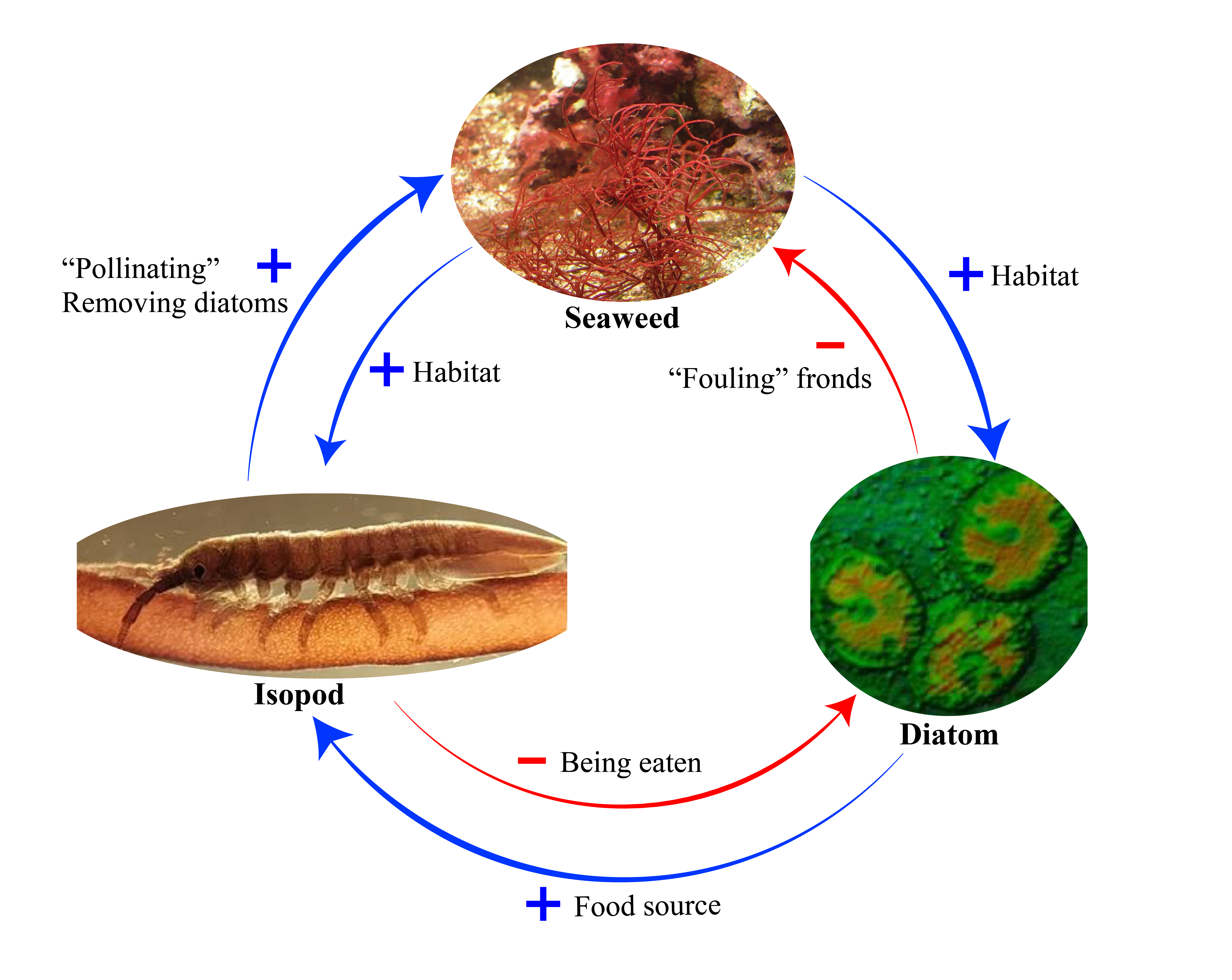
The isopod crustaceans are attracted to the seaweed because they provide a habitat away from predators and a supply of food: they graze on the microalgae that colonise the seaweed’s fronds. Picking up spermatia and moving them between fronds is a side-effect of this activity by the small invertebrates. As you can see from the illustration above, the isopods and the seaweed are engaged in a “double mutualism“: a plus sign (+) indicates a positive effect of one species on another, while a minus sign (-) indicates a negative impact. 

What I find especially fascinating about this research is that both the seaweed (Gracilaria gracilis) and the isopod (Idotea balthica) were originally described as species more than 200 years ago. They also have an extremely wide distribution. The isopod is found around the coasts of Europe and down the eastern seaboard of the Americas. The seaweed is pretty much found globally. These are not rare, unusual species, yet the interaction between them has only just been discovered! This is a point that I made in my recent book Pollinators & Pollination: Nature and Society: quite often, species that are well known interact in previously undocumented ways because no one has had the time or inspiration to look closely at them.

Although the idea that small sea creatures might be helping seaweeds to reproduce sounds very fanciful, there is a precedence for this discovery. Back in 2016, in a paper published in Nature Communications, a group of Mexican researchers led by Brigitta van Tussenbroek showed that a species of seagrass is pollinated by a diverse assemblage of small crustaceans and polychaete worms. Seagrasses are flowering plants, not seaweeds, but clearly this type of mutually beneficial relationship can exist between different species in the oceans.

Rhodophyta are the most diverse group of seaweeds, with more than 7,000 known species. They are especially abundant on coastal shores, oceanic habitats that are under huge pressure from infrastructure development, pollution, and climate change. At the same time, these seaweeds are economically important and millions of tonnes of them are collected every year as food, as nutritional and pharmaceutical supplements, and to produce agar. In order to conserve these seaweed populations, we need to better understand their ecology and their environmental requirements.

The work by Emma Lavaut and colleagues suggests that interactions with their “pollinators” may be a critical aspect of this understanding. In the same way that “Save the Bees” has been a rallying call for conserving interactions between species on land, we may soon hear this message echoed in “Save the Isopods”. At the very least, I have to add a new section to the second edition of my book!

Full disclosure: I was one of the reviewers of the original manuscript submitted to Science by Emma and her co-authors. It’s a rare privilege to review a study and think: “Wow! This is a game-changer!” and including this paper it’s happened to me only a handful of times. The editors at Science kindly invited my colleague Dr Zong-Xin Ren and myself to write a Perspective piece about the work and we were delighted to do so.


Image credits: Isopod and diatom images from Lavaut et al (2022). Gracilaria image by Emoody26 at English Wikipedia CC BY 3.0 https://commons.wikimedia.org/w/index.php?curid=3455016. Design by Shijia Wen and Jeff Ollerton.
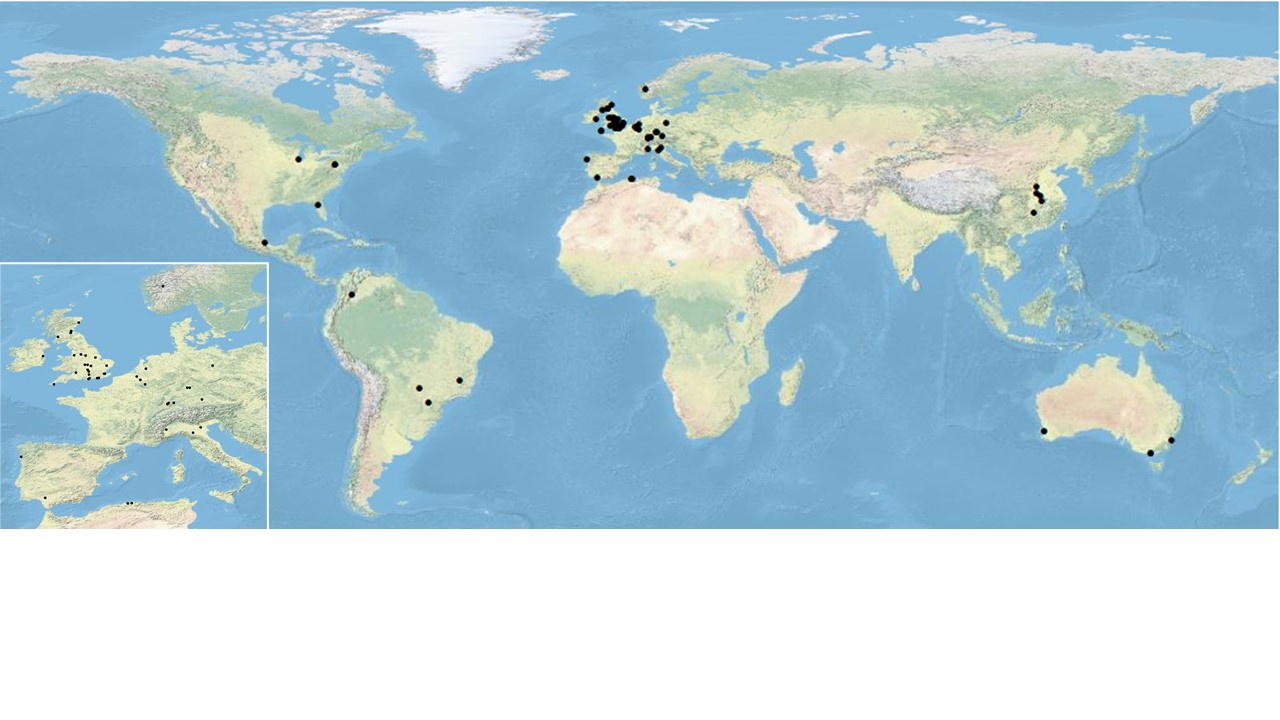
Pollinator-flower interactions in gardens during the COVID-19 pandemic lockdown of 2020: the data paper has just been published!

During the lockdown period of the COVID-19 pandemic in 2020, many pollination ecologists were stuck at home: universities and research institutes were closed and restrictions on travel meant that it was not possible to get out and do field work. In order to keep active and motivated, and to turn adversity into an opportunity, an ad hoc network of more than 70 researchers from 15 different countries (see the map above) decided to collect standardised data on the plant-pollinator networks in their own gardens and nearby public spaces.

When combined with information about location, size of garden, floral diversity, how the garden is managed, and so forth, this would provide some useful data about how gardens support pollinators. For those with kids at home it could also be a good way of getting them out into fresh air and giving them something to do!

Following discussions, several different protocols were instigated which depended upon the time available to the researchers, including one that mirrored the UK Pollinator Monitoring Scheme’s  FIT (Flower-Insect Timed) counts.

The resulting data set of almost 47,000 visits by insects and birds to flowers, as well as information about flowers that were never visited, is freely available and will be an invaluable resource for pollination ecologists. For example, analysing the links between ornamental flowers that share pollinators with fruits and vegetables such as apples and beans, will allow us to make recommendations for the best plants to grow in home gardens that can increase yields of crops.  

There’s an old saying about turning adversity into a positive outcome: “When life gives you lemons, make lemonade”, and the researchers were pleased to find that there’s one record of Citrus limon in the data set!

The paper describing the data set has just been published in the Journal of Pollination Ecology and you can download a PDF of the paper and the associated data for free by following this link.

Sincere thanks to all of my co-authors for their commitment to the project!

Tracking trends in Neotropical pollinators: how good is our understanding and is more data always better?

In my recent book Pollinators & Pollination: Nature and Society I discussed the current state of our knowledge of how populations of pollinators have changed over time. Although we have some quite detailed data for particular, often charismatic, species or for certain geographic localities or regions, for most species we know almost nothing. As I wrote in the chapter “The shifting fates of pollinators”:

“For most pollinators we are ‘data deficient’, in other words, we don’t know how their populations are performing. They could be doing well, but they may not be”

This is particularly true for those regions for the world that hold the greatest terrestrial biodiversity: the tropics. For the vast majority of species in the tropics we know precious little about trends in their populations and how their distributions have changed over time in the face of wide-scale land transformation and recent climatic shifts. Filling in some of the gaps in our knowledge of Neotropical pollinator distributions is one of its aims of SURPASS2, a collaboration between South American and UK ecologists, and one of several research and outreach projects with which I’m involved.

In a new study that’s come out of that work, led by Rob Boyd from the UK Centre for Ecology and Hydrology, we’ve used the GBIF database to look at the changing distributions of four important groups of pollinators: bees, hoverflies, leaf-nosed bats and hummingbirds. In particular we were interested in understanding the kinds of biases that come with such publicly available data, and whether recent efforts to add data to GBIF has improved our understanding of trends.

Our overall conclusion is that there are significant limitations and biases inherent in all of these data sets even for groups like hummingbirds which one would imagine are well documented by scientists and bird-watching naturalists. In addition, having more data does not necessarily help matters: it can introduce its own biases.

The paper is open access and feely available; here’s the reference with a link:

Boyd, R. J., Aizen, M.A., Barahona-Segovia, R.M., Flores-Prado, L., Fontúrbel, F.E., Francoy, T.M., Lopez-Aliste, M., Martinez, L., Morales, C.L., Ollerton, J., Pescott, O.L., Powney, G.D., Saraiva, A.M., Schmucki, R., Zattara, E.E., & Carvell, C. (2022) Inferring trends in pollinator distributions across the Neotropics from publicly available data remains challenging despite mobilization efforts. Diversity and Distributions (in press)

Here’s the abstract:

Aim
Aggregated species occurrence data are increasingly accessible through public databases for the analysis of temporal trends in the geographic distributions of species. However, biases in these data present challenges for statistical inference. We assessed potential biases in data available through GBIF on the occurrences of four flower-visiting taxa: bees (Anthophila), hoverflies (Syrphidae), leaf-nosed bats (Phyllostomidae) and hummingbirds (Trochilidae). We also assessed whether and to what extent data mobilization efforts improved our ability to estimate trends in species’ distributions.

Location
The Neotropics.

Methods
We used five data-driven heuristics to screen the data for potential geographic, temporal and taxonomic biases. We began with a continental-scale assessment of the data for all four taxa. We then identified two recent data mobilization efforts (2021) that drastically increased the quantity of records of bees collected in Chile available through GBIF. We compared the dataset before and after the addition of these new records in terms of their biases and estimated trends in species’ distributions.

Results
We found evidence of potential sampling biases for all taxa. The addition of newly-mobilized records of bees in Chile decreased some biases but introduced others. Despite increasing the quantity of data for bees in Chile sixfold, estimates of trends in species’ distributions derived using the postmobilization dataset were broadly similar to what would have been estimated before their introduction, albeit more precise.

Main conclusions
Our results highlight the challenges associated with drawing robust inferences about trends in species’ distributions using publicly available data. Mobilizing historic records will not always enable trend estimation because more data do not necessarily equal less bias. Analysts should carefully assess their data before conducting analyses: this might enable the estimation of more robust trends and help to identify strategies for effective data mobilization. Our study also reinforces the need for targeted monitoring of pollinators worldwide.

——————————————————–

SURPASS2 has been a hugely productive project as you’ll see if you look at the Publications page of the website. There’s much more to come and I’ll report on those research papers as they appear.

Join me on Thursday for a free talk!

Join me this Thursday at a free online talk organised by Buglife where I’ll be giving an introduction to how flowers function and the ways in which their behaviour manipulates pollinators to ensure reproduction. I’ll be covering:

  • What are flowers and where did they come from?
  • How flowers function and reward pollinators.
  • Some case studies from my own research on flower and pollinator behaviour.
  • Why is it important that we understand floral biology?

Here’s the link to register for the event: https://www.buglife.org.uk/events/to-be-a-flower-with-professor-jeff-ollerton/

I look forward to seeing you there!

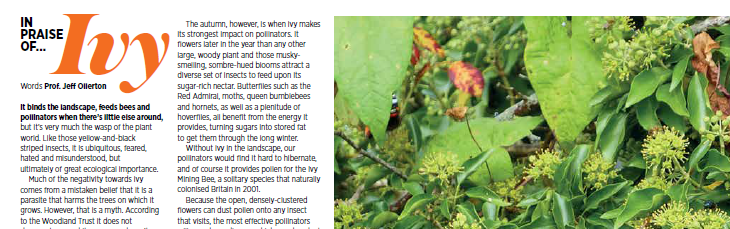
Ivy binds the landscape and bridges the seasons: a new article just published

If you check out the latest issue of Bees and Other Pollinators Quarterly you’ll see that, as well as having a piece on the forthcoming COP26 climate change meeting and what it means for pollinators, the magazine has also published a short opinion piece by me called “In Praise of….Ivy”. The magazine is currently in the shops or you can subscribe by following this link: https://bq-mag.store/.

Although it can be invasive and an environmental nuisance in parts of the world where it’s introduced, common or European ivy (Hedera helix) is clearly one of the most vital plants across its native range of Europe, southern Scandinavia and the Mediterranean. Its clinging stems bind the landscape and provide habitat for a diversity of creatures. By offering nectar at a time when there’s few other plants in flower, and berries at a crucial point in the winter, ivy bridges a food gap for both nectar feeding insect and fruit eating birds and mammals.

Ivy is a very popular subject for student research because it’s in flower at the start of the university academic year. In the past I’ve had several students carry out their final year projects using ivy to test ideas about pollinator effectiveness and plant reproductive success. Because the open, densely-clustered flowers can dust pollen onto any insect that visits, the most effective pollinators will vary depending on which are abundant at any time and place, and include various types of flies and bees, plus those much-misunderstood wasps!

Perhaps we should leave the final word on ivy to the Northamptonshire ‘Peasant Poet’ John Clare who wrote ‘To the Ivy’ in the early 19th century:

Dark creeping Ivy, with thy berries brown,

That fondly twists’ on ruins all thine own,

Old spire-points studding with a leafy crown

Which every minute threatens to dethrone;

With fearful eye I view thy height sublime,

And oft with quicker step retreat from thence

Where thou, in weak defiance, striv’st with Time,

And holdst his weapons in a dread suspense.

But, bloom of ruins, thou art dear to me,

When, far from danger’s way, thy gloomy pride

Wreathes picturesque around some ancient tree

That bows his branches by some fountain-side:

Then sweet it is from summer suns to be,

With thy green darkness overshadowing me.

Further reading

Bradbury, K. (2015) English ivy: berry good for birds. https://www.theguardian.com/lifeandstyle/gardening-blog/2015/feb/19/english-ivy-berry-good-for-birds

Bumblebee Conservation Trust (2021) Ivy mining bee: https://www.bumblebeeconservation.org/ivyminingbee/

Jacobs, J.H., Clark, S.J., Denholm, I., Goulson D., Stoate, C. & Osborne J.L. (2010) Pollinator effectiveness and fruit set in common ivy, Hedera helix (Araliaceae). Arthropod-Plant Interactions 4: 19–28

Ollerton, J. (2021) Pollinators & Pollination: Nature and Society. Pelagic Publishing, Exeter, UK

Ollerton, J., Killick, A., Lamborn, E., Watts, S. & Whiston, M. (2007) Multiple meanings and modes: on the many ways to be a generalist flower. Taxon 56: 717-728

Woodland Trust (2021) Ivy. https://www.woodlandtrust.org.uk/trees-woods-and-wildlife/plants/wild-flowers/ivy/

A milkweed on the shore: tracking down an elusive Danish plant

Since arriving in Odsherred towards the end of August I’ve been looking out for one plant in particular on our bicycle rides and hikes around the region. Vincetoxicum hirundinaria is a widespread asclepiad or milkweed: a member of the family Apocynaceae, subfamily Asclepiadoideae. This is a group of plants on which I’ve published quite a few research papers and which feature heavily in my book Pollinators & Pollination: Nature and Society.

So far the species has proven elusive and a few Danish ecologists that I’d spoken with told me they had never seen it in the wild. The GBIF account of the species shows a few populations in this part of Denmark but I wasn’t sure if they were old records of populations that no longer exist. But as of yesterday I can confirm that at least one of those populations is extant!

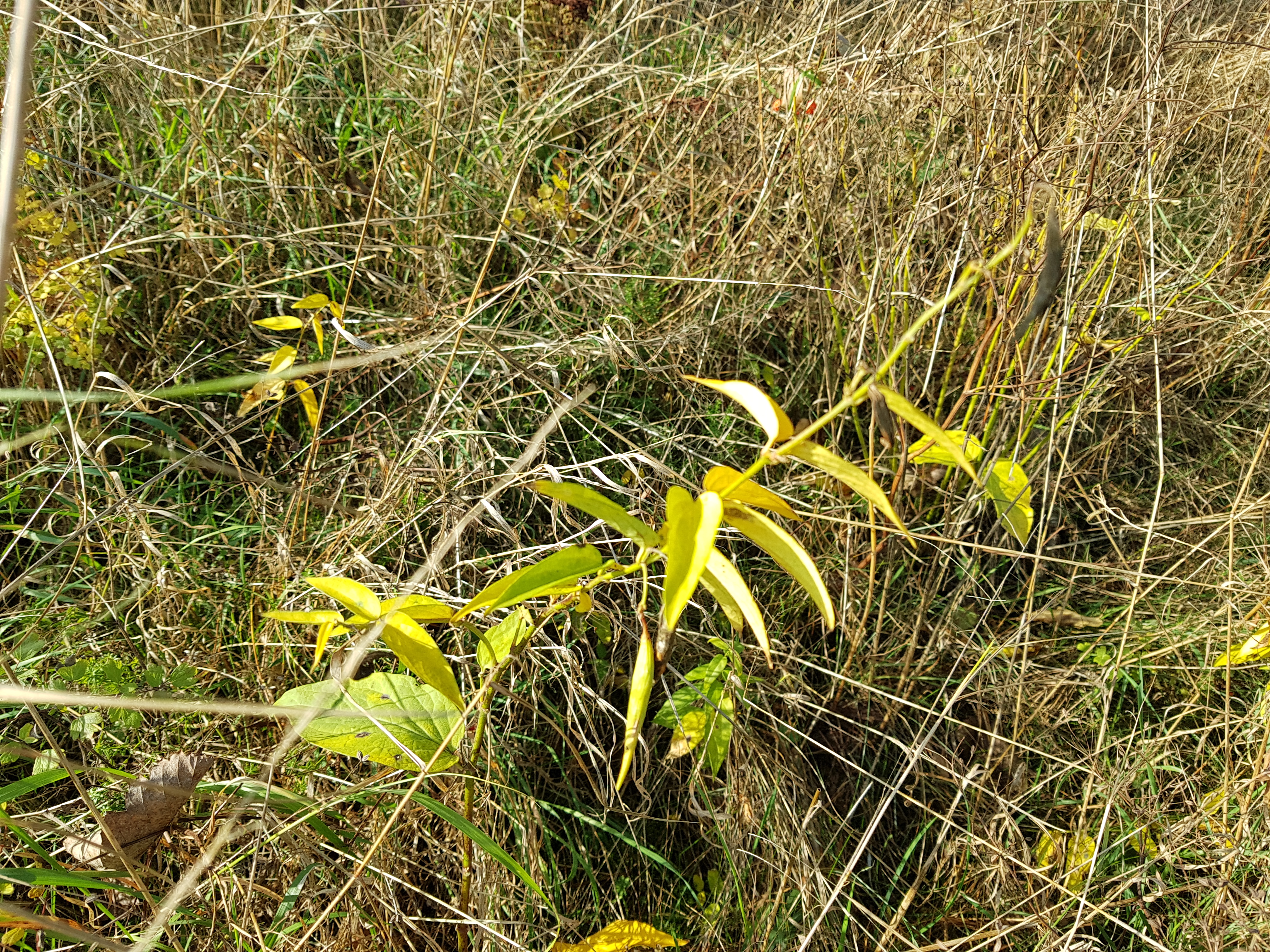
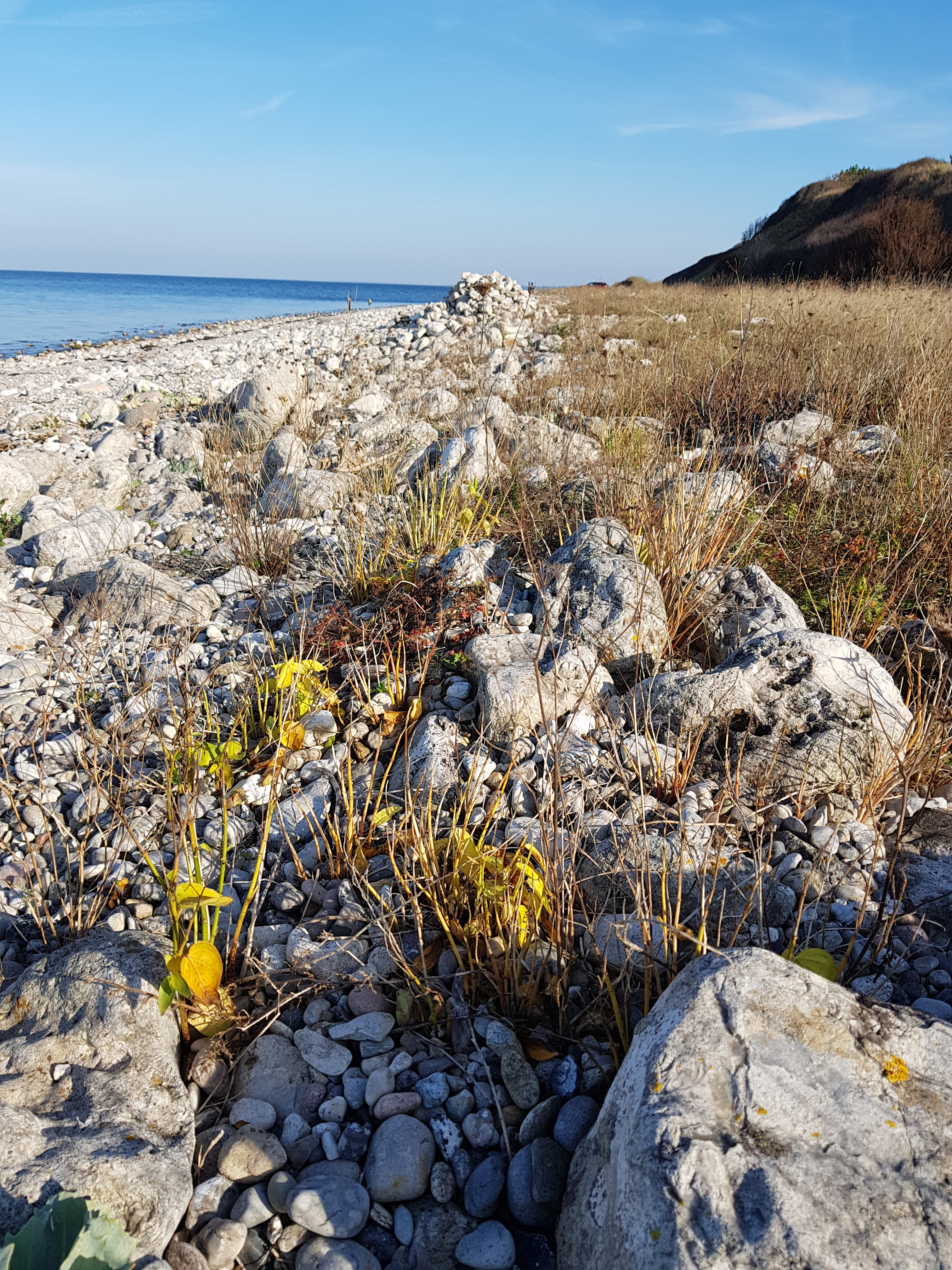
We had cycled out to the small town of Klint about 13km west of us, to see the glacial moraine landscape for which the area is famous and which gives Odsherred UNESCO Geopark status. As we approached the small fishing harbour at Klint I let out an excited shout to Karin who was just ahead of me: in amongst the roadside vegetation I’d spotted the distinctive and immediately recognisable yellow of Vincetoxicum hirundinaria in its autumnal hues! In the photos that follow you can see how well that yellow stands out against the colours of the other plants in the community.

At this time of the year the plant has ceased flowering, but the occasional swollen green seed pod was evidence of successful pollination of their morphologically complex flowers.

I was surprised at just how close to the sea the plants were growing; they must get inundated by sea water during stormy tidal surges.

So what is pollinating these flowers on this exposed shoreline? That’s a question that I want to pursue in the coming years. The Pollinators of Apocynaceae Database has remarkably few records of pollinators in this species, given how widespread it is. Flies certainly pollinate it, but there’s also records of wasps and bees as visitors, including bumblebees on flowers of a plant that I had in cultivation in Northampton. There’s a couple of other research groups in Scandinavia and Europe who are looking at the pollination ecology of the species and I’m hoping that we can collaborate on a study of spatial variation in its reproduction. Vincetoxicum is quite a large genus (around 150 species) and only around 10% of the species have been studied in any detail. But these studies are revealing a complex diversity of pollinators, including most recently, cockroaches in the Chinese species Vincetoxicum hainanense. I’m sure this intriguing group of plants has more fascinating stories to tell us about the ecology and evolution of its pollination systems.

FIGURE 4 from Xiong et al. (2020) Specialized cockroach pollination in the rare and
endangered plant Vincetoxicum hainanense in China. American Journal of Botany 107:
1355–1365.

Claims that only 10% – and not 75% – of crops are pollinator dependent are misleading and dishonest

Earlier this week the Genetic Literacy Project site posted an essay entitled ‘10% — not 75% — of crops pollinator-dependent: Our World in Data debunks claims that global food supply is imminently endangered by ‘disappearing’ insects‘. That click-bait title is hugely misleading, some of the purported ‘facts’ are incorrect, and indeed the whole thing reeks of dishonesty and bad faith.

First the misleading title. This ‘debunks’ claim actually compares two different things: 75% of CROPS being dependent on pollinators versus 10% of crop YIELD. However, even if we focus on the 10% claim, a small increase in yield can be the difference between profit and bankruptcy for small-scale farmers. And most of the world’s farmers are small-scale and living on the borderline between loss and break-even. In addition, there’s no acknowledgement of the food production from home gardens, allotments, and community gardens, which is significant but largely unquantified.

Next, by focusing on yield and comparing, say, wind-pollinated wheat with insect-pollinated apples, the article takes no account of the fact that many of these crops that depend to some extent on pollinators mainly provide essential vitamins and minerals – not calories – to diets. When I tweeted about this earlier in the week, one person commented that they describe the insect-pollinated foods as ‘an important source of flavour and colour in our diets, rice and wheat are all well and good, but you do kinda need something more than grey slop to live’. Another said: ‘I’m so glad you mentioned this. I’m sick of reading articles that praise innovations to increase calories, when what we need is better nutrition from vitamins, minerals & fibres’.

Both great points, and well made.

That essay was also factually incorrect when it described roots crops such as carrots or some of the leafy cabbages and lettuces as not requiring pollinators. Many varieties of these crops ARE pollinator dependent: how do they think we get the seed for the next year’s crop?! And there are many crops and varieties that have not been evaluated for their dependency on pollinators: the 75% figure actually refers to the 115 most productive crop plants (Klein et al. 2007).

When I tweeted about the essay I commented that I was very disappointed by ‘Our World in Data’ – they are usually better than this when it comes to the facts. What I hadn’t appreciated at the time was that in fact the Genetic Literacy Project had highjacked the original piece by Hannah Ritchie and reworked it to give it a very different slant*.

This is where it starts to get dishonest and in fact the Genetic Literacy Project (GLP) has form in this area. The Sourcewatch site describes the GLP as ‘a corporate front group that was formerly funded by Monsanto’ with a remit to ‘shame scientists and highlight information helpful to Monsanto and other chemical producers’. In other words it’s heavily tied to Big Agriculture which, of course, would like us to believe that there’s not an issue with declining pollinators, that pesticides and agricultural intensification are our friends, and that Everything Is OK. Read the full account here.

Frankly, the GLP is so tainted that I’d not believe anything that they publish.

Pollinator decline and the role of pollinators in agriculture are complex issues. If you’d like to know more about the importance of pollinators to agriculture, complete with some accurate and objective facts, then there’s a whole chapter devoted to the topic in my book Pollinators & Pollination: Nature and Society.

*Note that I’ve been communicating with Hannah about the root and leaf crop issue and she accepts that this needs to change in the original. She’s also asked the Genetic Literacy Project to take down their version as it contravenes copyright.

Reference

Klein, A.-M., Vaissière, B.E., Cane, J.H. et al. (2007) Importance of pollinators in
changing landscapes for world crops. Proceedings of the Royal Society of London B
274: 303–313.

What to do if you have beewolves nesting in your garden? Leave them alone!

Earlier today we had a message from the owner of the AirBnB that we are staying in to let us know that he’s expecting a guy to come and spray pesticide around the house to kill the ‘invasive’ beewolves. The European beewolf (Philanthus triangulum) is a type of wasp in the family Crabronidae that is only distantly related to the typical wasps that you find trying to share your barbecue and beer. As its name suggests, it preys upon bees, but it’s actually a pollinator itself and visits a range of flowers.

I immediately got back to our host and pointed out that beewolves are gentle insects, completely harmless, and less dangerous than the pesticide the company would use to kill them, and that he was wasting his money. He informed us that the pest control company had told him that he needed to control them other wise he’d be ‘over-run’ with them next year!

When I explained to him that this was nonsense, and that the beewolves cause no damage to people or property, he promised to get back to the company to cancel the order, and thanked me for the information. I’m hoping that I’ve made a convert to the cause of insect conservation!

It maddens me that pest control companies are preying on people’s fear of insects to make money in this way. Insects are subjected to enough assaults by human activities without making up spurious reasons for poisoning them.

So if you are lucky enough to have beewolves in your garden, please treat them with respect and watch their fascinating behaviour:

The largest West African flower: Pararistolochia goldieana!

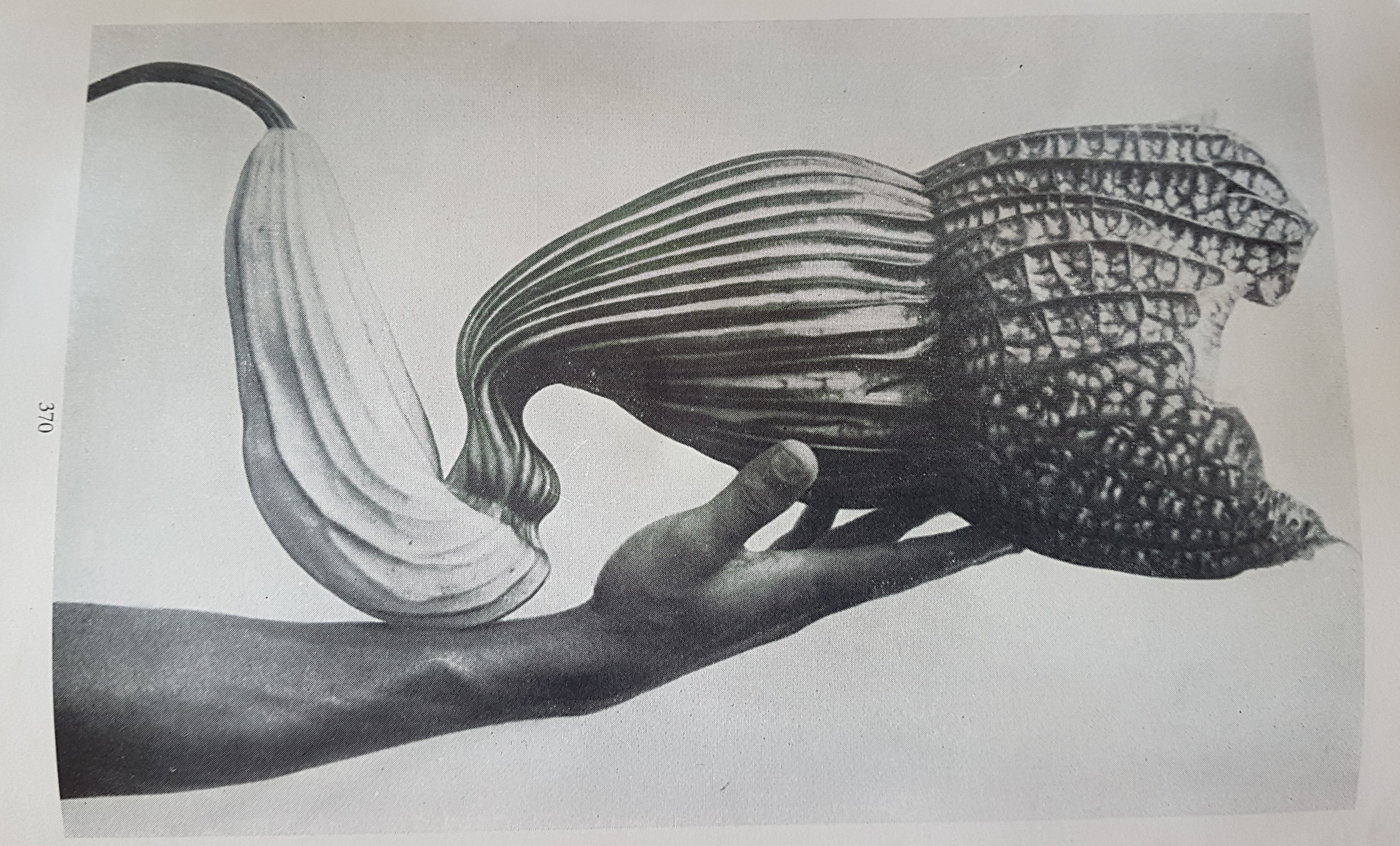
Some years ago, browsing in a second hand bookshop, I happened across a copy of an old magazine from 1950 called Nigeria. Published by the then colonial government, it was a miscellaneous collection of articles about the culture, geography and natural history of that fascinating West African country. Although aspects of the contents are problematical by modern standards, I bought it because of a short article about a wild plant with enormous flowers and a remarkable pollination strategy. In particular, the spectacular photograph of a man holding a flower that’s the length of his forearm grabbed my attention: who couldn’t love a flower like that?!

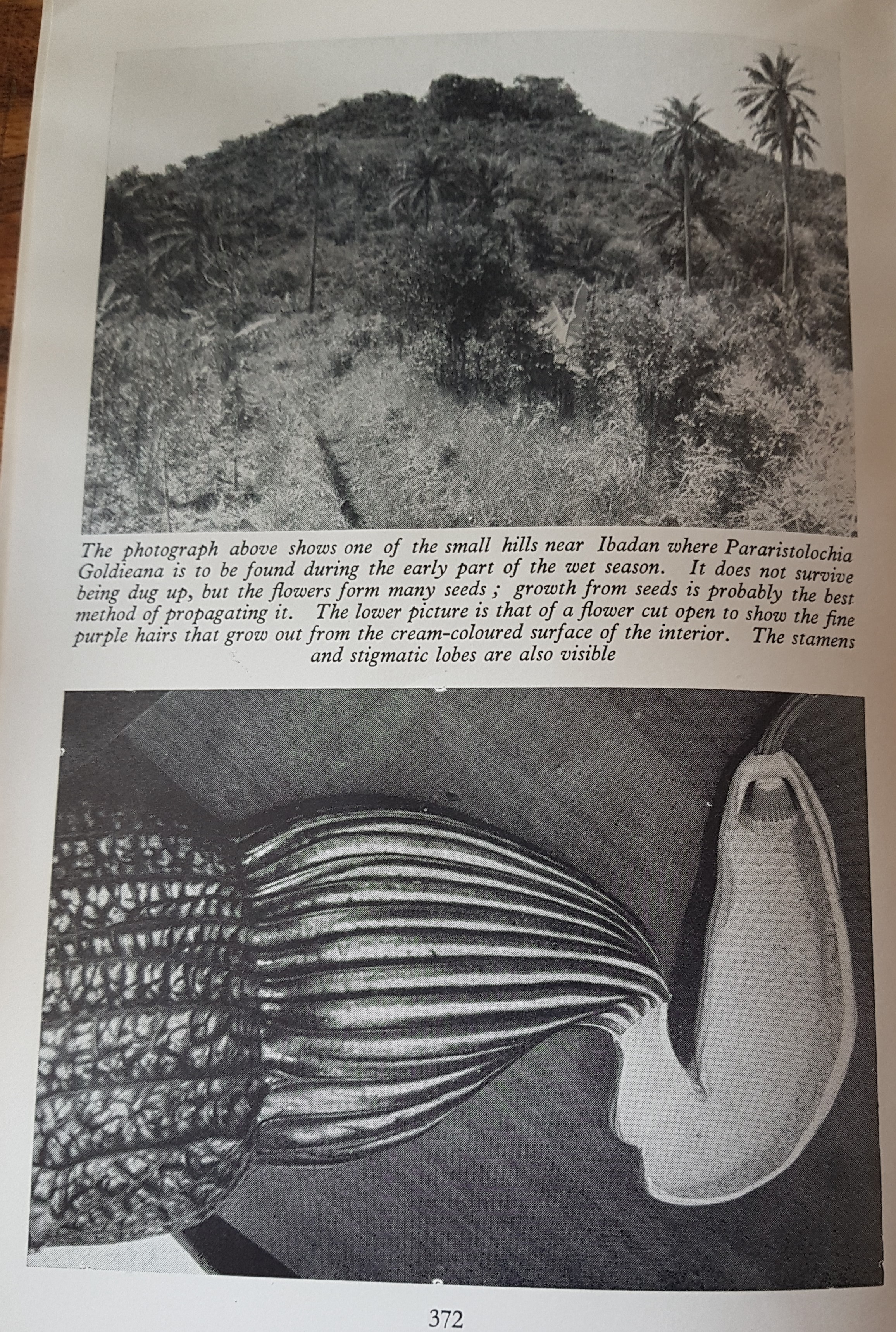
The plant is Pararistolochia goldieana, a vine found in the forests of this region, as described in the introductory text:

These types of flowers are pollinated by flies, a common strategy in the Birthwort family (Aristolochiaceae) to which the plant belongs. This strategy of fly pollination in which flies are deceived into visiting the flowers by their stink and colour, and temporarily trapped in the enclosed chamber, is something that I explore in detail in my book Pollinators & Pollination: Nature and Society, particularly in the genus Ceropegia. Those plants show convergent evolution with the pollination systems of Aristolochiaceae, though they are unrelated.

Pararistolochia goldieana has a wide distribution across West Africa, including Cameroon, Equatorial Guinea, Nigeria, and Sierra Leone. The IUCN Red List categorises it as ‘Vulnerable’ due to habitat loss. The population where these photographs were taken is described on the final page of the article:

The city of Ibadan is one of the largest in Nigeria and has grown enormously, ‘from 40 km2 in the 1950s to 250 km2 in the 1990s‘. I wonder if this forest, and its botanical treasures, still exists?

During field work in Gabon in the 1990s I was fortunate enough to encounter a species of Pararistolochia in the rainforest of Lopé National Park. It was a different species to P. goldieana, with rather smaller but no less spectacular flowers, and it stank to high heaven! We knew it was there long before we saw it. I collected some flies from the flowers and had them identified, though I’ve never published the data: it’s available if anyone is working on a review of pollination in the family.

This 1950 article is anonymous, so I don’t know who to acknowledge for the amazing images. However the botanist R.W.J. Keay was working on a revision of the family for the Flora of West Tropical Africa project at the time, so it may have been written by him.

A spectacular new plant has been named to honour a colleague: meet Ceropegia heidukiae!

Finding organisms that have not previously been described by scientists is not unusual; every year, hundreds of ‘new’ species enter the taxonomic literature, a testament to how little we still understand about the Earth’s biodiversity. The majority of these species are insects, because that’s the most diverse group of organisms on the planet. But new species of plants and fungi also turn up regularly: for example in 2020, botanists and mycologists at Kew named 156, including some from Britain.

So although discovering undescribed species is not uncommon, any field biologist will tell you that it’s an exciting moment to spot something that you’re never seen before and which could turn out to be new. That was certainly the case when my colleague Dr Annemarie Heiduk’s attention was drawn to a South African plant that was clearly something special. As Anne said to me this week:

‘I will never ever forget the very moment when I spotted it and immediately knew it was something no-one has ever seen before. And I was so lucky to find it in flower. I cannot describe how beautiful it looked sticking out of the surrounding grass vegetation. It is certainly one of a kind and I really know how lucky I was to have found it. Not once did it ever cross my mind that I will discover a novel Ceropegia species, let alone one that is so distinct!’

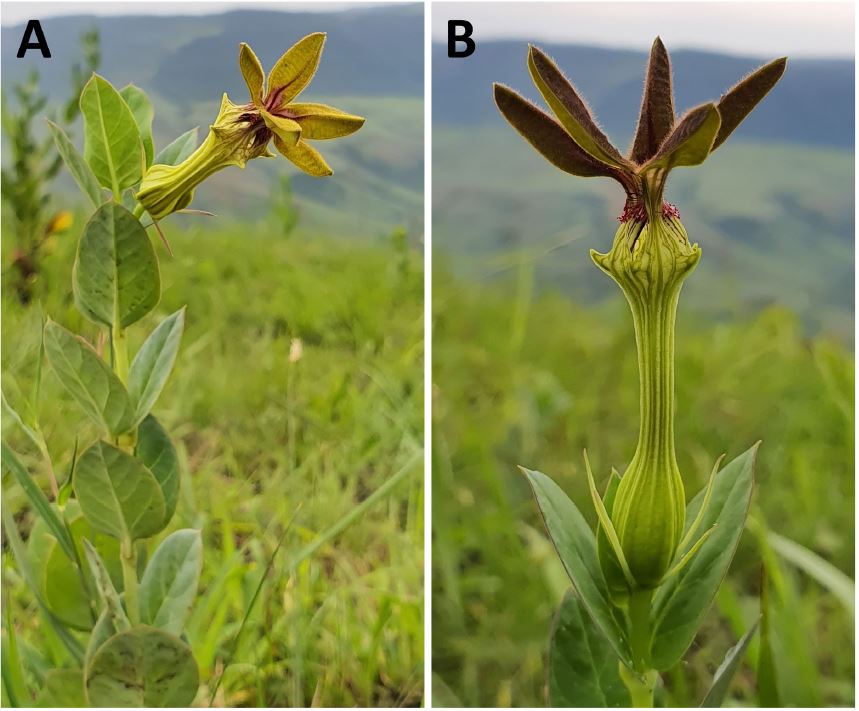
So it was that last year Anne discovered the plant that was to be named in her honour: Ceropegia heidukiae. The species has been described by David Styles and Ulrich Meve in the journal Phytotaxa (from where the image above was taken). There’s also an account of the species on the Pollination Research Lab blog, with further photographs and information about the plant.

Anne has been honoured in this way not just because she discovered the plant, but also because, to quote the paper, she:

‘is a pollination ecologist who with her research on the floral chemistry and deceptive pollination strategies of Ceropegia trap flowers has acquired recognition as an expert in this field’

Anne tells me that she has already collected pollinator and floral scent data for this new species, so we can look forward to seeing that published in the near future. I described the fascinating pollination ecology of Ceropegia, including some of Anne’s earlier work, in my recent book. This is a genus of plants that has intrigued me since I first saw photographs of them and started growing them as a teenager, 40 years ago. Since then I’ve published several papers about their pollination strategies, and how they compare with the family Apocynaceae as a whole: see the following links for some examples:

https://jeffollerton.co.uk/2017/09/03/fly-pollination-in-the-trap-flower-genus-ceropegia-a-new-study-just-published/

https://jeffollerton.co.uk/2018/08/21/the-evolution-of-pollination-systems-in-one-of-the-largest-plant-families-a-new-study-just-published-download-it-for-free/

So, a big congratulations to Anne, and to David and Ulrich – it’s an amazing plant! I wonder what else is still waiting to be discovered in the stunning grasslands of South Africa?