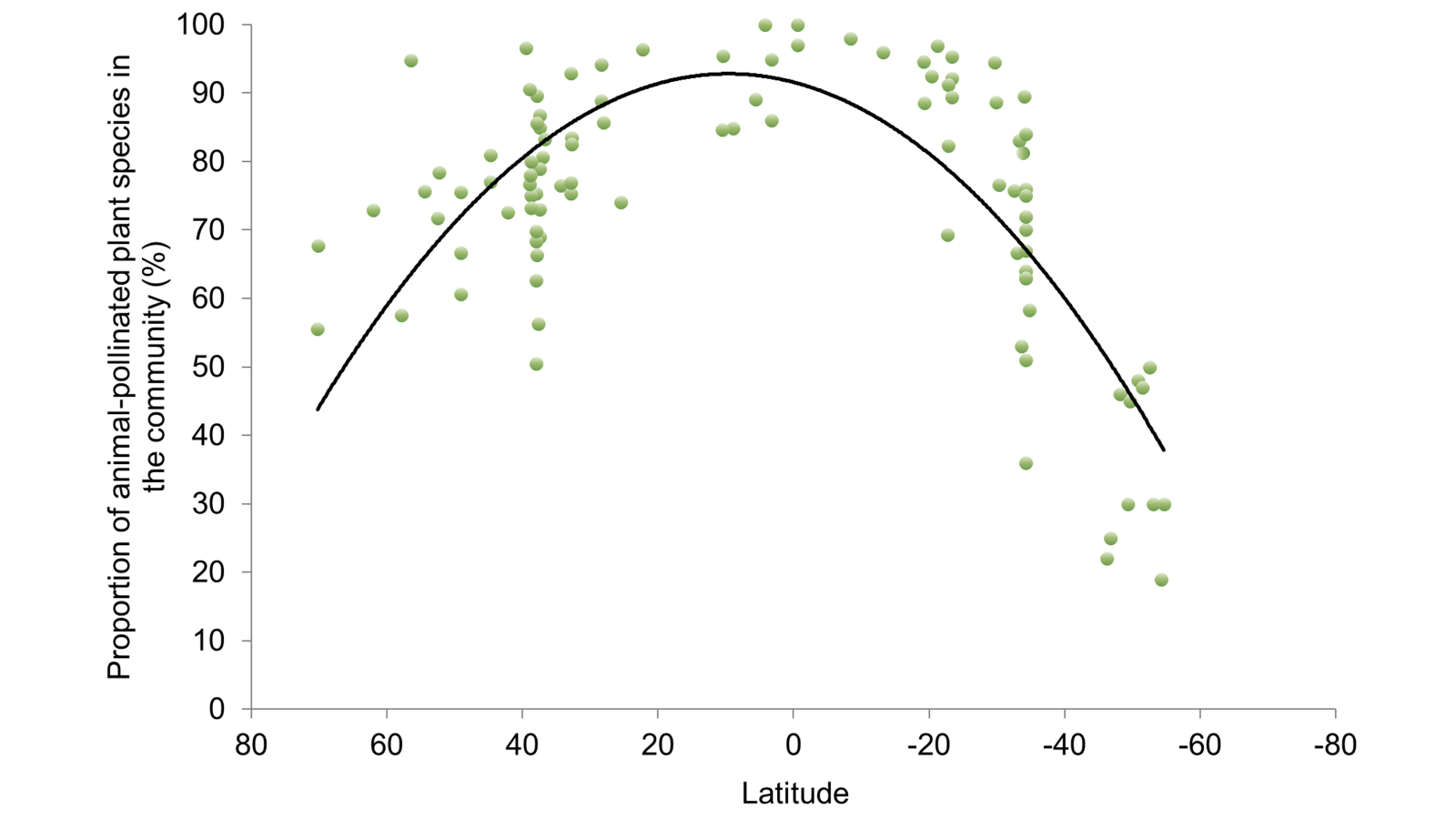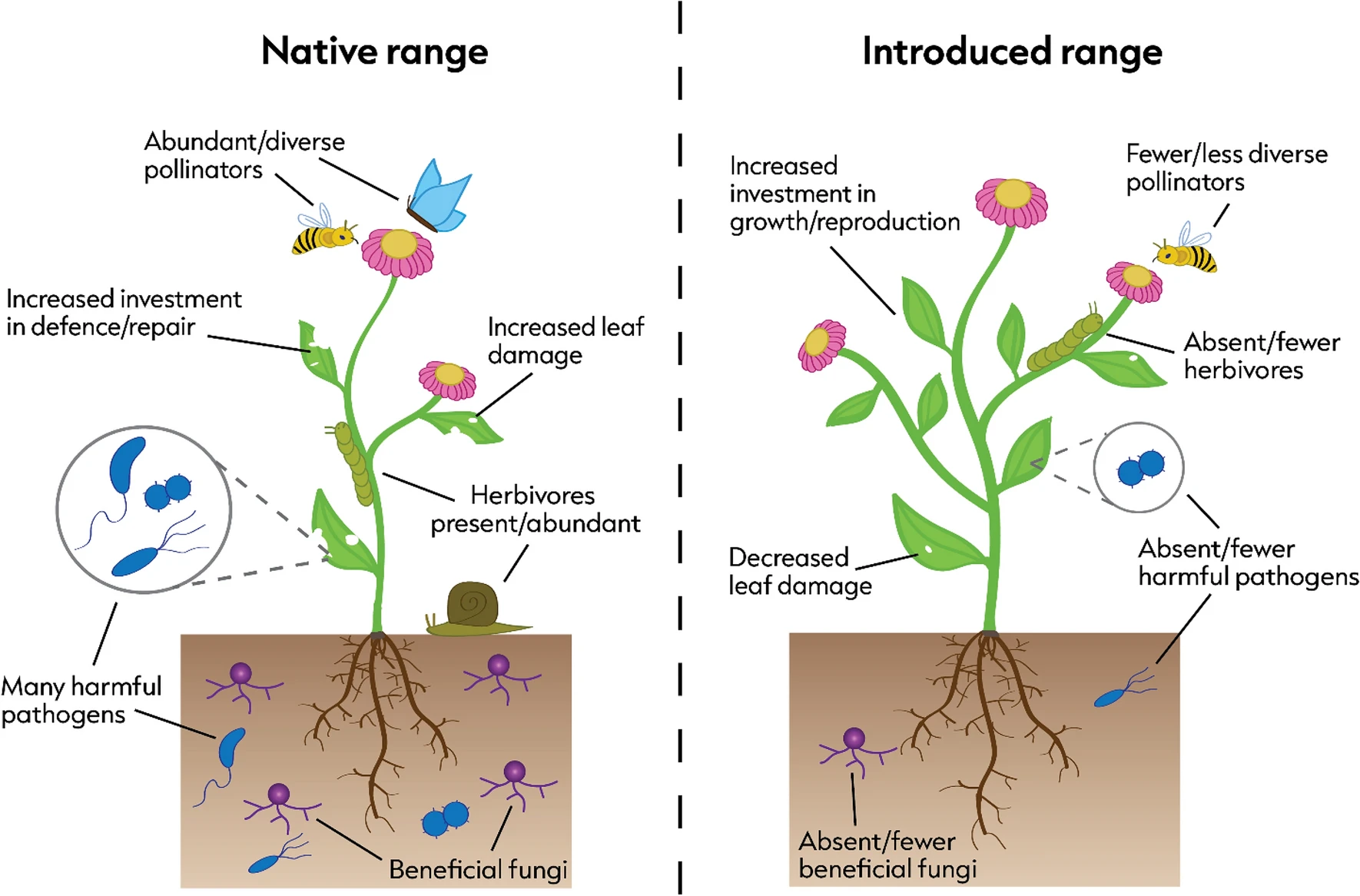
As I’ve previously discussed on the blog, when species are moved to a different part of the world they lose many of the ‘enemies’ – such as predators, herbivores and pathogens – that would normally keep their populations in check. This can have implications for the likelihood of a species becoming invasive, and it’s called the Enemy Release Hypothesis (ERH) and has been well studied. Less well researched is the flip side of the ERH, the Missed Mutualist Hypothesis (MMH), in which species lose their ‘friends’, such as pollinators, seed dispersers, symbiotic fungi, and so forth. It’s a topic I’ve worked on with my colleagues at the University of New South Wales, principally Angela Moles and her former PhD student Zoe Xirocostas.
Another paper from Zoe’s PhD work has just been published and in it she carried out a comparison of European plants that have been transported to Australia, and asked whether they had fewer pollinators in their new range. It turns out that they do!
Here’s the full reference with a link to the paper, which is open access:
Many studies seeking to understand the success of biological invasions focus on species’ escape from negative interactions, such as damage from herbivores, pathogens, or predators in their introduced range (enemy release). However, much less work has been done to assess the possibility that introduced species might shed mutualists such as pollinators, seed dispersers, and mycorrhizae when they are transported to a new range. We ran a cross-continental field study and found that plants were being visited by 2.6 times more potential pollinators with 1.8 times greater richness in their native range than in their introduced range. Understanding both the positive and negative consequences of introduction to a new range can help us predict, monitor, and manage future invasion events.
During the 2020 lockdown caused by the COVID-19 pandemic, I coordinated an international network of pollination ecologists who used standardised methods to collect data in their gardens. I blogged about it at the time – see here and here for instance – and also put up a post when the data paper from that work was published.
Several research groups are now working with that huge data set and interrogating it for answers to a wide range of questions. The first group to actually publish a paper from the data is a largely Chinese set of researchers from the Key Laboratory of Plant Resources, Conservation and Sustainable Utilization, at the South China Botanical Garden in Guangzhou, assisted by Kit Prendergast and myself.
In this paper we’ve considered how robust these plant-pollinator networks are to simulated extinctions of species, and how this is affected by the elevation, latitude, and plant species diversity of the network.
Here’s the full reference with a link to the study:
If you can’t access it and need a PDF, please send me a request via my Contact page.
Here’s the abstract:
Plant-pollinator interactions play a vital role in the maintenance of biodiversity and ecosystem function. Geographical variation in environmental factors can influence the diversity of pollinators and thus, affect the structure of pollination networks. Given the current global climate change, understanding the variation of pollination network structure along environmental gradients is vital to predict how global change will affect the ecological interaction processes. Here, we used a global plant-pollinator interaction data collection by the same sampling method at the same period to explore the effects of elevation, latitude, and plant richness on the structure and robustness of pollination networks. We analyzed a total of 87 networks of plant-pollinator interactions on 47 sites from 14 countries. We conducted a piecewise structural equation model to examine the direct and indirect effects of elevation, latitude, and plant richness on the network robustness and analyzed the function of network structure in elucidating the relationship between robustness and these gradients. We found that plant richness had both positive effects on robustness under random and specialist-first scenarios. Elevation, latitude, and plant richness affected network connectance and modularity, and ultimately affected network robustness which were mediated by nestedness under specialist-first and random scenarios, and by connectance under the generalist-first scenario. This study reveals the indirect effects of elevation, latitude, and plant richness on pollination network robustness were mediated by nestedness or connectance depended on the order of species extinctions, implying that communities with different pollination network structures can resist different extinction scenarios.
The question of whether interactions between different species are more specialised in tropical environments (as theory predicts) has intrigued me for a couple of decades. In fact it’s just occurred to me that August 2022 was the 20th anniversary of my paper in Oikos co-authored with Louise Cranmer entitled: Latitudinal trends in plant-pollinator interactions: are tropical plants more specialised? That paper was one of the first to seriously challenge an idea that was long-embedded in the scientific and (especially) popular literature, that tropical ecology was in a sense “special” and that the ways in which species parasitised, consumed, or engaged in mutualistic relationships in the tropics was different to what was happening in the subtropics and temperate zones.
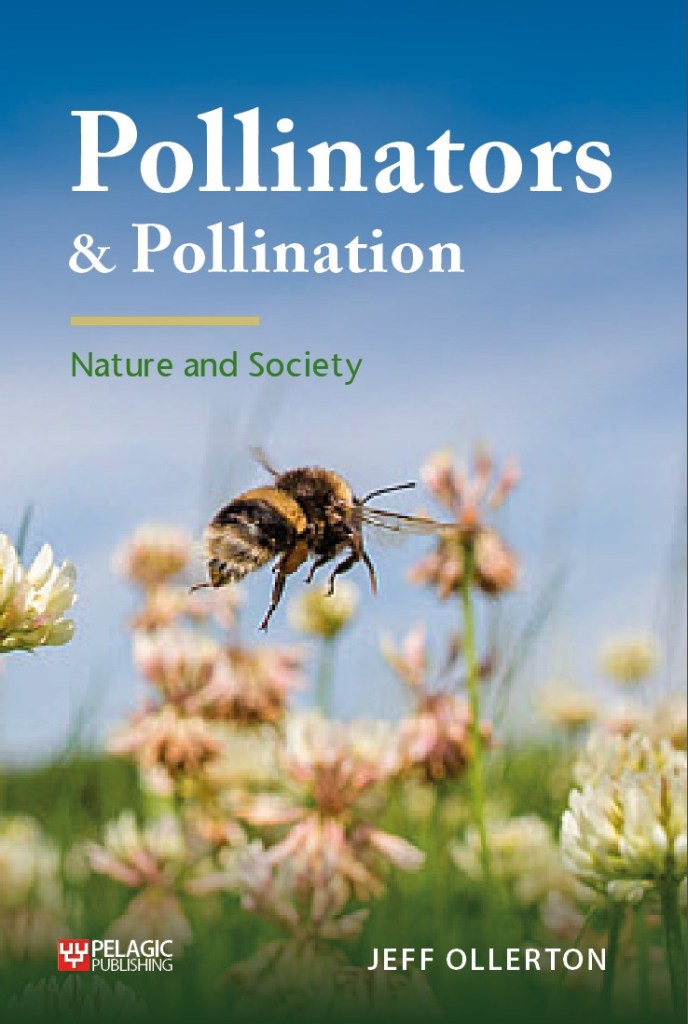
Since then I’ve written about this subject in a number of publications, most recently in my book Pollinators & Pollination: Nature and Society and it’s inspired some other researchers to address the topic.
One of the real challenges with asking questions about how plant-pollinator relationships change over large geographical areas is obtaining good, robust data to analyse. It’s a challenge to convince science funding agencies to give money to spend many years travelling the world and collecting the kind of data that are needed. However we can gain some idea of the patterns, and potential processes, that drive the macroecology of plant-pollinator interactions by piecing together databases of interactions for particular taxa, gleaned from published and unpublished sources.
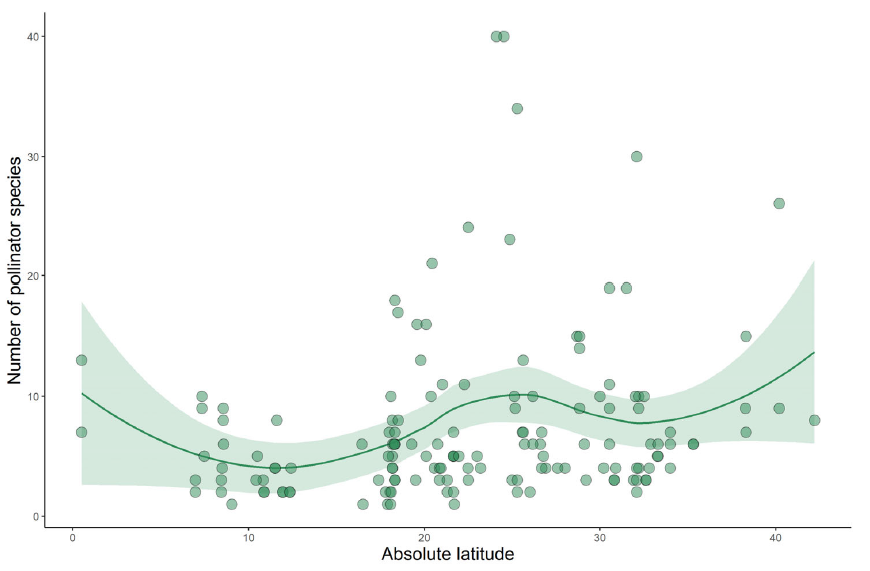
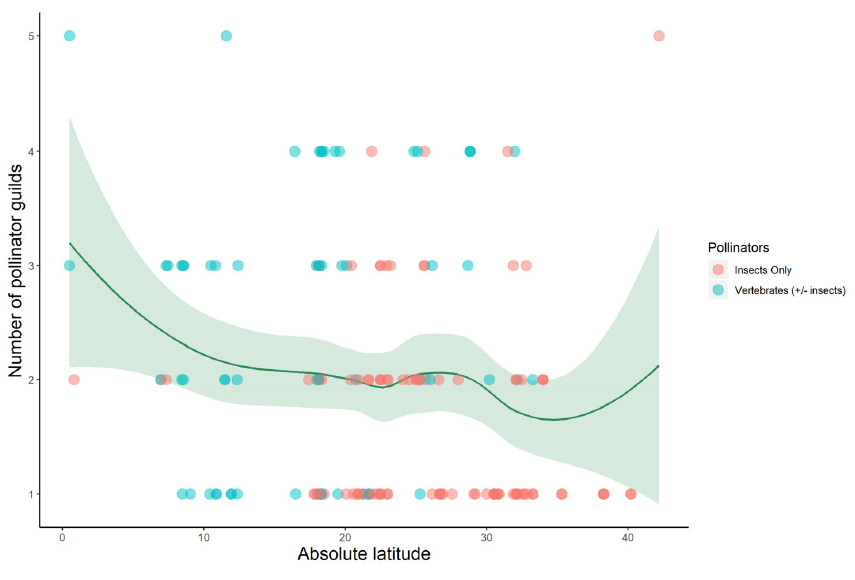
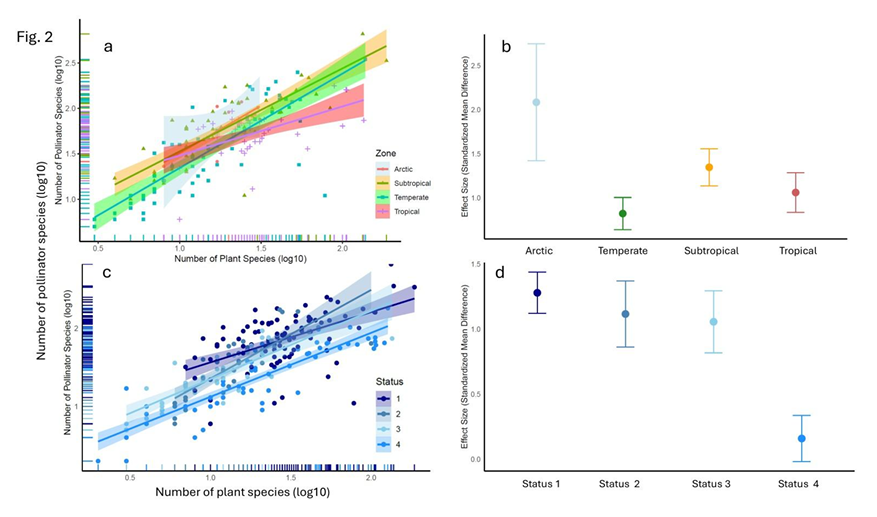
That’s what we have done for the family Cactaceae in a new study led by Pablo Gorostiague from the Universidad Nacional de Salta in Argentina. This collaboration started when Pablo visited Northampton back in 2018 and spent some time with my research group, including helping out with field work in Tenerife. Since then the usual issues (work, COVID, etc.) have delayed publication of our paper, but now it’s finally out. Amongst other results we find that, yes, tropical cacti are pollinated by fewer species on average (though it’s hugely variable – see the figure above) but that functional specialisation (i.e. the number of pollinator guilds that are used by species) is no different in the tropics compared to the extra-tropics (that’s the figure at the end of this post).
The full reference with a link to the paper is below; if anyone wants a PDF, please send me a message via the Contact page:
Biotic interactions are said to be more specialized in the tropics, and this was also proposed for the pollination systems of columnar cacti from North America. However, this has not yet been tested for a wider set of cactus species. Here, we use the available information about pollination in the Cactaceae to explore the geographic patterns of this mutualistic interaction, and test if there is a latitudinal gradient in its degree of specialization.
We performed a bibliographic search of all publications on the pollination of cacti species and summarized the information to build a database. We used generalized linear models to evaluate if the degree of specialization in cacti pollination systems is affected by latitude, using two different measures: the number of pollinator guilds (functional specialization) and the number of pollinator species (ecological specialization).
Our database contained information about the pollination of 148 species. The most frequent pollinator guilds were bees, birds, moths and bats. There was no apparent effect of latitude on the number of guilds that pollinate a cactus species. However, latitude had a small but significant effect on the number of pollinator species that service a given cactus species.
Bees are found as pollinators of most cactus species, along a wide latitudinal gradient. Bat and bird pollination is more common in the tropics than in the extra-tropics. The available information suggests that cacti pollination systems are slightly more ecologically specialized in the tropics, but it does not support any trend with regard to functional specialization.
In my recent book Pollinators & Pollination: Nature and Society I discussed the current state of our knowledge of how populations of pollinators have changed over time. Although we have some quite detailed data for particular, often charismatic, species or for certain geographic localities or regions, for most species we know almost nothing. As I wrote in the chapter “The shifting fates of pollinators”:
“For most pollinators we are ‘data deficient’, in other words, we don’t know how their populations are performing. They could be doing well, but they may not be”
This is particularly true for those regions for the world that hold the greatest terrestrial biodiversity: the tropics. For the vast majority of species in the tropics we know precious little about trends in their populations and how their distributions have changed over time in the face of wide-scale land transformation and recent climatic shifts. Filling in some of the gaps in our knowledge of Neotropical pollinator distributions is one of its aims of SURPASS2, a collaboration between South American and UK ecologists, and one of several research and outreach projects with which I’m involved.
In a new study that’s come out of that work, led by Rob Boyd from the UK Centre for Ecology and Hydrology, we’ve used the GBIF database to look at the changing distributions of four important groups of pollinators: bees, hoverflies, leaf-nosed bats and hummingbirds. In particular we were interested in understanding the kinds of biases that come with such publicly available data, and whether recent efforts to add data to GBIF has improved our understanding of trends.
Our overall conclusion is that there are significant limitations and biases inherent in all of these data sets even for groups like hummingbirds which one would imagine are well documented by scientists and bird-watching naturalists. In addition, having more data does not necessarily help matters: it can introduce its own biases.
The paper is open access and feely available; here’s the reference with a link:
Aim Aggregated species occurrence data are increasingly accessible through public databases for the analysis of temporal trends in the geographic distributions of species. However, biases in these data present challenges for statistical inference. We assessed potential biases in data available through GBIF on the occurrences of four flower-visiting taxa: bees (Anthophila), hoverflies (Syrphidae), leaf-nosed bats (Phyllostomidae) and hummingbirds (Trochilidae). We also assessed whether and to what extent data mobilization efforts improved our ability to estimate trends in species’ distributions.
Location The Neotropics.
Methods We used five data-driven heuristics to screen the data for potential geographic, temporal and taxonomic biases. We began with a continental-scale assessment of the data for all four taxa. We then identified two recent data mobilization efforts (2021) that drastically increased the quantity of records of bees collected in Chile available through GBIF. We compared the dataset before and after the addition of these new records in terms of their biases and estimated trends in species’ distributions.
Results We found evidence of potential sampling biases for all taxa. The addition of newly-mobilized records of bees in Chile decreased some biases but introduced others. Despite increasing the quantity of data for bees in Chile sixfold, estimates of trends in species’ distributions derived using the postmobilization dataset were broadly similar to what would have been estimated before their introduction, albeit more precise.
Main conclusions Our results highlight the challenges associated with drawing robust inferences about trends in species’ distributions using publicly available data. Mobilizing historic records will not always enable trend estimation because more data do not necessarily equal less bias. Analysts should carefully assess their data before conducting analyses: this might enable the estimation of more robust trends and help to identify strategies for effective data mobilization. Our study also reinforces the need for targeted monitoring of pollinators worldwide.
——————————————————–
SURPASS2 has been a hugely productive project as you’ll see if you look at the Publications page of the website. There’s much more to come and I’ll report on those research papers as they appear.
Humans affect the land on which they live in many different ways, and this in turn influences local biodiversity. Sometimes this has positive effects on local wildlife: consider the diversity of birds to be found in well-managed suburban gardens, for example. But often the effect is negative, especially when the land is intensively managed or habitats are destroyed, for example via deforestation or urban development.
This is not a new phenomenon – according to a recent study, most of the habitable parts of the planet have been shaped by humans for at least 12,000 years (see Ellis et al. 2021). What is new, however, is the scale and the speed with which land-use is changing, which are far greater than they have been historically. An important question is the extent to which this change in land-use intensity is affecting pollinator diversity in different parts of the world. Over the past 18 months I’ve been collaborating on a project led by Joe Millard (as part of his PhD) and Tim Newbold which uses the Projecting Responses of Ecological Diversity In Changing Terrestrial Systems (PREDICTS) database to address that very question.
A paper from that collaboration is published today in the journal Nature Communications; it’s open access and can be downloaded by following this link.
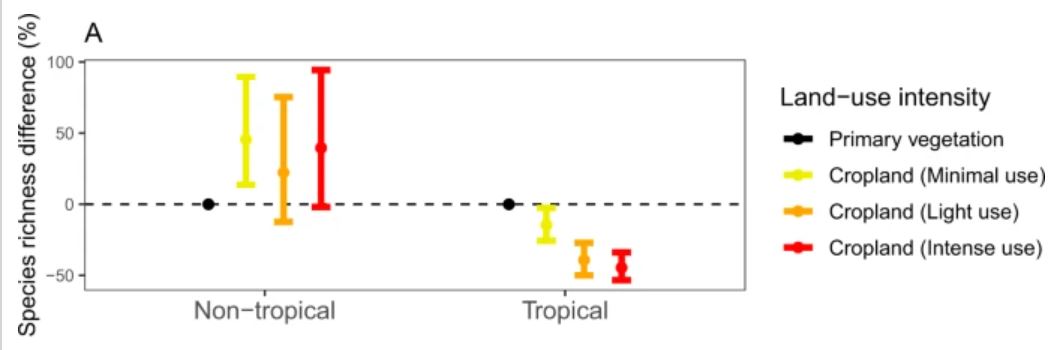
The study was global in scale and used data from 12,170 sites to assess the affect of land-use intensity on 4502 pollinating species. The findings are really fascinating; highlights include:
In comparison to natural vegetation, low levels of land-use intensity can have a positive effect on the diversity of pollinators.
For most land categories, greater intensity of land-use results in significant reductions in diversity and abundance of pollinators, however. For example, for urban sites there’s a 43% drop in number of species and a drop in 62% pollinator abundance from the least to the most intensive urban sites.
On cropland, strong negative responses of pollinators to increasing intensity are only found in tropical areas, although different taxonomic groups vary in their responses.
The latter finding is especially concerning given that: (i) most pollinator diversity is found in the tropics; (ii) the majority of tropical crops are insect pollinated; and (3) tropical agriculture is becoming increasingly intensive and land use is likely to rapidly change in the coming decades.
The full reference for the study, with all authors, is:
Millard, J., Outhwaite, C.L., Kinnersley, R., Freeman, R., Gregory, R.D., Adedoja, O., Gavini, S., Kioko, E., Kuhlmann, M., Ollerton, J., Ren, Z.-X. & Newbold, T. (2021) Global effects of land-use intensity on local pollinator biodiversity. Nature Communications 12, 2902. https://doi.org/10.1038/s41467-021-23228-3
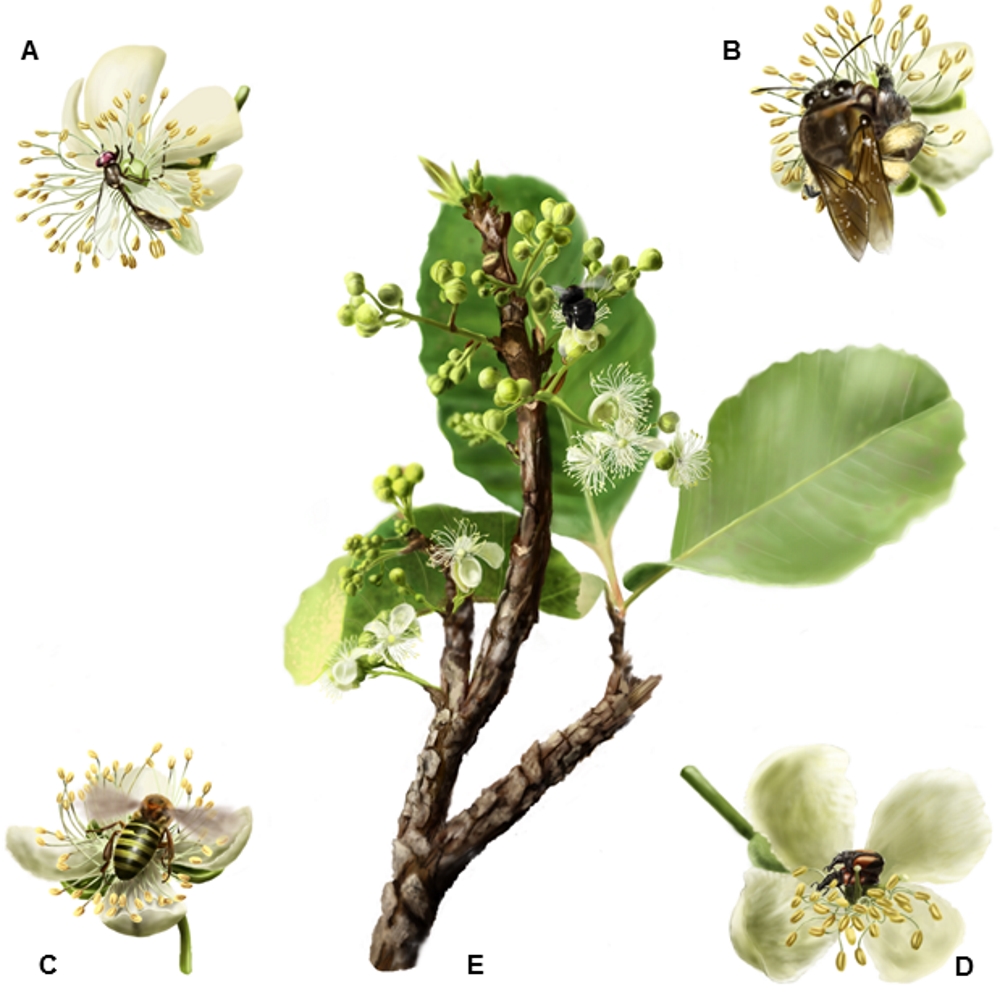
Illustration of Curatella americana and its pollinators by Pedro Lorenzo
The distribution of plants, animals and other organisms that we see around us is clearly influenced by climate: all species have limitations in terms of temperature, rainfall, etc., that affects where they can live and reproduce. As well as these contemporary “climatic niches” however, there are much more subtle effects of historical climate on species, and the ways in which they interact with one another. These are harder to study because it requires us to know about what climatic conditions were like in a particular region thousands or millions of years ago. But as our knowledge of paleoclimates grows, we can apply it to understand how contemporary ecology is shaped by the past. This in turn may tell us how species will react to future climate change.
In a new study that I’ve just published with Brazilian, Danish and American colleagues, we’ve shown that the frequency with which a South American savannah tree self-pollinates is determined mainly by the climatic stability experienced by a population since the Last Glacial Maximum. In contrast, and perhaps surprisingly, the current diversity and abundance of pollinators plays a much smaller role in how often plants self-pollinate.
The work was led by André Rodrigo Rech and formed part of his original PhD research. Here’s the full citation:
The abstract is below, first in English then in Portuguese. If anyone wants a PDF please add a comment or send me a message via my Contact page.
Abstract:
Patterns in ecology are the products of current factors interacting with history. Nevertheless, few studies have attempted to disentangle the contribution of historical and current factors, such as climate change and pollinator identity and behavior, on plant reproduction. Here, we attempted to separate the relative importance of current and historical processes on geographical patterns of the mating system of the tree species Curatella americana (Dilleniaceae). Specifically, we asked the following: (a) How do Quaternary and current climate affect plant mating system? (b) How does current pollinator abundance and diversity relate to plant mating system? (c) How does mating system relate to fruit/seed quantity and quality in C. americana? We recorded pollinators (richness, frequency, and body size) and performed pollination tests in ten populations of C. americana spread over 3,000 km in the Brazilian savannah. The frequency of self‐pollination in the absence of pollinators was strongly influenced by historical climatic instability and not by present‐day pollinators. In contrast, seed set from hand‐cross and natural pollination were affected by pollinators (especially large bees) and temperature, indicating the importance of current factors on out‐cross pollination. Two populations at the Southern edge of the species’ distribution showed high level of hand‐cross‐pollination and high flower visitation by large bees, but also a high level of autogamy resulting from recent colonization. Our results indicate that historical instability in climate has favored autogamy, most likely as a reproductive insurance strategy facilitating colonization and population maintenance over time, while pollinators are currently modulating the level of cross‐pollination.
Resumo:
Os padrões em ecologia são o produto de fatores contemporâneos interagindo a partir de uma bagagem histórica. Apesar desse reconhecimento, poucos estudos se ativeram em separar as contribuições dos fatores históricos e atuais como o clima, a identidade e comportamento de polinizadores sobre a reprodução de plantas. Neste trabalho nós decompomos a importância relativa dos processos contemporâneos e históricos no padrão geográfico do sistema reprodutivo da árvore comum no Cerrado, Curatella americana (Dilleniaceae). Especificamente nós perguntamos a) como o clima do presente e do quaternário afetam o sistema reprodutivo? b) Como a abundância e diversidade de polinizadores afeta o sistema reprodutivo da planta atualmente. c) Como o sistema reprodutivo se relaciona com a quantidade e qualidade dos frutos produzidos em C. americana? Para responder estas questões, nós registramos os polinizadores (riqueza, frequência e tamanho corporal) e realizamos testes de polinização em 10 populações de C. americana distribuídas em mais de 3.000 km de Cerrado no Brasil. A frutificação com autopolinização foi fortemente influenciada pela instabilidade climática do passado e não teve relação com os polinizadores no presente. Em contraste, a frutificação com polinização cruzada manual e natural foi afetada pelos polinizadores (especialmente abelhas grandes) e pela temperatura atual, revelando o papel de fatores ecológicos sobre a polinização cruzada. Duas populações na borda sul da distribuição de C. americana apresentaram alto nível de frutificação com polinização cruzada manual e altas taxas de visitação floral por abelhas grandes, mas também apresentaram alto nível de autogamia interpretadas como resultado da recente colonização dessas áreas. Nossos resultados indicam que a instabilidade climática do passado promoveu a autogamia como uma estratégia de segurança reprodutiva capaz de facilitar a colonização e manutenção de populações nesses locais com polinizadores imprevisíveis. Em contrapartida, nos locais com disponibilidade de polinizadores a polinização cruzada foi intensificada revelando a como processos históricos e contemporâneos atuam de forma sinérgica sobre o sistema reprodutivo das plantas.
2 More than just bees: the diversity of pollinators
3 To be a flower
4 Fidelity and promiscuity in Darwin’s entangled bank
5 The evolution of pollination strategies
6 A matter of time: from daily cycles to climate change
7 Agricultural perspectives
8 Urban environments
9 The significance of gardens
10 The shifting fates of pollinators
11 New bees on the block
12 Managing, restoring and connecting habitats
13 The politics of pollination
14 Studying pollinators and pollination
As you can see it’s a very wide-ranging overview of the subject, and written to be accessible to both specialists and non-specialists alike. To quote what I wrote in the Preface:
“While the book is aimed at a very broad audience, and is intended to be comprehensible to anyone with an interest in science and the environment, and their intersection with human societies, I hope it will also be of interest to those dealing professionally with plants and pollinators. The subject is vast, and those working on bee or hoverfly biology, for example, or plant reproductive ecology, may learn something new about topics adjacent to their specialisms. I certainly learned a lot from writing the book.”
The book is about 100,000 words in length, lots of illustrations, and there will be an index. My copy editor reckons there’s 450 references cited, though I haven’t counted. I do know that they run to 28 pages in the manuscript, and that’s with 11pt text. All going well it will be published before Christmas.
As I near completion of the copy-editing phase of my forthcoming book it’s frustrating to see all of the great research that’s been produced in recent weeks that I probably won’t be able to cite! Here’s a few things that caught my eye:
Damon Hall and Dino Martins have a short piece on Human dimensions of insect pollinator conservation in Current Opinion in Insect Science. My favourite line is: “any call to ‘save the bees’ must be a call to stabilize agriculture”. Amen to that.
In the journal New Phytologist, Rhiannon Dalrymple and colleagues, including Angela Moles who hosted me during my recent stay in Australia, have a great study entitled Macroecological patterns in flower colour are shaped by both biotic and abiotic factors. The title pretty much sums it up: in order to fully understand how flowers evolve we need to consider more than just their interactions with pollinators. It’s another demonstration of how we must look beyond simplistic ideas about pollination syndromes to fully understand the complexities of the relationship between flowering plants and pollinators…..
…..talking of which, again in New Phytologist, Agnes Dellinger asks: Pollinationsyndromes in the 21st century: where do we stand and where may we go? It’s an insightful and far-reaching review of a topic that has intrigued me for more than 25 years. There are still a lot of questions that need to be asked about a conceptual framework that, up until the 1990s, most people in ecology and biology accepted rather uncritically. One of the main unanswered questions for me is how further study of largely unexplored floras will reveal the existence of new pollination systems/syndromes. Which leads nicely to….
…..an amazing paper in Nature this week by Rodrigo Cámara-Leret etal. showing that New Guinea has the world’s richest island flora. The described flora includes 13,634 plant species, 68% of which are endemic to New Guinea! And the description of new species each year is not leveling off, there’s still more to be discovered. A commentary on the paper by Vojtech Novotny and Kenneth Molem sets some wider context to the work, and quite a number of media outlets have covered the story. Why is this relevant to pollinators and pollination? Well, we actually know very little about this critical aspect of the ecology of the island: there’s only a handful of published studies of plant-pollinator interactions from New Guinea, mostly focused on figs, bird-flower interactions, and a couple of crops. For such a biodiverse part of the world that’s a big gap in our understanding.
Finally, James Reilly, Rachael Winfree and colleagues have a paper in Proceedings of the Royal Society series B showing that: Crop production in the USA is frequently limited by a lack of pollinators. Most significant findings to me were that of the seven crops studied, five of them have their yields limited by lack of pollinators, and that even in areas of highly intensive farming, wild bees provided as much pollination service as honeybees.
That’s a few of the things that I spotted this week; what have you seen that’s excited or intrigued you? Feel free to comment.
In the next few months my new book Pollinators & Pollination: Nature and Society will be published. As you can imagine, I’m very excited! The book is currently available to pre-order: you can find full details here at the Pelagic Publishing website. If you do pre-order it you can claim a 30% discount by using the pre-publication offer code POLLINATOR.
As with my blog, the book is aimed at a very broad audience including the interested public, gardeners, conservationists, and scientists working in the various sub-fields of pollinator and pollination research. The chapter titles are as follows:
Preface and Acknowledgements
1. The importance of pollinators and pollination
2. More than just bees: the diversity of pollinators
3. To be a flower
4. Fidelity and promiscuity in Darwin’s entangled bank
5. The evolution of pollination strategies
6. A matter of time: from daily cycles to climate change
7. Agricultural perspectives
8. Urban environments
9. The significance of gardens
10. Shifting fates of pollinators
11. New bees on the block
12. Managing, restoring and connecting habitats
13. The politics of pollination
14. Studying pollinators and pollination
References
Index
Natural history records of plant flowering and pollinator foraging, much of them collected by well informed amateurs, have huge scientific importance. One of the values of such records to ecology is that it allows us to document where these species occur in space and when they are active in time. This can be done at a range of spatial and temporal scales, but large-scale patterns (for example at a country level) are, I think, especially useful because they provide scientific evidence that can inform national conservation strategies.
During 2017 I collaborated with a young early career researcher at the University of Sussex, Dr Nick Balfour, on an analysis of the phenologies of British pollinators and insect pollinated plants. That study was recently published (see citation below) and I think that the results are fascinating.
Nick did most of the leg work on this, which involved assessing more than one million records that document the activity times of aculeate wasps, bees, butterflies and hoverflies held in the databases by three of the UK’s main insect recording organisations, the Bees, Wasps and Ants Recording Society (BWARS), the UK Butterfly Monitoring Scheme (UKBMS) and the Hoverfly Recording Scheme (HRS). Information on flowering times was taken from a standard British flora (Clapham et al. 1990 – Flora of the British Isles. Cambridge University Press).
As well as looking at annual flight periods and flowering trends for these organisms we also focused on pollinator and plant species that were endangered or extinct. Here are some headline results and thoughts on what the work shows:
About two-thirds (62%) of pollinator species peak in their flight times in the late summer (July and August), though there was some variation between the different groups – see the figure from the paper above). Particularly noticeable was the double peak of the bees, with the first peak denoting the activity of many early-emerging solitary bees, such as species of the genus Andrena, whilst the second peak is other solitary bees plus of course the bumblebees which by that time have built up their colonies.
A rather fixed phenological pattern with respect to different types of plants was also apparent, which I was not expecting at all: insect pollinated trees tend to flower first, followed by shrubs, then herbaceous species (again, refer to the figure above). This might be because larger plants such as trees and shrubs can store more resources from the previous year that will give them a head start in flowering the following year, but that idea needs testing.
Putting those first two points together, what it means is that trees tend to be pollinated by those earlier emerging bees and hoverflies, whereas the herbs are mainly pollinated by species that are active later.
When looking at the extinct and endangered pollinators, the large majority of them (83%) were species with a peak flight times in the late summer, a much larger proportion than would be expected given that 62% of all species are active at that time. However this was mainly influenced by extinct bee species and the same pattern was not observed in other groups.
The obvious explanation for that last point is that historical changes in land use have led to a dramatic reduction in late summer flowering herbaceous species and the subsequent loss of floral resources has been highly detrimental to those bees. But intriguingly no such pattern was apparent for the endangered pollinators and clearly there are complex reasons why pollinators should become rare or extinct, a point that I have discussed previously on the blog.
The lack of late summer flowering resources for pollinators is a contentious issue however as plant conservation groups have in the past recommend that meadows and road verges are cut in late summer to maximise plant species richness. Mowing road verges once or twice a year certainly benefits plant diversity, as this recent review by Jakobsson et al. (2018) demonstrates. But there’s very little data available that assesses how timing of cutting can affect pollinators. The only study that I know of (and if I’ve missed any, please let me know) that has considered this is the PhD work of one of my former students, Dr Sam Tarrant who looked at pollinators and plants on restored landfill sites compared to nearby nature reserves. In a paper that we published in the journal Restoration Ecology in 2012 we showed that on restored landfill sites the abundance of pollinators in autumn surveys (conducted September-October) was just as high as for summer surveys. On nature reserves, which are routinely cut from mid-July onward, this was not the case.
Here’s the full citation of Nick’s study with a link to the publisher’s website, and a copy of the abstract is below. If anyone wants a PDF, drop me a line:
The long-term decline of wild and managed insect pollinators is a threat to both agricultural output and biodiversity, and has been linked to decreasing floral resources. Further insight into the temporal relationships of pollinators and their flowering partners is required to inform conservation efforts. Here we examined the
phenology of British: (i) pollinator activity; (ii) insect-pollinated plant flowering; and (iii) extinct and endangered pollinator and plant species. Over 1 million records were collated from the historical databases of three British insect monitoring organisations, a global biodiversity database and an authoritative text covering the national flora. Almost two-thirds (62%) of pollinator species have peak flight observations during late-summer
(July and August). This was the case across three of the groups studied: aculeate wasps (71% of species), bees (60%), and butterflies (72%), the exception being hoverflies (49%). When species geographical range (a proxy for abundance) was accounted for, a clear late-summer peak was clear across all groups. By contrast, there is marked temporal partitioning in the flowering of the major plant groups: insect-pollinated tree species blossoming predominantly during May (74%), shrubs in June (69%), and herbs in July (83%). There was a positive correlation between the number of pollinator species on the wing and the richness of both flowering insect pollinated herbs and trees/shrubs species, per calendar month. In addition, significantly greater extinctions occurred in late-summer-flying pollinator species than expected (83% of extinct species vs. 62% of all species). This trend was driven primarily by bee extinctions (80% vs. 60%) and was not apparent in other groups. We contend that this is principally due to declines in late-summer resource supplies, which are almost entirely provisioned by herbs, a consequence of historical land-use change. We hypothesize that the seasonality of interspecific competition and the blooming of trees and mass-flowering crops may have partially buffered spring flying pollinators from the impacts of historical change.