As a teenager one of my main interests was collecting fossils. In search of specimens I wandered for hours, scouring the Carboniferous coal shale heaps and Permian reef outcrops of my native Sunderland. I spent so much time bothering the geology curator at the local museum with my inquiries that he offered to host me for a year as the placement part of my college course. If I had been able to convince my tutors that paleontology was really just biology in deep time I may have ended up as a professional fossil researcher. But it was not to be and instead I spent a (mostly happy) year working in the microbiology laboratory of a local brewery.
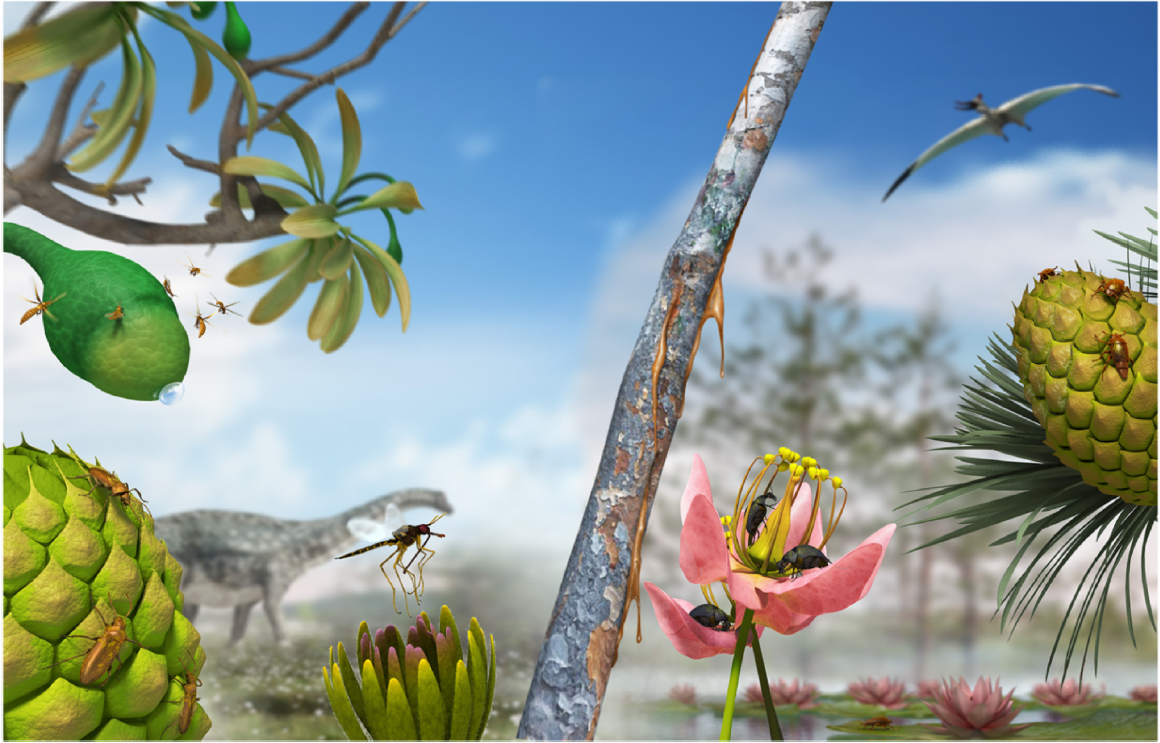
My interest in the ecology of the past has never left me, and over the years I’ve contributed a few articles to journals commenting on the latest fossil findings as they relate to pollination and flowering plant evolution. So I was delighted to be asked by Spanish paleontologist David Peris to help with a new review of insect pollination in deep time, led by PhD candidate Constanza Peña-Kairath. That review has just been published in Trends in Ecology & Evolution, and for the next 50 days it’s available for free download by following the link in the reference:
Inferring insect pollination from compression fossils and amber inclusions is difficult because of a lack of consensus on defining an insect pollinator and the challenge of recognizing this ecological relationship in deep time. We propose a conceptual definition for such insects and an operational classification into pollinator or presumed pollinator. Using this approach, we identified 15 insect families that include fossil pollinators and show that pollination relationships have existed since at least the Upper Jurassic (~163 Ma). Insects prior to this can only be classified as presumed pollinators. This gives a more nuanced insight into the origin and evolution of an ecological relationship that is vital to the establishment, composition and conservation of modern terrestrial ecosystems.
As part of our roles as ambassadors of the new conservation organisation Restore (more of which later this year), several of us including Dave Goulson, George McGavin, and myself, are promoting this online petition to get the government to take the issue of neonicotinoid pesticides seriously. Here’s some text from Dave explaining the situation with a link to a petition that you can sign:
“For three years in a row our government has granted farmers special permission to use banned neonicotinoid pesticides on sugar beet. This is contrary to the expert advice of their own Expert Committee on Pesticides, who specifically recommended that permission should not be granted. It also flies in the face of a huge body of scientific evidence showing that these chemicals are phenomenally toxic to all insect life, and that their use on any crop contaminates soils, hedgerow plants, and nearby streams and ponds for years to come. We are in a crisis, with insect populations in freefall. It is about time our government woke up to this, and acted accordingly. This petition https://petition.parliament.uk/petitions/631948 is a necessary means of holding the government to account. Please sign and share, as signing will ensure the issue is debated in Parliament.”
This petition now has more than 15,000 signatures which ensures that it gets a response from the Government. If it reaches 100,000 mark, it will trigger a debate in Parliament. Please sign and promote this important initiative!
Although I’m one of the speakers, I can’t make it in person as I’ve got teaching commitments at Roskilde University, so I’ve recorded my ten minute piece and I’m happy to answer questions via the Contact page on my website.
It’s been a couple of years since I last did a talk or workshop for the Wildlife Trust for Bedfordshire, Cambridgeshire & Northamptonshire. But I’m pleased to say that they’ve invited me back and you can join me tomorrow evening for an online introductory talk about pollinators and pollination in the UK.
The talk starts at 7pm UK time and full details of how to sign up are in the link below:
It’s been an interesting start to the year in the world of pollinators and pollination. The European Union has revised its 2018 initiative for pollinator conservation with an update called “A New Deal for Pollinators“. At the same time the UK Government has released its plans for Post-Brexit farm subsidies, many of which focus on environmental action that can support pollinators, such as planting hedgerows. I think that it’s fair to say that there’s been a mixed response to these planned subsidies. There’s also mixed news in Butterfly Conservation’s State of the UK’s Butterflies 2022 report. The headline figure is that 80% of butterflies in the UK have decreased since the 1970s. However there are enough positive conservation stories in that report to demonstrate that this decline does not have to be irreversible, we can turn things around.
Against this wider backdrop of pollinator actions, I was pleased to have a new research paper published this week, which is an output from the SURPASS2 project with which I’ve been involved. Led by Brazilian researcher Nicolay Leme da Cunha, this paper assess the variability of soybean dependence on pollinators. Although soybean is one of the most widely grown crops globally, there’s still much that we don’t understand about which of the many different varieties have improved yields when visited by bees, and which are purely self-pollinating. One of our main findings was that for some varieties, especially in the tropics, an absence of pollinators results in a decline in yield of about 50%.
The paper is open access and you can download a copy by following the link in the reference:
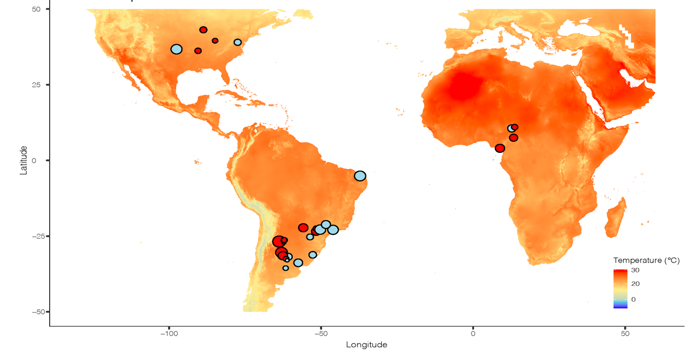
Identifying large-scale patterns of variation in pollinator dependence (PD) in crops is important from both basic and applied perspectives. Evidence from wild plants indicates that this variation can be structured latitudinally. Individuals from populations at high latitudes may be more selfed and less dependent on pollinators due to higher environmental instability and overall lower temperatures, environmental conditions that may affect pollinator availability. However, whether this pattern is similarly present in crops remains unknown. Soybean (Glycine max), one of the most important crops globally, is partially self-pollinated and autogamous, exhibiting large variation in the extent of PD (from a 0 to ∼50% decrease in yield in the absence of animal pollination). We examined latitudinal variation in soybean’s PD using data from 28 independent studies distributed along a wide latitudinal gradient (4–43 degrees). We estimated PD by comparing yields between open-pollinated and pollinator-excluded plants. In the absence of pollinators, soybean yield was found to decrease by an average of ∼30%. However, PD decreases abruptly at high latitudes, suggesting a relative increase in autogamous seed production. Pollinator supplementation does not seem to increase seed production at any latitude. We propose that latitudinal variation in PD in soybean may be driven by temperature and photoperiod affecting the expression of cleistogamy and androsterility. Therefore, an adaptive mating response to an unpredictable pollinator environment apparently common in wild plants can also be imprinted in highly domesticated and genetically-modified crops
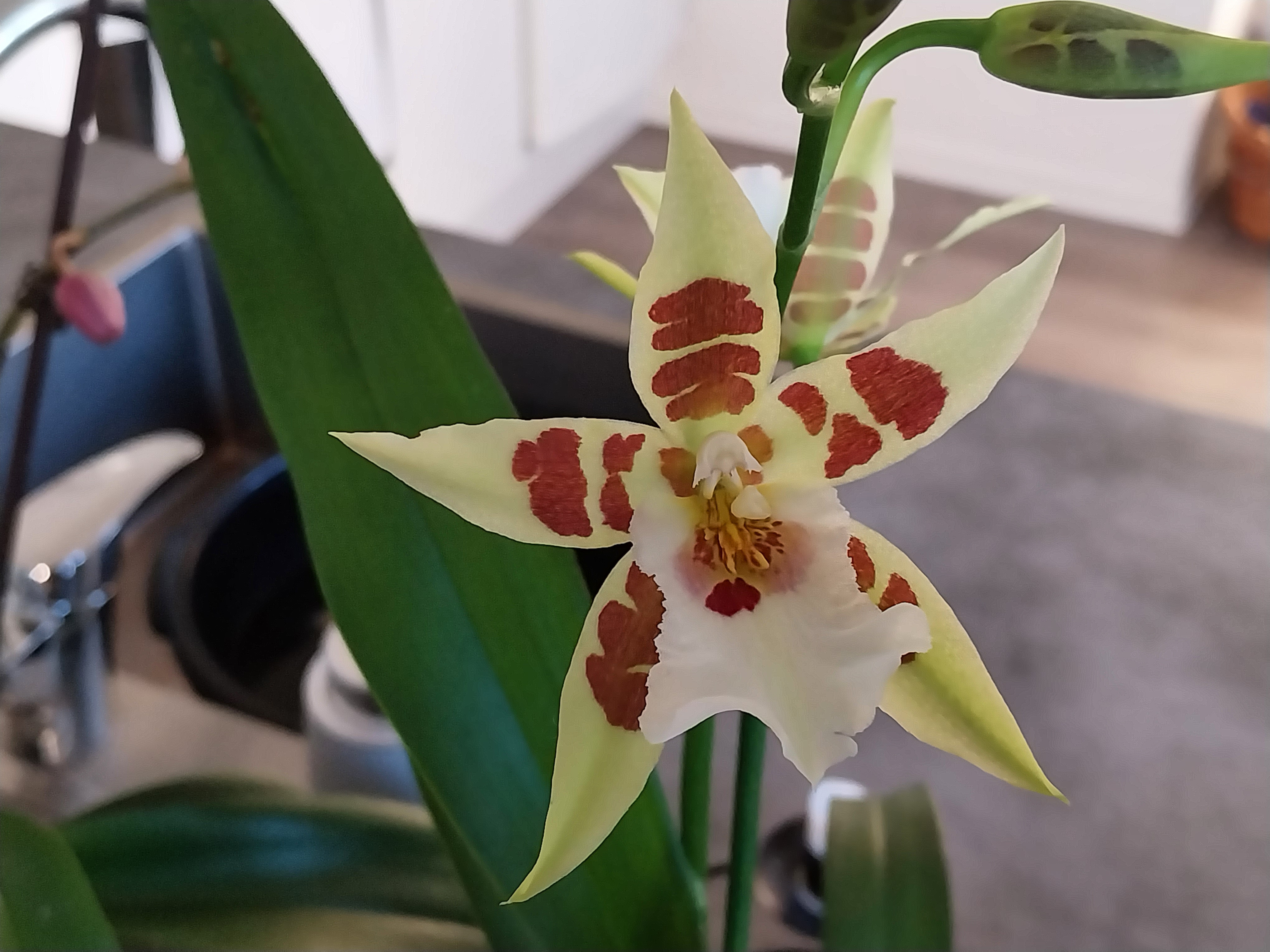
The other day Karin bought a Miltonia orchid to add to the ever-expanding collection of orchids she’s accumulating. It’s nowhere near as large as the collection she accumulated in our old place in the UK – part of it is pictured in this old post of mine – but it’s only a matter of time. This morning I showed her how to extract orchid pollen from the flower and her squeals of delight were something to hear!
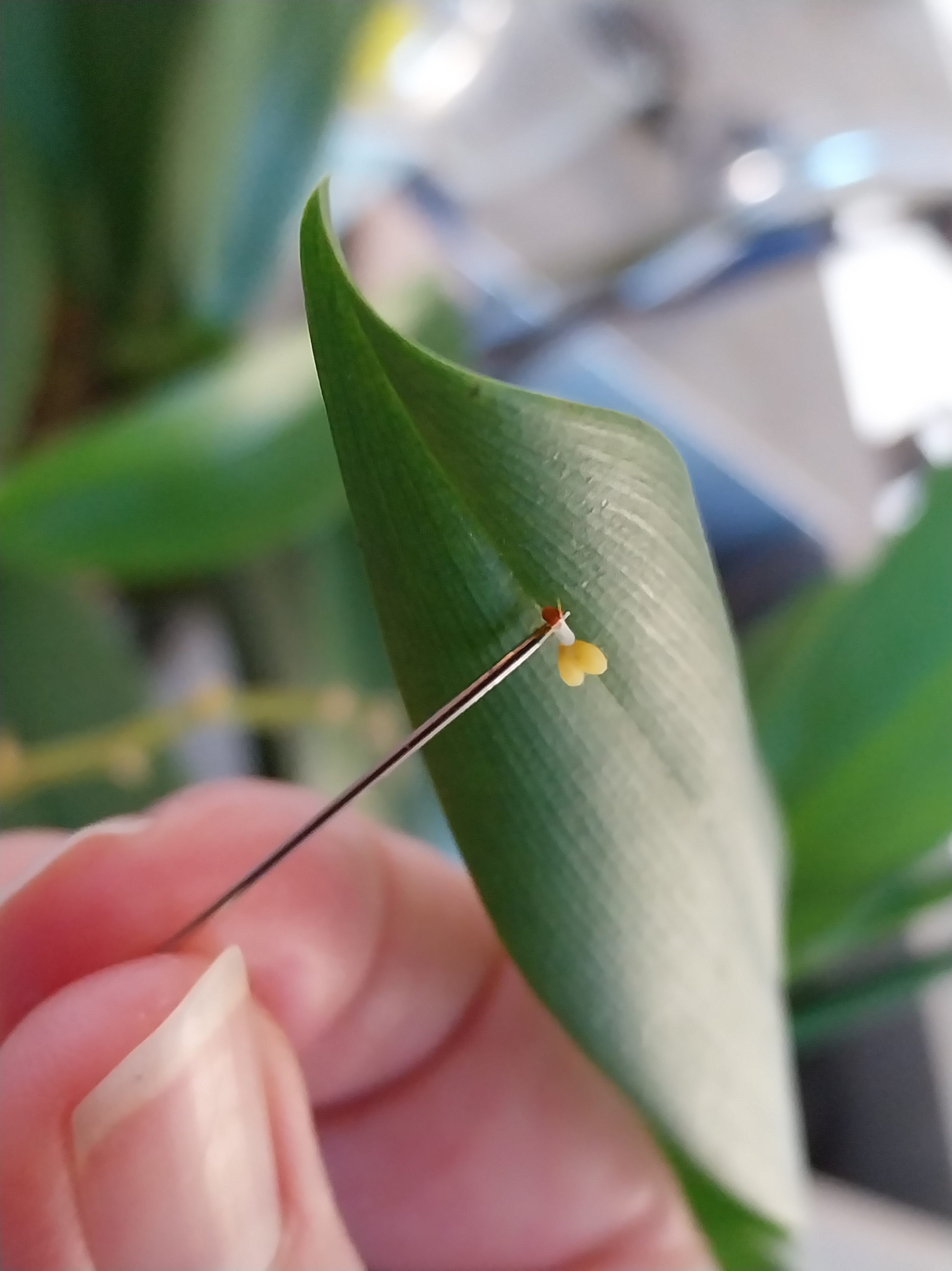
As you can see in the image above, these orchids package their pollen into discrete structures that we term “pollinia” – two of them in this case, though the form and number of pollinia vary between different groups of orchids. The pollinia plus the sticky organ that attaches them to a pollinator is collectively termed a “pollinarium”. The only other plants that present their pollen in this way are my beloved asclepiads in the family Apocynaceae. The orchids and the asclepiads are only very distantly related to each other so this is a clear example of convergent evolution, where both plant groups have come up with the same solution to a problem. In this case, the problem is probably that bees collect a lot of pollen which has a reproductive cost for plants. Packaging the pollen in this way prevents bees from stealing it, amongst other advantages.
If you want to look at this yourself, you’ll find the pollinaria tucked under the front of the central “column” of the flower, which comprises the fused male and female reproductive parts. Just take a fine needle and gently stroke the underside of the column. In the image below, taken just after we extracted the pollinarium, you can see the “anther cap” which covered them lying just below the column.
It’s possible to learn a lot about botany from studying even common houseplants such as these!
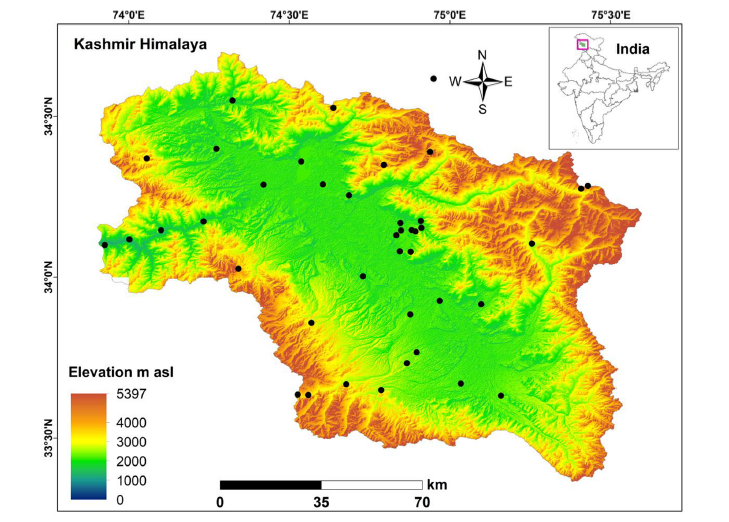
Although we sometimes like to think that we have a “global” perspective on plant-pollinator interactions, in truth there are large parts of the world where we have little or no information. That’s especially true of biodiversity hotspots. One such hotspot is the Kashmir Himalaya, a relatively small area (just 135 km long by 32 km wide) that nonetheless contains an estimated 2,000 species of flowering plant, more than 150 of which are endemic to the area. In addition, over 1,280 insect pollinator species have been described, including at least 29 species of bumblebees and as many as 40 species of butterflies.
Recently I’ve been collaborating with Dr Zubair Rather from the University of Kashmir and his colleagues on a data set that represents the first network analysis of plant-pollinator interactions from the region. The network is presented at a large spatial scale – what is often termed a “meta-network”. As Dr Kit Prendergast and I noted in our recent paper, scale matters when it comes to analysing these sorts of networks. Nonetheless (to quote the current paper):
“meta-networks represent the “backbone” of plant-pollinator interactions to which smaller, local networks are attached”
Even at this very large scale we’re seeing some fascinating patterns emerging with respect to the plants, for example the importance of cultivated apples in supporting the wider network of flower visitors. Also notable, and I believe demonstrated for the first time, is the fact that both the indigenous Asian Honeybee (Apis cerana) and the introduced Western Honeybee (A. mellifera) utilise exactly the same, extremely broad array of plants from which to collect nectar and pollen.
Our Kashmir meta-network is, hopefully, the starting point for further work on plant-pollinator interactions in this fascinating and diverse part of the world. The paper is published in a special issue of the journal Flora that’s dedicated to the importance of natural history when considering the ecology and evolution of plant-pollinator relationships. The special issue is a celebration of the work of Professor Marlies Sazima and is edited by Dr Pedro Bergamo.
Here’s the reference with a link to download a free copy which should be valid up to and including 23rd January 2023:
Plant-pollinator studies are increasingly using network analysis to investigate the structure and function of such communities. However, many areas of high biodiversity largely remain unexplored in this way. Our study describes a plant-pollinator meta-network from an understudied biodiversity hotspot, the Kashmir Himalaya, where we specifically investigate plant-pollinator network nestedness and modularity, as well as the influence of alien species and the impacts of simulating species extinctions on network structure. Natural history observations were used to document the meta-network between 230 plant and 80 pollinator species forming 1958 (11% of the possible) interactions. Among the plants Malus domestica and among the pollinators Apis mellifera and A. cerana formed the largest number of interactions with significant influence over the whole network. Network cumulative degree distribution depicted a higher number of degree levels in pollinators than plants. A moderately high number of realized interactions were revealed, thereby indicating potential structural and functional stability in the network. Eight strongly defined modules were observed in the network which varied in their composition. For example, the Ephedra module exclusively comprised of native species whereas the Apis module comprised of all the four different types of interacting species (i.e. native and alien plants and pollinators) and also integrated the highest number of alien species. In the network overall, 40% of interactions were by alien species, reflecting how well these were integrated. Extinction simulations suggested that the network would collapse more quickly when the most connected pollinators are removed, rather than the most connected plant species. Our study is the first assessment of a plant-pollinator network from this Himalayan biodiversity hotspot; and will help to inform the ecological and economic implications of plant-pollinator interactions in an era of global biodiversity crisis.
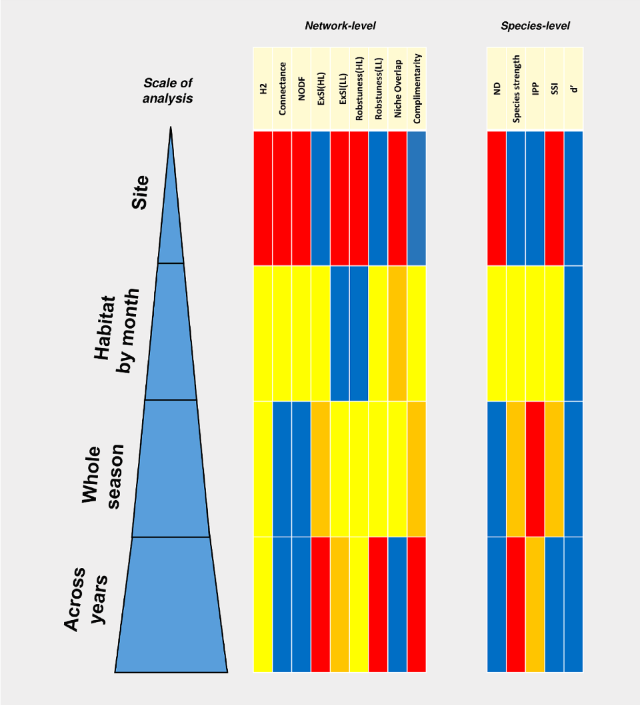
It’s long been recognised that the scale at which we study the natural world – over long or short time periods, or across small areas or whole regions – affects the conclusions that we draw about ecological patterns and processes. This is certainly true of plant-pollinator interactions. For example, a widely distributed plant can have very different pollinators at the extremes of its range, and pollinators like bees may vary their focus on nectar and pollen sources from year to year.
The analysis of these interactions as networks of actors has become increasingly popular in the last couple of decades. However there is no consensus about how frequent sampling should be, or the geographical scale over which networks should be studied. In fact all scales (from regional “meta-networks” down to single-season, single-site, single taxon observations) are relevant, depending on the questions being asked or the hypotheses posed.
But it’s important that we acknowledge that conclusions drawn at one scale may not apply at other scales.
That’s the take home message from a paper published this week which is the latest output from the PhD work of Australian bee expert Kit Prendergast. We have collaborated on several papers based on her data and this is actually my 100th peer-reviewed publication: a proud milestone for me and one which I’m glad to share with a wonderful early career researcher like Kit!
Here’s the reference with a link to a read-only version of the paper:
Bipartite networks of flowering plants and their visitors (potential pollinators) are increasingly being used in studies of the structure and function of these ecological interactions. Whilst they hold much promise in understanding the ecology of plant– pollinator networks and how this may be altered by environmental perturbations, like land-use change and invasive species, there is no consensus about the scale at which such networks should be constructed and analysed. Ecologists, however, have emphasised that many processes are scale dependent. Here, we compare network- and species-level properties of ecological networks analysed at the level of a site, pooling across sites within a given habitat for each month of surveys, and pooling across all sites and months to create a single network per habitat type. We additionally considered how these three scales of resolution influenced conclusions regarding differences between networks according to two contrasting habitat types (urban bushland remnants and residential gardens) and the influence of honey bee abundance on network properties. We found that most network properties varied markedly depending on the scale of analysis, as did the significance, or lack thereof, of habitat type and honey bee abundance on network properties. We caution against pooling across sites and months as this can create unrealistic links, invalidating conclusions on network structure. In conclusion, consideration of scale of analysis is also important when conducting and interpreting plant–pollinator networks.
Within the last decade there’s been a growing awareness of the importance of urban environments for supporting populations of pollinators, especially bees. Indeed, I devoted a whole chapter of my book Pollinators & Pollination: Nature and Society to the topic, though even then I was only able to scratch the surface of the research that’s been done. Since then there’s been some important studies published and this 2020 review by Kath Baldock provides a good starting point for the topic, whilst a recent pre-print by Pietro Maruyama and colleagues emphasises how little we know about pollinators in tropical cities.
One of the most detailed studies of urban solitary bees in a British town was conducted by Muzafar Sirohi when he was a PhD researcher in my department in Northampton. The first paper from that work, documenting the diversity and abundance of bees, came out in 2015, but since then commitments to other projects, plus Muzafar’s return to his university in Pakistan, have meant that we’ve struggled to find the time to publish more. Hopefully that’s changing and the second publication from Muzafar’s thesis is now out, with a third in progress.
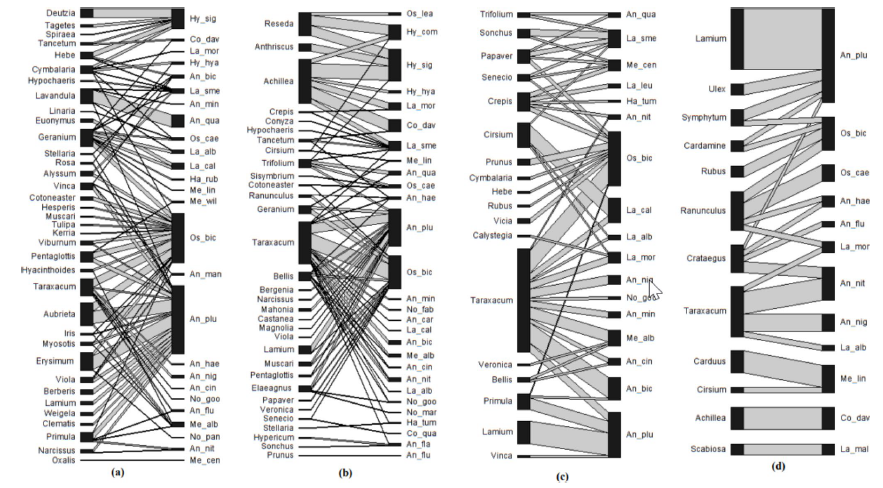
This new paper uses a network approach to study the use of flowers by these bees; here’s the reference with a link to a read-only copy of the paper, followed by the abstract.
Biodiversity is declining through human activities and urbanisation is often seen as a particular concern. Urban settings, however, provide diverse microclimatic conditions for plants and pollinating insects, and therefore may be significant habitats for the conservation of solitary and primitively eusocial bees, a major group of pollinators. This study analysed the interactions between these bees and the plants on which they forage, using a network approach. We compared urban habitats (gardens, roadsides, and open vegetation) in a large British town with nearby nature reserves. One native plant Taraxacum officinale (dandelion) was a core generalist species visited in all habitat types. Other core plant species restricted to particular habitats include species of Geranium, Bellis, Crepis, and Ranunculus. Two generalist bee species, Anthophora plumipes and Osmia bicornis were the core visitor species within the networks. The networks were comparatively more nested in urban habitat types than nature areas, suggesting more frequent interactions between generalist and specialist species in urban areas. Network connectance, network level specialisation (H2’ index), and plant generality (network level) were not significantly different in urban and nature areas. However, visitor generality was found to be significantly higher in urban gardens than in nature areas. Careful management of common urban vegetation would be beneficial for supporting urban wild pollinators.
One of the projects with which I’ve been involved over the past few years has been a collaboration with researchers at Imperial College and the Natural History Museum, alongside regional collections in the UK, to assess how museum specimens of bumblebees (Bombus spp.) can be used to look at long-term ecological changes in pollinator populations. The first two papers from that project were published in August but because of my trip to Kenya I’ve only now been able to post about them.
The details of the papers (both of which are open access and free to download) are below, followed by the official press release:
Arce, A., Cantwell-Jones, A., Tansley, M., Barnes, I., Brace, S., Mullin, V., Notton, D., Ollerton, J., Eatough, E., Rhodes, M., Bian, X., Hogan, J., Hunter, T., Jackson, S., Whiffin, A., Blagoderov, V., Broad, G., Judd, S., Kokkini, P., Livermore, L., Dixit, M., Pearse, W. & Gill, R. (2022) Signatures of increasing environmental stress in bumblebee wings over the past century: Insights from museum specimens. Journal of Animal Ecology 00, 1– 13. https://doi.org/10.1111/1365-2656.13788
Mullin, V. E., Stephen, W., Arce, A. N., Nash, W., Raine, C., Notton, D. G., Whiffin, A., Blagderov, V., Gharbi, K., Hogan, J., Hunter, T., Irish, N., Jackson, S., Judd, S., Watkins, C., Haerty, W., Ollerton, J., Brace, S., Gill, R. J., & Barnes, I. (2022). First large-scale quantification study of DNA preservation in insects from natural history collections using genome-wide sequencing. Methods in Ecology and Evolution, 00, 1– 12. https://doi.org/10.1111/2041-210X.13945
OFFICIAL PRESS RELEASE: Museum collections indicate bees increasingly stressed by changes in climate over the past 100 years
• An analysis of bumblebee wings from a network of UK museums shows signs of stress linked to increasingly hotter and wetter conditions. • As well as revealing what is linked to stress in bees in the past, the study can help predict when and where bees will face most stress and potential decline in the future. • Bumblebees and other insect pollinators have faced population declines in recent years. • The researchers have also for the first time used ancient DNA techniques to sequence bumblebee genomes dating back over 100 years. Scientists from Imperial College London and the Natural History Museum today published two concurrent papers analysing UK bumblebee populations.
The first investigated the morphology (body shapes) of bee specimens dating back to 1900. Using digital images, the group first investigated the asymmetry in bumblebee wings as an indicator of stress. High asymmetry (very differently shaped right and left wings) indicates the bees experienced stress during development – an external factor that affected their normal growth.
Studying four UK bumblebee species, the group found evidence for stress getting higher as the century progressed from its lowest point around 1925. Further analysis showed that each bee species displayed a consistently higher proxy of stress in the latter half of the century.
Learning from the past to predict the future By taking the climate conditions during the year of collection – namely annual mean temperature and annual rainfall – the team found that in hotter and wetter years bees showed higher wing asymmetry. The study is published today in the Journal of Animal Ecology.
Author Aoife Cantwell-Jones, from the Department of Life Sciences (Silwood Park) at Imperial, said: “By using a proxy of stress visible on the bee’s external anatomy and caused by stress during development just days or weeks before, we can look to more accurately track factors placing populations under pressure through historic space and time.”
Author Dr Andres Arce, now at the University of Suffolk, stated: “Our goal is to better understand responses to specific environmental factors and learn from the past to predict the future. We hope to be able to forecast where and when bumblebees will be most at risk and target effective conservation action.”
Senior author Dr Richard Gill, from the Department of Life Sciences (Silwood Park) at Imperial, said: “With hotter and wetter conditions predicted to place bumblebees under higher stress, the fact these conditions will become more frequent under climate change means bumblebees may be in for a rough time over the 21st century.”
DNA from a single leg As well as measuring the wing shapes of bees, in a second parallel study the team successfully sequenced the genomes of over a hundred bumblebee museum specimens dating back more than 130 years. In a pioneering advance, ancient DNA methods typically used for studying woolly mammoths and ancient humans, were for the first time used on an insect population.
Scientists from the Natural History Museum and the Earlham Institute quantified DNA preservation using just a single bee leg from each of the bees studied to create a baseline genome for each of the four species.
From these developments, published today in Methods in Ecology & Evolution, the researchers can now look to determine how the reported stress may lead to genetic diversity loss.
In conjunction with providing a new reference genome, the team will now use this data to study how bee genomes have changed over time, gaining an understanding of how whole populations have adapted – or not – to changing environments.
The value of museum collections Focusing on bumblebee collections, the team worked with curators from the Natural History Museum London, National Museums Scotland, Oxford University Museum of Natural History, World Museum Liverpool, and Tullie House Museum Carlisle.
Author Dr Victoria Mullin, from the Natural History Museum, said: “Museum insect collections offer an unparalleled opportunity to directly study how the genomes of populations and species have been affected by environmental changes through time. However, they are a finite resource and understanding how best to utilise them for genetic studies is important.”
Senior author Professor Ian Barnes, from the Natural History Museum, said: “One of the main problems with museum collections is that the quality of DNA can be very variable, making it difficult to predict which type of analyses we should do. We now have a much better idea about DNA preservation in insect collections, which is a massive boost to our ongoing work to understand the history and future of insect populations.”
Dr Gill concluded: “These studies showcase the value of leveraging museums specimens to go back in time and unlock the past’s secrets. But what we have done is just the beginning, and by continuing our work with these vital public collections and collaborating with curators we can only discover more. All this work was part of a Natural Environment Research Council-funded project and could not have been achieved without the commitment, hard work, and diligence of the museum curators, and our other collaborators”.

 Prof. Jeff Ollerton - ecological scientist and author