Category Archives: Pollinators

Join me ‘In Conservation With’ David Lindo – The Urban Birder – Thursday 7th November 7pm GMT: free and online!

This Thursday at 7pm I’ll be chatting online with David Lindo – the Urban Birder – who is an award-winning broadcaster, writer, speaker, tour leader and educator. According to David’s website,’his mission is to engage city folk around the world with the environment through the medium of birds’.

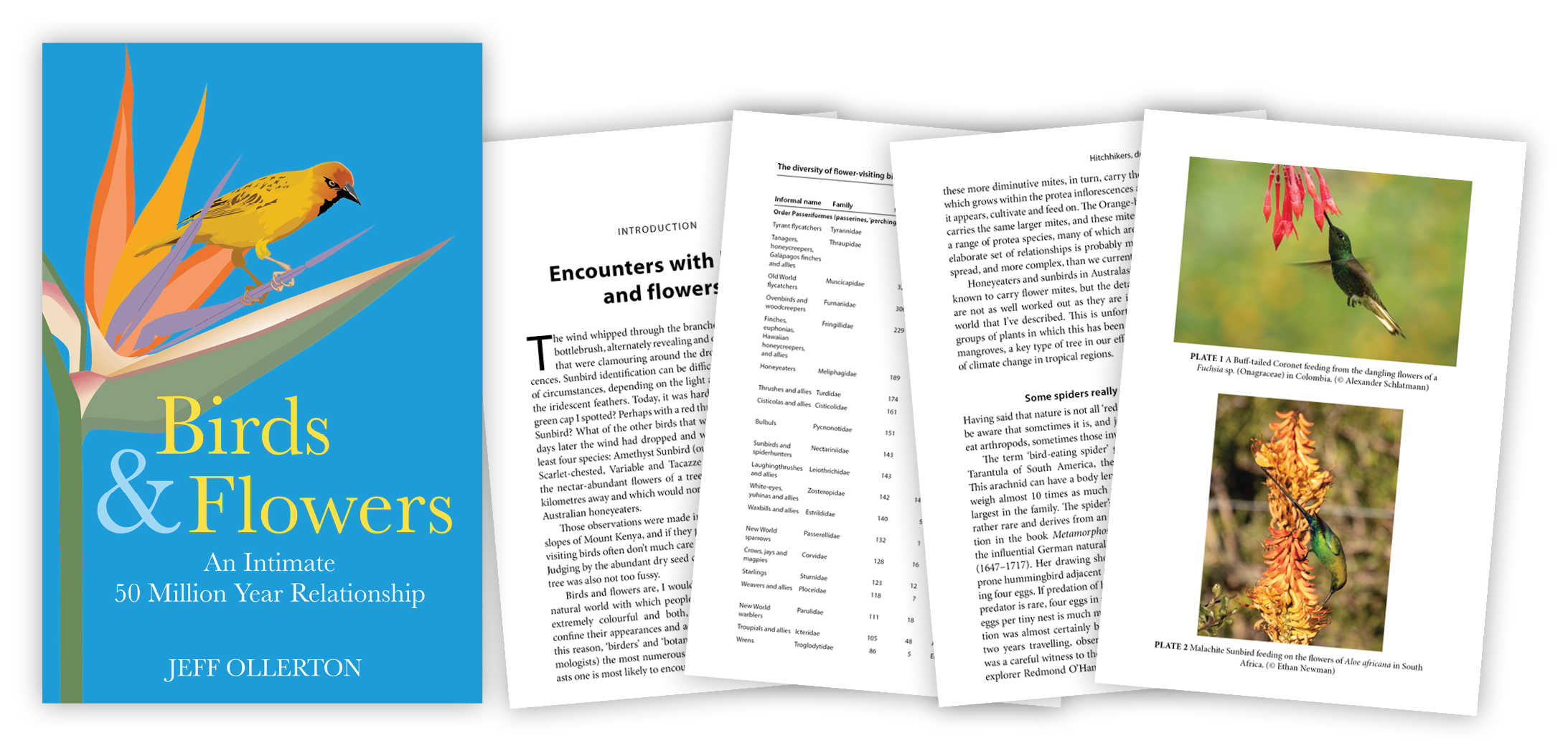
We will be talking about my recent book Birds & Flowers: An Intimate 50 Million Year Relationship, and the urban birding theme is very relevant as chapter 16 is called ‘Urban flowers for urban birds’. Our conversation will range much wider than that, however, to include the importance and diversity of birds as pollinators, threats to that diversity, habitat restoration schemes, and the cultural importance of flower-visiting birds.

David’s had some really stellar guests on his ‘In Conservation* With…’ series (which he describes as ‘Zoom interviews with some of the leading figures in the natural history sector’) including Kate Bradbury, Stephen Moss, Mark Cocker, Bella Lack, Ben Fogle, Caroline Lucas, Iolo Williams, and Margaret Atwood!

You can sign up for this free event by following this link. I’m really looking forward to it and I hope that you can join us.

———————————————————————————————–

*A deliberate pun, not a typo!

Biodiversity Net Gain and pollinators: catch up with my talk on YouTube

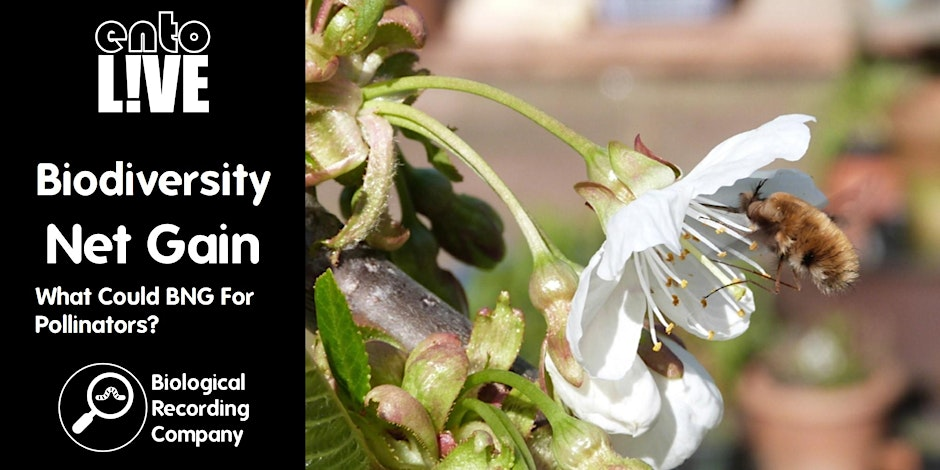
Yesterday I delivered a webinar for the Biological Recording Company on the topic of what Biodiversity Net Gain (BNG) could mean for pollinator conservation. It’s a topic that clearly has a lot of resonance for the ecology community: almost one thousand people (994 to be precise) booked to attend, of which 380 actually watched. That’s a fairly typical ratio for free webinars, in my experience – many people book a place in the expectation that they will receive a link to watch the recording later.

The talk was indeed recorded and can be viewed by following this link to YouTube. There was a Q&A session afterwards which is not part of the recording but the questions and my answers have been transcribed and can be viewed on the Biological Recording Company’s blog, together with links to all of the references and data sources that I cited. Here’s the link to the blog.

I had a lot of really positive feedback during and after my talk, plus some extremely useful comments about where my interpretation of BNG was incorrect (or at least didn’t tell the whole story). As I stressed during my talk, BNG is a journey not an end point and we are all at the start of that journey! It’s going to be fascinating and important to see whether BNG can positively impact declining pollinator populations.

Biodiversity Net Gain and pollinators – join me for a FREE webinar next Monday!

Biodiversity Net Gain is generating a lot of attention in the UK at the moment, some of it positive*:

“when designed and delivered well, BNG can secure benefits for nature, people and places, and for the economy”

“[BNG is] a game-changer for health and wellbeing”

And some of it extremely negative*:

“Biodiversity Net Gain is a lie but most people without enough ecological knowledge cannot see this & are fooled by the lie”

“[BNG is] a horrible legalistic contrivance, and it means nothing”

Regardless of how you feel about BNG, it’s here to stay, at least for the foreseeable future, and so we need to explore it and understand how (or whether) it can positively improve the state of nature in Britain.

Although I don’t pretend to be an expert on BNG**, I have thought a lot about how it might impact the group that I do have some expertise in, pollinators, and the implications for the pollination services that they provide to wild and crop plants.

Last October I produced a short report that considered the implications of BNG for insect pollinators – you can download a copy from the original blog post, though do be aware that some of the dates I mentioned were later revised by the then government and I have yet to revise the document.

As a follow up to this I have been invited by the Biological Recording Company to lead a one-hour webinar discussing this topic on Monday 28th October at 1pm. It’s free to attend and you can book a ticket by following this link. There’ll be a short presentation (30 minutes or so) followed by a live Q&A.

I hope that some of you can join me!

——————————————————————

*Real quotes, culled from reports and social media.

**Indeed, it’s such a new approach to development and nature conservation, can anybody consider themselves an expert?

What are the limits to pollinator diversity? A new article poses the question

The most globally significant groups of pollinators are well known and have been studied for a long time: bees and wasps, flies, butterflies and moths, birds, bats and beetles are all familiar to those of us with an interest in pollination ecology. However, every few years a new type of pollinator or a novel pollination system is described from nature or from the fossil record, or we add further examples of previously neglected pollinator groups such as cockroaches.

This begs the question: how much is there still to discover? How close are we to describing the full diversity of animals that act as pollen vectors? Can looking at the past help us to predict what we might find in the future? That’s the topic of a Perspective article that I was invited to write for the special issue of the Journal of Applied Entomology on the theme of  The Neglected Pollinators that I mentioned last month. It’s a subject that I’ve thought about a lot over the last few decades and it was great to get an opportunity to air some ideas and speculation.

The article is open access and you can download a copy by following the link in this reference:

Ollerton, J. (2024) What are the phylogenetic limits to pollinator diversity? Journal of Applied Entomology (in press)

Here’s the abstract:

Although huge progress has been made over the past 200 years in identifying the diversity of pollinators of angiosperms and other plants, new discoveries continue to be made each year, especially in tropical areas and in the fossil record. In this perspective article I address the following questions: Just how diverse are the pollinators and what are the phylogenetic limits to that diversity? Which other groups of animals, not currently known to regularly engage with flowers, might be found to be pollinators in the future? Can we predict, from the fossil record and from discoveries in under-researched parts of the world, which animal groups might turn out in the future to contain pollinators? I also discuss why adding to our knowledge of plant–pollinator interactions is important, but also stress that an incomplete knowledge may not be a bad thing if it means that remote, inaccessible and relatively pristine parts of the world remain that way.

The diverse nature of ‘nature writing’: in conversation with Jack Cornish and Ben Masters – 5th October

Why do authors write about ‘nature’? What are their motivations and how did they start their writing journey? Do they even recognise this label of ‘nature writer’?

These are just some of the questions I’ll be exploring with two other authors at the Market Harborough Book Festival on Saturday 5th October.

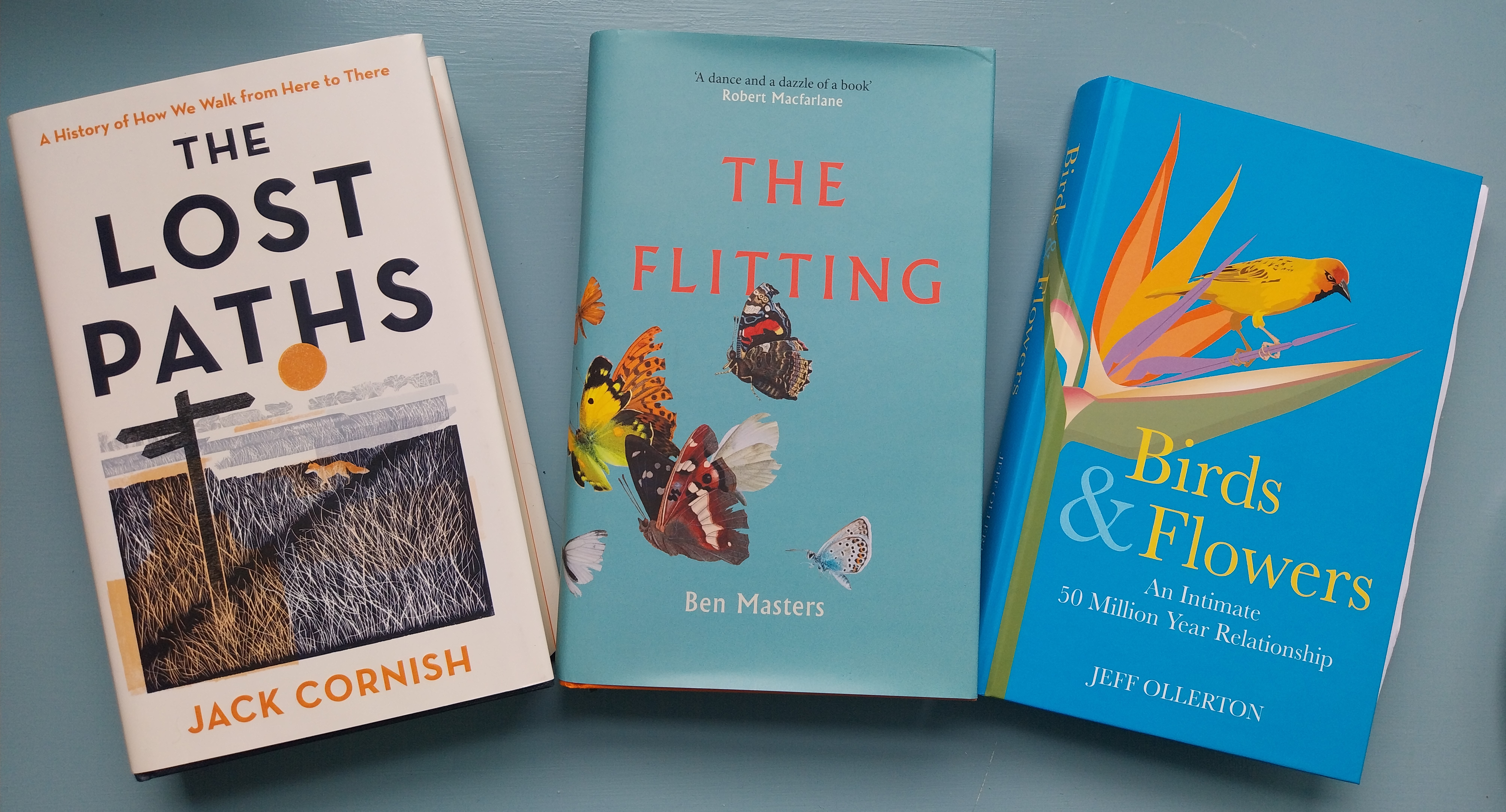
Jack Cornish is author of The Lost Paths, an exploration of the ancient pathways that have criss-crossed England and Wales since prehistoric times, the peoples who made them, and the landscapes through which they currently run. It’s a reminder of ‘just how precious these paths are, and have been, to the human story of this island’. I’ve only just started The Lost Paths, but what I’ve read so far is wonderful. Check out this recent review on The Great Outdoors site.

Ben Masters’ most recent book is The Flitting, an account of the final months of his relationship with his late father, a keen natural historian with a devotion to butterflies, and how they come to share ‘passions, lessons and regrets as they run out of time’. There’s a nice review of The Flitting by Mark Avery on his blog, and I have to agree with him, it’s a lovely book.

Coincidentally, earlier this year Mark wrote a review of the book that I will be discussing, my recent Birds & Flowers: An Intimate 50 Million Year Relationship, though I may also dip into Pollinators & Pollination: Nature and Society, because there’s at least one thing that unites the three of us as writers: a love of the poet John Clare! Ben discusses him at length in The Flitting, and indeed Clare provided the title of the book. Likewise, Jack name checks Clare in The Lost Paths, and I used the poet as the jumping off point for a couple of explorations of the importance and conservation of bees and other pollinators.

As well as discussing our roles as ‘nature writers’ we’ll be reading extracts from our books and answering audience questions. There will also be an opportunity to buy personally signed copies of our books. We look forward to seeing you there!