A message from Dr Debora Drucker, WorldFAIR Agricultural Biodiversity Case Study Lead:
Registration is open to our contribution to the WorldFAIR webinar series – “Reusing Plant-Pollinator Datasets: a Global Perspective with Guidelines and Recommendations inspired by Pilot Studies from Africa, the Americas and Europe”.
We will present results from Deliverables 10.2 & 10.3, with focus on our pilot studies:
Drucker, D., Salim, J. A., Poelen, J., Soares, F. M., Gonzalez-Vaquero, R. A., Ollerton, J., Devoto, M., Rünzel, M., Robinson, D., Kasina, M., Taliga, C., Parr, C., Cox-Foster, D., Hill, E., Maues, M. M., Saraiva, A. M., Agostini, K., Carvalheiro, L. G., Bergamo, P., Varassin, I.; Alves, D. A., Marques, B., Tinoco, F. C., Rech, A. R., Cardona-Duque, J., Idárraga, M., Agudelo-Zapata, M. C., Marentes Herrera, E. Trekels, M. (2024). WorldFAIR (D10.2) Agricultural Biodiversity Standards, Best Practices and Guidelines Recommendations (Version 1). Zenodo. https://doi.org/10.5281/zenodo.10666593
Drucker, D. P., Salim, J. A., Poelen, J., Soares, F. M., Gonzalez-Vaquero, R. A., Devoto, M., Ollerton, J., Kasina, M., Carvalheiro, L. G., Bergamo, P. J., Alves, D. A., Varassin, I., Tinoco, F. C., Rünzel, M., Robinson, D., Cardona-Duque, J., Idárraga, M., Agudelo-Zapata, M. C., Marentes Herrera, E., Taliga, C., Parr, C.S., Cox-Foster, D., Hill, E., Maués, M.M. Agostini, K. Rech, A.R., Saraiva, A. (2024). WorldFAIR (D10.3) Agricultural biodiversity FAIR data assessment rubrics (Version 1). Zenodo. https://doi.org/10.5281/zenodo.10719265
We reserved a good amount of time for Q&A – I hope to see you there and have a nice discussion!
Yesterday I received an email containing the following press release. I thought it might interest readers of the blog so I am copying it in full with no edits. I had a quick look over the report and it’s amazingly detailed and comprehensive. It’s a shame that the report only covers insects, but that probably reflects my current bias given that my next book, due out in February, is about pollinating birds! Press release follows:
Governor Polis and the Department of Natural Resources Release Pollinator Report
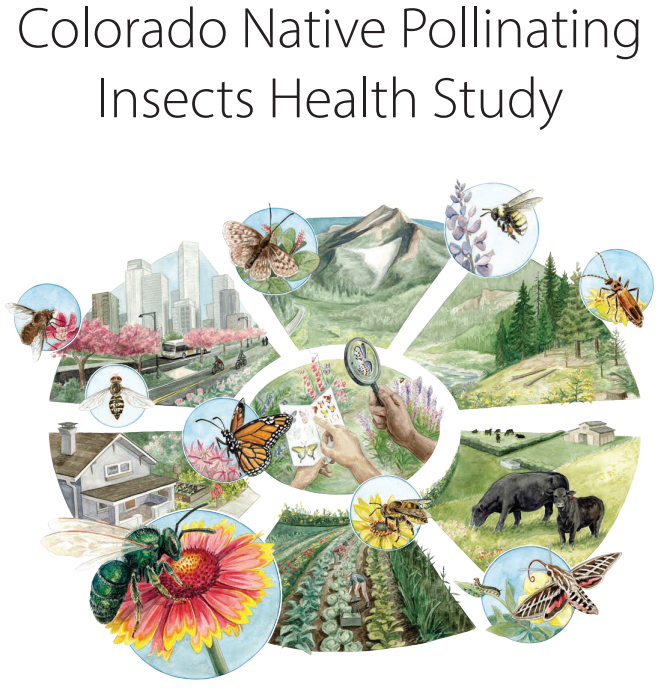
BROOMFIELD – Today, Governor Polis in partnership with The Colorado Department of Natural Resources (DNR), Colorado State University Extension, Xerces Society for Invertebrate Conservation, and University of Colorado Museum of Natural History released the Colorado Native Pollinating Insects Health Study which is the most robust and detailed account of pollinator health ever undertaken in Colorado history. As directed by SB22-199, Native Pollinating Insects Protection Study, sponsored by Senators Sonya Jaquez Lewis and Kevin Priola, and Representatives Cathy Kipp and Meg Froelich, signed by Governor Polis on May 27, 2022, the study assesses the health of Colorado’s native pollinators, evaluates state policies for safeguarding pollinators, and makes recommendations on how to preserve and protect pollinators in Colorado.
“Pollinators play a critical role in Colorado life. From Crested Butte’s beautiful spring meadows to Palisade Peaches and Rocky Ford melons, Colorado’s pollinators sustain our flora and enable many foundational industries in every corner of the state. As our climate changes, we must safeguard the pollinators that generate and regenerate the Colorful Colorado we love,” said Governor Polis
Colorado is home to various native insects and bats whose pollinating services are at the heart of healthy environments and economies. Pollinators are critical to Colorado’s economy and our agricultural production and food systems, and they are essential for flowering plants that support the state’s wildlife ecosystem and add color to Colorado’s beautiful landscapes.
“Colorado is fortunate to have a tremendous diversity of plants and animals, but pollinating insects are perhaps the least studied but most beneficial for our ecosystems, economy and quality of life,” said Dan Gibbs, Executive Director, Colorado Department of Natural Resources. “I greatly appreciate the time and effort of the study authors who truly did a deep dive into the current state of pollinating insects and state policies and structures. I look forward to working with Colorado legislators and stakeholders in pursuing the best policies to ensure pollinating insect protection and long-term health.”
Colorado is home to over 1,000 species of bees—nearly 30% of North America’s and approximately 5% of the world’s bee species—and nearly 300 species of butterflies, representing over 40% of the diversity of butterflies in North America north of Mexico, some of which are already listed under the federal Endangered Species Act. This report underscores the importance of the Polis administration’s goals to tackle Colorado’s greenhouse gas emissions, prepare industries for the impending effects of climate change, and create more sustainable living in Colorado for pollinator populations.
“Our ecosystems rely on pollinators, which is why I’ve championed measures that limit toxic chemicals from harming pollinators and put forth a statewide assessment to better understand the problems our pollinators face and identify practices to better sustain them,” said Senator Sonya Jaquez Lewis, D-Longmont. “Today’s report shows that there’s plenty to do moving forward, and I am looking forward to continuing our work to protect pollinators and the ecosystems that are dependent on them.”
“I’m excited that we have this report to help us understand the extent of pollinator decline in Colorado. While Colorado ranks fifth nationally for the rate of honey-bee die-offs, we haven’t known as much about native pollinating insects. This threatens our food production, biodiversity and health of our ecosystems,” said Rep. Cathy Kipp, D-Fort Collins. “We created the Native Pollinating Insects Protection Study in 2022 to identify ways to better protect and support the native Colorado pollinators, like different bee species, butterflies, and moths, that are also essential to maintaining a healthy environment. These findings will help direct future legislation to create a safer environment for our pollinators, protect our food supply and support biodiversity.”
Promoting policies that benefit native pollinating insects represents an opportunity to foster healthy and sustainable pollinator populations, especially in agricultural and urban habitats. This includes enhancing pollinator-friendly native plantings along I-76 following its designation as a Colorado Pollinator Highway by the Colorado Department of Transportation and other existing state plans such as the state’s Natural Areas Program, and Wildlife Action Plan among others.
“Working on the Pollinator Health Study has been an amazing opportunity to collaborate with so many locally, nationally, and internationally recognized experts in the field of pollinator conservation. In addition to the immense amount of information within the report, this study highlights the importance of collaboration between scientists and land management agencies to bring together the many facets needed for conserving native pollinating insects,” said Deryn Davidson, Sustainable Landscape State Specialist, Colorado State University Extension. “Having the existing research on Colorado pollinators paired with recommended land management practices in one, comprehensive document is an incredible tool for policy makers, land managers, and really anyone interested in actionable steps for pollinator conservation.”
Areas of immediate action and priorities highlighted by the Pollinator Report include:
Priority 2: Protect, restore, and connect pollinator habitats.
Priority 3: Mitigate environmental changes that negatively impact pollinators and their habitats.
Priority 4: Reduce the risks from pesticides to pollinating insects.
Priority 5: Monitor and support native and managed pollinator health.
Governor Polis announced his annual budget proposal on November 1, focusing on ensuring Colorado is more affordable, sustainable, and liveable. The Governor included $100,000 to support education and incentives to encourage the use of pesticide alternatives in agricultural production and residential or commercial landscaping. On May 17, 2023, Governor Polis signed Neonic Pesticides as Limited-Use Pesticides, sponsored by Senators Kevin Priola and Sonya Jaquez Lewis and Representatives Kyle Brown and Cathy Kipp, which protects pollinators from harmful toxins.
Biodiversity Net Gain (or BNG) promises to transform the way that we approach nature conservation in the UK. I’ve been giving a lot of thought to what this might mean for insect pollinators and have produced a new report that summarises the opportunities that BNG presents and how we can make the most of them. You can download a copy of that report by following this link.
This is meant to be a working document and as BNG progresses, and our understanding of its impacts on pollinators increases, I will update it. In the meantime, please do feel free to comment.
There’s an estimated 350,000 described species of pollinators, and many, many more undescribed. Only about 20,000 of these (i.e. less than 6%) are bee species, although you wouldn’t know it from the media obsession with bees. It’s important and and timely, therefore, that a team of South American scientists have come together to propose a special issue of the Journal of Applied Entomology that focuses on these “other” insects.
The special issue will be called “The Neglected Pollinators: Understanding the Importance of Lesser-Known Insect Taxa in Pollination”. Consider submitting a manuscript if you work on anything except bees! Here’s the link to the details of how to submit your work:
As part of our roles as ambassadors of the new conservation organisation Restore (more of which later this year), several of us including Dave Goulson, George McGavin, and myself, are promoting this online petition to get the government to take the issue of neonicotinoid pesticides seriously. Here’s some text from Dave explaining the situation with a link to a petition that you can sign:
“For three years in a row our government has granted farmers special permission to use banned neonicotinoid pesticides on sugar beet. This is contrary to the expert advice of their own Expert Committee on Pesticides, who specifically recommended that permission should not be granted. It also flies in the face of a huge body of scientific evidence showing that these chemicals are phenomenally toxic to all insect life, and that their use on any crop contaminates soils, hedgerow plants, and nearby streams and ponds for years to come. We are in a crisis, with insect populations in freefall. It is about time our government woke up to this, and acted accordingly. This petition https://petition.parliament.uk/petitions/631948 is a necessary means of holding the government to account. Please sign and share, as signing will ensure the issue is debated in Parliament.”
This petition now has more than 15,000 signatures which ensures that it gets a response from the Government. If it reaches 100,000 mark, it will trigger a debate in Parliament. Please sign and promote this important initiative!
The question of whether interactions between different species are more specialised in tropical environments (as theory predicts) has intrigued me for a couple of decades. In fact it’s just occurred to me that August 2022 was the 20th anniversary of my paper in Oikos co-authored with Louise Cranmer entitled: Latitudinal trends in plant-pollinator interactions: are tropical plants more specialised? That paper was one of the first to seriously challenge an idea that was long-embedded in the scientific and (especially) popular literature, that tropical ecology was in a sense “special” and that the ways in which species parasitised, consumed, or engaged in mutualistic relationships in the tropics was different to what was happening in the subtropics and temperate zones.
Since then I’ve written about this subject in a number of publications, most recently in my book Pollinators & Pollination: Nature and Society and it’s inspired some other researchers to address the topic.
One of the real challenges with asking questions about how plant-pollinator relationships change over large geographical areas is obtaining good, robust data to analyse. It’s a challenge to convince science funding agencies to give money to spend many years travelling the world and collecting the kind of data that are needed. However we can gain some idea of the patterns, and potential processes, that drive the macroecology of plant-pollinator interactions by piecing together databases of interactions for particular taxa, gleaned from published and unpublished sources.
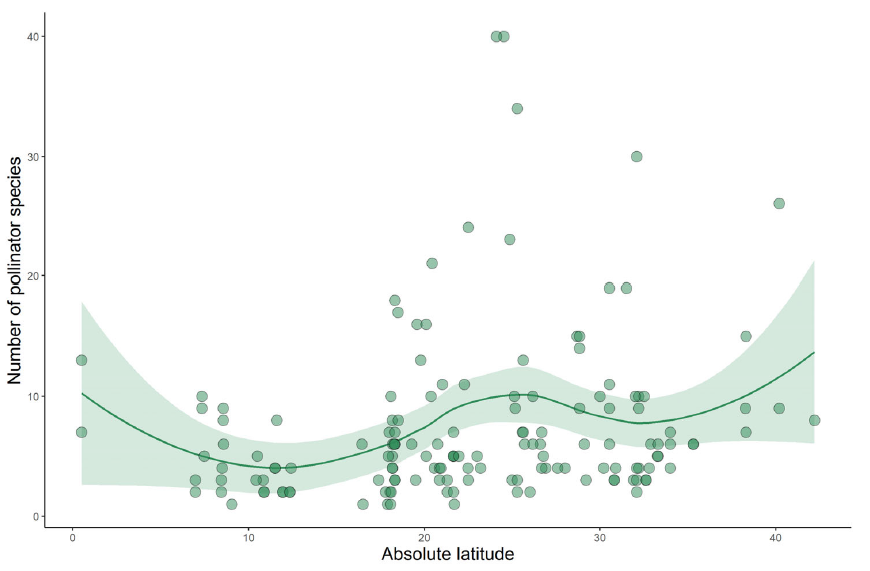
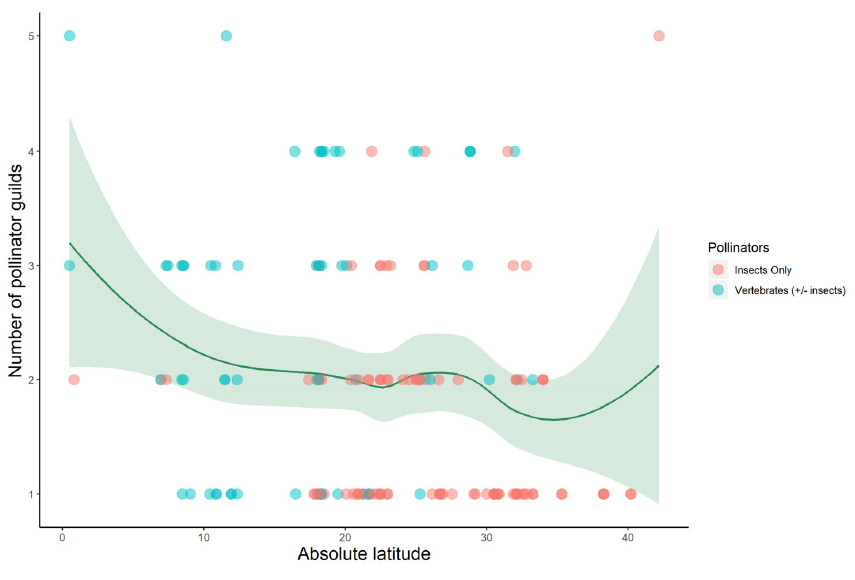
That’s what we have done for the family Cactaceae in a new study led by Pablo Gorostiague from the Universidad Nacional de Salta in Argentina. This collaboration started when Pablo visited Northampton back in 2018 and spent some time with my research group, including helping out with field work in Tenerife. Since then the usual issues (work, COVID, etc.) have delayed publication of our paper, but now it’s finally out. Amongst other results we find that, yes, tropical cacti are pollinated by fewer species on average (though it’s hugely variable – see the figure above) but that functional specialisation (i.e. the number of pollinator guilds that are used by species) is no different in the tropics compared to the extra-tropics (that’s the figure at the end of this post).
The full reference with a link to the paper is below; if anyone wants a PDF, please send me a message via the Contact page:
Biotic interactions are said to be more specialized in the tropics, and this was also proposed for the pollination systems of columnar cacti from North America. However, this has not yet been tested for a wider set of cactus species. Here, we use the available information about pollination in the Cactaceae to explore the geographic patterns of this mutualistic interaction, and test if there is a latitudinal gradient in its degree of specialization.
We performed a bibliographic search of all publications on the pollination of cacti species and summarized the information to build a database. We used generalized linear models to evaluate if the degree of specialization in cacti pollination systems is affected by latitude, using two different measures: the number of pollinator guilds (functional specialization) and the number of pollinator species (ecological specialization).
Our database contained information about the pollination of 148 species. The most frequent pollinator guilds were bees, birds, moths and bats. There was no apparent effect of latitude on the number of guilds that pollinate a cactus species. However, latitude had a small but significant effect on the number of pollinator species that service a given cactus species.
Bees are found as pollinators of most cactus species, along a wide latitudinal gradient. Bat and bird pollination is more common in the tropics than in the extra-tropics. The available information suggests that cacti pollination systems are slightly more ecologically specialized in the tropics, but it does not support any trend with regard to functional specialization.
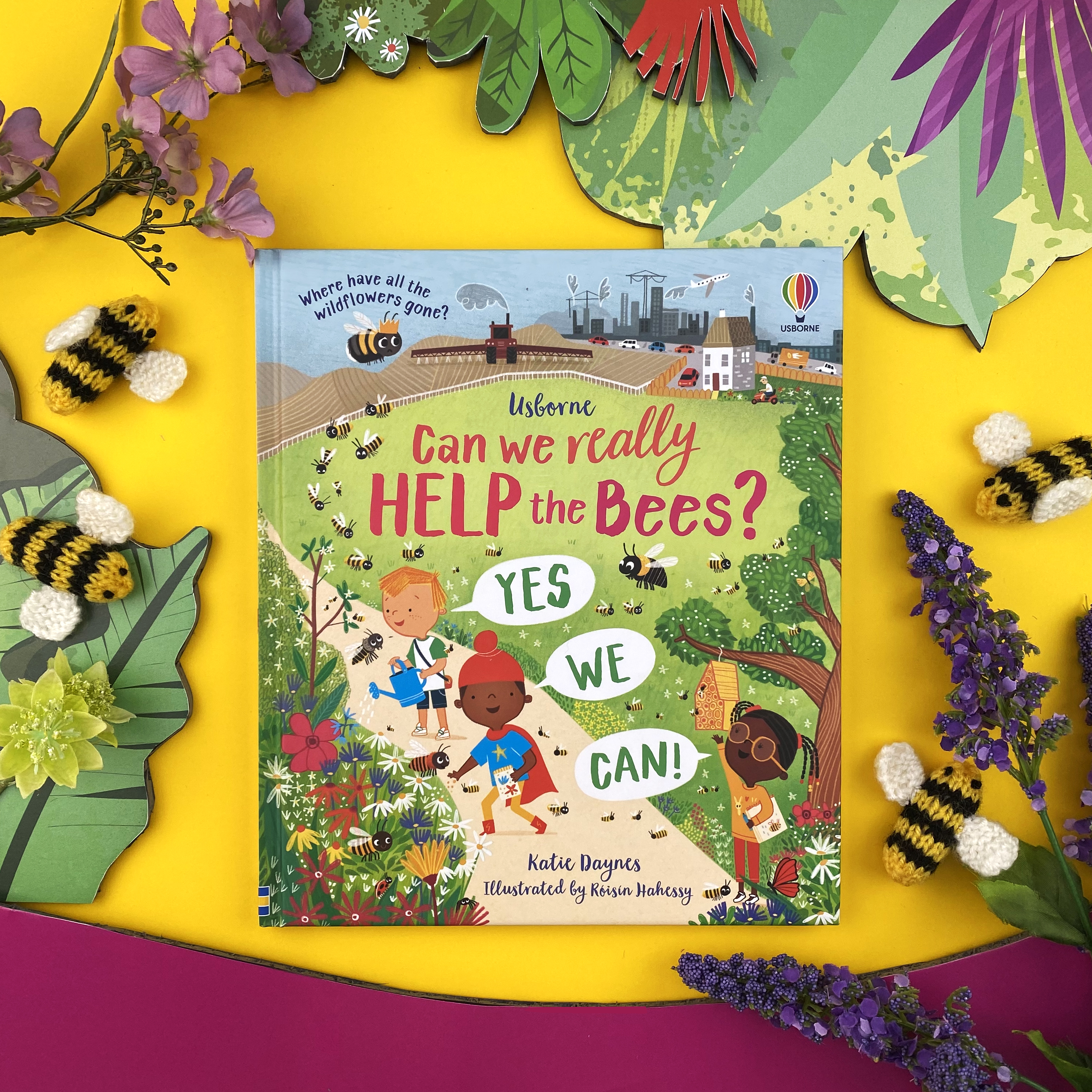
One of the projects with which I’ve been involved over the last year has been advising on a new book for children about bees and other pollinators, called Can We Really Help The Bees? Written by Katie Daynes and wonderfully illustrated by Róisín Hahessy, it tells the story of what happens when a swarm of bees comes to the window to let a group of children know that they, and their friends the other pollinators, are in trouble. Can they help? Yes they can!
It’s been a real pleasure working with Katie and Róisín on this project for Usborne Publishing and seeing the ideas, text, and illustrations evolve over time. I’ve written a short post over at the Usborne blog with some ideas about how to get children involved in helping the pollinators, and I think that it’s worth repeating one of the things that I wrote: everyone can make a difference to the wildlife around us and no one is too young to be involved!
Because of my involvement with Can We Really Help The Bees? I wasn’t able to include it on my curated list of the best books about bees and other pollinators at the Shepherd site. But it definitely should be on there and is highly recommended!
Of all of the “classical” pollination syndromes, flowers that are hawkmoth pollinated have one of the highest levels of predictability. If a flower is pale in colour, opens at night, is highly scented, and possesses a long tube at the bottom of which is a supply of nectar, there’s a very high likelihood that it’s pollinated by long-tongued hawkmoths (Sphingidae).
Fast forward 160 years and we now know that pollination syndromes are more complex than 19th and early 20th century scientists imagined – see my recent book Pollinators & Pollination: Nature and Society for a discussion of this topic. That’s not surprising because, as I point out, we probably have data on the interactions between plants and their pollinators for only about 10% of the estimated 352,000 species of flowering plants. There’s still much to be discovered!
As an example of how our understanding of specialised flower-hawkmoth interactions is developing, consider this recent study that I’ve just published with my Brazilian colleague Felipe Amorim and other collaborators. In it we have shown that, contrary to expectations, a species of Apocynaceae (Schubertia grandiflora) with a relatively short floral tube can specialise on hawkmoths with much longer tongues than we might predict.
The full reference with a link to the study is shown below, followed by the abstract. If you would like a PDF, please drop me a line via my Contact page:
Since Darwin, very long and narrow floral tubes have been known to represent the main floral morphological feature for specialized long-tongued hawkmoth pollination. However, specialization may be driven by other contrivances instead of floral tube morphology. Asclepiads are plants with a complex floral morphology where primary hawkmoth pollination had never been described. We detailed here the intricate pollination mechanism of the South American asclepiad Schubertia grandiflora, where functional specialization on long-tongued hawkmoth pollinators occurs despite the short floral tube of this species. We studied two plant populations in the Brazilian Cerrado and recorded floral visitors using different approaches, such as light-trapped hawkmoths for pollen analysis, direct field observations, and IR motion-activated cameras. Finally, using a community-level approach we applied an ecological network analysis to identify the realized pollinator niche of S. grandiflora among the available niches in the pollinator community. Throughout a period of 17 years, long-tongued hawkmoths were consistently recorded as the main floral visitors and the only effective pollinators of S. grandiflora. Flowers rely on highly modified corona and gynostegium, and enlarged nectar chambers, to drive visitors and pollination mechanism. Despite its relative short-tube, network analysis placed S. grandiflora in the module including exclusively long-tongued hawkmoth pollinators and the most phenotypically specialized sphingophilous plants in the community. These results represent the first example of functional specialization in long-tongued hawkmoths in an asclepiad species. However, this specialization is uncoupled from the long floral tubes historically associated with the sphingophily syndrome.
I was recently invited to chat about careers and writing and pollinators and pollination with the folks from National Association of Environmental Professionals for their Environmental Professional’s Radio podcast. You can listen to it here:
Humans affect the land on which they live in many different ways, and this in turn influences local biodiversity. Sometimes this has positive effects on local wildlife: consider the diversity of birds to be found in well-managed suburban gardens, for example. But often the effect is negative, especially when the land is intensively managed or habitats are destroyed, for example via deforestation or urban development.
This is not a new phenomenon – according to a recent study, most of the habitable parts of the planet have been shaped by humans for at least 12,000 years (see Ellis et al. 2021). What is new, however, is the scale and the speed with which land-use is changing, which are far greater than they have been historically. An important question is the extent to which this change in land-use intensity is affecting pollinator diversity in different parts of the world. Over the past 18 months I’ve been collaborating on a project led by Joe Millard (as part of his PhD) and Tim Newbold which uses the Projecting Responses of Ecological Diversity In Changing Terrestrial Systems (PREDICTS) database to address that very question.
A paper from that collaboration is published today in the journal Nature Communications; it’s open access and can be downloaded by following this link.
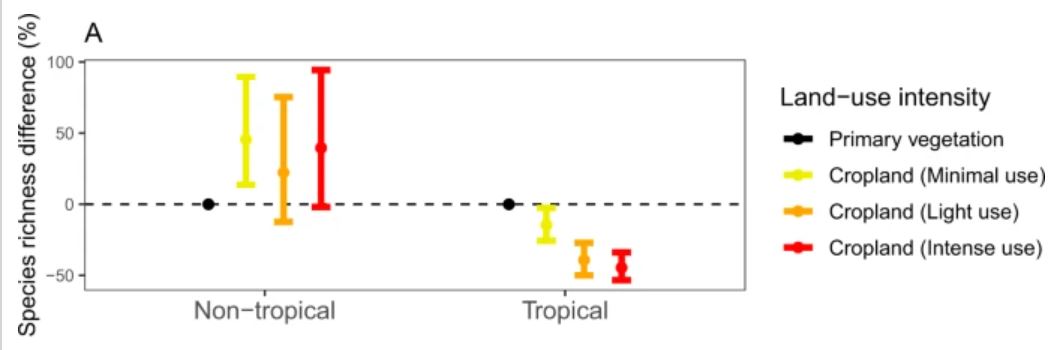
The study was global in scale and used data from 12,170 sites to assess the affect of land-use intensity on 4502 pollinating species. The findings are really fascinating; highlights include:
In comparison to natural vegetation, low levels of land-use intensity can have a positive effect on the diversity of pollinators.
For most land categories, greater intensity of land-use results in significant reductions in diversity and abundance of pollinators, however. For example, for urban sites there’s a 43% drop in number of species and a drop in 62% pollinator abundance from the least to the most intensive urban sites.
On cropland, strong negative responses of pollinators to increasing intensity are only found in tropical areas, although different taxonomic groups vary in their responses.
The latter finding is especially concerning given that: (i) most pollinator diversity is found in the tropics; (ii) the majority of tropical crops are insect pollinated; and (3) tropical agriculture is becoming increasingly intensive and land use is likely to rapidly change in the coming decades.
The full reference for the study, with all authors, is:
Millard, J., Outhwaite, C.L., Kinnersley, R., Freeman, R., Gregory, R.D., Adedoja, O., Gavini, S., Kioko, E., Kuhlmann, M., Ollerton, J., Ren, Z.-X. & Newbold, T. (2021) Global effects of land-use intensity on local pollinator biodiversity. Nature Communications 12, 2902. https://doi.org/10.1038/s41467-021-23228-3