Category Archives: Mammals

Join me at the Wildlife Gardening Virtual Symposium 14th January 2026 – Registration Now Open!

At a time when the UK’s wildlife is under increasing pressure, the everyday spaces we manage—especially gardens—are becoming ever more important. Although interest in wildlife-friendly gardening has grown enormously in recent years, the evidence behind different approaches is not always clear. Well-meaning interventions can be highly effective, but some can miss the mark without a grounding in sound ecological knowledge.

That’s exactly why the Wildlife Gardening Virtual Symposium has become such a valuable annual event. It brings together researchers, practitioners, and anyone involved in managing green spaces to explore what the science is actually telling us about creating gardens that support biodiversity.

This year’s programme, chaired by Hafsah Hafeji of the Wildlife Gardening Forum, features four invited talks covering ponds, pollinators, fungi, and urban mammals, along with an update on emerging policies and projects shaping the wildlife-gardening landscape.

2026 Speaker Programme

  • Fragments of Paradise: Garden Ponds as Wildlife Habitat
    Dr Mike Jeffries – Northumbria University
  • Gardening for Pollinators: It’s About More Than Just Flowers!
    Prof Jeff Ollerton – University of Northampton & Kunming Institute of Botany
  • How Fungi Make Gardens Flourish
    Dr Jassy Drakulic – Royal Horticultural Society
  • Recording Wild Mammals in Urban Spaces: A Multidecadal Study
    David Wembridge – People’s Trust for Endangered Species

Whether you’re involved in ecology, horticulture, landscaping, consultancy, education, or simply interested in the future of wildlife in our gardens, the symposium offers a concise way to catch up on current evidence and emerging thinking.

Reserve your place here: https://www.eventbrite.co.uk/e/wildlife-gardening-virtual-symposium-2026-tickets-1419239717199

What are the limits to pollinator diversity? A new article poses the question

The most globally significant groups of pollinators are well known and have been studied for a long time: bees and wasps, flies, butterflies and moths, birds, bats and beetles are all familiar to those of us with an interest in pollination ecology. However, every few years a new type of pollinator or a novel pollination system is described from nature or from the fossil record, or we add further examples of previously neglected pollinator groups such as cockroaches.

This begs the question: how much is there still to discover? How close are we to describing the full diversity of animals that act as pollen vectors? Can looking at the past help us to predict what we might find in the future? That’s the topic of a Perspective article that I was invited to write for the special issue of the Journal of Applied Entomology on the theme of  The Neglected Pollinators that I mentioned last month. It’s a subject that I’ve thought about a lot over the last few decades and it was great to get an opportunity to air some ideas and speculation.

The article is open access and you can download a copy by following the link in this reference:

Ollerton, J. (2024) What are the phylogenetic limits to pollinator diversity? Journal of Applied Entomology (in press)

Here’s the abstract:

Although huge progress has been made over the past 200 years in identifying the diversity of pollinators of angiosperms and other plants, new discoveries continue to be made each year, especially in tropical areas and in the fossil record. In this perspective article I address the following questions: Just how diverse are the pollinators and what are the phylogenetic limits to that diversity? Which other groups of animals, not currently known to regularly engage with flowers, might be found to be pollinators in the future? Can we predict, from the fossil record and from discoveries in under-researched parts of the world, which animal groups might turn out in the future to contain pollinators? I also discuss why adding to our knowledge of plant–pollinator interactions is important, but also stress that an incomplete knowledge may not be a bad thing if it means that remote, inaccessible and relatively pristine parts of the world remain that way.

Field work in Kenya with the Tropical Biology Association

The blog has been quiet over August because Karin and I have been in Kenya for most of the month at the Mpala Research Centre. I’m here teaching on a Tropical Biology Association (TBA) field course, as well as doing some writing. In addition to sharing the adventure, Karin is also writing and acting as unofficial field course therapist!

This is the second TBA field course on which I have taught, the other being in Tanzania back in 2011, and it’s a pleasure to give some time to this remarkable organisation. The model is a very simple one: take 24 students, half from Africa and half from Europe, and embed them in a field work environment for a month, where they learn from one another and from their tutors about ecology and conservation. It’s been hugely successful and TBA alumni now hold senior positions in national conservation departments and NGOs, and universities, across Africa and Europe. Some of the African alumni are also returning to help teach on the field course.

We’re back in Denmark around the 9th September but in the meantime here’s a selection of photographs showing where we are staying and the work that we are doing.

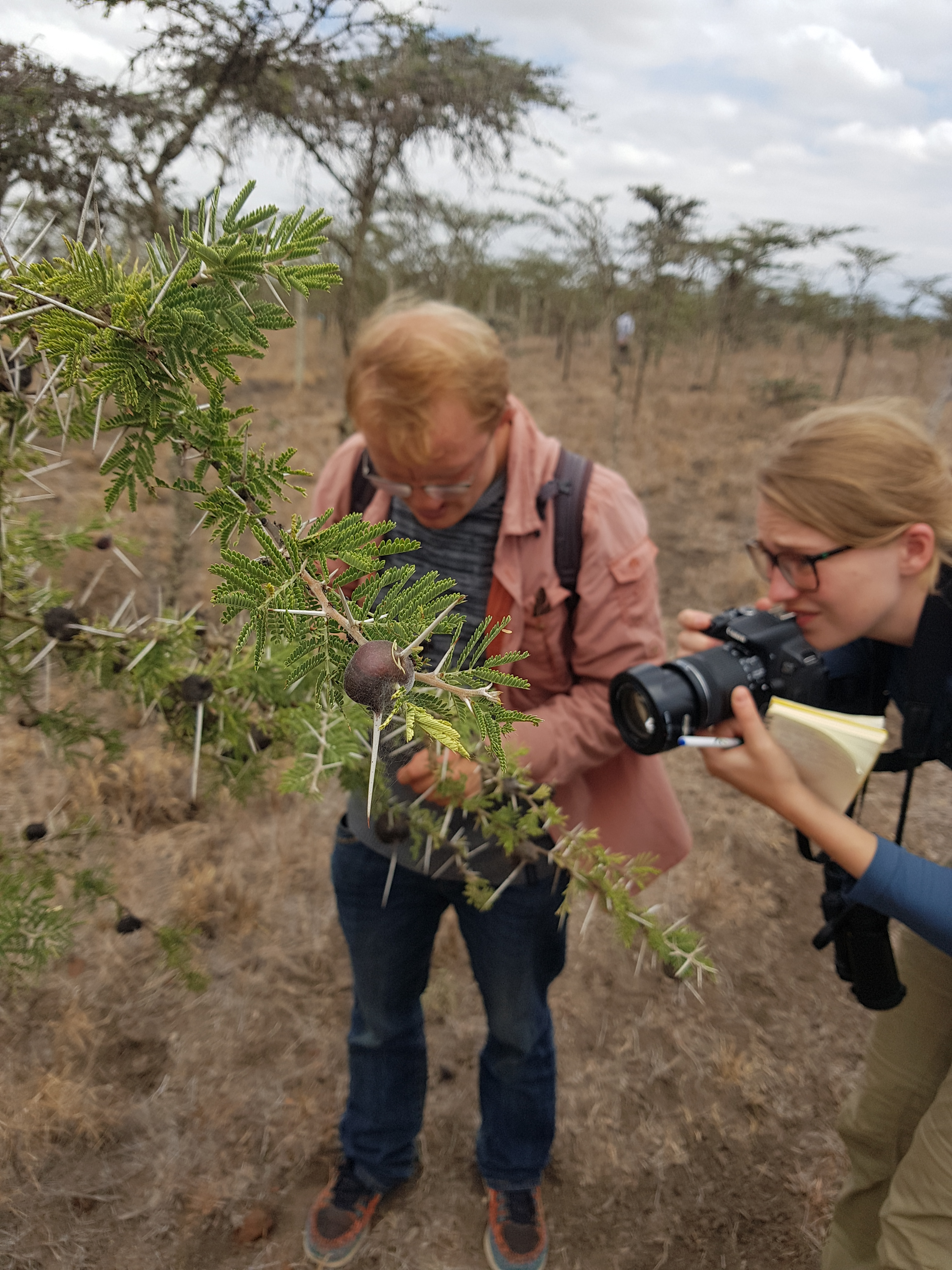
Getting up close with an Acacia species that defends itself by housing colonies of ants in its inflated thorns.

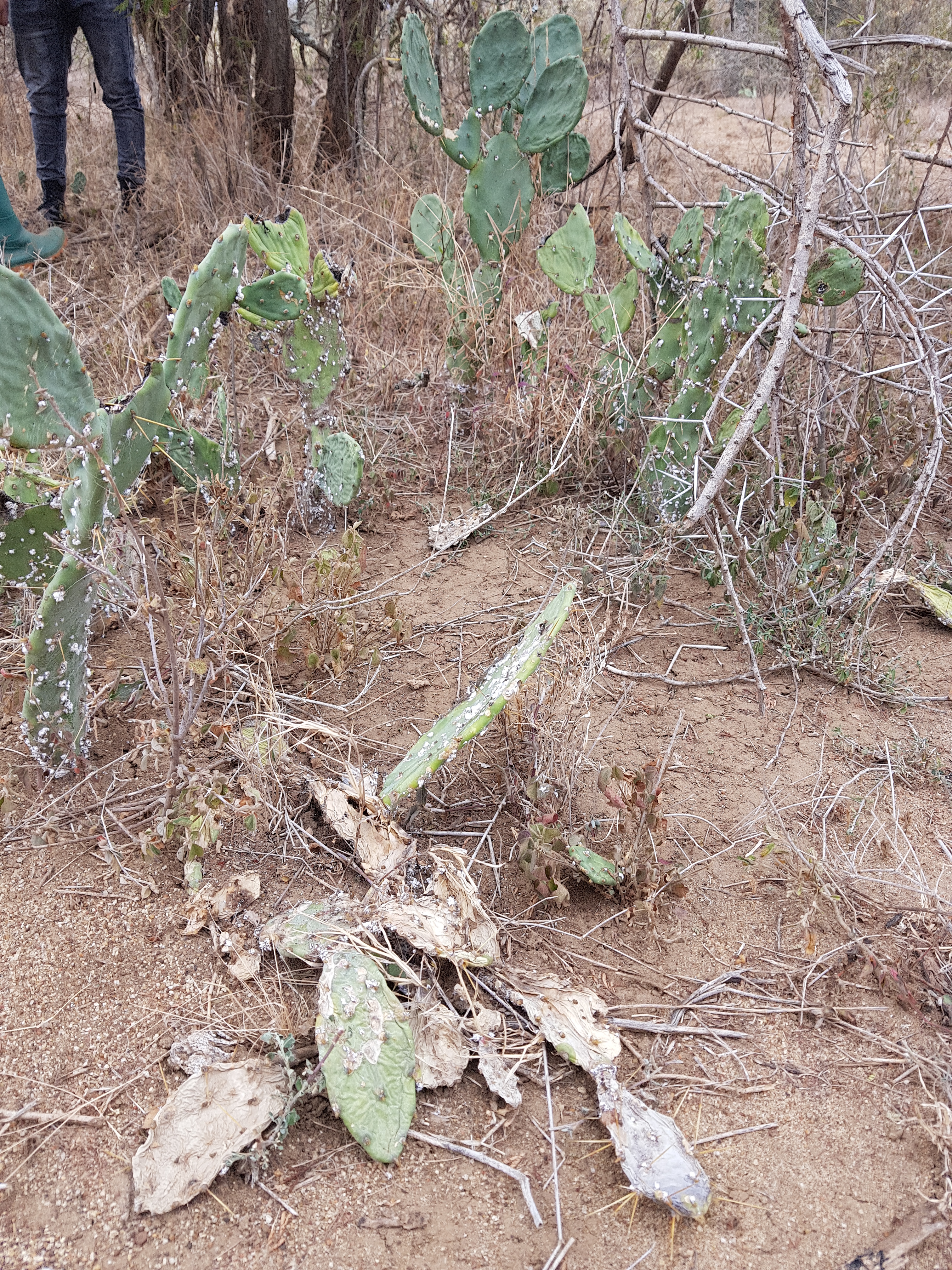
Invasive Prickly Pears (Opuntia spp.) are a growing problem in Kenya, where the cochineal bug has been introduced to help control them.
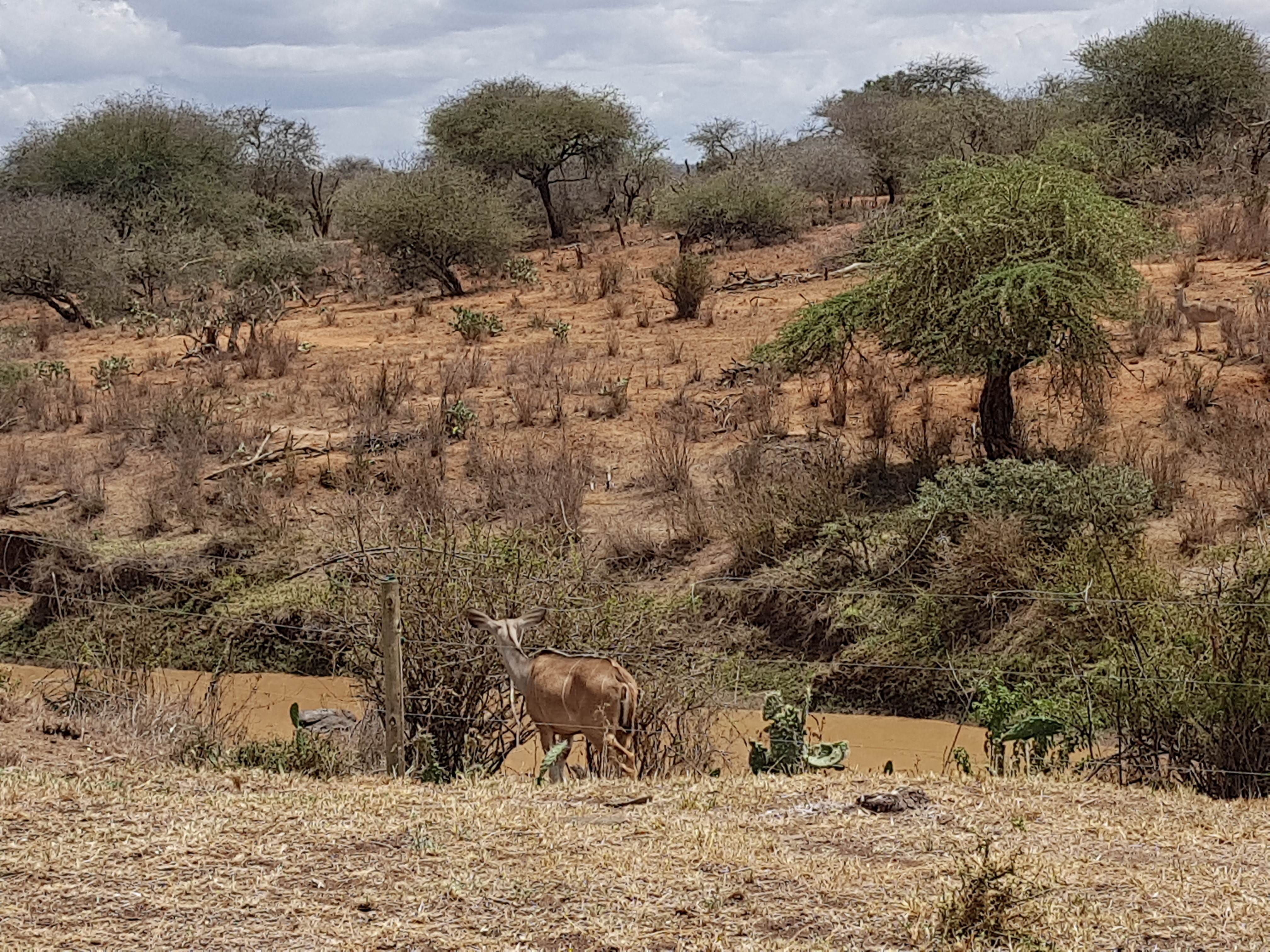
Although there’s an electric fence around the camp site, antelope such as Kudu and Dik Dik are regular visitors.
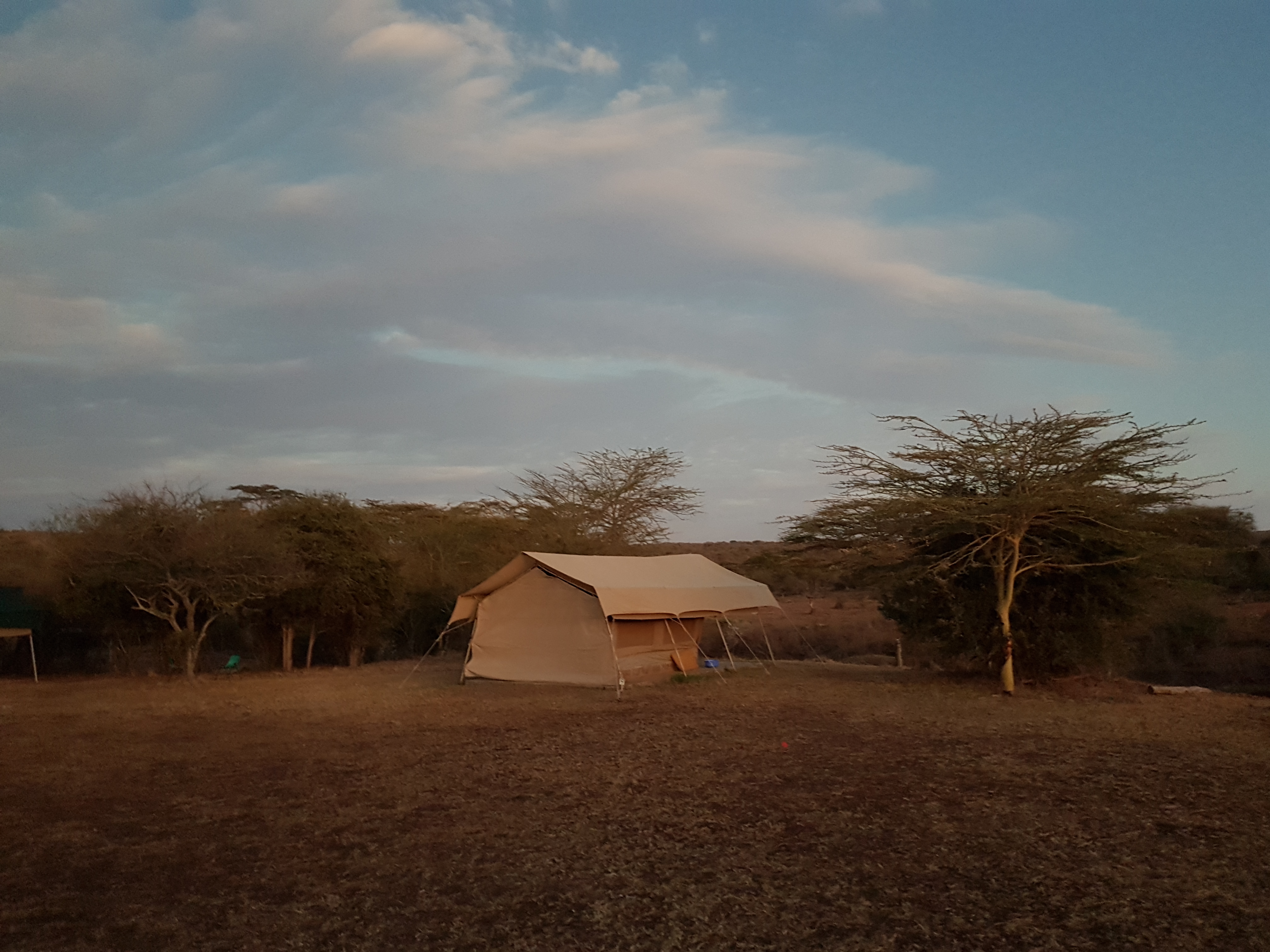
This tent has been our home for most of August. Early in the trip we were confined to it when we both caught COVID. There are worse places to recuperate!
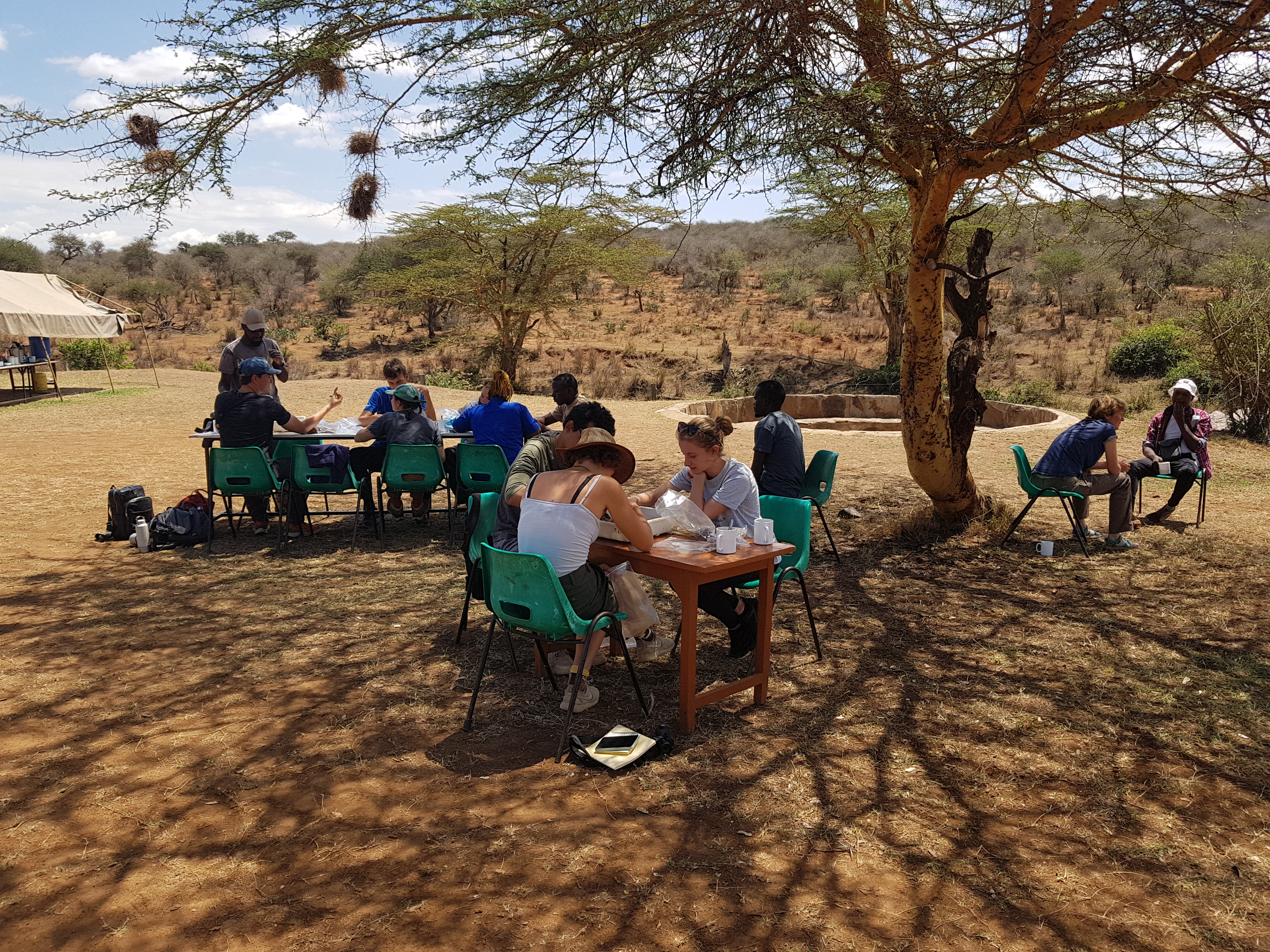
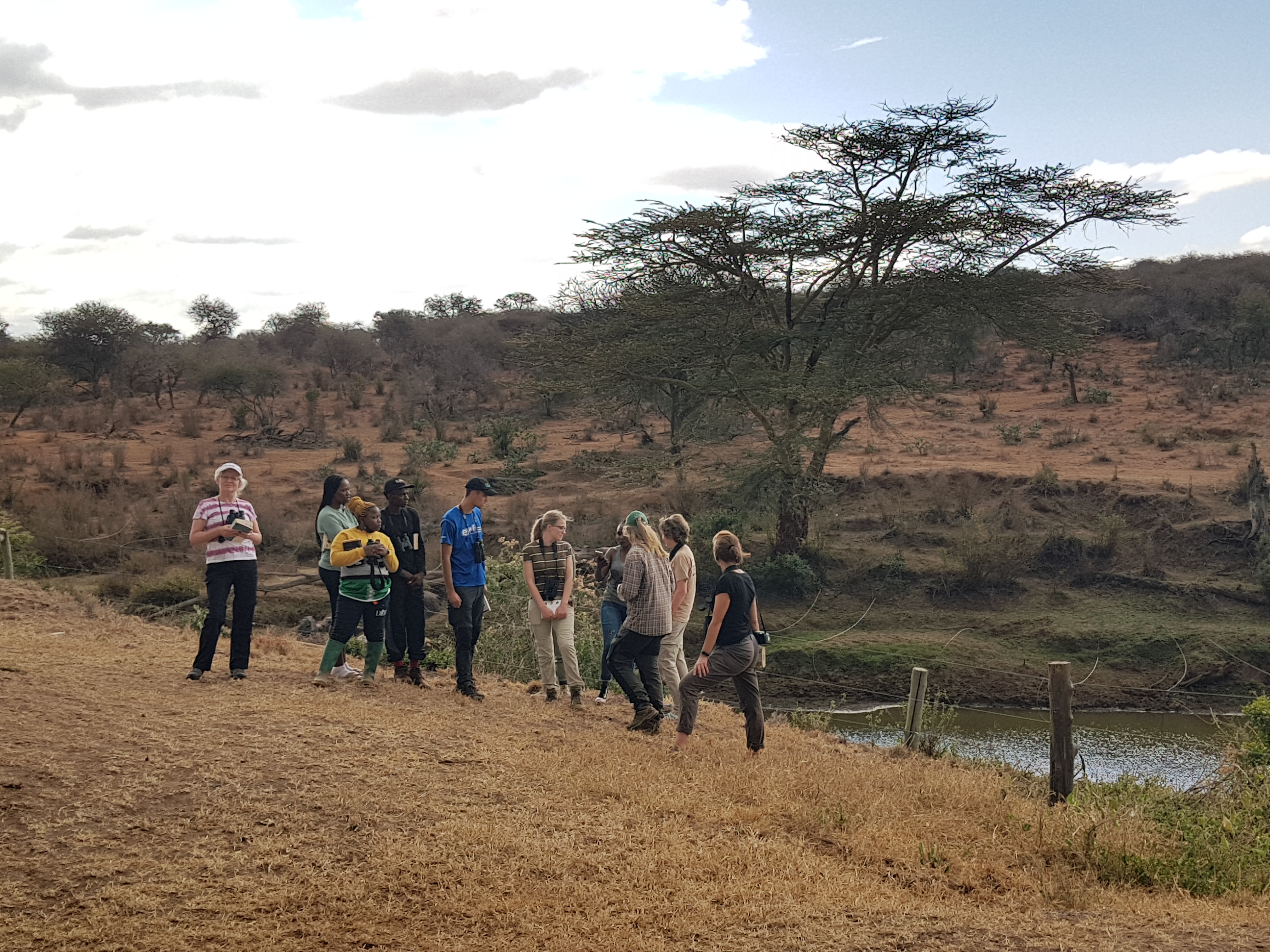
The students sorting samples in our open-air classroom, while the White-browed Sparrow Weavers tolerate our intrusions
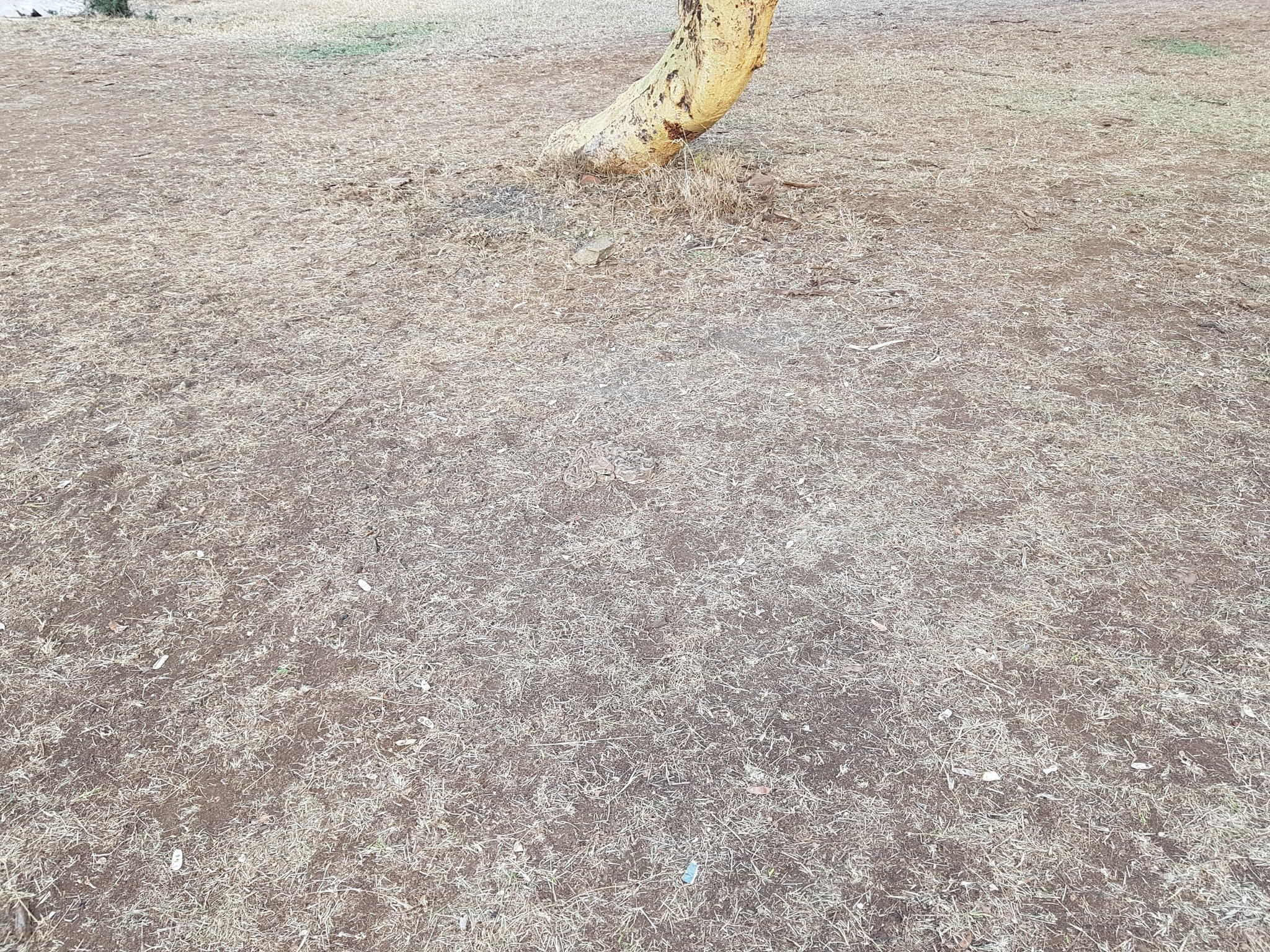
Spot the snake! The Puff Adder is one of the most deadly snakes in Africa. Fortunately one of the students is an experienced herpetologist and qualified to handle these venomous reptiles.
As I write, our TBA students are hard at work on their projects. This is Janeth and Swithin who are looking at competition between honey bees and other pollinators on flowers of this Acacia species.
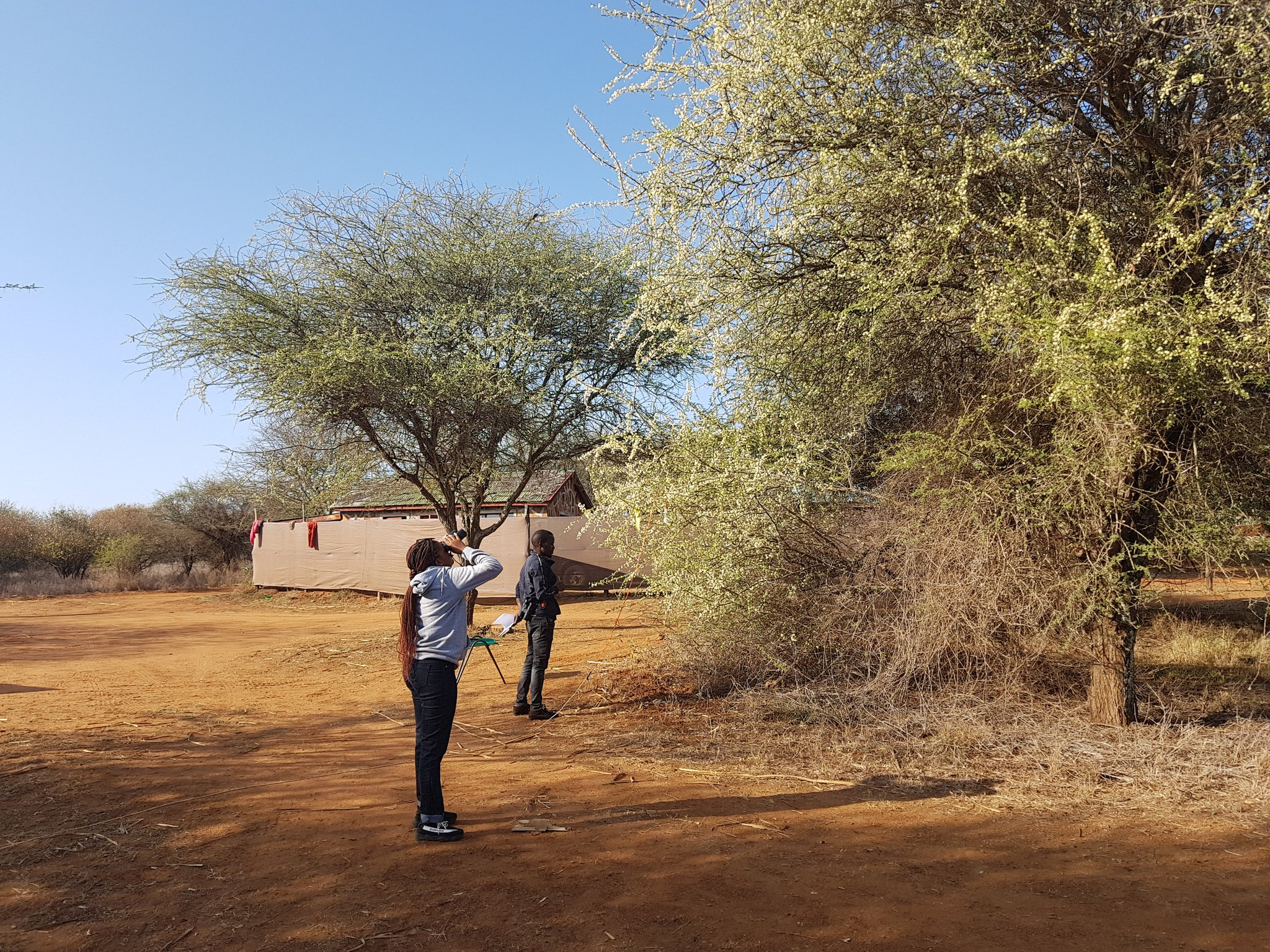
Karin in African ornithologist mode!
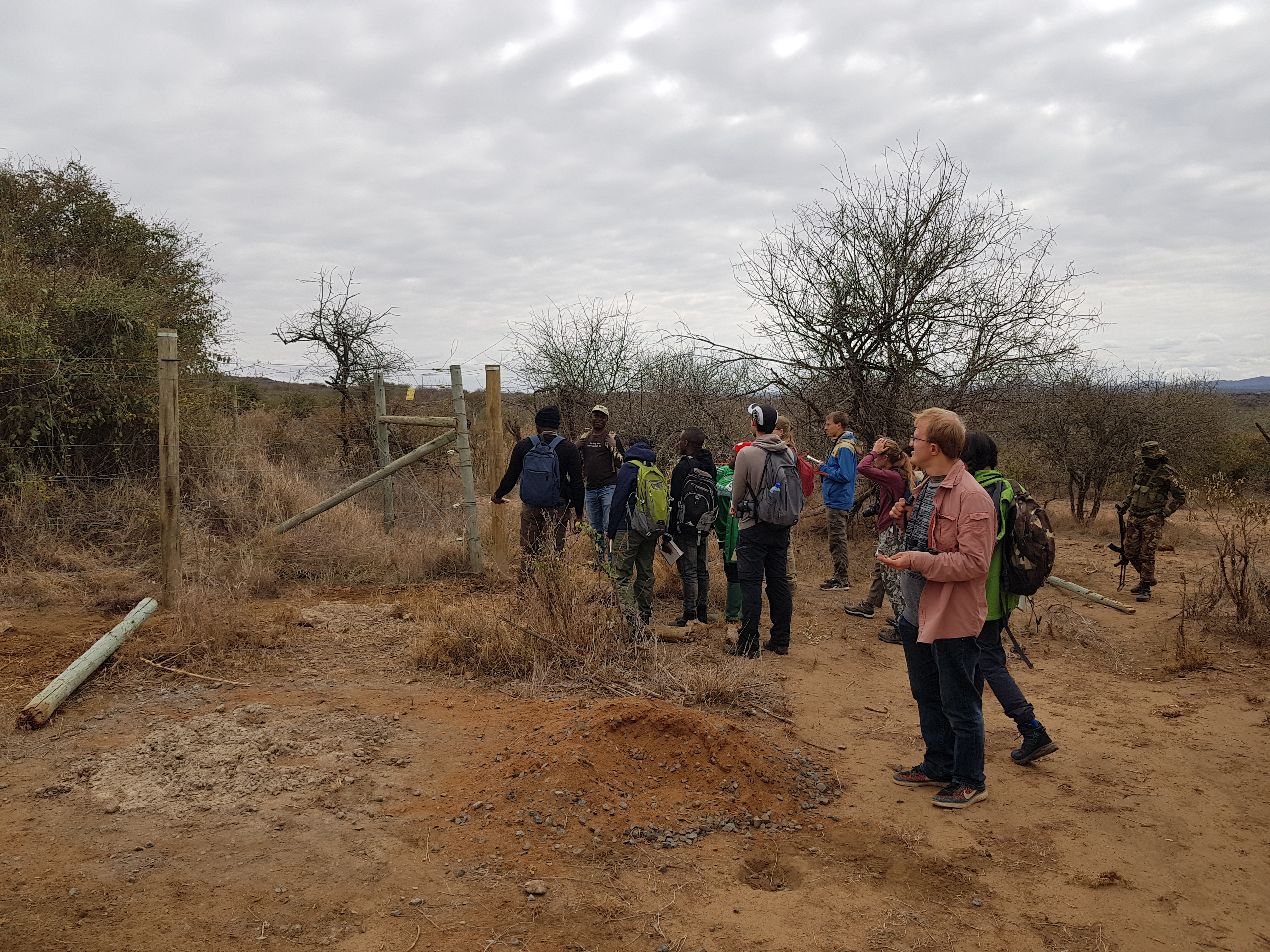
Examining the Kenya Long-term Exclosure Experiment (KLEE) aimed at understanding the role of mega-herbivores in maintaining savanna biodiversity
I’ve donated a copy of my book to the TBA’s Africa library and it’s already inspired some student projects.
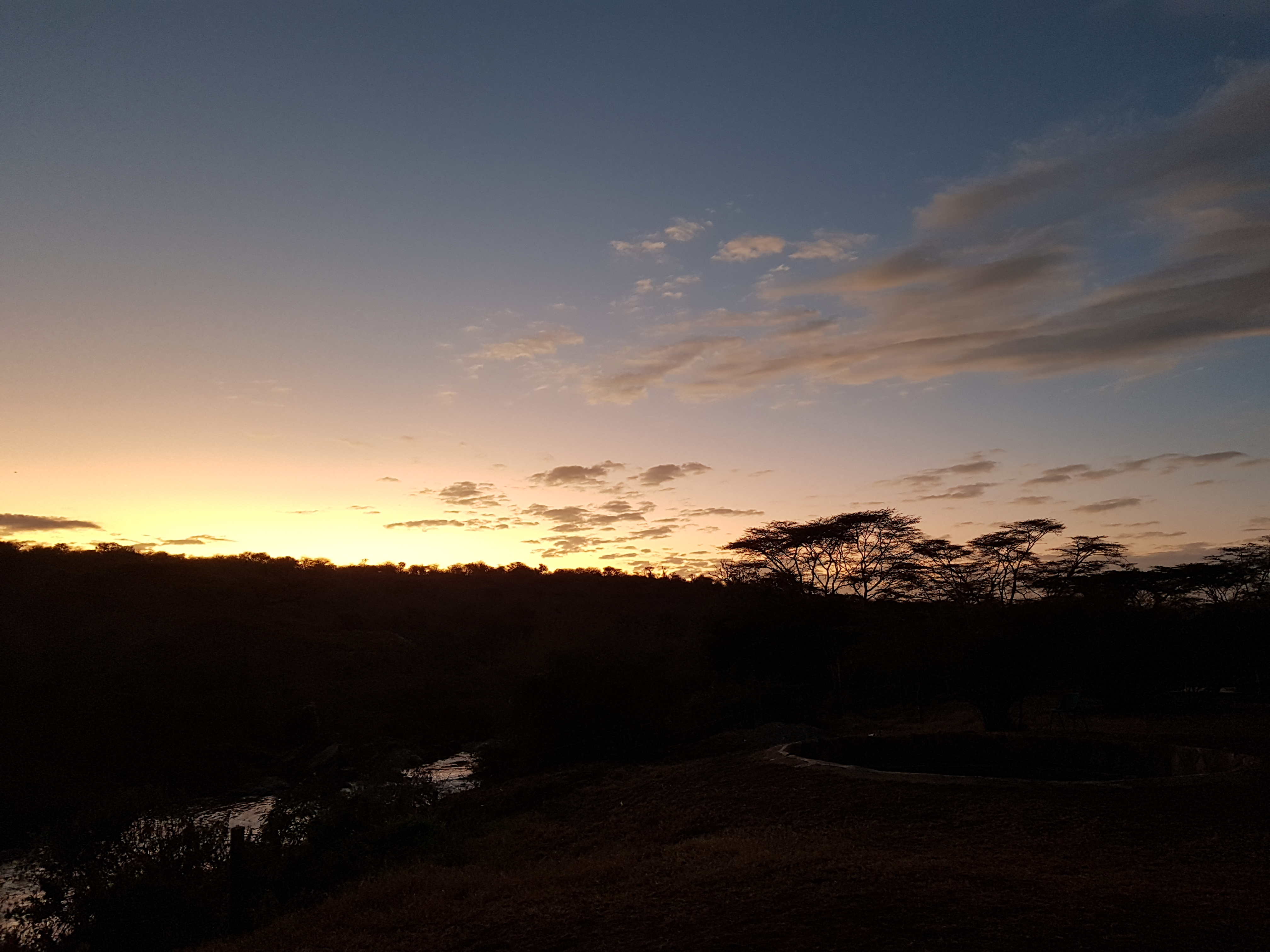
Sunrise on the savanna

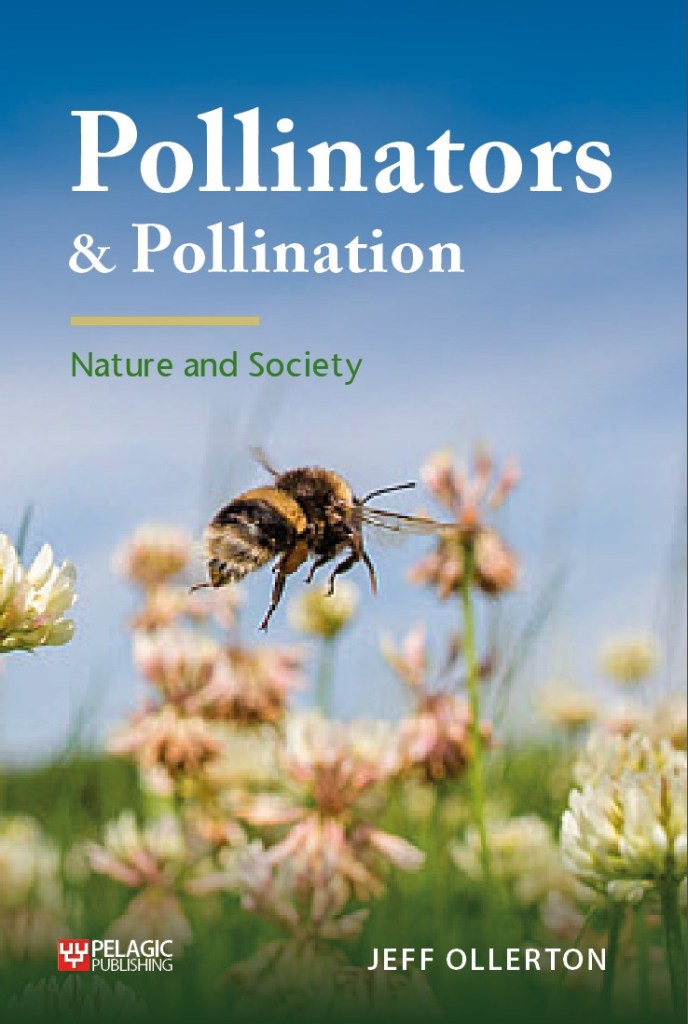
The chapter titles for my book: Pollinators & Pollination: Nature and Society

A few people have asked me about what’s covered in my book which is being published by Pelagic and is currently in production. Here’s the chapter titles:

Preface                                                                                                                        

1         The importance of pollinators and pollination                               

2         More than just bees: the diversity of pollinators                           

3         To be a flower                                                                                               

4         Fidelity and promiscuity in Darwin’s entangled bank                 

5         The evolution of pollination strategies                                              

6         A matter of time: from daily cycles to climate change                 

7         Agricultural perspectives                                                                        

8         Urban environments                                                                                  

9         The significance of gardens                                                                    

10      The shifting fates of pollinators                                                            

11      New bees on the block                                                                              

12      Managing, restoring and connecting habitats                                 

13      The politics of pollination                                                                        

14      Studying pollinators and pollination                                                  

As you can see it’s a very wide-ranging overview of the subject, and written to be accessible to both specialists and non-specialists alike. To quote what I wrote in the Preface:

“While the book is aimed at a very broad audience, and is intended to be comprehensible to anyone with an interest in science and the environment, and their intersection with human societies, I hope it will also be of interest to those dealing professionally with plants and pollinators. The subject is vast, and those working on bee or hoverfly biology, for example, or plant reproductive ecology, may learn something new about topics adjacent to their specialisms. I certainly learned a lot from writing the book.”

The book is about 100,000 words in length, lots of illustrations, and there will be an index. My copy editor reckons there’s 450 references cited, though I haven’t counted. I do know that they run to 28 pages in the manuscript, and that’s with 11pt text. All going well it will be published before Christmas.

Get a 30% discount if you pre-order my new book Pollinators & Pollination: Nature and Society

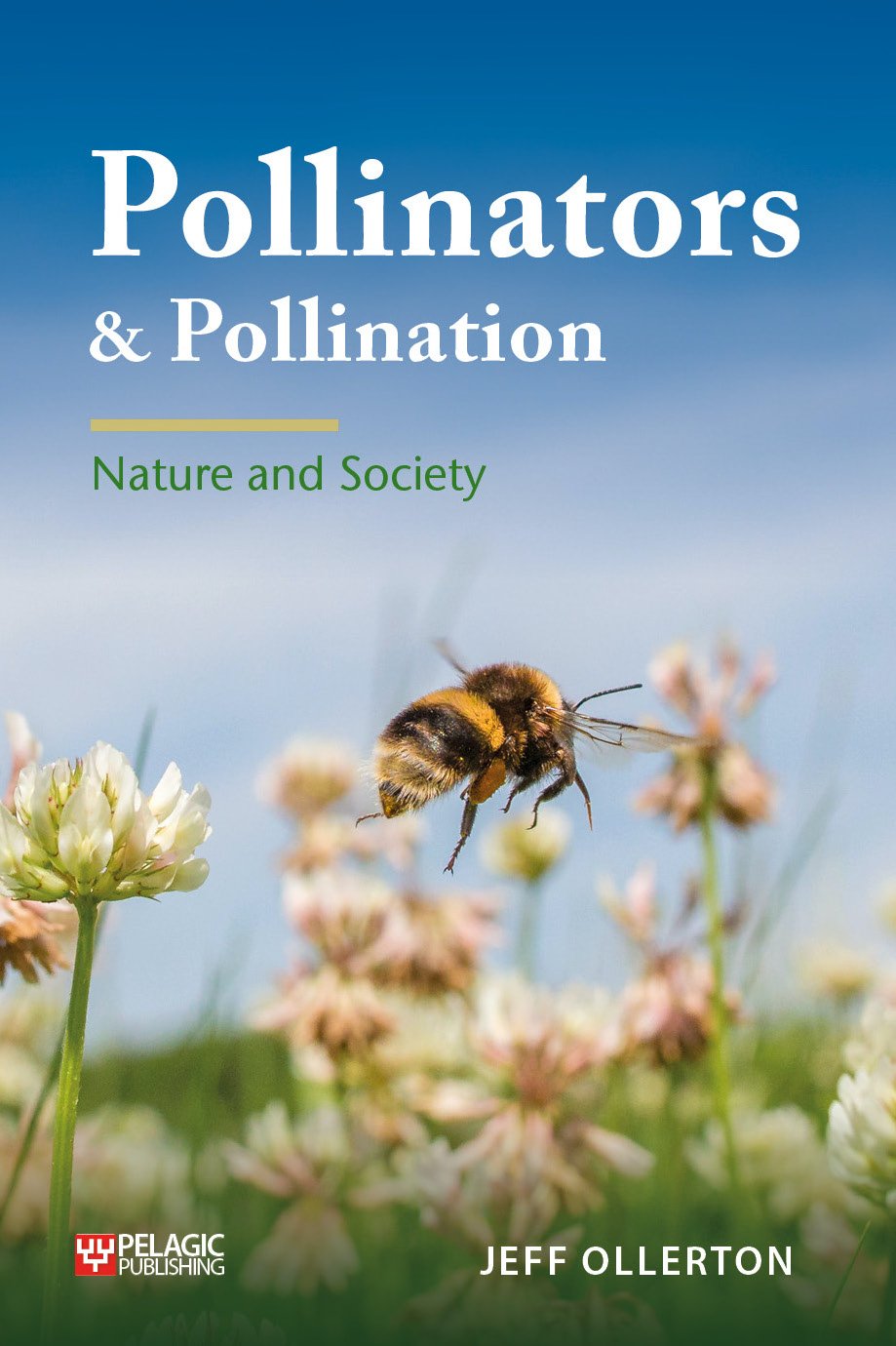
PollinatorsandPollination-frontcover

In the next few months my new book Pollinators & Pollination: Nature and Society will be published.  As you can imagine, I’m very excited! The book is currently available to pre-order: you can find full details here at the Pelagic Publishing website.  If you do pre-order it you can claim a 30% discount by using the pre-publication offer code POLLINATOR.

As with my blog, the book is aimed at a very broad audience including the interested public, gardeners, conservationists, and scientists working in the various sub-fields of pollinator and pollination research. The chapter titles are as follows:

Preface and Acknowledgements
1. The importance of pollinators and pollination
2. More than just bees: the diversity of pollinators
3. To be a flower
4. Fidelity and promiscuity in Darwin’s entangled bank
5. The evolution of pollination strategies
6. A matter of time: from daily cycles to climate change
7. Agricultural perspectives
8. Urban environments
9. The significance of gardens
10. Shifting fates of pollinators
11. New bees on the block
12. Managing, restoring and connecting habitats
13. The politics of pollination
14. Studying pollinators and pollination
References
Index


The other pollinators: some recent videos that don’t focus on bees

The review of the biodiversity of pollinators that I published in 2017 estimated that on average about 18% of animal-pollinated plants within natural communities are specialised on bees. Bees also contribute to the reproduction of many of the plants that have generalist pollination systems, which account for perhaps 50% of plant species on average. But that stills leaves a significant fraction (maybe one third) that are specialised on the “other” pollinators, including flies, beetles, birds, bats, and so forth. There is growing awareness of how important these pollinators are for wild plant and crop pollination, but bees still hog most of the pollinator-related media.

In the last couple of weeks I’ve been sent links to videos that focus on these other pollinators so I thought I’d compile a list that show us something of the true diversity of animals that act as pollen vectors. Please add your own suggestions in the comments:

Elephant shrews, lizards, cockroaches*, crustaceans, and biting midges are covered in this SciShow video (HT Steve Hawkins)

Opossum pollination of a Brazilian plant is featured in this video (HT Felipe Amorim)

Here’s a recorded webinar on bird pollination by Dan Scheiman from Audubon Arkansas

A few videos on bat pollination by Jim Wolfe can be found here and here and here, and this is a short one that’s a supplement to a recent Journal of Applied Ecology paper on cactus pollination by Constance J. Tremlett et al.

The fascinating ecology of skunk cabbage (Symplocarpus foetidus), including fly and possibly beetle pollination, is the topic of this video.

Fly pollination is also highlighted in this short piece by the Natural History Museum, and this one deals with drone flies as managed pollinators for agriculture in New Zealand.

Enjoy!

*Watch out for my report on a newly discovered cockroach-pollinated plant….hopefully coming later this year…..

How are the Australian bushfires affecting biodiversity? Australia reflections part 4

2019-12-24 14.10.52

Australia’s vast, unprecedented wildfires are going to have a devastating effect on the biodiversity of the country.  To fully understand why this is the case, you need to know something about where species occur and why.

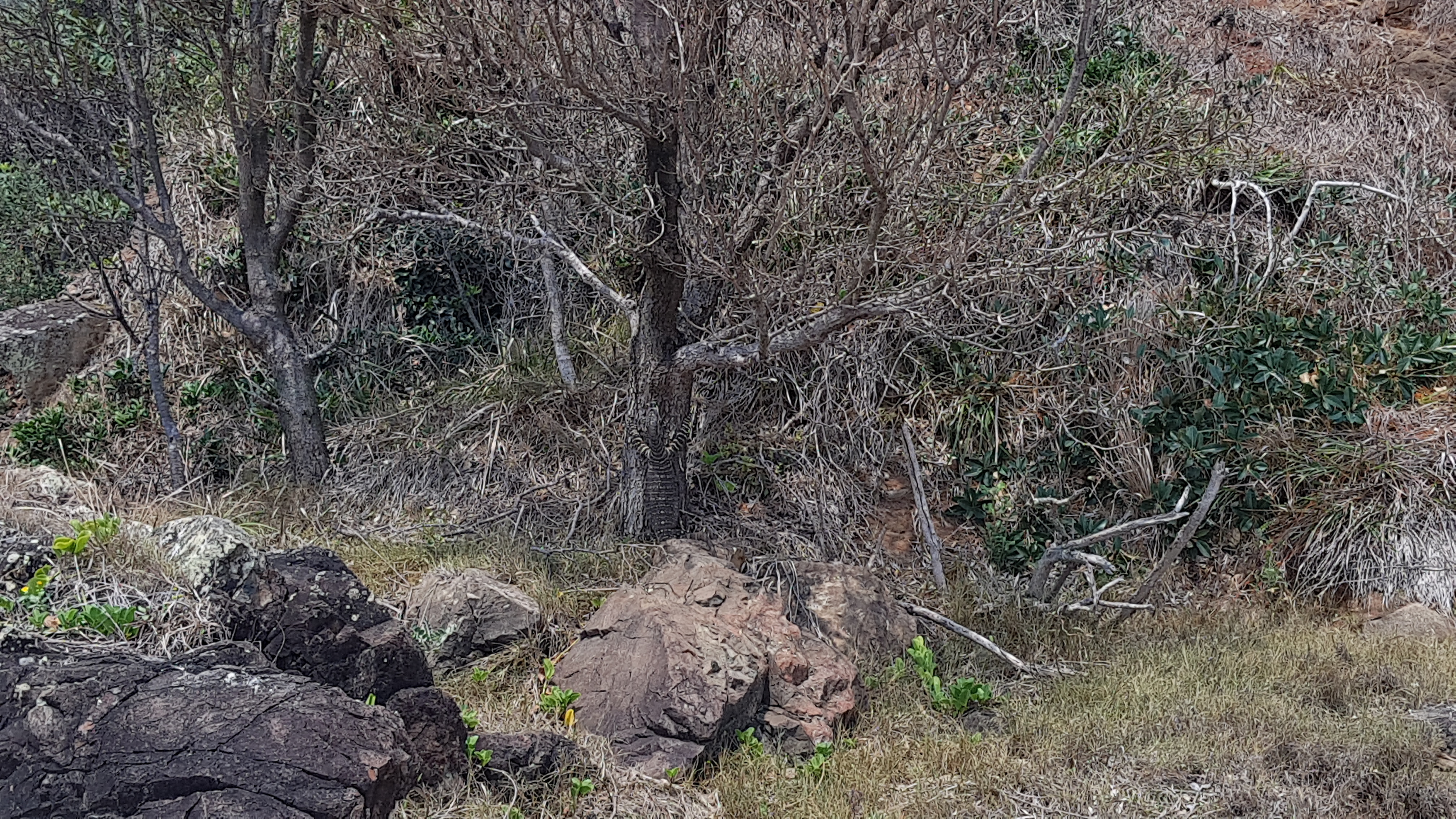
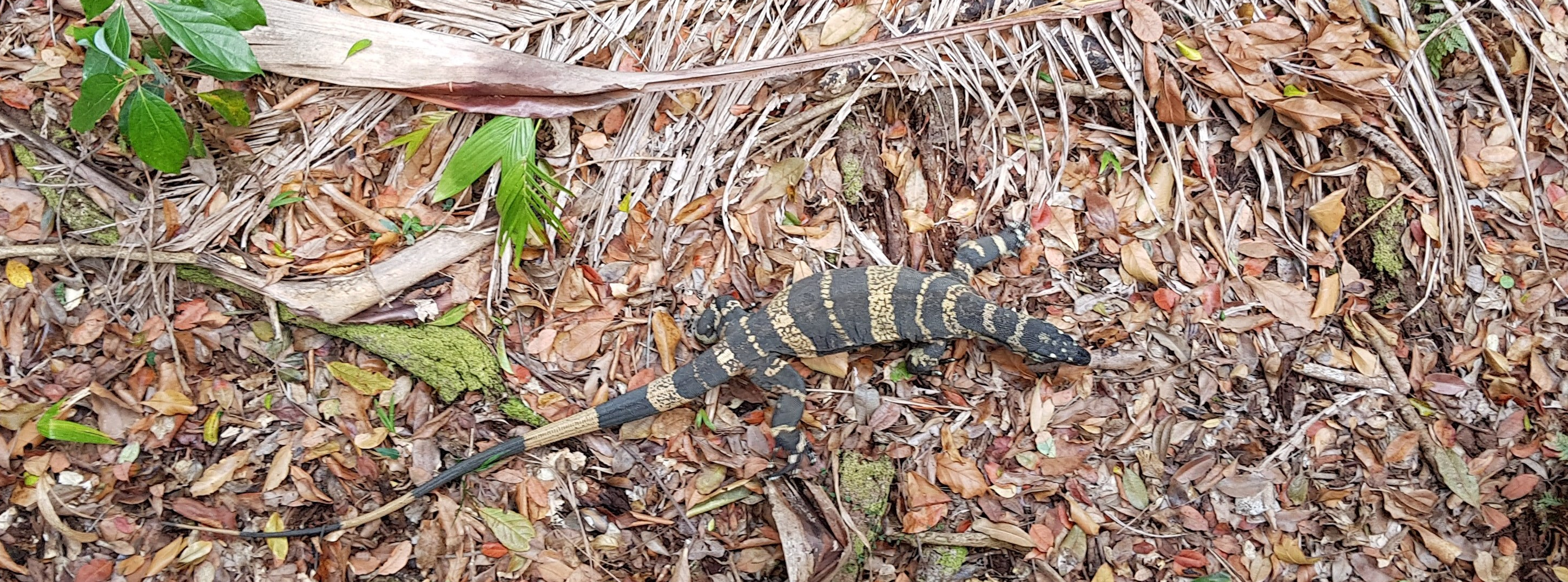
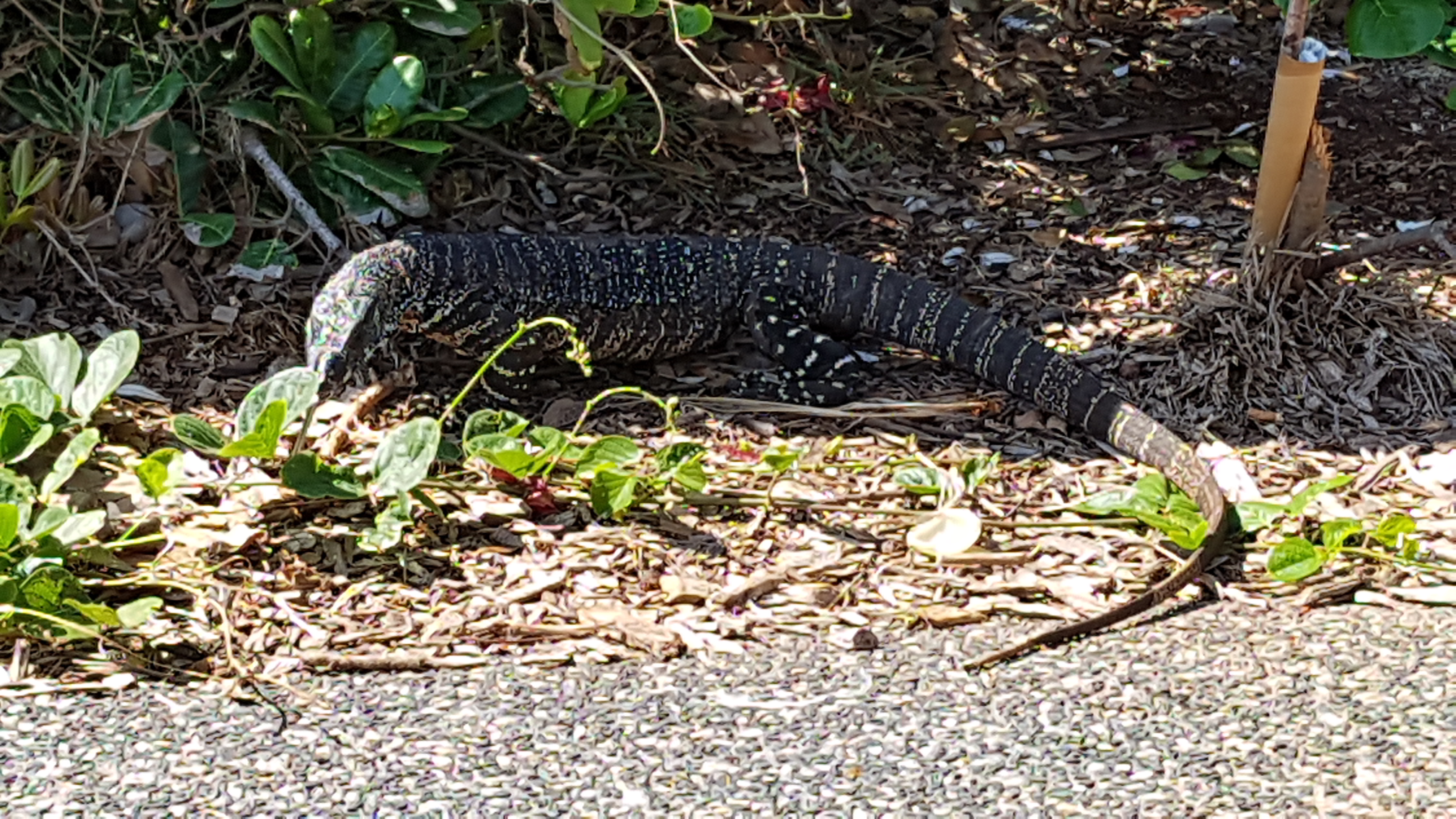
Australia is a land of lizards.  Karin and I see them everywhere we walk and frequently encounter them in gardens.  Reptiles are the most diverse group of vertebrates in Australia, with more than 1000 described species.  Of these, over half are lizards.  One family alone, the skinks (Scincidae) accounts for almost 440 species, with species new to science being described every year.  Some of these lizards are physically extremely impressive, particularly the dragons (Agamidae – about 90 species) and the monitors or goannas (Varanidae – 30 species).  We encountered lace monitors (Varanus varius) over Christmas at Port Macquarie, in coastal bushland and (very dry) rainforest at Sea Acres National Park (see photos above and below):
2019-12-26 10.06.02

Spot the goanna:

2019-12-24 11.10.25

Growing up to two metres in length, they seem to arrogantly swagger through the bush as though they own it; which of course they sort of do – they were here millions of years before people arrived.  Smaller but still impressive are the Eastern water dragons (Intellagama lesueurii) – here’s male and female checking one another out:

2019-12-24 11.23.26

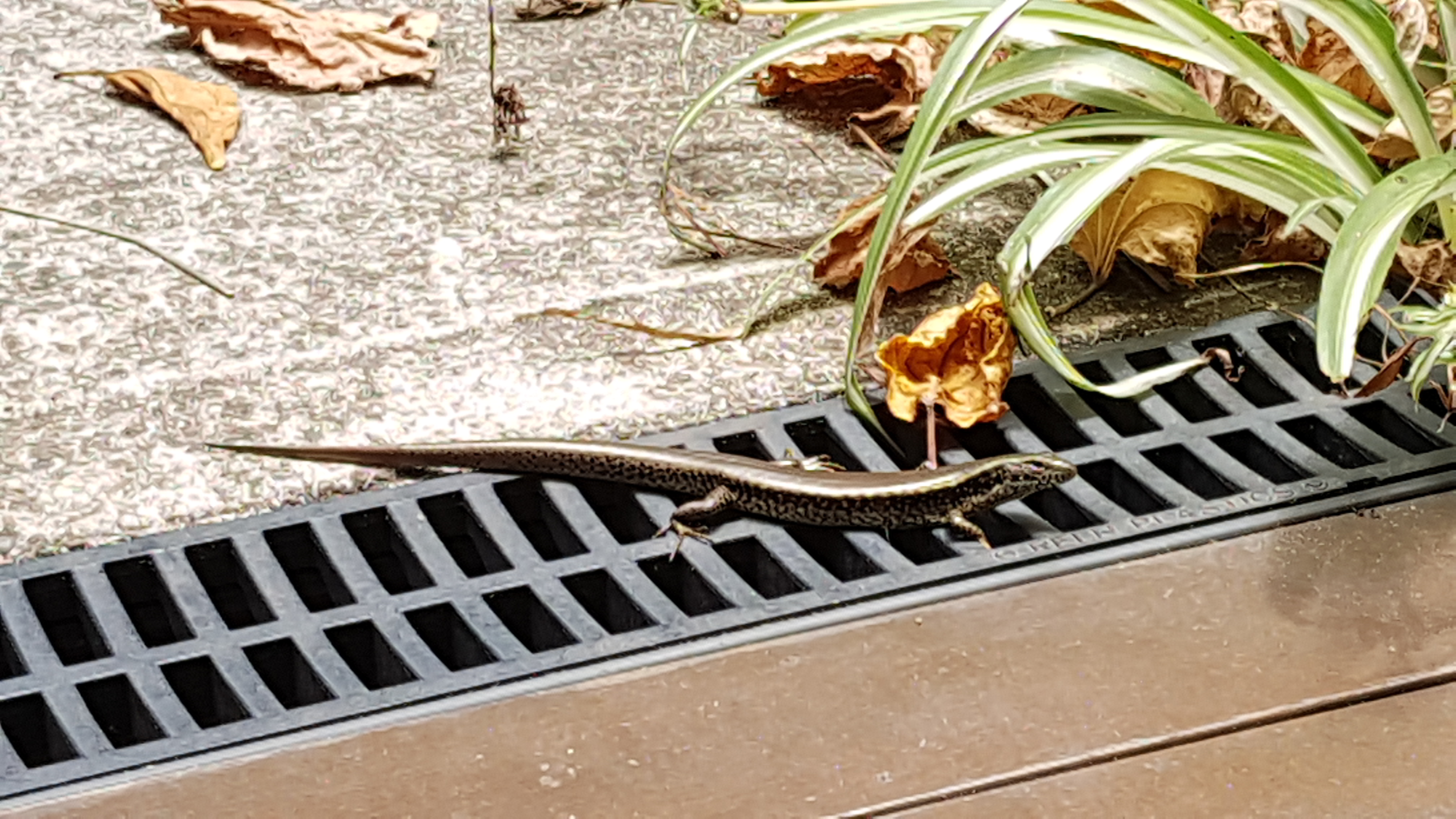
Much smaller but more charming are the various skinks that seem to inhabit every garden and green space in the city; this one seems to be the Eastern water skink (Eulamprus quoyii):
2020-01-02 13.02.24

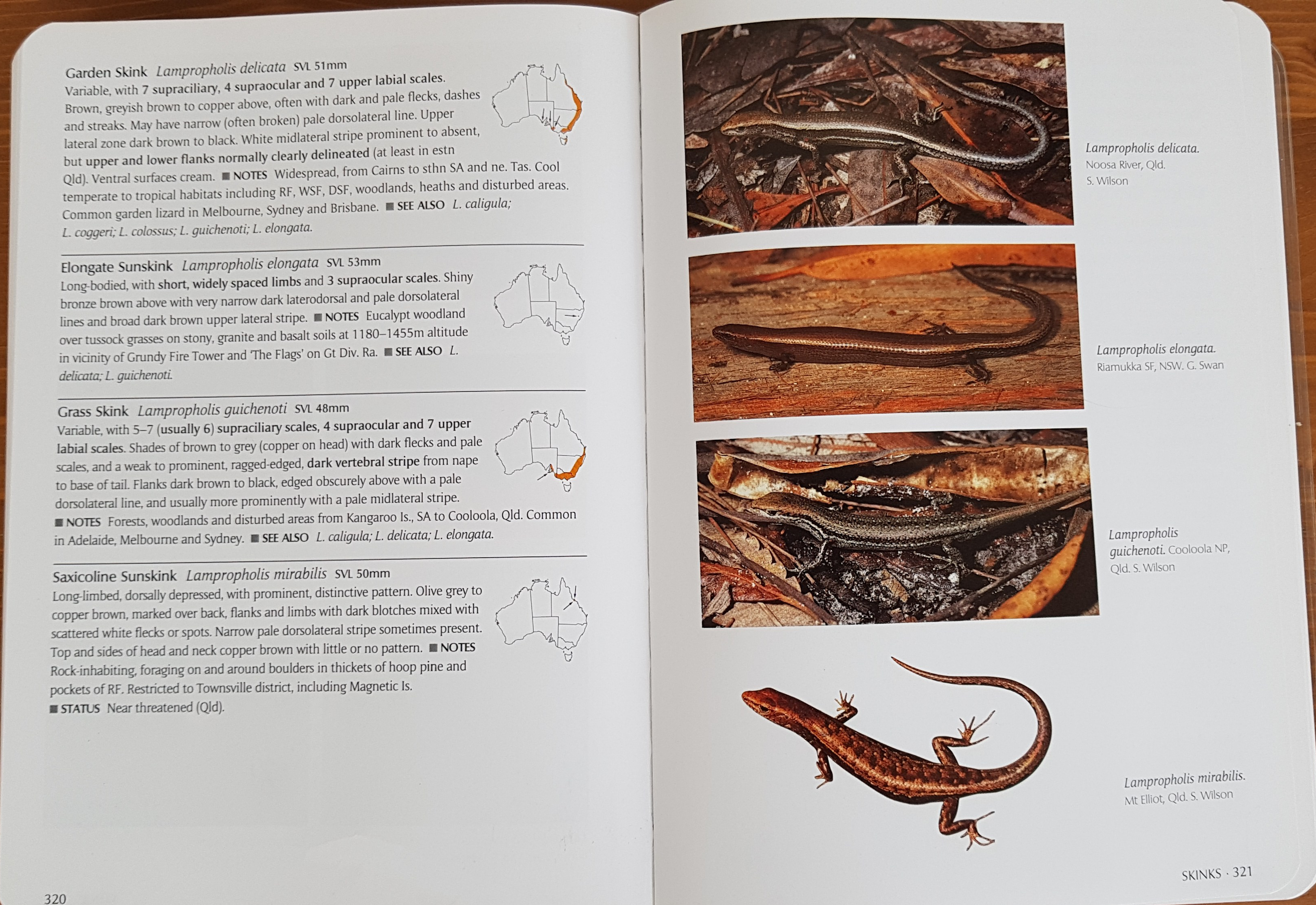
And here’s where we get to the main point of this post.  All of the lizards I mentioned above are endemic to Australia, it’s the only place on Earth where they naturally occur.  But they are all widespread species found across a huge area in the east of the country, from Queensland to Victoria, a linear distance of over 2,000 km.  This is unusual for species in Australia, and indeed in the rest of the world; most organisms naturally occur over a much smaller area.  To see what I mean, look at the image below from Steve Wilson & Gerry Swan’s book A Complete Guide to Reptiles of Australia:
2020-01-02 18.44.18 (1)

The maps adjacent to each species description illustrate the distribution of these organisms. The garden skink and the grass skink live in suitable habitat over vast areas. But the other two species are much more restricted in their ranges, which are so small that they need to be highlighted with arrows.  The elongate sunskink (Lampropholus elongata) for instance is found only “in the vicinity of Grundy Fire Tower and “The Flags”” at 1180-1455 m in the Great Dividing Range.  This is more typical of species distributions in Australia: most are restricted, and some are extremely restricted.  This is true of other reptiles, plants, birds, insects and fungi, in fact all major groups, not just the lizards.  Such a skewed distribution of species occurrences, with many rare and localised, and a few common and widespread, is natural; it’s an outcome of the processes of natural selection and evolution.  But it’s been exacerbated by habitat loss across the world, including Australia.  According to the Wilderness Society of Australia, the country “has lost 25% of rainforest, 45% of open forest, 32% of woodland forest and 30% of mallee forest in 200 years”.

But even these figures do not reflect the full scale of the loss: I’ve seen estimates that more than 90% of the temperate rainforest exemplified by Sea Acres National Park has been destroyed.  Given what I’ve said about the limited distribution of many species, that must mean that locally endemic species have gone extinct in the past.  The huge extent of some of the Australian bushfires, individually covering tens of thousands of hectares and collectively around 6 million hectares, means that most or all of a species’ population could be wiped out.  To give just one example, a small marsupial mammal, the Kangaroo Island dunnart (Sminthopsis aitkeni), is found only on Kangaroo Island.  Indeed, it’s restricted to the western part of the island, where a large bushfire has been raging out of control in recent days.  We will only know whether this species has survived, and in what numbers, once ecologists are able to survey the area once the danger is over.

However even for widespread species the fires can have a massive effect on their genetic diversity, which is an important component of biodiversity.  When we lose individuals from a population we lose genetic variants too.  A recent assessment by ecologists at the University of Sydney has suggested that almost half a billion reptiles, mammals and birds have been killed so far by the fires.  Losses of trees and other flowering plants, as well as insects, spiders and so forth, will be much, much greater of course.

This destruction of biodiversity has a human impact too.  On television news reports we’ve heard farmers and fire fighters describing the emotional trauma of seeing animals on fire and hearing the screams of koalas as they burn in the tree tops.  All of this biodiversity serves to ensure that Australian ecosystems function effectively and sustainably now and in the future. Ecosystems which are crucial for reducing the future effects of climate change, for ensuring supplies of fresh water, supporting agriculturally-important pollinators and predators of pests, and bringing in billions of tourist dollars.  All in all these fires are a tragedy for Australian biodiversity, as well as for the human population of this fabulous country.


Hornets are pollinators too!

20180926_121735

This morning I spent a very pleasant couple of hours walking around the farm that’s at the heart of the Warner Edwards Gin Distillery, in Harrington just north of Northampton.  We are setting up some collaborations around conservation and sustainability between the university and Warner Edwards.  The first of these involves surveys of their farm by one of our final year undergraduates, Ellie West, to assess pollinator diversity and abundance, and opportunities for habitat enhancement on the farm.

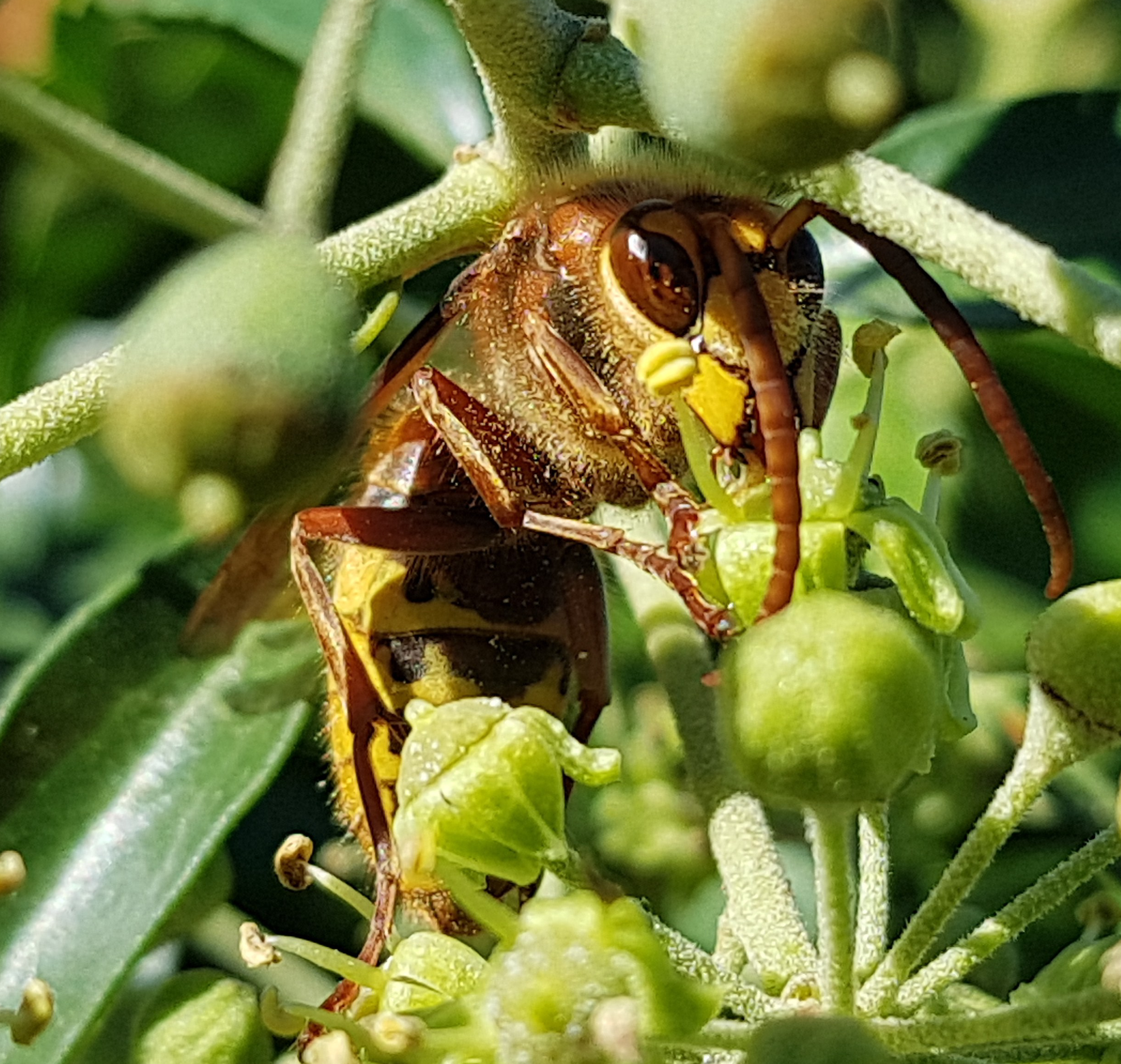
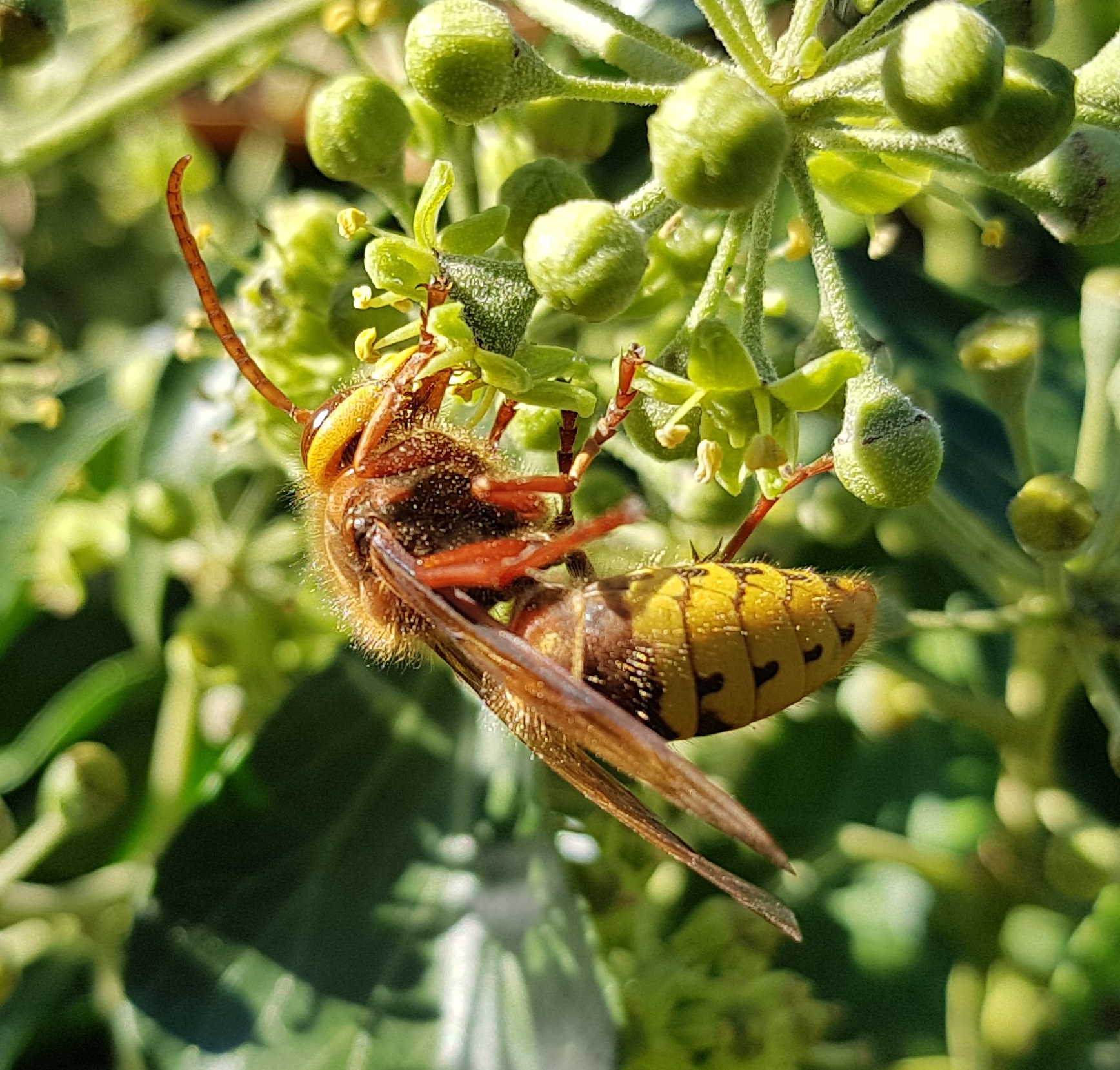
One of the highlights of this morning’s visit was seeing this gorgeous hornet (Vespa crabro) taking nectar from common ivy (Hedera helix).  I think that she’s a queen stocking up on energy prior to hibernating.  But just look at how much pollen she’s carrying!  There’s every chance that she’s a very effective pollinator of ivy, which is a key nectar resource at this time of year.  It’s such an important plant in other ways too: ivy binds the landscape physically and ecologically, in ways few other native plants do.  Pollination by insects such as hornets (and hundreds of other species) results in berries that are eaten by birds and mammals, whilst the branches and dense, evergreen canopy provides nesting sites for birds and shelter for over wintering insects.

Hornets and ivy: two of my favourite native British species.

20180926_121532

Pollinator biodiversity and why it’s important: a new review just published – download it for free

P1110763

In a new review paper that’s just been published in the Annual Review of Ecology, Evolution and Systematics I have looked at the question of just how diverse the pollinators are, and why pollinator biodiversity is ecologically important and therefore worthy of conservation.  I’ve taken a deep time and wide space approach to this, starting with what the fossil record tells us about when animal pollination evolved and the types of organisms that acted as pollinators in the past (the answer may surprise you if you’re unfamiliar with the recent paleontological literature on this topic).  Some of the most prominent biogeographical patterns have been highlighted, and I have tried to estimate the global diversity of currently known pollinators.  A conclusion is that as many as 1 in 10 described animal species may act as pollen vectors.

As well as this descriptive part of the review I’ve summarised some recent literature on why pollinator diversity matters, and how losing that diversity can affect fruit and seed set in natural and agricultural contexts.  Extinction of pollinator species locally, regionally, and globally should concern us all.

Although I was initially a little worried that the review was too broad and unfocused, having re-read it I’m pleased that I decided to approach the topic in this way.  The research literature, public policy, and conservation efforts are currently moving at such a fast pace that I think it’s a good time to pause and look at the bigger picture of what “Saving the Pollinators” actually means and why it’s so important.  I hope you agree and I’d be happy to receive feedback.

You can download a PDF of the review entitled Pollinator Diversity: Distribution, Ecological Function, and Conservation by following that link.

Pollination ecologists should also note that in this same volume of Annual Review of Ecology, Evolution and Systematics there’s a review by Spencer Barrett and Lawrence Harder called The Ecology of Mating and Its Evolutionary Consequences in Seed Plants.  If you contact those authors I’m sure they’d let you have a copy.

Managing for Pollinators – a special issue of the Natural Areas Journal

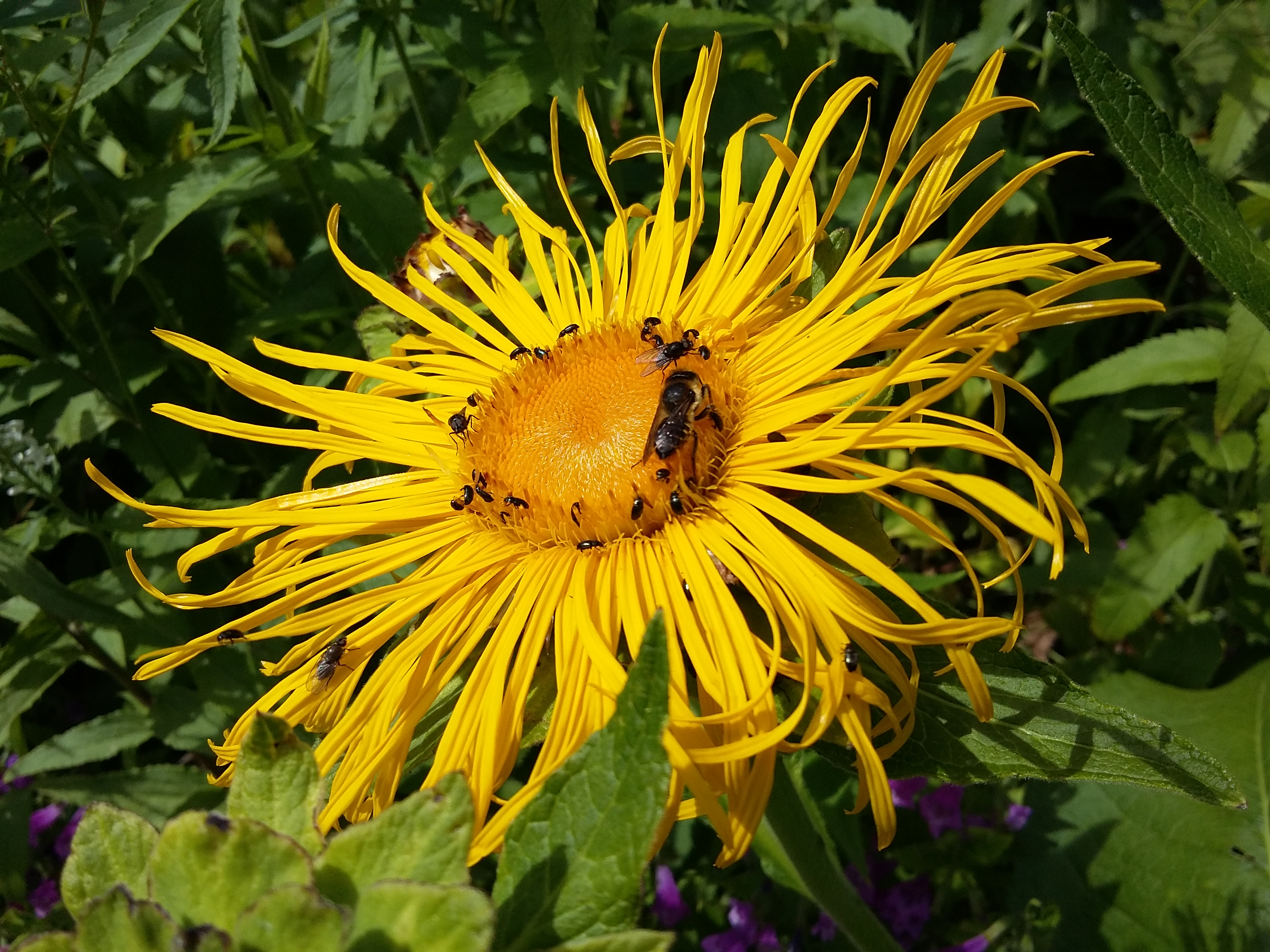
Inula at Ravensthorpe 20160710_145426The October issue of the Natural Areas Journal is a special one devoted to the topic of “Managing for Pollinators”.  All of the papers have a North American focus but I think that they will be of general interest to anyone, anywhere in the world, who is concerned with how best to manage habitats for pollinators.  Here’s the contents page of the issue, copied and pasted from the site; I’m not sure if the full text links will work if you or your institution does not have full text access, but you should at least be able to view the abstracts:

Editorial: Pollinators are in Our Nature Full Access

Introduction by USFS Chief Tidwell – Pollinators and Pollination open access

pg(s) 361–361

Citation : Full Text : PDF (227 KB)

National Seed Strategy: Restoring Pollinator Habitat Begins with the Right Seed in the Right Place at the Right Time Full Access

Peggy Olwell and Lindsey Riibe
pg(s) 363–365

Citation : Full Text : PDF (1479 KB)

Hummingbird Conservation in Mexico: The Natural Protected Areas System Full Access

M.C. Arizmendi, H. Berlanga, C. Rodríguez-Flores, V. Vargas-Canales, L. Montes-Leyva and R. Lira
pg(s) 366–376

Abstract & References : Full Text : PDF (1302 KB)

Floral Guilds of Bees in Sagebrush Steppe: Comparing Bee Usage of Wildflowers Available for Postfire Restoration Full Access

James H. Cane and Byron Love
pg(s) 377–391

Abstract & References : Full Text : PDF (1500 KB)

The Role of Floral Density in Determining Bee Foraging Behavior: A Natural Experiment Full Access

Bethanne Bruninga-Socolar, Elizabeth E. Crone and Rachael Winfree
pg(s) 392–399

Abstract & References : Full Text : PDF (1219 KB)

Common Methods for Tallgrass Prairie Restoration and Their Potential Effects on Bee Diversity Full Access

Alexandra Harmon-Threatt and Kristen Chin
pg(s) 400–411

Abstract & References : Full Text : PDF (300 KB)

Status, Threats and Conservation Recommendations for Wild Bumble Bees (Bombus spp.) in Ontario, Canada: A Review for Policymakers and Practitioners Full Access

Sheila R. Colla
pg(s) 412–426

Abstract & References : Full Text : PDF (420 KB)

Conserving Pollinators in North American Forests: A Review Full Access

James L. Hanula, Michael D. Ulyshen and Scott Horn
pg(s) 427–439

Abstract & References : Full Text : PDF (1711 KB)

Dispersal Limitation, Climate Change, and Practical Tools for Butterfly Conservation in Intensively Used Landscapes Full Access

Laura E. Coristine, Peter Soroye, Rosana Nobre Soares, Cassandra Robillard and Jeremy T. Kerr
pg(s) 440–452

Abstract & References : Full Text : PDF (4647 KB) : Supplementary Materials

Revised State Wildlife Action Plans Offer New Opportunities for Pollinator Conservation in the USA Full Access

Jonathan R. Mawdsley and Mark Humpert
pg(s) 453–457

Abstract & References : Full Text : PDF (249 KB)

Diet Overlap of Mammalian Herbivores and Native Bees: Implications for Managing Co-occurring Grazers and Pollinators Full Access

Sandra J. DeBano, Samantha M. Roof, Mary M. Rowland and Lauren A. Smith
pg(s) 458–477

Abstract & References : Full Text : PDF (1537 KB)

The Role of Honey Bees as Pollinators in Natural Areas Full Access

Clare E. Aslan, Christina T. Liang, Ben Galindo, Hill Kimberly and Walter Topete
pg(s) 478–488

Abstract & References : Full Text : PDF (467 KB)

Food Chain Restoration for Pollinators: Regional Habitat Recovery Strategies Involving Protected Areas of the Southwest Full Access

Steve Buckley and Gary Paul Nabhan
pg(s) 489–497

Abstract & References : Full Text : PDF (732 KB)

Forbs: Foundation for Restoration of Monarch Butterflies, other Pollinators, and Greater Sage-Grouse in the Western United States Full Access

R. Kasten Dumroese, Tara Luna, Jeremiah R. Pinto and Thomas D. Landis
pg(s) 499–511

Abstract & References : Full Text : PDF (1716 KB)

Using Pollinator Seed Mixes in Landscape Restoration Boosts Bee Visitation and Reproduction in the Rare Local Endemic Santa Susana Tarweed,Deinandra minthornii Full Access

Mary B. Galea, Victoria Wojcik and Christopher Dunn
pg(s) 512–522

Abstract & References : Full Text : PDF (2880 KB)

Save Our Bats, Save Our Tequila: Industry and Science Join Forces to Help Bats and Agaves Full Access

Roberto-Emiliano Trejo-Salazar, Luis E. Eguiarte, David Suro-Piñera and Rodrigo A. Medellin
pg(s) 523–530

Abstract & References : Full Text : PDF (463 KB)

The Importance of Phenological Diversity in Seed Mixes for Pollinator Restoration Full Access

Kayri Havens and Pati Vitt
pg(s) 531–537

Abstract & References : Full Text : PDF (2208 KB) : Supplementary Materials

Stewardship in Action Full Access

Sarah Riehl
pg(s) 538–541

Citation : Full Text : PDF (595 KB)