Category Archives: Hoverflies

The one thing I wish more people understood about flower pollination

Obviously the title of this post is click-bait, as there’s LOTS of things that I wish more people knew about pollination! But here’s one that really gets my (Yule) goat.

I’ve lost track of the number of times that I’ve read statements in books and research papers such as “bees collect lots of pollen from flowers therefore they are good pollinators”. Even worse, I sometimes see studies where pollen has been removed from “pollen baskets” or other scopae, then used as a measure of the importance of those bees as pollinators.

In both cases it seems to have been forgotten that bees are collecting pollen to feed their larvae and pollen that ends up in scopae is generally not available for pollination.

That’s the purpose of the Venn diagram at the top of this short post, to remind us that there can be a disconnect between what bees are doing and what plants require: foraging for pollen only partly correlates with flower pollination. Indeed, the same argument applies to any animal that feeds itself or its young on pollen, including pollen wasps (Maserinae), Heliconia butterflies, and some flower-visiting hoverflies, birds and bats.

It’s not only loss of pollen from reproduction that’s important here: depending on the size and behaviour of the bees relative to the shape and size of the flower, they may go nowhere near the stigma, so even if they are carrying viable pollen, it can be lost as far as the plant is concerned.

Note also that many bee species will collect pollen from wind-pollinated plants such as grasses, oaks, etc. Indeed in some species the availability of such pollen is extremely important – see Manu Saunders’ review on this topic and more recent papers that cite it. Again, it emphasises the partial disconnect between pollen collecting by bees and pollination of flowers by bees.

Assessing which flower visitors are actually pollinators is not technically demanding but it can be time consuming. The minimum that you need is single visit deposition (SVD) experiments in which you expose unvisited flowers to one visit by the potential pollinator. Then you assess how much pollen has landed on the stigma or (better) whether the visit results in seed set.

If you want to know more about the evidence that’s required to determine if a flower visitor is or is not a pollinator, they are codified in the “Cox-Knox Postulates” that I discuss in my book Pollinators & Pollination: Nature and Society.

Biodiversity Net Gain and what it could mean for pollinators – read the new report

Biodiversity Net Gain (or BNG) promises to transform the way that we approach nature conservation in the UK. I’ve been giving a lot of thought to what this might mean for insect pollinators and have produced a new report that summarises the opportunities that BNG presents and how we can make the most of them. You can download a copy of that report by following this link.

This is meant to be a working document and as BNG progresses, and our understanding of its impacts on pollinators increases, I will update it. In the meantime, please do feel free to comment.

The neglected pollinators – a call for papers for a special issue

There’s an estimated 350,000 described species of pollinators, and many, many more undescribed. Only about 20,000 of these (i.e. less than 6%) are bee species, although you wouldn’t know it from the media obsession with bees. It’s important and and timely, therefore, that a team of South American scientists have come together to propose a special issue of the Journal of Applied Entomology that focuses on these “other” insects.

The special issue will be called “The Neglected Pollinators: Understanding the Importance of Lesser-Known Insect Taxa in Pollination”. Consider submitting a manuscript if you work on anything except bees! Here’s the link to the details of how to submit your work:


https://onlinelibrary.wiley.com/page/journal/14390418/homepage/call-for-papers/si-2023-000411

Pesticides and pollinators: please sign this petition!

As part of our roles as ambassadors of the new conservation organisation Restore (more of which later this year), several of us including Dave Goulson, George McGavin, and myself, are promoting this online petition to get the government to take the issue of neonicotinoid pesticides seriously. Here’s some text from Dave explaining the situation with a link to a petition that you can sign:

“For three years in a row our government has granted farmers special permission to use banned neonicotinoid pesticides on sugar beet. This is contrary to the expert advice of their own Expert Committee on Pesticides, who specifically recommended that permission should not be granted.  It also flies in the face of a huge body of scientific evidence showing that these chemicals are phenomenally toxic to all insect life, and that their use on any crop contaminates soils, hedgerow plants, and nearby streams and ponds for years to come. We are in a crisis, with insect populations in freefall. It is about time our government woke up to this, and acted accordingly. This petition https://petition.parliament.uk/petitions/631948 is a necessary means of holding the government to account. Please sign and share, as signing will ensure the issue is debated in Parliament.”

This petition now has more than 15,000 signatures which ensures that it gets a response from the Government. If it reaches 100,000 mark, it will trigger a debate in Parliament. Please sign and promote this important initiative! 

Join me tomorrow evening for an online talk about pollinators in the UK!

It’s been a couple of years since I last did a talk or workshop for the Wildlife Trust for Bedfordshire, Cambridgeshire & Northamptonshire. But I’m pleased to say that they’ve invited me back and you can join me tomorrow evening for an online introductory talk about pollinators and pollination in the UK.

The talk starts at 7pm UK time and full details of how to sign up are in the link below:

https://www.wildlifebcn.org/events/2023-02-22-online-pollinators-and-pollination-professor-jeff-ollerton

I look forward to seeing some of you there!

Pollinator-flower interactions in gardens during the COVID-19 pandemic lockdown of 2020: the data paper has just been published!

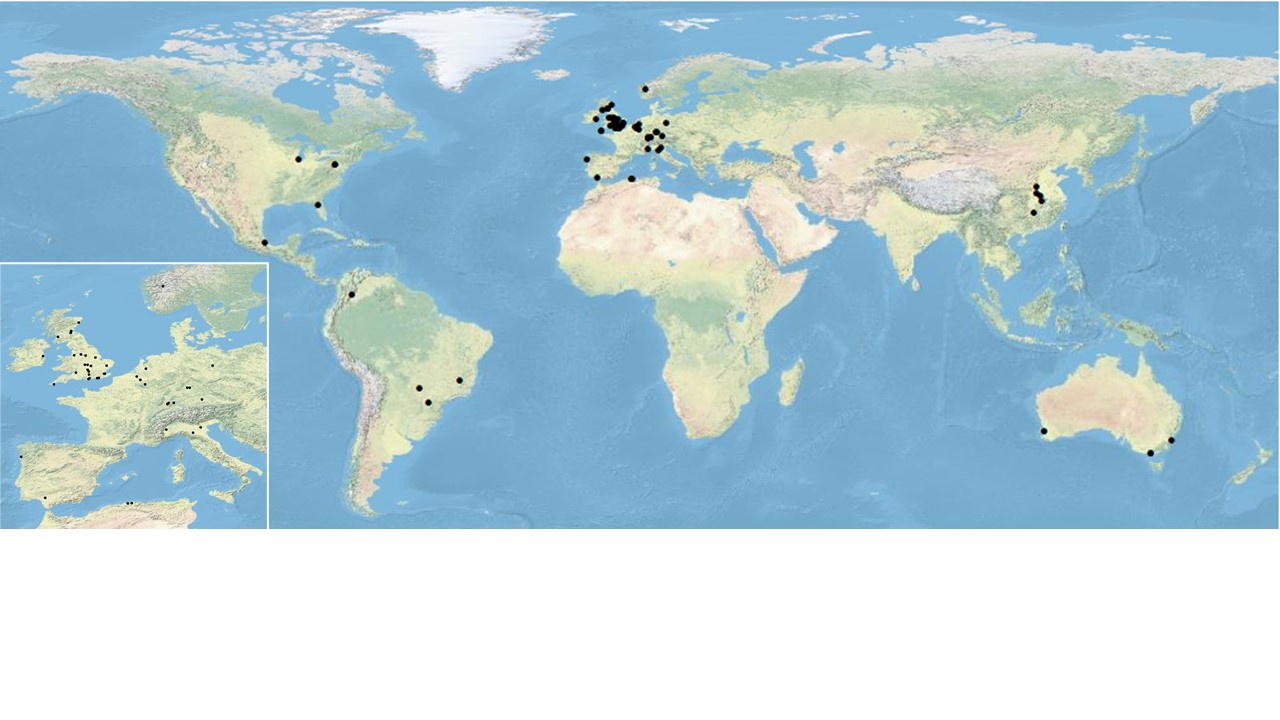
During the lockdown period of the COVID-19 pandemic in 2020, many pollination ecologists were stuck at home: universities and research institutes were closed and restrictions on travel meant that it was not possible to get out and do field work. In order to keep active and motivated, and to turn adversity into an opportunity, an ad hoc network of more than 70 researchers from 15 different countries (see the map above) decided to collect standardised data on the plant-pollinator networks in their own gardens and nearby public spaces.

When combined with information about location, size of garden, floral diversity, how the garden is managed, and so forth, this would provide some useful data about how gardens support pollinators. For those with kids at home it could also be a good way of getting them out into fresh air and giving them something to do!

Following discussions, several different protocols were instigated which depended upon the time available to the researchers, including one that mirrored the UK Pollinator Monitoring Scheme’s  FIT (Flower-Insect Timed) counts.

The resulting data set of almost 47,000 visits by insects and birds to flowers, as well as information about flowers that were never visited, is freely available and will be an invaluable resource for pollination ecologists. For example, analysing the links between ornamental flowers that share pollinators with fruits and vegetables such as apples and beans, will allow us to make recommendations for the best plants to grow in home gardens that can increase yields of crops.  

There’s an old saying about turning adversity into a positive outcome: “When life gives you lemons, make lemonade”, and the researchers were pleased to find that there’s one record of Citrus limon in the data set!

The paper describing the data set has just been published in the Journal of Pollination Ecology and you can download a PDF of the paper and the associated data for free by following this link.

Sincere thanks to all of my co-authors for their commitment to the project!

Published today: a new children’s book about bees and other pollinators!

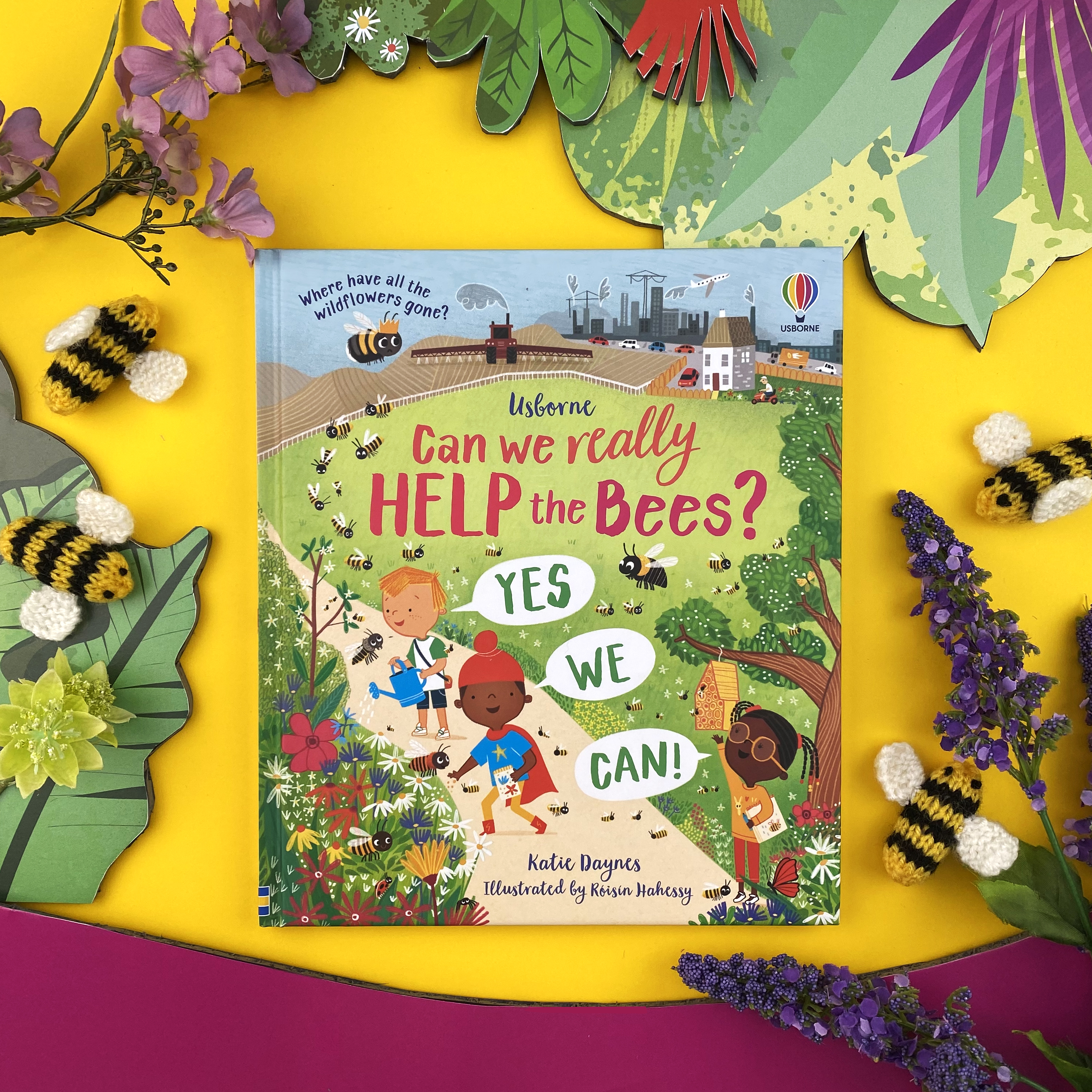
One of the projects with which I’ve been involved over the last year has been advising on a new book for children about bees and other pollinators, called Can We Really Help The Bees? Written by Katie Daynes and wonderfully illustrated by Róisín Hahessy, it tells the story of what happens when a swarm of bees comes to the window to let a group of children know that they, and their friends the other pollinators, are in trouble. Can they help? Yes they can!

It’s been a real pleasure working with Katie and Róisín on this project for Usborne Publishing and seeing the ideas, text, and illustrations evolve over time. I’ve written a short post over at the Usborne blog with some ideas about how to get children involved in helping the pollinators, and I think that it’s worth repeating one of the things that I wrote: everyone can make a difference to the wildlife around us and no one is too young to be involved!

Because of my involvement with Can We Really Help The Bees? I wasn’t able to include it on my curated list of the best books about bees and other pollinators at the Shepherd site. But it definitely should be on there and is highly recommended!

Tracking trends in Neotropical pollinators: how good is our understanding and is more data always better?

In my recent book Pollinators & Pollination: Nature and Society I discussed the current state of our knowledge of how populations of pollinators have changed over time. Although we have some quite detailed data for particular, often charismatic, species or for certain geographic localities or regions, for most species we know almost nothing. As I wrote in the chapter “The shifting fates of pollinators”:

“For most pollinators we are ‘data deficient’, in other words, we don’t know how their populations are performing. They could be doing well, but they may not be”

This is particularly true for those regions for the world that hold the greatest terrestrial biodiversity: the tropics. For the vast majority of species in the tropics we know precious little about trends in their populations and how their distributions have changed over time in the face of wide-scale land transformation and recent climatic shifts. Filling in some of the gaps in our knowledge of Neotropical pollinator distributions is one of its aims of SURPASS2, a collaboration between South American and UK ecologists, and one of several research and outreach projects with which I’m involved.

In a new study that’s come out of that work, led by Rob Boyd from the UK Centre for Ecology and Hydrology, we’ve used the GBIF database to look at the changing distributions of four important groups of pollinators: bees, hoverflies, leaf-nosed bats and hummingbirds. In particular we were interested in understanding the kinds of biases that come with such publicly available data, and whether recent efforts to add data to GBIF has improved our understanding of trends.

Our overall conclusion is that there are significant limitations and biases inherent in all of these data sets even for groups like hummingbirds which one would imagine are well documented by scientists and bird-watching naturalists. In addition, having more data does not necessarily help matters: it can introduce its own biases.

The paper is open access and feely available; here’s the reference with a link:

Boyd, R. J., Aizen, M.A., Barahona-Segovia, R.M., Flores-Prado, L., Fontúrbel, F.E., Francoy, T.M., Lopez-Aliste, M., Martinez, L., Morales, C.L., Ollerton, J., Pescott, O.L., Powney, G.D., Saraiva, A.M., Schmucki, R., Zattara, E.E., & Carvell, C. (2022) Inferring trends in pollinator distributions across the Neotropics from publicly available data remains challenging despite mobilization efforts. Diversity and Distributions (in press)

Here’s the abstract:

Aim
Aggregated species occurrence data are increasingly accessible through public databases for the analysis of temporal trends in the geographic distributions of species. However, biases in these data present challenges for statistical inference. We assessed potential biases in data available through GBIF on the occurrences of four flower-visiting taxa: bees (Anthophila), hoverflies (Syrphidae), leaf-nosed bats (Phyllostomidae) and hummingbirds (Trochilidae). We also assessed whether and to what extent data mobilization efforts improved our ability to estimate trends in species’ distributions.

Location
The Neotropics.

Methods
We used five data-driven heuristics to screen the data for potential geographic, temporal and taxonomic biases. We began with a continental-scale assessment of the data for all four taxa. We then identified two recent data mobilization efforts (2021) that drastically increased the quantity of records of bees collected in Chile available through GBIF. We compared the dataset before and after the addition of these new records in terms of their biases and estimated trends in species’ distributions.

Results
We found evidence of potential sampling biases for all taxa. The addition of newly-mobilized records of bees in Chile decreased some biases but introduced others. Despite increasing the quantity of data for bees in Chile sixfold, estimates of trends in species’ distributions derived using the postmobilization dataset were broadly similar to what would have been estimated before their introduction, albeit more precise.

Main conclusions
Our results highlight the challenges associated with drawing robust inferences about trends in species’ distributions using publicly available data. Mobilizing historic records will not always enable trend estimation because more data do not necessarily equal less bias. Analysts should carefully assess their data before conducting analyses: this might enable the estimation of more robust trends and help to identify strategies for effective data mobilization. Our study also reinforces the need for targeted monitoring of pollinators worldwide.

——————————————————–

SURPASS2 has been a hugely productive project as you’ll see if you look at the Publications page of the website. There’s much more to come and I’ll report on those research papers as they appear.

Global effects of land-use intensity on pollinator biodiversity: a new study just published

Humans affect the land on which they live in many different ways, and this in turn influences local biodiversity. Sometimes this has positive effects on local wildlife: consider the diversity of birds to be found in well-managed suburban gardens, for example. But often the effect is negative, especially when the land is intensively managed or habitats are destroyed, for example via deforestation or urban development.

This is not a new phenomenon – according to a recent study, most of the habitable parts of the planet have been shaped by humans for at least 12,000 years (see Ellis et al. 2021). What is new, however, is the scale and the speed with which land-use is changing, which are far greater than they have been historically. An important question is the extent to which this change in land-use intensity is affecting pollinator diversity in different parts of the world. Over the past 18 months I’ve been collaborating on a project led by Joe Millard (as part of his PhD) and Tim Newbold which uses the Projecting Responses of Ecological Diversity In Changing Terrestrial Systems (PREDICTS) database to address that very question.

A paper from that collaboration is published today in the journal Nature Communications; it’s open access and can be downloaded by following this link.

The study was global in scale and used data from 12,170 sites to assess the affect of land-use intensity on 4502 pollinating species. The findings are really fascinating; highlights include:

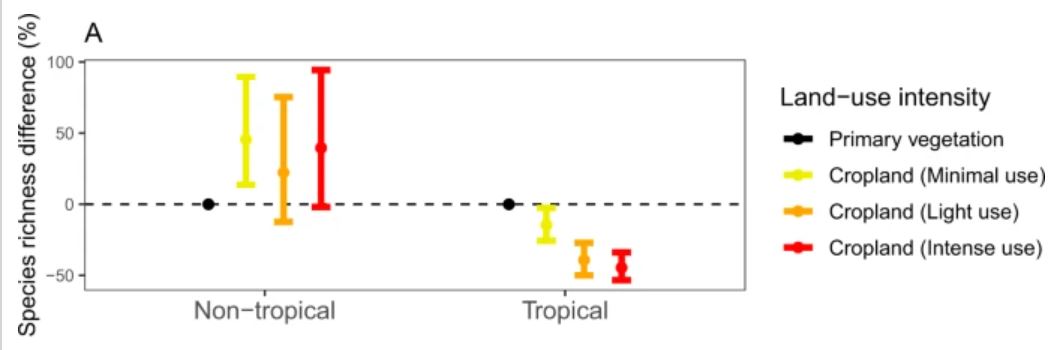
  • In comparison to natural vegetation, low levels of land-use intensity can have a positive effect on the diversity of pollinators.
  • For most land categories, greater intensity of land-use results in significant reductions in diversity and abundance of pollinators, however. For example, for urban sites there’s a 43% drop in number of species and a drop in 62% pollinator abundance from the least to the most intensive urban sites.
  • On cropland, strong negative responses of pollinators to increasing intensity are only found in tropical areas, although different taxonomic groups vary in their responses.
  • The latter finding is especially concerning given that: (i) most pollinator diversity is found in the tropics; (ii) the majority of tropical crops are insect pollinated; and (3) tropical agriculture is becoming increasingly intensive and land use is likely to rapidly change in the coming decades.

The full reference for the study, with all authors, is:

Millard, J., Outhwaite, C.L., Kinnersley, R., Freeman, R., Gregory, R.D., Adedoja, O., Gavini, S., Kioko, E., Kuhlmann, M., Ollerton, J., Ren, Z.-X. & Newbold, T. (2021) Global effects of land-use intensity on local pollinator biodiversity. Nature Communications 12, 2902. https://doi.org/10.1038/s41467-021-23228-3

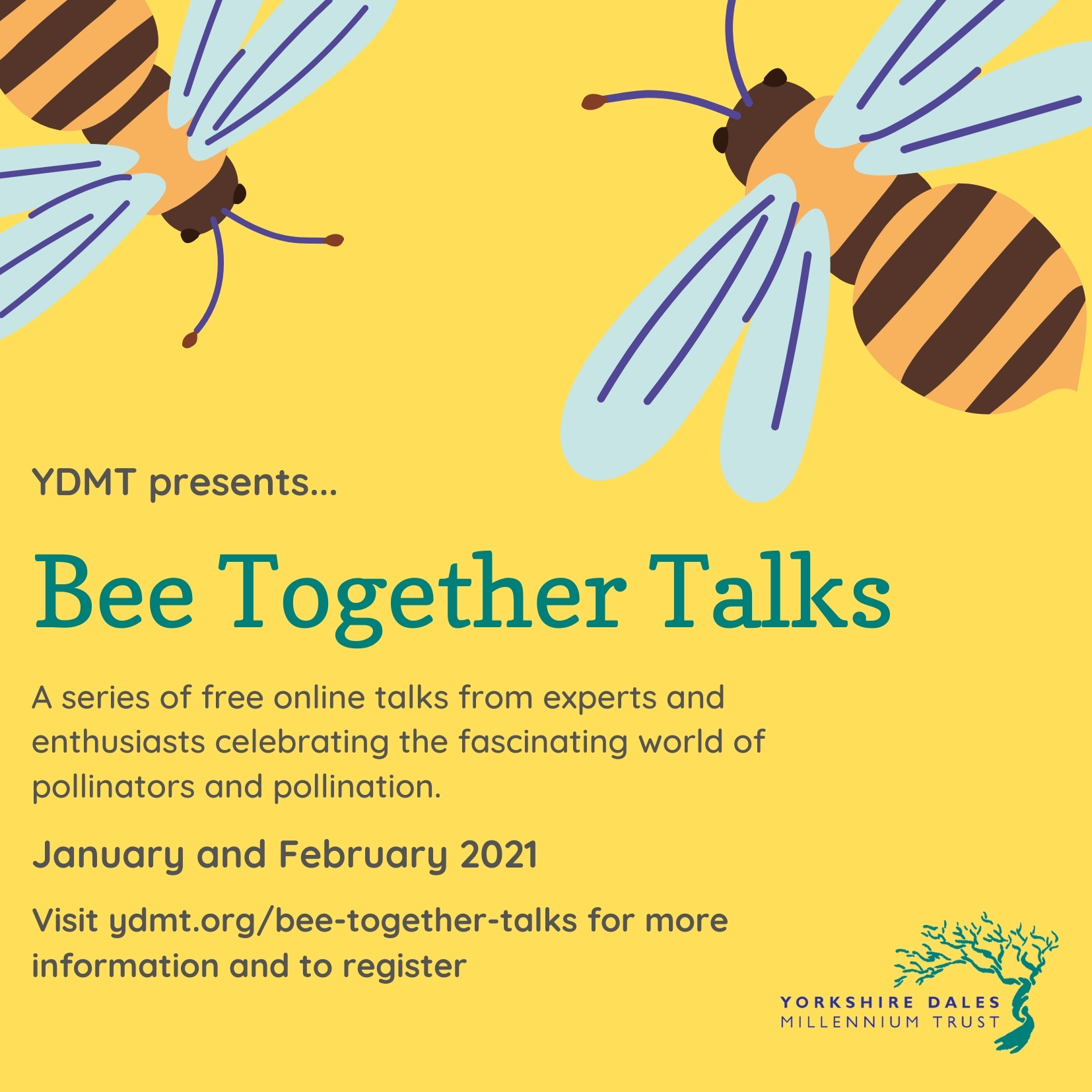
“Bee Together” with YDMT – pollinator online talks during January and February

As I write a slow haze of fine snow is falling, covering our garden with a thin white dusting. Spring feels a long way off, despite the emerging spears of daffodil leaves. But you can get a taste of what the new season will bring by signing up for a short series of free evening online talks on the topic of pollinators that has been organised by the Yorkshire Dales Millennium Trust – here’s the link for the Bee Together programme – and here’s more details of the talks:

Thursday January 28 at 7pm: Pollinators and Pollination: Nature and Society
An overview of the diversity of pollinators in Britain, why they are important, and the threats to that diversity with Jeff Ollerton.

Thursday February 18 (7pm): The B-Lines Project
Buglife’s B-Lines network is an imaginative solution to the problem of the loss of flowers and pollinators. B-Lines are a series of ‘insect pathways’ running through our countryside and towns, along which Buglife are restoring and creating a series of wildflower-rich habitat stepping stones. Catherine Jones talks about mapping the recently completed B-Lines map and some of the projects that have already created habitat for pollinators.

Thursday February 25 (7pm): The Hidden Lives of Garden Bees
Brigit Strawbridge Howard will explain some of the basic differences between bumblebees, solitary bees, and honeybees – including lifecycles and nesting behaviour; the problems they all face; and, most important, what we can do to help. Brigit is a wildlife gardener, amateur naturalist and advocate of bees. She writes and campaigns to raise awareness of the importance of native wild bees, and is the author of Dancing with Bees: A Journey Back to Nature.

I hope to see some of you there: Happy New Year everyone!