The diversity of life on Earth, and the interactions between the species that make up that diversity, are fundamentally important to the functioning of ecosystems and to human well-being. Yet these connections are often poorly appreciated, despite the fact that biodiversity supports everything from food production and clean water to climate resilience and human health.
At the end of March and the end of May I will be presenting two lunchtime webinars which explore this as part of the Biological Recording Company’s Skills for Ecology series. These talks will look at how biodiversity in general, and plant–pollinator interactions in particular, connect to the United Nations Sustainable Development Goals (UN SDGs), showing why the conservation of nature is central to a just, healthy, and sustainable future.
In these turbulent times it’s hard to know where to focus one’s gaze. Do we concentrate on Ukraine? Greenland? Venezuela? Sudan? China? Russia? The Middle East? The rise of the far right and religious fundamentalism? Cyber security? Global organised crime? If it’s confusing and worrying for the average person, imagine what it’s like for national security services who are charged with assessing and responding to such threats.
It is increasingly recognised that national security in the 21st century extends beyond military threats to encompass food systems, economic resilience, public health, and the stability of critical ecological infrastructure. Which is why it’s no surprise to learn that the UK’s national security organisations – MI5 and MI6 – have just released a report titled Global biodiversity loss, ecosystem collapse and national security: A national security assessment.
The global attack on nature is threatening the UK’s national security, government intelligence chiefs have warned, as the increasingly likely collapse of vitally important natural systems would bring mass migration, food shortages and price rises, and global disorder.
This framing explicitly treats biodiversity loss not as an environmental side issue, but as a systemic risk multiplier capable of amplifying existing geopolitical, economic, and social stresses. I have emboldened two words in that quote in order to emphasise that this report is very much about the state of the world, not just the state of my home country. In an interconnected global food and trade system, ecological collapse in one region rapidly propagates elsewhere through markets, migration, and political instability. What happens globally has implications locally; not just food security from imports, but “geopolitical instability, economic insecurity, conflict, migration and increased inter-state competition for resources”, to quote the report.
Where does pollination fit into this? As far as I know, pollination has never been singled out in security analyses, yet it underpins many of the very food systems, rural economies, and ecosystem functions upon which national resilience depends. In my book Pollinators & Pollination: Nature and Society I mention “food security” about ten times, as I firmly believe that loss of pollinators is a serious issue to food supply chains. The report similarly states that:
UK food production is vulnerable to ecosystem degradation and collapse. Biodiversity loss, alongside climate change, is amongst the biggest medium to long term threat to domestic food production – through depleted soils, loss of pollinators, drought and flood conditions.
But I would go further and state that loss of pollination by insects and vertebrates poses a national security threat that extends far beyond just their role in food production.
Let me explain why I believe this.
The Global biodiversity loss report focuses on six different parts of the world (and seven ecosystems) that it considers “critical ecosystems…at risk of collapsing”. One of those areas – the coral reefs of Southeast Asia – is not directly dependent upon pollinators to support its long-term functioning. Two areas – the boreal forests of Canada and Russia – are dominated mainly (though not exclusively) by wind-pollinated trees, such as conifers and birches. The other four ecosystems, however, have a dependence on pollinators that ranges from significant to enormous. These are the Mangroves of Southeast Asia and the Himalayas (both significant) and the Amazon Rainforest and Congo Basin (both enormous).
What do I mean here by words like “significant” and “enormous”? What is my measure? What I mean is the number and proportion of flowering plants—particularly dominant species, often trees—that underpin most ecosystem functions, such as photosynthesis and carbon storage, and that rely to some extent on pollinators to reproduce.
In high elevation areas such as the Himalayas, I know from experience that it’s common for there to be a mixture of wind and animal pollinated species in communities. Similarly, mangrove species include some which are wind pollinated – see this review for example. In other words, the long-term population stability of Himalayan woodland and Southeast Asian mangrove forests is, in large part, dependent on the pollinators that those ecosystems support. If those pollinators were lost, in the long term (decades to centuries) wind-pollinated trees would dominate and biodiversity would significantly decline.
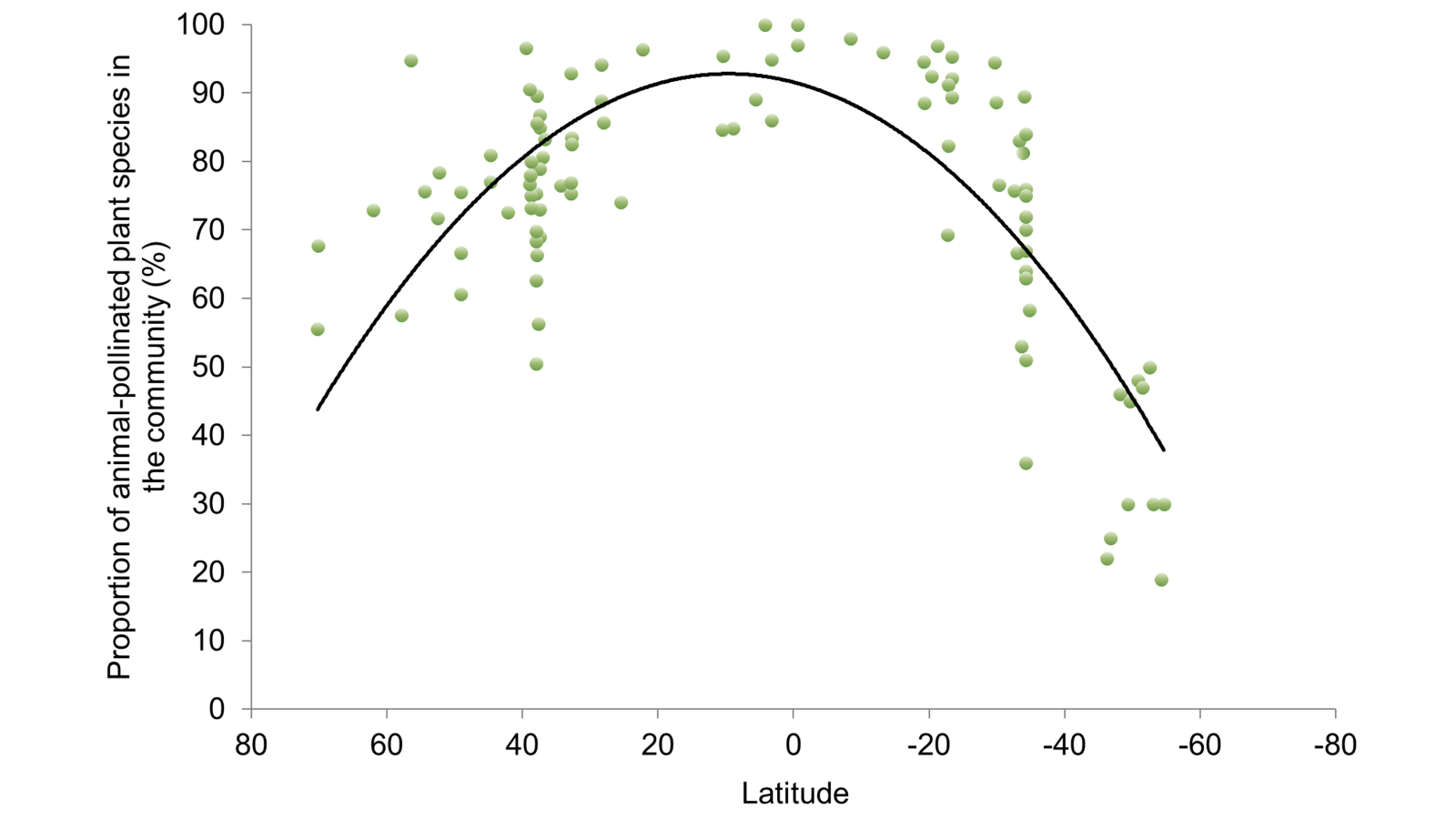
The situation in the forests of tropical South America and west Africa is rather different. Not only is there a much greater diversity of plant species in these ecosystems, but in these largely rainforest regions, often all of them are animal pollinated, as we showed in this paper and which is reflected in the graph above, which comes from my book. Lose the pollinators and we lose the long-term viability of ecosystems that provide regionally- and globally-vital functions.
Ultimately, if we are to protect pollinator communities, and the ecosystem functions and services they provide, we need to take their conservation more seriously than we do at the moment. Framed this way, pollinator conservation becomes a form of preventive security investment, analogous to maintaining flood defences or safeguarding energy and cyber infrastructure. The European Union’s Pollinator Initiative and the projects that it supports, including Butterfly and ProPollSoil in which I’m involved, is a good example. Likewise, there are policy movements appearing in China, as I recently reported. But biodiversity conservation is a global issue, as the security services report makes clear, and that applies to pollinators.
There will no doubt be sceptics out there who think that I am over-playing the importance of pollinators and pollination. That’s fine, it’s good to have these debates. Pollination is not a national security issue in the narrow, traditional sense of defence against hostile actors. But in the 21st-century security landscape, where threats are systemic, slow-burning, and ecologically grounded, pollination loss clearly qualifies as a strategic risk to national stability and resilience.
In that respect, I believe that the question is not whether pollination is a national security issue—but whether national security thinking has yet fully adapted to the biological foundations on which societies depend.
Pollinators such as wild bees, butterflies, and hoverflies are in trouble worldwide. A major new study, published in Science and led by Gabriella Bishop and other scientists at Wageningen University & Research, shows that the oft-quoted figure of 10% semi-natural habitat in farmland landscapes is far too little to safeguard pollinators. Instead, the evidence points to a need for somewhere between 16% and 37% habitat cover, depending on the type of pollinator, if we are serious about halting declines. Suitable habitats include hedgerows, patches of woodland, species-rich grasslands, and flowering margins, and as a general rule, hoverflies need less of it whilst bumblebees and butterflies require more.
I was fortunate to play a part in this global assessment, contributing an unpublished dataset collected with my former PhD student, Sam Tarrant, who studied plant-pollinator interactions on restored landfill and established grassland sites. Seeing those data joined with dozens of other studies from around the world underlines something we have known for years: no single dataset, however carefully gathered, can give us the whole picture. To really understand what is happening to biodiversity—and to design conservation solutions that work—we need these kinds of global, mega-author syntheses that draw together evidence from many landscapes, taxa, and approaches.
The message from this analysis is stark but hopeful. More habitat means more pollinators, across all groups. Richer habitats with abundant flowers give an additional boost, but the overriding priority must be to increase the sheer area of natural habitat in farmed landscapes. Small-scale fixes like wildflower strips offer short-term benefits, but without enough space they can’t deliver recovery at scale. Long-term, secure habitat creation—on the order of decades, not seasons—is what pollinators, farmers, and ecosystems need.
Although the policy debate in Europe provided the backdrop for this study, the lessons (and the data) are global. Wherever agriculture dominates, the health of pollinator populations—and by extension our food security and biodiversity—depends on our willingness to give these insects the space and quality of habitat they require.
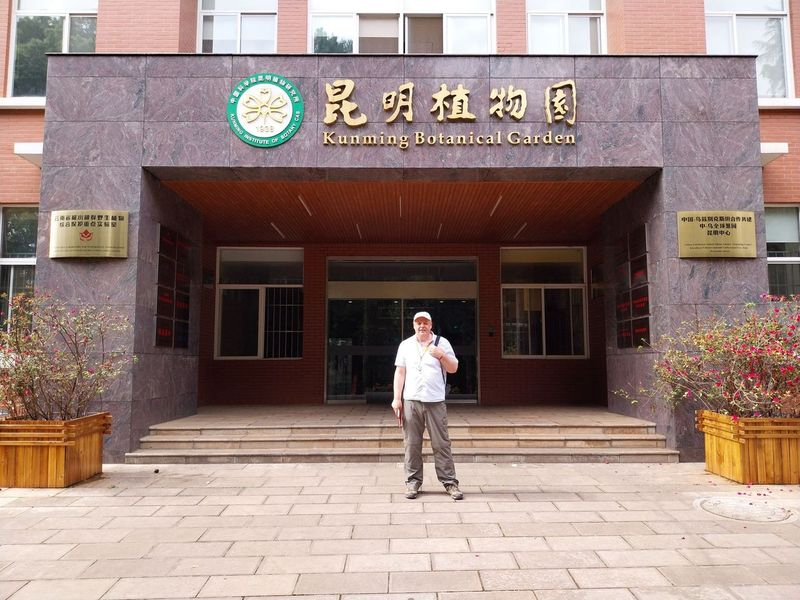
Looking ahead, we need to think bigger and work together. That means more international collaborations, more sharing of data, and more commitment to long-term solutions that transcend borders. The image at the start of this post is from my trip back to China in July this year. I deliberately chose it because, as you’ll see from the map below which is taken from the paper, there was no suitable data available for the study from that country. Or from Africa. Or Australasia. Or from most of tropical South America. That shows that as pollination ecologists we need to coordinate more in advance on these types of syntheses, and maximise the value of the kinds of data that we collect. The main take away from this study, however, is that if we want to reverse the declines in biodiversity, scientists, policymakers, businesses, farmers, and citizens all have a role to play. Pollinators remind us that nature is interconnected and global—our conservation efforts must be, too.
Here’s the full reference with a link to the study:
Biodiversity in human-dominated landscapes is declining, but evidence-based conservation targets to guide international policies for such landscapes are lacking. We present a framework for informing habitat conservation policies based on the enhancement of habitat quantity and quality and define thresholds of habitat quantity at which it becomes effective to also prioritize habitat quality. We applied this framework to insect pollinators, an important part 5 of agroecosystem biodiversity, by synthesizing 59 studies from 19 countries. Given low habitat quality, hoverflies had the lowest threshold at 6% semi-natural habitat cover, followed by solitary bees (16%), bumble bees (18%), and butterflies (37%). These figures represent minimum habitat thresholds in agricultural landscapes, but when habitat quantity is restricted, marked increases in quality are required to reach similar outcomes.
Rather than the complex, multi-coloured graph that I’ve produced in the past, I’ve decided to streamline the presentation and simply fit a smoothed LOESS line with a 95% confidence ribbon to the (sometimes contradictory) data points, in order to show the overall trend (see the graph above). If you compare it with the 2022 update you’ll see that the general message from the data is the same: a peak in numbers of hives in the late 1940s (which may or may not be an artefact*), then a steep decline into the 1970s and 1980s, followed by recovery from the 1990s onwards. Note that I’ve removed the two very early data points because I don’t think that they are at all accurate.
The most recent data (2015 to 2024) come from the National Bee Unit which relies on beekeepers to submit their own records, but are probably no less accurate than some of the other data that’s available! If we take a close look at that time period we see something interesting – honey bee hive numbers are decreasing:
What are we to make of this? In an analogy with peak oil, why do we seem to have passed ‘peak honey bee’? If this is a real pattern (and only time will tell) I suspect that it’s because of at least two factors. The first is that interest in beekeeping reached a peak in the early 2020s, after which some initial enthusiasts discovered that beekeeping is actually quite a technical and demanding hobby, and gave it up. The second factor is that word has spread that, globally, managed Western honey bees are not declining, and too many bee hives in an area can have negative impacts on other, wild pollinators. This may have convinced those people who were persuaded by “Save the Bee” campaigns to take up the hobby, to give up beekeeping.
There could well be other reasons that I’ve not considered and, as always, I’d be interested in your thoughts – please leave a comment below. I’ll finish by saying that I make no judgement on this. There’s no doubt that there are too many hives in some parts of Britain, especially in London, and if the trend I describe reduces the pressures on wild pollinators, that’s a good thing. At the same time, honey bees are important agricultural pollinators in some circumstances, especially where there’s mass-flowering crops that require huge numbers of pollinating bees to be available over a short time period. And I like honey as much as the next person.
Happy World Bee Day to my readers!
*There’s a long-standing suggestion that beekeepers in the post-war years inflated the number of hives that they kept in order to obtain a larger sugar ration.
At the end of last week I joined researchers from across Europe and beyond who gathered at Norway House on the campus of the Cité Internationale Universitaire de Paris, for the official launch of the EU-funded project ‘Butterfly’. This bold, four-year interdisciplinary initiative is focused on the future of pollinators and the ecosystems that depend on them, and is one of a series of projects that have spun out from the EU’s Pollinators Initiative.
Over two days of lively discussion, the project’s key themes came into focus: the urgent need to restore pollinator populations, the value of integrating ecological and economic data, and the importance of including people—farmers, citizens, policymakers—in shaping practical, long-term solutions to pollinator decline.
Connecting Science and Policy
I arrived in Paris early Wednesday evening to be fresh for the meeting’s opening session the following morning. This set the stage by grounding the project in real-world policy contexts, including the EU Pollinators Initiative and the Nature Restoration Law. These frameworks are increasingly recognising the vital role pollinators play not just in nature, but in the economy and public well-being.
Nine Work Packages, One Mission
Participants got a crash course in the project’s structure through short presentations from each of the nine work packages. These range from ecological modelling and ecosystem valuation to resilience thinking, communication tools, and understanding human relationships with pollinators. A strong emphasis was placed on collaboration—how each work package connects with the others and contributes to the project’s broader vision. For example, one of my roles will be to work closely with Maria Clara Castellanos and her team at the University of Sussex on the integration of the UK-focused Database of Pollinator Interactions (DoPI) and the Global Biotic Interactions (GloBI) platform, to create an online European Atlas of Plant-Pollinator Associations (EuroAPPA). This in turn will feed plant-pollinator data into the modelling and economic valuation tasks in some of the other work packages.
Living Labs and Global Perspectives
One of the most exciting aspects of the Butterfly project is the network of “Living Labs” being established across Europe and the test sites in overseas territories. From Murcia to Martinique, each site represents a unique ecological and cultural landscape with its own pollination challenges. These test sites, some of which are shared with a parallel project called RestPoll, will serve as experimental spaces to co-develop and test strategies for enhancing pollinator resilience in real-world contexts. Another of my roles in the project is to help with the field work on the Caribbean island of Curaçao, where we will be assessing birds and bats as pollinators, as well as insects.
Thematic Sessions and Cross-Pollination
The meeting featured targeted discussion sessions on everything from economic modelling chains and ecosystem indicators to human dimensions like eco-literacy, historical agency, and “slow hope.” Again, one of my contributions will be to the work package dedicated to understanding and reacting to the human dimensions of pollinator decline, where I hope to provide a case study that builds on the work I published almost a decade ago on how the auction prices of holly and mistletoe are a reflection of the work of wild pollinators. In the evening we had a “cross-pollination” networking buffet dinner, themed around pollinator-dependent food crops, that provided an opportunity for participants to mix across disciplines, brainstorm, and spark new collaborations in an informal setting.
Laying the Groundwork for Action
Day two shifted toward practicalities—data sharing, financial management, ethics, and stakeholder engagement—as well as discussions about how Butterfly will connect with other major EU-funded projects, including VALOR, which is Butterfly’s partner and with which we will closely collaborate. Thematic sessions continued to dive deep into topics like mainstreaming pollinator stewardship and developing indicators to track the societal impacts of pollinator loss.
Looking Ahead
The meeting wrapped up with a plenary session with the project’s Advisory Board, reinforcing the importance of external perspectives in guiding the project’s evolution. Dinner that evening was an informal affair (not funded by the project!) at a really wonderful, traditionally French restaurant – Le Temps des Cerises – where service was slow, the food and wine were delicious, and the conversations continued to flow.
For those of us who stayed an extra day, a field visit on Saturday offered a first-hand look at urban pollinator research at the Jardin Écologique within the Jardin des Plantes—a fitting reminder of why this work matters! Here’s some photographs from that trip:
My sincere thanks to all of the colleagues who made the Butterfly kick-off meeting such a success: I look forward to working with you all over the next four years! Particular thanks to Paolo Biella who allowed me to use the photo at the top of the post, of a female mason bee outside our venue. We kept an eye on her during the meeting and I’m pleased to report that she successfully sealed up her nest. May her offspring thrive!
If you’d like to delve deeper into Butterfly’s objectives, here’s the project summary from our funding application:
Butterfly aims to significantly enhance society’s capacity to appraise, foresee, and respond to the threats posed by cascading impacts of pollinator decline. To reach that goal it will establish a test system of geographically well spread multi-actor communities across sectors for co-creating proactive pollinator restoration solutions and: (1) collect, integrate, manage and share ecological and spatial information on a wide range of known and lesser known pollinators and pollination services provided for wild and cultivated plants, across Europe and selected overseas territories; (2) advance the monetary and non-monetary valuation of marketed and not marketed direct and indirect ecosystem functions and services provided by pollinators, and advance ecosystem accounting; (3) comprehensively model and quantify the macro-economic implications of pollinator decline and country-specific economic butterfly effects of dependencies on pollinators, and assess policy options and scenarios; (4) assess how five key biomass supply chains (food/micronutrients, pharmaceuticals, cosmetics, biomaterials, biomass energy) depend on pollination and co-create pollinator restoration options that increase resilience of these supply chains; (5) devise, co-create, test and implement transferable tools, interactive atlases and guidelines that enable systematic mainstreaming of proactive pollinator stewardship in vulnerable sectors; (6) conceive indicators for human dimensions and assess and exploit the socio-cultural capacity of the concepts: ‘pollinator stewardship’, ‘ecoliteracy’, ‘historical agency’ and ‘slow hope’ in reversing pollinator decline. It will inform EU policy processes and build strategic alliances for high-level impact. The Butterfly network of Living Labs will accelerate knowledge transfer and uptake of new business models and serve as breeding place for multi-actor co-creation of knowledge and sustainable solutions, paving the way to pollinator stewardship in all sectors.
This element of Muzafar’s work explored how solitary and primitively eusocial bees (those that live alone or in simple social groups) respond to different aspects of city landscapes. He examined local habitat factors such as floral diversity, bare soil availability, and sunlight exposure, alongside broader urban features like green spaces, roads, and paved areas.
The findings highlight that small-scale habitat conditions—especially the variety of flowering plants and access to sunlight—had a greater influence on bee diversity and abundance than overall habitat size. While larger landscape features, such as urban green spaces, played a role at a broader scale, even small patches of wild vegetation and roadsides were found to be important for bees.
These results challenge the idea that bees need large, uninterrupted green spaces to thrive. Instead, even fragmented urban habitats, when managed thoughtfully, can support pollinators. By planting diverse flowers, preserving patches of wild vegetation, and maintaining sunlit areas, cities can become havens for these essential insects.
Simple changes—like creating wildflower-rich roadside verges or maintaining natural pockets of greenery—can make a significant difference. As urbanisation continues, ensuring that bees have the resources they need to survive will be key to supporting biodiversity and maintaining the critical pollination services they provide.
Here’s the reference with a link to the published study; if you are not able to access it, send me a request for a PDF via my Contact page:
Solitary and primitively eusocial bees are important pollinators of plants, which are experiencing a global decline. Urbanisation is one of the contributing factors to this decline. It is crucial to understand the complex community dynamics of solitary and primitively eusocial bees in urban areas as urbanization grows globally. For bee communities, the local habitat as well as the surrounding urban landscape play an important role. The study considered four local habitat variables: habitat size, floral species richness, bare soil and shade. Moreover, five common land cover types (green space, buildings, roads, car parks, and paved surfaces) were assessed at multiple spatial scales from 40 m to 200 m from the centre of the sites with 20 m steps, analysing their potential impacts on the bee community. The study found a greater effect of local habitat compared to landscape variables at a smaller spatial scale. However, landscapes affected the bee community at larger spatial scales. The size of the habitat did not affect the bee community in urban areas. However, habitats with a higher number of plant species and exposed to sunlight attracted relatively more bees. This study suggests that urban areas are capable of conserving solitary and primitively eusocial bees. Although green space is important for the dispersal of species at larger landscape scales, small patches of wild, leftover vegetation and roadsides are equally important for bees. The management of bee friendly open vegetation with wildflowers would be beneficial for the successful conservation of solitary and primitively eusocial bees in urban areas.
Biodiversity Net Gain is generating a lot of attention in the UK at the moment, some of it positive*:
“when designed and delivered well, BNG can secure benefits for nature, people and places, and for the economy”
“[BNG is] a game-changer for health and wellbeing”
And some of it extremely negative*:
“Biodiversity Net Gain is a lie but most people without enough ecological knowledge cannot see this & are fooled by the lie”
“[BNG is] a horrible legalistic contrivance, and it means nothing”
Regardless of how you feel about BNG, it’s here to stay, at least for the foreseeable future, and so we need to explore it and understand how (or whether) it can positively improve the state of nature in Britain.
Although I don’t pretend to be an expert on BNG**, I have thought a lot about how it might impact the group that I do have some expertise in, pollinators, and the implications for the pollination services that they provide to wild and crop plants.
Last October I produced a short report that considered the implications of BNG for insect pollinators – you can download a copy from the original blog post, though do be aware that some of the dates I mentioned were later revised by the then government and I have yet to revise the document.
As a follow up to this I have been invited by the Biological Recording Company to lead a one-hour webinar discussing this topic on Monday 28th October at 1pm. It’s free to attend and you can book a ticket by following this link. There’ll be a short presentation (30 minutes or so) followed by a live Q&A.
I hope that some of you can join me!
——————————————————————
*Real quotes, culled from reports and social media.
**Indeed, it’s such a new approach to development and nature conservation, can anybody consider themselves an expert?
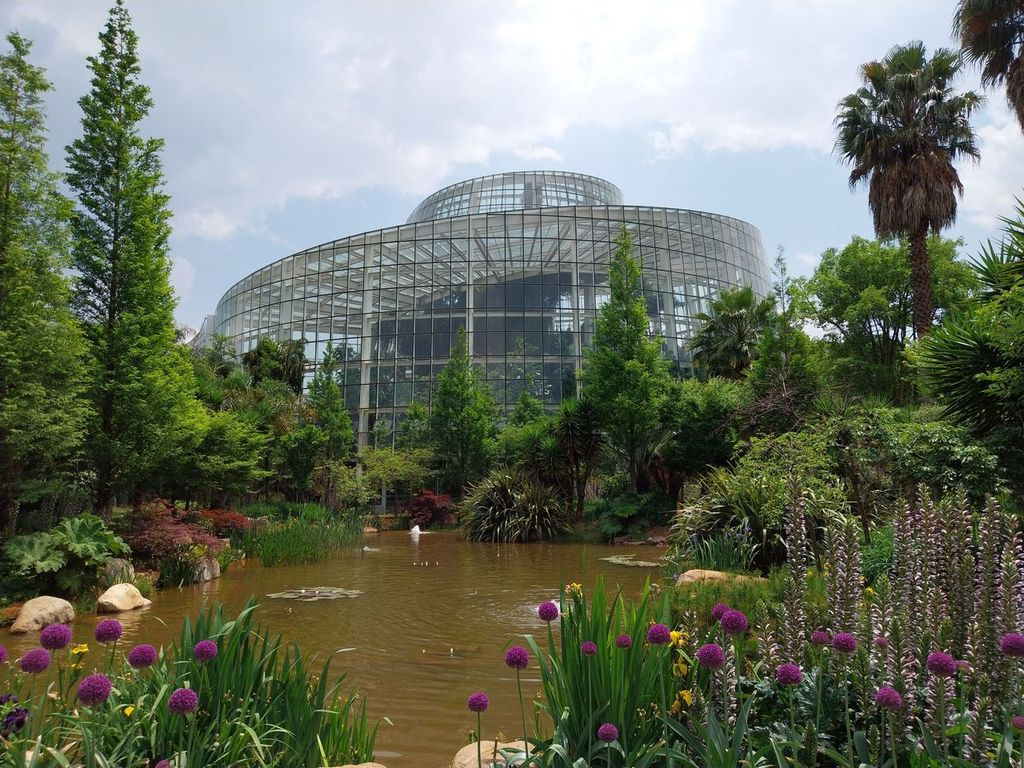
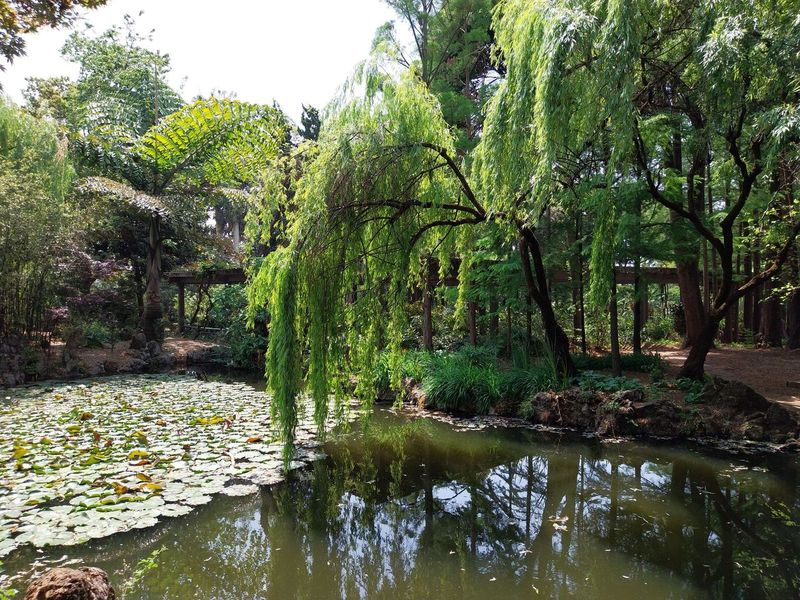
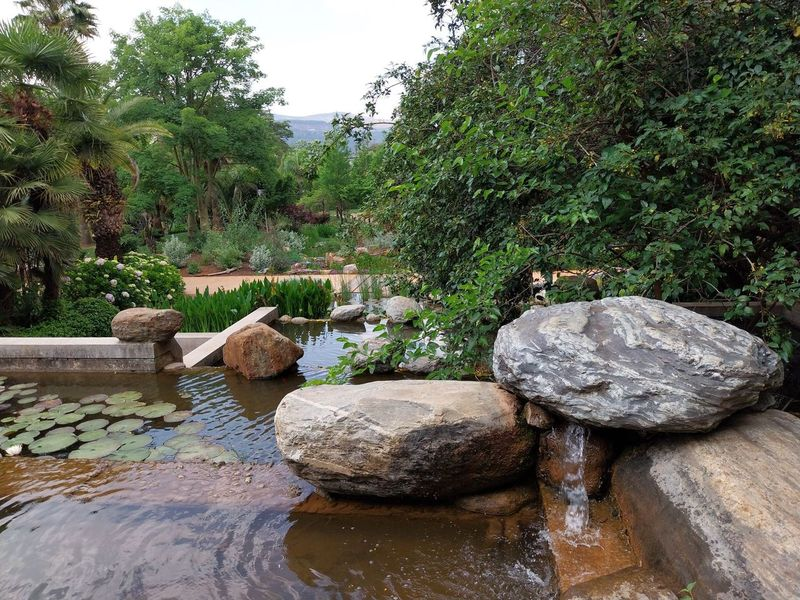
Just over a week ago I arrived in China to spend three months as a visiting professor at the Kunming Institute of Botany (KIB), of the Chinese Academy of Sciences. I am being hosted by my colleague Dr Zong-Xin Ren, and I will repeat this trip each year over the next three years. This is my first visit to Kunming because my last visiting professorship here had to be conducted remotely due to the COVID-19 pandemic. As you can see above, KIB is adjacent to, and works closely with, Kunming Botanical Garden and I have the good fortune of being able to walk to work each day through the gardens:
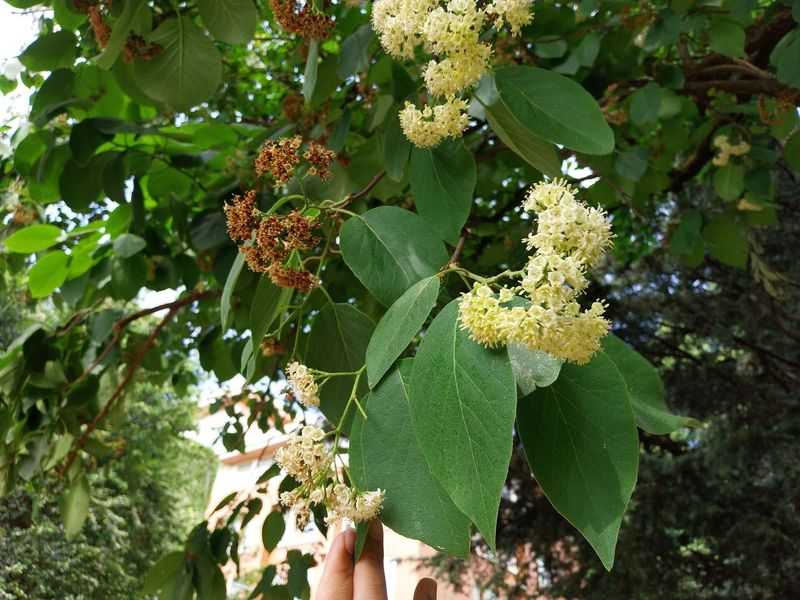
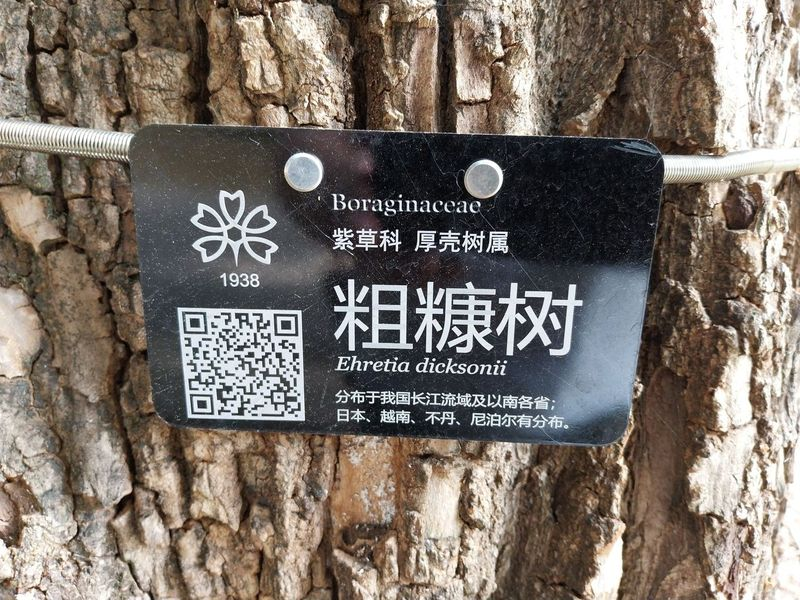
As I’ve said before, I love botanic gardens because I always, always see plants that amaze and surprise me. For example, I struggled to recognise the family that this very large tree belonged to – and was surprised by the answer!
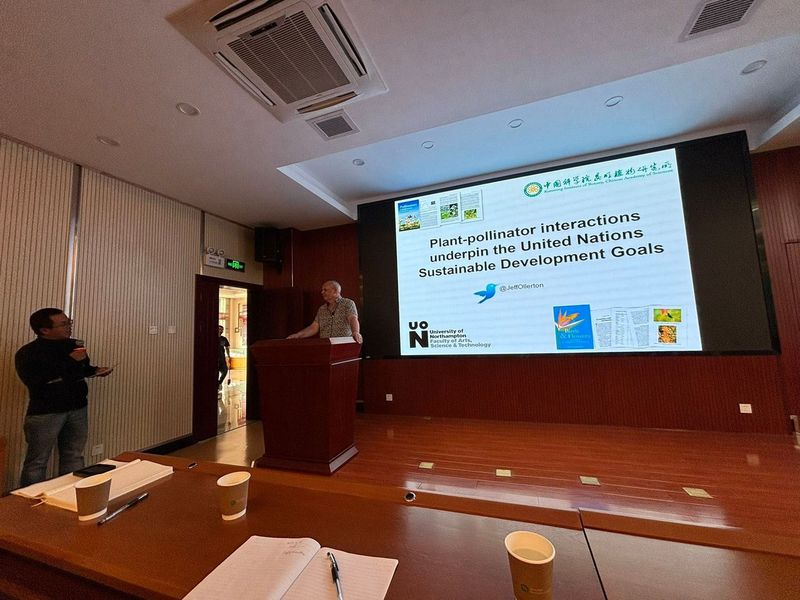
I’ll be spending my time working on some data and writing manuscripts, carrying out field work, and talking with KIB postgrads and postdocs about their projects. I’ll also give some lectures here and at other institutions in China. The first of these was last Thursday where I spoke about the role of plant-pollinator interactions in underpinning the United Nations Sustainable Development Goals:
Thanks to Brazilian researcher Sinzinando ‘Nando’ Albuquerque-Lima for those last two photographs. As part of a Brazilian-funded project, Nando is here for about 8 months studying a range of plants and their pollinators.
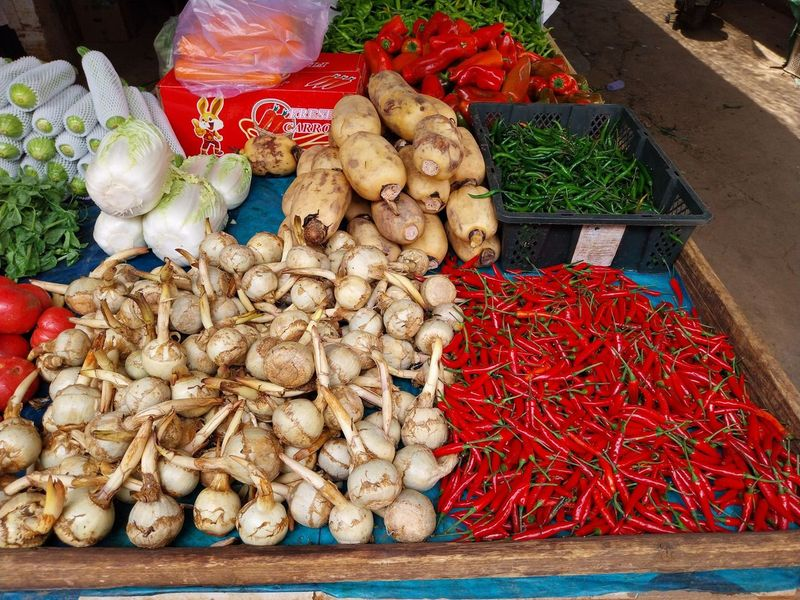
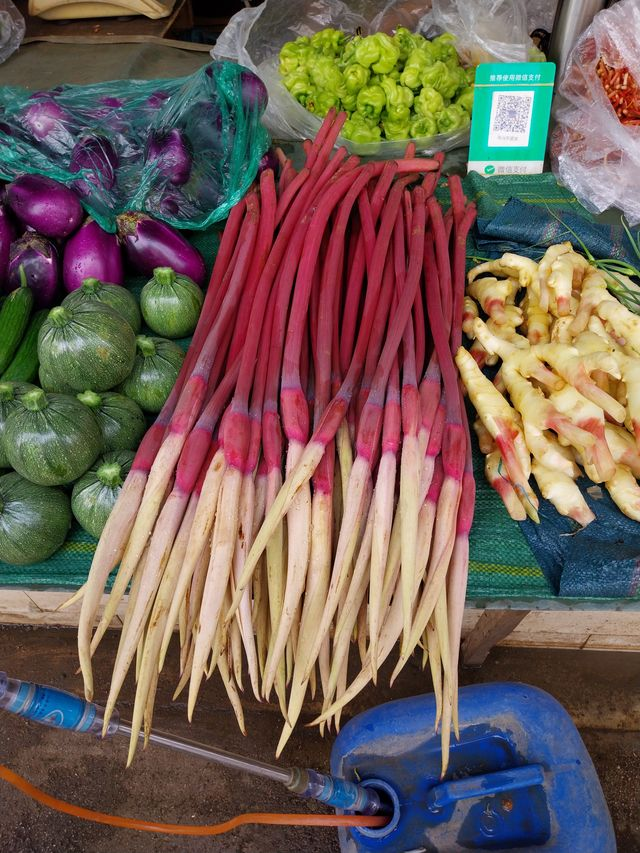
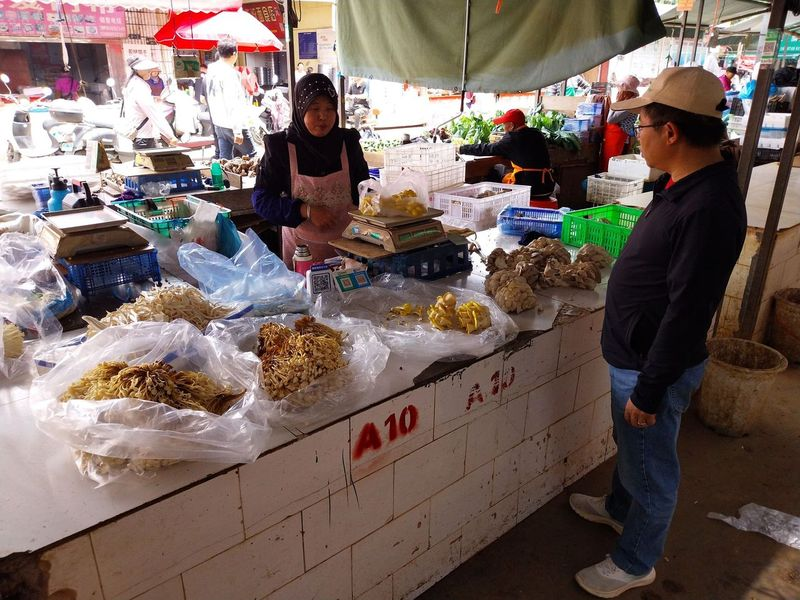
Further afield, Zong-Xin and Nando have introduced me to some of the amazing markets and restaurants in the city and I’ve already added three new plant families to my life list of those I’ve consumed: Phyllanthaceae (the rather sour fruit of a Phyllanthus species); Alismataceae (deep-fried, ‘crisped’ roots of a Sagittaria species); and Meliaceae (the young leaves of Toona sinensis are used as a spinach):
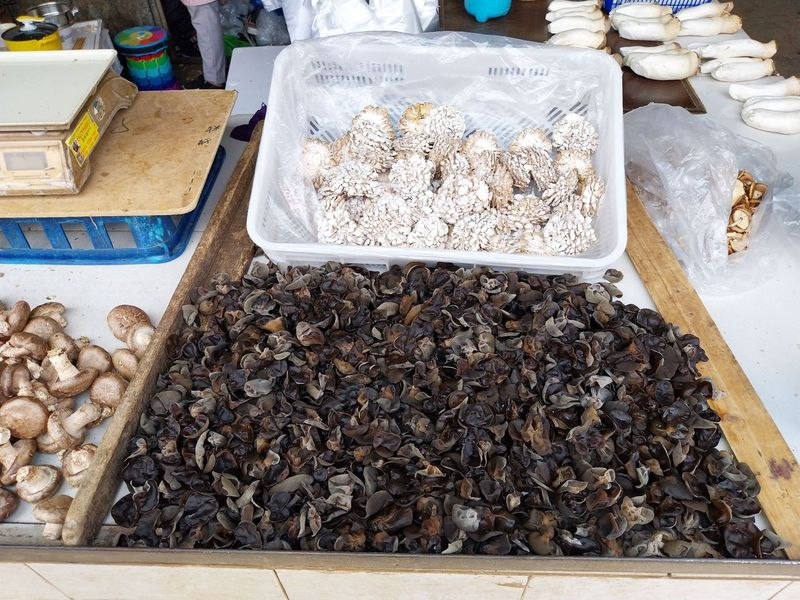
That last photo does not show rhubarb! They are the stems of a variety of taro (Colocasia esculenta) an Araceae species. Yunnan is especially famous for its wild-collected fungi:
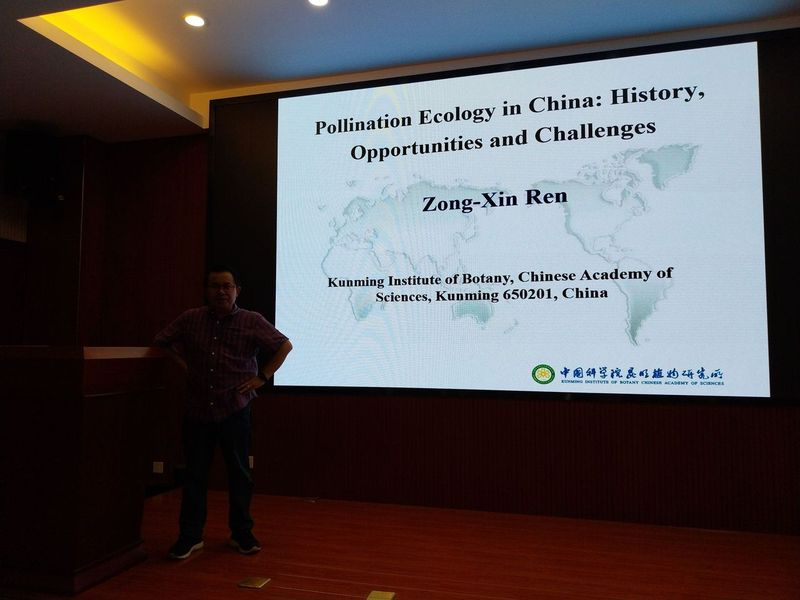
On Sunday afternoon Zong-Xin’s research group gave some presentations about their research, which is diverse and exciting and I look forward to discussing it with them some more in the coming months. The afternoon started with a talk by Zong-Xin himself about the history and opportunities of studying pollinators and pollination in China:
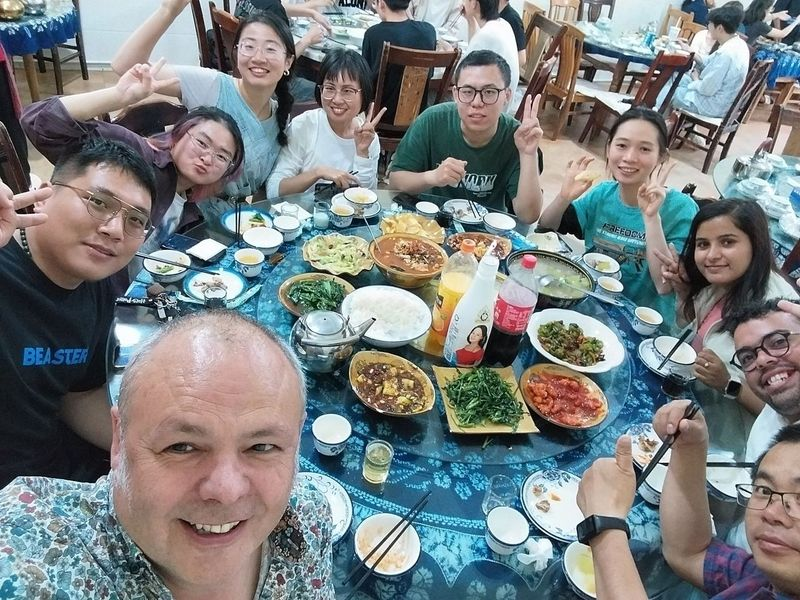
And then we all went to dinner!
That’s all for now, I’ll add updates as the weeks go by.
A message from Dr Debora Drucker, WorldFAIR Agricultural Biodiversity Case Study Lead:
Registration is open to our contribution to the WorldFAIR webinar series – “Reusing Plant-Pollinator Datasets: a Global Perspective with Guidelines and Recommendations inspired by Pilot Studies from Africa, the Americas and Europe”.
We will present results from Deliverables 10.2 & 10.3, with focus on our pilot studies:
Drucker, D., Salim, J. A., Poelen, J., Soares, F. M., Gonzalez-Vaquero, R. A., Ollerton, J., Devoto, M., Rünzel, M., Robinson, D., Kasina, M., Taliga, C., Parr, C., Cox-Foster, D., Hill, E., Maues, M. M., Saraiva, A. M., Agostini, K., Carvalheiro, L. G., Bergamo, P., Varassin, I.; Alves, D. A., Marques, B., Tinoco, F. C., Rech, A. R., Cardona-Duque, J., Idárraga, M., Agudelo-Zapata, M. C., Marentes Herrera, E. Trekels, M. (2024). WorldFAIR (D10.2) Agricultural Biodiversity Standards, Best Practices and Guidelines Recommendations (Version 1). Zenodo. https://doi.org/10.5281/zenodo.10666593
Drucker, D. P., Salim, J. A., Poelen, J., Soares, F. M., Gonzalez-Vaquero, R. A., Devoto, M., Ollerton, J., Kasina, M., Carvalheiro, L. G., Bergamo, P. J., Alves, D. A., Varassin, I., Tinoco, F. C., Rünzel, M., Robinson, D., Cardona-Duque, J., Idárraga, M., Agudelo-Zapata, M. C., Marentes Herrera, E., Taliga, C., Parr, C.S., Cox-Foster, D., Hill, E., Maués, M.M. Agostini, K. Rech, A.R., Saraiva, A. (2024). WorldFAIR (D10.3) Agricultural biodiversity FAIR data assessment rubrics (Version 1). Zenodo. https://doi.org/10.5281/zenodo.10719265
We reserved a good amount of time for Q&A – I hope to see you there and have a nice discussion!
The final deliverable from the WorldFAIR Project with which I’m involved has recently been published and can be freely downloaded from Zenodo by following the link below. The report is called “Agricultural biodiversity FAIR data assessment rubrics” and in it we present the results from a series of six pilot studies that adopted the FAIR* standards and our recommendations from the previous report.
This document complements the previous one by giving examples and setting out guidelines that allow researchers and practitioners to ensure FAIRness in their plant-pollinator interaction data.
Here’s the full reference:
Drucker, D. P., Salim, J. A., Poelen, J., Soares, F. M., Gonzalez-Vaquero, R. A., Devoto, M., Ollerton, J., Kasina, M., Carvalheiro, L. G., Bergamo, P. J., Alves, D. A., Varassin, I., Tinoco, F. C., Rünzel, M., Robinson, D., Cardona-Duque, J., Idárraga, M., Agudelo-Zapata, M. C., Marentes Herrera, E., Taliga, C., Parr, C.S., Cox-Foster, D., Hill, E., Maués, M.M. Agostini, K. Rech, A.R., Saraiva, A. (2024). WorldFAIR (D10.3) Agricultural biodiversity FAIR data assessment rubrics (Version 1). Zenodo. https://doi.org/10.5281/zenodo.10719265
Although this is the last formal deliverable from our WorldFAIR work package, it’s not the final output that we have planned. I’ll report back on the journal paper(s) that we are writing as and when they are published.
*Findable, Accessible, Interoperable & Reusable (or sometimes Reproducible)






 Prof. Jeff Ollerton - ecological scientist and author