Category Archives: Bees

What’s wrong with the New Scientist story about “Bumblebees deployed to spray crops with pesticides”?

Here’s a link to the story:

Bumblebees deployed to spray crops with pesticides

There’s at least three things wrong with this story:

  1. The accompanying image is of a honey bee, not a bumblebee.
  2. Bumblebees have nests, not hives.
  3. It’s a dumb idea. For a whole set of reasons, some of which are mentioned by scientists who were interviewed for the story.  I’d add another one: these bees will visit a lot of other flowers besides the ones that are being targeted, potentially spreading the bio-control fungus far and wide in the environment.  Is that really a good idea?

Two of these things are within the control of New Scientist.

Thanks to my colleague Dr Wanda McCormick for pointing out the story.

Pollination syndromes: a brief update on recent developments, and news that Stefan Vogel has passed away

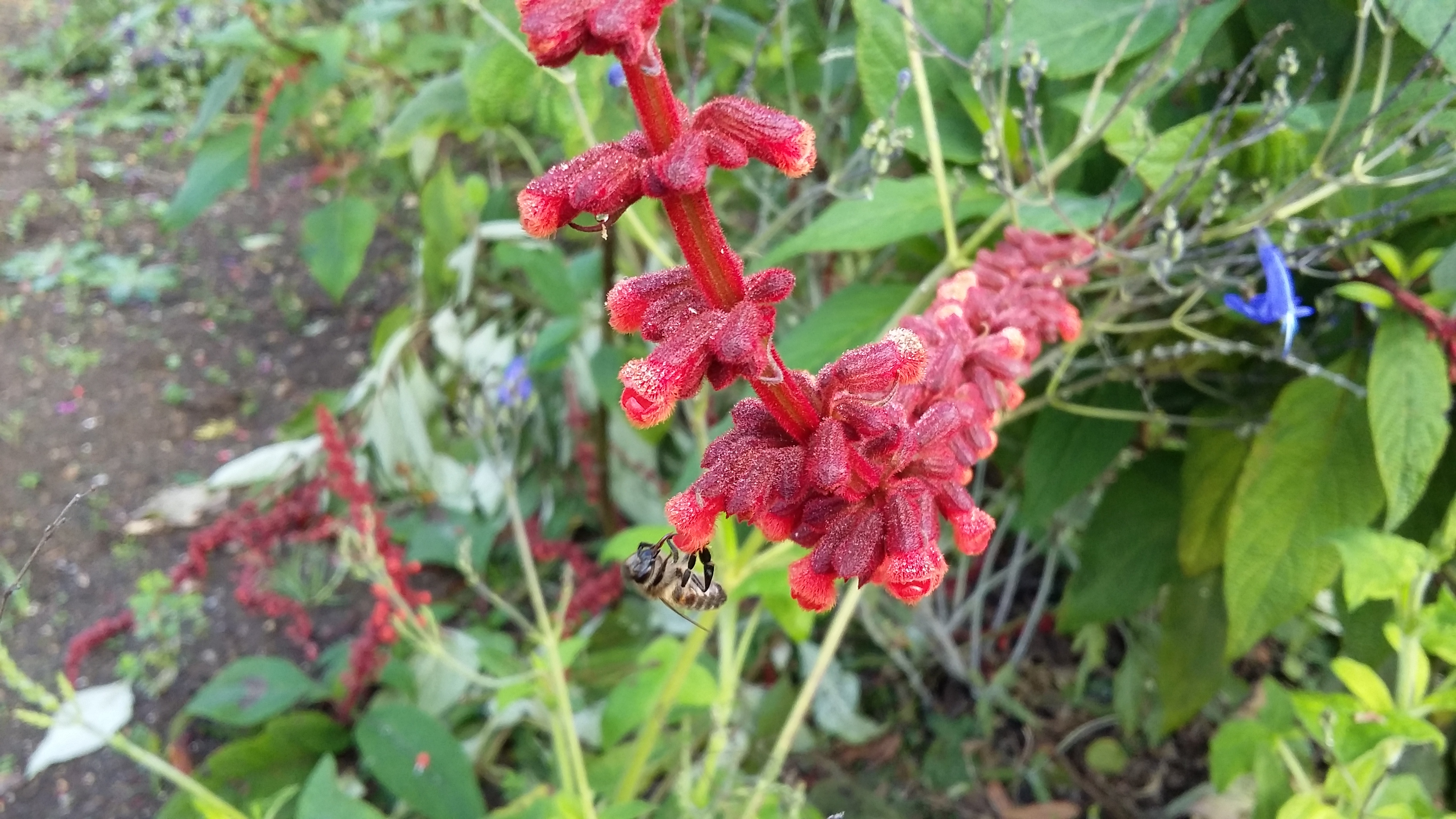
Bee on Salvia - OBG - November 2015

In a recent post I discussed the current debates about “pollination syndromes”, which I described as “sets of flower characteristics that have repeatedly evolved in different plant families due to the convergent selection pressures applied by some groups of pollinators”.

The authors of the Ecology Letters paper that I discussed (Rosas-Guerrero et al. 2014) have now replied to our original critique of their approach and you can read that reply (Aguilar et al. 2015) in Journal of Pollination Ecology by following this link.  Readers can make up their own minds as to whether the authors have responded adequately to our concerns, but I just briefly wanted to raise three points.

The first is that much of these authors’ response is focused on an earlier paper of ours (Ollerton et al. 2009) rather than on our critique per se.  Nick Waser, Mary Price and myself have therefore written a second response that deals with some of the misunderstandings apparent in that piece; it’s available to download here.

The second point relates to the existing literature on pollination syndromes and pollinator effectiveness used by Rosas-Guerrero et al. (2014); as we demonstrated in our critique this is clearly a biased data set that is skewed towards groups of plants with relatively large flowers, “interesting” pollination systems, and text book examples of classical pollination syndromes such as bird and bat pollination.  Researchers who study flowers and their pollinators choose their subjects based on a whole set of criteria, but random selection is not one of them.  However as far as we can judge, Aguilar et al. (2015) seem to be arguing that drawing strong, “universal” conclusions about syndromes from this highly biased data set is perfectly acceptable because of the statistical rigour of formal meta-analysis. I’d re-iterate our main point that no amount of statistical rigour and exhaustive literature searching can take into account inherent biases within the primary data (i.e. the literature itself).

Finally, Aguilar et al. (2015) claim that “human disturbance of natural habitats has caused disruptions in patterns of mutualistic interactions that may partly explain the presence of the diverse pollinator assemblages that are frequently found in pollination studies”.   It seems to us to be disingenuous to argue that pollination syndromes are universally valid and then to essentially concede that there are lots of wrong visitors (“secondary” pollinators), and to explain that with the idea that everything is disturbed in the Anthropocene.  If this is really the case then we probably need to throw out a lot of our understanding of evolutionary ecology as a whole, not just studies of plant-pollinator interactions.

Clearly we don’t accept this argument and in fact it has echoes of arguments that have been going on since the 19th century (Waser et al. 2011): more than 130 years ago the Darwinian biologist Hermann Muller was criticising Federico Delpino (one of the original architects of the idea of pollination syndromes) for ignoring the “wrong” flower visitors.  Interestingly, Delpino was a fundamentally a teleologist who saw purpose in nature, expressed through (as he perceived them) the highly ordered relationships between flowers and pollinators.

As we discuss in the Waser et al. (2011) paper, Stefan Vogel was another prominent pollination biologist, and advocate of the importance of pollination syndromes, who was also fundamentally teleological in his thinking.  I was sad to learn that Stefan passed away very recently, in what I believe is his 90th year.  I was fortunate enough to meet Stefan at a symposium in honour of his 80th birthday at the International Botanical Congress in Vienna in 2005.  He graciously signed my copy of The Role of Scent Glands in Pollination and said, with a twinkle in his eye, “you and I have probably got a lot to discuss”. Unfortunately we never got the opportunity, but later I dedicated our 2009 paper on Ceropegia pollination to him “in honour of his pioneering work on pollination” in the genus.  Stefan’s legacy of research, particularly in the tropical regions of South America, is a fitting tribute to his memory.

Pollination syndromes clearly continue to attract much interest in the scientific literature, and just this week I was intrigued to see a paper by John Benning showing that a species of Ericaceae that looks as though it “should” be pollinated by bees is actually moth pollinated.  No doubt the discussion of the evolutionary extent and predictability of pollination syndromes will continue for some time to come.

A new bee for Northamptonshire!

Anthophora bimaculata 2 cropped P1120172 copy

Back in the summer I produced a series of posts for Pollinator Awareness Week highlighting the pollinators to be found in our own urban garden in Northampton.  One of those posts was of what I believed to be the Little flower bee (Anthophora bimaculata), a species which at the time I’d never previously seen.  I noted that this was a new urban record for Northampton as my PhD student Muzafar Sirohi had not recorded it during his bee surveys, which I discussed earlier this year.

Some time later I checked the bee records on the National Biodiversity Network (NBN) Gateway site and realised that not only was this the first urban record of the species in Northampton, it was actually the first record for the county of Northamptonshire as a whole!  The record has recently been accepted on iRecord and will be added to the NBN records.

Of course this is personally exciting (a new record for a large county found in our back garden) and it adds a significant regional record to the currently known distribution of the species.  The map on the BWARS account of Anthophora bimaculata shows that the species is predominantly southern in its distribution, with a few eastern and western outliers.  This new record places the species firmly in the centre of England, confirming that it is more widespread than previously assumed.

There are two possible explanations for the discovery of this bee in Northamptonshire.  One is that it’s a very recent range expansion and the species is becoming more common and widespread, perhaps as a result of climate change.  The second is that it’s always been present in Northamptonshire, but just never recorded.  At the moment it’s impossible to decide between these two possibilities as there’s evidence to support both.  Not only did Muzafar not record A. bimaculata in his surveys in 2012, neither did Dr Hilary ErenlerDr Sam Tarrant or Kathryn Harrold in their pollinator surveys in the region between 2007 and 2015. Having said that, we do know that Northamptonshire is a historically under-recorded county for bees as it has no County Recorder for Hymenoptera, and both Hilary and Muzafar recorded species new to Northamptonshire, which I hope to report on at a later stage.

Differentiating between these two scenarios will be difficult and may be impossible unless we can discover previously unknown historical specimens of this bee that were collected in the county, or the species continues to expand in its range.

Understanding the distribution of pollinators such as bees is a key component of initiatives such as the National Pollinator Strategy – if we don’t know where the things we are trying to conserve actually are, how can we conserve them?  So it’s very pleasing to be able to make a small contribution to that process from the comfort of our own garden!

Anthophora bimaculata 1 P1120172

Virtual Conference on Pollinators, Pollination and Flowers

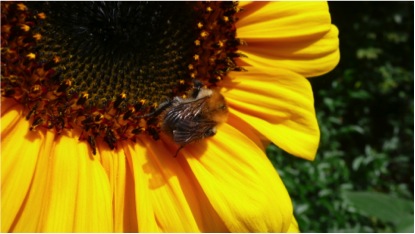
B pasc on sunflower

Academic conferences are an important part of what makes science function, via the exchange of ideas and information, publicly and in person.  The act of sitting and listening to both established and early career researchers discussing their most recent work, sometimes before it’s in print, is stimulating and exciting, and will never be replaced by digital technology. We’re social animals and conferences, as much as anything else, are social events.

But conferences are becoming more expensive, more frequent, and increasingly out of reach to researchers with limited budgets.  They are also getting larger: how many times have you attended a big conference and been torn between which of two (or three or four) talks to go to in parallel sessions?  Wouldn’t it be nice to be able to see all of them?  Or to go back and hear again the talks that you most enjoyed?  Likewise, wouldn’t it be great if your students or members of the public could also see what such conference presentations are like?

With this in mind, some time ago I dreamed up the idea of “virtual conferences” in as an experiment that aims to bring together into one place the most interesting recorded seminars, webinars, conference talks and public lectures that are freely available, and present them as a series of themed mini-conferences.  All of the videos in these collections are available on sites such as YouTube* and my role is just to curate them and present them in one place for convenience, as a showcase for some of the best research in biodiversity, evolutionary biology, ecology and conservation, very broadly defined, including inter-disciplinary and policy-related presentations.  And just as at a conference, there’s an opportunity to discuss the talks in the comments section on each post and to provide links to other talks on the same topic.

As well as being a service to the research community and the wider public, I hope that these conferences will be a useful teaching resource at advanced undergraduate and postgraduate level.

If anyone is interested in guest-curating a set of presentations in their own subject area on this blog, please do get in touch and I’ll be happy to talk about it.

So here’s the first virtual conference, on (naturally) pollinators, pollination and flowers:


Judith Bronstein (University of Arizona)

The conservation biology of mutualism


Peter Crane (University of Chicago)

The origins of flowers


Jeffery Pettis (USDA Bee Research Laboratory, Maryland)

The role of pesticides in declining pollinator health


Linda Newstrom (Landcare Research, New Zealand)

Pollinator systems in New Zealand and sustainable farming fund


Mace Vaughan and Eric Mader (Xerces Society/USDA/University of Minnesota)

Pollinator habitat assessment and establishment on organic farms


Carlos Vergara, Rémy Vandame, and Peter Kevan (Universidad de las Americas-Puebla/El Colegio de la Frontera Sur/CANPOLIN)

Coffee pollination in the Americas


Claire Kremen (University of California, Berkeley)

Restoring pollinator communities in California’s agricultural landscapes


*I’m assuming that, as all of these videos are in the public domain, none of the presenters or copyright owners objects to them being presented here.  If you do, please get in touch and I’ll remove it.

SCAPE day 3 – science on a Sunday

Last night I added a new edible plant family to my life list – Cornaceae – courtesy of the ever-hospitable Marcin Zych and his home-made fruit liqueurs. The one he opened after dinner was made from the fruit of edible dogwood (Cornus mas) and had been maturing for five years.  It was sour but delicious, and very, very strong.  That’s my first new addition to the list since my Brazil trip back in in November 2013.  One day I will post an annotated list of the biodiversity of plant families I’ve consumed….but not tonight, it’s the end of a tiring final day of the SCAPE conference.

To end the meeting this morning there was a short session of three talks from Klaus Lunau’s sensory ecology group.  Klaus started the proceedings with a talk about the role of UV-absorbent dark central “bull’s eyes” in the middle of flowers and compound inflorescences.  He concluded that, despite their near mythological status, UV patterns were perhaps no more important than patterns absorbing at other wavelengths and presented some interesting experimental data to support the argument.  Over breakfast Klaus and I had discussed the absence of difficult questions at the conference; he felt people were being a little too polite.  So I asked him a hard one – whether his findings held up for male bees which don’t collect pollen.  He confessed that he’d not tested them and agreed that it would be worth doing: hope he does, will be an interesting test.

Klaus was followed by Saskia Wilmsen who showed us the results of some elegant experiments using artificial “flowers” with different shaped epidermal cells (flat, conical, etc.)  These different surfaces have distinctive optical properties in different light conditions, and bees behave in slightly different ways, accordingly.  A very cool reminder that as we move to ever finer scales in pollination ecology, from macro biogeographical and community questions, to micro surveys, the layers of complexity just go on increasing.

This latter point was reinforced by the final presentation of the meeting, which was Sebastien Kothe discussing the functional role of the spines possessed by pollen in some plant families, especially Malvaceae.  He presented compelling evidence that these spines have evolved in order to reduce their attractiveness to pollen collecting bees.  The spines render the pollen hydrophobic meaning that the bees have to use much more nectar to bind it into the pollen baskets.  It would be interesting to track the evolution of this echinaceous pollen through the fossil record and to assess whether its appearance coincides with the evolution of particular bee groups.

And with that, the 29th SCAPE meeting was finished except for the usual hugs and goodbyes and promises to meet up again in 12 months time, probably inside the Arctic Circle: it looks as though the 30th meeting will be held at the field station at Abisko.

The rest of Sunday was spent visiting the botanic garden and the art museum in Aarhus, both to be recommended if you have a chance to visit.  It’s now 8.15pm and I’m sat at Billund Airport with a large glass of Carlsberg, my first of the trip. It’s been a great meeting and I look forward to repeating it next year, and interacting with such a passionate group of scientists.  Over and out from SCAPE.

The All-Ireland Pollinator Plan 2015-2020

B pasc on sunflower

In the last 12 months we’ve seen the release of the National Pollinator Strategy for England and the USA’s Strategy to Promote the Health of Honeybees and Other Pollinators.  Now the Republic of Ireland and Northern Ireland have joined forces to produce the All-Ireland Pollinator Plan, a strategy for 2015-2020 that has been released today.  Follow that link and you can download a copy.

This appears to be the first cross-jurisdiction pollinator plan in the world and, as such, is to be welcomed; as I said in my reflections on the National Pollinator Strategy, biodiversity does not respect political boundaries.

The organisers’ positive response to criticisms of the “honey bee decline” conference

P1120404

Three days ago I wrote a short, fast post expressing my unease (in robust terms) about a forthcoming conference entitled “Biodiversity and Local Partnerships: Halting the Decline of the Honey Bee in the UK”.  I had not anticipated that the post would generate quite as much interest as it did:  2007 views, 16 likes, and 28 comments (including my responses) as of 10am today.

There were also a lot of comments and likes on Facebook, most of it positive and agreeing with my sentiments, though some have suggested that I’m over-reacting, that I may be paranoid, and questioned what my “hidden agenda” is and whether I might be funded by an agrochemical firm (!)  Thanks to everyone who took the time to read the post and/or to respond*, to tweet the post, and even, in one case, phone up the conference organisers.

So it was with some satisfaction that yesterday I received the following email from the conference organisers, Public Policy Exchange (PPE), in response to my initial reply to their invitation:

Thank you for your response to our event, we always appreciate any
feedback from experts such as yourself. Your comments have been passed
on to our researchers and they are currently reviewing this event.

Our researchers do use a variety of sources, though on this occasion it
does appear that some have made sweeping generalisations and
over simplified statements, and ultimately have been unreliable. Clearly
our previous marketing mistakenly overplayed the role of the honey bee
in pollination processes. We certainly don’t want to contribute to a
misinformed narrative around bees and other pollinators; that was never
our intention and so we are looking at how we can improve this event.

Biodiversity is an area which we are very keen to develop further and
your feedback is therefore very helpful to us.

Kind regards,

The Conferences Team

They have also changed the title of the conference to “Biodiversity and Local Partnerships: Halting the Decline of Bees and Other Pollinators in the UK“.

So kudos to PPE for their fast response.  That’s a good outcome as far as I’m concerned and I may consider attending the conference; hell I’d even consider speaking at it if i was asked!

———————————————————-

*Yes, that’s deliberate – I got the impression that some on Facebook were responding without reading it…

Who is feeding the honey bee bullshit machine?

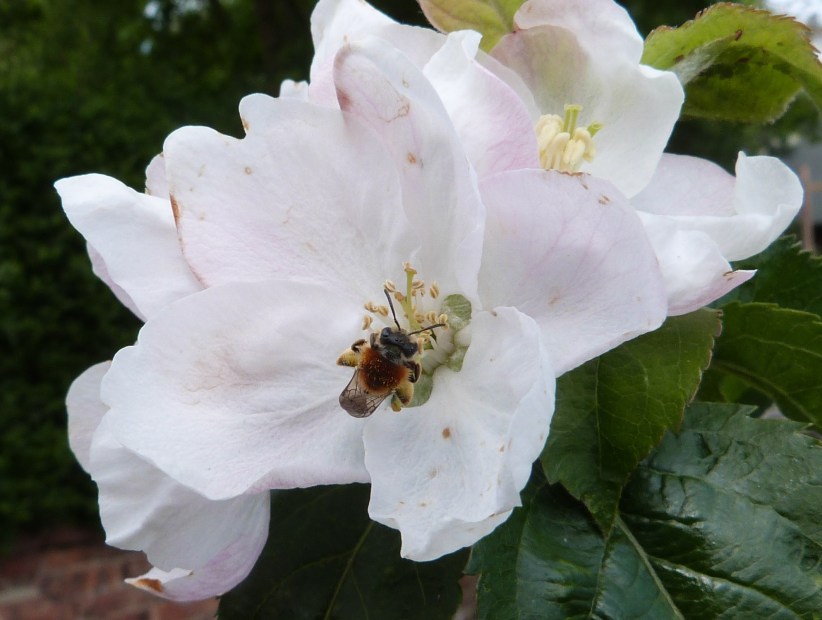
Bee on apple blossom 2 - 1st May 2015

This morning I received an email from Public Policy Exchange (PPE) inviting me to a conference in London in November entitled “Biodiversity and Local Partnerships: Halting the Decline of the Honey Bee in the UK

The opening statement on the website and the official flyer convinced me that the organisers have been misinformed; all of it is wrong:

Healthy honey bee populations are vital to food and crop production, and the natural environment. In the UK, honey bees are responsible for 80% of pollination, and a third of the food we eat is pollinated by bees.”

Where are they getting this  information from?  Who is feeding organisations like the PPE this kind of bullshit?  Is it bee keeping organisations?  I’d really like to know.

Honeybees are responsible for only one third of the crop pollination in the UK (Breeze et al. 2011), and a very small proportion of the wild plant pollination. Wild bees, hoverflies, butterflies, and other pollinators are much more important than honeybees, and collectively they are responsible for this pollination, not just managed honeybees.  No one is denying that honey bees are important, but there is absolutely nothing to gain (and a lot to lose in terms of science credibility) by over-playing their importance, as I’ve argued in the peer-reviewed literature.

It’s not as if this is the only recent example, The Daily Express online has recently been equally ignorant of the facts, and didn’t even get the right bee in the accompanying image.

It’s interesting that the PPE website also uses the infamous not-Einstein quote, though they cite the author as “unknown”.  With good reason, because that’s bullshit too.

I won’t be attending the conference.

Selfie with pollinator

P1120403

There has been a recent spate of people taking selfies with wild animals, sometimes resulting in serious injury, including the guy who was bitten by a rattlesnake, and ended up with a huge hospital bill*.  Over at the Nothing in Biology Makes Sense blog they had a recent post about this phenomenon, on which I commented that perhaps I should start a new meme, involving selfies with bees (or pollinators more broadly, if you’re allergic to bee stings).

So here it is, me plus Bombus hypnorum, nectaring on Verbena bonariensis, in the garden this afternoon.  Look forward to seeing similar images (unless this turns out to be an n=1 meme…)

—————————–

*This wouldn’t happen in the UK.  We don’t have rattlesnakes.  And we have the NHS.

How much do we really understand about pollination syndromes?

P1110763

Ecologists and evolutionary biologists have, for many years, sought to document repeated patterns that they see in nature; to understand the processes that determine these patterns; and to make predictions about how and when they are going to be observed in the future or in other parts of the world.   There are many examples of such patterns, including: cyclical population dynamics of species such as lemmings; the occurrence of specific types of plant communities (e.g. rainforest, grasslands) in areas with particular climates; and convergent evolution of unrelated species to similar ecological niches, such as large, predatory placental and marsupial mammals (e.g. the dog and wolf family compared to the Tasmanian “wolf”).

An example of convergent evolution that has fascinated botanists since the 19th century is the idea of “pollination syndromes”, which are sets of flower characteristics that have repeatedly evolved in different plant families due to the convergent selection pressures applied by some groups of pollinators. Thus, red, scentless flowers producing lots of nectar are typical of many hummingbird pollinated plants in the New World, whilst white, night-scented flowers often signify moth pollination.  Good examples of plant species possessing these archetypical flower traits are have been used as text book examples for decades, repeatedly used to illustrate the predictable and specialised nature of some plant-pollinator interactions.

The problem is that until recently the pollination syndromes have rarely been subjected to critical tests of their frequency and predictive value (Ollerton et al. 2009 and references therein).  It’s been tacitly assumed that (after more than 150 years of study) we clearly know all there is to know about them, even though there have been criticisms levelled at the syndromes since their inception, a fact that has been subsequently ignored (Waser et al. 2011).

However in the last 20 years biologists have begun to seek answers to questions such as: How often do plant species conform to the expectations of the classical pollination syndromes? How good is our ability to predict the pollinators of a plant based just on its flower characteristics? What is the role played by flower visitors that do not conform to the predictions of the pollination syndromes? Similarly, what is the role of animals that steal nectar or pollen, or act as herbivores, in shaping flower traits?  What new examples of convergent evolution of flower traits remain to be discovered?

Research conducted in many different parts of the world has addressed these questions, questions which some biologists had assumed were already answered or which were not worth asking in the first place. And the answers to them are proving to be both surprising and controversial.

For example, the most comprehensive test of the frequency and predictability of pollination syndromes that has been conducted to date (Ollerton et al. 2009) concluded that only a small proportion of the 352,000 species of flowering plants could be categorised into the pollination syndromes as classically described. Likewise, they estimated that the predictive power of the pollination syndromes was about 30%. Other studies have shown that “secondary” flower visitors can be just as, or more, effective pollinators than the “primary” pollinator predicted by the syndromes (e.g. Waser & Price 1981,1990, 1991); that floral antagonists can play an important a role in shaping flower traits (e.g. Junker and Parachnowitsch 2015 and references therein); and that there are still examples of convergent evolution to “unexpected” pollinators waiting to be discovered in less well researched parts of the world, which in fact is most of the world (Ollerton et al. 2003).

Recently the very prestigious journal Ecology Letters published a paper that has challenged the challengers. Rosas-Guerrero et al (2014), by using a statistical technique called meta-analysis underpinned by a review of the available literature, suggested that pollination syndromes are much more predictable than Ollerton et al. (2009) concluded, and perhaps as high as 75%. However some of my collaborators and I see problems with their approach to studying pollination syndromes that have biased the conclusions that they draw, and therefore undermined the robustness of those conclusions, which we set out in a response to their original paper (Ollerton et al. 2015).  We originally tried to publish this in Ecology Letters but for some reason the journal was not interested; it’s therefore freely available from Journal of Pollination Ecology if you follow that link.

I won’t go into the detail of what we perceive as problems in Rosas-Guerrero et al.’s approach to testing the syndromes (you can read the paper for yourself) but in summary they relate to how the literature review was conducted (which failed to include all of the studies that could have provided data for their meta-analysis); the significant bias in the current literature because plant-pollinator interactions are not studied randomly (biologists are often drawn to large-flowered plants possessing those archetypical, classical flower traits associated with particular syndromes); the variation in how different researchers determine the effectiveness of the pollinators in their system, meaning that these studies are not always comparable; and issues around annual variation in pollinator identity and presentation of data.

Despite providing a focus and framework for understanding pollination biology for over 150 years, the pollination syndromes continue to surprise us and to provide a vital antidote to scientific hubris: we really do not understand nearly as much about them as we assume.

In an era when we are more and more concerned about loss of pollinator diversity, including extinction at both a species- and country-level, do these debates really matter or are they of purely academic concern, of interest to a few botanists and ecologists?  As you might expect, I’d argue that they do matter: there are still some fundamental aspects of pollination ecology that we don’t completely understand, or have only recently been seriously addressing, some of which I’ve worked on myself and which I’ve highlighted in this blog.  These include the number of flowering plants that require animal pollination, the diversity of pollinators at a global and regional level, the relative importance of different types of pollinators, and whether or not plants and pollinators are more specialised in tropical compared to temperate communities.  Without some of this fundamental knowledge we are unable to make effective arguments, policies and strategies for conserving pollinators.

References

Junker RR, Parachnowitsch AL (2015) Working towards a holistic view on flower traits—how floral scents mediate plant–animal interactions in concert with other floral characters. Journal of the Indian Institute of Science 95:43–67.

Ollerton J, Johnson SD, Cranmer L, Kellie S (2003) The pollination ecology of an assemblage of grassland asclepiads in South Africa. Annals of Botany 92:807–834.

Ollerton J, Alarcón R, Waser NM, Price MV, Watts S, Cranmer L, Hingston A, Peter CI, Rotenberry J (2009) A global test of the pollination syndrome hypothesis. Annals of Botany 103:1471–1480.

Rosas-Guerrero V, Aguilar R, Marten-Rodriguez S, Ashworth L, Lopezaraiza-Mikel M, Bastida JM, Quesada M (2014) A quantitative review of pollination syndromes: do floral traits predict effective pollinators? Ecology Letters 17: 388–400.

Waser NM, Price MV (1981) Pollinator choice and stabilizing selection for flower color in Delphinium nelsonii. Evolution 35:376–390.

Waser NM, Price MV (1990) Pollination efficiency and effectiveness of bumble bees and hummingbirds visiting
Delphinium nelsonii. Collectanea Botanica (Barcelona) 19:9–20.

Waser NM, Price MV (1991) Outcrossing distance effects in Delphinium nelsonii: pollen loads, pollen tubes, and seed set.
Ecology 72:171–179.

Waser NM, Ollerton J, Erhardt A (2011) Typology in pollination biology: lessons from an historical critique. Journal of Pollination
Ecology 3:1–7.