Category Archives: Bees

“Progress in pollination and pollinator research” meeting – University of Reading – 20th April

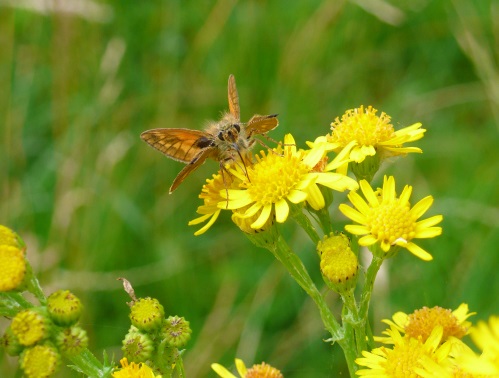
Skipper on ragwort - cropped

There is to be a joint meeting of the Royal Entomological Society’s Insect Pollination and Insects & Sustainable Agriculture Special Interest Groups on “Progress in pollination and pollinator research” at the University of Reading, 20th April 2016.  Unfortunately I can’t make it (I have meetings at the university all that day and need to get myself organised before heading off to Tenerife for field work on the 22nd) but I thought I’d advertise what looks like a very interesting one day conference.

The programme for the meeting is below and registration is open.  Please register before the meeting via The Royal Entomological Society using the form which can be downloaded from the RES website:

http://www.royensoc.co.uk/content/joint-meeting-insect-pollination-sustainable-agriculture-special-interest-groups-20-april-20

The registration fee will be £20 and includes lunch and all refreshments.

Convenors are Mike Garratt (Insect Pollination SIG) and John Holland (Insects & Sustainable Agriculture SIG) so please contact them if you’d like further information.

Programme

9.30-9.55 – Registration & Coffee

9.55-10.00 – Welcome

10.00-10.20 – Ecological intensification, pollinator diversity, and crop yield gaps in small- and large-holdings (Lucas Garibaldi, Instituto de Investigaciones en Recursos Naturales, Agroecología y Desarrollo Rural, Argentina)

10.20-10.40 – Welfare impact of pollinator decline on the international trade (Nicola Gallai, Ecole Nationale de Formation Agronomique, France)

10.40-11.00 – Conserving one beneficial at the cost of another; does success in promoting pollinators risk farmers ignoring other beneficial insects? (Mark Ramsden, ADAS)

11.00-11.20 – Coffee break

11.20-11.40 – Quantification of the floral landscape in agro-ecosystems and its effect on bumblebee colonies (Ellen Rotheray, University of Sussex)

11.40-12.00 – How many Bumblebees can our landscapes support? Using bumblebee colony models as a conservation management tool in agricultural landscapes (Grace Twiston-Davies, University of Exeter)

12.00-12.20 – Are current agri-environment schemes providing appropriate resources to the wider farmland bee community? (Thomas Wood, University of Sussex)

Short presentations:

12.20-12.25 – Pollination studies in the QuESSA Project (John Holland, Game & Wildlife Conservation Trust)
12.25-12.30 – Pollinator initiatives and research at the Royal Horticultural Society (Andrew Salisbury, RHS Garden Wisley)

12.30-12.35 – Collating evidence on plant traits and ecosystem services to inform multifunctional field margin design (Claire Blowers, Harper Adams University)

12.35-12.40 – Rare bee species and agriculture (Steven Falk, Freelance Entomologist)

12.40-12.45 – Fenland ditch banks as pollinator refuges: Environmental variable influence on pollination service measurements (Hilary Conlan, Anglia Ruskin University)

12.45-12.50 – What’s for dinner? Investigating the foraging preferences of honeybees using pollen DNA metabarcoding (Natasha de Vere, National Botanic Garden of Wales)

12.50-13.00 – Questions

13.00-13.45 – Lunch

13.45-13.50 – The National Pollinator and Pollination Monitoring Framework (Claire Carvell, Centre for Ecology and Hydrology)

13.50-13.55 – Impacts of climate change on plant-pollinator interactions in agro-ecosystems (Ellen Moss, Newcastle University)

13.55-14.00 – Reproductive resilience through outcrossing: pollen movement by insects is more important when plants are under stress (Jake Bishop, University of Reading)

14.00-14.05 – DNA metabarcoding reveals pollen transport by Eristalis hoverflies in grasslands (Andrew Lucas, National Botanic Garden of Wales)

14.05-14.10 – Raspberry pollination (Anders Nielsen, University of Oslo)

14.10-14.15 – Interaction between pollinators and pesticide use in agricultural crops: An ecological-economical modeling approach in South West France (Giorgos Kleftodimos, University of Toulouse)

14.15-14.20 – Estimating the net economic consequences of losing pollination services: evaluating contributions from single protected areas (Fabrizia Ratto, University of Southampton)

14.20-14.30 – Questions

14.30-14.50 – Insect pollinators: utilisation of resources through space and time in an intensive grassland landscape (Lorna Cole, SRUC)

14.50-15.10 – Insecticides and pollinators – Are they really incompatible? (Lin Field, Rothamsted Research)

15.00-15.20 – Monitoring the effects of chronic, larval exposure to neonicotinoids on the solitary bee Osmia bicornis (Beth Nicholls, University of Sussex)

15.20-15.30 – Discussion and close of meeting

Special issue of Leaf Litter devoted to pollinators

Leaf Litter

A short while ago I was interviewed by an American journalist as part of a special issue of the online newsletter Leaf Litter devoted to pollinators.  Produced by a conservation planning and ecological restoration organisation called Biohabitats, this special issue includes:

» Thoughts on Pollinators
» Expert Q&A: Jeff Ollerton
» Expert Q&A: Jerome Rozen
» Expert Q&A: Eugenie Regan
» Inspiration: Promising Progress With Pollinator Habitat
» Non-Profit Spotlight: The Xerces Society
» Video: An ecological planner walks into a cider mill…
» How Saving Pollinators Can Save Water and Fish Resources
» Biohabitats Projects, Places, and People

Here’s a link to Leaf Litter.

Urban Pollinator Knowledge Exchange summary – Bristol 22nd February

P1110838The importance of urban environments for supporting pollinator populations is a topic that I’ve covered several times on the blog, for example: “Urban pollinators for urban agriculture” and “Urban bee diversity – a new study“.  It’s a subject that’s generating a lot of interest at the moment with some really exciting research being published and conservation practice taking place.  However there’s clearly a lot to do if we are really to understand where pollinators are distributed across out townscapes, and how we can best manage urban habitats to support this diversity and increase their numbers – here’s a link to an interesting round table discussion on this very topic.
Recently I was invited to take part in a workshop event co-organised by Defra, NERC, and Dr Kath Baldock from Bristol University entitled: Knowledge Exchange: urban grassland management and creating space for pollinators.  As well as doing a short talk which contextualised the current scientific knowledge on urban pollinators, I facilitated one of the breakout discussion sessions.

The workshop was very well attended with some 50 delegates from a wide range of organisations, including local and national authorities, businesses, NGOs, and universities.  Feedback from those delegates was generally positive and most people learned something about managing urban settings for pollinators, and made some useful connections.  I certainly learned a lot: it’s good to get out of academia sometimes and talk with practitioners.

If you follow this link you’ll find a PDF of the summary from the facilitated sessions, covering topics such as grassland and verge management, the urban edgeland, innovative projects, and green infrastructure.

Over at the Bumblebee Conservation Trust’s blog, Sam Page has a very nice summary of the whole day which is also worth reading:  Trials and tribulations of managing urban grasslands for pollinators.

Many thanks to all of the organisers for their work in putting on this event.

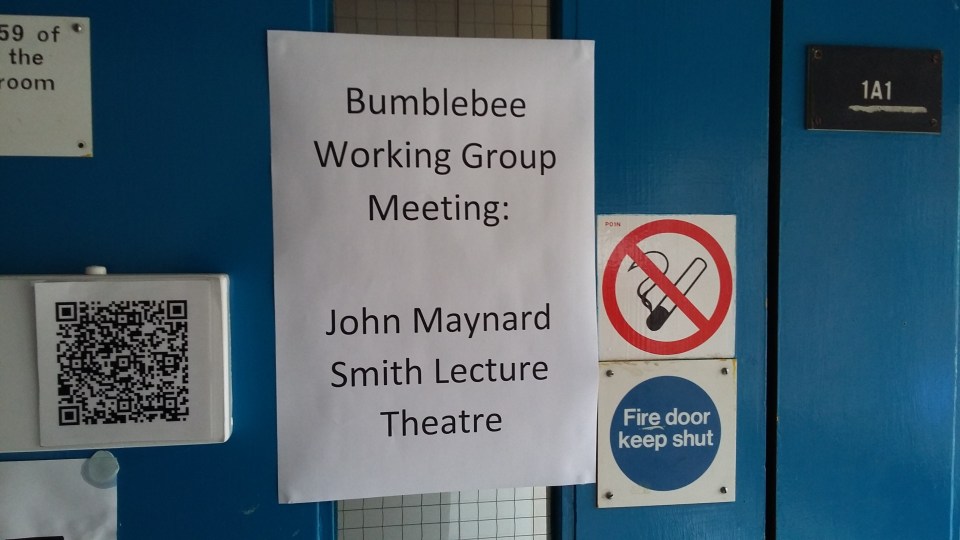
Bumblebee Working Group meeting – University of Sussex – 30th March

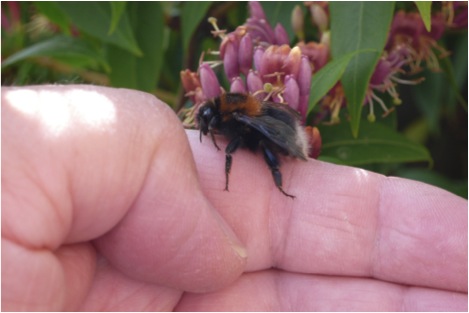
Bombus hypnorum

It’s been three years since the last meeting of the semi-formal Bumblebee Working Group, which I hosted at the University of Northampton, and British Bombus researchers  are eagerly looking forward to the next one which is being organised by Professor Dave Goulson at the University of Sussex on 30th March.  There is no charge and if anyone with an interest in bumblebees wishes to attend, please contact Dave.

Here’s the programme for the day, which starts at 10am and finishes at 4.30pm:

Goulson, Dave – Welcome

Williams, Paul  – Bumblebees of extreme environments

Alger, Samantha – RNA viruses in Vermont bumblebees

COFFEE BREAK

Baron, Gemma – Impacts of a neonicotinoid pesticide on colony founding bumblebee queens

Becher, Matthias Bumble – BEEHAVE: using bumblebee colony models as a conservation management tool in agricultural landscapes

Breeze, Tom – Knowledge gaps for effectively valuing pollination services

Cresswell, James – New European Union protocols for testing the toxicological impacts of agro-chemicals on bees

Crowther, Liam – Inferring invertebrate dispersal distances from biological records

LUNCH

Rotheray, Ellie – Quantification of the floral landscape in agro-ecosystems and its effect on bumblebee colonies

Nicholls, Beth – Pesticides in rural and urban bumblebee nests

Benton, Ted – Status of the BAP carders in Essex

Ollerton, Jeff – Exceptional urban nest density of the Tree Bumblebee Bombus hypnorum during summer 2014

SHORT BREAK

Raine, Katherine – Chernobyl bumblebees: Understanding fitness consequences of living in the exclusion zone

Jackson, Laurie  – B-lines

Gammans, Nikki – An update on the progress of reintroducing the short-haired bumblebee, Bombus subterraneus 

CLOSE

Pollinators, Pollination and Food Production: IPBES gains momentum

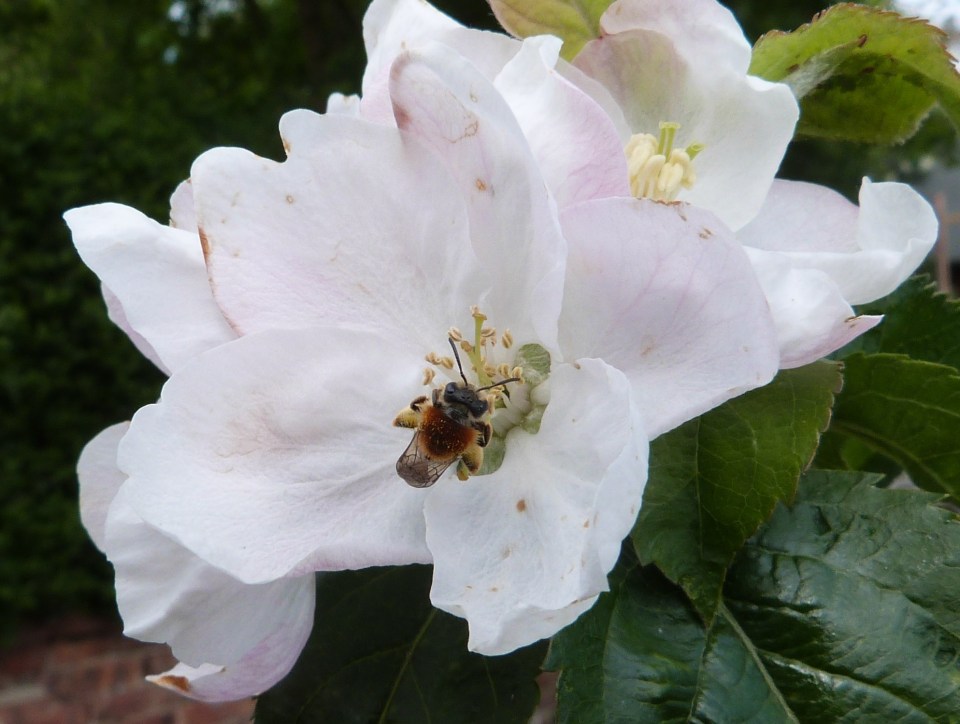
Bee on apple blossom - 1st May 2015

The over-arching themes of this blog have been about understanding biodiversity; the science behind its study; why it’s important; how it contributes to human well being, (including both intangible and economic benefits); and how policy informed by science can support the conservation of species and ecosystems.  These are all issues that have a global perspective beyond the bounds of my home country (the United Kingdom), or even my continent (Europe) because species, ecosystems and the threats to them do not respect political borders.

Enter IPBES – the Intergovernmental Science-Policy Platform on Biodiversity and Ecosystem Services (sometimes shortened to Intergovernmental Platform on Biodiversity and Ecosystem Services).

IPBES is a United Nations body established in 2012 that in many ways is a parallel entity to the IPCC ( Intergovernmental Panel on Climate Change), bringing together scientists, policy makers and stakeholders, with a mission:

to strengthen the science-policy interface for biodiversity and ecosystem services for the conservation and sustainable use of biodiversity, long-term human well-being and sustainable development

Which has got to be a good thing: science informing policy, what’s not to like?

The first output from IPBES will be a Thematic Assessment of Pollinators, Pollination and Food Production, and it’s just been discussed (today) at the 4th Plenary meeting of IPBES in Kuala Lumpur – here’s a link to the press release.

In the coming weeks I’ll talk more about IPBES and its Thematic Assessment (for which I acted as a reviewer), but for now I’ll just repeat some of the headline figures from the report:

  • 20,000 – Number of species of wild bees. There are also some species of butterflies, moths, wasps, beetles, birds, bats and other vertebrates that contribute to pollination.
  • 75% – Percentage of the world’s food crops that depend at least in part on pollination.
  • US$235 billion–US$577 billion – Annual value of global crops directly affected by pollinators.
  • 300% — Increase in volume of agricultural production dependent on animal pollination in the past 50 years.
  • Almost 90% — Percentage of wild flowering plants that depend to some extent on animal pollination*.
  • 1.6 million tonnes – Annual honey production from the western honeybee.
  • 16.5% — Percentage of vertebrate pollinators threatened with extinction globally.
  • +40% – Percentage of invertebrate pollinator species – particularly bees and butterflies – facing extinction.


*They are quoting a figure that I calculated, and very proud of it I am too 🙂

Pollinators and pollination – something for the weekend #9

The latest in an (ir)regular series of posts to biodiversity-related* items that have caught my attention during the past few weeks; this one’s focused on pollinators and pollination because there’s been so much emerging on this recently it’s been impossible to decide what to write more fully about!


Feel free to recommend links that have caught your eye.

*Disclaimer: may sometimes contain non-biodiversity-related items.

Protecting an ecosystem service: approaches to understanding and mitigating threats to wild insect pollinators

Bee on apple blossom 2 - 1st May 2015Back in April 2015 I attended a two day meeting at Imperial College’s Silwood Park campus to discuss initial project ideas to address evidence gaps in the recent National Pollinator Strategy.  I mentioned the meeting in passing in a post at the time concerned with whether biodiversity scientists should also be campaigners, but didn’t say a lot about what conclusions we came to and what the next steps would be because at the time I was unclear on both of those counts: it was a very wide ranging meeting with a lot of participants coming at the question of pollinator conservation from different perspectives.  As well as academics there were representatives from the agrochemical industry, government research organisations, and  the National Farmers Union.

During summer 2015 one of the conveners of the meeting, Dr Richard Gillherded cats organised colleagues, pulled together all of the text and ideas that were generated, and took on the task of seeing a summary of the meeting through from initial draft to publication.  It was a monumental effort, involving 27 authors and 86 manuscript pages, and Richard did a sterling job.  Entitled “Protecting an ecosystem service: approaches to understanding and mitigating threats to wild insect pollinators” it will appear as a chapter in the next volume of Advances in Ecological Researchwhich should be published later this month.

The abstract and contents for the chapter are below; if anyone wants a copy of the full chapter, please let me know.

Abstract

Insect pollination constitutes an ecosystem service of global importance, providing significant economic and aesthetic benefits as well as cultural value to human society, alongside vital ecological processes in terrestrial ecosystems. It is therefore important to understand how insect pollinator populations and communities respond to rapidly changing environments if we are to maintain healthy and effective pollinator services. This paper considers the importance of conserving pollinator diversity to maintain a suite of functional traits to provide a diverse set of pollinator services. We explore how we can better understand and mitigate the factors that threaten insect pollinator richness, placing our discussion within the context of populations in predominantly agricultural landscapes in addition to urban environments. We highlight a selection of important evidence gaps, with a number of complementary research steps that can be taken to better understand: i) the stability of pollinator communities in different landscapes in order to provide diverse pollinator services; ii) how we can study the drivers of population change to mitigate the effects and support stable sources of pollinator services; and, iii) how we can manage habitats in complex landscapes to support insect pollinators and provide sustainable pollinator services for the
future. We advocate a collaborative effort to gain higher quality abundance data to understand the stability of pollinator populations and predict future trends. In addition, for effective mitigation strategies to be adopted, researchers need to conduct rigorous field- testing of outcomes under different landscape settings, acknowledge the needs of end-users when developing research proposals and consider effective methods of knowledge transfer to ensure effective uptake of actions.

Contents
1. Importance of Insect Pollination
1.1 Providing an Ecosystem Service
1.2 Brief Introduction to Pollination Ecology and the Importance of Wild
Pollinators
2. Major Threats to the Pollination Service Provided by Insects
3. Steps in the Right Direction to Protect Insect Pollinator Services: Policy Actions
4. Understanding and Mitigating Specific Threats to Wild Insect Pollinators to Protect Pollinator Services
4.1 Understanding the Stability of Insect Pollinator Communities
4.2 Using Molecular Approaches to Monitor Insect Pollinators
4.3 How Do Parasites Shape Wild Insect Pollinator Populations?
4.4 Understanding Insect Pollinator Population Responses to Resource Availability
4.5 Engineering Flowering Field Margins as Habitats to Attract Insect Pollinators
4.6 How Might We Improve the Wider Countryside to Support Insect Pollinators
4.7 Insect Pollinators in Urban Areas
5. Considerations When Developing Future Research and Mitigation Strategies
Acknowledgements
Appendix
References

8 things I learned from the Parliamentary Pollinators Update seminar – UPDATED

POST event December 2015

As I advertised a couple of weeks ago, last Wednesday I was in London to take part in a Pollinators Update seminar at the Houses of Parliament organised by the Parliamentary Office for Science and Technology (POST).  It was a very interesting event and good to catch up with some of the latest ideas about pollinators and their conservation.  However it’s been a busy week since then and I’ve not had time to post a full account of the seminar, which was attended by over 40 people.  So I’ve decided to write a brief summary of eight things I learned that day from my fellow speakers* and from the day in general; in some cases I’ve linked to the original sources where available:

1.  About 46% of Europe’s bumblebees have declining populations (see the European Red List for Bees that I highlighted in an earlier post)

2.  Around 2% of the world’s bee species do 80% of the crop pollination (Kleijn et al. (2015) Nature Communications)

3.  Pollinators other than bees perform 39% of the flower visits to crops (Rader et al. (2015) Proceedings of the National Academy of Sciences)

4.  By 2100 the Red-tailed Bumblebee (Bombus lapidarius), one of the commonest species in Europe, may be extinct across most of the continent due to climate change (Rasmont et al. (2015) Climatic Risk and Distribution Atlas of European Bumblebees)

5.  Only 6.6% of Entry Level Stewardship agreements by farmers across England included plans to grow nectar- and pollen-rich flower mixes.

6.  Criticism of laboratory studies of the effects of neonicotinoid pesticides are just as illogical as criticisms of field studies: both have their limitations and advantages, and both are needed.

7.  A panel of four experts on pollinators and pollination will largely agree about the answers to most questions an audience asks.

8.  A Westminster seminar such as this will attract very few MPs if it clashes with an important debate in the House of Commons, in this case about future military action in Syria.

UPDATE: here’s a number 9 suggested by Simon Potts: we all strongly support and encourage the setup of an All Party Parliamentary Group on “Pollinators” not just “honeybees” or “bees”.


*With thanks to my fellow panelists Simon Potts, Claire Carvell and Richard Gill, and to Kirsten Miller and the POST team for organising the event, and for the photograph of the panel in action.


Pollinators seminar at the Houses of Parliament – 2nd December

Skipper on ragwort - cropped

The Parliamentary Office of Science and Technology (POST) has organised a “Pollinators Update” afternoon seminar in London on Wednesday 2nd December, to discuss recent developments in pollinator conservation research. I’ve been asked to give a 15 minute presentation on the pollinator extinctions research we published in Science last year.

The full programme will be:


  • 2.30pm Sarah Newton MP, Chair’s Welcome
  • 2.40pm Presentations
  • Professor Simon Potts (Professor of Biodiversity and Ecosystem Services) – Reading University
  • Professor Jeff Ollerton (Professor of Biodiversity) University of Northampton
  • Dr Claire Carvell – NERC Centre for Ecology and Hydrology
  • Dr Richard Gill – Imperial College London
  • 3.40pm Discussion
  • 3.55pm Chair’s closing remarks
  • 4.00pm Refreshments


The seminar is free to attend but you need to book a place: see the POST website for details.

Pesticides and pollinators: some new studies and contrasting conclusions

Bee on apple blossom - 1st May 2015

The question of whether or not neonicotinoid pesticides are negatively impacting agricultural pollinator abundance, diversity and behaviour continues to focus the minds of researchers. It’s an issue that has been almost constantly in the news since the earliest suggestions that these pesticides were harming pollinators. These concerns have led to temporary EU restrictions on the use of these chemicals, a decision that was partially over turned this year in the UK.

The past two months has seen the publication of at least five papers on the topic, two of them this week alone.  In this post I want to highlight those papers and provide some commentary.

The first two studies have shown that neonicotinoid pesticides can affect pollinator behaviour, and specifically the memories of both honey bees and bumblebees:

Wright et al. “Low doses of neonicotinoid pesticides in food rewards impair short-term olfactory memory in foraging-age honeybees

Stanley et al. “Bumblebee learning and memory is impaired by chronic exposure to a neonicotinoid pesticide“.

Subtle behavioural changes such as those documented here are not generally assessed in standard toxicological safety assessments for pesticides, which are mainly focused on whether or not the chemicals kill non-target animals, and at what dosage.  But for plant-pollinator interactions (including agricultural pollination) such changes in pollinator behaviour could be crucial to the effectiveness of the pollinators.  How crucial?  Well up until today we didn’t know; but with the publication of another paper by Stanley and colleagues we now have evidence that the sub-lethal effects on pollinator behaviour can actually translate into an effect on pollination of apple crops:

Stanley et al. “Neonicotinoid pesticide exposure impairs crop pollination services provided by bumblebees“.

The study is the first one to my knowledge that tests the effects of field-relevant doses of pesticides on pollinator performance and subsequent pollination services in a commercial farm crop, and adds some valuable hard data to an already heated debate.  The story, embargoed until this evening, has already been picked up by media, including the BBC News website.

To summarise the study: using artificial bumblebee colonies and caged apple trees Stanley and colleagues implemented an experiment in which they tested the effect of two different levels of exposure to a neonicotinoid pesticide on pollinator behaviour and subsequent pollination services to the fruit trees. They found a clear effect of exposure to the higher level of pesticide, resulting in a change in bee behaviour and a subsequent reduction in apple quality.

By way of a contrast, another study this week has focused on the lethal effects of these pesticides.  Henry et al. “Reconciling laboratory and field assessments of neonicotinoid toxicity to honeybees” has shown that although the chemicals are lethal to individual honey bees, the overall impact of the loss of the bees is buffered by the fact that the colonies can simply produce more worker bees to compensate for the losses.  This is interesting but needs to be judged in the context of the fact that honey bees are very unusual and atypical compared to most other pollinators, and indeed most other bees.  They produce very, very large colonies with a unique social structure, and so this compensation might be expected.  These caveats were echoed by some of the scientists asked to comment on the study in media stories such as the one on the BBC News website.

Finally, Godfray et al. have updated their earlier review of the environmental effects of these pesticides with “A restatement of recent advances in the natural science evidence base concerning neonicotinoid insecticides and insect pollinators“.  Given the rate at which new studies are coming out, it won’t be long before a second restatement is required!

Where does this leave the whole debate around pesticides?  Still with firmly entrenched views on both sides I would have imagined.  No doubt the debate will run and run.

Meanwhile, important as it is, the focus on pesticides is in danger of over-shadowing other really interesting studies that might affect how we manage our agro-ecosystems in the UK.  For example, I’d completely missed a paper from the end of September by Pywell et al. entitled “Wildlife-friendly farming increases crop yield: evidence for ecological intensification“.  As far as I can judge from the Altmetric information for the paper, so too had the media: it received no coverage on any of the usual outlets.  But this is important stuff that deserves wider publicity: it’s going to take more than a ban on pesticides to recover some of the biodiversity (at both a species and a habitat level) that we’ve lost due to intensive farming over the last 100 years or so.