Tag Archives: Nature conservation

British phenological records indicate high diversity and extinction rates among late-summer-flying pollinators – a recently published study

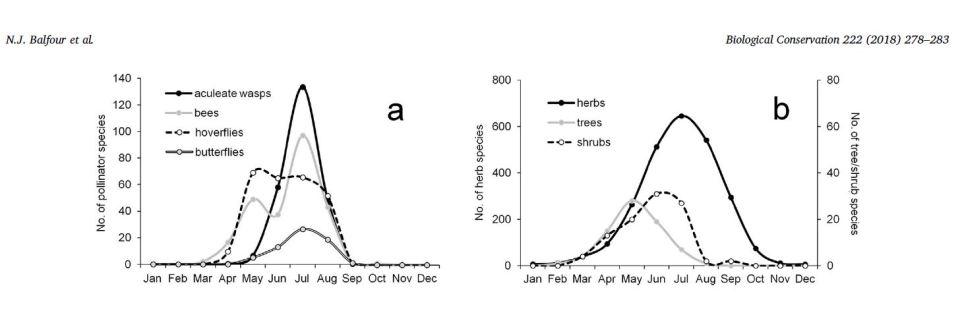
Balfour et al Figure 1

Natural history records of plant flowering and pollinator foraging, much of them collected by well informed amateurs, have huge scientific importance. One of the values of such records to ecology is that it allows us to document where these species occur in space and when they are active in time. This can be done at a range of spatial and temporal scales, but large-scale patterns (for example at a country level) are, I think, especially useful because they provide scientific evidence that can inform national conservation strategies.

During 2017 I collaborated with a young early career researcher at the University of Sussex, Dr Nick Balfour, on an analysis of the phenologies of British pollinators and insect pollinated plants.  That study was recently published (see citation below) and I think that the results are fascinating.

Nick did most of the leg work on this, which involved assessing more than one million records that document the activity times of aculeate wasps, bees, butterflies and hoverflies held in the databases by three of the UK’s main insect recording organisations, the Bees, Wasps and Ants Recording Society (BWARS), the UK Butterfly Monitoring Scheme (UKBMS) and the Hoverfly Recording Scheme (HRS).  Information on flowering times was taken from a standard British flora (Clapham et al. 1990 – Flora of the British Isles. Cambridge University Press).

As well as looking at annual flight periods and flowering trends for these organisms we also focused on pollinator and plant species that were endangered or extinct. Here are some headline results and thoughts on what the work shows:

  • About two-thirds (62%) of pollinator species peak in their flight times in the late summer (July and August), though there was some variation between the different groups – see the figure from the paper above).  Particularly noticeable was the double peak of the bees, with the first peak denoting the activity of many early-emerging solitary bees, such as species of the genus Andrena, whilst the second peak is other solitary bees plus of course the bumblebees which by that time have built up their colonies.
  • A rather fixed phenological pattern with respect to different types of plants was also apparent, which I was not expecting at all: insect pollinated trees tend to flower first, followed by shrubs, then herbaceous species (again, refer to the figure above). This might be because larger plants such as trees and shrubs can store more resources from the previous year that will give them a head start in flowering the following year, but that idea needs testing.
  • Putting those first two points together, what it means is that trees tend to be pollinated by those earlier emerging bees and hoverflies, whereas the herbs are mainly pollinated by species that are active later.
  • When looking at the extinct and endangered pollinators, the large majority of them (83%) were species with a peak flight times in the late summer, a much larger proportion than would be expected given that 62% of all species are active at that time. However this was mainly influenced by extinct bee species and the same pattern was not observed in other groups.
  • The obvious explanation for that last point is that historical changes in land use have led to a dramatic reduction in late summer flowering herbaceous species and the subsequent loss of floral resources has been highly detrimental to those bees. But intriguingly no such pattern was apparent for the endangered pollinators and clearly there are complex reasons why pollinators should become rare or extinct, a point that I have discussed previously on the blog.
  • The lack of late summer flowering resources for pollinators is a contentious issue however as plant conservation groups have in the past recommend that meadows and road verges are cut in late summer to maximise plant species richness.  Mowing road verges once or twice a year certainly benefits plant diversity, as this recent review by Jakobsson et al. (2018) demonstrates.  But there’s very little data available that assesses how timing of cutting can affect pollinators.  The only study that I know of (and if I’ve missed any, please let me know) that has considered this is the PhD work of one of my former students, Dr Sam Tarrant who looked at pollinators and plants on restored landfill sites compared to nearby nature reserves.  In a paper that we published in the journal Restoration Ecology in 2012 we showed that on restored landfill sites the abundance of pollinators in autumn surveys (conducted September-October) was just as high as for summer surveys.  On nature reserves, which are routinely cut from mid-July onward, this was not the case.

Here’s the full citation of Nick’s study with a link to the publisher’s website, and a copy of the abstract is below.  If anyone wants a PDF, drop me a line:

Balfour, N., Ollerton, J., Castellanos, M.C., Ratnieks, F.L.W. (2018) British phenological records indicate high diversity and extinction rates among late-summer-flying pollinators. Biological Conservation 222: 278-283

Abstract:

The long-term decline of wild and managed insect pollinators is a threat to both agricultural output and biodiversity, and has been linked to decreasing floral resources. Further insight into the temporal relationships of pollinators and their flowering partners is required to inform conservation efforts. Here we examined the
phenology of British: (i) pollinator activity; (ii) insect-pollinated plant flowering; and (iii) extinct and endangered pollinator and plant species. Over 1 million records were collated from the historical databases of three British insect monitoring organisations, a global biodiversity database and an authoritative text covering the national flora. Almost two-thirds (62%) of pollinator species have peak flight observations during late-summer
(July and August). This was the case across three of the groups studied: aculeate wasps (71% of species), bees (60%), and butterflies (72%), the exception being hoverflies (49%). When species geographical range (a proxy for abundance) was accounted for, a clear late-summer peak was clear across all groups. By contrast, there is marked temporal partitioning in the flowering of the major plant groups: insect-pollinated tree species blossoming predominantly during May (74%), shrubs in June (69%), and herbs in July (83%). There was a positive correlation between the number of pollinator species on the wing and the richness of both flowering insect pollinated herbs and trees/shrubs species, per calendar month. In addition, significantly greater extinctions occurred in late-summer-flying pollinator species than expected (83% of extinct species vs. 62% of all species). This trend was driven primarily by bee extinctions (80% vs. 60%) and was not apparent in other groups. We contend that this is principally due to declines in late-summer resource supplies, which are almost entirely provisioned by herbs, a consequence of historical land-use change. We hypothesize that the seasonality of interspecific competition and the blooming of trees and mass-flowering crops may have partially buffered spring flying pollinators from the impacts of historical change.

Final thoughts from the International Botanical Congress in Shenzhen

IBC 47 Veg market

Despite my best efforts I’ve not been able to produce a daily post about the International Botanical Congress (IBC) in Shenzhen.  The days were just too busy: too many interesting people to talk to; too many great talks to see; too much cold beer to be drunk and tasty food to be eaten; and a too-comfortable bed to collapse into at the end of a long, long day.

It’s Sunday today, and the closing ceremony took place yesterday afternoon.  Speeches were made and thanks offered to our Chinese hosts.  It was a fitting end to what has been a truly remarkable conference, the like of which I’ve never previously experienced, and may never again.  It wasn’t just the scale of it – almost 7,000 delegates giving and attending hundreds of talks – but just the very positive buzz of all of these plant scientists determined to make a difference in some way, through their research and education and outreach work.  That’s been the main theme of this conference: that a healthy global population living in a safe and sustainable world is not possible without plants, and to achieve that we must take the plant sciences very, very seriously indeed.  Plants are the foundation of our civilization and the key to surviving the future.

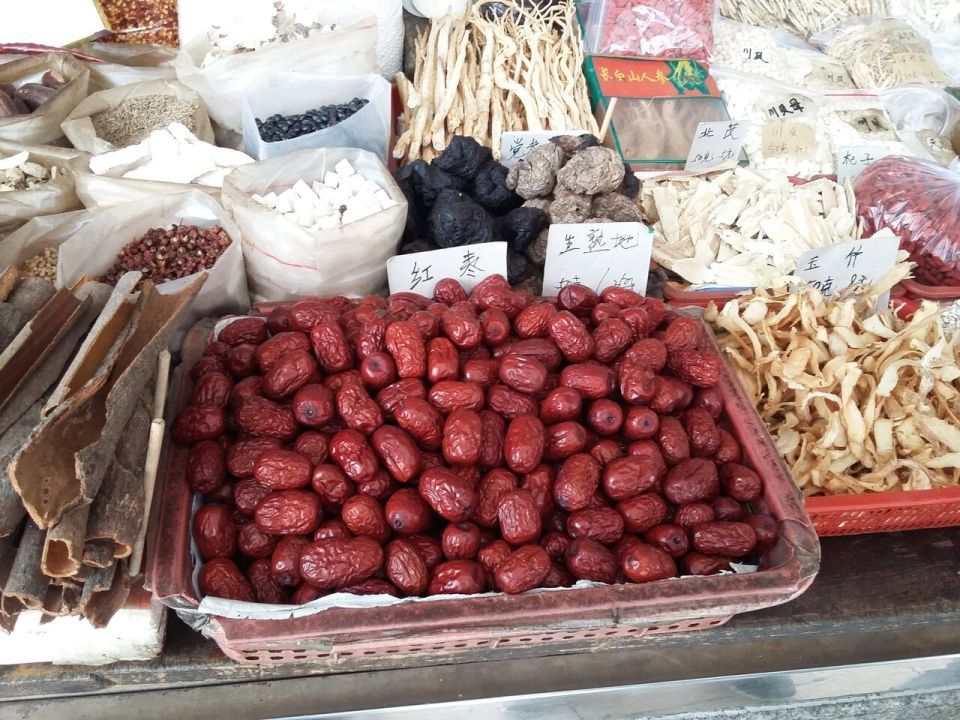
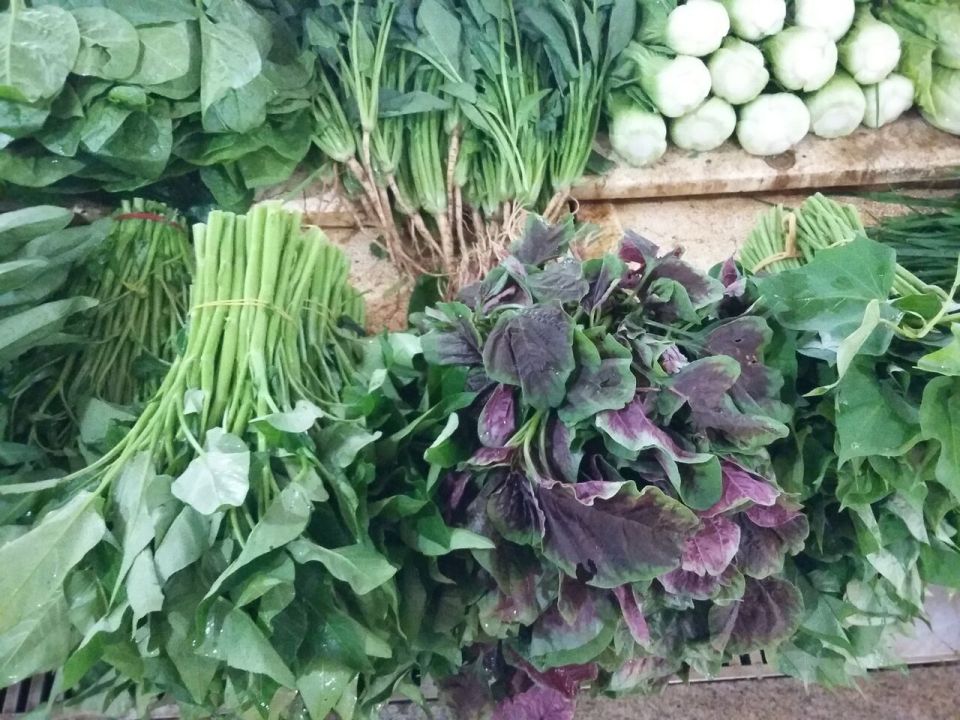
Anyone who doubts that last sentence should have joined us the other day when we made a short visit to a local fruit and vegetable market.  Beautifully displayed on low stalls was botanical produce that reflected both thousands of years of Chinese cultivation and crop breeding, including food plants not very familiar in the west……
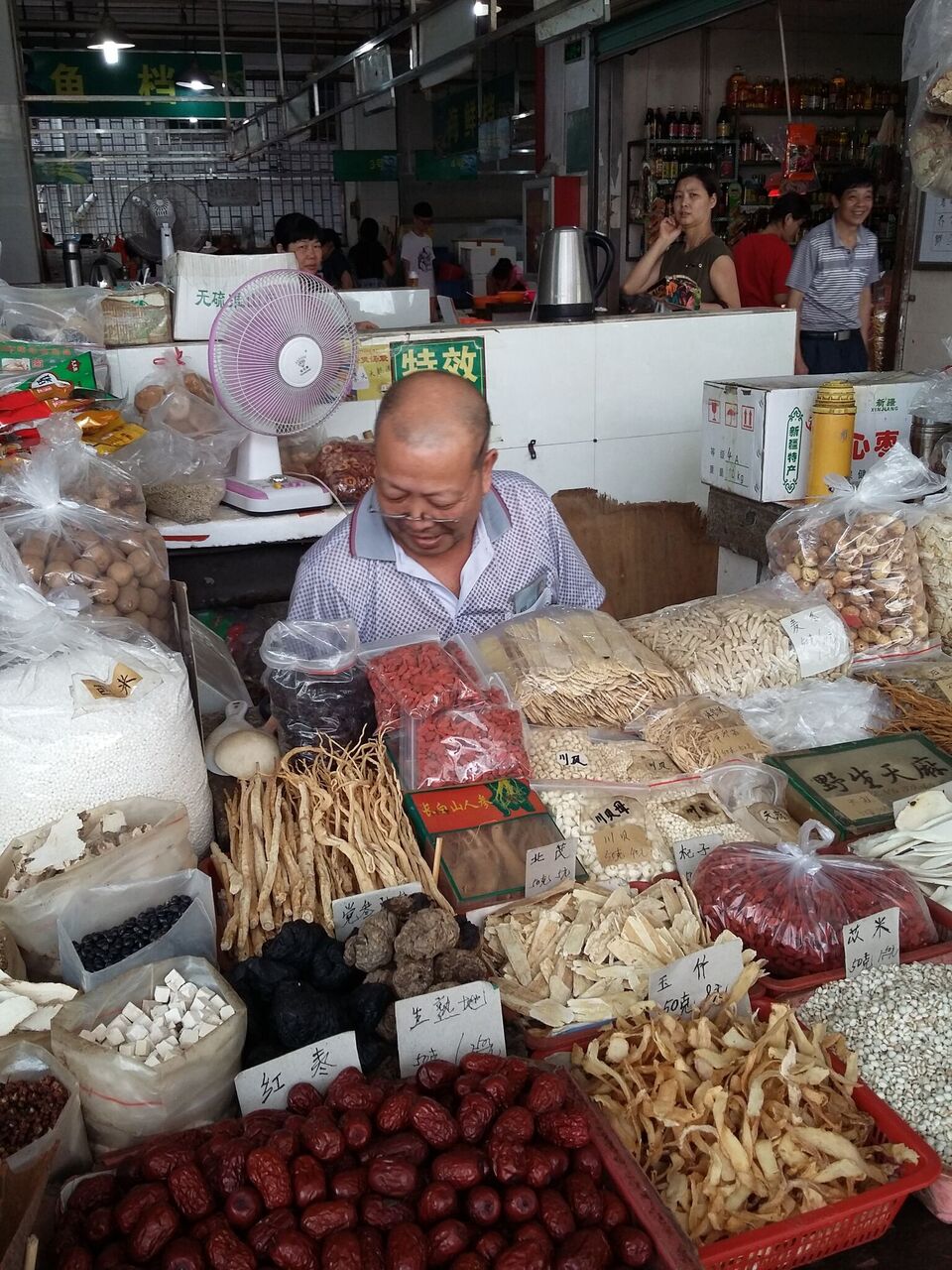
IBC 45 Veg market.jpg

IBC 46 Veg market

….together with the produce that’s only been a part of the Chinese diet for a few hundred years, or less, following its introduction from Europe and the Americas, including current staples such as chillies, squashes and potatoes:

IBC 43 Veg market

Global movements of food crops have enriched diets and supported the populations of entire countries: most of the fruit and vegetables that we eat in the UK, for instance, are not even native to Europe let alone the British Isles.

During this trip to the market I was able to add two new plant families to my life list of those I’ve eaten.  They were Saururaceae (the leaves and rhizomes of Houttuynia cordata) and Portulacaceae (Portulaca oleracea being a common leaf vegetable in some parts of the world, but not the UK).  That brings my current total of pant families I’ve eaten to more than 90.

That theme of the importance of plants was codified by the launch at the IBC of the Shenzhen Declaration on Plant Sciences, on which the Natural History Museum’s Sandy Knapp has been an author; hopefully you can read the seven priorities in this image:
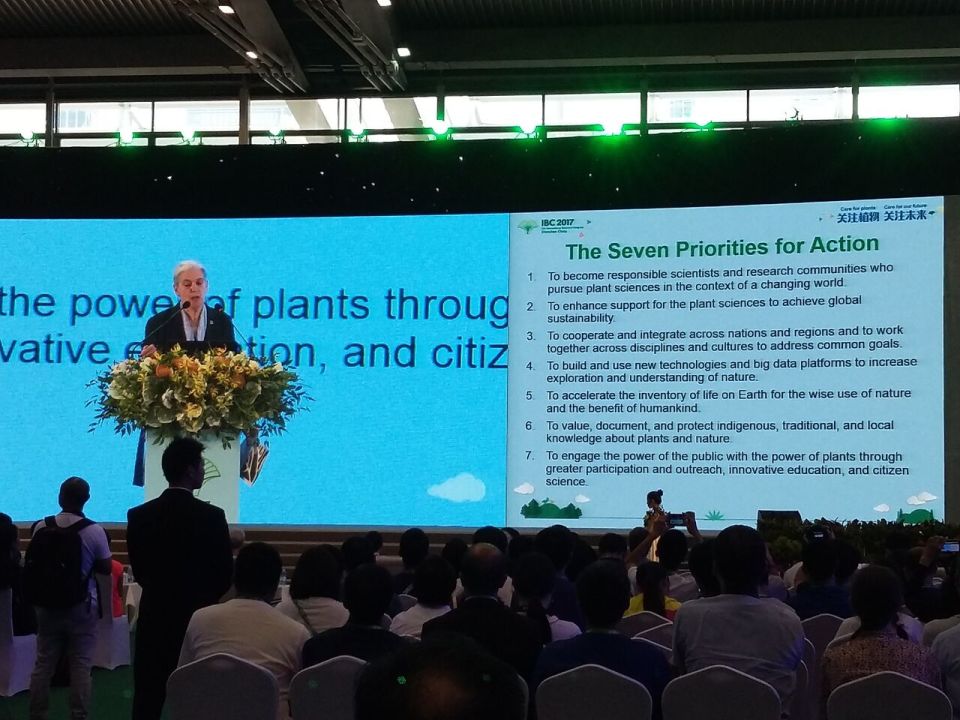
IBC 40 Shenzhen Declaration

The Shenzhen Declaration provides both a rallying call for plant scientists to convince their governments of the importance of their work, but also highlights how seriously China takes the whole concept of sustainable development.  It’s remarkable (but actually perfectly logical) that such a fast developing country should be the prime mover in the area of green sustainability.  Only time will tell if they are doing enough, at a pace that will make a difference.

There were a couple of awards made at the closing ceremony, including the first ever Shenzhen Award to Prof. Peter Raven, 81 years old and still going strong.  Earlier in the week a colleague introduced me to this giant of botany and evolutionary biology, and I got to shake his hand, feeling a bit awe struck I have to admit!
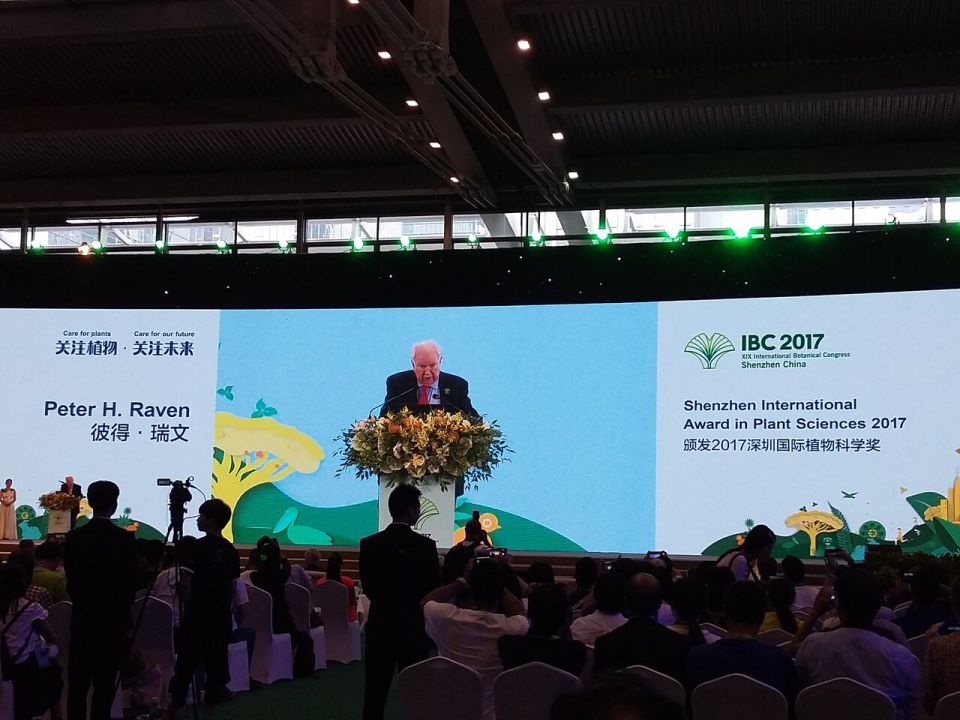
IBC 40 Peter Raven.jpg

The Engler Medal went to Chinese botanist Prof. Hong Deyuan for his systematic work on paeonies and other Chinese plants:
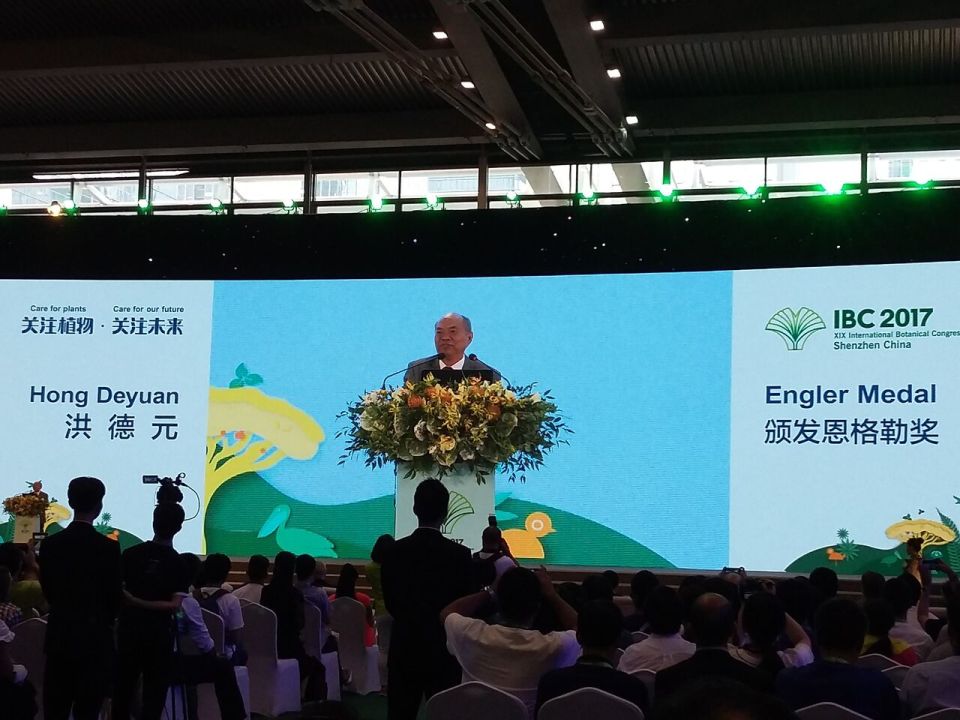
IBC 40 Hong Engler.jpg

So, that’s it for another six years.  IBC 20 will be held in Rio in 2023; the Shenzhen Congress has set a high bar, but we’re sure that Brazil can match it!
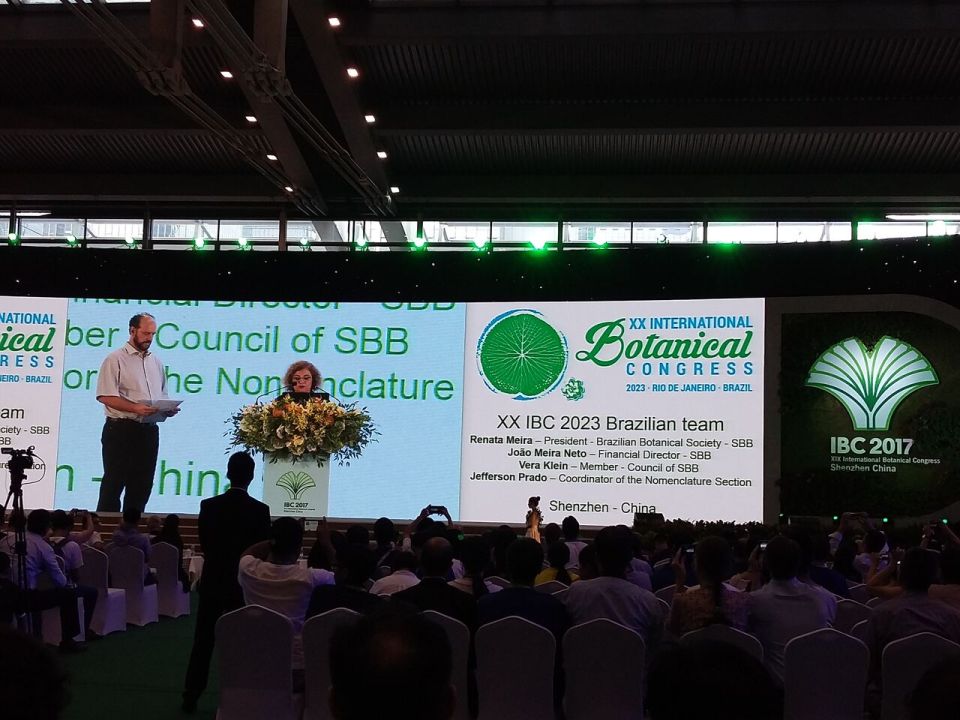
IBC 39 Rio

Today I’m off to Fairy Lake Botanical Garden to do a bit of exploring with some colleagues, then I fly home tomorrow evening.  It’s been a wonderful trip but I’m looking forward to seeing my family, our cats, and how our garden has changed in the short time I’ve been away.  My sincerest thanks to all the friends and colleagues who have made this such a stimulating and extraordinary conference.  Especial thanks to our Chinese hosts who made us feel so welcome, and the IBC Awards Committee for providing me with an “Excellent Scholar” award to enable me to take part. Over and out from Shenzhen.
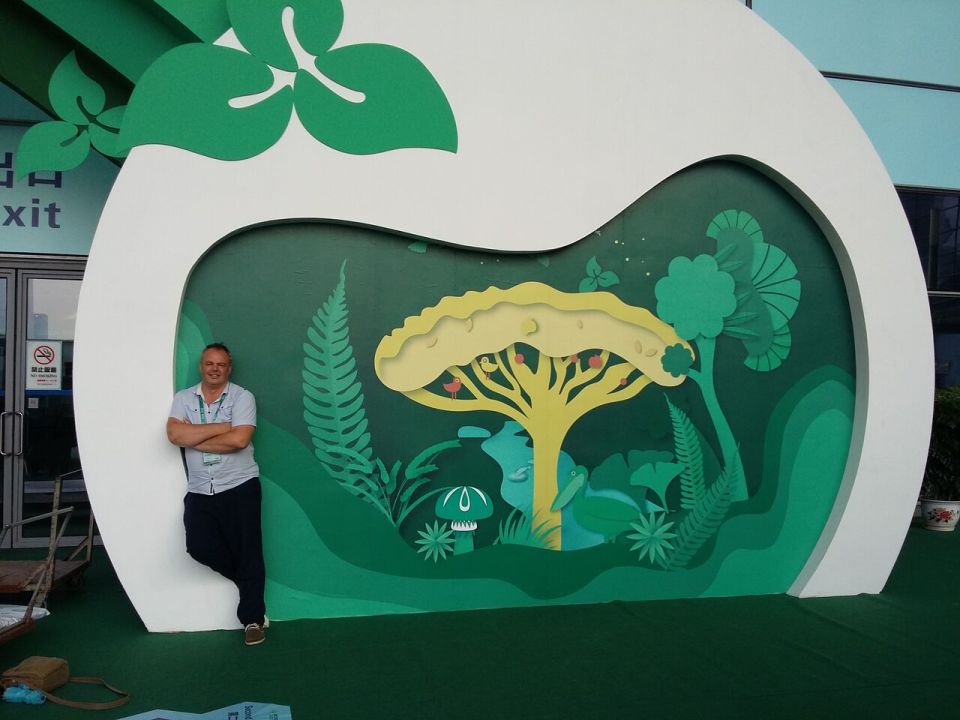
IBC 37 - Jeff

Proposals to “sequence the DNA of all life on Earth” suffer from the same issues as “naming all the species”

Tanzania ichneumonid P1000757

There’s a short piece on the website of the journal Science this week entitled “Biologists propose to sequence the DNA of all life on Earth“.  I don’t propose to say much about it except to say to anyone interested: read that piece, then read my recent post entitled “The road to degradation: is ‘naming all the species’ achievable or even desirable?

In my view “naming all the species” and “sequencing the DNA of all life” suffer the same issues and flaws. At a time when research funding is becoming ever more difficult to obtain (in part because it’s becoming more concentrated on fewer institutions and individuals) such multi-billion dollar initiatives make great headlines, but are they value for money?

At the moment Science also has a series of stories on its conservation news web pages, and you can find others all over the web, that point to our inability to conserve even large, charismatic species such as elephants and the big cats, and how this in turn can impact on human survival and wellbeing.  Perhaps we should devote more funding and more research energy to fixing these issues before we attempt such large-scale projects?

As always, your opinions and comments are welcomed.

International Wildlife Gardening Conference – 23rd November

20160702_100724An International Wildlife Gardening conference is to be held at the Natural History Museum in London on 23rd November this year, organised by the Wildlife Gardening Forum.  The theme is:  “What European wildlife and nature gardeners can learn from each other” – very apt in these post-Brexit times.  The cost is £50 for the day (including lunch) and you can book by following this link.
Here is the programme for the day:

10.00 Registration and tea/coffee

10.30 Introduction and background; The Forum and the Wildlife gardening movement in England and Wales – Dr Steve Head (WLGF)

10.50 Nature gardening in Germany: an historical view from the start to today. How useful is the concept of native plants for wildlife? – Dr Reinhard Witt (President of Naturgarten e.V. [Nature Gardeners’ Association], Germany)

11.25 Naturgarten e.V.: nature-oriented design in gardens, educational institutions and public space in an era of climate change – Ulrike Aufderheide (Naturgarten e.V. [Nature Gardeners’ Association], Germany)

12.00 Lunch and networking (optional guided tour of the Wildlife Garden)

1.30 Biodiversity path in a heritage park: a case study – Jérôme Constant and Carole Paleco (Royal Belgian Institute of Natural Sciences) (Afternoon Session Chair: Andrew Salisbury)

2.05 Looking for oases – Marianne van Lier and Willy Leufgen (Stichting Oase [Oasis Foundation], Netherlands)

2.40 Tea/coffee

3.00 Looking after our roots and the brown stuff – Sarah Rubalcava (Ireland)

3.35 19 years of Garden for Life: working together to promote wildlife gardening in Scotland – Dr Deborah Long and Juliette Camburn (Garden for Life Forum, Scotland)

4.10 Panel session with speakers (led by Adrian Thomas)

4.30 Summing up and Close

(Please note; this programme may be subject to late changes)

Rewilding reconsidered: academic disagreements, big science, and beavers.

P1110320Rewilding has been the topic of a couple of blog posts over the last few years  (for example here, in relation to the George Monbiot-narrated video about the wolves of Yellowstone Park; and also here, about the notion that perhaps we should also think about rewilding the human digestive ecosystem).
Since then there’s been a lot of activity with respect to rewilding, some of it practical and adding to the evidence base, some of it conceptual and controversial.  So I thought I’d do a quick round up of rewilding-related items I’d seen recently: feel free to suggest others.

In an open-access paper in Current Biology, entitled “Rewilding is the new Pandora’s box in conservation” David Nogués-Bravo and colleagues ask “what exactly is rewilding, and is it based on sound ecological understanding?”  Their conclusion is that “there is a worrying lack of consensus about what rewilding is and what it isn’t” and that “scientific support for the main ecological assumptions behind rewilding, such as top-down control of ecosystems, is limited”.  They go on to discuss the potential dangers of (re)introducing species into existing ecosystems, including both ecological and economic concerns.

Meanwhile Jens-Christian Svenning and colleagues have an open access paper in Proceedings of the National Academy of the USA about “Science for a wilder Anthropocene: Synthesis and future directions for trophic rewilding research” which takes a much more positive view of the potential benefits of rewilding, though still urges caution and further research, pointing out that “empirical research on trophic rewilding is still rare, fragmented, and geographically biased, with the literature dominated by essays and opinion pieces.”  Science writer John Carey provides some useful wider context to this discussion in a companion piece.

Subsequently Dustin and Daniel Rubenstein critiqued the Svenning et al. paper with an opinion piece called “From Pleistocene to trophic rewilding: A wolf in sheep’s clothing“, to which Svenning and colleagues replied: “Time to move on from ideological debates on rewilding“.

Svenning et al.‘s request for more empirical data on the effects of rewilding has been heeded this month by a study in Freshwater Biology from Alan Law and colleagues on “Habitat engineering by beaver benefits aquatic biodiversity and ecosystem processes in agricultural streams“.  Focusing on the recent reintroduction of beaver to Scotland, these researchers documented positive effects of the beaver on removal of inorganic nutrients from streams, and overall freshwater invertebrate diversity.

I find it really exciting that so much interesting debate and data are now being generated on the topic of rewilding: it’s fascinating and important science with a clear practical component that could leave the planet richer and in better condition for future generations.  It certainly deserves to be better funded, perhaps taking a slice of the “big science” pie from physics and astronomy, an argument that has been raised several times by Charley Krebs on his Ecological Rants blog.

As a researcher I don’t have a horse in this race (or even a Konick pony, such as are being used in a small-scale rewilding project at Wicken Fen). However I do wonder what a “rewilded” landscape would look like for pollinators in Britain, given that most of their diversity and abundance is associated with open grassland and heathland habitats, which were rare in these islands prior to human deforestation.  Having said that, a greater density of large mammalian herbivores can certainly open up woodland – see Bakker et al.‘s paper on “Combining paleo-data and modern exclosure experiments to assess the impact of megafauna extinctions on woody vegetation“.

As a teacher these discussions provide a lot of scope for interesting class exercises and seminars on the topic, which I’ll certainly be developing more next year.  Expect this to be an ongoing topic on the blog.


Pesticides and pollinators: some new studies and contrasting conclusions

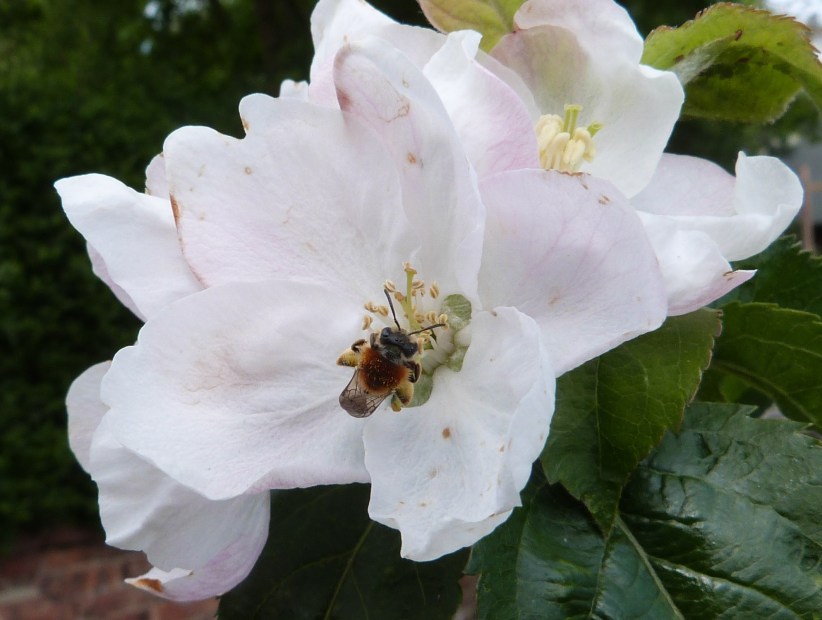
Bee on apple blossom - 1st May 2015

The question of whether or not neonicotinoid pesticides are negatively impacting agricultural pollinator abundance, diversity and behaviour continues to focus the minds of researchers. It’s an issue that has been almost constantly in the news since the earliest suggestions that these pesticides were harming pollinators. These concerns have led to temporary EU restrictions on the use of these chemicals, a decision that was partially over turned this year in the UK.

The past two months has seen the publication of at least five papers on the topic, two of them this week alone.  In this post I want to highlight those papers and provide some commentary.

The first two studies have shown that neonicotinoid pesticides can affect pollinator behaviour, and specifically the memories of both honey bees and bumblebees:

Wright et al. “Low doses of neonicotinoid pesticides in food rewards impair short-term olfactory memory in foraging-age honeybees

Stanley et al. “Bumblebee learning and memory is impaired by chronic exposure to a neonicotinoid pesticide“.

Subtle behavioural changes such as those documented here are not generally assessed in standard toxicological safety assessments for pesticides, which are mainly focused on whether or not the chemicals kill non-target animals, and at what dosage.  But for plant-pollinator interactions (including agricultural pollination) such changes in pollinator behaviour could be crucial to the effectiveness of the pollinators.  How crucial?  Well up until today we didn’t know; but with the publication of another paper by Stanley and colleagues we now have evidence that the sub-lethal effects on pollinator behaviour can actually translate into an effect on pollination of apple crops:

Stanley et al. “Neonicotinoid pesticide exposure impairs crop pollination services provided by bumblebees“.

The study is the first one to my knowledge that tests the effects of field-relevant doses of pesticides on pollinator performance and subsequent pollination services in a commercial farm crop, and adds some valuable hard data to an already heated debate.  The story, embargoed until this evening, has already been picked up by media, including the BBC News website.

To summarise the study: using artificial bumblebee colonies and caged apple trees Stanley and colleagues implemented an experiment in which they tested the effect of two different levels of exposure to a neonicotinoid pesticide on pollinator behaviour and subsequent pollination services to the fruit trees. They found a clear effect of exposure to the higher level of pesticide, resulting in a change in bee behaviour and a subsequent reduction in apple quality.

By way of a contrast, another study this week has focused on the lethal effects of these pesticides.  Henry et al. “Reconciling laboratory and field assessments of neonicotinoid toxicity to honeybees” has shown that although the chemicals are lethal to individual honey bees, the overall impact of the loss of the bees is buffered by the fact that the colonies can simply produce more worker bees to compensate for the losses.  This is interesting but needs to be judged in the context of the fact that honey bees are very unusual and atypical compared to most other pollinators, and indeed most other bees.  They produce very, very large colonies with a unique social structure, and so this compensation might be expected.  These caveats were echoed by some of the scientists asked to comment on the study in media stories such as the one on the BBC News website.

Finally, Godfray et al. have updated their earlier review of the environmental effects of these pesticides with “A restatement of recent advances in the natural science evidence base concerning neonicotinoid insecticides and insect pollinators“.  Given the rate at which new studies are coming out, it won’t be long before a second restatement is required!

Where does this leave the whole debate around pesticides?  Still with firmly entrenched views on both sides I would have imagined.  No doubt the debate will run and run.

Meanwhile, important as it is, the focus on pesticides is in danger of over-shadowing other really interesting studies that might affect how we manage our agro-ecosystems in the UK.  For example, I’d completely missed a paper from the end of September by Pywell et al. entitled “Wildlife-friendly farming increases crop yield: evidence for ecological intensification“.  As far as I can judge from the Altmetric information for the paper, so too had the media: it received no coverage on any of the usual outlets.  But this is important stuff that deserves wider publicity: it’s going to take more than a ban on pesticides to recover some of the biodiversity (at both a species and a habitat level) that we’ve lost due to intensive farming over the last 100 years or so.


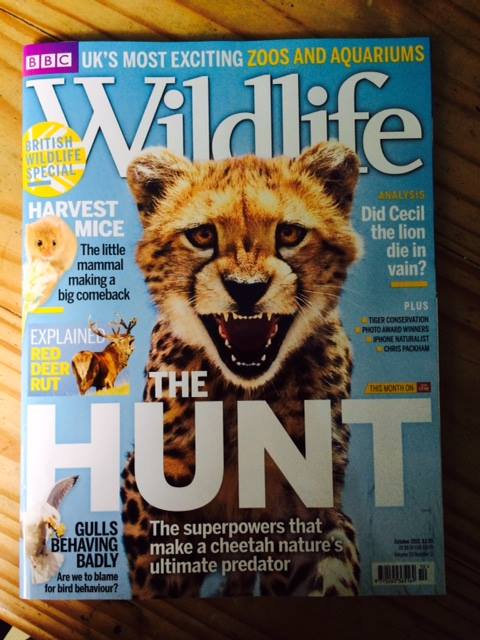
BBC Wildlife magazine for October features Northampton harvest mice research

BBC WIldlife Magazine

The October issue of BBC Wildlife has a feature on the research being done by Emily Howard-Williams into the ecology and conservation of one of the UK’s most charismatic mammals, the harvest mouse. Emily is a Lecturer in Countryside Management at Moulton College and a PhD student at the University of Northampton, supervised by my colleagues Dr James Littlemore (at Moulton) and Dr Duncan McCollin (at Northampton).

Well done to Emily!  You can find out more about her research in this press release.

The All-Ireland Pollinator Plan 2015-2020

B pasc on sunflower

In the last 12 months we’ve seen the release of the National Pollinator Strategy for England and the USA’s Strategy to Promote the Health of Honeybees and Other Pollinators.  Now the Republic of Ireland and Northern Ireland have joined forces to produce the All-Ireland Pollinator Plan, a strategy for 2015-2020 that has been released today.  Follow that link and you can download a copy.

This appears to be the first cross-jurisdiction pollinator plan in the world and, as such, is to be welcomed; as I said in my reflections on the National Pollinator Strategy, biodiversity does not respect political boundaries.

How much do we really understand about pollination syndromes?

P1110763

Ecologists and evolutionary biologists have, for many years, sought to document repeated patterns that they see in nature; to understand the processes that determine these patterns; and to make predictions about how and when they are going to be observed in the future or in other parts of the world.   There are many examples of such patterns, including: cyclical population dynamics of species such as lemmings; the occurrence of specific types of plant communities (e.g. rainforest, grasslands) in areas with particular climates; and convergent evolution of unrelated species to similar ecological niches, such as large, predatory placental and marsupial mammals (e.g. the dog and wolf family compared to the Tasmanian “wolf”).

An example of convergent evolution that has fascinated botanists since the 19th century is the idea of “pollination syndromes”, which are sets of flower characteristics that have repeatedly evolved in different plant families due to the convergent selection pressures applied by some groups of pollinators. Thus, red, scentless flowers producing lots of nectar are typical of many hummingbird pollinated plants in the New World, whilst white, night-scented flowers often signify moth pollination.  Good examples of plant species possessing these archetypical flower traits are have been used as text book examples for decades, repeatedly used to illustrate the predictable and specialised nature of some plant-pollinator interactions.

The problem is that until recently the pollination syndromes have rarely been subjected to critical tests of their frequency and predictive value (Ollerton et al. 2009 and references therein).  It’s been tacitly assumed that (after more than 150 years of study) we clearly know all there is to know about them, even though there have been criticisms levelled at the syndromes since their inception, a fact that has been subsequently ignored (Waser et al. 2011).

However in the last 20 years biologists have begun to seek answers to questions such as: How often do plant species conform to the expectations of the classical pollination syndromes? How good is our ability to predict the pollinators of a plant based just on its flower characteristics? What is the role played by flower visitors that do not conform to the predictions of the pollination syndromes? Similarly, what is the role of animals that steal nectar or pollen, or act as herbivores, in shaping flower traits?  What new examples of convergent evolution of flower traits remain to be discovered?

Research conducted in many different parts of the world has addressed these questions, questions which some biologists had assumed were already answered or which were not worth asking in the first place. And the answers to them are proving to be both surprising and controversial.

For example, the most comprehensive test of the frequency and predictability of pollination syndromes that has been conducted to date (Ollerton et al. 2009) concluded that only a small proportion of the 352,000 species of flowering plants could be categorised into the pollination syndromes as classically described. Likewise, they estimated that the predictive power of the pollination syndromes was about 30%. Other studies have shown that “secondary” flower visitors can be just as, or more, effective pollinators than the “primary” pollinator predicted by the syndromes (e.g. Waser & Price 1981,1990, 1991); that floral antagonists can play an important a role in shaping flower traits (e.g. Junker and Parachnowitsch 2015 and references therein); and that there are still examples of convergent evolution to “unexpected” pollinators waiting to be discovered in less well researched parts of the world, which in fact is most of the world (Ollerton et al. 2003).

Recently the very prestigious journal Ecology Letters published a paper that has challenged the challengers. Rosas-Guerrero et al (2014), by using a statistical technique called meta-analysis underpinned by a review of the available literature, suggested that pollination syndromes are much more predictable than Ollerton et al. (2009) concluded, and perhaps as high as 75%. However some of my collaborators and I see problems with their approach to studying pollination syndromes that have biased the conclusions that they draw, and therefore undermined the robustness of those conclusions, which we set out in a response to their original paper (Ollerton et al. 2015).  We originally tried to publish this in Ecology Letters but for some reason the journal was not interested; it’s therefore freely available from Journal of Pollination Ecology if you follow that link.

I won’t go into the detail of what we perceive as problems in Rosas-Guerrero et al.’s approach to testing the syndromes (you can read the paper for yourself) but in summary they relate to how the literature review was conducted (which failed to include all of the studies that could have provided data for their meta-analysis); the significant bias in the current literature because plant-pollinator interactions are not studied randomly (biologists are often drawn to large-flowered plants possessing those archetypical, classical flower traits associated with particular syndromes); the variation in how different researchers determine the effectiveness of the pollinators in their system, meaning that these studies are not always comparable; and issues around annual variation in pollinator identity and presentation of data.

Despite providing a focus and framework for understanding pollination biology for over 150 years, the pollination syndromes continue to surprise us and to provide a vital antidote to scientific hubris: we really do not understand nearly as much about them as we assume.

In an era when we are more and more concerned about loss of pollinator diversity, including extinction at both a species- and country-level, do these debates really matter or are they of purely academic concern, of interest to a few botanists and ecologists?  As you might expect, I’d argue that they do matter: there are still some fundamental aspects of pollination ecology that we don’t completely understand, or have only recently been seriously addressing, some of which I’ve worked on myself and which I’ve highlighted in this blog.  These include the number of flowering plants that require animal pollination, the diversity of pollinators at a global and regional level, the relative importance of different types of pollinators, and whether or not plants and pollinators are more specialised in tropical compared to temperate communities.  Without some of this fundamental knowledge we are unable to make effective arguments, policies and strategies for conserving pollinators.

References

Junker RR, Parachnowitsch AL (2015) Working towards a holistic view on flower traits—how floral scents mediate plant–animal interactions in concert with other floral characters. Journal of the Indian Institute of Science 95:43–67.

Ollerton J, Johnson SD, Cranmer L, Kellie S (2003) The pollination ecology of an assemblage of grassland asclepiads in South Africa. Annals of Botany 92:807–834.

Ollerton J, Alarcón R, Waser NM, Price MV, Watts S, Cranmer L, Hingston A, Peter CI, Rotenberry J (2009) A global test of the pollination syndrome hypothesis. Annals of Botany 103:1471–1480.

Rosas-Guerrero V, Aguilar R, Marten-Rodriguez S, Ashworth L, Lopezaraiza-Mikel M, Bastida JM, Quesada M (2014) A quantitative review of pollination syndromes: do floral traits predict effective pollinators? Ecology Letters 17: 388–400.

Waser NM, Price MV (1981) Pollinator choice and stabilizing selection for flower color in Delphinium nelsonii. Evolution 35:376–390.

Waser NM, Price MV (1990) Pollination efficiency and effectiveness of bumble bees and hummingbirds visiting
Delphinium nelsonii. Collectanea Botanica (Barcelona) 19:9–20.

Waser NM, Price MV (1991) Outcrossing distance effects in Delphinium nelsonii: pollen loads, pollen tubes, and seed set.
Ecology 72:171–179.

Waser NM, Ollerton J, Erhardt A (2011) Typology in pollination biology: lessons from an historical critique. Journal of Pollination
Ecology 3:1–7.

By lifting the restriction on the use of neonicotinoid pesticides Defra throws a (bee) brick at its own National Pollinator Strategy

P1120353

Yesterday a brick arrived in the post.  Not just any brick, but a Bee Brick, designed by the Green&Blue company in Cornwall as an architectural addition that can provide habitat for cavity nesting solitary species such as the Patchwork leaf-cutter bee that I discussed during Pollinator Awareness week.  A representative of the company recently got in touch, after having read my blog, and asked if I’d like a sample to try out in the garden.  In the absence of any planned wall building I’ve placed it a couple of metres up on the flat top of a south facing summer house window.  It’s probably a bit late in the season to attract any nesting solitary bees this year, but we’ll see; expect a report back from me at some point.

I had actually encountered the Bee Brick earlier this year at the Chelsea Flower Show which Karin and I attended as a 50th year bucket-list day out.  It was ok, I enjoyed it, the plants and (some of) the gardens were great.  But it was too busy, too expensive and too full of ostentatiously wealthy people for my tastes.

As if to serve as a counter-point to all the good work being done during Pollinator Awareness Week and by companies such as Green&Blue, came the recent news that Defra has agreed to lift the restrictions on use of two neonicotinoid pesticides on oil seed rape across a “limited” area in the east of the country.  It will apparently apply mainly to Suffolk, and cover an area of about 30,000 hectares.  That’s 5% of the UK’s oil seed rape crop.

The decision was made at the behest of the National Farmers Union, and seems to make no farming sense whatsoever given that nationally yields of oil seed rape have not been affected by the restriction on neonicotinoids, with the harvest this year looking to be above average.   Not surprisingly the decision has drawn furious fire from a range of environmental organisations including Buglife and the Wildlife Trusts. Meanwhile Friends of the Earth have threatened legal action, a move prompted by the fact that the Government has refused to allow its independent advisors to publish the details of the decision, including how it was made and what was discussed.

Aside from the lack of transparency, what particularly worries me is that this decision opens the door to further use of these restricted pesticides over the next 12 months, on a region by region basis, until we are back where we were prior to the restrictions being imposed.  The two year restriction on use of neonicotinoid pesticides comes to an end in December, at which point no one outside (and possibly inside) of Defra knows what is going to happen.

The National Farmers Union is being very selective with their use of information about the scientific evidence base for the effects of these pesticides on pollinators.  Dr Chris Hartfield, the NFU’s horticultural policy adviser and lead on bee health issues, was quoted as saying “The majority of the research that has fuelled this debate has been based on artificial dosing studies. The big question in this area is, does this accurately reflect what happens to bees foraging in and around neonicotinoid crops?  We don’t know, but the field studies haven’t shown that they are causing population declines in pollinators”.

Dr Hartfield and the NFU know full well that all of the evidence so far published shows that even at very small (field realistic) doses, neonicotinoid pesticides have been demonstrated to have important, sub-lethal effects on pollinators that may ultimately affect populations of some species.  Surely the wisest course of action is to further restrict their use until we have studied the situation.

This is not the only occasion when the NFU have been less than objective with their use of scientific evidence.  In the past couple of weeks I’ve had a group email exchange with Dr Hartfield in which he talked about the study by Carvalheiro et al. (2013) that “shows these [pollinator] declines have slowed (or even reversed) in the last 2 decades”.  I responded by pointing out that the current situation is not as straightforward as that.  The recent paper that we published in the journal Science showed that the rate of extinctions of UK bees and flower-visiting wasps has in fact increased over the period when Carvalheiro et al. (2013) see a slow down in declines in abundance.

There are a number of reasons why our results may be in disagreement with those of Carvalheiro et al., which we discuss in the paper, including the large statistical confidence interval around the rate of extinction during this latter period. However as with all such data, one or two studies will not give a definitive answer.  I provided Dr Hartfield with a link to our paper but I’m still waiting to receive a reply.

Initiatives such as the Bee Brick, reduced mowing on road verges, the RHS’s Perfect for Pollinators plant list, etc., etc. are important but they are tiny contributions compared to the role that must be played by British agriculture if we are to conserve pollinator diversity in the UK.  Farming accounts for 70% of the land surface in this country and has by far the greatest part to play in reducing biodiversity loss.

Within 12 months of Defra launching the National Pollinator Strategy, the same Government department has decided to bow to pressure and allow some use of a group of pesticides that we know are causing problems, even if they are not the whole story.  Defra is effectively hurling what may be the first of many bricks at itself, ultimately weakening the Strategy.   From conversations with politicians I know that these large departments do not have good internal communication and dialogue, but this seems to be an outstanding example of Orwellian double-think on the part of Defra.

P1120355