Tag Archives: Nature conservation

What is happening to wild bees in Britain?

Recently the Bumblebee Conservation Trust (BCT) reported that, in 2024, British bumblebees experienced their worst year since the BCT started its monitoring campaign. Overall, the numbers of bees were down by more than one fifth, with one of our commonest species, the Red-tailed Bumblebee (Bombus lapidarius) declining a staggering 74%! The cause seems to be the cold, wet spring of 2024 and we have to hope that this is a blip that will not be repeated in 2025. So far the year has been cold and I didn’t see my first queen bumblebee flying until early March. But the very warm weather over the last few days has encouraged bumblebees out of hibernation and plants to start flowering.

Long-term monitoring of the type that the BCT undertakes with its volunteers, is vital if we are to understand how British pollinators are faring. When I compiled the evidence for the chapter entitled ‘The shifting fates of pollinators’ in my book Pollinators & Pollination: Nature and Society, I tried to give a global overview, but also focused on British records, which are probably the best long-term data that is available on trends in pollinators. This information is compiled by the Joint Nature Conservation Committee (JNCC) as part of its annual UK Biodiversity Indicators reports. Each year it produces an indicator showing trends in bees, hoverflies, and the two combined as an overall pollinator trend*. To quote the JNCC website:

The indicator is based on 394 species (158 species of bee and 236 species of hoverfly), and measures change in the number of 1 kilometre grid squares across the UK in which they were recorded in any given year: this is referred to as the ‘occupancy index’.

The bee data comes from the Bees, Wasps and Ants Recording Society (BWARS) and the graph of bee trends that I used in that chapter of my book assessed records up until 2017. It looked like this:

As you can see, the index fluctuated a bit but was on average fairly stable up until 2005, after which there was a sharp decline, then an uptick from about 2014, though still low compared to the 1980 baseline. The overall impression is that bees had a tough time from the early 2000s onward, but things seem to be improving.

Since my book came out in 2021 I’ve given a lot of talks to natural history societies, ran training with consultancies and local councils, and so forth. Each year I update the JNCC graphs in my talks to give the audience the latest information. This is the one I used last year, which took the data up to 2019**:

This looks a bit different – the fluctuations are more pronounced – but overall the trend is similar, though the drop after 2015 is worrying. The impression is that there’s been big (cyclical?) fluctuations in the bee index over time, but its generally always below the 1980 baseline.

Updating the story to 2022 (the most recent available) shows a very different picture:

The impression it gives is that there’s been some modest fluctuations in the bee index, but then from about 2013 onward, the index has massively improved and now wild bees are doing better than ever!

What’s happening here? Why are these three graphs – published over a period of about five years – giving such different impressions of what’s happening to wild bees in Britain? As far as I can tell there’s two main reasons for the changes. The first is that the number of bee species included in the index increased from 137 to 148 to 158. Adding species for which there was previously no or little data is clearly going to have an effect.

The second reason, perhaps more fundamental, is that the method used for calculating the index has been refined, as explained in the technical annex to the study. That’s important because the data underlying the bee index was never collected in a standardised way for the purposes of assessing species’ trends. For this reason the UK Pollinator Monitoring Scheme (PoMS) was developed and it’s interesting to see that the data in the latest PoMS report shows some stability in wild bee abundance from 2017 to 2022:

So the latest data suggests that, for once, there’s some good news in the world of British wildlife. Does this mean that we should be complacent about the state of our wild bees? Absolutely not! As always, the devil’s in the details. The BCT report that I cited at the start of this post provides one level of (worrying) detail. But another is provided by the JNCC’s own statistics. As well as showing the overall trend in the bee index, the analysis digs into what is happening for individual species and provides a helpful summary figure like this:

Clearly many species are doing well, or at least have not changed since the 1980s. But more than one quarter of British wild bees are showing a weak or strong decline over the long term. That’s a clear signal that we need to keep on with our efforts to support wildlife and enhance our strategies to improve the state of nature in Britain.

As always, feel free to comment on the post or get in touch via my Contact page.

My sincere thanks to all of the volunteer naturalists who collect the data used by JNCC and PoMS – the task of assessing trends in wildlife would be impossible without your commitment!

————————————————————————————————–

*Why JNCC does not include butterflies – which are assessed separately – in this overall trend is unclear to me, as we know that they can be important pollinators for some plants – see my blog post: ‘Butterflies, bumblebees and hoverflies can be equally effective pollinators of some plants says a new study‘.

**The data in the JNCC report is always a couple of years behind the publication date.

How urban spaces support pollinators – a new study just published

Bees play a vital role in pollination, supporting both natural ecosystems and our food supply. However, their numbers are declining globally due to multiple threats—including urbanisation. As cities expand, understanding how different habitats within urban areas affect pollinator populations is crucial for conservation efforts and for supporting urban and peri-urban agriculture. It’s a topic to which I devoted whole chapters in my books Pollinators & Pollination: Nature and Society and Birds & Flowers: An Intimate 50 Million Year Relationship.

The latest paper from Muzafar Sirohi‘s PhD thesis has just been published in the journal Urban Ecosystems. It follows on from his two other recent papers on plant–bee interactions and resource utilisation and how the timing of emergence of solitary bees varies between urban and non-urban settings.

This element of Muzafar’s work explored how solitary and primitively eusocial bees (those that live alone or in simple social groups) respond to different aspects of city landscapes. He examined local habitat factors such as floral diversity, bare soil availability, and sunlight exposure, alongside broader urban features like green spaces, roads, and paved areas.

The findings highlight that small-scale habitat conditions—especially the variety of flowering plants and access to sunlight—had a greater influence on bee diversity and abundance than overall habitat size. While larger landscape features, such as urban green spaces, played a role at a broader scale, even small patches of wild vegetation and roadsides were found to be important for bees.

These results challenge the idea that bees need large, uninterrupted green spaces to thrive. Instead, even fragmented urban habitats, when managed thoughtfully, can support pollinators. By planting diverse flowers, preserving patches of wild vegetation, and maintaining sunlit areas, cities can become havens for these essential insects.

Simple changes—like creating wildflower-rich roadside verges or maintaining natural pockets of greenery—can make a significant difference. As urbanisation continues, ensuring that bees have the resources they need to survive will be key to supporting biodiversity and maintaining the critical pollination services they provide.

Here’s the reference with a link to the published study; if you are not able to access it, send me a request for a PDF via my Contact page:

Sirohi, M.H., Jackson, J. & Ollerton, J. (2025) Influence of urban land cover and habitat quality on wild bees. Urban Ecosystems 28:78 – https://doi.org/10.1007/s11252-025-01687-6

Here’s the abstract:

Solitary and primitively eusocial bees are important pollinators of plants, which are experiencing a global decline. Urbanisation is one of the contributing factors to this decline. It is crucial to understand the complex community dynamics of solitary and primitively eusocial bees in urban areas as urbanization grows globally. For bee communities, the local habitat as well as the surrounding urban landscape play an important role. The study considered four local habitat variables: habitat size, floral species richness, bare soil and shade. Moreover, five common land cover types (green space, buildings, roads, car parks, and paved surfaces) were assessed at multiple spatial scales from 40 m to 200 m from the centre of the sites with 20 m steps, analysing their potential impacts on the bee community. The study found a greater effect of local habitat compared to landscape variables at a smaller spatial scale. However, landscapes affected the bee community at larger spatial scales. The size of the habitat did not affect the bee community in urban areas. However, habitats with a higher number of plant species and exposed to sunlight attracted relatively more bees. This study suggests that urban areas are capable of conserving solitary and primitively eusocial bees. Although green space is important for the dispersal of species at larger landscape scales, small patches of wild, leftover vegetation and roadsides are equally important for bees. The management of bee friendly open vegetation with wildflowers would be beneficial for the successful conservation of solitary and primitively eusocial bees in urban areas.

What are the limits to pollinator diversity? A new article poses the question

The most globally significant groups of pollinators are well known and have been studied for a long time: bees and wasps, flies, butterflies and moths, birds, bats and beetles are all familiar to those of us with an interest in pollination ecology. However, every few years a new type of pollinator or a novel pollination system is described from nature or from the fossil record, or we add further examples of previously neglected pollinator groups such as cockroaches.

This begs the question: how much is there still to discover? How close are we to describing the full diversity of animals that act as pollen vectors? Can looking at the past help us to predict what we might find in the future? That’s the topic of a Perspective article that I was invited to write for the special issue of the Journal of Applied Entomology on the theme of  The Neglected Pollinators that I mentioned last month. It’s a subject that I’ve thought about a lot over the last few decades and it was great to get an opportunity to air some ideas and speculation.

The article is open access and you can download a copy by following the link in this reference:

Ollerton, J. (2024) What are the phylogenetic limits to pollinator diversity? Journal of Applied Entomology (in press)

Here’s the abstract:

Although huge progress has been made over the past 200 years in identifying the diversity of pollinators of angiosperms and other plants, new discoveries continue to be made each year, especially in tropical areas and in the fossil record. In this perspective article I address the following questions: Just how diverse are the pollinators and what are the phylogenetic limits to that diversity? Which other groups of animals, not currently known to regularly engage with flowers, might be found to be pollinators in the future? Can we predict, from the fossil record and from discoveries in under-researched parts of the world, which animal groups might turn out in the future to contain pollinators? I also discuss why adding to our knowledge of plant–pollinator interactions is important, but also stress that an incomplete knowledge may not be a bad thing if it means that remote, inaccessible and relatively pristine parts of the world remain that way.

Speaking at Oxford Ornithological Society – 11th September

Later this month I’ve been invited by the Oxford Ornithological Society to give a talk about my new book Birds & Flowers: An Intimate 50 Million Year Relationship. The talk will summarise the main themes from the book, particularly the sheer diversity of birds that can act as pollinators, what it means for the ecology and evolution of flowers, why the conservation of such interactions matters, and the cultural significance of bird-flower interactions. I’ll also deal with the question of why Europe is so odd when it comes to the question of birds as pollinators.

The talk is on Wednesday 11th September at Exeter Hall, Kidlington, starting at 7.45 pm; it’s free to society members, and non-members are invited to make a donation. Do come along if you’re in the area!

More details here: https://www.oos.org.uk/programme.php

I’ll bring a few copies of Birds & Flowers and Pollinators & Pollination: Nature and Society if anyone wants to buy a signed book.

Also in the diary are talks at South Leicester Birdwatchers (13th November) and Northamptonshire Bird Club (5th March).

If you represent a birding club or natural history society and wish to book me for a talk, please get in touch via my Contact page.

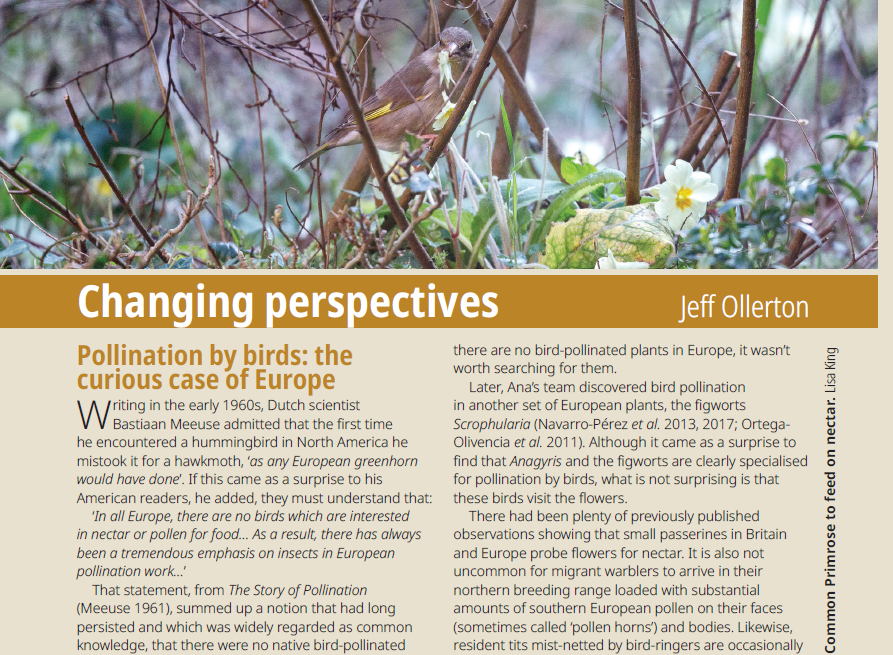
Pollination by birds: the curious case of Europe

Earlier this year I was invited by the editor of British Wildlife magazine to write a piece for their Changing Perspectives section about how odd Europe is when it comes to bird pollination. It’s based on one of the chapters in my book Birds & Flowers: An Intimate 50 Million Year Relationship.

If you subscribe to the magazine, it will appear in the August issue, though I’m happy to send a PDF to anyone who doesn’t subscribe (or has not read the book) – use the Contact Page. The main accompanying photograph is by one of my former students, Lisa King, who kindly allowed me to use it.

Aggressive dominance of acacia floral resources by wild East African lowland honey bees – a new study just published

Back in August 2022, Karin and I traveled to Kenya where I was teaching on a Tropical Biology Association field course at the Mpala Research Centre – see my posts from the time here and here.

Students on the course have to complete an extended group project, with supervision by teaching staff. Two of the groups looked at the visitors to flower heads of one of the dominant savannah acacias and the interactions between wild honey bees of the native subspecies and the other insects. There have been rather few studies of this honey bee in the wild and so we wrote up the work as a short research note that has now been published in the African Journal of Ecology.

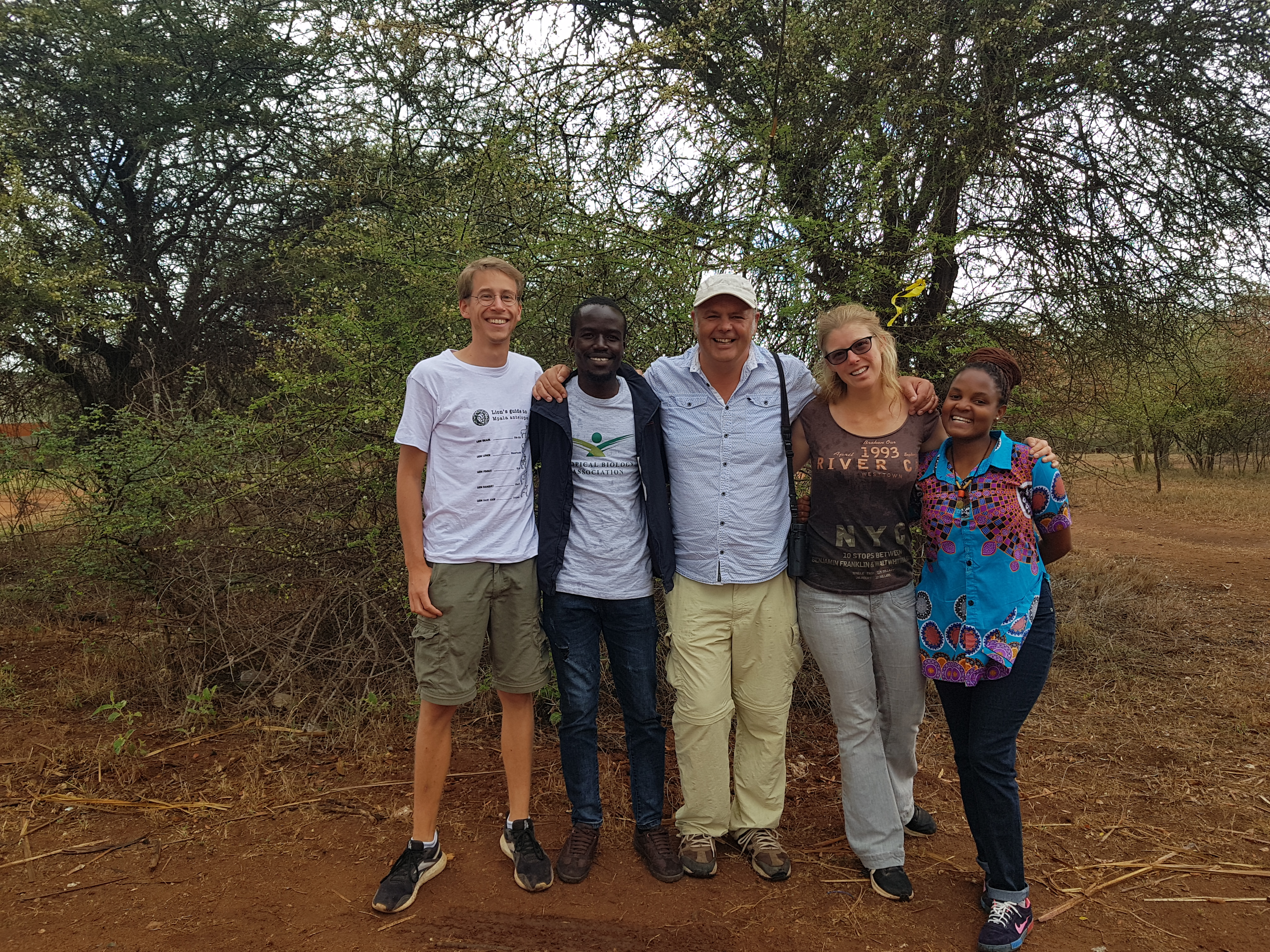
The photo above shows the authors – ‘Team Etbaica’ – from left to right: Luis Pfeifer, Swithin Kashulwe, me, Caka Karlsson, and Janeth Mngulwi.

Here’s the reference with a link to the publisher’s site – the paper is open access:

Kashulwe, S., Mngulwi, J. B., Karlsson, C., Pfeifer, L., & Ollerton, J. (2024) Aggressive dominance of acacia floral resources by wild east African lowland honey
bees. African Journal of Ecology 62, e13271. https://doi.
org/10.1111/aje.13271.

Here’s the abstract:

The East African lowland honey bee (Apis mellifera scutellata) is reported as an aggressive subspecies of the Western honey bee, but few studies have investigated the impact of its aggressiveness on other insect pollinators. Observations of flower visitors to Vachellia (Acacia) etbaica and interactions between honey bees and other insects were conducted in 2022 in Mpala, Kenya. A total of 873 individual flower visitors were recorded, the most frequent being Hymenoptera, followed by Diptera and Lepidoptera. Honey bees dominated floral resources in the morning and late afternoon. When honey bees encountered other types of insects, they displaced the latter from flowers 100% of the time. This has never been observed in other Western honey bee subspecies, and we recommend further research on these taxa.

Some seaweeds have “pollinators”! New research published this week

Most of us have at some time stared in fascination at the life contained within the pools that form on rocky shores at low tide. But none of us realized that a whole new class of ecological interaction was taking place!

The 12,000 or so described (and many un-named) seaweeds are incredibly important organisms. Their diverse and abundant photosynthesizing fronds make them one of the main primary producers in coastal seas, creating food and habitat for a huge range of animals. Not only that, but some – the coralline seaweeds – lock up vast amount of CO2 as calcium carbonate and help to create reef systems in the same way as coral.

Although scientists have studied seaweeds for hundreds of years, many aspects of their ecology are still unknown. Their detailed mode of reproduction, for example has only been studied in a small proportion of species.

In a newly published study in the journal Science, French PhD researcher Emma Lavaut and her colleagues have shown that small isopod crustaceans – relatives of woodlice and sea slaters – facilitate the movement of the equivalent of seaweed sperm (termed “spermatia”) from male to female reproductive structures in just the same way that bees and other pollinators move pollen between flowers, so fertilizing female gametes.

Your read that correctly: some seaweeds have pollinators!

It’s an incredible finding! And the implications of this are enormous: Emma and her colleagues have added a whole new branch of life to the examples of sedentary (fixed-place) organisms that require a third party to enable their reproduction. In addition to being a fascinating biological discovery, it has significant environmental and sustainability implications.  

Seaweeds are a diverse group of macroalgae that appeared more than one billion years ago, at least 500 million years before the evolution of what we think of as “true” plants, such as the flowering plants, conifers, cycads, ferns and mosses. Sexual reproduction in the brown and green seaweeds, which include kelps, wracks and sea lettuces, involves spermatia that are mobile and use a flagellum to swim through the water to seek out female reproductive structures. However, Emma studied a seaweed, Gracilaria gracilis, which belongs to the Rhodophyta or red seaweeds, and none of the species in this group have these swimming sperm equivalents.

Sexual reproduction in the red seaweeds has therefore always been something of a mystery. Three quarters of species have separate male and female individuals and so they cannot mate with themselves. It was assumed that the gametes were just released into water currents that haphazardly transported them to the female reproductive organs, much as wind pollinated grasses and pine trees release their vast clouds of pollen on land. The authors of this new study, however, point out that most sexual reproduction by these red seaweeds takes place in the relatively still waters of rock pools, a habitat that they mimicked in the laboratory in a series of elegant aquarium experiments.

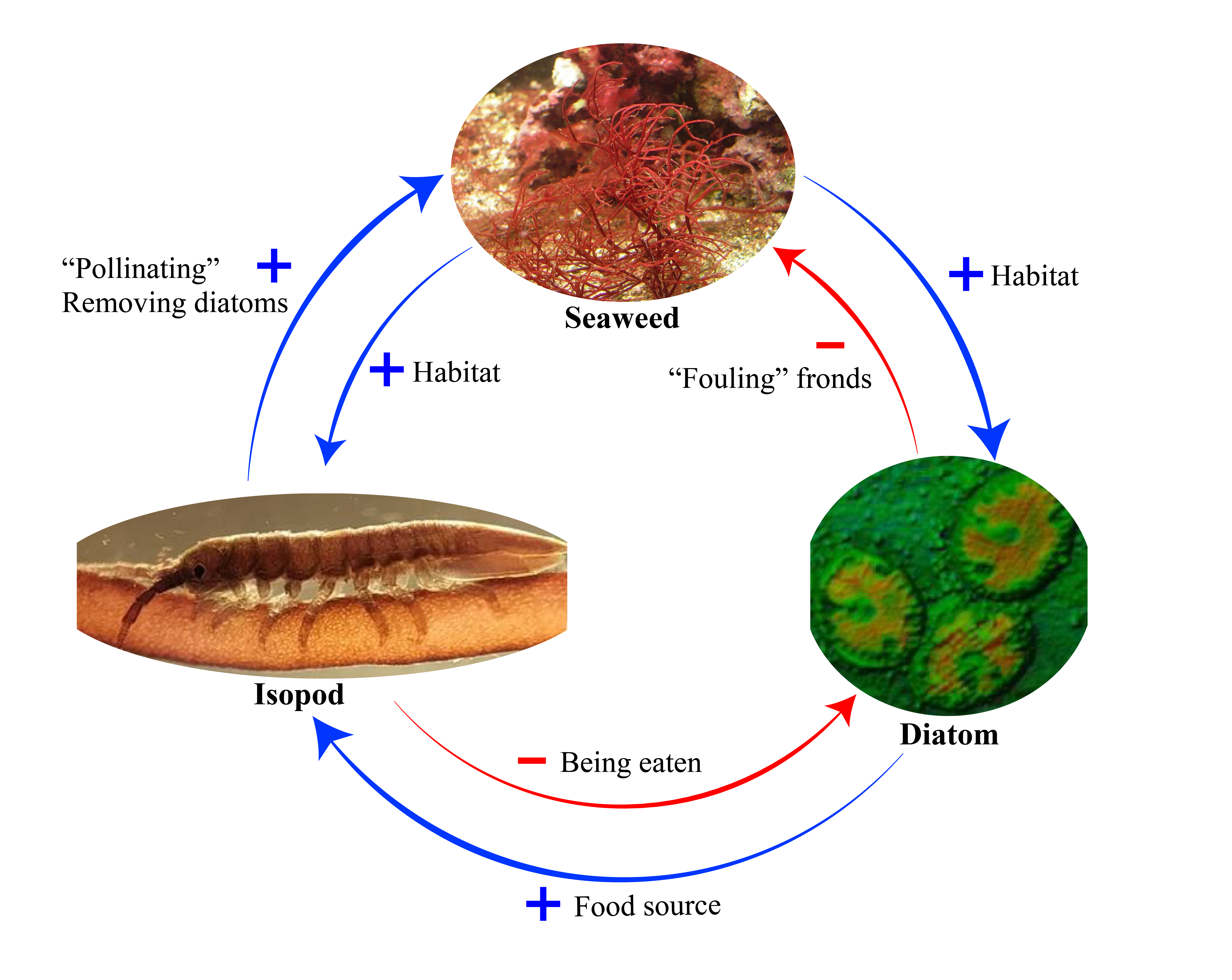
The isopod crustaceans are attracted to the seaweed because they provide a habitat away from predators and a supply of food: they graze on the microalgae that colonise the seaweed’s fronds. Picking up spermatia and moving them between fronds is a side-effect of this activity by the small invertebrates. As you can see from the illustration above, the isopods and the seaweed are engaged in a “double mutualism“: a plus sign (+) indicates a positive effect of one species on another, while a minus sign (-) indicates a negative impact. 

What I find especially fascinating about this research is that both the seaweed (Gracilaria gracilis) and the isopod (Idotea balthica) were originally described as species more than 200 years ago. They also have an extremely wide distribution. The isopod is found around the coasts of Europe and down the eastern seaboard of the Americas. The seaweed is pretty much found globally. These are not rare, unusual species, yet the interaction between them has only just been discovered! This is a point that I made in my recent book Pollinators & Pollination: Nature and Society: quite often, species that are well known interact in previously undocumented ways because no one has had the time or inspiration to look closely at them.

Although the idea that small sea creatures might be helping seaweeds to reproduce sounds very fanciful, there is a precedence for this discovery. Back in 2016, in a paper published in Nature Communications, a group of Mexican researchers led by Brigitta van Tussenbroek showed that a species of seagrass is pollinated by a diverse assemblage of small crustaceans and polychaete worms. Seagrasses are flowering plants, not seaweeds, but clearly this type of mutually beneficial relationship can exist between different species in the oceans.

Rhodophyta are the most diverse group of seaweeds, with more than 7,000 known species. They are especially abundant on coastal shores, oceanic habitats that are under huge pressure from infrastructure development, pollution, and climate change. At the same time, these seaweeds are economically important and millions of tonnes of them are collected every year as food, as nutritional and pharmaceutical supplements, and to produce agar. In order to conserve these seaweed populations, we need to better understand their ecology and their environmental requirements.

The work by Emma Lavaut and colleagues suggests that interactions with their “pollinators” may be a critical aspect of this understanding. In the same way that “Save the Bees” has been a rallying call for conserving interactions between species on land, we may soon hear this message echoed in “Save the Isopods”. At the very least, I have to add a new section to the second edition of my book!

Full disclosure: I was one of the reviewers of the original manuscript submitted to Science by Emma and her co-authors. It’s a rare privilege to review a study and think: “Wow! This is a game-changer!” and including this paper it’s happened to me only a handful of times. The editors at Science kindly invited my colleague Dr Zong-Xin Ren and myself to write a Perspective piece about the work and we were delighted to do so.


Image credits: Isopod and diatom images from Lavaut et al (2022). Gracilaria image by Emoody26 at English Wikipedia CC BY 3.0 https://commons.wikimedia.org/w/index.php?curid=3455016. Design by Shijia Wen and Jeff Ollerton.

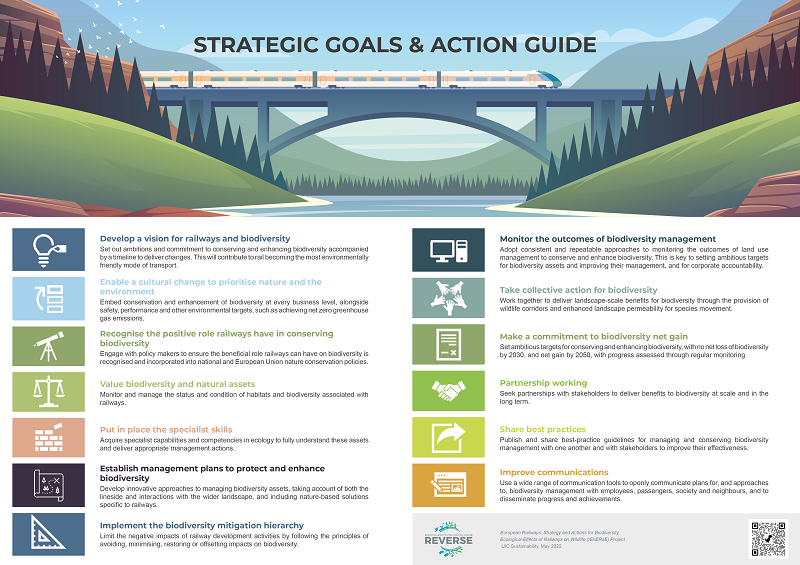
How can the European Rail Network support biodiversity? A new report just published

Rail travel is my favourite form of transport and always has been. I like its slower pace and the fact that on a long journey you can sit back, read or work, and watch the landscape unfold. Not only that but it’s one of the most environmentally friendly types of mass transport. So when I was asked to be one of the lead authors on a report outlining how the European Rail Network can support biodiversity along its 230,000 km length, I was happy to be involved! And that’s one of the main projects that I’ve been working on over the past 12 months, during which I’ve researched the literature, written and revised drafts, and learned a huge amount about the ecology of the rail network!

The report, which was formally released yesterday, was commissioned by the International Union of Railways (Union Internationale des Chemins de Fer or UIC), founded in 1922 as the global industry body for rail transport. The writing and desk top research was led by the UK Centre for Ecology and Hydrology (CEH).

If you follow the link you can find out more about the European Railways: Strategies and Actions for Biodiversity report and download a PDF copy.

That’s not the end of my involvement, however: the next stage is a technical guide and I’m already starting to work on that. I will report back once it’s complete.

Listen to an interview with me on the Environmental Professional’s Radio podcast!

text and logo over a background picture of a person posing for the camera

I was recently invited to chat about careers and writing and pollinators and pollination with the folks from National Association of Environmental Professionals for their Environmental Professional’s Radio podcast. You can listen to it here:

https://www.environmentalprofessionalsradio.com/

We covered a lot of ground and it was great fun – thanks for having me!

Earning a living as an independent academic and author: here’s what I’ve learned in my first year

It’s just over one year since I stepped down from my full time professorship at the University of Northampton in order to work independently as a consulting scientist and author. It was a move precipitated by a number of factors, not least that after 25 years at that institution I needed some new challenges. I was starting to feel stale, jaded, and not a little burned out.

Since making the decision to leave the university (where I still hold a Visiting Professorship) Karin and I have down-sized our lives by selling our house, disposing of possessions that we didn’t need (though there’s still a lot in storage in the UK) and moving to Denmark, where we are renting a small apartment for the time being. Karin is Danish and, yes, both Brexit and the pandemic have played a role in our decision making.

A few people have asked me recently how I’m managing to earn a living as an independent academic so I thought I’d share with you my experiences so far. I’ve looked at my various sources of income over the past year and put them into four broad categories: Conservation, Research, Education and Writing. Then I worked out the proportion of my income that can be attributed to each area, keeping in mind that there’s overlap between them. This is the result:

Conservation-related activities accounted for the largest fraction, about 46% of my income. This includes direct advisory and consulting, on pollinator-related projects but also on wider, biodiversity-related topics. For example I worked with the Stanwick Lakes nature reserve in Northamptonshire, advising on how best to enhance and manage the site for pollinators.

It’s a site that I know very well but which was set up mainly because it’s important bird habitat. Seeing it from a pollinator’s perspective allowed me to make suggestions for improving the amount and timing of floral resources, opportunities for ground nesting bees, and so forth.

I’ve also been working with the Centre for Ecology and Hydrology (Wallingford) on a biodiversity strategy for the European railway network which I’ll write more about later this year when the final report is published.

Also included in the Conservation category are the many, many talks (mainly online) that I’ve done for various natural history, gardening and beekeeping groups, plus training sessions that I’ve done with ecological consultancies, estates departments, and local government. There’s a list of those available on my training and public speaking page.

Research projects funded by UK and international agencies accounted for about 32% of my income. Some of these are projects that started when I was still employed at the University of Northampton and which are paying for my time (including completing the supervision of my remaining PhD students), others are new ones. You can find a list of present and past projects on this page of my website.

I am a partner on several funding applications that are in the process of being assessed and I’ll report back when we know if they have been successful.

As well as my own research I’m also reviewing grant applications for funding organisations, advising research groups and departments on their research strategies, and working with the Turkish Journal of Botany to promote the work it publishes to a wider international audience.

Education is the third, very broad category that includes things such as external examining (both taught and research degrees), assessing staff applications for promotion, and doing the occasional online lecture. It accounted for 11% of my income, less than I might have expected given that I’ve spent over 30 years teaching in higher education, educational consulting is quite a crowded field and unless you’re a high-profile specialist, it doesn’t pay well.

Writing accounted for about 11% of my income. As well as royalties from my book Pollinators & Pollination: Nature and Society, I earned money from writing for magazines such as BBC Gardeners’ World Magazine, New Scientist, British Wildlife, and Bees & Other Pollinators Quarterly.

In addition I’ve done some advisory work for publishers, including reviewing text and making suggestions for a forthcoming children’s book about bees and other pollinators, and some paid manuscript editing.

At the moment the balance of my work feels about right; I’ll never stop being a scientist so working on research projects is, and always will be, an important part of my life. I wish that it was possible to earn more from writing, but outside of the best-seller lists it’s difficult for authors to earn a decent living. However I’m working on my next book at the moment, as is Karin whose Essential Companion to Talking Therapy has been well received.

Working independently in this way, and putting together what amounts to a “portfolio career”, is not for everyone. It’s hard work and there are lots of uncertainties along the way, especially with regard to month-to-month consistency of one’s income. However a career as a university academic has prepared me for this in ways which I’m only just beginning to discover. Aside from the obvious subject expertise, familiarity with literature searching, and confidence when giving talks, the uncertainties associated with the high proportion of unsuccessful funding applications and navigating the (often contradictory) requirements of peer reviews has been extremely valuable experience. And of course I’ve established a large and diverse network of colleagues with whom I can collaborate and go to for advice. The diversity of paid work with which I’m engaged, plus the pro bono activities such as peer reviewing for journals, ensures that there’s never a dull day. I have absolutely no regrets about this latest step in my career!

If you’re interested in working with me or want to discuss any aspect of what I’ve written about, please do get in touch via my Contact page.