

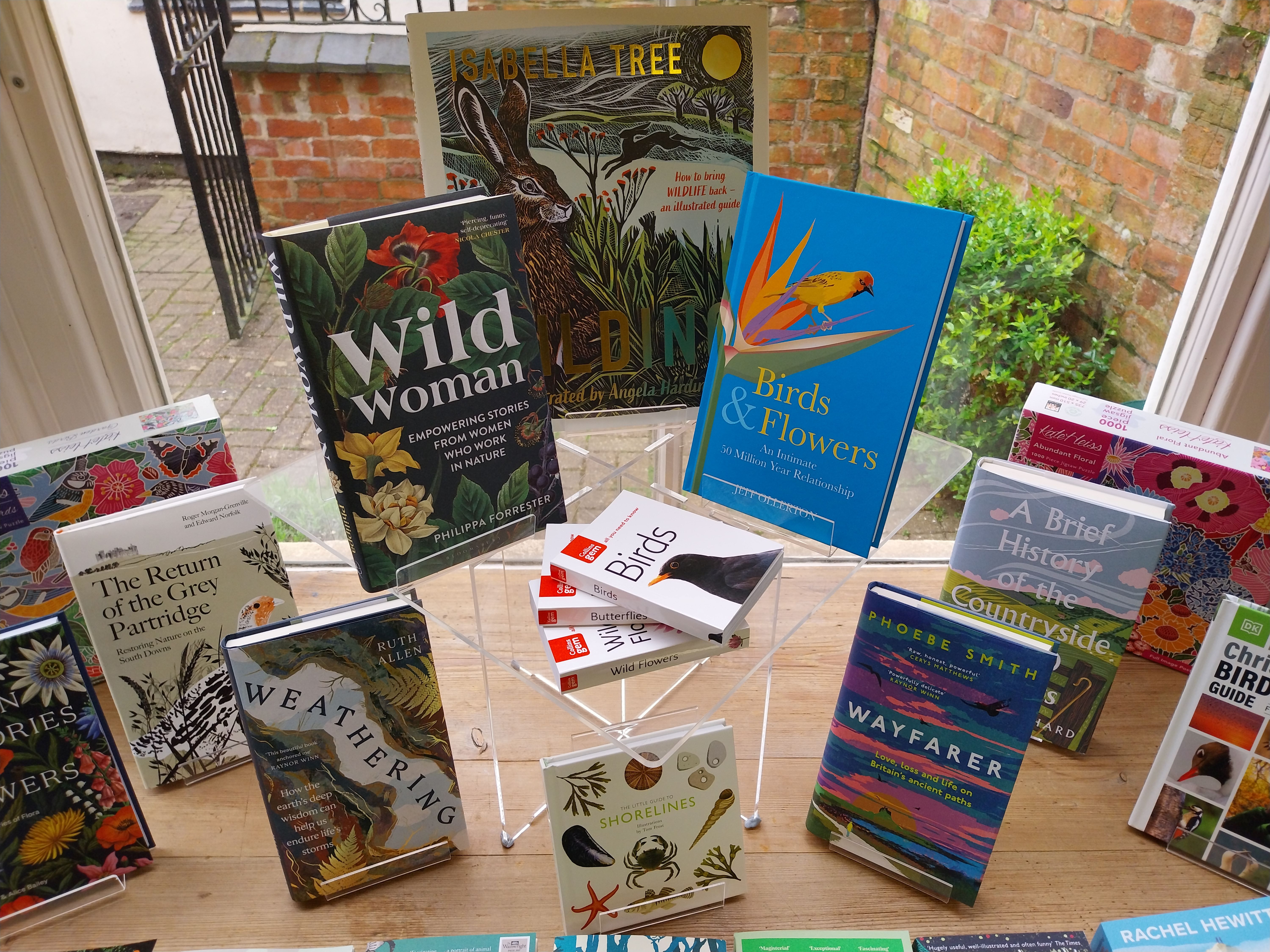
If you’ve read my book Birds & Flowers: An Intimate 50 Million Year Relationship, you’ll know that I spend a few pages discussing the long-standing paradigm of how interactions between plants and their pollinators evolve and result in the formation of new plant species. This is referred to as the Stebbins (or Grant-Stebbins) Most Effective Pollinator Principle (MEPP). The MEPP is fairly straightforward and intuitive: flowers evolve their colour, shape, scent, rewards, and so forth as adaptations to the type of flower visitor that successfully moves the most pollen between flowers.
However, the MEPP is not the only Principle in town – there’s also Aigner’s Least Effective Pollinator Principle (LEPP) which is not so intuitive. In the LEPP, flowers can adapt to pollinators that are less successful at pollination, as long as those adaptations do no interfere with the pollination services provided by other flower visitors.
As I note in Birds & Flowers, we don’t know which of these Principles is more frequent in nature, because the LEPP has been much less intensively studied than the MEPP. That’s in part because it’s less well known, but also because the field work and experimental procedures required to test the LEPP are much more challenging.
Hopefully this is about to change with the publication of a brilliant critical review of the MEPP by pollination ecologists Kathleen Kay and Bruce Anderson published in the journal Annals of Botany, entitled: Beyond the Grant–Stebbins model: floral adaptive landscapes and plant speciation. The paper is open access – follow that link and you can download a copy.
Kathleen and Bruce discuss not just the MEPP v the LEPP, but also other ways in which flowers can evolve, framed around the idea of floral evolution as movement across an “adaptive landscape,” where plants are not shaped only by one pollinator but by the need to maximise overall reproductive success. This perspective allows us to explore how flowers evolve when influenced by multiple pollinators, how transitions between floral forms take place, and how speciation occurs through a combination of factors beyond pollination alone. It emphasises that pollinators are important drivers of floral change, but speciation is more likely when divergence happens across several aspects of a plant’s ecology, not just through its flowers.
It’s a great review and well worth your time reading in detail. Perhaps my favourite line in the paper comes from the abstract: “The Grant–Stebbins model, while inspiring decades of empirical studies, is a caricature of pollinator-driven speciation and explains only a limited range of adaptive outcomes.” This is something that many of us have been arguing for years: the natural world is extremely complex, so we should not expect these ecologically critical interactions between flowers and their pollinators to have simple origins or ecologies.





 Prof. Jeff Ollerton - ecological scientist and author