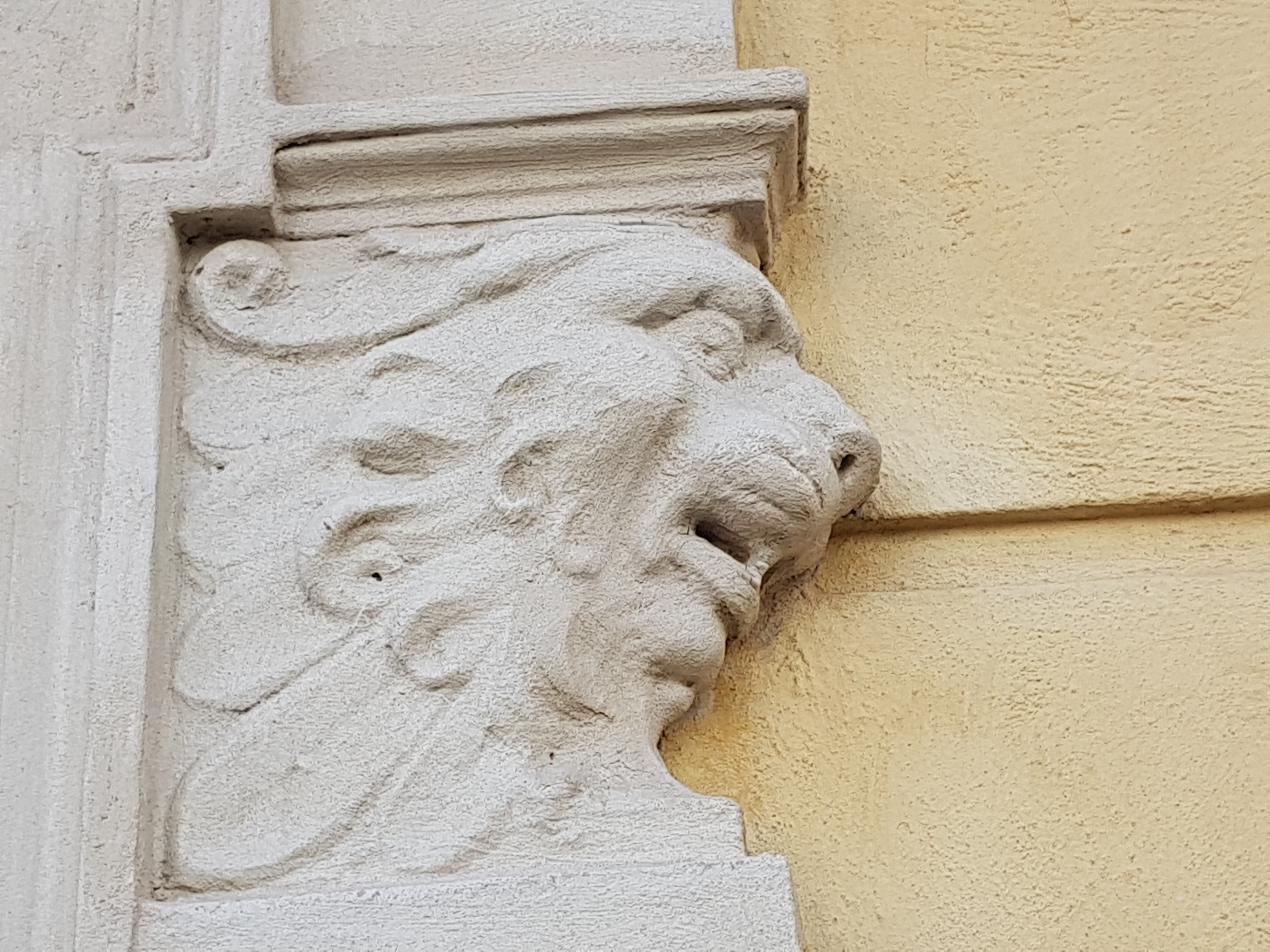
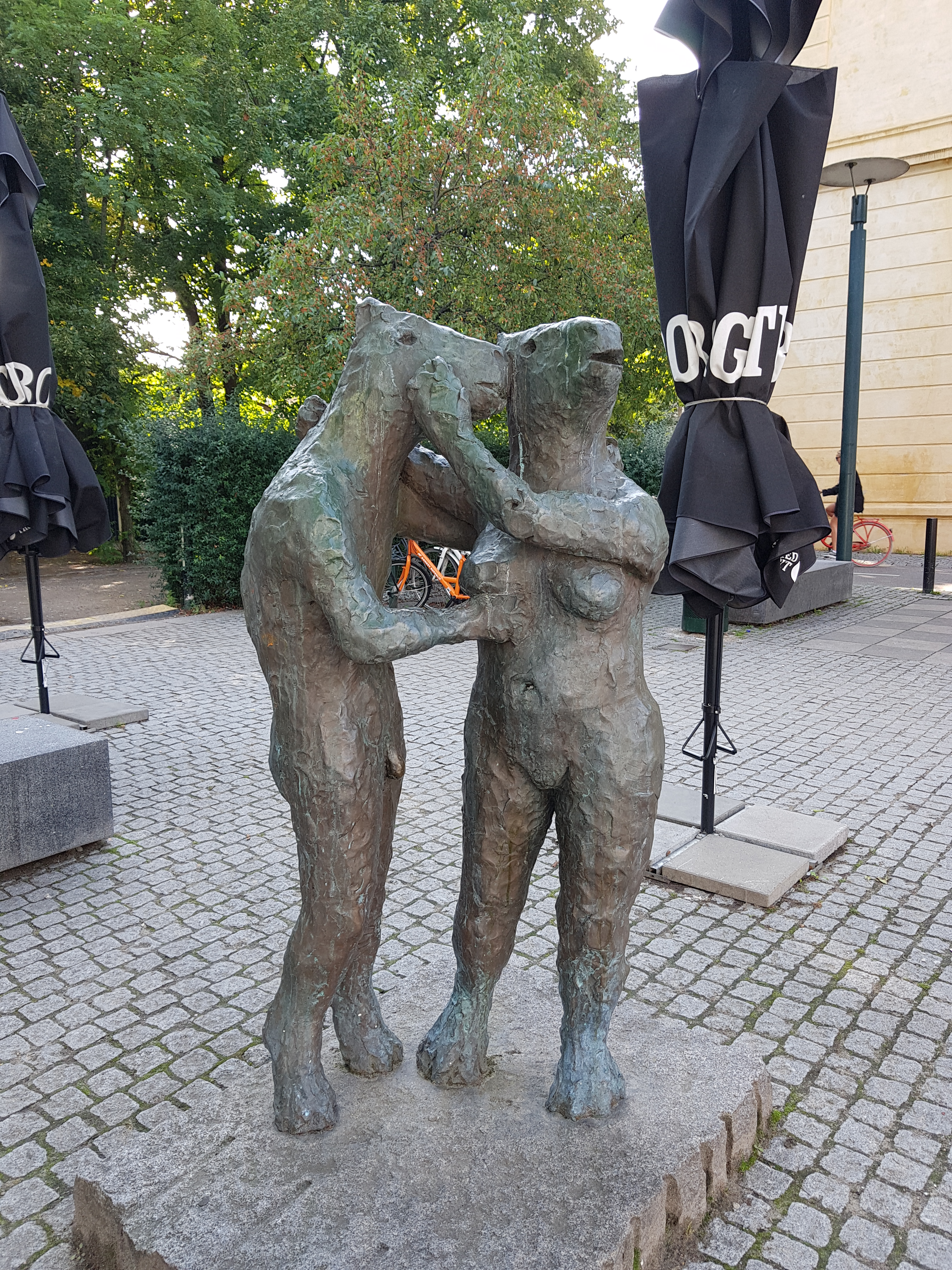
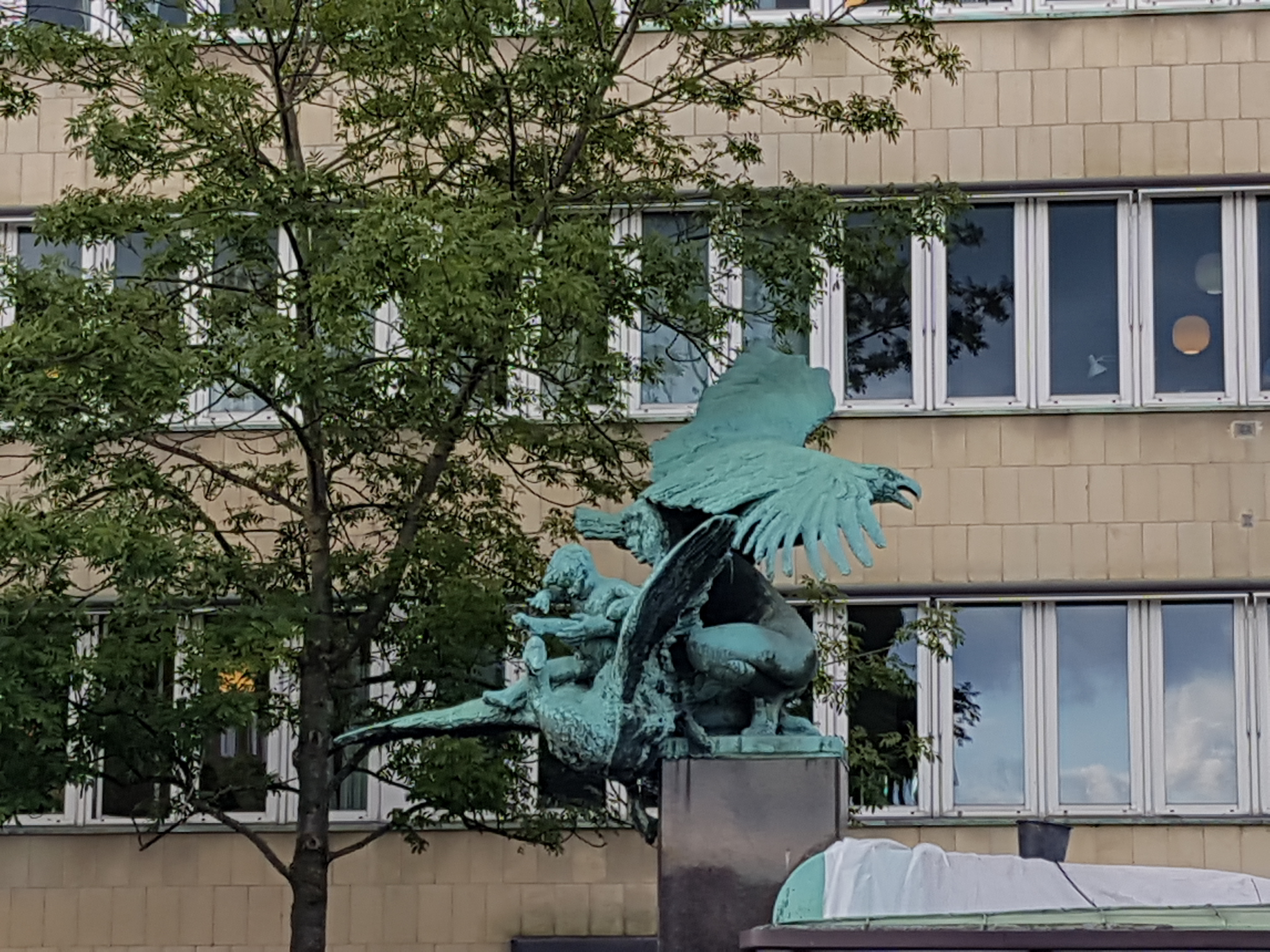
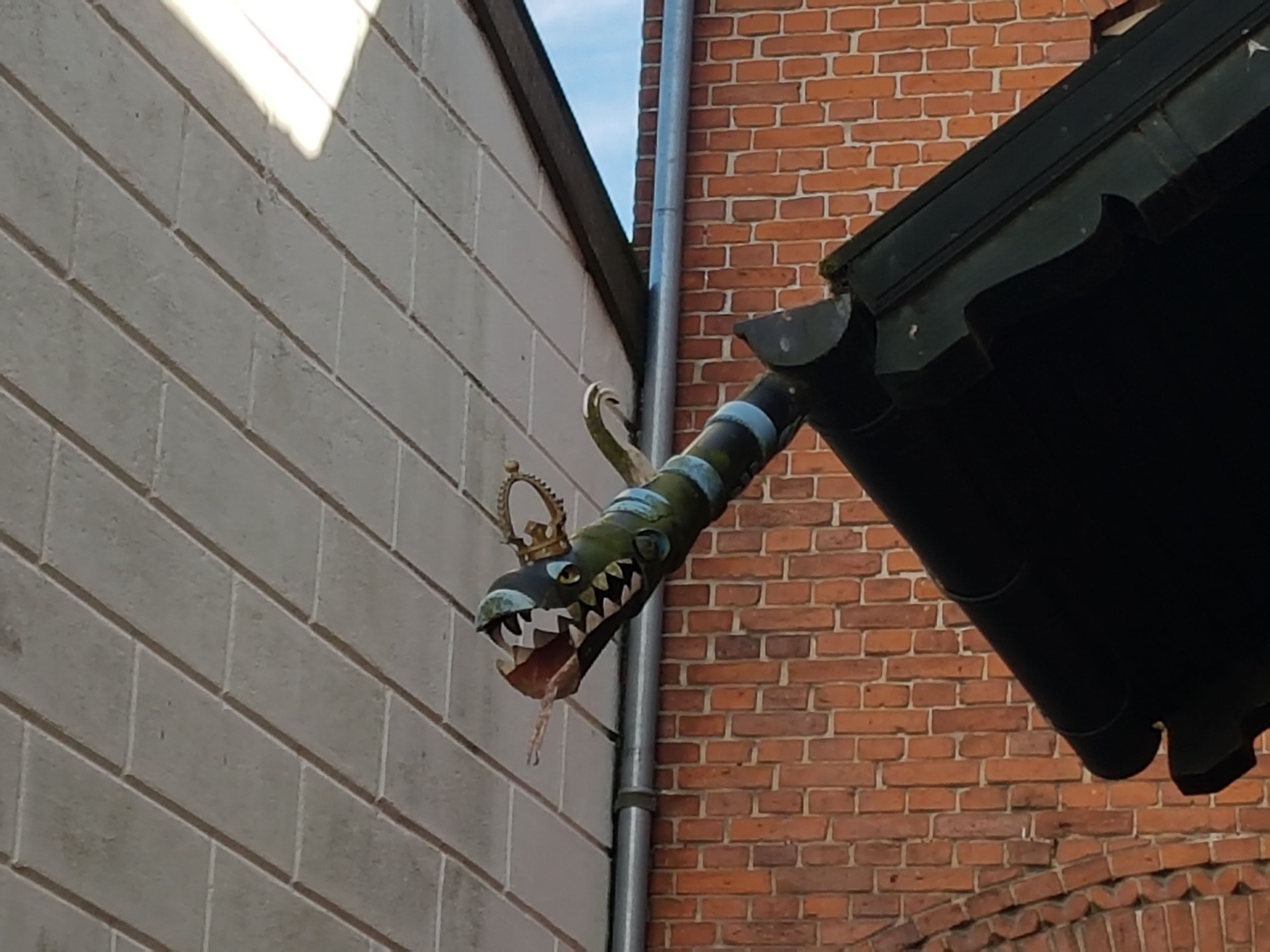
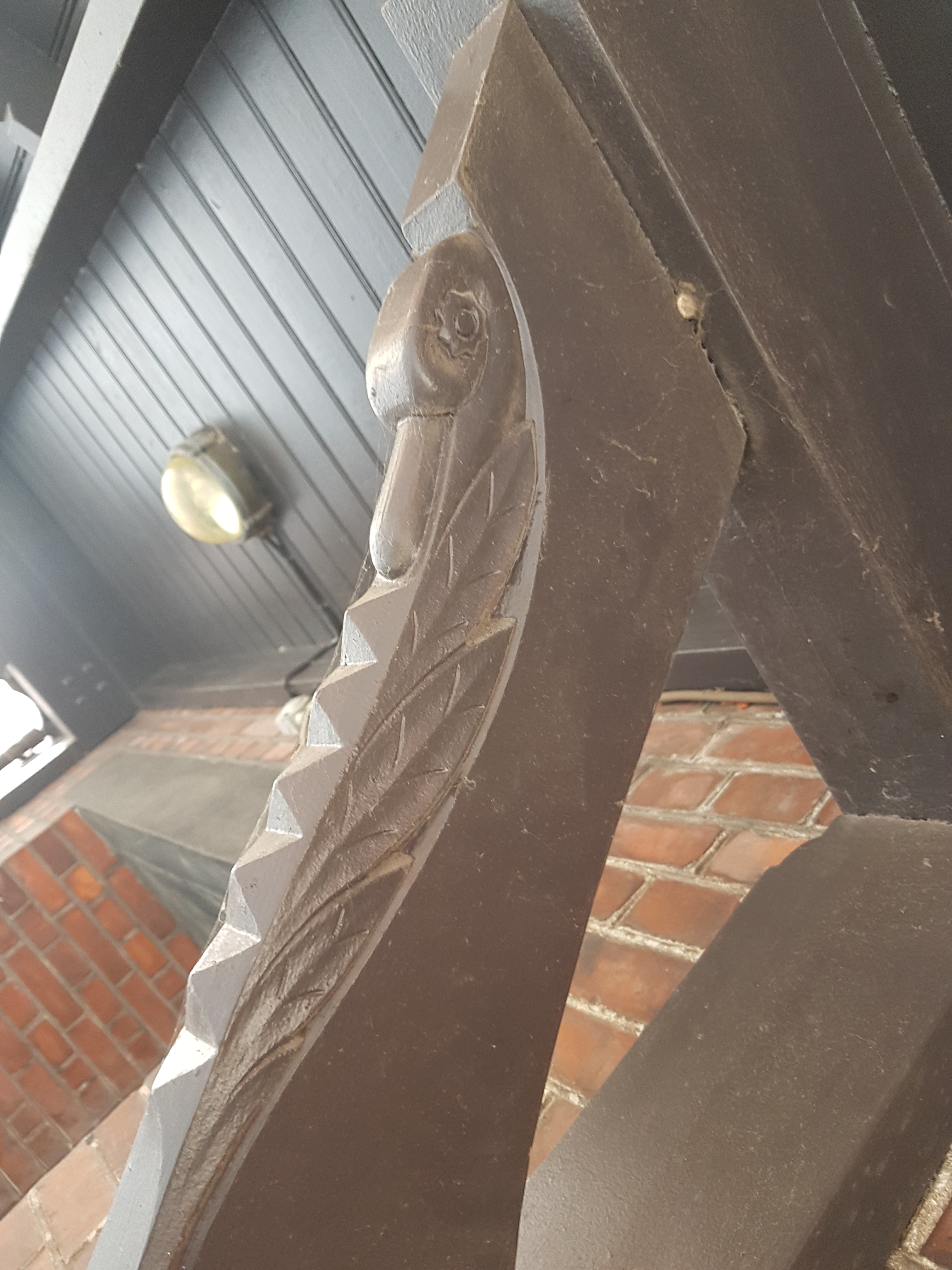
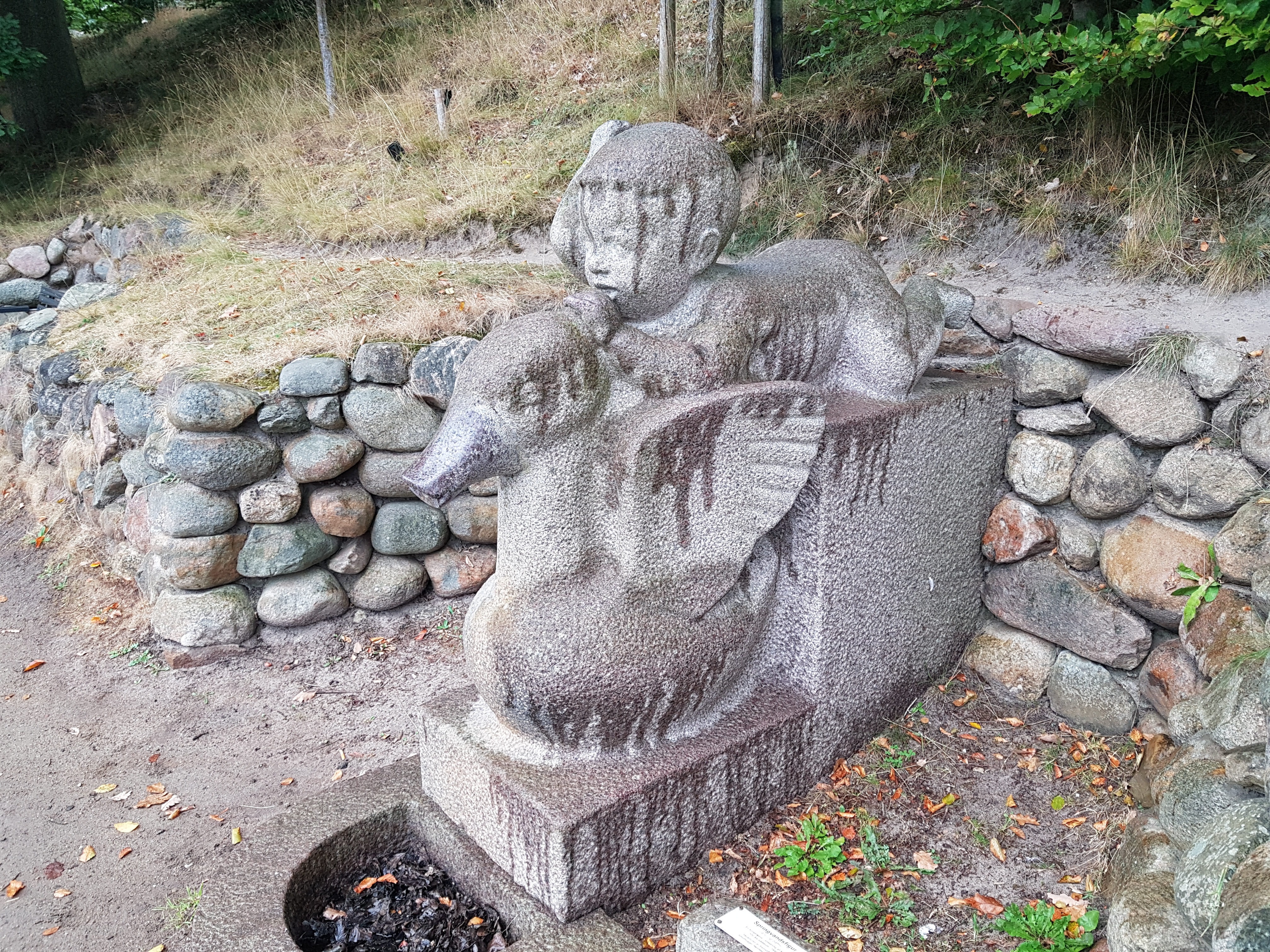
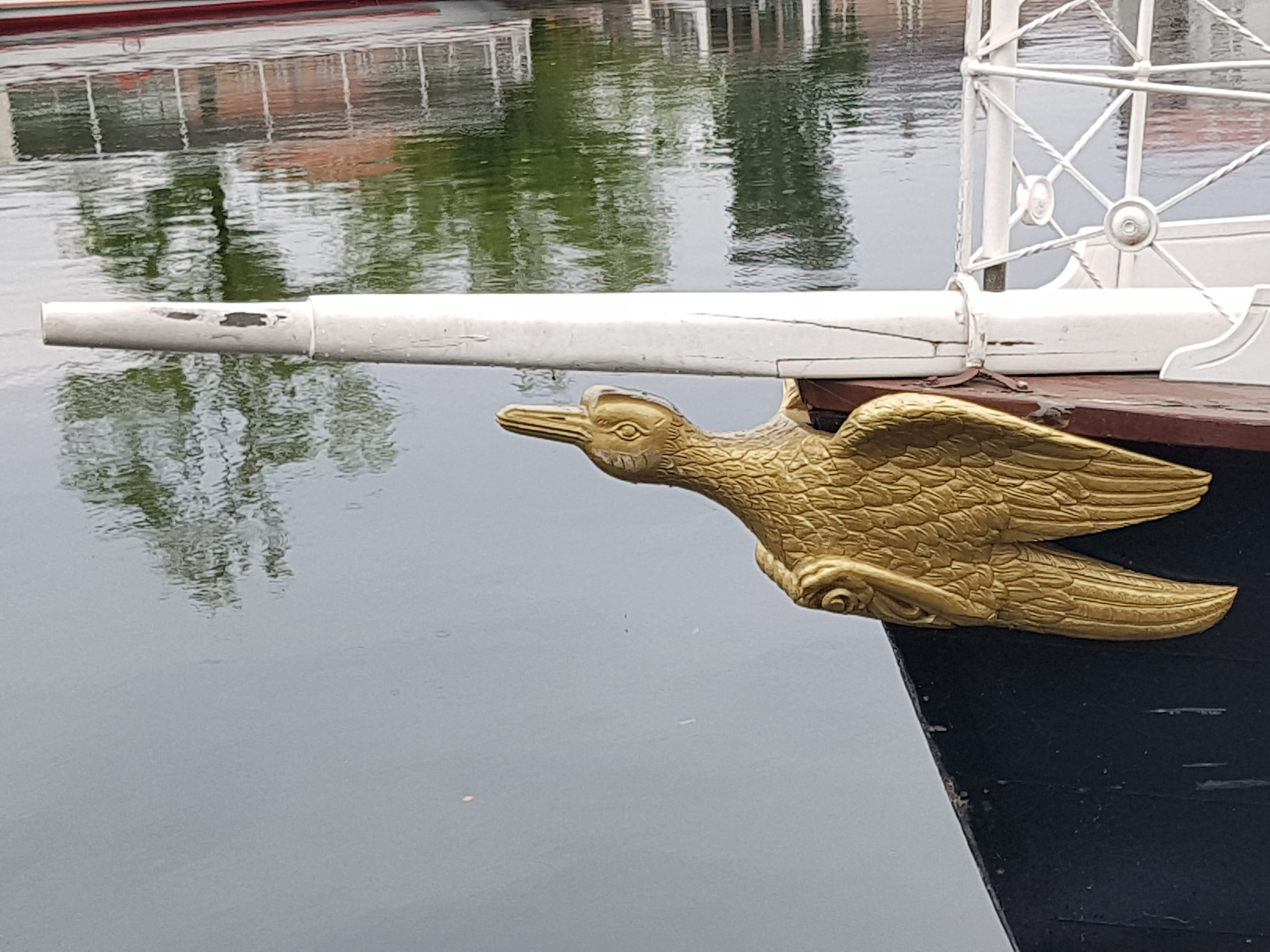
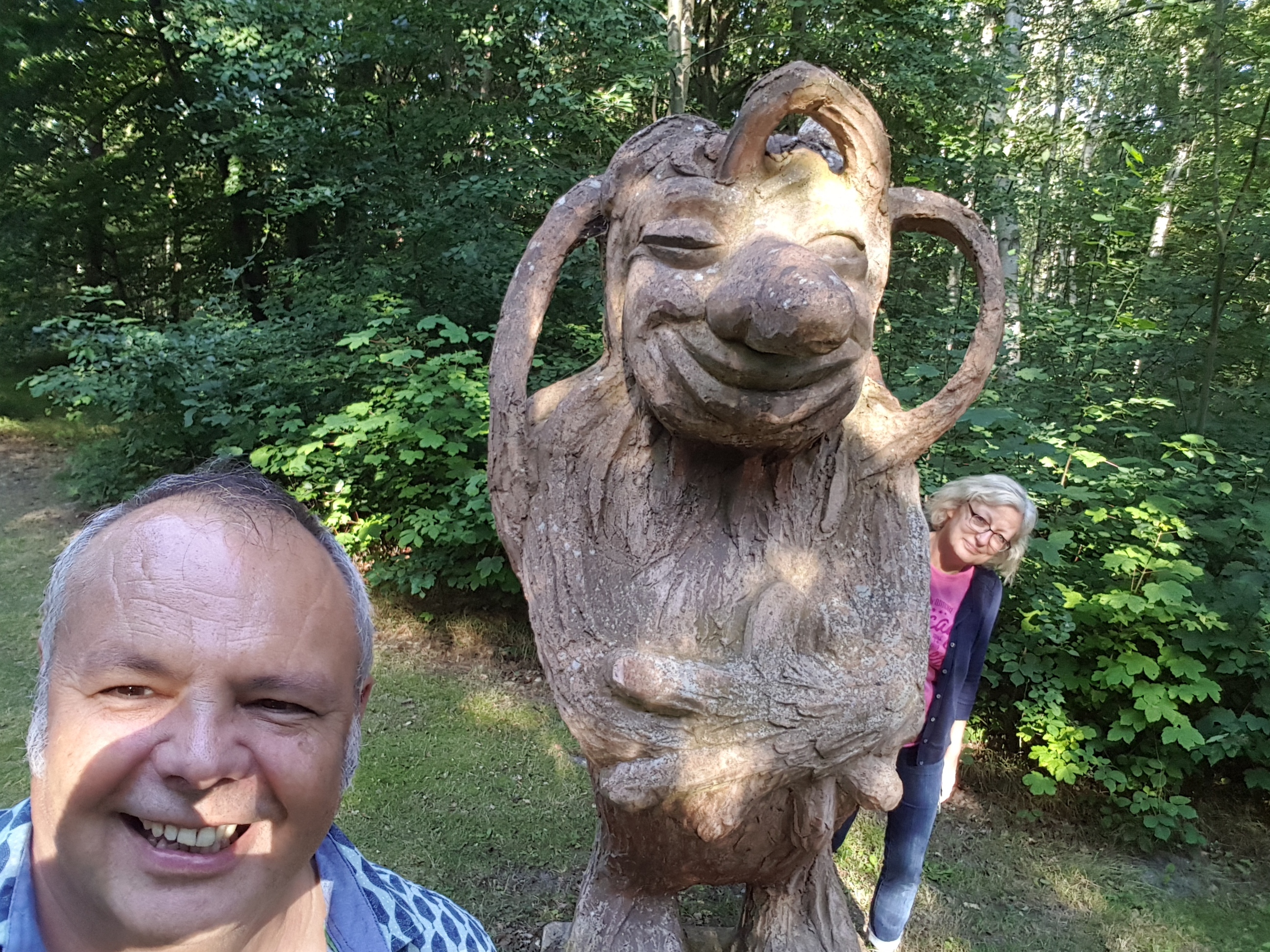
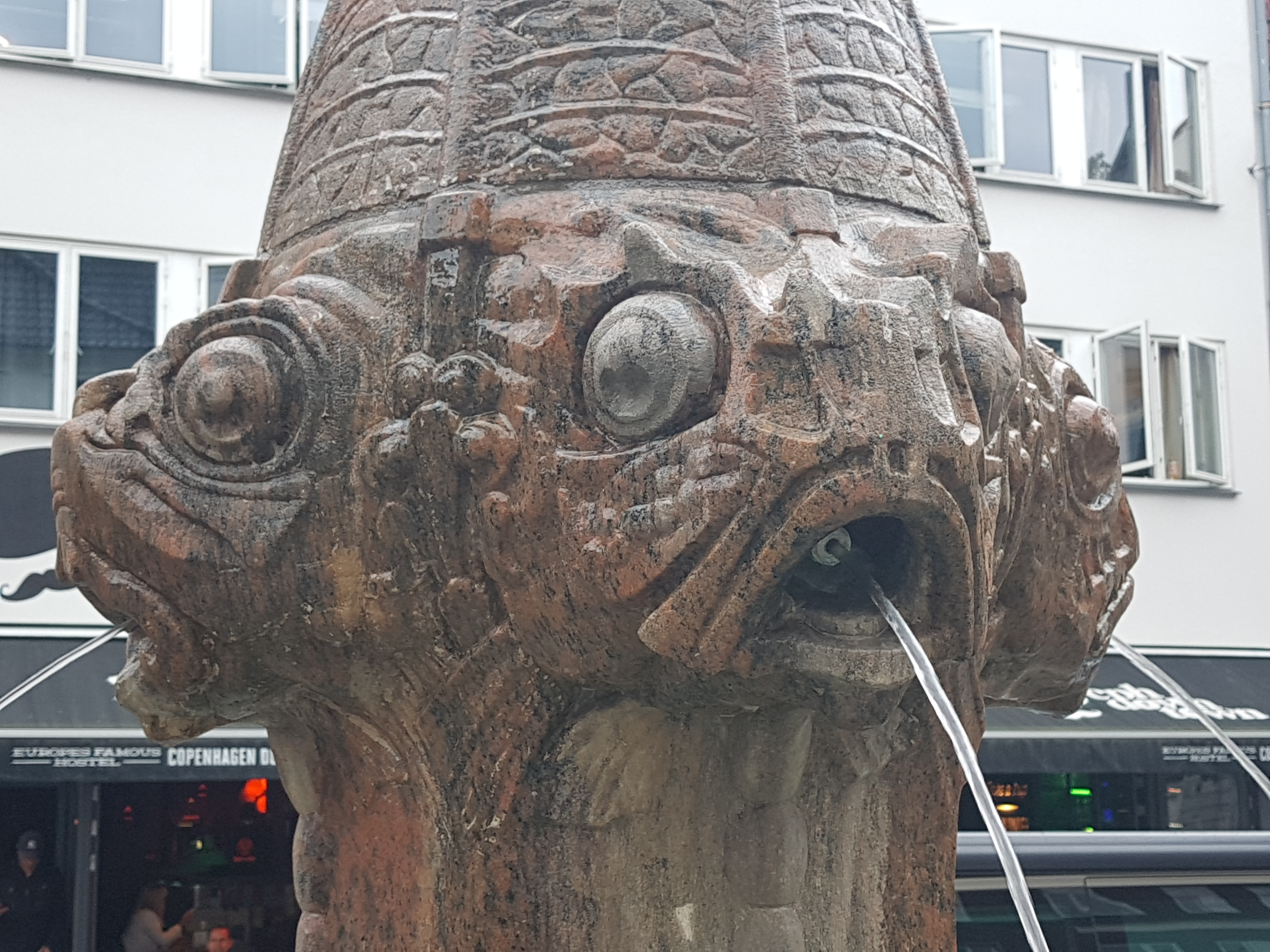
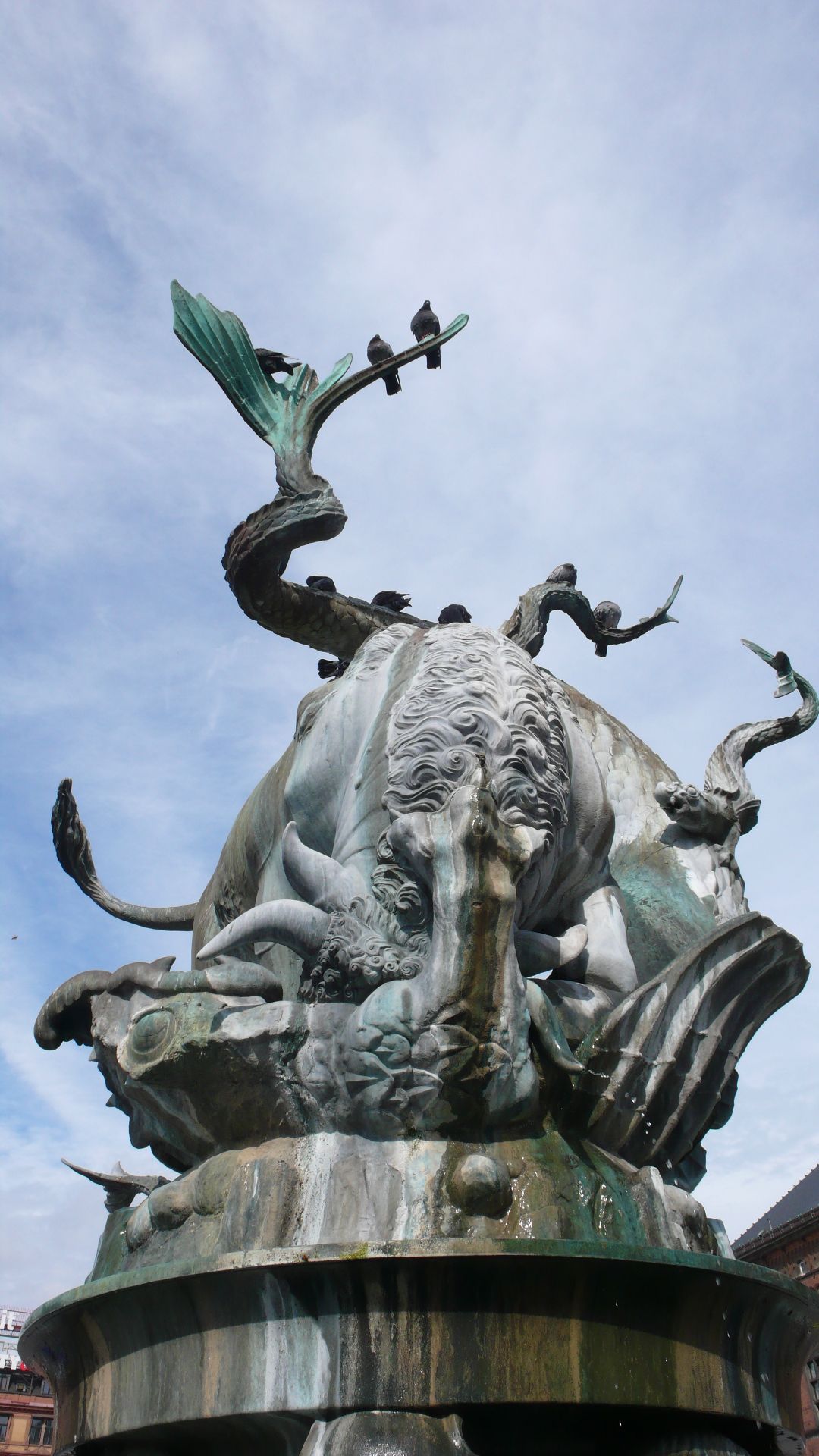
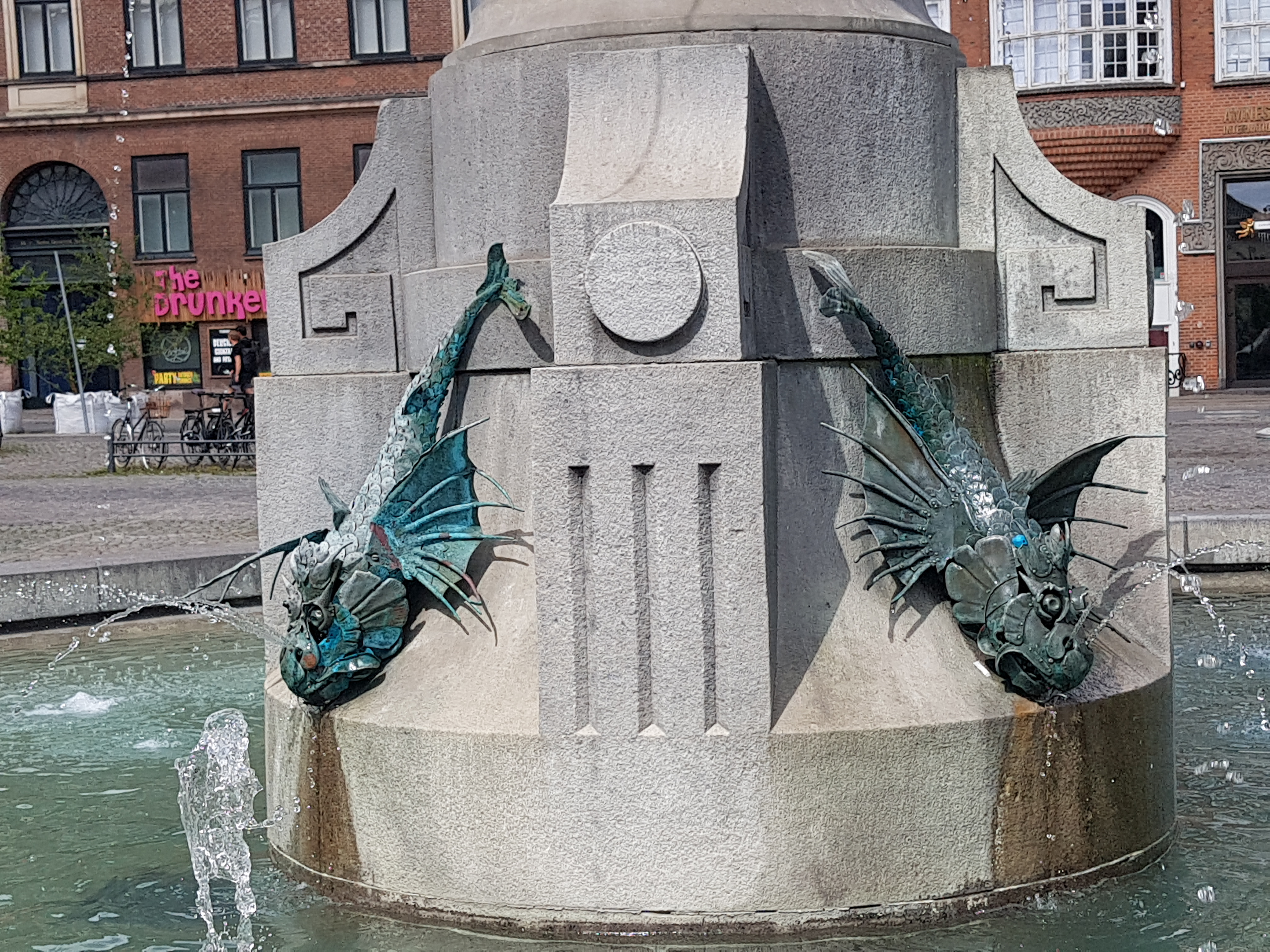
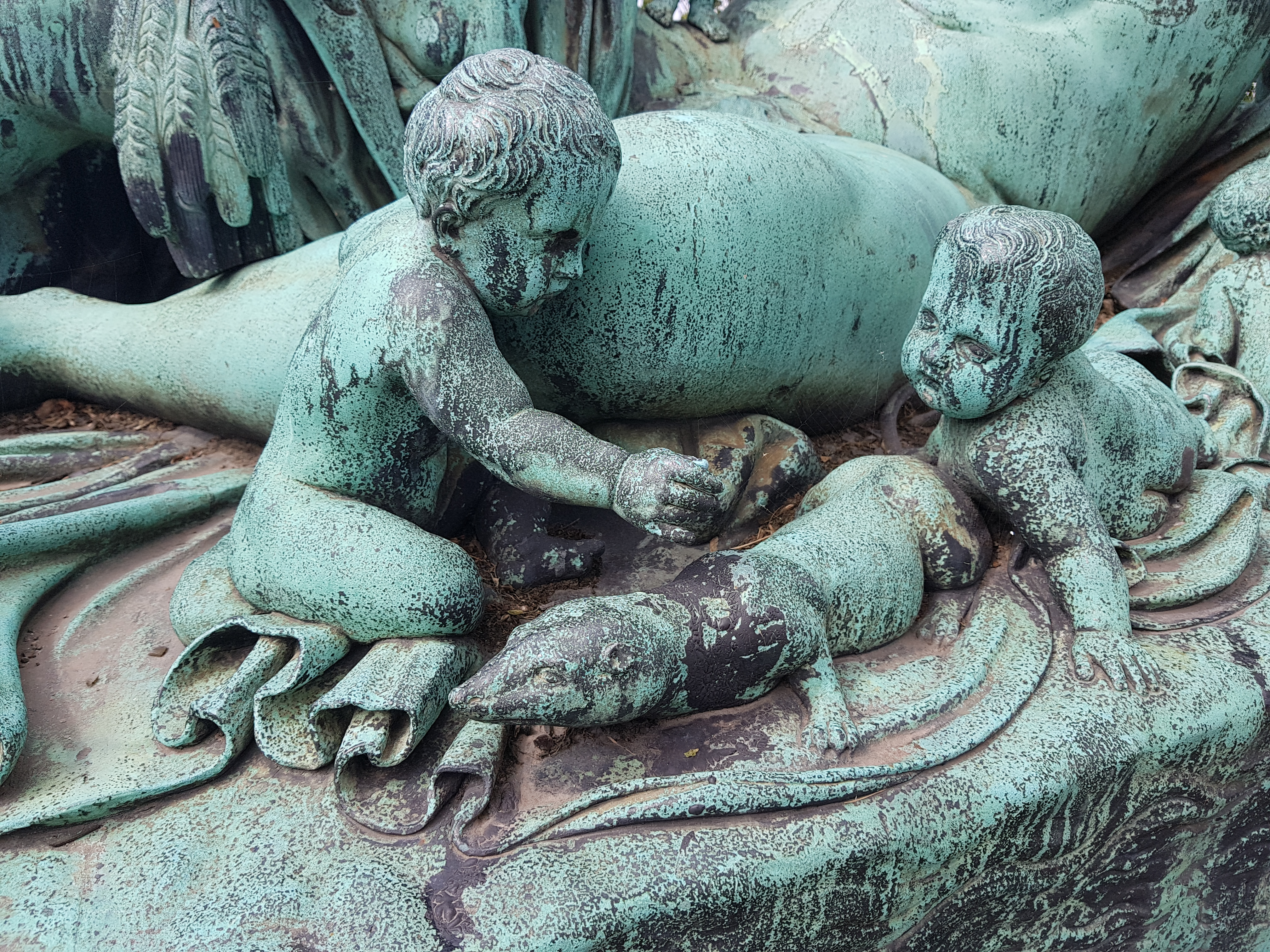
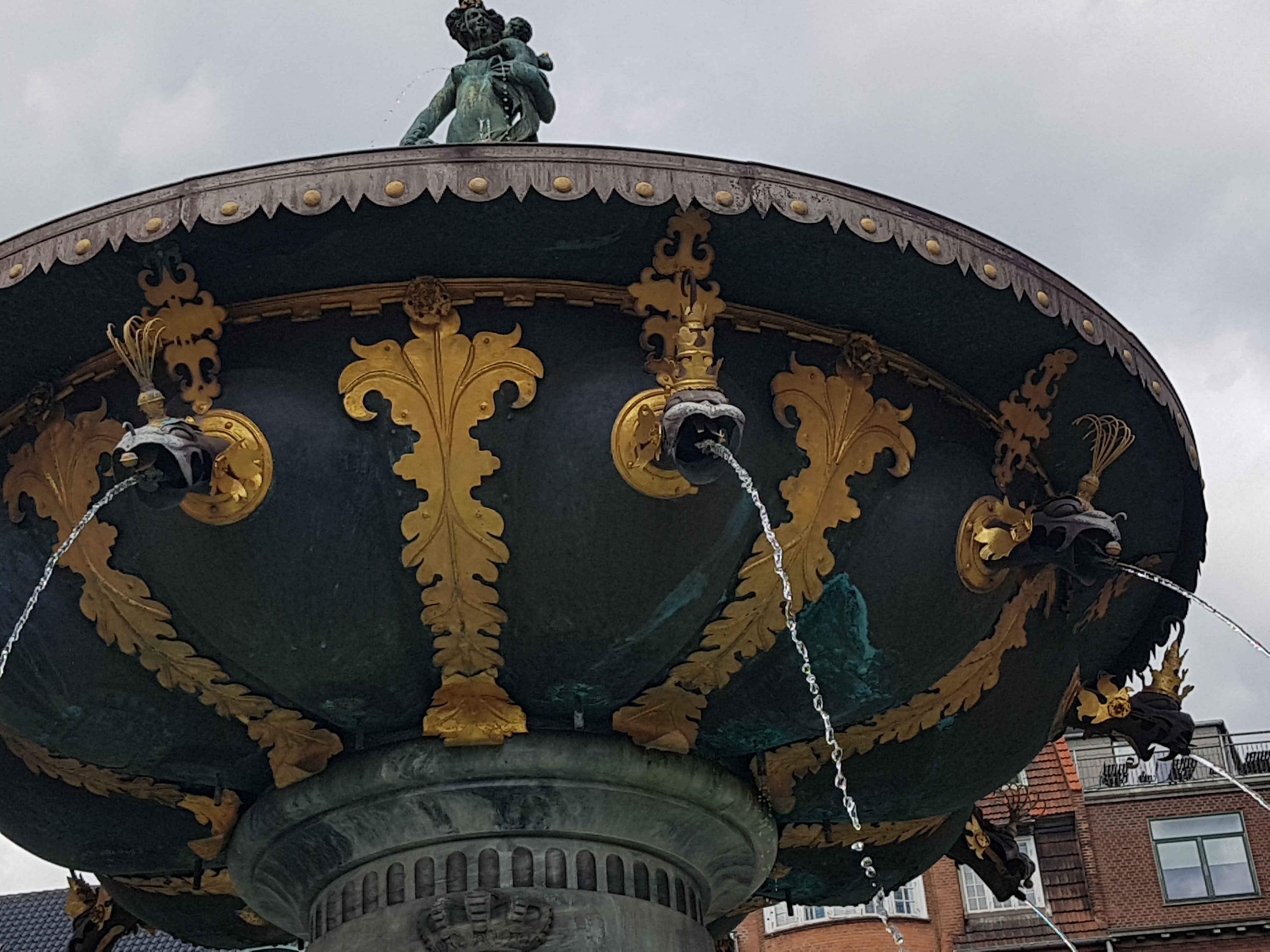
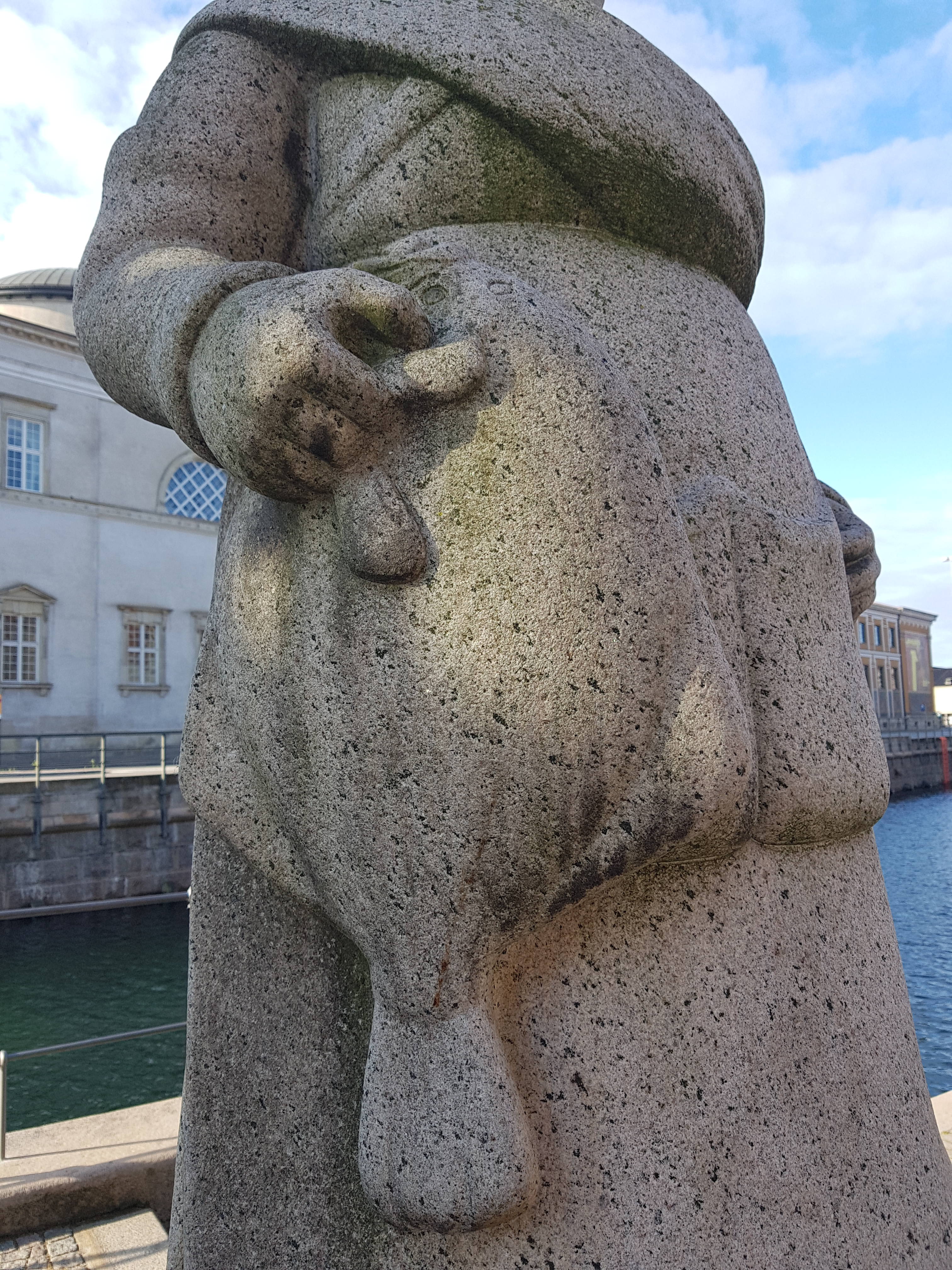
At the end of August I was back in Copenhagen for a couple of days to take part in the PhD defence of Céline Moreaux, who has been working on coffee pollination and bee conservation. While I was there I snapped a couple more images for my Copenhagen Bestiary series. However I’ve also seen some interesting sculpture and building decoration further afield this month, in Aarhus, Silkeborg, and Nykøbing Sjælland. I especially like the wooden carved canopy support in the form of a duck, from Aarhus: it’s very subtle and I almost walked past it.
And before anyone asks, no, Karin and I are NOT part of the bestiary, but I didn’t get a shot of the troll by itself.
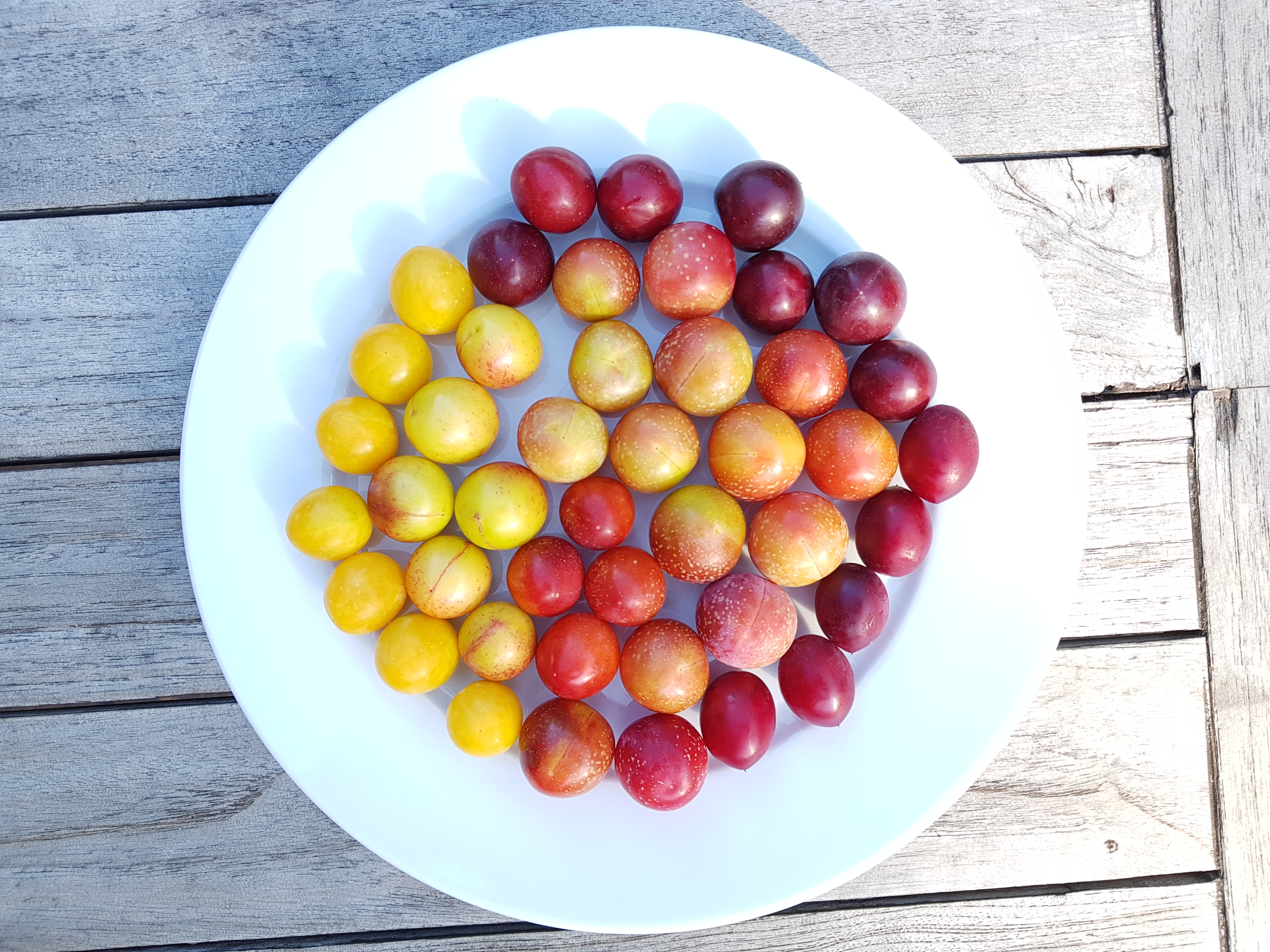
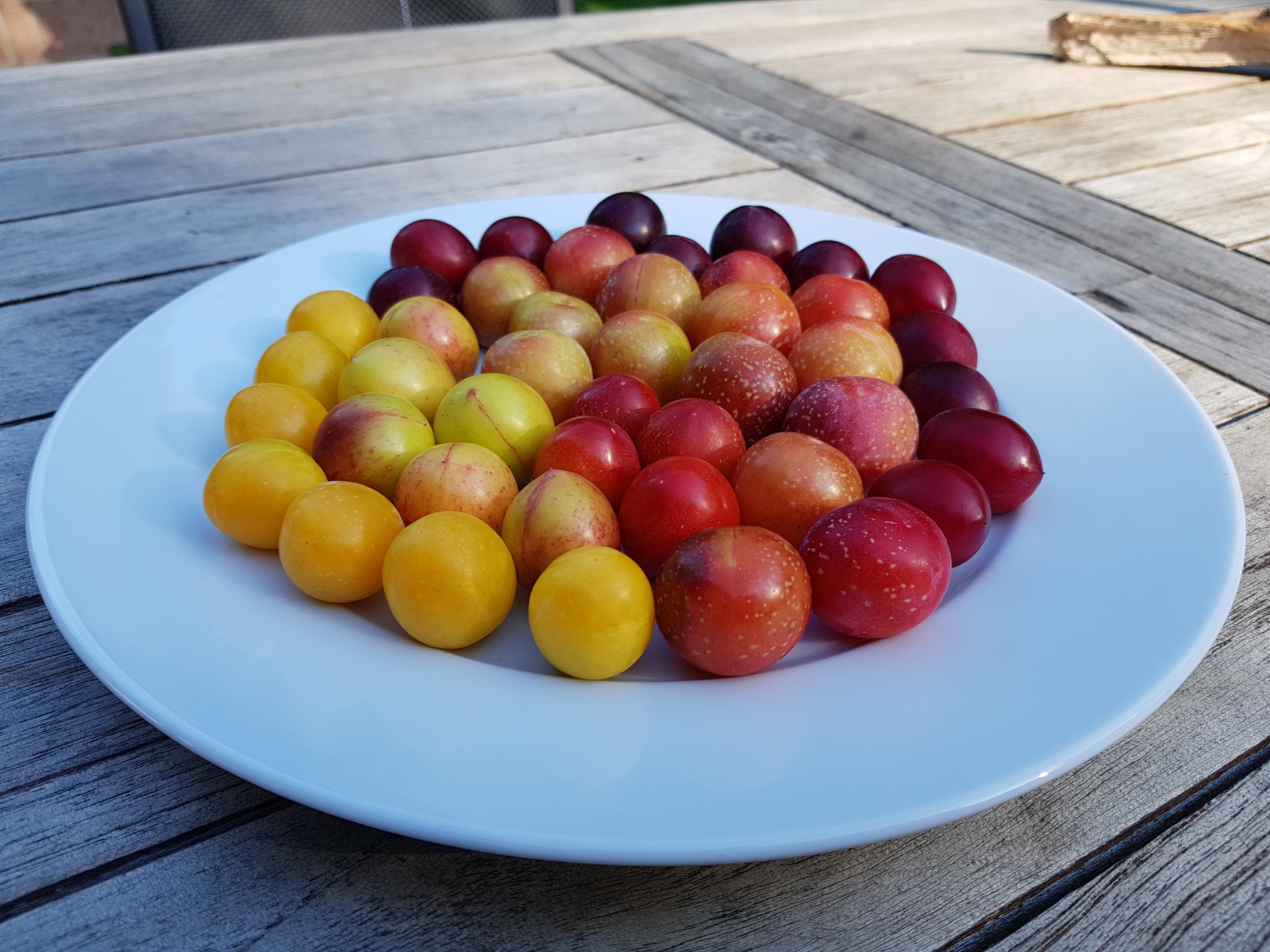
Cycling back from town this afternoon, Karin and I passed a hedgerow that was bursting with wild myrobalan or (cherry) plums (Prunus cerasifera). We had to stop and collect some, and soon filled a bag. What’s always intrigued me about these small, tart little plums is just how diverse they are: the image above shows the plums from six different trees. All of these are, in theory, the same species; but clearly there’s a lot of genetic diversity. In colour, the ripe fruits range from golden yellow through to dark purple, and vary in the amount of dark-contrasting streaking, lighter speckling, and waxy bloom. They are also variable in size, shape and taste.
All of this variation probably reflects the long history of cultivation of this European archaeophyte. The species is originally native to southeast Europe and western Asia, and was likely spread throughout Europe by the Romans. The local deer population is very fond of the fruit and we’re seeing a lot of deer droppings that are packed with seeds. We don’t usually think of these large mammals as seed dispersers, but I suspect that they are very successful in that ecological role.
As well as being a great source of wild fruit, for humans and wildlife alike, at the other end of the year these trees are important for pollinating insects. As I pointed out in my book Pollinators & Pollination: Nature and Society, Prunus cerasifera is one of the earliest flowering woody plants in northern Europe, and its flowers are an important nectar and pollen source for early emerging bumblebee queens, hoverflies, and honey bees.
Delicious, abundant fruit combined with a valuable role for pollinators: what’s not to like?
A sad and timely news story caught our eye this morning: the death of two young Afghan boys in Poland who were poisoned after their family collected wild mushrooms to make a soup. Other members of the family were hospitalised. As Karin read out the story to me, I was moved by the tragedy of these events for a family fleeing a war zone, but also angered by pointlessness of the loss of those brothers’ lives, just more death-by-wild-mushroom statistics. In Europe we read about such events every year in the autumn, the peak of wild fungus foraging. And quite often the deaths are of people who have recently moved to an area and mistake poisonous mushrooms for edible ones from their country of origin.
At their root, these tragic stories of lost lives and broken families are stories of misunderstandings about nature. In particular, they are about not appreciating that plants, mushrooms, animals, and other wildlife, are not the same all over the world. There are biogeographic differences between regions that reflect the long-term history of life on our planet. Plants or mushrooms that look superficially similar in different parts of the world may have very different evolutionary histories. Histories that can make the difference between good to eat and deadly poisonous, between life and death.
The mushroom which killed the boys was a Death Cap (Amanita phalloides) which is found across Europe and the Mediterranean basin. As far as I can tell from its GBIF records, it does not occur in Afghanistan. The family presumably mistook this mushroom for one with which they were familiar, perhaps a different species of Amanita, which contains both deadly types and some that are good to eat. This terrible and fatal mix up could so easily have been avoided.
I’m not certain if resettlement agencies provide information about the foraging of wild food, or if basic facts about local nature are provided to those new to these areas. This is a simple action that could save lives and further tragedies for families trying to recover after the disruption of moving to a new country. It may be that this family was trying to carry on traditions of foraging in an effort to feel at home.
Since we arrived in the Odsherred region of Denmark, where Karin and I intend to settle, we have been exploring the woods and beaches on our newly bought bicycles. Much of the natural history is familiar to me from Britain, but there’s also some interesting differences and in future blog posts I’ll discuss this further. Last week we happened across a Lithuanian woman and her mother who had been foraging for mushrooms in the forest around their summer house. They were pushing a baby’s pram, the lower basket of which was stuffed with fungi. Picking and eating wild mushrooms has been something I’ve enjoyed since I was a teenager, so I had to stop and chat with them. They showed us some of their finds, including species with which I wasn’t familiar and that I will research further.
Lithuania and Denmark are of course quite close to each other geographically. Nonetheless the younger woman was still discovering which of the local mushrooms were good to eat: ‘I learn one new edible species each year’ she told us ‘That’s a good rule, then you don’t get confused’.
Since that meeting we’ve had several meals from mushrooms collected in the area, including some very fine ceps (Boletus edulus). I will keep in mind the woman’s words and proceed cautiously when it comes to discovering what is edible and what is not.
To end this rather sad but hopefully thought provoking post, Karin and I send our deepest condolences to the Afghan family and our heartfelt wishes that they can recover from these tragedies that must have deeply affected their lives.
First the misleading title. This ‘debunks’ claim actually compares two different things: 75% of CROPS being dependent on pollinators versus 10% of crop YIELD. However, even if we focus on the 10% claim, a small increase in yield can be the difference between profit and bankruptcy for small-scale farmers. And most of the world’s farmers are small-scale and living on the borderline between loss and break-even. In addition, there’s no acknowledgement of the food production from home gardens, allotments, and community gardens, which is significant but largely unquantified.
Next, by focusing on yield and comparing, say, wind-pollinated wheat with insect-pollinated apples, the article takes no account of the fact that many of these crops that depend to some extent on pollinators mainly provide essential vitamins and minerals – not calories – to diets. When I tweeted about this earlier in the week, one person commented that they describe the insect-pollinated foods as ‘an important source of flavour and colour in our diets, rice and wheat are all well and good, but you do kinda need something more than grey slop to live’. Another said: ‘I’m so glad you mentioned this. I’m sick of reading articles that praise innovations to increase calories, when what we need is better nutrition from vitamins, minerals & fibres’.
Both great points, and well made.
That essay was also factually incorrect when it described roots crops such as carrots or some of the leafy cabbages and lettuces as not requiring pollinators. Many varieties of these crops ARE pollinator dependent: how do they think we get the seed for the next year’s crop?! And there are many crops and varieties that have not been evaluated for their dependency on pollinators: the 75% figure actually refers to the 115 most productive crop plants (Klein et al. 2007).
When I tweeted about the essay I commented that I was very disappointed by ‘Our World in Data’ – they are usually better than this when it comes to the facts. What I hadn’t appreciated at the time was that in fact the Genetic Literacy Project had highjacked the original piece by Hannah Ritchie and reworked it to give it a very different slant*.
This is where it starts to get dishonest and in fact the Genetic Literacy Project (GLP) has form in this area. The Sourcewatch site describes the GLP as ‘a corporate front group that was formerly funded by Monsanto’ with a remit to ‘shame scientists and highlight information helpful to Monsanto and other chemical producers’. In other words it’s heavily tied to Big Agriculture which, of course, would like us to believe that there’s not an issue with declining pollinators, that pesticides and agricultural intensification are our friends, and that Everything Is OK. Read the full account here.
Frankly, the GLP is so tainted that I’d not believe anything that they publish.
Pollinator decline and the role of pollinators in agriculture are complex issues. If you’d like to know more about the importance of pollinators to agriculture, complete with some accurate and objective facts, then there’s a whole chapter devoted to the topic in my book Pollinators & Pollination: Nature and Society.
*Note that I’ve been communicating with Hannah about the root and leaf crop issue and she accepts that this needs to change in the original. She’s also asked the Genetic Literacy Project to take down their version as it contravenes copyright.
Reference
Klein, A.-M., Vaissière, B.E., Cane, J.H. et al. (2007) Importance of pollinators in changing landscapes for world crops. Proceedings of the Royal Society of London B 274: 303–313.
Earlier today we had a message from the owner of the AirBnB that we are staying in to let us know that he’s expecting a guy to come and spray pesticide around the house to kill the ‘invasive’ beewolves. The European beewolf (Philanthus triangulum) is a type of wasp in the family Crabronidae that is only distantly related to the typical wasps that you find trying to share your barbecue and beer. As its name suggests, it preys upon bees, but it’s actually a pollinator itself and visits a range of flowers.
I immediately got back to our host and pointed out that beewolves are gentle insects, completely harmless, and less dangerous than the pesticide the company would use to kill them, and that he was wasting his money. He informed us that the pest control company had told him that he needed to control them other wise he’d be ‘over-run’ with them next year!
When I explained to him that this was nonsense, and that the beewolves cause no damage to people or property, he promised to get back to the company to cancel the order, and thanked me for the information. I’m hoping that I’ve made a convert to the cause of insect conservation!
It maddens me that pest control companies are preying on people’s fear of insects to make money in this way. Insects are subjected to enough assaults by human activities without making up spurious reasons for poisoning them.
So if you are lucky enough to have beewolves in your garden, please treat them with respect and watch their fascinating behaviour:
Since my first visit to Sweden in 1991 I’ve frequently traveled to Scandinavia for conferences, PhD defences, grant review panels, to catch up with friends, and to see my wife Karin‘s family in Denmark. So arriving in Copenhagen almost two weeks ago felt familiar and welcoming. There’s much that I love about Scandinavia, from the landscapes to the history and the peoples, but I am particularly enamoured by the city architecture of the early 19th to mid-20th centuries.
The old buildings of Copenhagen, where we are based for a few weeks, are at once familiar and yet alien, with respect to buildings of similar age in Britain. In particular, the unconstrained use of animals as ornamental adornments is fascinating, inventive and often bizarre. Some of these are real creatures, especially fish which represent the fishing industry on which the city was founded. Others are mythical beasts of traditional Scandinavian fables. And there’s a subset that are clearly the products of the (deranged? drugged?) minds of the sculptors.
Finland’s capital Helsinki tops the league when it comes to animals on buildings, but Copenhagen also has its fair share. I’ve taken to snapping these creatures as I encounter them so it seemed fitting to collect them into a bestiary – a compendium of beasts. Here’s the first set, presented with no commentary – the animals speak for themselves.
Following on from the really successful SCAPE 2020 meeting that I hosted back in October, the Journal of Pollination Ecology and the Nordic Journal of Botany have devoted joint special issues to write ups of some of the talks – here’s the link to the JPE issue and here’s the link to the NJB issue. All of the papers in JPE and most of those in NJB are open-access.
The summer issue of Bees & Other Pollinators Quarterly is out, packed full of interesting information and amazing photographs – and I have two short articles in it! The first is a summary of the recent paper by Callan Cohen and colleagues showing, for the first time, sexual deception of a beetle pollinator by a flower; the second is about the mechanical fit between pollinators and flowers. I’ve added details to my publications page (they are numbers 129 and 130).
Likewise, the summer issue of 2 Million Blossoms is also due to ship shortly – and I have an article in that one too! This one is rather longer and is a much extended version of my recent New Scientist commentary about the role of pollinators in combating climate change. The magazine has titled it ‘Pollinators flit back against climate change’. Again, it’s on the publications page, number 128.
This month I was appointed to the editorial board of the Turkish Journal of Botany and I’m looking forward to working with the team at the journal to enhance the international profile of this publication. The journal has a long track record: it’s been published continuously since the 1970s and currently has a 5-year impact factor of 1.165.
The Turkish Journal of Botany is one of the official publications of TÜBİTAK (the Scientific and Technological Research Council of Turkey) and is fully open access, with no page charges. All papers are published in English. Although it’s a ‘regional’ journal, the scope of what it publishes is not limited to just Turkey. Looking over the last couple of volumes I see authors from Russia, India, Egypt, Lebanon, Pakistan, USA and China, as well as a new species of lichen from Antarctica!
The journal is particularly keen to publish more papers in the area of pollination, floral evolution, plant reproductive ecology, and related topics. So if you’re working in that area and looking for an outlet for your latest paper, please take a look at the Instructions for Authors and consider the Turkish Journal of Botany.
If you have any questions, please write a comment below or send me a message via the Contact page.
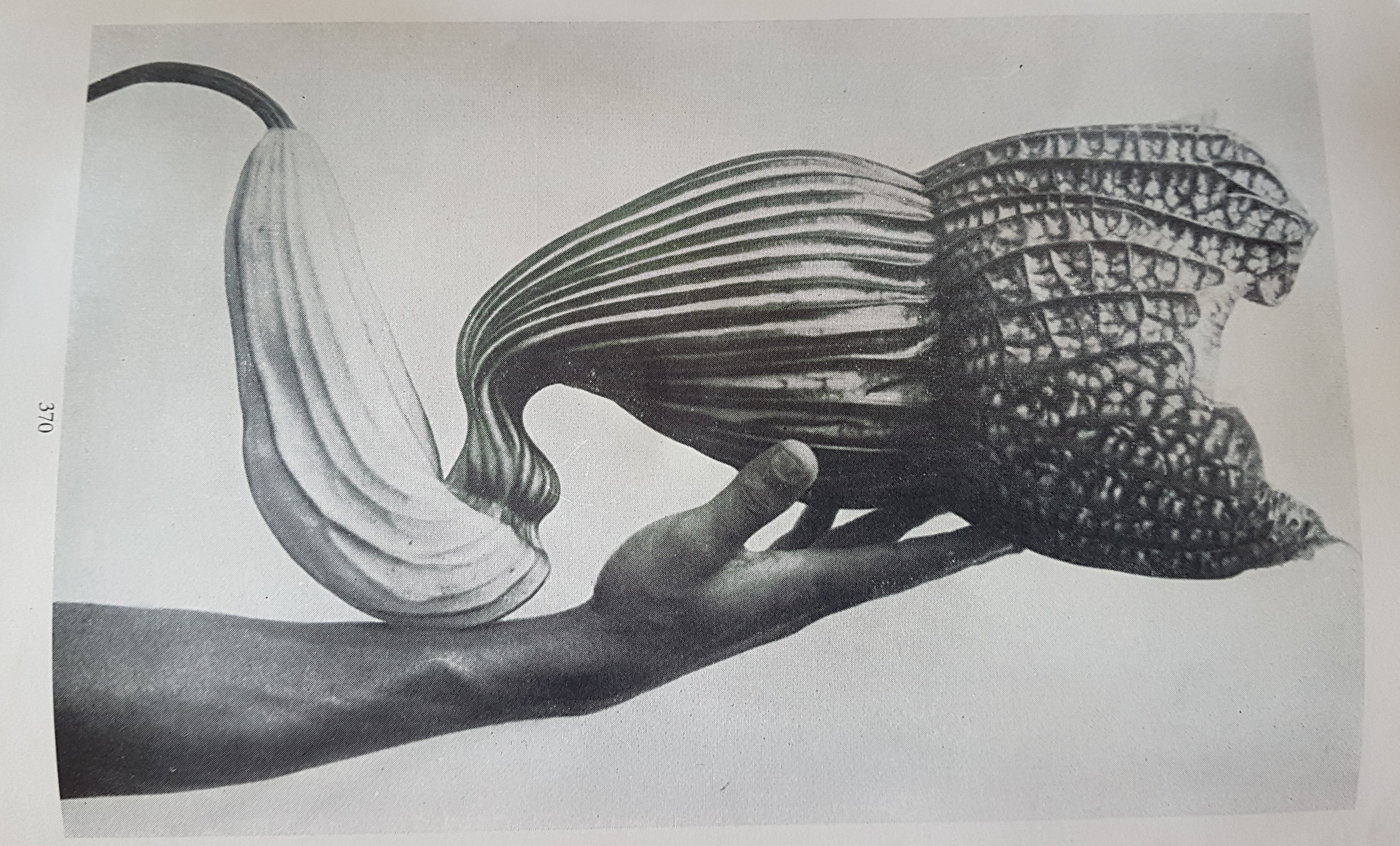
Some years ago, browsing in a second hand bookshop, I happened across a copy of an old magazine from 1950 called Nigeria. Published by the then colonial government, it was a miscellaneous collection of articles about the culture, geography and natural history of that fascinating West African country. Although aspects of the contents are problematical by modern standards, I bought it because of a short article about a wild plant with enormous flowers and a remarkable pollination strategy. In particular, the spectacular photograph of a man holding a flower that’s the length of his forearm grabbed my attention: who couldn’t love a flower like that?!
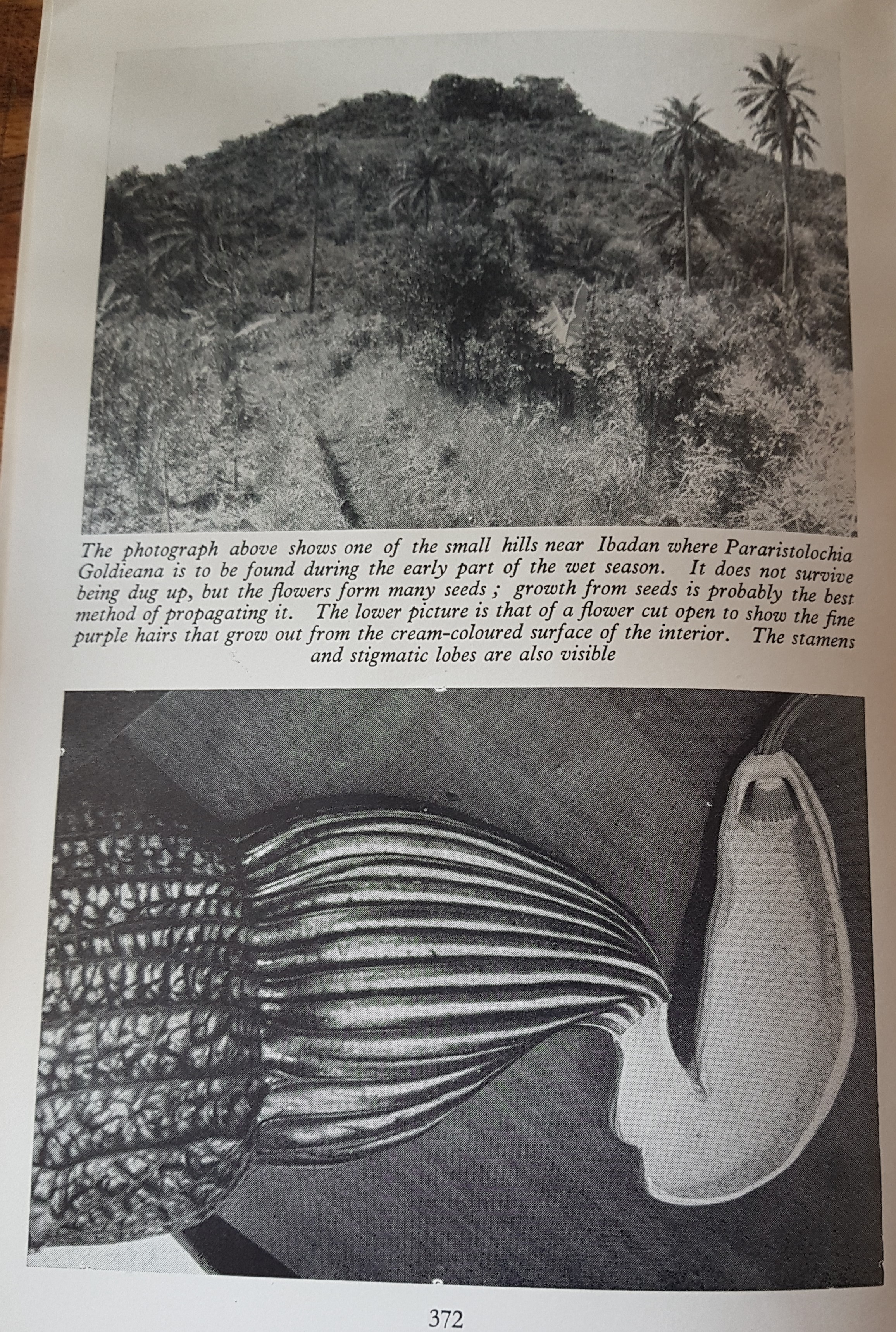
The plant is Pararistolochia goldieana, a vine found in the forests of this region, as described in the introductory text:
These types of flowers are pollinated by flies, a common strategy in the Birthwort family (Aristolochiaceae) to which the plant belongs. This strategy of fly pollination in which flies are deceived into visiting the flowers by their stink and colour, and temporarily trapped in the enclosed chamber, is something that I explore in detail in my book Pollinators & Pollination: Nature and Society, particularly in the genus Ceropegia. Those plants show convergent evolution with the pollination systems of Aristolochiaceae, though they are unrelated.
Pararistolochia goldieana has a wide distribution across West Africa, including Cameroon, Equatorial Guinea, Nigeria, and Sierra Leone. The IUCN Red List categorises it as ‘Vulnerable’ due to habitat loss. The population where these photographs were taken is described on the final page of the article:
The city of Ibadan is one of the largest in Nigeria and has grown enormously, ‘from 40 km2 in the 1950s to 250 km2 in the 1990s‘. I wonder if this forest, and its botanical treasures, still exists?
During field work in Gabon in the 1990s I was fortunate enough to encounter a species of Pararistolochia in the rainforest of Lopé National Park. It was a different species to P. goldieana, with rather smaller but no less spectacular flowers, and it stank to high heaven! We knew it was there long before we saw it. I collected some flies from the flowers and had them identified, though I’ve never published the data: it’s available if anyone is working on a review of pollination in the family.
This 1950 article is anonymous, so I don’t know who to acknowledge for the amazing images. However the botanist R.W.J. Keay was working on a revision of the family for the Flora of West Tropical Africa project at the time, so it may have been written by him.
As I mentioned in my previous post, it’s currently Invasive Species Week in the UK. Non-native species which have negative environmental impacts and disrupt infrastructure are a global phenomenon, of course, and almost all regions of the world have been impacted by species that originated elsewhere. One alien species that is of growing concern in Australia is the western honey bee Apis mellifera. We often think of bees as being relatively benign organisms, but a number of species have been introduced around the world and may compete with native species for nectar and pollen, and nesting sites.
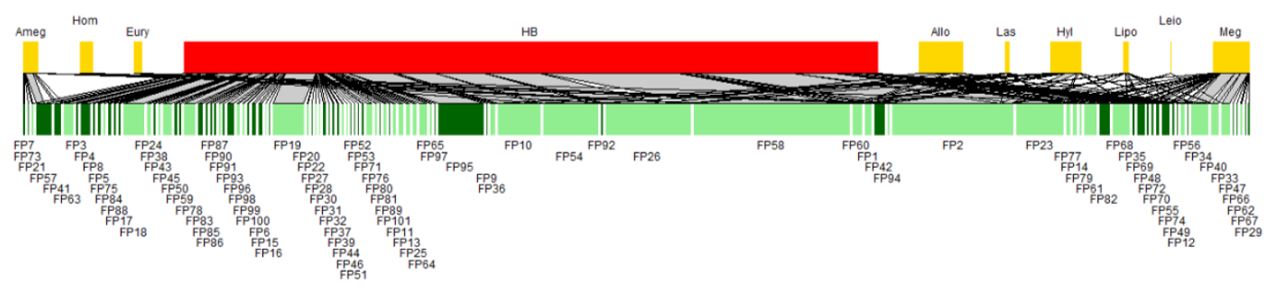
In the second paper from my collaboration with Dr Kit Prendergast, we’ve assessed how introduced honey bees change the structure of bee-flower visitation networks in Australian urban habitats. The main finding is that when honey bees are common, they dominate these networks in ways that indicate significant competition with native bee species. You can get a sense of that from the figure above: the honey bees are in red, native bees in yellow, native plants in light green, and non-native plants in dark green. The length of the bars is proportional to the abundance of these plants and bees.
To say that honey bees ‘dominate’ these networks is an understatement: not only are they vastly more abundant than the other bees, but they visit almost all of the different types of flowers in the network, regardless of whether they are native or introduced.
Although the honey bee bullshit machine often claims that western honey bees are dying out, the exact opposite is true: across the world, managed Apis mellifera numbers are higher than ever, as you can see from the following chart based on figures from the United Nations Food and Agriculture Organization (UN-FAO):
Whilst the growth in honey bee numbers is a good thing for honey producers, bee farmers, and small-scale subsistence farmers, there are environmental consequences to the increase in hives, as we have shown.
If anyone wants a PDF of the paper, please use the Contactform. The full reference for the study and the abstract is:
The European honeybee Apis mellifera is a highly successful, abundant species and has been introduced into habitats across the globe. As a supergeneralist species, the European honeybee has the potential to disrupt pollination networks, especially in Australia, whose flora and fauna have co-evolved for millions of years. The role of honeybees in pollination networks in Australia has been little explored and has never been characterised in urban areas, which may favour this exotic species due to the proliferation of similarly exotic plant species which this hyper-generalist can utilise, unlike many native bee taxa. Here, we use a bipartite network approach to compare the roles, in terms of species-level properties, of honeybees with native bee taxa in bee-flower (‘pollination’) networks in an urbanised biodiversity hotspot. We also assessed whether the abundance of honeybees influences overall network structure. Pollination networks were created from surveys across seven residential gardens and seven urban native vegetation remnants conducted monthly during the spring-summer period over two years. There were consistent differences in species-level properties between bee taxa, with honeybees often differing from all other native bees. Honeybees had significant impacts on network properties, being associated with higher nestedness, extinction slopes of plants, functional complementarity and niche overlap (year two), as well as lower weighted connectance and generalisation. These associations all are indicative that competition is occurring between the introduced honeybee and the native bee taxa in bee-flower networks. In conclusion, the introduced honeybee occupies a dominant, distinct position in bee-flower networks in urban habitats in the southwest Western Australian biodiversity hotspot