An interesting study published this week in the journal Science has provided more evidence that natural regrowth of forests is faster and more efficient than tree planting for restoring habitats. Here’s the Guardian‘s take on it:
Tree planting has its place, of course, especially as a way to get local communities engaged in positive action for the environment. But it’s not the solution for large-scale habitat restoration: in order to do that we need to harness nature’s own regenerative abilities.
A couple of weeks ago we visited Karin’s family in Jutland and went for a couple of long walks around the area. One of these took us through some very nice mixed pine, oak, and birch forest close to a river. The forest was anchored into a thin horizon of mulchy topsoil, beneath which was almost pure sand, a post-glacial legacy of the wider, wilder rivers that ran through the region at the end of the last Ice Age.
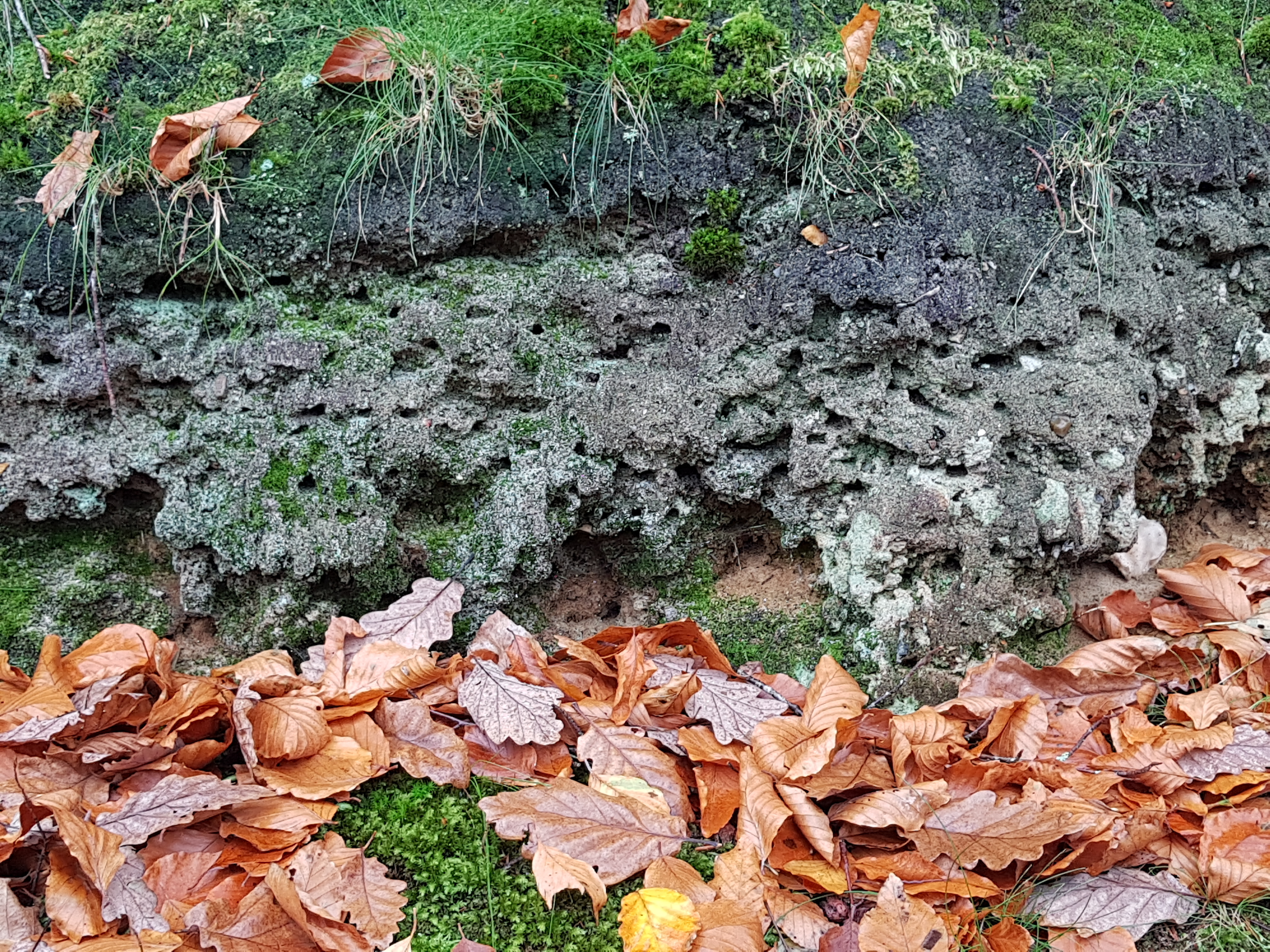
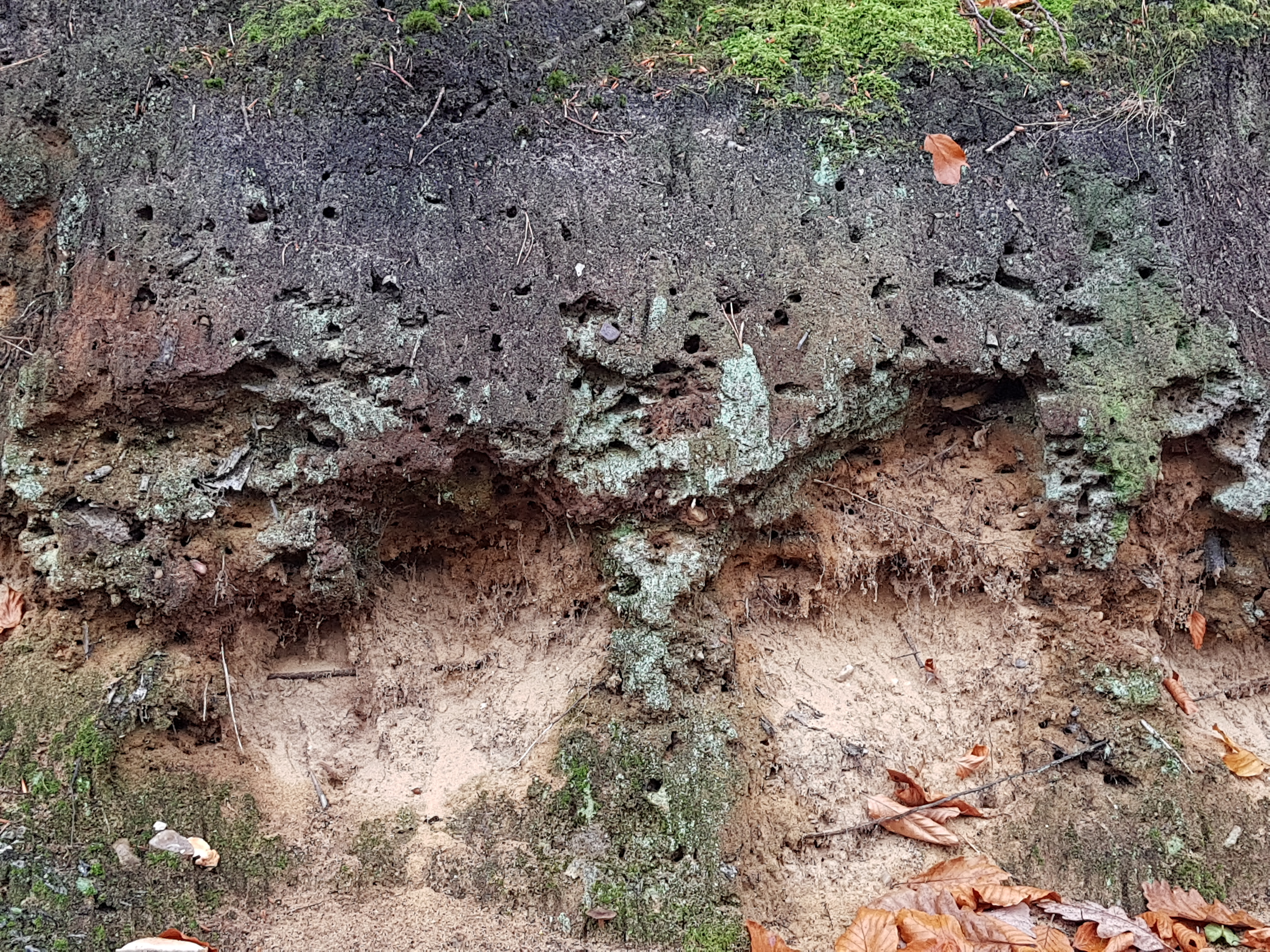
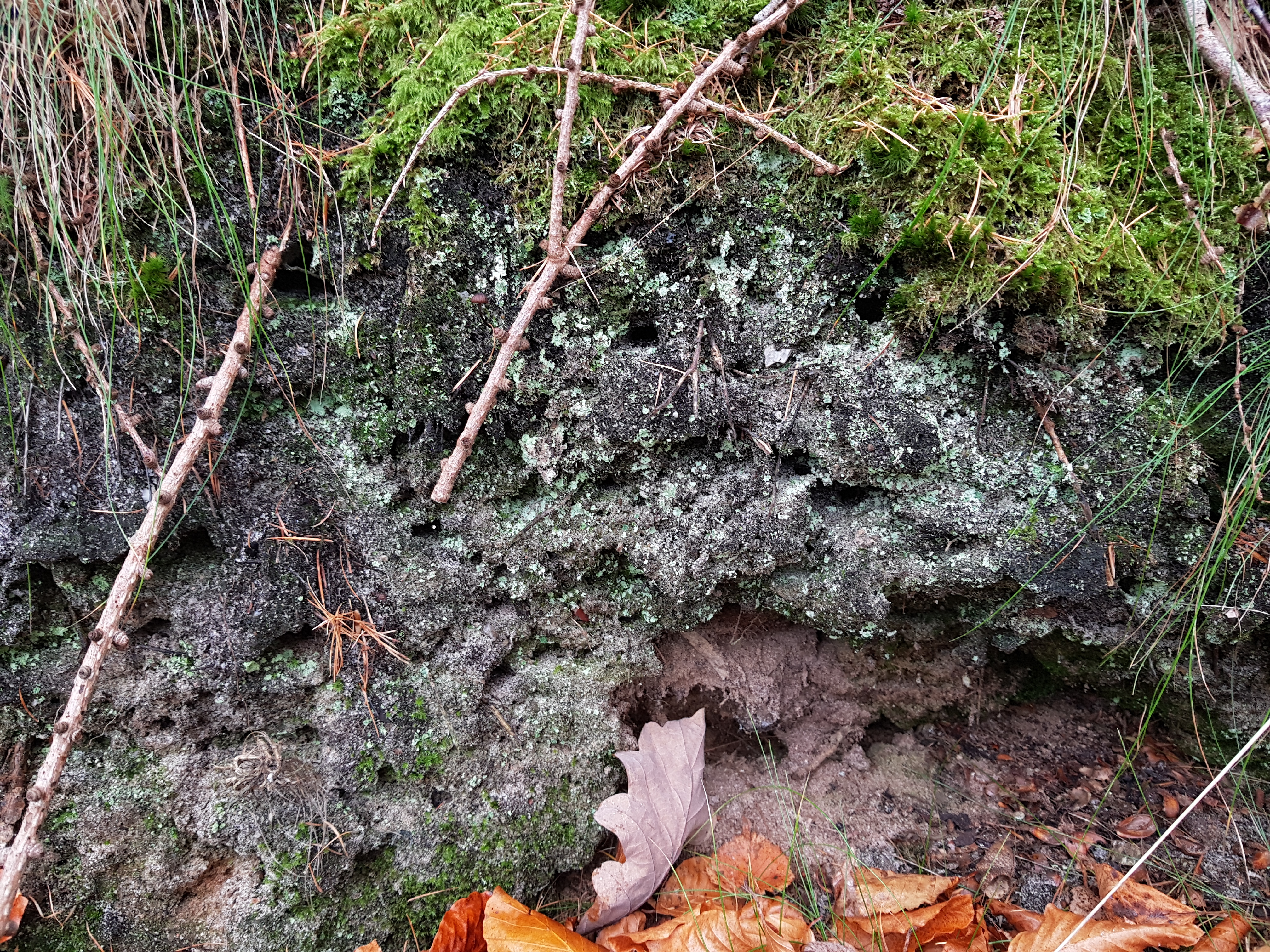
Where our path ran parallel to the river I noticed that the exposed vertical sections were far from lifeless: the sandy faces had been colonised by algae, lichens, fungi, cyanobacteria, and mosses. These biological crusts had stabilised the sand and prevented it from eroding further back into the bank. On a miniature scale they were doing what forests and other vegetation does in mountainous areas all over the world: preventing landslides.
Biological crusts in turn provide opportunities for ferns and seed plants to germinate and gain a foothold: they are often the starting point for further ecological succession.
Not only are these crusts acting as substrate stabilisers and seed beds, but all of the usual ecological processes of photosynthesis, nutrient acquisition, decomposition, carbon storage, symbiosis and competition are taking place in just a few millimetres of biodiversity. There’s a lot going on in these thin veneers of life.
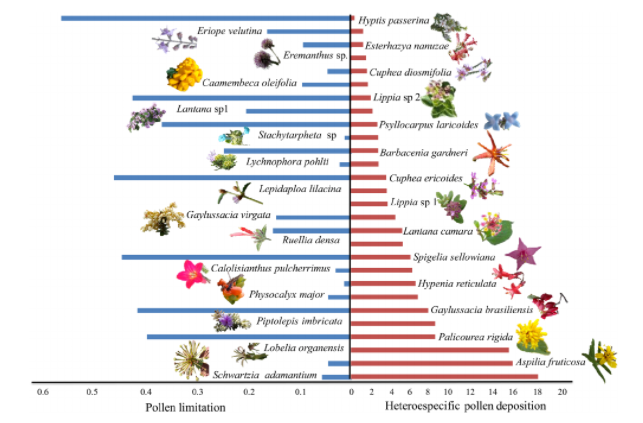
Plants which live in diverse communities with other species may often share pollinators, which means that their stigmas can receive the pollen from different types of plants as well from individuals of their own species. This “heterospecific” pollen deposition may have consequences for plant reproduction if it clogs up the stigmas and prevents “conspecific” pollen from gaining a foothold. However there’s still relatively little published on this phenomenon and its impact on reproduction, particularly in highly diverse tropical communities across different seasons. In a new study just published in the journal Oikos and led by Sabrina Aparecida Lopes, we have shown that in a Brazilian hummingbird-flower community heterospecific pollen deposition (HPD) shows seasonal patterns. Contrary to expectations, we also found a positive relationship between HPD and reproductive success, which by coincidence has also been shown this month for a high-Andean plant community in this paper just published by Sabrina Gavini and colleagues.
Here’s the full reference and the abstract for our Oikos paper:
Heterospecific pollen deposition (HPD) is ubiquitous across plant communities, especially for generalized species which use a diversity of pollinators, and may have negative effects on plant reproduction. However, it is unclear whether temporal changes in the co-flowering community result in changes in HPD patterns. Moreover, community-level studies are required to understand which factors influence HPD and how the reproduction of different species is affected. We investigated the temporal variation of HPD, its relationship with level of specialization on pollinators and floral phenotypic specialization, and its association with reproductive success (pollen limitation and fruit set) in 31 hummingbird-pollinated plant species in a tropical Campo Rupestre. We found seasonality in HPD, with species flowering in the dry season having greater diversity of heterospecific pollen on stigmas and a higher frequency of stigmas containing heterospecific pollen, compared to the rainy season. Stigmas of ecologically generalized species had more heterospecific pollen, while the relationship for ecologically specialized species depended on floral phenotype. Surprisingly, and in contrast to theory, we found a positive relationship between HPD and reproductive success. Our results indicate benefits of generalization and facilitation, in which sharing pollinators brings greater reproductive success via increased conspecific pollen deposition, even if it incurs more HPD. We demonstrated how assessing HPD at a community-level can contribute to understanding the ecological causes and functional consequences of pollinator sharing.
If you’d like a PDF, please use the Contact page to request one.
Perhaps it’s because we don’t have a fancy name for it? “Deforestation” rolls off the tongue in a rather satisfying way that emphasises the importance of conserving old growth and ancient woodlands. But how do we describe destruction of grasslands? “Degrasslandation” doesn’t really work, even though at its root is trying to describe the same effect: the loss of important, carbon-storing and biodiversity-preserving ecosystems. Grasslands, remember, are the world’s largest single terrestrial ecosystem.
Of course it’s not just grasslands that are disappearing: shrublands and savannahs such as the Brazilian cerrado are being lost even faster than forests are being cut down. But again “deshrublandisation” or “decerradoisation” just don’t have the same ring. Nor the political clout: Boris Johnson cannot wax lyrical about the “cathedrals of nature” of chalk grassland on Salisbury Plain or the species rich flood meadows along the Thames. However Britain has lost far more of them than we have of ancient woodlands: over 90% of such species diverse grasslands have now gone according to some estimates.
It’s clear that forests have great PR, are highly photogenic, and are ecologically incredibly important. So today’s announcement at COP26 that world leaders have committed to stopping deforestation by 2030 is welcome news: if they come through with their promises, which they didn’t following a similar announcement in 2014. But I’m in agreement with Gill Perkins who has just published this opinion piece in New Scientist. A commitment to stop grasslands, and other types of habitat, being built on, ploughed up or agriculturally “improved” could go a long way towards ensuring that carbon remains locked up in the world’s soils and vegetation. It doesn’t all have to be about the forests.
UPDATE: for more about the importance of grasslands and how they are being degraded worldwide, see this recent piece by Richard Bardgett, James Bullock, and colleagues entitled “Combatting global grassland degradation“.
When I was teaching undergraduate ecology I always impressed upon my students the idea that the categorisations we use to describe “communities” and “ecosystems” are really loose, artificial attempts to put boundaries around borderless ecological systems. Nowhere is this more true than in coastal ecosystems, where the transition from “sea” to “shore” to “sand dune” to “coastal woodland”, for example, is a blur of overlapping habitat types linked by the movement of organisms, nutrients and energy from one to another.
Birds are especially important linkages in this respect, because they are highly mobile and thus effective at connecting “land” to “sea”. Consider gulls, for example, which may be feeding in coastal waters and on grasslands some distance away, and defecating and being preyed upon in both, resulting in transfer of sea-derived nutrients and energy into terrestrial ecosystems, and vice versa. There’s considerable interest amongst ecosystem ecologists in understanding such transfers; for example, here’s the opening sentences from the abstract from the 2013 paper Donor-Control of Scavenging Food Webs at the Land-Ocean Interface by Thomas Scholar and colleagues:
Food webs near the interface of adjacent ecosystems are potentially subsidised by the flux of organic matter across system boundaries. Such subsidies, including carrion of marine provenance, are predicted to be instrumental on open-coast sandy shores where in situ productivity is low and boundaries are long and highly permeable to imports from the sea.
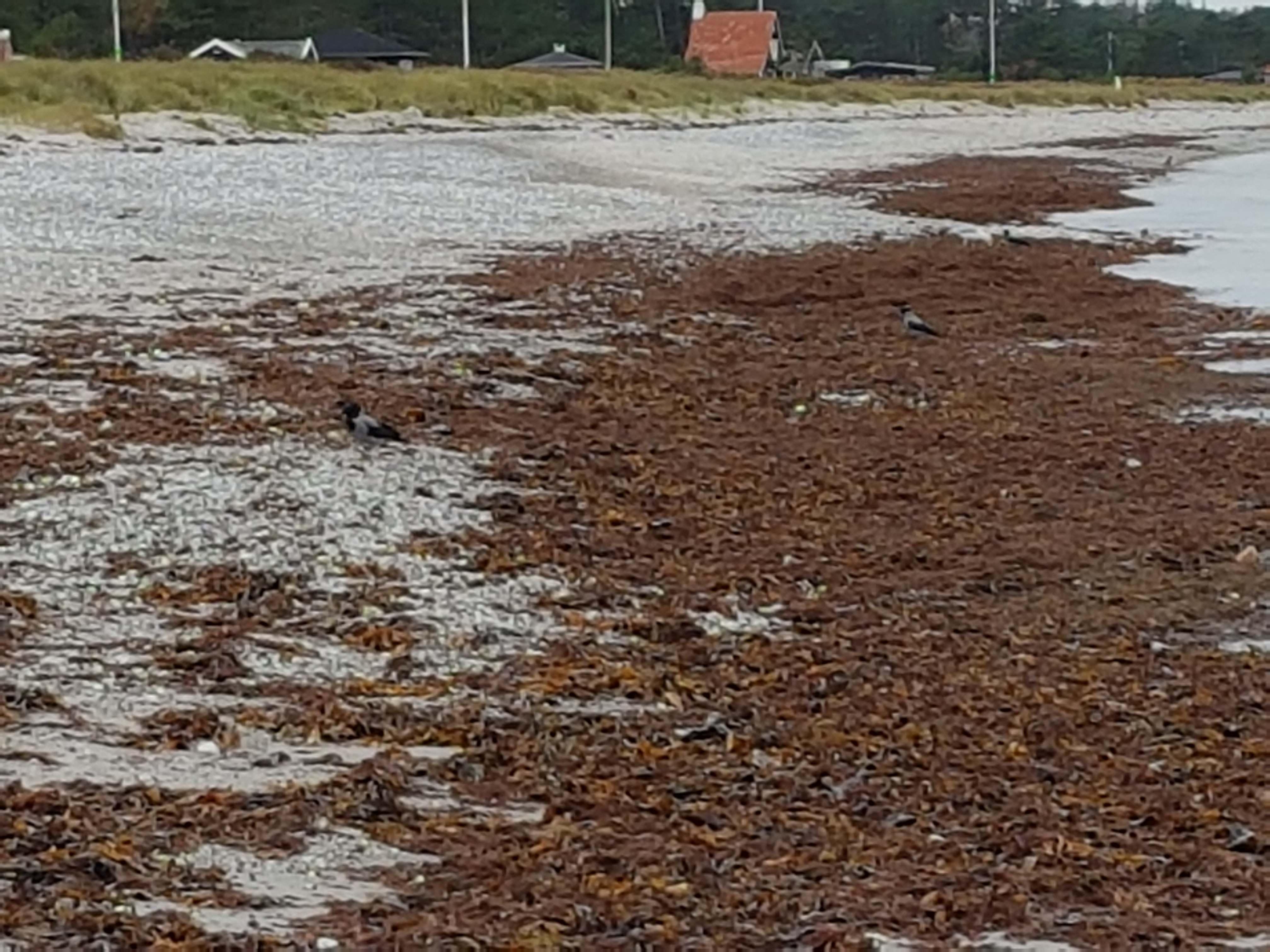
Here on the coastal beaches of the Kattegat I’ve been intrigued by the behaviour of hooded crows (Corvus cornix), which are acting, it appears, as just such facilitators of the “flux of organic matter” from sea to land.
There are six corvid species in the area, and hooded crows are by no means the most common: there’s at least as many rooks (Corvus frugilegus) and jackdaws (Coloeus monedula), and we often see all three species foraging together on ploughed fields or suburban grassland. That’s not surprising, because like many members of the crow family these species are opportunistic omnivores that eat a wide range of animal and plant material, both living and dead, as well as clearing up human food waste, which I described a few years ago during a visit to Kathmandu.
But hooded crows are the only species that we see scavenging on the shoreline.
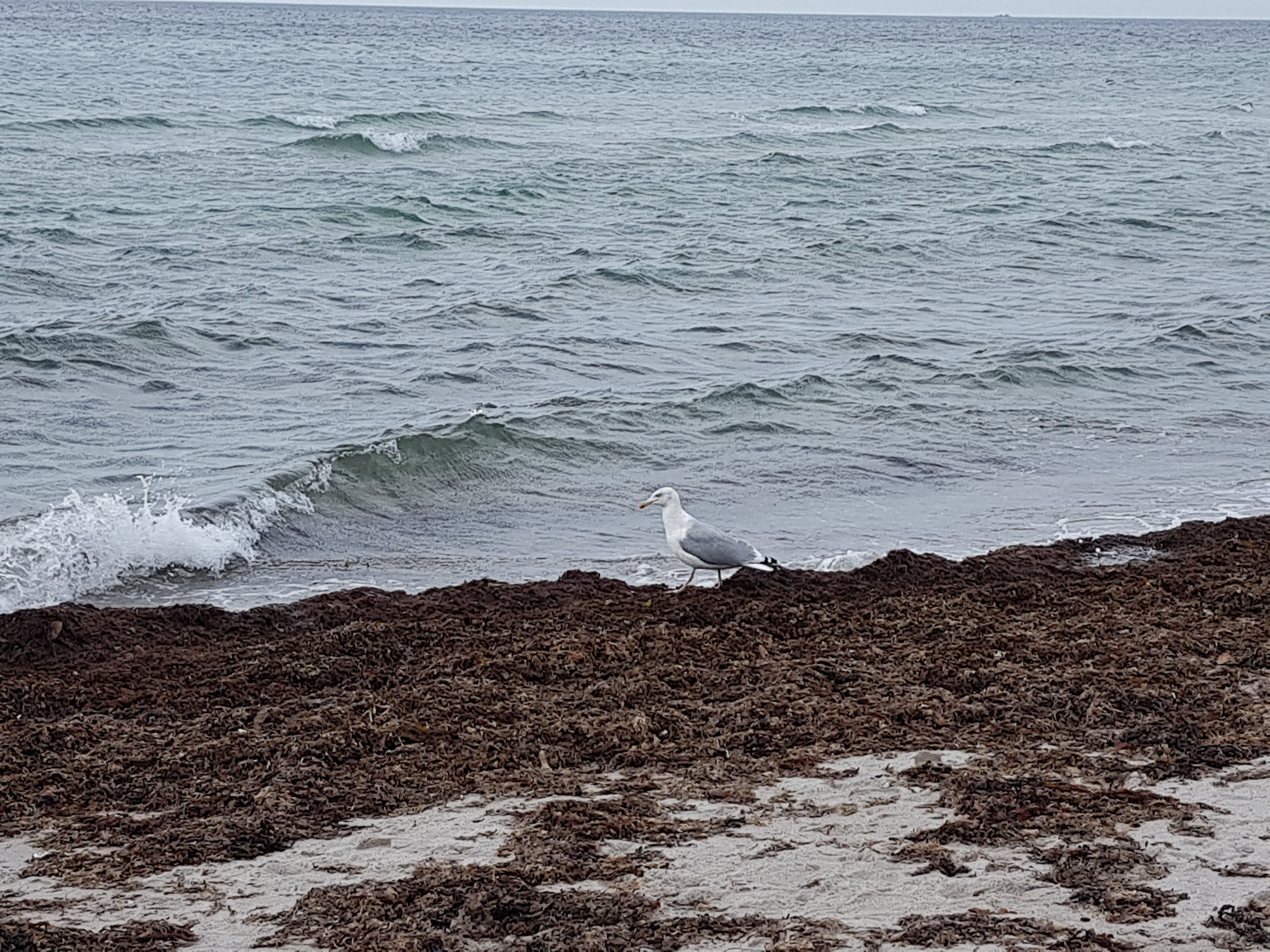
On Sunday, for example, I took a late afternoon stroll along the local beach with my binoculars and, as usual, I saw hooded crows in small groups of two or three, sometimes in the company of gulls. As I watched, in quick succession I saw two lesser black-backed gulls (Larus fuscus) paddle onto the beach, one with a large, flapping flatfish in its beak, the other with a struggling shore crab. As the gulls tore apart their respective prey they were quickly joined by some hooded crows that had been hanging around nearby. Once the gulls had eaten their fill the crows moved in and demolished the rest. The crows seem to be particularly adept at getting the last bit of meat from inside crab carapaces.
That’s behaviour I’ve seen a many times since we arrived here in August, crows picking over the remains of fish or crabs or (in one instance) a dead harbour porpoise that had also attracted the interest of gulls.
This focus on relatively large carrion items by the crows is understandable, but relatively rare because it’s controlled by the frequency with which such dead animals become available on the shore. It´s much more common to see the crows working their way systematically along the strandline, turning over seaweed in search of insects, crustaceans, and other small food items. I’ve even seen them hack away at washed-up acorns in the beach. It must be a productive way of finding food because they do it with such regularity.
But there’s a number of things about this behaviour that are puzzling me.
For example, why is it only the crows that work the strandline? Why do we never see jackdaws or rooks, which are at least as common, and equally omnivorous scavengers? They are also just as intelligent as the hooded crows and presumably could learn that this is a good place to find food. Also, are the crows that we see strandline “specialists” that spend most of the time on the beach, and nest in the nearby dune woodlands? Or is there a constant turnover of individual birds from the surrounding countryside to the beach and back? Do the birds learn this behaviour from one another and is it passed down from parents to offspring?
I’d be interested in your comments on these observations, as always. If you’d like to know more about corvid behaviour and ecology, I can highly recommend Dr Kaeli Swift’s Corvid Research Blog.
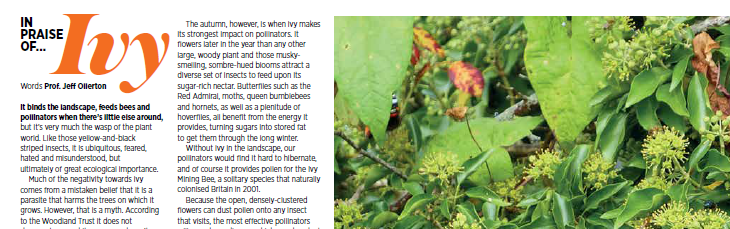
Although it can be invasive and an environmental nuisance in parts of the world where it’s introduced, common or European ivy (Hedera helix) is clearly one of the most vital plants across its native range of Europe, southern Scandinavia and the Mediterranean. Its clinging stems bind the landscape and provide habitat for a diversity of creatures. By offering nectar at a time when there’s few other plants in flower, and berries at a crucial point in the winter, ivy bridges a food gap for both nectar feeding insect and fruit eating birds and mammals.
Ivy is a very popular subject for student research because it’s in flower at the start of the university academic year. In the past I’ve had several students carry out their final year projects using ivy to test ideas about pollinator effectiveness and plant reproductive success. Because the open, densely-clustered flowers can dust pollen onto any insect that visits, the most effective pollinators will vary depending on which are abundant at any time and place, and include various types of flies and bees, plus those much-misunderstood wasps!
Perhaps we should leave the final word on ivy to the Northamptonshire ‘Peasant Poet’ John Clare who wrote ‘To the Ivy’ in the early 19th century:
Jacobs, J.H., Clark, S.J., Denholm, I., Goulson D., Stoate, C. & Osborne J.L. (2010) Pollinator effectiveness and fruit set in common ivy, Hedera helix (Araliaceae). Arthropod-Plant Interactions 4: 19–28
Ollerton, J. (2021) Pollinators & Pollination: Nature and Society. Pelagic Publishing, Exeter, UK
Ollerton, J., Killick, A., Lamborn, E., Watts, S. & Whiston, M. (2007) Multiple meanings and modes: on the many ways to be a generalist flower. Taxon 56: 717-728
Since arriving in Odsherred towards the end of August I’ve been looking out for one plant in particular on our bicycle rides and hikes around the region. Vincetoxicum hirundinaria is a widespread asclepiad or milkweed: a member of the family Apocynaceae, subfamily Asclepiadoideae. This is a group of plants on which I’ve published quite a few research papers and which feature heavily in my book Pollinators & Pollination: Nature and Society.
So far the species has proven elusive and a few Danish ecologists that I’d spoken with told me they had never seen it in the wild. The GBIF account of the species shows a few populations in this part of Denmark but I wasn’t sure if they were old records of populations that no longer exist. But as of yesterday I can confirm that at least one of those populations is extant!
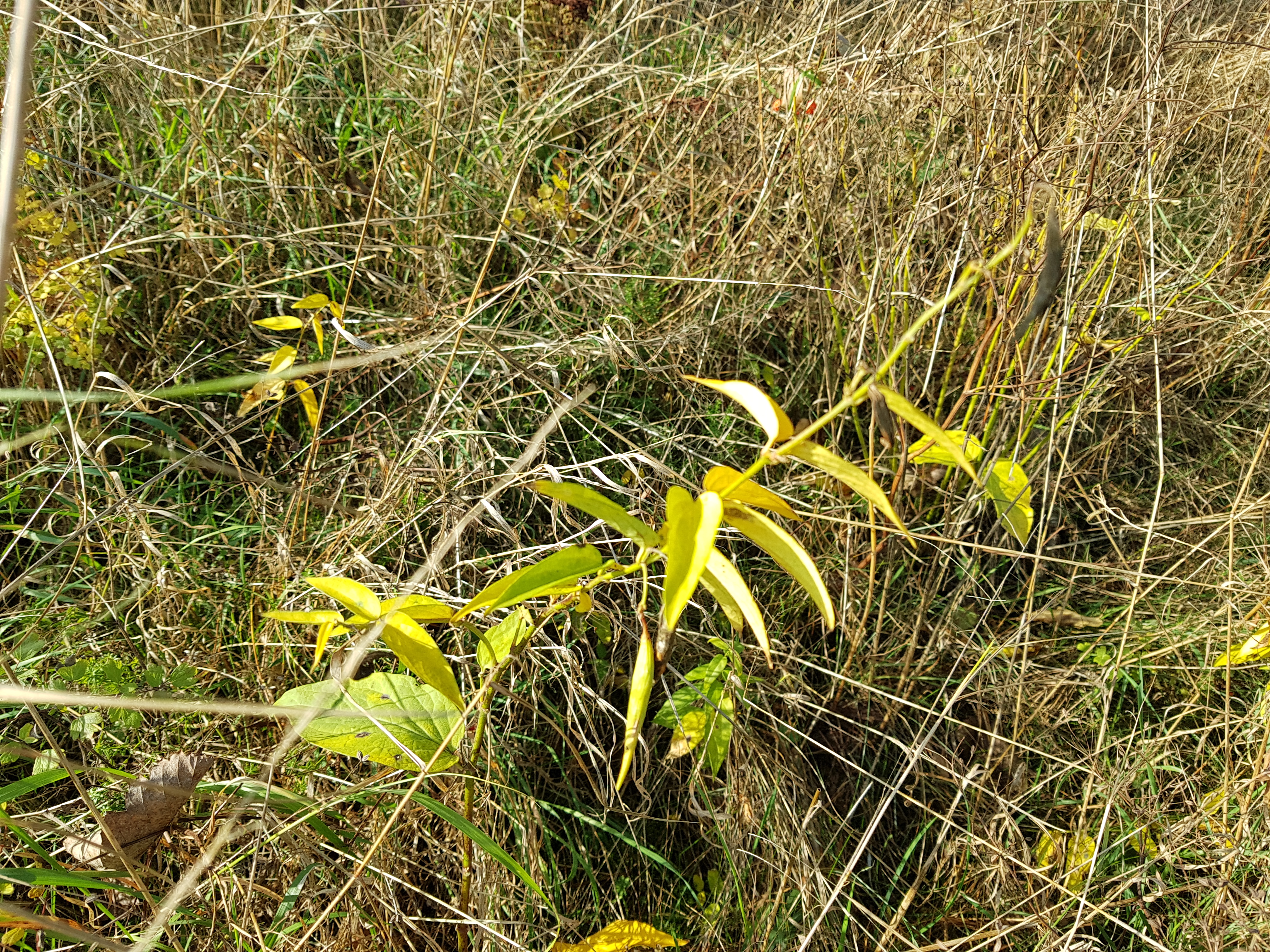
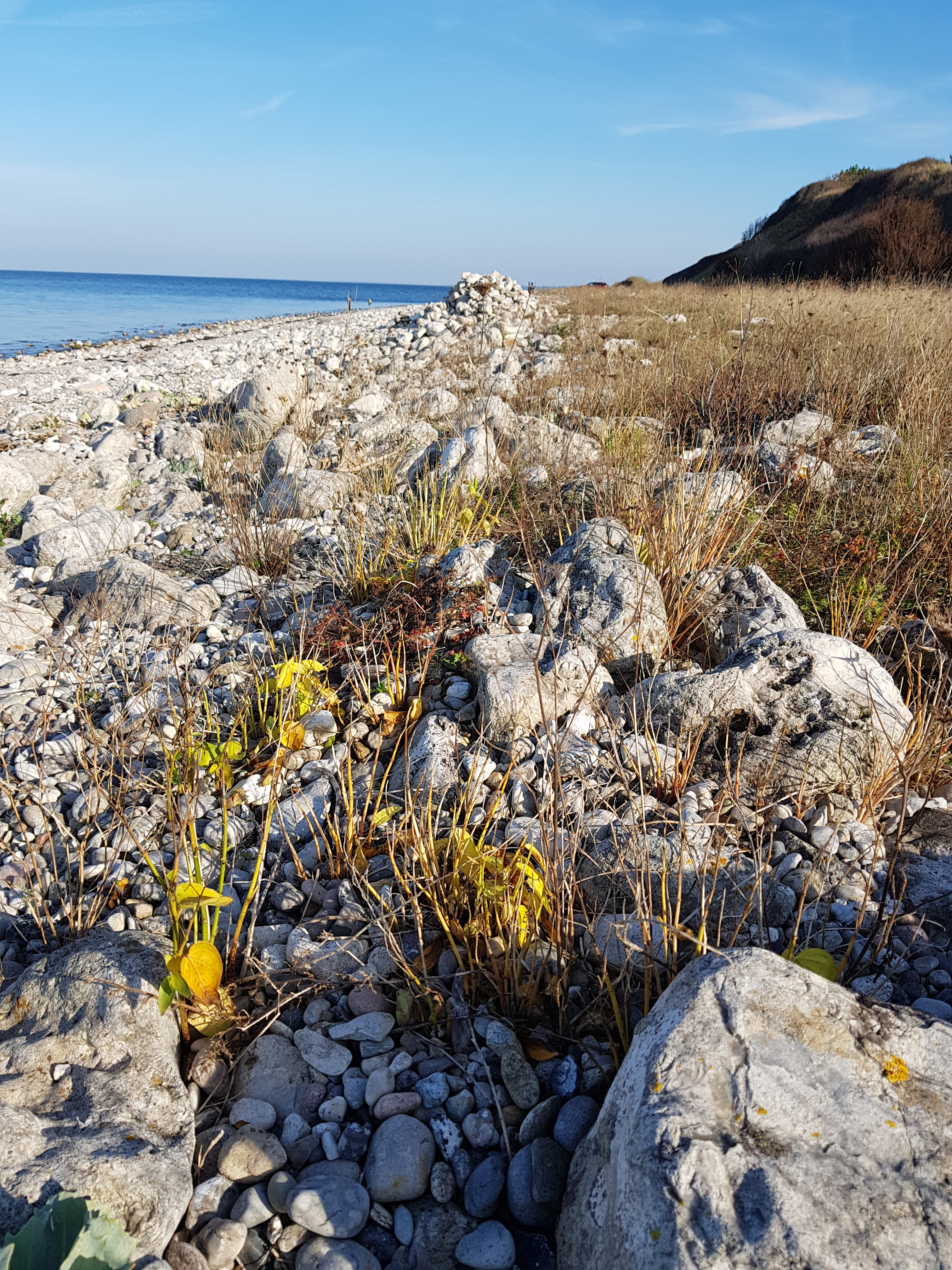
We had cycled out to the small town of Klint about 13km west of us, to see the glacial moraine landscape for which the area is famous and which gives Odsherred UNESCO Geopark status. As we approached the small fishing harbour at Klint I let out an excited shout to Karin who was just ahead of me: in amongst the roadside vegetation I’d spotted the distinctive and immediately recognisable yellow of Vincetoxicumhirundinaria in its autumnal hues! In the photos that follow you can see how well that yellow stands out against the colours of the other plants in the community.
At this time of the year the plant has ceased flowering, but the occasional swollen green seed pod was evidence of successful pollination of their morphologically complex flowers.
I was surprised at just how close to the sea the plants were growing; they must get inundated by sea water during stormy tidal surges.
So what is pollinating these flowers on this exposed shoreline? That’s a question that I want to pursue in the coming years. The Pollinators of Apocynaceae Database has remarkably few records of pollinators in this species, given how widespread it is. Flies certainly pollinate it, but there’s also records of wasps and bees as visitors, including bumblebees on flowers of a plant that I had in cultivation in Northampton. There’s a couple of other research groups in Scandinavia and Europe who are looking at the pollination ecology of the species and I’m hoping that we can collaborate on a study of spatial variation in its reproduction. Vincetoxicum is quite a large genus (around 150 species) and only around 10% of the species have been studied in any detail. But these studies are revealing a complex diversity of pollinators, including most recently, cockroaches in the Chinese species Vincetoxicumhainanense. I’m sure this intriguing group of plants has more fascinating stories to tell us about the ecology and evolution of its pollination systems.
FIGURE 4 from Xiong et al. (2020) Specialized cockroach pollination in the rare and endangered plant Vincetoxicum hainanense in China. American Journal of Botany 107: 1355–1365.
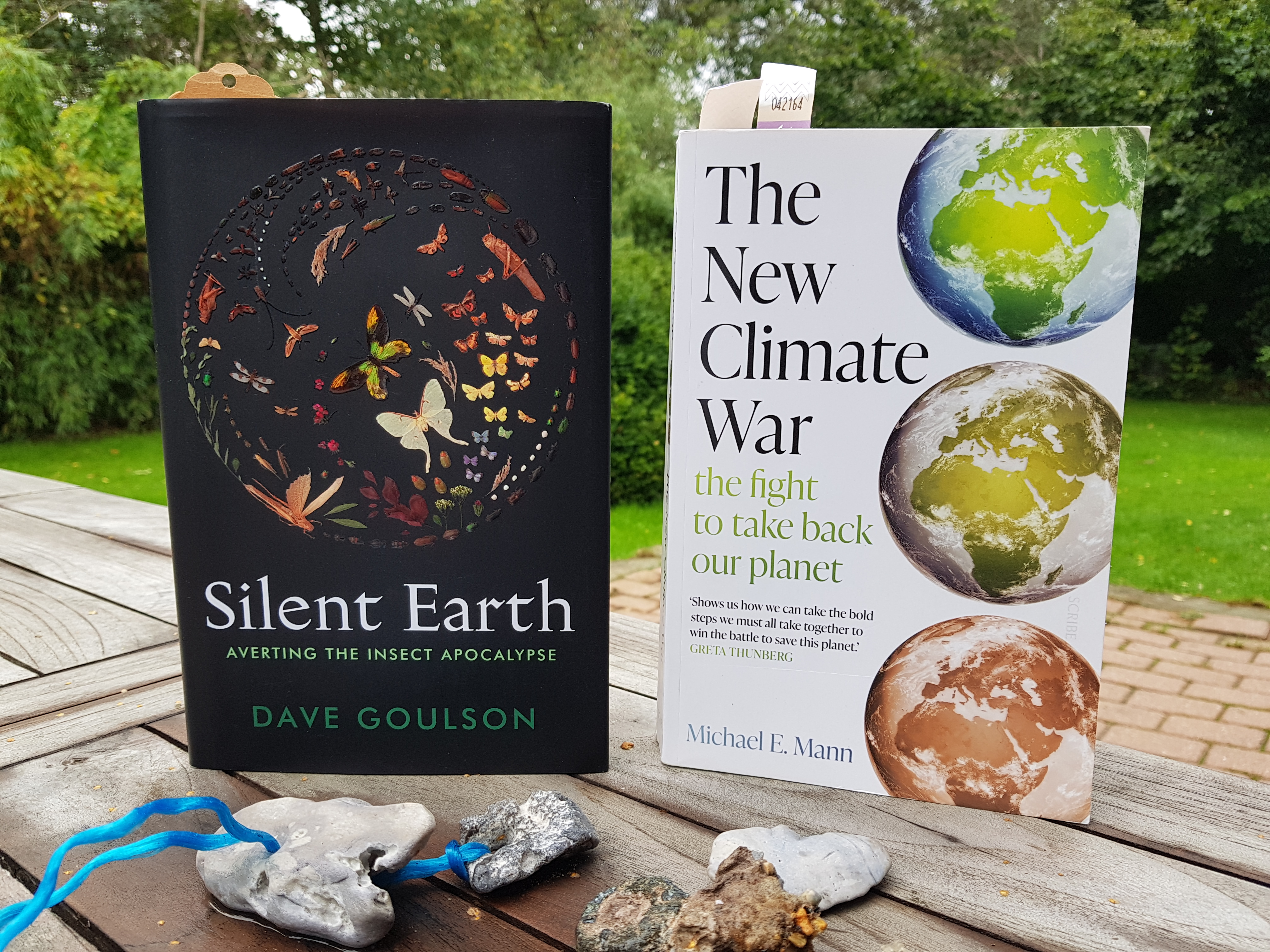
My summer reading this year has included two books that I’ve really looked forward to, and which have not disappointed. These books are on the one hand very different and yet share enough similarities for me to review them together. Michael E. Mann’s The New Climate War focuses on the ‘climate emergency’ whilst Dave Goulson’s Silent Earth is about the ‘ecological emergency’, and specifically the decline of insect populations. As I pointed out in arecent New Scientist opinion piece: “the climate emergency often overshadows the ecological emergency, even though the two overlap both in their causes and their solutions”. Reading these two volumes in parallel has given me a much deeper understanding of just how true that statement is, and it’s why I’m suggesting that of the many, many books that have been recently written about our current environmental crisis, these deserve to be the ones that you read.
Silent Earth deals with the billions of small things – the insects and other invertebrates – that make the world function the way it does. These creatures facilitate the recycling of organic material, the pollination of wild and crop plants, the regulation of populations of other species, and play a host of additional ecological roles. The central thesis of the book is that the growing evidence of declines and extinctions of these small animals should give us cause for concern. In contrast, The New Climate War is about the big stuff – how the world’s atmosphere and oceans are heating up, the contribution of human activities to that warming, and what this means for weather patterns and sea levels across the globe. And how industry and politicians have conspired to deny, obfuscate, and divide, undermining efforts to decarbonise the world’s economy.
It matters not whether we view the world through a microscope or via an Earth observation satellite, both of these ways of seeing and understanding are important to our future as a species. The flap of a butterfly’s wings may only rarely be the indirect cause of a hurricane in the Caribbean, but reading these books nonetheless reminds us of the connections between the world’s biosphere and its physical domains.
The science underlying both books acts as a background to their main purpose: convincing the reader that there are urgent issues with which we, as a society, must deal. In this respect they are unapologetically political, and the point at which science meets environmentalism. The books are written by scientists who are respected experts in their respective fields, but who are not content with sitting back on their award- and citation-laden laurels, and allowing their science to speak for itself (as important as that is). Both Mann and Goulson have entered the more public arenas of politics and social commentary to argue the case for fundamental restructuring of some aspects of our societies. Their reward has been near constant criticism, much of it personal, vindictive and even threatening, by the vested interests of the fossil fuel industry (Mann) and agro-chemical & farming interests (Goulson) and the keyboard warriors who labour on their behalf, wittingly or not. That Mann and Goulson persist in voicing their concerns in this way, at the same time continuing to publish high quality science, says much about them as people and their commitment to these important causes.
The stereotype of the cold, calculating, emotionless scientist is shattered by these authors as they frequently refer to their families, especially their children, as a prime motivation for their activism. In an emotive chapter, Goulson imagines his son as an old man sitting up through the night to defend the vegetables that he’s growing with his family in a Britain that has experienced not an apocalyptic collapse of society and basic infrastructure, but “a slow unravelling over decades”. As he remembers back to the world of his youth he wonders: “Why did we fail to act? We humans do not seem to be very good at grasping the big picture”.
The Big Picture is certainly an underlying theme of both books, despite the different scales at which these scientists work, and both are revelatory in their descriptions of what’s occurring behind the scenes. Pull aside the curtain and we see the financial connections between various anti-environmental think tanks and lobby groups (Mann) and the hypocrisy of large business corporations which continue to manufacture highly toxic pesticides that, although banned in the west, can be profitably exported to developing countries (Goulson). All of these messages of corruption and environmental degradation could make the books pessimistic reads. But in fact both have an optimistic undertone, a sense that we know what the issues are, we know what’s got us into this mess, and there are routes out of it. But only if (and it is a huge if) there is the willingness of governments and large corporations to act.
Both writers share a belief in humour and personal anecdotes as vehicles for emphasising important points. For example Mann describing the fearsome and brutal attention given by climate deniers to Greta Thunberg and other youthful activists as being like the Eye of Sauron (one of several Lord of the Rings analogies). Or Goulson’s description of giving a phone interview to Australian radio while lurking in the piss-smelling toilet of a British pub. These books are brought to life by the authors’ experiences as scientists and as advocates, and their passionate wish for a better future.
Full disclosure: this can hardly be considered an objective review as both Dave Goulson and Mike Mann are friends of mine. Dave I met over thirty years ago when we were graduate students in the same department, and we’ve published a few things together. Mike I encountered much more recently, as I described in this post, when we were concurrently on sabbatical at the University of New South Wales and discovered that we were living in adjacent apartment blocks. In some respects the world of science is a very small one. Despite these personal connections I don’t think that I would have said much that’s different about either book had I not known their writers. But who knows, that’s not the way things are. There are certainly things to criticise in both books, and I don’t agree with all of the writers’ conclusions and could debate several points of interpretation with them, especially in Silent Earth where I’m in more comfortable territory. But those would be minor criticisms in light of the conclusions that these important books draw: that our world is changing rapidly, that we are responsible, and that we have a duty to act immediately. It’s not too late, but we need to listen to the science and what scientists such as Mann and Goulson are telling us.
Watch out for my article in Bees and Other Pollinators Quarterly Magazine about what the forthcoming COP26 climate change meeting has in store for pollinators, including why commitments to developing countries are important and the Grasslands+ initiative.
The magazine is in the shops on October 12th or you can subscribe by following this link: https://bq-mag.store/
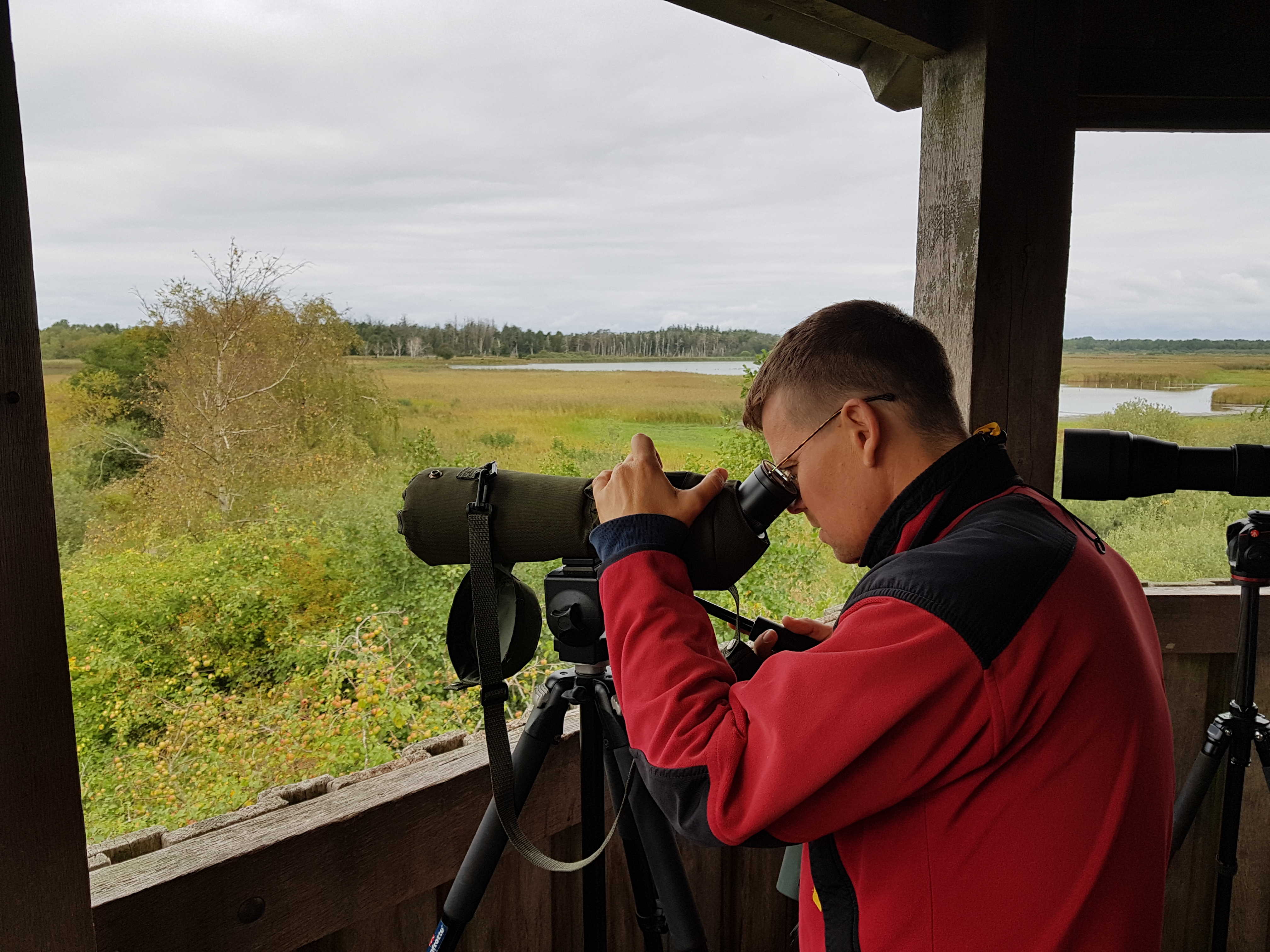
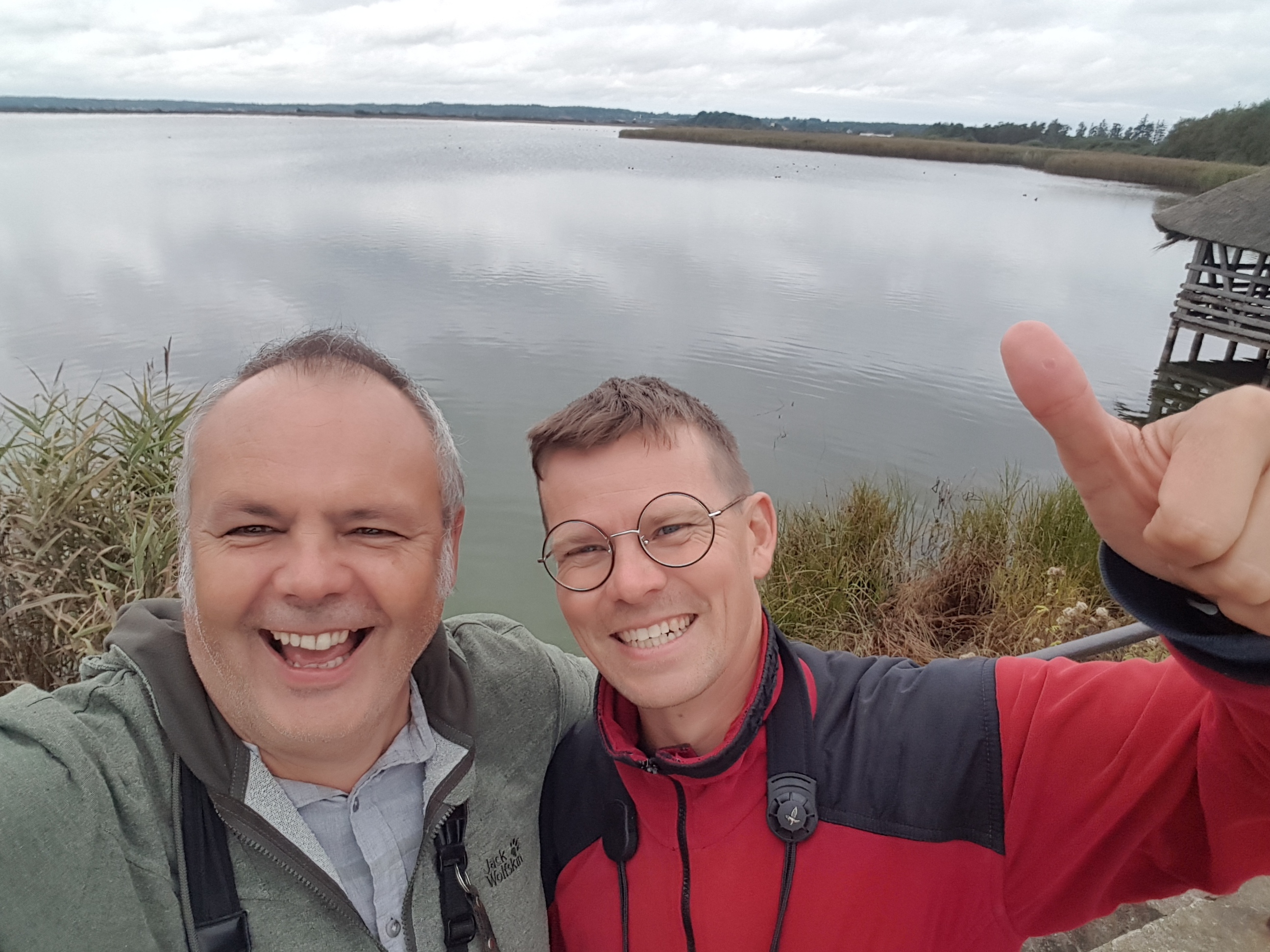
As well as working on a variety of writing and research projects, Karin and I have spent the last few weeks getting out and about in the Odsherred region of Denmark, exploring the culture and ecology of our new home. Not far from where we are living is the Hov Vig bird reserve which I’d put off visiting until last weekend when my friend and colleague Bo Dalsgaard was due to come and stay with us. Bo is primarily an ornithologist (we’ve collaborated on quite a few hummingbird-flower network studies), so it was going to be a good opportunity to get to know more about the birds of this part of the world.
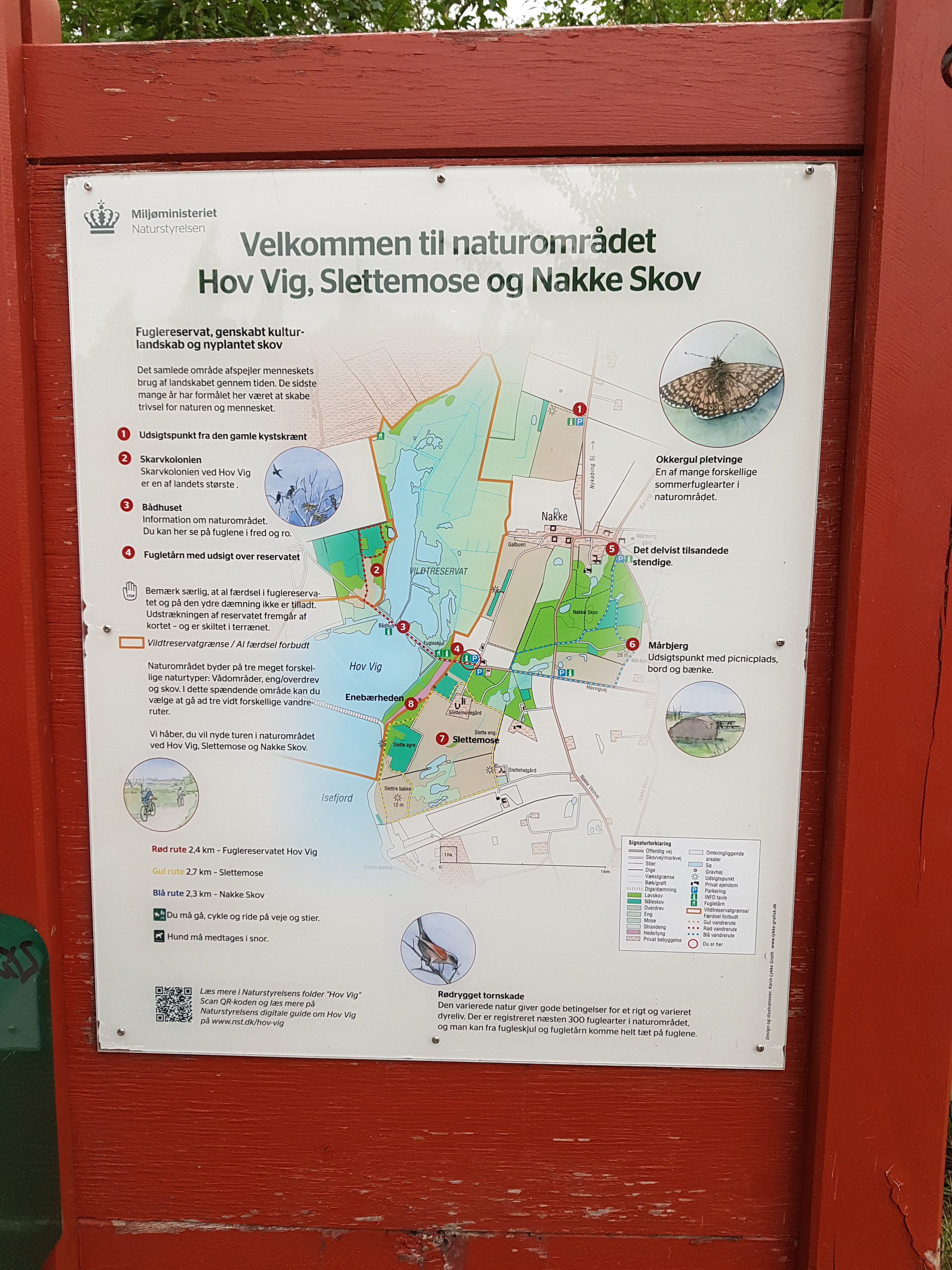
After an early breakfast we set out for Hog Vig and I have to say that I was extremely impressed by the reserve. As you can see from the map below it’s been created by installing a low causeway across a bay in the fjord, resulting in a shallow, brackish lagoon that is absolutely teeming with bird life! Shallow lagoons like this are very productive, with lots of invertebrates and plants on which the birds can feed.
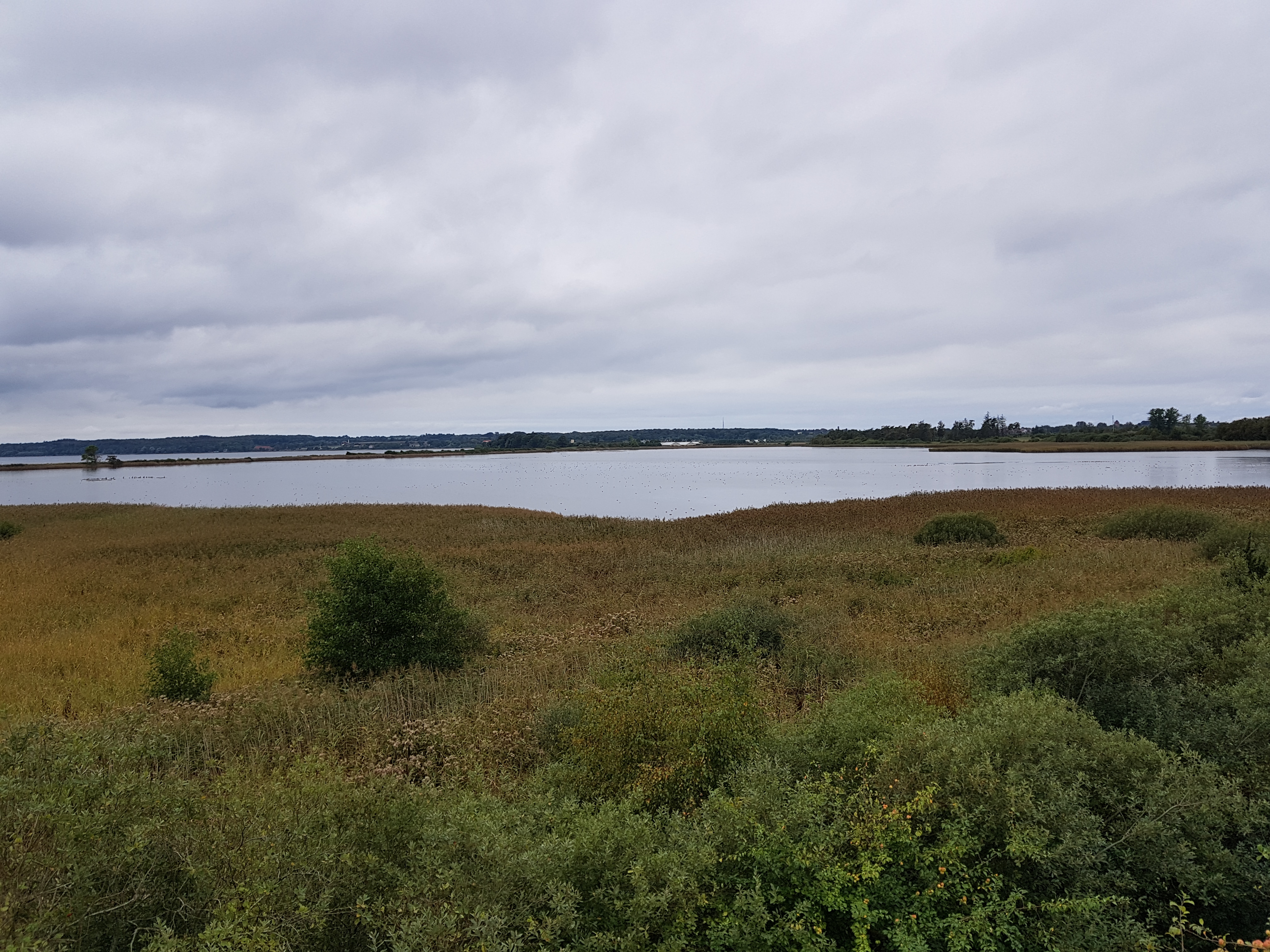
You can see the start of the causeway on the middle left of this photo:
I hadn’t realised just how shallow the lagoon was until I spotted a Great White Egret wading across the centre, the water barely reaching the middle of its legs. In all we counted 8 of these egrets, though a local birder we encountered told us he’d seen 14 that day. Interestingly, Little Egrets are considered quite uncommon here, a reverse of the situation in the UK.
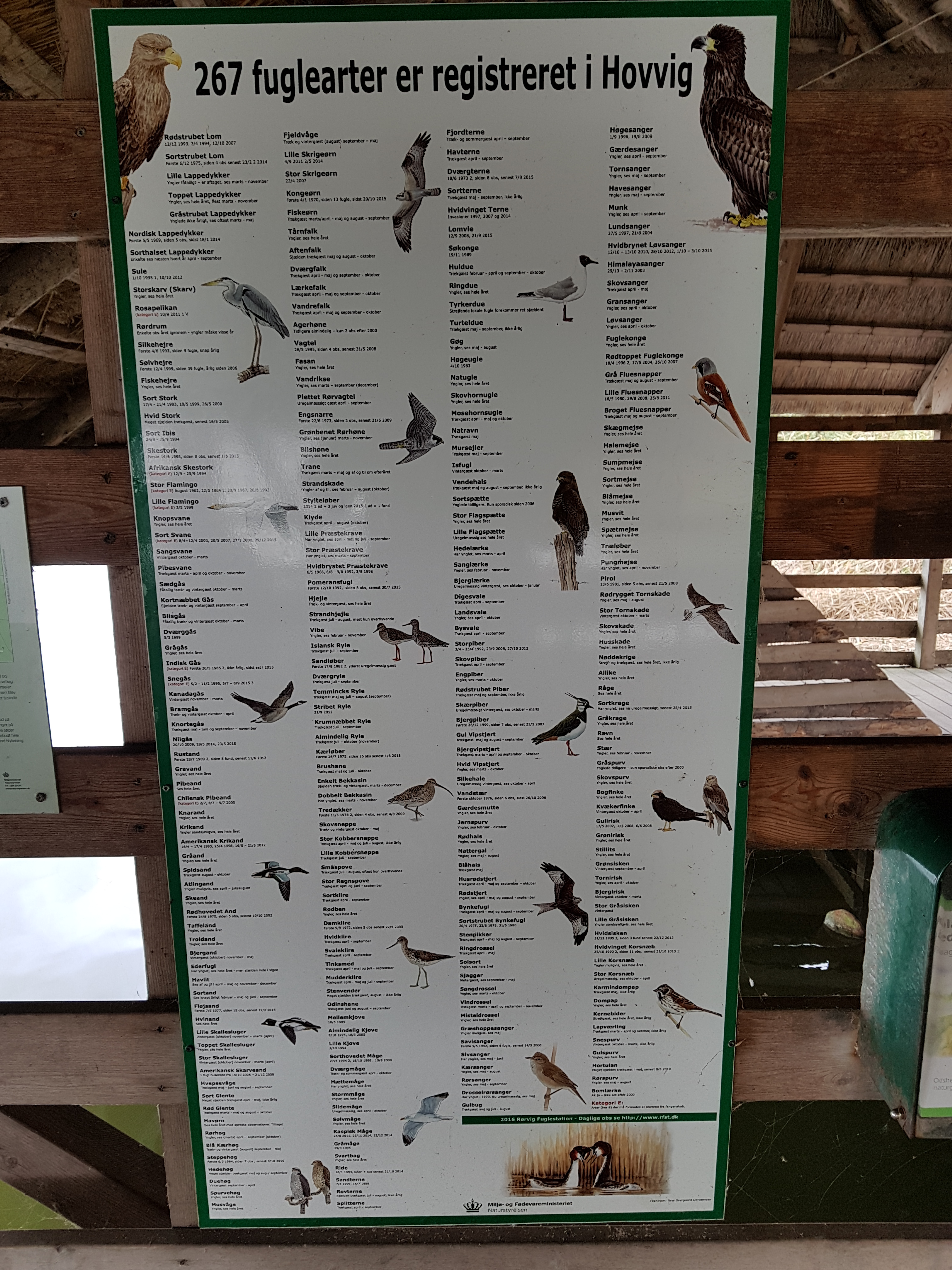
Although the total area of the reserve, including woodland, is only 334 ha, an extraordinary 267 species of birds have been recorded there:
On the reserve itself we identified 39 species, and a handful more when we visited the nearby coast. Including those that we were unsure of we had just over 50 species, not bad for a day of birding. As well as the egrets, particular highlights were huge numbers of Teal, on the water, large active flocks of Golden Plovers and Lapwings set into motion by a hunting Sparrowhawk, and Bar-tailed Godwits, Stonechats and Eiders.
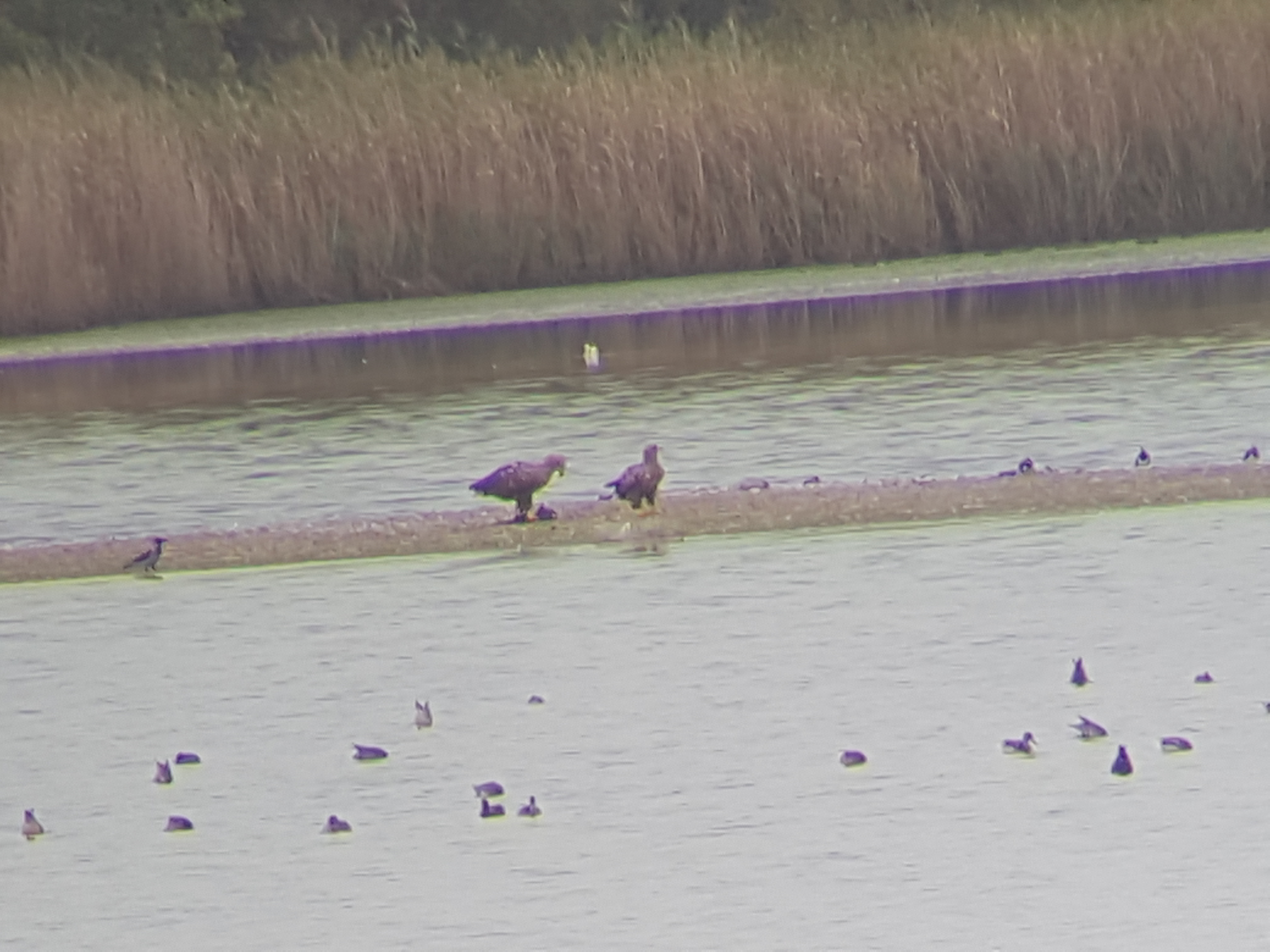
The most exciting birds for us, however, was a pair of White-tailed Sea Eagles that descended onto one of the low islands in the lagoon to feed on a dead cormorant! The locals describe these birds as ‘flying doors’, very apt given their huge wingspans. Needless to say, their appearance also sent much of the bird life into the air. Here’s a poor photo taken with my camera through Bo’s telescope: