Category Archives: Pollination

Practical methods for assessing insect pollination services provided by sites – download our new study for free

In September 2016, along with 11 other pollinator & pollination scientists, I took part in a two-day two-day workshop held at the UNEP-World Conservation Monitoring Centre in Cambridge. The aim was to develop a range of simple, practical methods to enable the valuation of insect pollination services to agricultural crops that are provided by a nature reserves or other natural or semi-natural habitats, for TESSA – the Toolkit for Ecosystem Service Site-Based Assessments.

After a long gestation, caused not least by the COVID-19 pandemic, the paper outlining the methods that we developed has been published. It’s open-access and downloadable for free. Here’s the full reference with a link to the paper:

Ratto, F., Breeze, T. D., Cole, L. J., Garratt, M. P. D., Kleijn, D., Kunin, B., Michez, D., O’Connor, R., Ollerton, J., Paxton, R. J., Poppy, G. M., Potts, S. G., Senapathi, D., Shaw, R., Dicks, L. V., & Peh, K. S.-H. (2022) Rapid assessment of insect pollination services to inform decision-making. Conservation Biology 1–13

And here’s the Abstract:

Pollinator declines have prompted efforts to assess how land-use change affects insect pollinators and pollination services in agricultural landscapes. Yet many tools to measure insect pollination services require substantial landscape-scale data and technical expertise. In expert workshops, 3 straightforward methods (desk-based method, field survey, and empirical manipulation with exclusion experiments) for rapid insect pollination assessment at site scale were developed to provide an adaptable framework that is accessible to non-specialist with limited resources. These methods were designed for TESSA (Toolkit for Ecosystem Service Site-Based Assessment) and allow comparative assessment of pollination services at a site of conservation interest and in its most plausible alternative state (e.g., converted to agricultural land). We applied the methods at a nature reserve in the United Kingdom to estimate the value of insect pollination services provided by the reserve. The economic value of pollination services provided by the reserve ranged from US$6163 to US$11,546/year. The conversion of the reserve to arable land would provide no insect pollination services and a net annual benefit from insect-pollinated crop production of approximately $1542/year (US$24∙ha–1∙year–1). The methods had wide applicability and were readily adapted to different insect-pollinated crops: rape (Brassica napus) and beans (Vicia faba) crops. All methods were rapidly employed under a low budget. The relatively less robust methods that required fewer resources yielded higher estimates of annual insect pollination benefit.

Join me on Thursday for a free talk!

Join me this Thursday at a free online talk organised by Buglife where I’ll be giving an introduction to how flowers function and the ways in which their behaviour manipulates pollinators to ensure reproduction. I’ll be covering:

  • What are flowers and where did they come from?
  • How flowers function and reward pollinators.
  • Some case studies from my own research on flower and pollinator behaviour.
  • Why is it important that we understand floral biology?

Here’s the link to register for the event: https://www.buglife.org.uk/events/to-be-a-flower-with-professor-jeff-ollerton/

I look forward to seeing you there!

Listen to an interview with me on the Environmental Professional’s Radio podcast!

text and logo over a background picture of a person posing for the camera

I was recently invited to chat about careers and writing and pollinators and pollination with the folks from National Association of Environmental Professionals for their Environmental Professional’s Radio podcast. You can listen to it here:

https://www.environmentalprofessionalsradio.com/

We covered a lot of ground and it was great fun – thanks for having me!

Leonard B. Thien (1938-2021) – botanist and pollination biologist

I was saddened to learn recently of the death of Professor Leonard B. Thien of Tulane University who passed away at the end of October after a long illness. Although I didn’t know Professor Thien personally, I knew of his work in floral ecology, pollination biology and plant evolution, topics on which he had worked for since obtaining his PhD in 1968. Over the course of his career he published more than 80 articles on a huge range of botanical subjects, including ground-breaking work on mosquito pollination of orchids (Thien 1969). The orchid species Alaticaulia thienii is named in his honour.

The studies Leonard Thien published that really inspired me when I was first starting out on my journey as a researcher, however, involved his work on “relictual” angiosperms, i.e. flowering plants that have very long evolutionary histories and deep phylogenetic roots back to the early Cretaceous period, for example Magnolia and Illicium. Papers with titles such as “Patterns of pollination in the primitive angiosperms” (Thien 1980) piqued my interest and motivated me to work on Australian Piperaceae for a short while following my PhD (Ollerton 1996). It was a topic that I struggled to gain further funding for, and later molecular systematic studies changed many of our ideas about what constitutes the most basal groups of extant flowering plants. But nonetheless, the questions that Leonard inspired in me, regarding the ecologies of these relictual taxa, and whether we can infer the reproductive ecology of the earliest flowering plants from studies of their surviving descendants, are ones that intrigue me to this day (van der Kooi and Ollerton 2020).

Leonard Thien kept up this interest even as new DNA technologies over turned old ideas, and he was the first to study the reproductive ecology of Amborella trichopoda on New Caledonia, a species now considered to be the earliest surviving clade of flowering plants (Thien et al. 2003). This is just one part of a legacy of work that current and future generations will build upon as we develop our understanding of the relationships between pollinators, plants, and evolutionary processes.

I’m grateful to Peter Bernhardt for prompting this post and for sending me a copy of the In Memoriam article that he and and David White will publish in the Plant Sciences Newsletter in March, and to Lorraine Thien for providing the photograph that accompanies this post.

References

Ollerton, J. (1996) Interactions between gall midges (Diptera: Cecidomyiidae) and inflorescences of Piper novae-hollandiae (Piperaceae) in Australia. The Entomologist 115: 181-184

Thien, L.B. 1969. Mosquito pollination of Habenaria obtusata (Orchidaceae). American Journal of Botany 56: 232-237.

Thien, L.B. 1980. Patterns of pollination in the primitive angiosperms. Biotropica 12: 1-14

Thien, L.B., Sage, T.L., Jaffre, T., Bernhardt, P., Pontieri, V., Wesston, P.H., Malloch, D., Azuma, H., Graham, S.W., McPherson, M.A., Hardeep, S.., Sage, R.S. & Dupre, J.-L. 2003. The population structure and floral biology of Amborella trichopoda (Amborellaceae). Annals of the Missouri Botanical Garden 90: 466-490

van der Kooi, C.J. & Ollerton, J. (2020) The origins of flowering plants and pollinators. Science 368: 1306-1308

Heterospecific pollen deposition is positively associated with reproductive success in a diverse hummingbird-pollinated plant community: a new study just published

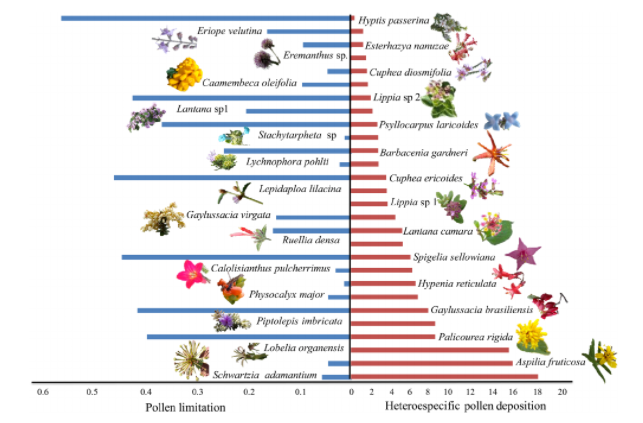
Plants which live in diverse communities with other species may often share pollinators, which means that their stigmas can receive the pollen from different types of plants as well from individuals of their own species. This “heterospecific” pollen deposition may have consequences for plant reproduction if it clogs up the stigmas and prevents “conspecific” pollen from gaining a foothold. However there’s still relatively little published on this phenomenon and its impact on reproduction, particularly in highly diverse tropical communities across different seasons. In a new study just published in the journal Oikos and led by Sabrina Aparecida Lopes, we have shown that in a Brazilian hummingbird-flower community heterospecific pollen deposition (HPD) shows seasonal patterns. Contrary to expectations, we also found a positive relationship between HPD and reproductive success, which by coincidence has also been shown this month for a high-Andean plant community in this paper just published by Sabrina Gavini and colleagues.

Here’s the full reference and the abstract for our Oikos paper:

Lopes, S.A, Bergamo, P.J, Queiroz, S.N.P., Ollerton, J., Santos, T. & Rech, A.R. (2021) Heterospecific pollen deposition is positively associated with reproductive success in a diverse hummingbird-pollinated plant community. Oikos (in press)

Heterospecific pollen deposition (HPD) is ubiquitous across plant communities, especially for generalized species which use a diversity of pollinators, and may have negative effects on plant reproduction. However, it is unclear whether temporal changes in the co-flowering community result in changes in HPD patterns. Moreover, community-level studies are required to understand which factors influence HPD and how the reproduction of different species is affected. We investigated the temporal variation of HPD, its relationship with level of specialization on pollinators and floral phenotypic specialization, and its association with reproductive success (pollen limitation and fruit set) in 31 hummingbird-pollinated plant species in a tropical Campo Rupestre. We found seasonality in HPD, with species flowering in the dry season having greater diversity of heterospecific pollen on stigmas and a higher frequency of stigmas containing heterospecific pollen, compared to the rainy season. Stigmas of ecologically generalized species had more heterospecific pollen, while the relationship for ecologically specialized species depended on floral phenotype. Surprisingly, and in contrast to theory, we found a positive relationship between HPD and reproductive success. Our results indicate benefits of generalization and facilitation, in which sharing pollinators brings greater reproductive success via increased conspecific pollen deposition, even if it incurs more HPD. We demonstrated how assessing HPD at a community-level can contribute to understanding the ecological causes and functional consequences of pollinator sharing.

If you’d like a PDF, please use the Contact page to request one.

Ivy binds the landscape and bridges the seasons: a new article just published

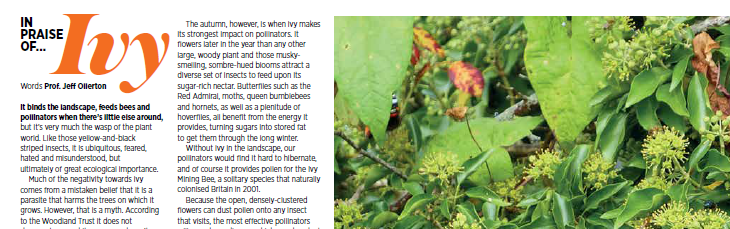
If you check out the latest issue of Bees and Other Pollinators Quarterly you’ll see that, as well as having a piece on the forthcoming COP26 climate change meeting and what it means for pollinators, the magazine has also published a short opinion piece by me called “In Praise of….Ivy”. The magazine is currently in the shops or you can subscribe by following this link: https://bq-mag.store/.

Although it can be invasive and an environmental nuisance in parts of the world where it’s introduced, common or European ivy (Hedera helix) is clearly one of the most vital plants across its native range of Europe, southern Scandinavia and the Mediterranean. Its clinging stems bind the landscape and provide habitat for a diversity of creatures. By offering nectar at a time when there’s few other plants in flower, and berries at a crucial point in the winter, ivy bridges a food gap for both nectar feeding insect and fruit eating birds and mammals.

Ivy is a very popular subject for student research because it’s in flower at the start of the university academic year. In the past I’ve had several students carry out their final year projects using ivy to test ideas about pollinator effectiveness and plant reproductive success. Because the open, densely-clustered flowers can dust pollen onto any insect that visits, the most effective pollinators will vary depending on which are abundant at any time and place, and include various types of flies and bees, plus those much-misunderstood wasps!

Perhaps we should leave the final word on ivy to the Northamptonshire ‘Peasant Poet’ John Clare who wrote ‘To the Ivy’ in the early 19th century:

Dark creeping Ivy, with thy berries brown,

That fondly twists’ on ruins all thine own,

Old spire-points studding with a leafy crown

Which every minute threatens to dethrone;

With fearful eye I view thy height sublime,

And oft with quicker step retreat from thence

Where thou, in weak defiance, striv’st with Time,

And holdst his weapons in a dread suspense.

But, bloom of ruins, thou art dear to me,

When, far from danger’s way, thy gloomy pride

Wreathes picturesque around some ancient tree

That bows his branches by some fountain-side:

Then sweet it is from summer suns to be,

With thy green darkness overshadowing me.

Further reading

Bradbury, K. (2015) English ivy: berry good for birds. https://www.theguardian.com/lifeandstyle/gardening-blog/2015/feb/19/english-ivy-berry-good-for-birds

Bumblebee Conservation Trust (2021) Ivy mining bee: https://www.bumblebeeconservation.org/ivyminingbee/

Jacobs, J.H., Clark, S.J., Denholm, I., Goulson D., Stoate, C. & Osborne J.L. (2010) Pollinator effectiveness and fruit set in common ivy, Hedera helix (Araliaceae). Arthropod-Plant Interactions 4: 19–28

Ollerton, J. (2021) Pollinators & Pollination: Nature and Society. Pelagic Publishing, Exeter, UK

Ollerton, J., Killick, A., Lamborn, E., Watts, S. & Whiston, M. (2007) Multiple meanings and modes: on the many ways to be a generalist flower. Taxon 56: 717-728

Woodland Trust (2021) Ivy. https://www.woodlandtrust.org.uk/trees-woods-and-wildlife/plants/wild-flowers/ivy/

A milkweed on the shore: tracking down an elusive Danish plant

Since arriving in Odsherred towards the end of August I’ve been looking out for one plant in particular on our bicycle rides and hikes around the region. Vincetoxicum hirundinaria is a widespread asclepiad or milkweed: a member of the family Apocynaceae, subfamily Asclepiadoideae. This is a group of plants on which I’ve published quite a few research papers and which feature heavily in my book Pollinators & Pollination: Nature and Society.

So far the species has proven elusive and a few Danish ecologists that I’d spoken with told me they had never seen it in the wild. The GBIF account of the species shows a few populations in this part of Denmark but I wasn’t sure if they were old records of populations that no longer exist. But as of yesterday I can confirm that at least one of those populations is extant!

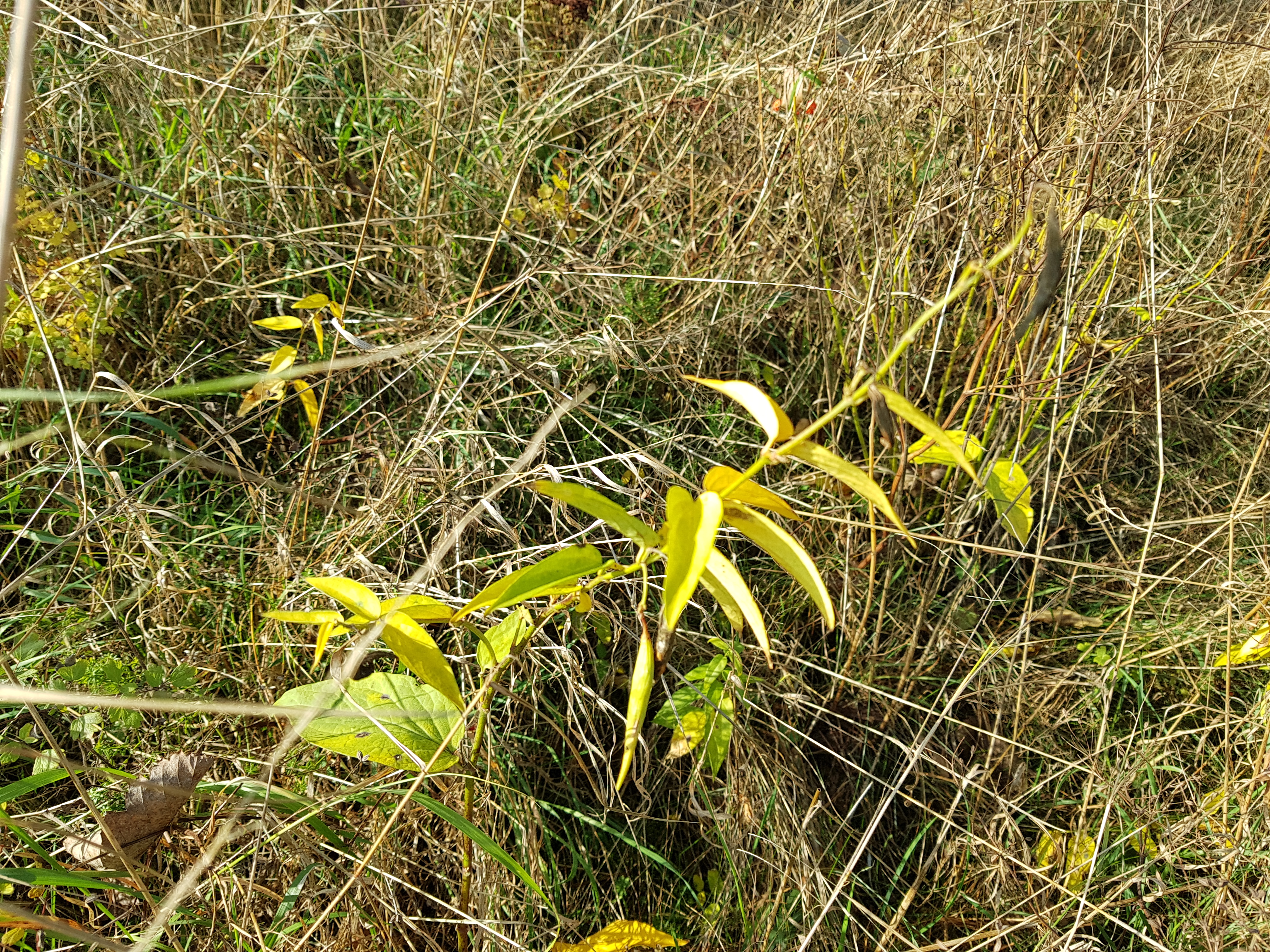
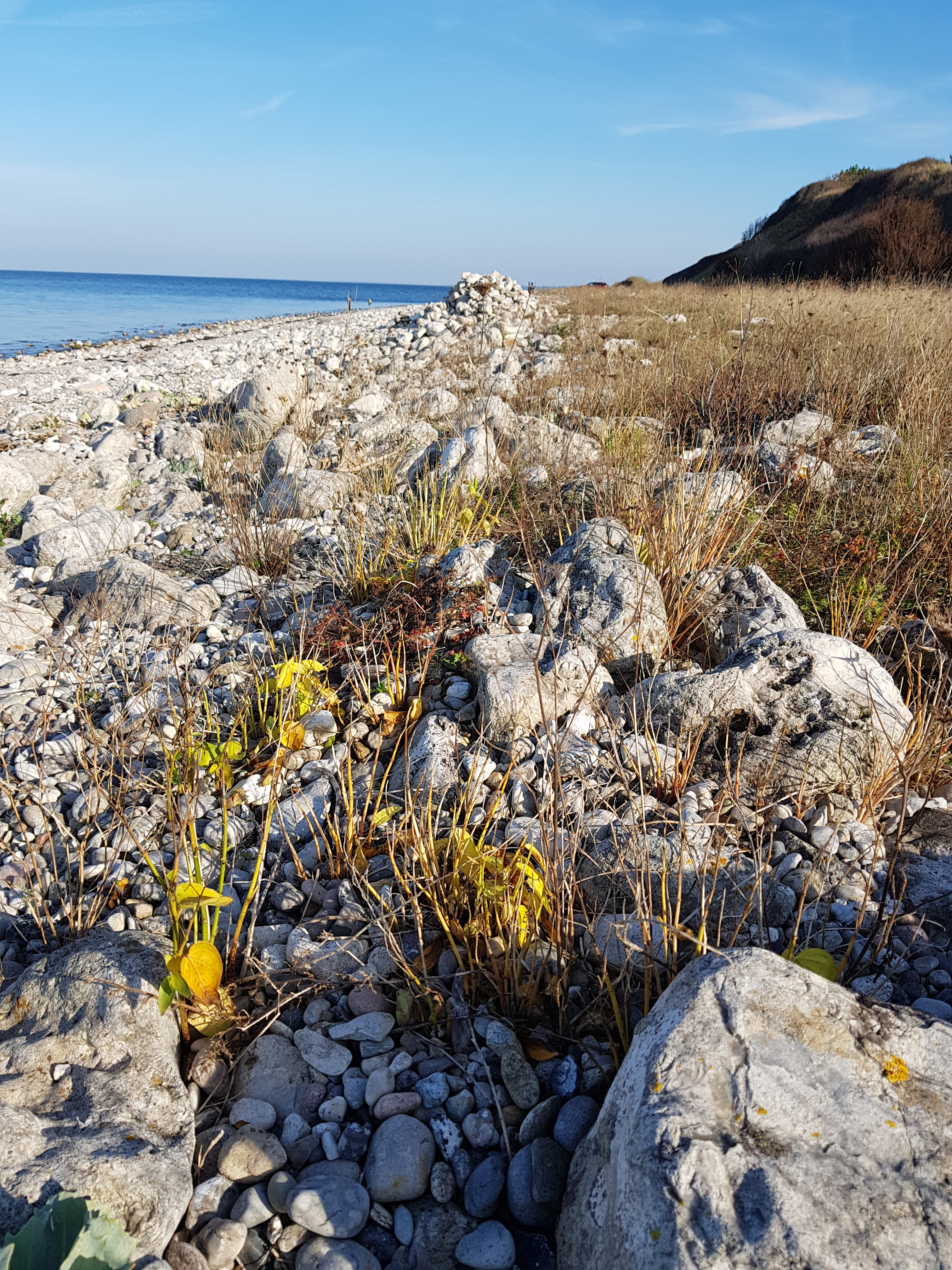
We had cycled out to the small town of Klint about 13km west of us, to see the glacial moraine landscape for which the area is famous and which gives Odsherred UNESCO Geopark status. As we approached the small fishing harbour at Klint I let out an excited shout to Karin who was just ahead of me: in amongst the roadside vegetation I’d spotted the distinctive and immediately recognisable yellow of Vincetoxicum hirundinaria in its autumnal hues! In the photos that follow you can see how well that yellow stands out against the colours of the other plants in the community.

At this time of the year the plant has ceased flowering, but the occasional swollen green seed pod was evidence of successful pollination of their morphologically complex flowers.

I was surprised at just how close to the sea the plants were growing; they must get inundated by sea water during stormy tidal surges.

So what is pollinating these flowers on this exposed shoreline? That’s a question that I want to pursue in the coming years. The Pollinators of Apocynaceae Database has remarkably few records of pollinators in this species, given how widespread it is. Flies certainly pollinate it, but there’s also records of wasps and bees as visitors, including bumblebees on flowers of a plant that I had in cultivation in Northampton. There’s a couple of other research groups in Scandinavia and Europe who are looking at the pollination ecology of the species and I’m hoping that we can collaborate on a study of spatial variation in its reproduction. Vincetoxicum is quite a large genus (around 150 species) and only around 10% of the species have been studied in any detail. But these studies are revealing a complex diversity of pollinators, including most recently, cockroaches in the Chinese species Vincetoxicum hainanense. I’m sure this intriguing group of plants has more fascinating stories to tell us about the ecology and evolution of its pollination systems.

FIGURE 4 from Xiong et al. (2020) Specialized cockroach pollination in the rare and
endangered plant Vincetoxicum hainanense in China. American Journal of Botany 107:
1355–1365.

Diversity and surplus: foraging for wild myrobalan plums

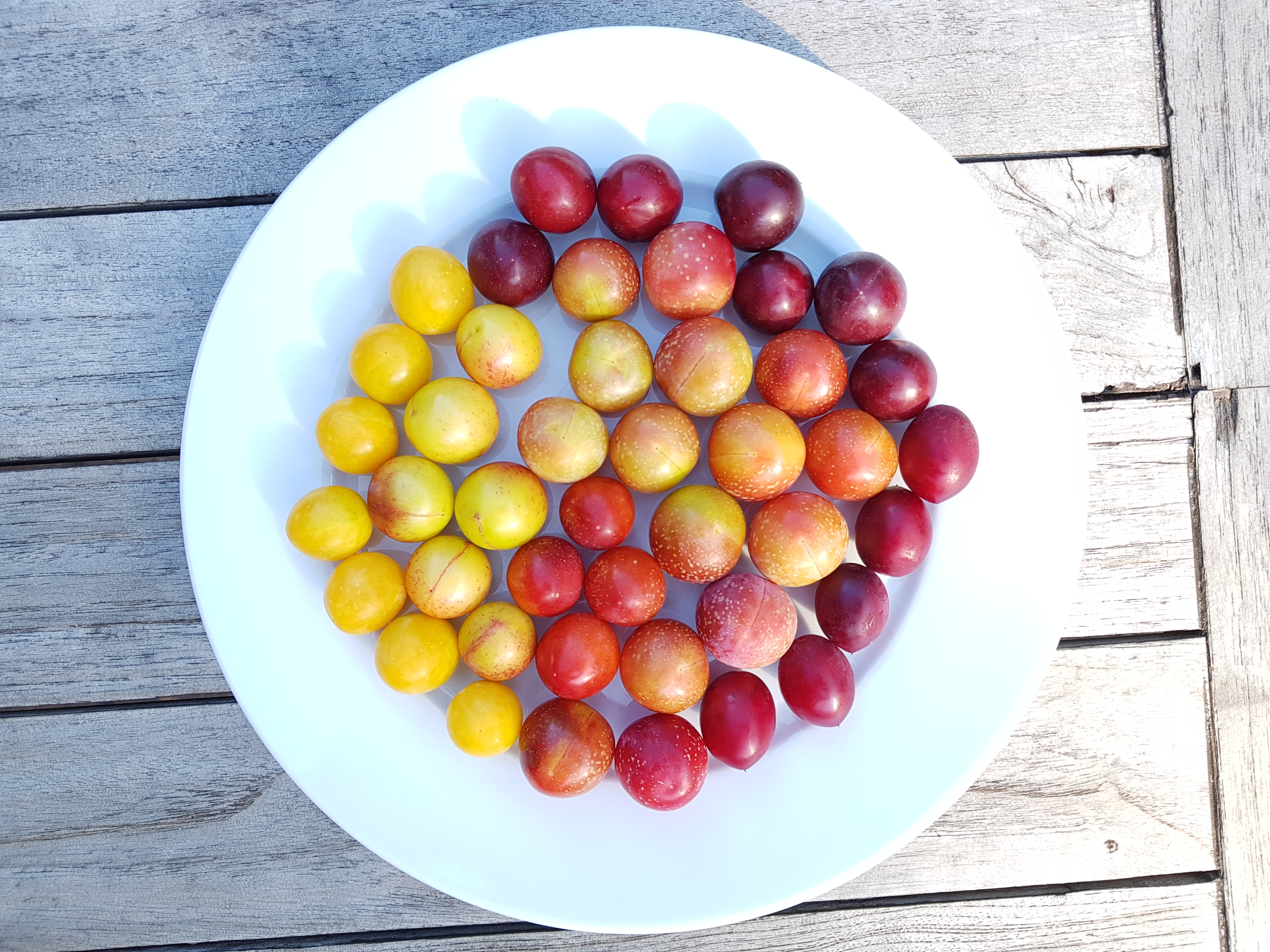
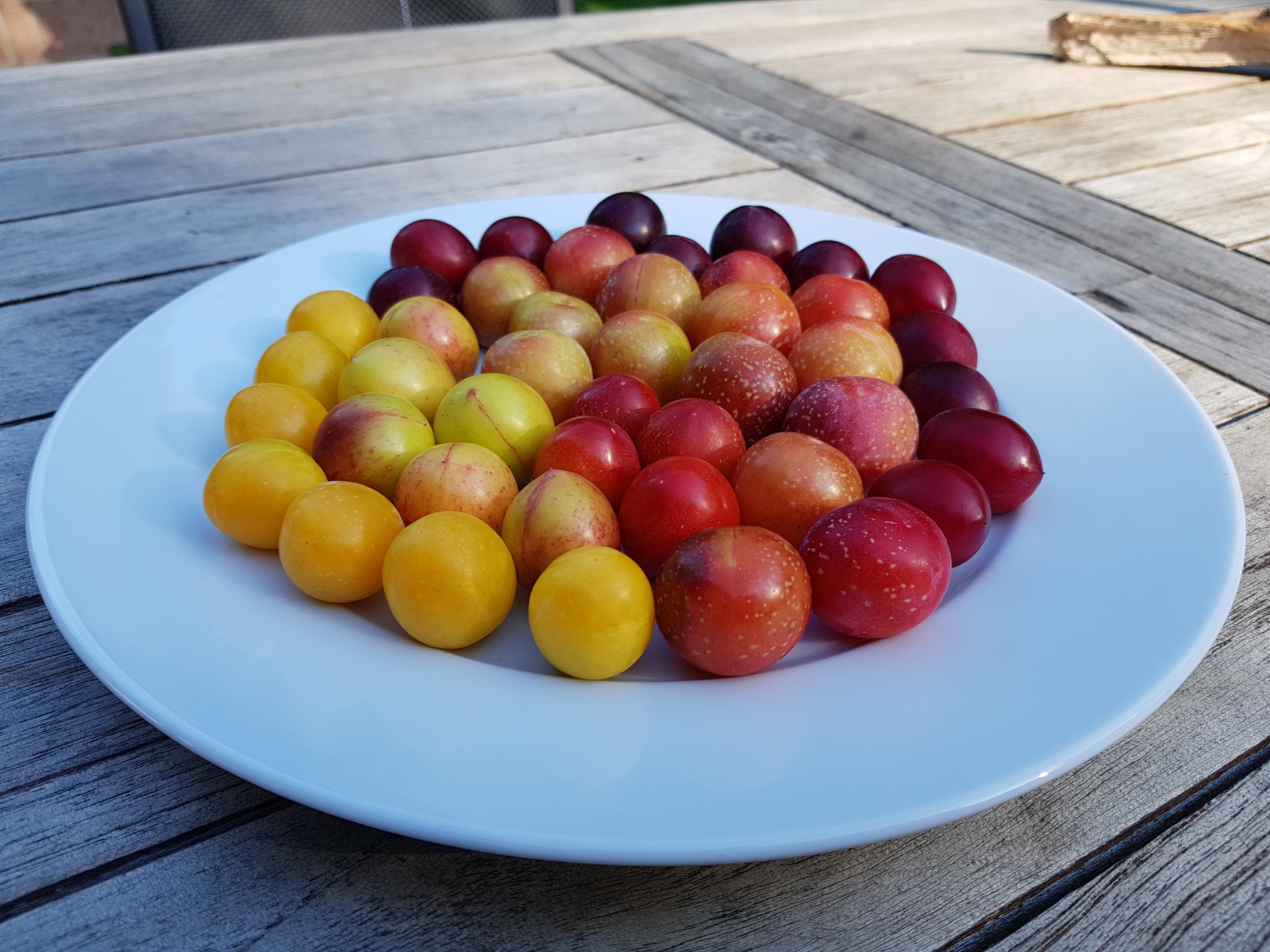
Cycling back from town this afternoon, Karin and I passed a hedgerow that was bursting with wild myrobalan or (cherry) plums (Prunus cerasifera). We had to stop and collect some, and soon filled a bag. What’s always intrigued me about these small, tart little plums is just how diverse they are: the image above shows the plums from six different trees. All of these are, in theory, the same species; but clearly there’s a lot of genetic diversity. In colour, the ripe fruits range from golden yellow through to dark purple, and vary in the amount of dark-contrasting streaking, lighter speckling, and waxy bloom. They are also variable in size, shape and taste.

All of this variation probably reflects the long history of cultivation of this European archaeophyte. The species is originally native to southeast Europe and western Asia, and was likely spread throughout Europe by the Romans. The local deer population is very fond of the fruit and we’re seeing a lot of deer droppings that are packed with seeds. We don’t usually think of these large mammals as seed dispersers, but I suspect that they are very successful in that ecological role.

As well as being a great source of wild fruit, for humans and wildlife alike, at the other end of the year these trees are important for pollinating insects. As I pointed out in my book Pollinators & Pollination: Nature and Society, Prunus cerasifera is one of the earliest flowering woody plants in northern Europe, and its flowers are an important nectar and pollen source for early emerging bumblebee queens, hoverflies, and honey bees.

Delicious, abundant fruit combined with a valuable role for pollinators: what’s not to like?

Claims that only 10% – and not 75% – of crops are pollinator dependent are misleading and dishonest

Earlier this week the Genetic Literacy Project site posted an essay entitled ‘10% — not 75% — of crops pollinator-dependent: Our World in Data debunks claims that global food supply is imminently endangered by ‘disappearing’ insects‘. That click-bait title is hugely misleading, some of the purported ‘facts’ are incorrect, and indeed the whole thing reeks of dishonesty and bad faith.

First the misleading title. This ‘debunks’ claim actually compares two different things: 75% of CROPS being dependent on pollinators versus 10% of crop YIELD. However, even if we focus on the 10% claim, a small increase in yield can be the difference between profit and bankruptcy for small-scale farmers. And most of the world’s farmers are small-scale and living on the borderline between loss and break-even. In addition, there’s no acknowledgement of the food production from home gardens, allotments, and community gardens, which is significant but largely unquantified.

Next, by focusing on yield and comparing, say, wind-pollinated wheat with insect-pollinated apples, the article takes no account of the fact that many of these crops that depend to some extent on pollinators mainly provide essential vitamins and minerals – not calories – to diets. When I tweeted about this earlier in the week, one person commented that they describe the insect-pollinated foods as ‘an important source of flavour and colour in our diets, rice and wheat are all well and good, but you do kinda need something more than grey slop to live’. Another said: ‘I’m so glad you mentioned this. I’m sick of reading articles that praise innovations to increase calories, when what we need is better nutrition from vitamins, minerals & fibres’.

Both great points, and well made.

That essay was also factually incorrect when it described roots crops such as carrots or some of the leafy cabbages and lettuces as not requiring pollinators. Many varieties of these crops ARE pollinator dependent: how do they think we get the seed for the next year’s crop?! And there are many crops and varieties that have not been evaluated for their dependency on pollinators: the 75% figure actually refers to the 115 most productive crop plants (Klein et al. 2007).

When I tweeted about the essay I commented that I was very disappointed by ‘Our World in Data’ – they are usually better than this when it comes to the facts. What I hadn’t appreciated at the time was that in fact the Genetic Literacy Project had highjacked the original piece by Hannah Ritchie and reworked it to give it a very different slant*.

This is where it starts to get dishonest and in fact the Genetic Literacy Project (GLP) has form in this area. The Sourcewatch site describes the GLP as ‘a corporate front group that was formerly funded by Monsanto’ with a remit to ‘shame scientists and highlight information helpful to Monsanto and other chemical producers’. In other words it’s heavily tied to Big Agriculture which, of course, would like us to believe that there’s not an issue with declining pollinators, that pesticides and agricultural intensification are our friends, and that Everything Is OK. Read the full account here.

Frankly, the GLP is so tainted that I’d not believe anything that they publish.

Pollinator decline and the role of pollinators in agriculture are complex issues. If you’d like to know more about the importance of pollinators to agriculture, complete with some accurate and objective facts, then there’s a whole chapter devoted to the topic in my book Pollinators & Pollination: Nature and Society.

*Note that I’ve been communicating with Hannah about the root and leaf crop issue and she accepts that this needs to change in the original. She’s also asked the Genetic Literacy Project to take down their version as it contravenes copyright.

Reference

Klein, A.-M., Vaissière, B.E., Cane, J.H. et al. (2007) Importance of pollinators in
changing landscapes for world crops. Proceedings of the Royal Society of London B
274: 303–313.

Consider publishing your pollination and plant reproductive ecology research in the Turkish Journal of Botany!

This month I was appointed to the editorial board of the Turkish Journal of Botany and I’m looking forward to working with the team at the journal to enhance the international profile of this publication. The journal has a long track record: it’s been published continuously since the 1970s and currently has a 5-year impact factor of 1.165.

The Turkish Journal of Botany is one of the official publications of TÜBİTAK (the Scientific and Technological Research Council of Turkey) and is fully open access, with no page charges. All papers are published in English. Although it’s a ‘regional’ journal, the scope of what it publishes is not limited to just Turkey. Looking over the last couple of volumes I see authors from Russia, India, Egypt, Lebanon, Pakistan, USA and China, as well as a new species of lichen from Antarctica!

The journal is particularly keen to publish more papers in the area of pollination, floral evolution, plant reproductive ecology, and related topics. So if you’re working in that area and looking for an outlet for your latest paper, please take a look at the Instructions for Authors and consider the Turkish Journal of Botany.

If you have any questions, please write a comment below or send me a message via the Contact page.