Category Archives: Pollination

The integration of alien plants in mutualistic plant–hummingbird networks – a new study by Maruyama et al. (2016)

The collaborations with researchers in Brazil and Denmark in which I’ve been involved in recent years, focused particularly on hummingbirds and networks of plant pollinator interactions, have been very productive, most recently seen in a study of the effects of hummingbird feeders on diversity and abundance of the birds.

This collaboration continues with a new study that has just been published in the journal Diversity and Distributions which deals with the way in which non-native plant species are exploited by assemblages of hummingbirds in the New World.  Here’s the abstract:


Aim:  To investigate the role of alien plants in mutualistic plant–hummingbird networks, assessing the importance of species traits, floral abundance and insularity on alien plant integration.

Location: Mainland and insular Americas.

Methods: We used species-level network indices to assess the role of alien plants in 21 quantitative plant–hummingbird networks where alien plants occur. We then evaluated whether plant traits, including previous adaptations to bird pollination, and insularity predict these network roles. Additionally, for a subset of networks for which floral abundance data were available, we tested whether this relates to network roles. Finally, we tested the association between hummingbird traits and the probability of interaction with alien plants across the networks.

Results: Within the 21 networks, we identified 32 alien plant species and 352 native plant species. On average, alien plant species attracted more hummingbird species (i.e. aliens had a higher degree) and had a higher proportion of interactions across their hummingbird visitors than native plants (i.e. aliens had a higher species strength). At the same time, an average alien plant was visited more exclusively by certain hummingbird species (i.e. had a higher level of complementary specialization). Large alien plants and those occurring on islands had more evenly distributed interactions, thereby acting as connectors. Other evaluated plant traits and floral abundance were unimportant predictors of network roles. Short-billed hummingbirds had higher probability of including alien plants in their interactions than long-billed species.

Main conclusions: Once incorporated into plant-hummingbird networks, alien plants appear strongly integrated and, thus, may have a large influence on network dynamics. Plant traits and floral abundance were generally poor predictors of how well alien species are integrated. Short-billed hummingbirds, often characterized as functionally generalized pollinators, facilitate the integration of alien plants. Our results show that plant–hummingbird networks are open for invasion.


The full reference is: Maruyama, P.K. et al. (2016) The integration of alien plants in mutualistic plant–hummingbird networks across the Americas: the importance of species traits and insularity.  Diversity and Distributions (in press).

Happy to send a PDF to anyone who would like one.

Pollinators, Pollination and Food Production: IPBES gains momentum

Bee on apple blossom - 1st May 2015

The over-arching themes of this blog have been about understanding biodiversity; the science behind its study; why it’s important; how it contributes to human well being, (including both intangible and economic benefits); and how policy informed by science can support the conservation of species and ecosystems.  These are all issues that have a global perspective beyond the bounds of my home country (the United Kingdom), or even my continent (Europe) because species, ecosystems and the threats to them do not respect political borders.

Enter IPBES – the Intergovernmental Science-Policy Platform on Biodiversity and Ecosystem Services (sometimes shortened to Intergovernmental Platform on Biodiversity and Ecosystem Services).

IPBES is a United Nations body established in 2012 that in many ways is a parallel entity to the IPCC ( Intergovernmental Panel on Climate Change), bringing together scientists, policy makers and stakeholders, with a mission:

to strengthen the science-policy interface for biodiversity and ecosystem services for the conservation and sustainable use of biodiversity, long-term human well-being and sustainable development

Which has got to be a good thing: science informing policy, what’s not to like?

The first output from IPBES will be a Thematic Assessment of Pollinators, Pollination and Food Production, and it’s just been discussed (today) at the 4th Plenary meeting of IPBES in Kuala Lumpur – here’s a link to the press release.

In the coming weeks I’ll talk more about IPBES and its Thematic Assessment (for which I acted as a reviewer), but for now I’ll just repeat some of the headline figures from the report:

  • 20,000 – Number of species of wild bees. There are also some species of butterflies, moths, wasps, beetles, birds, bats and other vertebrates that contribute to pollination.
  • 75% – Percentage of the world’s food crops that depend at least in part on pollination.
  • US$235 billion–US$577 billion – Annual value of global crops directly affected by pollinators.
  • 300% — Increase in volume of agricultural production dependent on animal pollination in the past 50 years.
  • Almost 90% — Percentage of wild flowering plants that depend to some extent on animal pollination*.
  • 1.6 million tonnes – Annual honey production from the western honeybee.
  • 16.5% — Percentage of vertebrate pollinators threatened with extinction globally.
  • +40% – Percentage of invertebrate pollinator species – particularly bees and butterflies – facing extinction.


*They are quoting a figure that I calculated, and very proud of it I am too 🙂

Pollinators and pollination – something for the weekend #9

The latest in an (ir)regular series of posts to biodiversity-related* items that have caught my attention during the past few weeks; this one’s focused on pollinators and pollination because there’s been so much emerging on this recently it’s been impossible to decide what to write more fully about!


Feel free to recommend links that have caught your eye.

*Disclaimer: may sometimes contain non-biodiversity-related items.

Ecological intensification and pollinator diversity: a new study by Garibaldi et al. (2016)

2013-04-15 13.54.19-2Think of “farming” and those of us living in the more industrialised parts of the world usually envision large fields that are intensively worked using heavy machinery and regular inputs of fertilisers, pesticides and herbicides. But for 2 billion of the world’s farmers, agriculture takes place on smallholdings of less than 2 ha in size, with little money available for vehicles and chemicals.  Maximising food outputs in such systems can be difficult.

Now a new study by Lucas Garibaldi, Luisa Carvalheiro and colleagues entitled “Mutually beneficial pollinator diversity and crop yield outcomes in small and large farms” has demonstrated that these small-scale farmers can increase the yields from insect pollinated crops on their farms by allowing native vegetation to grow alongside the crops, which supports a greater diversity and abundance of pollinators that then spill over into the adjacent fields.

It’s a great study that delivers a message that large agro-chemical firms probably will not wish to hear: that yields can be enhanced without throwing ever more fertiliser or pesticides onto the crops.

The paper is paywalled so you’ll have to ask the authors for a copy unless you (or your institution) has an e-subscription to Science.  But here’s the original abstract:

Ecological intensification, or the improvement of crop yield through enhancement of biodiversity, may be a sustainable pathway toward greater food supplies. Such sustainable increases may be especially important for the 2 billion people reliant on small farms, many of which are undernourished, yet we know little about the efficacy of this approach. Using a coordinated protocol across regions and crops, we quantify to what degree enhancing pollinator density and richness can improve yields on 344 fields from 33 pollinator-dependent crop systems in small and large farms from Africa, Asia, and Latin America. For fields less than 2 hectares, we found that yield gaps could be closed by a median of 24% through higher flower-visitor density. For larger fields, such benefits only occurred at high flower-visitor richness. Worldwide, our study demonstrates that ecological intensification can create synchronous biodiversity and yield outcomes.


The challenge from this paper is two-fold.  First of all it’s how to operationalise this kind of research on the ground, to farmers and agronomists who are unlikely to be readers of the journal Science.  This is where organisations such as the UN’s FAO, country-level government agencies, and non-governmental organisations  have a crucial role to play, translating research into action.

The second challenge is likewise difficult – how do we bring “ecological intensification” into the industrialised agriculture of more developed nations?  I have no immediate answer to that, but research such as this shows what the potential benefits can be, for both agriculture and biodiversity.

The reference is:  Garibaldi, L.A. et al. (2016) Mutually beneficial pollinator diversity and crop yield outcomes in small and large farms.  Science 351: 388-391

SCAPE 2016 – the 30th anniversary meeting

SCAPE logo
As regular readers of this blog are aware, the annual SCAPE conference is one of my favourite scientific meetings, and for the last few years I’ve published live blogs of the conference as it happens (for example, here, here, here).  SCAPE 2016 will be a very special one – it’s the 30th anniversary of the meeting – and is taking place in a very special place.  Initial details have recently been circulated by Professor Jon Ågren (Uppsala University) on behalf of the organising committee, as follows:
 
The meeting will take place at Abisko, northernmost Sweden 13-16 October. More information will be published in late spring, but mark these days in your calendar already now!
 
Information about the premises of the meeting:
 
Some info about Abisko National Park:
 
And about the nearby Abisko Scientific Research Station:
 
 Anyone wishing to receive the next SCAPE circular, send an email to Jon:   jon.agren@ebc.uu.se

Protecting an ecosystem service: approaches to understanding and mitigating threats to wild insect pollinators

Bee on apple blossom 2 - 1st May 2015Back in April 2015 I attended a two day meeting at Imperial College’s Silwood Park campus to discuss initial project ideas to address evidence gaps in the recent National Pollinator Strategy.  I mentioned the meeting in passing in a post at the time concerned with whether biodiversity scientists should also be campaigners, but didn’t say a lot about what conclusions we came to and what the next steps would be because at the time I was unclear on both of those counts: it was a very wide ranging meeting with a lot of participants coming at the question of pollinator conservation from different perspectives.  As well as academics there were representatives from the agrochemical industry, government research organisations, and  the National Farmers Union.

During summer 2015 one of the conveners of the meeting, Dr Richard Gillherded cats organised colleagues, pulled together all of the text and ideas that were generated, and took on the task of seeing a summary of the meeting through from initial draft to publication.  It was a monumental effort, involving 27 authors and 86 manuscript pages, and Richard did a sterling job.  Entitled “Protecting an ecosystem service: approaches to understanding and mitigating threats to wild insect pollinators” it will appear as a chapter in the next volume of Advances in Ecological Researchwhich should be published later this month.

The abstract and contents for the chapter are below; if anyone wants a copy of the full chapter, please let me know.

Abstract

Insect pollination constitutes an ecosystem service of global importance, providing significant economic and aesthetic benefits as well as cultural value to human society, alongside vital ecological processes in terrestrial ecosystems. It is therefore important to understand how insect pollinator populations and communities respond to rapidly changing environments if we are to maintain healthy and effective pollinator services. This paper considers the importance of conserving pollinator diversity to maintain a suite of functional traits to provide a diverse set of pollinator services. We explore how we can better understand and mitigate the factors that threaten insect pollinator richness, placing our discussion within the context of populations in predominantly agricultural landscapes in addition to urban environments. We highlight a selection of important evidence gaps, with a number of complementary research steps that can be taken to better understand: i) the stability of pollinator communities in different landscapes in order to provide diverse pollinator services; ii) how we can study the drivers of population change to mitigate the effects and support stable sources of pollinator services; and, iii) how we can manage habitats in complex landscapes to support insect pollinators and provide sustainable pollinator services for the
future. We advocate a collaborative effort to gain higher quality abundance data to understand the stability of pollinator populations and predict future trends. In addition, for effective mitigation strategies to be adopted, researchers need to conduct rigorous field- testing of outcomes under different landscape settings, acknowledge the needs of end-users when developing research proposals and consider effective methods of knowledge transfer to ensure effective uptake of actions.

Contents
1. Importance of Insect Pollination
1.1 Providing an Ecosystem Service
1.2 Brief Introduction to Pollination Ecology and the Importance of Wild
Pollinators
2. Major Threats to the Pollination Service Provided by Insects
3. Steps in the Right Direction to Protect Insect Pollinator Services: Policy Actions
4. Understanding and Mitigating Specific Threats to Wild Insect Pollinators to Protect Pollinator Services
4.1 Understanding the Stability of Insect Pollinator Communities
4.2 Using Molecular Approaches to Monitor Insect Pollinators
4.3 How Do Parasites Shape Wild Insect Pollinator Populations?
4.4 Understanding Insect Pollinator Population Responses to Resource Availability
4.5 Engineering Flowering Field Margins as Habitats to Attract Insect Pollinators
4.6 How Might We Improve the Wider Countryside to Support Insect Pollinators
4.7 Insect Pollinators in Urban Areas
5. Considerations When Developing Future Research and Mitigation Strategies
Acknowledgements
Appendix
References

8 things I learned from the Parliamentary Pollinators Update seminar – UPDATED

POST event December 2015

As I advertised a couple of weeks ago, last Wednesday I was in London to take part in a Pollinators Update seminar at the Houses of Parliament organised by the Parliamentary Office for Science and Technology (POST).  It was a very interesting event and good to catch up with some of the latest ideas about pollinators and their conservation.  However it’s been a busy week since then and I’ve not had time to post a full account of the seminar, which was attended by over 40 people.  So I’ve decided to write a brief summary of eight things I learned that day from my fellow speakers* and from the day in general; in some cases I’ve linked to the original sources where available:

1.  About 46% of Europe’s bumblebees have declining populations (see the European Red List for Bees that I highlighted in an earlier post)

2.  Around 2% of the world’s bee species do 80% of the crop pollination (Kleijn et al. (2015) Nature Communications)

3.  Pollinators other than bees perform 39% of the flower visits to crops (Rader et al. (2015) Proceedings of the National Academy of Sciences)

4.  By 2100 the Red-tailed Bumblebee (Bombus lapidarius), one of the commonest species in Europe, may be extinct across most of the continent due to climate change (Rasmont et al. (2015) Climatic Risk and Distribution Atlas of European Bumblebees)

5.  Only 6.6% of Entry Level Stewardship agreements by farmers across England included plans to grow nectar- and pollen-rich flower mixes.

6.  Criticism of laboratory studies of the effects of neonicotinoid pesticides are just as illogical as criticisms of field studies: both have their limitations and advantages, and both are needed.

7.  A panel of four experts on pollinators and pollination will largely agree about the answers to most questions an audience asks.

8.  A Westminster seminar such as this will attract very few MPs if it clashes with an important debate in the House of Commons, in this case about future military action in Syria.

UPDATE: here’s a number 9 suggested by Simon Potts: we all strongly support and encourage the setup of an All Party Parliamentary Group on “Pollinators” not just “honeybees” or “bees”.


*With thanks to my fellow panelists Simon Potts, Claire Carvell and Richard Gill, and to Kirsten Miller and the POST team for organising the event, and for the photograph of the panel in action.


Pollinators seminar at the Houses of Parliament – 2nd December

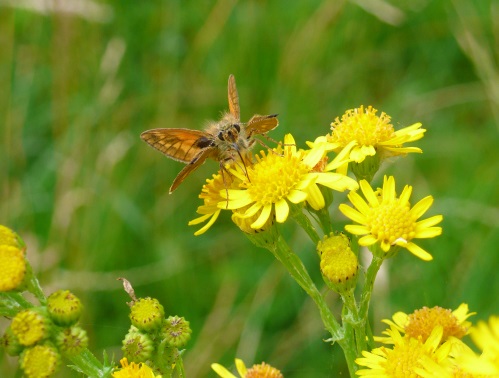
Skipper on ragwort - cropped

The Parliamentary Office of Science and Technology (POST) has organised a “Pollinators Update” afternoon seminar in London on Wednesday 2nd December, to discuss recent developments in pollinator conservation research. I’ve been asked to give a 15 minute presentation on the pollinator extinctions research we published in Science last year.

The full programme will be:


  • 2.30pm Sarah Newton MP, Chair’s Welcome
  • 2.40pm Presentations
  • Professor Simon Potts (Professor of Biodiversity and Ecosystem Services) – Reading University
  • Professor Jeff Ollerton (Professor of Biodiversity) University of Northampton
  • Dr Claire Carvell – NERC Centre for Ecology and Hydrology
  • Dr Richard Gill – Imperial College London
  • 3.40pm Discussion
  • 3.55pm Chair’s closing remarks
  • 4.00pm Refreshments


The seminar is free to attend but you need to book a place: see the POST website for details.

Pesticides and pollinators: some new studies and contrasting conclusions

Bee on apple blossom - 1st May 2015

The question of whether or not neonicotinoid pesticides are negatively impacting agricultural pollinator abundance, diversity and behaviour continues to focus the minds of researchers. It’s an issue that has been almost constantly in the news since the earliest suggestions that these pesticides were harming pollinators. These concerns have led to temporary EU restrictions on the use of these chemicals, a decision that was partially over turned this year in the UK.

The past two months has seen the publication of at least five papers on the topic, two of them this week alone.  In this post I want to highlight those papers and provide some commentary.

The first two studies have shown that neonicotinoid pesticides can affect pollinator behaviour, and specifically the memories of both honey bees and bumblebees:

Wright et al. “Low doses of neonicotinoid pesticides in food rewards impair short-term olfactory memory in foraging-age honeybees

Stanley et al. “Bumblebee learning and memory is impaired by chronic exposure to a neonicotinoid pesticide“.

Subtle behavioural changes such as those documented here are not generally assessed in standard toxicological safety assessments for pesticides, which are mainly focused on whether or not the chemicals kill non-target animals, and at what dosage.  But for plant-pollinator interactions (including agricultural pollination) such changes in pollinator behaviour could be crucial to the effectiveness of the pollinators.  How crucial?  Well up until today we didn’t know; but with the publication of another paper by Stanley and colleagues we now have evidence that the sub-lethal effects on pollinator behaviour can actually translate into an effect on pollination of apple crops:

Stanley et al. “Neonicotinoid pesticide exposure impairs crop pollination services provided by bumblebees“.

The study is the first one to my knowledge that tests the effects of field-relevant doses of pesticides on pollinator performance and subsequent pollination services in a commercial farm crop, and adds some valuable hard data to an already heated debate.  The story, embargoed until this evening, has already been picked up by media, including the BBC News website.

To summarise the study: using artificial bumblebee colonies and caged apple trees Stanley and colleagues implemented an experiment in which they tested the effect of two different levels of exposure to a neonicotinoid pesticide on pollinator behaviour and subsequent pollination services to the fruit trees. They found a clear effect of exposure to the higher level of pesticide, resulting in a change in bee behaviour and a subsequent reduction in apple quality.

By way of a contrast, another study this week has focused on the lethal effects of these pesticides.  Henry et al. “Reconciling laboratory and field assessments of neonicotinoid toxicity to honeybees” has shown that although the chemicals are lethal to individual honey bees, the overall impact of the loss of the bees is buffered by the fact that the colonies can simply produce more worker bees to compensate for the losses.  This is interesting but needs to be judged in the context of the fact that honey bees are very unusual and atypical compared to most other pollinators, and indeed most other bees.  They produce very, very large colonies with a unique social structure, and so this compensation might be expected.  These caveats were echoed by some of the scientists asked to comment on the study in media stories such as the one on the BBC News website.

Finally, Godfray et al. have updated their earlier review of the environmental effects of these pesticides with “A restatement of recent advances in the natural science evidence base concerning neonicotinoid insecticides and insect pollinators“.  Given the rate at which new studies are coming out, it won’t be long before a second restatement is required!

Where does this leave the whole debate around pesticides?  Still with firmly entrenched views on both sides I would have imagined.  No doubt the debate will run and run.

Meanwhile, important as it is, the focus on pesticides is in danger of over-shadowing other really interesting studies that might affect how we manage our agro-ecosystems in the UK.  For example, I’d completely missed a paper from the end of September by Pywell et al. entitled “Wildlife-friendly farming increases crop yield: evidence for ecological intensification“.  As far as I can judge from the Altmetric information for the paper, so too had the media: it received no coverage on any of the usual outlets.  But this is important stuff that deserves wider publicity: it’s going to take more than a ban on pesticides to recover some of the biodiversity (at both a species and a habitat level) that we’ve lost due to intensive farming over the last 100 years or so.


Pollination syndromes: a brief update on recent developments, and news that Stefan Vogel has passed away

Bee on Salvia - OBG - November 2015

In a recent post I discussed the current debates about “pollination syndromes”, which I described as “sets of flower characteristics that have repeatedly evolved in different plant families due to the convergent selection pressures applied by some groups of pollinators”.

The authors of the Ecology Letters paper that I discussed (Rosas-Guerrero et al. 2014) have now replied to our original critique of their approach and you can read that reply (Aguilar et al. 2015) in Journal of Pollination Ecology by following this link.  Readers can make up their own minds as to whether the authors have responded adequately to our concerns, but I just briefly wanted to raise three points.

The first is that much of these authors’ response is focused on an earlier paper of ours (Ollerton et al. 2009) rather than on our critique per se.  Nick Waser, Mary Price and myself have therefore written a second response that deals with some of the misunderstandings apparent in that piece; it’s available to download here.

The second point relates to the existing literature on pollination syndromes and pollinator effectiveness used by Rosas-Guerrero et al. (2014); as we demonstrated in our critique this is clearly a biased data set that is skewed towards groups of plants with relatively large flowers, “interesting” pollination systems, and text book examples of classical pollination syndromes such as bird and bat pollination.  Researchers who study flowers and their pollinators choose their subjects based on a whole set of criteria, but random selection is not one of them.  However as far as we can judge, Aguilar et al. (2015) seem to be arguing that drawing strong, “universal” conclusions about syndromes from this highly biased data set is perfectly acceptable because of the statistical rigour of formal meta-analysis. I’d re-iterate our main point that no amount of statistical rigour and exhaustive literature searching can take into account inherent biases within the primary data (i.e. the literature itself).

Finally, Aguilar et al. (2015) claim that “human disturbance of natural habitats has caused disruptions in patterns of mutualistic interactions that may partly explain the presence of the diverse pollinator assemblages that are frequently found in pollination studies”.   It seems to us to be disingenuous to argue that pollination syndromes are universally valid and then to essentially concede that there are lots of wrong visitors (“secondary” pollinators), and to explain that with the idea that everything is disturbed in the Anthropocene.  If this is really the case then we probably need to throw out a lot of our understanding of evolutionary ecology as a whole, not just studies of plant-pollinator interactions.

Clearly we don’t accept this argument and in fact it has echoes of arguments that have been going on since the 19th century (Waser et al. 2011): more than 130 years ago the Darwinian biologist Hermann Muller was criticising Federico Delpino (one of the original architects of the idea of pollination syndromes) for ignoring the “wrong” flower visitors.  Interestingly, Delpino was a fundamentally a teleologist who saw purpose in nature, expressed through (as he perceived them) the highly ordered relationships between flowers and pollinators.

As we discuss in the Waser et al. (2011) paper, Stefan Vogel was another prominent pollination biologist, and advocate of the importance of pollination syndromes, who was also fundamentally teleological in his thinking.  I was sad to learn that Stefan passed away very recently, in what I believe is his 90th year.  I was fortunate enough to meet Stefan at a symposium in honour of his 80th birthday at the International Botanical Congress in Vienna in 2005.  He graciously signed my copy of The Role of Scent Glands in Pollination and said, with a twinkle in his eye, “you and I have probably got a lot to discuss”. Unfortunately we never got the opportunity, but later I dedicated our 2009 paper on Ceropegia pollination to him “in honour of his pioneering work on pollination” in the genus.  Stefan’s legacy of research, particularly in the tropical regions of South America, is a fitting tribute to his memory.

Pollination syndromes clearly continue to attract much interest in the scientific literature, and just this week I was intrigued to see a paper by John Benning showing that a species of Ericaceae that looks as though it “should” be pollinated by bees is actually moth pollinated.  No doubt the discussion of the evolutionary extent and predictability of pollination syndromes will continue for some time to come.