
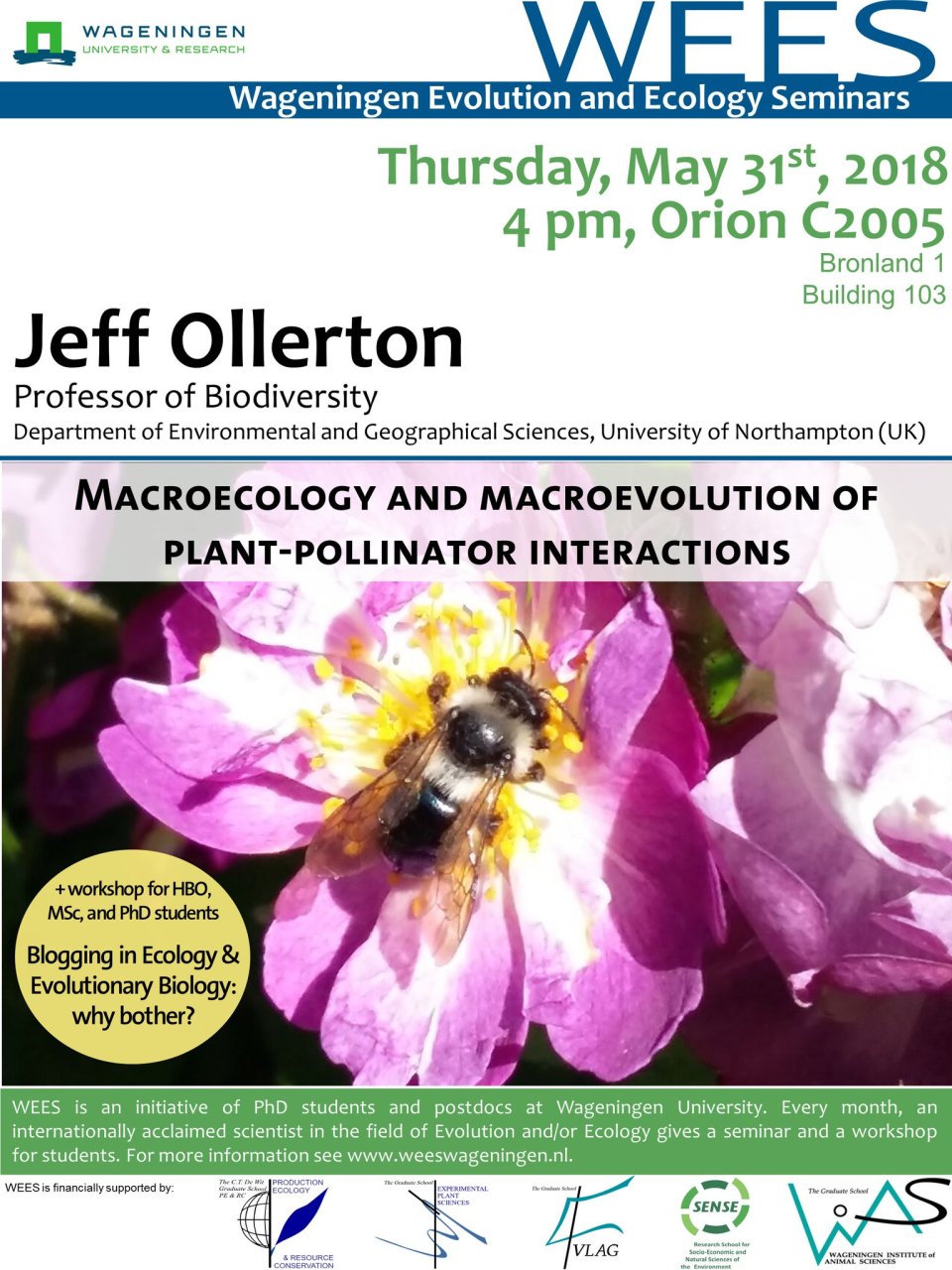
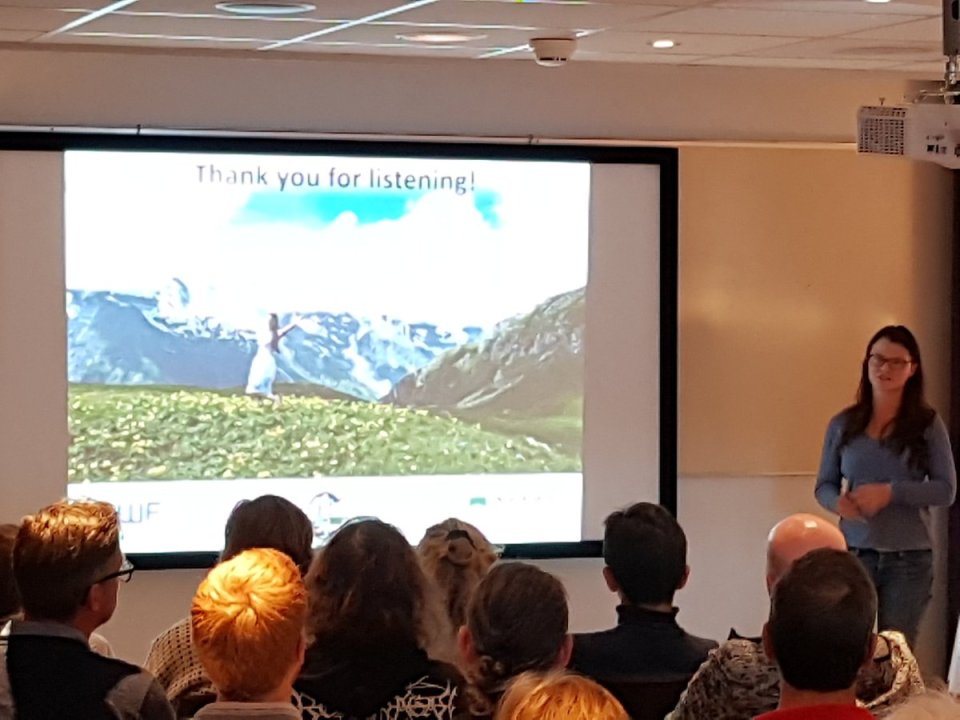
If any of you are near Wageningen University on 31st May I’m giving a talk about some of our recent research called “The macroecology and macroevolution of plant-pollinator interactions”. It’s preceded by a workshop on the whys and hows of science blogging. Details are in the poster.
Here are the abstracts for the talk and the workshop:
Macroecology and macroevolution of plant-pollinator interactions
Plant-pollinator relationships are an ecologically critical form of interaction that ensures the long-term survival of the majority of the world’s plants species, and contribute to a large fraction of global agricultural output. In additiondiversity and abundance of biotically pollinated plant species can be an important determinant of the diversity of animals at higher trophic levels.
Despite that global significance, most studies of plant-pollinator interactions are done at a local level, involving populations and communities of species, over modest time scales. The ways in which these local sets of interactions scale up to produce global macroecological and macroevolutionary patterns, and the processes underpinning them, will be explored using two case studies.
The first is a data set of 67 plant communities, ranging from 70ºN to 34ºS, with which we investigated the roles of biotic and abiotic factors as determinants of the global variation in animal versus wind pollination. Factors such as habitat type, species richness, insularity, topographic heterogeneity, current climate and late-Quaternary climate change were investigated. The predictive effects of these factors on the proportion of wind- and animal-pollinated plants were examined (see: Rech et al. 2016 – Plant Ecology & Diversity 9: 253-262).
Since these results were published we have increased the number of plant communities in our database to >90, and our findings seem to be robust to these additional data. The dominant influence of contemporary climate on the relative importance of wind-pollinated species suggests that communities may be sensitive to future climate change. Communities in areas that are predicted to become drier may in time contain more wind-pollinated plants which may in turn reduce the diversity of pollinator species that are present. There may also be implications for the prevalence of human pollen allergies. Future work will focus on these two areas.
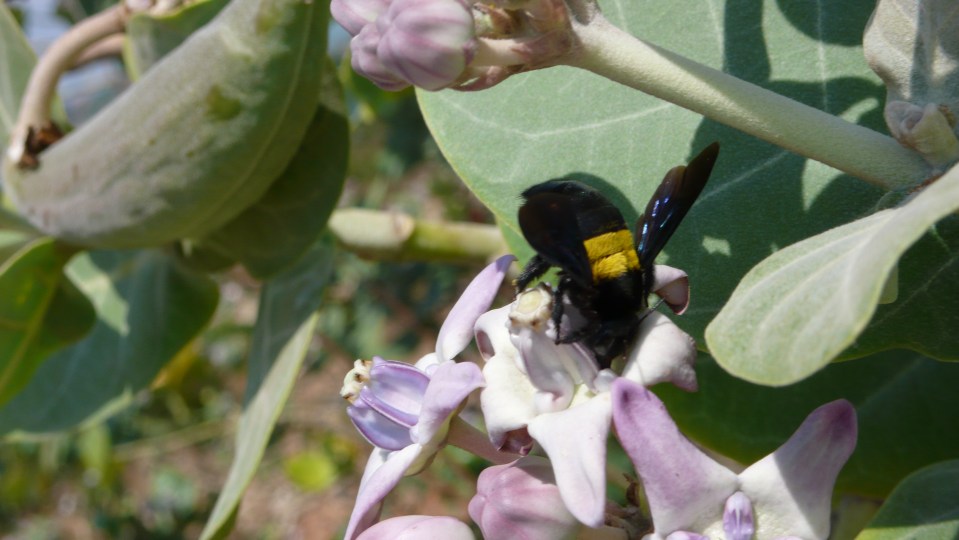
The second case study uses a newly assembled database of pollinators of the family Apocynaceae (one of the ten largest families of flowering plants), supported by a molecular phylogeny of the major clades. This database has been used to explore phylogenetic and biogeographic patterns of pollinator exploitation (Ollerton et al. in review). The findings from this study challenge some long-held assumptions about convergent evolution, the role of rewards such as nectar, and the notion that some specialised pollination systems are evolutionary “dead ends”. It also highlights the function of novel floral features in determining pollinator type and behaviour, such as the fused gynostegium and pollinia found in the subfamily Asclepiadoideae. In summary, Apocynaceae is emerging as an important model family for understanding the ecology and evolution of plant-pollinator interactions.
Blogging for EEB: why bother?
A growing number of scientists in Ecology and Evolutionary Biology (EEB) have their own blogs or post as guests on others’ blogs. In this workshop we will explore motivations and strategies for blogging, and its advantages for early career researchers. Why blog? What does it do for one’s career? Is it a distraction from actually doing science? How does one build a blog readership? We will also focus on two aspects that are sometimes seen as mutually exclusive: blogging as science outreach to the general public (sci-communication), versus blogging with other professional scientists in mind (sci-community). As preparation for the seminar please read Saunders et al. (2017) Bringing ecology blogging into the scientific fold: measuring reach and impact of science community blogs





 Prof. Jeff Ollerton - ecological scientist and author