Category Archives: Mutualism

Evolutionary implications of a deep-time perspective on insect pollination – a new review just published

When we think of pollination, we often picture bees buzzing around flowers or butterflies flitting from bloom to bloom. This relationship between plants and pollinators is one of the most well-known interactions in nature. But insect pollination didn’t begin with the colorful flowers we see today. In fact, pollinators were at work millions of years before flowering plants (angiosperms) even existed. In a new review led by Spanish researchers David Peris and Ricardo Pérez-de la Fuente, to which I added a modern ecological perspective, we explored this topic and why it’s relevant to our current understanding of plant-pollinator relationships.

Despite centuries of research on pollination, the fossil record of pollinating insects has only gained serious attention in the past few decades. What palaeontologists have uncovered is reshaping our understanding of pollination’s origins. It turns out that insects were pollinating plants long before flowers evolved—playing a crucial role in the reproduction of ancient gymnosperms, the group of seed-producing plants that includes conifers, cycads, and ginkgos.

Most people assume that insect pollination began with flowering plants, but the evidence tells a different story. Fossilised insects with specialised body structures for carrying pollen—such as hairy bodies or mouthparts adapted for nectar-feeding—have been found in deposits dating back hundreds of millions of years. These early pollinators likely visited gymnosperms, helping them reproduce in a world that looked vastly different from today’s landscapes.

Ancient pollination was driven by a diverse range of insects, many of which are now extinct. The fossil record reveals that various insect groups—including beetles, flies, wasps, and even some long-lost relatives of modern lacewings—were already acting as pollinators long before the first flower bloomed. This means that pollination as an ecological process has far deeper evolutionary roots than many realise.

As plants evolved, so did their pollinators. The rise of flowering plants during the Cretaceous period (around 100 million years ago) transformed pollination systems, leading to the incredible diversity of plant-pollinator relationships we see today. Many of the insect groups that once dominated pollination in prehistoric times have since declined or disappeared, replaced by the bees, butterflies, and other familiar pollinators that thrive in modern ecosystems.

Understanding this long history is essential—not just for scientists, but for anyone interested in biodiversity and conservation. When we focus only on present-day pollinators and plants, we miss a crucial part of the story. The fossil record helps us see how pollination has changed over time, which in turn can offer insights into how today’s ecosystems might respond to environmental pressures such as climate change and habitat loss.

Recognising the ancient history of insect pollination isn’t just an academic exercise—it has real-world implications. If we understand how pollination evolved and adapted to past environmental changes, we can better predict how it might shift in the future. Conservation efforts that aim to protect pollinators today can benefit from a long-term perspective, ensuring that we’re not just responding to recent trends but also considering deep-time ecological processes.

So the next time you see a bee visiting a flower, remember—you’re witnessing the latest chapter in a story that began hundreds of millions of years ago. The relationship between plants and pollinators is far older, more complex, and more fascinating than we ever imagined.

Here’s the reference with a link to the paper. It should be open access, but if you have problems obtaining it, send me a message via my Contact page:
Peris, D., Ollerton, J., Sauquet, H., Hidalgo, O., Peñalver, E., Magrach, A., Álvarez-Parra, S., Peña-Kairath, C., Condamine, F.L., Delclòs, X. & Pérez-de la Fuente, R. (2025) Evolutionary implications of a deep-time perspective on insect pollination. Biological Reviews (in press)

Butterflies, bumblebees and hoverflies can be equally effective pollinators of some plants says a new study

Just after I arrived in Northampton in 1995, I set about looking for suitable local sites for conducting pollination ecology field work for myself and students. The campus on which we were situated at the time was adjacent to an urban park – Bradlaugh* Fields – parts of which were designated as local nature reserves. In the intervening years, data from that area have made their way into a wide range of published studies, including:

I still have data collected during that time that have never been published, but good data are hard won and they may see the light of day at some point. Case in point is that we’ve just published a paper based on data from Bradlaugh Fields, the first of which were collected in 2001!

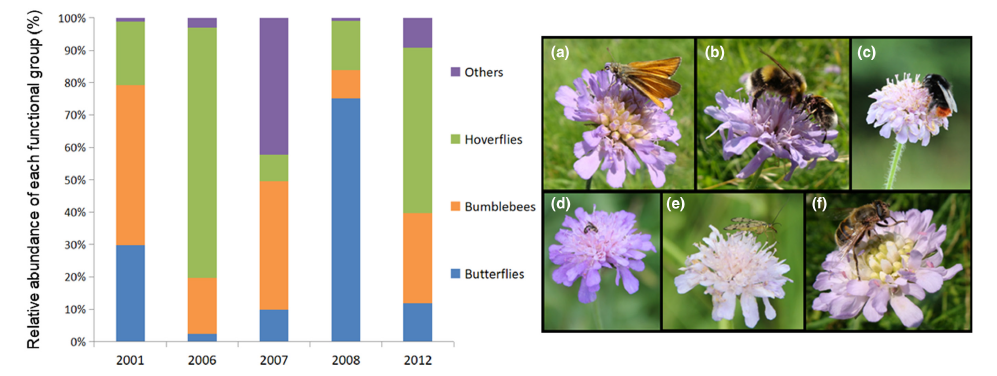
In this paper we’ve tested how effective hoverflies, butterflies and bumblebees are at pollinating the flowers of a common generalist grassland plant, colloquially called Field Scabious (Knautia arvensis). The expectation was that bumblebees, being generally larger, hairier and more flower-focused than the other groups, would be the most effective at transferring pollen to stigmas. To our surprise, they were not: hoverflies and butterflies performed just as well! In fact we argue that butterflies may be MORE important as pollinators of this plant because they fly further distances between individual plants, rather than hopping between the inflorescences of the same plants, as bumblebees tend to do.

Crucially, the importance of these different groups of pollinators varies enormously as the relative abundance of the insects visiting the flowers differs between seasons. In some years butterflies dominate as pollinators, in other years bumblebees or hoverflies. This is driven, we think, both by fluctuations in the populations of these insects and by the availability of other, more preferred flowers that may bloom at the same time.

The paper is part of a special issue of the Journal of Applied Entomology devoted to The Neglected Pollinators. It’s open access and you can download a copy by following the link in this reference:

Ollerton, J., Coulthard, E., Tarrant, S., Woolford, J., Ré Jorge, L. & Rech, A.R. (2024) Butterflies, bumblebees and hoverflies are equally effective pollinators of Knautia arvensis (Caprifoliaceae), a generalist plant species with compound inflorescences. Journal of Applied Entomology (in press)

Here’s the abstract:

Plant-pollinator interactions exist along a continuum from complete specialisation to highly generalised, that may vary in time and space. A long-held assumption is that large bees are usually the most effective pollinators of generalist plants. We tested this by studying the relative importance of different groups of pollinators of Knautia arvensis (L.) Coult. (Caprifoliaceae: Dipsacoideae). This plant is suitable for such a study because it attracts a diversity of flower visitors, belonging to different functional groups. We asked whether all functional groups of pollinators are equally effective, or if one group is most effective, which has been documented in other species with apparently generalised pollination systems. We studied two subpopulations of K. arvensis, one at low and one at high density in Northampton, UK. To assess pollinator importance we exposed unvisited inflorescences to single visits by different groups of pollinators (butterflies, bumblebees, hoverflies and others) and assessed the proportion of pollinated stigmas. We then multiplied the effectiveness of each pollinator group with their proportional visitation frequency in five different years. For each group we also compared time spent on flowers and flight distance between visits. The relative importance of each pollinator group varied between years, as did their flight distances between flower visits. Butterflies were the best pollinators on a per visit basis (in terms of the proportion of stigmas pollinated) and flew further after visiting an inflorescence. Different measures and proxies of pollinator effectiveness varied between taxa, subpopulations, and years, and no one group of pollinators was consistently more effective than the others. Our results demonstrate the adaptive value of generalised pollination strategies when variation in relative abundance of different types of pollinators is considered. Such strategies may have buffered the ability of plants to reproduce during past periods of environmental change and may do so in the future.

*Named after the estimable local MP and radical Charles Bradlaugh – see my blog post When Charles collide: Darwin, Bradlaugh, and birth control for Darwin Day 2016

A doubly-parasitic orchid? – China Diary 5

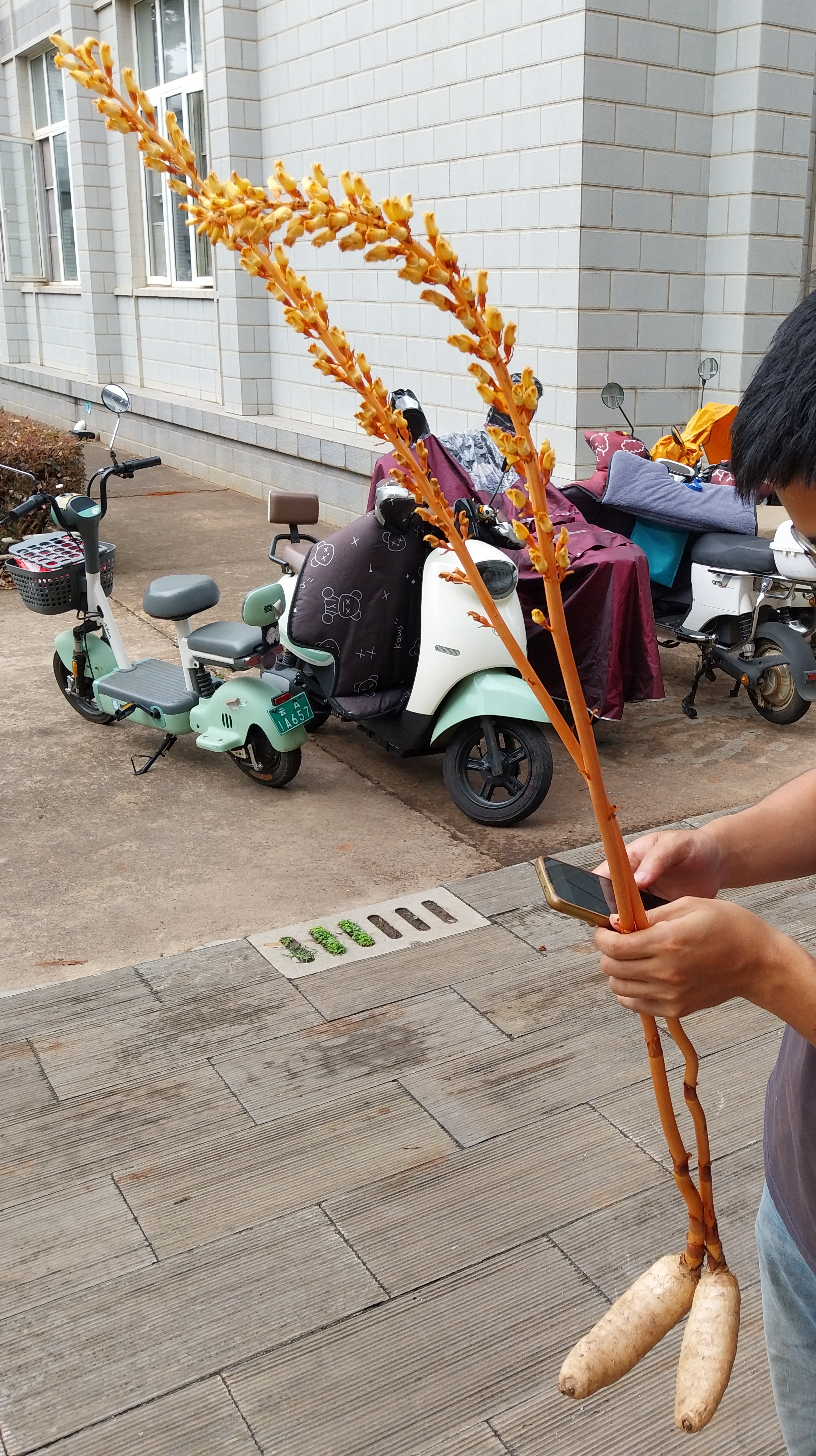
Walking into Kunming Institute of Botany yesterday morning, I passed a young guy who was carrying what I initially thought was a species of Orobanchaceae. I’ve a long-standing interest in the pollination ecology of these intriguing parasitic plants, so I stopped to have a chat. Turns out they were in fact orchids! Specifically, they were specimens of Gastrodia elata, one of the “potato orchids“, so named because those fat tubers are edible. They are widely used in South China – where they are known as Tianma, 天麻 – both as a food and medicinally. The tubers are eaten before the flowers are produced, and originally they were collected from the wild. But in the 1960s a Chinese botanist named Xuan Zhou discovered how to cultivate them and they are now grown in specialist nurseries. A fascinating account of the life of Xuan Zhou – “The Father of Gastrodia” – was published in the journal Plant Diversity last year, shortly after he died.

These orchids do not produce green leaves or stems, therefore they cannot photosynthesise. Instead, they gain all of their energy from a parasitic symbiotic relationship with a fungus – they are what is termed “myco-heterotrophic“. Most myco-heterotrophic plants have evolved from ancestors that were involved in mutualistic mycorrhizal relationships with fungi, in which the plant provides sugars to the fungus in return for mineral nutrients and water. In the case of Gastrodia elata, the fungus concerned is the non-mycorrhizal, wood-rotting Armillaria mellea. In the west we know this as Honey Fungus, a disease of trees and shrubs and the bane of many a gardener. This is also edible, incidentally, but best dried before cooking (and some have an intolerance to it, so take care).

I tweeted the photograph in a short thread just after taking it, and Stewart Nicol pointed me to a study of the orchid’s floral biology and pollination ecology in Japan by Naoto Sugiura. Turns out that, at least in the population which Naoto studied, the plant produces no nectar and deceives its pollinators, which are small bees, into visiting the flowers.

That’s why I’ve used the phrase “doubly-parasitic*” in the title of this post – the plant, it appears, parasitically exploits both the fungus from which it gains energy and the pollinators that ensure its reproduction. It’s (almost, but not quite) the flip side of “double mutualism” in which species provide two benefits for one another, e.g. the same bird is both a pollinator and a seed disperser of a particular plant, a phenomenon that I discussed in my recent book Birds & Flowers: An Intimate 50 Million Year Relationship.

But note the question mark in the title of this post. There’s an enormous amount that we don’t know about these myco-heterotrophic interactions and how they remain stable over the evolutionary history of the plant and the fungus. In order to be considered a parasite, by definition, an organism must have a negative impact on the reproductive fitness of its host. Do these orchids negatively impact either the fungus or the bees that pollinate it? As yet we don’t know. And I was intrigued by this comment from a 2005 review of ‘The evolutionary ecology of myco-heterotrophy‘ by Martin Bidartondo:

“no successful plant lineage would be expected to cheat both mycorrhizal fungi (by failing to provide photosynthates) and deceive insect pollinators (by failing to provide nectar or other rewards) due to the evolutionary instability inherent to specializing on two lineages.”

At first glance it appears that Gastrodia elata is a plant lineage that has done just that, though I’d like to see more work carried out on this system. Specifically, are all populations of the orchid bee pollinated and are all rewardless? And does this orchid really provide no benefit to the fungus, perhaps by synthesising secondary compounds that protect the Armillaria from infection by bacteria or being eaten by invertebrates. So many questions to be answered about this fascinating species interaction!

*With thanks to my wife Karin Blak for inspiring that phrase.

Introduced species shed friends as well as enemies – a new study published this week

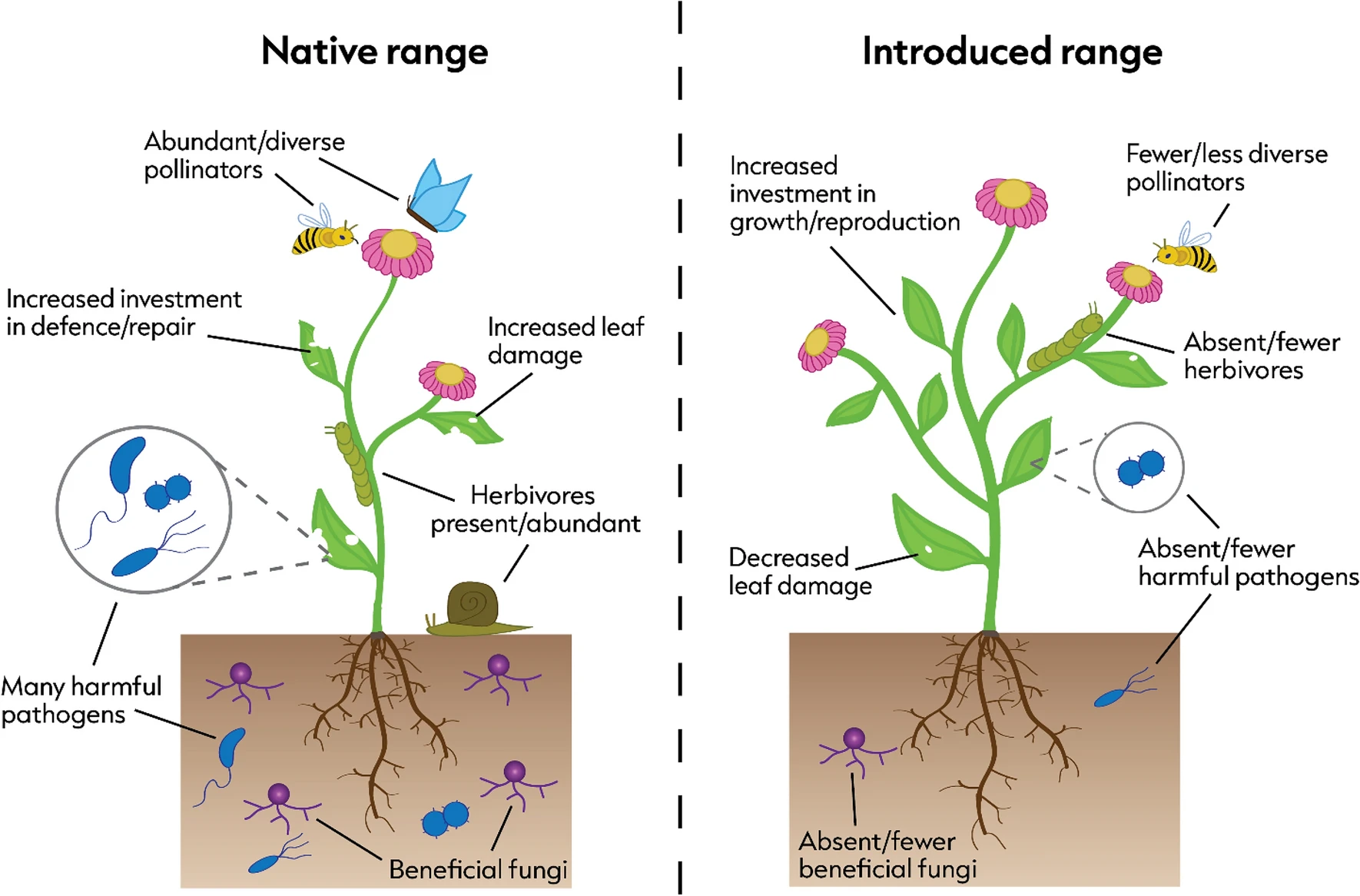
As I’ve previously discussed on the blog, when species are moved to a different part of the world they lose many of the ‘enemies’ – such as predators, herbivores and pathogens – that would normally keep their populations in check. This can have implications for the likelihood of a species becoming invasive, and it’s called the Enemy Release Hypothesis (ERH) and has been well studied. Less well researched is the flip side of the ERH, the Missed Mutualist Hypothesis (MMH), in which species lose their ‘friends’, such as pollinators, seed dispersers, symbiotic fungi, and so forth. It’s a topic I’ve worked on with my colleagues at the University of New South Wales, principally Angela Moles and her former PhD student Zoe Xirocostas.

Another paper from Zoe’s PhD work has just been published and in it she carried out a comparison of European plants that have been transported to Australia, and asked whether they had fewer pollinators in their new range. It turns out that they do!

Here’s the full reference with a link to the paper, which is open access:

Xirocostas, Z.A., Ollerton, J., Peco, B., Slavich, E., Bonser, S.P., Pärtel, M., Raghu, S. & Moles, A.T. (2024) Introduced species shed friends as well as enemies. Scientific Reports 14: 11088

Here’s the abstract:

Many studies seeking to understand the success of biological invasions focus on species’ escape from negative interactions, such as damage from herbivores, pathogens, or predators in their introduced range (enemy release). However, much less work has been done to assess the possibility that introduced species might shed mutualists such as pollinators, seed dispersers, and mycorrhizae when they are transported to a new range. We ran a cross-continental field study and found that plants were being visited by 2.6 times more potential pollinators with 1.8 times greater richness in their native range than in their introduced range. Understanding both the positive and negative consequences of introduction to a new range can help us predict, monitor, and manage future invasion events.

Read my author interview and get a 25% discount off ‘Birds & Flowers’, ‘Pollinators & Pollination’ and other books from Pelagic Publishing!

I recently did a short interview with Pelagic Publishing’s marketing person, Sarah Stott, which you can read here: https://pelagicpublishing.com/blogs/news/birds-and-flowers-author-interview.

On that page you can sign up to Pelagic’s newsletter (which I STRONGLY recommend, because they produce some great natural history and science books, and not just mine!) and by doing so you can receive a 25% discount on all orders.

What are you waiting for?

“Enemy release” of invasive plants is unpredictable – a new study just published

The summer of 2019, before the COVID-19 pandemic turned the world on its head, feels like a very long time ago. Early in that summer, as I recounted on this blog, Zoe Xirocostas joined my research group for a while in order to collect data for her PhD on the comparative ecologies of plants that are native to Europe but invasive in Australia. That work has proven to be very successful, and the latest paper from Zoe’s PhD has just been published.

The paper focuses on the “enemy release hypothesis” (ERH), a well-studied concept in invasion ecology that nonetheless generates significant debate and disagreement. In essence, the ERH posits that the reason why so many species become invasive is that they leave their consumers, pathogens and parasites behind when they move to a new locality. Those “enemies” would normally reduce the fecundity of the invader, putting a brake on their population growth. But in their absence, the invader can become far more successful. Of course, as well as leaving “enemies” behind the invader also loses its “friends”, such as pollinators, seed dispersers, and defensive or nutritional partners. This “Missed Mutualist Hypothesis” is something that I’ve recently explored with Angela Moles, who was Zoe’s main supervisor, and other collaborators in Australia. Expect to hear more about this from Zoe’s work in the near future.

But back to the enemies. Drawing on the most extensive set of standardised comparisons yet collected of the same plants in native and invasive habitats, Zoe found that plants in the invasive populations suffer on average seven times less damage from insect herbivores, as predicted by the (ERH). Rather remarkably, however, the amount of enemy release enjoyed by a plant species was not explained by how long the species had been present in the new range, the extent of that range, or factors such as the temperature, precipitation, humidity and elevation experienced by the native versus invasive populations.

In other words, it’s extremely hard to predict the extent of enemy release based on historical and ecological considerations that one might expect to impose a strong influence.

The study has just appeared in Proceedings of the Royal Society series B and is open access. Here’s the reference with a link to the paper:

Xirocostas, Z.A., Ollerton, J., Tamme, R., Peco, B., Lesieur, V., Slavich, E., Junker, R.R., Pärtel, M., Raghu, S., Uesugi, A., Bonser, S.P., Chiarenza, G.M., Hovenden M.J. & Moles, A.T. (2023) The great escape: patterns of enemy release are not explained by time, space or climate. Proceedings of the Royal Society series B 290: 20231022.

Here’s the abstract:

When a plant is introduced to a new ecosystem it may escape from some of its coevolved herbivores. Reduced herbivore damage, and the ability of introduced plants to allocate resources from defence to growth and reproduction can increase the success of introduced species. This mechanism is known as enemy release and is known to occur in some species and situations, but not in others. Understanding the conditions under which enemy release is most likely to occur is important, as this will help us to identify which species and habitats may be most at risk of invasion. We compared in situ measurements of herbivory on 16 plant species at 12 locations within their native European and introduced Australian ranges to quantify their level of enemy release and understand the relationship between enemy release and time, space and climate. Overall, plants experienced approximately seven times more herbivore damage in their native range than in their introduced range. We found no evidence that enemy release was related to time since introduction, introduced range size, temperature, precipitation, humidity or elevation. From here, we can explore whether traits, such as leaf defences or phylogenetic relatedness to neighbouring plants, are stronger indicators of enemy release across species.

When organisms lose their friends: a new review of the “Missed Mutualist Hypothesis” just published

All organisms – be they plants, animals, fungi, or whatever – interact with other species throughout their lives, in relationships that include predation, parasitism, commensalism, and the many and varied forms of mutualism. But when species are transported to a different part of the world, as has happened often during the Anthropocene, these interactions typically break down because usually only one of the participants moves. This loss of ecological relationships can play a role in whether or not a species becomes established in its new home, and has been mostly explored in the “Enemy Release Hypothesis” (ERH) which predicts that, by leaving behind predators or parasites or herbivores, a species becomes more ecologically successful and ultimately invasive in its novel range.

Less well studied, though potentially just as important, is the “Missed Mutualist Hypothesis” (MMH) which in a sense is the twin of the ERH. As well as leaving behind “enemies”, introduced species leave behind “friends” such as pollinators, seed dispersers, mycorrhizal fungi, defensive partners, and other mutually beneficial associates. Negative effects arising from the loss of these relationships could potentially balance the positive impacts arising from the ERH.

In a new quantitative review just published, we review what’s known about the MMH (currently much less than the ERH) and suggest some fruitful lines of enquiry. The study is led by Angela Moles, my collaborator at the University of New South Wales where I spent time as a Visiting Research Fellow in 2019/20 (see my blog posts about that visit starting here). The paper has had a long gestation and gone through several iterations and revisions since we started writing it in late 2019, not least caused by the covid pandemic, but I think that it’s all the better for it.

Here’s the full reference with a link to the paper:

Moles, A.T., Dalrymple, R.L., Raghu, S., Bonser, S.P. & Ollerton, J. (2022) Advancing the missed mutualist hypothesis, the under-appreciated twin of the enemy release hypothesis. Biology Letters 18: 20220220.

Here’s the abstract:

Introduced species often benefit from escaping their enemies when they are transported to a new range, an idea commonly expressed as the enemy release hypothesis. However, species might shed mutualists as well as enemies when they colonize a new range. Loss of mutualists might reduce the success of introduced populations, or even cause failure to establish. We provide the first quantitative synthesis testing this natural but often overlooked parallel of the enemy release hypothesis, which is known as the missed mutualist hypothesis.

Meta-analysis showed that plants interact with 1.9 times more mutualist species, and have 2.3 times more interactions with mutualists per unit time in their native range than in their introduced range. Species may mitigate the negative effects of missed mutualists. For instance, selection arising from missed mutualists could cause introduced species to evolve either to facilitate interactions with a new
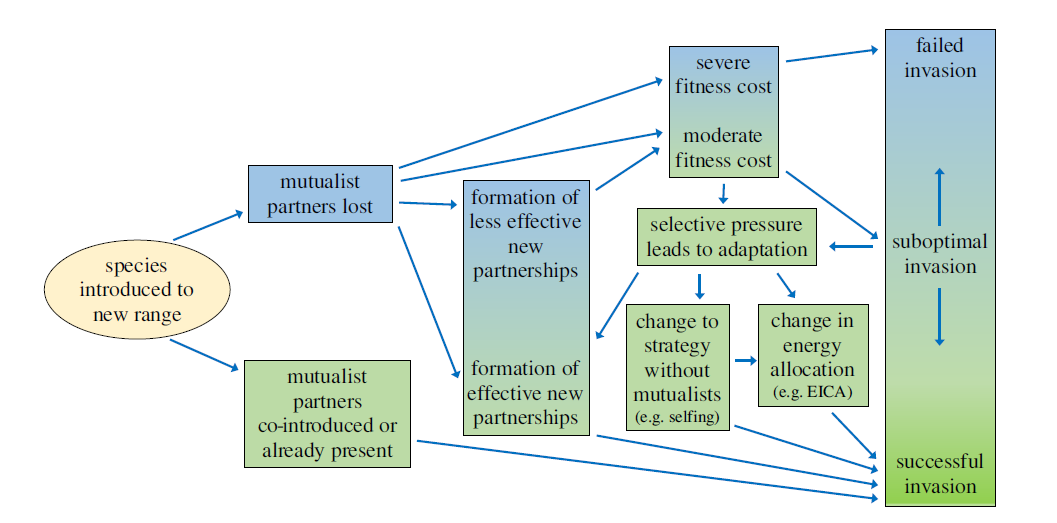
suite of species or to exist without mutualisms. Just as enemy release can allow introduced populations to redirect energy from defence to growth, potentially evolving increased competitive ability, species that shift to strategies without mutualists may be able to reallocate energy from mutualism toward increased competitive ability or seed production. The missed mutualist hypothesis advances understanding of the selective forces and filters that act on plant species in the early stages of introduction and establishment and thus could inform the management of introduced species.

Are cactus pollination systems more specialised in the tropics? A new study suggests yes…and no!

The question of whether interactions between different species are more specialised in tropical environments (as theory predicts) has intrigued me for a couple of decades. In fact it’s just occurred to me that August 2022 was the 20th anniversary of my paper in Oikos co-authored with Louise Cranmer entitled: Latitudinal trends in plant-pollinator interactions: are tropical plants more specialised? That paper was one of the first to seriously challenge an idea that was long-embedded in the scientific and (especially) popular literature, that tropical ecology was in a sense “special” and that the ways in which species parasitised, consumed, or engaged in mutualistic relationships in the tropics was different to what was happening in the subtropics and temperate zones.

Since then I’ve written about this subject in a number of publications, most recently in my book Pollinators & Pollination: Nature and Society and it’s inspired some other researchers to address the topic.

One of the real challenges with asking questions about how plant-pollinator relationships change over large geographical areas is obtaining good, robust data to analyse. It’s a challenge to convince science funding agencies to give money to spend many years travelling the world and collecting the kind of data that are needed. However we can gain some idea of the patterns, and potential processes, that drive the macroecology of plant-pollinator interactions by piecing together databases of interactions for particular taxa, gleaned from published and unpublished sources.

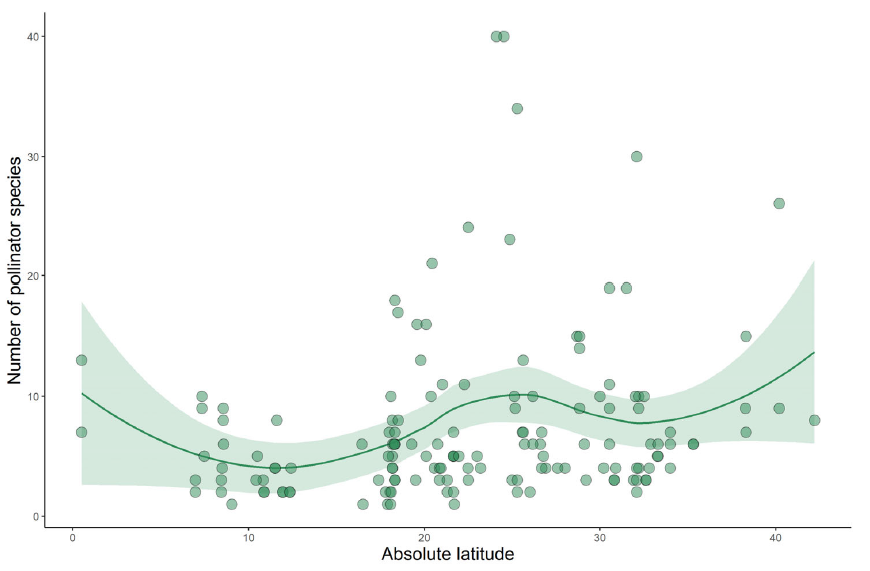
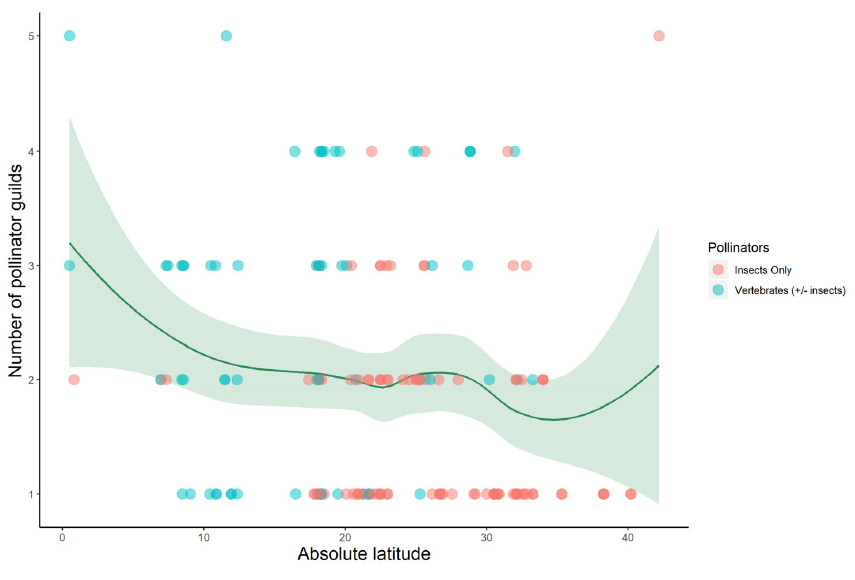
That’s what we have done for the family Cactaceae in a new study led by Pablo Gorostiague from the Universidad Nacional de Salta in Argentina. This collaboration started when Pablo visited Northampton back in 2018 and spent some time with my research group, including helping out with field work in Tenerife. Since then the usual issues (work, COVID, etc.) have delayed publication of our paper, but now it’s finally out. Amongst other results we find that, yes, tropical cacti are pollinated by fewer species on average (though it’s hugely variable – see the figure above) but that functional specialisation (i.e. the number of pollinator guilds that are used by species) is no different in the tropics compared to the extra-tropics (that’s the figure at the end of this post).

The full reference with a link to the paper is below; if anyone wants a PDF, please send me a message via the Contact page:

Gorostiague, P., Ollerton, J. and Ortega-Baes, P. (2022) Latitudinal gradients in biotic interactions: Are cacti pollination systems more specialized in the tropics? Plant Biology https://doi.org/10.1111/plb.13450

Here’s the abstract:

Biotic interactions are said to be more specialized in the tropics, and this was also proposed for the pollination systems of columnar cacti from North America. However, this has not yet been tested for a wider set of cactus species. Here, we use the available information about pollination in the Cactaceae to explore the geographic patterns of this mutualistic interaction, and test if there is a latitudinal gradient in its degree of specialization.

We performed a bibliographic search of all publications on the pollination of cacti species and summarized the information to build a database. We used generalized linear models to evaluate if the degree of specialization in cacti pollination systems is affected by latitude, using two different measures: the number of pollinator guilds (functional specialization) and the number of pollinator species (ecological specialization).

Our database contained information about the pollination of 148 species. The most frequent pollinator guilds were bees, birds, moths and bats. There was no apparent effect of latitude on the number of guilds that pollinate a cactus species. However, latitude had a small but significant effect on the number of pollinator species that service a given cactus species.

Bees are found as pollinators of most cactus species, along a wide latitudinal gradient. Bat and bird pollination is more common in the tropics than in the extra-tropics. The available information suggests that cacti pollination systems are slightly more ecologically specialized in the tropics, but it does not support any trend with regard to functional specialization.

Some seaweeds have “pollinators”! New research published this week

Most of us have at some time stared in fascination at the life contained within the pools that form on rocky shores at low tide. But none of us realized that a whole new class of ecological interaction was taking place!

The 12,000 or so described (and many un-named) seaweeds are incredibly important organisms. Their diverse and abundant photosynthesizing fronds make them one of the main primary producers in coastal seas, creating food and habitat for a huge range of animals. Not only that, but some – the coralline seaweeds – lock up vast amount of CO2 as calcium carbonate and help to create reef systems in the same way as coral.

Although scientists have studied seaweeds for hundreds of years, many aspects of their ecology are still unknown. Their detailed mode of reproduction, for example has only been studied in a small proportion of species.

In a newly published study in the journal Science, French PhD researcher Emma Lavaut and her colleagues have shown that small isopod crustaceans – relatives of woodlice and sea slaters – facilitate the movement of the equivalent of seaweed sperm (termed “spermatia”) from male to female reproductive structures in just the same way that bees and other pollinators move pollen between flowers, so fertilizing female gametes.

Your read that correctly: some seaweeds have pollinators!

It’s an incredible finding! And the implications of this are enormous: Emma and her colleagues have added a whole new branch of life to the examples of sedentary (fixed-place) organisms that require a third party to enable their reproduction. In addition to being a fascinating biological discovery, it has significant environmental and sustainability implications.  

Seaweeds are a diverse group of macroalgae that appeared more than one billion years ago, at least 500 million years before the evolution of what we think of as “true” plants, such as the flowering plants, conifers, cycads, ferns and mosses. Sexual reproduction in the brown and green seaweeds, which include kelps, wracks and sea lettuces, involves spermatia that are mobile and use a flagellum to swim through the water to seek out female reproductive structures. However, Emma studied a seaweed, Gracilaria gracilis, which belongs to the Rhodophyta or red seaweeds, and none of the species in this group have these swimming sperm equivalents.

Sexual reproduction in the red seaweeds has therefore always been something of a mystery. Three quarters of species have separate male and female individuals and so they cannot mate with themselves. It was assumed that the gametes were just released into water currents that haphazardly transported them to the female reproductive organs, much as wind pollinated grasses and pine trees release their vast clouds of pollen on land. The authors of this new study, however, point out that most sexual reproduction by these red seaweeds takes place in the relatively still waters of rock pools, a habitat that they mimicked in the laboratory in a series of elegant aquarium experiments.

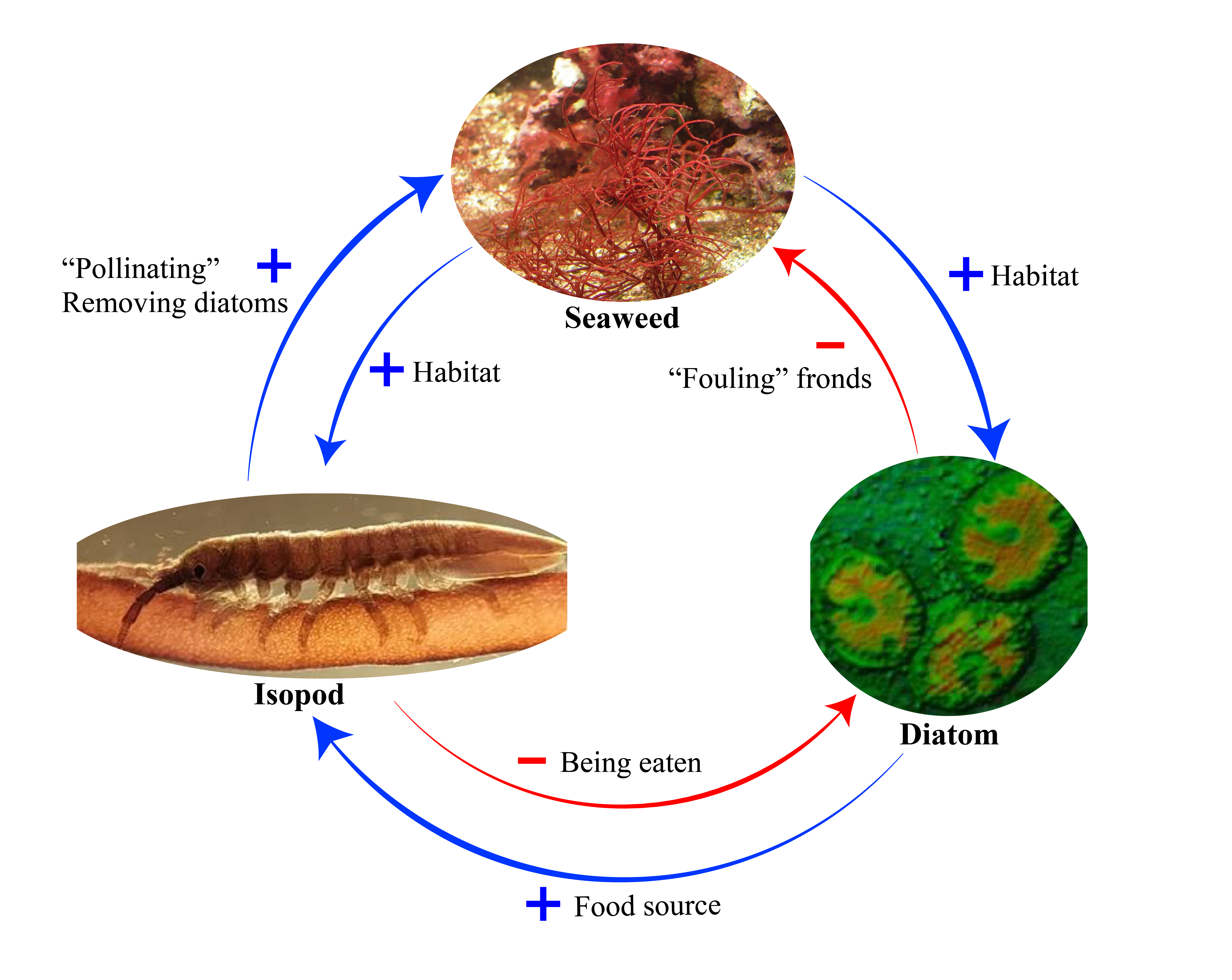
The isopod crustaceans are attracted to the seaweed because they provide a habitat away from predators and a supply of food: they graze on the microalgae that colonise the seaweed’s fronds. Picking up spermatia and moving them between fronds is a side-effect of this activity by the small invertebrates. As you can see from the illustration above, the isopods and the seaweed are engaged in a “double mutualism“: a plus sign (+) indicates a positive effect of one species on another, while a minus sign (-) indicates a negative impact. 

What I find especially fascinating about this research is that both the seaweed (Gracilaria gracilis) and the isopod (Idotea balthica) were originally described as species more than 200 years ago. They also have an extremely wide distribution. The isopod is found around the coasts of Europe and down the eastern seaboard of the Americas. The seaweed is pretty much found globally. These are not rare, unusual species, yet the interaction between them has only just been discovered! This is a point that I made in my recent book Pollinators & Pollination: Nature and Society: quite often, species that are well known interact in previously undocumented ways because no one has had the time or inspiration to look closely at them.

Although the idea that small sea creatures might be helping seaweeds to reproduce sounds very fanciful, there is a precedence for this discovery. Back in 2016, in a paper published in Nature Communications, a group of Mexican researchers led by Brigitta van Tussenbroek showed that a species of seagrass is pollinated by a diverse assemblage of small crustaceans and polychaete worms. Seagrasses are flowering plants, not seaweeds, but clearly this type of mutually beneficial relationship can exist between different species in the oceans.

Rhodophyta are the most diverse group of seaweeds, with more than 7,000 known species. They are especially abundant on coastal shores, oceanic habitats that are under huge pressure from infrastructure development, pollution, and climate change. At the same time, these seaweeds are economically important and millions of tonnes of them are collected every year as food, as nutritional and pharmaceutical supplements, and to produce agar. In order to conserve these seaweed populations, we need to better understand their ecology and their environmental requirements.

The work by Emma Lavaut and colleagues suggests that interactions with their “pollinators” may be a critical aspect of this understanding. In the same way that “Save the Bees” has been a rallying call for conserving interactions between species on land, we may soon hear this message echoed in “Save the Isopods”. At the very least, I have to add a new section to the second edition of my book!

Full disclosure: I was one of the reviewers of the original manuscript submitted to Science by Emma and her co-authors. It’s a rare privilege to review a study and think: “Wow! This is a game-changer!” and including this paper it’s happened to me only a handful of times. The editors at Science kindly invited my colleague Dr Zong-Xin Ren and myself to write a Perspective piece about the work and we were delighted to do so.


Image credits: Isopod and diatom images from Lavaut et al (2022). Gracilaria image by Emoody26 at English Wikipedia CC BY 3.0 https://commons.wikimedia.org/w/index.php?curid=3455016. Design by Shijia Wen and Jeff Ollerton.

Is the tropical epiphytic house plant Monolena primuliflora an “ant plant”?

I love going to botanic gardens and I keep a “life list” of those that I have visited. So on a visit to Lund University last week, to give a seminar and take part in an MSc defence, I was delighted to be able to add another one to that list. Lund University Botanical Garden is quite small, like many such urban gardens, and this is not the best time of the year to visit. But there was a good show of early spring plants in flowers, the sun was shining, and quite a number of people were enjoying the peace and calm in the middle of a city.

The glasshouses were especially busy, and they have a nice collection of cold-sensitive plants arranged by habitat and taxonomy, such as cacti and succulents, ferns, orchids, and so forth. One of the reasons why I enjoy botanic gardens so much is that I always, without exception, see plants that I have never previously encountered, often doing unexpected things.

Lund was no exception, and I was particularly intrigued by a plant called Monolena primuliflora which was being grown in a hanging basket, as is often the case with epiphytic plants. It’s a species of Melastomataceae, a family that I know well from tropical field work. But this one looked unlike any melastome that I’d ever seen. In particular, I was drawn to the large rhizome or caudex from which the leaves emerge:

This immediately reminded me of some of the epiphytic “ant plants” such as species of Myrmecodia and Hydophytum and especially ferns such as Lecanopteris. All of these myrmecophyte genera have evolved swollen stems or rhizomes which house colonies of ants. The ants in turn defend the plants against herbivores, in a mutualistically advantageous relationship.

Sure enough, when I searched online for information about Monolena primuliflora, it’s widely described in the house plant community as an “ant plant” – see here and here for example. After I tweeted about this, biologist Guillaume Chomicki (who has been researching these ant-plant interactions) was intrigued but asked about the evidence for it being a myrmecophyte:

That got me thinking, so I dug around in the botanical literature for the evidence and found…..nothing. The standard monograph on the genus by Warner (2002) doesn’t mention it and as far as I can tell (please someone will correct me if I am wrong) there’s no documented study of this species or genus having a myrmecophytic relationship with ants.

If I’m correct, how has the idea of Monolena primuliflora as an ant plant come about? This is a relatively new introduction to the houseplant trade and I suspect that plant sellers have made assumptions about the swollen rhizome (as I did!) to make the plant sound more interesting. There’s no doubt that the rhizome is fascinating and unusual in the family, but its function may be to store water (as found in many epiphytic orchids) rather than to house ants.

In my recent book Pollinators & Pollination: Nature and Society, and in this article last year in the magazine British Wildlife, I discussed how the world of plants (and pollinators) is full of myths and misunderstandings. This seems to be another one and by writing this blog post I’m hoping that we can clarify the situation with regard to Monolena primuliflora. So if you have any further information about it, please do comment below.

My thanks to everyone on Twitter who commented about the plant, especially Guillaume for asking the question!