Category Archives: Food and biodiversity

Books as gifts this Christmas – here’s some ideas for adults and children

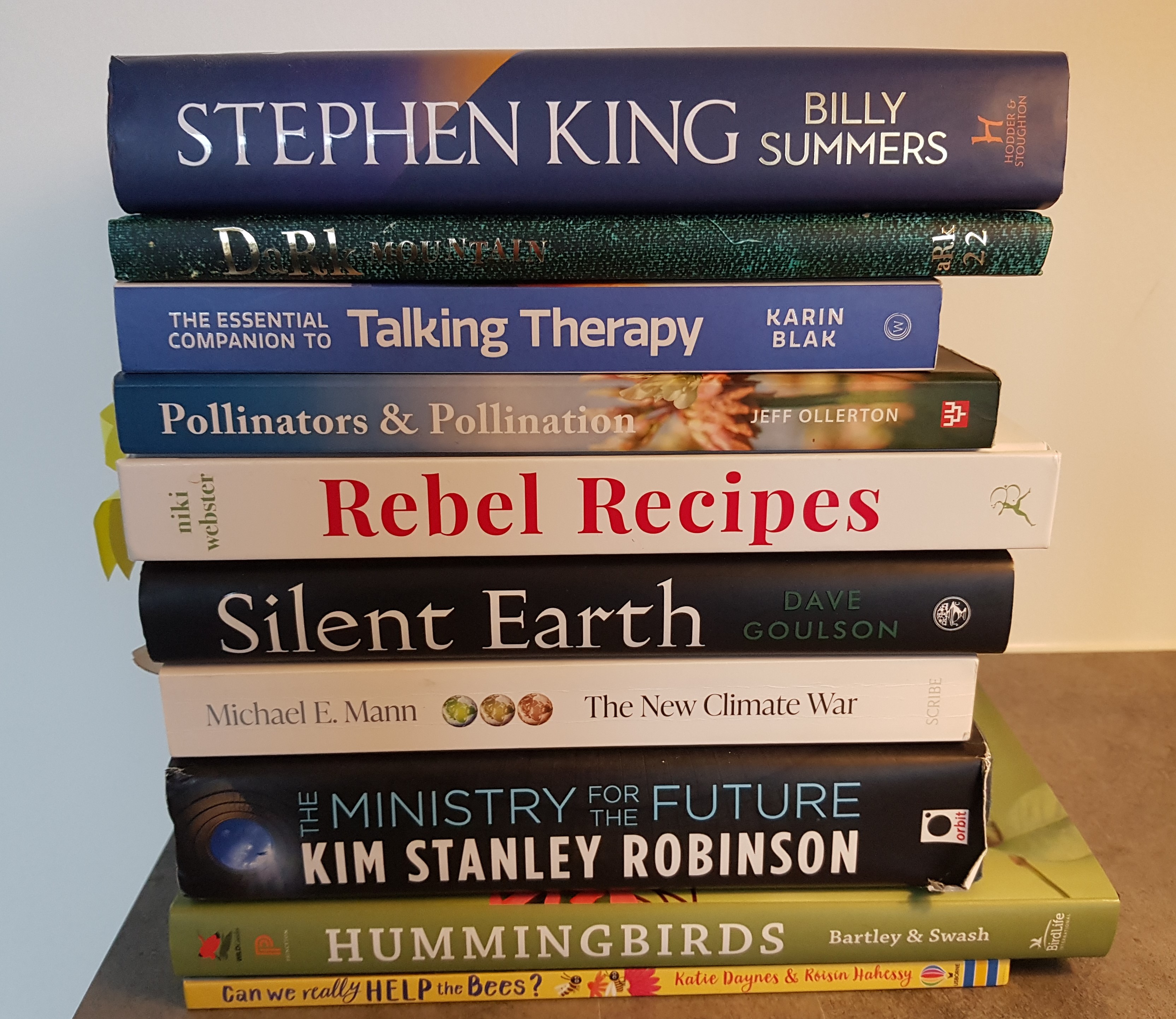
Although we are still in the early part of November, it’s never too soon to be thinking about buying Christmas gifts for friends and family. And what better gift than a book? Here’s a few suggestions for some that I’ve read this year that I think will make fine presents.

Who doesn’t love a good story, and Stephen King is a master storyteller. I’ve really enjoyed his more recent novels and Billy Summers stands out for me. It’s part thriller, part romance, and as always there’s a little touch of the uncanny. Very different, but just as much a page turner, is The Ministry for the Future by Kim Stanley Robinson. Although Robinson is known as a science fiction writer, this novel is set in the near future when climate change breakdown is forcing governments and businesses into making radical changes. As much as anything this is a road map for how we can get ourselves out of the current climate crisis.

Talking of which, Michael Mann’s The New Climate War should be read by everyone interested in understanding how big corporations have colluded with the media and governments to trivialise and misrepresent the problems that we currently face. I reviewed this and a book about the insect biodiversity crisis, Silent Earth by Dave Goulson, in this blog post.

If you are looking for a book to help young children understand the importance of bees and other pollinators then I can highly recommend Can We Really Help the Bees? by Katie Daynes and Róisín Hahessy, for which I acted as science advisor.

For the ornithologically minded you might want to consider the lavishly illustrated Hummingbirds: A Celebration of Nature’s Jewels by Glenn Bartley and Andy Swash. Those who love writing and art with an environmental focus would appreciate an annual subscription to Dark Mountain, which gives you two beautifully produced volumes every year. A couple of my essays appeared in earlier volumes and the quality of the contributions never fails to impress me.

There’s lots of great natural history authors and books to choose from on Pelagic Publishing’s list, including of course my own Pollinators & Pollination: Nature and Society! I especially enjoyed Ian Carter’s recent memoir Human, Nature: A Naturalist’s Thoughts on Wildlife and Wild Places.

For the budding or experienced cook, Niki Webster’s Rebel Recipes serves up some amazing vegan dishes that Karin and I have really enjoyed trying. And speaking of my wife, of course I have to include her Essential Companion to Talking Therapy as the perfect gift for anyone considering or currently undergoing counselling or therapy, or who is thinking about becoming a practitioner.

Finally, if you’re looking for particular book ideas or just like browsing through lists of what others recommend, there’s lots of inspiration over at the independent Shepherd site.

I hope that you’ve found this useful. Feel free to comment with suggestions for other books that you’ve enjoyed.

Food system resilience: concepts, issues and challenges – a new, open access review just published

Human populations across the planet are locked into complex economic, agricultural, social, political and ecological systems that provide them with food or, under extreme circumstances, fail to provide that sustenance. The complexity of these food systems requires that they are studied from a multi-disciplinary perspective because no one subject, or individual, can possibly do justice to this crucial topic.

One of the most pressing questions related to food systems is how we ensure that they are resilient to the current and future challenges of war, pandemics, climate change, economic shocks, biodiversity loss (including pollinators, of course), and a host of other factors. Some of these are predictable, others are not, except that recent and distant history tells us that such challenges are always going to be a feature of our societies and we need to prepare as best we can. This review of our current understanding of resilience in food systems is therefore timely and important.

My involvement with this review stems from the work I did with with Simon Potts and Tom Breeze at the University of Reading, Helen Lomax (University of Huddersfield) and Jim Rouquette (Natural Capital Solutions) on a project called Modelling landscapes for resilient pollination services in the UK (funded by BBSRC 2017-2020). That project, in turn, was part of a much larger funding programme entitled Resilience of the UK Food System in a Global Context. You can expect to see more publications coming from this research in the future.

Here’s the full reference with a link to the open access paper:

Zurek, M., Ingram, J., Bellamy, A.S., Goold, C., Lyon, C., Alexander, P., Barnes, A., Bebber, D.P., Breeze, T.D, Bruce, A., Collins, L.M., Davies, J. Doherty, B., Ensor, J., Franco, S.C., Gatto, A., Hess, T., Lamprinopoulou, C., Liu, L., Merkle, M., Norton, L., Oliver, T., Ollerton, J., Potts, S., Reed, M.S., Sutcliffe, C. & Withers, P.J.A. (2022) Food system resilience: concepts, issues and challenges. Annual Review of Environment and Resources 47: 22.1–22.24 doi.org/10.1146/annurev-environ-112320-050744

Here’s the abstract:

Food system resilience has multiple dimensions. We draw on food system and resilience concepts and review resilience framings of different communities. We present four questions to frame food system resilience (Resilience of what? Resilience to what? Resilience from whose perspective? Resilience for how long?) and three approaches to enhancing resilience (robustness, recovery, and reorientation—the three “Rs”). We focus on enhancing resilience of food system outcomes and argue this will require food system actors adapting their activities, noting that activities do not change spontaneously but in response to a change in drivers: an opportunity or a threat. However, operationalizing resilience enhancement involves normative choices and will result in decisions having to be negotiated about trade-offs among food system outcomes for different stakeholders. New approaches to including different food system actors’ perceptions and goals are needed to build food systems that are better positioned to address challenges of the future.

Pollinator-flower interactions in gardens during the COVID-19 pandemic lockdown of 2020: the data paper has just been published!

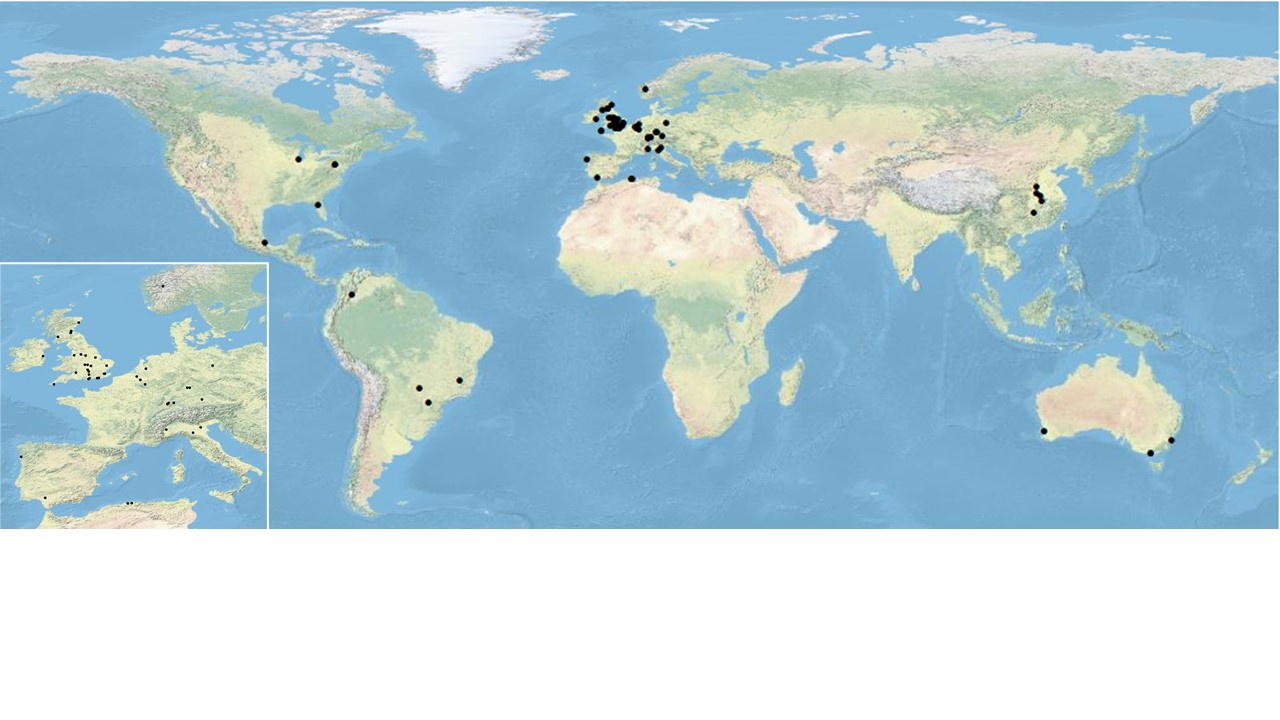
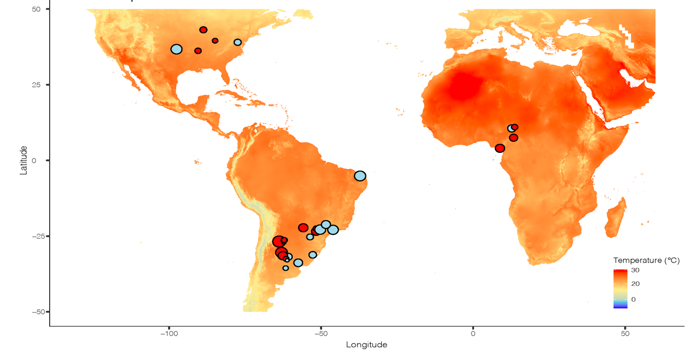
During the lockdown period of the COVID-19 pandemic in 2020, many pollination ecologists were stuck at home: universities and research institutes were closed and restrictions on travel meant that it was not possible to get out and do field work. In order to keep active and motivated, and to turn adversity into an opportunity, an ad hoc network of more than 70 researchers from 15 different countries (see the map above) decided to collect standardised data on the plant-pollinator networks in their own gardens and nearby public spaces.

When combined with information about location, size of garden, floral diversity, how the garden is managed, and so forth, this would provide some useful data about how gardens support pollinators. For those with kids at home it could also be a good way of getting them out into fresh air and giving them something to do!

Following discussions, several different protocols were instigated which depended upon the time available to the researchers, including one that mirrored the UK Pollinator Monitoring Scheme’s  FIT (Flower-Insect Timed) counts.

The resulting data set of almost 47,000 visits by insects and birds to flowers, as well as information about flowers that were never visited, is freely available and will be an invaluable resource for pollination ecologists. For example, analysing the links between ornamental flowers that share pollinators with fruits and vegetables such as apples and beans, will allow us to make recommendations for the best plants to grow in home gardens that can increase yields of crops.  

There’s an old saying about turning adversity into a positive outcome: “When life gives you lemons, make lemonade”, and the researchers were pleased to find that there’s one record of Citrus limon in the data set!

The paper describing the data set has just been published in the Journal of Pollination Ecology and you can download a PDF of the paper and the associated data for free by following this link.

Sincere thanks to all of my co-authors for their commitment to the project!

Pollinators (not) on the menu at Kew

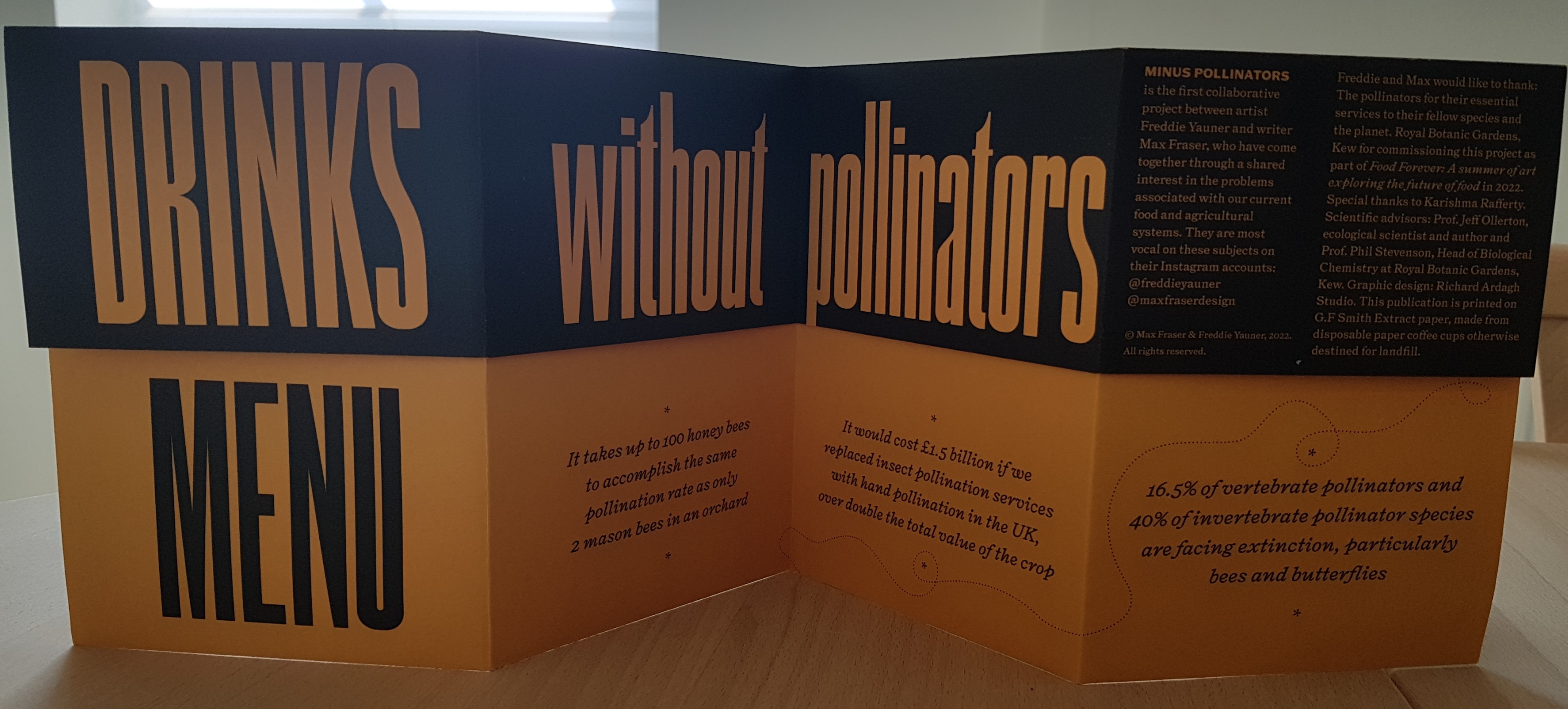
Recently Phil Stevenson and I advised on an art/science project called Minus Pollinators which considered what a small café menu might look like if there were no pollinators to help produce the many, many fruits and vegetables and nuts that are animal pollinated.

The project is a collaboration between writer and consultant Max Fraser and artist Freddie Yauner. To quote Freddie’s description on his website, the project represents:

A dystopian future in the form of a drinks kiosk where the staples such as coffee, teas, juices, chocolate etc. are no longer available due to pollinator decline…the mobile drinks kiosk acts as an exhibition display, with artworks painted in pollen…and a take-away pamphlet…detailing the importance of insect pollinators for our collective future on this planet.

Minus Pollinators was commissioned as part of a summer-long event called Food Forever at the Royal Botanic Gardens, Kew, after which it goes to the Groundswell festival.

It was a pleasure to work with Max, Freddie and Phil on this because art/science projects are a great way of getting the message across about the importance of biodiversity and the current environmental crisis that we are facing.

Do bumblebees make honey? Yes and no…and…maybe [UPDATED]

As kids, my friends and I did a lot of digging. We always seemed to be burrowing into slopes or excavating trenches, pretending to be archaeologists or treasure hunters. Indeed, there was a lot of ground treasure to be found in the part of Sunderland where I grew up. The area has a long history of pottery and glass making, and ship building, and the remnants of these industries could be uncovered every time we stuck a spade in the earth. Over time I developed my own small museum of interesting, unearthed fragments, including bits of hand-painted ceramics, glass bottles, and unidentifiable metal shards, alongside various animal bones I’d excavated. My parents quietly indulged this interest, and my muck-streaked face and clothes, even if they didn’t quite understand what I was doing.

Aged about 10, my first encounter with a bumblebee nest was during one such dig. On the waste ground behind a large advertising hoarding, we began digging into a low, grass-covered mound and accidentally excavated what was probably a small nest of Buff-tailed Bumblebees (Bombus terrestris). I can recall being fascinated by the waxy, odd shaped cells and by the sticky fluid that some of them were leaking. Being an adventurous sort of child I tasted the liquid: it was sweet and sticky, and that was my first encounter with bumblebee “honey”.

I’m going to leave those quotation marks in place because if you do an online search for “do bumblebees make honey?” you generally find that the answer is “no, only honey bees make honey”.

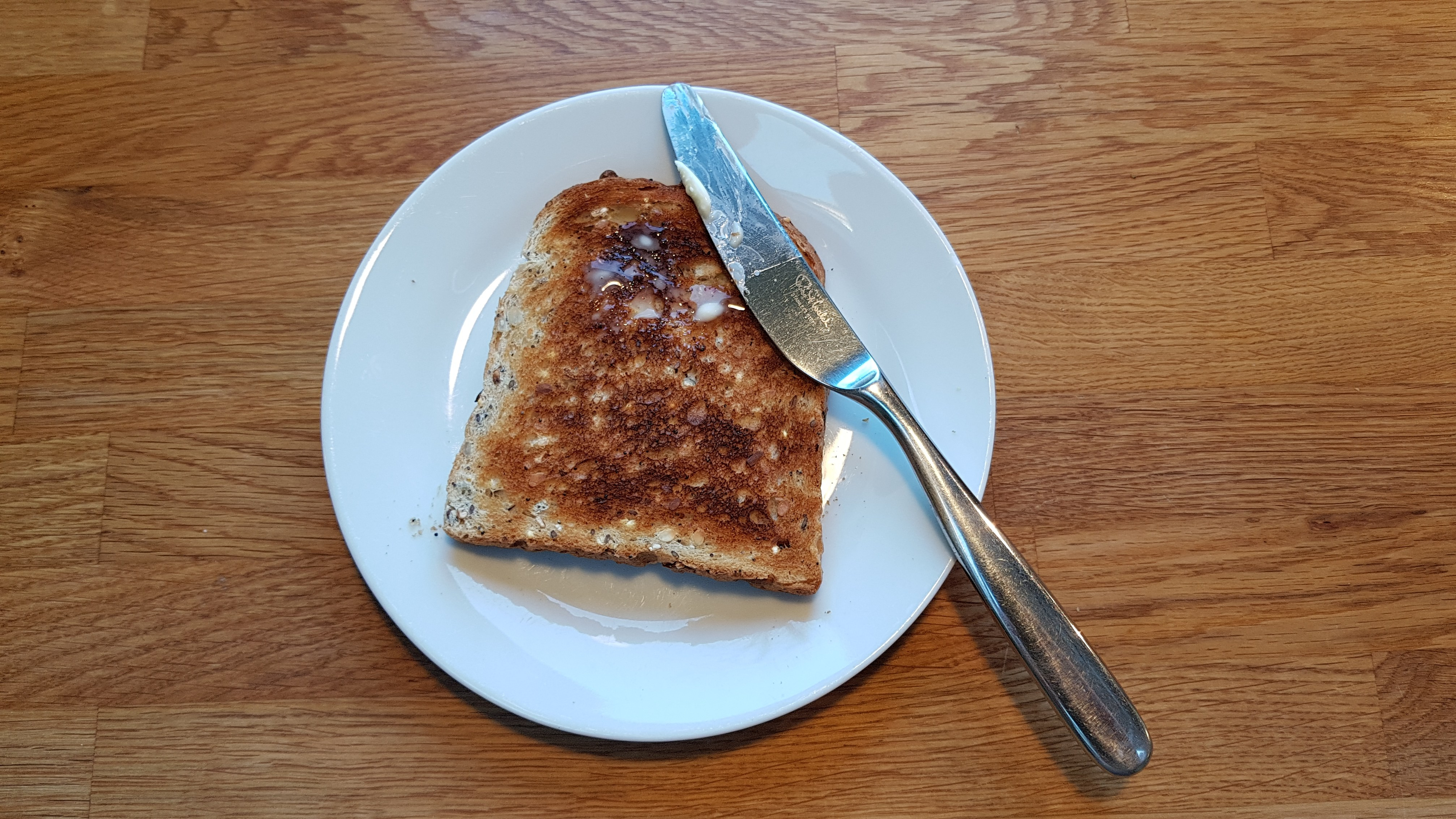
Now, defining honey as something made by honey bee strikes me as a circular argument at best. And it also neglects the “honey” made by meliponine bees that is central to the culture of stingless bee keeping by indigenous groups in Central and South America, and the long tradition pre-colonial tradition of honey hunting by Aboriginal Australians. So if we widen our definition of “honey” as being the nectar*-derived fluid stored in the nests of social bees, then Apis honey bees, stingless bees and bumblebees must all, by logic, make honey. And likewise there’s wasps in the genus Brachygastra from Central and South America that are referred to as “honey wasps” because, well, I’m sure you can work it out!

But this is where things become a little trickier, because turning nectar* into honey involves some complex evaporation and enzymatic activity, so that the resulting fluid is more concentrated and dominated by the sugars glucose and fructose. Although analysis of honey bee honey is commonplace, and there’s been some research conducted on the honey of stingless bees, I don’t know of any studies that have compared Bombus honey with that of other bees, or with what is stored in the nests of honey wasps**. If I’ve missed anything, please do comment and let me know, but this strikes me as an area of research demanding some attention.

So do bumblebees make honey? That very much depends on our definitions, but I’m happy to accept that they do because “honey” is not a single thing: it’s an insect-derived substance that can take a range of forms but serves the same broad purpose of feeding the colony. And although insects have probably been producing it for millions of years, I think I’ve known the answer to the question for almost 50 of them…

UPDATE: A couple of people have commented on social media that there are legal definitions of “honey” as a foodstuff. Here’s the definition according to UK law***:

“the natural sweet substance produced by Apis mellifera bees from the nectar of plants or from secretions of living parts of plants or excretions of plant-sucking insects on the living parts of plants which the bees collect, transform by combining with specific substances of their own, deposit, dehydrate, store and leave in honeycombs to ripen and mature”

So, legally, we can’t call anything that isn’t made by Apis mellifera “honey”, at least from a foodstuffs regulation perspective. But that’s clearly different to what we have been discussing above, which is about a biological definition of honey.

It’s also interesting to look at the compositional requirements of honey as a foodstuff (presented in Schedule one of that document, if you follow the link above). The lower limit for moisture content is 20%. Now if you consider that most nectar in flowers has a sugar content of between about 20% and 50%, clearly there’s been a lot of evaporative work done by the bees to reduce the amount of water in the honey. I would love to know how bumblebee (and other insect) “honey” compares to this: do they put the same kind of effort into evaporating the water from the stored nectar? Given that the purpose of reducing the water content is to prevent fermentation by yeasts when it’s stored for a long time, and that there are bumblebee species which have colonies that are active for more than one year, I imagine that at least some species in some parts of their range may employ similar tactics.

Thanks to everyone who has been commenting and discussing the topic. It never ceases to amaze me how much we still do not understand about some fundamental aspects of the natural history of familiar species!

*And honeydew to a greater or lesser extent.

**I’m going to ignore honey pot ants for now as this is complex enough as it is and they don’t store the “honey” in nest cells.

***From what I can gather definitions in other countries are similar.

Practical methods for assessing insect pollination services provided by sites – download our new study for free

In September 2016, along with 11 other pollinator & pollination scientists, I took part in a two-day two-day workshop held at the UNEP-World Conservation Monitoring Centre in Cambridge. The aim was to develop a range of simple, practical methods to enable the valuation of insect pollination services to agricultural crops that are provided by a nature reserves or other natural or semi-natural habitats, for TESSA – the Toolkit for Ecosystem Service Site-Based Assessments.

After a long gestation, caused not least by the COVID-19 pandemic, the paper outlining the methods that we developed has been published. It’s open-access and downloadable for free. Here’s the full reference with a link to the paper:

Ratto, F., Breeze, T. D., Cole, L. J., Garratt, M. P. D., Kleijn, D., Kunin, B., Michez, D., O’Connor, R., Ollerton, J., Paxton, R. J., Poppy, G. M., Potts, S. G., Senapathi, D., Shaw, R., Dicks, L. V., & Peh, K. S.-H. (2022) Rapid assessment of insect pollination services to inform decision-making. Conservation Biology 1–13

And here’s the Abstract:

Pollinator declines have prompted efforts to assess how land-use change affects insect pollinators and pollination services in agricultural landscapes. Yet many tools to measure insect pollination services require substantial landscape-scale data and technical expertise. In expert workshops, 3 straightforward methods (desk-based method, field survey, and empirical manipulation with exclusion experiments) for rapid insect pollination assessment at site scale were developed to provide an adaptable framework that is accessible to non-specialist with limited resources. These methods were designed for TESSA (Toolkit for Ecosystem Service Site-Based Assessment) and allow comparative assessment of pollination services at a site of conservation interest and in its most plausible alternative state (e.g., converted to agricultural land). We applied the methods at a nature reserve in the United Kingdom to estimate the value of insect pollination services provided by the reserve. The economic value of pollination services provided by the reserve ranged from US$6163 to US$11,546/year. The conversion of the reserve to arable land would provide no insect pollination services and a net annual benefit from insect-pollinated crop production of approximately $1542/year (US$24∙ha–1∙year–1). The methods had wide applicability and were readily adapted to different insect-pollinated crops: rape (Brassica napus) and beans (Vicia faba) crops. All methods were rapidly employed under a low budget. The relatively less robust methods that required fewer resources yielded higher estimates of annual insect pollination benefit.

Diversity and surplus: foraging for wild myrobalan plums

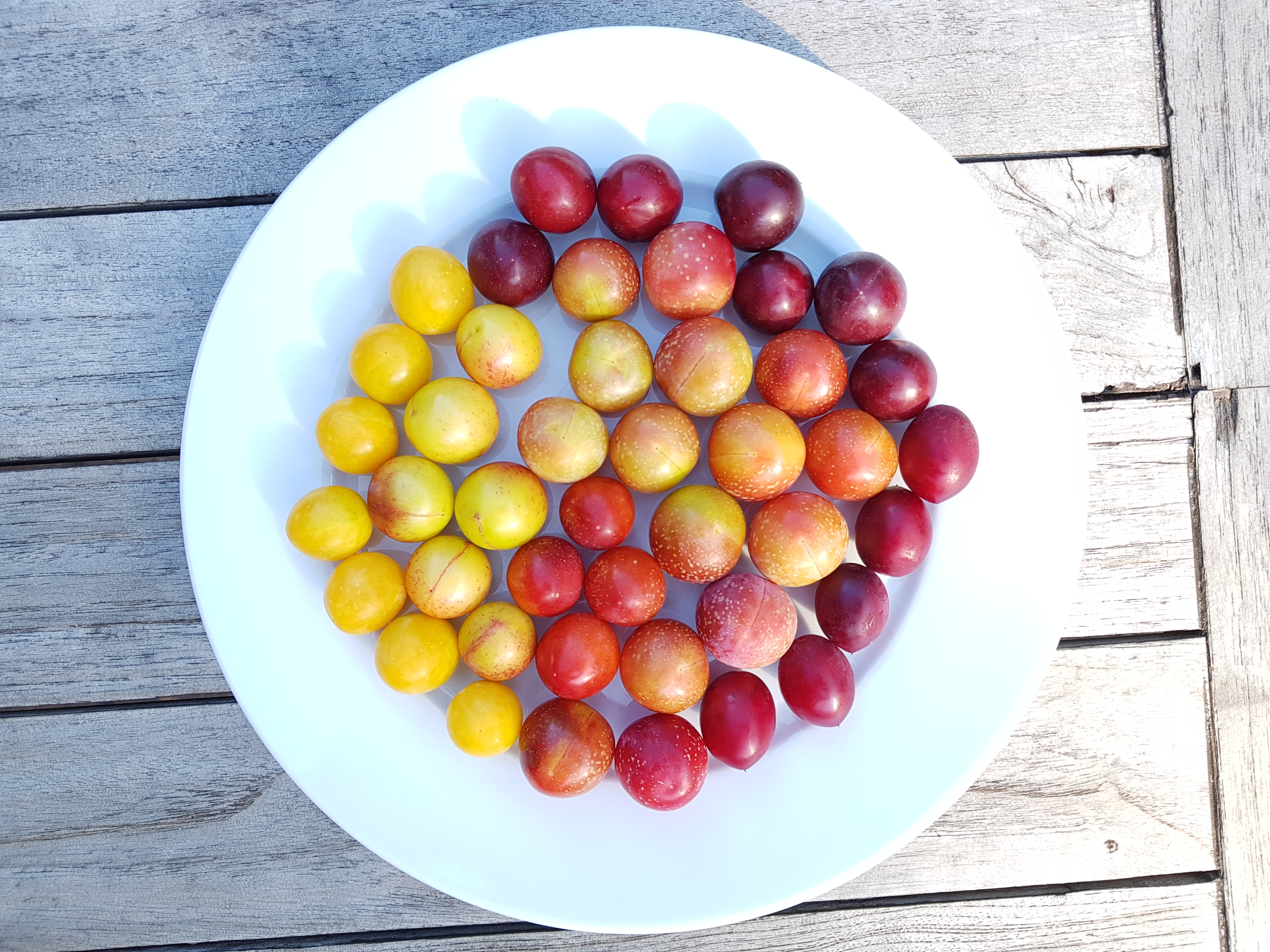
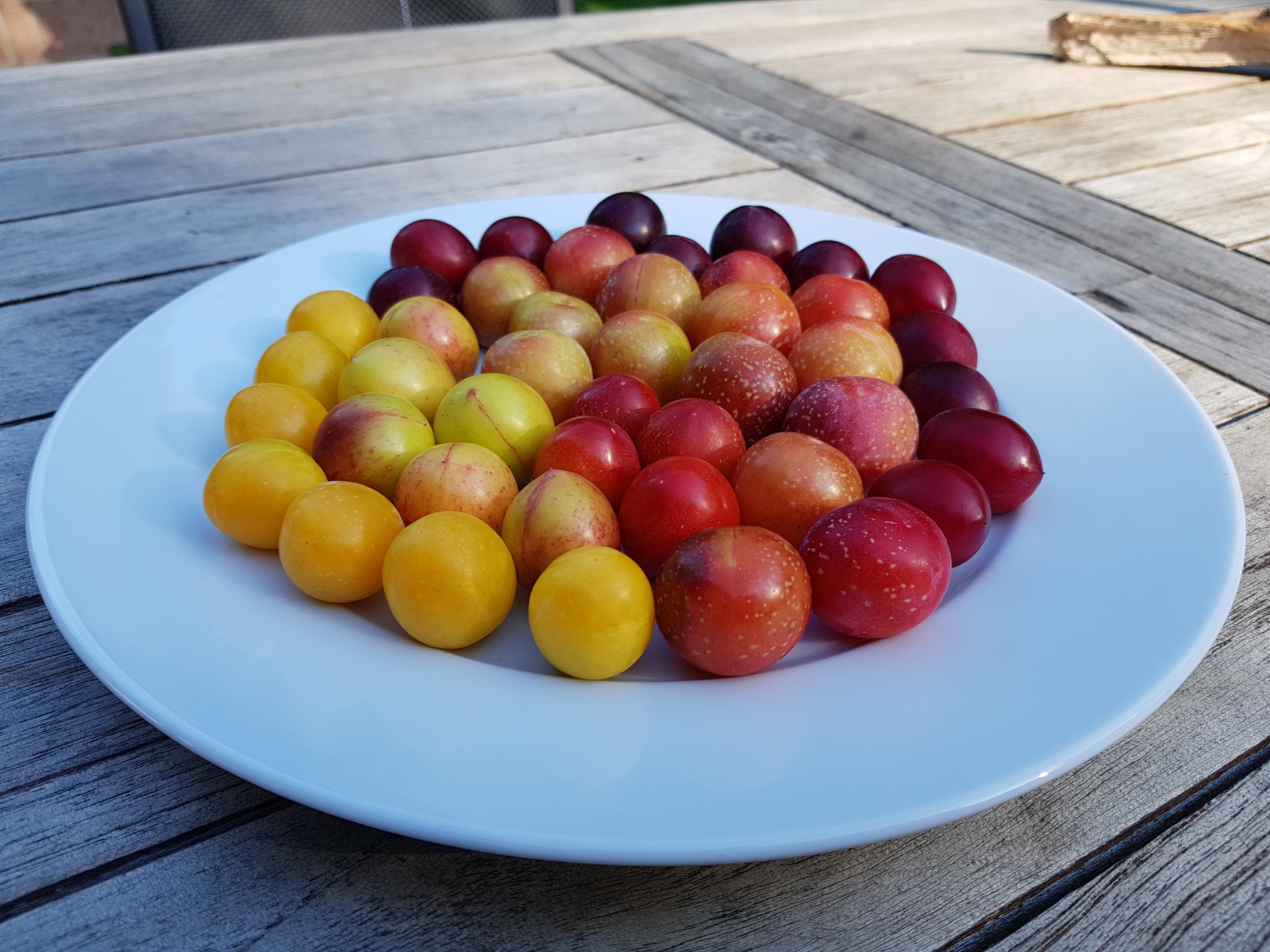
Cycling back from town this afternoon, Karin and I passed a hedgerow that was bursting with wild myrobalan or (cherry) plums (Prunus cerasifera). We had to stop and collect some, and soon filled a bag. What’s always intrigued me about these small, tart little plums is just how diverse they are: the image above shows the plums from six different trees. All of these are, in theory, the same species; but clearly there’s a lot of genetic diversity. In colour, the ripe fruits range from golden yellow through to dark purple, and vary in the amount of dark-contrasting streaking, lighter speckling, and waxy bloom. They are also variable in size, shape and taste.

All of this variation probably reflects the long history of cultivation of this European archaeophyte. The species is originally native to southeast Europe and western Asia, and was likely spread throughout Europe by the Romans. The local deer population is very fond of the fruit and we’re seeing a lot of deer droppings that are packed with seeds. We don’t usually think of these large mammals as seed dispersers, but I suspect that they are very successful in that ecological role.

As well as being a great source of wild fruit, for humans and wildlife alike, at the other end of the year these trees are important for pollinating insects. As I pointed out in my book Pollinators & Pollination: Nature and Society, Prunus cerasifera is one of the earliest flowering woody plants in northern Europe, and its flowers are an important nectar and pollen source for early emerging bumblebee queens, hoverflies, and honey bees.

Delicious, abundant fruit combined with a valuable role for pollinators: what’s not to like?

Wild mushrooms, tragic deaths, and the importance of understanding nature

A sad and timely news story caught our eye this morning: the death of two young Afghan boys in Poland who were poisoned after their family collected wild mushrooms to make a soup. Other members of the family were hospitalised. As Karin read out the story to me, I was moved by the tragedy of these events for a family fleeing a war zone, but also angered by pointlessness of the loss of those brothers’ lives, just more death-by-wild-mushroom statistics. In Europe we read about such events every year in the autumn, the peak of wild fungus foraging. And quite often the deaths are of people who have recently moved to an area and mistake poisonous mushrooms for edible ones from their country of origin.

At their root, these tragic stories of lost lives and broken families are stories of misunderstandings about nature. In particular, they are about not appreciating that plants, mushrooms, animals, and other wildlife, are not the same all over the world. There are biogeographic differences between regions that reflect the long-term history of life on our planet. Plants or mushrooms that look superficially similar in different parts of the world may have very different evolutionary histories. Histories that can make the difference between good to eat and deadly poisonous, between life and death.

The mushroom which killed the boys was a Death Cap (Amanita phalloides) which is found across Europe and the Mediterranean basin. As far as I can tell from its GBIF records, it does not occur in Afghanistan. The family presumably mistook this mushroom for one with which they were familiar, perhaps a different species of Amanita, which contains both deadly types and some that are good to eat. This terrible and fatal mix up could so easily have been avoided.

I’m not certain if resettlement agencies provide information about the foraging of wild food, or if basic facts about local nature are provided to those new to these areas. This is a simple action that could save lives and further tragedies for families trying to recover after the disruption of moving to a new country. It may be that this family was trying to carry on traditions of foraging in an effort to feel at home.

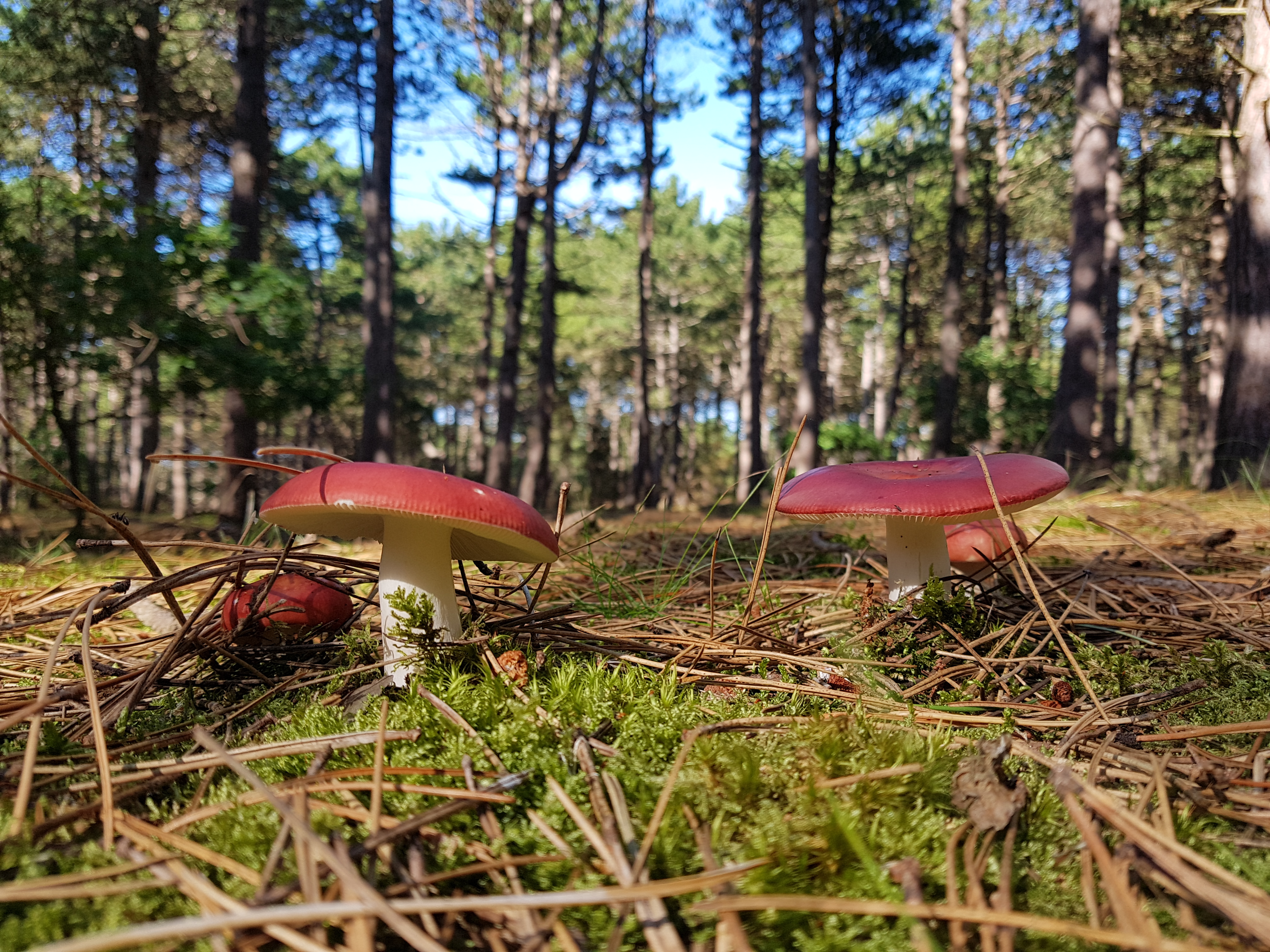
Since we arrived in the Odsherred region of Denmark, where Karin and I intend to settle, we have been exploring the woods and beaches on our newly bought bicycles. Much of the natural history is familiar to me from Britain, but there’s also some interesting differences and in future blog posts I’ll discuss this further. Last week we happened across a Lithuanian woman and her mother who had been foraging for mushrooms in the forest around their summer house. They were pushing a baby’s pram, the lower basket of which was stuffed with fungi. Picking and eating wild mushrooms has been something I’ve enjoyed since I was a teenager, so I had to stop and chat with them. They showed us some of their finds, including species with which I wasn’t familiar and that I will research further.

Lithuania and Denmark are of course quite close to each other geographically. Nonetheless the younger woman was still discovering which of the local mushrooms were good to eat: ‘I learn one new edible species each year’ she told us ‘That’s a good rule, then you don’t get confused’.

Since that meeting we’ve had several meals from mushrooms collected in the area, including some very fine ceps (Boletus edulus). I will keep in mind the woman’s words and proceed cautiously when it comes to discovering what is edible and what is not.

To end this rather sad but hopefully thought provoking post, Karin and I send our deepest condolences to the Afghan family and our heartfelt wishes that they can recover from these tragedies that must have deeply affected their lives.

Claims that only 10% – and not 75% – of crops are pollinator dependent are misleading and dishonest

Earlier this week the Genetic Literacy Project site posted an essay entitled ‘10% — not 75% — of crops pollinator-dependent: Our World in Data debunks claims that global food supply is imminently endangered by ‘disappearing’ insects‘. That click-bait title is hugely misleading, some of the purported ‘facts’ are incorrect, and indeed the whole thing reeks of dishonesty and bad faith.

First the misleading title. This ‘debunks’ claim actually compares two different things: 75% of CROPS being dependent on pollinators versus 10% of crop YIELD. However, even if we focus on the 10% claim, a small increase in yield can be the difference between profit and bankruptcy for small-scale farmers. And most of the world’s farmers are small-scale and living on the borderline between loss and break-even. In addition, there’s no acknowledgement of the food production from home gardens, allotments, and community gardens, which is significant but largely unquantified.

Next, by focusing on yield and comparing, say, wind-pollinated wheat with insect-pollinated apples, the article takes no account of the fact that many of these crops that depend to some extent on pollinators mainly provide essential vitamins and minerals – not calories – to diets. When I tweeted about this earlier in the week, one person commented that they describe the insect-pollinated foods as ‘an important source of flavour and colour in our diets, rice and wheat are all well and good, but you do kinda need something more than grey slop to live’. Another said: ‘I’m so glad you mentioned this. I’m sick of reading articles that praise innovations to increase calories, when what we need is better nutrition from vitamins, minerals & fibres’.

Both great points, and well made.

That essay was also factually incorrect when it described roots crops such as carrots or some of the leafy cabbages and lettuces as not requiring pollinators. Many varieties of these crops ARE pollinator dependent: how do they think we get the seed for the next year’s crop?! And there are many crops and varieties that have not been evaluated for their dependency on pollinators: the 75% figure actually refers to the 115 most productive crop plants (Klein et al. 2007).

When I tweeted about the essay I commented that I was very disappointed by ‘Our World in Data’ – they are usually better than this when it comes to the facts. What I hadn’t appreciated at the time was that in fact the Genetic Literacy Project had highjacked the original piece by Hannah Ritchie and reworked it to give it a very different slant*.

This is where it starts to get dishonest and in fact the Genetic Literacy Project (GLP) has form in this area. The Sourcewatch site describes the GLP as ‘a corporate front group that was formerly funded by Monsanto’ with a remit to ‘shame scientists and highlight information helpful to Monsanto and other chemical producers’. In other words it’s heavily tied to Big Agriculture which, of course, would like us to believe that there’s not an issue with declining pollinators, that pesticides and agricultural intensification are our friends, and that Everything Is OK. Read the full account here.

Frankly, the GLP is so tainted that I’d not believe anything that they publish.

Pollinator decline and the role of pollinators in agriculture are complex issues. If you’d like to know more about the importance of pollinators to agriculture, complete with some accurate and objective facts, then there’s a whole chapter devoted to the topic in my book Pollinators & Pollination: Nature and Society.

*Note that I’ve been communicating with Hannah about the root and leaf crop issue and she accepts that this needs to change in the original. She’s also asked the Genetic Literacy Project to take down their version as it contravenes copyright.

Reference

Klein, A.-M., Vaissière, B.E., Cane, J.H. et al. (2007) Importance of pollinators in
changing landscapes for world crops. Proceedings of the Royal Society of London B
274: 303–313.

Global effects of land-use intensity on pollinator biodiversity: a new study just published

Humans affect the land on which they live in many different ways, and this in turn influences local biodiversity. Sometimes this has positive effects on local wildlife: consider the diversity of birds to be found in well-managed suburban gardens, for example. But often the effect is negative, especially when the land is intensively managed or habitats are destroyed, for example via deforestation or urban development.

This is not a new phenomenon – according to a recent study, most of the habitable parts of the planet have been shaped by humans for at least 12,000 years (see Ellis et al. 2021). What is new, however, is the scale and the speed with which land-use is changing, which are far greater than they have been historically. An important question is the extent to which this change in land-use intensity is affecting pollinator diversity in different parts of the world. Over the past 18 months I’ve been collaborating on a project led by Joe Millard (as part of his PhD) and Tim Newbold which uses the Projecting Responses of Ecological Diversity In Changing Terrestrial Systems (PREDICTS) database to address that very question.

A paper from that collaboration is published today in the journal Nature Communications; it’s open access and can be downloaded by following this link.

The study was global in scale and used data from 12,170 sites to assess the affect of land-use intensity on 4502 pollinating species. The findings are really fascinating; highlights include:

  • In comparison to natural vegetation, low levels of land-use intensity can have a positive effect on the diversity of pollinators.
  • For most land categories, greater intensity of land-use results in significant reductions in diversity and abundance of pollinators, however. For example, for urban sites there’s a 43% drop in number of species and a drop in 62% pollinator abundance from the least to the most intensive urban sites.
  • On cropland, strong negative responses of pollinators to increasing intensity are only found in tropical areas, although different taxonomic groups vary in their responses.
  • The latter finding is especially concerning given that: (i) most pollinator diversity is found in the tropics; (ii) the majority of tropical crops are insect pollinated; and (3) tropical agriculture is becoming increasingly intensive and land use is likely to rapidly change in the coming decades.

The full reference for the study, with all authors, is:

Millard, J., Outhwaite, C.L., Kinnersley, R., Freeman, R., Gregory, R.D., Adedoja, O., Gavini, S., Kioko, E., Kuhlmann, M., Ollerton, J., Ren, Z.-X. & Newbold, T. (2021) Global effects of land-use intensity on local pollinator biodiversity. Nature Communications 12, 2902. https://doi.org/10.1038/s41467-021-23228-3