Category Archives: Birds

Gull use of urban parks in winter – data I’ll never publish (2)

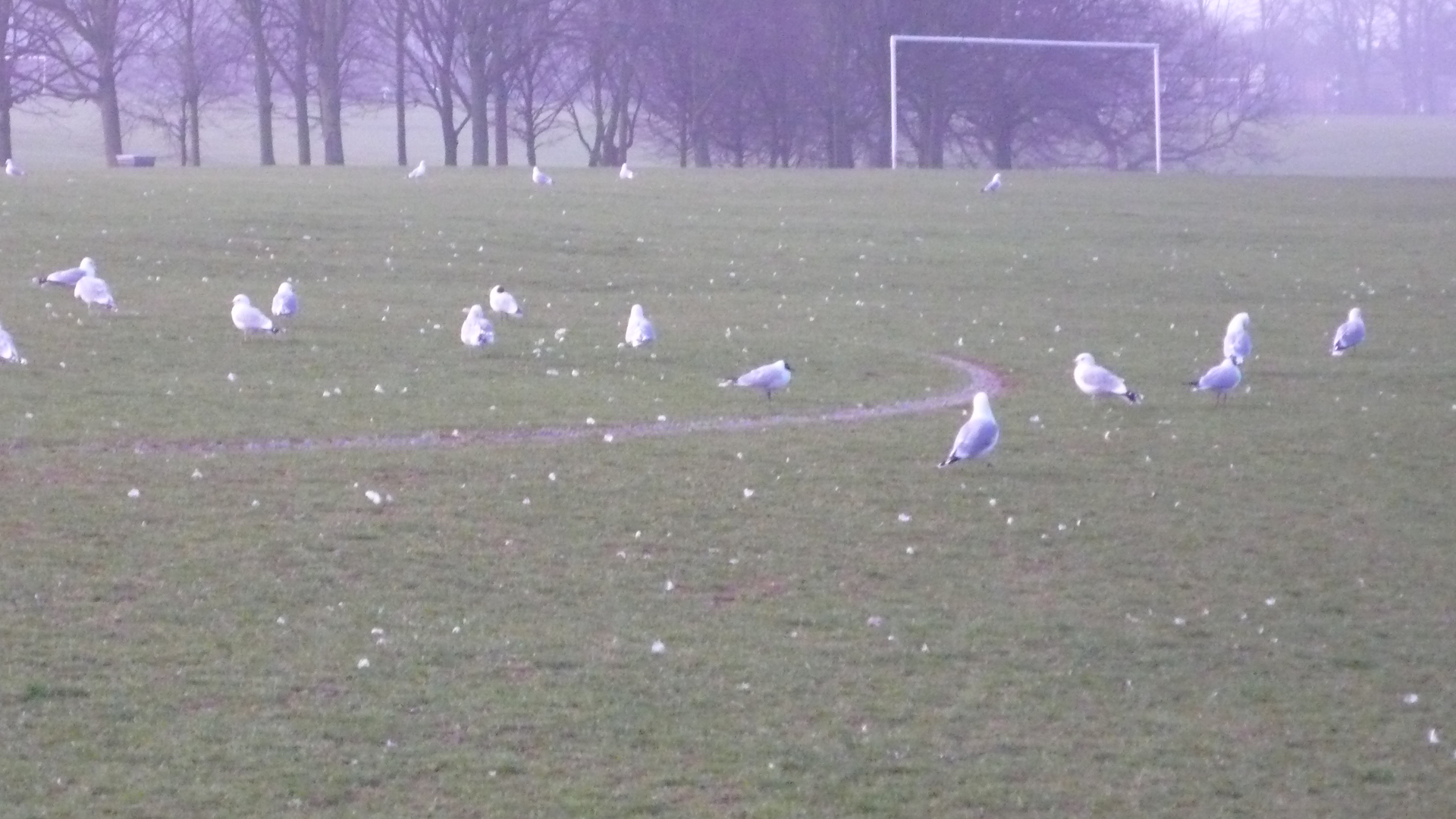
P1120146

For the second in my occasional series of “data I’ll never publish” I want to present a short post about how two species of gulls use an urban Northampton park in the winter.  The park is called the Racecourse (I’ve mentioned it before) and is en route to the campus on which I work.  It’s long been apparent that the numbers of gulls using the park increases from autumn into winter and declines to zero in the spring and summer, when they head off to breed in and around Northamptonshire’s reservoirs and gravel pits, and further afield. During the winter they spend their time feeding on earthworms, squabbling, chasing crows, and generally relaxing prior to the next breeding season.

What I was interested in knowing was just how quickly the numbers built up, whether it was a slow, steady build-up or a rapid influx of birds, and also the relative numbers of the two commonest species to be found there, Black-headed gull (Chroicocephalus ridibundus) and Common gull (Larus canus).

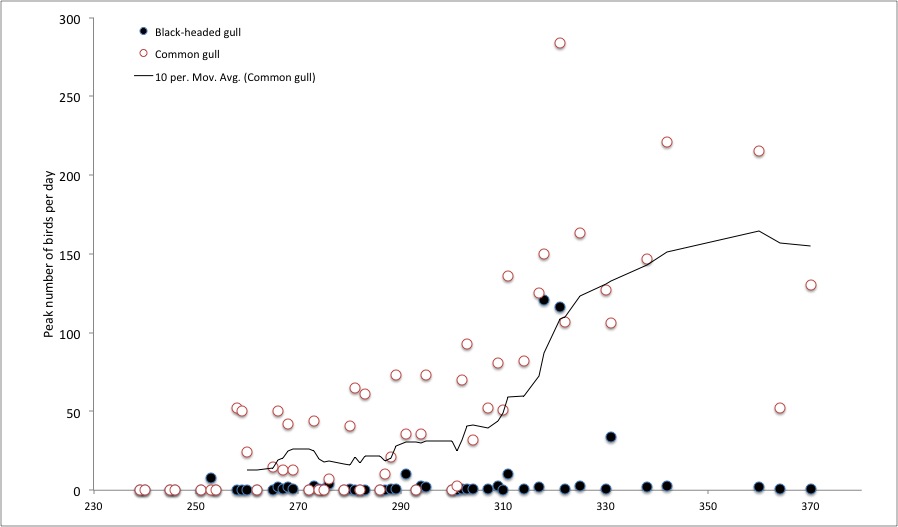
So during my walks to work between late August 2014 and early January 2015 I simply counted the numbers of birds I saw in the quadrant of the park that I passed.  Certainly not the most onerous data collection I’ve ever carried out, and done purely because it interested me, not with any view to conducting a serious study.  Here’s the data plotted up as peak birds seen per day, with day of the year on the x-axis, running from 27th August to 5th January:

Gulls on Racecourse 2014

A few things intrigue me about this.  First of all, Common gulls are much more, er, “common”, on the park than Black-headed gulls, despite the fact that Black-headed gulls are far more abundant in the UK during the winter (estimated as 2.2 million versus 710,000 birds).  However anecdotally I’ve observed that other parks in Northampton appear to have more Black-headed gulls, suggesting that the two species are to some extent dividing up the urban parks and other grasslands between themselves, like rival gangs with different local patches.

That’s purely speculative and would be worth pursuing as a student project, to test if (a) this hypothesis is correct; and (b) whether that division of the parks is stable between years.

The other thing that’s of interest from these data is that, as you can see from the 10-day moving average, the Common gulls suddenly increase in numbers around the middle of November.  I wonder whether this is due to an influx of migrant birds coming in from further north and east in Europe and Scandinavia?  At the same time I recorded an unusually large flock of Black-headed gulls: were these also migrants just passing through?

Urban gulls have been getting some bad press recently; but they really are fascinating birds that add a lot to the biodiversity interest of our parks and playing fields.  They deserve further study because we take them for granted and there’s really not much published on their urban ecology.

How do artificial nectar feeders affect hummingbird abundance and pollination of nearby plants? A new study in the Journal of Ornithology

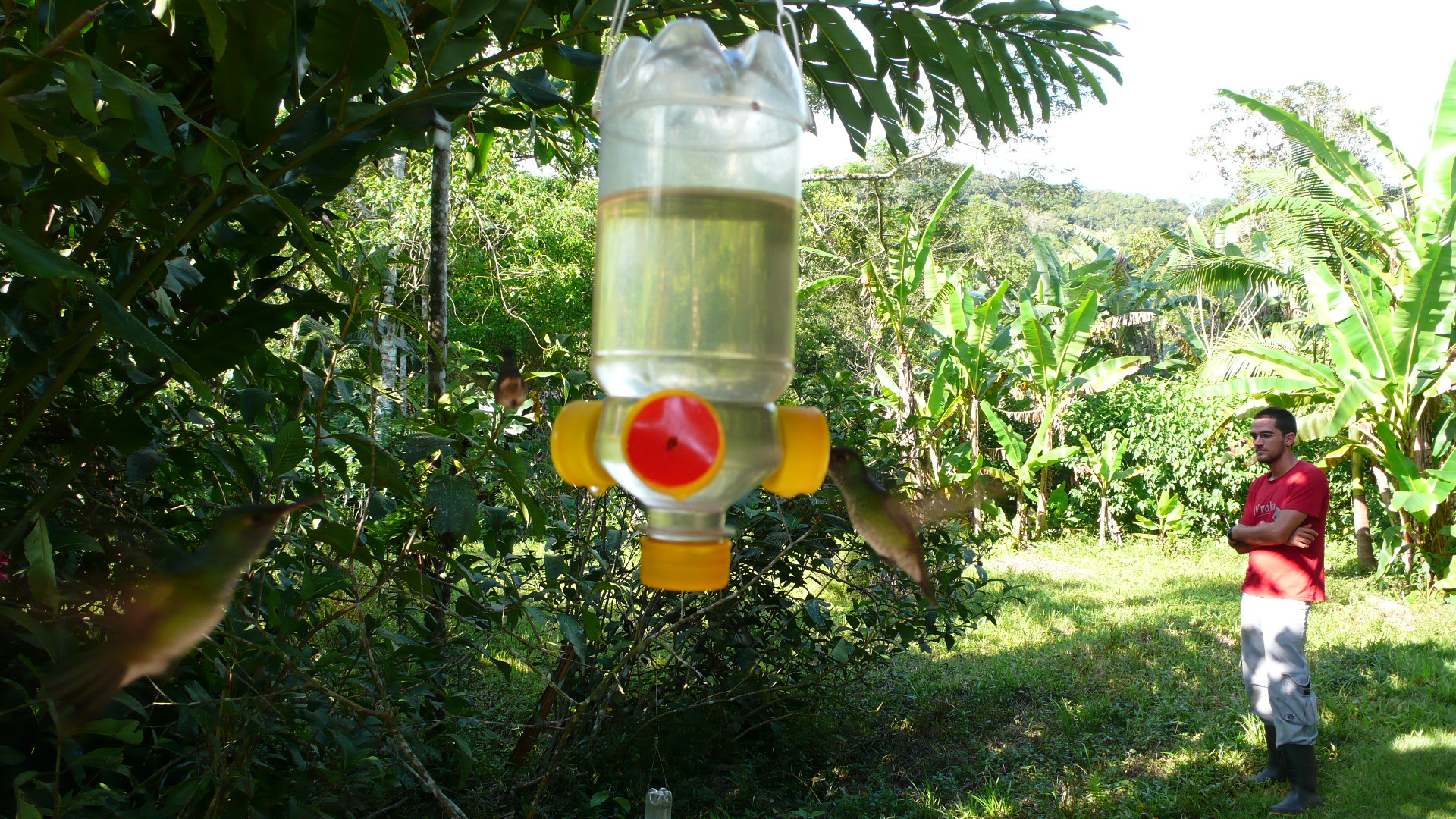
Hummingbirds on feeds in Brazil

Back in November 2013, during my research and teaching trip to Brazil, I discussed an amazing garden that we visited in which the owner had set up around a dozen hummingbird feeders that were attracting hundreds of individual birds from over 20 species.  As I mentioned, one of the owner’s concerns was that by feeding the birds he might be negatively affecting the reproduction of hummingbird-pollinated plants in the surrounding forest.  I thought it unlikely but there have been very few tests of this idea, and none in that part of South America.

After I left, a Master’s student called Jesper Sonne, based at the Center for Macroecology and Climate in Copenhagen, worked with my Brazilian and Danish colleagues on collecting data to address this question.  Between us we analysed and wrote up the results, and have recently published the paper in the Journal of Ornithology under the title “Spatial effects of artificial feeders on hummingbird abundance, floral visitation and pollen deposition“.

The abstract is below and if anyone wants a PDF, please drop me a line.  But the take home message is that although these feeders have a significant local effect on hummingbird abundance, there’s no evidence that they affect plant reproduction in the vicinity.  It’s nice when predictions prove correct….

———————-

Abstract

Providing hummingbirds with artificial feeders containing sugar solution is common practice throughout the Americas. Although feeders can affect hummingbird foraging behavior and abundance, it is poorly understood how far this effect may extend. Moreover, it remains debated whether nectar-feeders have a negative impact on hummingbird-pollinated plants by reducing flower visitation rates and pollen transfer close to the feeders. Here, we investigated the effects of distance to nectar-feeders on a local hummingbird assemblage and the pollination of Psychotria nuda (Rubiaceae), a hummingbird-pollinated plant endemic to the Brazilian Atlantic Rainforest. At increasing distance (0–1000 m) from a feeding-station, where hummingbirds have been fed continuously for the past 13 years, we quantified hummingbird abundance, and rates of flower visitation and pollen deposition on P. nuda. We found that hummingbird abundance was unrelated to distance from the feeders beyond ca. 75 m, but increased steeply closer to the feeders; the only exception was the small hummingbird Phaethornis ruber, which remained absent from the feeders. Plants of P. nuda within ca.125 m from the feeders received increasingly more visits, coinciding with the higher hummingbird abundance, whereas visitation rate beyond 125 m showed no distance-related trend. Despite this, pollen deposition was not associated with distance from the feeders. Our findings illustrate that artificial nectar-feeders may locally increase hummingbird abundance, and possibly affect species composition and pollination redundancy, without necessarily having a disruptive effect on pollination services and plants’ reproductive fitness. This may apply not only to hummingbirds, but also to other animal pollinators.

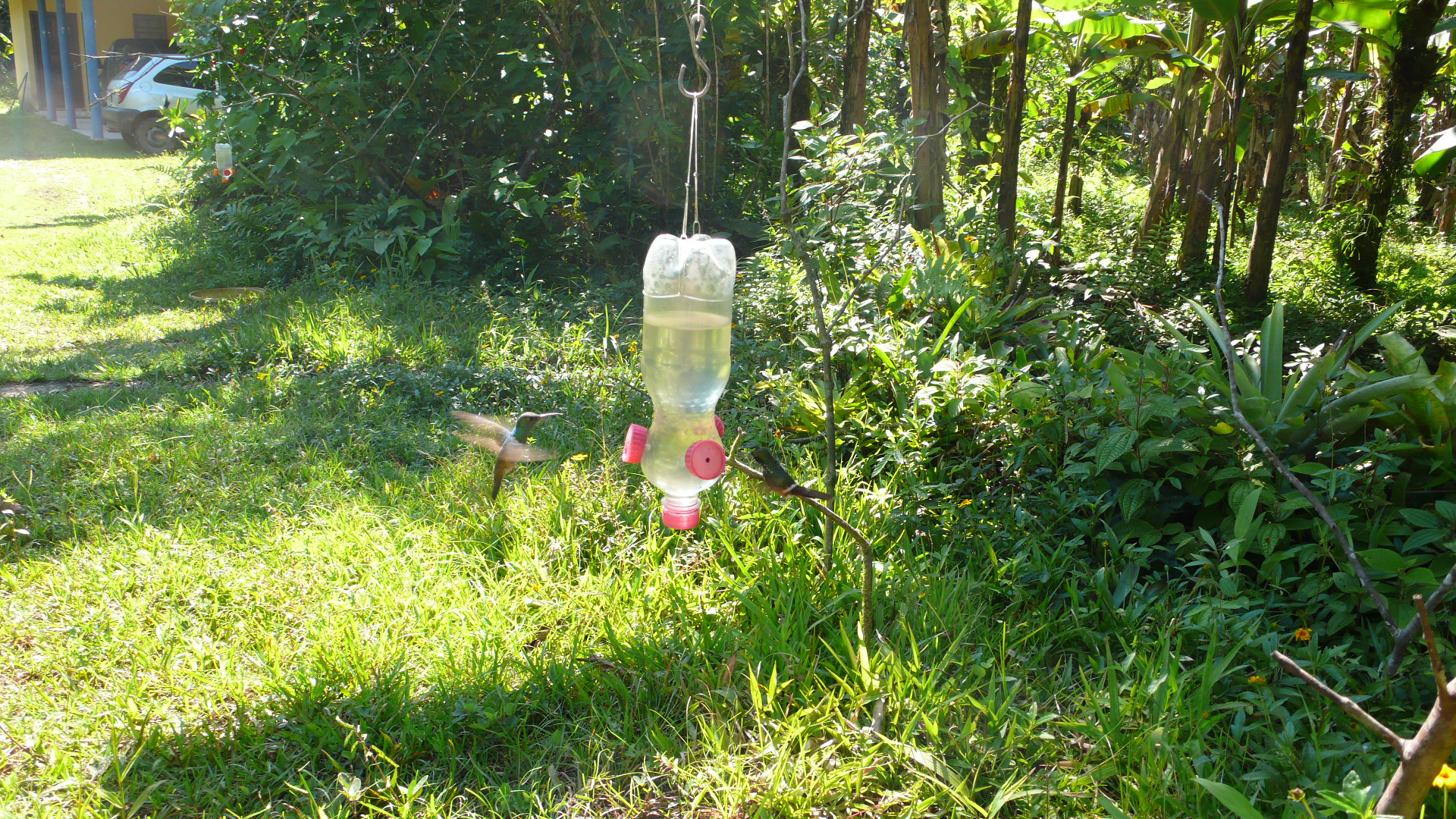
Hummingbirds on feeds in Brazil 2

Are tropical plants and animals more colourful? Not according to a new study!

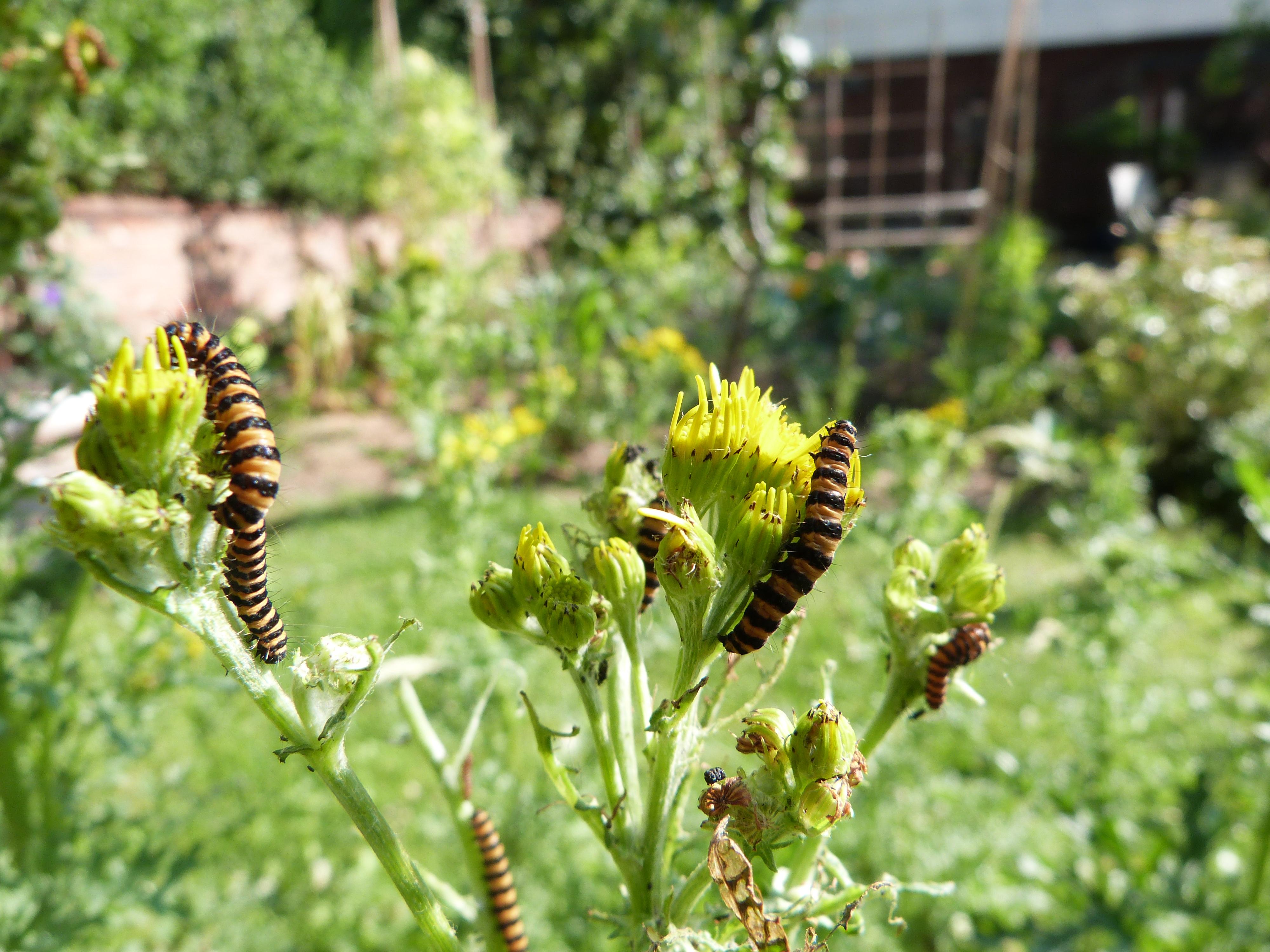
Cinnabar caterpillars 1 P1020535

The notion that tropical ecosystems are somehow “different” to those at higher latitudes is a pervasive one in ecology and biogeography, that has its roots in the explorations of 18th and 19th century Europeans such as von Humboldt, Darwin, Wallace, and Belt.  All of these authors expressed their amazement at the biological riches they observed in their tropical explorations, and how different these habitats were to those they knew from home.

In many ways the tropics are special, of course and we know that they contain many more species than most other parts of the world; indeed my own work has shown that the tropics have significantly more types of functionally specialised pollination systems, and that the proportion of wind pollinated species is lower in tropical communities.  However tropical plants are not, on average, more ecologically specialised (that is, they do not use few species of pollinator) and, as the recent guest blog on Dynamic Ecology argued, there is a growing body of evidence to say that overall tropical interactions between species are not stronger and more specialised than those in the temperate zone (though there are others who dispute this and it’s an ongoing debate).

One of the central tenets of the “tropics are special” idea is that the tropics are more colourful; or rather that the biodiversity of the tropics tends to be more garish, gorgeous, and spectrally exuberant, than that of other parts of the globe.   Now a new study by Rhiannon Dalrymple, Angela Moles and colleagues, published in the journal Global Ecology and Biogeography, has challenged this idea for flowering plants, birds, and butterflies in Australia, using sophisticated colour analysis rather than relying on human impressions. Following that link will take you to the abstract and you can read it yourself; however I wanted to summarise their findings by quoting from the first section of the discussion in the paper:

Contrary to predictions…[our]…results have shown that tropical species of birds, butterflies and flowers are not more colourful than their temperate counterparts. In fact…species further away from the equator on average possess a greater diversity of colours, and their colours are more contrasting and more saturated than those seen in tropical species.”

It’s a really, really interesting study that, as the authors say, runs counter to all of our expectations.  Gradually ecologists and evolutionary biologists are testing some long-standing assumptions about the tropics and the results are proving to be a challenge to preconceived ideas about patterns in the Earth’s biodiversity.

———————————————

Full disclosure: senior author on the paper Angela Moles was my co-author on that Dynamic Ecology blog, based on which we’ve written a short review article that (hopefully) will be published soon.  Other than that I have no vested interest in the study.

The uneasy academic and the importance of dipping outside your discipline: reflections on The Urban University conference

Uneasy Academic 20141011_144756

It’s important for academics to occasionally move out of their disciplinary comfort zones and to interact with academics and practitioners from beyond their own silos, experiencing approaches that are alien and hearing voices that are not repeating the normative values of their own subject area.  Time spent in this way can be both stimulating and mundane, enlightening and boring, exciting and frustrating.  Above all, unpredictable.  At an ecological conference I know what I will experience; drop me into one devoted to the arts or social sciences, and anything can happen.  It’s an uneasy experience.

With that in mind I spent the end of last week attending a conference at which I was the lone scientist speaker, and indeed one of the very few people with a science background in the audience, as far as I could tell. The Urban University was sub-titled “Universities as place makers and agents of civic success in medium sized towns and cities” and was largely aimed at urban planners, architects, policy makers, and social geographers.  Not muddy boots ecologists.  However I’d offered the organisers (the University of Northampton’s Collaborative Centre for the Built Environment) a 30 minute talk about the monitoring work we’ve been doing on the bird assemblage at Northampton’s new Waterside Campus, which I discussed in an earlier post. The abstract for my talk is below, co-authored with my colleagues Janet Jackson and Duncan McCollin, plus two of our undergraduate students, Jo Underwood and Charlie Baker.

I had hoped that providing a very different perspective on the role of an urban campus, one focussed on the biodiversity it can potentially support and the ecosystem services that stem from it, might be of interest to this broad-based audience.  In the back of my mind I also thought it might be fun to reverse roles and, for 30 minutes, make them the uneasy ones.  It’s always hard to judge but I got the impression afterwards that the talk was well received and it elicited some discussion and questions.

Overall it was a stimulating couple of days and (I think) I’ve learned a lot, or at least learned more about the approaches and priorities of academics and practitioners beyond my immediate field. The talks ranged from the rather abstract to the very practical, from theoretical discussions to local activism. Particular highlights for me were:

John Goddard‘s overview of the relationship between the university and the city, and the fact that many academics don’t feel a personal link, or responsibility, to the urban centre in which they work.

Allan Cochrane discussing the unintended consequences of a university’s economic and social power, including gentrification and studentification of local residential areas.

Robin Hambleton on universities as a corrective to “placeless power”, i.e. multinational firms that can facilitate enormous social and economic change in an area despite having no geographic connection to the place.  Of course the internationalisation agenda of most UK universities means that they may themselves be in danger of wielding placeless power overseas.

Michael Edwards recounting how UCL academics and students have engaged in local activism in North London, for example fighting destructive planning applications, and sometimes positioned on the opposing side to the university itself.

Wendy Cukier on the experience of her Canadian university’s role as a “changemaker”, and the value of the Ashoka U Changemaker Campus programme, to which the University of Northampton is committed.

Cathy Smith on the medieval origins of the original University of Northampton, which was dissolved in 1265.  By happy coincidence 2015 is both the 750th anniversary of that dissolution and the 10th anniversary of the current University of Northampton’s full upgrade to university status in 2005.

The conference strongly impressed upon me the fact that academics sometimes take their institutions for granted in the sense that they don’t reflect on, or even challenge, the role of higher education within their geographical location. There may even be a danger of this becoming more pronounced as, in the rush to internationalise and chase overseas student fees, we in fact forget the physical and historical roots of our institutions.

Above all the two days I spent trying to navigate these unfamiliar waters reinforced my belief that it can be very dangerous for academics to isolate themselves within their disciplines, no matter how comforting and familiar that may be.  If the only voices that you are hearing (audibly and on the page) are the ones that are telling you stories that you already know and understand (even if you don’t agree with them) then it can be very easy to drift into a kind of disciplinary complacency in which you take the (self) importance and role of your own subject area for granted, without any external perspective on how it might be perceived by those beyond your academic boundaries.

Taking the occasional disciplinary leap could involve as little as going to a seminar in another department, or widening your reading to include areas beyond your subject.  Attending and presenting at a two day conference involves a greater commitment of time and energy, but it’s worth the effort.  It’s an approach to academia that I’ve tried to follow over the past 25 years and I’d recommend it as a way of broadening perspectives.  Sometimes it’s good to feel uneasy.

Many thanks to the organisers of The Urban University conference, particualrly Sabine Coady Schaebitz and Bob Colenutt, for their hard work in putting together such a great couple of days.  Here’s the details of my talk:

Biodiversity monitoring on urban university campuses

Jeff Ollerton, Joanne Underwood, Janet Jackson, Charles Baker & Duncan McCollin

Biodiversity, the variety of species and habitats to be found in a defined area, is a critical component of the natural world, and the ecosystem services that it provides supports modern society in economically tangible ways.  Urban campuses have long been acknowledged as supporting significant biodiversity, as evidenced by the many universities that have written biodiversity action plans.  However there has been relatively little quantitative research published on the biodiversity of British urban campuses, and how that diversity changes over time, particularly with respect to large-scale infrastructure development.  Academics and students in the Department of Environmental and Geographical Sciences have been collecting data on the biodiversity of Park and Avenue Campuses for more than 20 years, including plants, invertebrates, mammals, and birds.  This talk focuses on bird diversity as birds are an indicator group for assessing ecosystems, and are arguably the best understood group of species in the UK.  We present data on the birds that have been recorded on these campuses from 1993 to 2015, assessed in terms of their UK conservation status.  We then discuss the potential impact of the new Waterside Campus on the existing bird assemblage of the site, and present preliminary data showing how bird diversity has changed since building work began.  We end by discussing whether it is possible to maintain or even enhance bird diversity and abundance at the new campus.   The location of Waterside Campus, within the Nene Valley Nature Improvement Area and in close proximity to internationally important wetland bird sites, means that the University of Northampton has a civic duty to maintain the biodiversity of its campuses.

Note: in the end I actually didn’t include the data from Park and Avenue campuses, there wasn’t time to fit everything in!

How good is the evidence base for pollinator declines? A comment on the recent Ghazoul and Goulson Science correspondence

In a recent issue of the journal Science, Dave Goulson and colleagues presented a review entitled “Bee declines driven by combined stress from parasites, pesticides, and lack of flowers”.  This stimulated Jaboury Ghazoul to submit a letter to Science criticising the Goulson et al. paper from a number of perspectives, but particularly the paucity of the evidence base for pollinator declines. Dave and his co-authors robustly responded to that letter, as you might imagine. In some respects this was an unsatisfactory exchange, however, as the focus was largely on agricultural pollinators, rather than pollinators of all plants (including the majority non-cultivated species) and I think that (perhaps with more space?) Dave could have outlined the evidence in more depth.

The most striking statement in Jaboury’s letter was that the “evidence for pollinator declines is almost entirely confined to honeybees and bumblebees in Europe and North America”.

Now, even given the fact that Jaboury was possibly referring specifically to agricultural pollinators, that is a very extreme statement to make. Underlying it is the suggestion that global concerns about declining pollinator biodiversity (a subject I’ve discussed repeatedly on this blog) is underpinned by a taxonomically and geographically thin evidence base. Is that really true? I don’t believe so and I think it’s worth presenting a brief overview of the evidence, not least because Dave’s review and the resulting correspondence is pay-walled at the Science site (though if you Google the titles you might, just might, find copies posted on the web…)

Let me state from the outset that I have considerable respect for both Jaboury and Dave, as individuals and as scientists. I’ve known Dave since we were postgrads together in the early 1990s, and have had occasional contact with Jaboury through conferences and via email. So this isn’t meant to be a criticism of either of them.  But I do believe that the evidence for pollinator declines is considerably more robust than Jaboury acknowledges, and even more wide ranging than Dave and colleagues describe in their response (though in fairness, most of the bee evidence was cited in their original review).

Here’s a summary of where I see the evidence base at the moment; it’s not meant to be a full review, by any means, but rather to give a flavour of the taxonomic and geographical breadth and depth of the evidence as it currently stands:

Wild bees (including bumblebees, and solitary and primitively eusocial bees) – significant reduction of abundance and diversity at local, regional and country-levels documented in Britain (Biesmeijer et al. 2006, Ollerton et al. 2014), Holland (Biesmeijer et al. 2006), Europe as a whole (Kosier et al. 2007, the recent IUCN Red List by Nieto et al 2014), North America (Grixti et al. 2007, Cameron et al. 2011, Burkle et al. 2013), South America (Morales et al. 2013; Schmid-Hempel et al. 2013), China and Japan (Xie et al. 2008; Williams et al. 2009; Matsumura et al. 2004; Inoue et al. 2008), and South Africa (Pauw 2007).

Honey bees – colony declines documented in Europe and North America (see reviews by NRC 2007, Potts et al. 2010) and evidence that global demand for honey bee pollination services is outstripping supply (Aizen and Harder 2009).

Hoverflies (Syrphidae) – diversity declines documented in Holland and Britain (Biesmeijer et al. 2006).

Butterflies and moths – diversity and abundance of Lepidoptera has declined in the UK (Gonzalez-Megias et al. 2008, Fox 2013), whilst in North America some 50 species are IUCN criteria Red Listed and there is particular concern about the iconic Monarch butterfly.  Likewise a significant fraction of butterflies in other parts of the world are of conservation concern, e.g. Southern Africa, Australia, and Europe.

Flower-visiting wasps – reduction in country-level diversity in Britain (Ollerton et al. 2014).

Birds and mammals – the major vertebrate pollinators have recently been assessed at a global level by Regan et al. (2015) using IUCN Red List criteria.  They concluded that: “overall, pollinating bird and mammal species are deteriorating in status, with more species moving toward extinction than away from it. On average, 2.5 species per year have moved one Red List category toward extinction in recent decades, representing a substantial increase in the extinction risk across this set of species”.

Of course a number of the studies cited above have shown that some species are doing better than others and a proportion of the taxa they have assessed are stable or even increasing in abundance (including managed honey bee colonies in some parts of the world). But the current evidence base, as I see it, is pointing towards significant declines in pollinator abundance and diversity at multiple spatial scales across all regions that have so-far been assessed with any rigour, for a wide range of taxa.

I’m happy to receive comments on this topic, particularly pointing me to major sources of evidence that I’ve not covered, or if you disagree with my conclusions.

References

Aizen and Harder (2009) The global stock of domesticated honeybees is growing slower than agricultural demand for pollination. Current Biology 19: 915–918.

Biesmeijer et al. (2006) Parallel declines in pollinators and insect-pollinated plants in Britain and the Netherlands. Science 313: 351–354.

Burkle et al. (2013) Plant-pollinator interactions over 120 years: Loss of species, co-occurrence, and function. Science 339, 1611–161.

Cameron et al. (2011) Patterns of widespread decline in North American bumble bees. Proc. Natl. Acad. Sci. U.S.A. 108: 662–667.

Fox (2013) The decline of moths in Great Britain: a review of possible causes. Insect Conservation and Diversity 6: 5–19.

Gonzalez-Megias, A. et al. (2008) Changes in the composition of British butterfly assemblages over two decades. Global Change Biology, 14: 1464-1474.

Grixti (2009) Decline of bumble bees (Bombus) in the North American Midwest. Biol. Conserv. 142, 75–84 (2009).

Inoue et al. (2008). Displacement of Japanese native bumblebees by the recently introduced Bombus terrestris (L.) (Hymenoptera: Apidae). J. Insect Conserv. 12: 135–146.

Kosior (2007) The decline of the bumble bees and cuckoo bees (Hymenoptera: Apidae: Bombini) of Western and Central Europe. Oryx 41, 79–88.

Matsumura et al. (2004) Invasion status and potential ecological impacts of an invasive alien bumblebee, Bombus terrestris L. (Hymenoptera: Apidae) naturalized in Southern Hokkaido, Japan. Glob. Environ. Res. 8, 51–66.

National Resource Council (2007) Status of Pollinators in North America.  National Academies Press, Washington, DC.

Nieto et al. (2014) European Red List of Bees.  Publication Office of the European Union.

Ollerton et al. (2014) Extinction of aculeate pollinators in Britain and the role of large-scale agricultural changes.  Science 346: 1360-1362.

Pauw (2007) Collapse of a pollination web in small conservation areas. Ecology 88: 1759-1769.

Potts et al. (2010) Declines of managed honey bees and beekeepers in Europe. Journal of Apicultural Research 49: 15–22.

Regan et al. (2015) Global Trends in the Status of Bird and Mammal Pollinators. Conservation Letters DOI: 10.1111/conl.12162

Schmid-Hempel et al. (2013) The invasion of southern South America by imported bumblebees and associated parasites. Journal of Animal Ecology 83: 823–837.

Williams et al. (2009) The bumblebees of Sichuan (Hymenoptera: Apidae, Bombini). Syst. Biodivers. 7: 101–189.

Xie et al. (2008) The effect of grazing on bumblebees in the high rangelands of the eastern Tibetan Plateau of Sichuan. Journal of Insect Conservation 12: 695–703 (2008).

Something for the weekend #6 – eco-gentrification, neonicotinoid pesticides, bees, birds, and bacteria

The latest in a regular series of posts to biodiversity-related* items that have caught my attention during the week:

  • One of the unintended (and sometimes intended) consequences of greening our cities may be “eco-gentrification”, as property prices increase and low income families are displaced – this interesting article from The Guardian discusses the phenomenon and its possible solutions.
  • The evidence against neonicotinoid pesticides, and specifically their effect on bee populations, continues to mount.  In this recent blog post, Philip Strange provides a very useful summary of the findings of some recent studies.  The latest research was also covered on the BBC News website and I was struck by this quote from Nick von Westenholz, CEO of the Crop Protection Association, which represents the firms that produce neonicotinoid pesticides:  “The latest studies in Nature must be seen in the context of ongoing campaign to discredit neonicotinoid pesticides, regardless of what the real evidence shows.”  As if that’s how science actually works! All of us scientists gang together to discredit things.  Clueless, and clearly fighting a desperate rear-guard action.  There was also some interesting expert reaction on the Science Media website that’s worth reading.
  • The tree of life just got more complex: a newly discovered phylum of prokaryotic microbes has genetic features in common with the eukaryotic domains (animals, plants, fungi, etc.) and provides clues as to how complex, multicellular life may have evolved.  Here’s links to the abstract of the original paper and to a summary on the BBC News website.
  • Finally, as I write this, the results of the General Election are coming in and it looks very likely that the UK will have a majority Conservative government for the next five years.  What that means for controversial, large scale developments such as HS2, and for wildlife, biodiversity, and the state of the UK’s ecosystems more generally, remains to be seen.  It could be a bumpy few years.

Feel free to recommend links that have caught your eye.

*Disclaimer: may sometimes contain non-biodiversity-related items.

Something for the weekend #5

The latest in a regular series of posts to biodiversity-related* items that have caught my attention during the week:

  • The British Government’s official line on the impact of neonicotinoid pesticides on bee health is largely based on a widely criticised study conducted by the UK’s Food & Environment Research Agency (FERA) which concluded that there was no link to bumblebee pesticide exposure and colony performance.  Professor Dave Goulson at the University of Sussex has now reanalysed the original data and shown that in fact there was a significant effect of the pesticides on those nests.  You can read the study in full here.  How could the FERA scientists get it so wrong?  Were they influenced by Defra’s desire to come to a particular conclusion?
  • It will be interesting to see how FERA responds to this criticism of their work, though it may take a while to get a full answer: the lead scientist on the study now works for agrochemicals firm Syngenta….
  • The story has also been picked up by some media outlets, notably the Guardian.  Pity they confused honey bees with bumblebees though – managed honey bees use human-made hives; bumblebees use nests (even artificial ones).
  • The RSPB’s Big Garden Birdwatch, which I talked about in a post earlier this year, has reported its results.  There seems to be good news for some species, but for others it was bad: for example, there’s been an 80% drop in observations of starling since the scheme began in 1979.  Starlings are now RSPB Red Status due to their worrying decline; whilst they are still common, they are not anywhere near as common as they used to be.

Feel free to recommend links that have caught your eye.

*Disclaimer: may sometimes contain non-biodiversity-related links.

How do animals respond to solar eclipses? Please share your observations.

P1120154

If you have been anywhere in the Palearctic during the past 48 hours then you can’t have missed the fact that we experienced that most rare of astronomical phenomena, a solar eclipse.  The eclipse was total only as far north as the Faroe Islands and Svalbard; further south it was partial and here in Northampton the eclipse was perhaps 80-90% total.

It’s been big news with lots of public interest.  As well as explaining the astronomy of eclipses, various commentators on current affairs and science programmes have talked about how animals respond to eclipses.  This is a topic that’s intrigued me ever since the August 1999 eclipse.  During that event I was carrying out field work in a Northampton grassland and as the eclipse reached its maximum the bumblebees and butterflies on the site stopped flying and foraging, and settled into the grass.  Once the eclipse had passed they carried on as before.  I don’t have any hard data to demonstrate the effect, it was purely an observation of what was happening around me.

Since then I’ve waited over 15 years for the next opportunity to observe how solar eclipses affect animal behaviour.  Unfortunately there are few pollinators flying at the moment so I had to content myself with watching the gulls, woodpigeons, carrion crows and other birds on the Racecourse park adjacent to the university.

P1120144

This time I took some video footage before, during and after the eclipse, noted the birds’ behaviour, flying, calls and singing.  And guess what? As far as I could tell the eclipse had no effect on the birds!  They behaved as if nothing was happening.  Even a mistle thrush than had been singing all morning from a perch in one of the boundary lime trees continued its song as the moon passed in front of the sun.

That really surprised me!  I was expecting the birds to at least reduce their activity as has been noted in previous eclipses.  But they didn’t as far as I could tell.  Perhaps it was the type of birds I was observing?  Or the time of year?  Or the fact that the eclipse was only partial?  Lots of questions but it’s difficult to do repeat observations for this kind of science – the next British total eclipse is not until 2090!

What did you see?  Did you notice any effect of the eclipse on animal behaviour?  Or did you, like me, see no effect of the eclipse.  I’d be interested to hear your observations.

P1120136

Something for the weekend #4

The latest in a regular series of posts to biodiversity-related* items that have caught my attention during the week:


  • It’s been a good week for birds: Jerdon’s babbler, a species thought to have been extinct for over 70 years, has been rediscovered in Myanmar, whilst the Blue-bearded helmetcrest, a hummingbird not seen for 69 years, has recently been photographed in Colombia.


  • Related to this, prominent ecologist Charley Krebs asks why physical sciences take the largest share of science budgets, given the importance (and urgency) of global environmental problems.  Charley’s text books have long been required reading on our undergraduate degrees, including his latest The Ecological World View.


  • Finally and close to home, the Northampton Greyfriars Bus Station, widely regarded as one of the ugliest buildings in Britain, was demolished with a set of controlled explosions.  What’s that got to do with biodiversity, I hear you ask?  Well the area of green space visible as a still before the video starts, and shown later at 0:45 and 1:15, was one of the field sites used by my PhD student Muzafar Hussain during his surveys of urban solitary bees, which I’ve talked about previously, e.g. here and here.   That patch of green, a rather neglected area of urban grassland with some scattered trees, was home to at least 17 species of bees.  Will they survive the demolition?  Hopefully, though the future redevelopment of the area may result in their loss.  But that’s been happening to urban bee populations for centuries, and they are adaptable and mobile.  I’ll talk more about Muzafar’s work in a post in the near future as the first manuscript from his PhD research has been accepted for publication.


Feel free to recommend links that have caught your eye.

*Disclaimer: may sometimes contain non-biodiversity-related links.

Something for the weekend #2

The second in a regular series of posts to biodiversity-related* items that have caught my attention during the week**.


  • If you’d like to help raise money for bird conservation projects, please consider sponsoring Northants County Bird Recorder Mike Alibone’s team in the Champions of the Flyway event


  • Finally, if you’re the only person on the planet who has not seen a weasel riding on the back of a woodpecker, would you like to?  Of course you would!
*Disclaimer: may sometimes contain non-biodiversity-related links.
**Feel free to recommend links that have caught your eye.