Category Archives: Birds

Something for the weekend #2

The second in a regular series of posts to biodiversity-related* items that have caught my attention during the week**.


  • If you’d like to help raise money for bird conservation projects, please consider sponsoring Northants County Bird Recorder Mike Alibone’s team in the Champions of the Flyway event


  • Finally, if you’re the only person on the planet who has not seen a weasel riding on the back of a woodpecker, would you like to?  Of course you would!
*Disclaimer: may sometimes contain non-biodiversity-related links.
**Feel free to recommend links that have caught your eye.

Monitoring the biodiversity impact of the new Waterside Campus

Waterside winter 2014-15 - 2

All human activities can potentially have an impact on the biodiversity of the local environment in which they occur.  That impact can be positive or negative, depending upon how the activity is managed, how impact is mitigated, and the metrics that we use to measure the effects that are occurring.  This is particularly true of large infrastructure developments such as big buildings,  housing developments, roads, and, a category close to home for me at the moment, new university campuses.

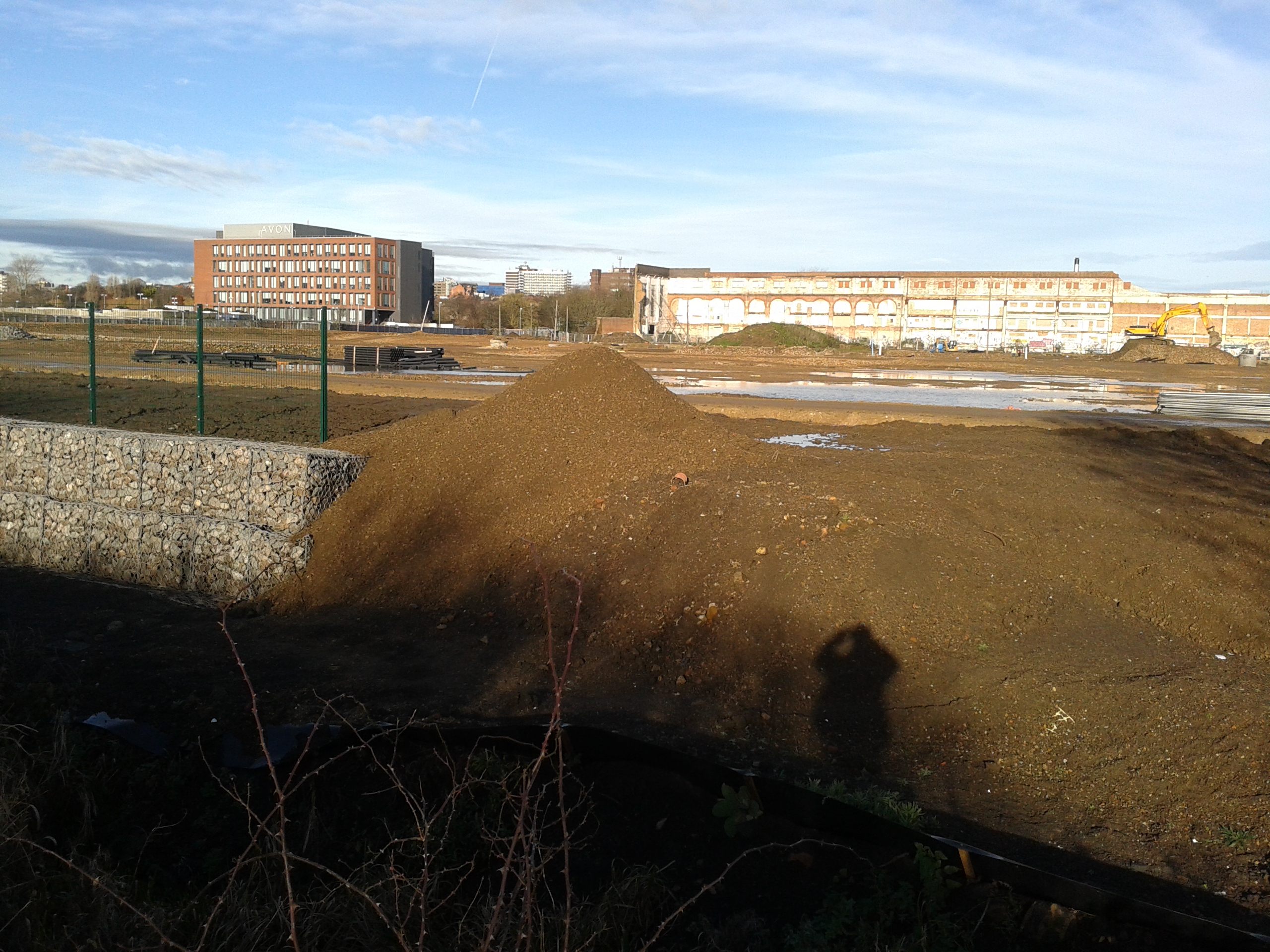
I’ve written before about the University of Northampton’s plans to build the new Waterside Campus on brownfield land close to the River Nene, here and here.  It’s a huge project, likely to cost in excess of £330 million on a site covering about 20 hectares.

As you might imagine, such an ambitious scheme has not been without its controversies and there is much debate within the university about changes to how we work and interact with colleagues and students, provision of teaching and research spaces, etc.  There’s also been much discussion within the town, though the general feeling amongst the public (as far as I perceive it) is that bringing the university closer to the centre of Northampton will provide a much-needed economic boost and add significantly to the town’s life.

But what effect will such a development have on the wildlife in and around this peri-urban site, given that it’s in the middle of the Nene Valley Nature Improvement Area and very close to internationally important bird sites?

Over the past few months, together with my colleague Dr Janet Jackson, I’ve been taking part in meetings with the Waterside project’s landscape architects (LUC), other partners from the NIA project board, and the local Wildlife Trust. We’ve been discussing the current plans for the green infrastructure of the campus and thinking about how these can be enhanced.  It’s been a fascinating process as initial disagreements have been negotiated towards compromises and additions that everyone is happy with, balancing budgetary, function and space restrictions with habitat creation and landscape enhancement.

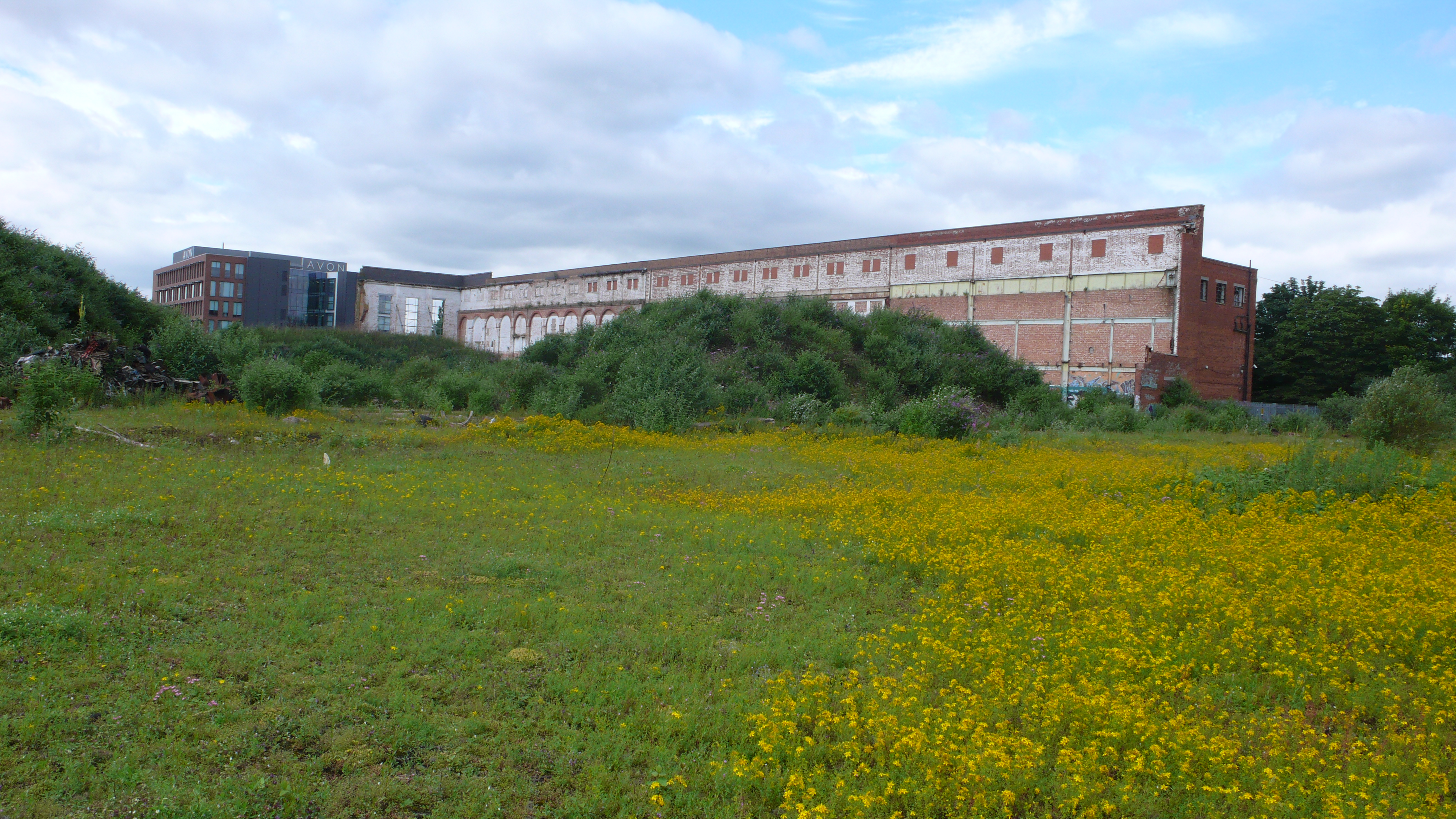
There’s too much been discussed to give a full account at this stage, and it’s possible that some details will change over time, but  the current Ecology Strategy document produced by LUC shows that there will be more than 10 hectares of habitat creation on the site, including species-rich grassland, woodland patches, brown and green roofs, swales and damp areas, and recreated brownfield habitat.  The latter is particularly exciting and something of an experiment, as much of the (albeit limited) current wildlife interest on the site relates to the brownfield element, including the “urban tundra“.
P1100110

To put the 10 hectares into perspective, the adjacent Wildlife Trust Local Nature Reserve of Barnes Meadow is only 20 hectares in area, so it’s potentially increasing that site by 50%.  It’s rare for academic ecologists such as Janet and myself to be able to influence large building developments, so this has been an exciting opportunity for us to make a contribution that (if all goes to plan) will have a positive effect on biodiversity conservation in the Nene Valley.

But how will we know if the Great Waterside Experiment has been a success and that the biodiversity of the new campus is at least as rich, and preferably richer, in species than it was before building took place?

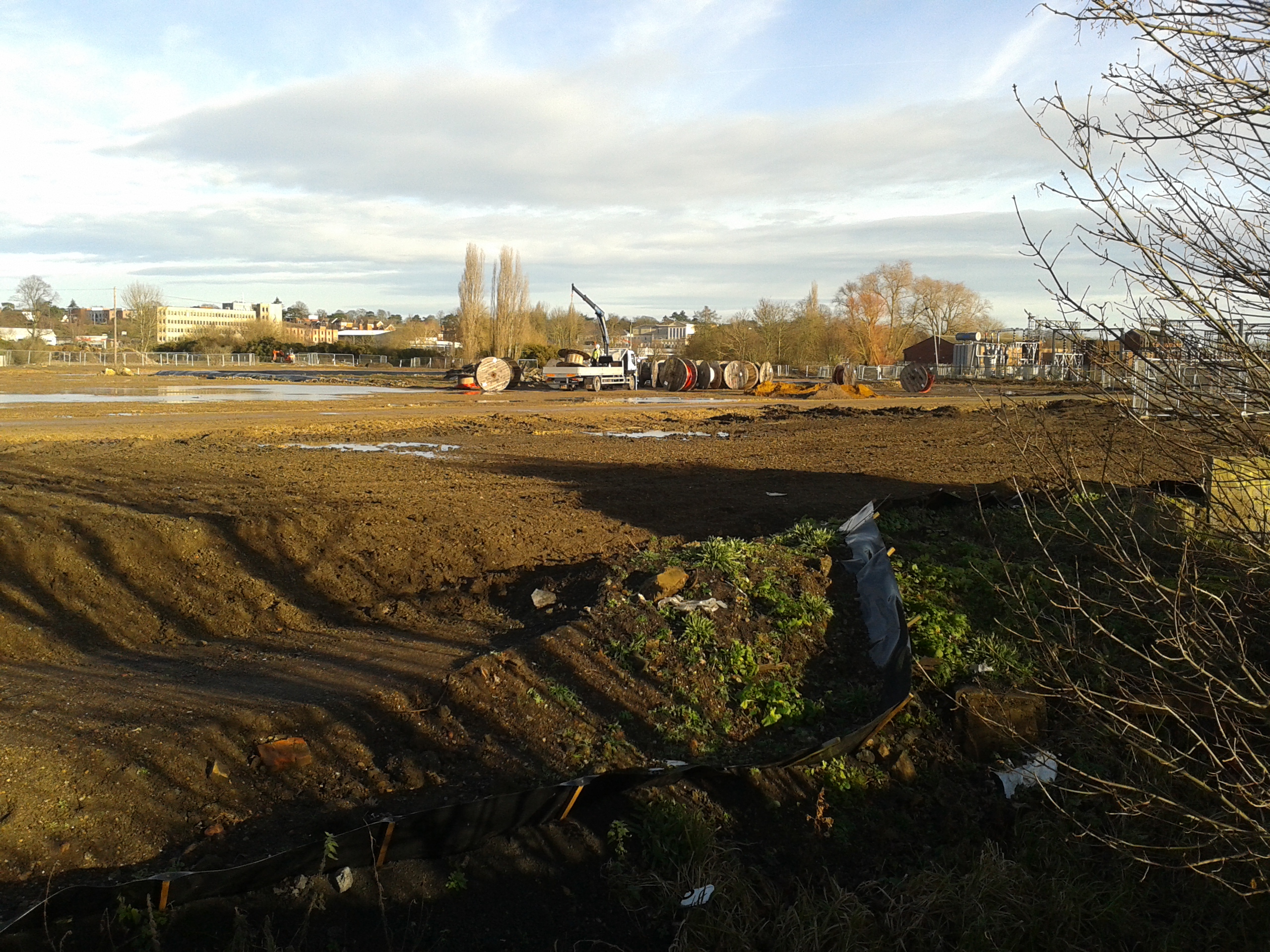
Monitoring of the wildlife is key to this.  Fortunately we have some base-line surveys of birds, plants and invertebrates (including bees and butterflies) from before building started that we can compare with later surveys during and after the campus build.  That process has already started, and with my colleague Dr Duncan McCollin and with two keen second-year students, Jo and Charlie, we have already completed three winter bird surveys to get a sense of how the current site clearance and ground works is affecting the presence of birds in and around the development, including those using the River Nene.  The plan is to continue these surveys up to and after the campus opens in 2018, to give us a data series showing the influence of the campus on bird diversity and numbers.

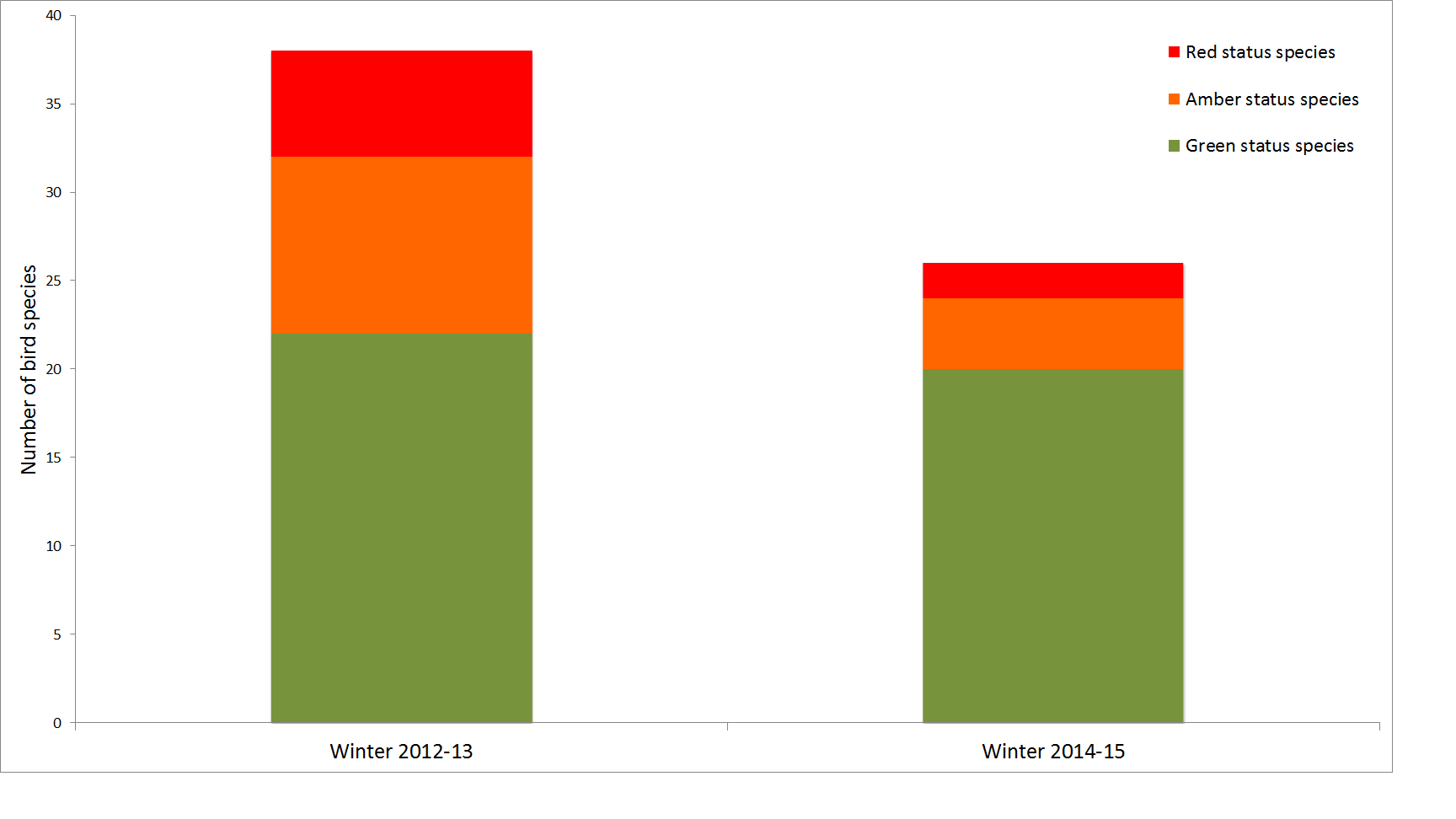
The initial results are currently being analysed and it appears that the current phase of building has reduced overall bird diversity by about 30%, and that red and amber status birds (of most conservation concern) have been affected more than green status birds, as this figure demonstrates (click on it for a closer view):
Waterside bird surveys

These rough figures hide a lot of detail, however.  For example, there has been some addition of species in 2014-15 that were not recorded in 2012-13, including Coot, Treecreeper and the amber-status Stock dove.  More importantly, some of the amber status birds that we didn’t record on site in 2014-15, we know from additional surveys are still present in habitats within 500 metres of the development, for example Dunnock, Green woodpecker, and Bullfinch.  Similarly, red status birds such as resident Starling, and winter migrant Fieldfare and Redwing occur within at least one kilometre of the site.  Hopefully as the building work progresses towards completion these (and other) species will return, so at the moment we’re not too concerned by their disappearance from the site.

Later in the spring we will conduct a couple of breeding bird surveys, and continue surveying for the next few years until the campus opens in 2018.  Only then will we see exactly how successful our influence has been.  In the mean time I’ll report back as and when we have more data to share.
Waterside winter 2014-15


Clever crows!

Clever crows

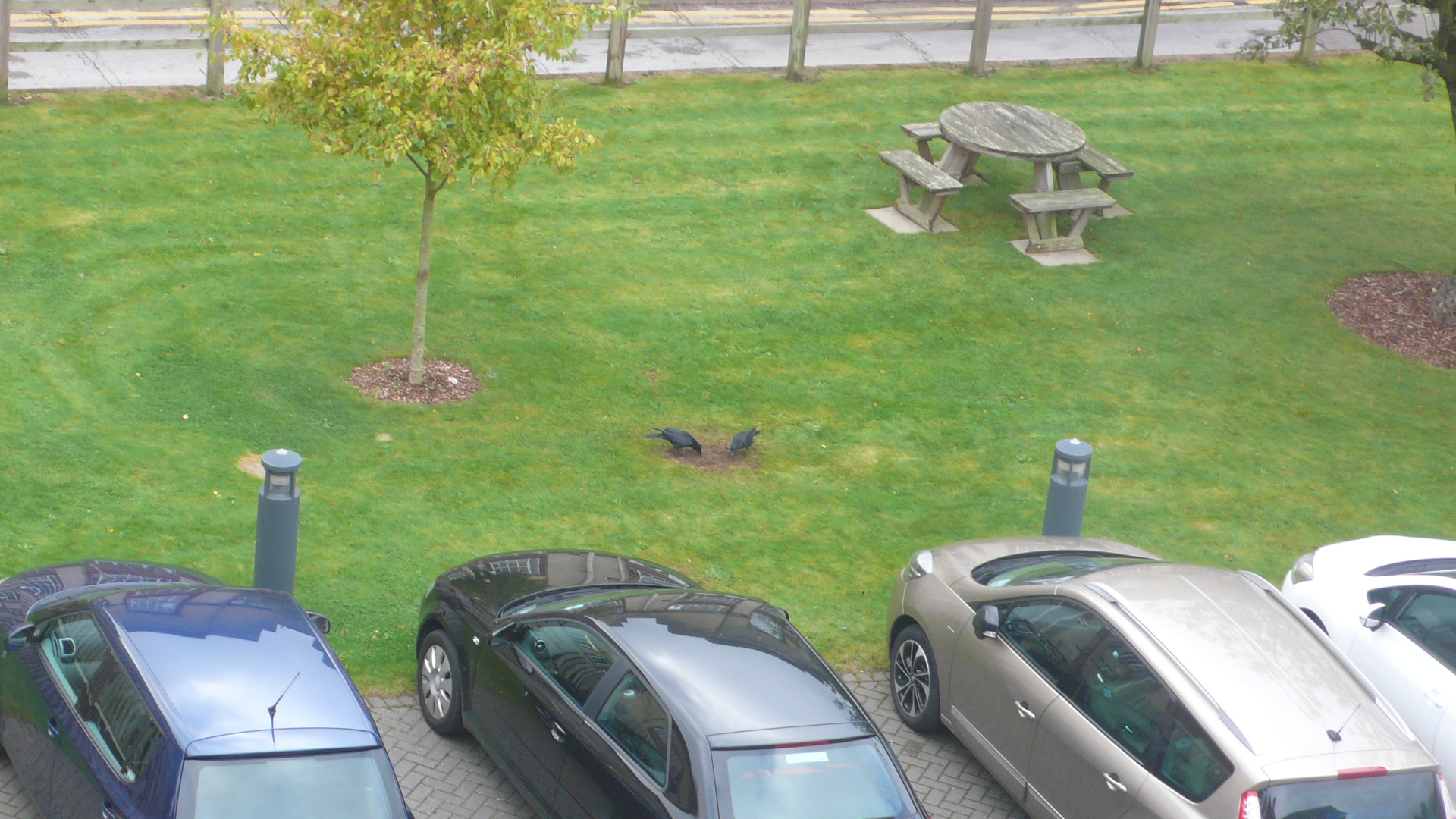
Back in October I was staring out of the window of the office that I share with my colleagues, something I often do when I’m pondering a question or trying to add a tick to our “Birds Seen Out of the Window” list*, when I spotted something odd.  A pair of crows had focused their attention on a brown patch of lawn and appeared to be eating the grass.  I’m not much of a birder but I do know enough about crows to realise that grass is not a regular feature of their diet.  The same behaviour was observed a few other times after that, and on other occasions magpies were seen doing the same thing.  What could be going on?

Once I’d taken a closer look at the patch of dead grass the explanation was clear.  During our first year undergraduate induction week about a month earlier there had been a barbeque set up on that spot which had leaked hot fat onto the grass.  What the birds were eating was dead grass coated in lard, a useful source of fat to store for the cold conditions of the oncoming winter.

That’s one of things I love about urban birds such as corvids and gulls: they are adaptable and will exploit any resource that becomes available.  But how had they located the patch of fatty grass?  Were they simply exploring the lawn and stumbled across it by accident?  Seems plausible especially as they often feed on earthworms on the adjacent parkland.  Could they smell it?  The acuity of birds’ sense of smell has been the topic of considerable debate, but that’s certainly a possibility.

I was reminded to post this (originally half-written before Christmas) by a story on the BBC news website this morning about a young girl in the USA who receives gifts from the crows in her garden.  If you’ve not read it, please do: it’s a wonderful example of positive interactions between humans and the rest of biodiversity.

Crows (and other corvids) get a bad press, being often described as “evil” (surely a term that only applies to humans) and blamed for the demise of “nicer” birds – a reputation that is not completely justified, as a recent post on Kaeli Swift’s crow research site demonstrates.

So, learn to appreciate (even love) the crows in your local neighborhood; they will reward you with some entertainment as you watch their behaviour, if not necessarily with gifts.


*currently standing at 19 species and rising every month.

Evolving a naturalist – happy birthday to me!

Jeff in the tee-pee

Somehow, today is my 50th birthday.  So I thought I’d mark it with a short post about my personal evolution as a naturalist and, ultimately, professional scientist.

One of the great things about the internet and social media such as Facebook is that you can make exciting discoveries on a weekly basis.  Recently I found out something that means a lot to me on a very personal level: I discovered that a family* who lived in the same street when I was growing up in Sunderland in the 60s and 70s have digitised some old home movies and made them available on YouTube.  In our digital age in which every phone and camera can capture and share events as they happen, it’s sometimes easy to forget that owning a movie camera in the 60s was quite a rarity and the majority of kids living at that time were never filmed.   

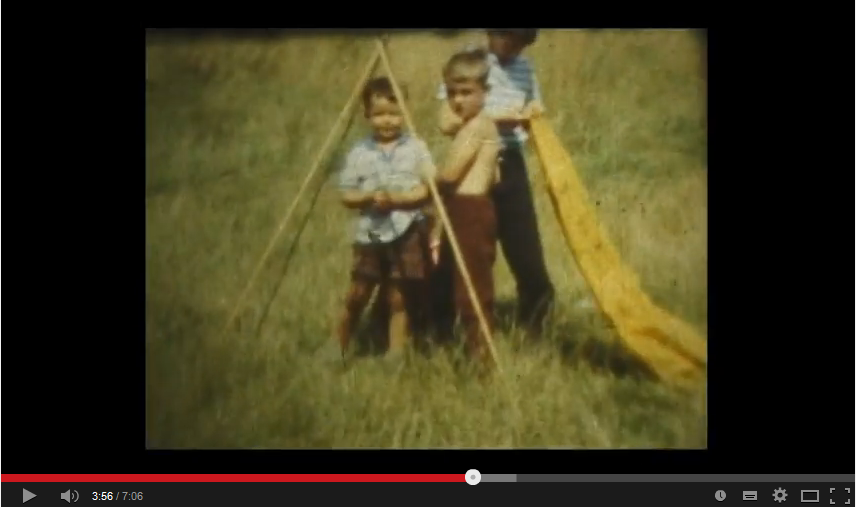
These movies are exciting not just because one of them shows me aged about 5 years (in the blue shirt) playing with friends (I’m there from 3’53”) but because it documents, in colour and moving pictures, one of the reasons why I became a professional naturalist with a deep fascination for biodiversity. 

The grassland in which we are erecting a tee-pee is not some country meadow, the kind of wild rural landscape cited by so many other naturalists as inspiring their childhood fascination with natural history.  These grasslands had arisen spontaneously on cleared demolition sites, following the removal of Victorian terraced housing and tenement blocks, some of which were slums and others that had suffered bomb damage in the Second World War (now that does make me sound old!)

Up until the 1950s this area had been very built up, with the houses, shops and pubs serving the local families who were employed mainly in the shipyards and coal mines to the north of the town.  You can get a sense of how urban it was from this 1898 map of Southwick; the places I refer to are just south-west of The Green to the left of the map. 

Following demolition the sites were left to their own ends, and were colonised by plants, insects, birds and mammals from patches of habitat closer to the river that had either been cleared of buildings earlier in the century, or which had never been built upon at all.  There are some nice areas of magnesian limestone grassland nearby along the higher banks of the River Wear valley, and typical calcicole plants such as Greater Knapweed (Centaurea scabiosa) could be found on these post-demolition grasslands.  In fact, in the absence of horse chestnut trees, we used to play a version of conkers using the unripe seed heads of Greater Knapweed.  Was that an echo of earlier children’s games in Britain, prior to the introduction of horse chestnuts in the 17th century?  Apparently similar games were played with snail shells and hazelnuts.  

If you watch the opening minute of this piece of footage from the same series, and ignore the girls posing and playing in the foreground, the background reveals a rich flora of plants, with butterflies hopping between flowers.  The first bird species that I can remember identifying, and being fascinated by its bright colours, was Goldfinch (Carduelis carduelis) feeding on the seeds of tall thistles in the very area where this was filmed.   The first butterfly that I could put a name to was the Small Tortoiseshell (Aglais urticae), also feeding on thistles, but this time on the nectar-rich flower heads, as a pollinator.  We’d collect its caterpillars from the nearby nettles and raise them in jars.

So you don’t have to have had a rural upbringing to appreciate and benefit from nature, and to later influence your profession and passions, any piece of land can inspire interest in kids, regardless of its origin, if nature is left to colonise. Unmanaged, semi-wild green space within towns and cities has huge value, both for wildlife and for the culture of childhood.  They need to be protected just as much as rural nature reserves, including the generally disparaged but actually biodiverse “brownfield” sites, as Sarah Arnold has discussed in a recent blog post.

Some of the riverside grasslands still remain and I hope that they are fascinating new generations of kids with their colour and diversity and flouncing butterflies. But the post-industrial grasslands on which I played and looked for bugs and flowers are all gone; they were cleared and built upon in a flurry of housing and retail development in the 1980s.  Perhaps in the future they may return if those buildings are themselves demolished and the land allowed to lie undisturbed for a while.  That is what nature does: it ebbs and flows across our landscapes in response to human, and natural, interventions, endlessly changing and endlessly fascinating to the curious minds of children and scientists, no matter how old they are.


*My sincere thanks to the Scrafton family who took the original footage, made it available on YouTube, and gave me permission to use it in this post.

Student field trip to Summer Leys Nature Reserve – birds, bins and biting winds!

2015-01-29 12.38.19

Field trips are a vital component of any university degree course that includes within it elements of ecology, organismal biology, geography or environmental science.  Learning about the natural environment via lectures, books and seminars is one thing: experiencing it first hand is quite another, and adds significantly to a deeper understanding of complex environmental issues such as nature reserve management.  For that reason at the University of Northampton we’ve always strove to maintain as much field experience as possible within our degree programmes, including long field courses to the South-West USA and Tenerife (as I’ve previously documented), day trips to places such as Wicken Fen, and shorter sessions in and around our campus.

An annual winter visit to Summer Leys Nature Reserve has been a feature of our first year undergraduate teaching for many years, and focuses on the bird life to be found in this flooded and restored gravel pit.  Of particular interest at this time of year are the over-wintering waders and wild fowl, for which the reserve has been designated Site of Special Scientific Interest and Special Protected Area status.  The latter is a European-level designation which reflects the international importance of the Nene Valley for bird life.

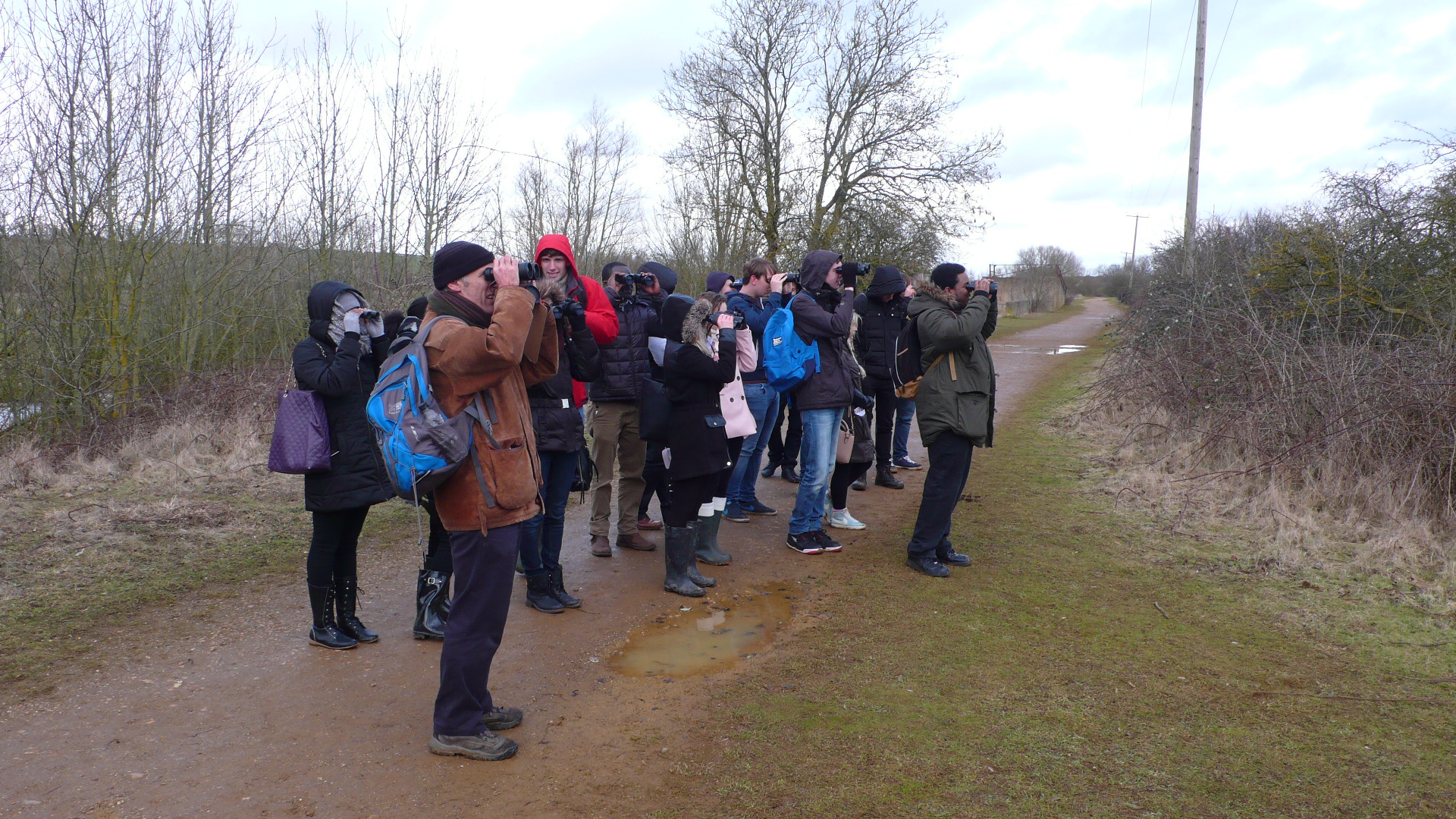
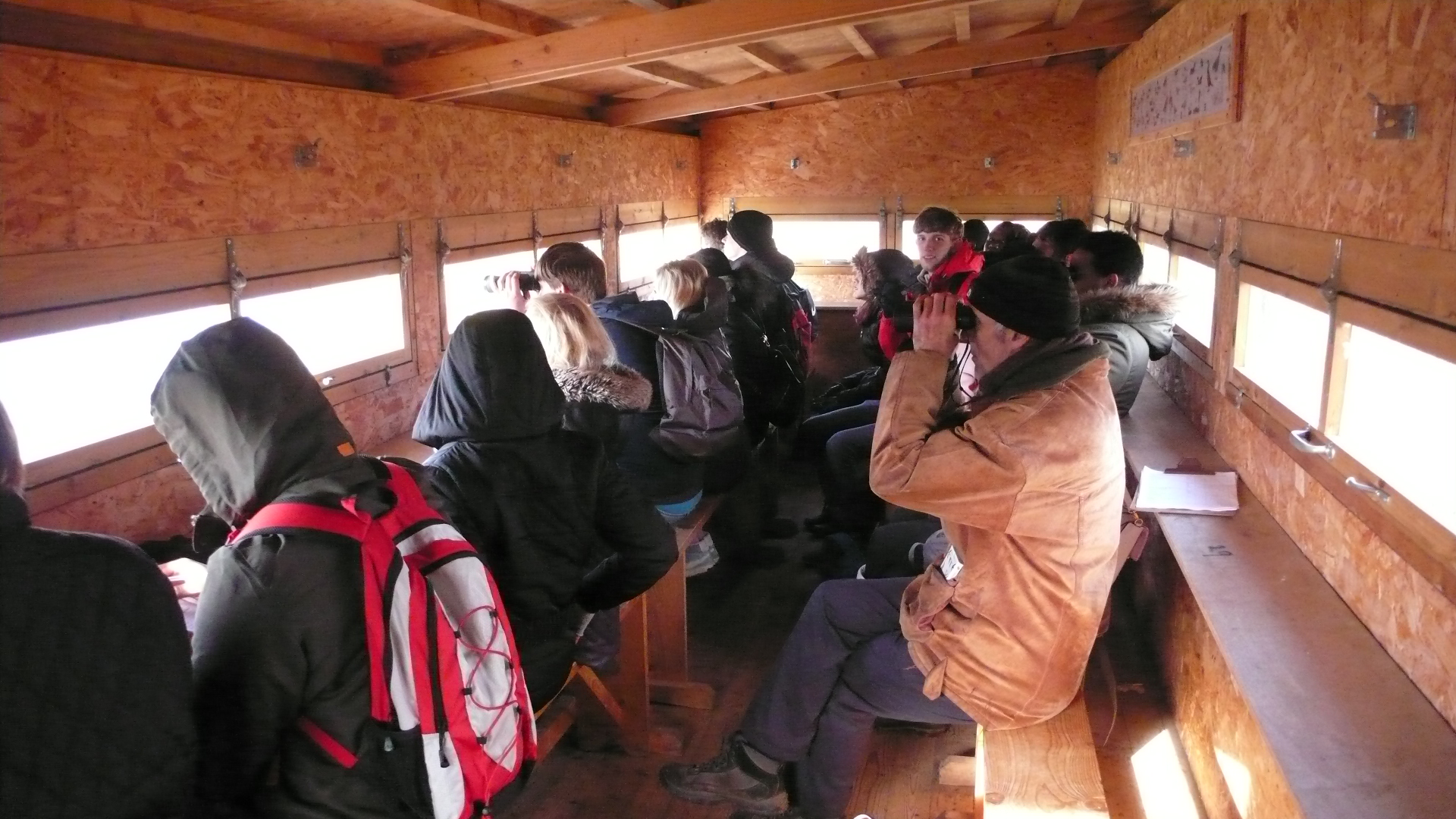
This year’s trip took place on Thursday, which was initially bright but cold.  The field trip is not compulsory so many students decided not to turn up.  Those that attended had a great time walking the circuit around the reserve, visiting the bird hides, and learning the intricacies of both duck identification and how a site such as this is managed.

2015-01-29 11.34.23

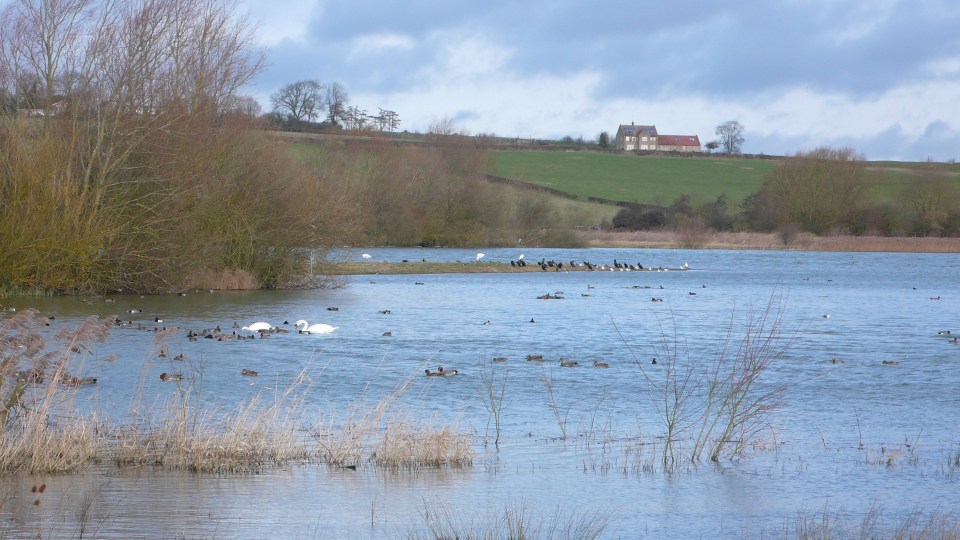
As we walked and recorded I kept a running total of the birds that we identified. Highlights included three Great White Egrets standing together on one of the islands, the greatest number I’ve seen at one time in the county, and an indication of much more common these spectacular birds have become in the last decade, as county bird recorder Mike Alibone has discussed on his blog.  They have bred in Somerset since 2012 and hopefully will do so in the Nene Valley in the not too distant future    You can just make out the birds in the centre of this image:

2015-01-29 11.31.19

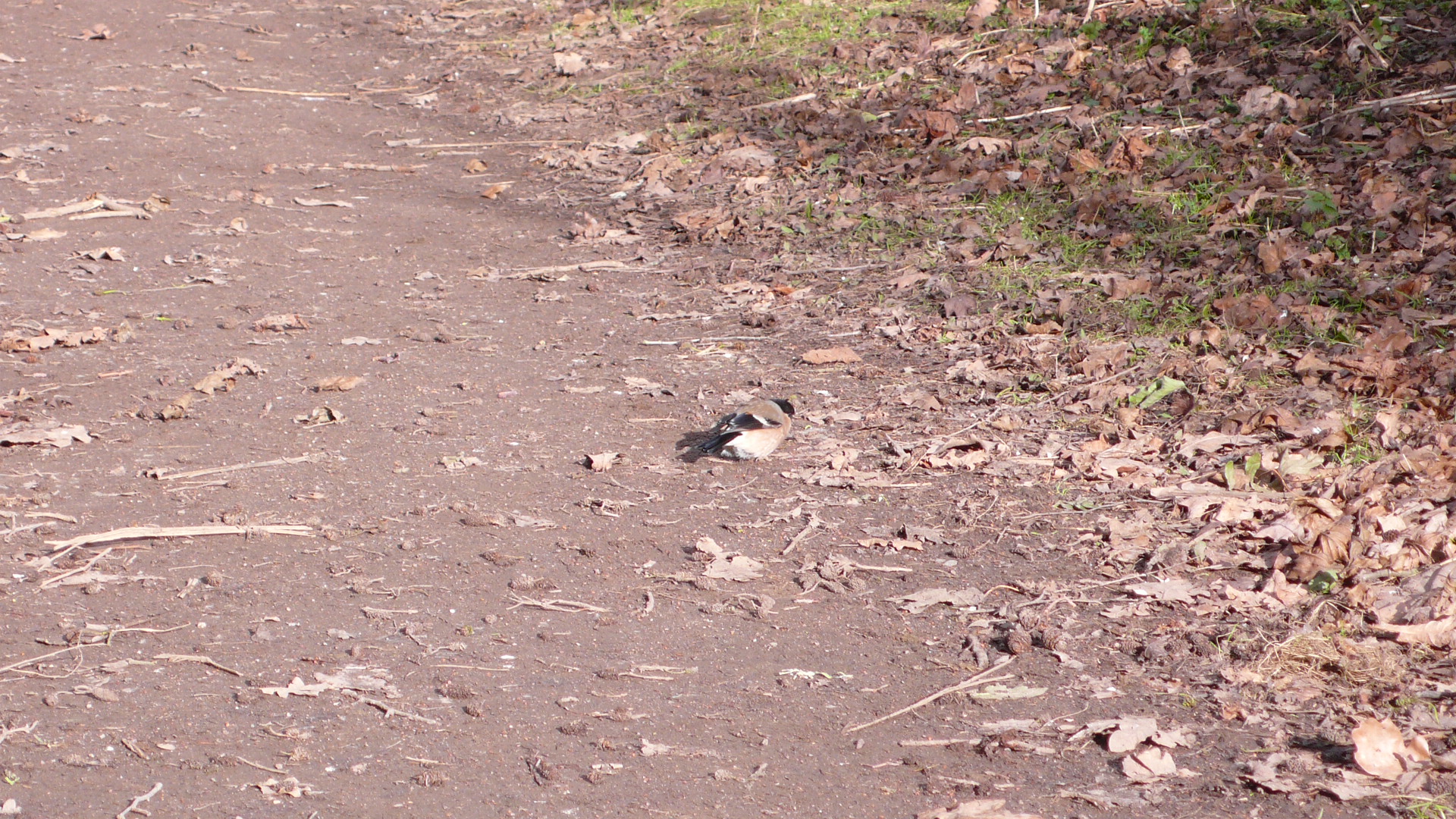
Another highlight was the large number of Bullfinches that we saw foraging along the paths and in the low trees, at least 20, all of which were females.  Some were very confiding and we could approach them to within a couple of metres, such as this one:

2015-01-29 11.23.03

Ducks were plentiful, with good numbers of Wigeon, Gadwall, Tufted Duck and Mallard, fewer Shoveler, a couple of Goldeneye, and a single Pochard.  There were also large flocks of Lapwing and a couple of unidentified waders, possibly Redshank.

2015-01-29 12.37.47

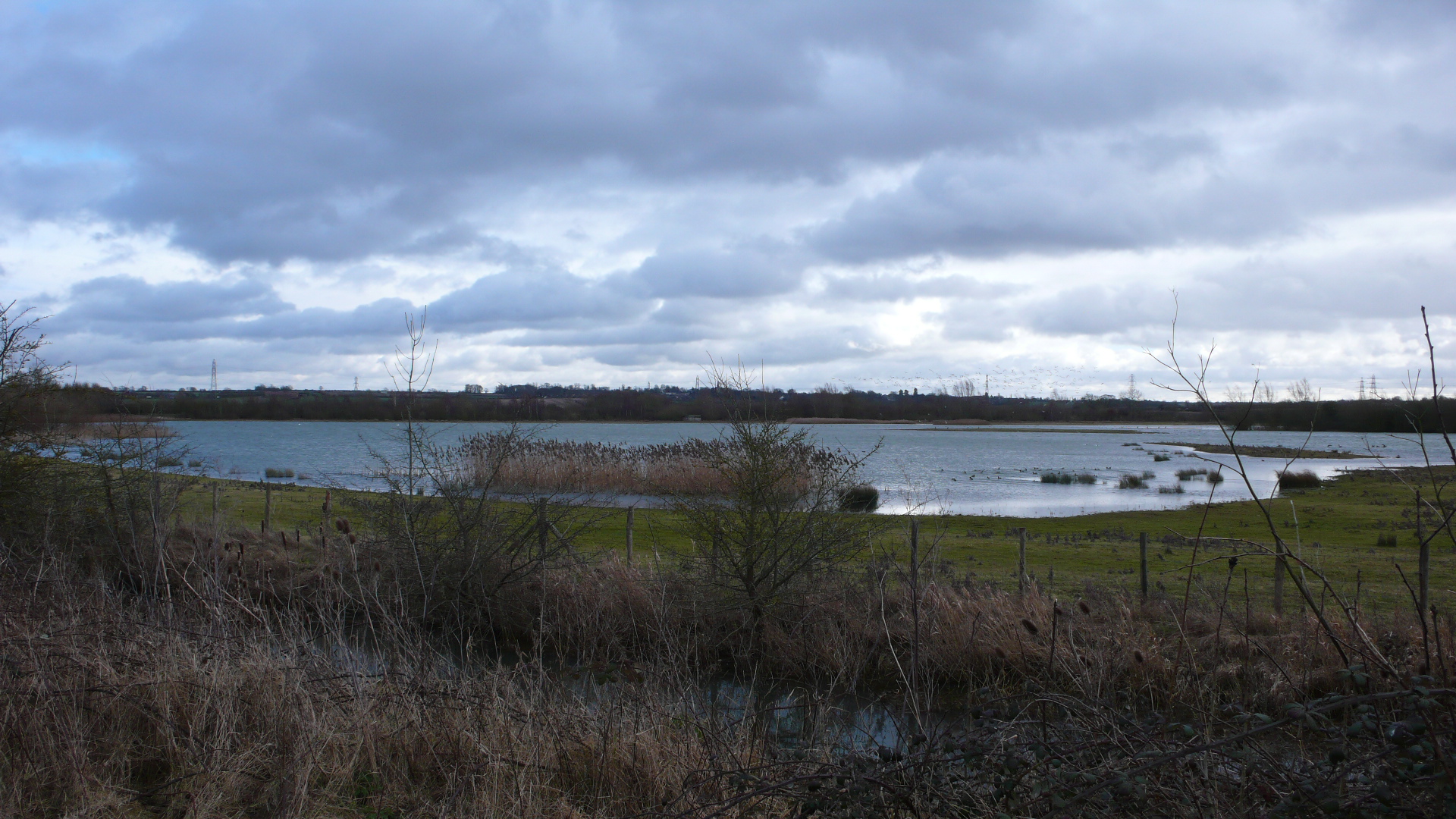
The final total of birds was a respectable 39 species and our half-day trip ended as cold winds brought in heavy cloud, rain and then finally a sudden fall of snow. By which time we were back in the warmth of the campus, enjoying a cup of tea and catching up with emails.


Bumper Big Garden Birdwatch this year!

P1120052

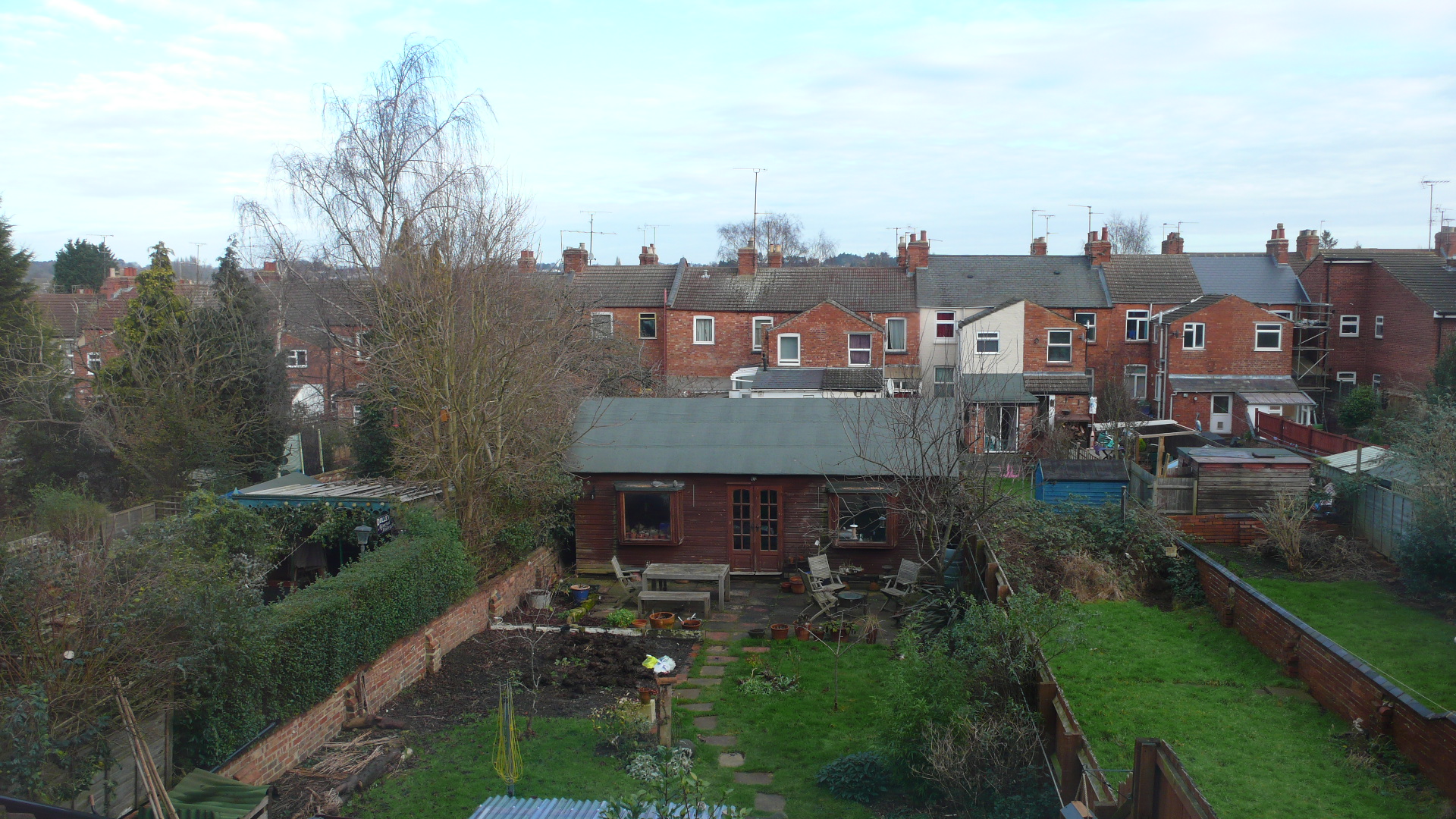
As I posted yesterday, this weekend is the RSPB’s Big Garden Birdwatch, the world’s largest wildlife-watching event, and one that’s been running for 36 years.  I completed my hour of surveying between 09:04 and 10:04 this morning, and it’s been a bumper year!  Armed with a notebook, binoculars, and a cup of coffee, I recorded all the different bird species I observed in the field of view from the tall silver birch to the left across to the patch of brambles on the right (my “garden”, as you can see, encompasses parts of my neighbours’ gardens too).

In 2013 (the first year I did the BGBW at this house) I recorded a disappointing 6 species; in 2014 it was 8 species; this year it’s been a whopping 15 species!  They were (in order of first observation, with numbers of birds):

Robin – 1

Collared dove – 3

Chaffinch – 4

Dunnock – 3

Magpie – 1

Blue tit – 4

Coal tit – 1

Lesser redpoll – 4

Blackbird – 4

Greenfinch – 5

Carrion crow – 1

Great tit – 2

Wood pigeon – 2

Goldfinch – 4

Blackcap – 1

Not bad for an urban garden!  Did you do the BGBW this weekend?  How many species did you count? Was it a higher count than last year?

Big Garden Birdwatch this weekend

2014-11-06 14.00.17

This weekend the RSPB will be running its annual Big Garden Birdwatch, a great example of citizen science in support of biodiversity monitoring.  No matter where your garden is or how small it might be, if you have time, please do get involved.  Even a return of zero birds is useful information because it tells us where birds are not occurring.

As I have for the past couple of years since we moved into this house, I’ll do my hour of watching on Sunday morning from the bedroom window.  Hopefully the current cold weather will persist and bring birds into the garden that are normally found out in the wider countryside.

Happy birding!

Garden chickens and biodiversity – some thoughts

2014-05-01 15.58.49

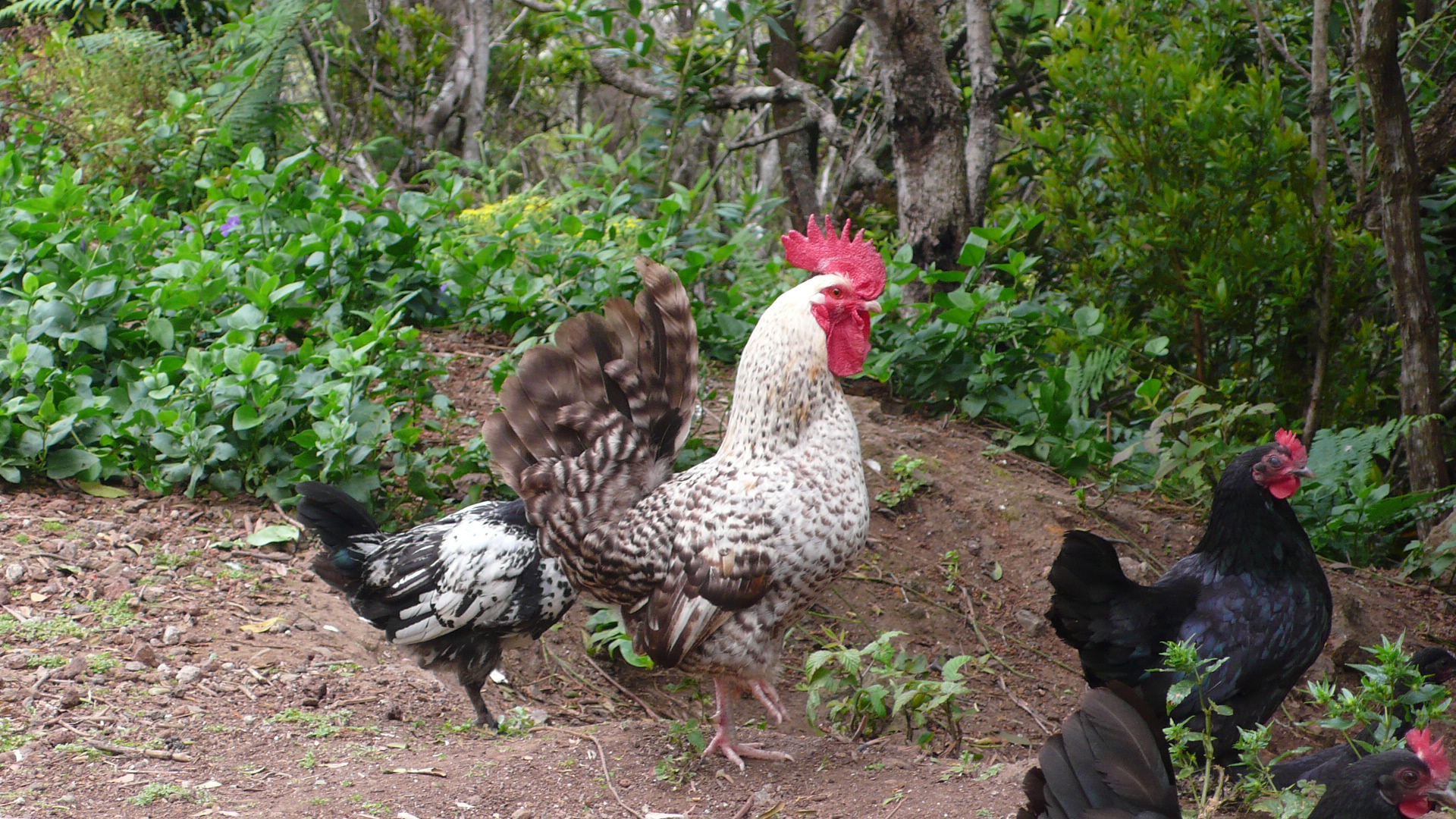
Keeping chickens as a hobby is very popular at the moment and many gardeners are finding space for a few chooks in their own patch.  It’s been particularly trendy amongst urban gardeners, ourselves included: we have a run with 6 hens that make us self sufficient in eggs and chicken shit (the latter a vital addition to our soil’s fertility).  They are also fascinating, relaxing animals to watch as they go about their chickeny business of scratching, pecking, clucking, and dust bathing.  They are intelligent, social, inquisitive birds, that I’d recommend to anyone who has the space to accommodate a decent sized run and (importantly) the time to look after them.

There are plenty of magazines, books and websites offering advice on keeping hens on a small scale.  One of the most active and interesting blogs is The Garden Smallholder which generally has some good advice and ideas.  Back in November, however, a post about preparing a new kitchen garden caught my attention, specifically the fact that the writer’s chickens were let out onto the plot and that:

“Chickens are great at scratching and turning over soil with their enthusiastic feet, and excellent pest control too”

Let’s think about that last point, that chickens provide “excellent pest control”.  It’s a statement that I’ve seen repeated many times in books and articles, and it usually doesn’t solicit any comments.  But the logic behind it is that hens can differentiate between “pests” and “non-pests” in a garden, that they will gobble up the slugs and cutworms, leaving behind the worms, beetles, spiders, and other beneficial (or neutral) invertebrates.  This is nonsense, of course: chickens will eat anything they find and do not differentiate between the different elements of soil biodiversity*.

For this reason we don’t allow our hens to free range on our vegetable patch: we want to keep the soil’s fauna intact, allowing the earthworms to aerate and turn over the soil, let the beetles eat the slugs, give ground-nesting bees some space in which to live, and so forth.  A few weeks of digging with chickens present would destroy all of that.

The vast majority of invertebrates that live in the soil are not pests and a significant  proportion are certainly good for our gardens (particularly the earthworms and carnivorous beetles).  Allowing your chickens to feed freely on these animals will significantly reduce your soil biodiversity, which is a bad thing in its own right (if we accept that these animals are a measure of your soil’s “health” and productivity), and could reduce the numbers of invertebrate-eating wildlife, such as thrushes, hedgehogs and toads, visiting your garden.

If you want your chickens to eat garden pests my advice would be to take the pests to them: scoop up several slugs with a trowel, throw them into their run, and watch the birds excitedly scramble for their treat.  But remember that slugs play a positive role in the garden too, demolishing huge amounts of garden waste in compost bins and (in our garden) eating up cat shit.  That’s a topic for a future post though.


*I made a comment to this effect on the Garden Smallholder post but the blog owner saw fit not to allow it to appear.  Draw your own conclusions from that.

A Christmas vignette (re-post from 2013)

P1110602

First posted Christmas 2013, I thought it was worth re-posting as it’s as resonant this year as last.

—————————————————————————————————————————

This afternoon I booked half a day’s leave to go into Northampton town centre to pick up some final Christmas gifts.  A crowd of shoppers in Abington Street was eager to lay their hands on the freebies being distributed by that traditional Yuletide apparition, The Coca Cola holidaysarecomingholidaysarecoming Big American Truck.  As red and shiny as Rudolf’s nose, it was pedalling its cheap brand of Christmas sentimentality to a willing audience.  

Shopping completed and daylight fading fast, I headed back to the multi-storey car park, again passing the Coca Cola queues, skirting them, determined not to be sucked in.

The car park was cold and ugly, as they tend to be.  But on the second floor, level with the bare crown of a tree that emerges from an adjacent pub garden, a mother and her young son stood.  Hands full of shopping bags, they had paused to listen to a male blackbird singing as the dusk drew in.  As I passed I heard them chatting about its song: both agreed it was beautiful.

Driving out of the car park I wound down my window: the blackbird was still singing.

I could give a very academic spin to this tale and talk about the cultural and spiritual ecosystem services that are provided by such birds, which nourish us in ways that no amount of corporate marketing ever could.  But I shan’t: it was a perfect Christmas vignette and a perfect contrast to the earlier soulless commerciality.  And that’s sufficient.

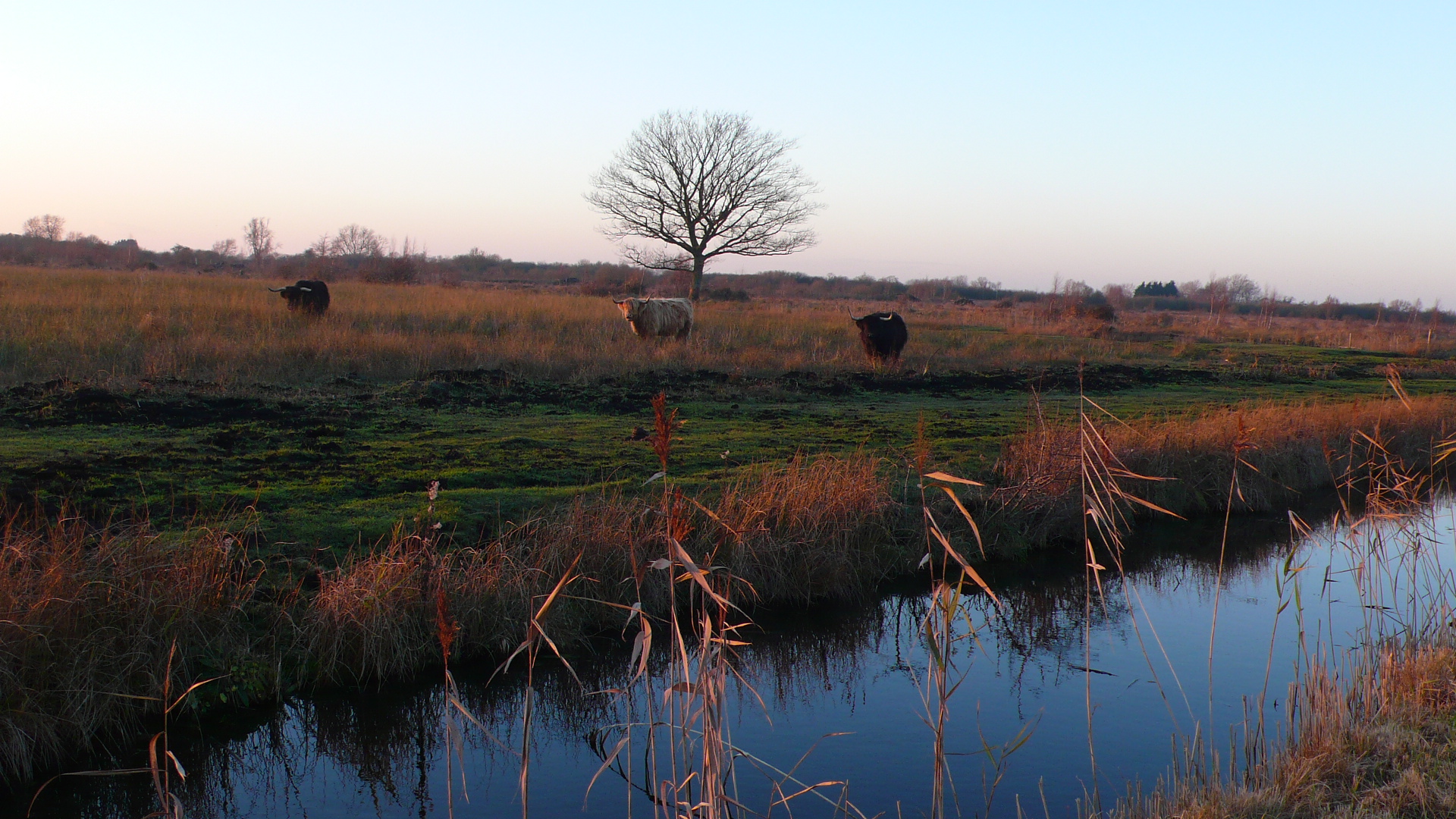
Winter visit to Wicken Fen

P1120027

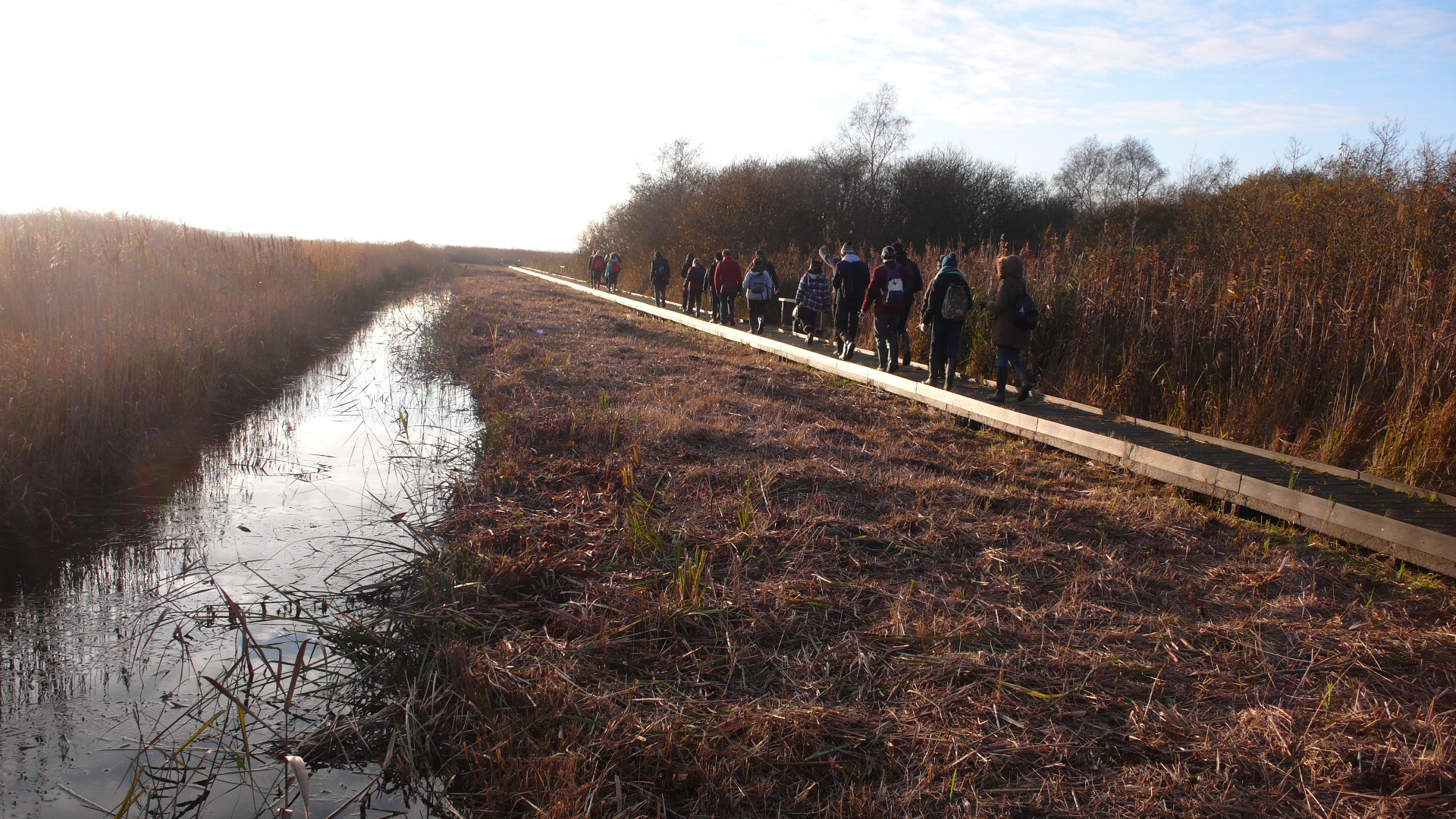
If it’s winter, it must be time for the annual second year undergraduate field trip to Wicken Fen, a yearly pilgrimage that’s been run by my colleague Dr Janet Jackson for many years now.  The purpose of the trip is to show our ecology and environmental science students an example of large-scale habitat conservation and restoration in action, at one of England’s oldest nature reserves.  I try to go along and help out when I can, though I missed it last year because of my trip to Brazil.  It was more than a fair swap, though there’s something about Wicken’s stark winter beauty that always makes for a memorable day.

2014-12-05 12.07.59

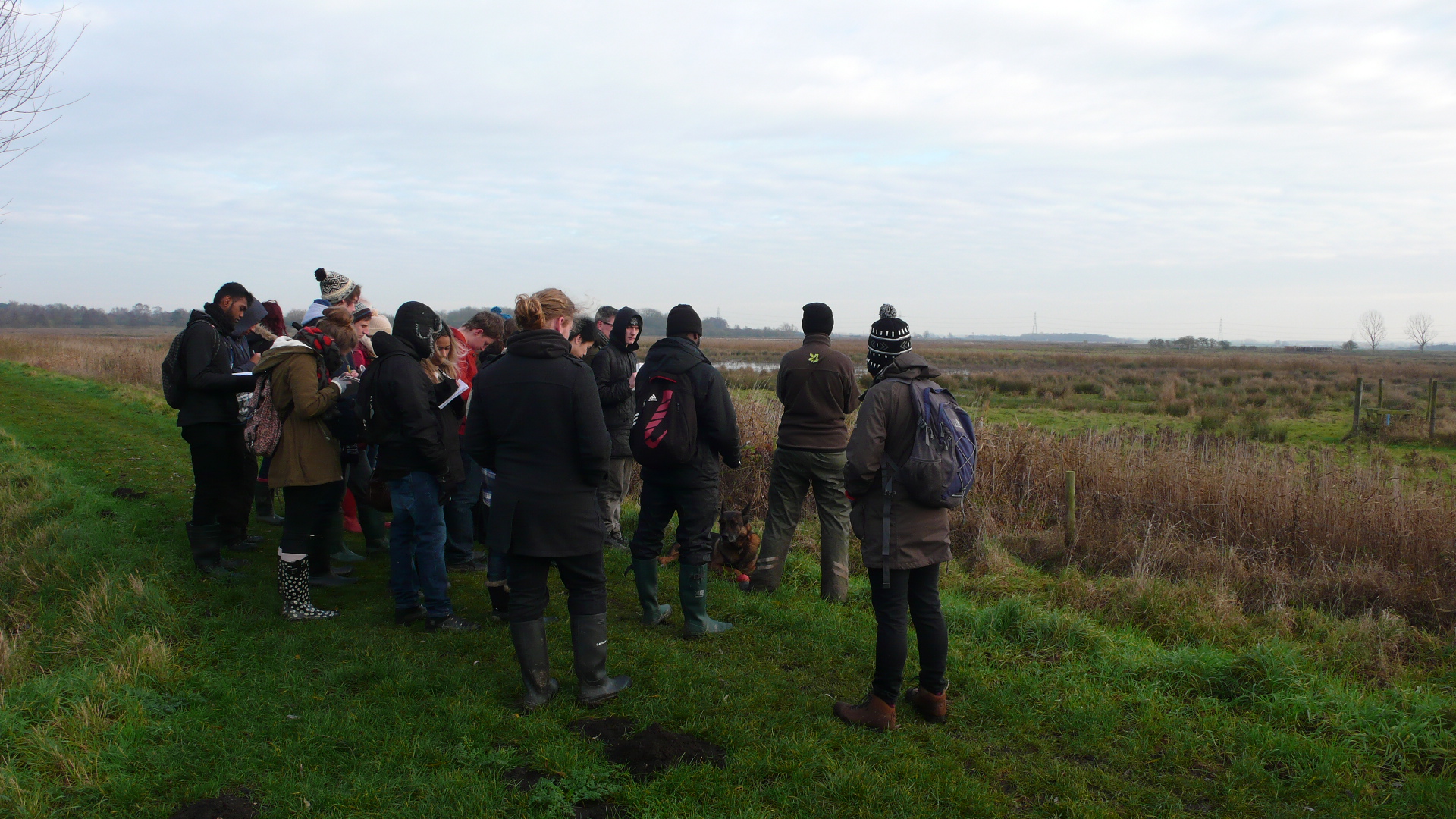
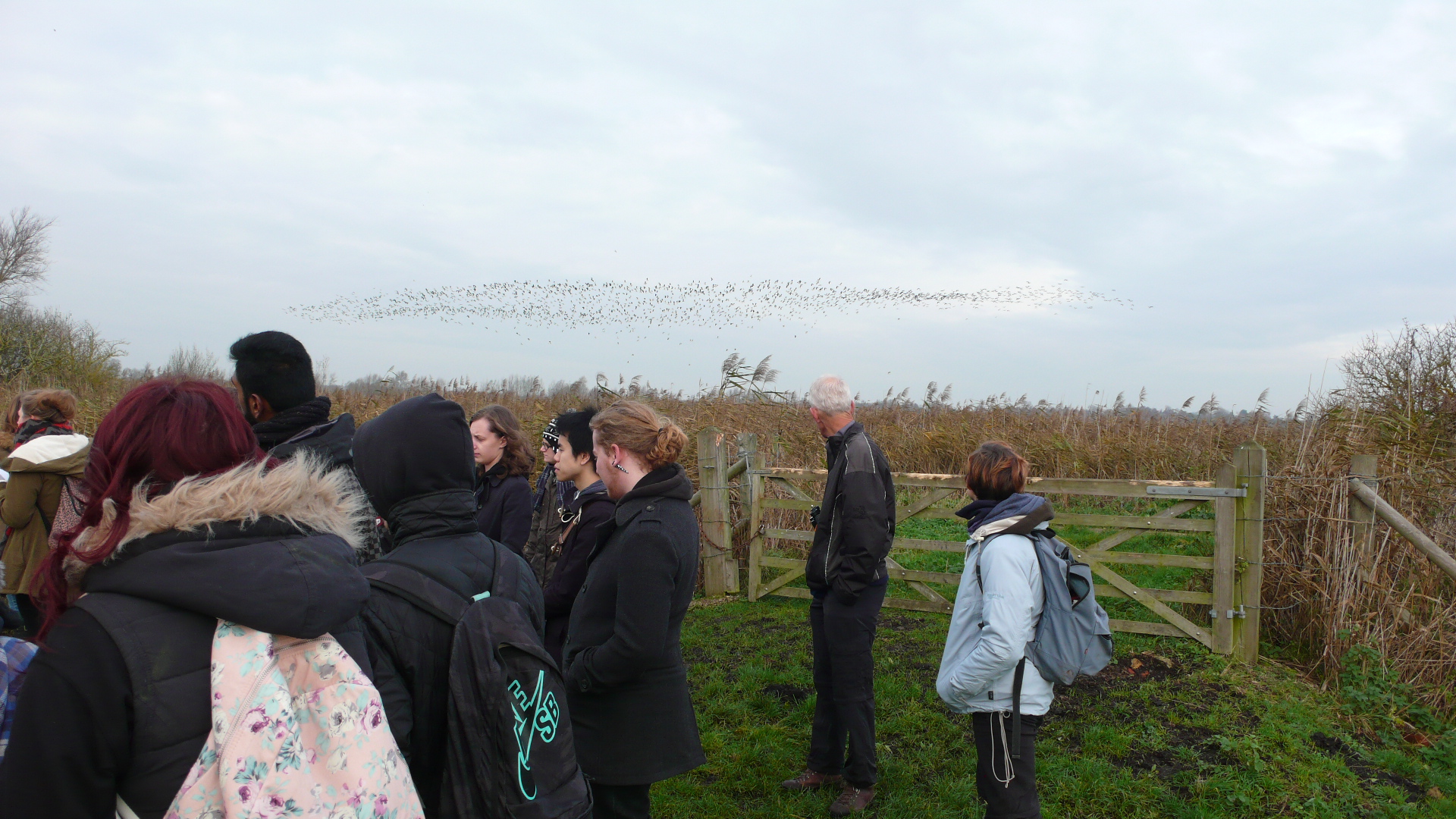
The National Trusts’s nature reserve at Wicken Fen is one of the few remaining patches of the wetland habitat that once covered most of East Anglia.  There’s little of it left (less than 1% of the original area) but large-scale, long-term initiatives such as the Great Fen project and the Wicken Fen Vision are trying to increase this by restoring the farmland surrounding the remaining patches.  This is important landscape-scale conservation because the fenland habitat is rich in biodiversity.  Wicken Fen alone is reckoned to host more than 8,300 species of macro-organisms, most of which are invertebrates, including more than a thousand each of flies and beetles.  There’s also an impressive list of birds that use the site either for breeding or over-wintering, and on our day trip we managed to see 31 species*, highlights of which were a pair of Hen Harriers, a lone hunting Barn Owl at dusk, and a huge flock of Lapwing and Golden Plover that provided a backdrop to our guided tour.

P1120025

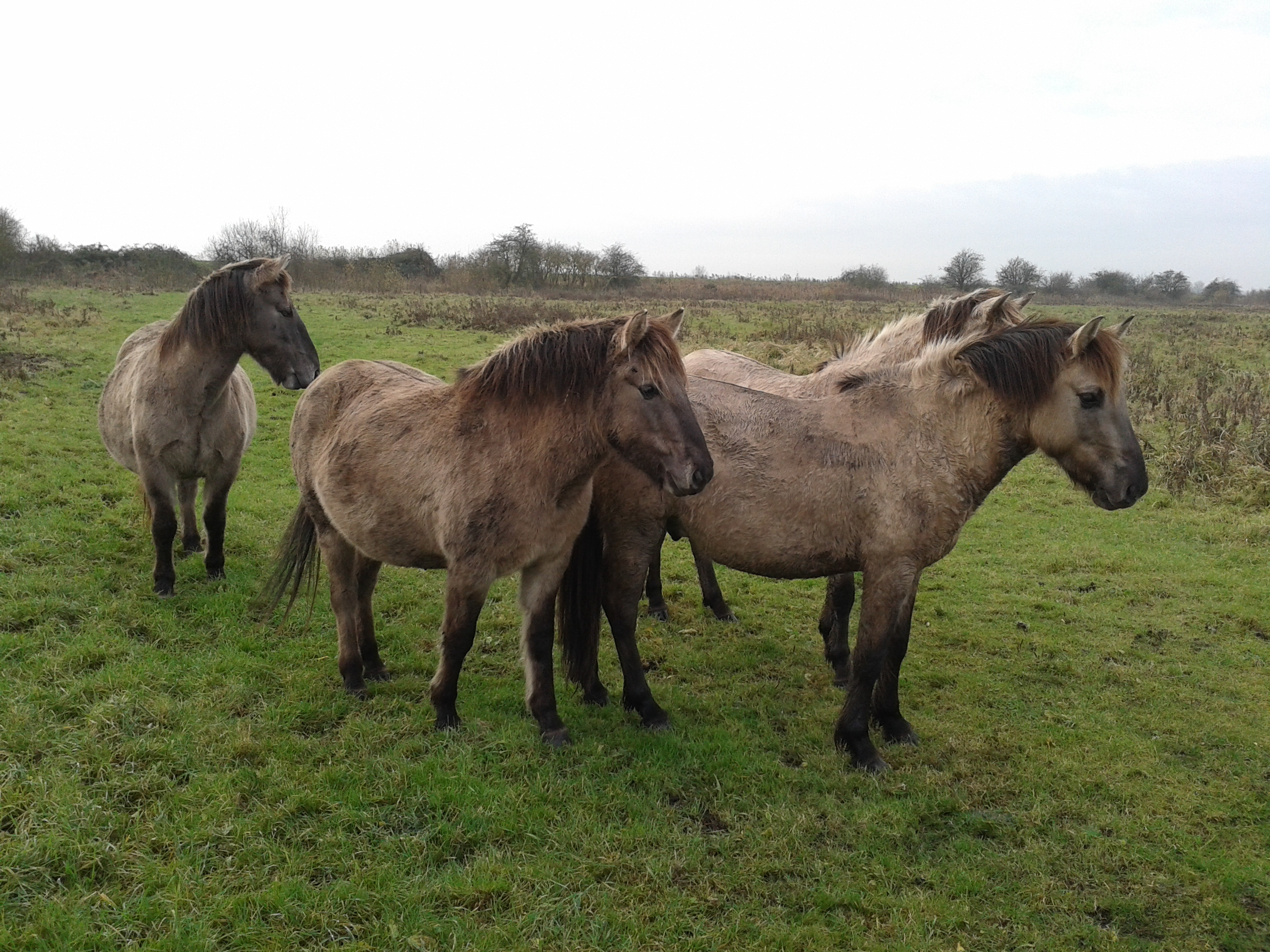
Another great highlight which impressed both students and staff was a close encounter with some Konik Polski ponies which were curious and friendly, and yet more or less wild, as they stay out on the Fen all year round with no shelter and the minimum of human intervention.

Konic ponies

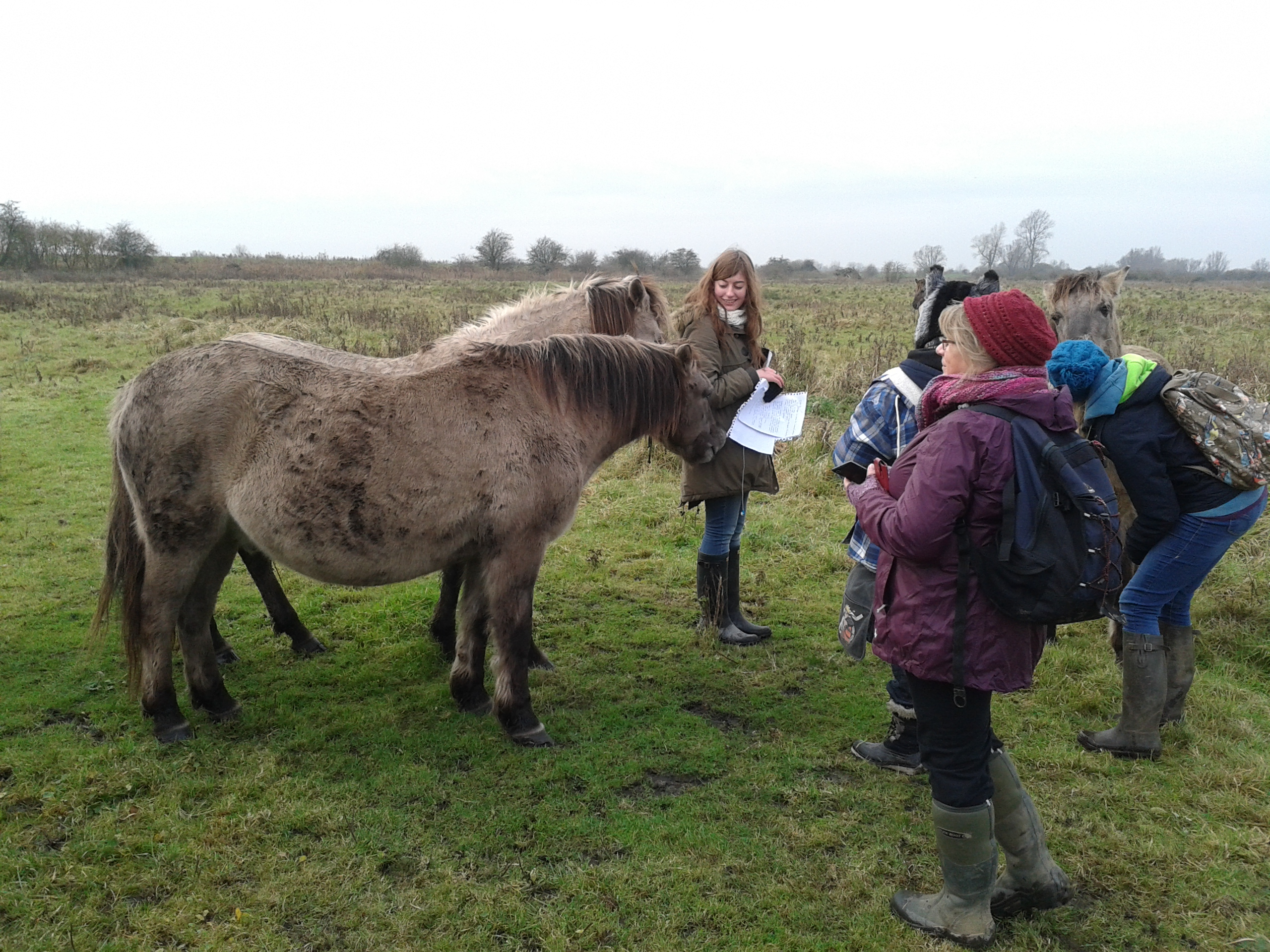
Everyone was enchanted by these hardy little horses and it was a struggle to get the students to move on with the tour!

Konic ponies with Janet

As Carol Laidlaw, conservation grazing warden at Wicken Fen explained to us, these ponies, together with the tough highland cattle, are a vital part of Wicken Fen’s ecology.  Their grazing prevents woody plants from colonising, and this, together with their physical presence in the landscape, leaving hoof marks and dung piles, opens up both small patches and larger areas for colonisation by plants.  For anyone interested in reading more about the grazing animals I can recommend Carol’s excellent article on the project.

P1120033

Although the day was cold it was not the frozen landscape we normally encounter and there were even a few plants still in flower.  It’s been a mild winter so far – how long will that continue?  If you’ve never visited Wicken Fen I can recommend it as a day trip whatever the season or weather, there’s always fascinating wildlife to see.

2014-12-05 15.57.39

*Bird list for the trip was: Collared Dove, House Sparrow, Blackbird, Kestrel, Fieldfare, Goldfinch, Cormorant, Grey Heron, Magpie, Lapwing, Golden Plover, Carrion Crow, Snipe, Hen Harrier, Wigeon, Great Tit, Blue Tit, Feral Pigeon, Starling, Wood Pigeon, Robin, Chaffinch, Wren, Shoveler, Tufted Duck, Coot, Mallard, Common Gull, Herring Gull, Jackdaw, Barn Owl.  Plus chickens being kept in the garden of one of the local cottages!