Category Archives: Biodiversity

Split the kipper: snowfall thoughts of breakfast, fish and childhood games

Kipper 2018-01-21 10.39.16.png

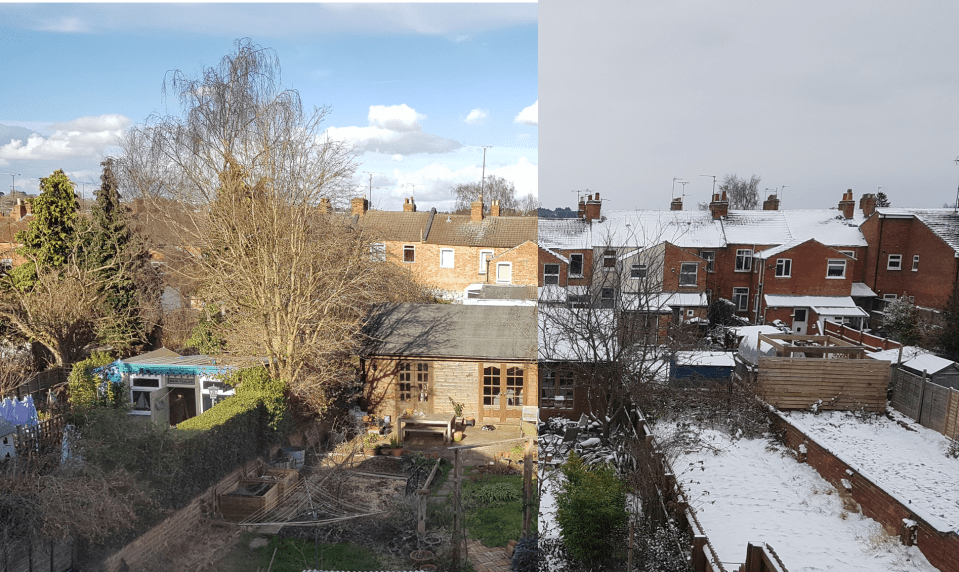
Karin and I had kippers for breakfast this morning, a satisfying and warming treat on this cold Sunday as we watched the snow fall into the garden, softening the edges and hedges:

Snow in the garden 2018-01-21 11.20.48.png

I do like a nice kipper!  Smoking fish to make it last longer has been repeatedly discovered and transmitted as an idea across cultures, and represents a fascinating intersection where wild biodiversity meets human ingenuity.  The north east of England, where I grew up, has a great and ancient tradition of smoking herrings to preserve a portion of the catch, a practice that may have originated with the Vikings who colonised that part of the country over one thousand years ago.

Of all of the North Sea’s edible biodiversity I feel most comfortable eating herring; although there were issues with over-fishing in the 1960s and 70s, current stocks look to be being managed sustainably.  The most up to date information I’ve found is in a Norwegian government report from which I took this graph:

Print

Kippers have had subtle, but interesting, influences on culture, spawning phrases, songs and games. To be “done up like a kipper”* is to be taken advantage of by someone or bamboozled, whilst a “kipper tie” is a fashion hangover from the 60s and 70s, named for its broad proportions.  Of course Supertramp sang about having kippers for breakfast, particularly in Texas “cos everyone’s a millionaire”.  That strikes me as an odd line as herrings (in whatever form) have always been considered a cheap dish. Though I suppose importing them from Craster to Dallas could be quite expensive.

Back to the north east and my childhood, where we played a game called “Split the Kipper”. This involved standing opposite a friend on a grassy field and taking it in turns to throw a knife near to your opponent’s foot.  If it stuck into the ground then your opponent had to slide their foot to that point.  This continued until one of you had your legs so far apart that you fell over – the kipper had been split!  Not the safest game for kids but I never knew anyone to get injured playing it. Like all the best games the point was not just to win but to win beautifully: inching your adversary’s legs apart with accurate knife throws gradually ramped up the tension of the game.  I wonder where the game originated? Is it too fanciful to imagine that it was brought over by the Vikings?

The snow is still falling – wonder what’s for lunch….?


*Whatever you do, don’t search the Urban Dictionary for the definition of the word “kippered”….

Something for Blue Monday – the only known blue flowered asclepiad

Tweedia caerulea - OBG 2014-11-06 11.33.14

Today is Blue Monday – reckoned to be the most depressing day of the year, though I’m in a very good mood: just back from a great 9am seminar with my final year students taking the Biodiversity & Conservation module.  They presented some really interesting, diverse and thought provoking papers as part of their assessment for this module; it’s a great group to teach.

But if you are suffering from the blues this morning, here is a photograph to cheer you up.  As far as I am aware Tweedia caerulea (also known as Oxypetalum coeruleum)  is the only known blue flowered asclepiad (that’s to say, a member of the family Apocynaceae subfamily Asclepiadoideae – what used to be the family Asclepiadaceae*).

No one is sure why blue is such a rare colour within the asclepiads (and indeed the Apocynaceae as a whole) and it may be connected to the pollination system of this plant.  However we don’t know what pollinates Tweedia caerulea in the wild so it’s hard to test that idea; other species within this group are variously pollinated by wasps, bees, flies, moths, etc.  Truly blue flowers (as opposed to some shade of purple or violet) are relatively uncommon generally amongst the flowering plants and the source of much interest and excitement in those groups where they do occur, for example the Himalayan Poppies (Meconopsis).

Tweedia caerulea is easy to grow from seed but not so easy to get through the winter in the UK, so in the past I’ve grown it as an annual in the garden.  Apart from the colour, one of the other reasons I like this plant is that it’s named after the 19th century plant collector John Tweedie whose life I’ve been researching over the past 20 years or so – see this paper for example.


*The asclepiads are my favourite group of plants, and one that I’ve published quite a bit of research on, so I was a bit miffed when the taxonomic rank of the family was relegated to subfamily.  But it makes evolutionary sense and now gives me a much larger family of plants on which to research, so every cloud etc. etc.

Local and regional specialization in plant–pollinator networks: a new study just published

Euphorbia canariensis pollinators 2016-04-29 17 58 00

A fundamental feature of the natural world is that no species exists in isolation: all organisms interact with other organisms during their lives. These interactions take many forms and the outcome varies with the type of interactions. For example predator-prey interactions are clearly negative for the prey species, but positive for the predator. Other interactions result in positive outcomes for both species, including relationships between pollinators such as bees, birds and flies, and the flowers that they pollinate. An important feature of such interactions is how specialized or generalized it is; that is, how many different pollinators are actually involved in pollinating a particular type of flower, or how many types of flower does a specific pollinator visits.

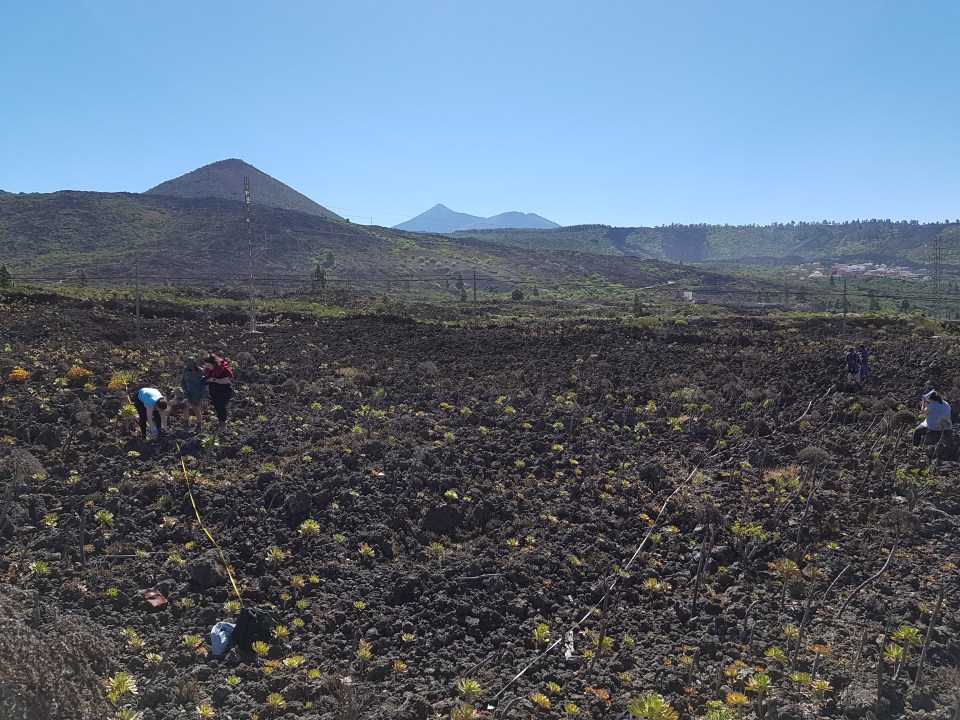
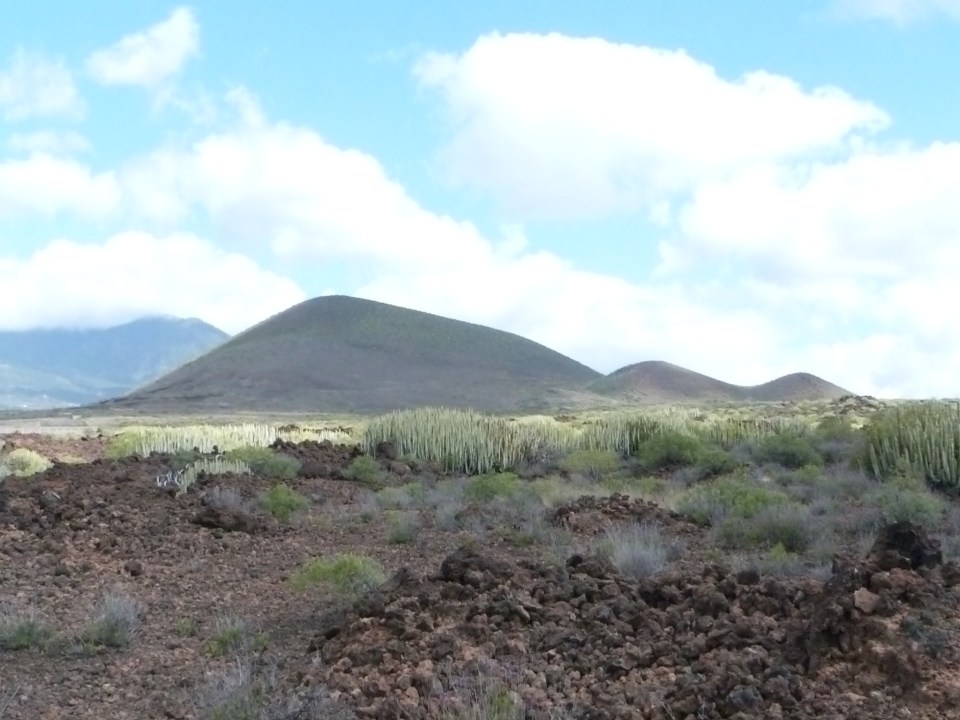
In a newly published study, I have collaborated with colleagues from Denmark and Brazil to assess how local specialization (within a community) relates to regional specialization (across communities) using two separate data sets from the Brazilian rupestrian grasslands and Canary Island/North African succulent scrub vegetation.

Here’s the citation with a link to the paper (drop me a line if you can’t access it and need a PDF):

Carstensen, D.W., Trøjelsgaard, K., Ollerton, J. and Morellato, L.P.C. (2017) Local and regional specialization in plant–pollinator networks. Oikos (in press) doi:10.1111/oik.04436

The abstract is as follows:

“Specialization of species is often studied in ecology but its quantification and meaning is disputed. More recently, ecological network analysis has been widely used as a tool to quantify specialization, but here its true meaning is also debated. However, irrespective of the tool used, the geographic scale at which specialization is measured remains central. Consequently, we use data sets of plant–pollinator networks from Brazil and the Canary Islands to explore specialization at local and regional scales. We ask how local specialization of a species is related to its regional specialization, and whether or not species tend to interact with a non-random set of partners in local communities. Local and regional specialization were strongly correlated around the 1:1 line, indicating that species conserve their specialization levels across spatial scales. Furthermore, most plants and pollinators also showed link conservatism repeatedly across local communities, and thus seem to be constrained in their fundamental niche. However, some species are more constrained than others, indicating true specialists. We argue that several geographically separated populations should be evaluated in order to provide a robust evaluation of species specialization.”

This is what those two different habitats look like:

If you would like more information on plant-pollinator networks, including details of an edible game for Christmas (!), follow this link to the standingoutinmyfield blog.

Pollinators, flowers, natural selection and speciation: a virtual conference

Ashy Mining Bee 2017-06-17 10.55.45

It’s been a couple of years since I posted my previous “virtual conferences” on Pollinators, Pollination and Flowers and Ecology and Climate Change, a lapse that has largely been due to lack of time (my default excuse for most things these days….).  However Judith Trunschke at Uppsala University in Sweden has risen to the challenge of guest-curating her own virtual conference*.  The theme here is how pollinators impose (or sometimes don’t impose) natural selection on flowers that results in the formation of new plant species:

Timo van der Niet (IIASA 2010): Plant-diversification through pollinator shifts

Timo van der Niet (Congresos UCA 2014): Disentangling the contribution of pollinators in shaping angiosperm orchid genus Satyrium

Anne Royer (Evolution 2016): Plant-pollinator association doesn’t explain disruptive selection & reproductive isolation

Brandon Campitelli (Evolution 2016): Pollinator-mediated selection and quantitative genetics

Yuval Sapir (Evolution 2016): Rethinking flower evolution in irises: are pollinators the agents of selection?

Ruth Rivken (Evolution 2014): The mechanisms of frequency-dependent selection in gynodiocious Lobelia siphilitica

Gonzalo Bilbao (Botany 2017): Pollinator-mediated convergent shape evolution in tropical legumes

My grateful thanks to Judith for curating this great set of talks; if anyone else would like to do the same, please get in touch.

Feel free to discuss the talks in the comments section and to post links to other talks on the same topic.


*I’m assuming that, as all of these videos are in the public domain, none of the presenters or copyright owners objects to them being presented here.  If you do, please get in touch and I’ll remove it.

Pollinator biodiversity and why it’s important: a new review just published – download it for free

P1110763

In a new review paper that’s just been published in the Annual Review of Ecology, Evolution and Systematics I have looked at the question of just how diverse the pollinators are, and why pollinator biodiversity is ecologically important and therefore worthy of conservation.  I’ve taken a deep time and wide space approach to this, starting with what the fossil record tells us about when animal pollination evolved and the types of organisms that acted as pollinators in the past (the answer may surprise you if you’re unfamiliar with the recent paleontological literature on this topic).  Some of the most prominent biogeographical patterns have been highlighted, and I have tried to estimate the global diversity of currently known pollinators.  A conclusion is that as many as 1 in 10 described animal species may act as pollen vectors.

As well as this descriptive part of the review I’ve summarised some recent literature on why pollinator diversity matters, and how losing that diversity can affect fruit and seed set in natural and agricultural contexts.  Extinction of pollinator species locally, regionally, and globally should concern us all.

Although I was initially a little worried that the review was too broad and unfocused, having re-read it I’m pleased that I decided to approach the topic in this way.  The research literature, public policy, and conservation efforts are currently moving at such a fast pace that I think it’s a good time to pause and look at the bigger picture of what “Saving the Pollinators” actually means and why it’s so important.  I hope you agree and I’d be happy to receive feedback.

You can download a PDF of the review entitled Pollinator Diversity: Distribution, Ecological Function, and Conservation by following that link.

Pollination ecologists should also note that in this same volume of Annual Review of Ecology, Evolution and Systematics there’s a review by Spencer Barrett and Lawrence Harder called The Ecology of Mating and Its Evolutionary Consequences in Seed Plants.  If you contact those authors I’m sure they’d let you have a copy.

One of the effects of joining Twitter is that I post on my blog less often

Back in November 2016, following a lot of soul searching and weighing of pros and cons, I joined Twitter.  I was worried about spending too much time on social media, getting into conflicts with trolls, etc.  In any event I thought I’d give it a go and have enjoyed it much more than I expected to.  As much as anything else it’s opened up opportunities for new contacts, and highlighted research and ideas that I’d probably not have otherwise known about, plus Twitter is very amusing on occasion.  So I’ve stuck with it for about one year and don’t imagine that I’ll give it up soon.  However there has been one negative aspect to my use of Twitter: the rate of posting on my blog has gone down substantially, as you can see on this graph:

Blog posts

Although the number of posts per month on my blog has always been a bit erratic, until about a year ago it was trending upwards.  After I joined Twitter, however (marked by a red dashed line on the graph above) my rate of blogging has fallen a lot.

The reason for this is, I think, that it’s now easier and faster for me to tweet about a topic than it is to write about it in a post.  I can think of a number of cases where what would normally have been developed into a post has been dealt with in far fewer words.  One recent example is a tweet I put out about the difference between pollinator “effectiveness” and “efficiency”, which some pollination ecologists are still using as interchangeable terms years after the field decided that they were two different things – see Ne’eman et al. (2010) Biological Reviews.

That tweet came out of frustration with a manuscript that I was reviewing and normally I would have written four or five hundred words on the topic.  This time, however, a short tweet, linked to that paper, was enough to get my message out.

The problem is, of course, that I can’t develop my ideas and arguments in sufficient detail on Twitter and I think that’s a drawback, for me at least.  Plus my blog is becoming a storage area for writing and ideas that I’m recycling in various places, including review articles, and it concerns me that I might be storing up less and less material.

I’m not sure what I can do about this other than try to post more often, but it’s ironic that my blogging seems to be tailing off over the same period where I and some colleagues wrote a paper on the importance of blogging.  Hopefully writing this will give me a kick in the ass to post more and tweet less: time will tell.


The only way is Norway! Reflections on SCAPE 2017

SCAPE1

It’s been a busy few days of science, eating great Norwegian food, catching up with old friends, and meeting new ones:  The Scandinavian Association for Pollination Ecology’s 31st annual meeting is over.  As I’ve reported in previous years – for example here and here and here –  it’s been a whirlwind of great presentations and interesting discussions, far too much to summarise in a single blog post.  But here’s my top 5 personal list of things that I discovered during SCAPE 2017:

  • The hills are alive with microclimatic heterogeneity!  Lisa-Maria Ohler introduced us to how variable ground temperature can be on a very local scale and how this might influence plant-pollinator diversity.  Especially impressive was the fact that this was based on Lisa’s BSc thesis!

SCAPE2

  • Removal of abundant and well connected plant species (“hubs”) from a plant-pollinator network can affect insect visitation rates and pollen deposition (Paolo Biella).  It was particularly good to catch up with this project as I’m one of the collaborators on it!

SCAPE3

  • Several very interesting talks discussed scent variation between Lithophragma populations and how this does not seem to correlate with flower shape and with the moth and bee pollinators, including this one by Mia Waters:

SCAPE4

  • Some invasive plants have much higher levels of pollen protein content than native plants which may be a reason why they are so successful – they attract more pollen-collecting visitors (Laura Russo).
  • Old ideas of why heteranthery (flowers with two different types of anthers) have evolved may not be correct (Kathleen Kay).  This is a question that vexed Darwin and still seems to be vexing pollination ecologists!

I also got some really useful ideas and feedback on my own presentation, which is one of the best things about small conferences such as SCAPE: just over 70 people took part.  Next year will mark a break in tradition for SCAPE when, for the first time in its history, the 32nd meeting will take place outside of Scandinavia, in Ireland.  Watch this space for more details next year!

Thanks to our Norwegian hosts for making the conference so welcoming; I’ll finish with some general photos of the conference and of the lovely town of Drøbak, where the meeting took place, and its aquarium:

SCAPE8.jpegSCAPE9.jpeg

SCAPE10.jpeg

SCAPE11.jpeg

SCAPE13

SCAPE14.jpeg

SCAPE15.jpeg

SCAPE12

A bad botanical pun

fucksia not fewsha 20171012_080602_001_preview

Not all of the poetry that I write – such as these pieces – is serious and high-minded, some of it is whimsical, funny, or just plain dumb.  Today I taught a morning class on flower structure and pollination, so in its honour here’s an example of the latter:


A Bad Botanical Pun

“Don’t become a gardener – there’s no fuchsia in it!”

Not a great pun, but I’ve heard worse.

However, it may be pedantic, but I have to point out

That the genus Fuchsia was named in honour of Leonard Fuchs

(A sixteenth century Bavarian botanist, as you ask).

His name is pronounced as a definite, Germanic “fucks”,

Not a prim, Victorian “fewsh”.

So, don’t become a botanist – it’ll Fuchsia!


Students in the pollination practical 20171012_111355_preview

A blog post about our new paper about posting blogs: important for the science community as well as science communication

blogheadersnew

Scientists blog for many reasons.  Some of these reasons are highly personal, other reasons are purely professional.  For most of us it’s a mix of the two.  But despite all of the scientific blogging going on there’s actually very little been written in the scientific literature about the advantages of blogging for the professional scientist.  As a step towards remedying that situation a group of co-authors and myself have today published a paper entitled “Bringing ecology blogging into the scientific fold: measuring reach and impact of science community blogs“.  It’s published in the open access journal Royal Society Open Science.  Just follow that link and you will be able to read it for free.

I’m rather proud of this paper as it’s a collaboration between active ecological bloggers, most of whom don’t know each other personally. However we share an interest in blogging and in the belief that blogging is a legitimate scientific medium for communication of ideas, data, and professional advice.  That is, blogging for the science community rather than (just) for science communication to the general public.

One of the most pleasing things about this paper is that it received two of the best reviews any of us have ever had in our careers.  The reviewers were incredibly supportive and complimentary, and asked for virtually no changes.  That’s hugely gratifying and suggests to us that we are saying something important; let’s hope the readership likes it as much!

The co-authors, their Twitter handles and links to their blogs are below.  If you click through you’ll see that we have posted coordinated pieces on our blogs about our own reflections on the collaboration and what the paper means to us.

Manu Saunders (@ManuSaunders)  Ecology Is Not A Dirty Word      

Simon Leather (@EntoProf) Don’t Forget the Roundabouts

Jeff Ollerton (@JeffOllerton) Jeff Ollerton’s Biodiversity Blog

Steve Heard (@StephenBHeard) Scientist Sees Squirrel

Meghan Duffy (@duffy_ma) Dynamic Ecology

Margaret Kosmala (@margaretkosmala) Ecology Bits

Terry McGlynn (@hormiga) & Amy Parachnowitsch (@EvoEcoAmy) Small Pond Science

How many trees are there in Amazonia: two recent studies reached very different conclusions – UPDATED

The region of South America that we know as “Amazonia” has arguably the greatest biological diversity of any part of the planet, certainly as far as plants are concerned.  In some places the number of tree species per hectare exceeds 400, an order of magnitude greater than the number for the whole of the British Isles.  However estimating the total number of even the described plant species in this vast area has proven controversial, as two recent studies exemplify.  The first study was by ter Steege et al. (2016) and entitled “The discovery of the Amazonian tree flora with an updated checklist of all known tree taxa“, whilst the second is from just last month: Cardoso et al. (2017) “Amazon plant diversity revealed by a taxonomically verified species list“.  Both of them are open access so click on the links if you want to read the full studies.

One might expect that two such studies focused on Amazonia, both using vouchered herbarium records, would reach broadly similar conclusions as to the number of tree species in the region.  Not a bit of it: ter Steege et al. (2016) report 11,676 species, whilst Cardoso et al. (2017) say that the figure is 6,727.  That’s almost a two-fold difference!  Why the discrepancy?  Inspired by an initial tweet by University of Glasgow taxonomist Roderic Page, I downloaded the data from both studies and looked at it closely.

Here’s a scatter plot of the number of tree species per plant family reported by both studies:

Amazon tree diversity


The red line shows where we would expect the data points to lie if both studies had reported the same number of tree species per family.  Clearly few families lie on this line and most are above it as we might expect: as I’ve said, ter Steege et al. (2016) concluded that there were far more tree species overall and this is reflected at the family level.  Note that I’ve graphed this using a log scale and what might seem to be small differences are actually very large indeed.

Although the findings from two studies are highly correlated (diverse families are diverse in both studies, ditto families with low diversity) the actual level of that species richness is very different.  For example, in the Annonaceae, ter Steege et al. report  480 species, Cardoso et al. report 388; in the Clusiaceae the figures are 247 versus 135.  Other families are excluded from one data set or the other: ter Steege et al. reckon there 7 species of trees in the Dilleniaceae whereas Cardoso et al. cite zero.  Here’s a link to the data set if you want to explore further.  

So what’s going on here?  Why do two studies with similar aims, published about 12 months apart, come to such different conclusions.  As far as I can see there are three reasons for this.

First of all, the studies used slightly different taxonomies when it came to considering families and species.  So for example, Cardoso et al. recognise the family Peraceae which ter Steege et al. do not.  Although I haven’t done it, I’m sure that if one were to dig down to the species level there would be differences in which species were accepted and which were considered synonyms.

Secondly, the exact definition of what constitutes a “tree” varies between botanists, and the non-botanists who are no doubt responsible for some of the plant collections: some consider anything to be woody and tall-ish to be a “tree”, others have more strict definitions.  Notes about growth form taken in the field consequently get included in herbarium databases and may be inaccurate, especially for the uncommon species that have rarely been seen in the field.

The final reason, and the one that seems to be responsible for most of the discrepancy, is the definition of what constitutes “Amazonia”.  In the first study ter Steege et al. defined it as including the “forests and savannahs of the Amazon basin and Guiana Shield”.  In contrast Cardoso et al. considered only “lowland Amazon rain forests”.  That’s a big difference as there’s lot of savannah in this region, as well as other habitat types.  When we did field work in Guyana some years ago we could travel very quickly between savannah and rainforest.  It was clear to us that there is a range of trees that are restricted to one habitat or another, including species of Dilleniaceae (mentioned above) that are savannah specialists (hence the family’s exclusion from the Cardoso et al. study).

Now neither of these studies is “wrong” in the sense of being inaccurate or misguided: both are great studies involving a huge effort on the part of the authors.  But the limitations and definitions of geography and taxonomy that I’ve highlighted do mean that they need to be treated as rather different and not directly comparable.

So how many tree species are there in Amazonia?  If we consider just the rainforest then it’s 6,727 (Cardoso et al. 2017).  If we consider all habitats in the region, including rainforest plus savannah etc., then the figure is 11,676 species (ter Steege et al. 2016).  One of the implications of this is that the non-rainforest “Amazonian” habitats collectively contain 4949 tree species.  Thus a large proportion of the diversity of the region is in habitats, such as savannah, which are less of a focus for conservation efforts and not as well known to the general public, but are at least as threatened by agriculture and mining as rainforest.

Thanks to Roderic Page for initially highlighting this on Twitter, and Sandy Knapp for discussion.

UPDATE:  In retrospect my conclusion above regarding the proportion of trees in non-lowland rainforest habitats was much too high, as a couple of commenters have noted below.  It’s worth reading what they have to say, and my responses.  It’s likely that the taxonomic differences between the two studies are at least as great as the geographical ones, but then taxonomic opinions vary hugely.  Just serves to emphasise what a controversial and problematic question this is!