A new review of ‘Birds & Flowers’ in the Journal of Pollination Ecology

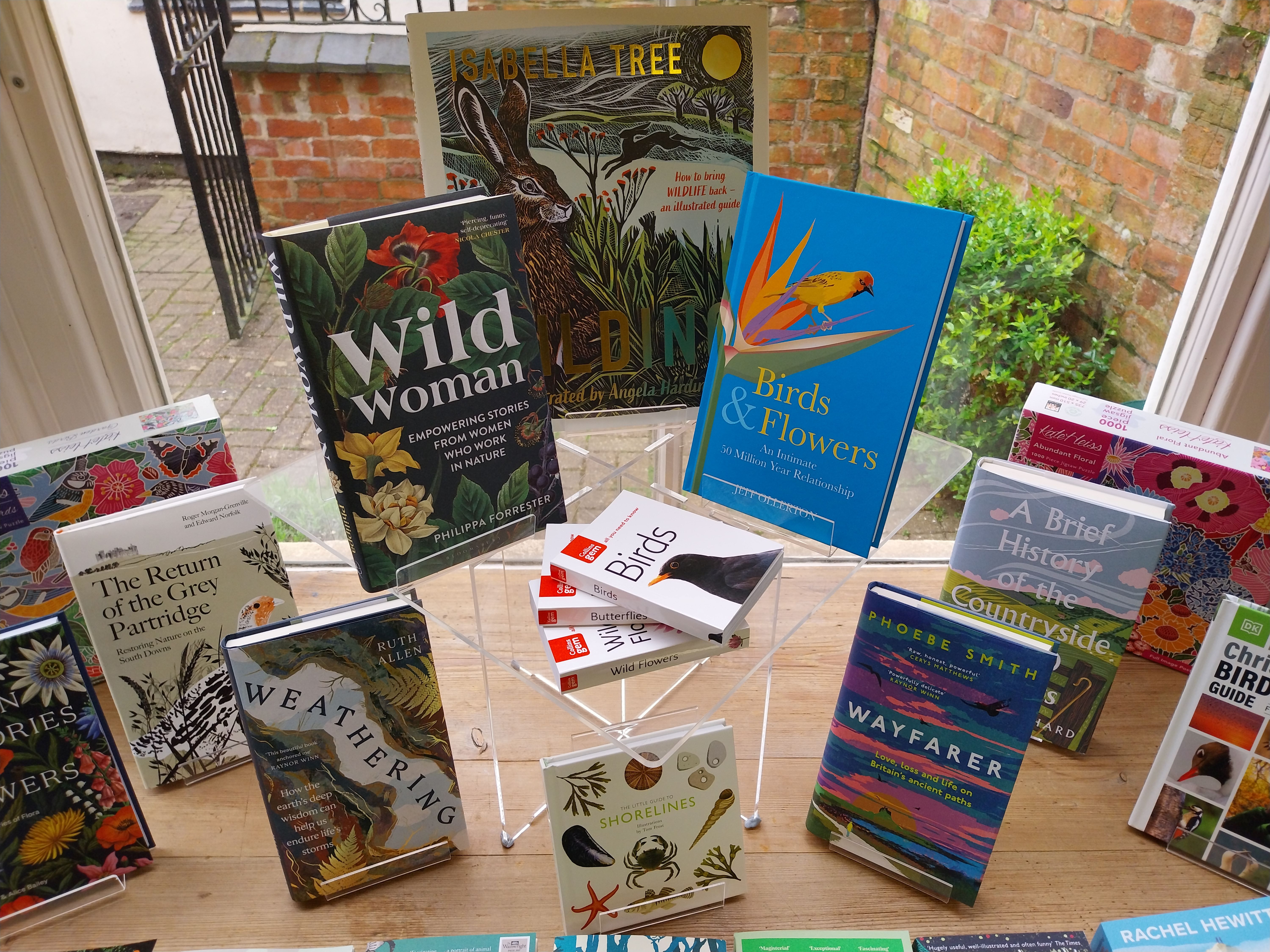
The reviews of Birds & Flowers: An Intimate 50 Million Year Relationship are starting to appear in blogs, magazines and journals. The latest, by Diane Campbell, has just been published in the Journal of Pollination Ecology and I’m so pleased that it was positive! I’ve only met Diane a couple of times at conferences but I have a lot of respect for her work. The review is fair and balanced, and gratifyingly enthusiastic, for example:

In this delightful book, [Ollerton] describes the ways that birds and flowers interact. As in his previous book, Pollinators & Pollination: Nature and Society, [he] takes a deeply personal approach to the subject. He combines anecdotes from his research travels around the world, to mountains of Kenya and Tanzania, the Andes of Peru, Brazil, and Nepal, among other places, with his contributions to, and masterful knowledge of, the recent literature…

The review is free to read and download from Journal of Pollination Ecology. I’m so glad that people are enjoying the book – if you’ve bought or borrowed a copy, please do leave a comment and let me know what you think.

Reusing Plant-Pollinator Datasets – a free WorldFAIR webinar on 18th April

A message from Dr Debora Drucker, WorldFAIR Agricultural Biodiversity Case Study Lead:

Registration is open to our contribution to the WorldFAIR webinar series – “Reusing Plant-Pollinator Datasets: a Global Perspective with Guidelines and Recommendations inspired by Pilot Studies from Africa, the Americas and Europe”.

It will be held on April 18 at 2:00 pm – 3:00 pm (Times in UTC) – https://worldfair-project.eu/event/the-worldfair-webinar-series-reusing-plant-pollinator-datasets-a-global-perspective-with-guidelines-and-recommendations-inspired-by-pilot-studies-from-africa-the-americas-and-europe/

We will present results from Deliverables 10.2 & 10.3, with focus on our pilot studies:

Drucker, D., Salim, J. A., Poelen, J., Soares, F. M., Gonzalez-Vaquero, R. A., Ollerton, J., Devoto, M., Rünzel, M., Robinson, D., Kasina, M., Taliga, C., Parr, C., Cox-Foster, D., Hill, E., Maues, M. M., Saraiva, A. M., Agostini, K., Carvalheiro, L. G., Bergamo, P., Varassin, I.; Alves, D. A., Marques, B., Tinoco, F. C., Rech, A. R., Cardona-Duque, J., Idárraga, M., Agudelo-Zapata, M. C., Marentes Herrera, E. Trekels, M. (2024). WorldFAIR (D10.2) Agricultural Biodiversity Standards, Best Practices and Guidelines Recommendations (Version 1). Zenodo. https://doi.org/10.5281/zenodo.10666593

Drucker, D. P., Salim, J. A., Poelen, J., Soares, F. M., Gonzalez-Vaquero, R. A., Devoto, M., Ollerton, J., Kasina, M., Carvalheiro, L. G., Bergamo, P. J., Alves, D. A., Varassin, I., Tinoco, F. C., Rünzel, M., Robinson, D., Cardona-Duque, J., Idárraga, M., Agudelo-Zapata, M. C., Marentes Herrera, E., Taliga, C., Parr, C.S., Cox-Foster, D., Hill, E., Maués, M.M. Agostini, K. Rech, A.R., Saraiva, A. (2024). WorldFAIR (D10.3) Agricultural biodiversity FAIR data assessment rubrics (Version 1). Zenodo. https://doi.org/10.5281/zenodo.10719265

We reserved a good amount of time for Q&A – I hope to see you there and have a nice discussion!

The flower that’s pollinated by birds, bees….and the wind!

In my new book Birds & Flowers: An Intimate 50 Million Year Relationship I spend a bit of time discussing the idea of the bird pollination syndrome that we refer to as ‘ornithophily’, its limitations, and the fact that it has two distinct meanings that are often conflated. One of the problems with ornithophily, and indeed all of the syndromes, is that historically it’s sometimes blinkered scientists to the extent that they only look at the flower visitors that are “right” for the syndrome, ignoring the rest or dismissing them as “secondary pollinators”, a term I dislike.

Why do I dislike that term? Because it fails to capture the complexity of flower-pollinator interactions and relegates an important component of plant reproduction to a subsidiary role. I could go on about this at some length, but if you’re interested in discovering more, look at pages 62-65 of Birds & Flowers. There I contrast the classical Most Effective Pollinator Principle with the equally valid (but much less well studied) Least Effective Pollinator Principle, with a segue into one of my favourite tracks from Led Zeppelin’s second album: What is and What Should Never Be.

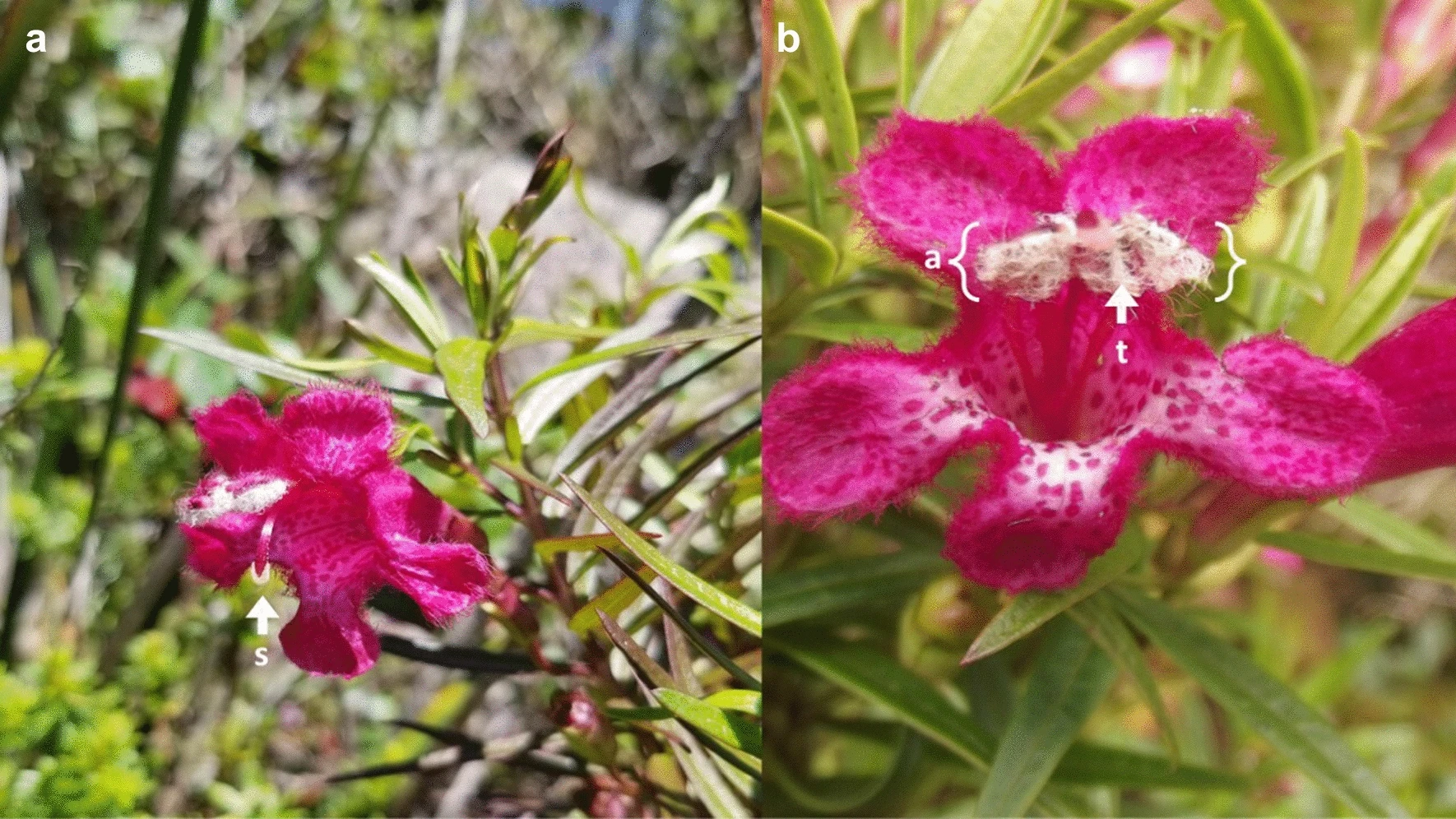
But back to the real subject of this post – a flower that corresponds to the classical bird pollination syndrome BUT is also pollinated by bees and (very surprisingly) wind! It’s such an interesting paper by Brazilian ecologists Amanda Pacheco, Pedro Bergamo & Leandro Freitas – here’s the reference and a link to the study:

Pacheco, A., Bergamo, P.J. & Freitas, L. (2024) An unexpected case of wind pollination: ambophily in an ornithophilous tropical mountaintop Orobanchaceae. Plant Systematics and Evolution 310, 9. https://doi.org/10.1007/s00606-024-01890-6

For over 100 years the classical pollination syndromes have acted as a framework for understanding the ecology and evolution of plant-pollinator interactions. But we’ve long known that while they can be a useful shorthand, they do not fully reflect the complexity of how pollination systems evolve. That shouldn’t surprise us because, as I point out in my two recent books, we have data (of any quality) on no more than 10% of the 350,000 or so species of flowering plants!

In addition, those plants for which we do have good data are NOT a random subset of the flowering plants: they have been specifically chosen by researchers because they look to be good systems with which to address particular ecological or evolutionary questions.

Which is fine, but we MUST recognise that this imposes significant restrictions on our understanding of the biodiversity of plant-pollinator interactions. The authors of this paper expressed it very well when they wrote that assumptions about:

“predictability may cause researchers to take for granted that only birds pollinate ornithophilous flowers, hindering research on the contribution of other vectors.”

To which I’d add: it also hinders our understanding of how these interactions evolve over long time scales and across multiple populations.

An obvious question is: how frequent are these sorts of complex pollination systems, involving different pollen vectors of an apparently specialised flower? The answer is that we simply don’t know, because most researchers would have not gone into this level of detail. So a huge congratulations to the authors for a great study – I hope it stimulates others to look beyond the ‘expected’ pollinators of flowers.

Photos: Nathália Susin Streher from the original paper.

More from the WorldFAIR Project: Agricultural biodiversity FAIR data assessment rubrics for plant-pollinator interactions

The final deliverable from the WorldFAIR Project with which I’m involved has recently been published and can be freely downloaded from Zenodo by following the link below. The report is called “Agricultural biodiversity FAIR data assessment rubrics” and in it we present the results from a series of six pilot studies that adopted the FAIR* standards and our recommendations from the previous report.

This document complements the previous one by giving examples and setting out guidelines that allow researchers and practitioners to ensure FAIRness in their plant-pollinator interaction data.

Here’s the full reference:

Drucker, D. P., Salim, J. A., Poelen, J., Soares, F. M., Gonzalez-Vaquero, R. A., Devoto, M., Ollerton, J., Kasina, M., Carvalheiro, L. G., Bergamo, P. J., Alves, D. A., Varassin, I., Tinoco, F. C., Rünzel, M., Robinson, D., Cardona-Duque, J., Idárraga, M., Agudelo-Zapata, M. C., Marentes Herrera, E., Taliga, C., Parr, C.S., Cox-Foster, D., Hill, E., Maués, M.M. Agostini, K. Rech, A.R., Saraiva, A. (2024). WorldFAIR (D10.3) Agricultural biodiversity FAIR data assessment rubrics (Version 1). Zenodo. https://doi.org/10.5281/zenodo.10719265

Although this is the last formal deliverable from our WorldFAIR work package, it’s not the final output that we have planned. I’ll report back on the journal paper(s) that we are writing as and when they are published.

*Findable, Accessible, Interoperable & Reusable (or sometimes Reproducible)

Can coffee plantation design boost both productivity and sustainability? A new study says YES!

One of the most productive research collaborations in which I’ve had the pleasure to be involved has been with André Rodrigo Rech in Brazil. It started when he was a postgrad working on his PhD, and has now continued as André has developed into fully-fledged academic with his own research group. That productivity has been fueled by a lot of coffee, of course, as you’ll know if you’ve read my book Pollinators & Pollination: Nature and Society!

Our most recent paper concerns coffee production in Brazil and how the design and management of plantations can both support wild bee populations AND increase the quality and quantity of the crop. One of the lead authors Gudryan Baronio has written a post about the work over on The Applied Ecologist blog – here’s the link: https://appliedecologistsblog.com/2024/02/26/can-coffee-plantation-design-boost-both-productivity-and-sustainability/

Here’s the reference – if you want a PDF of the paper, please send me a message via my Contact page:

Pereira Machado, A.C., Baronio, G., Soares Novaes, C., Ollerton, J., Wolowski, M., Natalina Silva Lopes, D. & Rech, A. (2024) Optimizing coffee production: Increased floral visitation and bean quality at plantation edges with wild pollinators and natural vegetation. Journal of Applied Ecology (in press)

Here’s the abstract:

  1. Animal pollination is important for more than 75% of agricultural crops, including coffee, whose productivity can increase with adequate pollination. Bees, including many solitary species, are diverse pollinators, with around 85% of them considered more effective than honeybees in pollen transfer. We assessed the coffee plantation and its surrounding vegetation for solitary bee nesting throughout the coffee flowering season and measured their impact on coffee productivity.
  2. We installed collection stations with trap nests inside a coffee plantation, on the border and inside the native vegetation in a farm in Diamantina, MG, Brazil. We used 10 weekly monitored replicates at least 1 km apart. We evaluated fruiting by autogamy in relation to natural pollination and used the increase in fruit set from pollinators to calculate the farmer’s monetary gain. We recorded bee visits to the exposed flowers during coffee flowering considering both on the edge and inside the coffee plantation. Ripe fruits were dried, counted and weighed.
  3. We discovered 132 solitary bee nests outside the plantation, with 54% containing coffee pollen grains, indicating coffee as an essential resource for bees even outside the crop area. More bee visits occurred at the coffee plantation’s edge, resulting in increased fruit production, denser fruits, and rounder fruits in that area. Bagged flowers produced consistent seeds in all locations. The farmer could earn an extra US$1736.37 per hectare if the entire area received the same level of pollination contribution from bees as observed at the coffee border.
  4. Synthesis and applications. Our study emphasises the key role of pollinators in coffee production and their impact on fruit and seed characteristics. Bee visits were more frequent on border areas, emphasising their reliance on natural nesting sites. Bee-mediated pollination positively affected fruit traits and self-pollinated fruits in plantation borders had reduced mass. Solitary bee nesting was primarily observed in native vegetation, underlining its importance for bee populations. Pollen composition in nests varied with proximity to coffee plantations, indicating landscape vegetation influences pollinator foraging. These findings support optimising coffee plantation design by preserving native vegetation to increase coffee yields and conserve biodiversity.

Image © Ana Carolina Pereira Machado

Just published – WorldFAIR Agricultural Biodiversity Standards, Best Practices and Guidelines Recommendations for plant-pollinator interactions

One of the projects in which I’m currently involved is the WorldFAIR project. Funded by the European Commission, WorldFAIR is exploring how to make data FAIR – Findable, Accessible, Interoperable and Reusable – across a range of different disciplines in the sciences and humanities.

My involvement is specifically with Work Package 10, which is focused on data standards for plant-pollinator interactions, particularly as they relate to pollination of agricultural crops.

I’m delighted to say that the second deliverable from that work – a set of standards, best practices and guidelines recommendations – is now available for free download if you follow the link in this reference:

Drucker, D., Salim, J. A., Poelen, J., Soares, F. M., Gonzalez-Vaquero, R. A., Ollerton, J., Devoto, M., Rünzel, M., Robinson, D., Kasina, M., Taliga, C., Parr, C., Cox-Foster, D., Hill, E., Maues, M. M., Saraiva, A. M., Agostini, K., Carvalheiro, L. G., Bergamo, P., … Trekels, M. (2024) WorldFAIR (D10.2) Agricultural Biodiversity Standards, Best Practices and Guidelines Recommendations (Version 1). Zenodo. https://doi.org/10.5281/zenodo.10666593

Here’s the first paragraph of the summary:

The WorldFAIR Case Study on Agricultural Biodiversity (WP10) addresses the challenges of advancing interoperability and mobilising plant-pollinator interactions data for reuse. Previous efforts, reported in Deliverable 10.1 – from our discovery phase – provided an overview of projects, best practices, tools, and examples for creating, managing and sharing data related to plant-pollinator interactions, along with a work plan for conducting pilot studies. The current report presents the results from the pilot phase of the Case Study, which involved six pilot studies adopting standards and recommendations from the discovery phase. The pilots enabled the handling  of concrete examples and the generation of reusable materials tailored to this domain, as well as providing better estimates for the overall costs of adoption for future projects.

Adaptable Elder – and a nice review of my book by Mark Avery!

One of the many things that I love about Common Elder (Sambucus nigra), and which I didn’t have space to properly convey in my article about the species last year, is just how adaptable it is as a species. The tree possesses a lot of what biologists term “phenotypic plasticity“. This is the ability of an organism to flexibly change aspects of its morphology or behaviour or physiology in response to differences in the environment. Plants are especially good at this because, if they find themselves growing in less-than-optimal conditions, they can’t just uproot themselves and leave for pastures new. This is obvious to anyone who has seen a houseplant struggling in a dark corner of a room: the poor plant will etiolate and bend as its yellowing foliage tries to reach the light from a distant window. The same plant grown on a sunny windowsill will be more compact, greener, and healthier.

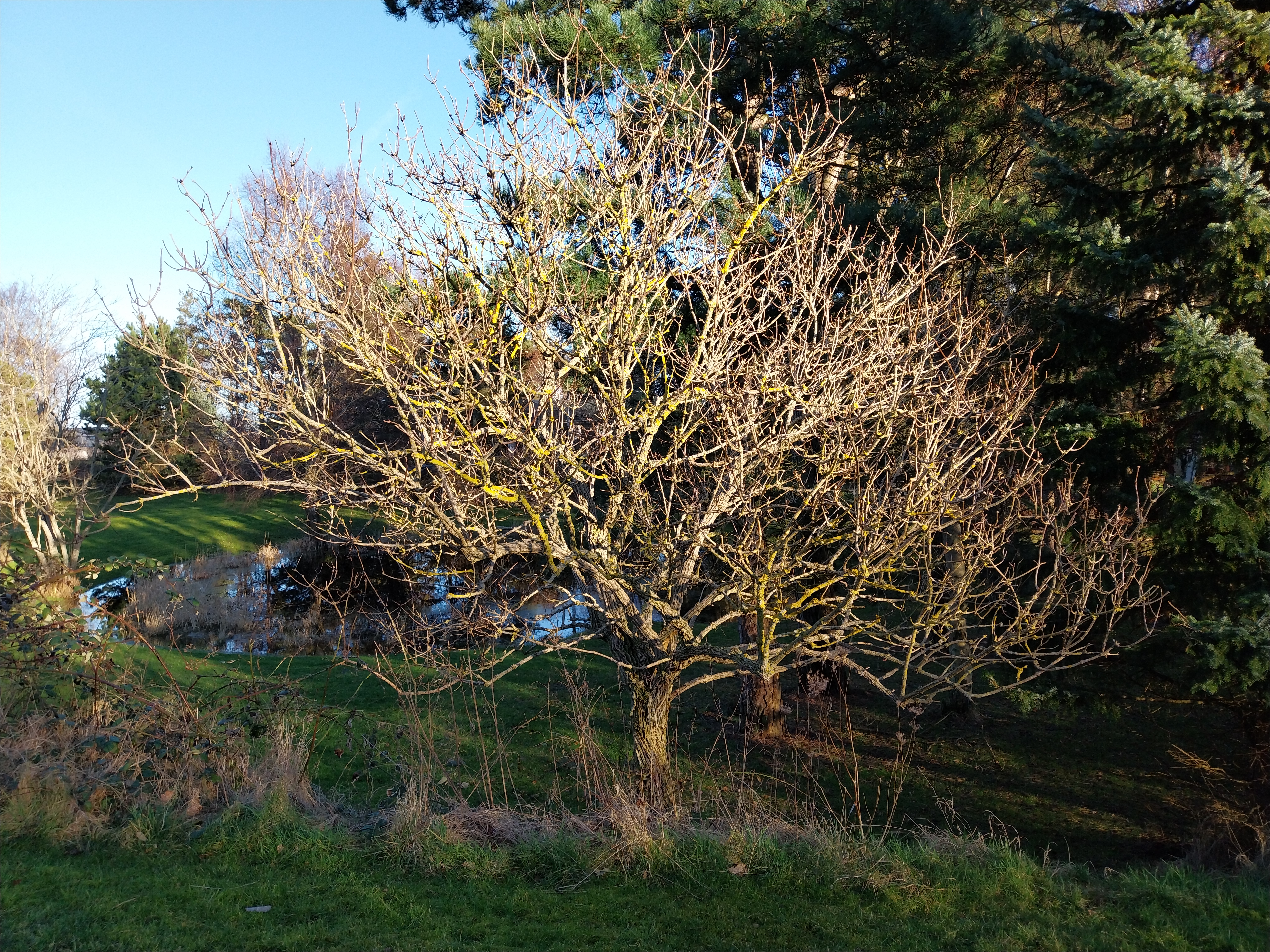
When it comes to Elder, and indeed other trees, winter is often the best time to see this plasticity, when the trunks and boughs are not cloaked in greenery. On a coastal walk at Klintebjerg yesterday, I spotted three rather different phenotypes of Common Elder which nicely illustrate this environmental context dependency.

The first was a wind-tortured tree growing at the base of a low hill, directly in the teeth of the prevailing Kattegat weather, its trunk bent away from the sea and its branches lopsidedly pruned:

The second was a more fortunate specimen, growing in the lee of that same hill and allowed to spread its symmetrical arms, as though waiting to embrace any passing birds. It had clearly never been pruned back by the landowner, who had allowed it to grow as a fine, single-trunked small tree:

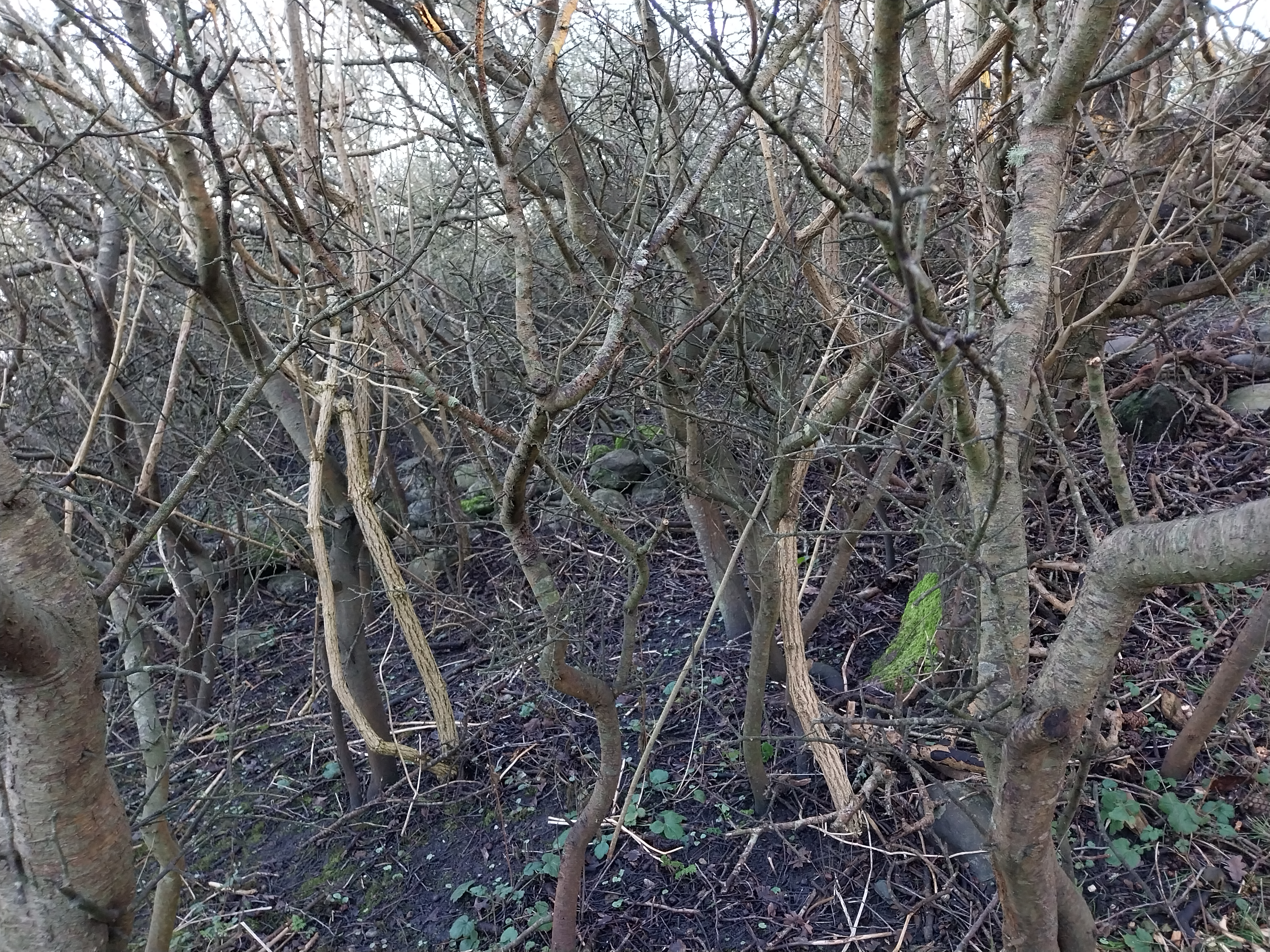
As we walked back down the hill via a narrow path, enclosed and over-topped by a fairy tale canopy of dense, twisted Blackthorn (Prunus spinosa), I spotted another phenotype, different again. I initially thought that they were the stems of a woody climber, perhaps Old Man’s Beard (Clematis vitalba) or European Honeysuckle (Lonicera periclymenum). When I looked closer it was clear that these were Elder, growing narrow and long, using the Blackthorn as support, as they struggled to reach up through the canopy to gain the light:

There were several individuals like this, presumably the result of seed dispersal by birds perched within the Blackthorn. I don’t think that I’ve ever seen Elder growing in quite this way before, but then how often do we get to peer deeply into the secrets hidden within a dense Blackthorn patch?

I had only planned to write about Common Elder today, but I can’t resist mentioning that, over on his blog, ornithologist Mark Avery has written a very nice review of Birds & Flowers: An Intimate 50 Million Year Relationship. He describes my book as having:

…a lightness of touch and tone that should not be taken for lightness of understanding….This is a fine example of a book which is pitched to increase the public understanding of ecology and evolution, and succeeds.

Thank you Mark, that’s very gratifying to read, and I’m glad that you enjoyed it!

Read my author interview and get a 25% discount off ‘Birds & Flowers’, ‘Pollinators & Pollination’ and other books from Pelagic Publishing!

I recently did a short interview with Pelagic Publishing’s marketing person, Sarah Stott, which you can read here: https://pelagicpublishing.com/blogs/news/birds-and-flowers-author-interview.

On that page you can sign up to Pelagic’s newsletter (which I STRONGLY recommend, because they produce some great natural history and science books, and not just mine!) and by doing so you can receive a 25% discount on all orders.

What are you waiting for?

Leveraging Biodiversity Net Gain to address invertebrate declines in England – a new pre-print is available

Back in October I posted about a report I’d written that considered Biodiversity Net Gain (BNG) and what it could mean for pollinators. The report generated some interest and has helped to inform a study by University of Oxford PhD researcher Natalie (Nat) Duffus that has just been posted as a pre-print entitled “Leveraging Biodiversity Net Gain to address invertebrate declines in England” – here’s the link to it: https://ecoevorxiv.org/repository/view/6667/

In this work, Nat has asked a group of us who are interested in this topic to assess the limitations of the current BNG system and how it might be improved to better support invertebrate populations. Please do read the study and comment either on the blog or directly on the pre-print. We’re interested in people’s views on this and whether we have missed anything important.

Here’s the abstract:

Meeting ambitions such as the Global Biodiversity Framework 2030 targets will require multiple conservation mechanisms that benefit the widest possible range of habitats and species. Using England as a case study, here we evaluate the likely impact of a novel and ambitious ecological compensation policy, Biodiversity Net Gain (BNG), on terrestrial insects, spiders, and other arthropods (‘invertebrates’), a functionally important but rapidly declining component of biodiversity. Current implementation of BNG in England sets out to provide a 10% uplift in biodiversity when infrastructure development (such as housebuilding) occurs. However, BNG is a habitat-driven approach, which risks overlooking important considerations relevant to invertebrate conservation, threatens to further reduce the size and quality of their habitats, and may increase habitat fragmentation. BNG – as currently implemented – therefore represents a missed opportunity to use a universally applied policy to benefit invertebrates and other functionally important components of biodiversity. We suggest ways forward to realign BNG with what we know to be crucial for successful invertebrate conservation, and with other policy mechanisms such as the National Pollinator Strategy. This will ensure that appropriate habitats and conditions for invertebrates are retained, enhanced, and created at a landscape scale, and that BNG is optimised to contribute to broader national conservation targets. As biodiversity accounting and offsetting schemes such as BNG are increasingly adopted around the world, the experience of BNG in England provides valuable insights into how ecological compensation programmes could be better designed, implemented, and monitored to ensure that benefits for a wide variety of taxa are achieved.

It’s publication day – “Birds & Flowers” is officially out!

After what seems like a long wait, for me at least, today marks the official publication of Birds & Flowers: An Intimate 50 Million Year Relationship! I received my advance copies on Friday, an event that Karin commemorated with a short unboxing video:

https://www.facebook.com/100000638827245/videos/2177574652581431

It’s been a long journey from pitching the initial idea to Pelagic Publishing back in early 2021, through the various drafts that have culminated in the finished book. As you can see from the images on this post and the endorsements on the publisher’s web site, Birds & Flowers has so far been warmly received. I hope that future reviews are as positive!

A few people have asked me what’s next. In fact I have definite plans (as in topics, provisional titles, the start of chapter structure, and even some initial writing) for three more books. The next one is actually about half written, but then I have been working at it, on and off, for 30 years! Watch this space for more details…

In the shorter term, Karin and I are returning (permanently) to the UK at the start of March. We’ve enjoyed our time in Denmark, it’s been a fun two and a half years, but we’re missing our immediate family plus we both have some interesting work possibilities to pursue. In mid-April I will be going to China for three months to work with my colleague Zong-Xin Ren at the Kunming Institute of Botany. I’ll be sure to blog about my adventures there!

In the meantime, if you buy my book or borrow it from the library or from a friend, please let me know what you think in the comments section below.