At a time when the UK’s wildlife is under increasing pressure, the everyday spaces we manage—especially gardens—are becoming ever more important. Although interest in wildlife-friendly gardening has grown enormously in recent years, the evidence behind different approaches is not always clear. Well-meaning interventions can be highly effective, but some can miss the mark without a grounding in sound ecological knowledge.
That’s exactly why the Wildlife Gardening Virtual Symposium has become such a valuable annual event. It brings together researchers, practitioners, and anyone involved in managing green spaces to explore what the science is actually telling us about creating gardens that support biodiversity.
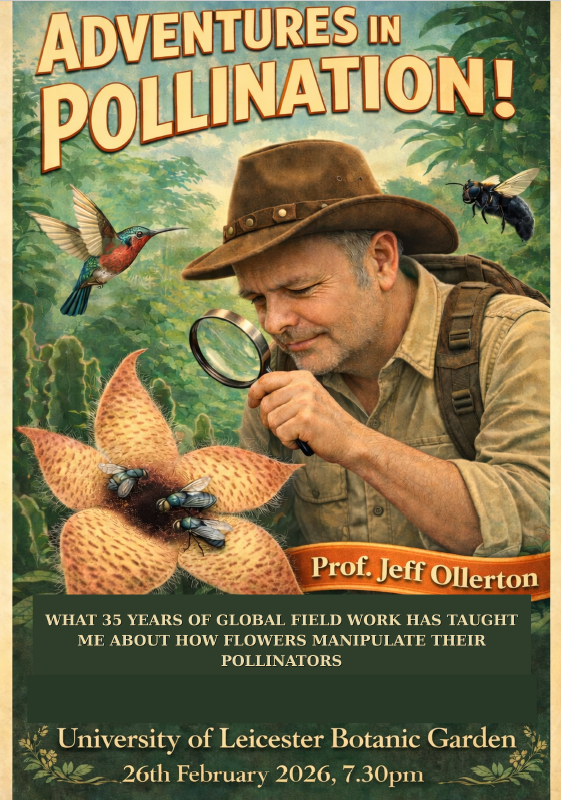
This year’s programme, chaired by Hafsah Hafeji of the Wildlife Gardening Forum, features four invited talks covering ponds, pollinators, fungi, and urban mammals, along with an update on emerging policies and projects shaping the wildlife-gardening landscape.
2026 Speaker Programme
Fragments of Paradise: Garden Ponds as Wildlife Habitat Dr Mike Jeffries – Northumbria University
Gardening for Pollinators: It’s About More Than Just Flowers! Prof Jeff Ollerton – University of Northampton & Kunming Institute of Botany
How Fungi Make Gardens Flourish Dr Jassy Drakulic – Royal Horticultural Society
Recording Wild Mammals in Urban Spaces: A Multidecadal Study David Wembridge – People’s Trust for Endangered Species
Whether you’re involved in ecology, horticulture, landscaping, consultancy, education, or simply interested in the future of wildlife in our gardens, the symposium offers a concise way to catch up on current evidence and emerging thinking.
The ProPollSoil project officially got underway on 1st October, and this week (16th–20th November) our consortium gathered in Freising, Germany, for the kick-off meeting hosted by the Technical University of Munich. It was an inspiring start: dozens of experts from across Europe coming together to explore two big questions: How does the health of our soils shape the fate of pollinators? And how do pollinators influence soil health?
Most people think of pollination as something that happens in the air or on flowers, but for many species the story begins underground. Thousands of bees, hoverflies, beetles and wasps depend on soil to nest, overwinter, or complete parts of their life cycle. For example, around half of the solitary bee species in Britain and Ireland are what we term “ground nesting” and make their nests in different types of soil. Yet soil conditions—structure, temperature, contaminants, farming practices—are changing rapidly. As part of the EU’s Mission Soil programme, ProPollSoil aims to understand these hidden links so we can better protect the pollinators that support our food systems and ecosystems.
The project brings together specialists in entomology, soil science, ecology, modelling, agriculture, economics, and communication, forming a truly interdisciplinary team. Through desk-based reviews, fieldwork, lab experiments, monitoring and advanced modelling techniques, we’ll be investigating how soil influences pollinator survival and what we can do to improve it.
ProPollSoil is built around six key goals, including identifying the soil conditions that help pollinators thrive, testing innovative ways to monitor soil-dependent species, evaluating how different land-use and farming practices affect pollinators, and developing practical soil-management solutions—from reduced tillage to cleaner soils—that can slow or reverse their decline.
My own role mainly focuses on understanding the state of our current knowledge of the biology and ecology of soil-dependent pollinators and their interactions with soils, other invertebrates, and plants. I’ll also be working on integrating information about pollinators’ soil dependencies into the European Atlas of Plant-Pollinator Associations (EuroAPPA), part of the related Butterfly Project, whose kick-off meeting I documented on the blog earlier this year.
Together, these efforts will help build a clearer, more complete understanding of how life belowground supports life aboveground. It’s an exciting journey, and we’re only just getting started!
My sincere thanks to all of the ProPollSoil consortium members whose passion and expertise made for a stimulating few days in Germany. And a special shout-out for the team from Poland who brought with them some delicious, PropPollSoil branded sweets:
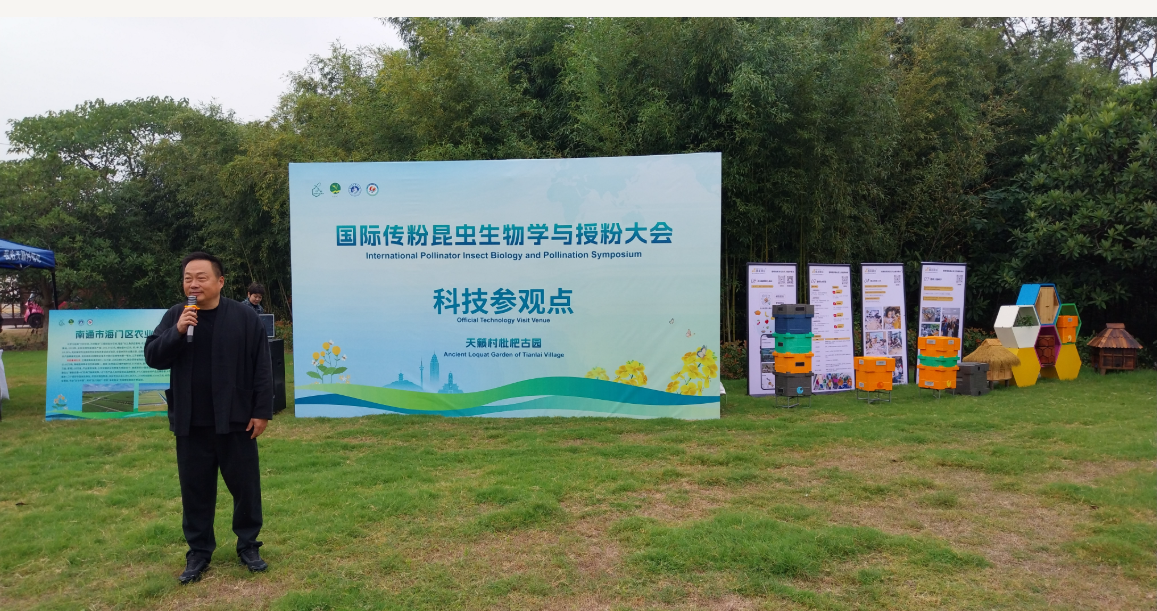
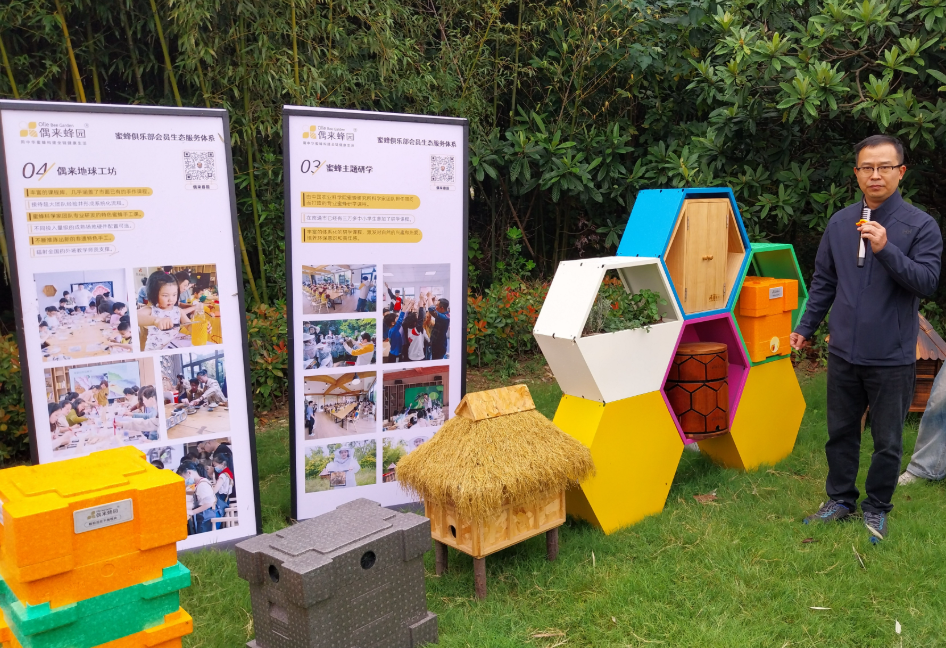
Last week I returned from a 14 day visit to China to colleagues at the Kunming Institute of Botany in Yunnan, part of a three-year commitment to working there that I documented on the blog last year, starting here. Some of my recent trip involved a long weekend in the city of Nantong, just north of Shanghai, where I was an invited speaker at the International Pollinator Insect Biology and Pollination Symposium. During a full day of talks from researchers and practitioners, via the excellent simultaneous interpretation service provided by the organisers, we learned about recent developments in the world of Chinese honey bees and wild pollinators. There were also international guest speakers from Australia, Argentina, and the UK, in person and online.
First of all, a number of speakers commented on the growing realisation in China that the value of crop pollination services by honey bees (both the native Asian Apis cerana and the European A. mellifera) far outweighs the value of the hive products such as honey, wax and royal jelly – see this from the 2021 study by Shibonage K Mashilingi and colleagues:
The total economic value of pollination amounted to US$ 106.08 billion in 2010, representing 19.12% of the total production value of Chinese agriculture
In comparison, the global honey market was valued at just US$ 9.01 billion in 2022. That such an understanding of the much greater economic value of pollinators to agriculture was relatively slow in coming is perhaps not surprising – it’s easier to weigh a physical product than it is to assess the contribution of bees and other insects to an apple harvest, for instance. But this awareness is a crucial step towards understanding the many reasons why pollinators need protection.
Which leads me to my next point: there was considerable political interest in the conference and in the topic more broadly. The meeting opened with almost an hour of introductory remarks by high-ranking Chinese officials, including the Vice Mayor of the regional government, the Vice President of the Chinese Academy of Agricultural Sciences, and the Secretary General of the Ministry of Agriculture and Rural Affairs of China. All of them commented on the importance of pollination to both crops and wild plants, and the need to reduce the amount pesticides being used in Chinese agriculture. I can’t recall ever being in a pollination symposium in any other country where there was such a political presence. I think that it says a lot about the Chinese willingness to translate science and technology into government policy and actions.
At the end of the opening session I had the chance to talk briefly with Liu Jian, former Vice Minister of Agriculture and Rural Affairs of China. Via an interpreter we agreed on the importance of pesticide reduction for protecting pollinators, a theme he had emphasised strongly in his talk, and I presented him with a copy of my book Pollinators & Pollination: Nature and Society:
Following the opening addresses there was a talk by the President of the Apicultural Science Association of China, Prof. Peng Wenjun, who gave us “An overview of the development of China’s bee pollination industry”. He described pollinators as the “invisible pillar” of agriculture, which is a wonderful phrase, and set out a strategy for greater integration of government policies, science, and technological innovation in order to support both managed and wild pollinators.
The first set of talks ended about 6pm, then it was back to the hotel for a quick dinner, before returning to the venue for a set of 15 shorter, but no less excellent, talks by postgraduate and postdoctoral researchers. This over-ran slightly and finally drew to a close at about 10pm, signalling the end of a very long, but very stimulating, day.
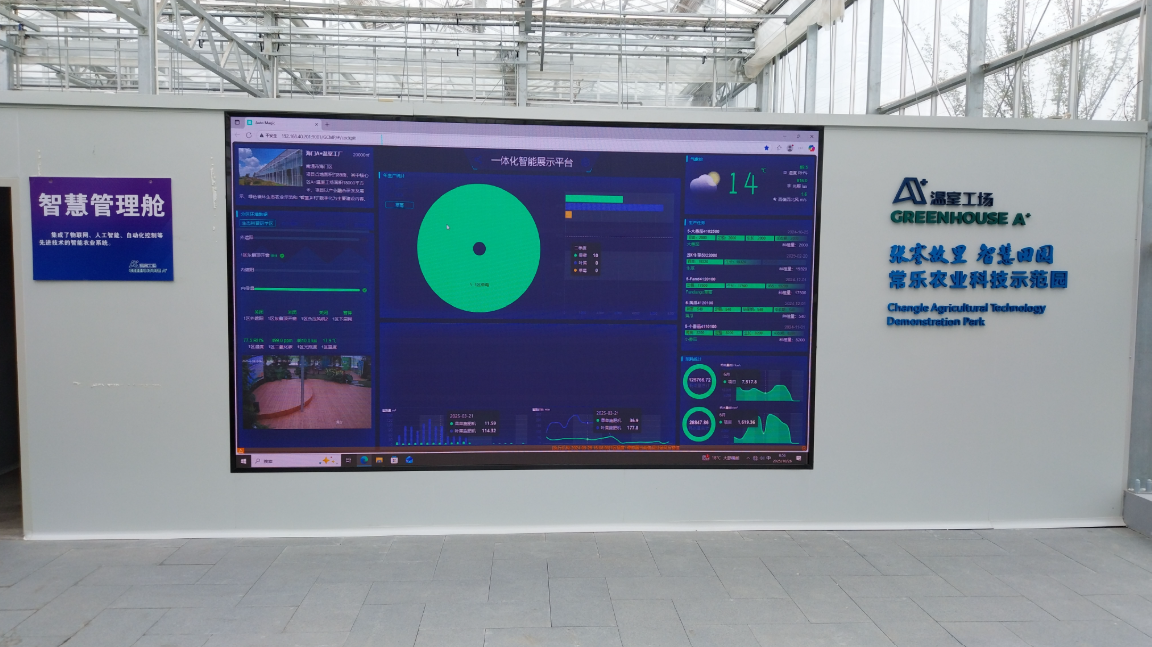
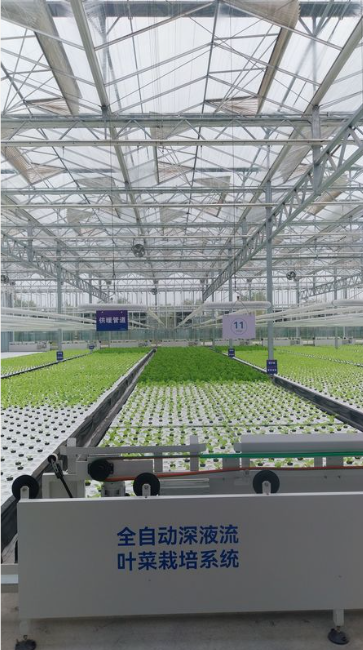
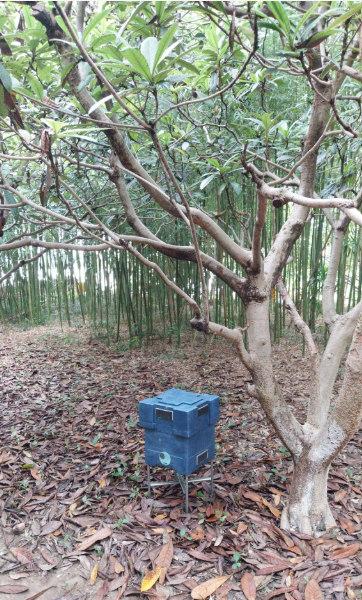
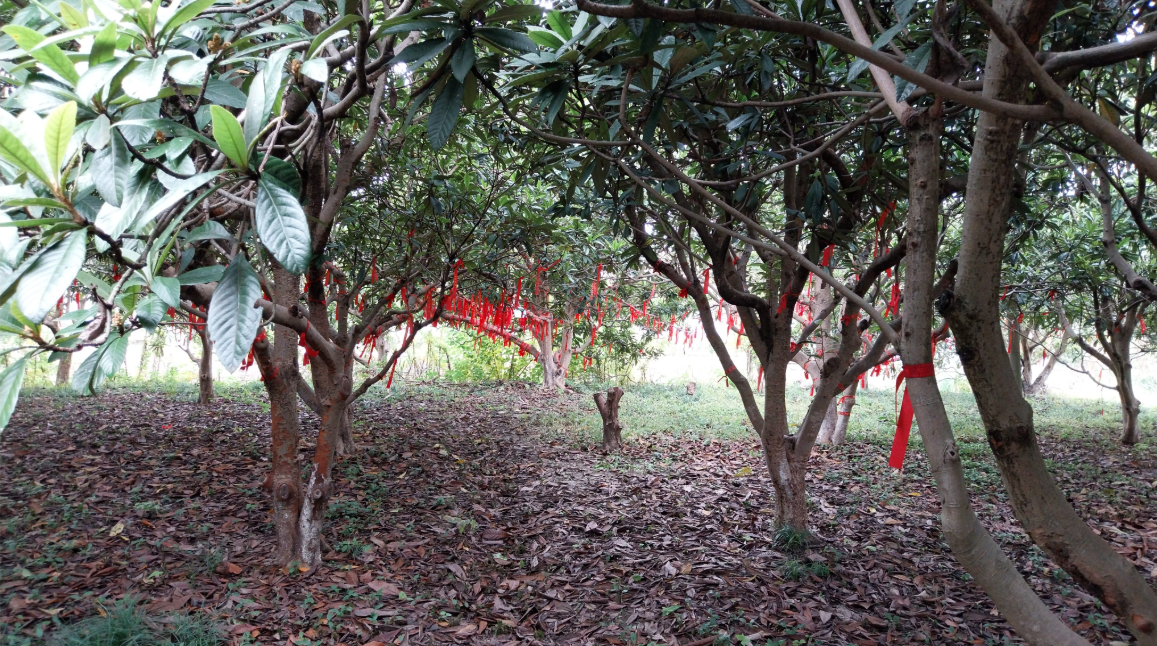
The following morning we were up early for a tour of some local agricultural facilities, including a high-tech glasshouse demonstration project and a loquat orchard that included trees which are thought to be around 300 years old. The thing that links these two contrasting agricultural systems is the requirement for managed pollinators to produce a crop: bumblebees (Bombus spp.) in the case of glasshouse tomatoes and the Asian honey bee (Apis cerana) for the winter-flowering loquat. Here are some photographs from that trip:
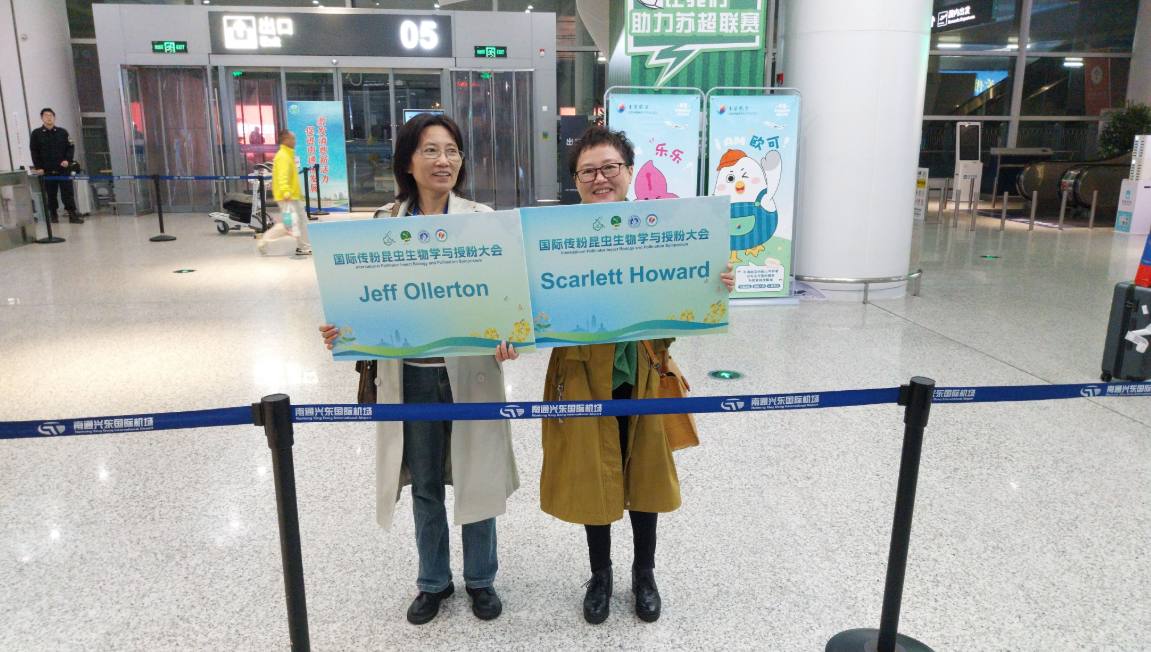
My sincere thanks to the organisers of the symposium for the invitation to speak and to my colleagues Zong-Xin Ren, Scarlett Howard, Yuansheng Fu, and Carlos Matallana-Puerto for their companionship on the trip. I’m grateful also to our personal translator-guides Yang and Gao who surprised us at the airport and made us feel so welcome:
It’s five years to the day since I left the University of Northampton. On that day, encouraged by Karin, I wrote two letters. One was “To the past” and the other was “To my future”. Once I’d written them they were sealed and tied up with a length of twine that we’d used as a timeline exercise.
This morning I opened the letters and thought about how far I (we) have come in the last five years. It was emotional but life-affirming to read those words to my past and future self. I’ll not go into the details of what I wrote – they will remain private – suffice to say, some of what I wanted to do has come to pass, some has not, and things that I never imagined would be possible have taken place!
If there’s a point to this story it’s that doors move in two directions – they open and they close. Big Life Decisions like leaving academia (or any other job for that matter) are really scary but they should not hold you back. I’m happier and healthier than I was five years ago and, while I won’t pretend that leaving my professorship behind was easy or that there’s been difficult times during the past half decade, it was one of the best decisions that I ever made.
So thank you to all of my colleagues and friends who have helped me on this journey, and especially to Karin for all her support.
Earlier this year I received an unexpected invitation from Bloomsbury Publishing to attend a book launch at Philip Mould’s gallery in London. Looking at the details I immediately said yes, because it combined three of my passions: natural history, art, and books! Not only that, but the topic of the book was one very close to my heart – the wildlife of our towns and cities.
Urban Plants is the latest addition to Bloomsbury’s British Wildlife Collection, a stunningly produced series that has set a new benchmark for natural history literature in this country. The author, Trevor Dines, formerly worked for the charity Plantlife, and is a real authority on urban botany. My expectations for this book were very high! So on the day of the book launch, Karin and I trundled down to the capital and spent part of the day at the National Gallery where, among other things, we enjoyed an exhibition by José María Velasco. As well as being a superb documenter of the 19th century landscapes of Mexico, Velasco was also profoundly interested in botany. We’d not planned it that way, but it was a nice coincidence.
The book launch itself was well attended and I found myself catching up with a few familiar faces from the world of British wildlife, and Trevor (whom I’d corresponded with but never met) treated us to a short reading:
I took the opportunity to buy a copy, had a quick chat with Trevor, who kindly signed the book, and then we headed back to catch a train.
So what do I think of Urban Plants?
It’s actually hard to praise the book too much without sounding unnecessarily gushy! But it really is one of the best books that I’ve read for a long time. In part that’s because it stirs deep emotions of me as a child, taking my first faltering steps into the world of natural history on the bomb sites and post-industrial landscapes of my native Sunderland. But it’s more than that: the author writes with elegance and authority on a topic about which he’s deeply passionate, and this comes through on every one of the amply illustrated pages. Trevor should be congratulated on producing a book that will be the go-to reference on the topic for many years to come.
And an important topic it is too: there’s no doubt naturalists who will sneer at the idea of urban botany, but (as the author points out) for many people in this country, the plants that they see every day in their home towns are almost their only connection to wildlife. For that reason alone it’s a subject to be taken seriously, and if a book like this can inspire more people to take a closer look at the plants with which we share our streets, roofs and walls, so much the better.
So do yourself a favour and take a walk with Trevor through the complex ecology and botany of built-up British landscapes. I learned a lot from Urban Plants and I highly recommend it as an addition to anyone’s Christmas list.
The Golden Lotus (Musella lasiocarpa) is one of China’s most iconic plants — a striking member of the banana family (Musaceae) that seems to bloom forever. Its brilliant yellow, lotus-like bracts have long made it a favourite of subtropical gardeners, though it also has utility as a food and fibre crop, and is associated with Chinese Buddhism. As you can see above it often features stylistically in Chinese temples, and in my visits to Yunnan we frequently encounter it during fieldwork on farms, planted to support terraced fields:
But despite its fame, one mystery has lingered for decades: what actually pollinates it?
Until now, Musella was thought to rely mainly on insects, particularly bees, for pollination. That assumption made it something of an outlier within the banana family, where most species are pollinated by birds or bats. But a new study, in which I was involved as part of an international team of predominantly Chinese and Brazilian researchers, has turned that view on its head.
By combining careful field observations with citizen science records, our team found that the Golden Lotus is regularly visited by an impressive diversity of birds — twelve species from five different families. As I documented in my recent book Birds & Flowers: An Intimate 50 Million Year Relationships, many of these visitors, such as bulbuls and sunbirds, are known nectar-feeders, and their behaviour at the flowers suggests that they are acting as effective pollinators. This discovery significantly expands what we know about the pollination ecology of the Golden Lotus, and places it firmly within the broader pattern of bird pollination that characterises much of the banana family.
Interestingly, the plant’s features — large, robust, vividly coloured bracts, abundant accessible nectar, and long-lived blooms — make perfect sense in this new light. These are traits that favour bird pollination rather than the short, concentrated visits typical of bees.
But the significance goes beyond one species. Bird pollination plays a vital, and often overlooked, role in China’s native flora, linking ecosystems from tropical rainforests to mountain valleys. Understanding these relationships is important not only for biodiversity conservation but also for horticulture — helping gardeners and landscape designers to create spaces that attract and sustain pollinators of all kinds.
The Golden Lotus has always been celebrated for its beauty and longevity. Now, we can add another layer to its story: a reminder that even the most familiar plants can still surprise us, and that nature’s partnerships are often more complex — and more colourful — than we imagine.
Here’s the reference with a link to the paper, which is open access:
Pollinators such as wild bees, butterflies, and hoverflies are in trouble worldwide. A major new study, published in Science and led by Gabriella Bishop and other scientists at Wageningen University & Research, shows that the oft-quoted figure of 10% semi-natural habitat in farmland landscapes is far too little to safeguard pollinators. Instead, the evidence points to a need for somewhere between 16% and 37% habitat cover, depending on the type of pollinator, if we are serious about halting declines. Suitable habitats include hedgerows, patches of woodland, species-rich grasslands, and flowering margins, and as a general rule, hoverflies need less of it whilst bumblebees and butterflies require more.
I was fortunate to play a part in this global assessment, contributing an unpublished dataset collected with my former PhD student, Sam Tarrant, who studied plant-pollinator interactions on restored landfill and established grassland sites. Seeing those data joined with dozens of other studies from around the world underlines something we have known for years: no single dataset, however carefully gathered, can give us the whole picture. To really understand what is happening to biodiversity—and to design conservation solutions that work—we need these kinds of global, mega-author syntheses that draw together evidence from many landscapes, taxa, and approaches.
The message from this analysis is stark but hopeful. More habitat means more pollinators, across all groups. Richer habitats with abundant flowers give an additional boost, but the overriding priority must be to increase the sheer area of natural habitat in farmed landscapes. Small-scale fixes like wildflower strips offer short-term benefits, but without enough space they can’t deliver recovery at scale. Long-term, secure habitat creation—on the order of decades, not seasons—is what pollinators, farmers, and ecosystems need.
Although the policy debate in Europe provided the backdrop for this study, the lessons (and the data) are global. Wherever agriculture dominates, the health of pollinator populations—and by extension our food security and biodiversity—depends on our willingness to give these insects the space and quality of habitat they require.
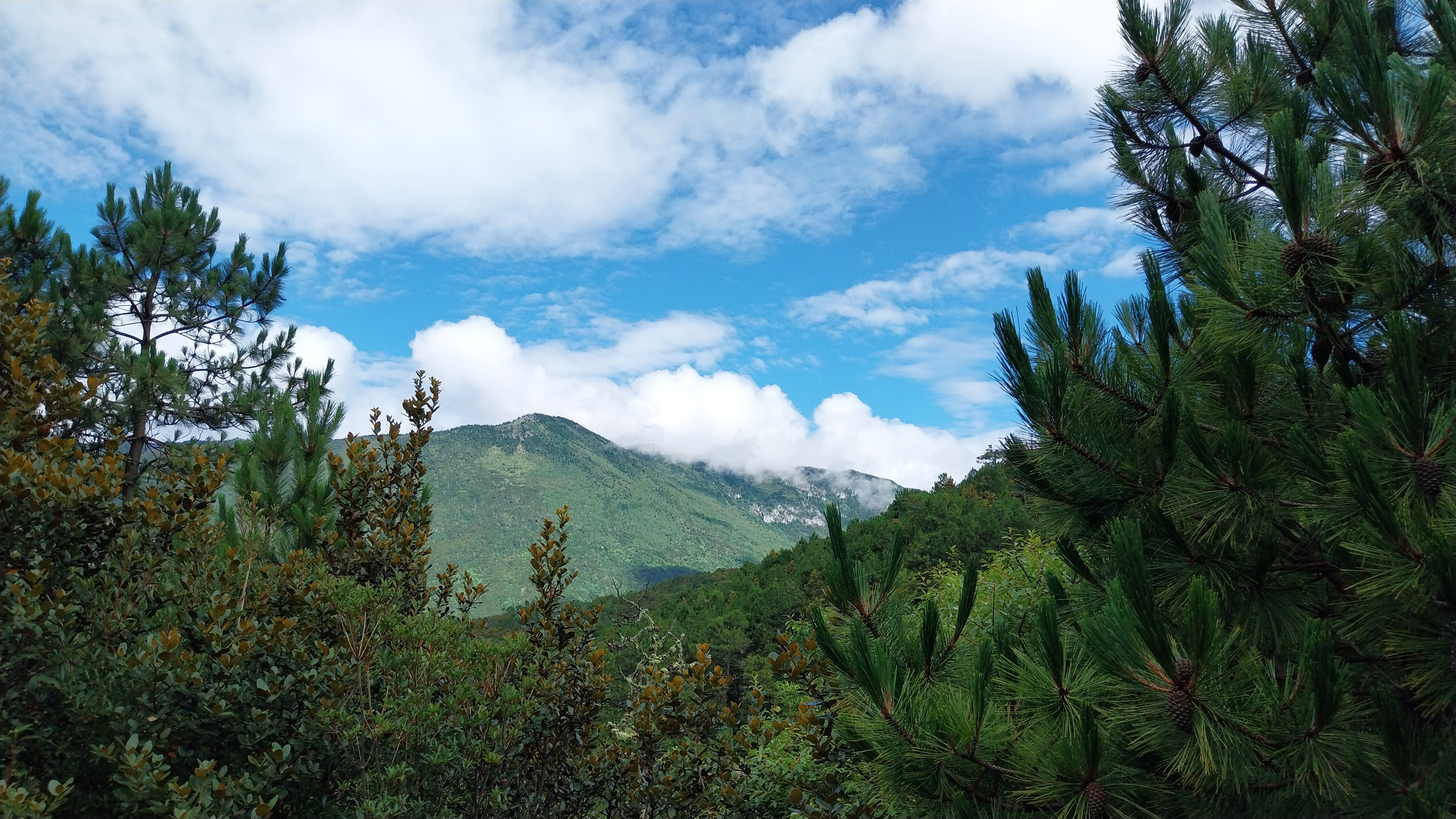
Looking ahead, we need to think bigger and work together. That means more international collaborations, more sharing of data, and more commitment to long-term solutions that transcend borders. The image at the start of this post is from my trip back to China in July this year. I deliberately chose it because, as you’ll see from the map below which is taken from the paper, there was no suitable data available for the study from that country. Or from Africa. Or Australasia. Or from most of tropical South America. That shows that as pollination ecologists we need to coordinate more in advance on these types of syntheses, and maximise the value of the kinds of data that we collect. The main take away from this study, however, is that if we want to reverse the declines in biodiversity, scientists, policymakers, businesses, farmers, and citizens all have a role to play. Pollinators remind us that nature is interconnected and global—our conservation efforts must be, too.
Here’s the full reference with a link to the study:
Biodiversity in human-dominated landscapes is declining, but evidence-based conservation targets to guide international policies for such landscapes are lacking. We present a framework for informing habitat conservation policies based on the enhancement of habitat quantity and quality and define thresholds of habitat quantity at which it becomes effective to also prioritize habitat quality. We applied this framework to insect pollinators, an important part 5 of agroecosystem biodiversity, by synthesizing 59 studies from 19 countries. Given low habitat quality, hoverflies had the lowest threshold at 6% semi-natural habitat cover, followed by solitary bees (16%), bumble bees (18%), and butterflies (37%). These figures represent minimum habitat thresholds in agricultural landscapes, but when habitat quantity is restricted, marked increases in quality are required to reach similar outcomes.
If you’ve read my book Birds & Flowers: An Intimate 50 Million Year Relationship, you’ll know that I spend a few pages discussing the long-standing paradigm of how interactions between plants and their pollinators evolve and result in the formation of new plant species. This is referred to as the Stebbins (or Grant-Stebbins) Most Effective Pollinator Principle (MEPP). The MEPP is fairly straightforward and intuitive: flowers evolve their colour, shape, scent, rewards, and so forth as adaptations to the type of flower visitor that successfully moves the most pollen between flowers.
However, the MEPP is not the only Principle in town – there’s also Aigner’s Least Effective Pollinator Principle (LEPP) which is not so intuitive. In the LEPP, flowers can adapt to pollinators that are less successful at pollination, as long as those adaptations do no interfere with the pollination services provided by other flower visitors.
As I note in Birds & Flowers, we don’t know which of these Principles is more frequent in nature, because the LEPP has been much less intensively studied than the MEPP. That’s in part because it’s less well known, but also because the field work and experimental procedures required to test the LEPP are much more challenging.
Kathleen and Bruce discuss not just the MEPP v the LEPP, but also other ways in which flowers can evolve, framed around the idea of floral evolution as movement across an “adaptive landscape,” where plants are not shaped only by one pollinator but by the need to maximise overall reproductive success. This perspective allows us to explore how flowers evolve when influenced by multiple pollinators, how transitions between floral forms take place, and how speciation occurs through a combination of factors beyond pollination alone. It emphasises that pollinators are important drivers of floral change, but speciation is more likely when divergence happens across several aspects of a plant’s ecology, not just through its flowers.
It’s a great review and well worth your time reading in detail. Perhaps my favourite line in the paper comes from the abstract: “The Grant–Stebbins model, while inspiring decades of empirical studies, is a caricature of pollinator-driven speciation and explains only a limited range of adaptive outcomes.” This is something that many of us have been arguing for years: the natural world is extremely complex, so we should not expect these ecologically critical interactions between flowers and their pollinators to have simple origins or ecologies.
The event takes place in the Wilkinson Room, St. John’s Church, Hills Road. Doors open at 7pm and the talk begins at 7.30pm. There’s a £2.00 charge for non-members – more details can be found by following this link.
Bees are among the most important pollinators in the natural world, quietly sustaining ecosystems and food production. While honeybees often steal the spotlight, a vast number of solitary and primitively eusocial bees play equally vital roles. But across both urban and natural landscapes, many of these species are facing worrying declines.
As cities expand, they’re increasingly being seen not just as threats to biodiversity, but as potential refuges for pollinators. Yet urban environments are very different from natural ones. The heat generated by buildings and concrete – known as the urban heat island effect – and the way green spaces are managed (often with little consideration for flowering plants) could be affecting bees in ways we’re only beginning to understand.
As part of a recent study led by my former PhD student Muzafar Sirohi, we explored how urban conditions might be influencing the timing of bee emergence and the sex ratios of different species. This work formed part of Muzafar’s PhD research, and I was pleased to be part of the team that supported and collaborated on the project.
We found that several solitary bee species were producing females before males – a reversal of the more typical pattern known as ‘protandry’, where males emerge first. Most bees in the families Apidae and Megachilidae did follow the usual male-first pattern, but there were some interesting exceptions, including Nomada marshamella and Nomada fabriciana. Soil-nesting species also showed a lot of variation in emergence timing, likely influenced by microclimatic differences in urban soils.
When we looked at overall sex ratios, patterns varied across bee families. In Halictidae, females were more common, whereas Apidae and Megachilidae were skewed towards males. Interestingly, the Colletidae family showed no strong bias either way. However, in five species from the Andrenidae and Halictidae families, we saw a clear difference between urban and natural environments: urban populations had a higher proportion of males.
This could suggest that urban habitats – especially those with limited floral resources due to mowing, paving, or the removal of wild plants – may not be supporting as many female bees. Since females are the ones responsible for nest-building and potentially pollination, as they visit more flowers, this imbalance could have long-term effects on bee populations and the pollination services they provide.
Our study adds to the growing body of evidence that urban environments can support pollinators – but only if managed thoughtfully. Cities need more than just green space: they need flowering plants, nesting habitats, and careful planning that recognises the delicate balance of bee ecology. With the right actions, we can make urban areas part of the solution to pollinator decline.
Solitary and primitively eusocial bees are essential pollinators of plants. However, recent observations indicate a decline in their populations in both urban and natural environments. Urban areas are increasingly recognized as potential habitats for bee conservation. Nonetheless, these urban habitats can influence the taxonomic and functional diversity of bee populations. Therefore, we hypothesize that the distinctive warmer climate of urban areas – resulting from the urban heat island effect – along with the potential scarcity of floral resources, contributes to shifts in emergence patterns and the sex ratio of solitary and primitively eusocial bees. We found that many solitary bee species produced females before males. Additionally, most species within the Apidae family were recorded as protandrous, with the exceptions of Nomada marshamella and Nomada fabriciana. All species of Megachilidae were found to be protandrous. We also observed significant variation in the emergence patterns of soil-nesting species. Notably, we did not find any relationship between sociality and nesting preferences in relation to sex-biased emergence. The overall sex ratio varied among different bee species and families. In Halictidae family, sex ratios were biased towards females, while the Apidae and Megachilidae families exhibited a skewed ratio towards males. The sex ratio in the Colletidae family did not show any significant difference. However, among the Andrenidae and Halictidae families, we identified five species with significantly different sex ratios between urban and nature areas, with a higher proportion of males observed in urban sites. This suggests that these species may have been affected by limited food resources, potentially due to urban management practices such as the removal of floral resources. This could lead to increased competition for resources among the species.