In this work, Nat has asked a group of us who are interested in this topic to assess the limitations of the current BNG system and how it might be improved to better support invertebrate populations. Please do read the study and comment either on the blog or directly on the pre-print. We’re interested in people’s views on this and whether we have missed anything important.
Here’s the abstract:
Meeting ambitions such as the Global Biodiversity Framework 2030 targets will require multiple conservation mechanisms that benefit the widest possible range of habitats and species. Using England as a case study, here we evaluate the likely impact of a novel and ambitious ecological compensation policy, Biodiversity Net Gain (BNG), on terrestrial insects, spiders, and other arthropods (‘invertebrates’), a functionally important but rapidly declining component of biodiversity. Current implementation of BNG in England sets out to provide a 10% uplift in biodiversity when infrastructure development (such as housebuilding) occurs. However, BNG is a habitat-driven approach, which risks overlooking important considerations relevant to invertebrate conservation, threatens to further reduce the size and quality of their habitats, and may increase habitat fragmentation. BNG – as currently implemented – therefore represents a missed opportunity to use a universally applied policy to benefit invertebrates and other functionally important components of biodiversity. We suggest ways forward to realign BNG with what we know to be crucial for successful invertebrate conservation, and with other policy mechanisms such as the National Pollinator Strategy. This will ensure that appropriate habitats and conditions for invertebrates are retained, enhanced, and created at a landscape scale, and that BNG is optimised to contribute to broader national conservation targets. As biodiversity accounting and offsetting schemes such as BNG are increasingly adopted around the world, the experience of BNG in England provides valuable insights into how ecological compensation programmes could be better designed, implemented, and monitored to ensure that benefits for a wide variety of taxa are achieved.
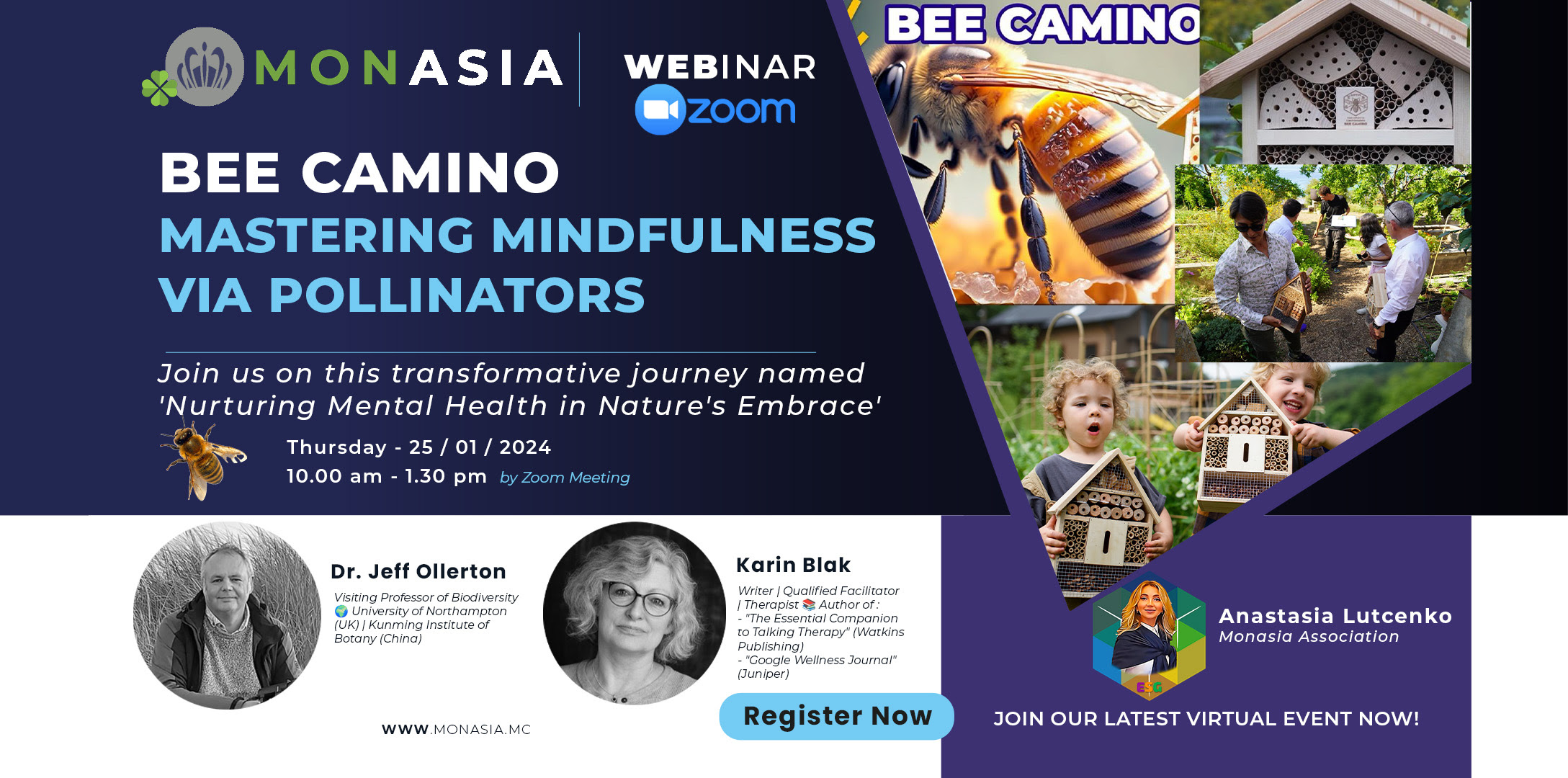
In recent months, Karin and I have worked with the charity MONASIA and their Bee Camino project to develop a joint webinar. Here are the details, taken directly from MONASIA’s publicity:
In the intricate choreography of nature, the honey bee’s life mirrors the enchantment of a mystical well: ‘The more you draw from it, the more it fills with water.’ Karl Von Frisch’s profound words beautifully capture the essence of the honey bee’s existence. Honey bees are only one type of bee, however, and there are many other pollinators, whose tireless efforts sustain the delicate balance of ecosystems. Much like a well that replenishes when quenched, the pollinator’s purpose appears boundless, offering a timeless wellspring of inspiration for those attuned to the marvels of the natural world.
Inspired by the Bee Camino project, MONASIA brings you a transformative experience connecting nature and mindfulness.
Join us on this transformative journey named ‘Nurturing Mental Health in Nature’s Embrace,’ as we draw from the enchanting well of the bee’s life—a source of wisdom, sustainability, and a profound connection to the intricate rhythms of our planet.
Yesterday I received an email containing the following press release. I thought it might interest readers of the blog so I am copying it in full with no edits. I had a quick look over the report and it’s amazingly detailed and comprehensive. It’s a shame that the report only covers insects, but that probably reflects my current bias given that my next book, due out in February, is about pollinating birds! Press release follows:
Governor Polis and the Department of Natural Resources Release Pollinator Report
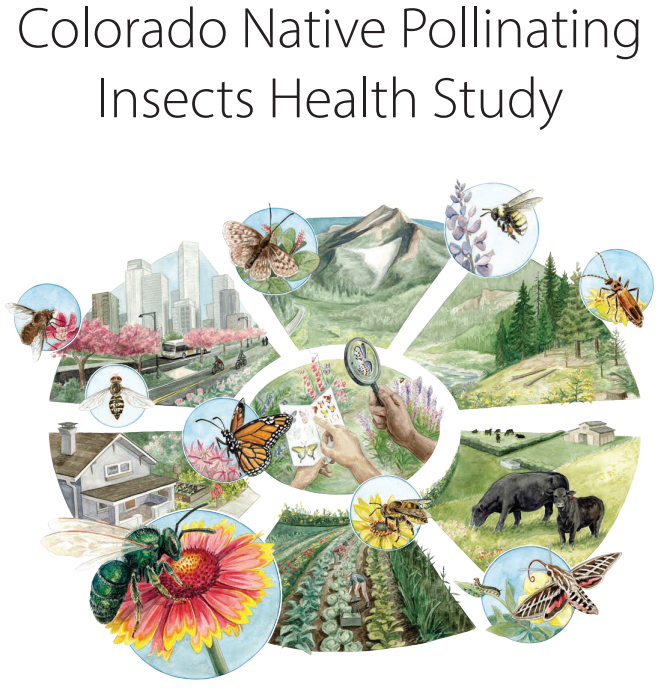
BROOMFIELD – Today, Governor Polis in partnership with The Colorado Department of Natural Resources (DNR), Colorado State University Extension, Xerces Society for Invertebrate Conservation, and University of Colorado Museum of Natural History released the Colorado Native Pollinating Insects Health Study which is the most robust and detailed account of pollinator health ever undertaken in Colorado history. As directed by SB22-199, Native Pollinating Insects Protection Study, sponsored by Senators Sonya Jaquez Lewis and Kevin Priola, and Representatives Cathy Kipp and Meg Froelich, signed by Governor Polis on May 27, 2022, the study assesses the health of Colorado’s native pollinators, evaluates state policies for safeguarding pollinators, and makes recommendations on how to preserve and protect pollinators in Colorado.
“Pollinators play a critical role in Colorado life. From Crested Butte’s beautiful spring meadows to Palisade Peaches and Rocky Ford melons, Colorado’s pollinators sustain our flora and enable many foundational industries in every corner of the state. As our climate changes, we must safeguard the pollinators that generate and regenerate the Colorful Colorado we love,” said Governor Polis
Colorado is home to various native insects and bats whose pollinating services are at the heart of healthy environments and economies. Pollinators are critical to Colorado’s economy and our agricultural production and food systems, and they are essential for flowering plants that support the state’s wildlife ecosystem and add color to Colorado’s beautiful landscapes.
“Colorado is fortunate to have a tremendous diversity of plants and animals, but pollinating insects are perhaps the least studied but most beneficial for our ecosystems, economy and quality of life,” said Dan Gibbs, Executive Director, Colorado Department of Natural Resources. “I greatly appreciate the time and effort of the study authors who truly did a deep dive into the current state of pollinating insects and state policies and structures. I look forward to working with Colorado legislators and stakeholders in pursuing the best policies to ensure pollinating insect protection and long-term health.”
Colorado is home to over 1,000 species of bees—nearly 30% of North America’s and approximately 5% of the world’s bee species—and nearly 300 species of butterflies, representing over 40% of the diversity of butterflies in North America north of Mexico, some of which are already listed under the federal Endangered Species Act. This report underscores the importance of the Polis administration’s goals to tackle Colorado’s greenhouse gas emissions, prepare industries for the impending effects of climate change, and create more sustainable living in Colorado for pollinator populations.
“Our ecosystems rely on pollinators, which is why I’ve championed measures that limit toxic chemicals from harming pollinators and put forth a statewide assessment to better understand the problems our pollinators face and identify practices to better sustain them,” said Senator Sonya Jaquez Lewis, D-Longmont. “Today’s report shows that there’s plenty to do moving forward, and I am looking forward to continuing our work to protect pollinators and the ecosystems that are dependent on them.”
“I’m excited that we have this report to help us understand the extent of pollinator decline in Colorado. While Colorado ranks fifth nationally for the rate of honey-bee die-offs, we haven’t known as much about native pollinating insects. This threatens our food production, biodiversity and health of our ecosystems,” said Rep. Cathy Kipp, D-Fort Collins. “We created the Native Pollinating Insects Protection Study in 2022 to identify ways to better protect and support the native Colorado pollinators, like different bee species, butterflies, and moths, that are also essential to maintaining a healthy environment. These findings will help direct future legislation to create a safer environment for our pollinators, protect our food supply and support biodiversity.”
Promoting policies that benefit native pollinating insects represents an opportunity to foster healthy and sustainable pollinator populations, especially in agricultural and urban habitats. This includes enhancing pollinator-friendly native plantings along I-76 following its designation as a Colorado Pollinator Highway by the Colorado Department of Transportation and other existing state plans such as the state’s Natural Areas Program, and Wildlife Action Plan among others.
“Working on the Pollinator Health Study has been an amazing opportunity to collaborate with so many locally, nationally, and internationally recognized experts in the field of pollinator conservation. In addition to the immense amount of information within the report, this study highlights the importance of collaboration between scientists and land management agencies to bring together the many facets needed for conserving native pollinating insects,” said Deryn Davidson, Sustainable Landscape State Specialist, Colorado State University Extension. “Having the existing research on Colorado pollinators paired with recommended land management practices in one, comprehensive document is an incredible tool for policy makers, land managers, and really anyone interested in actionable steps for pollinator conservation.”
Areas of immediate action and priorities highlighted by the Pollinator Report include:
Priority 2: Protect, restore, and connect pollinator habitats.
Priority 3: Mitigate environmental changes that negatively impact pollinators and their habitats.
Priority 4: Reduce the risks from pesticides to pollinating insects.
Priority 5: Monitor and support native and managed pollinator health.
Governor Polis announced his annual budget proposal on November 1, focusing on ensuring Colorado is more affordable, sustainable, and liveable. The Governor included $100,000 to support education and incentives to encourage the use of pesticide alternatives in agricultural production and residential or commercial landscaping. On May 17, 2023, Governor Polis signed Neonic Pesticides as Limited-Use Pesticides, sponsored by Senators Kevin Priola and Sonya Jaquez Lewis and Representatives Kyle Brown and Cathy Kipp, which protects pollinators from harmful toxins.
There’s so much good science and so many great talks coming out of the (broad) field of pollinator and pollination research at the moment! Here’s a few things that have come up on my radar. Feel free to comment and add your own examples of things I may have missed.
Full disclosure, I was one of the reviewers of Pollinators and plants as ecosystem engineers: post-dispersal fruits provide new habitats for other organisms by João Cardoso et al., and I know that there was quite a bit of back and forth between authors, editor and reviewers about what the findings really meant and how best to frame them. My view was that this study should be published because it’s another demonstration of the importance of pollinators and their interactions with plants that goes beyond the obvious outcomes of plant reproduction and support of pollinator populations.
Back in the late 1990s and early 2000s, whenever I had a (rare) day free from teaching, marking, supervision, meetings, writing, and other university commitments, I would hop on the train from Northampton to London. My destination was the Spirit Collectionof the Herbarium at the Royal Botanic Gardens, Kew, where bottled flowers are preserved in their three-dimensional complexity, rather than squashed flat onto herbarium sheets. To this day, the smell of formaldehyde in the “Kew Mix” takes me back to the chilly basement space of that collection.
The Kew Herbarium is a massive, internationally important resource for taxonomy, evolutionary biology and ecology, and one which ought to stay where it is, in my opinion.
The purpose of my visits was to exploit the large number of Ceropegia specimens that had been collected by botanists working in Africa, the Middle East, and Asia. These amazing flowers are so complex that they are best preserved in spirit, and that complexity in turn is a function of their sophisticated pollination systems. The flowers temporarily trap their pollinators, releasing them unharmed after a period, during which they will have picked up pollen and/or the flower will have been pollinated. If you have ever grown String-of-Hearts as a house plant, that’s the group we are talking about.
The botanists who collected these flowers were, of course, only interested in the plants. But as well as pickling the blooms they sometimes pickled the insect contents of the flowers, giving us a record of what the flowers were luring into their temporary traps. Not only that, but Ceropegia belongs to the milkweed subfamily of Apocynaceae, which means that their pollen is in the form of pollinia. These are coherent packages of pollen that mechanically, and persistently, clip to the insect. This gives us an opportunity to sort out the real pollinators (with pollinia attached) from other insects that may be inside the flowers for other reasons, such as looking for prey or sheltering from the dry heat of the day.
It had occurred to me that if someone was to check these flowers for insects, and extract any that were found, then we could build up an unprecedentedly complete picture of the diversity of pollinators in a large, mainly tropical plant genus of around 200 species. So that’s what I did, whenever time allowed. Having gained permission to do this, I was pleased to discover that the process was considerably speeded up by the fact that preserving the flowers in this way clears the tissues, making them colourless and translucent. By shining a bench light through the bottles I could see which flowers contained insects and carefully dissect them out.
The work also fed into our large study of pollination systems in Apocynaceae and I even published a small note about an ant specimen that I had extracted which still had the evidence of its last meal (a fly’s wing) protruding from its mouth.
The work at Kew had given us a short cut to understanding how pollination systems have evolved in this big plant species radiation. The equivalent field work required to collect the same data would have taken many person years and no funding agency would have given it the time of day. Not only that, but a portion of the data is from parts of the word that are war-torn, dangerous, and largely inaccessible to field scientists at the moment. Which brings us to the present paper.
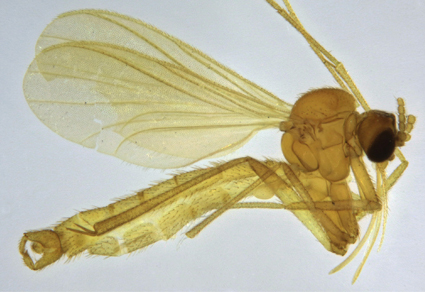
All of the pollinators, and most of the flower visitors, to Ceropegia that have been discovered to date are small flies (Diptera) often only a couple of millimetres in length. There are relatively few taxonomists who can identify such flies and most of the specimens I extracted were identified to genus or family by Andrew Whittington. One such specimen was determined to be a species of Lygistorrhina, known as ‘long-beaked fungus gnats‘. It was found in a flower of Ceropegia aristolochioides ssp. deflersiana, which is something of a generalist in this genus of specialists: it’s pollinated by at least four fly genera and 11 others have been collected from its flowers sans pollinia, including this one.
The flower was collected in 1975 by botanist John Wood, in Yemen – like I said, inaccessible – and the semi-arid climate in which it was found, whilst typical for Ceropegia, is unusual for Lygistorrhina. When National Museums Scotland entomologist Vladimir Blagoderov looked at the specimen he quickly realised that it was a new species and contacted Andrew and myself to discuss describing it. The paper documenting the new species, which we have named Lygistorrhina woodi in John’s honour, was published today. Here’s the reference with a link to the paper, which is open access:
A new species of Lygistorrhina (Lygistorrhina) Skuse, 1890, Lygistorrhina woodi sp. nov., is described. The specimen was dissected from an alcohol-preserved flower of Ceropegia aristolochioides ssp. deflersiana Bruyns (Apocynaceae, Asclepiadoideae, Ceropegieae) stored in the Kew herbarium. This is the first occurrence of the lygistorrhine gnats in a hot, semi-arid climate. A key to all known species of the subgenus Lygistorrhina (Lygistorrhina) is provided.
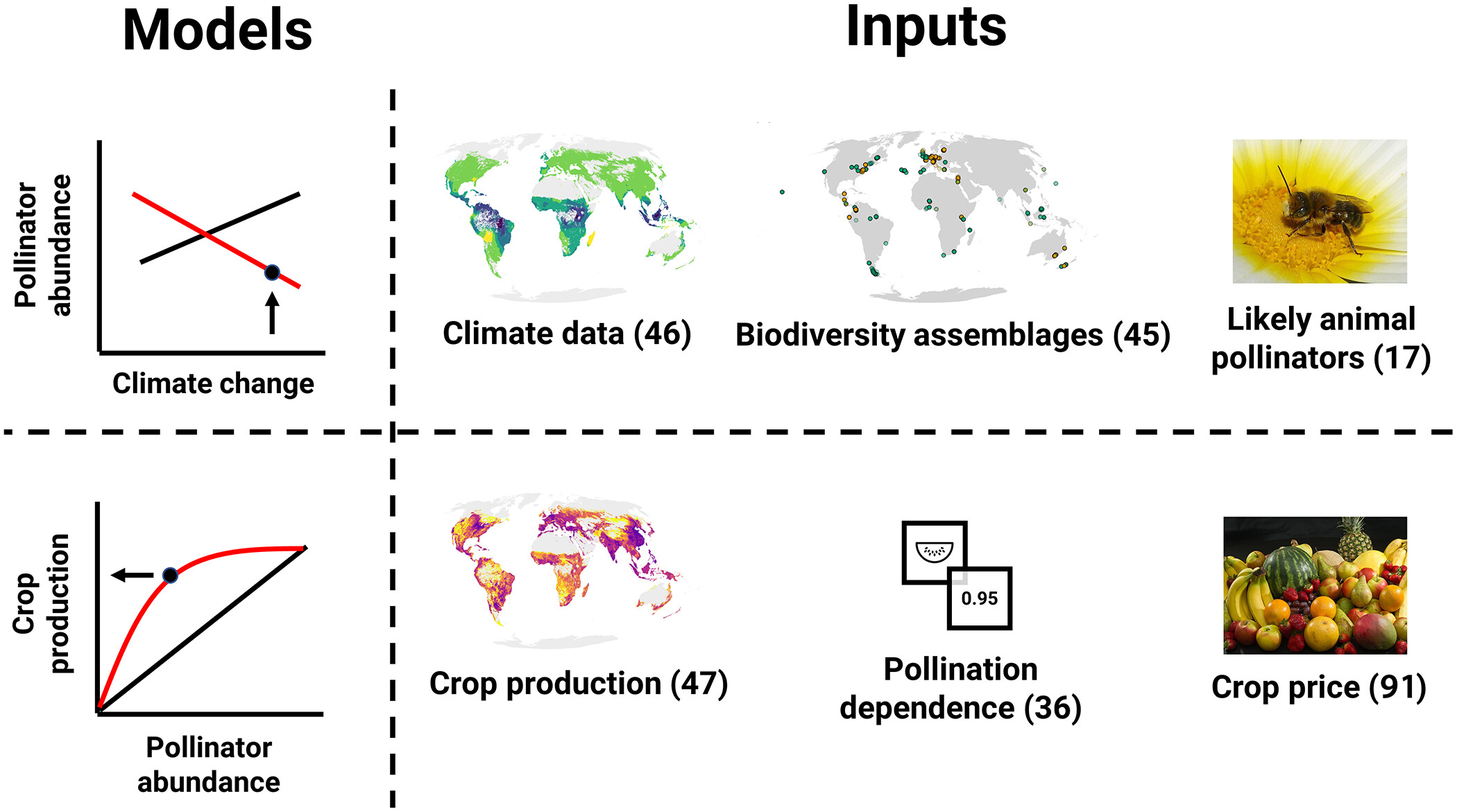
PREDICTS (Projecting Responses of Ecological Diversity In Changing Terrestrial Systems) is one of the most important sources of data for large-scale modelling of how changes in land use is impacting biodiversity. Marry that with future climate models and you have a powerful tool for understanding how these two major factors in global change will shape both biodiversity and human society over the coming decades.
In recent years it’s been a privilege to be part of a project led by Joe Millard and Tim Newbold that’s using PREDICTS to model how pollinators and pollination services are likely to be impacted by human activities. The first paper from that work (which was Joe’s PhD) was entitled ‘Global effects of land-use intensity on local pollinator biodiversity’ and came out in 2021, as I documented on my blog at the time.
Yesterday a second paper was published, this time focused on how land use and anthropogenic climate change interact to potentially affect insect-pollinated crops across the world.
Our main finding is that it’s tropical crops, especially cocoa, mango, watermelon, and coffee, that in the future will suffer the greatest negative impacts from loss of pollinators. Although we can have perfectly healthy diets without consuming any of those, they currently support tens of millions of farmers across the tropics and are part of global supply chains worth billions of dollars per year.
Here’s the full reference with a link to the paper, which is open access:
Insect pollinator biodiversity is changing rapidly, with potential consequences for the provision of crop pollination. However, the role of land use–climate interactions in pollinator biodiversity changes, as well as consequent economic effects via changes in crop pollination, remains poorly understood. We present a global assessment of the interactive effects of climate change and land use on pollinator abundance and richness and predictions of the risk to crop pollination from the inferred changes. Using a dataset containing 2673 sites and 3080 insect pollinator species, we show that the interactive combination of agriculture and climate change is associated with large reductions in insect pollinators. As a result, it is expected that the tropics will experience the greatest risk to crop production from pollinator losses. Localized risk is highest and predicted to increase most rapidly, in regions of sub-Saharan Africa, northern South America, and Southeast Asia. Via pollinator loss alone, climate change and agricultural land use could be a risk to human well-being.
Today I returned the final, edited files of the book manuscript to the publisher. It’s been a long summer of ‘fine distinctions and nice judgements’, to quote my editor, the inimitable Hugh Brazier. Now that’s all finalised, I thought that it was time to share the chapter titles with you – here goes:
Introduction: Encounters with birds and flowers
1 Origins of a partnership
Understanding 50 million years of bird and flower evolution
2 Surprising variety
The astounding diversity of pollinating birds
3 Keeping it in the family
Accounts of the different groups of bird pollinators
4 A flower’s point of view
How many plants are bird-pollinated, and where are they found?
5 In the eye of the beholder
What do bird flowers look like?
6 Goods and services
The enticements given to birds for pollinating flowers
7 Misaligned interests
The ongoing conflicts between flowers and birds
8 Senses and sensitivities
How bird brains shape the flowers that they pollinate
9 Codependent connections
Networks of interacting flowers and birds
10 Hitchhikers, drunks and killers
The other actors in the network and how they affect the main players
11 The limits to specialisation
How ‘specialised’ are the relationships between birds and flowers?
12 Islands in the sea, islands in the sky
Isolation, in oceans or in mountains, results in some remarkable interactions
13 The curious case of Europe
Why did we believe that Europe had no bird-pollinated flowers?
14 ‘After the Manner of Bees’
The origins of our understanding of birds as pollinators, and their cultural associations
15 Feathers and fruits
Birds as pollinators of edible wild plants and domesticated crops
16 Urban flowers for urban birds
Bird pollination in cities and gardens
17 Bad birds and feral flowers
The impact of invasive species
18 What escapes the eye
The decline and extinction of bird–flower relationships
19 The restoration of hope
People as conservationists of birds and their flowers
There you have it! I’m incredibly excited that the book is now just about finished (I still have to proof read the typeset text and produce an index) and I look forward to finally having a copy in my hands. Birds & Flowers: An Intimate 50 Million Year Relationship is available for pre-order from Pelagic Publishing, or via online bookshops.
A pollination ecologist was recently working on the reproduction of a tropical plant species and discovered that the flowers were visited by two species of weevils, one large and one small.
The larger weevil was too big to access the nectar from the front, so it chewed its way into the flowers, destroying the petals, and in the process picking up no pollen.
The other weevil species was, however, able to enter the flowers, where it became smeared with pollen, which it then transferred to the stigmas in flowers of other plants.
The pollination ecologist therefore concluded that the true pollinator of this plant was, indeed, the lesser of the two weevils…
Writing in the open access Peer Community Journal, Julien Haran, Gael Kergoat, and Bruno de Medeiros have produced a really fascinating review of weevil pollination called:
Weevils are beetles, members of the superfamily Curculionoidea, which contains an estimated 97,000 species. Many are herbivores, including seed predators – I first encountered them as a researcher during my PhD when I assessed the impact of one species as a seed predator of my study plant Bird’s-foot Trefoil. Surprisingly, however, pollinating relationships have evolved multiple times between weevils and plants. Drawing on published studies and their own unpublished observations, the authors conclude that such “associations have been described or indicated in no less than 600 instances.” Most of these are brood-site pollination systems that have probably evolved from seed predation relationships.
No doubt many more examples of weevil pollination remain to be discovered but as it stands, this review paper is a great summary of a fascinating and still rather neglected corner of pollination ecology.
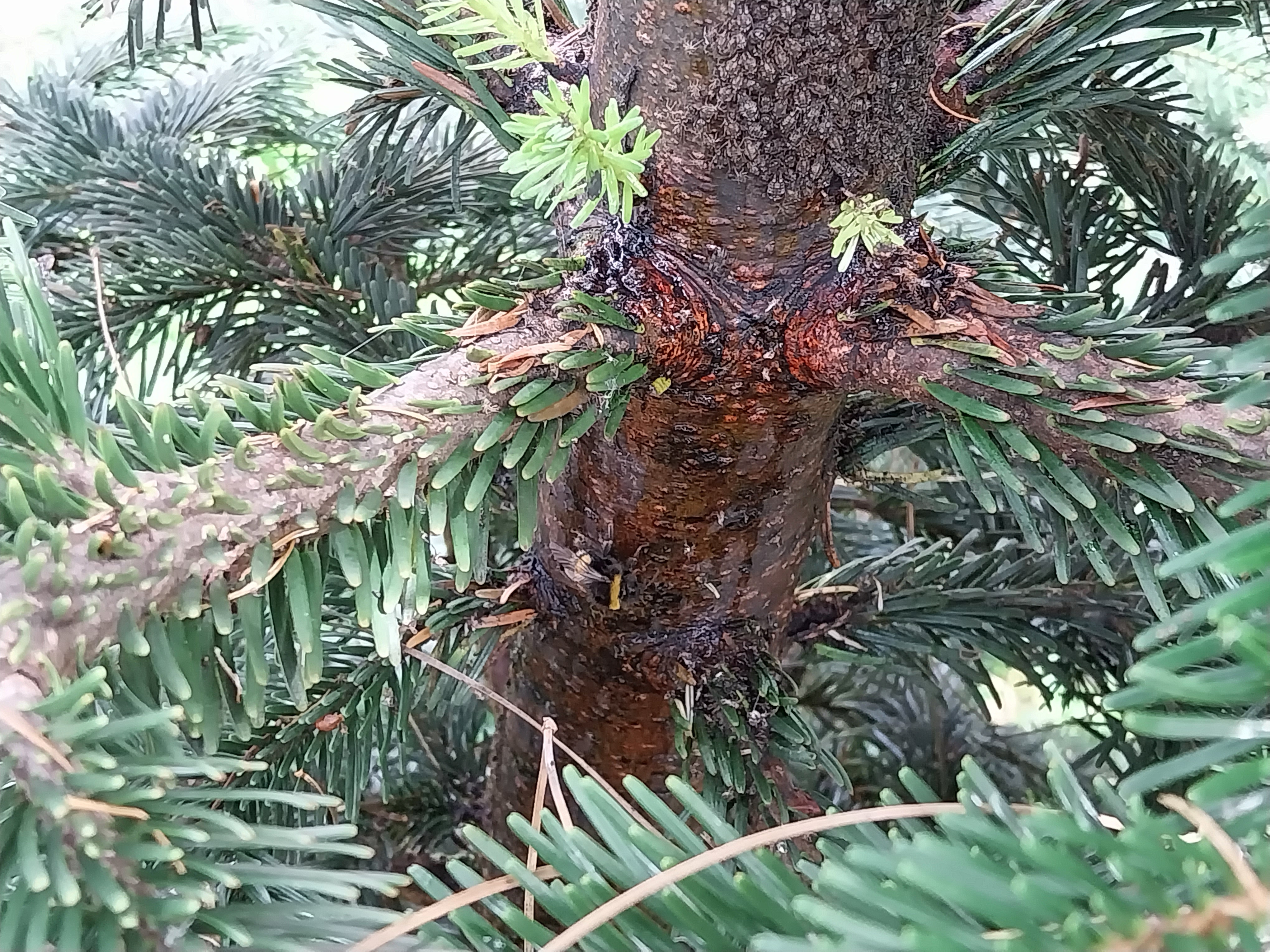
At the moment Karin and I are in the UK for a couple of weeks. I had work to do as an external examiner at the University of Swansea, plus we wanted to catch up with some family and friends. Our main base has been the home of our mates Ian and Simone and we’ve enjoyed some warm, muggy evenings sitting in their garden chewing the fat. Every now and again my eyes have been drawn to the activities of bumblebees as they move in and out of the foliage of a small Silver Fir. The bees are attracted to the large colonies of an aphid that is feeding on the tree’s trunk, from which they are collecting honeydew, as you can see in the photograph above.
When we think of the diets of bees we automatically think “nectar and pollen”. Honeydew, as a sugar-rich fluid, fits broadly into this concept, though as far as I know there’s been little study of its relative importance as a food source for bees. Aside from a few “vulture bees”, all of the 20,000 or so species are vegetarian. And therein lies a problem. Bees evolved from carnivorous wasps and so the evolution of bees, and their complex ecologies, is tied into this profound dietary shift toward a plant-based diet.
A particular issue that has hardly been investigated until recently is that the ratio of elements within meat is very different to that of plants. In particular, animal tissue has a high ratio of sodium (Na) relative to potassium (K), whereas for plants the ratio is reversed – high ratio of K:Na.
In a new conceptual review paper with my colleagues Zuzanna Filipiak and Michał Filipiak, we have explored the implications of this difference in elemental ratios for bee ecology and evolution, and for the conservation of these important insects. The paper is open access and you can download a copy by following a link in this reference:
Bees provide important ecological services, and many species are threatened globally, yet our knowledge of wild bee ecology and evolution is limited. While evolving from carnivorous ancestors, bees had to develop strategies for coping with limitations imposed on them by a plant-based diet, with nectar providing energy and essential amino acids and pollen as an extraordinary, protein- and lipid-rich food nutritionally similar to animal tissues. Both nectar and pollen display one characteristic common to plants, a high ratio of potassium to sodium (K:Na), potentially leading to bee underdevelopment, health problems, and death. We discuss why and how the ratio of K:Na contributes to bee ecology and evolution and how considering this factor in future studies will provide new knowledge, more accurately depicting the relationship of bees with their environments. Such knowledge is essential for understanding how plants and bees function and interact and is needed to effectively protect wild bees.
I’m excited to announce that in March 2024 I will teach a week-long, Master’s-level residential course entitled “Pollination as an Ecosystem Service” at the University of Pavia in Italy. It will be taught in English. Here’s a summary of the course and a brief description of the the syllabus, which is broadly accurate but subject to change as it develops:
POLLINATION AS AN ECOSYSTEM SERVICE
A 3 credit Master’s course for the University of Pavia
Overview
The pollination of crops by bees, flies, birds, bats and other animals, is an ecosystem service that increases crop yields and quality. This is valued at hundreds of billions of Euros each year to European and global agriculture. In addition, these same animals pollinate around 90% of the world’s wild plants which in turn provide us with ecosystem services such as wild food, flood alleviation, microclimate modification, and carbon capture.
In this course, students will explore pollination as an ecosystem service from its first principles and historical roots through to the latest research findings around the consequences of pollinator decline and climate change. The emphasis of the course is on the students learning by actively participating during classes. Each day has a particular theme and will be a mix of interactive lectures, short video clips to illustrate particular points, discussion seminars (for which they will be expected to do some guided reading) and local excursions.
At the end of the course the students will have a developed a deep understanding of the diversity of pollinators, the ecological nature of their interactions with flowers, and the importance of these relationships to nature and to society.
Assessment
At the end of the course, the students will be asked to give a 10 minute presentation based on one of the topics covered in the course, and posed as a question such as “What is….?”, “Why does….?”, “What would happen if….?”, and so forth. The questions will be agreed with me in advance. Presentations will take place on the final day of the course and at the end of each presentation the students will have 5 minutes to answer questions posed by their peers and myself.
Syllabus
Day 1
Theme: Pollinators and pollination – first principles; including historical perspectives, the diversity of pollinators and flowers, and the biology of pollination. Introducing the course assessment.
Excursion: a walk around the local area to observe flowers and pollinators in action.
Day 2
Theme: Pollination as an ecosystem service; including the types of crops that are animal pollinated, how we calculate the value of pollination, and going beyond agriculture to look at the other ecosystem services provided by pollinators; approaches to studying pollinators and pollination.
Day 3
Theme: Pollinator conservation: including reasons for pollinator decline, impacts of climate change, the “politics of pollination”, the consequences of that decline for crop and wild plant pollination, how we can manage and restore habitats for pollinators.
Day 4
Theme: Urban pollinators: understanding the importance of pollinators in an urban setting and in gardens, and how towns and cities support pollinators. Excursion: How is the city of Pavia supporting pollinator populations and what could be improved?
Day 5
Theme: Summing up what we’ve learned, followed by assessed student presentations.



 Prof. Jeff Ollerton - ecological scientist and author