At a time when the UK’s wildlife is under increasing pressure, the everyday spaces we manage—especially gardens—are becoming ever more important. Although interest in wildlife-friendly gardening has grown enormously in recent years, the evidence behind different approaches is not always clear. Well-meaning interventions can be highly effective, but some can miss the mark without a grounding in sound ecological knowledge.
That’s exactly why the Wildlife Gardening Virtual Symposium has become such a valuable annual event. It brings together researchers, practitioners, and anyone involved in managing green spaces to explore what the science is actually telling us about creating gardens that support biodiversity.
This year’s programme, chaired by Hafsah Hafeji of the Wildlife Gardening Forum, features four invited talks covering ponds, pollinators, fungi, and urban mammals, along with an update on emerging policies and projects shaping the wildlife-gardening landscape.
2026 Speaker Programme
Fragments of Paradise: Garden Ponds as Wildlife Habitat Dr Mike Jeffries – Northumbria University
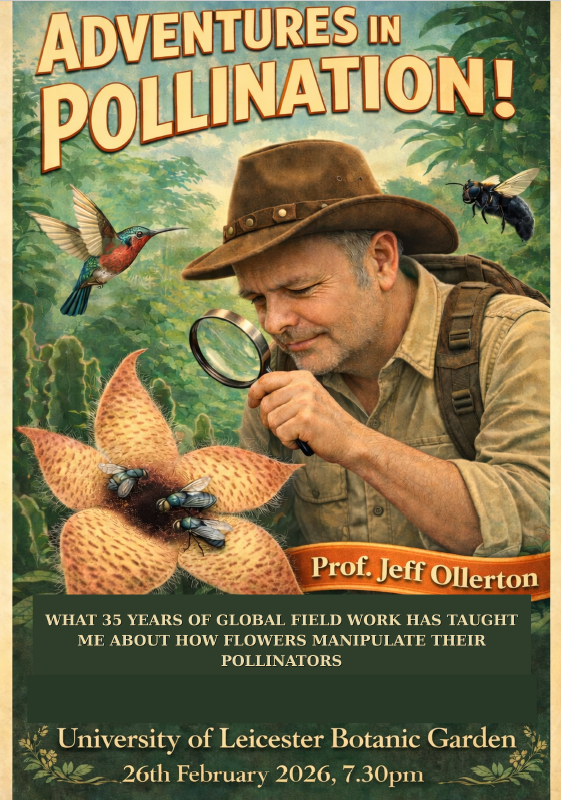
Gardening for Pollinators: It’s About More Than Just Flowers! Prof Jeff Ollerton – University of Northampton & Kunming Institute of Botany
How Fungi Make Gardens Flourish Dr Jassy Drakulic – Royal Horticultural Society
Recording Wild Mammals in Urban Spaces: A Multidecadal Study David Wembridge – People’s Trust for Endangered Species
Whether you’re involved in ecology, horticulture, landscaping, consultancy, education, or simply interested in the future of wildlife in our gardens, the symposium offers a concise way to catch up on current evidence and emerging thinking.
The ProPollSoil project officially got underway on 1st October, and this week (16th–20th November) our consortium gathered in Freising, Germany, for the kick-off meeting hosted by the Technical University of Munich. It was an inspiring start: dozens of experts from across Europe coming together to explore two big questions: How does the health of our soils shape the fate of pollinators? And how do pollinators influence soil health?
Most people think of pollination as something that happens in the air or on flowers, but for many species the story begins underground. Thousands of bees, hoverflies, beetles and wasps depend on soil to nest, overwinter, or complete parts of their life cycle. For example, around half of the solitary bee species in Britain and Ireland are what we term “ground nesting” and make their nests in different types of soil. Yet soil conditions—structure, temperature, contaminants, farming practices—are changing rapidly. As part of the EU’s Mission Soil programme, ProPollSoil aims to understand these hidden links so we can better protect the pollinators that support our food systems and ecosystems.
The project brings together specialists in entomology, soil science, ecology, modelling, agriculture, economics, and communication, forming a truly interdisciplinary team. Through desk-based reviews, fieldwork, lab experiments, monitoring and advanced modelling techniques, we’ll be investigating how soil influences pollinator survival and what we can do to improve it.
ProPollSoil is built around six key goals, including identifying the soil conditions that help pollinators thrive, testing innovative ways to monitor soil-dependent species, evaluating how different land-use and farming practices affect pollinators, and developing practical soil-management solutions—from reduced tillage to cleaner soils—that can slow or reverse their decline.
My own role mainly focuses on understanding the state of our current knowledge of the biology and ecology of soil-dependent pollinators and their interactions with soils, other invertebrates, and plants. I’ll also be working on integrating information about pollinators’ soil dependencies into the European Atlas of Plant-Pollinator Associations (EuroAPPA), part of the related Butterfly Project, whose kick-off meeting I documented on the blog earlier this year.
Together, these efforts will help build a clearer, more complete understanding of how life belowground supports life aboveground. It’s an exciting journey, and we’re only just getting started!
My sincere thanks to all of the ProPollSoil consortium members whose passion and expertise made for a stimulating few days in Germany. And a special shout-out for the team from Poland who brought with them some delicious, PropPollSoil branded sweets:
Earlier this year I received an unexpected invitation from Bloomsbury Publishing to attend a book launch at Philip Mould’s gallery in London. Looking at the details I immediately said yes, because it combined three of my passions: natural history, art, and books! Not only that, but the topic of the book was one very close to my heart – the wildlife of our towns and cities.
Urban Plants is the latest addition to Bloomsbury’s British Wildlife Collection, a stunningly produced series that has set a new benchmark for natural history literature in this country. The author, Trevor Dines, formerly worked for the charity Plantlife, and is a real authority on urban botany. My expectations for this book were very high! So on the day of the book launch, Karin and I trundled down to the capital and spent part of the day at the National Gallery where, among other things, we enjoyed an exhibition by José María Velasco. As well as being a superb documenter of the 19th century landscapes of Mexico, Velasco was also profoundly interested in botany. We’d not planned it that way, but it was a nice coincidence.
The book launch itself was well attended and I found myself catching up with a few familiar faces from the world of British wildlife, and Trevor (whom I’d corresponded with but never met) treated us to a short reading:
I took the opportunity to buy a copy, had a quick chat with Trevor, who kindly signed the book, and then we headed back to catch a train.
So what do I think of Urban Plants?
It’s actually hard to praise the book too much without sounding unnecessarily gushy! But it really is one of the best books that I’ve read for a long time. In part that’s because it stirs deep emotions of me as a child, taking my first faltering steps into the world of natural history on the bomb sites and post-industrial landscapes of my native Sunderland. But it’s more than that: the author writes with elegance and authority on a topic about which he’s deeply passionate, and this comes through on every one of the amply illustrated pages. Trevor should be congratulated on producing a book that will be the go-to reference on the topic for many years to come.
And an important topic it is too: there’s no doubt naturalists who will sneer at the idea of urban botany, but (as the author points out) for many people in this country, the plants that they see every day in their home towns are almost their only connection to wildlife. For that reason alone it’s a subject to be taken seriously, and if a book like this can inspire more people to take a closer look at the plants with which we share our streets, roofs and walls, so much the better.
So do yourself a favour and take a walk with Trevor through the complex ecology and botany of built-up British landscapes. I learned a lot from Urban Plants and I highly recommend it as an addition to anyone’s Christmas list.
The Golden Lotus (Musella lasiocarpa) is one of China’s most iconic plants — a striking member of the banana family (Musaceae) that seems to bloom forever. Its brilliant yellow, lotus-like bracts have long made it a favourite of subtropical gardeners, though it also has utility as a food and fibre crop, and is associated with Chinese Buddhism. As you can see above it often features stylistically in Chinese temples, and in my visits to Yunnan we frequently encounter it during fieldwork on farms, planted to support terraced fields:
But despite its fame, one mystery has lingered for decades: what actually pollinates it?
Until now, Musella was thought to rely mainly on insects, particularly bees, for pollination. That assumption made it something of an outlier within the banana family, where most species are pollinated by birds or bats. But a new study, in which I was involved as part of an international team of predominantly Chinese and Brazilian researchers, has turned that view on its head.
By combining careful field observations with citizen science records, our team found that the Golden Lotus is regularly visited by an impressive diversity of birds — twelve species from five different families. As I documented in my recent book Birds & Flowers: An Intimate 50 Million Year Relationships, many of these visitors, such as bulbuls and sunbirds, are known nectar-feeders, and their behaviour at the flowers suggests that they are acting as effective pollinators. This discovery significantly expands what we know about the pollination ecology of the Golden Lotus, and places it firmly within the broader pattern of bird pollination that characterises much of the banana family.
Interestingly, the plant’s features — large, robust, vividly coloured bracts, abundant accessible nectar, and long-lived blooms — make perfect sense in this new light. These are traits that favour bird pollination rather than the short, concentrated visits typical of bees.
But the significance goes beyond one species. Bird pollination plays a vital, and often overlooked, role in China’s native flora, linking ecosystems from tropical rainforests to mountain valleys. Understanding these relationships is important not only for biodiversity conservation but also for horticulture — helping gardeners and landscape designers to create spaces that attract and sustain pollinators of all kinds.
The Golden Lotus has always been celebrated for its beauty and longevity. Now, we can add another layer to its story: a reminder that even the most familiar plants can still surprise us, and that nature’s partnerships are often more complex — and more colourful — than we imagine.
Here’s the reference with a link to the paper, which is open access:
Pollinators such as wild bees, butterflies, and hoverflies are in trouble worldwide. A major new study, published in Science and led by Gabriella Bishop and other scientists at Wageningen University & Research, shows that the oft-quoted figure of 10% semi-natural habitat in farmland landscapes is far too little to safeguard pollinators. Instead, the evidence points to a need for somewhere between 16% and 37% habitat cover, depending on the type of pollinator, if we are serious about halting declines. Suitable habitats include hedgerows, patches of woodland, species-rich grasslands, and flowering margins, and as a general rule, hoverflies need less of it whilst bumblebees and butterflies require more.
I was fortunate to play a part in this global assessment, contributing an unpublished dataset collected with my former PhD student, Sam Tarrant, who studied plant-pollinator interactions on restored landfill and established grassland sites. Seeing those data joined with dozens of other studies from around the world underlines something we have known for years: no single dataset, however carefully gathered, can give us the whole picture. To really understand what is happening to biodiversity—and to design conservation solutions that work—we need these kinds of global, mega-author syntheses that draw together evidence from many landscapes, taxa, and approaches.
The message from this analysis is stark but hopeful. More habitat means more pollinators, across all groups. Richer habitats with abundant flowers give an additional boost, but the overriding priority must be to increase the sheer area of natural habitat in farmed landscapes. Small-scale fixes like wildflower strips offer short-term benefits, but without enough space they can’t deliver recovery at scale. Long-term, secure habitat creation—on the order of decades, not seasons—is what pollinators, farmers, and ecosystems need.
Although the policy debate in Europe provided the backdrop for this study, the lessons (and the data) are global. Wherever agriculture dominates, the health of pollinator populations—and by extension our food security and biodiversity—depends on our willingness to give these insects the space and quality of habitat they require.
Looking ahead, we need to think bigger and work together. That means more international collaborations, more sharing of data, and more commitment to long-term solutions that transcend borders. The image at the start of this post is from my trip back to China in July this year. I deliberately chose it because, as you’ll see from the map below which is taken from the paper, there was no suitable data available for the study from that country. Or from Africa. Or Australasia. Or from most of tropical South America. That shows that as pollination ecologists we need to coordinate more in advance on these types of syntheses, and maximise the value of the kinds of data that we collect. The main take away from this study, however, is that if we want to reverse the declines in biodiversity, scientists, policymakers, businesses, farmers, and citizens all have a role to play. Pollinators remind us that nature is interconnected and global—our conservation efforts must be, too.
Here’s the full reference with a link to the study:
Biodiversity in human-dominated landscapes is declining, but evidence-based conservation targets to guide international policies for such landscapes are lacking. We present a framework for informing habitat conservation policies based on the enhancement of habitat quantity and quality and define thresholds of habitat quantity at which it becomes effective to also prioritize habitat quality. We applied this framework to insect pollinators, an important part 5 of agroecosystem biodiversity, by synthesizing 59 studies from 19 countries. Given low habitat quality, hoverflies had the lowest threshold at 6% semi-natural habitat cover, followed by solitary bees (16%), bumble bees (18%), and butterflies (37%). These figures represent minimum habitat thresholds in agricultural landscapes, but when habitat quantity is restricted, marked increases in quality are required to reach similar outcomes.
Bees are among the most important pollinators in the natural world, quietly sustaining ecosystems and food production. While honeybees often steal the spotlight, a vast number of solitary and primitively eusocial bees play equally vital roles. But across both urban and natural landscapes, many of these species are facing worrying declines.
As cities expand, they’re increasingly being seen not just as threats to biodiversity, but as potential refuges for pollinators. Yet urban environments are very different from natural ones. The heat generated by buildings and concrete – known as the urban heat island effect – and the way green spaces are managed (often with little consideration for flowering plants) could be affecting bees in ways we’re only beginning to understand.
As part of a recent study led by my former PhD student Muzafar Sirohi, we explored how urban conditions might be influencing the timing of bee emergence and the sex ratios of different species. This work formed part of Muzafar’s PhD research, and I was pleased to be part of the team that supported and collaborated on the project.
We found that several solitary bee species were producing females before males – a reversal of the more typical pattern known as ‘protandry’, where males emerge first. Most bees in the families Apidae and Megachilidae did follow the usual male-first pattern, but there were some interesting exceptions, including Nomada marshamella and Nomada fabriciana. Soil-nesting species also showed a lot of variation in emergence timing, likely influenced by microclimatic differences in urban soils.
When we looked at overall sex ratios, patterns varied across bee families. In Halictidae, females were more common, whereas Apidae and Megachilidae were skewed towards males. Interestingly, the Colletidae family showed no strong bias either way. However, in five species from the Andrenidae and Halictidae families, we saw a clear difference between urban and natural environments: urban populations had a higher proportion of males.
This could suggest that urban habitats – especially those with limited floral resources due to mowing, paving, or the removal of wild plants – may not be supporting as many female bees. Since females are the ones responsible for nest-building and potentially pollination, as they visit more flowers, this imbalance could have long-term effects on bee populations and the pollination services they provide.
Our study adds to the growing body of evidence that urban environments can support pollinators – but only if managed thoughtfully. Cities need more than just green space: they need flowering plants, nesting habitats, and careful planning that recognises the delicate balance of bee ecology. With the right actions, we can make urban areas part of the solution to pollinator decline.
Solitary and primitively eusocial bees are essential pollinators of plants. However, recent observations indicate a decline in their populations in both urban and natural environments. Urban areas are increasingly recognized as potential habitats for bee conservation. Nonetheless, these urban habitats can influence the taxonomic and functional diversity of bee populations. Therefore, we hypothesize that the distinctive warmer climate of urban areas – resulting from the urban heat island effect – along with the potential scarcity of floral resources, contributes to shifts in emergence patterns and the sex ratio of solitary and primitively eusocial bees. We found that many solitary bee species produced females before males. Additionally, most species within the Apidae family were recorded as protandrous, with the exceptions of Nomada marshamella and Nomada fabriciana. All species of Megachilidae were found to be protandrous. We also observed significant variation in the emergence patterns of soil-nesting species. Notably, we did not find any relationship between sociality and nesting preferences in relation to sex-biased emergence. The overall sex ratio varied among different bee species and families. In Halictidae family, sex ratios were biased towards females, while the Apidae and Megachilidae families exhibited a skewed ratio towards males. The sex ratio in the Colletidae family did not show any significant difference. However, among the Andrenidae and Halictidae families, we identified five species with significantly different sex ratios between urban and nature areas, with a higher proportion of males observed in urban sites. This suggests that these species may have been affected by limited food resources, potentially due to urban management practices such as the removal of floral resources. This could lead to increased competition for resources among the species.
What happens when you spend an entire year watching hummingbirds and the plants they visit in one of Brazil’s most unique ecosystems? You begin to unravel the complex, ever-changing relationships that tie together birds, flowers, and the environment they share.
In a new study jointly led by Steffani Queiroz and Marsal Amorim — and part of my ongoing collaboration with a brilliant team of Brazilian hummingbird researchers — we explored how plant–pollinator interactions shift over time in the Campo Rupestre, a montane tropical ecosystem rich in biodiversity and endemic species. Despite the region’s relatively stable climate, we found that the relationships between hummingbirds and flowers are anything but static.
Over the course of 624 hours of observation spread across a full year, we recorded over 9,000 hummingbird visits involving nine bird species and 47 plant species. Many of these plants — and one of the most frequent visitors, the stunning Hyacinth Visorbearer (Augastes scutatus) — are found nowhere else on Earth.
Our goal was to understand how the structure of this ecological network — which plants interact with which hummingbirds, and how often — changes over time, and what drives those changes. Are they shaped by morphological fit (the match between beak and flower shape)? By phenology (when plants bloom)? By nectar characteristics such as the amount produced and its sugar concentration?
What we discovered is that different factors dominate in different seasons. During the rainy season, when hummingbirds are more abundant, interactions were shaped mostly by morphological matching — suggesting that competition leads to greater niche partitioning. In contrast, during the dry season, the network became sparser and was more influenced by nectar sugar content and flowering patterns.
Interestingly, while the overall annual network wasn’t especially nested (a common pattern in mutualistic networks), it was highly modular — meaning that it contained distinct clusters of species that mostly interacted among themselves. This structure changed significantly across months, highlighting the dynamic nature of tropical plant-pollinator interactions, even in environments with relatively little climate variation.
This work highlights the importance of long-term, fine-scale studies in uncovering how interactions among species shift through time. It also underscores the remarkable biodiversity and ecological complexity of the Campo Rupestre — and the need to understand and protect it.
Here’s the reference – if anyone wants a copy, drop me a message via my Contact page:
Queiroz, S.N.P., Amorim, M.D., Lopes, S.A., Vizentin-Bugoni, J., Jorge, L.R., Ollerton, J., Santos, T. & Rech, A.R. (2025) Temporal dynamics of a Neotropical plant-hummingbird interaction network. Austral Ecology 50:e70089
And here’s the full abstract:
Species interaction networks are expected to vary following temporal changes in the environment and the composition of the local community. However, there are still gaps in our knowledge about temporal variation in networks in tropical areas, where less variable climates are expected to produce more stable community structures over time. Here we describe a plant-hummingbird network in the Brazilian Campo Rupestre ecosystem and investigate multiscale temporal variation of interactions in this community as well as the possible mechanisms underlying the frequencies of species interactions. Plants visited by hummingbirds were observed monthly for a year and each species had morphology, phenology and nectar traits measured. During 624 h of observation we recorded nine hummingbird species visiting 47 plant species, amounting to 9015 visits to flowers. Most plants (28 species) were endemic to the Campo Rupestre and mostly visited by the also endemic hummingbird Augastes scutatus (the Hyacinth Visorbearer). The annual network was not nested but presented high modularity and intermediate specialisation. While the overall (annual) frequencies of interaction were primarily defined by morphological matching and phenological overlap, we found a remarkable temporal change in community structure over the year, with different processes underlying interactions among plants and hummingbirds at different seasons. The interaction pattern during the rainy season was more similar to the annual network than the dry season (when nectar sugar content and plant phenology were also important), with more links per species and lower specialisation. The higher importance of morphology to predict interactions during the rainy season suggests higher niche partitioning when more hummingbird species are present in the community. Our results exemplify the importance of considering the temporal dynamics of the community to advance the understanding of the processes defining species interactions over time in the tropics.
My sincere thanks to Sinzinando Albuquerque-Lima for the photograph, which was taken in the Amazon, not where the research described above was conducted.
Tomorrow I head to China for two months of writing, field work, talks, and student discussions at the Kunming Institute of Botany in China, a follow-up to the work that I did last year. It feels appropriate, therefore, to be reviewing a book devoted to a western European outlier of a group of orchids (the ‘lady’s slippers’) that have one of their centers of diversity in that country.
In The Dales Slipper: Past-Present, author Paul Redshaw focuses on ‘the’ Lady’s Slipper (Cypripedium calceolus), an almost mythological species in British botany, due to its extreme rarity, the secrecy and protectiveness about where it grows, and its tendency to be dug up by unscrupulous orchid collectors. And a fascinating (if sometimes frustrating) read it is too!
The fascination of the book lies with Paul’s ability to sleuth previously unknown facts from local people who were witnesses to the rediscovery and subsequent protection of what was thought to be the last colony of the species in Britain. Protection was afforded by ‘The Guardians’ who (of course) met in a pub and were sworn to secrecy and (of course) fell out when personalities and priorities clashed. They were replaced (ousted?) by a more formal ‘Cypripedium Committee’ that still exists today, but who (if the author is to be believed) are even more secretive than The Guardians!
Drawing on newly uncovered archives, personal testimonies, and previously unseen images, the book details the decades-long efforts – marked by secrecy, dedication, and conflict – to protect the species from extinction. It stands as the first comprehensive and fully referenced account of this remarkable conservation journey
It makes a compelling story of the kind I can imagine being a successful comedy-drama for television – think Detectorists with hand lenses.
I mentioned that the book was a frustrating read, too. That’s partly because there’s a big cast of characters, some of whom have the same names, and it’s easy to lose track of who they are and what they did, and when. Paul does provide a helpful list of the protagonists but I found myself feeling a bit lost in places. That’s not helped by the fact that the book would have benefited from professional editing to smooth the rough edges.
These minor gripes aside, The Dales Slipper will interest anyone looking for a deep dive into British botanical history via the world of one of our rarest and most iconic wild plants.
Imagine trying to put together a giant puzzle where each piece represents an interaction between a flower and the insect, bird, bat or other animal that helps it reproduce. In recent years, scientists have gathered millions of these “puzzle pieces” into massive online databases, offering an unprecedented view of how plants and their pollinators connect around the world.
But there’s a catch: not every entry in these databases is equally reliable. Did the researcher actually watch the insect brush pollen against the flower’s stigma? Or did they simply note that the insect visited the blossom and assume pollination happened? Without clues about how each plant–pollinator link was documented, users can’t tell solid evidence from a best guess.
That’s why a growing number of projects are now tagging every interaction with a “data quality badge”—a short note explaining the exact kind of proof behind the record. For example:
Direct observation: A scientist observed an animal pollinating a specific flower.
Pollen analysis: Pollen grains matching that flower were found on the insect’s body.
Inferred pollinator: The animal regularly visits those flowers and shares similar traits with known pollinators.
Why is this important? When you know the strength of the evidence behind each plant–pollinator link, you can:
Fill in real knowledge gaps with confidence.
Identify weak spots in our understanding that need more fieldwork.
Build better conservation plans, targeting the most critical pollinators for at-risk plants.
Ultimately, adding clear data-quality labels turns these massive collections of observations into powerful tools for science, restoration, and education. And that’s good news not only for researchers, but for every garden, farm, and wild ecosystem that depends on diverse and abundant pollinator communities.
These issues are explored in a new, open-access paper written by colleagues from Brazil, the USA and myself. In the paper we discuss the importance of data quality in plant-pollinator databases and suggest methodologies for improving it. Here’s the reference with a link to the paper:
This paper is a direct output from the EU-funded WorldFAIR Project in which I was involved, though we also acknowledge the SURPASS2 project as a precursor to this. Looking ahead, we’re also going to be adopting the recommendations from our paper in the new Butterfly Project (also EU-funded). Finally, by way of a teaser, I can tell you that our new paper will also be relevant to another large project in which I’m involved, that has successfully secured funding…but you’ll have to wait until later in the year to hear about that!
Since early 2021 I’ve acted as a science advisor for some of the children’s books published by Usborne, beginning with Can We Really Help the Bees? The most recent is Why Do We Need Worms?, written once again by Katie Daynes and with amazing illustrations by Moesha Kellaway. I’m especially proud of my involvement with this book as in its early stages I suggested mentioning Charles Darwin’s fascination with worms. The book is aimed at ages 4 and upwards, though a reviewer has said that it’s ‘Perfect for my 3 year old grandson who loves looking at worms!’ So this book has to have one of the youngest Darwin readerships!
Why Do We Need Worms? was published last year and I’m delighted to say that this year it’s been long-listed for the School Library Association Book Awards in the 0 to 7 years Information Book category! It’s a great achievement for everyone involved and if the book gets short-listed, I will be sure to let you know.