Category Archives: Ecosystem services

Pesticides and pollinators: some new studies and contrasting conclusions

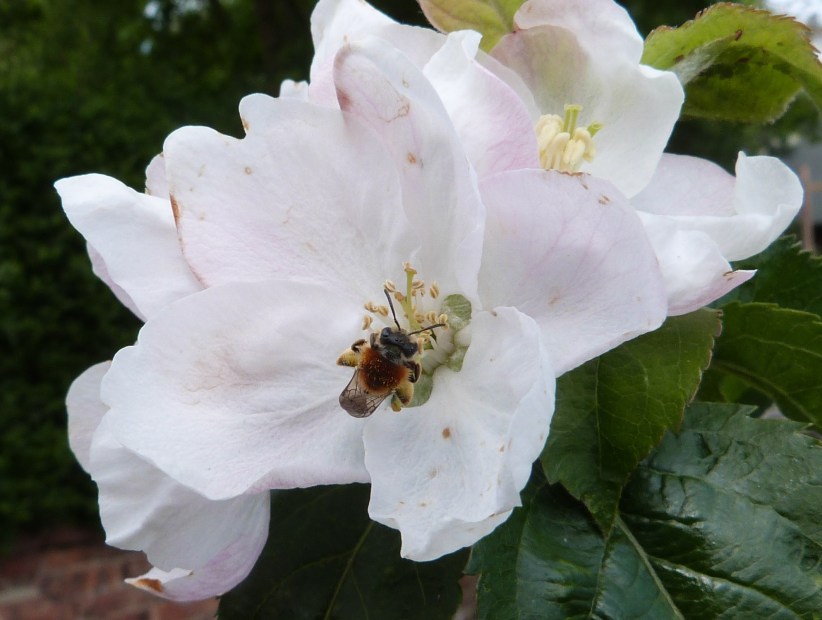
Bee on apple blossom - 1st May 2015

The question of whether or not neonicotinoid pesticides are negatively impacting agricultural pollinator abundance, diversity and behaviour continues to focus the minds of researchers. It’s an issue that has been almost constantly in the news since the earliest suggestions that these pesticides were harming pollinators. These concerns have led to temporary EU restrictions on the use of these chemicals, a decision that was partially over turned this year in the UK.

The past two months has seen the publication of at least five papers on the topic, two of them this week alone.  In this post I want to highlight those papers and provide some commentary.

The first two studies have shown that neonicotinoid pesticides can affect pollinator behaviour, and specifically the memories of both honey bees and bumblebees:

Wright et al. “Low doses of neonicotinoid pesticides in food rewards impair short-term olfactory memory in foraging-age honeybees

Stanley et al. “Bumblebee learning and memory is impaired by chronic exposure to a neonicotinoid pesticide“.

Subtle behavioural changes such as those documented here are not generally assessed in standard toxicological safety assessments for pesticides, which are mainly focused on whether or not the chemicals kill non-target animals, and at what dosage.  But for plant-pollinator interactions (including agricultural pollination) such changes in pollinator behaviour could be crucial to the effectiveness of the pollinators.  How crucial?  Well up until today we didn’t know; but with the publication of another paper by Stanley and colleagues we now have evidence that the sub-lethal effects on pollinator behaviour can actually translate into an effect on pollination of apple crops:

Stanley et al. “Neonicotinoid pesticide exposure impairs crop pollination services provided by bumblebees“.

The study is the first one to my knowledge that tests the effects of field-relevant doses of pesticides on pollinator performance and subsequent pollination services in a commercial farm crop, and adds some valuable hard data to an already heated debate.  The story, embargoed until this evening, has already been picked up by media, including the BBC News website.

To summarise the study: using artificial bumblebee colonies and caged apple trees Stanley and colleagues implemented an experiment in which they tested the effect of two different levels of exposure to a neonicotinoid pesticide on pollinator behaviour and subsequent pollination services to the fruit trees. They found a clear effect of exposure to the higher level of pesticide, resulting in a change in bee behaviour and a subsequent reduction in apple quality.

By way of a contrast, another study this week has focused on the lethal effects of these pesticides.  Henry et al. “Reconciling laboratory and field assessments of neonicotinoid toxicity to honeybees” has shown that although the chemicals are lethal to individual honey bees, the overall impact of the loss of the bees is buffered by the fact that the colonies can simply produce more worker bees to compensate for the losses.  This is interesting but needs to be judged in the context of the fact that honey bees are very unusual and atypical compared to most other pollinators, and indeed most other bees.  They produce very, very large colonies with a unique social structure, and so this compensation might be expected.  These caveats were echoed by some of the scientists asked to comment on the study in media stories such as the one on the BBC News website.

Finally, Godfray et al. have updated their earlier review of the environmental effects of these pesticides with “A restatement of recent advances in the natural science evidence base concerning neonicotinoid insecticides and insect pollinators“.  Given the rate at which new studies are coming out, it won’t be long before a second restatement is required!

Where does this leave the whole debate around pesticides?  Still with firmly entrenched views on both sides I would have imagined.  No doubt the debate will run and run.

Meanwhile, important as it is, the focus on pesticides is in danger of over-shadowing other really interesting studies that might affect how we manage our agro-ecosystems in the UK.  For example, I’d completely missed a paper from the end of September by Pywell et al. entitled “Wildlife-friendly farming increases crop yield: evidence for ecological intensification“.  As far as I can judge from the Altmetric information for the paper, so too had the media: it received no coverage on any of the usual outlets.  But this is important stuff that deserves wider publicity: it’s going to take more than a ban on pesticides to recover some of the biodiversity (at both a species and a habitat level) that we’ve lost due to intensive farming over the last 100 years or so.


Virtual Conference on Pollinators, Pollination and Flowers

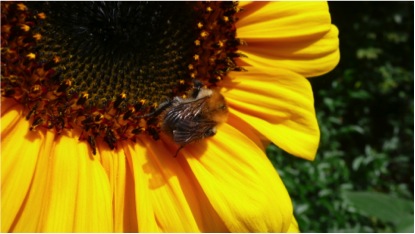
B pasc on sunflower

Academic conferences are an important part of what makes science function, via the exchange of ideas and information, publicly and in person.  The act of sitting and listening to both established and early career researchers discussing their most recent work, sometimes before it’s in print, is stimulating and exciting, and will never be replaced by digital technology. We’re social animals and conferences, as much as anything else, are social events.

But conferences are becoming more expensive, more frequent, and increasingly out of reach to researchers with limited budgets.  They are also getting larger: how many times have you attended a big conference and been torn between which of two (or three or four) talks to go to in parallel sessions?  Wouldn’t it be nice to be able to see all of them?  Or to go back and hear again the talks that you most enjoyed?  Likewise, wouldn’t it be great if your students or members of the public could also see what such conference presentations are like?

With this in mind, some time ago I dreamed up the idea of “virtual conferences” in as an experiment that aims to bring together into one place the most interesting recorded seminars, webinars, conference talks and public lectures that are freely available, and present them as a series of themed mini-conferences.  All of the videos in these collections are available on sites such as YouTube* and my role is just to curate them and present them in one place for convenience, as a showcase for some of the best research in biodiversity, evolutionary biology, ecology and conservation, very broadly defined, including inter-disciplinary and policy-related presentations.  And just as at a conference, there’s an opportunity to discuss the talks in the comments section on each post and to provide links to other talks on the same topic.

As well as being a service to the research community and the wider public, I hope that these conferences will be a useful teaching resource at advanced undergraduate and postgraduate level.

If anyone is interested in guest-curating a set of presentations in their own subject area on this blog, please do get in touch and I’ll be happy to talk about it.

So here’s the first virtual conference, on (naturally) pollinators, pollination and flowers:


Judith Bronstein (University of Arizona)

The conservation biology of mutualism


Peter Crane (University of Chicago)

The origins of flowers


Jeffery Pettis (USDA Bee Research Laboratory, Maryland)

The role of pesticides in declining pollinator health


Linda Newstrom (Landcare Research, New Zealand)

Pollinator systems in New Zealand and sustainable farming fund


Mace Vaughan and Eric Mader (Xerces Society/USDA/University of Minnesota)

Pollinator habitat assessment and establishment on organic farms


Carlos Vergara, Rémy Vandame, and Peter Kevan (Universidad de las Americas-Puebla/El Colegio de la Frontera Sur/CANPOLIN)

Coffee pollination in the Americas


Claire Kremen (University of California, Berkeley)

Restoring pollinator communities in California’s agricultural landscapes


*I’m assuming that, as all of these videos are in the public domain, none of the presenters or copyright owners objects to them being presented here.  If you do, please get in touch and I’ll remove it.

The All-Ireland Pollinator Plan 2015-2020

B pasc on sunflower

In the last 12 months we’ve seen the release of the National Pollinator Strategy for England and the USA’s Strategy to Promote the Health of Honeybees and Other Pollinators.  Now the Republic of Ireland and Northern Ireland have joined forces to produce the All-Ireland Pollinator Plan, a strategy for 2015-2020 that has been released today.  Follow that link and you can download a copy.

This appears to be the first cross-jurisdiction pollinator plan in the world and, as such, is to be welcomed; as I said in my reflections on the National Pollinator Strategy, biodiversity does not respect political boundaries.

That “love wasps” article – this is how Friends of the Earth responded

Clearly my quick post this morning got through to Friends of the Earth at some level (thanks to everyone who tweeted it).  Here’s what they have done to the article in response:

  • Removed the not-a-wasp photograph (good)
  • Added some text about other things that wasps pollinate (good) but left in the text about figs (bad)
  • Under the “garden pests” section they have add some text, as follows (bad):

The University of Northampton’s Dr Jeff Ollerton says: “Wasps are part of a whole ecological guild of scavenging animals that includes ants, various birds, etc, which plays a valuable role by removing vast amounts of waste organic material from our towns and cities every year.”

Huh?  What I said had nothing at all to do with eating pests.  Was that not clear when I talked about “waste organic material” rather than “pests”?

Incidentally, and for the record, I’ve had no contact from anyone at Friends of the Earth asking if it was ok to quote me, or check text, or anything.

So, not a complete success then.  Once again, feel free to tweet this at FoE

More poor quality information: Friends of the Earth’s “Love Wasps” campaign

Despite some recent posts in that vein, I don’t want to turn this blog into just an outlet for my frustrations about the lack of science/evidence in otherwise well-meaning conservation initiatives.  However something caught my eye at the weekend that I feel I have to comment on.

Friends of the Earth has recently posted a very well-meaning piece about why we should stop hating wasps and learn to appreciate them.  I whole-heartedly support this: wasps are one of the least understood and most under-valued aspects of local biodiversity, and the article makes some very good points.

But there are also some aspects to the article that make me cringe and add a new layer of inaccuracy to a subject already flooded with crass statements such as “what use are wasps”:

  • The first photograph in the article does not show a wasp: it’s a syrphid fly, specifically a species that mimics wasps but is other wise harmless.  These flies do not sting or bite.
  • “Wasps pollinate figs” – yes they do, but fig pollinating “wasps” are tiny and only distantly related to the kinds of wasps you’re going to see in a British garden.  In any case they do not pollinate commercial edible figs: these wasps spend much of their life-cycle within the fig and who wants to eat a fig full of insects?
  • Having said that, the sorts of wasps the article is referring to ARE important pollinators of a whole range of plants, including some orchids, umbellifers, ivy, etc.  That’s not mentioned at all.
  • The piece misses out the fact that wasps are part of a whole ecological guild of scavenging animals that includes ants, various birds, etc., which plays a valuable role by removing vast amounts of waste organic material from our towns and cities every year.  They also perform a similar function in natural ecosystems.

What’s frustrating about Friends of the Earth’s article is that there are any number of individuals and organisations out there who would be happy to fact-check such a piece, including Buglife, BWARS, and a range of scientists and well-informed specialists in natural history.  Why doesn’t Friends of the Earth make use of them?

As I’ve said before I don’t use Twitter, so if anyone wishes to tweet this at Friends of the Earth, please go ahead.

The organisers’ positive response to criticisms of the “honey bee decline” conference

P1120404

Three days ago I wrote a short, fast post expressing my unease (in robust terms) about a forthcoming conference entitled “Biodiversity and Local Partnerships: Halting the Decline of the Honey Bee in the UK”.  I had not anticipated that the post would generate quite as much interest as it did:  2007 views, 16 likes, and 28 comments (including my responses) as of 10am today.

There were also a lot of comments and likes on Facebook, most of it positive and agreeing with my sentiments, though some have suggested that I’m over-reacting, that I may be paranoid, and questioned what my “hidden agenda” is and whether I might be funded by an agrochemical firm (!)  Thanks to everyone who took the time to read the post and/or to respond*, to tweet the post, and even, in one case, phone up the conference organisers.

So it was with some satisfaction that yesterday I received the following email from the conference organisers, Public Policy Exchange (PPE), in response to my initial reply to their invitation:

Thank you for your response to our event, we always appreciate any
feedback from experts such as yourself. Your comments have been passed
on to our researchers and they are currently reviewing this event.

Our researchers do use a variety of sources, though on this occasion it
does appear that some have made sweeping generalisations and
over simplified statements, and ultimately have been unreliable. Clearly
our previous marketing mistakenly overplayed the role of the honey bee
in pollination processes. We certainly don’t want to contribute to a
misinformed narrative around bees and other pollinators; that was never
our intention and so we are looking at how we can improve this event.

Biodiversity is an area which we are very keen to develop further and
your feedback is therefore very helpful to us.

Kind regards,

The Conferences Team

They have also changed the title of the conference to “Biodiversity and Local Partnerships: Halting the Decline of Bees and Other Pollinators in the UK“.

So kudos to PPE for their fast response.  That’s a good outcome as far as I’m concerned and I may consider attending the conference; hell I’d even consider speaking at it if i was asked!

———————————————————-

*Yes, that’s deliberate – I got the impression that some on Facebook were responding without reading it…

Who is feeding the honey bee bullshit machine?

Bee on apple blossom 2 - 1st May 2015

This morning I received an email from Public Policy Exchange (PPE) inviting me to a conference in London in November entitled “Biodiversity and Local Partnerships: Halting the Decline of the Honey Bee in the UK

The opening statement on the website and the official flyer convinced me that the organisers have been misinformed; all of it is wrong:

Healthy honey bee populations are vital to food and crop production, and the natural environment. In the UK, honey bees are responsible for 80% of pollination, and a third of the food we eat is pollinated by bees.”

Where are they getting this  information from?  Who is feeding organisations like the PPE this kind of bullshit?  Is it bee keeping organisations?  I’d really like to know.

Honeybees are responsible for only one third of the crop pollination in the UK (Breeze et al. 2011), and a very small proportion of the wild plant pollination. Wild bees, hoverflies, butterflies, and other pollinators are much more important than honeybees, and collectively they are responsible for this pollination, not just managed honeybees.  No one is denying that honey bees are important, but there is absolutely nothing to gain (and a lot to lose in terms of science credibility) by over-playing their importance, as I’ve argued in the peer-reviewed literature.

It’s not as if this is the only recent example, The Daily Express online has recently been equally ignorant of the facts, and didn’t even get the right bee in the accompanying image.

It’s interesting that the PPE website also uses the infamous not-Einstein quote, though they cite the author as “unknown”.  With good reason, because that’s bullshit too.

I won’t be attending the conference.

By lifting the restriction on the use of neonicotinoid pesticides Defra throws a (bee) brick at its own National Pollinator Strategy

P1120353

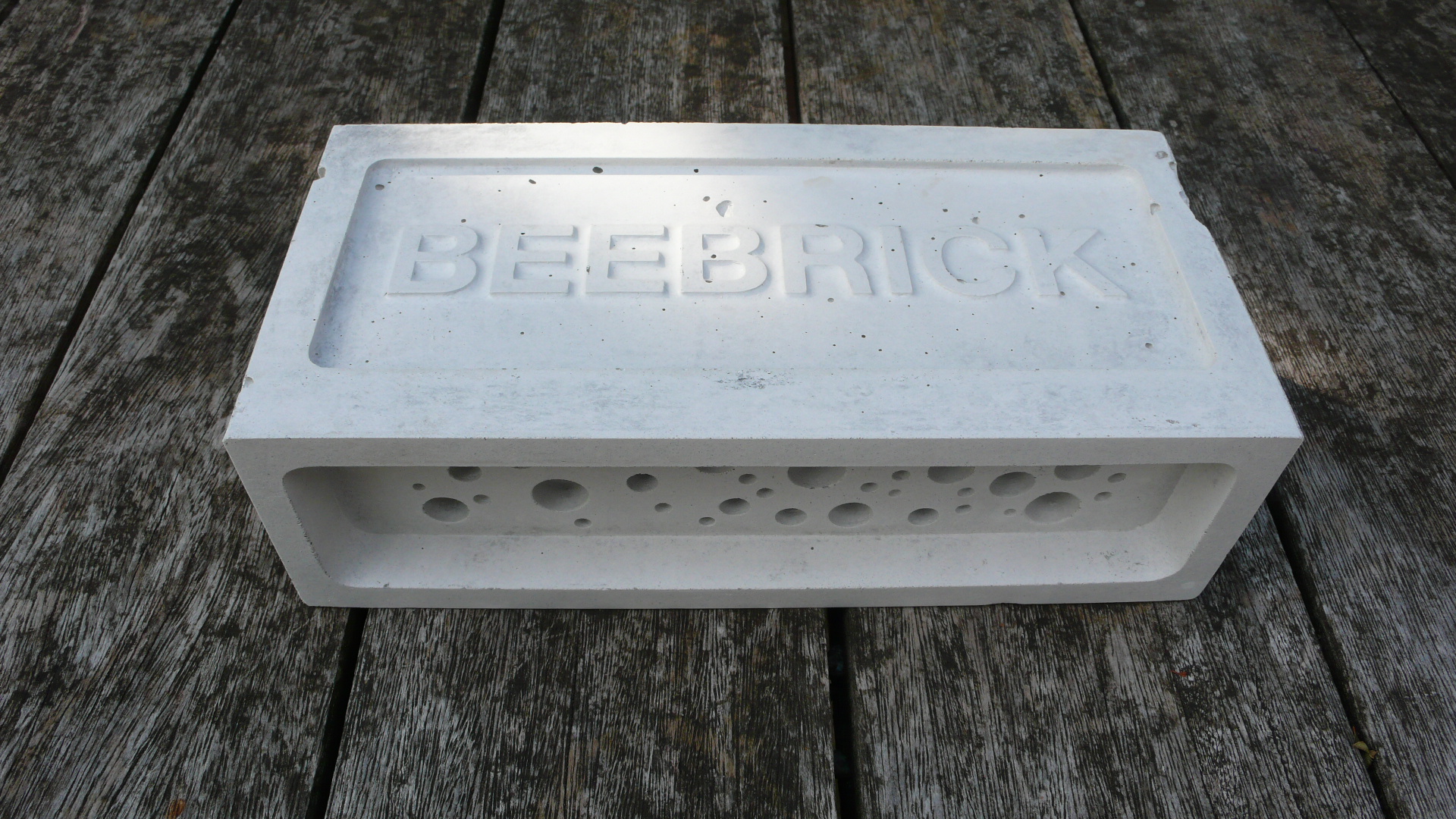
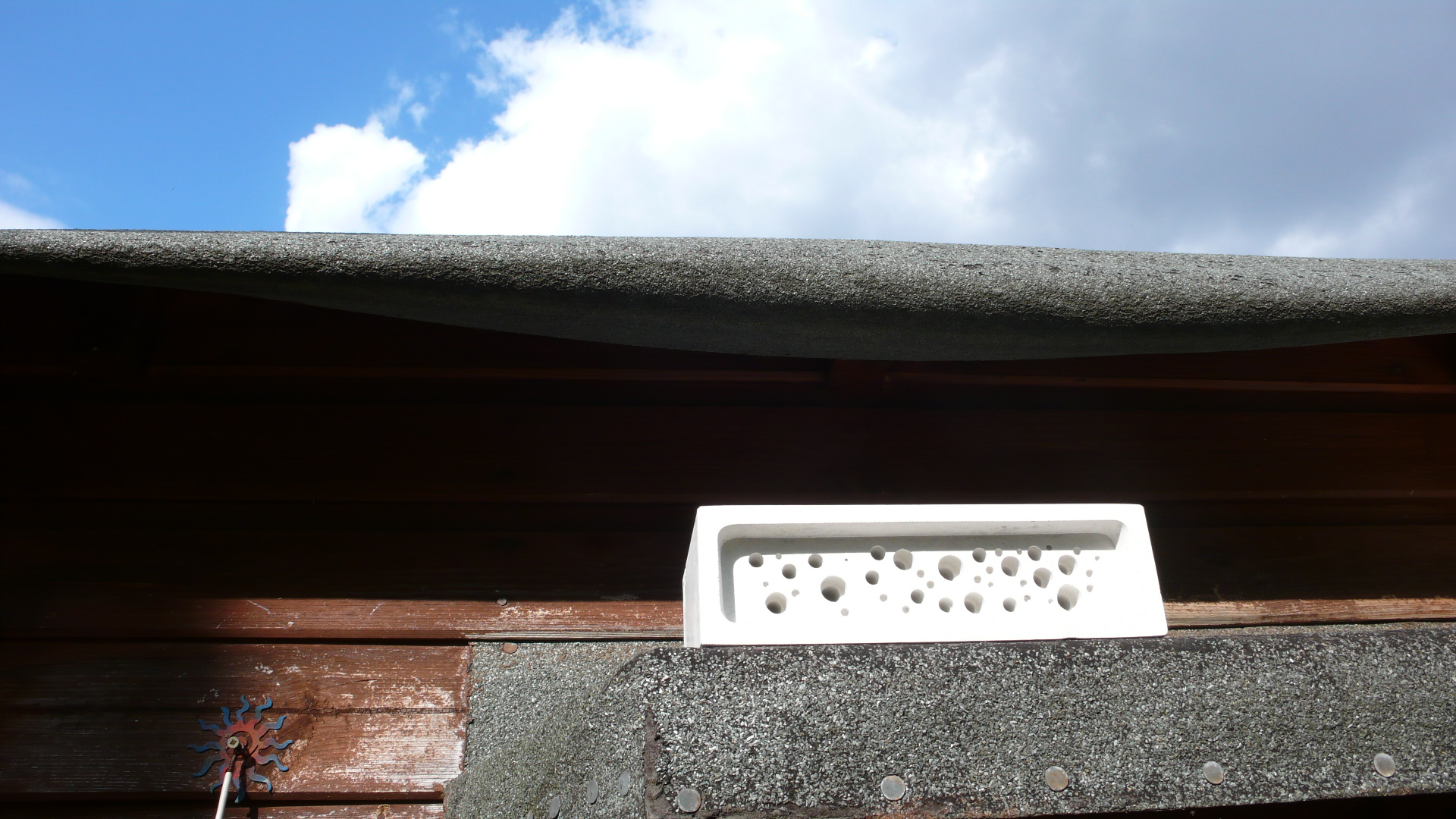
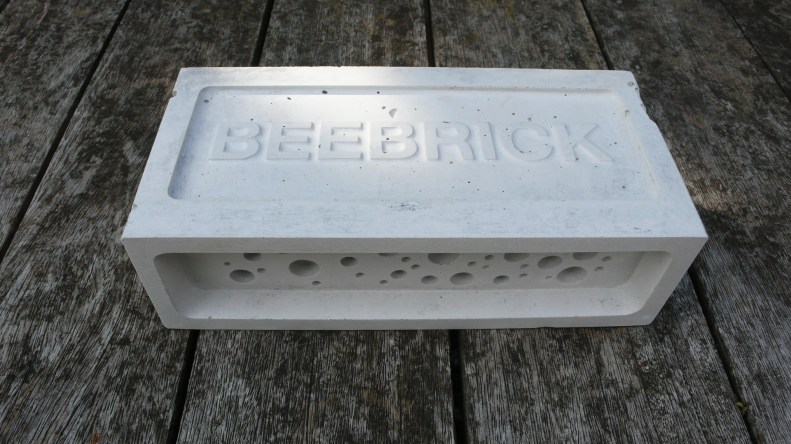
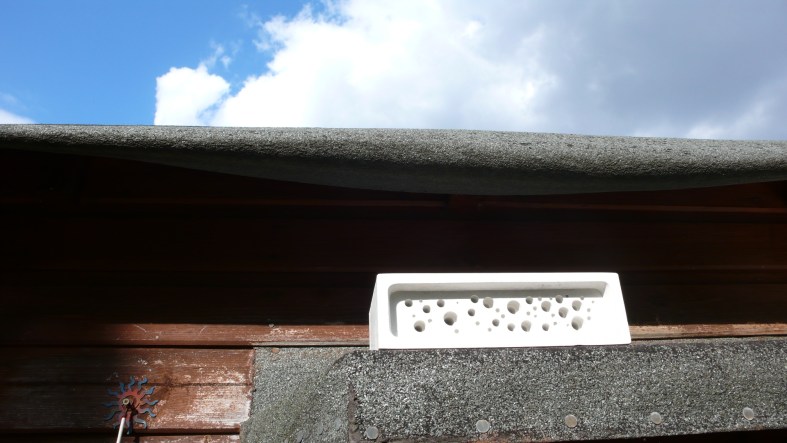
Yesterday a brick arrived in the post.  Not just any brick, but a Bee Brick, designed by the Green&Blue company in Cornwall as an architectural addition that can provide habitat for cavity nesting solitary species such as the Patchwork leaf-cutter bee that I discussed during Pollinator Awareness week.  A representative of the company recently got in touch, after having read my blog, and asked if I’d like a sample to try out in the garden.  In the absence of any planned wall building I’ve placed it a couple of metres up on the flat top of a south facing summer house window.  It’s probably a bit late in the season to attract any nesting solitary bees this year, but we’ll see; expect a report back from me at some point.

I had actually encountered the Bee Brick earlier this year at the Chelsea Flower Show which Karin and I attended as a 50th year bucket-list day out.  It was ok, I enjoyed it, the plants and (some of) the gardens were great.  But it was too busy, too expensive and too full of ostentatiously wealthy people for my tastes.

As if to serve as a counter-point to all the good work being done during Pollinator Awareness Week and by companies such as Green&Blue, came the recent news that Defra has agreed to lift the restrictions on use of two neonicotinoid pesticides on oil seed rape across a “limited” area in the east of the country.  It will apparently apply mainly to Suffolk, and cover an area of about 30,000 hectares.  That’s 5% of the UK’s oil seed rape crop.

The decision was made at the behest of the National Farmers Union, and seems to make no farming sense whatsoever given that nationally yields of oil seed rape have not been affected by the restriction on neonicotinoids, with the harvest this year looking to be above average.   Not surprisingly the decision has drawn furious fire from a range of environmental organisations including Buglife and the Wildlife Trusts. Meanwhile Friends of the Earth have threatened legal action, a move prompted by the fact that the Government has refused to allow its independent advisors to publish the details of the decision, including how it was made and what was discussed.

Aside from the lack of transparency, what particularly worries me is that this decision opens the door to further use of these restricted pesticides over the next 12 months, on a region by region basis, until we are back where we were prior to the restrictions being imposed.  The two year restriction on use of neonicotinoid pesticides comes to an end in December, at which point no one outside (and possibly inside) of Defra knows what is going to happen.

The National Farmers Union is being very selective with their use of information about the scientific evidence base for the effects of these pesticides on pollinators.  Dr Chris Hartfield, the NFU’s horticultural policy adviser and lead on bee health issues, was quoted as saying “The majority of the research that has fuelled this debate has been based on artificial dosing studies. The big question in this area is, does this accurately reflect what happens to bees foraging in and around neonicotinoid crops?  We don’t know, but the field studies haven’t shown that they are causing population declines in pollinators”.

Dr Hartfield and the NFU know full well that all of the evidence so far published shows that even at very small (field realistic) doses, neonicotinoid pesticides have been demonstrated to have important, sub-lethal effects on pollinators that may ultimately affect populations of some species.  Surely the wisest course of action is to further restrict their use until we have studied the situation.

This is not the only occasion when the NFU have been less than objective with their use of scientific evidence.  In the past couple of weeks I’ve had a group email exchange with Dr Hartfield in which he talked about the study by Carvalheiro et al. (2013) that “shows these [pollinator] declines have slowed (or even reversed) in the last 2 decades”.  I responded by pointing out that the current situation is not as straightforward as that.  The recent paper that we published in the journal Science showed that the rate of extinctions of UK bees and flower-visiting wasps has in fact increased over the period when Carvalheiro et al. (2013) see a slow down in declines in abundance.

There are a number of reasons why our results may be in disagreement with those of Carvalheiro et al., which we discuss in the paper, including the large statistical confidence interval around the rate of extinction during this latter period. However as with all such data, one or two studies will not give a definitive answer.  I provided Dr Hartfield with a link to our paper but I’m still waiting to receive a reply.

Initiatives such as the Bee Brick, reduced mowing on road verges, the RHS’s Perfect for Pollinators plant list, etc., etc. are important but they are tiny contributions compared to the role that must be played by British agriculture if we are to conserve pollinator diversity in the UK.  Farming accounts for 70% of the land surface in this country and has by far the greatest part to play in reducing biodiversity loss.

Within 12 months of Defra launching the National Pollinator Strategy, the same Government department has decided to bow to pressure and allow some use of a group of pesticides that we know are causing problems, even if they are not the whole story.  Defra is effectively hurling what may be the first of many bricks at itself, ultimately weakening the Strategy.   From conversations with politicians I know that these large departments do not have good internal communication and dialogue, but this seems to be an outstanding example of Orwellian double-think on the part of Defra.
P1120355

Garden pollinators for PAW no. 7 – Tree bumblebee (Bombus hypnorum)

Bombus hypnorum

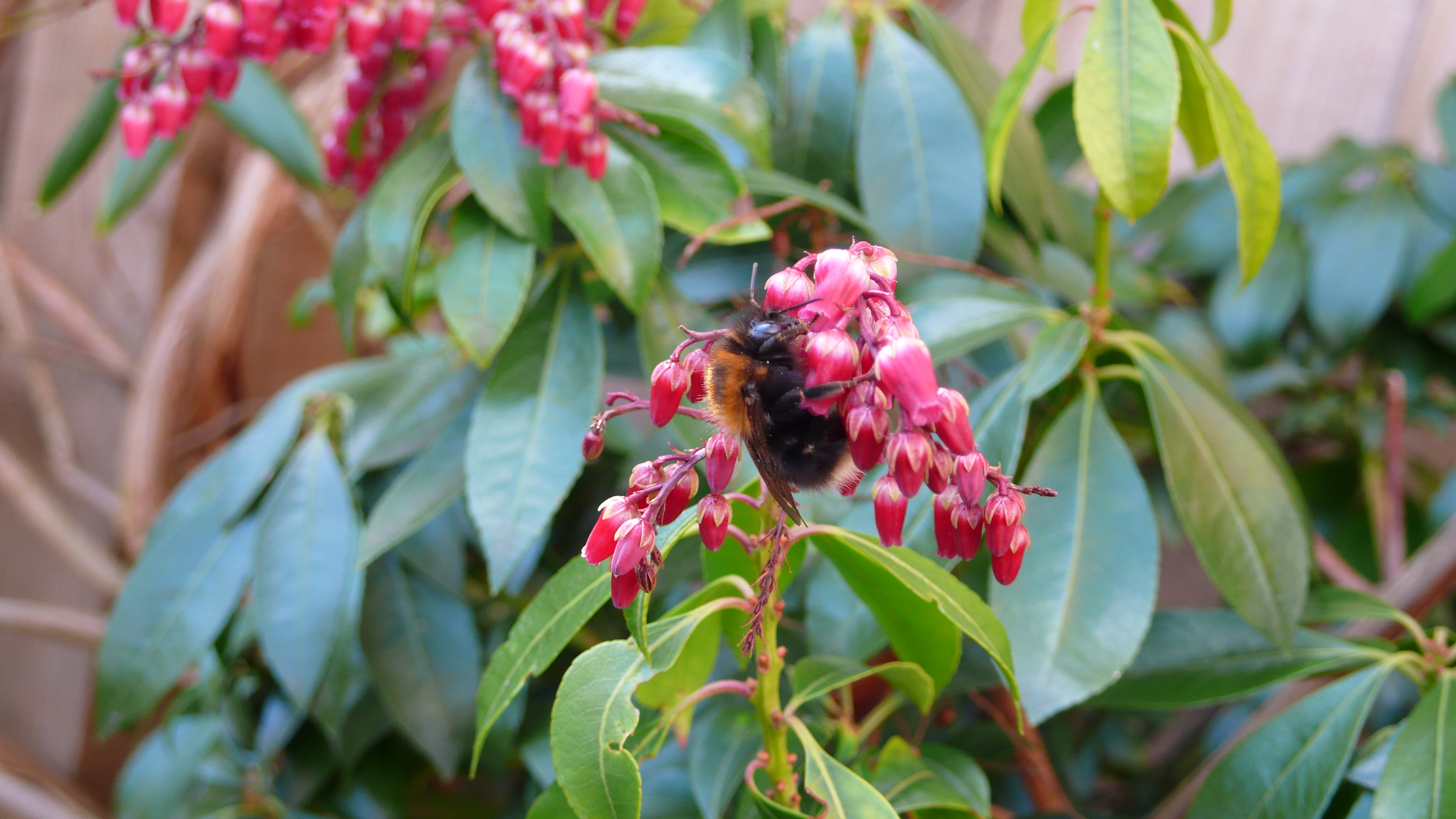
For my final post for Pollinator Awareness Week I’ve chosen another bumblebee, one with a fascinating history and ecology. The Tree bumblebee (Bombus hypnorum) is a relatively new arrival on our shores.  It was first discovered near Southampton by Dave Goulson in 2001; since then has spread out through the country, as far north (currently) as central Scotland, and has recently been recorded from Ireland.  It arrived in Northamptonshire in 2006. The Bees, Wasps and Ants Recording Society (BWARS) has been tracking its spread through a recording scheme: it’s very distinctive being the only one of our 25 bumblebees to have a ginger thorax, black abdomen and white tail.

All the evidence suggests that this was a natural range expansion for the species rather than a deliberate or accidental introduction by people.  It’s what species do, they move around and change their distribution over timescales of decades to hundreds of years (there are lots of bird examples of this, including the Collared dove in the UK).  There’s no suggestion that this was due to climate change, however: Bombus hypnorum has long been present in colder parts of Europe and Scandinavia.

That said, there is probably a human influence to its spread as the species is closely associated with houses and gardens, often nesting in bird boxes or roof spaces (we had one in our roof for three years running).  The natural nesting habit for this bee is tree holes (hence the common name) which is why they are usually found in cavities above the ground.  However, like the Buff-tailed bumblebee, they can also be found in compost heaps, as a recent posting on the Bees Knees Facebook group showed (if you’re not a member of that group I can recommend it as it’s full of friendly, practical gardening advice for those interested in how their garden can be beautiful, productive and wildlife-friendly).

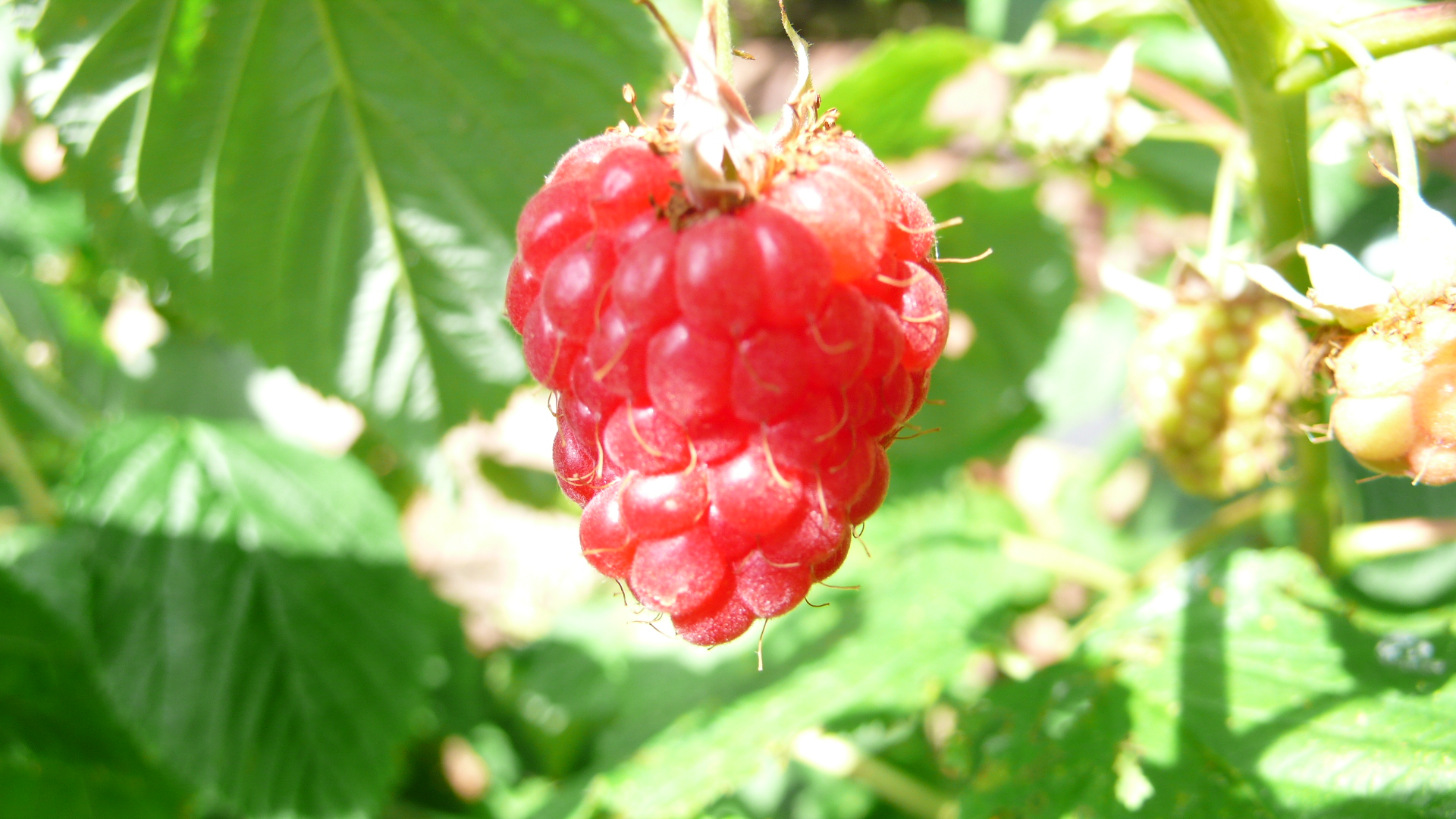
Although the Tree bumblebee will take nectar and pollen from an assortment of garden plants it seems to be particularly associated with members of the rose family (Rosaceae) and is a frequent pollinator of rosaceous soft fruit such as raspberries and blackberries.  I tried and failed yesterday to photograph the bee on our raspberries, so here’s a photograph of the outcome of that pollination.

P1120302

The Tree bumblebee is rapidly becoming one of the commonest garden bumblebees.  Is this likely to cause problems for our other bumblebees, by out-competing them for nectar and pollen, or even nesting sites?  It’s too early to tell but I’d be surprised if it does.

Bombus hypnorum March 2010

Phew!  That’s it!  It’s been a bit of marathon preparing these posts on top of writing a large grant application and a thousand other jobs, but it’s been a lot of fun.  Thanks to everyone who has viewed my posts For Pollinator Awareness Week and commented on them, either on the site or on Facebook.  Hopefully they have raised a broader awareness of our amazing native pollinators.

Garden pollinators for PAW no. 6 – Buff-tailed bumblebee (Bombus terrestris)

P1010430

It would be impossible to write a series of blog posts about garden pollinators for Pollinator Awareness Week without considering the bumblebees (genus Bombus) and I intend to devote the last two posts to that group of bees.  The bumblebees are arguably the UK’s most important pollinators of both wild and crop plants, certainly later in the season when colony numbers have increased. Earlier in the season it’s the solitary bees such as the Orange-tailed mining bee that are predominant.

Although common and widespread in gardens, the Buff-tailed bumblebee (Bombus terrestris) belongs to a group of bees in which the workers are rather variable in appearance and can be very difficult to distinguish from those in the Bombus lucorum group, which includes two other species (B. cryptarum and B. magnus).

This is a truly social species with an annual nest comprising workers and a queen.  Nests are founded by queens that have mated the previous year and hibernated.  They usually choose old rodent nests in which to begin their colonies, which is why they are sometimes found in garden compost bins.  An interesting question that I’ve not seen answered is whether the queens actively displace mice or voles from such nests: does anyone know?  This association between bumblebees and mice led Charles Darwin and Thomas Huxley into some speculation as to the role of spinsters in the British Empire.

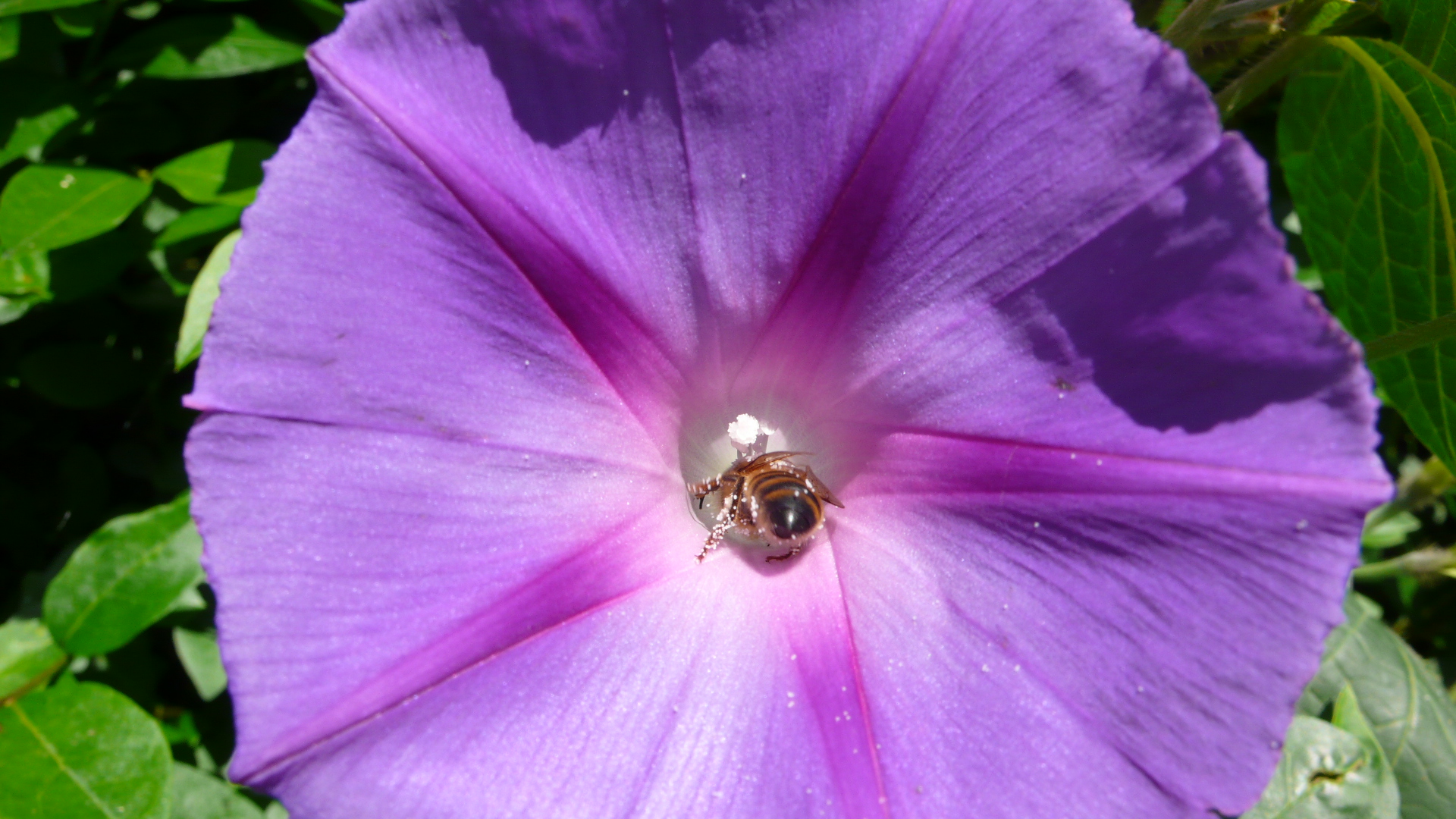
In my garden the Buff-tailed bumblebee pollinates a range of crops including strawberries, squashes, courgettes, blackberries, runner beans, french beans, tomatoes, and raspberries.  As the photo above shows they also visit the flowers of passion fruit, where they seem to be more effective than the smaller honey bees and solitary bees.

Buff atil on Lambs ear cropped July 2015 P1120289 copy