Category Archives: Birds

Pollinators at RHS Chelsea Flower Show

20160518_114732

Pollinators, as regular readers of this blog will know, are diverse and important, both ecologically and agriculturally.  But that diversity is declining and it’s an issue that deserves greater publicity and action.

To that end, for the past eight months I’ve been advising a team from the British Ecological Society (BES) on the content for a display at the RHS Chelsea Flower Show which is running all next week.  The display is called “Animal Attraction: The Garden and Beyond” – if you follow that link you’ll get a sense of what the display is all about, but in essence there are three key messages that the BES is trying to get across:

  • Celebrating the diversity of pollinators (not just bees!) both in the UK and globally.
  • Flowers have evolved many different ways of attracting and rewarding pollinators, leading to the fantastic diversity of floral form that gardeners appreciate.
  • Planting a diversity of flowers in your garden can only be a good thing for helping conserve pollinator populations.

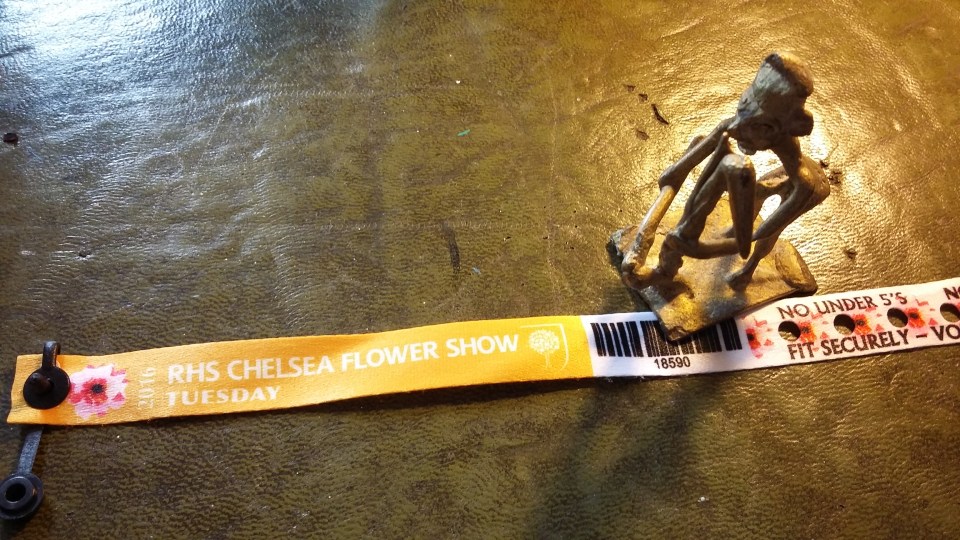
As you can see from my wristband, I’ll be helping to staff the stand all day Tuesday 24th May, so if you’re at the show come and say hello and take a look at what the BES team has produced.

Biodiversity monitoring on the University of Northampton’s new campus – a video of my recent talk

Waterside - 20160504_081622

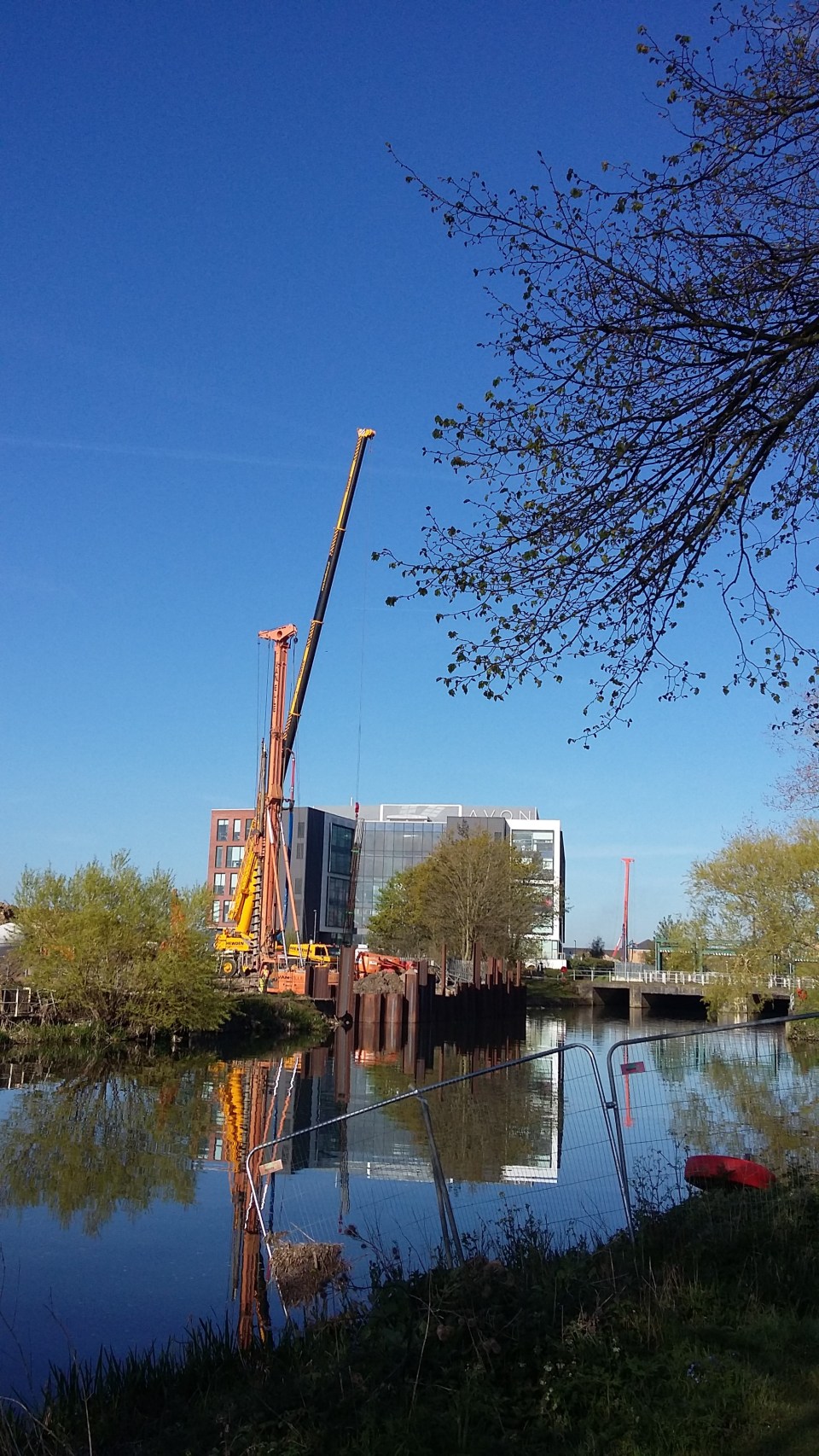
In a recent post I mentioned the talk that I had presented at a one-day conference on “delivering biodiversity” organised by the Environmental Association of Universities and Colleges at the University of Worcester.  The subject of the presentation was the work we’ve been doing with a couple of our students looking at how the building of the University of Northampton’s new Waterside Campus is impacting on biodiversity on the site, with a particular focus on birds.

The talks from that conference were videoed and can be viewed on the EAUC event site.  All of the presentations are worth viewing, but if you’re particularly interested in the Waterside project, my talk is the fourth one down.  I’ll apologise in advance for the occasional pauses – someone in the first couple of rows was wearing perfume and it was really catching my throat!

Polinode – a user-friendly tool for visualising ecological networks

Birds mixed flocks (2) - curvedIt is a general ecological rule that no species exists in isolation; all species interact with other organisms within the communities to which they belong. The collection and analysis of ecological interaction data has burgeoned over the past couple of decades, particularly in my own area of (largely) mutualistic species interactions such as plant-pollinator relationships – see for example this recent post on hummingbird-plant networks.

There are a number of software packages available for analysing and visualising this type of data, including bipartite  and foodweb in R, Food Web Designer, and Gephi.  Tools such as this vary in their flexibility and in the investment of time required to produce good quality graphics, and ultimately it’s down to personal preferences which you use.

Recently I discovered some very user-friendly network visualisation software that is browser/cloud based, free to use (at least the basic version), very flexible, intuitive and quick to learn. Ideal if you are pressed for time and want to generate some quick food webs.

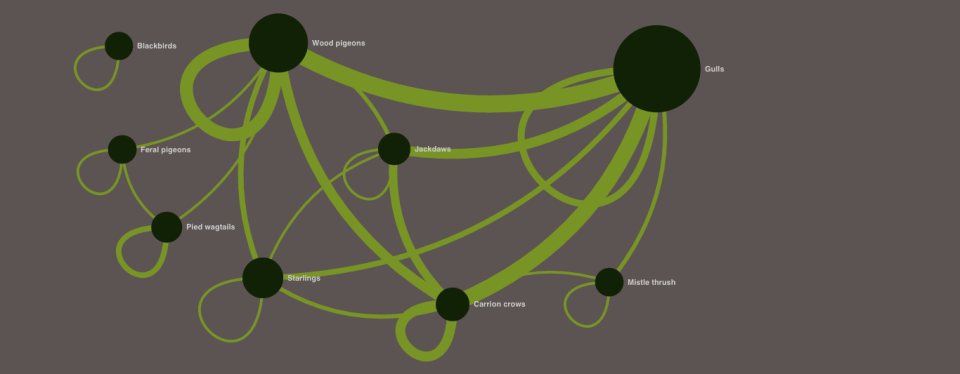
The system is called Polinode and was developed primarily to visualise business and social science data (the “poli” part is nothing to do with pollination, that’s purely coincidental). However there’s no reason why it can’t be used for ecological data, as the image above demonstrates. This is a visualisation of mixed-species flocks of birds feeding together and alone on a local urban park that I’ve discussed previously.  The thickness of the line is proportional to number of interactions observed, and the size of each node is proportional to the number of birds.  Both are scalable in Polinode.

One could also present these data as a straight-line graph, without the loops to indicate single-species feeding:

Birds mixed flocks (5)

As well as these types of networks it’s also possible to produce bipartite (what Polinode terms “hierarchical”) graphs, for example this network of bumblebees feeding on different plant families in a British grassland (click for a closer view – I realised afterwards that I downloaded a rather small version):

Bombus hypnorum with plant families

The system is very flexible and nodes can be grabbed and moved around (as I did above to offset the plant family nodes), recoloured, resized, text resized, etc.

Polinode also calculates a range of network metrics such as degree and Louvain communities (a measure of modularity) which is more limited than some ecologists might require, but which is a good starting point for those new to ecological network statistics.

Data files can be uploaded directly from Excel, and there are example templates showing how to lay out the data.  There is also ample online support including written guidance, videos, and a regular blog. Even in the few months I’ve been playing with the system the developers have added more features, including a graphing facility that generates column and scatter plots from your networks.

There you go, that’s an introduction to Polinode for ecologists; hope it’s useful for your work.

Six bees, one stone: recent pollinator-related talks and workshops

BBKA lecture April 2016As I write this I’m painfully conscious that (a) it’s a couple of weeks since I last posted on the blog; and (b) I have a long list of things to complete before I head off to Tenerife for ten days of field work on Friday.  The absence of posting has been due to my current work load, including the number of conferences, talks and workshops I’ve been involved with in the past month, which seems to have taken up a disproportionate amount of my time.  It’s all been interesting and useful, however, and reflects the rising activity stemming from the National Pollinator Strategy, and increasing interest in pollinators more broadly.  I’ve certainly learned a lot and hopefully my own expertise contributed to the success of these events.

In this post I thought I’d briefly summarise what I’ve been up to recently, in the process expanding the numerical and phylogenetic parameters of “killing two birds with one stone“:

16th March – took part in a workshop to map the latest phase of Buglife’s B-Lines across Bedfordshire, Northamptonshire, Buckinghamshire and Oxfordshire.  This was a really interesting exercise and I felt that we’d actually achieved rather a lot by the end of the day.  Once the final maps are completed I’ll post a link so you can see where the routes go through these counties and how they meet up.

23rd March – spoke at a one-day conference on “delivering biodiversity” organised by the Environmental Association of Universities and Colleges at the University of Worcester.  Although I was talking about our bird surveys on the University of Northampton’s new Waterside Campus, pollinators did receive some attention during a workshop on creating wildflower meadows.  I’ll post an update on the Waterside work once we’ve completed the next set of spring surveys.

30th March – spoke at the Bumblebee Working Group at the University of Sussex – have already posted an account of that.

6th April – took part in a”Pollinator Experts Elicitation” workshop at the University of Warwick, along with a group of nine other academics, and members of stakeholder groups such as FERA and the NFU.  Run as part of Warwick’s Food and Behavioural Science Global Research priority groups, the organisers, from the university’s Department of Statistics, used the Delphi Method to assess the likelihood of sustaining pollinator populations under different scenarios of disease, climate change, and habitat degradation.  It was a fascinating process and interesting to see how often experts’ views converged on the same opinion.  Also rather humbling to see the degree of our uncertainty in our forecasts.  The workshop garnered quite a bit of media attention including pieces on the BBC’s Midlands Today and the Farming Today programmes.

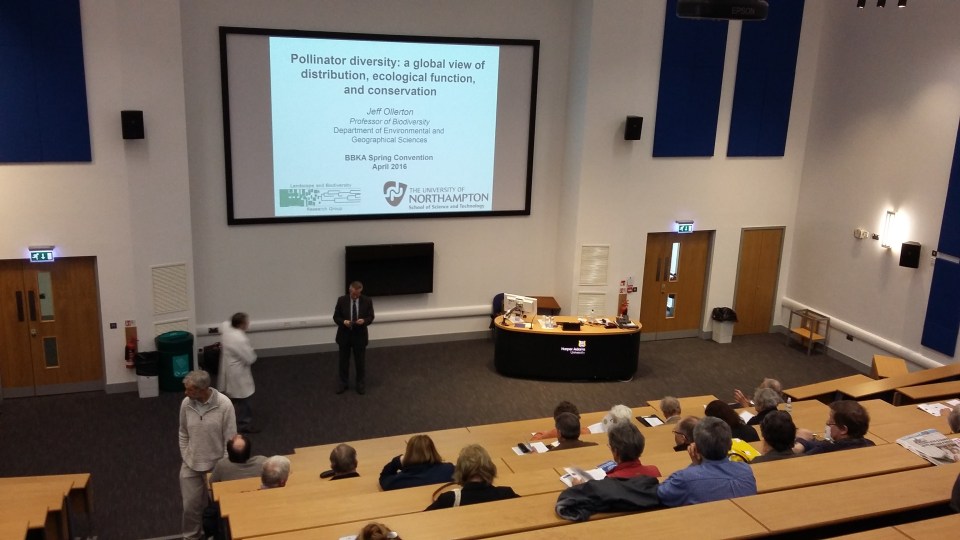
8th-9th April – delivered two lectures at the British Beekeepers Association’s Spring Convention at Harper Adams University.  Rather disconcerting to be the least-informed person in the room, given my limited knowledge of bee keeping, but they were a friendly and curious lot with good-sized audiences for my talks on the diversity of bees to be found in urban settings, and the global diversity and functional importance of pollinators.

13th April – spoke to a very receptive audience at the Friends of Linford Lakes Nature Reserve near Milton Keynes, on the topic of “Bees for dinner?  The importance of pollinators in a changing world“.  Great evening and lots of interesting questions afterwards, though my talk was a bit too long (must cut it for next time).

That’s it for now, hope to do some posts from Tenerife while we are there.


The integration of alien plants in mutualistic plant–hummingbird networks – a new study by Maruyama et al. (2016)

The collaborations with researchers in Brazil and Denmark in which I’ve been involved in recent years, focused particularly on hummingbirds and networks of plant pollinator interactions, have been very productive, most recently seen in a study of the effects of hummingbird feeders on diversity and abundance of the birds.

This collaboration continues with a new study that has just been published in the journal Diversity and Distributions which deals with the way in which non-native plant species are exploited by assemblages of hummingbirds in the New World.  Here’s the abstract:


Aim:  To investigate the role of alien plants in mutualistic plant–hummingbird networks, assessing the importance of species traits, floral abundance and insularity on alien plant integration.

Location: Mainland and insular Americas.

Methods: We used species-level network indices to assess the role of alien plants in 21 quantitative plant–hummingbird networks where alien plants occur. We then evaluated whether plant traits, including previous adaptations to bird pollination, and insularity predict these network roles. Additionally, for a subset of networks for which floral abundance data were available, we tested whether this relates to network roles. Finally, we tested the association between hummingbird traits and the probability of interaction with alien plants across the networks.

Results: Within the 21 networks, we identified 32 alien plant species and 352 native plant species. On average, alien plant species attracted more hummingbird species (i.e. aliens had a higher degree) and had a higher proportion of interactions across their hummingbird visitors than native plants (i.e. aliens had a higher species strength). At the same time, an average alien plant was visited more exclusively by certain hummingbird species (i.e. had a higher level of complementary specialization). Large alien plants and those occurring on islands had more evenly distributed interactions, thereby acting as connectors. Other evaluated plant traits and floral abundance were unimportant predictors of network roles. Short-billed hummingbirds had higher probability of including alien plants in their interactions than long-billed species.

Main conclusions: Once incorporated into plant-hummingbird networks, alien plants appear strongly integrated and, thus, may have a large influence on network dynamics. Plant traits and floral abundance were generally poor predictors of how well alien species are integrated. Short-billed hummingbirds, often characterized as functionally generalized pollinators, facilitate the integration of alien plants. Our results show that plant–hummingbird networks are open for invasion.


The full reference is: Maruyama, P.K. et al. (2016) The integration of alien plants in mutualistic plant–hummingbird networks across the Americas: the importance of species traits and insularity.  Diversity and Distributions (in press).

Happy to send a PDF to anyone who would like one.

Pollinators, Pollination and Food Production: IPBES gains momentum

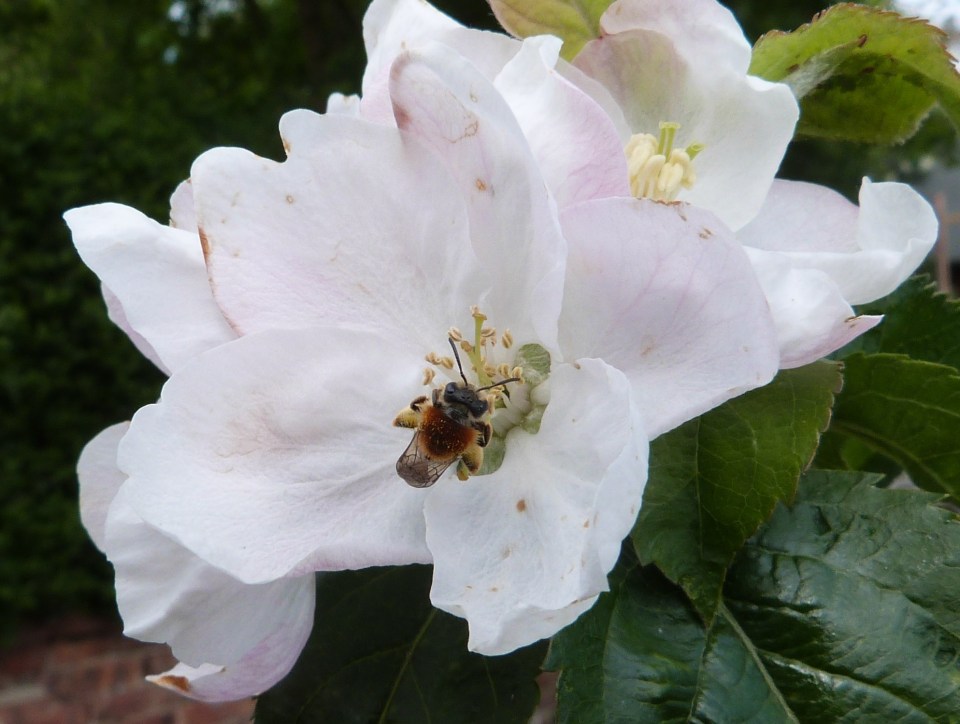
Bee on apple blossom - 1st May 2015

The over-arching themes of this blog have been about understanding biodiversity; the science behind its study; why it’s important; how it contributes to human well being, (including both intangible and economic benefits); and how policy informed by science can support the conservation of species and ecosystems.  These are all issues that have a global perspective beyond the bounds of my home country (the United Kingdom), or even my continent (Europe) because species, ecosystems and the threats to them do not respect political borders.

Enter IPBES – the Intergovernmental Science-Policy Platform on Biodiversity and Ecosystem Services (sometimes shortened to Intergovernmental Platform on Biodiversity and Ecosystem Services).

IPBES is a United Nations body established in 2012 that in many ways is a parallel entity to the IPCC ( Intergovernmental Panel on Climate Change), bringing together scientists, policy makers and stakeholders, with a mission:

to strengthen the science-policy interface for biodiversity and ecosystem services for the conservation and sustainable use of biodiversity, long-term human well-being and sustainable development

Which has got to be a good thing: science informing policy, what’s not to like?

The first output from IPBES will be a Thematic Assessment of Pollinators, Pollination and Food Production, and it’s just been discussed (today) at the 4th Plenary meeting of IPBES in Kuala Lumpur – here’s a link to the press release.

In the coming weeks I’ll talk more about IPBES and its Thematic Assessment (for which I acted as a reviewer), but for now I’ll just repeat some of the headline figures from the report:

  • 20,000 – Number of species of wild bees. There are also some species of butterflies, moths, wasps, beetles, birds, bats and other vertebrates that contribute to pollination.
  • 75% – Percentage of the world’s food crops that depend at least in part on pollination.
  • US$235 billion–US$577 billion – Annual value of global crops directly affected by pollinators.
  • 300% — Increase in volume of agricultural production dependent on animal pollination in the past 50 years.
  • Almost 90% — Percentage of wild flowering plants that depend to some extent on animal pollination*.
  • 1.6 million tonnes – Annual honey production from the western honeybee.
  • 16.5% — Percentage of vertebrate pollinators threatened with extinction globally.
  • +40% – Percentage of invertebrate pollinator species – particularly bees and butterflies – facing extinction.


*They are quoting a figure that I calculated, and very proud of it I am too 🙂

Pollinators and pollination – something for the weekend #9

The latest in an (ir)regular series of posts to biodiversity-related* items that have caught my attention during the past few weeks; this one’s focused on pollinators and pollination because there’s been so much emerging on this recently it’s been impossible to decide what to write more fully about!


Feel free to recommend links that have caught your eye.

*Disclaimer: may sometimes contain non-biodiversity-related items.

Six Kingdoms for Christmas: the cultural biodiversity of a winter festival

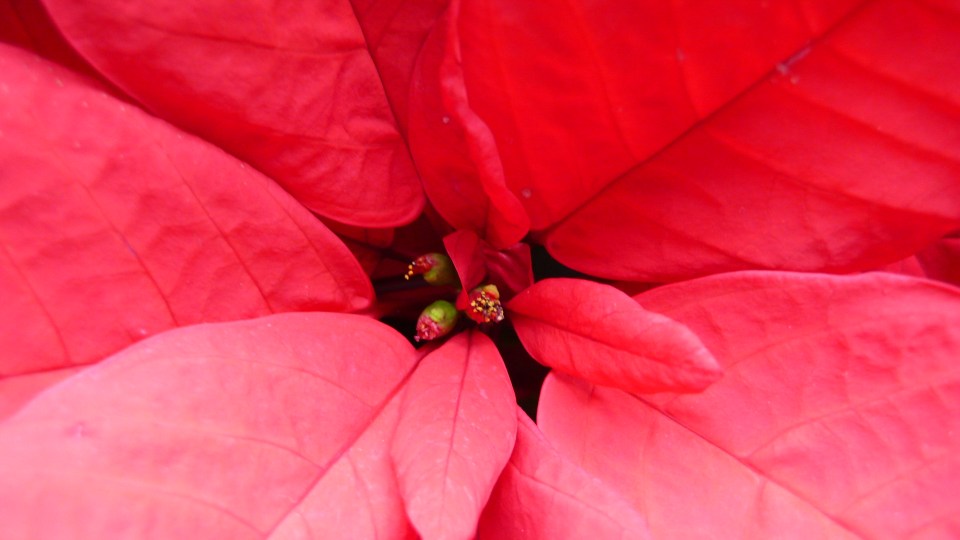
P1120504

Since beginning this blog in 2012 I’ve traditionally posted one or two Christmas-themed items around this time of year, including a piece on “Thanking the pollinators for Christmas” and a true story from 2013, “A Christmas vignette“.  The role of pollinators in producing much of the traditional Christmas fare has subsequently been picked up by others (last year the University of Bristol, this year a blog from Trinity College Dublin) so I’ve decided to break with tradition and consider the ways in which biodiversity (both wild and farmed, though the latter of course originated as the former) adds to the cultural experience of Christmas through its traditions and rituals.

In this regard I’m coming at the topic as a north-European agnostic who values Christmas as an opportunity to relax and unwind at the darkest, coldest* part of the year, rather than as a Christian.  And because I’m a British scientist much of what I say relates to British customs, though I’ve tried to include non-British examples where I’m aware of them – feel free to let me know about examples I’ve missed by commenting below.

I’ve decided to structure this post taxonomically and focus on a Six Kingdom Classification** of life on Earth as that’s been the theme of my first year undergraduate teaching since October.  Four of the six Kingdoms can be dealt with fairly quickly as their significance to Christmas is marginal or non-existent.  The two “bacterial” Kingdoms (Archaea and Eubacteria) contribute little to Christmas other than providing much of the gut flora that’s going to help us digest our Christmas dinner. Important but not specifically festive.  Likewise the protists and algae (Kingdom Protoctista) add nothing specific to Christmas unless there are traditions associated with seaweed of which I am unaware.

The other three Kingdoms are the ones where cultural biodiversity associations are more apparent.  The Kingdom Fungi (yeasts, mushrooms and moulds) provides us with several Christmas traditions including (in Germany) hanging mushrooms on the Christmas tree for good luck, and in parts of Scandinavia hanging strings of dried mushrooms around the house as decorations and as a source of winter food.  There is also the association between the red-and-white colour scheme of fly agaric magic mushrooms (Amanita muscaria) and the robes of Santa Claus, though I’ve seen that idea debunked in a few places and it appears that the “traditional” interpretation of Santa’s suit originated in the USA in the 19th century.

The Kingdom Animalia (both invertebrates and vertebrates) affords us a host of cultural connections to Christmas.  Birds include the turkey (Meleagris gallopavo) which in times past were famously walked to London from Norfolk; the domestic goose (Anser anser domesticus); and much of the song Twelve Days of Christmas refers to birds, including the turtle dove (Streptopelia turtur) one of the UK’s most declining and threatened bird species.  Mammals we associate with Christmas include of course reindeer (Rangifer tarandus) pulling Santa’s sleigh, led by the nasally-advantaged Rudolph, but also domesticated farm animals.  For example in Denmark in osme households it’s more traditional to eat pork (Sus scrofa domesticus) for Christmas dinner than goose.

Staying with the vertebrates, in our house it’s traditional to have smoked salmon (Salmo salar) with scrambled eggs for breakfast on Christmas Day, and (again in Denmark) sild (Clupea harengus) is also traditionally served as a starter, but I don’t know of other fish traditions.  Likewise I’m unaware of any invertebrates that are specifically associated with Christmas, though there have been recent reports of sustainably-sourced lobsters (Homarus americanus and H. gammarus)  becoming “traditional” in Europe.  There are also some local traditions such as honey bees singing in their hives on Christmas Eve.

The last of the Six Kingdoms is the Plantae, which, whilst the least taxonomically diverse, provides us with a wealth of cultural associations to Christmas.  These traditionally include evergreen plants that have been used to decorate homes, probably since the earliest pagan Yuletide festivals, such as: Christmas trees (various conifers in the genera Picea, Abies and Pinus); European ivy (Hedera helix); holly (Ilex aquifolium); and mistletoe (Viscum album).  However such traditions evolve and adapt to local needs and availability of plants.  For example in North and South America other genera of conifers not found in europe, such as Pseudotsuga and  Araucaria, may be used as Christmas trees***.  Likewise the absence of European mistletoe in North America means that people have adopted native mistletoes in the related genus Phoradendron for decorating and snogging traditions.  Over at her blog, ecologist Manu Saunders has recently discussed how native Australian species can substitute European plants for Christmas decorations.

The final example from the Plantae is the poinsettia (Euphorbia pulcherrima) which I’ve pictured above.  In many ways this is an unusual plant to have such a strong cultural association with Christmas: it’s a mildly toxic species of spurge from tropical Mexico that was introduced to North America in the 19th century, then subsequently to Europe.  However its festive connotations date back to the earliest period of Spanish colonisation in the 16th century, so it’s older than some of the other Christmasy traditions I’ve discussed.

Of course biodiversity is about more than just species and taxonomic diversity, it also encompasses the diversity of habitats in which that life is found.  Here too we see strong influences of the natural world on the culture of Christmas, including festive scenes of snow-bound boreal conifer forest.  As our planet warms, however, that might be a view that is found only on Christmas cards and old movies, rather than directly experienced*.

And on that sobering note, I wish all of my readers and restful and biodiverse holiday: have a great Christmas everyone!


*Ha!  It’s looking to be the warmest December on record, and at times has felt more like early summer than mid-winter.

**I’m aware that there are other Kingdom-level classifications out there which could be used, but the Six Kingdom approach is a good starting point.

***Closer to home, colleagues in the office adjacent to mine have adorned their large weeping fig (Ficus benjamina) with home-made Christmas decorations.  Looks good.

Biodiversity lost and found: extinct island birds and living African dragonflies

Two newly published studies have caught my eye this week as exemplifying two important aspects of biodiversity research: describing new species and understanding which species we’ve recently lost due to human activities.

Researchers working in the Macaronesian islands of the Azores and Madeira have described five new species of endemic water rails (genus Rallus) that are thought to have gone extinct within the period when humans colonised the islands.  One species may even have hung on into historic times.  All of the species were either flightless or had reduced capacity for flying, making them vulnerable to over-exploitation by humans.  That’s a common phenomenon on oceanic islands, with the dodo being the archetypical example.

What’s particularly remarkable is that these five new species increases the known recent diversity of the genus Rallus by about one third!  The reference for the paper, and a link to the pdf, is:

Alcover et al. (2015) Five new extinct species of rails (Aves: Gruiformes: Rallidae) from the Macaronesian Islands (North Atlantic Ocean) Zootaxa 4057: 151–190

The second paper is a mass-naming of 60 (!) new African dragonfly and damselfly species by a team led by KD Dijkstra, a Dutch entomologist whose work I’ve mentioned previously.  I had the pleasure of teaching with KD on a Tropical Biology Association field course in Tanzania a few years ago and his knowledge of African natural history is astounding.

To put these 60 new species into context, it increases the known diversity of African dragonflies and damselflies by almost 10%.  The reference and a link to the paper follows:

Dijkstra et al. (2015) Sixty new dragonfly and damselfly species from Africa (Odonata). Odonatologica 44: 447-678

Finding appropriate names for all of these insect species has required a degree of ingenuity from the authors and a quote from the paper demonstrates how memorable and creative some of them are:

“The Peace Sprite Pseudagrion pacale was discovered on the Moa River near Sierra Leone’s diamond capital Kenema. Twenty years earlier villagers trapped between rebel and government forces on opposite banks drowned in these tranquil waters. Two years later Kenema became the national epicentre of the Ebola outbreak…… The horntail Tragogomphus grogonfla evokes a Liberian pronunciation of ‘dragonfly’, the sparklewing Umma gumma a classic Pink Floyd album…… and the claspertail Onychogomphus undecim simply its date of discovery, 11/11/11.”

One of the things that I’ve tried to impress upon my final year undergraduate students this term during our Monday morning biodiversity seminars is just how little we still don’t understand about life on our planet.  Discoveries of new species are a regular occurrence, and for most we know nothing about their life histories or their interactions with other species (the aspect of biodiversity that particularly interests me).  In other cases (as with the Macaronesian water rails) the species were gone before we knew that they even existed.  I wish that I could be sure that this won’t happen in the future, but it will, until we (and the future generations that we are teaching) do something to address the problems of habitat destruction and inappropriate exploitation of biodiversity.

Gull use of urban parks in winter – data I’ll never publish (2)

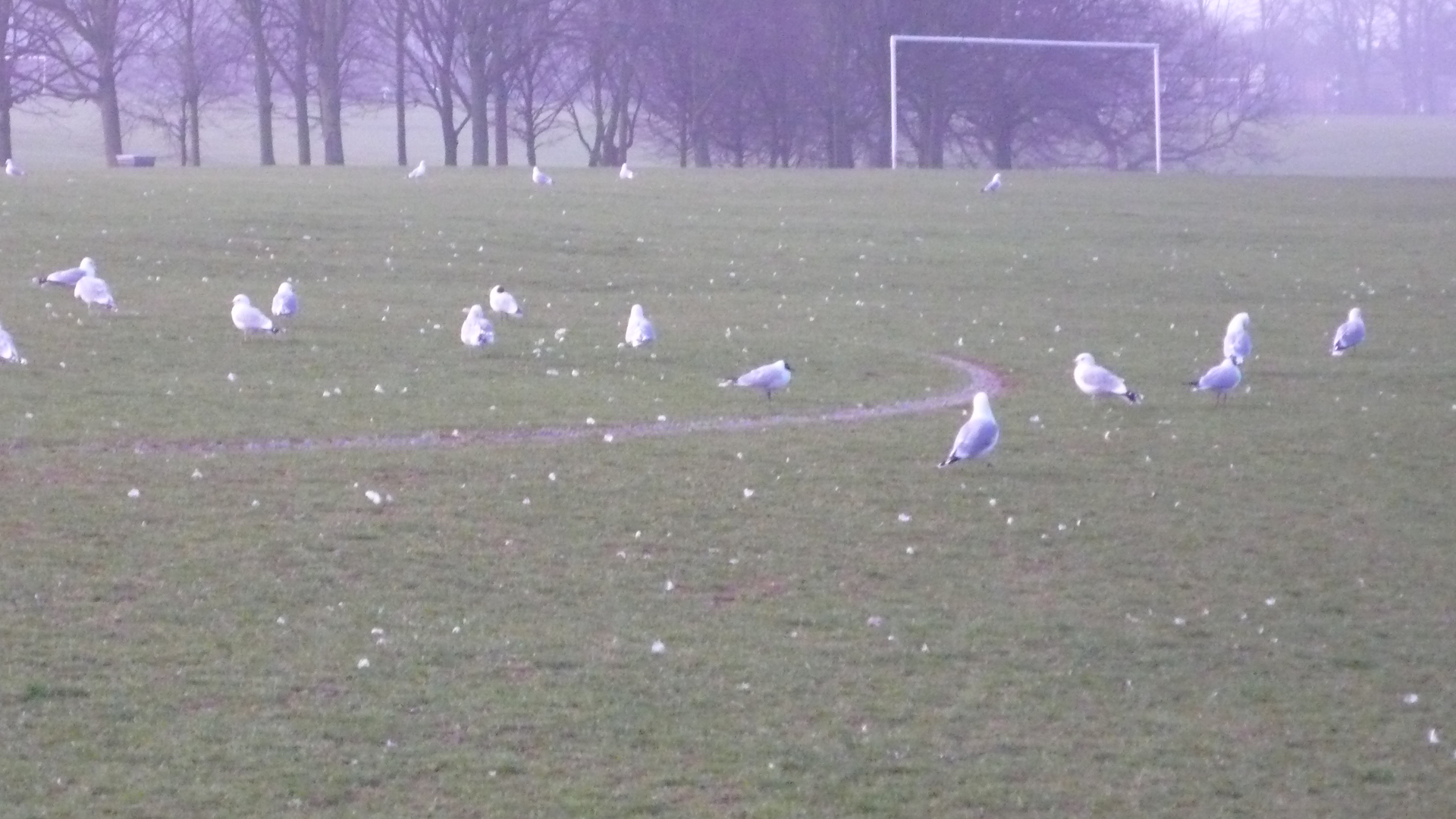
P1120146

For the second in my occasional series of “data I’ll never publish” I want to present a short post about how two species of gulls use an urban Northampton park in the winter.  The park is called the Racecourse (I’ve mentioned it before) and is en route to the campus on which I work.  It’s long been apparent that the numbers of gulls using the park increases from autumn into winter and declines to zero in the spring and summer, when they head off to breed in and around Northamptonshire’s reservoirs and gravel pits, and further afield. During the winter they spend their time feeding on earthworms, squabbling, chasing crows, and generally relaxing prior to the next breeding season.

What I was interested in knowing was just how quickly the numbers built up, whether it was a slow, steady build-up or a rapid influx of birds, and also the relative numbers of the two commonest species to be found there, Black-headed gull (Chroicocephalus ridibundus) and Common gull (Larus canus).

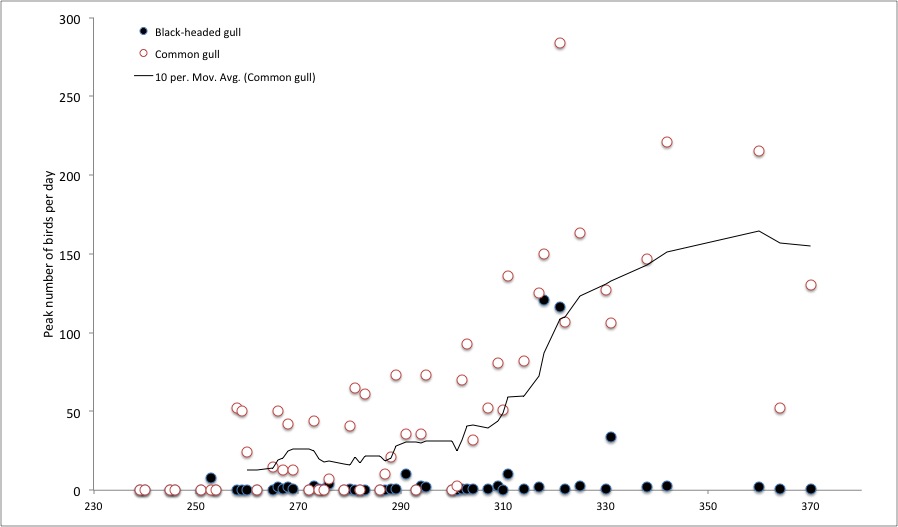
So during my walks to work between late August 2014 and early January 2015 I simply counted the numbers of birds I saw in the quadrant of the park that I passed.  Certainly not the most onerous data collection I’ve ever carried out, and done purely because it interested me, not with any view to conducting a serious study.  Here’s the data plotted up as peak birds seen per day, with day of the year on the x-axis, running from 27th August to 5th January:

Gulls on Racecourse 2014

A few things intrigue me about this.  First of all, Common gulls are much more, er, “common”, on the park than Black-headed gulls, despite the fact that Black-headed gulls are far more abundant in the UK during the winter (estimated as 2.2 million versus 710,000 birds).  However anecdotally I’ve observed that other parks in Northampton appear to have more Black-headed gulls, suggesting that the two species are to some extent dividing up the urban parks and other grasslands between themselves, like rival gangs with different local patches.

That’s purely speculative and would be worth pursuing as a student project, to test if (a) this hypothesis is correct; and (b) whether that division of the parks is stable between years.

The other thing that’s of interest from these data is that, as you can see from the 10-day moving average, the Common gulls suddenly increase in numbers around the middle of November.  I wonder whether this is due to an influx of migrant birds coming in from further north and east in Europe and Scandinavia?  At the same time I recorded an unusually large flock of Black-headed gulls: were these also migrants just passing through?

Urban gulls have been getting some bad press recently; but they really are fascinating birds that add a lot to the biodiversity interest of our parks and playing fields.  They deserve further study because we take them for granted and there’s really not much published on their urban ecology.