Tag Archives: Science

Elsevier successfully patents a common peer review process

As reported yesterday on Mike Taylor’s Sauropod Vertebra blog, who in turn picked up the story from the sec.uno site, at the end of August the giant publisher Elsevier successfully patented what they see as a unique form of peer review: waterfall (or cascading as it’s long been known) peer review. This is described as “the transfer of submitted articles from one journal to another journal” owned by the same publisher.  And there’s nothing new about it, it’s been accepted practice for a number of publishers for years now.

If you want to look at the original U.S. patent, here’s a link to it.

I don’t often re-work the content of others’ blogs, but his is exceptional: the motivation for Elsevier’s actions seem dubious at best and it’s worth clicking through and reading those pieces in detail.  What is Elsevier thinking?

The timing of this one story is also interesting.  It’s as if the Gods of Publishing had actually read my last post about peer-reviewed versus non-peer-reviewed publishing, and decided to have some fun with us mere mortals…..

How many non-peer-reviewed publications should a scientist produce?

Peer-reviewed writing moves science forwards; non-peer-reviewed writing moves science sideways.  

That’s my publication philosophy in one sentence.  In other words, when scientists write research papers and book chapters that are peer-reviewed, the underlying rationale is that we are adding to the sum total of human knowledge, providing insights into a topic, and moving a field forwards. When we write non-peer-reviewed articles we are generally writing about science for a broader audience, with little original content (though perhaps with some original ideas).  This moves concepts out of a narrow subject area and into the purview of wider society, which can be other scientists in different fields, or government agencies or policy makers, or the general public.

There can be exceptions to the rule, such as the IPBES pollinators and pollination report that I’ve been discussing this year. The report was widely peer-reviewed but is intended for a much broader audience than just scientists.  Conversely, non-peer-reviewed critiques and responses to published papers can clarify specific issues or challenge findings, which will certainly move science forward (or backwards into muddier waters, depending on how you view it).  However, in general, the principle stated above holds true.

This raises the (admittedly clunky) question I’ve posed in the title of this post: just how much non-peer-reviewed publication should a scientist who is an active researcher actually do?  How much time should they spend writing for that wider audience?

It’s a question that I’ve given some thought to over the 30 years1 that I’ve been writing and publishing articles and papers.  But a couple of posts on other blogs during the past week have crystalised these thoughts and inspired this post.  The first was Meghan Duffy’s piece on Formatting a CV for a faculty job application over at the Dynamic Ecology blog. There was some discussion about how to present different types of publications in the publication list, and notions of “sorting the wheat from the chaff” in that list, which seemed to refer to peer-reviewed versus non-peer-reviewed publications.

One of the problems that I and others see is that the distinction is not so clear cut and it’s possible to publish non-peer-reviewed articles in peer-reviewed journals.  For example the “commentary” and “news and views” type pieces in NatureScience, Current Biology, and other journals are generally not peer reviewed.  But I’d certainly not consider these to be “chaff”.  To reiterate my comment on Meghan’s post, all scientific communication is important.  As I’ve discussed in a few places on my blog (see here for example) and plenty of others have also talked about, scientists must write across a range of published formats if they are going to communicate their ideas effectively to a wider audience than just the scientists who are specifically interested in their topic.

Peer-reviewed publication is seen as the gold standard of science communication and it is clearly important (though historically it’s a relatively recent invention and scientific publications were not peer reviewed for most of the history of science).  So why, you may be asking, would scientists want to write for that wider audience?  One reason is the “Impact Agenda” on which, in Britain at least, there’s been a huge focus from the Research Excellence Framework (REF) and the Research Councils. Grant awarding bodies and university recruitment panels will want to see that scientists are actively promoting their work beyond academia. That can be done in different ways (including blogging!) but articles in “popular” magazines certainly count.  I should stress though that this wider, societal impact (as opposed to academic impact, e.g. measures such as the h-index) is not about publishing popular articles, or blogging, or tweeting. Those activities can be part of the strategy towards impact but are not in themselves impactful – the REF would describe this as “Reach”2.

The second recent blog post that relates to the question of peer-reviewed versus non-peer-reviewed publications is Steve Heard’s piece at Scientistseessquirrel on why he thinks it’s still important to consider journal titles when deciding what to read.  He makes some important points about how the place of publication says a lot about the type of paper that one can expect to read based just on the title.  But the focus of Steve’s post is purely on peer-reviewed journals and (as I said above) it’s possible to publish non-peer-reviewed articles in those.  I think that it’s also worth noting that there are many opportunities for scientists to publish articles in non-peer-reviewed journals that have real value.  Deciding whether or not to do so, however, is a very personal decision.

Of the 96 publications on my publication list, 65 are peer-reviewed and 31 are not, which is a 68% rate of publishing peer-reviewed papers and book chapters.  Some of the peer-reviewed papers are fairly light weight and made no real (academic) impact following publication, and (conversely) some of the non-peer-reviewed articles have had much more influence. The non-peer-reviewed element includes those commentary-type pieces for Nature and Science that I mentioned, as well as book reviews, articles in specialist popular magazines such as New Scientist, Asklepios and The Plantsman, pieces for local and industry newsletters, and a couple of contributions to literary journal Dark Mountain that combine essay with poetry.  This is probably a more diverse mix than most scientists produce, but I’m proud of all of them and stand by them.

So back to my original question: is 68% a low rate of peer-reviewed publication?  Or reasonable?  I’m sure there are scientists out there with a 100% rate, who only ever publish peer-reviewed outputs.  Why is that?  Do they really attach no importance to non-peer-reviewed publications? I have no specific answer to the question in the title, but I’d be really interested in the comments of other scientists (and non-scientists) on this question.


I had to double check that, because it seems inconceivable, but yes, it’s 30 years this year. Gulp.

Impact is how society changes as a result of the research undertaken.  So, for ecologists, it could be how their research has been translated into active, on-the-ground changes (e.g. to management of nature reserves, or rare or exploited species), or how it’s been picked up by national and international policy documents and then influenced policies on specific issues (invasive species, pollinator conservation, etc.)

Release today of the IPBES Summary for Policymakers of the Assessment Report on Pollinators, Pollination and Food Production

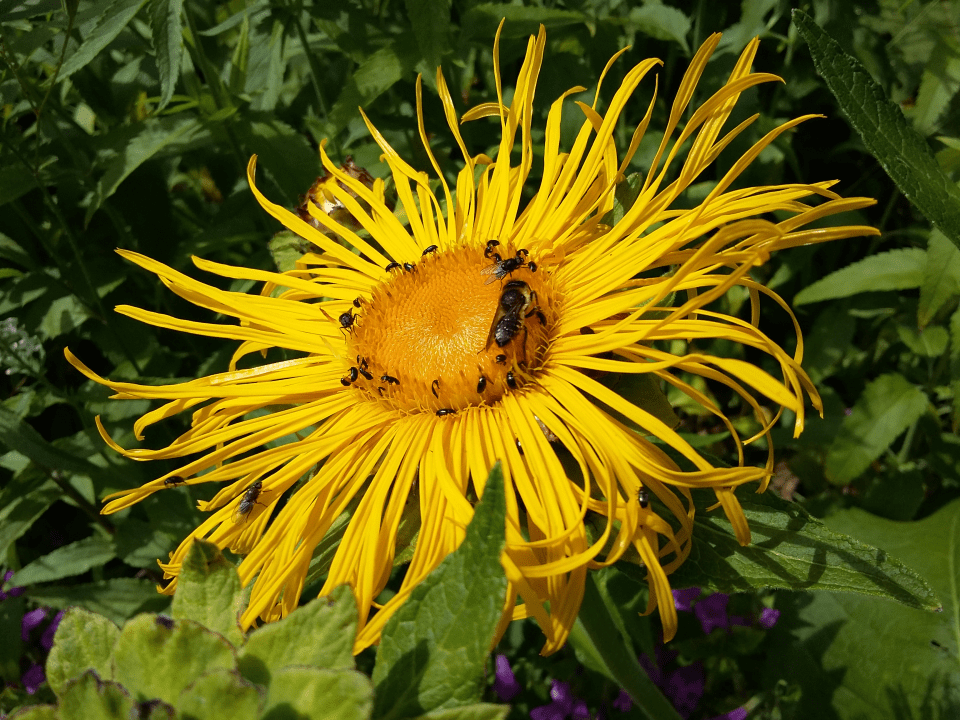
Inula at Ravensthorpe 20160710_145426Following on from the press release earlier this year announcing of the Intergovernmental Science-Policy Platform on Biodiversity and Ecosystem Services (IPBES) assessment of pollinators, pollination and food production (which I reported on in February) it looks as though the full report may shortly be published.  A Summary for Policymakers has just been released by IPBES and can be downloaded by following this link.  I’ll put up a link to the full report once it becomes becomes available.
Bees and pesticides – a major new study just published – UPDATED

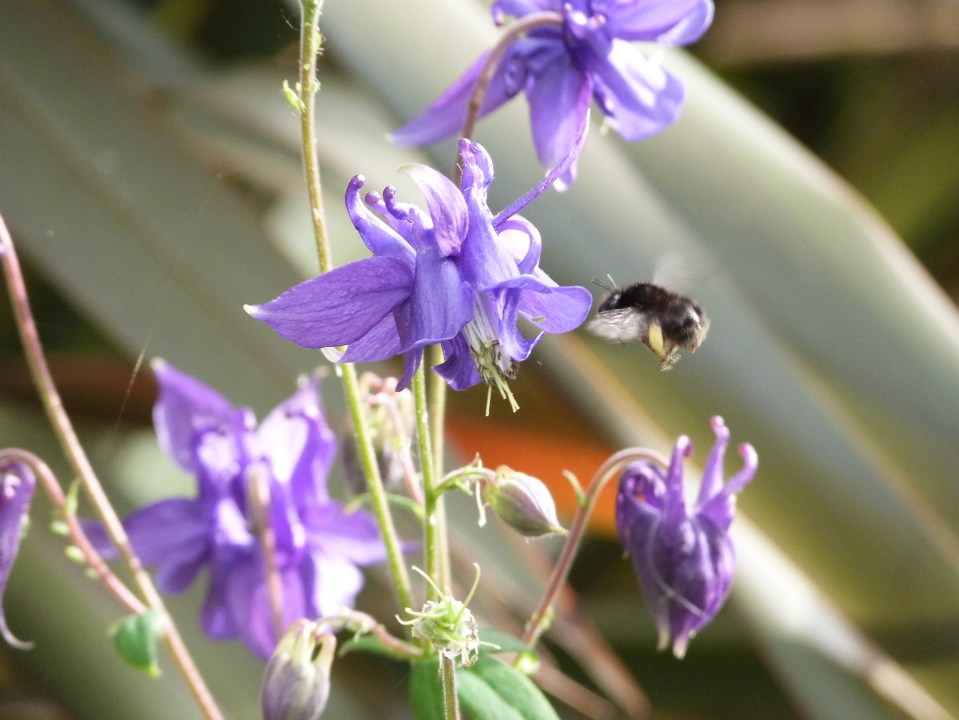
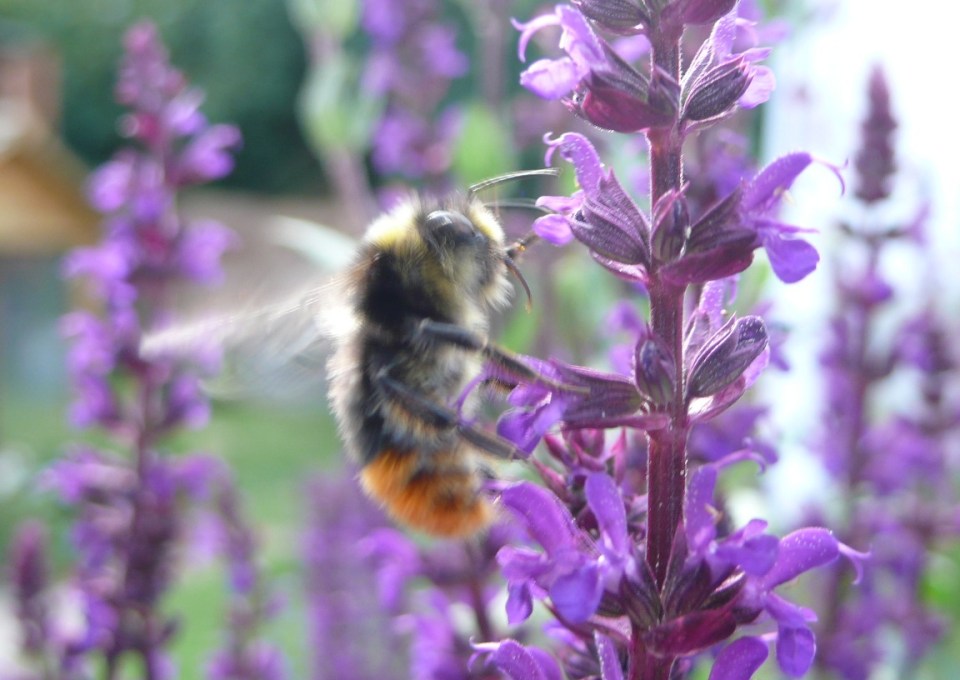
Male B lap on Salvia cropped P1120309

An important new study about the effects of neonicotinoid pesticides on wild bees has just been published in the journal Nature Communications – here’s the details and a link to the paper, which is open access:

Woodcock, B. A. et al. (2016) Impacts of neonicotinoid use on long-term population changes in wild bees in England. Nat. Commun. 7:12459 doi: 10.1038/ncomms12459

As I’ve previously discussed on this blog (e.g. here and here) there are widespread concerns amongst environmentalists, and some scientists, about the impact that these relatively new pesticides are having on pollinators and other biodiversity.  The Woodcock et al. paper is a major contribution to this discussion as it uses a huge dataset to model the changes in populations of 62 wild bee species that are known to forage on oilseed rape (canola) over 18 years.  These changes can be related to the spatial extent of oilseed rape cultivation and the authors found that whilst bees “….foraging on oilseed rape benefit from the…[nectar and pollen provided by]….this crop….[they]….were on average three times more negatively affected by exposure to neonicotinoids than…” bees which didn’t forage on the crop.

The authors further conclude that “This study provides the first evidence for community level national scale impacts on the persistence of wild bee populations resulting from exposure to neonicotinoid treated oilseed rape crops.”

Neonicotinoid pesticides are, of course, not the whole story when it comes to understanding declines in pollinator diversity and abundance.  But these pesticides are the latest in a long history of changes to British agriculture that have had significant consequences for the biodiversity of our country (as we showed in our study of bee and wasp extinctions).

Reactions to the study have been, well, predictable.  A long feature on the BBC News website* quoted a representative from Bayer as saying:

“we believe….[the study’s]….findings would be more correctly headlined that intensive agriculture is causing some issues with pollinators…..  Whether this is due to the use of insecticides is not clear; a lack of nesting sites and pollen and nectar sources in these areas may also be critical factors.”

Which rather ignores the fact that this was a comparative study of bees that forage on oilseed rape versus those that don’t.

Likewise the National Farmer’s Union’s position was that:

“While this study claims to provide an important contribution to the evidence base underpinning the current EU moratorium on some uses of neonicotinoids, experts reviewing all the evidence have concluded that there are still major gaps in our knowledge and a limited evidence base to guide policymakers”

Which sounds to me like a statement designed to fudge the issue: the “experts reviewing all the evidence” would not have reviewed this particular study!  And which begs the question – how much evidence and how many studies would be enough for the NFU?

The study’s authors do not make any suggestions as to what the next step should be in this continuing saga but are quoted as saying that “simplistic solutions” such as banning these pesticides are not the answer because this will encourage use of pesticides that are even more damaging.  That may be the case but it’s clear that an independent root-and-branch reassessment of the use of pesticides (and herbicides) in UK agriculture is long overdue.


*As an aside, this BBC News piece wrongly states that bumblebees were not included in the study, which is not the case.


UPDATE:  After I published this post I noticed that Manu Saunders has also written about the bee study, plus a second study that I’d not seen linking neonicotinoid use to declining butterfly populations in California.  Here’s a link to Manu’s blog.


The biodiversity of restored landfill sites: a new study of snails just published

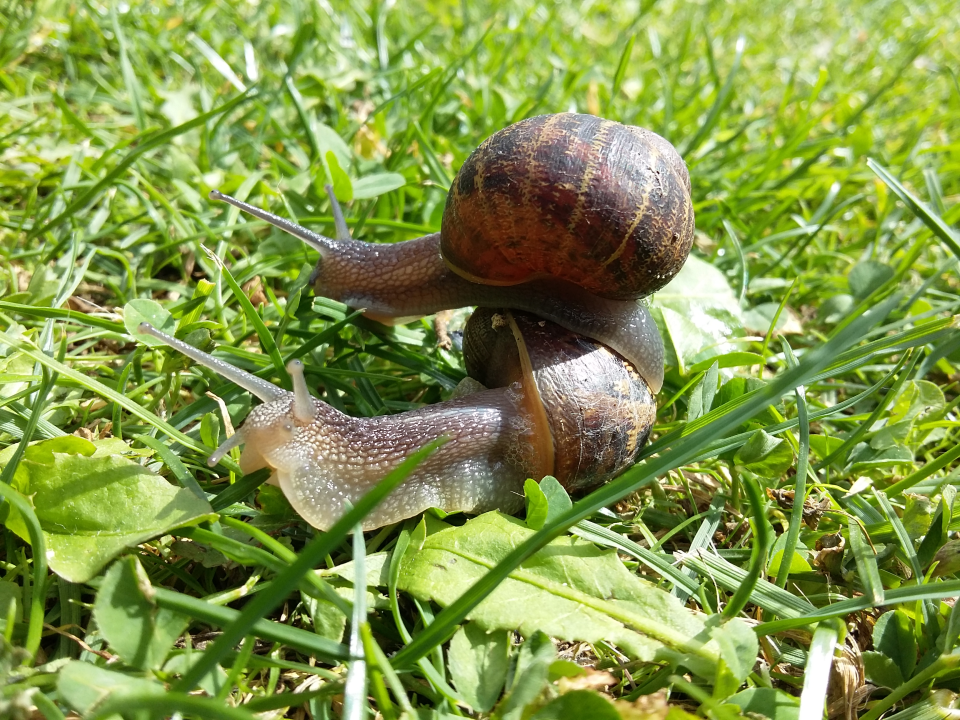
Snails - 20160813_124310

The latest paper in a series* studying the biodiversity of restored landfill sites in comparison to nearby nature reserves has just been published.  This work comes from the linked PhD research of two of our former students, Dr Lutfor Rahman and Dr Sam Tarrant.

This new paper deals with the larger snails to be found on these novel grasslands and assesses the value of such sites for conserving the diversity of an ecologically important group of molluscs.  Snails play a vital role in nutrient turnover and are a major food source for higher trophic levels, such as some birds, small mammals, and beetles.

The take home message from the study:  restored landfill sites are as rich in species as nature reserves, but a higher proportion is of non-native, introduced species.

Here’s a link to the paper, with the abstract below; it’s paywalled but if you’d like a PDF, just ask:

Rahman, L. Md., Tarrant, S.,Ollerton, J. & McCollin, D. (2016) Effect of soil conditions and landscape factors on macro-snail communities in newly created grasslands of restored landfill sites in the UK.  Zoology and Ecology (in press)


Abstract

Though restored landfill sites provide habitat for a number of taxa, their potential for land snails remains unexplored. In this study, large-sized land snails (>5 mm) were surveyed using transect sampling at nine restored landfill sites and nine corresponding nature sites in the East Midlands region of the UK, during 2008. The effect of restoration was investigated by examining the composition, richness and diversity (Shannon index) of land snail species in relation to habitat and landscape structure. Thirteen macro-snail species were recorded in total, and rarefied species richness and diversity at restored landfill sites was not found to be statistically different from that of reference sites. One third of the snail species at restored landfill sites accounting for 30% of their total abundance were non-native species. Soil electrical conductivity was the strongest predictor of richness and diversity of land snails. Road density was found to be positively related to snail species diversity. Given the high percentage of introduced species at study sites, further research is needed to elucidate management implications of restored landfill sites and dynamics of native vs. non-native species.


*The other papers in this series are:

Rahman, L. Md., Tarrant, S., McCollin, D. & Ollerton, J. (2015) Vegetation cover and grasslands in the vicinity accelerate development of carabid beetle assemblages on restored landfill sites. Zoology and Ecology 25: 347-354

Tarrant, S., Ollerton, J., Rahman, L. Md., Griffin, J. & McCollin, D. (2013) Grassland restoration on landfill sites in the East Midlands, UK: an evaluation of floral resources and pollinating insects. Restoration Ecology 21: 560–568

Rahman, L. Md., Tarrant, S., McCollin, D. Ollerton, J. (2013) Plant community composition and attributes reveal conservation implications for newly created grassland on capped landfill sites. Journal for Nature Conservation 21: 198-205

Rahman, L. Md., Tarrant, S., McCollin, D. & Ollerton, J. (2012) Influence of habitat quality, landscape structure and food resources on breeding skylark (Alauda arvensis) territory distribution on restored landfill sites. Landscape and Urban Planning 105: 281–287

Rahman, L. Md., Tarrant, S., McCollin, D. and Ollerton, J. (2011) The conservation value of restored landfill sites in the East Midlands, UK for supporting bird communities. Biodiversity and Conservation 20: 1879-1893

Again, if you’d like PDFs of any of these, just ask.


Just published: A horizon scan of future threats and opportunities for pollinators and pollination

A team of pollinator researchers from across the globe has just published an interesting new paper which looks at potential threats to pollinators and the pollination services that they provide, as well as opportunities for future conservation and agricultural gains.  The paper is open-access and free to download – here’s the reference and a link to the paper:

Brown, MJF et al. (2016) A horizon scan of future threats and opportunities for pollinators and pollination.  PeerJ

The paper has also gained some media coverage, e.g. on the BBC News website.

The bee that lives on a volcano!

Nature can adapt to even the most unpromising and uncompromising of physical environments, from deep oceans to arid deserts.  And now we have a bee that lives in close proximity to an active volcano!  The work is by one of my former PhD students, Dr Hilary Erenler (who is still a Visiting Researcher at the University of Northampton), and is featured in a big news story in the journal Science.

Here’s a link to the story.

The full reference for the study, with a link to the journal, is:

Hilary E. Erenler, Michael C. Orr, Michael P. Gillman, Bethan R. B. Parkes, Hazel Rymer and Jean-Michel Maes (2016) Persistent nesting by Anthophora Latreille, 1803 (Hymenoptera: Apidae) bees in ash adjacent to an active volcano. Pan-Pacific Entomologist 92:67-78.

Well done Hils, it’s a great study!


The influence of floral traits on specialization and modularity of plant–pollinator networks in a biodiversity hotspot in the Peruvian Andes – Watts et al. (2016)

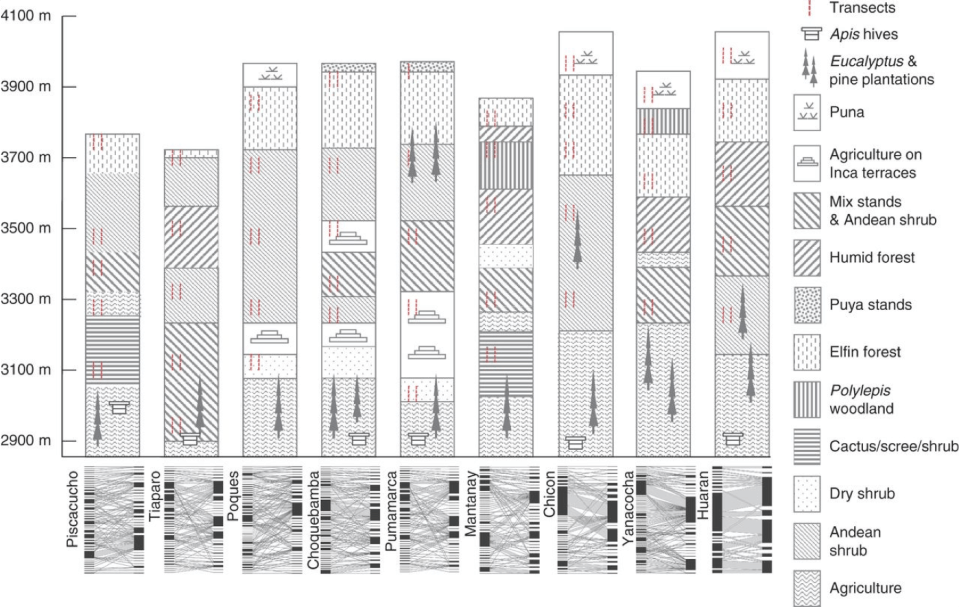
Watts et al Figure 1

The second paper from the PhD thesis of my former student Dr Stella Watts has just been published in Annals of Botanyhere’s a link to the journal’s website.  It summarises the major findings from her field work on plant-pollinator interactions in the high Andes of Peru:

Watts, S., Dormann, C.F., Martín González, A.M. & Ollerton, J. (2016) The influence of floral traits on specialization and modularity of plant–pollinator networks in a biodiversity hotspot in the Peruvian Andes.  Annals of Botany doi: 10.1093/aob/mcw114

This paper represents a major piece of research, including extensive field data collection over multiple sites in a challenging environment at altitude; state-of-the-art data analysis; and then summarising all of this into a single, digestible paper, with some great figures.  I’m very proud to have been part of it!

Here’s the abstract; please email me or Stella if you’d like a copy of the full PDF:

Background and Aims:  Modularity is a ubiquitous and important structural property of ecological networks which describes the relative strengths of sets of interacting species and gives insights into the dynamics of ecological communities. However, this has rarely been studied in species-rich, tropical plant–pollinator networks. Working in a biodiversity hotspot in the Peruvian Andes we assessed the structure of quantitative plant–pollinator networks in nine valleys, quantifying modularity among networks, defining the topological roles of species and the influence of floral traits on specialization.

Methods: A total of 90 transects were surveyed for plants and pollinators at different altitudes and across different life zones. Quantitative modularity (QuanBiMo) was used to detect modularity and six indices were used to quantify specialization.

Key Results:  All networks were highly structured, moderately specialized and significantly modular regardless of size. The strongest hubs were Baccharis plants, Apis mellifera, Bombus funebris and Diptera spp., which were the most ubiquitous and abundant species with the longest phenologies. Species strength showed a strong association with the modular structure of plant–pollinator networks. Hubs and connectors were the most centralized participants in the networks and were ranked highest (high generalization) when quantifying specialization with most indices. However, complementary specialization d’ quantified hubs and connectors as moderately specialized. Specialization and topological roles of species were remarkably constant across some sites, but highly variable in others. Networks were dominated by ecologically and functionally generalist plant species with open access flowers which are closely related taxonomically with similar morphology and rewards. Plants associated with hummingbirds had the highest level of complementary specialization and exclusivity in modules (functional specialists) and the longest corollas.

Conclusions: We have demonstrated that the topology of networks in this tropical montane environment was non-random and highly organized. Our findings underline that specialization indices convey different concepts of specialization and hence quantify different aspects, and that measuring specialization requires careful consideration of what defines a specialist.

Third International Conference on Pollinator Biology, Health and Policy – Pennsylvania – 18-20 July, 2016

P1030210

Keeping with the theme of Bees’ Needs Week, and the importance of pollinators to natural and agricultural ecosystems*, the Third International Conference on Pollinator Biology, Health and Policy takes place at Penn State University, USA,  from the 18th to 20th July.

Here’s a link to the PDF of the programme with the abstracts, speakers’ details, etc.  I won’t be attending** but I am involved as a collaborator*** in one of the talks being presented – Luísa Carvalheiro’s project on “Direct and indirect effects of soil eutrophication on pollination services“.

Best of luck to all the speakers and attendees, looks like it’s going to be a great conference.


*Wednesday’s grumpiness has almost disappeared, though it reached a new peak yesterday when we had a paper rejected by a journal after 10 months.  There was one positive review, one middling review, and then a third in which the reviewer provided no comments – just “reject”!  I was not happy about that and made my feelings known to the editor…..

**I’m actually in the Azores next week attending the Island Biology 2016 conference.  More about that at the weekend.

***With about a gazillion other people!  Luisa has pulled together an amazing data set.


“Insect pollinated” crops that don’t actually require insect pollination

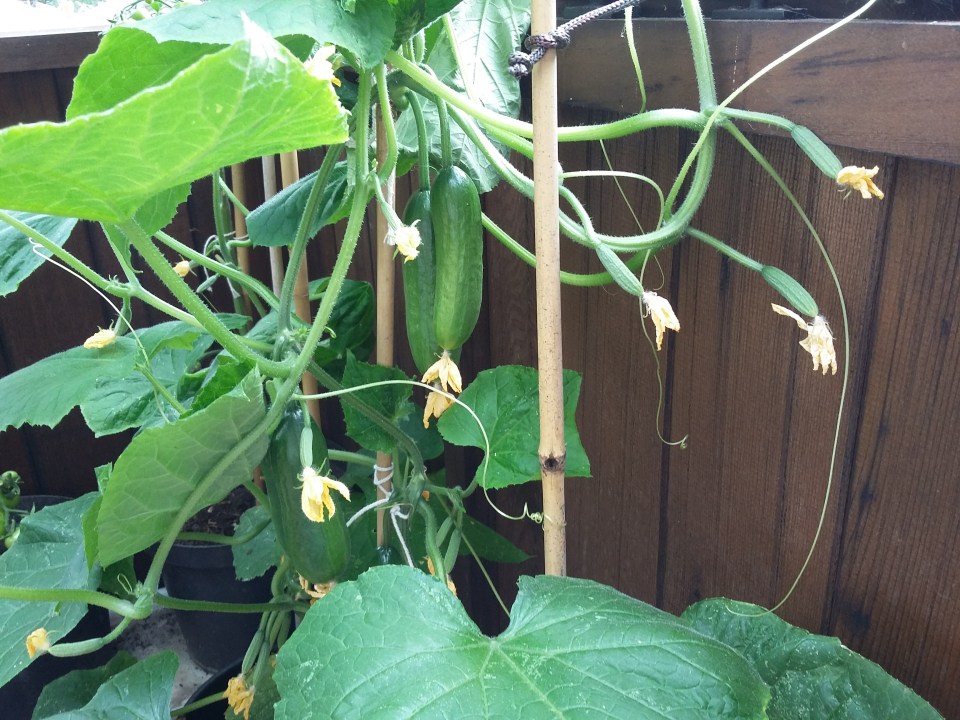
Cucumber fruit 20160713_103558

Yesterday evening I learned that a large grant application that I’d submitted earlier this year had failed to secure funding.  Statistically there was a high likelihood of this happening but that doesn’t make it feel any better: weeks and weeks of work have come to nothing.

So in a mood of bloody-minded contrariness and general displeasure at the unfairness of the world I thought I’d provide an alternative to the Bees’ Needs week I mentioned yesterday by focusing on food crops that look as though they should be insect pollinated (and their ancestors certainly were) but which don’t actually require pollinators.

The example pictured above is an F1 hybrid cucumber (Cucumis sativus) variety called “Mini Munch”, kindly grown from seed and given to me by my friend and colleague Dr Janet Jackson.  Many cucumbers don’t need insect pollination, despite their large, colourful flowers, and the fact that related crops (melons, courgettes, squashes, etc.) generally do require pollinators.  Indeed some varieties taste bitter if they are pollinated.  I can recommend this web page on how to grow cucumbers for further advice.

As I was taking that photograph, and in another demonstration of how the world is against me at the moment, I spotted a bee feeding on one of the all-female flowers of this variety.

Megachile on cucumber 20160713_103627

It spent some time there probing the centre with its tongue, so I think these flowers still produce nectar despite them not needing pollinators, a hang-over from their ancestry.  Plants have a whole range of mechanisms that ensure reproduction without the agency of insects and other animal pollinators, and this has been exploited by crop breeders who have selected crop varieties for their ability to self pollinate or to reproduce asexually via apomixis (as in the case of this cucumber).

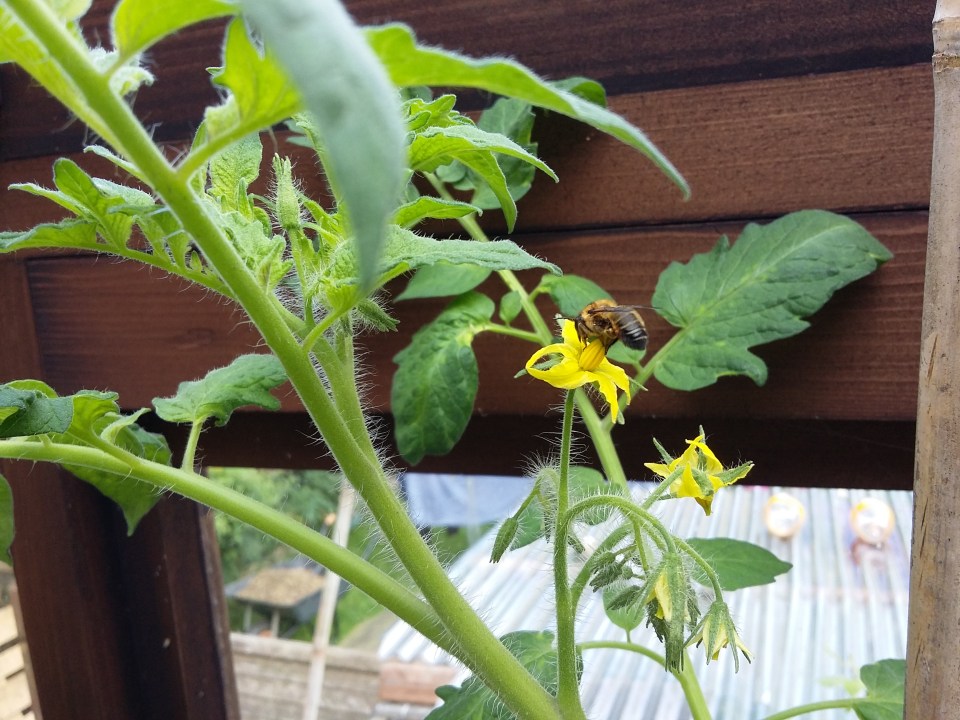
The same bee then flew onto a tomato (Solanum lycopersicum) flower (another group which varies in its demands for pollination) and I got a better look – seems to be a Leaf-cutter Bee of the genus Megachile.

Megachile on tomato 20160713_103712

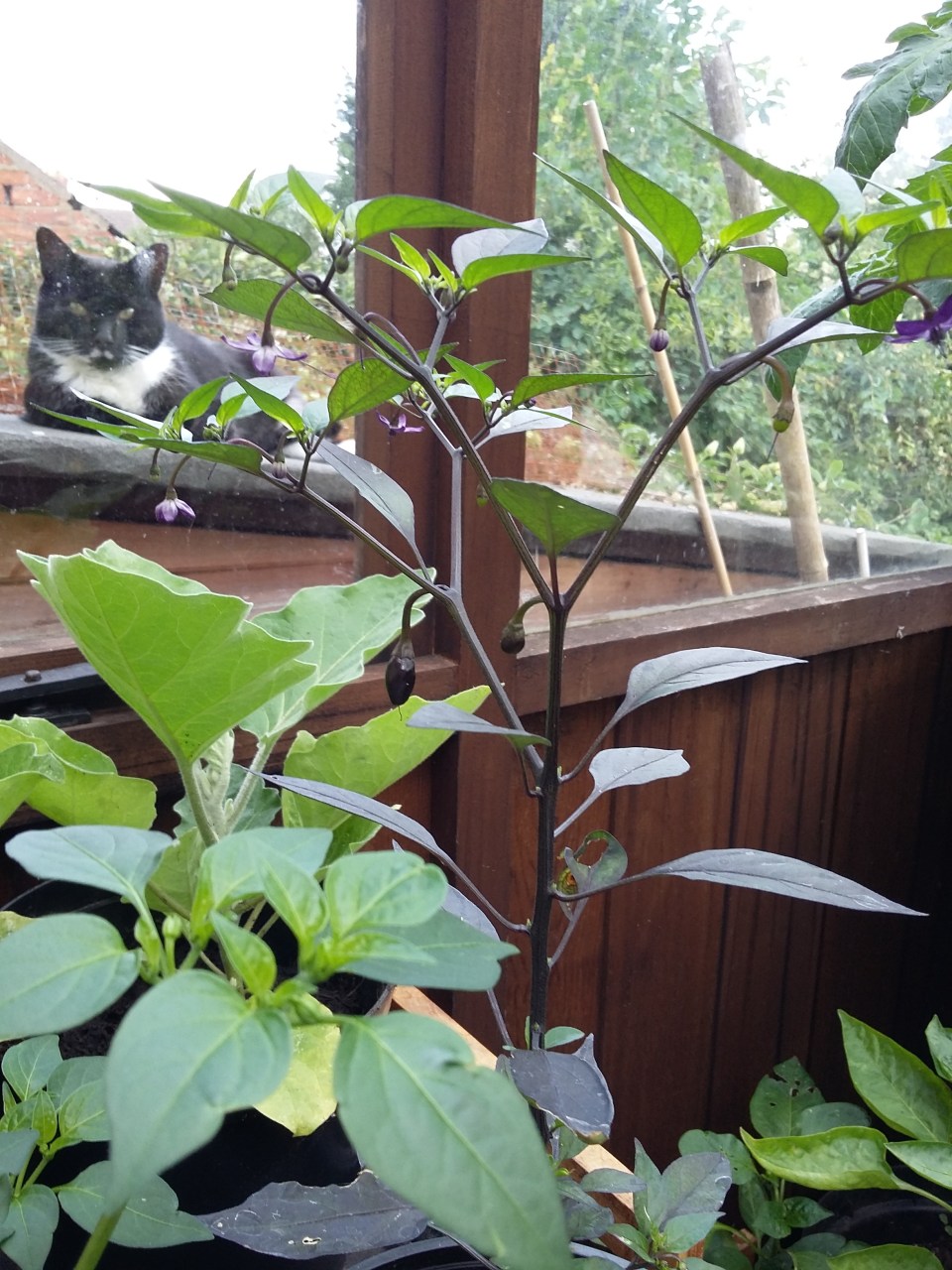
The final example of a crop which requires little or no insect pollination are the chillies (Capsicum spp.) all of which are self-pollinating, I believe.  This variety is a scrambling purple type called Orzoco*.

Orzoco chilli 20160713_102213

So, crops vary hugely in their need for pollinators and the presence of certain traits of animal pollination, such as large, brightly coloured flowers and nectar, is no guarantee that the crop really does have to be serviced by pollinators.  The only way to be certain is to experimentally test the plants, a topic I hope to come back to later in the summer.

Don’t worry, this grumpiness won’t last long, in no time at all I’ll be back to banging on about the importance of pollinators.  At least Monty, one of our two cats, still loves me.


*At least, that’s what it said on the seed packet; I’ve also seen it referred to as Orozco – does anyone know which name is correct?