Tag Archives: Science

The biodiversity of restored landfill sites: a new study of snails just published

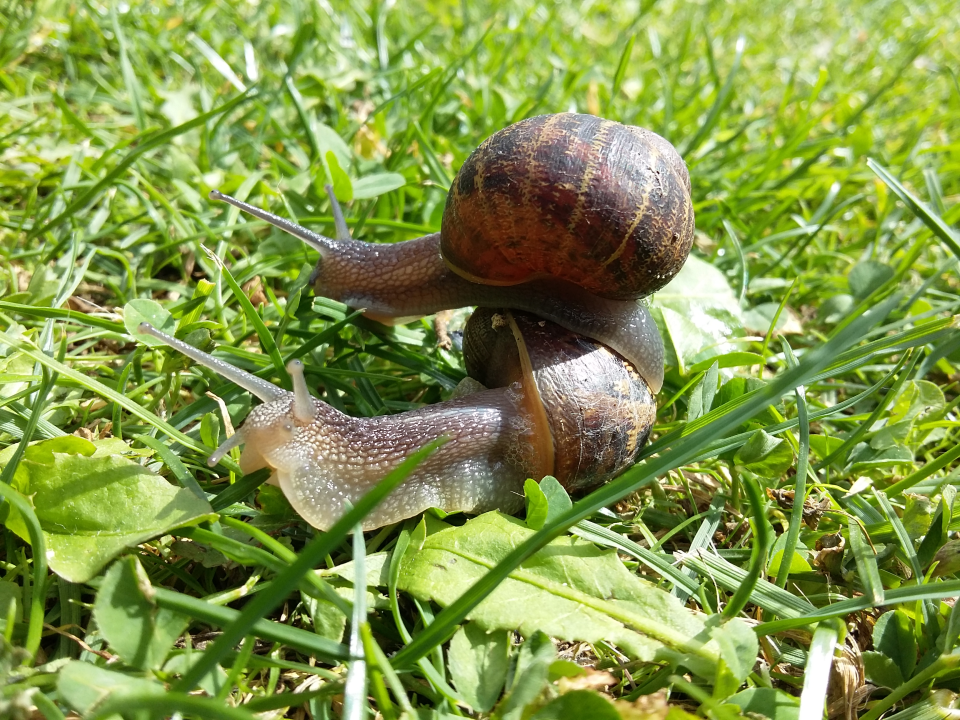
Snails - 20160813_124310

The latest paper in a series* studying the biodiversity of restored landfill sites in comparison to nearby nature reserves has just been published.  This work comes from the linked PhD research of two of our former students, Dr Lutfor Rahman and Dr Sam Tarrant.

This new paper deals with the larger snails to be found on these novel grasslands and assesses the value of such sites for conserving the diversity of an ecologically important group of molluscs.  Snails play a vital role in nutrient turnover and are a major food source for higher trophic levels, such as some birds, small mammals, and beetles.

The take home message from the study:  restored landfill sites are as rich in species as nature reserves, but a higher proportion is of non-native, introduced species.

Here’s a link to the paper, with the abstract below; it’s paywalled but if you’d like a PDF, just ask:

Rahman, L. Md., Tarrant, S.,Ollerton, J. & McCollin, D. (2016) Effect of soil conditions and landscape factors on macro-snail communities in newly created grasslands of restored landfill sites in the UK.  Zoology and Ecology (in press)


Abstract

Though restored landfill sites provide habitat for a number of taxa, their potential for land snails remains unexplored. In this study, large-sized land snails (>5 mm) were surveyed using transect sampling at nine restored landfill sites and nine corresponding nature sites in the East Midlands region of the UK, during 2008. The effect of restoration was investigated by examining the composition, richness and diversity (Shannon index) of land snail species in relation to habitat and landscape structure. Thirteen macro-snail species were recorded in total, and rarefied species richness and diversity at restored landfill sites was not found to be statistically different from that of reference sites. One third of the snail species at restored landfill sites accounting for 30% of their total abundance were non-native species. Soil electrical conductivity was the strongest predictor of richness and diversity of land snails. Road density was found to be positively related to snail species diversity. Given the high percentage of introduced species at study sites, further research is needed to elucidate management implications of restored landfill sites and dynamics of native vs. non-native species.


*The other papers in this series are:

Rahman, L. Md., Tarrant, S., McCollin, D. & Ollerton, J. (2015) Vegetation cover and grasslands in the vicinity accelerate development of carabid beetle assemblages on restored landfill sites. Zoology and Ecology 25: 347-354

Tarrant, S., Ollerton, J., Rahman, L. Md., Griffin, J. & McCollin, D. (2013) Grassland restoration on landfill sites in the East Midlands, UK: an evaluation of floral resources and pollinating insects. Restoration Ecology 21: 560–568

Rahman, L. Md., Tarrant, S., McCollin, D. Ollerton, J. (2013) Plant community composition and attributes reveal conservation implications for newly created grassland on capped landfill sites. Journal for Nature Conservation 21: 198-205

Rahman, L. Md., Tarrant, S., McCollin, D. & Ollerton, J. (2012) Influence of habitat quality, landscape structure and food resources on breeding skylark (Alauda arvensis) territory distribution on restored landfill sites. Landscape and Urban Planning 105: 281–287

Rahman, L. Md., Tarrant, S., McCollin, D. and Ollerton, J. (2011) The conservation value of restored landfill sites in the East Midlands, UK for supporting bird communities. Biodiversity and Conservation 20: 1879-1893

Again, if you’d like PDFs of any of these, just ask.


Just published: A horizon scan of future threats and opportunities for pollinators and pollination

A team of pollinator researchers from across the globe has just published an interesting new paper which looks at potential threats to pollinators and the pollination services that they provide, as well as opportunities for future conservation and agricultural gains.  The paper is open-access and free to download – here’s the reference and a link to the paper:

Brown, MJF et al. (2016) A horizon scan of future threats and opportunities for pollinators and pollination.  PeerJ

The paper has also gained some media coverage, e.g. on the BBC News website.

The bee that lives on a volcano!

Nature can adapt to even the most unpromising and uncompromising of physical environments, from deep oceans to arid deserts.  And now we have a bee that lives in close proximity to an active volcano!  The work is by one of my former PhD students, Dr Hilary Erenler (who is still a Visiting Researcher at the University of Northampton), and is featured in a big news story in the journal Science.

Here’s a link to the story.

The full reference for the study, with a link to the journal, is:

Hilary E. Erenler, Michael C. Orr, Michael P. Gillman, Bethan R. B. Parkes, Hazel Rymer and Jean-Michel Maes (2016) Persistent nesting by Anthophora Latreille, 1803 (Hymenoptera: Apidae) bees in ash adjacent to an active volcano. Pan-Pacific Entomologist 92:67-78.

Well done Hils, it’s a great study!


The influence of floral traits on specialization and modularity of plant–pollinator networks in a biodiversity hotspot in the Peruvian Andes – Watts et al. (2016)

Watts et al Figure 1

The second paper from the PhD thesis of my former student Dr Stella Watts has just been published in Annals of Botanyhere’s a link to the journal’s website.  It summarises the major findings from her field work on plant-pollinator interactions in the high Andes of Peru:

Watts, S., Dormann, C.F., Martín González, A.M. & Ollerton, J. (2016) The influence of floral traits on specialization and modularity of plant–pollinator networks in a biodiversity hotspot in the Peruvian Andes.  Annals of Botany doi: 10.1093/aob/mcw114

This paper represents a major piece of research, including extensive field data collection over multiple sites in a challenging environment at altitude; state-of-the-art data analysis; and then summarising all of this into a single, digestible paper, with some great figures.  I’m very proud to have been part of it!

Here’s the abstract; please email me or Stella if you’d like a copy of the full PDF:

Background and Aims:  Modularity is a ubiquitous and important structural property of ecological networks which describes the relative strengths of sets of interacting species and gives insights into the dynamics of ecological communities. However, this has rarely been studied in species-rich, tropical plant–pollinator networks. Working in a biodiversity hotspot in the Peruvian Andes we assessed the structure of quantitative plant–pollinator networks in nine valleys, quantifying modularity among networks, defining the topological roles of species and the influence of floral traits on specialization.

Methods: A total of 90 transects were surveyed for plants and pollinators at different altitudes and across different life zones. Quantitative modularity (QuanBiMo) was used to detect modularity and six indices were used to quantify specialization.

Key Results:  All networks were highly structured, moderately specialized and significantly modular regardless of size. The strongest hubs were Baccharis plants, Apis mellifera, Bombus funebris and Diptera spp., which were the most ubiquitous and abundant species with the longest phenologies. Species strength showed a strong association with the modular structure of plant–pollinator networks. Hubs and connectors were the most centralized participants in the networks and were ranked highest (high generalization) when quantifying specialization with most indices. However, complementary specialization d’ quantified hubs and connectors as moderately specialized. Specialization and topological roles of species were remarkably constant across some sites, but highly variable in others. Networks were dominated by ecologically and functionally generalist plant species with open access flowers which are closely related taxonomically with similar morphology and rewards. Plants associated with hummingbirds had the highest level of complementary specialization and exclusivity in modules (functional specialists) and the longest corollas.

Conclusions: We have demonstrated that the topology of networks in this tropical montane environment was non-random and highly organized. Our findings underline that specialization indices convey different concepts of specialization and hence quantify different aspects, and that measuring specialization requires careful consideration of what defines a specialist.

Third International Conference on Pollinator Biology, Health and Policy – Pennsylvania – 18-20 July, 2016

P1030210

Keeping with the theme of Bees’ Needs Week, and the importance of pollinators to natural and agricultural ecosystems*, the Third International Conference on Pollinator Biology, Health and Policy takes place at Penn State University, USA,  from the 18th to 20th July.

Here’s a link to the PDF of the programme with the abstracts, speakers’ details, etc.  I won’t be attending** but I am involved as a collaborator*** in one of the talks being presented – Luísa Carvalheiro’s project on “Direct and indirect effects of soil eutrophication on pollination services“.

Best of luck to all the speakers and attendees, looks like it’s going to be a great conference.


*Wednesday’s grumpiness has almost disappeared, though it reached a new peak yesterday when we had a paper rejected by a journal after 10 months.  There was one positive review, one middling review, and then a third in which the reviewer provided no comments – just “reject”!  I was not happy about that and made my feelings known to the editor…..

**I’m actually in the Azores next week attending the Island Biology 2016 conference.  More about that at the weekend.

***With about a gazillion other people!  Luisa has pulled together an amazing data set.


“Insect pollinated” crops that don’t actually require insect pollination

Cucumber fruit 20160713_103558

Yesterday evening I learned that a large grant application that I’d submitted earlier this year had failed to secure funding.  Statistically there was a high likelihood of this happening but that doesn’t make it feel any better: weeks and weeks of work have come to nothing.

So in a mood of bloody-minded contrariness and general displeasure at the unfairness of the world I thought I’d provide an alternative to the Bees’ Needs week I mentioned yesterday by focusing on food crops that look as though they should be insect pollinated (and their ancestors certainly were) but which don’t actually require pollinators.

The example pictured above is an F1 hybrid cucumber (Cucumis sativus) variety called “Mini Munch”, kindly grown from seed and given to me by my friend and colleague Dr Janet Jackson.  Many cucumbers don’t need insect pollination, despite their large, colourful flowers, and the fact that related crops (melons, courgettes, squashes, etc.) generally do require pollinators.  Indeed some varieties taste bitter if they are pollinated.  I can recommend this web page on how to grow cucumbers for further advice.

As I was taking that photograph, and in another demonstration of how the world is against me at the moment, I spotted a bee feeding on one of the all-female flowers of this variety.

Megachile on cucumber 20160713_103627

It spent some time there probing the centre with its tongue, so I think these flowers still produce nectar despite them not needing pollinators, a hang-over from their ancestry.  Plants have a whole range of mechanisms that ensure reproduction without the agency of insects and other animal pollinators, and this has been exploited by crop breeders who have selected crop varieties for their ability to self pollinate or to reproduce asexually via apomixis (as in the case of this cucumber).

The same bee then flew onto a tomato (Solanum lycopersicum) flower (another group which varies in its demands for pollination) and I got a better look – seems to be a Leaf-cutter Bee of the genus Megachile.

Megachile on tomato 20160713_103712

The final example of a crop which requires little or no insect pollination are the chillies (Capsicum spp.) all of which are self-pollinating, I believe.  This variety is a scrambling purple type called Orzoco*.

Orzoco chilli 20160713_102213

So, crops vary hugely in their need for pollinators and the presence of certain traits of animal pollination, such as large, brightly coloured flowers and nectar, is no guarantee that the crop really does have to be serviced by pollinators.  The only way to be certain is to experimentally test the plants, a topic I hope to come back to later in the summer.

Don’t worry, this grumpiness won’t last long, in no time at all I’ll be back to banging on about the importance of pollinators.  At least Monty, one of our two cats, still loves me.


*At least, that’s what it said on the seed packet; I’ve also seen it referred to as Orozco – does anyone know which name is correct?

Scientists and gardens

20160702_100724

This morning I tied in some tomato plants to their canes and removed a few side shoots and lower leaves,  the scent of the foliage transporting me back to my father’s allotment in Sunderland.  There, in a greenhouse constructed from old window panes, he grew luscious, sweet tomatoes, fed and watered by “filtered beer”.  It was some years before we realised that he was filtering the beer through his kidneys, which didn’t impress my mother.  Stephen King captured it beautifully when he said that we don’t buy beer, we only rent it*, and feeding tomato plants rather than flushing it down the toilet is certainly the environmentally savvy solution.  Clearly my dad was an environmentalist before his time.

These childhood allotment memories represent my first exposure to horticulture, an interest and a practise that has remained with me ever since.  I’ve always gardened and, even when I didn’t own or rent a garden, I grew house plants.  This link between scientists and their gardens is a persistent one.  For example I’ve recently finished reading The Invention of Nature, Andrea Wulf’s great biography of Alexander von Humboldt, and gardens feature several times as places of calm and inspiration for both Humboldt and his mentor Goethe.

There are many other historical scientists who have used and been inspired by the gardens they have cultivated.  Humboldt’s friend and colleague Aimé Bonpland maintained a garden during his time in South America. Darwin’s garden at Down House certainly inspired the great man, and he carried out numerous experiments on plants and earthworms there.  The University of Uppsala maintains the garden in which Linnaeus cultivated plants that he used in his teaching and research (I’ve visited this a couple of times, well worth the trip if you are in that part of Sweden).

More recently I can think of several prominent scientists in my own area of pollination ecology and plant reproduction who are also keen gardeners.  These include: John Richards (formerly of Newcastle University); Spencer Barrett (whose garden photo gallery shows the location where he did some of the work on the mating costs of large floral displays, subsequently published in Nature!); Dave Goulson at the University of Sussex; and Simon Potts (University of Reading) who (if my memory of a talk he gave a couple of years ago is correct) has experimental plots set up on his lawn.

There must be many others and I’d be grateful for other examples – please comment below.  All of the individuals noted above are “biologists” in the broadest sense so I’d be particularly interested for suggestions of scientists in other fields who are also gardeners, or inspired by gardens.

The garden that Karin and I are developing in Northampton (pictured above) serves many functions: as a centre of quiet relaxation, a place to write, to be inspired by the pollinators and their behaviour, to enjoy physical labour, grow food, and (occasionally) to collect data.  I cannot imagine being a scientist without a garden; as Francis Bacon said, “it is the purest of human pleasures”.  However he was writing in the 16th century before the advent of pesticides, herbicides, inorganic fertilisers, electric mowers, and other gardening modernities that, one way or another, can have a profound environmental impact.  Good gardening must be tempered with a sense of how we go about those activities in a way that minimises that impact.


*I first read it in King’s novel From a Buick 8, but a quick google suggests that it was originally an Archie Bunker line.

Journal of Pollination Ecology – new volume announced

JPE homeHeaderLogoImage_en_US

The latest volume of the international, peer-reviewed  Journal of Pollination Ecology, of which I’m an editor, has just been published.  All papers are free to download – here’s a link.

Unlike most open access journals there are no page charges for authors, so if you are a researcher involved in pollination ecology, please consider submitting a manuscript.


Wild speculation: could the Bruniquel Cave Neanderthal structures represent a mammoth?

Screen Shot 2016-05-27 at 12.27.37

As I’ve mentioned before (e.g. here and here) the field of human evolution is one that has long fascinated me and I could have quite easily been deflected into paleoanthropology as a profession had not the lure of plants and pollinators been stronger.  So I’ve followed with interest this week’s fascinating announcement of the ancient origins of some enigmatic structures found deep within a French cave complex.  The journal Nature published the research paper by Jaubert et al., and has produced a wonderful accompanying video that you can view here.

Something struck me as I watched this video for the 3rd or 4th time: the aerial view of the structures seen at about 48 seconds looks very like the head of a young mammoth, seen from the front, with the mounds representing the two eyes and the smaller circle lower left a curling trunk.  There’s even a large stalactite/stalagmite positioned where we might expect to see a small tusk.

Mammoths were hunted by Neanderthals and we know that they made structures (possibly dwellings) from their bones.  Much later, Palaeolithic humans painted prey animals such as mammoths on the walls of caves.  OK, if it is a mammoth it can only be viewed from above, but then that’s also true of the Nazca Lines.

So is it completely bonkers to suggest that these Neanderthals were building representations of animals they were familiar with in these caves?  We are very good at seeing patterns in otherwise random assemblages of markings, for example the face of Jesus in a rock or on a frying pan, or tomatoes, cats and houses that look like Hitler.  But this is rather different – we know that the structure is not natural, it was constructed.  We don’t know why it was constructed or what, if anything, it was meant to represent.  Perhaps a mammoth is not too fanciful an idea?

Silver Medal for the BES’s pollinator’s display at RHS Chelsea Flower Show!

RHS Silver Medal

An early train to London yesterday got me to the RHS Chelsea Flower Show in time for the gates opening at 8am.  I’d agreed to spend the day staffing the British Ecological Society’s Animal Attraction: The garden and beyond display, which deals with the relationships between plants and their pollinators – see my recent posts here and here.

The first thing I noticed as I approached the display was how impressive and well designed it looked, with some wonderful planting to complement the simple, bold scientific information.  The second thing I noticed was that we had won a Silver Medal!  The whole team was very pleased – it’s the third year that the BES has been represented at Chelsea, but the first time that it’s won a medal.  I’m proud to have made a small contribution to that by advising on the plants and the scientific content, but the main kudos goes to the BES’s staff and to the garden designer Emily Darby.

Over the course of a long day we talked to hundreds of visitors about the display, what it represented, and the different ways that flowers are adapted to their pollinators.  There was a huge amount of public interest and support, very gratifying to see.  Here’s some pictures from the day:

RHS display

RHS crowd

RHS crowd with fig

RHS Jeff

RHS display