Tag Archives: Nature

Pollinators seminar at the Houses of Parliament – 2nd December

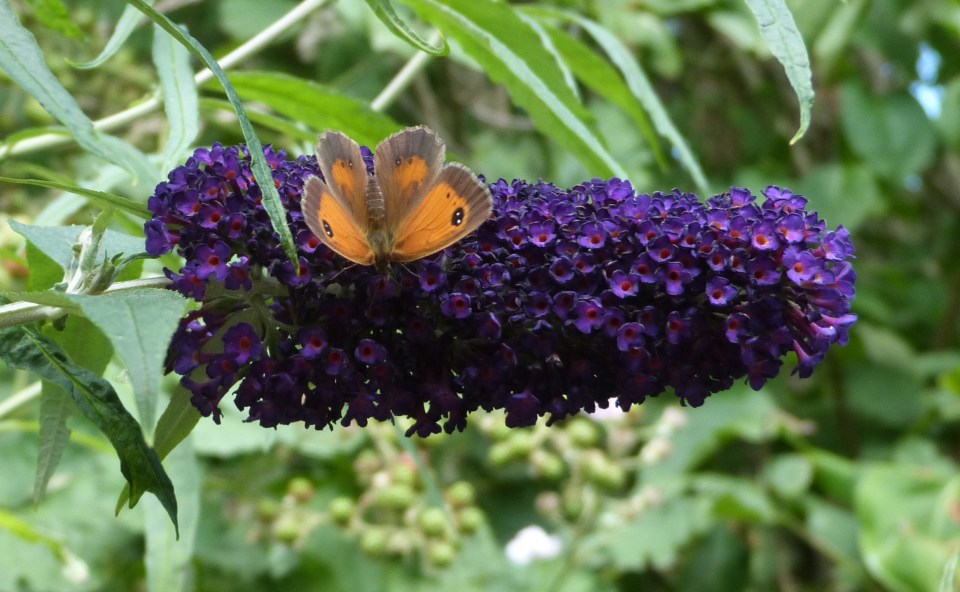
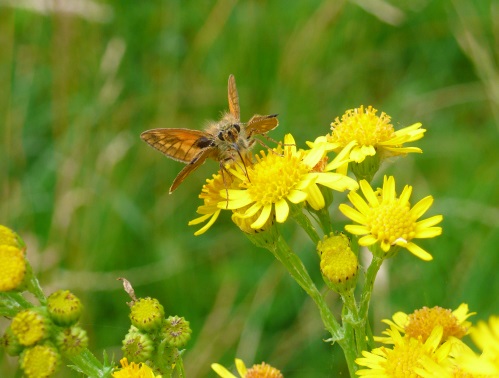
Skipper on ragwort - cropped

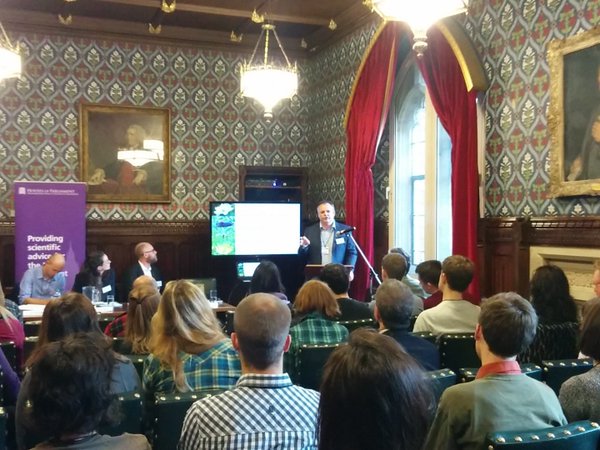
The Parliamentary Office of Science and Technology (POST) has organised a “Pollinators Update” afternoon seminar in London on Wednesday 2nd December, to discuss recent developments in pollinator conservation research. I’ve been asked to give a 15 minute presentation on the pollinator extinctions research we published in Science last year.

The full programme will be:


  • 2.30pm Sarah Newton MP, Chair’s Welcome
  • 2.40pm Presentations
  • Professor Simon Potts (Professor of Biodiversity and Ecosystem Services) – Reading University
  • Professor Jeff Ollerton (Professor of Biodiversity) University of Northampton
  • Dr Claire Carvell – NERC Centre for Ecology and Hydrology
  • Dr Richard Gill – Imperial College London
  • 3.40pm Discussion
  • 3.55pm Chair’s closing remarks
  • 4.00pm Refreshments


The seminar is free to attend but you need to book a place: see the POST website for details.

Pollination syndromes: a brief update on recent developments, and news that Stefan Vogel has passed away

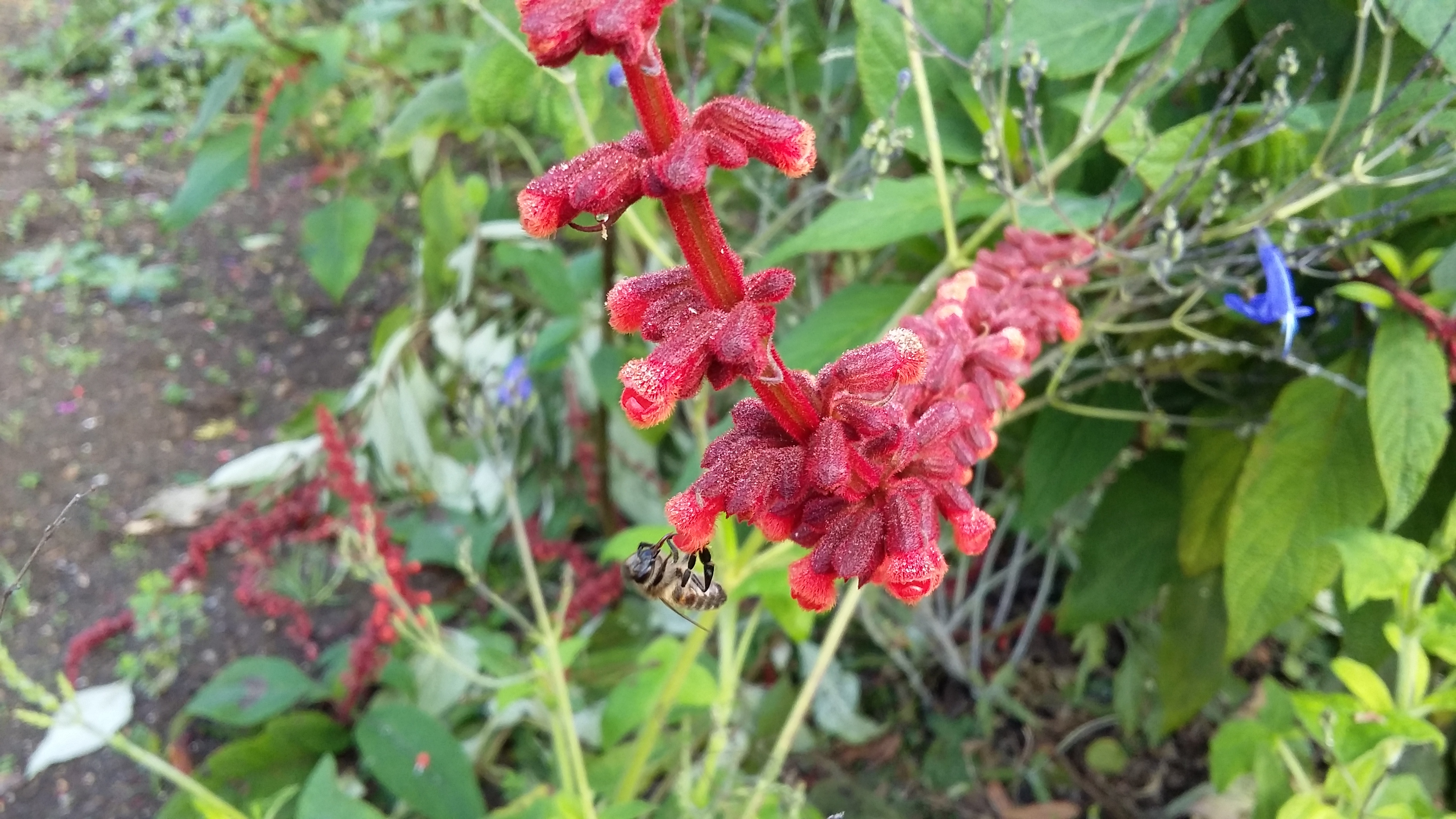
Bee on Salvia - OBG - November 2015

In a recent post I discussed the current debates about “pollination syndromes”, which I described as “sets of flower characteristics that have repeatedly evolved in different plant families due to the convergent selection pressures applied by some groups of pollinators”.

The authors of the Ecology Letters paper that I discussed (Rosas-Guerrero et al. 2014) have now replied to our original critique of their approach and you can read that reply (Aguilar et al. 2015) in Journal of Pollination Ecology by following this link.  Readers can make up their own minds as to whether the authors have responded adequately to our concerns, but I just briefly wanted to raise three points.

The first is that much of these authors’ response is focused on an earlier paper of ours (Ollerton et al. 2009) rather than on our critique per se.  Nick Waser, Mary Price and myself have therefore written a second response that deals with some of the misunderstandings apparent in that piece; it’s available to download here.

The second point relates to the existing literature on pollination syndromes and pollinator effectiveness used by Rosas-Guerrero et al. (2014); as we demonstrated in our critique this is clearly a biased data set that is skewed towards groups of plants with relatively large flowers, “interesting” pollination systems, and text book examples of classical pollination syndromes such as bird and bat pollination.  Researchers who study flowers and their pollinators choose their subjects based on a whole set of criteria, but random selection is not one of them.  However as far as we can judge, Aguilar et al. (2015) seem to be arguing that drawing strong, “universal” conclusions about syndromes from this highly biased data set is perfectly acceptable because of the statistical rigour of formal meta-analysis. I’d re-iterate our main point that no amount of statistical rigour and exhaustive literature searching can take into account inherent biases within the primary data (i.e. the literature itself).

Finally, Aguilar et al. (2015) claim that “human disturbance of natural habitats has caused disruptions in patterns of mutualistic interactions that may partly explain the presence of the diverse pollinator assemblages that are frequently found in pollination studies”.   It seems to us to be disingenuous to argue that pollination syndromes are universally valid and then to essentially concede that there are lots of wrong visitors (“secondary” pollinators), and to explain that with the idea that everything is disturbed in the Anthropocene.  If this is really the case then we probably need to throw out a lot of our understanding of evolutionary ecology as a whole, not just studies of plant-pollinator interactions.

Clearly we don’t accept this argument and in fact it has echoes of arguments that have been going on since the 19th century (Waser et al. 2011): more than 130 years ago the Darwinian biologist Hermann Muller was criticising Federico Delpino (one of the original architects of the idea of pollination syndromes) for ignoring the “wrong” flower visitors.  Interestingly, Delpino was a fundamentally a teleologist who saw purpose in nature, expressed through (as he perceived them) the highly ordered relationships between flowers and pollinators.

As we discuss in the Waser et al. (2011) paper, Stefan Vogel was another prominent pollination biologist, and advocate of the importance of pollination syndromes, who was also fundamentally teleological in his thinking.  I was sad to learn that Stefan passed away very recently, in what I believe is his 90th year.  I was fortunate enough to meet Stefan at a symposium in honour of his 80th birthday at the International Botanical Congress in Vienna in 2005.  He graciously signed my copy of The Role of Scent Glands in Pollination and said, with a twinkle in his eye, “you and I have probably got a lot to discuss”. Unfortunately we never got the opportunity, but later I dedicated our 2009 paper on Ceropegia pollination to him “in honour of his pioneering work on pollination” in the genus.  Stefan’s legacy of research, particularly in the tropical regions of South America, is a fitting tribute to his memory.

Pollination syndromes clearly continue to attract much interest in the scientific literature, and just this week I was intrigued to see a paper by John Benning showing that a species of Ericaceae that looks as though it “should” be pollinated by bees is actually moth pollinated.  No doubt the discussion of the evolutionary extent and predictability of pollination syndromes will continue for some time to come.

SCAPE day 3 – science on a Sunday

Last night I added a new edible plant family to my life list – Cornaceae – courtesy of the ever-hospitable Marcin Zych and his home-made fruit liqueurs. The one he opened after dinner was made from the fruit of edible dogwood (Cornus mas) and had been maturing for five years.  It was sour but delicious, and very, very strong.  That’s my first new addition to the list since my Brazil trip back in in November 2013.  One day I will post an annotated list of the biodiversity of plant families I’ve consumed….but not tonight, it’s the end of a tiring final day of the SCAPE conference.

To end the meeting this morning there was a short session of three talks from Klaus Lunau’s sensory ecology group.  Klaus started the proceedings with a talk about the role of UV-absorbent dark central “bull’s eyes” in the middle of flowers and compound inflorescences.  He concluded that, despite their near mythological status, UV patterns were perhaps no more important than patterns absorbing at other wavelengths and presented some interesting experimental data to support the argument.  Over breakfast Klaus and I had discussed the absence of difficult questions at the conference; he felt people were being a little too polite.  So I asked him a hard one – whether his findings held up for male bees which don’t collect pollen.  He confessed that he’d not tested them and agreed that it would be worth doing: hope he does, will be an interesting test.

Klaus was followed by Saskia Wilmsen who showed us the results of some elegant experiments using artificial “flowers” with different shaped epidermal cells (flat, conical, etc.)  These different surfaces have distinctive optical properties in different light conditions, and bees behave in slightly different ways, accordingly.  A very cool reminder that as we move to ever finer scales in pollination ecology, from macro biogeographical and community questions, to micro surveys, the layers of complexity just go on increasing.

This latter point was reinforced by the final presentation of the meeting, which was Sebastien Kothe discussing the functional role of the spines possessed by pollen in some plant families, especially Malvaceae.  He presented compelling evidence that these spines have evolved in order to reduce their attractiveness to pollen collecting bees.  The spines render the pollen hydrophobic meaning that the bees have to use much more nectar to bind it into the pollen baskets.  It would be interesting to track the evolution of this echinaceous pollen through the fossil record and to assess whether its appearance coincides with the evolution of particular bee groups.

And with that, the 29th SCAPE meeting was finished except for the usual hugs and goodbyes and promises to meet up again in 12 months time, probably inside the Arctic Circle: it looks as though the 30th meeting will be held at the field station at Abisko.

The rest of Sunday was spent visiting the botanic garden and the art museum in Aarhus, both to be recommended if you have a chance to visit.  It’s now 8.15pm and I’m sat at Billund Airport with a large glass of Carlsberg, my first of the trip. It’s been a great meeting and I look forward to repeating it next year, and interacting with such a passionate group of scientists.  Over and out from SCAPE.

SCAPE conference 2015 – day 2 – probably the best pollination ecology meeting in the world

We’re in Denmark, so I had to use the old Carlsberg meme.  And anyway I stole it from Jane Stout who used it on Twitter this morning.  So there.

Day 2 of the SCAPE conference has been, like day 1, enjoyable and stimulating and full of things that made me think “wow, I did not know that”.  Here’s a few examples:

The day kicked off with two talks on pollen limitation in plants by Amey Iler and James Rodger.  Both challenged some preconceived ideas about the nature of pollen limitation: Amy that it was independent of flowering phenology and James that biodiversity hot spots were more likely to be pollen limited.  Amy found that pollen limitation is more likely to occur early in the flowering time of some plant populations, but not all.  James showed that the South African flora was significantly less pollen limited than expected.

Marcos Mendez also challenged us to re-think whether or not reproduction by plants has a cost on other aspects of plant growth and survival: his meta-analysis suggests not and I hope he writes up the work soon.  But, as Marcos mentioned, he has a lot of on-going reviews to complete….

Beate Strandberg discussed the subtle effects that herbicides can have on non-target plants in non-target habitats, via drift from agricultural fields.  Specifically they can reduce the number of flowers and delay flowering time in plants that are important pollen and nectar sources for pollinators.  Expect to hear lots more about this in the future: it’s not just the neonicotinoid pesticides that are worrying researchers.

Finally Soren Nedergaard has spent a winter on Tenerife in the high altitude lava deserts of Las Canadas, one of my favourite places to do field work, and discovered that some of the plants and bees are active for 12 months of the year!  I’m still trying to digest that finding, I don’t know of any other ecological communities that have the same plants and pollinators interacting all year, every year.  Is it unprecedented?  Does anyone know of other examples?  Even in the tropics plants tend to have a rest period when they don’t flower.

That’s it, just a quick flavour of day 2 as it’s almost 6pm and time for a beer, though not a Carlsberg: they only serve more exclusive beers here….

SCAPE conference 2015 – day 1 – welcome to the sanatorium

The first day of the 29th SCAPE conference drew to a close and as I started to draft this post I could hear around me some intense discussions of Amy Parachnowitsch’s “crazy idea” (her words!) that flowers may be able to “eavesdrop” on one another via their floral scents. It was a very thought provoking way to end a stimulating day. And I look forward to reading the discussion paper on which the talk was based, in Trends in Plant Sciences.

What else did I learn on the first day? Here’s a few things I noted, with a link to the programme, but certainly not an exhaustive list:

Paul CaraDonna told us about the way that interactions between plants and pollinators have a faster turnover early in the season than later in the season. We discussed this afterwards and it could be because of newly emerged, naïve individual pollinators encountering and exploring flowers they’ve not previously seen.

Jane Stout described the history and future of the All-Ireland Pollinator Plan, and how it was driven from bottom-up by two scientists (Jane herself and Una Fitzpatrick) – a salutary tale of what can happen when passionate scientists become advocates for change.

Markus Sydenham discussed his work on power line corridors in Norway and the fact that these linear landscape elements, though artificial, can be good for solitary bees in appropriately managed by cutting and removal of woody vegetation.

A project encouraging organic Danish farmers to assess the quality of their own land for pollinating bees was described by Vibeke Langer. Interesting example of “citizen science” that goes directly to those who might benefit most from larger and more stable pollinator populations.

In Hawaii, Robert Junker and colleagues have found evidence that the flowers of the endemic plant Metrosideros polymorpha have evolved in less than 150 years to be more effectively pollinated by introduced honey bees rather than its native bird pollinators, which have declined substantially. Some individuals of this species seem to be pre-adapted for bee pollination; is this evidence that a larger bee species once existed on Hawaii but is now extinct?

The “complex, messy” ecology behind the co-existence of different Medicago species (facilitated by the interaction of plant genotypic kinship and allelopathic chemicals produced by Thymus species, was the focus of Bodil Ehlers work.

Judith Trunschke showed how ecotype morphology in hawkmoth-pollinated orchid Platanthera bifolia seems to be driven by different pollinators in grassland and woodland habitats. Are we seeing the early stages of the evolution of two new species here?

I had the honour of being the first speaker yesterday morning, talking about the macroecology of wind versus animal pollination, and the University of Northampton was further represented by Kat Harrold, who is working on her PhD as part of the Nene Valley Nature Improvement Area project. Kat presented a short over view of her work during the poster session.

There was much more, of course, and all of it stimulating and interesting, but that’s at least a taster.   The conference is taking place in a fascinating conference facility that was a former TB sanatorium. It’s a step up from the ex-leper colony that SCAPE used in Finland a few years ago….

That “love wasps” article – this is how Friends of the Earth responded

Clearly my quick post this morning got through to Friends of the Earth at some level (thanks to everyone who tweeted it).  Here’s what they have done to the article in response:

  • Removed the not-a-wasp photograph (good)
  • Added some text about other things that wasps pollinate (good) but left in the text about figs (bad)
  • Under the “garden pests” section they have add some text, as follows (bad):

The University of Northampton’s Dr Jeff Ollerton says: “Wasps are part of a whole ecological guild of scavenging animals that includes ants, various birds, etc, which plays a valuable role by removing vast amounts of waste organic material from our towns and cities every year.”

Huh?  What I said had nothing at all to do with eating pests.  Was that not clear when I talked about “waste organic material” rather than “pests”?

Incidentally, and for the record, I’ve had no contact from anyone at Friends of the Earth asking if it was ok to quote me, or check text, or anything.

So, not a complete success then.  Once again, feel free to tweet this at FoE

More poor quality information: Friends of the Earth’s “Love Wasps” campaign

Despite some recent posts in that vein, I don’t want to turn this blog into just an outlet for my frustrations about the lack of science/evidence in otherwise well-meaning conservation initiatives.  However something caught my eye at the weekend that I feel I have to comment on.

Friends of the Earth has recently posted a very well-meaning piece about why we should stop hating wasps and learn to appreciate them.  I whole-heartedly support this: wasps are one of the least understood and most under-valued aspects of local biodiversity, and the article makes some very good points.

But there are also some aspects to the article that make me cringe and add a new layer of inaccuracy to a subject already flooded with crass statements such as “what use are wasps”:

  • The first photograph in the article does not show a wasp: it’s a syrphid fly, specifically a species that mimics wasps but is other wise harmless.  These flies do not sting or bite.
  • “Wasps pollinate figs” – yes they do, but fig pollinating “wasps” are tiny and only distantly related to the kinds of wasps you’re going to see in a British garden.  In any case they do not pollinate commercial edible figs: these wasps spend much of their life-cycle within the fig and who wants to eat a fig full of insects?
  • Having said that, the sorts of wasps the article is referring to ARE important pollinators of a whole range of plants, including some orchids, umbellifers, ivy, etc.  That’s not mentioned at all.
  • The piece misses out the fact that wasps are part of a whole ecological guild of scavenging animals that includes ants, various birds, etc., which plays a valuable role by removing vast amounts of waste organic material from our towns and cities every year.  They also perform a similar function in natural ecosystems.

What’s frustrating about Friends of the Earth’s article is that there are any number of individuals and organisations out there who would be happy to fact-check such a piece, including Buglife, BWARS, and a range of scientists and well-informed specialists in natural history.  Why doesn’t Friends of the Earth make use of them?

As I’ve said before I don’t use Twitter, so if anyone wishes to tweet this at Friends of the Earth, please go ahead.

Something for the weekend #8 – the microclimatic value of planting our cities, one Buddhist view of environmentalism, and orchids. Oh, and we got married.

The latest in a regular series of posts to biodiversity-related* items that have caught my attention recently:

  • One of the best environmental writers around at the moment, Paul Kingsnorth, had an interesting essay on how Buddhism is helping him to come to terms with the current environmental crisis.  It was published earlier this year but I’ve only just seen it.  Paul is one of the founders of the Dark Mountain project, which I’ve mentioned before.
  • Here’s a piece about a fascinating study of how different types of vegetation can alter the average temperatures of our cities.
  • Finally, regular readers of this blog know that I often mix some personal stories with my professional reflections, so the Big News of Summer 2015 is that, on the 15th of August, Karin and I were married at The Guildhall, Northampton, accompanied by our family and friends.  We had an incredibly happy day, and I wore a very biodiverse shirt, as you can see:

Karin&Jeff (73 of 477)

Feel free to recommend links that have caught your eye.

*Disclaimer: may sometimes contain non-biodiversity-related items.

The organisers’ positive response to criticisms of the “honey bee decline” conference

P1120404

Three days ago I wrote a short, fast post expressing my unease (in robust terms) about a forthcoming conference entitled “Biodiversity and Local Partnerships: Halting the Decline of the Honey Bee in the UK”.  I had not anticipated that the post would generate quite as much interest as it did:  2007 views, 16 likes, and 28 comments (including my responses) as of 10am today.

There were also a lot of comments and likes on Facebook, most of it positive and agreeing with my sentiments, though some have suggested that I’m over-reacting, that I may be paranoid, and questioned what my “hidden agenda” is and whether I might be funded by an agrochemical firm (!)  Thanks to everyone who took the time to read the post and/or to respond*, to tweet the post, and even, in one case, phone up the conference organisers.

So it was with some satisfaction that yesterday I received the following email from the conference organisers, Public Policy Exchange (PPE), in response to my initial reply to their invitation:

Thank you for your response to our event, we always appreciate any
feedback from experts such as yourself. Your comments have been passed
on to our researchers and they are currently reviewing this event.

Our researchers do use a variety of sources, though on this occasion it
does appear that some have made sweeping generalisations and
over simplified statements, and ultimately have been unreliable. Clearly
our previous marketing mistakenly overplayed the role of the honey bee
in pollination processes. We certainly don’t want to contribute to a
misinformed narrative around bees and other pollinators; that was never
our intention and so we are looking at how we can improve this event.

Biodiversity is an area which we are very keen to develop further and
your feedback is therefore very helpful to us.

Kind regards,

The Conferences Team

They have also changed the title of the conference to “Biodiversity and Local Partnerships: Halting the Decline of Bees and Other Pollinators in the UK“.

So kudos to PPE for their fast response.  That’s a good outcome as far as I’m concerned and I may consider attending the conference; hell I’d even consider speaking at it if i was asked!

———————————————————-

*Yes, that’s deliberate – I got the impression that some on Facebook were responding without reading it…

Who is feeding the honey bee bullshit machine?

Bee on apple blossom 2 - 1st May 2015

This morning I received an email from Public Policy Exchange (PPE) inviting me to a conference in London in November entitled “Biodiversity and Local Partnerships: Halting the Decline of the Honey Bee in the UK

The opening statement on the website and the official flyer convinced me that the organisers have been misinformed; all of it is wrong:

Healthy honey bee populations are vital to food and crop production, and the natural environment. In the UK, honey bees are responsible for 80% of pollination, and a third of the food we eat is pollinated by bees.”

Where are they getting this  information from?  Who is feeding organisations like the PPE this kind of bullshit?  Is it bee keeping organisations?  I’d really like to know.

Honeybees are responsible for only one third of the crop pollination in the UK (Breeze et al. 2011), and a very small proportion of the wild plant pollination. Wild bees, hoverflies, butterflies, and other pollinators are much more important than honeybees, and collectively they are responsible for this pollination, not just managed honeybees.  No one is denying that honey bees are important, but there is absolutely nothing to gain (and a lot to lose in terms of science credibility) by over-playing their importance, as I’ve argued in the peer-reviewed literature.

It’s not as if this is the only recent example, The Daily Express online has recently been equally ignorant of the facts, and didn’t even get the right bee in the accompanying image.

It’s interesting that the PPE website also uses the infamous not-Einstein quote, though they cite the author as “unknown”.  With good reason, because that’s bullshit too.

I won’t be attending the conference.