Tag Archives: Nature

Why do bumblebees follow ferries?

Sejero - 20160910_180359.png

A few years ago I mentioned in my post “Garlicky archipelago” that I had seen bumblebees (Bombus spp.) following the ferry from Southampton to the Isle of Wight, a distance of about 1.5km across water.  If I remember correctly it was my colleague Scott Armbruster who first mentioned this to me: he lives on the Isle of Wight and commutes regularly to the mainland.

I’ve not thought much about this since then as 1.5km is a fairly modest distance for a bumblebee to fly.  But then a few weeks ago I saw the same thing in Denmark, but this time over a much longer distance.

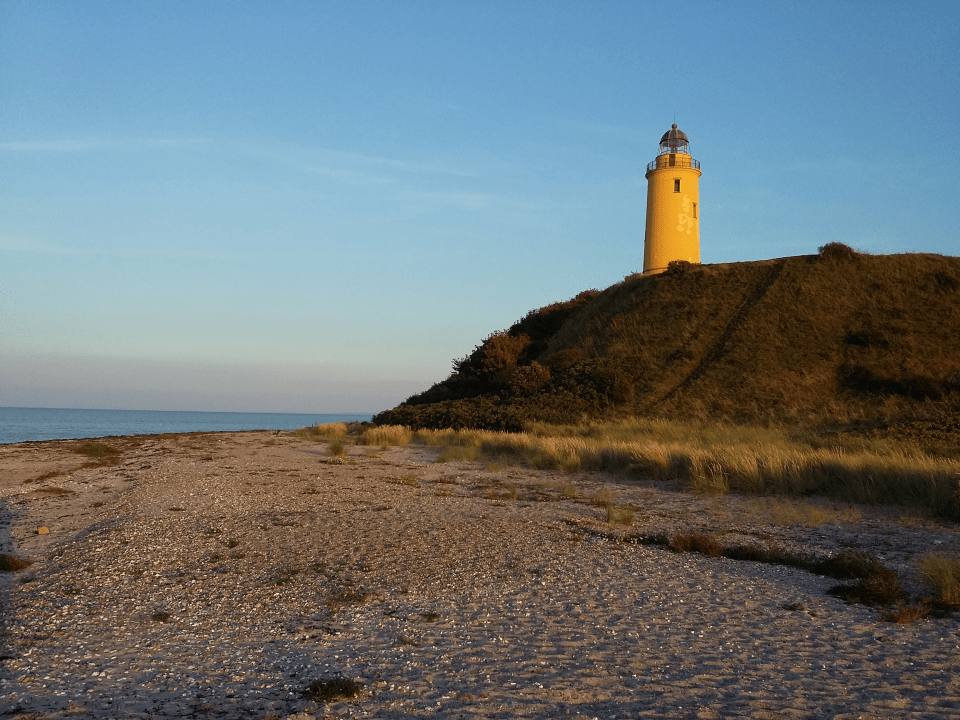
Karin and I were visiting friends on the small island of Sejerø, which (at its closest point) is about 8km from the mainland of Zealand.  To get there you have to catch a ferry which takes about an hour to cross this stretch of water.  About half-way across,  whilst looking over the stern of the ship, I spotted a bumblebee following the ferry.

So that’s twice, on two different ferries and under very different contexts, that I’ve seen this phenomenon.  A pattern is starting to form….  Has anyone else observed this?  Please do comment.

I can think of a few explanations/hypotheses for what’s going on here (some of which are not mutually exclusive):

  1.  Clearly bumblebees do fly across significant stretches of open seawater.  Perhaps all I’m seeing is bees that do this, but spotted from the only vantage point where it’s viewable (i.e. the ferry).
  2. These bumblebees are taking advantage of the slipstream created by the ferry to reduce the energy required to fly these long distances.
  3. The bees are hitching a lift on the ferry and I only observe them as they arrive or depart.
  4. The bees are following the wake of the ship to navigate between the island and the mainland, in order to exploit significant flower patches.  Work by one of my PhD students, Louise Cranmer, a few years ago showed that bumblebees follow linear features such as non-flowering hedgerows to navigate – see Cranmer et al. (2012) Oikos.  Perhaps something similar is happening here?

There’s probably other possibilities I’ve not thought of.  But whatever the explanation, it looks to me as if there’s some potential for interesting experiments marking and recapturing bees on islands/mainland, releasing bees on ferries to see if they follow the wake, etc.  If only Northampton wasn’t so far from the coast….


Spiral Sunday #1 – the start of an obsession

Spiral tomato 20160925_135721.png

Spirals have been a bit of an obsession with me for many years, as evidenced by the main image that has always adorned this blog (which, one day, I will tell the story of).  Not sure where that obsession originated but it’s manifested itself in a collection of ceramic bowls with spiral motifs, and with a growing set of photographs that I’ve taken.

This spiral obsession has some relevance to biodiversity.  Spirals are a recurrent feature of nature, and crop up everywhere from the flower heads of members of the daisy family to the whorled shells of gastropod molluscs.  Some of these are governed by mathematical processes such as the Fibonacci Series.  The spiral is also a much better description of the natural sequence of life and death than “the circle of life“.  Circles go back to where they started, which life never does; a spiral, it seems to me, captures that circular forward motion much more effectively, at least when viewed in three dimensions.

Some of the photographs I’ve taken are also of human constructs and cultural artefacts, because the spiral has been a motif used by artists and crafts people for thousands of years, as well as a useful bit of geometry for engineering and architectural purposes.

But, mainly, I just like spirals.  And I need an outlet for this obsession beyond scouring eBay and antique shops for interesting bowls.  Hence I thought I’d start Spiral Sunday*, a regular (maybe) posting of spiral images that I’ve captured, together with a brief description.  It’s possible that this may amuse no one except me, but ho hum.

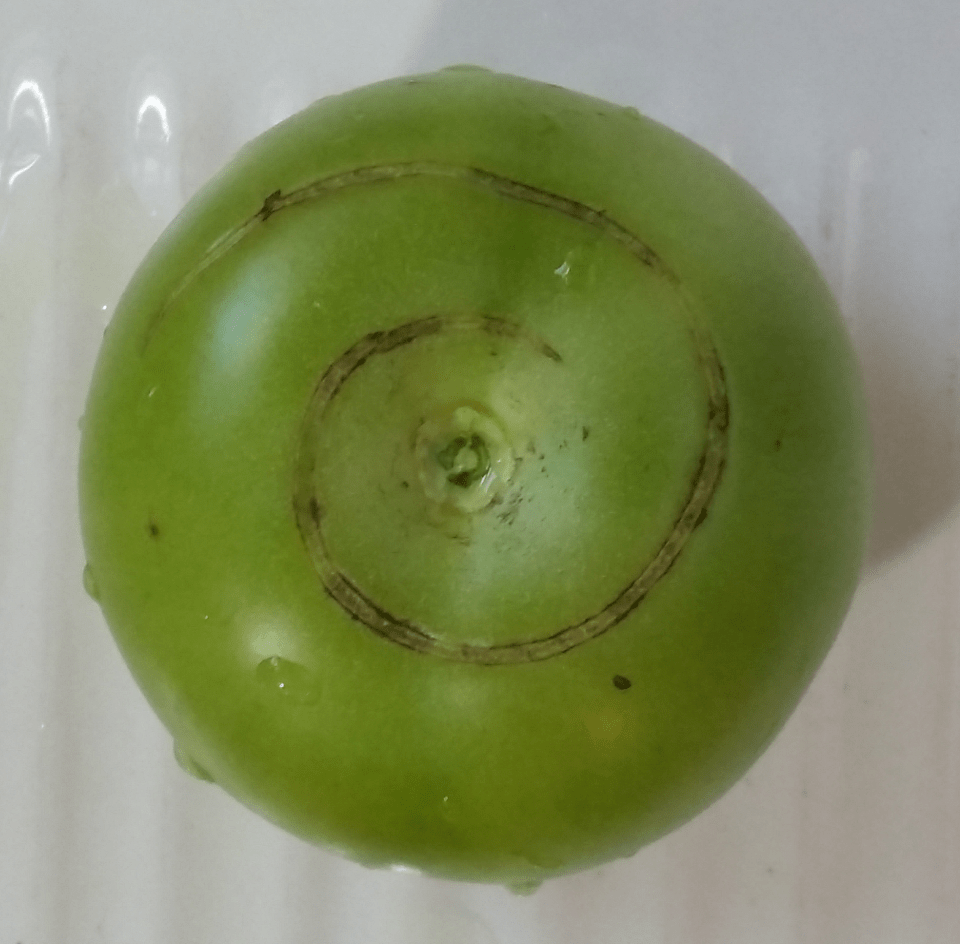
Spiral Sunday #1 was taken this morning as I harvested the last of our tomatoes.  An undisciplined water regime on our part has meant that some of the fruits have split; in this case tensions within the tomato skin have resulted in a spiral split.


*I freely admit to having been inspired by the “Silent Sunday” feature on the Murtagh’s Meadow blog.  Check it out if you don’t know it.


The macroecology of animal versus wind pollination – a new study just published

In collaboration with colleagues in Brazil, Denmark, and elsewhere in the UK, we’ve just published a new research paper which looks at the global spatial distribution of wind and animal pollinated plant species, and the underlying historical and contemporary ecological causes of that distribution.  It’s a study that builds on my “How many flowering plants are animal pollinated?” paper in Oikos, and has been a long time in its gestation.  We’re very excited by its findings and plan to develop this project in the future.

As a bonus we made the cover of the journal with the amazing image below!  Big thanks to Pedro Viana and Jesper Sonne for the photos.

Here’s the citation with a link to the publisher’s website; the abstract is below.  If anyone wants a PDF copy, please ask.

Rech AR, Dalsgaard B, Sandel B, Sonne J, Svenning J-C, Holmes N & Ollerton J (2016) The macroecology of animal versus wind pollination: ecological factors are more important than historical climate stability. Plant Ecology & Diversity 9: 253-262


Abstract:

Background: The relative frequency of wind- and animal-pollinated plants are non-randomly distributed across the globe and numerous hypotheses have been raised for the greater occurrence of wind pollination in some habitats and towards higher latitudes. To date, however, there has been no comprehensive global investigation of these hypotheses.

Aims: Investigating a range of hypotheses for the role of biotic and abiotic factors as determinants of the global variation in animal vs. wind pollination.

Methods: We analysed 67 plant communities ranging from 70º north to 34º south. For these we determined habitat type, species richness, insularity, topographic heterogeneity, current climate and late-Quaternary climate change. The predictive effects of these factors on the proportion of wind- and animal-pollinated plants were tested using correlations, ordinary least squares (OLS) and logistic regression analyses with information-theoretic model selection.

Results: The proportion of animal-pollinated plant species was positively associated with plant species richness and current temperature. Furthermore, in forest, animal pollination was positively related to precipitation. Historical climate was only weakly and idiosyncratically correlated with animal pollination.

Conclusion: Results were consistent with the hypothesised reduced chance for wind-transported pollen reaching conspecific flowers in species-rich communities, fewer constraints on nectar production in warm and wet habitats, and reduced relative effectiveness of wind dispersal in humid areas. There was little evidence of a legacy of historical climate change affecting these patterns.

andre-capa-1


Two-day Steven Falk bee ID course at Oxford University Museum 15th-16th October 2016

Male B lap on Salvia cropped P1120309

One of the most exciting, pollinator-related publishing events of last year was the publication of Steven Falk’s eagerly-anticipated Field Guide to the Bees of Britain and Ireland.  Not only does this book provide a state-of-the art account of the natural history and identification keys for all of the bees currently known from Britain (over 270 species) but it’s backed up by Steven’s own Flikr site with more photographs of the bees, including lots of close ups, and an ongoing list of updates and corrections.

But as Steven himself acknowledges, the identification of many of our bees is a challenge, even with the book and the additional imagery.  Anyone who is really keen to get to grips with bee identification is therefore recommended to book onto a hands-on identification course.  Steven has just announced that he is running a two-day course in Oxford on 15th to 16th October, at a cost of £60 per person – here’s a link to the booking page.  Seems like good value to me!

Release today of the IPBES Summary for Policymakers of the Assessment Report on Pollinators, Pollination and Food Production

Inula at Ravensthorpe 20160710_145426Following on from the press release earlier this year announcing of the Intergovernmental Science-Policy Platform on Biodiversity and Ecosystem Services (IPBES) assessment of pollinators, pollination and food production (which I reported on in February) it looks as though the full report may shortly be published.  A Summary for Policymakers has just been released by IPBES and can be downloaded by following this link.  I’ll put up a link to the full report once it becomes becomes available.
Bees and pesticides – a major new study just published – UPDATED

Male B lap on Salvia cropped P1120309

An important new study about the effects of neonicotinoid pesticides on wild bees has just been published in the journal Nature Communications – here’s the details and a link to the paper, which is open access:

Woodcock, B. A. et al. (2016) Impacts of neonicotinoid use on long-term population changes in wild bees in England. Nat. Commun. 7:12459 doi: 10.1038/ncomms12459

As I’ve previously discussed on this blog (e.g. here and here) there are widespread concerns amongst environmentalists, and some scientists, about the impact that these relatively new pesticides are having on pollinators and other biodiversity.  The Woodcock et al. paper is a major contribution to this discussion as it uses a huge dataset to model the changes in populations of 62 wild bee species that are known to forage on oilseed rape (canola) over 18 years.  These changes can be related to the spatial extent of oilseed rape cultivation and the authors found that whilst bees “….foraging on oilseed rape benefit from the…[nectar and pollen provided by]….this crop….[they]….were on average three times more negatively affected by exposure to neonicotinoids than…” bees which didn’t forage on the crop.

The authors further conclude that “This study provides the first evidence for community level national scale impacts on the persistence of wild bee populations resulting from exposure to neonicotinoid treated oilseed rape crops.”

Neonicotinoid pesticides are, of course, not the whole story when it comes to understanding declines in pollinator diversity and abundance.  But these pesticides are the latest in a long history of changes to British agriculture that have had significant consequences for the biodiversity of our country (as we showed in our study of bee and wasp extinctions).

Reactions to the study have been, well, predictable.  A long feature on the BBC News website* quoted a representative from Bayer as saying:

“we believe….[the study’s]….findings would be more correctly headlined that intensive agriculture is causing some issues with pollinators…..  Whether this is due to the use of insecticides is not clear; a lack of nesting sites and pollen and nectar sources in these areas may also be critical factors.”

Which rather ignores the fact that this was a comparative study of bees that forage on oilseed rape versus those that don’t.

Likewise the National Farmer’s Union’s position was that:

“While this study claims to provide an important contribution to the evidence base underpinning the current EU moratorium on some uses of neonicotinoids, experts reviewing all the evidence have concluded that there are still major gaps in our knowledge and a limited evidence base to guide policymakers”

Which sounds to me like a statement designed to fudge the issue: the “experts reviewing all the evidence” would not have reviewed this particular study!  And which begs the question – how much evidence and how many studies would be enough for the NFU?

The study’s authors do not make any suggestions as to what the next step should be in this continuing saga but are quoted as saying that “simplistic solutions” such as banning these pesticides are not the answer because this will encourage use of pesticides that are even more damaging.  That may be the case but it’s clear that an independent root-and-branch reassessment of the use of pesticides (and herbicides) in UK agriculture is long overdue.


*As an aside, this BBC News piece wrongly states that bumblebees were not included in the study, which is not the case.


UPDATE:  After I published this post I noticed that Manu Saunders has also written about the bee study, plus a second study that I’d not seen linking neonicotinoid use to declining butterfly populations in California.  Here’s a link to Manu’s blog.


The biodiversity of restored landfill sites: a new study of snails just published

Snails - 20160813_124310

The latest paper in a series* studying the biodiversity of restored landfill sites in comparison to nearby nature reserves has just been published.  This work comes from the linked PhD research of two of our former students, Dr Lutfor Rahman and Dr Sam Tarrant.

This new paper deals with the larger snails to be found on these novel grasslands and assesses the value of such sites for conserving the diversity of an ecologically important group of molluscs.  Snails play a vital role in nutrient turnover and are a major food source for higher trophic levels, such as some birds, small mammals, and beetles.

The take home message from the study:  restored landfill sites are as rich in species as nature reserves, but a higher proportion is of non-native, introduced species.

Here’s a link to the paper, with the abstract below; it’s paywalled but if you’d like a PDF, just ask:

Rahman, L. Md., Tarrant, S.,Ollerton, J. & McCollin, D. (2016) Effect of soil conditions and landscape factors on macro-snail communities in newly created grasslands of restored landfill sites in the UK.  Zoology and Ecology (in press)


Abstract

Though restored landfill sites provide habitat for a number of taxa, their potential for land snails remains unexplored. In this study, large-sized land snails (>5 mm) were surveyed using transect sampling at nine restored landfill sites and nine corresponding nature sites in the East Midlands region of the UK, during 2008. The effect of restoration was investigated by examining the composition, richness and diversity (Shannon index) of land snail species in relation to habitat and landscape structure. Thirteen macro-snail species were recorded in total, and rarefied species richness and diversity at restored landfill sites was not found to be statistically different from that of reference sites. One third of the snail species at restored landfill sites accounting for 30% of their total abundance were non-native species. Soil electrical conductivity was the strongest predictor of richness and diversity of land snails. Road density was found to be positively related to snail species diversity. Given the high percentage of introduced species at study sites, further research is needed to elucidate management implications of restored landfill sites and dynamics of native vs. non-native species.


*The other papers in this series are:

Rahman, L. Md., Tarrant, S., McCollin, D. & Ollerton, J. (2015) Vegetation cover and grasslands in the vicinity accelerate development of carabid beetle assemblages on restored landfill sites. Zoology and Ecology 25: 347-354

Tarrant, S., Ollerton, J., Rahman, L. Md., Griffin, J. & McCollin, D. (2013) Grassland restoration on landfill sites in the East Midlands, UK: an evaluation of floral resources and pollinating insects. Restoration Ecology 21: 560–568

Rahman, L. Md., Tarrant, S., McCollin, D. Ollerton, J. (2013) Plant community composition and attributes reveal conservation implications for newly created grassland on capped landfill sites. Journal for Nature Conservation 21: 198-205

Rahman, L. Md., Tarrant, S., McCollin, D. & Ollerton, J. (2012) Influence of habitat quality, landscape structure and food resources on breeding skylark (Alauda arvensis) territory distribution on restored landfill sites. Landscape and Urban Planning 105: 281–287

Rahman, L. Md., Tarrant, S., McCollin, D. and Ollerton, J. (2011) The conservation value of restored landfill sites in the East Midlands, UK for supporting bird communities. Biodiversity and Conservation 20: 1879-1893

Again, if you’d like PDFs of any of these, just ask.


Identifying the “Wild Bees” in John Clare’s poem – UPDATED

P1030210

John Clare is one of the most celebrated English poets of rural landscapes and nature in the 19th century. To quote his biographer, Clare was “the greatest labouring-class poet that England has ever produced. No one has ever written more powerfully of nature”.  Not only that, he was born and lived for much of his life in my adopted county, hence his epithet as “The Northamptonshire Peasant Poet”.

One of his less well-known poems is called Wild Bees and is a stunning example of Clare’s ability to make detailed observations of the natural world and to translate those observations into poetry.  So good are those observations that, as I show below, it’s possible to identify Clare’s bees from the descriptions he gives.  First of all, here’s the full poem:

Wild Bees

These children of the sun which summer brings
As pastoral minstrels in her merry train
Pipe rustic ballads upon busy wings
And glad the cotters’ quiet toils again.
The white-nosed bee that bores its little hole
In mortared walls and pipes its symphonies,
And never absent couzen, black as coal,
That Indian-like bepaints its little thighs,
With white and red bedight for holiday,
Right earlily a-morn do pipe and play
And with their legs stroke slumber from their eyes.
And aye so fond they of their singing seem
That in their holes abed at close of day
They still keep piping in their honey dreams,
And larger ones that thrum on ruder pipe
Round the sweet smelling closen and rich woods
Where tawny white and red flush clover buds
Shine bonnily and bean fields blossom ripe,
Shed dainty perfumes and give honey food
To these sweet poets of the summer fields;
Me much delighting as I stroll along
The narrow path that hay laid meadow yields,
Catching the windings of their wandering song.
The black and yellow bumble first on wing
To buzz among the sallow’s early flowers,
Hiding its nest in holes from fickle spring
Who stints his rambles with her frequent showers;
And one that may for wiser piper pass,
In livery dress half sables and half red,
Who laps a moss ball in the meadow grass
And hoards her stores when April showers have fled;
And russet commoner who knows the face
Of every blossom that the meadow brings,
Starting the traveller to a quicker pace
By threatening round his head in many rings:
These sweeten summer in their happy glee
By giving for her honey melody.


Here are the bees that I think Clare is talking about:

The white-nosed bee that bores its little hole, In mortared walls and pipes its symphonies

This is the least obvious of the bees to identify, but my best guess, due to the “little hole” and “white nose“, is one of the small Yellow-Faced Bees (Hylaeus spp.) some of which (despite the name) have white faces.  UPDATE:  following discussion with Matt Smith in the comments (below) I’m going to change my mind and suggest that Clare is referring to male Hairy-footed Flower Bee (Anthophora plumipes) – I think the “never absent couzen” part is the give-away.

And never absent couzen, black as coal, That Indian-like bepaints its little thighs

This has to be the female Hairy-footed Flower Bee (Anthophora plumipes) which is all black except for its orange pollen brush on its rear legs, and which also nests in old walls.

The black and yellow bumble first on wing, To buzz among the sallow’s early flowers, Hiding its nest in holes from fickle spring

I’m going to suggest that this is referring to the Buff-tailed Bumblebee (Bombus terrestris), the queens of which tend to emerge earlier than other, similar species, hence “first on wing“.  It also usually nests in rodent holes.

In livery dress half sables and half red, Who laps a moss ball in the meadow grass

This can only be the Red-shanked Carder Bee (Bombus ruderarius) the only red and black bee in the UK that makes a mossy nest above ground.

And russet commoner who knows the face, Of every blossom that the meadow brings

Finally, this must be one of my favourite bumblebees, the all-brown, Common Carder Bee (Bombus pascuorum), which is as common as the name suggests, and is renowned for foraging on a wider range of flowers than most others, and therefore “knows the face of every blossom“.

If you have any suggestions for alternative bee identifications, please comment below.

UPDATE:  it occurred to me after I posted this that all of the bees that Clare describes are still common in Northamptonshire with the exception of the Red-shanked Carder Bee (Bombus ruderarius) which has seen a huge decline throughout its range – see the BWARS account for this species.


Just published: A horizon scan of future threats and opportunities for pollinators and pollination

A team of pollinator researchers from across the globe has just published an interesting new paper which looks at potential threats to pollinators and the pollination services that they provide, as well as opportunities for future conservation and agricultural gains.  The paper is open-access and free to download – here’s the reference and a link to the paper:

Brown, MJF et al. (2016) A horizon scan of future threats and opportunities for pollinators and pollination.  PeerJ

The paper has also gained some media coverage, e.g. on the BBC News website.

The bee that lives on a volcano!

Nature can adapt to even the most unpromising and uncompromising of physical environments, from deep oceans to arid deserts.  And now we have a bee that lives in close proximity to an active volcano!  The work is by one of my former PhD students, Dr Hilary Erenler (who is still a Visiting Researcher at the University of Northampton), and is featured in a big news story in the journal Science.

Here’s a link to the story.

The full reference for the study, with a link to the journal, is:

Hilary E. Erenler, Michael C. Orr, Michael P. Gillman, Bethan R. B. Parkes, Hazel Rymer and Jean-Michel Maes (2016) Persistent nesting by Anthophora Latreille, 1803 (Hymenoptera: Apidae) bees in ash adjacent to an active volcano. Pan-Pacific Entomologist 92:67-78.

Well done Hils, it’s a great study!