Tag Archives: China

Pollinators and politics in China

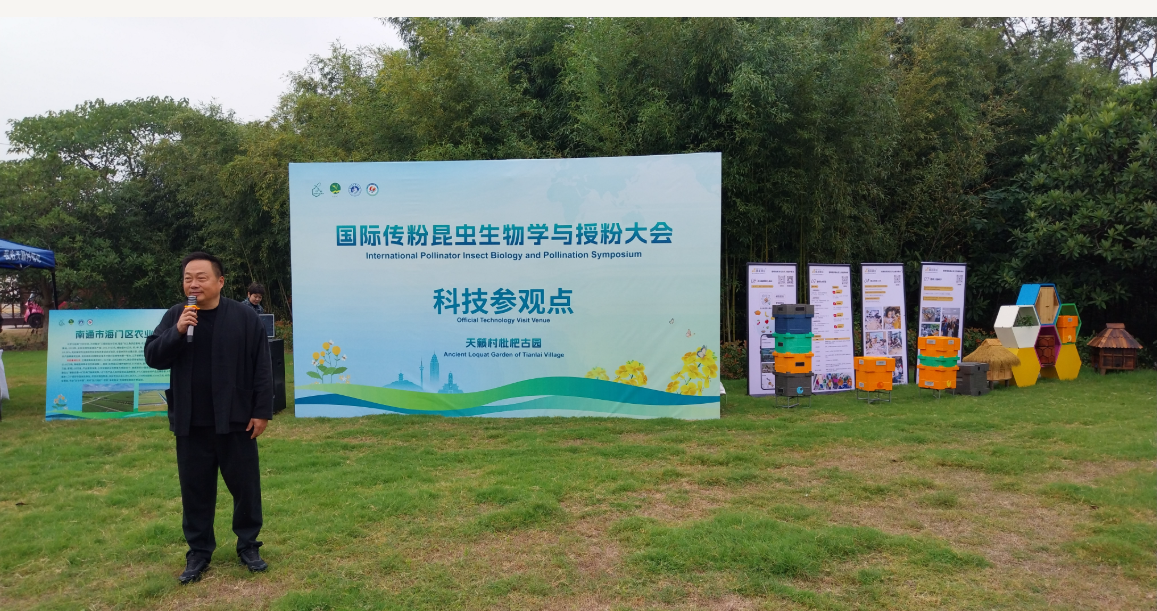
Last week I returned from a 14 day visit to China to colleagues at the Kunming Institute of Botany in Yunnan, part of a three-year commitment to working there that I documented on the blog last year, starting here. Some of my recent trip involved a long weekend in the city of Nantong, just north of Shanghai, where I was an invited speaker at the International Pollinator Insect Biology and Pollination Symposium. During a full day of talks from researchers and practitioners, via the excellent simultaneous interpretation service provided by the organisers, we learned about recent developments in the world of Chinese honey bees and wild pollinators. There were also international guest speakers from Australia, Argentina, and the UK, in person and online.
Too much was presented to give you a full account of the meeting – if you’re interested in details I’ve uploaded a copy of the English version of the symposium brochure here – but several themes emerged that I think are worth noting.

First of all, a number of speakers commented on the growing realisation in China that the value of crop pollination services by honey bees (both the native Asian Apis cerana and the European A. mellifera) far outweighs the value of the hive products such as honey, wax and royal jelly – see this from the 2021 study by Shibonage K Mashilingi and colleagues:

The total economic value of pollination amounted to US$ 106.08 billion in 2010, representing 19.12% of the total production value of Chinese agriculture

In comparison, the global honey market was valued at just US$ 9.01 billion in 2022. That such an understanding of the much greater economic value of pollinators to agriculture was relatively slow in coming is perhaps not surprising – it’s easier to weigh a physical product than it is to assess the contribution of bees and other insects to an apple harvest, for instance. But this awareness is a crucial step towards understanding the many reasons why pollinators need protection.

Which leads me to my next point: there was considerable political interest in the conference and in the topic more broadly. The meeting opened with almost an hour of introductory remarks by high-ranking Chinese officials, including the Vice Mayor of the regional government, the Vice President of the Chinese Academy of Agricultural Sciences, and the Secretary General of the Ministry of Agriculture and Rural Affairs of China. All of them commented on the importance of pollination to both crops and wild plants, and the need to reduce the amount pesticides being used in Chinese agriculture. I can’t recall ever being in a pollination symposium in any other country where there was such a political presence. I think that it says a lot about the Chinese willingness to translate science and technology into government policy and actions.

At the end of the opening session I had the chance to talk briefly with Liu Jian, former Vice Minister of Agriculture and Rural Affairs of China. Via an interpreter we agreed on the importance of pesticide reduction for protecting pollinators, a theme he had emphasised strongly in his talk, and I presented him with a copy of my book Pollinators & Pollination: Nature and Society:

Following the opening addresses there was a talk by the President of the Apicultural Science Association of China, Prof. Peng Wenjun, who gave us “An overview of the development of China’s bee pollination industry”. He described pollinators as the “invisible pillar” of agriculture, which is a wonderful phrase, and set out a strategy for greater integration of government policies, science, and technological innovation in order to support both managed and wild pollinators.

The first set of talks ended about 6pm, then it was back to the hotel for a quick dinner, before returning to the venue for a set of 15 shorter, but no less excellent, talks by postgraduate and postdoctoral researchers. This over-ran slightly and finally drew to a close at about 10pm, signalling the end of a very long, but very stimulating, day.

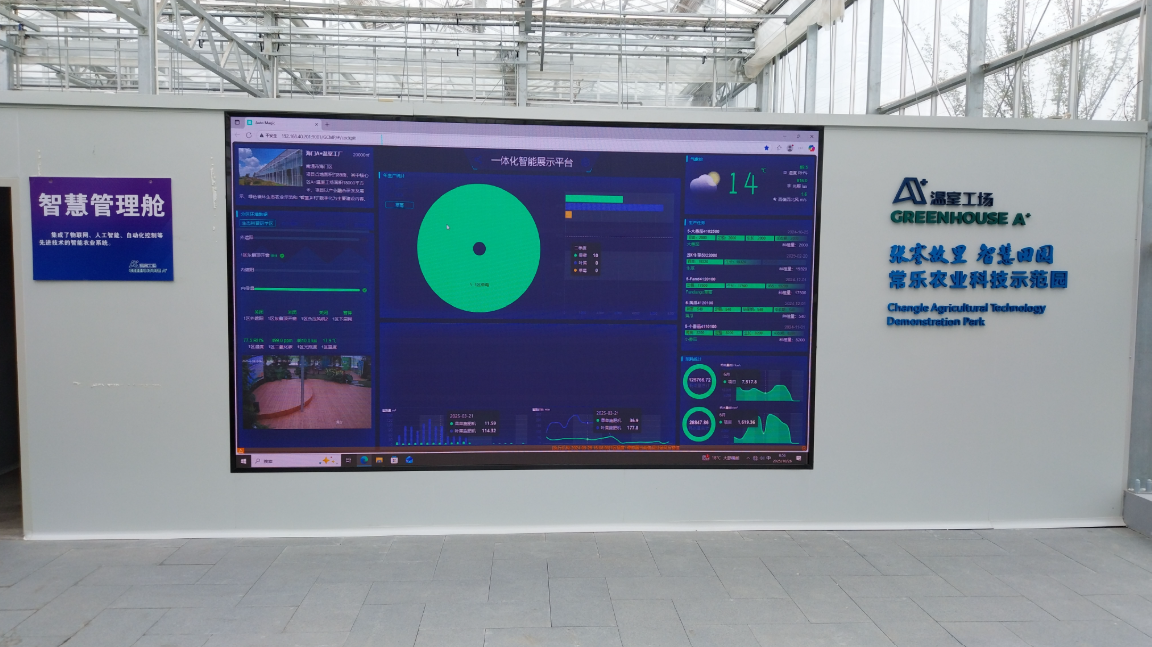
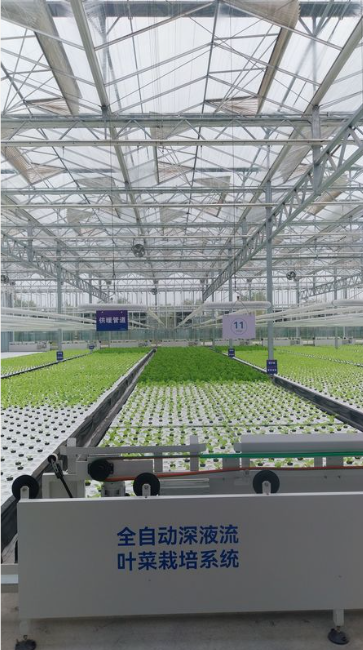
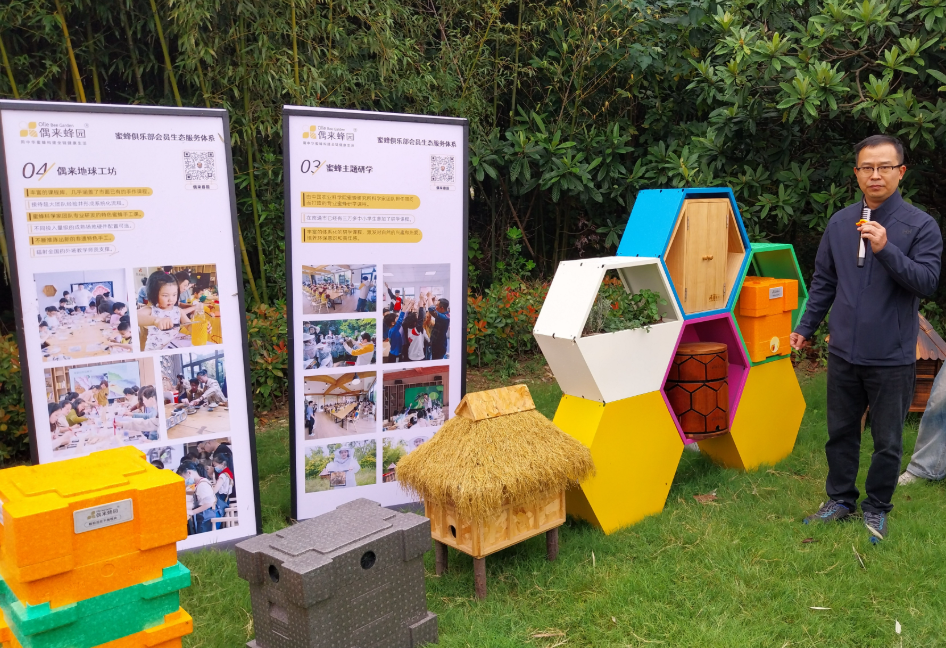
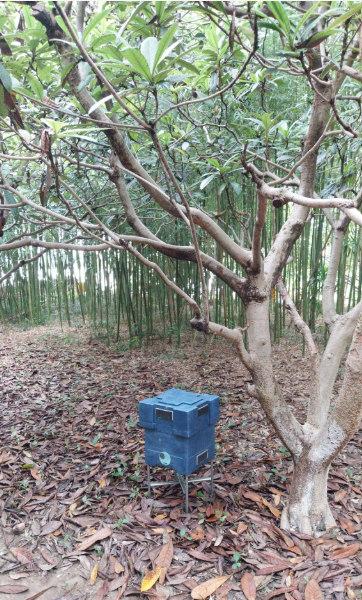
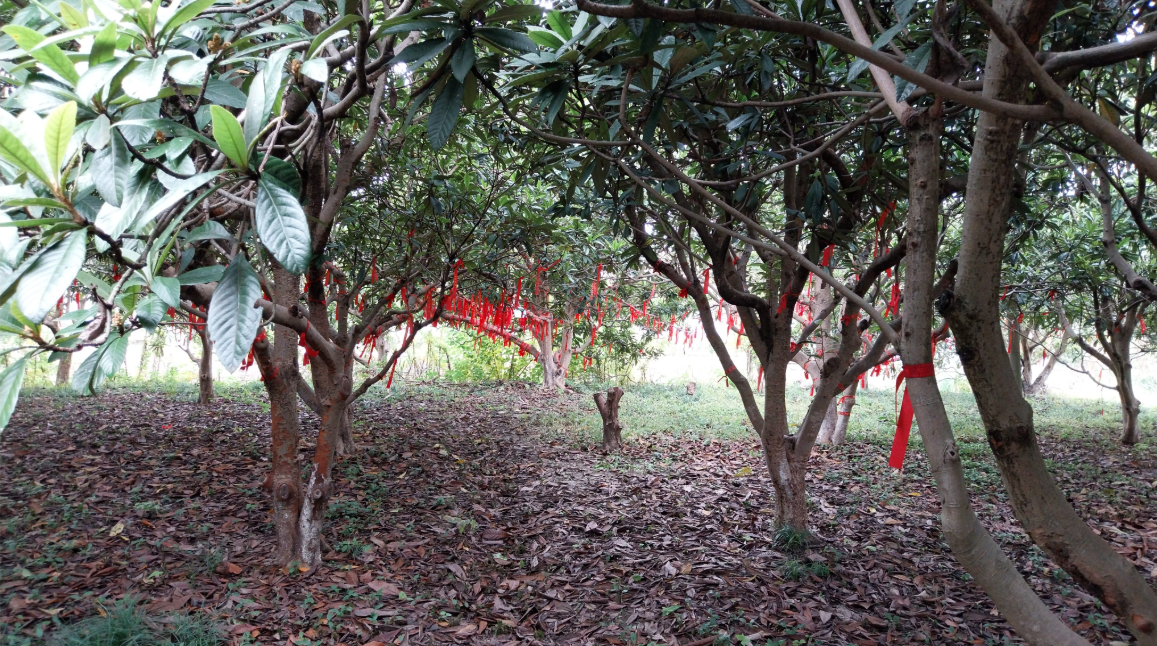
The following morning we were up early for a tour of some local agricultural facilities, including a high-tech glasshouse demonstration project and a loquat orchard that included trees which are thought to be around 300 years old. The thing that links these two contrasting agricultural systems is the requirement for managed pollinators to produce a crop: bumblebees (Bombus spp.) in the case of glasshouse tomatoes and the Asian honey bee (Apis cerana) for the winter-flowering loquat. Here are some photographs from that trip:

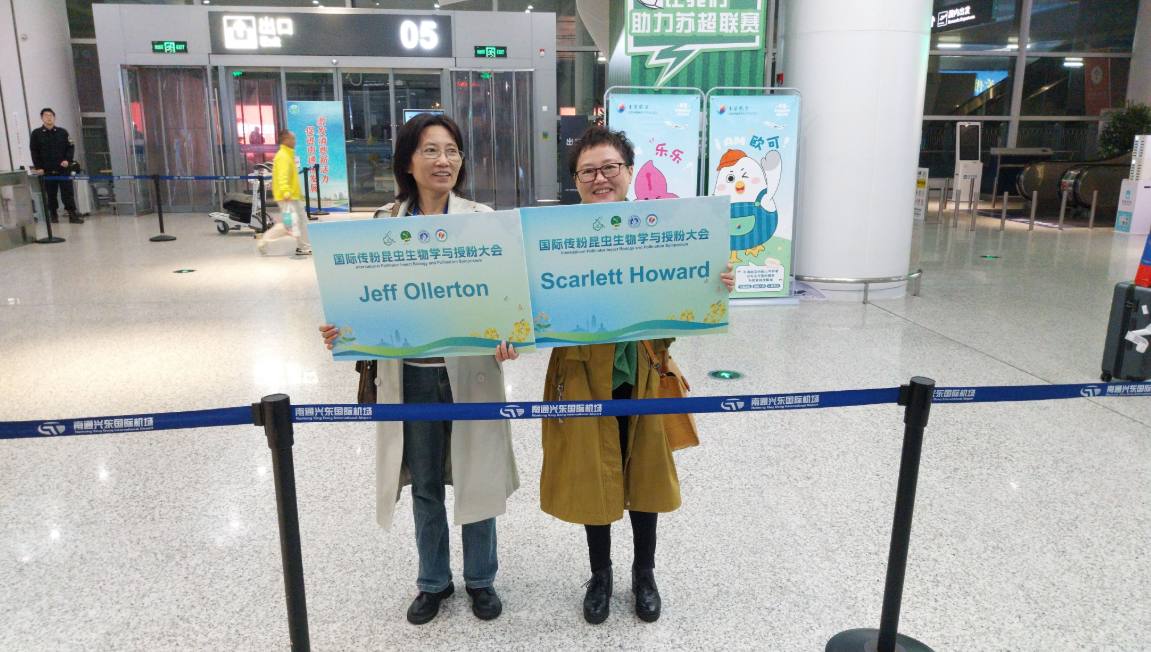
My sincere thanks to the organisers of the symposium for the invitation to speak and to my colleagues Zong-Xin Ren, Scarlett Howard, Yuansheng Fu, and Carlos Matallana-Puerto for their companionship on the trip. I’m grateful also to our personal translator-guides Yang and Gao who surprised us at the airport and made us feel so welcome:

Do birds pollinate the iconic Golden Lotus? A new study suggests that they do!

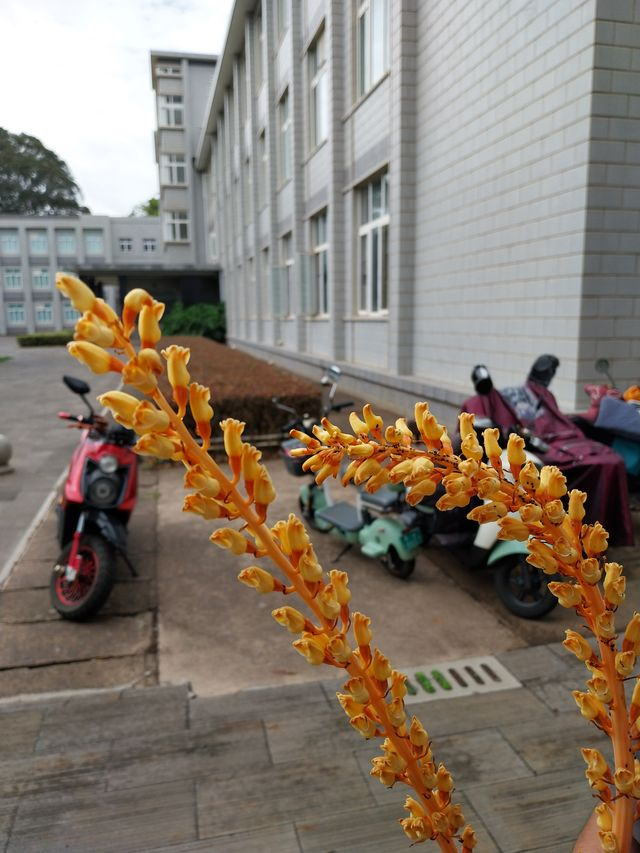
The Golden Lotus (Musella lasiocarpa) is one of China’s most iconic plants — a striking member of the banana family (Musaceae) that seems to bloom forever. Its brilliant yellow, lotus-like bracts have long made it a favourite of subtropical gardeners, though it also has utility as a food and fibre crop, and is associated with Chinese Buddhism. As you can see above it often features stylistically in Chinese temples, and in my visits to Yunnan we frequently encounter it during fieldwork on farms, planted to support terraced fields:

But despite its fame, one mystery has lingered for decades: what actually pollinates it?

Until now, Musella was thought to rely mainly on insects, particularly bees, for pollination. That assumption made it something of an outlier within the banana family, where most species are pollinated by birds or bats. But a new study, in which I was involved as part of an international team of predominantly Chinese and Brazilian researchers, has turned that view on its head.

By combining careful field observations with citizen science records, our team found that the Golden Lotus is regularly visited by an impressive diversity of birds — twelve species from five different families. As I documented in my recent book Birds & Flowers: An Intimate 50 Million Year Relationships, many of these visitors, such as bulbuls and sunbirds, are known nectar-feeders, and their behaviour at the flowers suggests that they are acting as effective pollinators. This discovery significantly expands what we know about the pollination ecology of the Golden Lotus, and places it firmly within the broader pattern of bird pollination that characterises much of the banana family.

Interestingly, the plant’s features — large, robust, vividly coloured bracts, abundant accessible nectar, and long-lived blooms — make perfect sense in this new light. These are traits that favour bird pollination rather than the short, concentrated visits typical of bees.

But the significance goes beyond one species. Bird pollination plays a vital, and often overlooked, role in China’s native flora, linking ecosystems from tropical rainforests to mountain valleys. Understanding these relationships is important not only for biodiversity conservation but also for horticulture — helping gardeners and landscape designers to create spaces that attract and sustain pollinators of all kinds.

The Golden Lotus has always been celebrated for its beauty and longevity. Now, we can add another layer to its story: a reminder that even the most familiar plants can still surprise us, and that nature’s partnerships are often more complex — and more colourful — than we imagine.

Here’s the reference with a link to the paper, which is open access:

Albuquerque-Lima, S., Ferreira, B. H. d. S., Rech, A. R., Ollerton, J., Lunau, K., Smagghe, G., Li, K.-Q., Oliveira, P. E., & Ren, Z.-X. (2025). Beyond Bees: Evidence of Bird Visitation and Putative Pollination in the Golden Lotus (Musella lasiocarpa)—One of the Six Buddhist Flowers—Through Field Surveys and Citizen Science. Plants, 14(20), 3157. https://doi.org/10.3390/plants14203157

A doubly-parasitic orchid? – China Diary 5

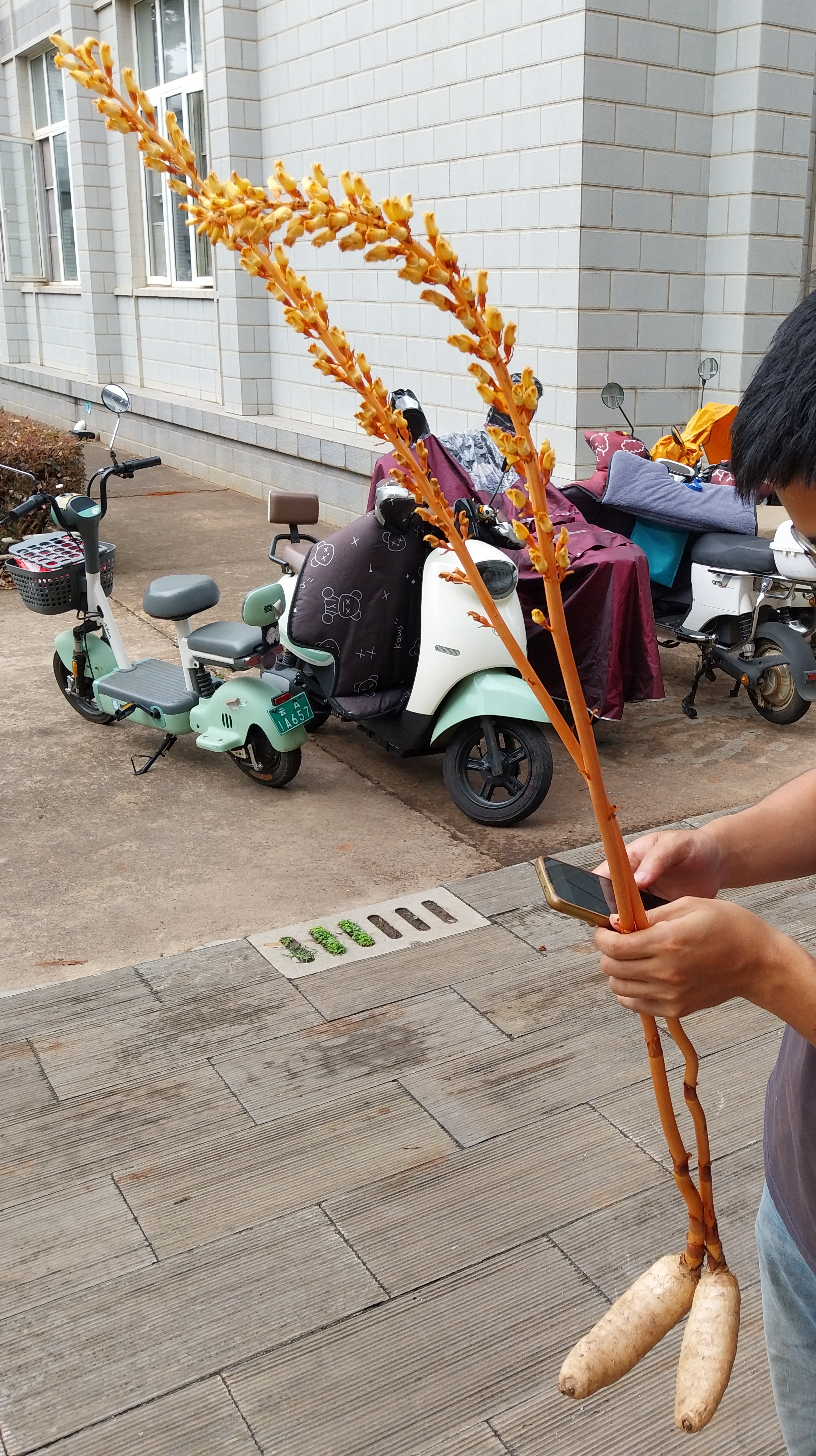
Walking into Kunming Institute of Botany yesterday morning, I passed a young guy who was carrying what I initially thought was a species of Orobanchaceae. I’ve a long-standing interest in the pollination ecology of these intriguing parasitic plants, so I stopped to have a chat. Turns out they were in fact orchids! Specifically, they were specimens of Gastrodia elata, one of the “potato orchids“, so named because those fat tubers are edible. They are widely used in South China – where they are known as Tianma, 天麻 – both as a food and medicinally. The tubers are eaten before the flowers are produced, and originally they were collected from the wild. But in the 1960s a Chinese botanist named Xuan Zhou discovered how to cultivate them and they are now grown in specialist nurseries. A fascinating account of the life of Xuan Zhou – “The Father of Gastrodia” – was published in the journal Plant Diversity last year, shortly after he died.

These orchids do not produce green leaves or stems, therefore they cannot photosynthesise. Instead, they gain all of their energy from a parasitic symbiotic relationship with a fungus – they are what is termed “myco-heterotrophic“. Most myco-heterotrophic plants have evolved from ancestors that were involved in mutualistic mycorrhizal relationships with fungi, in which the plant provides sugars to the fungus in return for mineral nutrients and water. In the case of Gastrodia elata, the fungus concerned is the non-mycorrhizal, wood-rotting Armillaria mellea. In the west we know this as Honey Fungus, a disease of trees and shrubs and the bane of many a gardener. This is also edible, incidentally, but best dried before cooking (and some have an intolerance to it, so take care).

I tweeted the photograph in a short thread just after taking it, and Stewart Nicol pointed me to a study of the orchid’s floral biology and pollination ecology in Japan by Naoto Sugiura. Turns out that, at least in the population which Naoto studied, the plant produces no nectar and deceives its pollinators, which are small bees, into visiting the flowers.

That’s why I’ve used the phrase “doubly-parasitic*” in the title of this post – the plant, it appears, parasitically exploits both the fungus from which it gains energy and the pollinators that ensure its reproduction. It’s (almost, but not quite) the flip side of “double mutualism” in which species provide two benefits for one another, e.g. the same bird is both a pollinator and a seed disperser of a particular plant, a phenomenon that I discussed in my recent book Birds & Flowers: An Intimate 50 Million Year Relationship.

But note the question mark in the title of this post. There’s an enormous amount that we don’t know about these myco-heterotrophic interactions and how they remain stable over the evolutionary history of the plant and the fungus. In order to be considered a parasite, by definition, an organism must have a negative impact on the reproductive fitness of its host. Do these orchids negatively impact either the fungus or the bees that pollinate it? As yet we don’t know. And I was intrigued by this comment from a 2005 review of ‘The evolutionary ecology of myco-heterotrophy‘ by Martin Bidartondo:

“no successful plant lineage would be expected to cheat both mycorrhizal fungi (by failing to provide photosynthates) and deceive insect pollinators (by failing to provide nectar or other rewards) due to the evolutionary instability inherent to specializing on two lineages.”

At first glance it appears that Gastrodia elata is a plant lineage that has done just that, though I’d like to see more work carried out on this system. Specifically, are all populations of the orchid bee pollinated and are all rewardless? And does this orchid really provide no benefit to the fungus, perhaps by synthesising secondary compounds that protect the Armillaria from infection by bacteria or being eaten by invertebrates. So many questions to be answered about this fascinating species interaction!

*With thanks to my wife Karin Blak for inspiring that phrase.

First footsteps in Kunming – China Diary 1

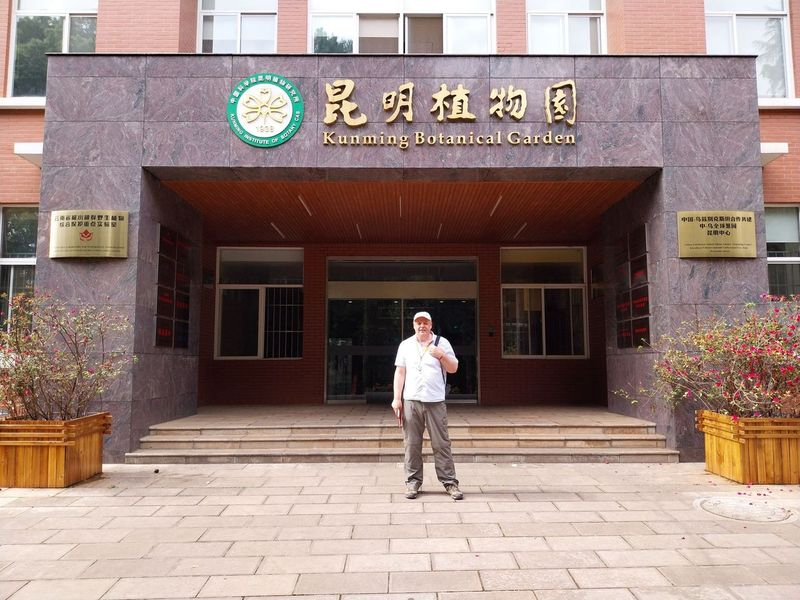
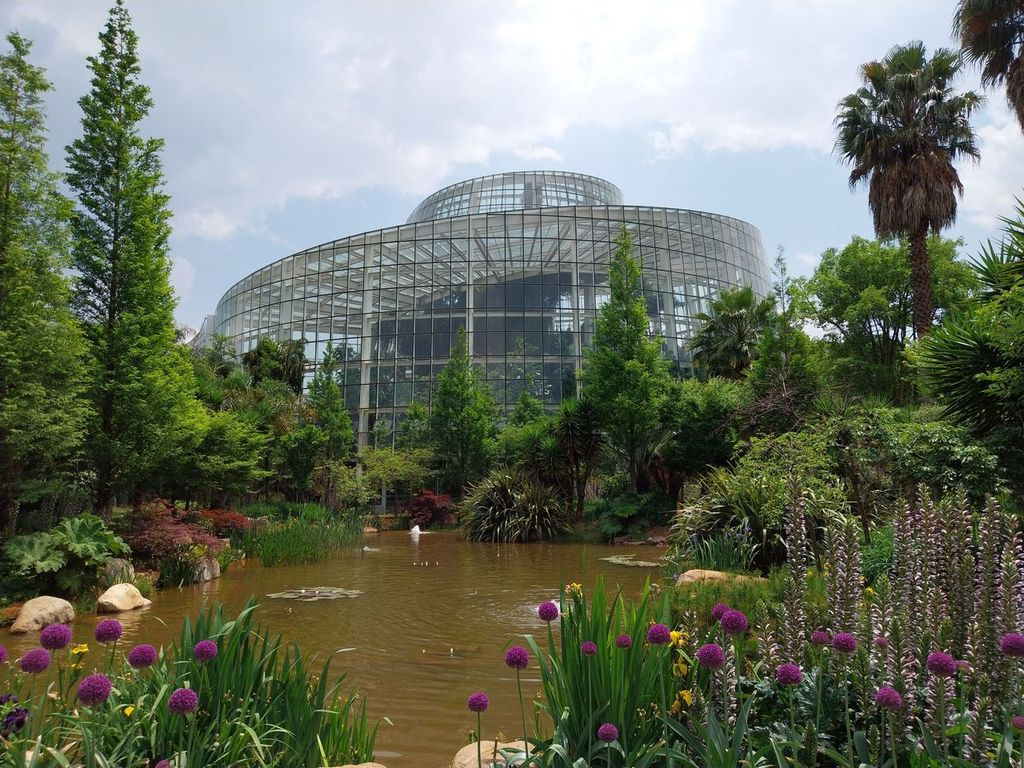
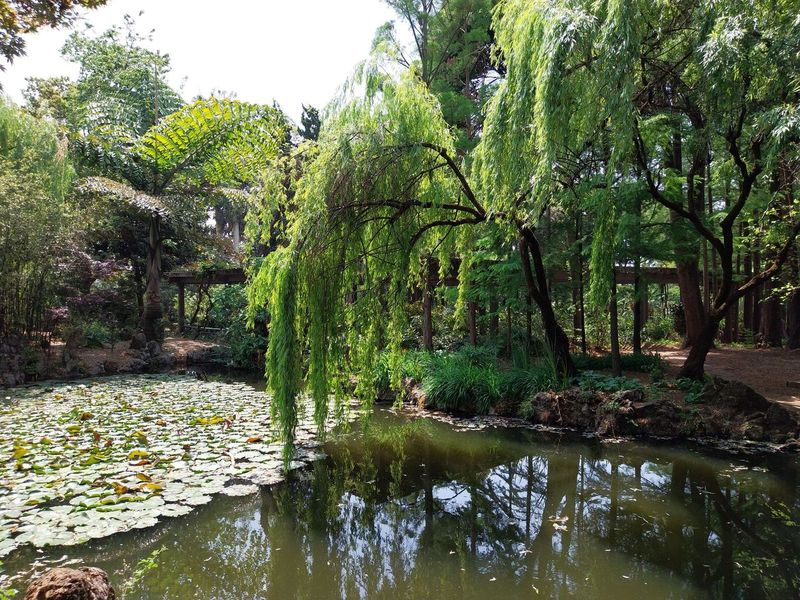
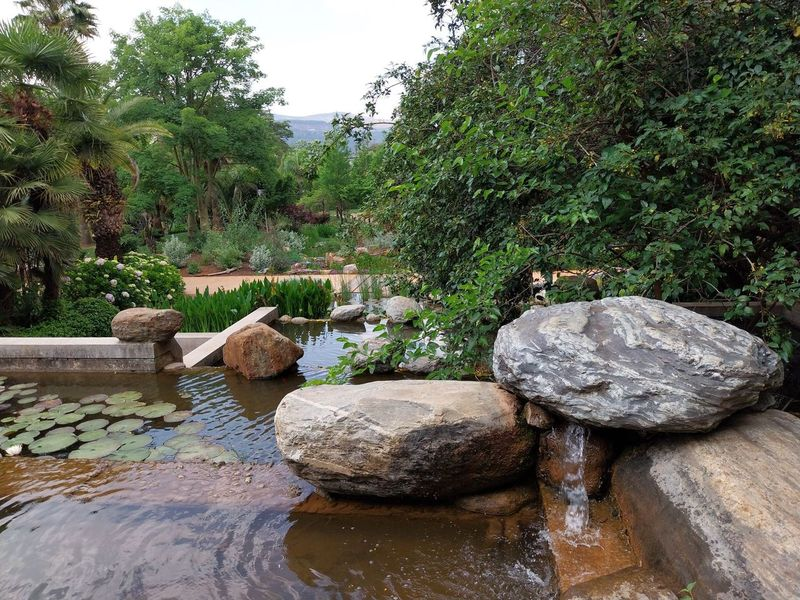
Just over a week ago I arrived in China to spend three months as a visiting professor at the Kunming Institute of Botany (KIB), of the Chinese Academy of Sciences. I am being hosted by my colleague Dr Zong-Xin Ren, and I will repeat this trip each year over the next three years. This is my first visit to Kunming because my last visiting professorship here had to be conducted remotely due to the COVID-19 pandemic. As you can see above, KIB is adjacent to, and works closely with, Kunming Botanical Garden and I have the good fortune of being able to walk to work each day through the gardens:

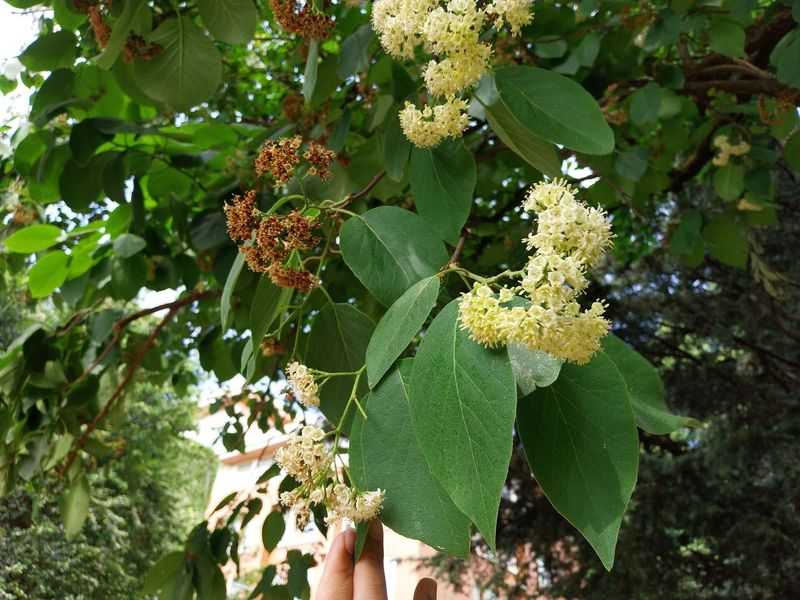
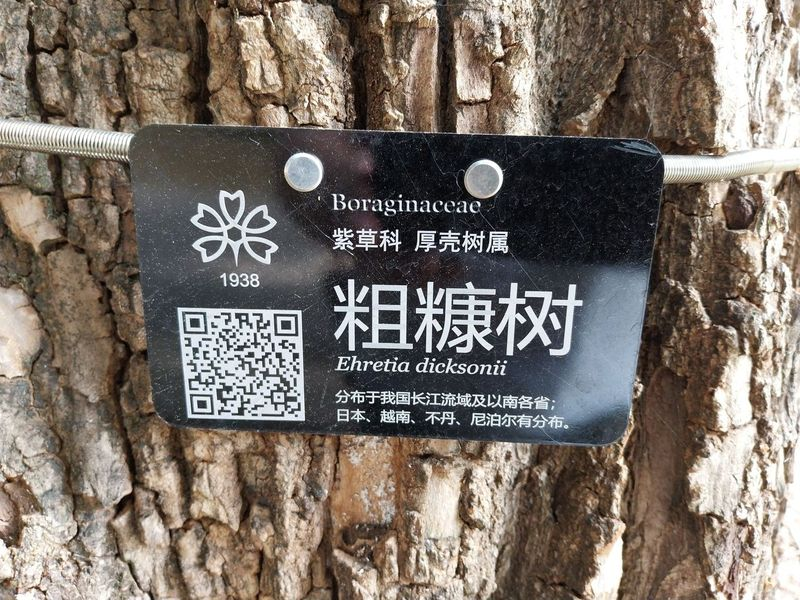
As I’ve said before, I love botanic gardens because I always, always see plants that amaze and surprise me. For example, I struggled to recognise the family that this very large tree belonged to – and was surprised by the answer!

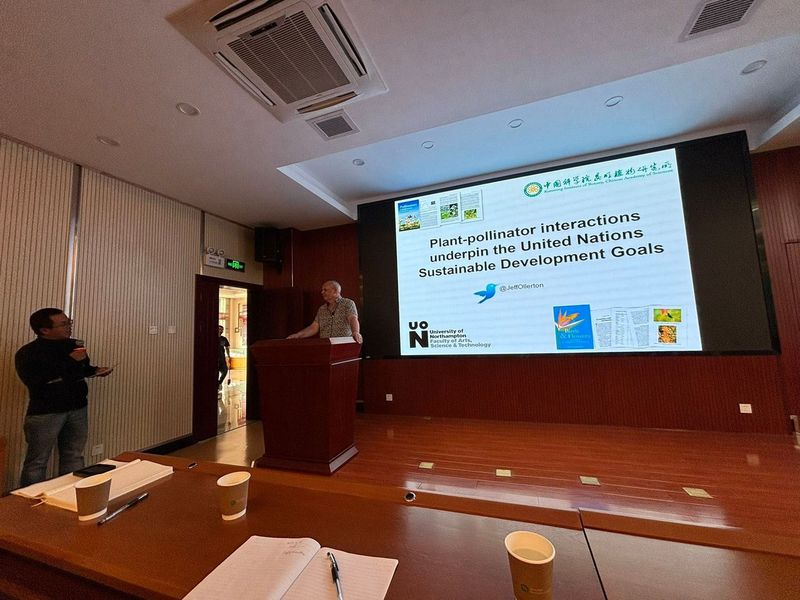
I’ll be spending my time working on some data and writing manuscripts, carrying out field work, and talking with KIB postgrads and postdocs about their projects. I’ll also give some lectures here and at other institutions in China. The first of these was last Thursday where I spoke about the role of plant-pollinator interactions in underpinning the United Nations Sustainable Development Goals:

Thanks to Brazilian researcher Sinzinando ‘Nando’ Albuquerque-Lima for those last two photographs. As part of a Brazilian-funded project, Nando is here for about 8 months studying a range of plants and their pollinators.

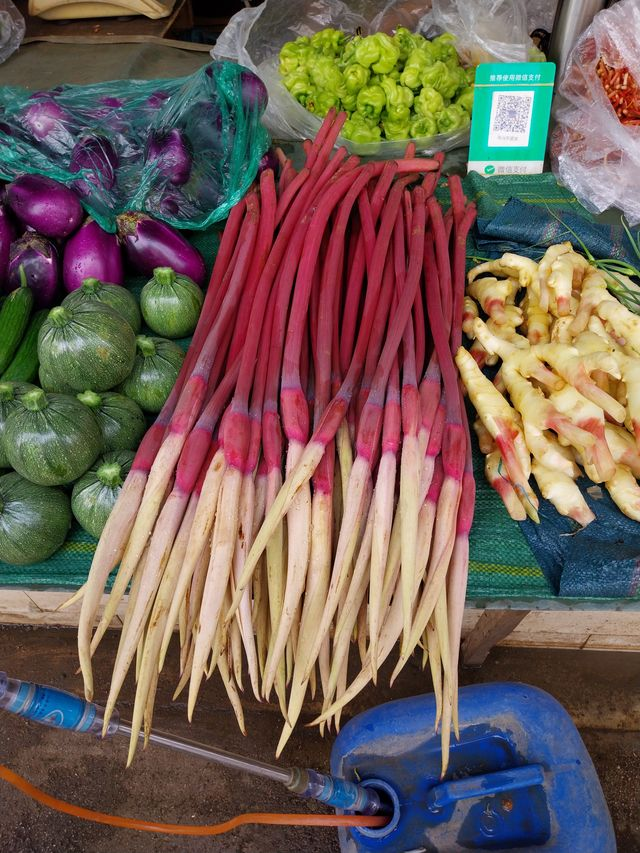
Further afield, Zong-Xin and Nando have introduced me to some of the amazing markets and restaurants in the city and I’ve already added three new plant families to my life list of those I’ve consumed: Phyllanthaceae (the rather sour fruit of a Phyllanthus species); Alismataceae (deep-fried, ‘crisped’ roots of a Sagittaria species); and Meliaceae (the young leaves of Toona sinensis are used as a spinach):

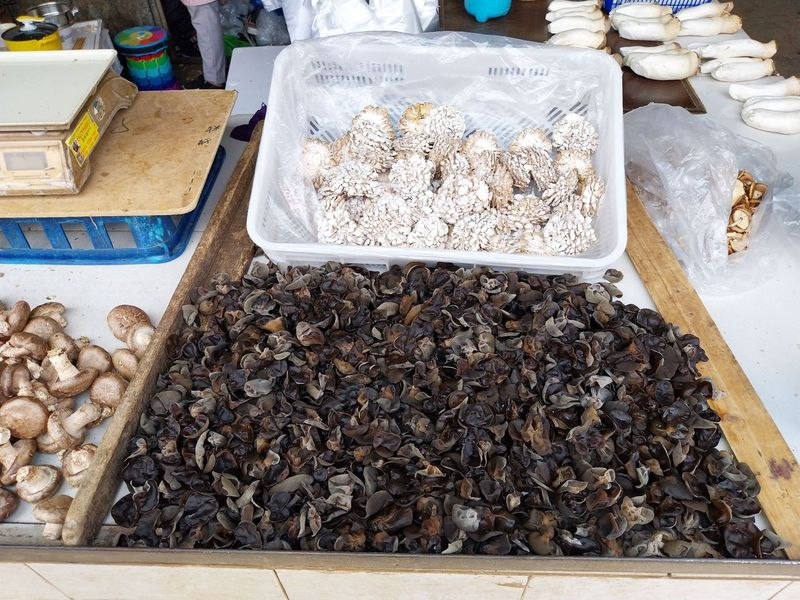
That last photo does not show rhubarb! They are the stems of a variety of taro (Colocasia esculenta) an Araceae species. Yunnan is especially famous for its wild-collected fungi:

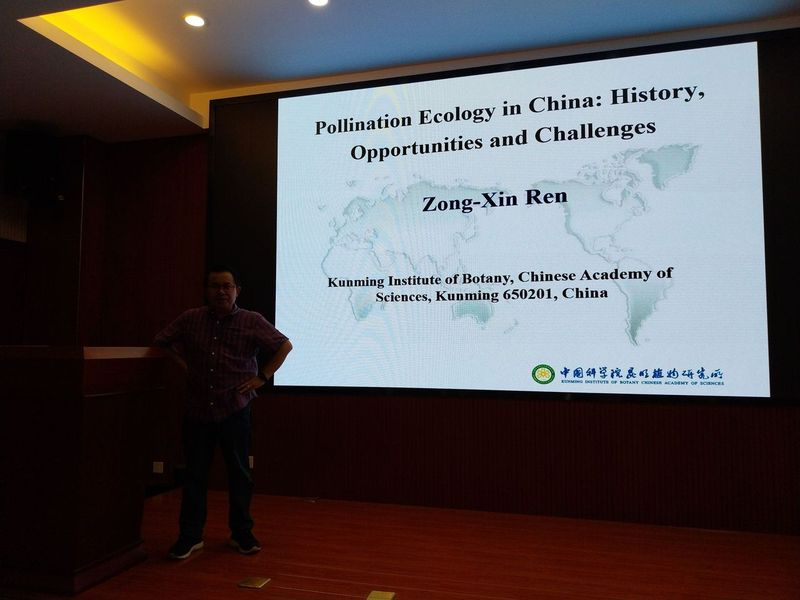
On Sunday afternoon Zong-Xin’s research group gave some presentations about their research, which is diverse and exciting and I look forward to discussing it with them some more in the coming months. The afternoon started with a talk by Zong-Xin himself about the history and opportunities of studying pollinators and pollination in China:

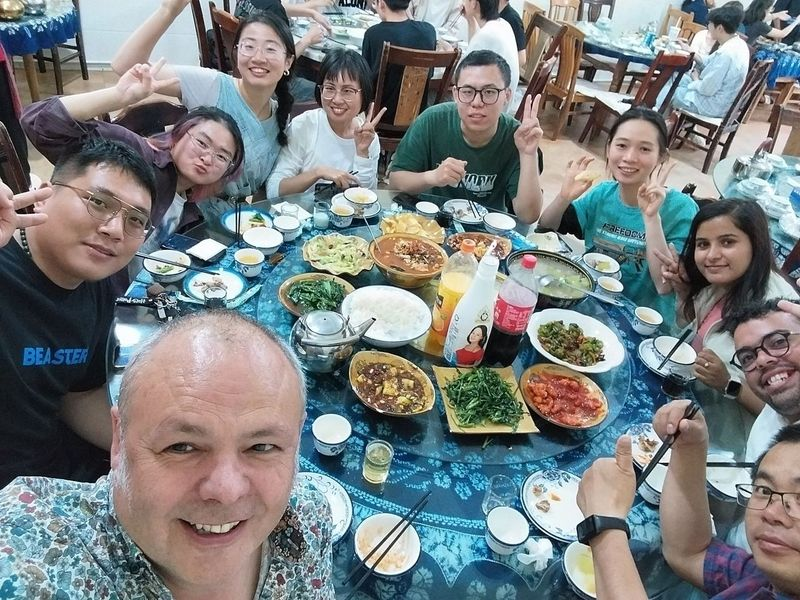
And then we all went to dinner!

That’s all for now, I’ll add updates as the weeks go by.

Cockroaches as pollinators: a new example just published

When you think of the word “pollinator” what comes to mind? For most people it will be bees, particularly the western honeybee (Apis mellifera). Some might also think of hoverflies, butterflies, moths, bats, hummingbirds…..but cockroaches?! The first published example that I know of which demonstrated that the flowers of a plant are specialised for cockroach pollination is from the mid-1990s. Since then only a handful of well documented cases have come to light, but there are undoubtedly more out there waiting to be discovered, particularly in the wet tropics. Most of the c. 4,600 species of cockroaches are nocturnal, and cockroach-pollinated flowers tend to open at night, which is one reason why they are under documented.

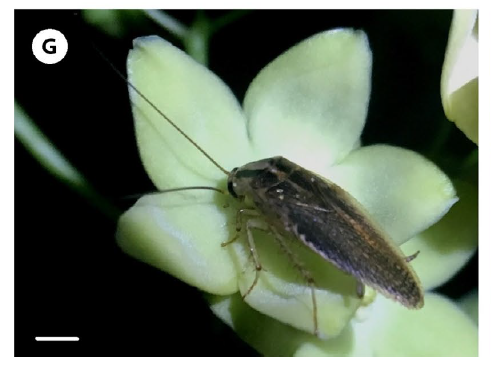
In a new study, published this week in the American Journal of Botany, a team of Chinese, German and British biologists has shown that a species of Apocynaceae from China is the first known example of cockroach pollination in that large family. Here’s the reference with a link to the study; if anyone wants a copy please email me:

Xiong, W., Ollerton, J., Liede-Schumann, S., Zhao, W., Jiang, Q., Sun, H. Liao, W. & You, W. (2020) Specialized cockroach pollination in the rare and endangered plant Vincetoxicum hainanense (Apocynaceae, Asclepiadoideae) in China. American Journal of Botany (in press)

The abstract for the paper follows:

Premise

Species of Apocynaceae are pollinated by a diverse assemblage of animals. Here we report the first record of specialized cockroach pollination in the family, involving an endangered climbing vine species, Vincetoxicum hainanense in China. Experiments were designed to provide direct proof of cockroach pollination and compare the effectiveness of other flower visitors.

Methods

We investigated the reproductive biology, pollination ecology, pollinaria removal, pollinia insertion, and fruit set following single visits by the most common insects. In addition, we reviewed reports of cockroaches as pollinators of other plants and analyzed the known pollination systems in Vincetoxicum in a phylogenetic context.

Results

The small, pale green flowers of V. hainanense opened during the night. The flowers were not autogamous, but were self‐compatible. Flower visitors included beetles, flies, ants and bush crickets, but the most effective pollinator was the cockroach Blattella bisignata, the only visitor that carried pollen between plants. Less frequent and effective pollinators are ants and Carabidae. Plants in this genus are predominantly pollinated by flies, moths and wasps.

Conclusions

Globally, only 11 plant species are known to be cockroach‐pollinated. Because their range of floral features encompass similarities and differences, defining a “cockroach pollination syndrome” is difficult. One commonality is that flowers are often visited by insects other than cockroaches, such as beetles, that vary in their significance as pollinators. Cockroach pollination is undoubtedly more widespread than previously thought and requires further attention.

Seminar: ecology and botanical history of the Himalayas – online on 11th September

Dwyer Lecture Flyer 2020

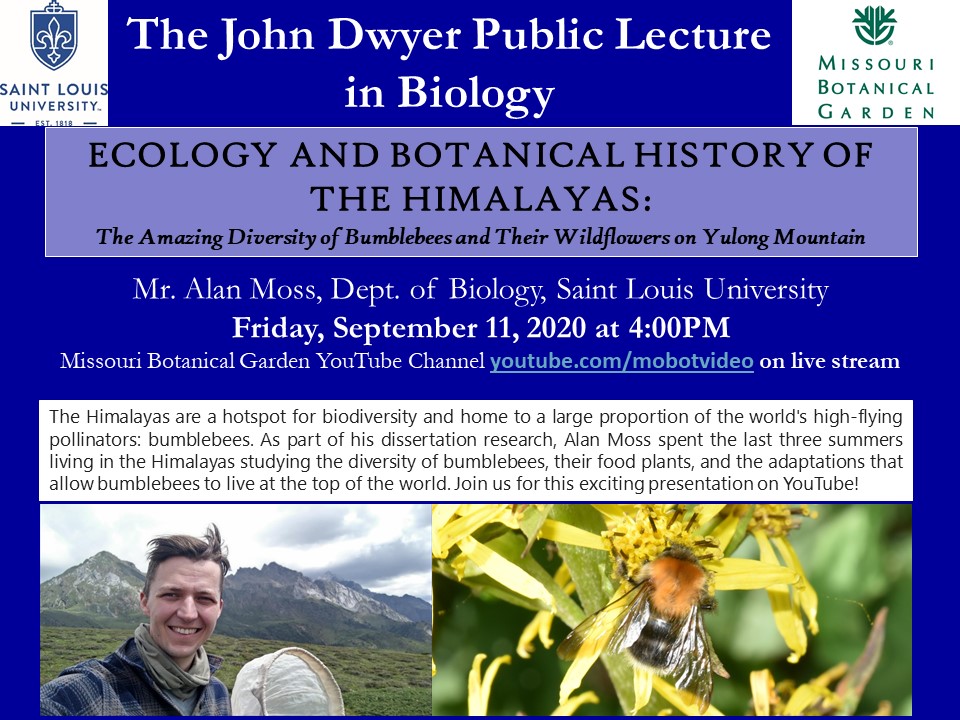
This year’s Missouri Botanical Garden/St Louis University John Dwyer Public Lecture in Biology will be given by Alan Moss who researches Himalayan bumblebees and their interactions with flowers.  The lecture is being live-streamed on YouTube – details are in the flyer above.

Final thoughts from the International Botanical Congress in Shenzhen

IBC 47 Veg market

Despite my best efforts I’ve not been able to produce a daily post about the International Botanical Congress (IBC) in Shenzhen.  The days were just too busy: too many interesting people to talk to; too many great talks to see; too much cold beer to be drunk and tasty food to be eaten; and a too-comfortable bed to collapse into at the end of a long, long day.

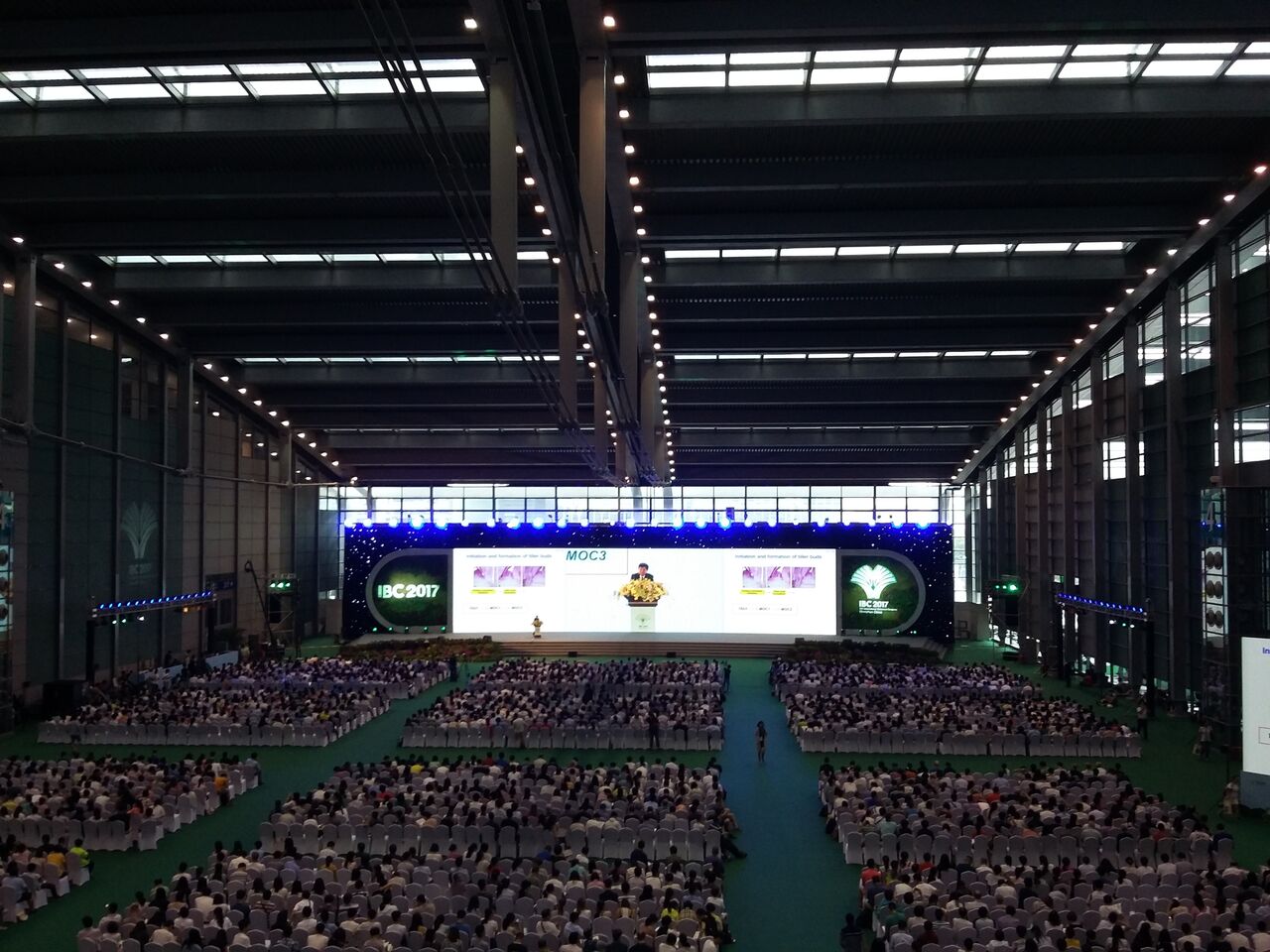
It’s Sunday today, and the closing ceremony took place yesterday afternoon.  Speeches were made and thanks offered to our Chinese hosts.  It was a fitting end to what has been a truly remarkable conference, the like of which I’ve never previously experienced, and may never again.  It wasn’t just the scale of it – almost 7,000 delegates giving and attending hundreds of talks – but just the very positive buzz of all of these plant scientists determined to make a difference in some way, through their research and education and outreach work.  That’s been the main theme of this conference: that a healthy global population living in a safe and sustainable world is not possible without plants, and to achieve that we must take the plant sciences very, very seriously indeed.  Plants are the foundation of our civilization and the key to surviving the future.

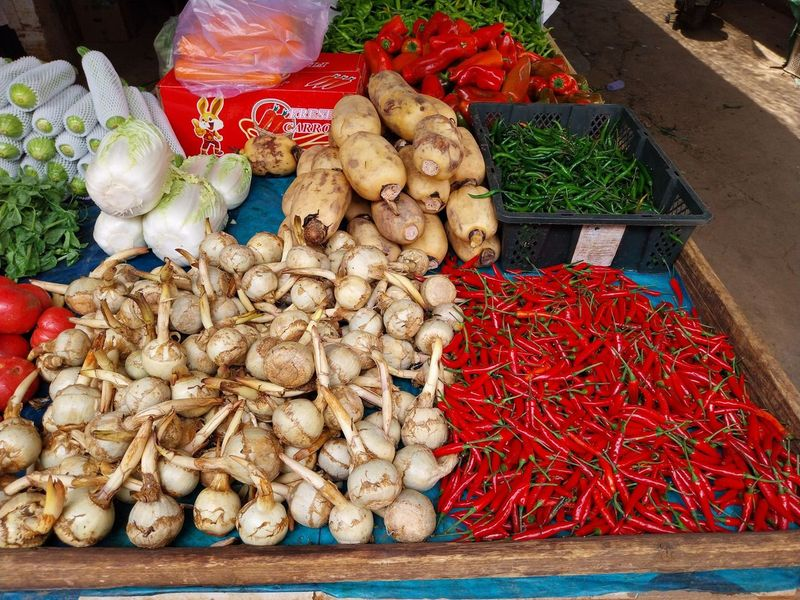
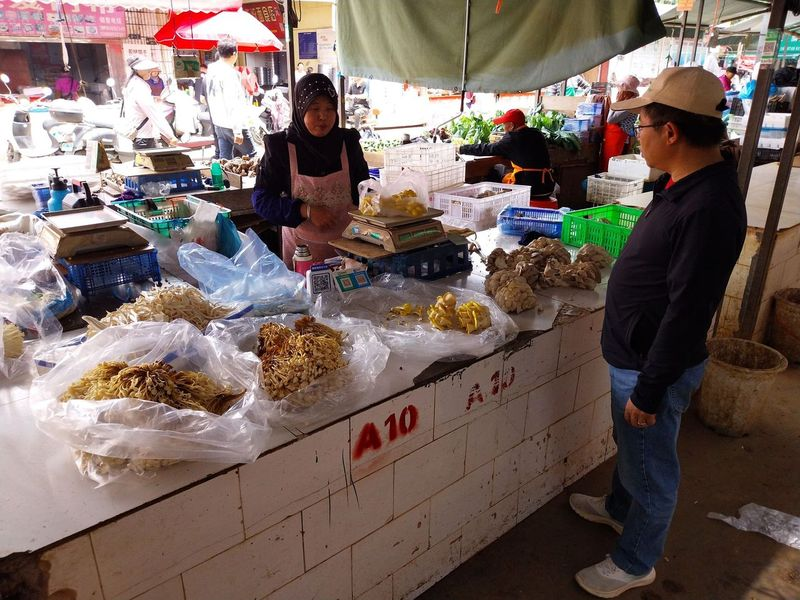
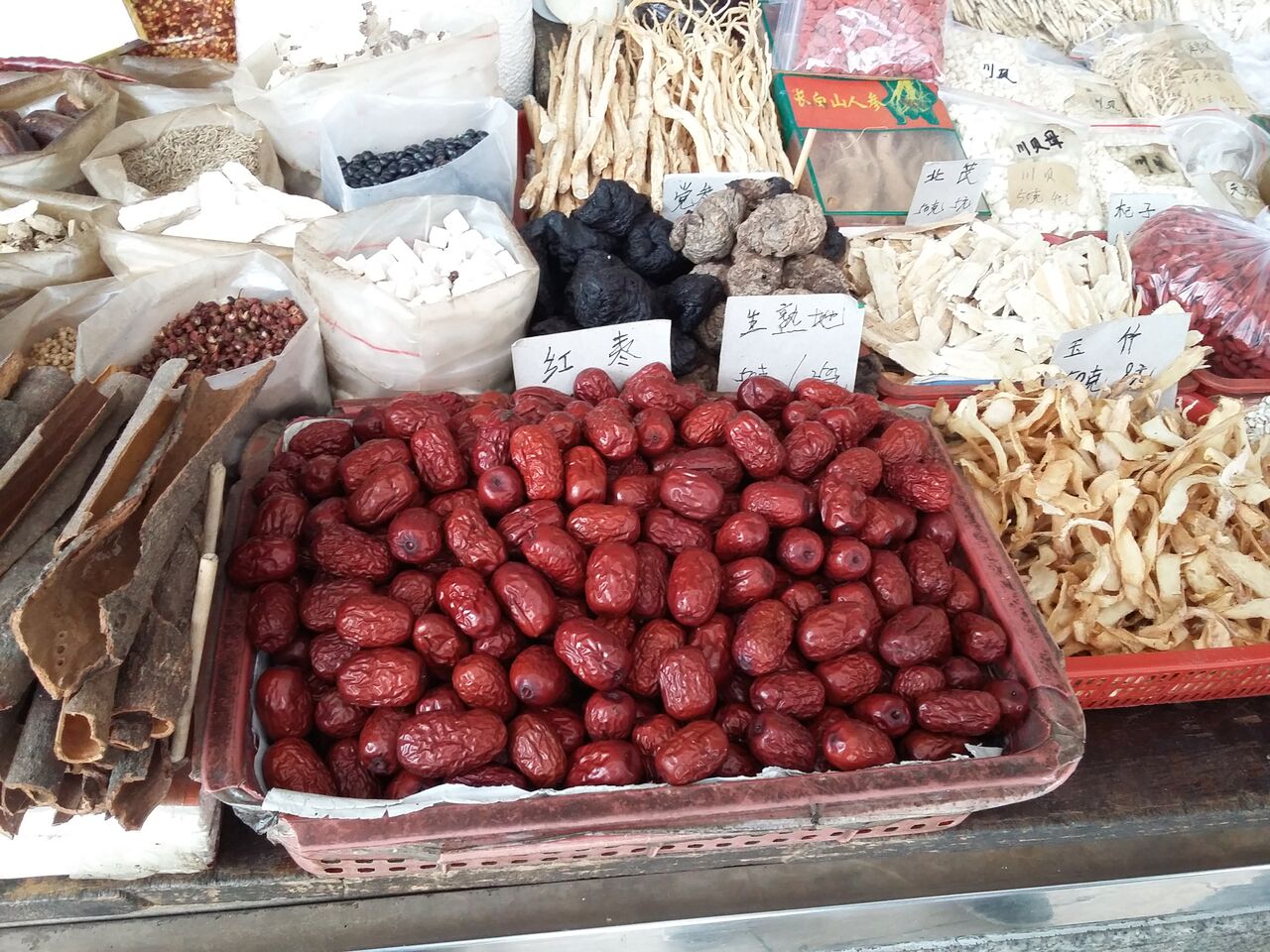
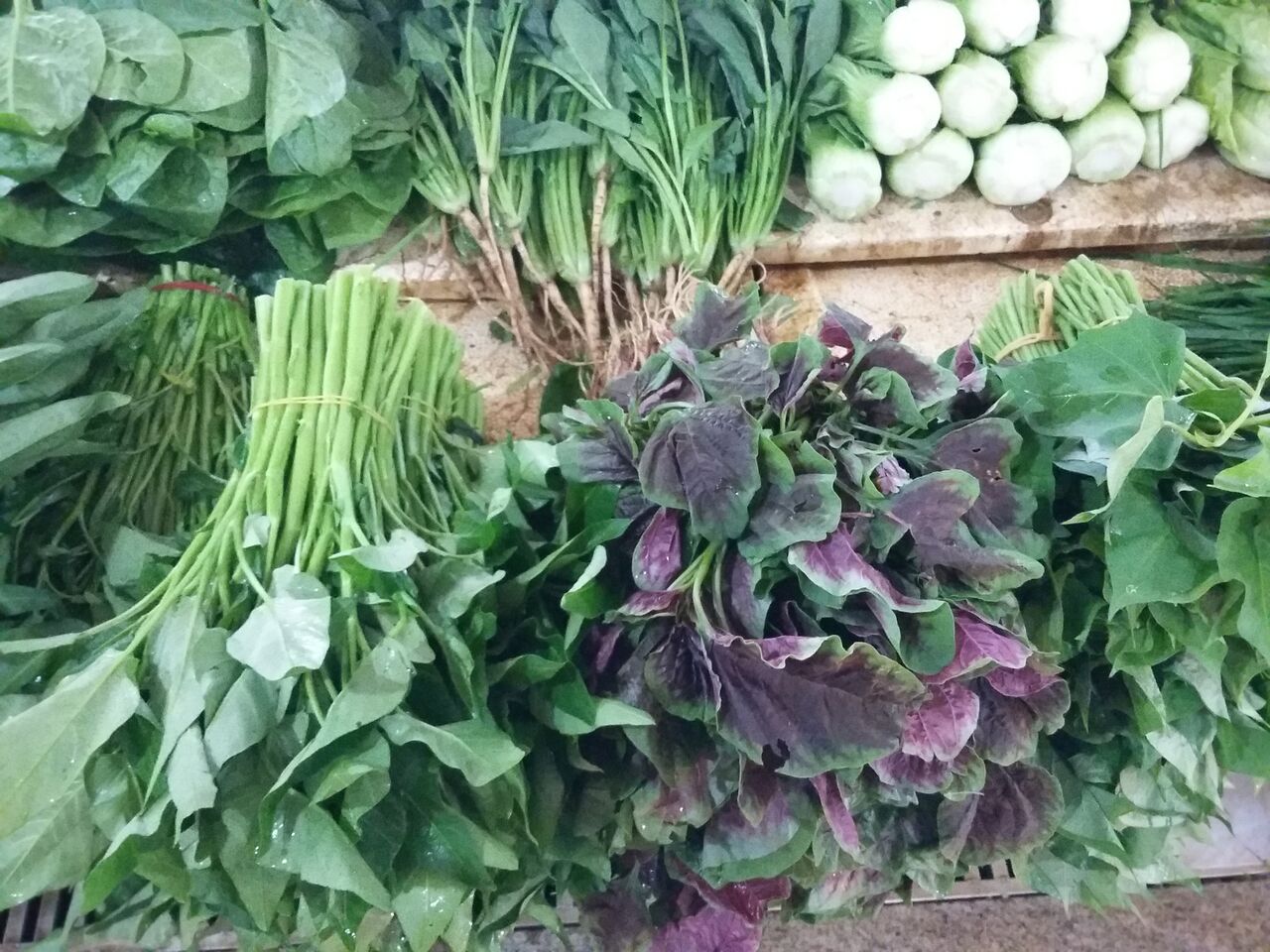
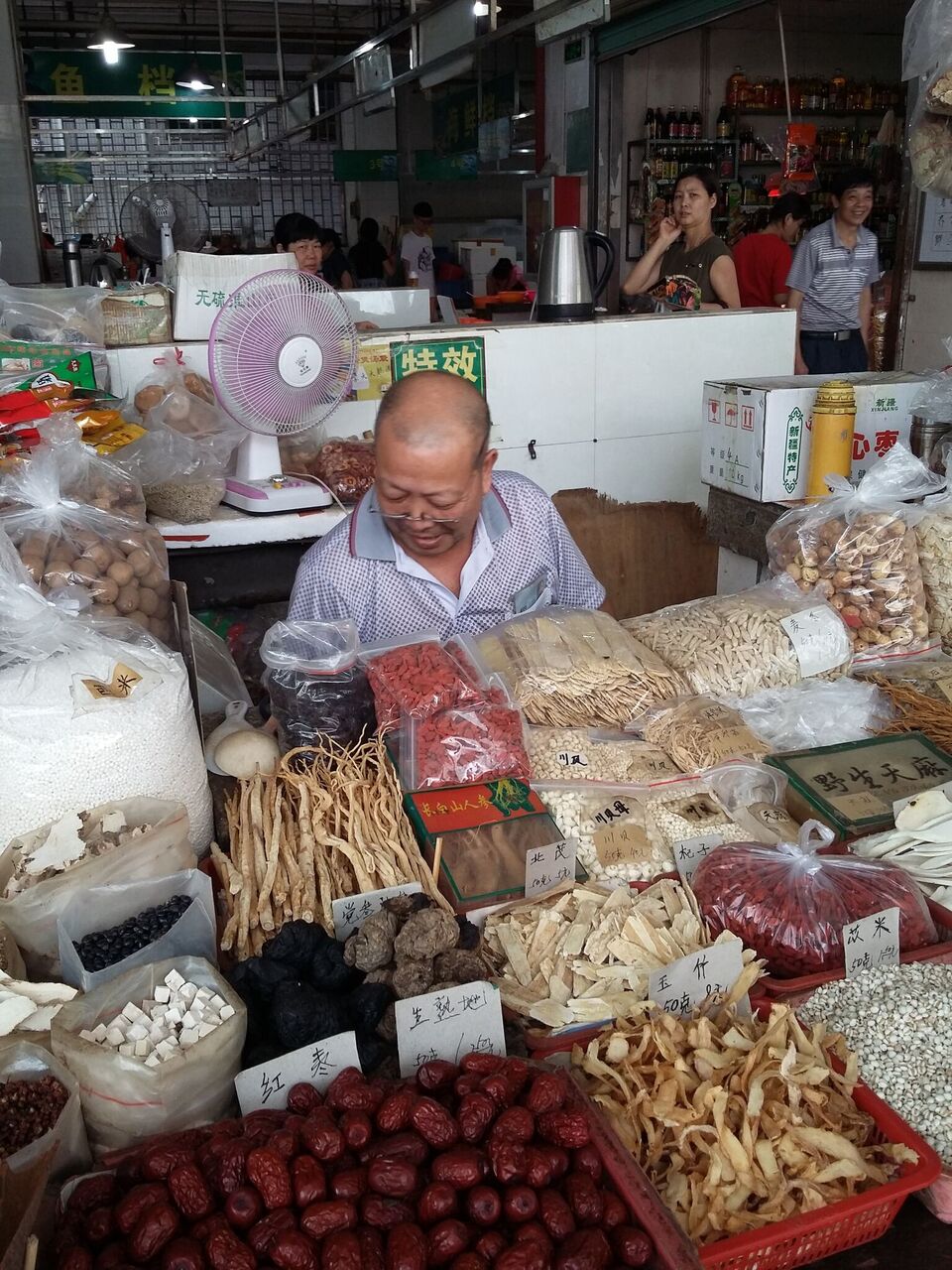
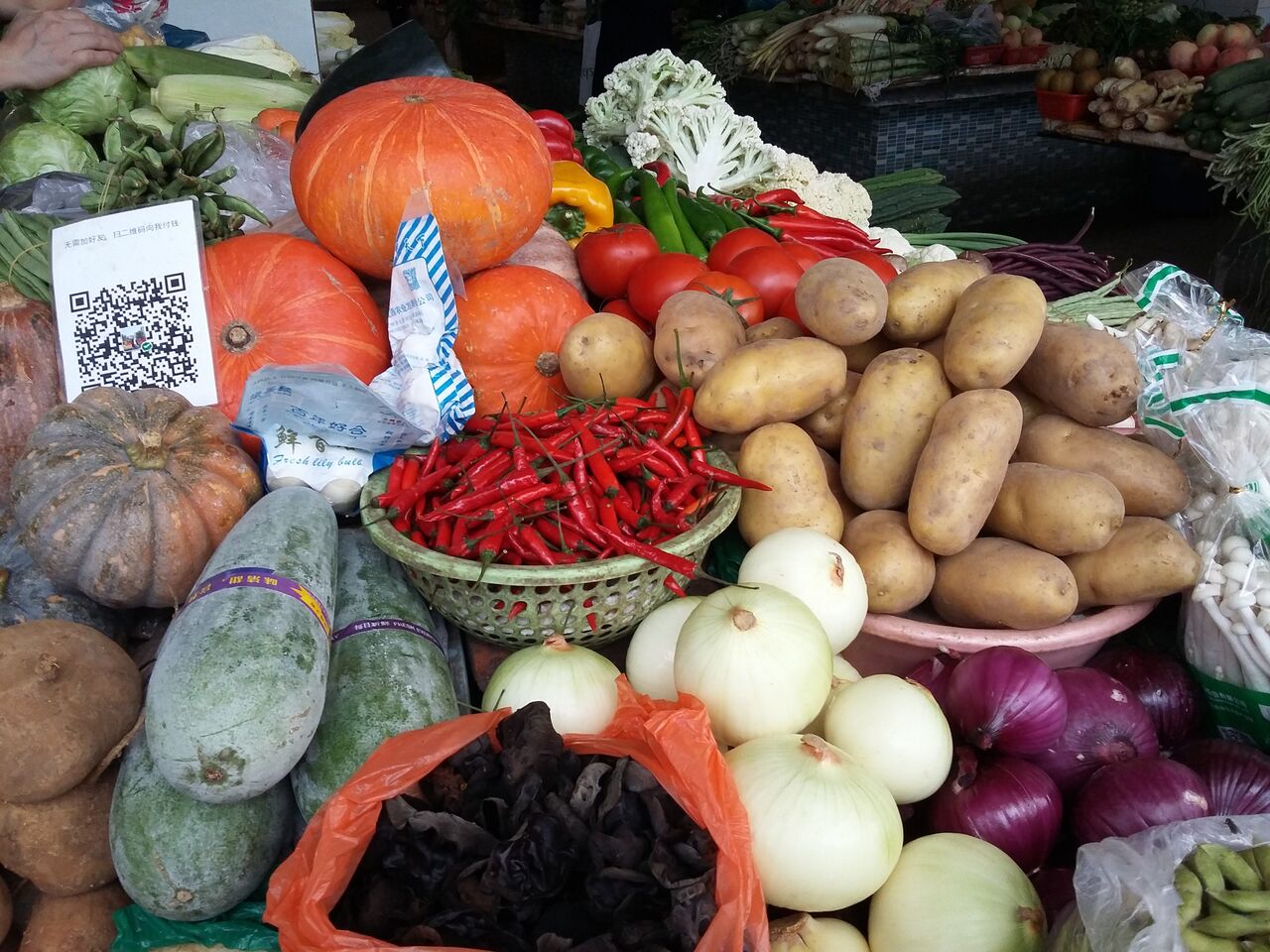
Anyone who doubts that last sentence should have joined us the other day when we made a short visit to a local fruit and vegetable market.  Beautifully displayed on low stalls was botanical produce that reflected both thousands of years of Chinese cultivation and crop breeding, including food plants not very familiar in the west……

IBC 45 Veg market.jpg

IBC 46 Veg market

….together with the produce that’s only been a part of the Chinese diet for a few hundred years, or less, following its introduction from Europe and the Americas, including current staples such as chillies, squashes and potatoes:

IBC 43 Veg market

Global movements of food crops have enriched diets and supported the populations of entire countries: most of the fruit and vegetables that we eat in the UK, for instance, are not even native to Europe let alone the British Isles.

During this trip to the market I was able to add two new plant families to my life list of those I’ve eaten.  They were Saururaceae (the leaves and rhizomes of Houttuynia cordata) and Portulacaceae (Portulaca oleracea being a common leaf vegetable in some parts of the world, but not the UK).  That brings my current total of pant families I’ve eaten to more than 90.

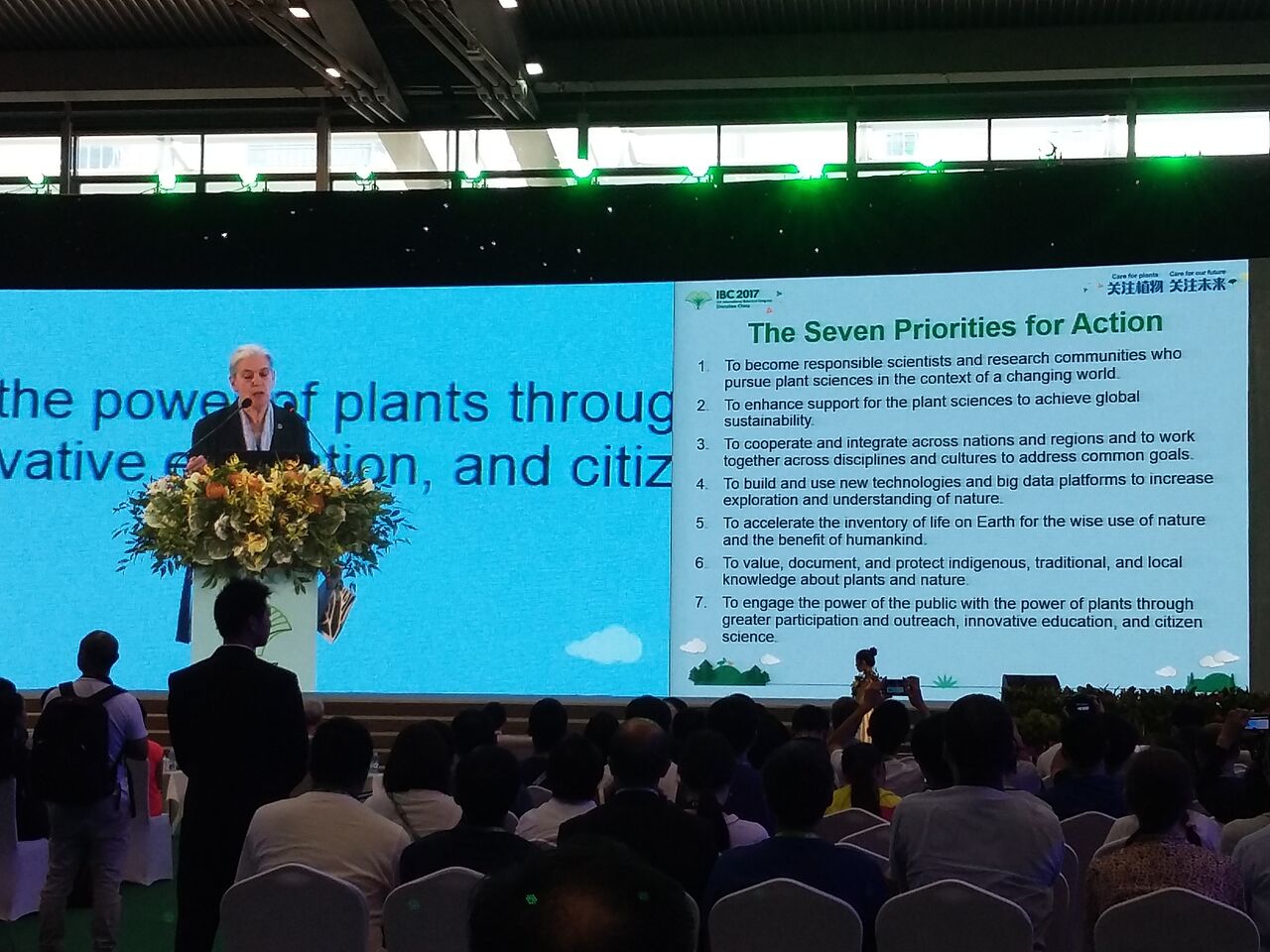
That theme of the importance of plants was codified by the launch at the IBC of the Shenzhen Declaration on Plant Sciences, on which the Natural History Museum’s Sandy Knapp has been an author; hopefully you can read the seven priorities in this image:

IBC 40 Shenzhen Declaration

The Shenzhen Declaration provides both a rallying call for plant scientists to convince their governments of the importance of their work, but also highlights how seriously China takes the whole concept of sustainable development.  It’s remarkable (but actually perfectly logical) that such a fast developing country should be the prime mover in the area of green sustainability.  Only time will tell if they are doing enough, at a pace that will make a difference.

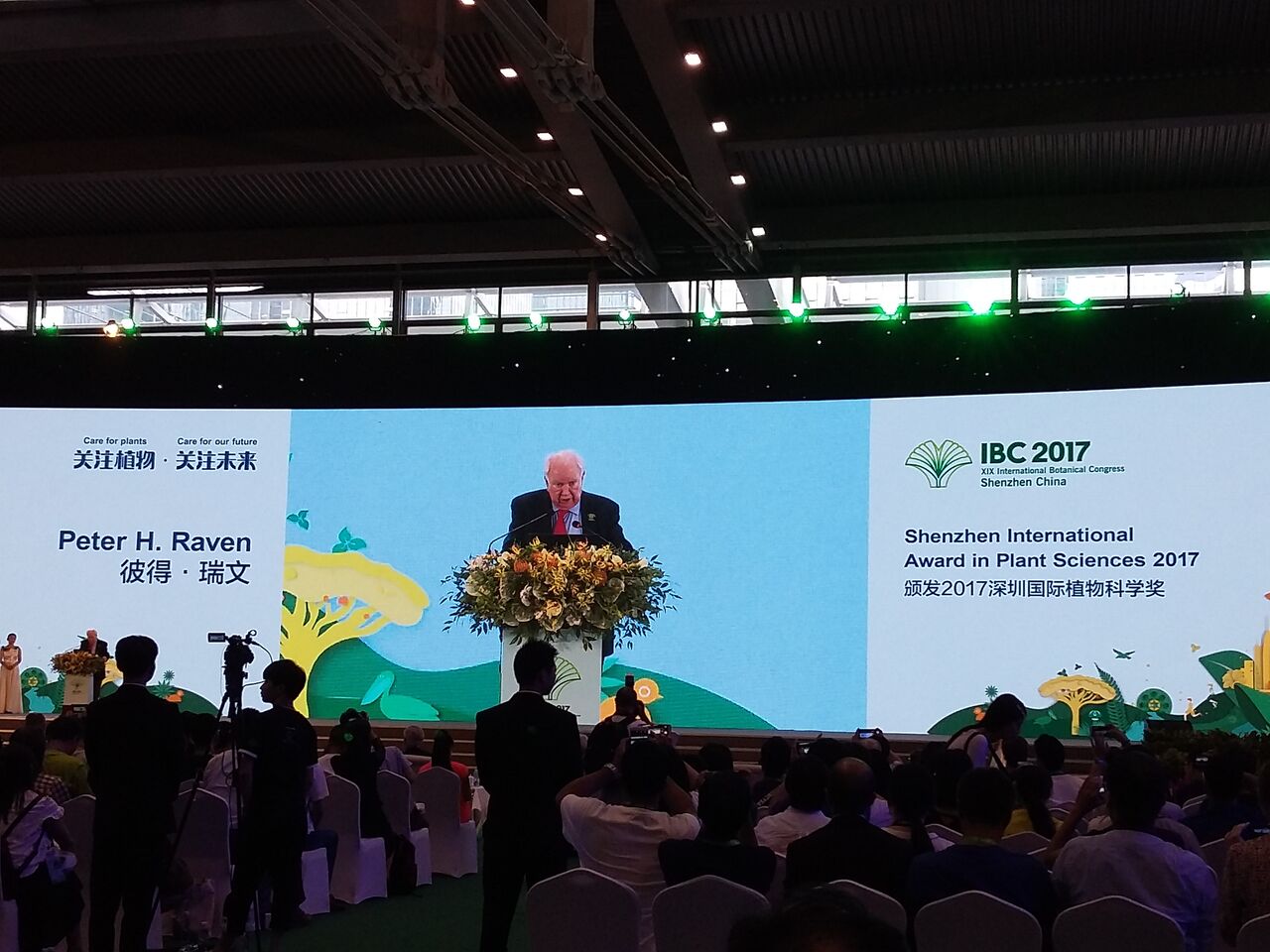
There were a couple of awards made at the closing ceremony, including the first ever Shenzhen Award to Prof. Peter Raven, 81 years old and still going strong.  Earlier in the week a colleague introduced me to this giant of botany and evolutionary biology, and I got to shake his hand, feeling a bit awe struck I have to admit!

IBC 40 Peter Raven.jpg

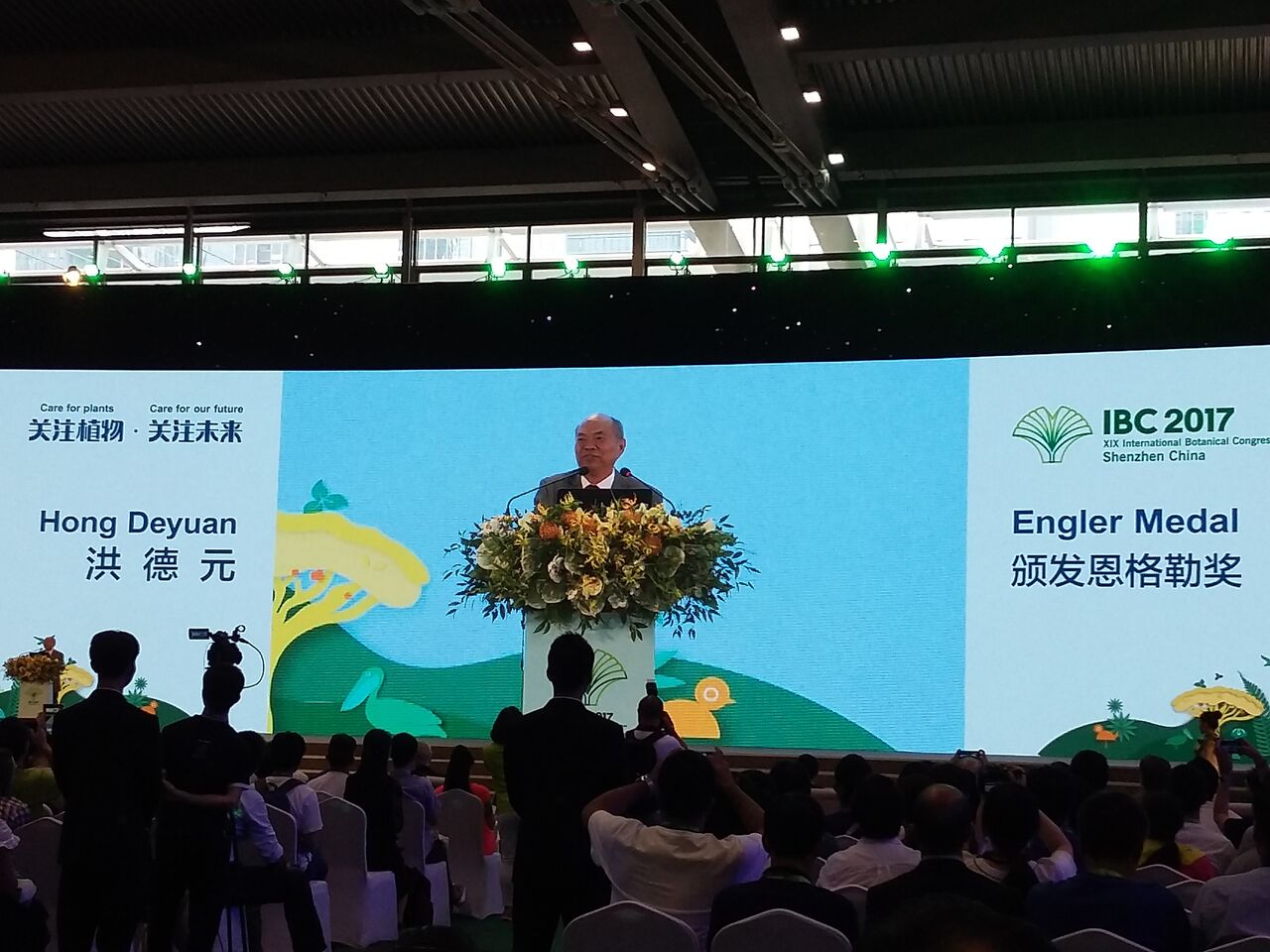
The Engler Medal went to Chinese botanist Prof. Hong Deyuan for his systematic work on paeonies and other Chinese plants:

IBC 40 Hong Engler.jpg

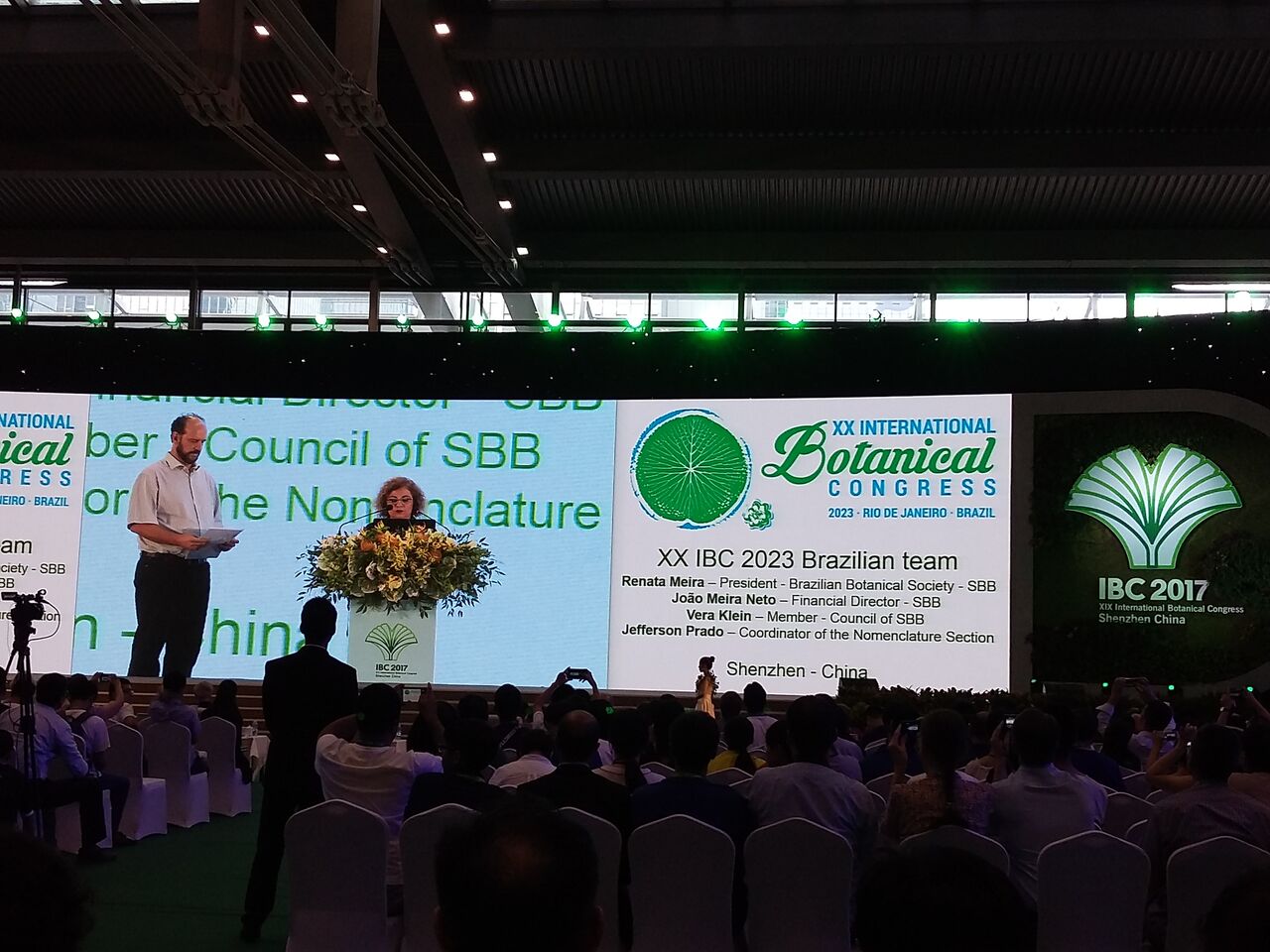
So, that’s it for another six years.  IBC 20 will be held in Rio in 2023; the Shenzhen Congress has set a high bar, but we’re sure that Brazil can match it!

IBC 39 Rio

Today I’m off to Fairy Lake Botanical Garden to do a bit of exploring with some colleagues, then I fly home tomorrow evening.  It’s been a wonderful trip but I’m looking forward to seeing my family, our cats, and how our garden has changed in the short time I’ve been away.  My sincerest thanks to all the friends and colleagues who have made this such a stimulating and extraordinary conference.  Especial thanks to our Chinese hosts who made us feel so welcome, and the IBC Awards Committee for providing me with an “Excellent Scholar” award to enable me to take part. Over and out from Shenzhen.

IBC 37 - Jeff

Wampee are not the only fruit: more from the International Botanical Congress

IBC 27.jpg

It’s been a busy couple of days so this is my first chance to post a brief update on what is happening at the International Botanical Congress in Shenzhen, China.  Not only have there been great talks to attend, but it’s been an all-too-rare chance to catch up with friends and colleagues, some of whom I’ve not seen for years.  Also I’ve been able to meet researchers whose work I know well but whom I’ve never met.  And I’m still trying to finish my talk for Saturday…..  So here’s a few glimpses of what’s been going on, in no particular order.

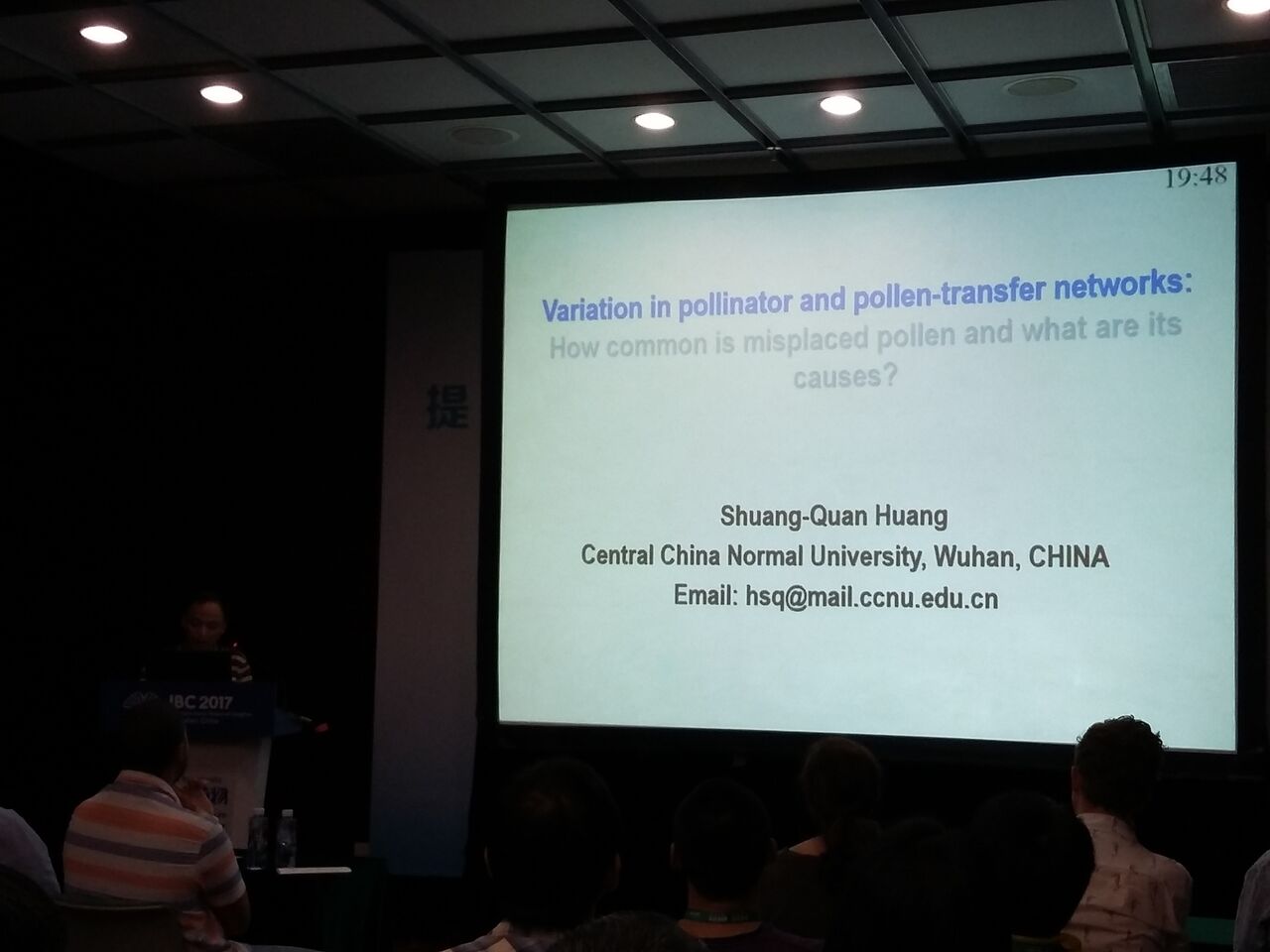
On Tuesday I attended two fascinating symposia, one on the patterns and outcomes of pollen transfer between species in plant communities.  The first talk was this one by the great Chinese pollination ecologists Shuang-Quan Huang.  I’ve corresponded with Shuang for years but the IBC has been my first chance to meet him.

IBC 30 - Shuang

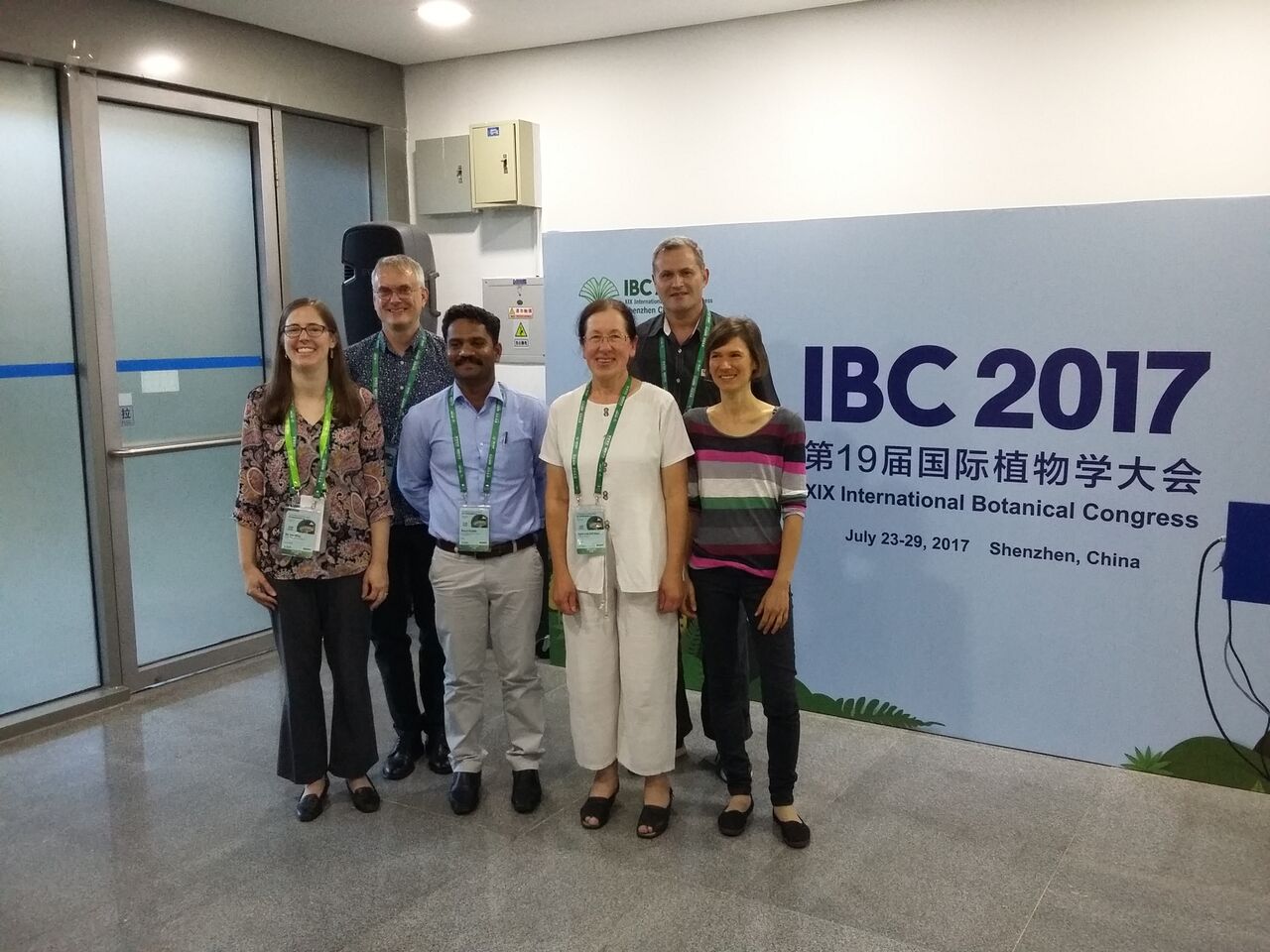
That was in the morning; in the afternoon I went to a session on my favourite plant family, the Apocynaceae, organised by my colleague and collaborator Sigrid Liede-Schumann.  This included some great talks on the evolutionary relationships within the family, and patterns of diversity in poorly studied parts of the world.  There were two talks on my favourite genus in my favourite family, Ceropegia. The first, by Sharad Kambale, was about the endemic species found in India, followed by a second on the pollination biology of the genus by Annemarie Heiduk.  Anne’s talk complements my own on Saturday, and in fact she, Sigrid and I are co-authors on a paper on the genus that, we heard on Monday, has just been accepted by the journal Flora.  Here’s a shot of the Apocynaceae participants; Anne is far right with Sigrid next to her.  It’s a sobering thought that Sigrid and I have been collaborating for over 20 years……:

IBC 28 - Apocs

Of the keynote lectures I’ve seen in the last couple of days, I was particualrly inspired by Loren Rieseberg’s over view of plant evolution in the Anthropocene.  This is surely the only talk this week, or at any IBC, that ended with a couple of episodes of a children’s animated series about nature!  Loren’s work with Scout and the Gumboot Kids was inspired by him becoming a father and recognising that the most important contribution he will ever make is the legacy he leaves as a teacher of the next generations, rather than as a researcher (though his research work is very significant!)

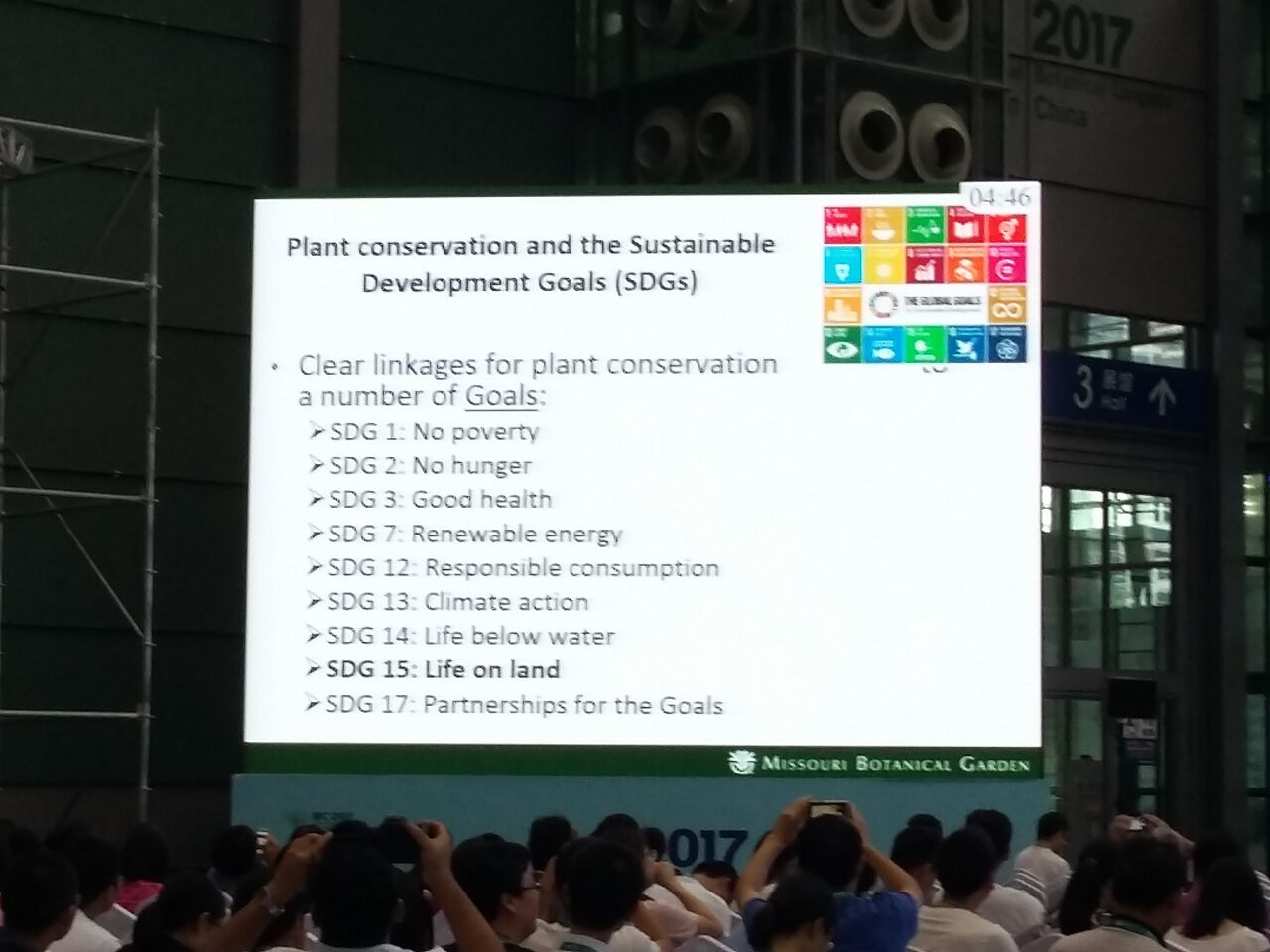
I also enjoyed Peter Wyse Jackson’s talk on “International developments and responsibilities for the botanical community in plant conservation”.  Peter very eloquently set out the case for how plant conservationists can lead the way in achieving many of the United Nations Sustainable Development Goals, but the key must be to include local communities within projects and not exclude them.  It reflected a theme that’s running right through the conference, that plant science has a vital role to play in making our civilization sustainable: plants are absolutely key to this:


IBC 32 - Development goals

After all, humans are just Super Monkeys in evolutionary terms….

IBC 31 - Supermonkey.jpg

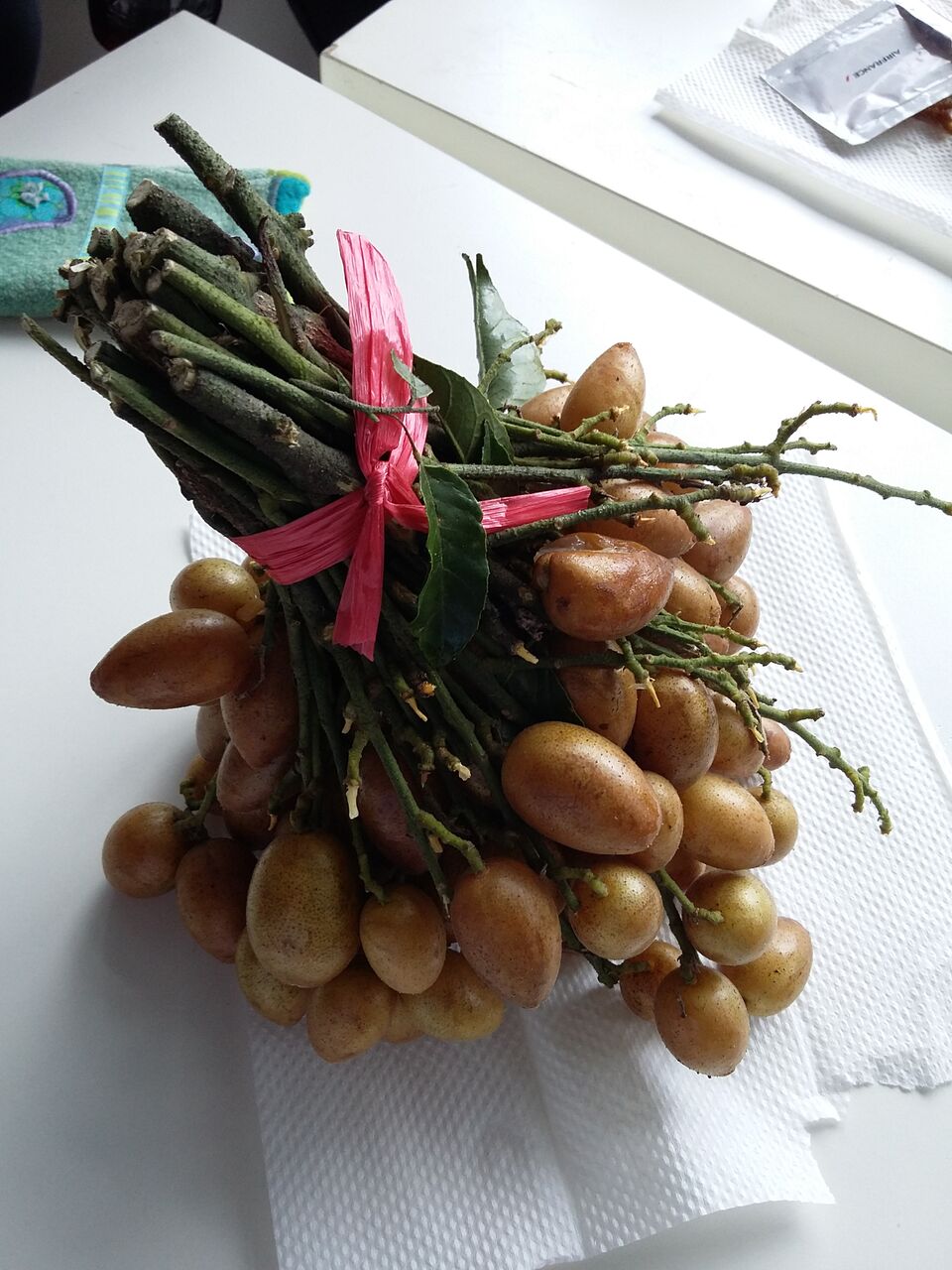
…and monkeys need plants, especially fruit such as these delicious wampee (Clausena lansium) a new one for me that I’d never tried before.  It’s in the same family as oranges and other citrus fruits (Rutaceae) but has a texture more like a grape and a sour, slightly phenolic taste:

IBC 34 - Fruit.jpg

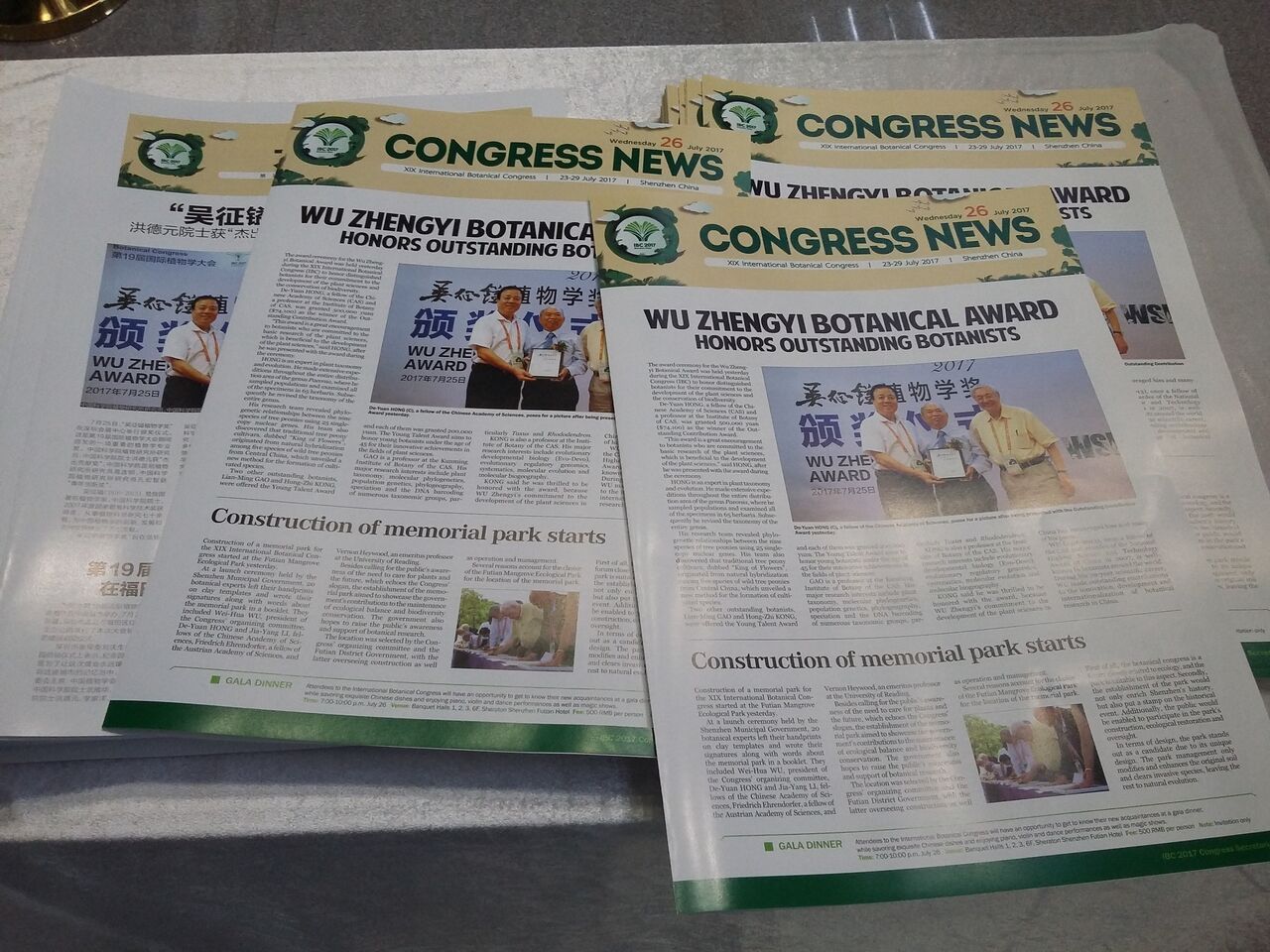
In these blog posts I’m trying to give just a few personal insights into what’s been going on, but there’s much that I’ve missed: on any given day there’s as many as 28 separate symposia going on at the same time!  No wonder then that the IBC has its own daily newspaper:

IBC 36 - Congress news.jpg

Now, I must get back to writing that talk….


Highlights from Monday at the International Botanical Congress

IBC 21

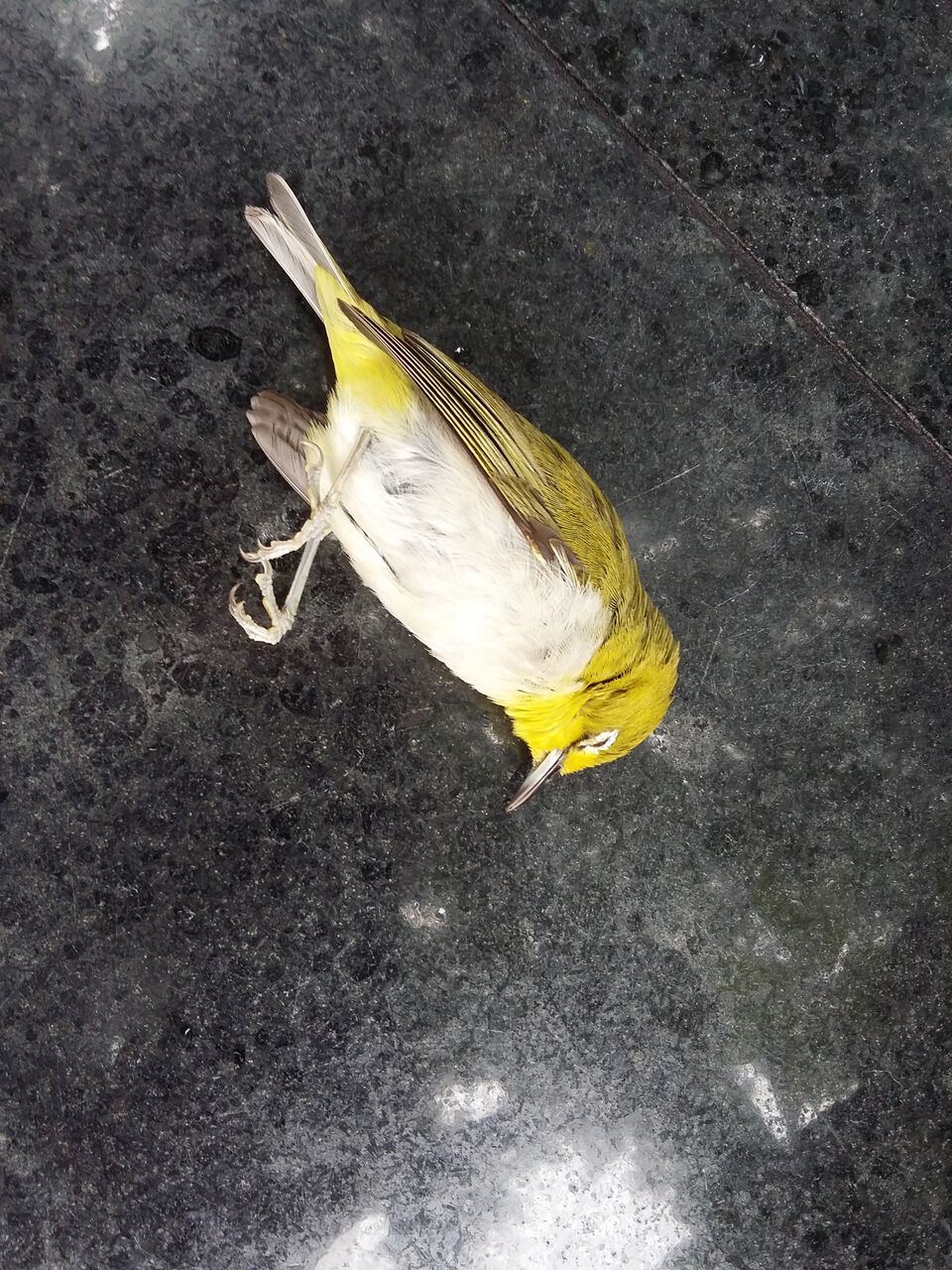
On the way in to the congress venue yesterday morning I spotted a small yellow bird lying dead on the street; turned out to be a Japanese White-eye, a first for me.  Can I count dead birds on my life list?

The scientific programme for the day got off to a great start with a keynote by Michael Donoghue on the value of model lineages for really exploring plant evolution in depth.  He focused on the work of his group on the genus Viburnum, and it has a masterclass in presenting a lot of complex work in an engaging and contextual way, telling a great story.

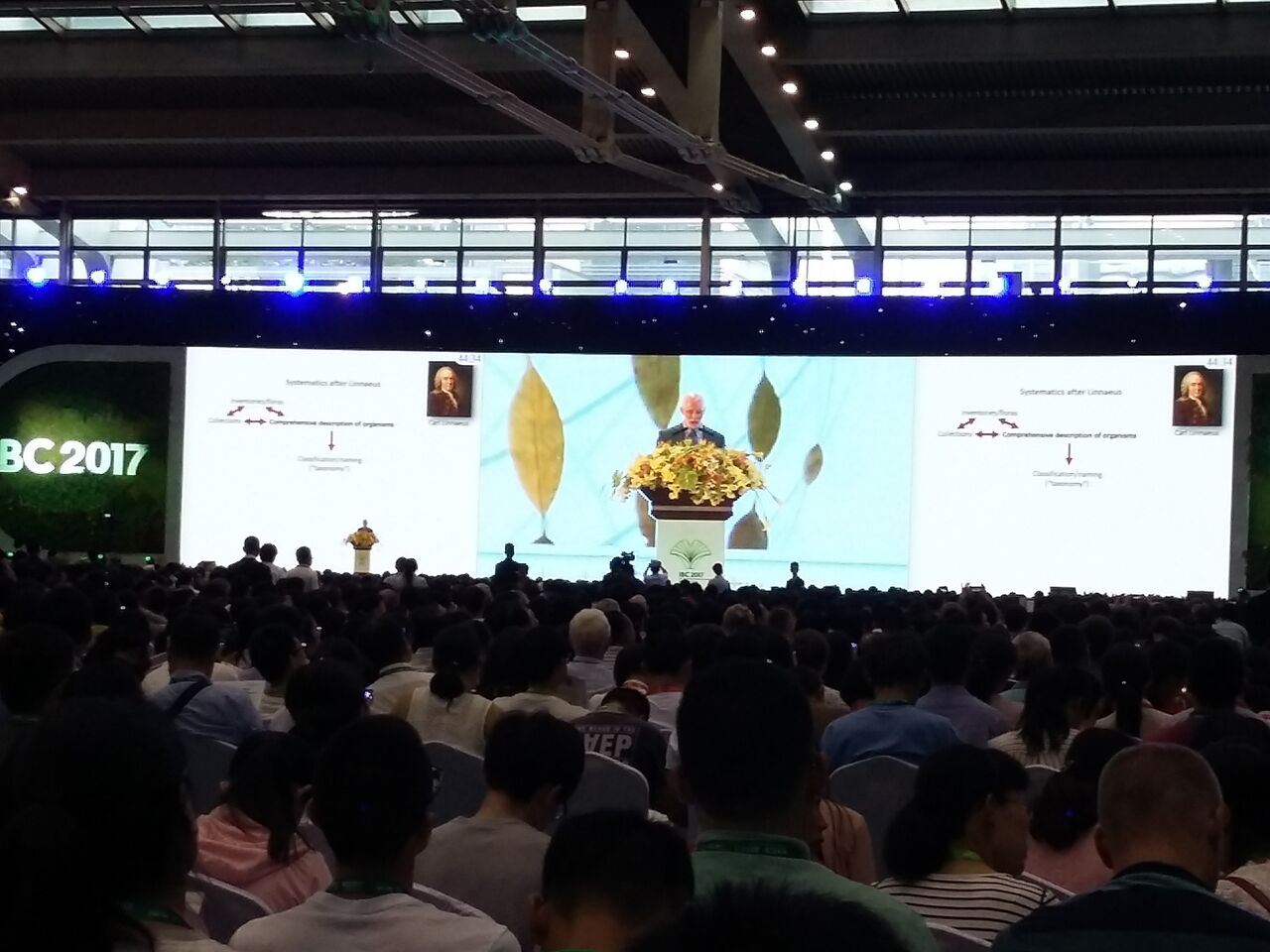
These photos tell you about the scale of these keynotes and the need for video feeds of the presentation.  It’s all working well though:

IBC 23

IBC 24

In the afternoon things got a little more intimate when the themed symposia started.  For now I’ve decided not to try to move between sessions to cherry pick talks I really want to hear and instead stick with the single sessions.  The first of these was on “Pollination by non-flying mammals” and a series of speakers outlined some of the diversity of these animals and how flowers are adapted to be pollinated by them.  As camera traps have become more widely used, especially at night using infra red lighting, the range of mammals known to pollinate flowers has increased and now includes species such as genets and elephant shrews.  The latter wins the prize for outrageous cuteness!  Check out some of the images of these pollinators at this BBC site.

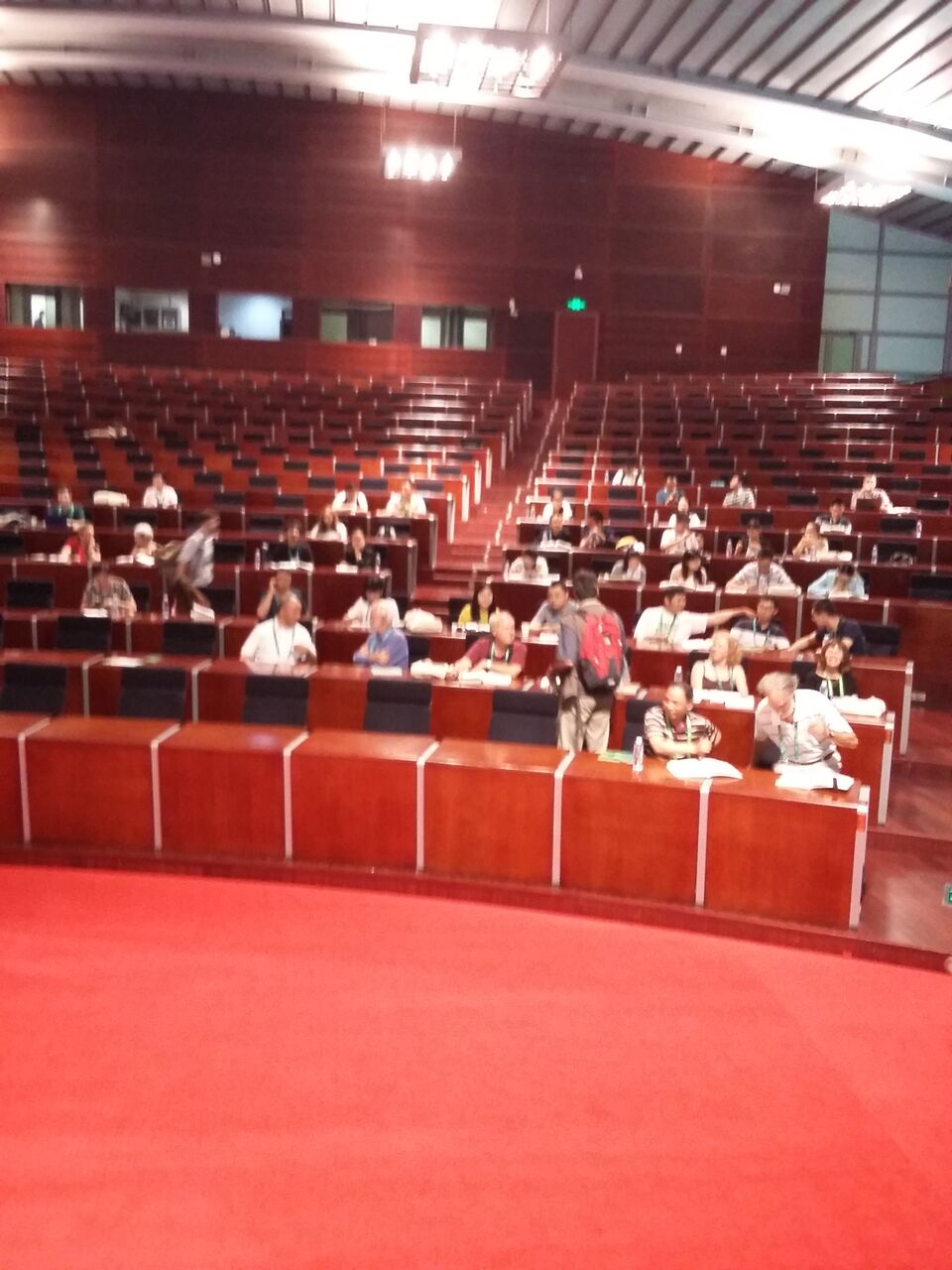
That session ended at 3.30pm and there was just time to chat to a few people and grab a quick coffee before I was speaking at 4.00pm in the “Evolution of floral traits” session, in a vast hall that seemed mainly empty but actually probably had a couple of hundred people in it:

IBC 25

My talk was on “Spatio-temporal stability of an island endemic plant-pollinator interaction involving floral colour change”. It seemed to be well received though in retrospect I probably focused too much on the pollinator side of what’s happening in our Tenerife study system.  The talks that came after were a great mix of scales and approaches but by 6.00pm the jetlag had caught up with me and I couldn’t stop myself falling asleep towards the end of a fascinating talk by Adam Roddy (sorry Adam!)  That was bad enough: then I started snoring and was jerked awake when Kathleen Kay punched me (thank’s Kathleen!)  Oh the science shame….

Much chatting afterwards then whisked off to dinner by some Chinese and American colleagues, in the fanciest hotel I’ve ever seen: we were met out of the lift by a gaggle of singing waitresses…. A very pleasant evening.  Back to the hotel by 9.30pm, for a beer and some tv, but could hardly keep my eyes open.  Slept until 6.00am – huzzah – jetlag seems to be over!  Now to breakfast and the start of a new day.  Must finish writing my talk for Saturday though….

IBC 26

Feeding of the 7000 – the International Botanical Congress steps up a gear

So it turns out that the figure of 6000 delegates at the International Botanical Congress was wrong: it’s actually almost 7000!  The official figure is 6,953 people from “109 countries and regions” [not quite sure what that means].  There are 3,519 talks scheduled to be given by scientists from 85 countries: botany is such an incredibly international venture!  But then you can say that about all of the sciences.

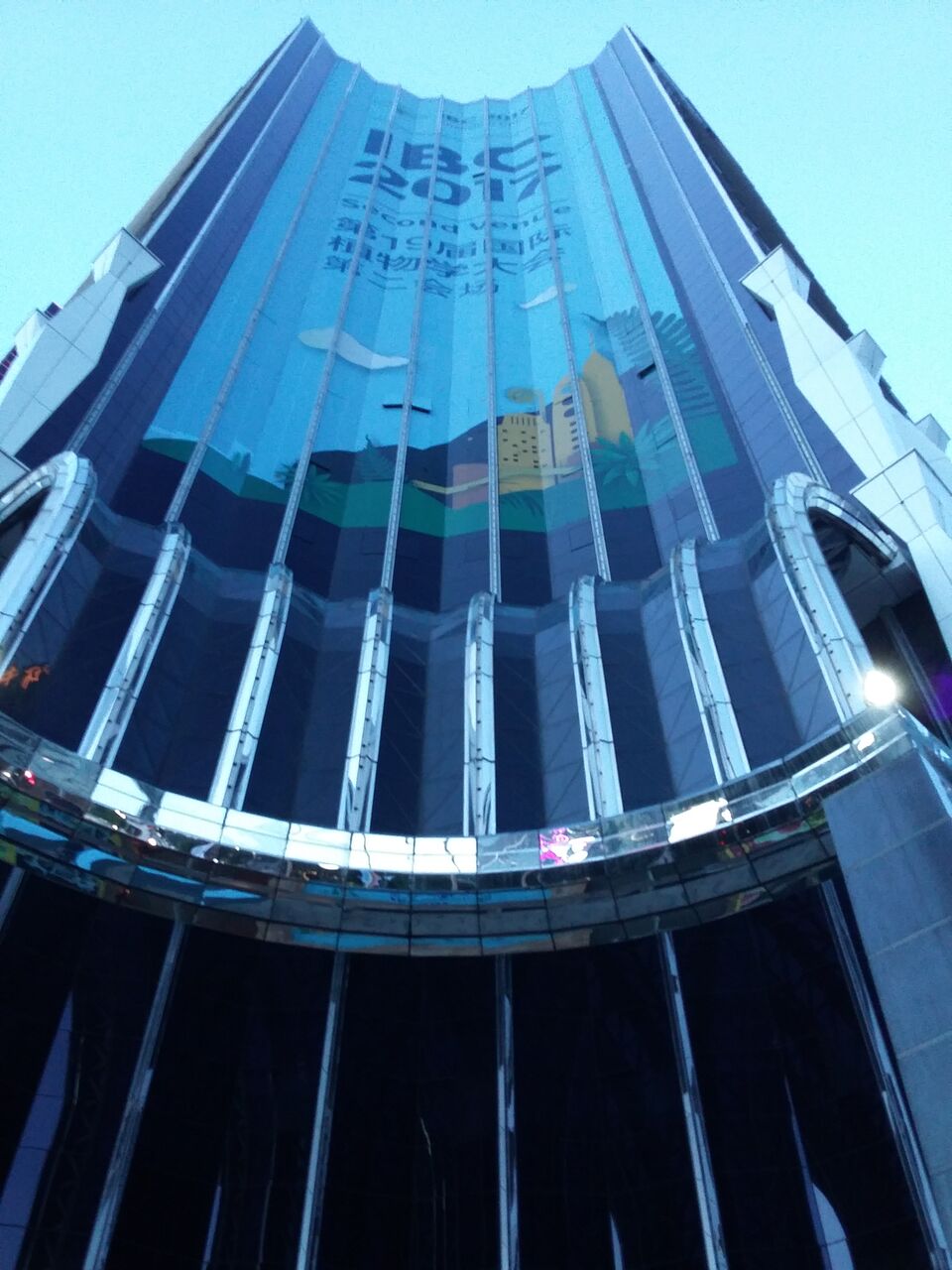
Yesterday the IBC stepped up a gear with some public lectures in the afternoon.  I managed to catch the one by Steve Blackmore on why greening of  cities is so important, and the role of plants in improving urban living through microclimate modification, food production, aesthetic enhancement, etc.  Couldn’t agree more and it’s a recurring theme in the IBC’s exhibition centre.  The Chinese take this very seriously and Shenzhen has some lovely planting and green spaces; I hope to post more images about this later in the week but here’s one example I snapped on the way to the venue yesterday morning:

IBC 18

The other talk I saw was by the venerable Peter Raven, now in his 80s but still going strong and an inspiration to all of us youngsters 🙂  The theme of Peter’s talk was “Saving plants to save ourselves”, and the importance of the plant sciences for sustaining the Earth in the face of exponential population growth:

IBC 11

Peter introduced the “Shenzhen Declaration” –  an open letter or manifesto that challenges international governments to take the plant sciences seriously and provides something of a road map for how that can be done.  More on the Declaration in a later post.

At 6pm there was a welcoming reception to which all delegates were invited; simply getting that many people into one of the halls was a triumph of logistics, but they were also fed and able to drink as much as they wanted, all for free.  Quite a feat to pull off; this shot was taken fairly early on in the proceedings; there was more than twice that number behind me:

IBC 19

Some more photos from the venue, starting with part of the main display about Chinese conservation.  Not sure that a couple of stuffed pandas sends quite the right message, but who am I to quibble:

IBC 15

A behind-the-scenes shot of just part of the registration desk area:

IBC 16

The IBC is the only conference I’ve attended that has a SWAT team with automatic weapons, attack dogs, and riot shields on constant standby.  You can just see some of them at the back of this shot, about as close as I dared photograph…..:

IBC 14

No conference is complete without an irritating robot giving out information in a cutesy, high pitched voice:

IBC 12.jpg

So the main scientific programme starts today; I’ll be going to a couple of the keynote lectures in the morning, then there’s a session after lunch on “Pollination by non-flying mammals” that I’m looking forward to.  I’m then speaking at 4pm in the session on “Evolution of floral traits”, discussing some of the work that we have been doing in Tenerife.  Wish me luck!

The session I’m talking in ends at 6pm.  I’m still jet lagged and have been up since 4am so at that point I’ll be ready for a beer and some food!