Tag Archives: Biodiversity

Protecting an ecosystem service: approaches to understanding and mitigating threats to wild insect pollinators

Bee on apple blossom 2 - 1st May 2015Back in April 2015 I attended a two day meeting at Imperial College’s Silwood Park campus to discuss initial project ideas to address evidence gaps in the recent National Pollinator Strategy.  I mentioned the meeting in passing in a post at the time concerned with whether biodiversity scientists should also be campaigners, but didn’t say a lot about what conclusions we came to and what the next steps would be because at the time I was unclear on both of those counts: it was a very wide ranging meeting with a lot of participants coming at the question of pollinator conservation from different perspectives.  As well as academics there were representatives from the agrochemical industry, government research organisations, and  the National Farmers Union.

During summer 2015 one of the conveners of the meeting, Dr Richard Gillherded cats organised colleagues, pulled together all of the text and ideas that were generated, and took on the task of seeing a summary of the meeting through from initial draft to publication.  It was a monumental effort, involving 27 authors and 86 manuscript pages, and Richard did a sterling job.  Entitled “Protecting an ecosystem service: approaches to understanding and mitigating threats to wild insect pollinators” it will appear as a chapter in the next volume of Advances in Ecological Researchwhich should be published later this month.

The abstract and contents for the chapter are below; if anyone wants a copy of the full chapter, please let me know.

Abstract

Insect pollination constitutes an ecosystem service of global importance, providing significant economic and aesthetic benefits as well as cultural value to human society, alongside vital ecological processes in terrestrial ecosystems. It is therefore important to understand how insect pollinator populations and communities respond to rapidly changing environments if we are to maintain healthy and effective pollinator services. This paper considers the importance of conserving pollinator diversity to maintain a suite of functional traits to provide a diverse set of pollinator services. We explore how we can better understand and mitigate the factors that threaten insect pollinator richness, placing our discussion within the context of populations in predominantly agricultural landscapes in addition to urban environments. We highlight a selection of important evidence gaps, with a number of complementary research steps that can be taken to better understand: i) the stability of pollinator communities in different landscapes in order to provide diverse pollinator services; ii) how we can study the drivers of population change to mitigate the effects and support stable sources of pollinator services; and, iii) how we can manage habitats in complex landscapes to support insect pollinators and provide sustainable pollinator services for the
future. We advocate a collaborative effort to gain higher quality abundance data to understand the stability of pollinator populations and predict future trends. In addition, for effective mitigation strategies to be adopted, researchers need to conduct rigorous field- testing of outcomes under different landscape settings, acknowledge the needs of end-users when developing research proposals and consider effective methods of knowledge transfer to ensure effective uptake of actions.

Contents
1. Importance of Insect Pollination
1.1 Providing an Ecosystem Service
1.2 Brief Introduction to Pollination Ecology and the Importance of Wild
Pollinators
2. Major Threats to the Pollination Service Provided by Insects
3. Steps in the Right Direction to Protect Insect Pollinator Services: Policy Actions
4. Understanding and Mitigating Specific Threats to Wild Insect Pollinators to Protect Pollinator Services
4.1 Understanding the Stability of Insect Pollinator Communities
4.2 Using Molecular Approaches to Monitor Insect Pollinators
4.3 How Do Parasites Shape Wild Insect Pollinator Populations?
4.4 Understanding Insect Pollinator Population Responses to Resource Availability
4.5 Engineering Flowering Field Margins as Habitats to Attract Insect Pollinators
4.6 How Might We Improve the Wider Countryside to Support Insect Pollinators
4.7 Insect Pollinators in Urban Areas
5. Considerations When Developing Future Research and Mitigation Strategies
Acknowledgements
Appendix
References

Biodiversity lost and found: extinct island birds and living African dragonflies

Two newly published studies have caught my eye this week as exemplifying two important aspects of biodiversity research: describing new species and understanding which species we’ve recently lost due to human activities.

Researchers working in the Macaronesian islands of the Azores and Madeira have described five new species of endemic water rails (genus Rallus) that are thought to have gone extinct within the period when humans colonised the islands.  One species may even have hung on into historic times.  All of the species were either flightless or had reduced capacity for flying, making them vulnerable to over-exploitation by humans.  That’s a common phenomenon on oceanic islands, with the dodo being the archetypical example.

What’s particularly remarkable is that these five new species increases the known recent diversity of the genus Rallus by about one third!  The reference for the paper, and a link to the pdf, is:

Alcover et al. (2015) Five new extinct species of rails (Aves: Gruiformes: Rallidae) from the Macaronesian Islands (North Atlantic Ocean) Zootaxa 4057: 151–190

The second paper is a mass-naming of 60 (!) new African dragonfly and damselfly species by a team led by KD Dijkstra, a Dutch entomologist whose work I’ve mentioned previously.  I had the pleasure of teaching with KD on a Tropical Biology Association field course in Tanzania a few years ago and his knowledge of African natural history is astounding.

To put these 60 new species into context, it increases the known diversity of African dragonflies and damselflies by almost 10%.  The reference and a link to the paper follows:

Dijkstra et al. (2015) Sixty new dragonfly and damselfly species from Africa (Odonata). Odonatologica 44: 447-678

Finding appropriate names for all of these insect species has required a degree of ingenuity from the authors and a quote from the paper demonstrates how memorable and creative some of them are:

“The Peace Sprite Pseudagrion pacale was discovered on the Moa River near Sierra Leone’s diamond capital Kenema. Twenty years earlier villagers trapped between rebel and government forces on opposite banks drowned in these tranquil waters. Two years later Kenema became the national epicentre of the Ebola outbreak…… The horntail Tragogomphus grogonfla evokes a Liberian pronunciation of ‘dragonfly’, the sparklewing Umma gumma a classic Pink Floyd album…… and the claspertail Onychogomphus undecim simply its date of discovery, 11/11/11.”

One of the things that I’ve tried to impress upon my final year undergraduate students this term during our Monday morning biodiversity seminars is just how little we still don’t understand about life on our planet.  Discoveries of new species are a regular occurrence, and for most we know nothing about their life histories or their interactions with other species (the aspect of biodiversity that particularly interests me).  In other cases (as with the Macaronesian water rails) the species were gone before we knew that they even existed.  I wish that I could be sure that this won’t happen in the future, but it will, until we (and the future generations that we are teaching) do something to address the problems of habitat destruction and inappropriate exploitation of biodiversity.

8 things I learned from the Parliamentary Pollinators Update seminar – UPDATED

POST event December 2015

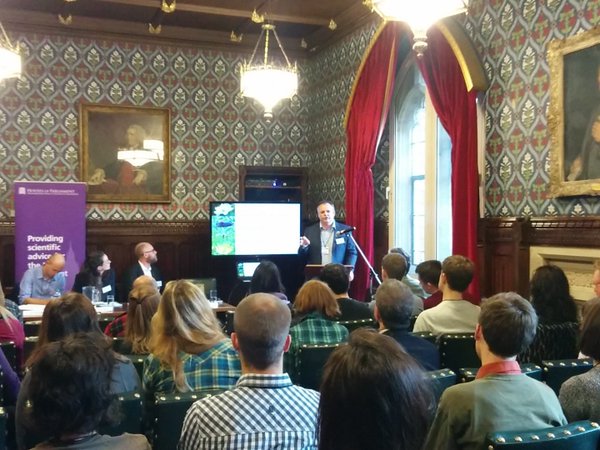
As I advertised a couple of weeks ago, last Wednesday I was in London to take part in a Pollinators Update seminar at the Houses of Parliament organised by the Parliamentary Office for Science and Technology (POST).  It was a very interesting event and good to catch up with some of the latest ideas about pollinators and their conservation.  However it’s been a busy week since then and I’ve not had time to post a full account of the seminar, which was attended by over 40 people.  So I’ve decided to write a brief summary of eight things I learned that day from my fellow speakers* and from the day in general; in some cases I’ve linked to the original sources where available:

1.  About 46% of Europe’s bumblebees have declining populations (see the European Red List for Bees that I highlighted in an earlier post)

2.  Around 2% of the world’s bee species do 80% of the crop pollination (Kleijn et al. (2015) Nature Communications)

3.  Pollinators other than bees perform 39% of the flower visits to crops (Rader et al. (2015) Proceedings of the National Academy of Sciences)

4.  By 2100 the Red-tailed Bumblebee (Bombus lapidarius), one of the commonest species in Europe, may be extinct across most of the continent due to climate change (Rasmont et al. (2015) Climatic Risk and Distribution Atlas of European Bumblebees)

5.  Only 6.6% of Entry Level Stewardship agreements by farmers across England included plans to grow nectar- and pollen-rich flower mixes.

6.  Criticism of laboratory studies of the effects of neonicotinoid pesticides are just as illogical as criticisms of field studies: both have their limitations and advantages, and both are needed.

7.  A panel of four experts on pollinators and pollination will largely agree about the answers to most questions an audience asks.

8.  A Westminster seminar such as this will attract very few MPs if it clashes with an important debate in the House of Commons, in this case about future military action in Syria.

UPDATE: here’s a number 9 suggested by Simon Potts: we all strongly support and encourage the setup of an All Party Parliamentary Group on “Pollinators” not just “honeybees” or “bees”.


*With thanks to my fellow panelists Simon Potts, Claire Carvell and Richard Gill, and to Kirsten Miller and the POST team for organising the event, and for the photograph of the panel in action.


Virtual Conference on Ecology and Climate Change

Following on from what seemed to be a quite popular Virtual Conference on Pollinators, Pollination and Flowers I thought I’d mark this week’s Paris talks on tackling climate change with a second  “virtual conference” on the topic of climate change and how it may affect (and be affected by) natural and agricultural ecological systems.

This is a great set of talks* with some very thought-provoking ideas.  Hope you enjoy them.

Douglas Sheil  (Norwegian University of Life Sciences)

Do forests attract rain?


Hans Joosten (University of Griefswald)

For peat’s sake – bogs and climate change


Nicola Di Cosmo (Institute for Advanced Study)

Climate, conflict, and historical method


Ben Beard (NCEZID Centers for Disease Control)

Climate change, ecology, and disease emergence


Jennifer Cartwright and Bill Wolfe (USGS Tennessee Water Science Center)

Climate-sensitive, insular ecosystems of the Southeast U.S.


Nabil Nemer (American University of Beirut)

Are changes in insect patterns in the Lebanese Mountains evidence of climate change?


Lini Wollenberg (University of Vermont)

Climate Change Mitigation on Agriculture-Forest Landscapes


Tim Benton (University of Leeds)

Food and the future: climate and resilience


Feel free to discuss the talks in the comments section and to post links to other talks on the same topic.


*I’m assuming that, as all of these videos are in the public domain, none of the presenters or copyright owners objects to them being presented here.  If you do, please get in touch and I’ll remove it.

Butterflies and pesticides – a new study and a smoking gun

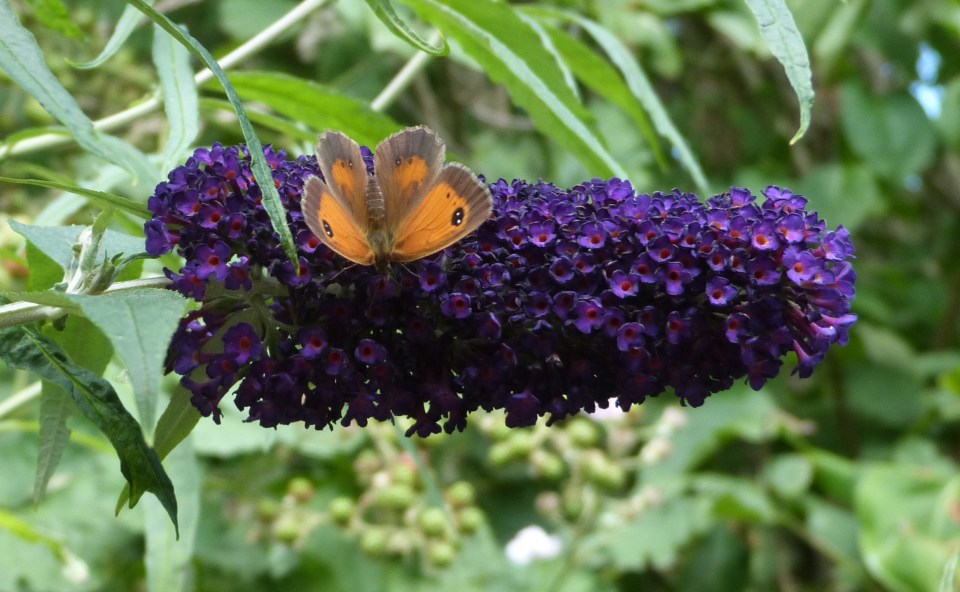
Gatekeeper cropped P1010472

Following hot on the trail of the raft of recent papers that I highlighted on the blog last week comes a new study by Andre Gilburn and colleagues entitled “Are neonicotinoid pesticides driving declines of widespread butterflies?“.  The paper is open access and published in the journal PeerJ which encourages post-publication comments and review of the work.  I see that Tom Oliver of the Centre for Ecology and Hydrology has started the ball rolling with a couple of questions, and hopefully more will follow, with responses from the authors.

The paper focuses on the fact that between 2000 and 2009 there was a 58% decline in butterfly abundance on farmed land in the UK despite a doubling of spending on conservation in the UK over the same period, much of it on agri-environmental schemes on that very same farmed land.

Using a statistical modelling approach the authors conclude that the introduction of neonicotinoid pesticides in the mid-1990s is strongly implicated as a likely driver of those declines.  My immediate question on reading the paper was: “What were the trends like before the mid-1990s, and did the rate of decline change significantly after that period?”

The authors don’t directly answer the question but it seems to me to be quite an important one to answer because abrupt changes in rates of decline in the abundance and diversity of species can be linked to broader changes in, for example, land management and agricultural practices, as we showed recently for bee and wasp extinctions in Britain.

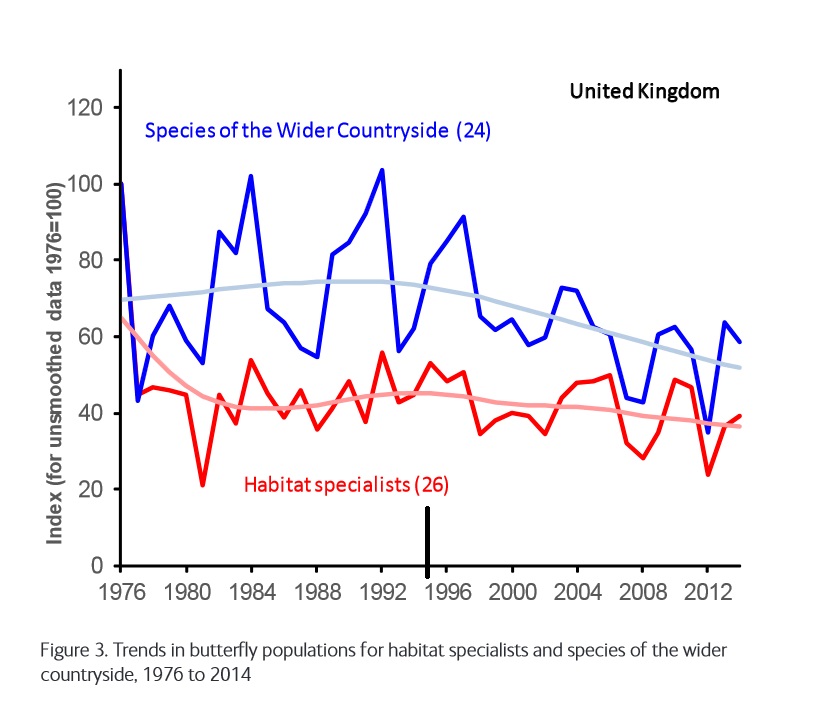
So I looked for the data that would tell me whether the trend had changed and found what I needed in the UK Butterfly Monitoring Scheme annual report for 2014.  Here’s a screen grab of Figure 3 from the report:

Butterfly abundance indices - November 2015

I’ve marked the point at which neonicotinoid pesticides were starting to be widely used in UK farming with a black line.  As you can clearly see this is also roughly the point at which the abundance of the 24 “Species of the wider countryside” begins to trend downwards.  In comparison, the 26 “Habitat specialists” show much less of a change, and in fact their initial decline was much earlier (in the 1970s-80s), possibly in response to loss of species rich grassland and ancient woodland.

Of course I’m just eyeballing the data and it needs to be tested statistically to see if there really is a break point in the trend at the mid-1990s, but this ought to be possible for anyone with access to the full data set.  Even if this is shown to be the case it’s all correlative (as Gilburn and colleagues acknowledge) and proving causation is difficult.  Nonetheless it looks to me like there’s an interesting smoking gun here that deserves further study.

Pollinators seminar at the Houses of Parliament – 2nd December

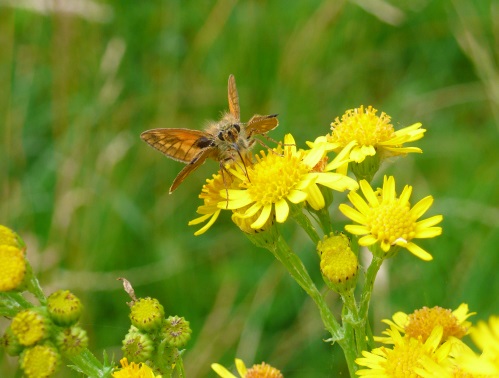
Skipper on ragwort - cropped

The Parliamentary Office of Science and Technology (POST) has organised a “Pollinators Update” afternoon seminar in London on Wednesday 2nd December, to discuss recent developments in pollinator conservation research. I’ve been asked to give a 15 minute presentation on the pollinator extinctions research we published in Science last year.

The full programme will be:


  • 2.30pm Sarah Newton MP, Chair’s Welcome
  • 2.40pm Presentations
  • Professor Simon Potts (Professor of Biodiversity and Ecosystem Services) – Reading University
  • Professor Jeff Ollerton (Professor of Biodiversity) University of Northampton
  • Dr Claire Carvell – NERC Centre for Ecology and Hydrology
  • Dr Richard Gill – Imperial College London
  • 3.40pm Discussion
  • 3.55pm Chair’s closing remarks
  • 4.00pm Refreshments


The seminar is free to attend but you need to book a place: see the POST website for details.

A new bee for Northamptonshire!

Anthophora bimaculata 2 cropped P1120172 copy

Back in the summer I produced a series of posts for Pollinator Awareness Week highlighting the pollinators to be found in our own urban garden in Northampton.  One of those posts was of what I believed to be the Little flower bee (Anthophora bimaculata), a species which at the time I’d never previously seen.  I noted that this was a new urban record for Northampton as my PhD student Muzafar Sirohi had not recorded it during his bee surveys, which I discussed earlier this year.

Some time later I checked the bee records on the National Biodiversity Network (NBN) Gateway site and realised that not only was this the first urban record of the species in Northampton, it was actually the first record for the county of Northamptonshire as a whole!  The record has recently been accepted on iRecord and will be added to the NBN records.

Of course this is personally exciting (a new record for a large county found in our back garden) and it adds a significant regional record to the currently known distribution of the species.  The map on the BWARS account of Anthophora bimaculata shows that the species is predominantly southern in its distribution, with a few eastern and western outliers.  This new record places the species firmly in the centre of England, confirming that it is more widespread than previously assumed.

There are two possible explanations for the discovery of this bee in Northamptonshire.  One is that it’s a very recent range expansion and the species is becoming more common and widespread, perhaps as a result of climate change.  The second is that it’s always been present in Northamptonshire, but just never recorded.  At the moment it’s impossible to decide between these two possibilities as there’s evidence to support both.  Not only did Muzafar not record A. bimaculata in his surveys in 2012, neither did Dr Hilary ErenlerDr Sam Tarrant or Kathryn Harrold in their pollinator surveys in the region between 2007 and 2015. Having said that, we do know that Northamptonshire is a historically under-recorded county for bees as it has no County Recorder for Hymenoptera, and both Hilary and Muzafar recorded species new to Northamptonshire, which I hope to report on at a later stage.

Differentiating between these two scenarios will be difficult and may be impossible unless we can discover previously unknown historical specimens of this bee that were collected in the county, or the species continues to expand in its range.

Understanding the distribution of pollinators such as bees is a key component of initiatives such as the National Pollinator Strategy – if we don’t know where the things we are trying to conserve actually are, how can we conserve them?  So it’s very pleasing to be able to make a small contribution to that process from the comfort of our own garden!

Anthophora bimaculata 1 P1120172

Why do ecologists not become physicists?

There are a few examples of physicists moving fields into ecology, perhaps most notably Robert May, but I don’t know of any examples where ecologists have entered physics.  Are there any?

If not there may be a good reason for this, as Steve Heard’s post about his tongue-in-cheek Centrifugal Theory of Species Diversity, and the resulting discussion in the comments, indicates.

I’ll leave you to read it, only to note that if the Ollerton Modification of Heard’s Conjecture is ever shown to be correct, I want my share of the Nobel!

How do artificial nectar feeders affect hummingbird abundance and pollination of nearby plants? A new study in the Journal of Ornithology

Hummingbirds on feeds in Brazil

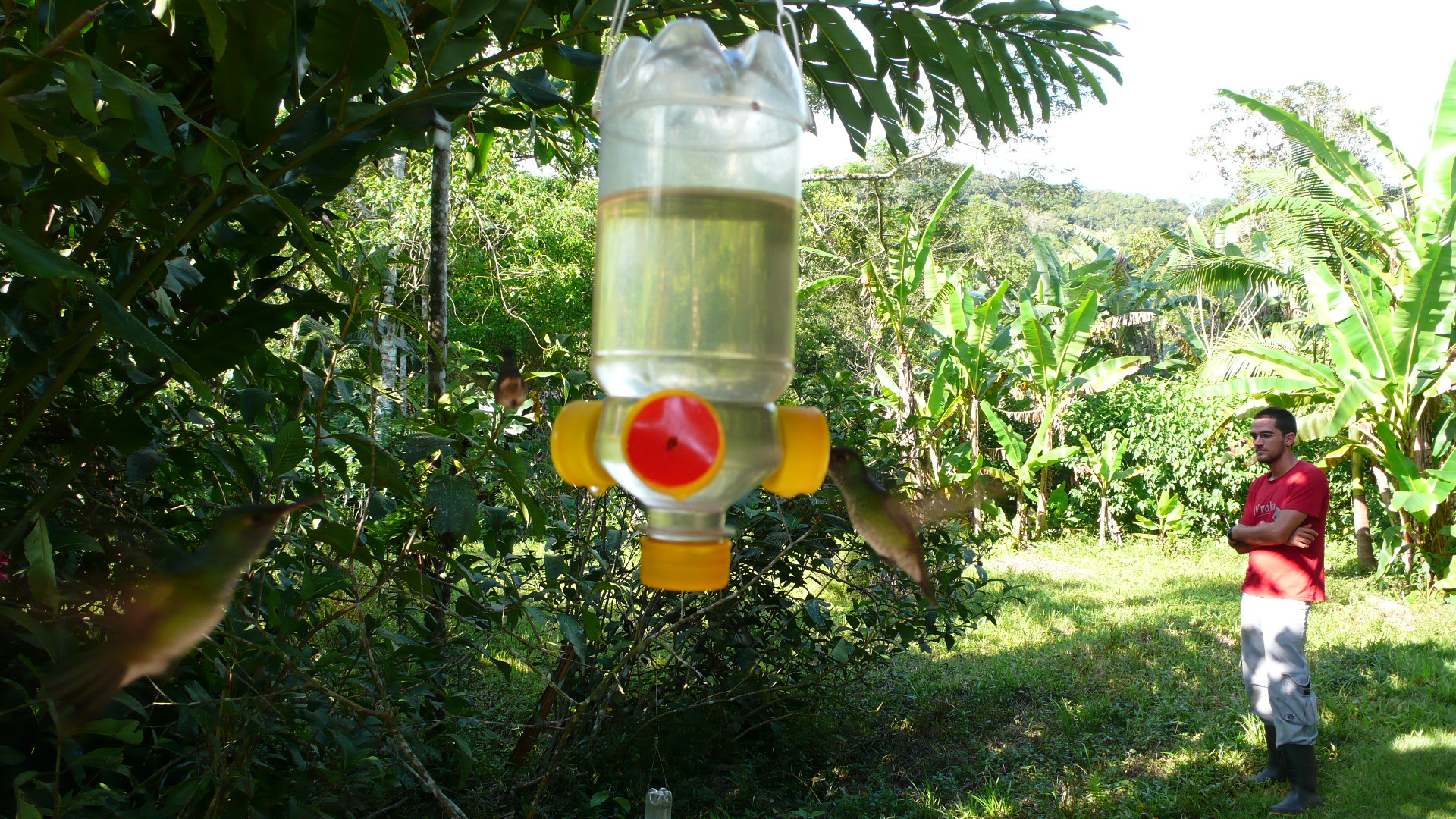
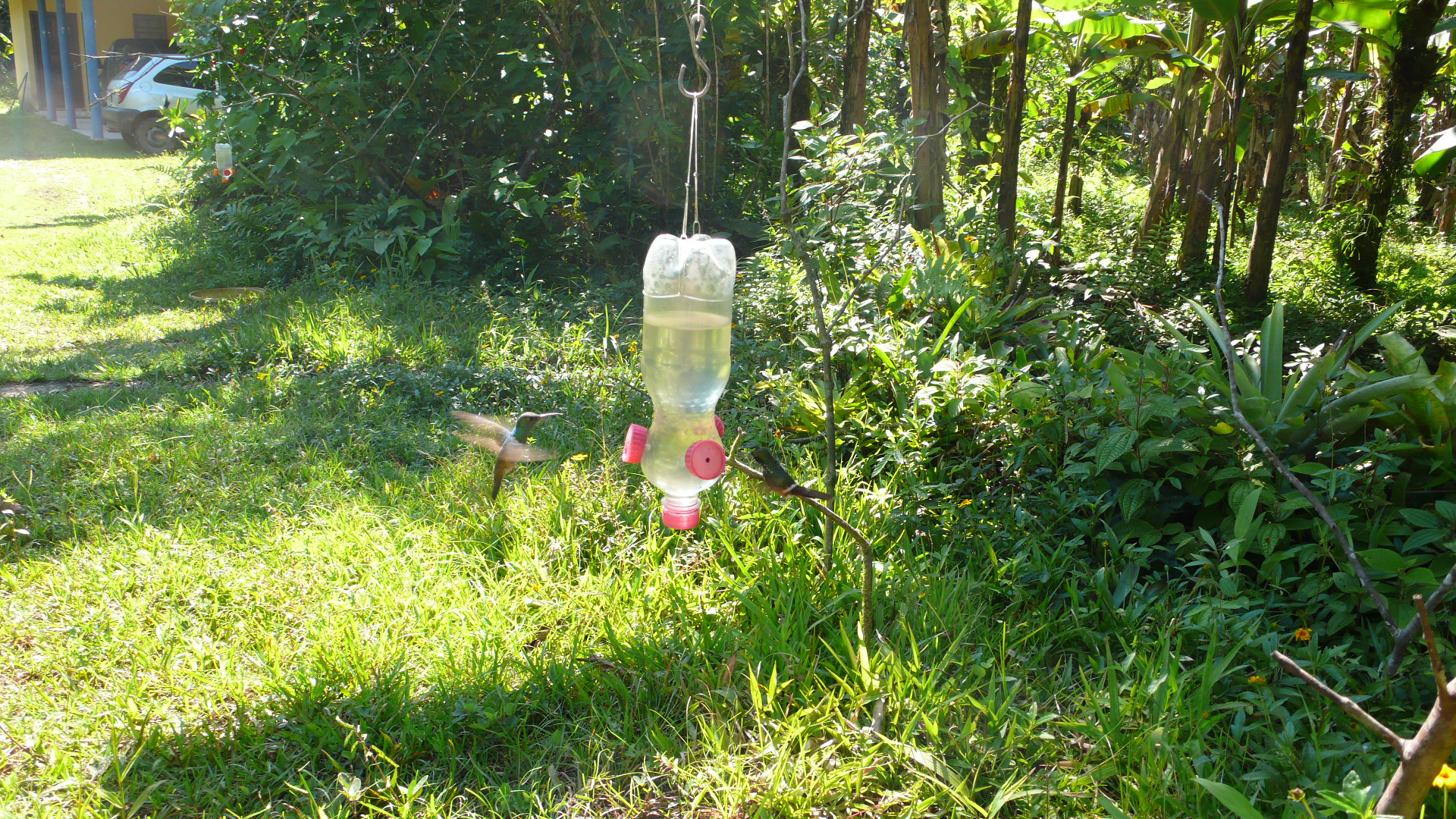
Back in November 2013, during my research and teaching trip to Brazil, I discussed an amazing garden that we visited in which the owner had set up around a dozen hummingbird feeders that were attracting hundreds of individual birds from over 20 species.  As I mentioned, one of the owner’s concerns was that by feeding the birds he might be negatively affecting the reproduction of hummingbird-pollinated plants in the surrounding forest.  I thought it unlikely but there have been very few tests of this idea, and none in that part of South America.

After I left, a Master’s student called Jesper Sonne, based at the Center for Macroecology and Climate in Copenhagen, worked with my Brazilian and Danish colleagues on collecting data to address this question.  Between us we analysed and wrote up the results, and have recently published the paper in the Journal of Ornithology under the title “Spatial effects of artificial feeders on hummingbird abundance, floral visitation and pollen deposition“.

The abstract is below and if anyone wants a PDF, please drop me a line.  But the take home message is that although these feeders have a significant local effect on hummingbird abundance, there’s no evidence that they affect plant reproduction in the vicinity.  It’s nice when predictions prove correct….

———————-

Abstract

Providing hummingbirds with artificial feeders containing sugar solution is common practice throughout the Americas. Although feeders can affect hummingbird foraging behavior and abundance, it is poorly understood how far this effect may extend. Moreover, it remains debated whether nectar-feeders have a negative impact on hummingbird-pollinated plants by reducing flower visitation rates and pollen transfer close to the feeders. Here, we investigated the effects of distance to nectar-feeders on a local hummingbird assemblage and the pollination of Psychotria nuda (Rubiaceae), a hummingbird-pollinated plant endemic to the Brazilian Atlantic Rainforest. At increasing distance (0–1000 m) from a feeding-station, where hummingbirds have been fed continuously for the past 13 years, we quantified hummingbird abundance, and rates of flower visitation and pollen deposition on P. nuda. We found that hummingbird abundance was unrelated to distance from the feeders beyond ca. 75 m, but increased steeply closer to the feeders; the only exception was the small hummingbird Phaethornis ruber, which remained absent from the feeders. Plants of P. nuda within ca.125 m from the feeders received increasingly more visits, coinciding with the higher hummingbird abundance, whereas visitation rate beyond 125 m showed no distance-related trend. Despite this, pollen deposition was not associated with distance from the feeders. Our findings illustrate that artificial nectar-feeders may locally increase hummingbird abundance, and possibly affect species composition and pollination redundancy, without necessarily having a disruptive effect on pollination services and plants’ reproductive fitness. This may apply not only to hummingbirds, but also to other animal pollinators.

Hummingbirds on feeds in Brazil 2

Spiders: a guide for first-year students!

P1120445

Yesterday I had a phone call from a colleague in the university’s marketing department.  Apparently there’s been a lot of complaints, and some hysteria on social media, about spiders appearing in the rooms of first year students in our halls of residence.  My colleague asked if I’d write something about spiders, and how they were harmless and nothing to worry about, that they could use to placate the students’ worries.  This is what I wrote and I thought it worth sharing on the blog.

—————————————-

Spiders! Ugly. Unpleasant. Spooky. Dangerous…..even deadly?! Spiders in Britain are all of these things, right?

No! Absolutely not! Spiders are fascinating, sometimes beautiful, and are an ecologically important groups of animals. Although it’s true that large spiders can sometimes give us the jitters, myself included: I don’t like walking into them in the garden! In fact as a kid I had a real phobia of spiders that I got over by handling increasingly bigger ones until eventually I could pick up even the largest spider we have in this country.

Most of the fear of spiders is based on myths and misconceptions, rather than reality. Ignore the DRAMATIC HEADLINES about False Widow Spiders – it’s an uncommon species and it’s extremely rare to encounter one of these, never mind be bitten. They make their webs near rocks where there are deep cracks into which they can hide. So you’re not likely to find them in your room!

Spiders play a really important role in the environment by eating large numbers of flies, including some that bite or carry disease or that might otherwise be much more harmful to humans than spiders. Spiders in turn are a food source for many of our birds, and in the spring some birds also use spider webs to construct their nests. If we had no spiders then we’d lose a lot of the birds that are so familiar in our gardens, such as Blue Tits and Blackbirds.

At this time of the year spiders are more apparent than ever, and the one you are most likely to see is a large, beautifully patterned species know as the European Garden Spider. The big ones are the females; males are much smaller. They sometimes make their way into houses and can construct large webs. But they are harmless and would only bite if held tightly in the hand, and they are much happier outside than in your room. They can’t jump on you and they do not attack!

What to do if you find a spider in your room and you want to get it out but can’t bear to go near? Find a friend who is not so squeamish and ask them to use a glass and a book or piece of cardboard to gently capture the spider and take it outside. Don’t worry, it won’t find its way back! Before you release it, though, try to find the courage to look really closely at this creature: they are attractively speckled and really very pretty!

The other thing you can do is find some conkers from the Horse Chestnut trees on campus and put them on your windowsill. It’s an old folk tradition that spiders don’t like the smell of conkers and there is some evidence that it keeps them out of the house.

I’ll let you into a secret. As Professor of Biodiversity I’ve done ecological field work all over the world, including the rainforests of Africa and the savannahs of South America. Every now and again I come across spiders that are much larger, and potentially more dangerous, than anything we find in Britain. Initially they still give me a shiver; but once I’ve spotted them I can take time to study their colours and forms and beautiful webs, and appreciate just how amazing and important spiders really are.

Have a great year at university and don’t worry about the spiders!