Tag Archives: Biodiversity

The integration of alien plants in mutualistic plant–hummingbird networks – a new study by Maruyama et al. (2016)

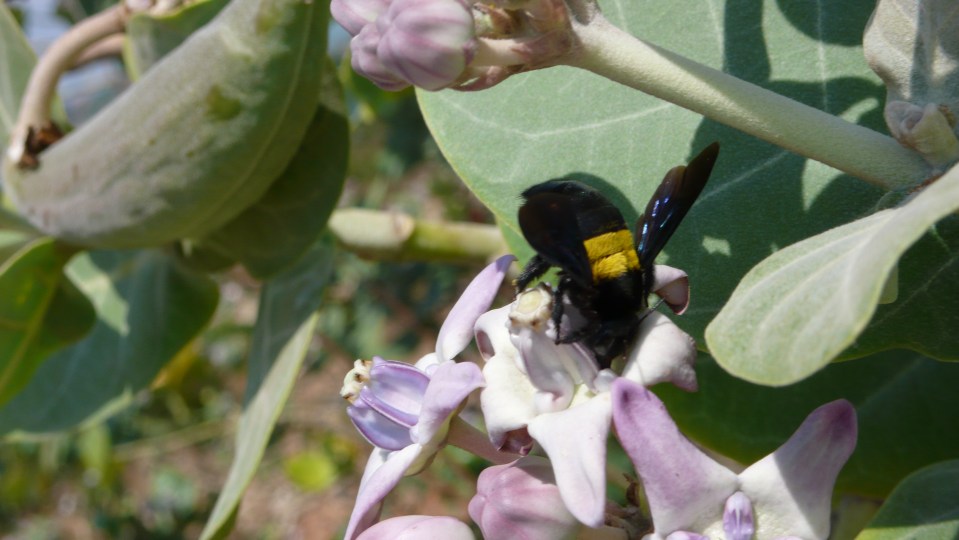
The collaborations with researchers in Brazil and Denmark in which I’ve been involved in recent years, focused particularly on hummingbirds and networks of plant pollinator interactions, have been very productive, most recently seen in a study of the effects of hummingbird feeders on diversity and abundance of the birds.

This collaboration continues with a new study that has just been published in the journal Diversity and Distributions which deals with the way in which non-native plant species are exploited by assemblages of hummingbirds in the New World.  Here’s the abstract:


Aim:  To investigate the role of alien plants in mutualistic plant–hummingbird networks, assessing the importance of species traits, floral abundance and insularity on alien plant integration.

Location: Mainland and insular Americas.

Methods: We used species-level network indices to assess the role of alien plants in 21 quantitative plant–hummingbird networks where alien plants occur. We then evaluated whether plant traits, including previous adaptations to bird pollination, and insularity predict these network roles. Additionally, for a subset of networks for which floral abundance data were available, we tested whether this relates to network roles. Finally, we tested the association between hummingbird traits and the probability of interaction with alien plants across the networks.

Results: Within the 21 networks, we identified 32 alien plant species and 352 native plant species. On average, alien plant species attracted more hummingbird species (i.e. aliens had a higher degree) and had a higher proportion of interactions across their hummingbird visitors than native plants (i.e. aliens had a higher species strength). At the same time, an average alien plant was visited more exclusively by certain hummingbird species (i.e. had a higher level of complementary specialization). Large alien plants and those occurring on islands had more evenly distributed interactions, thereby acting as connectors. Other evaluated plant traits and floral abundance were unimportant predictors of network roles. Short-billed hummingbirds had higher probability of including alien plants in their interactions than long-billed species.

Main conclusions: Once incorporated into plant-hummingbird networks, alien plants appear strongly integrated and, thus, may have a large influence on network dynamics. Plant traits and floral abundance were generally poor predictors of how well alien species are integrated. Short-billed hummingbirds, often characterized as functionally generalized pollinators, facilitate the integration of alien plants. Our results show that plant–hummingbird networks are open for invasion.


The full reference is: Maruyama, P.K. et al. (2016) The integration of alien plants in mutualistic plant–hummingbird networks across the Americas: the importance of species traits and insularity.  Diversity and Distributions (in press).

Happy to send a PDF to anyone who would like one.
Emerging threats to the Białowieża Forest, one of Europe’s last remaining wilderness areas

From various news sources and personal contacts I’m hearing about some emerging threats to the Białowieża Forest, which at 216,200 ha (2,162 km2 or 835 square miles) is one of Europe’s largest and most ancient forested wilderness areas, and one of the few places where you’ll still see European bison (Bison bonasus)roaming free.

Despite its designation as a World Heritage Site, in recent months the Polish government has revealed plans to increase the amount of logging in the forest, ostensibly as a tree disease control measure.  However Polish scientists dispute this and claim that the real motivation is commercial – see the commentary and letters in this week’s Nature.  Here’s a quote from that article which provides some context to the concerns:

“[the] Białowieża management plan limits logging in the forest to 48,000 cubic metres of wood per year — enough to allow locals to gather firewood. But on 10 November, the local forest administration proposed an amendment that would allow large-scale logging in sections outside the central 17% of the forest that is a national park. They cited an outbreak of the bark beetle pest (Ips typographus) in Białowieża’s Norway spruce (Picea abies). In one forest district where logging is currently limited to 6,000 cubic metres per year, the allowable yearly volume would increase to 53,000 cubic metres”.


Interestingly, both Ips typographus and Picea abies are native to these forests and any large-scale outbreak would probably constitute a disturbance that is part of the natural dynamics of the forest. A recent piece on the National Geographic site by conservation biologist Stuart Pimm is worth quoting from in this regard:

“To…scientists studying biodiversity, the main value of the Białowieża Forest is accumulated in a massive occurrence of large and old trees, high amounts of dead-wood and natural dynamics of forest stands all being very unique to this area and supporting thousands of different specialised species ranging from birds and mammals using cavities or building nests in the canopy to lichens, fungi and microbes dependent on different stages of tree life and its decomposition.  It is not surprising that Białowieża Forest has been an invaluable reference area for scientists studying natural characteristics of European forests.” [my emphasis]


This is not the first time that concerns have been raised about the Białowieża Forest – here’s an article from the Guardian newspaper from 2011:  http://www.theguardian.com/world/2011/apr/06/poland-environmentalists-foresters-primeval-forest

Is it too much to hope that the Polish government takes notice and strengthens, not weakens, the protection of its natural heritage?  And allows natural processes to determine what happens in this woodland, rather than trying to manage every aspect of its ecology.

Pollinators, Pollination and Food Production: IPBES gains momentum

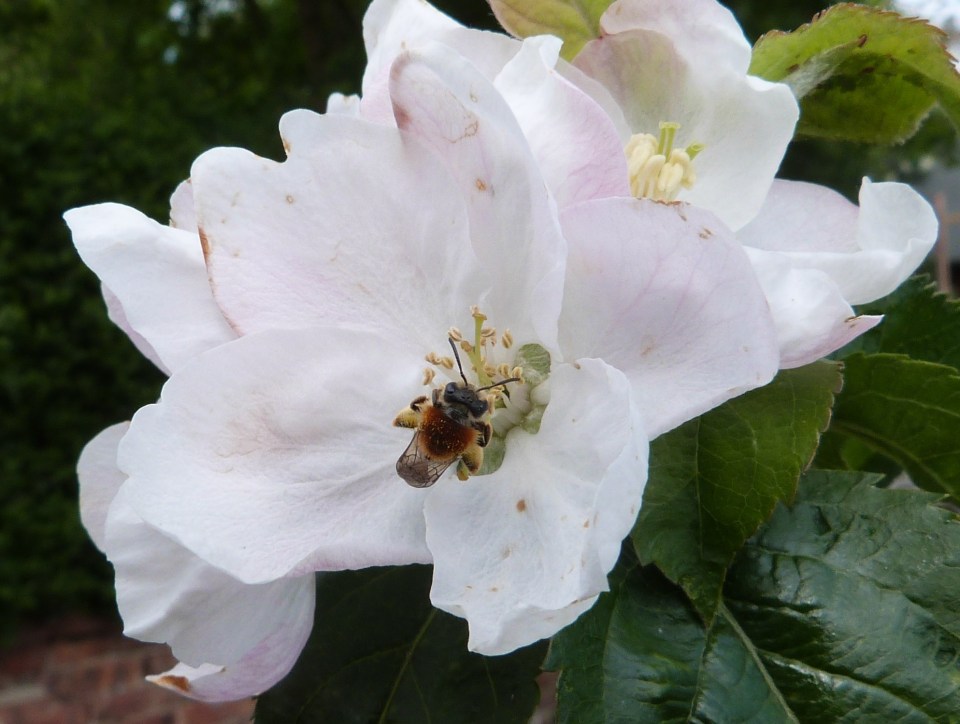
Bee on apple blossom - 1st May 2015

The over-arching themes of this blog have been about understanding biodiversity; the science behind its study; why it’s important; how it contributes to human well being, (including both intangible and economic benefits); and how policy informed by science can support the conservation of species and ecosystems.  These are all issues that have a global perspective beyond the bounds of my home country (the United Kingdom), or even my continent (Europe) because species, ecosystems and the threats to them do not respect political borders.

Enter IPBES – the Intergovernmental Science-Policy Platform on Biodiversity and Ecosystem Services (sometimes shortened to Intergovernmental Platform on Biodiversity and Ecosystem Services).

IPBES is a United Nations body established in 2012 that in many ways is a parallel entity to the IPCC ( Intergovernmental Panel on Climate Change), bringing together scientists, policy makers and stakeholders, with a mission:

to strengthen the science-policy interface for biodiversity and ecosystem services for the conservation and sustainable use of biodiversity, long-term human well-being and sustainable development

Which has got to be a good thing: science informing policy, what’s not to like?

The first output from IPBES will be a Thematic Assessment of Pollinators, Pollination and Food Production, and it’s just been discussed (today) at the 4th Plenary meeting of IPBES in Kuala Lumpur – here’s a link to the press release.

In the coming weeks I’ll talk more about IPBES and its Thematic Assessment (for which I acted as a reviewer), but for now I’ll just repeat some of the headline figures from the report:

  • 20,000 – Number of species of wild bees. There are also some species of butterflies, moths, wasps, beetles, birds, bats and other vertebrates that contribute to pollination.
  • 75% – Percentage of the world’s food crops that depend at least in part on pollination.
  • US$235 billion–US$577 billion – Annual value of global crops directly affected by pollinators.
  • 300% — Increase in volume of agricultural production dependent on animal pollination in the past 50 years.
  • Almost 90% — Percentage of wild flowering plants that depend to some extent on animal pollination*.
  • 1.6 million tonnes – Annual honey production from the western honeybee.
  • 16.5% — Percentage of vertebrate pollinators threatened with extinction globally.
  • +40% – Percentage of invertebrate pollinator species – particularly bees and butterflies – facing extinction.


*They are quoting a figure that I calculated, and very proud of it I am too 🙂

Tropical Zombies: Moles & Ollerton (2016) is now published

P1080615Back in March 2014 I reported about a guest blog that Angela Moles (University of New South Wales) and I had written for the Dynamic Ecology blog entitled “Are species interactions stronger and more specialized in the tropics?”  The post generated a lot of comments, not all of them supportive of what we were saying.  It also resulted in an invitation from the editor of the journal Biotropica to write up the post as a commentary.  This we did and duly submitted, it went through a couple of rounds of peer review, and has now finally been published.

The paper is currently open access on the Biotropica website as an early view item; here’s the reference hyperlinked to it:

Moles, A. & Ollerton, J. (2016) Is the notion that species interactions are stronger and more specialized in the tropics a zombie idea? Biotropica DOI: 10.1111/btp.12281 

Book review: A Veritable Eden – The Manchester Botanic Garden, a History by Ann Brooks (2011)

This is a book review that’s been in press for many months in the Manchester Region History Review, and I finally found out that it had appeared and I’d missed it!  Anyway I thought this would be a good opportunity to present the review to a wider audience who might be interested, and to correct a couple of typos in the printed version.

A Veritable Eden – The Manchester Botanic Garden, a History. Ann Brooks (2011). Windgather Press, Oxford. RRP – £25.

The plant kingdom globally contains an estimated diversity of 350,000 species. In the UK we can boast only some 1500 native species, a legacy of both our status as a collection of modestly sized, temperate zone islands, and the effect of the last ice age which scoured much of the land surface of its previously established flora. A depauperate flora, combined with plant envy of the botanical riches of other countries, may be one reason why British botanic gardens have been important in cataloguing and describing the world’s plant diversity, and in augmenting that flora by cramming our gardens with exotic specimens from overseas.

This long history of plant study and horticulture can be traced back to at least the mid 17th century, with the founding of what was to become Oxford Botanic Garden. Since that time, Britain’s botanic gardens have played a significant role in the economic development of both the country and its former Empire, and continue to be important in science and education, and in the leisure and recreation of the British people.

Previous work on the history of botanic gardens in Europe has tended to concentrate on the large metropolitan botanic gardens, particularly Kew, with their star botanists and international networks of contacts and collectors (e.g. Brockway 1979, Endersby 2010, Ollerton et al. 2012). The smaller provincial botanic gardens, in contrast, have been rather neglected by historians, despite the fact that almost every large British city possessed one, and that they have been an important part of local leisure and education. This is a tradition that stretches from the early 19th century and continues through to the more recent founding of the Eden Project and the National Botanic Garden of Wales.

The history and current utility of such spaces is, as their study reveals, a story that extends far beyond the horticultural and botanical realms, into social, political and economic history. In A Veritable Eden Ann Brooks introduces us to the “chequered history including national fame and financial disaster” of Manchester Botanic Garden, which existed from 1831 to 1908. This meticulously researched book explores not only the role of the Garden in local social life, but also the local political intrigues, personality clashes and mismanagement that ultimately doomed the garden. This is exemplified in the way that an un-Victorian attitude to financial prudence (commissioning ambitious building works when finances were in poor shape) collided with a very Victorian snobbery: by refusing to allow the paying general public entry to the Garden more than one afternoon a week, a funding stream that may have saved the Garden was effectively curtailed. To paraphrase the author, exclusivity was more important than income.

This was not the only policy that appears inexplicable to the modern reader. Early in its history the subscribing, largely middle class membership of the Garden made it clear that pleasurable perambulations around the site were all that they were interested in, and any pretence to education went when “in 1848 science was eliminated and the horticultural garden…was dismantled”. In this regard it was undoubtedly the people of Manchester, rather than botanical science per se, who were the principle losers, as the large botanic gardens of European capital cities dominated plant exploration and plant science up to the present day. Nonetheless the policy jars with Victorian notions of self-improvement.

A Veritable Eden originated as Dr Brooks’ PhD thesis and in general it is engagingly written, demonstrating the author’s fascination for her subject, and well illustrated with material from her personal collection and elsewhere. But there are some places where a firmer editorial hand would have made for a better book. It is clear that a few small sections have been replicated from the thesis out of context, for example a paragraph about the role of a “putter-out” on pp. 60-61. On p. 91, to give another example, we read that a Garden report concluded that “the Curator should be charged with ‘gross ignorance and mismanagement’ and that he should be replaced”; this is repeated, only three lines later, as “a charge of ‘gross ignorance and mismanagement’ should be brought against [the Curator]”. Finally, to anyone with a botanical, as opposed to historical, training the misspelling and misrendering of scientific names for some plants will jar, such as “Dickensonia” for Dicksonia and “Victoria Regia” for Victoria regia (itself an old synonym, the plant is now called Victoria amazonica).

Such editorial oversights detract only a little from the telling of the story of Manchester Botanic Garden and could easily be rectified if the book goes to a second edition. Which I hope it does; it’s a great contribution both to the local history of the city and to our understanding of the history of provincial botanic gardens.


References

Brockway, L.H. (1979) Science and Colonial Expansion: The Role of the British Royal Botanic Garden. Yale University Press.

Endersby, J. (2010) Imperial Nature: Joseph Hooker and the Practices of Victorian Science. University of Chicago Press.

Ollerton, J., Chancellor, G. & van Wyhe, J. (2012) John Tweedie and Charles Darwin in Buenos Aires. Notes and Records of the Royal Society 66: 115-124


Originally published as:  Ollerton, J. (2014) Book review of: “A Veritable Eden” by A. Brooks. Manchester Region History Review 25: 153-154


Ecosystem services survey – share your thoughts

Researchers at the University of the West of England (UWE) are carrying out a public survey on attitudes to the concept of ecosystem services, a subject that I’ve referred to many times on this blog, most recently last week.

The UWE researchers write:  “……give us your views on the term ‘ecosystem services’! Do you feel it is a valuable concept? How should it be used and communicated? Regardless of whether you work with the concept or not, we would like to hear your views. The survey closes 5th February 2016……survey takes 10 minutes or less!”

I’ve done is and they’re right, it’s very short, but well worth completing as it should generate some interesting data into how far the concept has penetrated into the public consciousness.  The link to the survey is:

https://uwe.onlinesurveys.ac.uk/ecosystem-services-sfep


Protecting an ecosystem service: approaches to understanding and mitigating threats to wild insect pollinators

Bee on apple blossom 2 - 1st May 2015Back in April 2015 I attended a two day meeting at Imperial College’s Silwood Park campus to discuss initial project ideas to address evidence gaps in the recent National Pollinator Strategy.  I mentioned the meeting in passing in a post at the time concerned with whether biodiversity scientists should also be campaigners, but didn’t say a lot about what conclusions we came to and what the next steps would be because at the time I was unclear on both of those counts: it was a very wide ranging meeting with a lot of participants coming at the question of pollinator conservation from different perspectives.  As well as academics there were representatives from the agrochemical industry, government research organisations, and  the National Farmers Union.
During summer 2015 one of the conveners of the meeting, Dr Richard Gillherded cats organised colleagues, pulled together all of the text and ideas that were generated, and took on the task of seeing a summary of the meeting through from initial draft to publication.  It was a monumental effort, involving 27 authors and 86 manuscript pages, and Richard did a sterling job.  Entitled “Protecting an ecosystem service: approaches to understanding and mitigating threats to wild insect pollinators” it will appear as a chapter in the next volume of Advances in Ecological Researchwhich should be published later this month.

The abstract and contents for the chapter are below; if anyone wants a copy of the full chapter, please let me know.

Abstract

Insect pollination constitutes an ecosystem service of global importance, providing significant economic and aesthetic benefits as well as cultural value to human society, alongside vital ecological processes in terrestrial ecosystems. It is therefore important to understand how insect pollinator populations and communities respond to rapidly changing environments if we are to maintain healthy and effective pollinator services. This paper considers the importance of conserving pollinator diversity to maintain a suite of functional traits to provide a diverse set of pollinator services. We explore how we can better understand and mitigate the factors that threaten insect pollinator richness, placing our discussion within the context of populations in predominantly agricultural landscapes in addition to urban environments. We highlight a selection of important evidence gaps, with a number of complementary research steps that can be taken to better understand: i) the stability of pollinator communities in different landscapes in order to provide diverse pollinator services; ii) how we can study the drivers of population change to mitigate the effects and support stable sources of pollinator services; and, iii) how we can manage habitats in complex landscapes to support insect pollinators and provide sustainable pollinator services for the
future. We advocate a collaborative effort to gain higher quality abundance data to understand the stability of pollinator populations and predict future trends. In addition, for effective mitigation strategies to be adopted, researchers need to conduct rigorous field- testing of outcomes under different landscape settings, acknowledge the needs of end-users when developing research proposals and consider effective methods of knowledge transfer to ensure effective uptake of actions.

Contents
1. Importance of Insect Pollination
1.1 Providing an Ecosystem Service
1.2 Brief Introduction to Pollination Ecology and the Importance of Wild
Pollinators
2. Major Threats to the Pollination Service Provided by Insects
3. Steps in the Right Direction to Protect Insect Pollinator Services: Policy Actions
4. Understanding and Mitigating Specific Threats to Wild Insect Pollinators to Protect Pollinator Services
4.1 Understanding the Stability of Insect Pollinator Communities
4.2 Using Molecular Approaches to Monitor Insect Pollinators
4.3 How Do Parasites Shape Wild Insect Pollinator Populations?
4.4 Understanding Insect Pollinator Population Responses to Resource Availability
4.5 Engineering Flowering Field Margins as Habitats to Attract Insect Pollinators
4.6 How Might We Improve the Wider Countryside to Support Insect Pollinators
4.7 Insect Pollinators in Urban Areas
5. Considerations When Developing Future Research and Mitigation Strategies
Acknowledgements
Appendix
References

Biodiversity lost and found: extinct island birds and living African dragonflies

Two newly published studies have caught my eye this week as exemplifying two important aspects of biodiversity research: describing new species and understanding which species we’ve recently lost due to human activities.

Researchers working in the Macaronesian islands of the Azores and Madeira have described five new species of endemic water rails (genus Rallus) that are thought to have gone extinct within the period when humans colonised the islands.  One species may even have hung on into historic times.  All of the species were either flightless or had reduced capacity for flying, making them vulnerable to over-exploitation by humans.  That’s a common phenomenon on oceanic islands, with the dodo being the archetypical example.

What’s particularly remarkable is that these five new species increases the known recent diversity of the genus Rallus by about one third!  The reference for the paper, and a link to the pdf, is:

Alcover et al. (2015) Five new extinct species of rails (Aves: Gruiformes: Rallidae) from the Macaronesian Islands (North Atlantic Ocean) Zootaxa 4057: 151–190

The second paper is a mass-naming of 60 (!) new African dragonfly and damselfly species by a team led by KD Dijkstra, a Dutch entomologist whose work I’ve mentioned previously.  I had the pleasure of teaching with KD on a Tropical Biology Association field course in Tanzania a few years ago and his knowledge of African natural history is astounding.

To put these 60 new species into context, it increases the known diversity of African dragonflies and damselflies by almost 10%.  The reference and a link to the paper follows:

Dijkstra et al. (2015) Sixty new dragonfly and damselfly species from Africa (Odonata). Odonatologica 44: 447-678

Finding appropriate names for all of these insect species has required a degree of ingenuity from the authors and a quote from the paper demonstrates how memorable and creative some of them are:

“The Peace Sprite Pseudagrion pacale was discovered on the Moa River near Sierra Leone’s diamond capital Kenema. Twenty years earlier villagers trapped between rebel and government forces on opposite banks drowned in these tranquil waters. Two years later Kenema became the national epicentre of the Ebola outbreak…… The horntail Tragogomphus grogonfla evokes a Liberian pronunciation of ‘dragonfly’, the sparklewing Umma gumma a classic Pink Floyd album…… and the claspertail Onychogomphus undecim simply its date of discovery, 11/11/11.”

One of the things that I’ve tried to impress upon my final year undergraduate students this term during our Monday morning biodiversity seminars is just how little we still don’t understand about life on our planet.  Discoveries of new species are a regular occurrence, and for most we know nothing about their life histories or their interactions with other species (the aspect of biodiversity that particularly interests me).  In other cases (as with the Macaronesian water rails) the species were gone before we knew that they even existed.  I wish that I could be sure that this won’t happen in the future, but it will, until we (and the future generations that we are teaching) do something to address the problems of habitat destruction and inappropriate exploitation of biodiversity.

8 things I learned from the Parliamentary Pollinators Update seminar – UPDATED

POST event December 2015

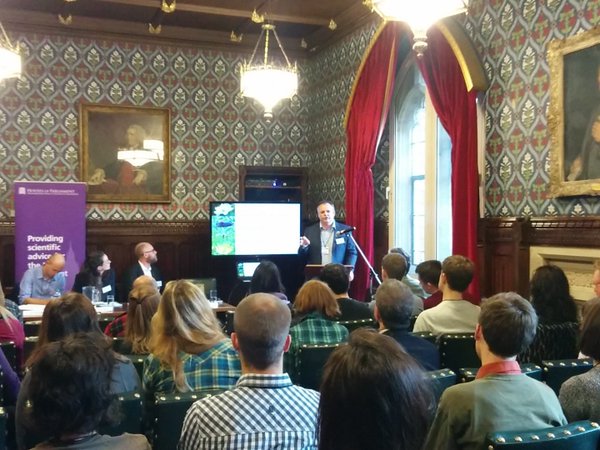
As I advertised a couple of weeks ago, last Wednesday I was in London to take part in a Pollinators Update seminar at the Houses of Parliament organised by the Parliamentary Office for Science and Technology (POST).  It was a very interesting event and good to catch up with some of the latest ideas about pollinators and their conservation.  However it’s been a busy week since then and I’ve not had time to post a full account of the seminar, which was attended by over 40 people.  So I’ve decided to write a brief summary of eight things I learned that day from my fellow speakers* and from the day in general; in some cases I’ve linked to the original sources where available:

1.  About 46% of Europe’s bumblebees have declining populations (see the European Red List for Bees that I highlighted in an earlier post)

2.  Around 2% of the world’s bee species do 80% of the crop pollination (Kleijn et al. (2015) Nature Communications)

3.  Pollinators other than bees perform 39% of the flower visits to crops (Rader et al. (2015) Proceedings of the National Academy of Sciences)

4.  By 2100 the Red-tailed Bumblebee (Bombus lapidarius), one of the commonest species in Europe, may be extinct across most of the continent due to climate change (Rasmont et al. (2015) Climatic Risk and Distribution Atlas of European Bumblebees)

5.  Only 6.6% of Entry Level Stewardship agreements by farmers across England included plans to grow nectar- and pollen-rich flower mixes.

6.  Criticism of laboratory studies of the effects of neonicotinoid pesticides are just as illogical as criticisms of field studies: both have their limitations and advantages, and both are needed.

7.  A panel of four experts on pollinators and pollination will largely agree about the answers to most questions an audience asks.

8.  A Westminster seminar such as this will attract very few MPs if it clashes with an important debate in the House of Commons, in this case about future military action in Syria.

UPDATE: here’s a number 9 suggested by Simon Potts: we all strongly support and encourage the setup of an All Party Parliamentary Group on “Pollinators” not just “honeybees” or “bees”.


*With thanks to my fellow panelists Simon Potts, Claire Carvell and Richard Gill, and to Kirsten Miller and the POST team for organising the event, and for the photograph of the panel in action.


Virtual Conference on Ecology and Climate Change

Following on from what seemed to be a quite popular Virtual Conference on Pollinators, Pollination and Flowers I thought I’d mark this week’s Paris talks on tackling climate change with a second  “virtual conference” on the topic of climate change and how it may affect (and be affected by) natural and agricultural ecological systems.

This is a great set of talks* with some very thought-provoking ideas.  Hope you enjoy them.

Douglas Sheil  (Norwegian University of Life Sciences)

Do forests attract rain?


Hans Joosten (University of Griefswald)

For peat’s sake – bogs and climate change


Nicola Di Cosmo (Institute for Advanced Study)

Climate, conflict, and historical method


Ben Beard (NCEZID Centers for Disease Control)

Climate change, ecology, and disease emergence


Jennifer Cartwright and Bill Wolfe (USGS Tennessee Water Science Center)

Climate-sensitive, insular ecosystems of the Southeast U.S.


Nabil Nemer (American University of Beirut)

Are changes in insect patterns in the Lebanese Mountains evidence of climate change?


Lini Wollenberg (University of Vermont)

Climate Change Mitigation on Agriculture-Forest Landscapes


Tim Benton (University of Leeds)

Food and the future: climate and resilience


Feel free to discuss the talks in the comments section and to post links to other talks on the same topic.


*I’m assuming that, as all of these videos are in the public domain, none of the presenters or copyright owners objects to them being presented here.  If you do, please get in touch and I’ll remove it.