Category Archives: Pollination

“Progress in pollination and pollinator research” meeting – University of Reading – 20th April

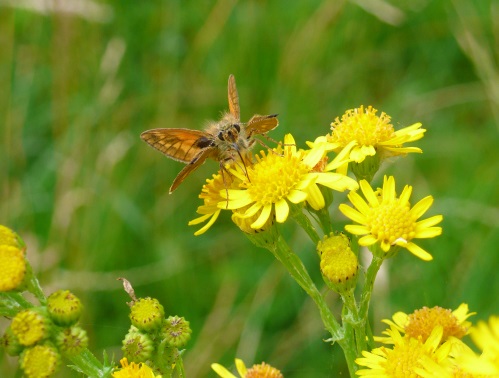
Skipper on ragwort - cropped

There is to be a joint meeting of the Royal Entomological Society’s Insect Pollination and Insects & Sustainable Agriculture Special Interest Groups on “Progress in pollination and pollinator research” at the University of Reading, 20th April 2016.  Unfortunately I can’t make it (I have meetings at the university all that day and need to get myself organised before heading off to Tenerife for field work on the 22nd) but I thought I’d advertise what looks like a very interesting one day conference.

The programme for the meeting is below and registration is open.  Please register before the meeting via The Royal Entomological Society using the form which can be downloaded from the RES website:

http://www.royensoc.co.uk/content/joint-meeting-insect-pollination-sustainable-agriculture-special-interest-groups-20-april-20

The registration fee will be £20 and includes lunch and all refreshments.

Convenors are Mike Garratt (Insect Pollination SIG) and John Holland (Insects & Sustainable Agriculture SIG) so please contact them if you’d like further information.

Programme

9.30-9.55 – Registration & Coffee

9.55-10.00 – Welcome

10.00-10.20 – Ecological intensification, pollinator diversity, and crop yield gaps in small- and large-holdings (Lucas Garibaldi, Instituto de Investigaciones en Recursos Naturales, Agroecología y Desarrollo Rural, Argentina)

10.20-10.40 – Welfare impact of pollinator decline on the international trade (Nicola Gallai, Ecole Nationale de Formation Agronomique, France)

10.40-11.00 – Conserving one beneficial at the cost of another; does success in promoting pollinators risk farmers ignoring other beneficial insects? (Mark Ramsden, ADAS)

11.00-11.20 – Coffee break

11.20-11.40 – Quantification of the floral landscape in agro-ecosystems and its effect on bumblebee colonies (Ellen Rotheray, University of Sussex)

11.40-12.00 – How many Bumblebees can our landscapes support? Using bumblebee colony models as a conservation management tool in agricultural landscapes (Grace Twiston-Davies, University of Exeter)

12.00-12.20 – Are current agri-environment schemes providing appropriate resources to the wider farmland bee community? (Thomas Wood, University of Sussex)

Short presentations:

12.20-12.25 – Pollination studies in the QuESSA Project (John Holland, Game & Wildlife Conservation Trust)
12.25-12.30 – Pollinator initiatives and research at the Royal Horticultural Society (Andrew Salisbury, RHS Garden Wisley)

12.30-12.35 – Collating evidence on plant traits and ecosystem services to inform multifunctional field margin design (Claire Blowers, Harper Adams University)

12.35-12.40 – Rare bee species and agriculture (Steven Falk, Freelance Entomologist)

12.40-12.45 – Fenland ditch banks as pollinator refuges: Environmental variable influence on pollination service measurements (Hilary Conlan, Anglia Ruskin University)

12.45-12.50 – What’s for dinner? Investigating the foraging preferences of honeybees using pollen DNA metabarcoding (Natasha de Vere, National Botanic Garden of Wales)

12.50-13.00 – Questions

13.00-13.45 – Lunch

13.45-13.50 – The National Pollinator and Pollination Monitoring Framework (Claire Carvell, Centre for Ecology and Hydrology)

13.50-13.55 – Impacts of climate change on plant-pollinator interactions in agro-ecosystems (Ellen Moss, Newcastle University)

13.55-14.00 – Reproductive resilience through outcrossing: pollen movement by insects is more important when plants are under stress (Jake Bishop, University of Reading)

14.00-14.05 – DNA metabarcoding reveals pollen transport by Eristalis hoverflies in grasslands (Andrew Lucas, National Botanic Garden of Wales)

14.05-14.10 – Raspberry pollination (Anders Nielsen, University of Oslo)

14.10-14.15 – Interaction between pollinators and pesticide use in agricultural crops: An ecological-economical modeling approach in South West France (Giorgos Kleftodimos, University of Toulouse)

14.15-14.20 – Estimating the net economic consequences of losing pollination services: evaluating contributions from single protected areas (Fabrizia Ratto, University of Southampton)

14.20-14.30 – Questions

14.30-14.50 – Insect pollinators: utilisation of resources through space and time in an intensive grassland landscape (Lorna Cole, SRUC)

14.50-15.10 – Insecticides and pollinators – Are they really incompatible? (Lin Field, Rothamsted Research)

15.00-15.20 – Monitoring the effects of chronic, larval exposure to neonicotinoids on the solitary bee Osmia bicornis (Beth Nicholls, University of Sussex)

15.20-15.30 – Discussion and close of meeting

Special issue of Leaf Litter devoted to pollinators

Leaf Litter

A short while ago I was interviewed by an American journalist as part of a special issue of the online newsletter Leaf Litter devoted to pollinators.  Produced by a conservation planning and ecological restoration organisation called Biohabitats, this special issue includes:

» Thoughts on Pollinators
» Expert Q&A: Jeff Ollerton
» Expert Q&A: Jerome Rozen
» Expert Q&A: Eugenie Regan
» Inspiration: Promising Progress With Pollinator Habitat
» Non-Profit Spotlight: The Xerces Society
» Video: An ecological planner walks into a cider mill…
» How Saving Pollinators Can Save Water and Fish Resources
» Biohabitats Projects, Places, and People

Here’s a link to Leaf Litter.

Urban Pollinator Knowledge Exchange summary – Bristol 22nd February

P1110838The importance of urban environments for supporting pollinator populations is a topic that I’ve covered several times on the blog, for example: “Urban pollinators for urban agriculture” and “Urban bee diversity – a new study“.  It’s a subject that’s generating a lot of interest at the moment with some really exciting research being published and conservation practice taking place.  However there’s clearly a lot to do if we are really to understand where pollinators are distributed across out townscapes, and how we can best manage urban habitats to support this diversity and increase their numbers – here’s a link to an interesting round table discussion on this very topic.
Recently I was invited to take part in a workshop event co-organised by Defra, NERC, and Dr Kath Baldock from Bristol University entitled: Knowledge Exchange: urban grassland management and creating space for pollinators.  As well as doing a short talk which contextualised the current scientific knowledge on urban pollinators, I facilitated one of the breakout discussion sessions.

The workshop was very well attended with some 50 delegates from a wide range of organisations, including local and national authorities, businesses, NGOs, and universities.  Feedback from those delegates was generally positive and most people learned something about managing urban settings for pollinators, and made some useful connections.  I certainly learned a lot: it’s good to get out of academia sometimes and talk with practitioners.

If you follow this link you’ll find a PDF of the summary from the facilitated sessions, covering topics such as grassland and verge management, the urban edgeland, innovative projects, and green infrastructure.

Over at the Bumblebee Conservation Trust’s blog, Sam Page has a very nice summary of the whole day which is also worth reading:  Trials and tribulations of managing urban grasslands for pollinators.

Many thanks to all of the organisers for their work in putting on this event.

Bumblebee Working Group meeting – University of Sussex – 30th March

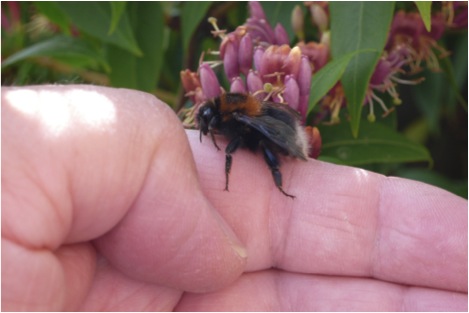
Bombus hypnorum

It’s been three years since the last meeting of the semi-formal Bumblebee Working Group, which I hosted at the University of Northampton, and British Bombus researchers  are eagerly looking forward to the next one which is being organised by Professor Dave Goulson at the University of Sussex on 30th March.  There is no charge and if anyone with an interest in bumblebees wishes to attend, please contact Dave.

Here’s the programme for the day, which starts at 10am and finishes at 4.30pm:

Goulson, Dave – Welcome

Williams, Paul  – Bumblebees of extreme environments

Alger, Samantha – RNA viruses in Vermont bumblebees

COFFEE BREAK

Baron, Gemma – Impacts of a neonicotinoid pesticide on colony founding bumblebee queens

Becher, Matthias Bumble – BEEHAVE: using bumblebee colony models as a conservation management tool in agricultural landscapes

Breeze, Tom – Knowledge gaps for effectively valuing pollination services

Cresswell, James – New European Union protocols for testing the toxicological impacts of agro-chemicals on bees

Crowther, Liam – Inferring invertebrate dispersal distances from biological records

LUNCH

Rotheray, Ellie – Quantification of the floral landscape in agro-ecosystems and its effect on bumblebee colonies

Nicholls, Beth – Pesticides in rural and urban bumblebee nests

Benton, Ted – Status of the BAP carders in Essex

Ollerton, Jeff – Exceptional urban nest density of the Tree Bumblebee Bombus hypnorum during summer 2014

SHORT BREAK

Raine, Katherine – Chernobyl bumblebees: Understanding fitness consequences of living in the exclusion zone

Jackson, Laurie  – B-lines

Gammans, Nikki – An update on the progress of reintroducing the short-haired bumblebee, Bombus subterraneus 

CLOSE

The integration of alien plants in mutualistic plant–hummingbird networks – a new study by Maruyama et al. (2016)

The collaborations with researchers in Brazil and Denmark in which I’ve been involved in recent years, focused particularly on hummingbirds and networks of plant pollinator interactions, have been very productive, most recently seen in a study of the effects of hummingbird feeders on diversity and abundance of the birds.

This collaboration continues with a new study that has just been published in the journal Diversity and Distributions which deals with the way in which non-native plant species are exploited by assemblages of hummingbirds in the New World.  Here’s the abstract:


Aim:  To investigate the role of alien plants in mutualistic plant–hummingbird networks, assessing the importance of species traits, floral abundance and insularity on alien plant integration.

Location: Mainland and insular Americas.

Methods: We used species-level network indices to assess the role of alien plants in 21 quantitative plant–hummingbird networks where alien plants occur. We then evaluated whether plant traits, including previous adaptations to bird pollination, and insularity predict these network roles. Additionally, for a subset of networks for which floral abundance data were available, we tested whether this relates to network roles. Finally, we tested the association between hummingbird traits and the probability of interaction with alien plants across the networks.

Results: Within the 21 networks, we identified 32 alien plant species and 352 native plant species. On average, alien plant species attracted more hummingbird species (i.e. aliens had a higher degree) and had a higher proportion of interactions across their hummingbird visitors than native plants (i.e. aliens had a higher species strength). At the same time, an average alien plant was visited more exclusively by certain hummingbird species (i.e. had a higher level of complementary specialization). Large alien plants and those occurring on islands had more evenly distributed interactions, thereby acting as connectors. Other evaluated plant traits and floral abundance were unimportant predictors of network roles. Short-billed hummingbirds had higher probability of including alien plants in their interactions than long-billed species.

Main conclusions: Once incorporated into plant-hummingbird networks, alien plants appear strongly integrated and, thus, may have a large influence on network dynamics. Plant traits and floral abundance were generally poor predictors of how well alien species are integrated. Short-billed hummingbirds, often characterized as functionally generalized pollinators, facilitate the integration of alien plants. Our results show that plant–hummingbird networks are open for invasion.


The full reference is: Maruyama, P.K. et al. (2016) The integration of alien plants in mutualistic plant–hummingbird networks across the Americas: the importance of species traits and insularity.  Diversity and Distributions (in press).

Happy to send a PDF to anyone who would like one.

Pollinators, Pollination and Food Production: IPBES gains momentum

Bee on apple blossom - 1st May 2015

The over-arching themes of this blog have been about understanding biodiversity; the science behind its study; why it’s important; how it contributes to human well being, (including both intangible and economic benefits); and how policy informed by science can support the conservation of species and ecosystems.  These are all issues that have a global perspective beyond the bounds of my home country (the United Kingdom), or even my continent (Europe) because species, ecosystems and the threats to them do not respect political borders.

Enter IPBES – the Intergovernmental Science-Policy Platform on Biodiversity and Ecosystem Services (sometimes shortened to Intergovernmental Platform on Biodiversity and Ecosystem Services).

IPBES is a United Nations body established in 2012 that in many ways is a parallel entity to the IPCC ( Intergovernmental Panel on Climate Change), bringing together scientists, policy makers and stakeholders, with a mission:

to strengthen the science-policy interface for biodiversity and ecosystem services for the conservation and sustainable use of biodiversity, long-term human well-being and sustainable development

Which has got to be a good thing: science informing policy, what’s not to like?

The first output from IPBES will be a Thematic Assessment of Pollinators, Pollination and Food Production, and it’s just been discussed (today) at the 4th Plenary meeting of IPBES in Kuala Lumpur – here’s a link to the press release.

In the coming weeks I’ll talk more about IPBES and its Thematic Assessment (for which I acted as a reviewer), but for now I’ll just repeat some of the headline figures from the report:

  • 20,000 – Number of species of wild bees. There are also some species of butterflies, moths, wasps, beetles, birds, bats and other vertebrates that contribute to pollination.
  • 75% – Percentage of the world’s food crops that depend at least in part on pollination.
  • US$235 billion–US$577 billion – Annual value of global crops directly affected by pollinators.
  • 300% — Increase in volume of agricultural production dependent on animal pollination in the past 50 years.
  • Almost 90% — Percentage of wild flowering plants that depend to some extent on animal pollination*.
  • 1.6 million tonnes – Annual honey production from the western honeybee.
  • 16.5% — Percentage of vertebrate pollinators threatened with extinction globally.
  • +40% – Percentage of invertebrate pollinator species – particularly bees and butterflies – facing extinction.


*They are quoting a figure that I calculated, and very proud of it I am too 🙂

Pollinators and pollination – something for the weekend #9

The latest in an (ir)regular series of posts to biodiversity-related* items that have caught my attention during the past few weeks; this one’s focused on pollinators and pollination because there’s been so much emerging on this recently it’s been impossible to decide what to write more fully about!


Feel free to recommend links that have caught your eye.

*Disclaimer: may sometimes contain non-biodiversity-related items.

Ecological intensification and pollinator diversity: a new study by Garibaldi et al. (2016)

2013-04-15 13.54.19-2Think of “farming” and those of us living in the more industrialised parts of the world usually envision large fields that are intensively worked using heavy machinery and regular inputs of fertilisers, pesticides and herbicides. But for 2 billion of the world’s farmers, agriculture takes place on smallholdings of less than 2 ha in size, with little money available for vehicles and chemicals.  Maximising food outputs in such systems can be difficult.

Now a new study by Lucas Garibaldi, Luisa Carvalheiro and colleagues entitled “Mutually beneficial pollinator diversity and crop yield outcomes in small and large farms” has demonstrated that these small-scale farmers can increase the yields from insect pollinated crops on their farms by allowing native vegetation to grow alongside the crops, which supports a greater diversity and abundance of pollinators that then spill over into the adjacent fields.

It’s a great study that delivers a message that large agro-chemical firms probably will not wish to hear: that yields can be enhanced without throwing ever more fertiliser or pesticides onto the crops.

The paper is paywalled so you’ll have to ask the authors for a copy unless you (or your institution) has an e-subscription to Science.  But here’s the original abstract:

Ecological intensification, or the improvement of crop yield through enhancement of biodiversity, may be a sustainable pathway toward greater food supplies. Such sustainable increases may be especially important for the 2 billion people reliant on small farms, many of which are undernourished, yet we know little about the efficacy of this approach. Using a coordinated protocol across regions and crops, we quantify to what degree enhancing pollinator density and richness can improve yields on 344 fields from 33 pollinator-dependent crop systems in small and large farms from Africa, Asia, and Latin America. For fields less than 2 hectares, we found that yield gaps could be closed by a median of 24% through higher flower-visitor density. For larger fields, such benefits only occurred at high flower-visitor richness. Worldwide, our study demonstrates that ecological intensification can create synchronous biodiversity and yield outcomes.


The challenge from this paper is two-fold.  First of all it’s how to operationalise this kind of research on the ground, to farmers and agronomists who are unlikely to be readers of the journal Science.  This is where organisations such as the UN’s FAO, country-level government agencies, and non-governmental organisations  have a crucial role to play, translating research into action.

The second challenge is likewise difficult – how do we bring “ecological intensification” into the industrialised agriculture of more developed nations?  I have no immediate answer to that, but research such as this shows what the potential benefits can be, for both agriculture and biodiversity.

The reference is:  Garibaldi, L.A. et al. (2016) Mutually beneficial pollinator diversity and crop yield outcomes in small and large farms.  Science 351: 388-391

SCAPE 2016 – the 30th anniversary meeting

SCAPE logo
As regular readers of this blog are aware, the annual SCAPE conference is one of my favourite scientific meetings, and for the last few years I’ve published live blogs of the conference as it happens (for example, here, here, here).  SCAPE 2016 will be a very special one – it’s the 30th anniversary of the meeting – and is taking place in a very special place.  Initial details have recently been circulated by Professor Jon Ågren (Uppsala University) on behalf of the organising committee, as follows:
 
The meeting will take place at Abisko, northernmost Sweden 13-16 October. More information will be published in late spring, but mark these days in your calendar already now!
 
Information about the premises of the meeting:
 
Some info about Abisko National Park:
 
And about the nearby Abisko Scientific Research Station:
 
 Anyone wishing to receive the next SCAPE circular, send an email to Jon:   jon.agren@ebc.uu.se

Protecting an ecosystem service: approaches to understanding and mitigating threats to wild insect pollinators

Bee on apple blossom 2 - 1st May 2015Back in April 2015 I attended a two day meeting at Imperial College’s Silwood Park campus to discuss initial project ideas to address evidence gaps in the recent National Pollinator Strategy.  I mentioned the meeting in passing in a post at the time concerned with whether biodiversity scientists should also be campaigners, but didn’t say a lot about what conclusions we came to and what the next steps would be because at the time I was unclear on both of those counts: it was a very wide ranging meeting with a lot of participants coming at the question of pollinator conservation from different perspectives.  As well as academics there were representatives from the agrochemical industry, government research organisations, and  the National Farmers Union.

During summer 2015 one of the conveners of the meeting, Dr Richard Gillherded cats organised colleagues, pulled together all of the text and ideas that were generated, and took on the task of seeing a summary of the meeting through from initial draft to publication.  It was a monumental effort, involving 27 authors and 86 manuscript pages, and Richard did a sterling job.  Entitled “Protecting an ecosystem service: approaches to understanding and mitigating threats to wild insect pollinators” it will appear as a chapter in the next volume of Advances in Ecological Researchwhich should be published later this month.

The abstract and contents for the chapter are below; if anyone wants a copy of the full chapter, please let me know.

Abstract

Insect pollination constitutes an ecosystem service of global importance, providing significant economic and aesthetic benefits as well as cultural value to human society, alongside vital ecological processes in terrestrial ecosystems. It is therefore important to understand how insect pollinator populations and communities respond to rapidly changing environments if we are to maintain healthy and effective pollinator services. This paper considers the importance of conserving pollinator diversity to maintain a suite of functional traits to provide a diverse set of pollinator services. We explore how we can better understand and mitigate the factors that threaten insect pollinator richness, placing our discussion within the context of populations in predominantly agricultural landscapes in addition to urban environments. We highlight a selection of important evidence gaps, with a number of complementary research steps that can be taken to better understand: i) the stability of pollinator communities in different landscapes in order to provide diverse pollinator services; ii) how we can study the drivers of population change to mitigate the effects and support stable sources of pollinator services; and, iii) how we can manage habitats in complex landscapes to support insect pollinators and provide sustainable pollinator services for the
future. We advocate a collaborative effort to gain higher quality abundance data to understand the stability of pollinator populations and predict future trends. In addition, for effective mitigation strategies to be adopted, researchers need to conduct rigorous field- testing of outcomes under different landscape settings, acknowledge the needs of end-users when developing research proposals and consider effective methods of knowledge transfer to ensure effective uptake of actions.

Contents
1. Importance of Insect Pollination
1.1 Providing an Ecosystem Service
1.2 Brief Introduction to Pollination Ecology and the Importance of Wild
Pollinators
2. Major Threats to the Pollination Service Provided by Insects
3. Steps in the Right Direction to Protect Insect Pollinator Services: Policy Actions
4. Understanding and Mitigating Specific Threats to Wild Insect Pollinators to Protect Pollinator Services
4.1 Understanding the Stability of Insect Pollinator Communities
4.2 Using Molecular Approaches to Monitor Insect Pollinators
4.3 How Do Parasites Shape Wild Insect Pollinator Populations?
4.4 Understanding Insect Pollinator Population Responses to Resource Availability
4.5 Engineering Flowering Field Margins as Habitats to Attract Insect Pollinators
4.6 How Might We Improve the Wider Countryside to Support Insect Pollinators
4.7 Insect Pollinators in Urban Areas
5. Considerations When Developing Future Research and Mitigation Strategies
Acknowledgements
Appendix
References