Category Archives: Evolution

Generalist pollination can evolve from more specialised interactions: a new study just published

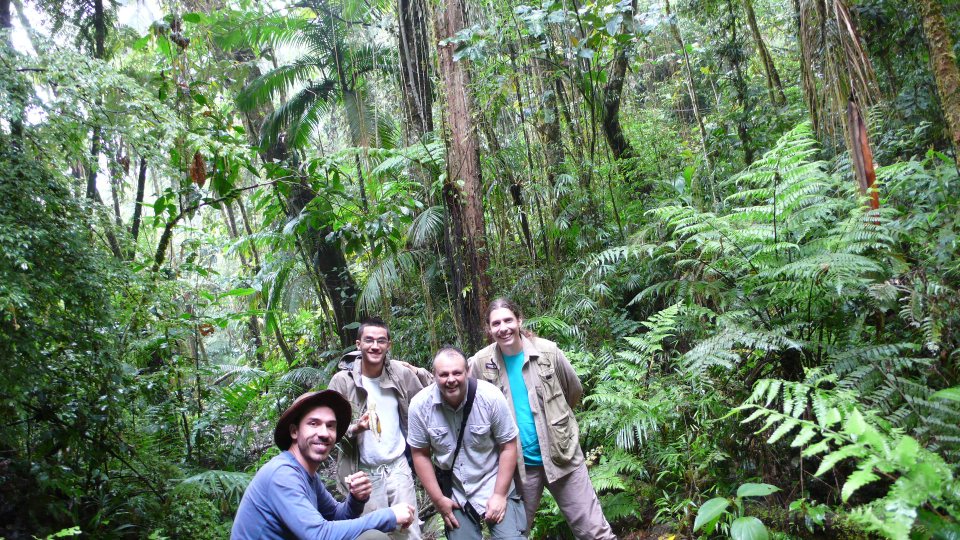
2013-11-24 15.44.01

There’s a long-standing idea in biology that ecological specialisation is an evolutionary “dead end” from which species can never emerge.  In other words, if a species becomes so adapted to a particular ecological strategy (could be feeding or habitat requirements or how it interacts with other species ) then no amount of natural selection will result in its descendants evolving different strategies, thereby diversifying into new species.  In particular it’s traditionally thought that evolving broader, “generalist” strategies from narrower, “specialised” ones is highly unlikely.

This has been much discussed in the literature on the ecology and evolution of pollination systems, where traditionally this “dead end” scenario has been accepted.  However a small number of case studies have shown that generalised pollination systems can evolve within much more specialised clades, beginning with Scott Armbruster and Bruce Baldwin’s study of Madagascan Dalechampia (Euphorbiaceae), published in Nature in 1998.

To this limited body of examples we can now add another case study: in the genus Miconia (Melastomataceae), generalist nectar/pollen rewarding strategies can evolve within a clade of plants that predominantly uses a more specialised, buzz-pollinated strategy involving just bees.

The work is part of the PhD research of Vinicius de Brito who is one of the researchers I was privileged to do some field work with in Brazil when I was there in 2013 – see my post: “It’s called rainforest for a reason, right?  Brazil Diary 6“.  Vini is the guy on the left of the photo accompanying this post.  Here’s the citation and a link:

de Brito, V.L.G., Rech, A.R., Ollerton, J., Sazima, M. (2017) Nectar production, reproductive success and the evolution of generalised pollination within a specialised pollen-rewarding plant family: a case study using Miconia theizans. Plant Systematics and Evolution doi:10.1007/s00606-017-1405-z 

Here’s the abstract:

Generalist plant–pollinator interactions are prevalent in nature. Here, we untangle the role of nectar production in the visitation and pollen release/deposition in Miconia theizans, a nectar-rewarding plant within the specialised pollen-rewarding plant family Melastomataceae. We described the visitation rate, nectar dynamics and pollen release from the poricidal anthers and deposition onto stigmas during flower anthesis. Afterwards, we used a linear mixed model selection approach to understand the relationship between pollen and nectar availability and insect visitation rate and the relationship between visitation rate and reproductive success. Miconia theizans was visited by 86 insect species, including buzzing and non-buzzing bees, wasps, flies, hoverflies, ants, beetles, hemipterans, cockroaches and butterflies. The nectar produced explained the visitation rate, and the pollen release from the anthers was best explained by the visitation rate of pollinivorous species. However, the visitation rates could not predict pollen deposition onto stigmas. Nectar production may explain the high insect diversity and led to an increase in reproductive success, even with unpredictable pollen deposition, indicating the adaptive value of a generalised pollination system.

As always, I’m happy to send a PDF to anyone who wants a copy, just drop me an email.

The bee that lives on a volcano!

Nature can adapt to even the most unpromising and uncompromising of physical environments, from deep oceans to arid deserts.  And now we have a bee that lives in close proximity to an active volcano!  The work is by one of my former PhD students, Dr Hilary Erenler (who is still a Visiting Researcher at the University of Northampton), and is featured in a big news story in the journal Science.

Here’s a link to the story.

The full reference for the study, with a link to the journal, is:

Hilary E. Erenler, Michael C. Orr, Michael P. Gillman, Bethan R. B. Parkes, Hazel Rymer and Jean-Michel Maes (2016) Persistent nesting by Anthophora Latreille, 1803 (Hymenoptera: Apidae) bees in ash adjacent to an active volcano. Pan-Pacific Entomologist 92:67-78.

Well done Hils, it’s a great study!


Pollinators and pollination – something for the weekend #9

The latest in an (ir)regular series of posts to biodiversity-related* items that have caught my attention during the past few weeks; this one’s focused on pollinators and pollination because there’s been so much emerging on this recently it’s been impossible to decide what to write more fully about!


Feel free to recommend links that have caught your eye.

*Disclaimer: may sometimes contain non-biodiversity-related items.

Virtual Conference on Pollinators, Pollination and Flowers

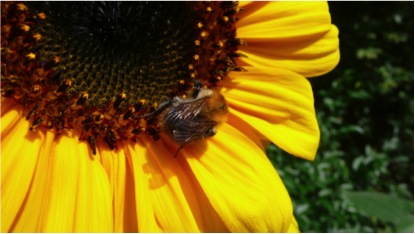
B pasc on sunflower

Academic conferences are an important part of what makes science function, via the exchange of ideas and information, publicly and in person.  The act of sitting and listening to both established and early career researchers discussing their most recent work, sometimes before it’s in print, is stimulating and exciting, and will never be replaced by digital technology. We’re social animals and conferences, as much as anything else, are social events.

But conferences are becoming more expensive, more frequent, and increasingly out of reach to researchers with limited budgets.  They are also getting larger: how many times have you attended a big conference and been torn between which of two (or three or four) talks to go to in parallel sessions?  Wouldn’t it be nice to be able to see all of them?  Or to go back and hear again the talks that you most enjoyed?  Likewise, wouldn’t it be great if your students or members of the public could also see what such conference presentations are like?

With this in mind, some time ago I dreamed up the idea of “virtual conferences” in as an experiment that aims to bring together into one place the most interesting recorded seminars, webinars, conference talks and public lectures that are freely available, and present them as a series of themed mini-conferences.  All of the videos in these collections are available on sites such as YouTube* and my role is just to curate them and present them in one place for convenience, as a showcase for some of the best research in biodiversity, evolutionary biology, ecology and conservation, very broadly defined, including inter-disciplinary and policy-related presentations.  And just as at a conference, there’s an opportunity to discuss the talks in the comments section on each post and to provide links to other talks on the same topic.

As well as being a service to the research community and the wider public, I hope that these conferences will be a useful teaching resource at advanced undergraduate and postgraduate level.

If anyone is interested in guest-curating a set of presentations in their own subject area on this blog, please do get in touch and I’ll be happy to talk about it.

So here’s the first virtual conference, on (naturally) pollinators, pollination and flowers:


Judith Bronstein (University of Arizona)

The conservation biology of mutualism


Peter Crane (University of Chicago)

The origins of flowers


Jeffery Pettis (USDA Bee Research Laboratory, Maryland)

The role of pesticides in declining pollinator health


Linda Newstrom (Landcare Research, New Zealand)

Pollinator systems in New Zealand and sustainable farming fund


Mace Vaughan and Eric Mader (Xerces Society/USDA/University of Minnesota)

Pollinator habitat assessment and establishment on organic farms


Carlos Vergara, Rémy Vandame, and Peter Kevan (Universidad de las Americas-Puebla/El Colegio de la Frontera Sur/CANPOLIN)

Coffee pollination in the Americas


Claire Kremen (University of California, Berkeley)

Restoring pollinator communities in California’s agricultural landscapes


*I’m assuming that, as all of these videos are in the public domain, none of the presenters or copyright owners objects to them being presented here.  If you do, please get in touch and I’ll remove it.

Are tropical plants and animals more colourful? Not according to a new study!

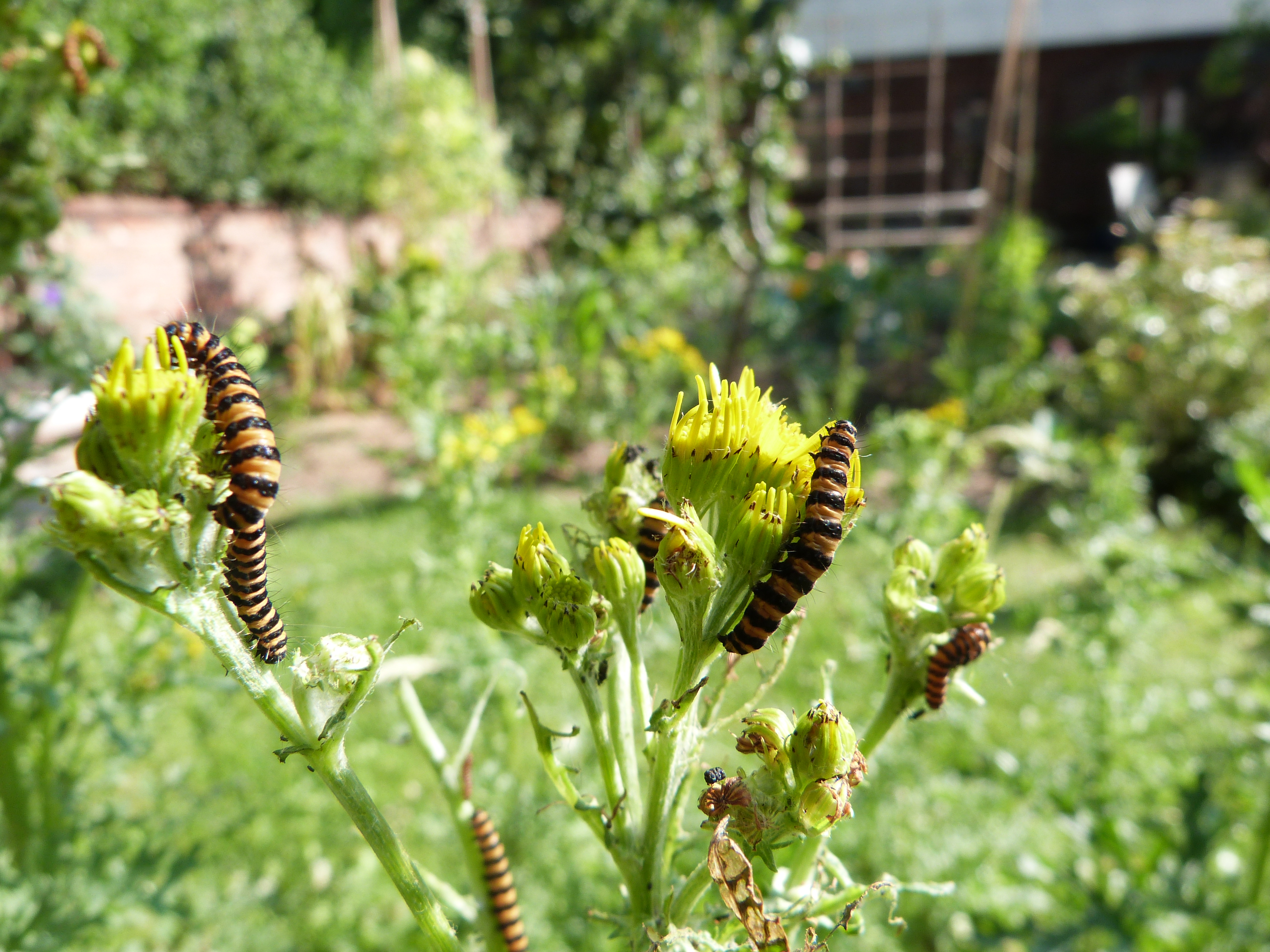
Cinnabar caterpillars 1 P1020535

The notion that tropical ecosystems are somehow “different” to those at higher latitudes is a pervasive one in ecology and biogeography, that has its roots in the explorations of 18th and 19th century Europeans such as von Humboldt, Darwin, Wallace, and Belt.  All of these authors expressed their amazement at the biological riches they observed in their tropical explorations, and how different these habitats were to those they knew from home.

In many ways the tropics are special, of course and we know that they contain many more species than most other parts of the world; indeed my own work has shown that the tropics have significantly more types of functionally specialised pollination systems, and that the proportion of wind pollinated species is lower in tropical communities.  However tropical plants are not, on average, more ecologically specialised (that is, they do not use few species of pollinator) and, as the recent guest blog on Dynamic Ecology argued, there is a growing body of evidence to say that overall tropical interactions between species are not stronger and more specialised than those in the temperate zone (though there are others who dispute this and it’s an ongoing debate).

One of the central tenets of the “tropics are special” idea is that the tropics are more colourful; or rather that the biodiversity of the tropics tends to be more garish, gorgeous, and spectrally exuberant, than that of other parts of the globe.   Now a new study by Rhiannon Dalrymple, Angela Moles and colleagues, published in the journal Global Ecology and Biogeography, has challenged this idea for flowering plants, birds, and butterflies in Australia, using sophisticated colour analysis rather than relying on human impressions. Following that link will take you to the abstract and you can read it yourself; however I wanted to summarise their findings by quoting from the first section of the discussion in the paper:

“Contrary to predictions…[our]…results have shown that tropical species of birds, butterflies and flowers are not more colourful than their temperate counterparts. In fact…species further away from the equator on average possess a greater diversity of colours, and their colours are more contrasting and more saturated than those seen in tropical species.”

It’s a really, really interesting study that, as the authors say, runs counter to all of our expectations.  Gradually ecologists and evolutionary biologists are testing some long-standing assumptions about the tropics and the results are proving to be a challenge to preconceived ideas about patterns in the Earth’s biodiversity.

———————————————

Full disclosure: senior author on the paper Angela Moles was my co-author on that Dynamic Ecology blog, based on which we’ve written a short review article that (hopefully) will be published soon.  Other than that I have no vested interest in the study.

“one of the referees says floresianus actually means ‘flowery anus’ so it should be floresiensis“

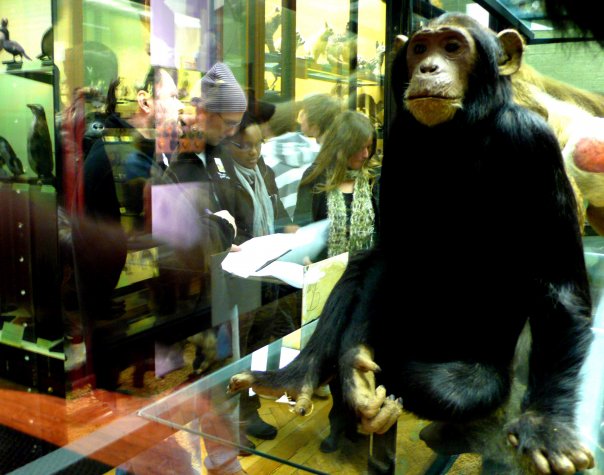
Tring 8

In a parallel universe I work as a paleoanthropologist, a topic that has fascinated me ever since as a teenager I read Donald Johanson’s account of the discovery of Lucy (Australopithecus afarensis).  At university I took a short human evolution course and could easily have been swayed into doing research in that area were it not for my fascination with plants and ecological interactions (there are also parallel universes in which I’m a marine biologist, palaeontologist, gardener, sound engineer, etc….you get the picture).  I still keep half an eye on the paleoanthropological literature and enjoyed reading this interview on the Nature website with the discoverers of Homo floresiensis, the so-called “hobbit” fossil hominids, which added significantly to our understanding of the biodiversity of the human evolutionary lineage.

The line that “one of the referees says floresianus actually means ‘flowery anus’ so it should be floresiensis“, and some of the other anecdotes, give lovely insights into how science works, and the way it often follows a random, haphazard path, not at all the clear and logical route that non-scientists assume.  And it shows how the peer-review process can pick up and correct errors in a manuscript that could haunt any scientist’s career…..

Travelling west to go north (BES Macroecology meeting day 1)

2014-06-24 08.00.19

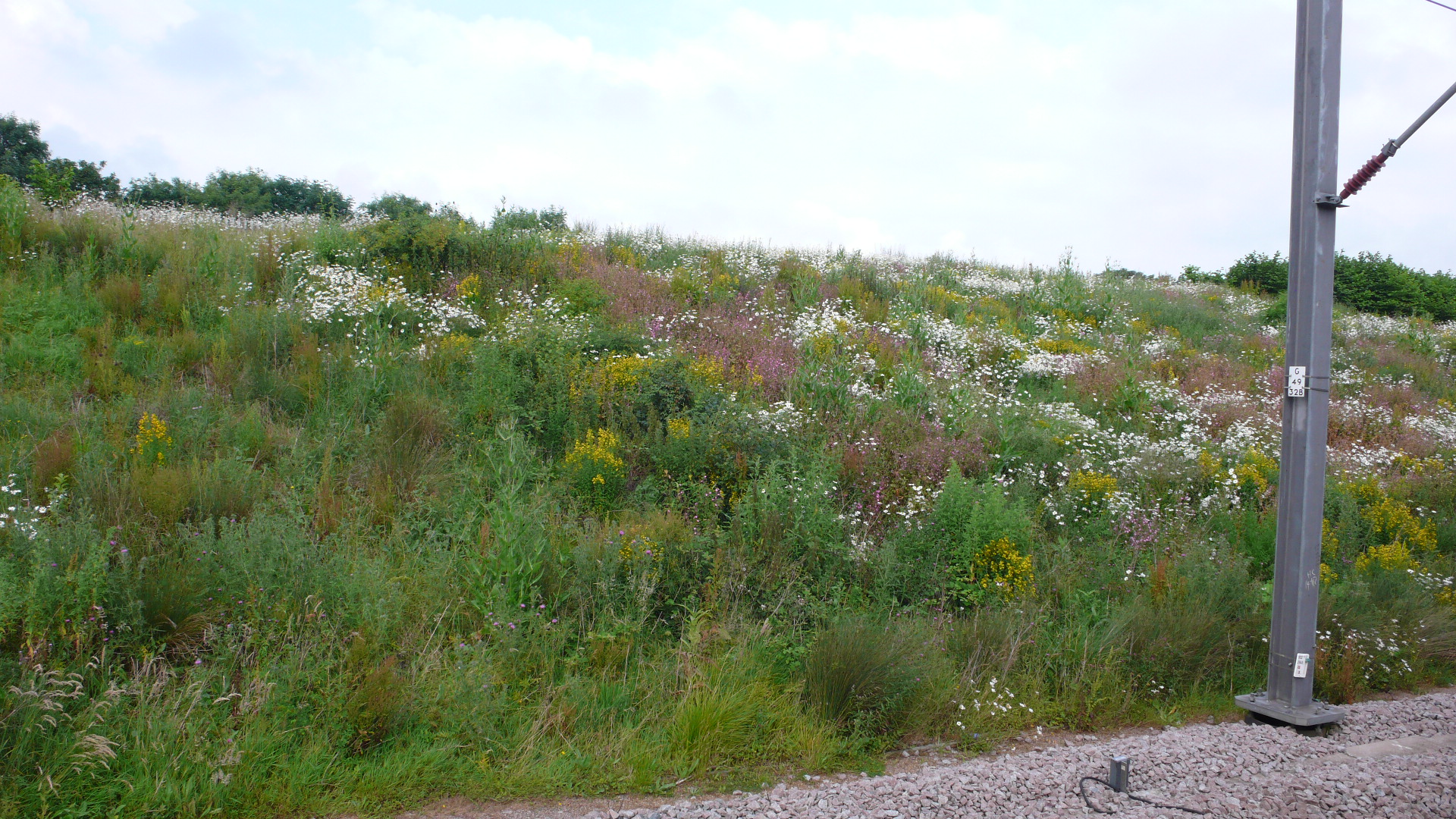
Birmingham New Street, with its subterranean platforms accessed by narrow concrete gullets, must be one of the ugliest and most unpleasant major railway stations in Britain.  It’s also, thanks to the redevelopment work currently being carried out, one of the most confusing for the traveller who only occasionally passes through.  Ugly and unpleasant I can handle if it functions well: but ugly and unpleasant AND confusing is not good.  It’s a huge contrast to Milton Keynes station which I went through last week on the way to Chester, where the open, airy platforms look out onto embankments covered in wild flowers (see the photo above).  While waiting for the train at Milton Keynes I spotted butterflies and bees visiting flowers only feet from passing high-speed engines.

As I start this post I’m sitting on Platform 9A at Birmingham waiting for a train at 0949 to Nottingham where I’m attending the British Ecological Society’s Macroecology Special Interest Group’s annual conference.  In fact I should be on the train which left platform 12A at 0919, but trying to find the unsignposted 12A, followed by a detour to pick up a coffee, meant that I missed the train by about a minute.  Not to worry, gives me an opportunity to rant about Birmingham New Street station.

The BES Macroecology SIG has been established for three years and I blogged about the inaugural meeting in London back in 2012.  I missed last year’s meeting in Sheffield so thought I’d make a special effort to get to the Nottingham event this year, even though it involves heading west (to Birmingham) to travel north (to Nottingham).

Day 1 of the meeting started with the first of two keynote addresses by Catherine Graham from Stony Brook University.  Cathy focused on her work on that most charismatic of flower visitors, the hummingbirds.  In the first talk she dealt with the importance of thinking about phylogenetic scale when conducting analyses.  Lots of thought provoking ideas and a huge amount of information to digest.

As I’m speaking on the second day I could relax and listen to some interesting talks by established and early career researchers, and PhD students, most of whom have been given 7 minutes (!) to present their work.  It’s been a challenge to whittle the final part of the talk I gave in Copenhagen last week into such a short format, but we’ll see how I get on tomorrow.  Highlights of day 1 for me included Joe Bailey talking about urbanisation, climate and alien vascular plants in the UK; Nova Mieszkowska’s work on inter-tidal species; Sive Finaly on whether Madagascan tenrecs are an example of an adaptive radiation (answer = “maybe”); and Guy Harrington on studying fossils in a macroecological manner.  But really but all the talks were good and I learned something from each of them.

As I mentioned in that post back in 2012, defining “macroecology” is problematic and there are still those who see it as synonymous with biogeography.  Perhaps one difference is that biogeography has traditionally tended to focus on patterns (e.g. how species richness changes as one moves form the poles to the tropics) whereas macroecology also seeks to explain those patterns in terms of processes, using very sophisticated statistical and mapping approaches.  But even that fails to fully appreciate biogeography which has a tradition of also trying to infer processes (for example Joseph Hooker’s 19th century work on the distribution of plants included hypothetical explanations), though without the modern analytical tools that are available to the macroecologist.  It’s a debate that will no doubt go on, though perhaps it’s a sterile one.  Does it matter what we call it as long as the science is sound?


Rational explanations

P1110810

It has been a week for rational explanations, for assessing evidence in a logical way, a subject on which I have posted in the past and which goes to the heart of the scientific endeavour.

There was a lot of media attention about a study published in PNAS that claimed to show that hurricanes with female names (Katrina, Sandy, etc.) cause more damage than those with male names, because (to quote the abstract of the study) “hurricane names lead to gender-based expectations about severity and this, in turn, guides respondents’ preparedness to take protective action”.  In other words, people take feminine words less seriously than masculine words.  Is that true?  Are people really that socially attuned to gender-specific language?  Turns out that the original study may have made too many assumptions with regards to data and the statistical model they used, according to a re-analysis by Bob O’Hara and GrrlScientist on the Guardian science pages.  However in a further twist, a re-analysis of the re-analysis by Florian Hartig on the Theoretical Ecology blog found some (although very, very weak) support for a gender effect.  Florian makes an interesting point, however, that “the authors would have probably found it much more challenging to place this study in [a top science journal such as] PNAS if they would have done a more careful and conservative statistical analysis”.  In other words, science is certainly not immune to the effects of hyperbole and controversial findings.

Speaking of “hyperbole and controversial findings”, Richard Dawkins made headlines by apparently suggesting that reading fairy tales to children is not in their best interest: “Is it a good thing to go along with the fantasies of childhood, magical as they are? Or should we be fostering a spirit of scepticism?” Not surprisingly there was a big backlash against Dawkins who clarified his views on Twitter (!) and claimed they had been taken out of context. Perhaps so, but he has a track record of increasingly controversial views that he surely knows will raise his profile.  But then he’s an author with books to sell, who long ago gave up being a practising scientist by not publishing any peer-reviewed papers in science journals for over 30 years.  Dawkins’ role at Oxford was as Professor for Public Understanding of Science and unfortunately he gives the impression that scientists are all about rational thought and logical arguments in every facet of their lives. Which we’re not, I can assure you: I possess a whole raft of personal, irrational idiosyncrasies, including sending a little prayer to the Gods of Science every time I submit a new manuscript to a journal.  Which they often ignore, the f**kers.

There was also an odd quote from Dawkins in relation to the logic of fairy tales, that there is “a very interesting reason why a prince could not turn into a frog – it’s statistically too improbable”.  Nope, it’s not statistically improbable – it’s biologically impossible!  “Statistically too improbable” suggests that it could happen, given enough time.  Not sure that this helps with public understanding of science….

Something which is statistically improbable, but which does happen occasionally, is finding new fossils which make us rethink our understanding of the biodiversity of species interactions.  Such a find was published recently in the journal Biology Letters:  a 47 million year old fossil bird of a previously undescribed group that provides the earliest evidence of flower feeding, and possibly pollination by a birds.  The evidence in this case is the presence of pollen grains preserved in the gut area of the fossil, which could also represent flower eating (a range of birds do this, for example bullfinches) rather than nectar feeding and legitimate pollination.  Nonetheless it’s a stunning find and links nicely with a February post of mine.

Another new discovery this week, for me at least, was that (contrary to rumours, errr, started by me….) Dr Georges Aad does indeed exist.  Apologies to him, though it was fun while it lasted.

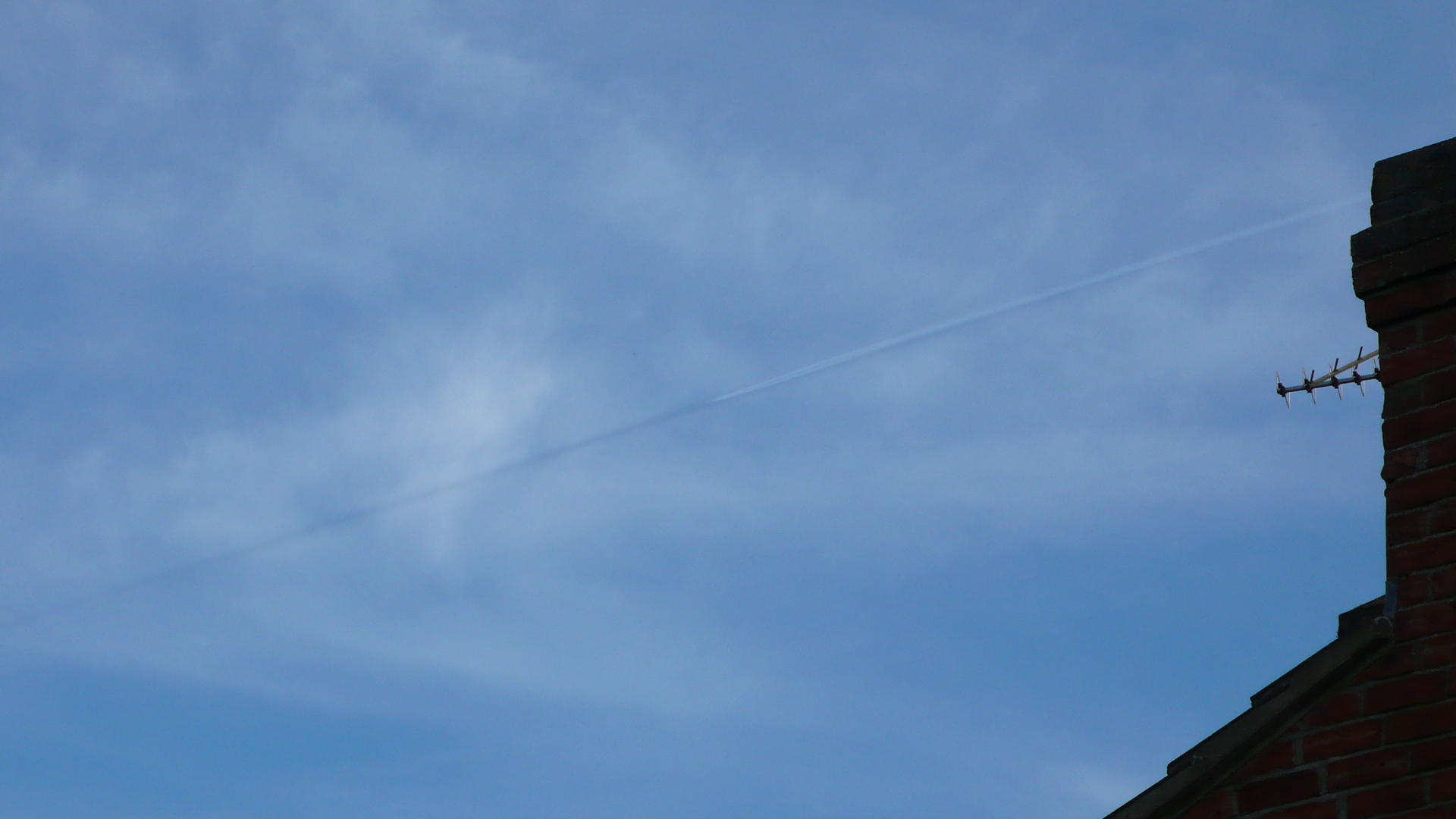
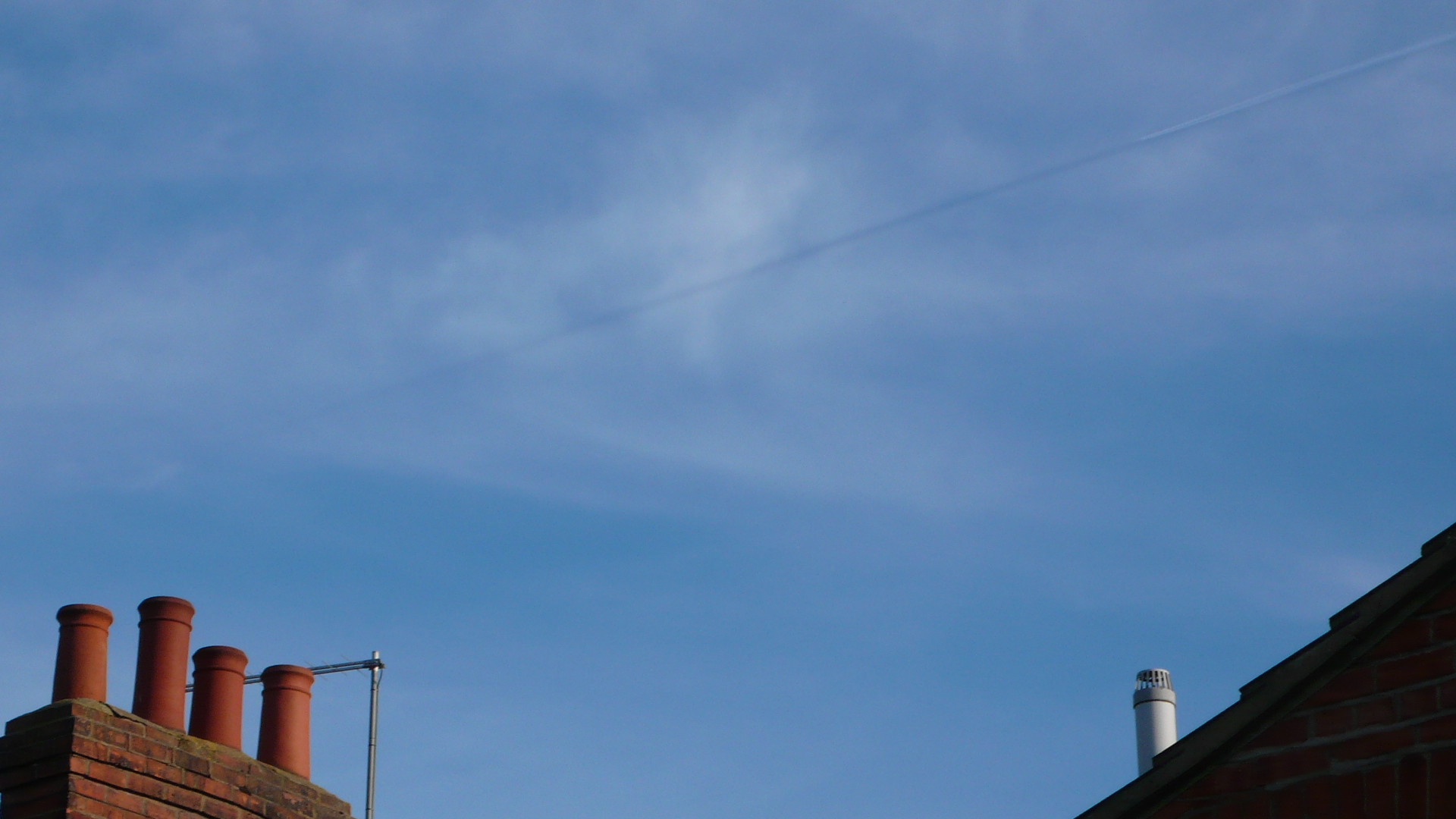
Finally to the intriguing photos that grace the start and end of this post.  I took these from the garden a couple of evenings ago. It shows a plane apparently flying into a dark tunnel that stretches out ahead of it (click on the images for a better view).  We watched the plane for several minutes and the “tunnel” appeared to be moving ahead of the plane as it travelled across the sky.  Karin had a plausible explanation, that what we were seeing was the shadow of the contrail because of its position relative to the low angle of the setting sun.  This was confirmed by a web site showing other examples of this phenomenon, which apparently is not uncommon, though judging from the comments on the site, some people prefer US government covert chemical spraying as a rational explanation.  Evidence and data will always be open to interpretation.


P1110809

Guest blogging: Are species interactions stronger and more specialized in the tropics?

P1080615

In hushed tones the narrator describes the intricate details of yet another highly specialized relationship between one species of indescribable beauty and a second species with intricate behaviour that is about to eat/infect/cooperate with/exploit it [delete as appropriate].

The camera view pulls back to reveal the green cathedral of a tropical rainforest: 

“The tropics” continues the narrator “are special…….…”


Yes, the tropics are special.  But how special?  Or more to the point, how different are tropical communities to temperate communities?  Over at the Dynamic Ecology blog, Jeremy Fox has invited Angela Moles and myself to contribute a guest blog on the subject of whether the idea that species interactions are always stronger and more specialized in the tropics is outmoded and not backed up by the evidence.  In Jeremy’s parlance, is it a zombie idea?

The subject of latitudinal variation in species interactions is one that has interested me for a while and I’ve written a few papers on the topic, especially in relation to how plant-pollinator interactions vary with latitude.  You’ll find references to some of them in the Dynamic Ecology piece, plus a fuller over view of our arguments.

So what are you doing reading this?  Get over to Dynamic Ecology and read that!

Book review: “Pollination and Floral Ecology” by Pat Willmer

2013-11-28 14.48.27

Review of “Pollination and Floral Ecology” by Pat Willmer (2011) Princeton University Press. £65. pp. 832.

Some backstory:  In early 2012 I was asked by the review editor of the journal Annals of Botany to review this book, and I jumped at the chance as it’s the first major single-author overview of the field of pollination ecology for a number of years, by a well respected academic in the field.  Unfortunately the review took a lot longer than I expected, in part because I was also coordinating my department’s Research Excellence Framework submission, on top of other teaching, research and admin duties, and it was taking up quite a bit of my time.

In addition I had mixed feelings about the book and wanted my review to do it justice, not be over-critical but at the same time highlight what I saw as flaws.   In the words of the  Fairport Convention song, Who Knows Where the Time Goes? – my review was only completed last Christmas and duly submitted. Turns out that the journal has a backlog of book reviews to publish and the editor asked that, given it’s been a couple of years since the book was published, would I mind if the review was posted on the Annals of Botany blog rather than in the printed journal.  I happily agreed as it’s likely to get more readers on the blog, and said I’d also post it on my own blog.  So here it is:


Any text book that tries to assess and summarise the whole of a multidisciplinary research field such as pollination ecology and floral biology is required to be four things:  (1) comprehensive in its scope; (2) up to date in its coverage of the literature; (3) accurate in its assessment of the current state of the field; and (4) authoritative in the conclusions it presents.

This volume by Professor Pat Willmer of the University of St Andrews certainly ticks the first box.  It’s a huge book, and covers everything relating to the evolution of flower attraction and reward systems, ecological interactions with pollinators, biochemistry, physiology, agriculture and conservation; all in 29 chapters split into three sections, with 87 pages of references.  The literature extends to 2010, which is impressive for a book published in 2011 (though see my comments below about completeness of the literature).   Specialist terms are highlighted in bold to direct the reader to the glossary at the back, a useful device even if there are a few inaccuracies, which I’ll mention later.

So far so good, and the author is to be congratulated on putting together such a comprehensive, not to mention timely, single-author book.  It’s clearly the summation of a career devoted to studying pollinators and flowers, and the author’s passion for her subject is apparent throughout.

However when we come to points 3 and 4, things are less straightforward.  There are some issues with accuracy that are troubling in a book aimed at newcomers to the field as well as established researchers.  To give just a few examples:

– on p.18 we are told that asclepiads have “one stamen” (they have five); on p.169 and in the glossary that asclepiad pollinia are the pollen grains from one anther (they are the contents of half an anther); and on p.170 that the pollinaria are “glued” to pollinators (they actually clip on).

– in the glossary, tree ferns are referred to as “cycads”, an error that is repeated on p.89.

– on p.88 there is a statement suggesting that tree fern spores were dispersed by “animal fur” 300 million years ago, long before the evolution of mammals, and that this (and dispersal of spores of fungi and mosses) is the equivalent of pollination: it is not, it equates to seed dispersal.

These are troubling errors of basic botany that are forgivable in an early draft of the book (everyone makes mistakes) but not in the final published version, after it’s been read, reviewed, checked and edited.  If the book goes to a second edition I hope that these (and other) mistakes will be fixed.  But they do hint at a fundamental problem with a book (and a field) as large and complex as this: a single author is arguably unlikely to be able to do justice to all of the subject matter.

There are parts of the book where it is unclear (to me at least) what the author is actually saying.  For example, on p.96 there is a graph which, it is suggested, demonstrates that pollination by animals is “technically uncommon when assessed in terms of the numbers of broad taxonomic groups that use it”, though the legend to the figure claims that “most orders of plants have no families” that possess wind pollination.  This is confusing: what is to be concluded by someone new to the field?  Is animal pollination common or rare?  Likewise, on p.91 we are told that the “first angiosperms…would probably have had their pollen moved mainly by wind…”, but then on p.92 that “an element of insect pollination could be regarded as almost ancestral”.  Which is correct?

There are other aspects to the book that are simply out of date; for example the linear, rather deterministic schemes set out in Figures 4.6 and 4.8 showing that Cretaceous flowers were open and radially symmetrical, and only later evolved into complex, bilateral flowers in the Tertiary, ignores fossil discoveries showing that orchids evolved in the Cretaceous (Ramírez et al., 2007).  Likewise, discussion of “counterproductive” crypsis in flowers (p.124) neglects recent findings of cryptic, wasp-pollinated plants in South Africa (e.g. Shuttleworth & Johnson, 2009).

There is a theme emerging here: some of the botany that the book presents is inaccurate, confused or out-dated.  Fortunately the zoological aspects of the book are much better, as one might hope from a Professor of Zoology.

The final criterion, that the book should be “authoritative in the conclusions it presents”, is however, in my view, the main weakness of this volume.  The author is unhappy with recent developments in the field, particularly as they relate to community-scale assessments of plant–pollinator interactions, in terms of network analyses and predictive utility of pollination syndromes.  Clearly Professor Willmer is on a mission to rebalance what she perceives as failings within some of the current trends in studying pollination.  A book review is not the place for a technical dissection of the author’s arguments, which is best left to the peer-reviewed literature (though I would argue that that’s also the place to present some of the criticisms the author introduces, rather than into a text book such as this).  I could focus the whole of this review on these topics because: (a) they take up a large proportion of the book, about one-third of the text pages; and (b) they are highlighted on the cover as being one of the main contributions of the book; specifically, that the author provides a critique of previous work that does not distinguish between “casual visitors and true pollinators” that can in turn result in “misleading conclusions about flower evolution and animal-flower mutualism”. Unfortunately her targets are straw men, and one – I believe quite telling – example will suffice.

On p.447 there is a criticism of the use by Waser et al. (1996) of Charles Robertson’s historical data set, and specifically that the analyses they present “…did not distinguish visitors from pollinators even though Robertson’s database did include information on this”.  However Waser et al. clearly state (p.1045 of their paper) that only pollinators were included in the analyses, not all flower visitors, and that “visitation is not a synonym for pollination…non-pollinating visitors are excluded (as in Robertson 1928)” (p.1048).

Why should Professor Willmer make a statement to the contrary?  Evidently she wishes to impress upon her readers that (in her opinion) there are fundamental problems in current approaches to studying pollination at a community level.  But even if that were the case (and I don’t believe it is) misrepresenting previous studies to suit an argument is poor scholarship at best.

Regardless of whether some of her criticism is well founded, the author does not seem to appreciate that plant–flower visitor interaction networks are ecologically important regardless of whether or not a flower visitor acts as a pollinator.  More fundamentally, true pollination networks possess similar attributes to flower visitor networks, for example a nested pattern of interactions, and arguments about level of generalisation of species are a matter of scale, not category (Ollerton et al., 2003).

At the end of her Preface, Professor Willmer reveals to us quite a lot about her personal attitude to research when she states that some readers might find her approach “too traditional” in an “era where ecological modelers [might be claimed to] have more to tell us than old-style field workers”.  What the author fails to appreciate is that this is a grossly false dichotomy and that most of the pollination ecologists who have embraced new analytical methodologies for understanding plant–pollinator interactions are also “old-style field workers” with considerable experience of studying the ecology of flowers and their pollinators beyond the computer screen.

In summary this is a book that, for all its good qualities of comprehensiveness and (mostly) up to date coverage, should be read with caution: parts of it are neither as accurate nor as authorative as the field of pollination and floral ecology deserves.


LITERATURE CITED

Ollerton J, Johnson SD, Cranmer L, Kellie, S. 2003. The pollination ecology of an assemblage of grassland asclepiads in South Africa. Annals of Botany 92: 807-834.

Ramírez SR, Gravendeel B, Singer RB, Marshall CR,  Pierce NE. 2007. Dating the origin of the Orchidaceae from a fossil orchid with its pollinator. Nature 448: 1042-1045.

Shuttleworth A, Johnson SD. 2009. The importance of scent and nectar filters in a specialized wasp-pollination system. Functional Ecology 23: 931-940.

Waser NM, Chittka L, Price MV, Williams N, Ollerton J. 1996. Generalization in pollination systems, and why it matters. Ecology 77: 1043-1060.