Category Archives: Ecosystem services

Six Kingdoms for Christmas: the cultural biodiversity of a winter festival

P1120504

Since beginning this blog in 2012 I’ve traditionally posted one or two Christmas-themed items around this time of year, including a piece on “Thanking the pollinators for Christmas” and a true story from 2013, “A Christmas vignette“.  The role of pollinators in producing much of the traditional Christmas fare has subsequently been picked up by others (last year the University of Bristol, this year a blog from Trinity College Dublin) so I’ve decided to break with tradition and consider the ways in which biodiversity (both wild and farmed, though the latter of course originated as the former) adds to the cultural experience of Christmas through its traditions and rituals.

In this regard I’m coming at the topic as a north-European agnostic who values Christmas as an opportunity to relax and unwind at the darkest, coldest* part of the year, rather than as a Christian.  And because I’m a British scientist much of what I say relates to British customs, though I’ve tried to include non-British examples where I’m aware of them – feel free to let me know about examples I’ve missed by commenting below.

I’ve decided to structure this post taxonomically and focus on a Six Kingdom Classification** of life on Earth as that’s been the theme of my first year undergraduate teaching since October.  Four of the six Kingdoms can be dealt with fairly quickly as their significance to Christmas is marginal or non-existent.  The two “bacterial” Kingdoms (Archaea and Eubacteria) contribute little to Christmas other than providing much of the gut flora that’s going to help us digest our Christmas dinner. Important but not specifically festive.  Likewise the protists and algae (Kingdom Protoctista) add nothing specific to Christmas unless there are traditions associated with seaweed of which I am unaware.

The other three Kingdoms are the ones where cultural biodiversity associations are more apparent.  The Kingdom Fungi (yeasts, mushrooms and moulds) provides us with several Christmas traditions including (in Germany) hanging mushrooms on the Christmas tree for good luck, and in parts of Scandinavia hanging strings of dried mushrooms around the house as decorations and as a source of winter food.  There is also the association between the red-and-white colour scheme of fly agaric magic mushrooms (Amanita muscaria) and the robes of Santa Claus, though I’ve seen that idea debunked in a few places and it appears that the “traditional” interpretation of Santa’s suit originated in the USA in the 19th century.

The Kingdom Animalia (both invertebrates and vertebrates) affords us a host of cultural connections to Christmas.  Birds include the turkey (Meleagris gallopavo) which in times past were famously walked to London from Norfolk; the domestic goose (Anser anser domesticus); and much of the song Twelve Days of Christmas refers to birds, including the turtle dove (Streptopelia turtur) one of the UK’s most declining and threatened bird species.  Mammals we associate with Christmas include of course reindeer (Rangifer tarandus) pulling Santa’s sleigh, led by the nasally-advantaged Rudolph, but also domesticated farm animals.  For example in Denmark in osme households it’s more traditional to eat pork (Sus scrofa domesticus) for Christmas dinner than goose.

Staying with the vertebrates, in our house it’s traditional to have smoked salmon (Salmo salar) with scrambled eggs for breakfast on Christmas Day, and (again in Denmark) sild (Clupea harengus) is also traditionally served as a starter, but I don’t know of other fish traditions.  Likewise I’m unaware of any invertebrates that are specifically associated with Christmas, though there have been recent reports of sustainably-sourced lobsters (Homarus americanus and H. gammarus)  becoming “traditional” in Europe.  There are also some local traditions such as honey bees singing in their hives on Christmas Eve.

The last of the Six Kingdoms is the Plantae, which, whilst the least taxonomically diverse, provides us with a wealth of cultural associations to Christmas.  These traditionally include evergreen plants that have been used to decorate homes, probably since the earliest pagan Yuletide festivals, such as: Christmas trees (various conifers in the genera Picea, Abies and Pinus); European ivy (Hedera helix); holly (Ilex aquifolium); and mistletoe (Viscum album).  However such traditions evolve and adapt to local needs and availability of plants.  For example in North and South America other genera of conifers not found in europe, such as Pseudotsuga and  Araucaria, may be used as Christmas trees***.  Likewise the absence of European mistletoe in North America means that people have adopted native mistletoes in the related genus Phoradendron for decorating and snogging traditions.  Over at her blog, ecologist Manu Saunders has recently discussed how native Australian species can substitute European plants for Christmas decorations.

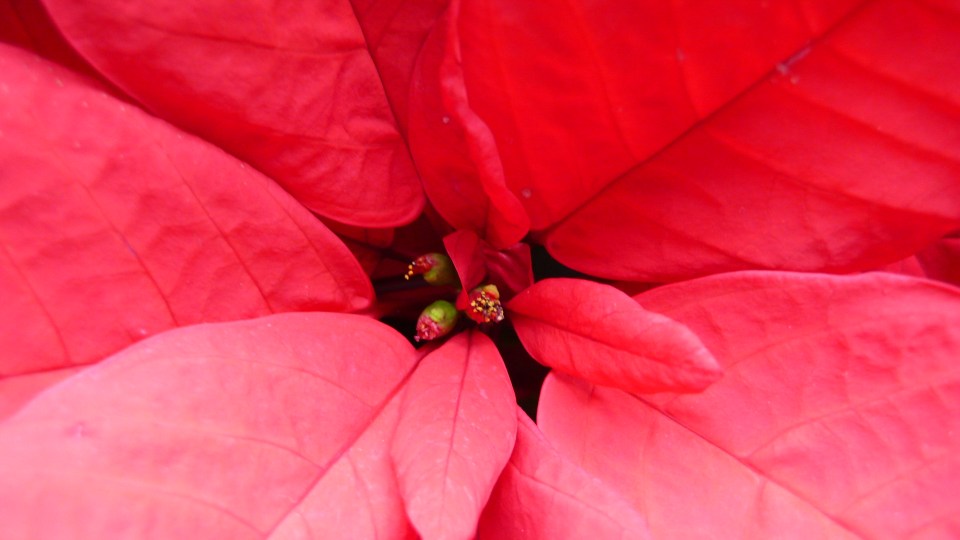
The final example from the Plantae is the poinsettia (Euphorbia pulcherrima) which I’ve pictured above.  In many ways this is an unusual plant to have such a strong cultural association with Christmas: it’s a mildly toxic species of spurge from tropical Mexico that was introduced to North America in the 19th century, then subsequently to Europe.  However its festive connotations date back to the earliest period of Spanish colonisation in the 16th century, so it’s older than some of the other Christmasy traditions I’ve discussed.

Of course biodiversity is about more than just species and taxonomic diversity, it also encompasses the diversity of habitats in which that life is found.  Here too we see strong influences of the natural world on the culture of Christmas, including festive scenes of snow-bound boreal conifer forest.  As our planet warms, however, that might be a view that is found only on Christmas cards and old movies, rather than directly experienced*.

And on that sobering note, I wish all of my readers and restful and biodiverse holiday: have a great Christmas everyone!


*Ha!  It’s looking to be the warmest December on record, and at times has felt more like early summer than mid-winter.

**I’m aware that there are other Kingdom-level classifications out there which could be used, but the Six Kingdom approach is a good starting point.

***Closer to home, colleagues in the office adjacent to mine have adorned their large weeping fig (Ficus benjamina) with home-made Christmas decorations.  Looks good.

8 things I learned from the Parliamentary Pollinators Update seminar – UPDATED

POST event December 2015

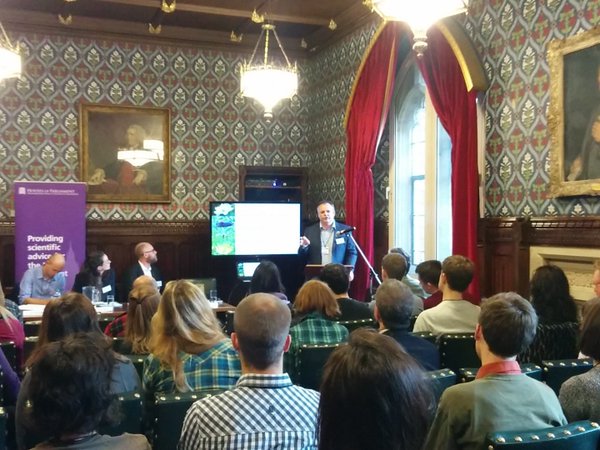
As I advertised a couple of weeks ago, last Wednesday I was in London to take part in a Pollinators Update seminar at the Houses of Parliament organised by the Parliamentary Office for Science and Technology (POST).  It was a very interesting event and good to catch up with some of the latest ideas about pollinators and their conservation.  However it’s been a busy week since then and I’ve not had time to post a full account of the seminar, which was attended by over 40 people.  So I’ve decided to write a brief summary of eight things I learned that day from my fellow speakers* and from the day in general; in some cases I’ve linked to the original sources where available:

1.  About 46% of Europe’s bumblebees have declining populations (see the European Red List for Bees that I highlighted in an earlier post)

2.  Around 2% of the world’s bee species do 80% of the crop pollination (Kleijn et al. (2015) Nature Communications)

3.  Pollinators other than bees perform 39% of the flower visits to crops (Rader et al. (2015) Proceedings of the National Academy of Sciences)

4.  By 2100 the Red-tailed Bumblebee (Bombus lapidarius), one of the commonest species in Europe, may be extinct across most of the continent due to climate change (Rasmont et al. (2015) Climatic Risk and Distribution Atlas of European Bumblebees)

5.  Only 6.6% of Entry Level Stewardship agreements by farmers across England included plans to grow nectar- and pollen-rich flower mixes.

6.  Criticism of laboratory studies of the effects of neonicotinoid pesticides are just as illogical as criticisms of field studies: both have their limitations and advantages, and both are needed.

7.  A panel of four experts on pollinators and pollination will largely agree about the answers to most questions an audience asks.

8.  A Westminster seminar such as this will attract very few MPs if it clashes with an important debate in the House of Commons, in this case about future military action in Syria.

UPDATE: here’s a number 9 suggested by Simon Potts: we all strongly support and encourage the setup of an All Party Parliamentary Group on “Pollinators” not just “honeybees” or “bees”.


*With thanks to my fellow panelists Simon Potts, Claire Carvell and Richard Gill, and to Kirsten Miller and the POST team for organising the event, and for the photograph of the panel in action.


Virtual Conference on Ecology and Climate Change

Following on from what seemed to be a quite popular Virtual Conference on Pollinators, Pollination and Flowers I thought I’d mark this week’s Paris talks on tackling climate change with a second  “virtual conference” on the topic of climate change and how it may affect (and be affected by) natural and agricultural ecological systems.

This is a great set of talks* with some very thought-provoking ideas.  Hope you enjoy them.

Douglas Sheil  (Norwegian University of Life Sciences)

Do forests attract rain?


Hans Joosten (University of Griefswald)

For peat’s sake – bogs and climate change


Nicola Di Cosmo (Institute for Advanced Study)

Climate, conflict, and historical method


Ben Beard (NCEZID Centers for Disease Control)

Climate change, ecology, and disease emergence


Jennifer Cartwright and Bill Wolfe (USGS Tennessee Water Science Center)

Climate-sensitive, insular ecosystems of the Southeast U.S.


Nabil Nemer (American University of Beirut)

Are changes in insect patterns in the Lebanese Mountains evidence of climate change?


Lini Wollenberg (University of Vermont)

Climate Change Mitigation on Agriculture-Forest Landscapes


Tim Benton (University of Leeds)

Food and the future: climate and resilience


Feel free to discuss the talks in the comments section and to post links to other talks on the same topic.


*I’m assuming that, as all of these videos are in the public domain, none of the presenters or copyright owners objects to them being presented here.  If you do, please get in touch and I’ll remove it.

Pollinators seminar at the Houses of Parliament – 2nd December

Skipper on ragwort - cropped

The Parliamentary Office of Science and Technology (POST) has organised a “Pollinators Update” afternoon seminar in London on Wednesday 2nd December, to discuss recent developments in pollinator conservation research. I’ve been asked to give a 15 minute presentation on the pollinator extinctions research we published in Science last year.

The full programme will be:


  • 2.30pm Sarah Newton MP, Chair’s Welcome
  • 2.40pm Presentations
  • Professor Simon Potts (Professor of Biodiversity and Ecosystem Services) – Reading University
  • Professor Jeff Ollerton (Professor of Biodiversity) University of Northampton
  • Dr Claire Carvell – NERC Centre for Ecology and Hydrology
  • Dr Richard Gill – Imperial College London
  • 3.40pm Discussion
  • 3.55pm Chair’s closing remarks
  • 4.00pm Refreshments


The seminar is free to attend but you need to book a place: see the POST website for details.

Pesticides and pollinators: some new studies and contrasting conclusions

Bee on apple blossom - 1st May 2015

The question of whether or not neonicotinoid pesticides are negatively impacting agricultural pollinator abundance, diversity and behaviour continues to focus the minds of researchers. It’s an issue that has been almost constantly in the news since the earliest suggestions that these pesticides were harming pollinators. These concerns have led to temporary EU restrictions on the use of these chemicals, a decision that was partially over turned this year in the UK.

The past two months has seen the publication of at least five papers on the topic, two of them this week alone.  In this post I want to highlight those papers and provide some commentary.

The first two studies have shown that neonicotinoid pesticides can affect pollinator behaviour, and specifically the memories of both honey bees and bumblebees:

Wright et al. “Low doses of neonicotinoid pesticides in food rewards impair short-term olfactory memory in foraging-age honeybees

Stanley et al. “Bumblebee learning and memory is impaired by chronic exposure to a neonicotinoid pesticide“.

Subtle behavioural changes such as those documented here are not generally assessed in standard toxicological safety assessments for pesticides, which are mainly focused on whether or not the chemicals kill non-target animals, and at what dosage.  But for plant-pollinator interactions (including agricultural pollination) such changes in pollinator behaviour could be crucial to the effectiveness of the pollinators.  How crucial?  Well up until today we didn’t know; but with the publication of another paper by Stanley and colleagues we now have evidence that the sub-lethal effects on pollinator behaviour can actually translate into an effect on pollination of apple crops:

Stanley et al. “Neonicotinoid pesticide exposure impairs crop pollination services provided by bumblebees“.

The study is the first one to my knowledge that tests the effects of field-relevant doses of pesticides on pollinator performance and subsequent pollination services in a commercial farm crop, and adds some valuable hard data to an already heated debate.  The story, embargoed until this evening, has already been picked up by media, including the BBC News website.

To summarise the study: using artificial bumblebee colonies and caged apple trees Stanley and colleagues implemented an experiment in which they tested the effect of two different levels of exposure to a neonicotinoid pesticide on pollinator behaviour and subsequent pollination services to the fruit trees. They found a clear effect of exposure to the higher level of pesticide, resulting in a change in bee behaviour and a subsequent reduction in apple quality.

By way of a contrast, another study this week has focused on the lethal effects of these pesticides.  Henry et al. “Reconciling laboratory and field assessments of neonicotinoid toxicity to honeybees” has shown that although the chemicals are lethal to individual honey bees, the overall impact of the loss of the bees is buffered by the fact that the colonies can simply produce more worker bees to compensate for the losses.  This is interesting but needs to be judged in the context of the fact that honey bees are very unusual and atypical compared to most other pollinators, and indeed most other bees.  They produce very, very large colonies with a unique social structure, and so this compensation might be expected.  These caveats were echoed by some of the scientists asked to comment on the study in media stories such as the one on the BBC News website.

Finally, Godfray et al. have updated their earlier review of the environmental effects of these pesticides with “A restatement of recent advances in the natural science evidence base concerning neonicotinoid insecticides and insect pollinators“.  Given the rate at which new studies are coming out, it won’t be long before a second restatement is required!

Where does this leave the whole debate around pesticides?  Still with firmly entrenched views on both sides I would have imagined.  No doubt the debate will run and run.

Meanwhile, important as it is, the focus on pesticides is in danger of over-shadowing other really interesting studies that might affect how we manage our agro-ecosystems in the UK.  For example, I’d completely missed a paper from the end of September by Pywell et al. entitled “Wildlife-friendly farming increases crop yield: evidence for ecological intensification“.  As far as I can judge from the Altmetric information for the paper, so too had the media: it received no coverage on any of the usual outlets.  But this is important stuff that deserves wider publicity: it’s going to take more than a ban on pesticides to recover some of the biodiversity (at both a species and a habitat level) that we’ve lost due to intensive farming over the last 100 years or so.


Virtual Conference on Pollinators, Pollination and Flowers

B pasc on sunflower

Academic conferences are an important part of what makes science function, via the exchange of ideas and information, publicly and in person.  The act of sitting and listening to both established and early career researchers discussing their most recent work, sometimes before it’s in print, is stimulating and exciting, and will never be replaced by digital technology. We’re social animals and conferences, as much as anything else, are social events.

But conferences are becoming more expensive, more frequent, and increasingly out of reach to researchers with limited budgets.  They are also getting larger: how many times have you attended a big conference and been torn between which of two (or three or four) talks to go to in parallel sessions?  Wouldn’t it be nice to be able to see all of them?  Or to go back and hear again the talks that you most enjoyed?  Likewise, wouldn’t it be great if your students or members of the public could also see what such conference presentations are like?

With this in mind, some time ago I dreamed up the idea of “virtual conferences” in as an experiment that aims to bring together into one place the most interesting recorded seminars, webinars, conference talks and public lectures that are freely available, and present them as a series of themed mini-conferences.  All of the videos in these collections are available on sites such as YouTube* and my role is just to curate them and present them in one place for convenience, as a showcase for some of the best research in biodiversity, evolutionary biology, ecology and conservation, very broadly defined, including inter-disciplinary and policy-related presentations.  And just as at a conference, there’s an opportunity to discuss the talks in the comments section on each post and to provide links to other talks on the same topic.

As well as being a service to the research community and the wider public, I hope that these conferences will be a useful teaching resource at advanced undergraduate and postgraduate level.

If anyone is interested in guest-curating a set of presentations in their own subject area on this blog, please do get in touch and I’ll be happy to talk about it.

So here’s the first virtual conference, on (naturally) pollinators, pollination and flowers:


Judith Bronstein (University of Arizona)

The conservation biology of mutualism


Peter Crane (University of Chicago)

The origins of flowers


Jeffery Pettis (USDA Bee Research Laboratory, Maryland)

The role of pesticides in declining pollinator health


Linda Newstrom (Landcare Research, New Zealand)

Pollinator systems in New Zealand and sustainable farming fund


Mace Vaughan and Eric Mader (Xerces Society/USDA/University of Minnesota)

Pollinator habitat assessment and establishment on organic farms


Carlos Vergara, Rémy Vandame, and Peter Kevan (Universidad de las Americas-Puebla/El Colegio de la Frontera Sur/CANPOLIN)

Coffee pollination in the Americas


Claire Kremen (University of California, Berkeley)

Restoring pollinator communities in California’s agricultural landscapes


*I’m assuming that, as all of these videos are in the public domain, none of the presenters or copyright owners objects to them being presented here.  If you do, please get in touch and I’ll remove it.

The All-Ireland Pollinator Plan 2015-2020

B pasc on sunflower

In the last 12 months we’ve seen the release of the National Pollinator Strategy for England and the USA’s Strategy to Promote the Health of Honeybees and Other Pollinators.  Now the Republic of Ireland and Northern Ireland have joined forces to produce the All-Ireland Pollinator Plan, a strategy for 2015-2020 that has been released today.  Follow that link and you can download a copy.

This appears to be the first cross-jurisdiction pollinator plan in the world and, as such, is to be welcomed; as I said in my reflections on the National Pollinator Strategy, biodiversity does not respect political boundaries.

That “love wasps” article – this is how Friends of the Earth responded

Clearly my quick post this morning got through to Friends of the Earth at some level (thanks to everyone who tweeted it).  Here’s what they have done to the article in response:

  • Removed the not-a-wasp photograph (good)
  • Added some text about other things that wasps pollinate (good) but left in the text about figs (bad)
  • Under the “garden pests” section they have add some text, as follows (bad):

The University of Northampton’s Dr Jeff Ollerton says: “Wasps are part of a whole ecological guild of scavenging animals that includes ants, various birds, etc, which plays a valuable role by removing vast amounts of waste organic material from our towns and cities every year.”

Huh?  What I said had nothing at all to do with eating pests.  Was that not clear when I talked about “waste organic material” rather than “pests”?

Incidentally, and for the record, I’ve had no contact from anyone at Friends of the Earth asking if it was ok to quote me, or check text, or anything.

So, not a complete success then.  Once again, feel free to tweet this at FoE

More poor quality information: Friends of the Earth’s “Love Wasps” campaign

Despite some recent posts in that vein, I don’t want to turn this blog into just an outlet for my frustrations about the lack of science/evidence in otherwise well-meaning conservation initiatives.  However something caught my eye at the weekend that I feel I have to comment on.

Friends of the Earth has recently posted a very well-meaning piece about why we should stop hating wasps and learn to appreciate them.  I whole-heartedly support this: wasps are one of the least understood and most under-valued aspects of local biodiversity, and the article makes some very good points.

But there are also some aspects to the article that make me cringe and add a new layer of inaccuracy to a subject already flooded with crass statements such as “what use are wasps”:

  • The first photograph in the article does not show a wasp: it’s a syrphid fly, specifically a species that mimics wasps but is other wise harmless.  These flies do not sting or bite.
  • “Wasps pollinate figs” – yes they do, but fig pollinating “wasps” are tiny and only distantly related to the kinds of wasps you’re going to see in a British garden.  In any case they do not pollinate commercial edible figs: these wasps spend much of their life-cycle within the fig and who wants to eat a fig full of insects?
  • Having said that, the sorts of wasps the article is referring to ARE important pollinators of a whole range of plants, including some orchids, umbellifers, ivy, etc.  That’s not mentioned at all.
  • The piece misses out the fact that wasps are part of a whole ecological guild of scavenging animals that includes ants, various birds, etc., which plays a valuable role by removing vast amounts of waste organic material from our towns and cities every year.  They also perform a similar function in natural ecosystems.

What’s frustrating about Friends of the Earth’s article is that there are any number of individuals and organisations out there who would be happy to fact-check such a piece, including Buglife, BWARS, and a range of scientists and well-informed specialists in natural history.  Why doesn’t Friends of the Earth make use of them?

As I’ve said before I don’t use Twitter, so if anyone wishes to tweet this at Friends of the Earth, please go ahead.

The organisers’ positive response to criticisms of the “honey bee decline” conference

P1120404

Three days ago I wrote a short, fast post expressing my unease (in robust terms) about a forthcoming conference entitled “Biodiversity and Local Partnerships: Halting the Decline of the Honey Bee in the UK”.  I had not anticipated that the post would generate quite as much interest as it did:  2007 views, 16 likes, and 28 comments (including my responses) as of 10am today.

There were also a lot of comments and likes on Facebook, most of it positive and agreeing with my sentiments, though some have suggested that I’m over-reacting, that I may be paranoid, and questioned what my “hidden agenda” is and whether I might be funded by an agrochemical firm (!)  Thanks to everyone who took the time to read the post and/or to respond*, to tweet the post, and even, in one case, phone up the conference organisers.

So it was with some satisfaction that yesterday I received the following email from the conference organisers, Public Policy Exchange (PPE), in response to my initial reply to their invitation:

Thank you for your response to our event, we always appreciate any
feedback from experts such as yourself. Your comments have been passed
on to our researchers and they are currently reviewing this event.

Our researchers do use a variety of sources, though on this occasion it
does appear that some have made sweeping generalisations and
over simplified statements, and ultimately have been unreliable. Clearly
our previous marketing mistakenly overplayed the role of the honey bee
in pollination processes. We certainly don’t want to contribute to a
misinformed narrative around bees and other pollinators; that was never
our intention and so we are looking at how we can improve this event.

Biodiversity is an area which we are very keen to develop further and
your feedback is therefore very helpful to us.

Kind regards,

The Conferences Team

They have also changed the title of the conference to “Biodiversity and Local Partnerships: Halting the Decline of Bees and Other Pollinators in the UK“.

So kudos to PPE for their fast response.  That’s a good outcome as far as I’m concerned and I may consider attending the conference; hell I’d even consider speaking at it if i was asked!

———————————————————-

*Yes, that’s deliberate – I got the impression that some on Facebook were responding without reading it…