Category Archives: Charles Darwin

‘Why Do We Need Worms?’ long-listed for the School Library Association Book Awards!

Since early 2021 I’ve acted as a science advisor for some of the children’s books published by Usborne, beginning with Can We Really Help the Bees? The most recent is Why Do We Need Worms?, written once again by Katie Daynes and with amazing illustrations by Moesha Kellaway. I’m especially proud of my involvement with this book as in its early stages I suggested mentioning Charles Darwin’s fascination with worms. The book is aimed at ages 4 and upwards, though a reviewer has said that it’s ‘Perfect for my 3 year old grandson who loves looking at worms!’ So this book has to have one of the youngest Darwin readerships!

Why Do We Need Worms? was published last year and I’m delighted to say that this year it’s been long-listed for the School Library Association Book Awards in the 0 to 7 years Information Book category! It’s a great achievement for everyone involved and if the book gets short-listed, I will be sure to let you know.

Recent research and seminars on pollinators and pollination that have caught my eye

There’s so much good science and so many great talks coming out of the (broad) field of pollinator and pollination research at the moment! Here’s a few things that have come up on my radar. Feel free to comment and add your own examples of things I may have missed.

How reliable is ChatGPT? A weird encounter with Erasmus Darwin

There’s currently a lot of interest in ChatGPT and over the past week, like many others, I have been playing around with this artificial intelligence (AI) system and testing its knowledge and creative powers. The latter are really very impressive: I asked it to write a couple of limericks about Karin and my professions, and about our move to Denmark, and it produced a decent stab at those.

I also probed its knowledge about topics with which I’m familiar, mainly pollinators and pollination of course, and it produced some good answers. When I highlighted some errors it had made, ChatGPT went back and revised its answers, and politely thanked me in the process. If I were a student I would not rely on it to write accurate essays, but so far so good(ish).

This morning, however, I had a very odd experience. I was trying to track down something attributed to Erasmus Darwin (Charles’s grandfather) and I asked ChatGPT: “What did Erasmus Darwin say about birds visiting flowers?”

This is the answer that came back:

Erasmus Darwin was a naturalist, physician, and poet who wrote about a wide range of topics, including birds and flowers. In his 1794 poem “The Loves of the Plants,” he describes how different species of birds visit flowers in search of nectar:

“Birds of each hue, from the gay parrot’s beak
To the goldfinch, painted in tiny streak,
Sip nectar from the cups that bloom and bow
With every breeze, and nod and dance below.”

Now, the first part of this, about Erasmus’s life, is true. It’s also true that he wrote a poem with that title, though it was published in 1791, not 1794.

But, when I double-checked those attributed lines against the published version of the poem that’s on Project Gutenberg, I discovered that they did not exist. ChatGPT had made them up!

As I said, this AI is pretty creative and will certainly write a poem for you on any topic you care to request. But I didn’t ask it for that, I had made a factual query. And ChatGPT had just invented some poetry and claimed it as fact, unless of course those really are Erasmus’s lines and I’ve missed their source (please correct me if I have).

Now as a scientist and writer I try to be rigorous when quoting and citing sources, and if I hadn’t double-checked this I might have taken it at face value. And one could argue that my initial question – “What did Erasmus Darwin say…?” – was a little ambiguous. But nonetheless, I was not expecting an AI to try to pass off something it had created as fact.

Has anyone else experienced anything like this when using ChatGPT? It’s a fun, creative tool. But as far as I can tell, it also has a very human ability to lie.

A new study shows that even short-tubed flowers can specialise on hawkmoths as pollinators

Of all of the “classical” pollination syndromes, flowers that are hawkmoth pollinated have one of the highest levels of predictability. If a flower is pale in colour, opens at night, is highly scented, and possesses a long tube at the bottom of which is a supply of nectar, there’s a very high likelihood that it’s pollinated by long-tongued hawkmoths (Sphingidae).

Indeed, one of the foundational stories about the development of our understanding of how pollination systems evolve, relates to Charles Darwin, the long-tubed orchid Angraecum sesquipedale and the hawkmoth Xanthopan morganii praedicta.

Fast forward 160 years and we now know that pollination syndromes are more complex than 19th and early 20th century scientists imagined – see my recent book Pollinators & Pollination: Nature and Society for a discussion of this topic. That’s not surprising because, as I point out, we probably have data on the interactions between plants and their pollinators for only about 10% of the estimated 352,000 species of flowering plants. There’s still much to be discovered!

As an example of how our understanding of specialised flower-hawkmoth interactions is developing, consider this recent study that I’ve just published with my Brazilian colleague Felipe Amorim and other collaborators. In it we have shown that, contrary to expectations, a species of Apocynaceae (Schubertia grandiflora) with a relatively short floral tube can specialise on hawkmoths with much longer tongues than we might predict.

The full reference with a link to the study is shown below, followed by the abstract. If you would like a PDF, please drop me a line via my Contact page:

Amorim, F.W., Marin, S., Sanz-Viega, P.A., Ollerton, J. & Oliveira, P.E. (2022) Short flowers for long tongues: functional specialization in a nocturnal pollination network of an asclepiad in long-tongued hawkmoths. Biotropica https://doi.org/10.1111/btp.13090

Abstract:

Since Darwin, very long and narrow floral tubes have been known to represent the main floral morphological feature for specialized long-tongued hawkmoth pollination. However, specialization may be driven by other contrivances instead of floral tube morphology. Asclepiads are plants with a complex floral morphology where primary hawkmoth pollination had never been described. We detailed here the intricate pollination mechanism of the South American asclepiad Schubertia grandiflora, where functional specialization on long-tongued hawkmoth pollinators occurs despite the short floral tube of this species. We studied two plant populations in the Brazilian Cerrado and recorded floral visitors using different approaches, such as light-trapped hawkmoths for pollen analysis, direct field observations, and IR motion-activated cameras. Finally, using a community-level approach we applied an ecological network analysis to identify the realized pollinator niche of S. grandiflora among the available niches in the pollinator community. Throughout a period of 17 years, long-tongued hawkmoths were consistently recorded as the main floral visitors and the only effective pollinators of S. grandiflora. Flowers rely on highly modified corona and gynostegium, and enlarged nectar chambers, to drive visitors and pollination mechanism. Despite its relative short-tube, network analysis placed S. grandiflora in the module including exclusively long-tongued hawkmoth pollinators and the most phenotypically specialized sphingophilous plants in the community. These results represent the first example of functional specialization in long-tongued hawkmoths in an asclepiad species. However, this specialization is uncoupled from the long floral tubes historically associated with the sphingophily syndrome.

Generating AI art from titles of scientific publications

WARNING: huge time wasting potential ahead.

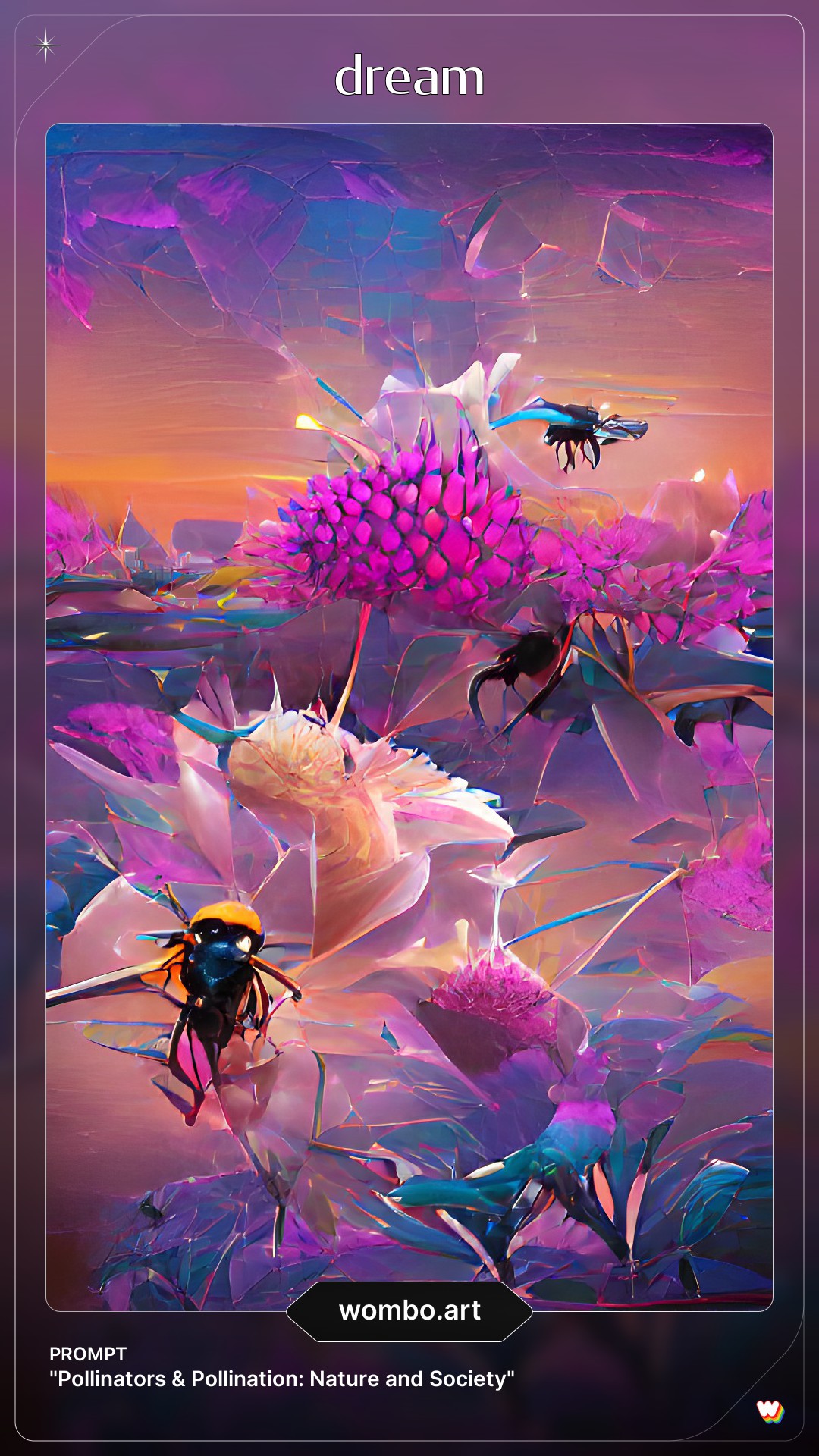
As regulars to my blog might know, I’m a sucker for computer-generated “stuff”, for example virtual ecological systems; see my 2020 post “a simple online ecosystem model: like Tamagotchi for the green generation“. Last night while browsing Twitter I came across a few people tweeting about app.wombo.art which uses words and phrases as a prompt for its AI to generate art in a variety of styles. For example, the image above is based on the title of my book Pollinators & Pollination: Nature and Society. The downloaded image always has “dream” at the top which is easy enough to crop, while “PROMPT” is the word or phrase that you entered, which can be turned off.

You can also use the titles of scientific articles – this one is my 1996 paper “Generalization in Pollination systems and Why it Matters” (I don’t think that it counts as a graphical abstract…):

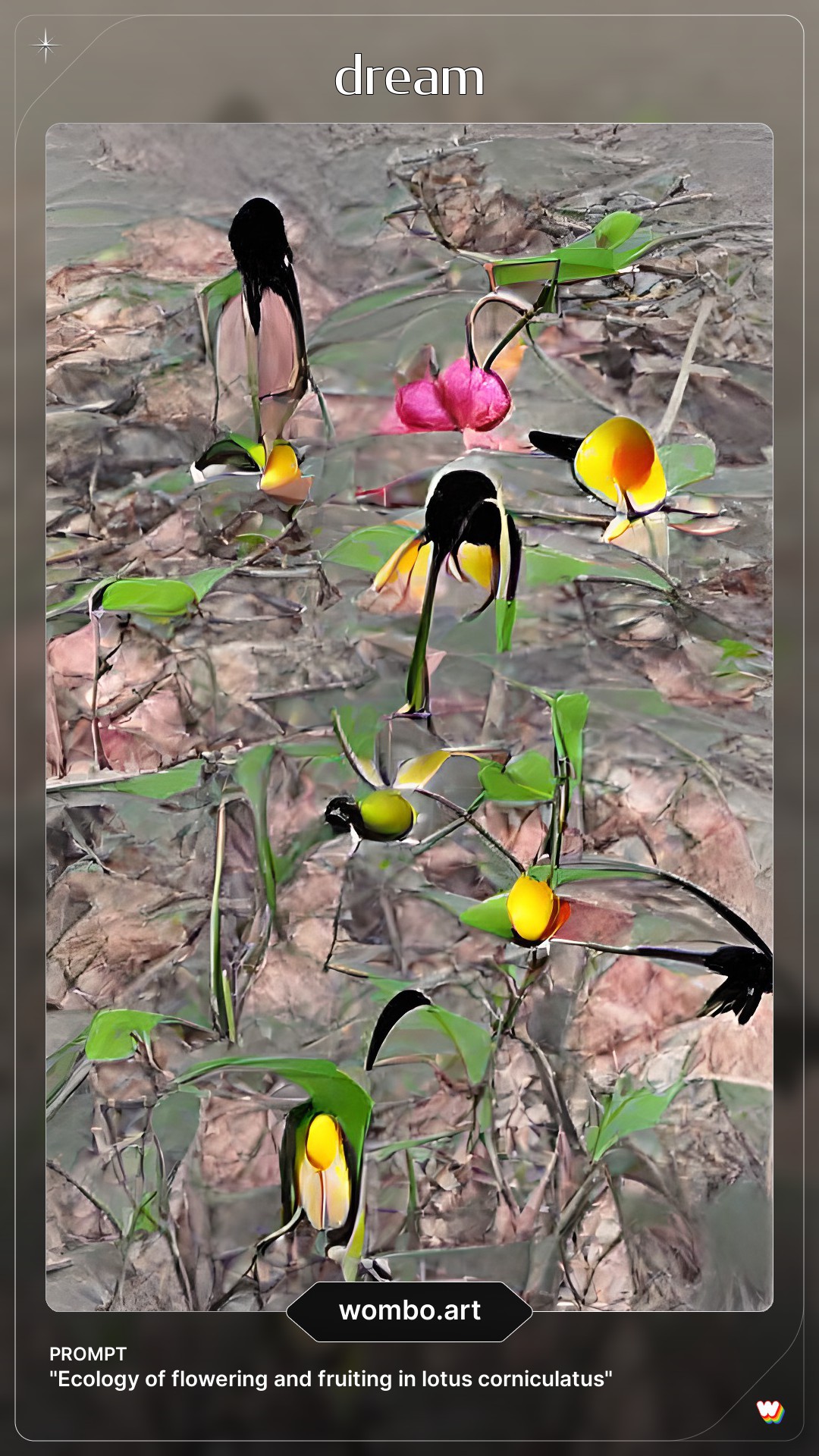
A lot of people were submitting their thesis titles and I expect to see some of these used as frontispieces in PhDs in the near future. Here’s mine (from 1993) – “Ecology of flowering and fruiting in Lotus corniculatus“:

The other category that I had fun with was using scientific names – here’s the genus Ceropegia:

And here is Apocynaceae:

Can you guess what phrase I used to generate this one:

What’s really fascinating about this system is that every time you generate an image from the same phrase it returns something different. Go have fun, but be warned: it’s a bit of a rabbit hole and it’s possible to waste a lot of time playing around:

Neither left nor right, but international environmentalism: Australia reflections part 8

2020-01-13 12.17.33

The NASA Earth Observatory reported this week that “explosive fire activity” has caused smoke from the Australian bushfires to enter the stratosphere and be carried half way around the world.  That smoke is currently creating hazy skies and colourful sunrises and sunsets across South America.  In the coming months the smoke will complete a full circuit and arrive back in Australia, and then continue onwards … for who knows how long?

Nothing I’ve read this week sums up better the fact that the world’s environmental challenges, including climate change, are global in scale and scope.  They therefore require global initiatives to solve.  But as I’ll argue below, equating “green” politics with the left and “anti-environmental” policies with the right is an unhelpful characterisation.

Despite the need for global action, the world’s political landscape seems to be going in the opposite direction.  Inward-looking, right-wing populism is on the rise, and governments are hunkering down into a siege mentality of denying that there are any environmental problems that require serious, long-term action.  The Australian government, bolstered by the Murdoch-owned media empire (see Michael Mann’s recent piece on this in Newsweek), sees the bushfire crisis as “business as usual” even though all the evidence is to the contrary – demonstrated in this interesting piece from two Australian climate scientists.

Elsewhere in the world, Presidents Bolsonaro in Brazil and Trump in the USA are tearing up environmental regulations and “green tape” and allowing “the people” (or at least big business interests) to ransack the natural world for their own gain.  At the same time, one of the less-well-reported elements of Boris Johnson’s various speeches over the past few months has been its emphasis on the environment (he even used the word “biodiversity” in one of them) and the pressure he put on the other leaders of the G7 countries at their most recent meeting.  Perhaps that should come as no surprise given that Boris’s father, former Conservative MEP Stanley Johnson, has sound credentials as an environmentalist, particularly during his time with the European Commission. Indeed, in the mid 1980s Stanley Johnson received an award from Greenpeace for “Outstanding Services to the Environment”.  He’s even written for The Guardian, which is not the natural home for a member of the Conservative party.  There are other Conservatives with sincere pro-environmental attitudes (Zac Goldsmith and Rory Stewart come immediately to mind) and whatever you may think about their views on other topics, you can’t doubt their sincere environmental commitments.  And of course there are pro-environmental politicians in the Labour Party, and the Liberals and the SNP and Plaid Cymru and…..well, just about all of them.

Globally, both right- and left-governed states have variable environmental policies. Two countries recently reported that they had made extraordinary progress in tree planting restoration schemes: India (a right-wing, populist government) and Ethiopia (much more left-leaning).  China (communist in name but who knows what we should call it?) has a very mixed record on the environment, with huge investments in both solar power and coal mining.  It’s hard to get firm environmental data out of communist North Korea but the evidence so far suggests that they are not doing well: see this piece from 2009 by journalist Peter Hayes.

Closer to home, in the last few months on Twitter I’ve been called an “eco-loony” by a farmer; told that my objections to the High Speed 2 (HS2) rail infrastructure project were providing support for climate change deniers by a couple of train buffs; and accused of “sleeping with the enemy” by an environmental activist who didn’t like my stance on another large project.  The latter also tweeted a made-up quote from me to emphasise just how morally corrupt I was. Irony was lost on them I think.  I don’t know the political allegiances of those individuals but if I was a betting man I’d be fairly sure of a good return – definitely a mix across the spectrum.

Hopefully these examples make something abundantly clear: the relationship between politics and environmentalism is not straightforward.  That’s been obvious to me, and many others, for a long time.  But I’m not sure how widely understood this is because the impression that is presented to the public by both the right- and left-leaning media, is that “green equals left”.  And whilst there may be some truth to that currently in relation to the political alliances formed between various Green Parties, there is no historical basis for this correlation.  It’s even mixed up in the minds of the modern-day socialists. A few months ago a left-wing journalist opined that the left had “always” been pro-environmental, yet the (supposedly) socialist website Spiked has been publishing pieces arguing that environmentalists are against the working class and that de-carbonisation strategies will cost jobs – see this piece for instance.  Before anyone comments, I’m aware that Spiked has an odd and paradoxical history…..

Historically, both the far left and the far right have a mixed track record on the environment.  I read an appalling story recently about the Soviet Union whaling fleet killing whales simply to meet targets, not because they were of value economically; the author described it as “the most senseless environmental crime of the 20th century“.  However, communist Cuba set aside 10% of its area as national parks and biosphere reserves, and has a strong environmental track record.  In the 1950s, Maoist China had a policy of killing sparrows and other “pests” that was partly the cause of the Great Chinese Famine in which tens of millions of people died of starvation.  The first National Parks in the world were set up in the USA by what we could broadly consider conservative presidents, but the American legacy of nuclear testing and the fossil fuel industry is nothing to be proud of.  Finally, there is a long history of “green” fascism, from the environmental policies of the Nazis (I’ve not read this book but it looks fascinating), to individuals such as Jorian Jenks who was a founding member of the Soil Association, to modern day “eco-fascists” whose justification for carrying out mass-murder and domestic terrorism is rooted in arguments about reducing population growth in order to “save the Earth”.

It’s telling that Big Capitalism is starting to think more seriously about global environmental problems, how they can be solved, and at the same time create jobs and prosperity (and a buck or two for investors – I’m not naive).  Outgoing head of the Bank of England Mark Carney  has argued that firms and banks need to stop investing in fossil-fuels.  Many are following his lead, or are ahead of that curve, including the bank Goldman Sachs and the $7 trillion investment firm BlackRock which has recently stated that “climate change will become the centre of the firm’s investment strategy“.  Nobel Prize-winning economist Paul Krugman  has argued this week that Australia is showing us “the road to hell” and that governments and businesses of all political stripes and inclination better get on board with the environmental agenda.  Soon!

I firmly believe that neither the left nor the right are the friend nor the foe of environmentalism: there are plenty of historical and current examples of rapacious right-wing and left-wing governments, and also examples of such governments being highly pro-active at reducing  their country’s environmental impact.  The one thing that seems to me to be environmentally damaging is a rigid ideology that is followed through regardless of where it is positioned.

The title of this piece is a word play on a slogan adopted by the Socialist Workers Party: “Neither Washington nor Moscow but International Socialism”.  The environmental challenges facing our planet, our species, and the species with which we share this biosphere, are international in scope and it requires international, multi-partisan political action to address.   Whatever your personal political leanings, if you care about the planet, that statement must be blindingly obvious.  That’s why I’m so supportive of organisations like the UN’s IPBES (Intergovernmental Science-Policy Platform on Biodiversity and Ecosystem Services).  Now, more than ever, the world needs this level of pan-national leadership.

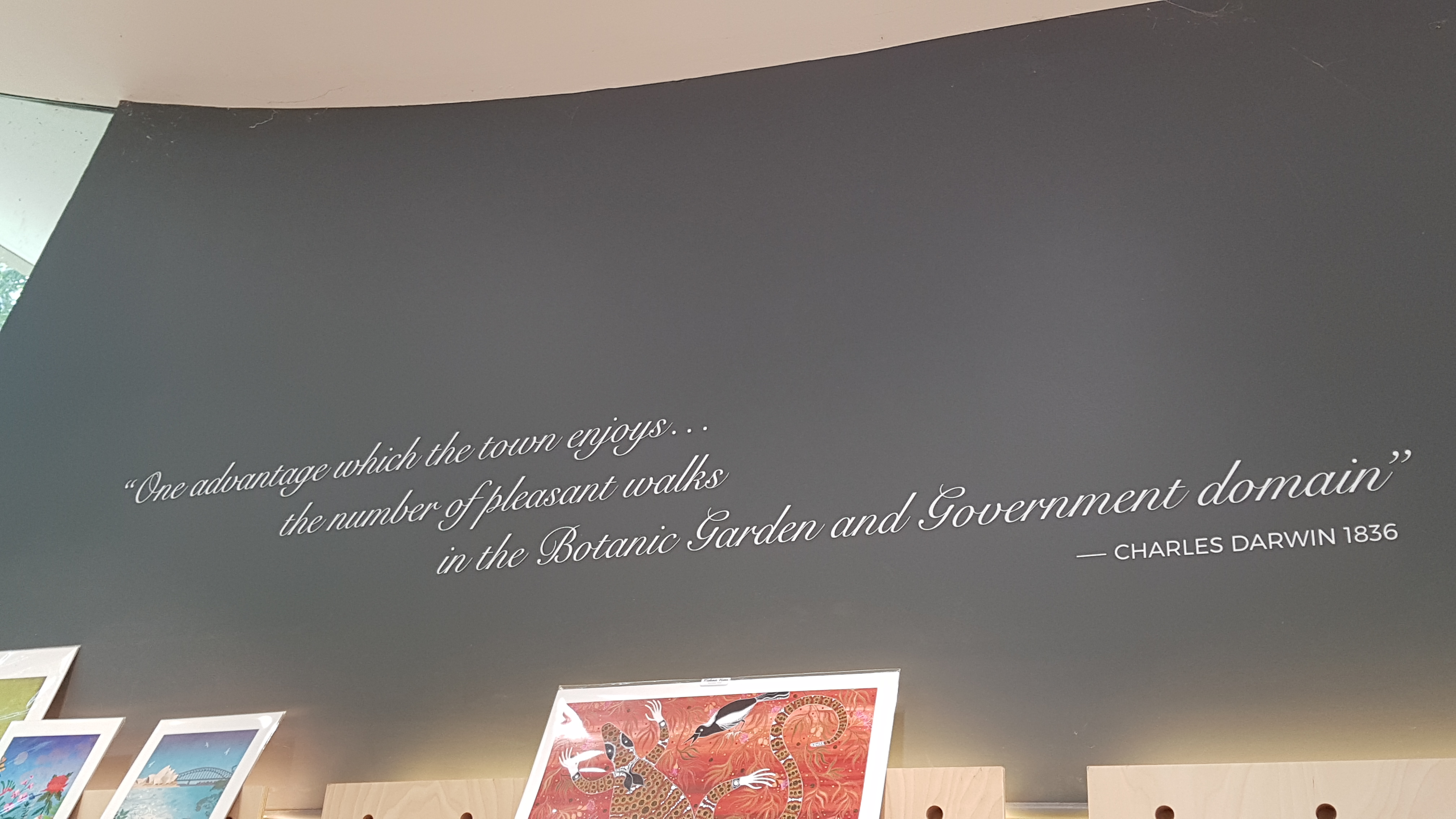
If I’ve learned one thing as an ecologist it’s that the world is a complex, historically contingent and often unpredictable place: simplistic notions of socialism = good/bad and capitalism = good/bad are not going to solve the current crisis of climate change, loss of biodiversity, pollution, and a host of other environmental problems.  Only thinking outside of narrow ideologies is going to do that, and using the tools and strategies that are available to us, including market forces, open democracy, local activism, global movements, and whatever else works.  I’m still optimistic that the world can provide humanity with the kind of  metaphorical “pleasant walks” that Charles Darwin wrote about when he visited the Royal Botanic Gardens, Sydney:
2020-01-13 14.48.59

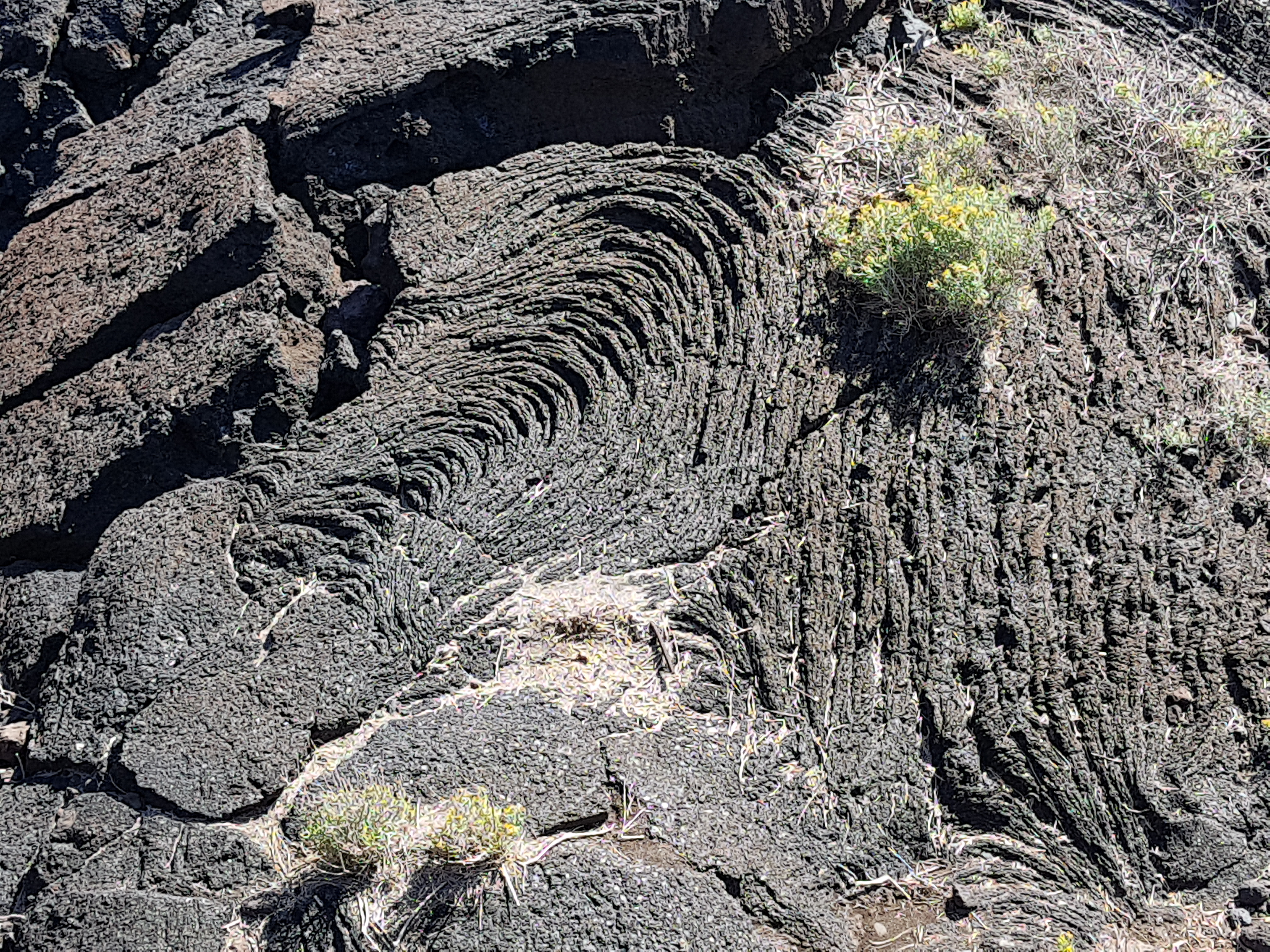
But we have to act fast.  Otherwise the ruins of civilization, and of the biosphere, may be our species’ legacy: that’s why I chose the image that opens this piece.

Climate change, politics and a host of viewpoints: Australia reflections part 5

2020-01-07-14.35.15.jpg

It’s impossible to get away from discussions of climate change and its role in the Australian bushfires at the moment. It’s all over the Australian media, at least that part of the media that isn’t controlled by the Murdoch empire.  Politicians of various stripes are falling over themselves to declare their point of view and some careers are (hopefully) being harmed by crass statements that try to belittle expert, informed opinion – the latest example from Twitter is #NotAWeatherGirl, which has been trendingfor a couple of days now.

If you have any interest in global climate change then the name of Prof. Michael E. Mann will be familiar to you, from his famous hockey stick graph, his work with the Intergovernmental Panel on Climate Change, his books on the topic, the RealClimate blog, as well as numerous media interviews and television appearances.  Until yesterday we’d not met.  But by coincidence, like me, Prof. Mann is also on sabbatical in Australia, is also working at UNSW, and is based near to us.  Via Twitter I invited him for a meet up to discuss what’s happening in Australia at the moment and to set it in a global perspective.  Karin and I met with Mike at a local café, along with an Australian journalist who has asked to remain anonymous, and we chatted for a couple of hours.  From the position of outsiders coming from cultures that politically are moving closer together, and with an expert local perspective, it was interesting to consider what the USA, the UK and Australia have in common and what’s different. And of course, Karin’s Danish heritage provided yet another perspective.  What follows is a short summary of our discussion and some additional thoughts.

One thing that’s clearly true is that the climate change deniers have lost.  Period.  There’s no faux science or dodgy statistics that they can fall back on that have any credibility.  Fudging the data, as some have tried to do for Australia, does not work anymore: anyone willing to listen can see through this charade.

The world’s weather systems are changing, and they are changing EXACTLY in line with the predictions based on human-induced climate change. These changes are causing massive disruptions to natural ecosystems and to human societies, from the drought and fires in Australia and California, to the flooding in Jakarta and the American mid-west, and in parts of the UK.  Karin’s been writing about this recently in relation to human stories from the bushfires and I recommend you take a look; as always, her take on such events complements my own.

The misery that these bushfires and floods have produced among citizens has prompted previously skeptical or agnostic politicians to act, or be seen to be acting.  Those that don’t (and we’re looking here at Aussie Prime Minister Scott Morrison and the increasingly desperate Donald Trump – who’d’ve thunk he’d try to start a war in the middle of a personal political crisis….?) are going to find themselves quickly out of office.  In this regard the British government is rather different, and Boris Johnson appears to be on board with the need to act on climate change.  Even Piers Morgan seems to be hurrying to get on to the right side of history.  But the danger is that it will be too little, too late.  Denmark, of course, along with other Scandinavian countries is showing just how much can be done to cut emissions from energy generation, travel and agriculture, and to invest in a more sustainable future.

In the face of such overwhelming scientific evidence, the consortium of right-wing media barons, plus vested business interests and unfriendly foreign agents, have adopted a different tactic. Rather than deny the science they are targeting the individual influencers who they see as a danger to their power. The vile abuse of Greta Thunberg is the most obvious example, but Mike’s come in for his fair share of abuse too.  Anyone with green credentials who flies or has a less than Spartan lifestyle is accused of hypocrisy, and the focus is being turned on to what individuals should be doing rather than what governments and industry can achieve much more easily and with greater impact.  In Australia it seems there is a campaign to down-play the role of natural processes in the bushfire crisis by claiming that it’s mainly due to a spate of arson, and that “Greenies” have made the situation worse – Twitter bots and trolls have been implicated in this conspiracy.

All of this is an effort to undermine sustainability arguments: that we can have a sound economy based on social justice, environmental protection, green jobs, and a transition to a low-carbon economy.  But we need some structural changes to the global economy, including getting away from this obsession with GDP and “growth”.  This doesn’t mean throwing the baby out with the bath water and dismantling capitalism altogether.  We were agreed that we need to build on the best bits of capitalism and open democracy, and move forward with that, rather than tearing down what has been achieved in terms of human progress.  As I’ve mentioned before, Steven Pinker’s recent book Enlightenment Now has some great arguments on this topic.

Related to this is the fact that environmentalism does not have a political home – it is neither left- nor right-wing in focus: there are greens across the spectrum. Karin summed it up neatly this morning when she said: “Perhaps environmentalism is the catalyst to bring us together, no matter what our political beliefs or backgrounds are?”

This is important to appreciate because we all tend to gravitate towards others who share our views.  Meeting face-to-face with people like Mike and the journalist is inspiring but there’s always the danger that we are talking within a bubble, an echo chamber that just reflects backs our own perspectives on the world. The same is true of social media. One of the discussions we had was about who we aim our blogs, books and Twitter messages at: who are we trying to talk to? Those people too entrenched in their views, who will deny the impact of, or solutions to the world’s environmental problems are a lost cause.  Nothing will sway them.  Those who agree with us don’t need any further convincing: they are already strong allies.  But there’s a huge swathe of the population between these two poles that can hopefully be won over and convinced by sound arguments.  That’s who we need to reach out to, that’s who I hope is following the tragic events in Australia and elsewhere in the world, and seeing what is really happening.

Jeff and Mike Mann


When did the flowering plants evolve? Two new studies come to different conclusions

2019-04-23 17.42.40.jpg

The angiosperms (flowering plants) are far and away the most diverse group of plants ever to have evolved.  There are an estimated 350,000 to 370,000 species, more than all other groups of plants (ferns, conifers, cycads, mosses, etc.) combined, living and extinct.  The origin of the flowering plants was termed an “abominable mystery” by Charles Darwin – or perhaps it wasn’t: see this essay by Prof. Richard Buggs for an alternative view of what Darwin was describing, and this paper by Prof. William Friedman giving a different interpretation.

These disagreements about what Darwin meant are as nothing compared to disagreements about when the flowering plants actually evolved and how we interpret fossils and evidence from molecular phylogenies.  Two new studies illustrate this point: they use some of the same information to come to completely different conclusions.  I’ve copied the details and abstracts below, with links to the originals, and emphasised the areas of disagreement in bold text.  And I’m going to leave it at that; I don’t have a horse in this race and I have no idea which (if either) is correct.

There are, however, profound implications for understanding when and how relationships between flowering plants and their pollinators evolved, as I noted in my recent review of pollinator diversity.  If the much earlier, Triassic origin of the angiosperms is correct then perhaps the earliest flowering plants did not co-opt pollinators that were already servicing gymnosperms.  Perhaps the relationships between plants and pollinators originated with the (Triassic) angiosperms and the gymnosperms subsequently evolved to exploit this.  My feeling is that only more, better fossils will provide definitive answers.

Here’s the details of the studies:

Coiro et al. (2019) How deep is the conflict between molecular and fossil evidence on the age of angiosperms? New Phytologist

Abstract: The timing of the origin of angiosperms is a hotly debated topic in plant evolution. Molecular dating analyses that consistently retrieve pre‐Cretaceous ages for crown‐group angiosperms have eroded confidence in the fossil record, which indicates a radiation and possibly also origin in the Early Cretaceous. Here, we evaluate paleobotanical evidence on the age of the angiosperms, showing how fossils provide crucial data for clarifying the situation. Pollen floras document a Northern Gondwanan appearance of monosulcate angiosperms in the Valanginian and subsequent poleward spread of monosulcates and tricolpate eudicots, accelerating in the Albian. The sequence of pollen types agrees with molecular phylogenetic inferences on the course of pollen evolution, but it conflicts strongly with Triassic and early Jurassic molecular ages, and the discrepancy is difficult to explain by geographic or taphonomic biases. Critical scrutiny shows that supposed pre‐Cretaceous angiosperms either represent other plant groups or lack features that might confidently assign them to the angiosperms. However, the record may allow the Late Jurassic existence of ecologically restricted angiosperms, like those seen in the basal ANITA grade. Finally, we examine recently recognized biases in molecular dating and argue that a thoughtful integration of fossil and molecular evidence could help resolve these conflicts.


Li et al. (2019) Origin of angiosperms and the puzzle of the Jurassic gap. Nature Plants

Abstract: Angiosperms are by far the most species-rich clade of land plants, but their origin and early evolutionary history remain poorly understood. We reconstructed angiosperm phylogeny based on 80 genes from 2,881 plastid genomes representing 85% of extant families and all orders. With a well-resolved plastid tree and 62 fossil calibrations, we dated the origin of the crown angiosperms to the Upper Triassic, with major angiosperm radiations occurring in the Jurassic and Lower Cretaceous. This estimated crown age is substantially earlier than that of unequivocal angiosperm fossils, and the difference is here termed the ‘Jurassic angiosperm gap’. Our time-calibrated plastid phylogenomic tree provides a highly relevant framework for future comparative studies of flowering plant evolution.


Spiral Sunday #32 – from the Guimar Badlands of Darwin’s Unrequited Isle

Guimar spiral.png

Our annual undergraduate Tenerife Field Course ends today and later I will say goodbye to the students and my University of Northampton colleagues Janet Jackson and Paul Cox: I’m staying on for another 10 days with Karin to do some additional field work.  The apartment complex where we were located had very poor wifi so I’ve not been able to post much, but we’ve moved now and I’ll try to do more in the coming week.

For Spiral Sunday this week here’s a shot of the logo for one of the protected areas that we always visit, and one of my favourite places on Tenerife: the stunning Malpais de Guimar (Guimar Badlands).

As you can see from the image below, the Guimar Badlands is a fascinating area of xerophytic scrub containing plants that are adapted to very low water levels.  It’s always the first site that we visit with the students, providing a great contrast to any habitats that they might have encountered in Britain.  A perfect introduction to Darwin’s Unrequited Isle.

Guimar 2014.png

Spiral Sunday #21 – Happy Birthday Mr Darwin!

darwin-spiral-final

On 12th February 1809 Mr Charles Robert Darwin was born, so I couldn’t let this week’s Spiral Sunday pass without wishing the great man Happy Birthday!  I used Festisite to make the spiral text and then played around with an image of Darwin using PowerPoint; nothing too fancy, but I think it’s effective.

Have a great #DarwinDay everyone!