Category Archives: Biodiversity

Bumblebee Working Group meeting – University of Sussex – 30th March

Bombus hypnorum

It’s been three years since the last meeting of the semi-formal Bumblebee Working Group, which I hosted at the University of Northampton, and British Bombus researchers  are eagerly looking forward to the next one which is being organised by Professor Dave Goulson at the University of Sussex on 30th March.  There is no charge and if anyone with an interest in bumblebees wishes to attend, please contact Dave.

Here’s the programme for the day, which starts at 10am and finishes at 4.30pm:

Goulson, Dave – Welcome

Williams, Paul  – Bumblebees of extreme environments

Alger, Samantha – RNA viruses in Vermont bumblebees

COFFEE BREAK

Baron, Gemma – Impacts of a neonicotinoid pesticide on colony founding bumblebee queens

Becher, Matthias Bumble – BEEHAVE: using bumblebee colony models as a conservation management tool in agricultural landscapes

Breeze, Tom – Knowledge gaps for effectively valuing pollination services

Cresswell, James – New European Union protocols for testing the toxicological impacts of agro-chemicals on bees

Crowther, Liam – Inferring invertebrate dispersal distances from biological records

LUNCH

Rotheray, Ellie – Quantification of the floral landscape in agro-ecosystems and its effect on bumblebee colonies

Nicholls, Beth – Pesticides in rural and urban bumblebee nests

Benton, Ted – Status of the BAP carders in Essex

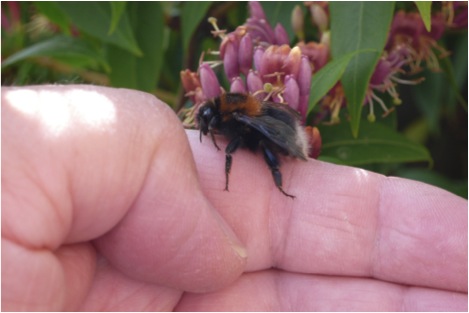
Ollerton, Jeff – Exceptional urban nest density of the Tree Bumblebee Bombus hypnorum during summer 2014

SHORT BREAK

Raine, Katherine – Chernobyl bumblebees: Understanding fitness consequences of living in the exclusion zone

Jackson, Laurie  – B-lines

Gammans, Nikki – An update on the progress of reintroducing the short-haired bumblebee, Bombus subterraneus 

CLOSE

The integration of alien plants in mutualistic plant–hummingbird networks – a new study by Maruyama et al. (2016)

The collaborations with researchers in Brazil and Denmark in which I’ve been involved in recent years, focused particularly on hummingbirds and networks of plant pollinator interactions, have been very productive, most recently seen in a study of the effects of hummingbird feeders on diversity and abundance of the birds.

This collaboration continues with a new study that has just been published in the journal Diversity and Distributions which deals with the way in which non-native plant species are exploited by assemblages of hummingbirds in the New World.  Here’s the abstract:


Aim:  To investigate the role of alien plants in mutualistic plant–hummingbird networks, assessing the importance of species traits, floral abundance and insularity on alien plant integration.

Location: Mainland and insular Americas.

Methods: We used species-level network indices to assess the role of alien plants in 21 quantitative plant–hummingbird networks where alien plants occur. We then evaluated whether plant traits, including previous adaptations to bird pollination, and insularity predict these network roles. Additionally, for a subset of networks for which floral abundance data were available, we tested whether this relates to network roles. Finally, we tested the association between hummingbird traits and the probability of interaction with alien plants across the networks.

Results: Within the 21 networks, we identified 32 alien plant species and 352 native plant species. On average, alien plant species attracted more hummingbird species (i.e. aliens had a higher degree) and had a higher proportion of interactions across their hummingbird visitors than native plants (i.e. aliens had a higher species strength). At the same time, an average alien plant was visited more exclusively by certain hummingbird species (i.e. had a higher level of complementary specialization). Large alien plants and those occurring on islands had more evenly distributed interactions, thereby acting as connectors. Other evaluated plant traits and floral abundance were unimportant predictors of network roles. Short-billed hummingbirds had higher probability of including alien plants in their interactions than long-billed species.

Main conclusions: Once incorporated into plant-hummingbird networks, alien plants appear strongly integrated and, thus, may have a large influence on network dynamics. Plant traits and floral abundance were generally poor predictors of how well alien species are integrated. Short-billed hummingbirds, often characterized as functionally generalized pollinators, facilitate the integration of alien plants. Our results show that plant–hummingbird networks are open for invasion.


The full reference is: Maruyama, P.K. et al. (2016) The integration of alien plants in mutualistic plant–hummingbird networks across the Americas: the importance of species traits and insularity.  Diversity and Distributions (in press).

Happy to send a PDF to anyone who would like one.

Emerging threats to the Białowieża Forest, one of Europe’s last remaining wilderness areas

From various news sources and personal contacts I’m hearing about some emerging threats to the Białowieża Forest, which at 216,200 ha (2,162 km2 or 835 square miles) is one of Europe’s largest and most ancient forested wilderness areas, and one of the few places where you’ll still see European bison (Bison bonasus)roaming free.

Despite its designation as a World Heritage Site, in recent months the Polish government has revealed plans to increase the amount of logging in the forest, ostensibly as a tree disease control measure.  However Polish scientists dispute this and claim that the real motivation is commercial – see the commentary and letters in this week’s Nature.  Here’s a quote from that article which provides some context to the concerns:

“[the] Białowieża management plan limits logging in the forest to 48,000 cubic metres of wood per year — enough to allow locals to gather firewood. But on 10 November, the local forest administration proposed an amendment that would allow large-scale logging in sections outside the central 17% of the forest that is a national park. They cited an outbreak of the bark beetle pest (Ips typographus) in Białowieża’s Norway spruce (Picea abies). In one forest district where logging is currently limited to 6,000 cubic metres per year, the allowable yearly volume would increase to 53,000 cubic metres”.


Interestingly, both Ips typographus and Picea abies are native to these forests and any large-scale outbreak would probably constitute a disturbance that is part of the natural dynamics of the forest. A recent piece on the National Geographic site by conservation biologist Stuart Pimm is worth quoting from in this regard:

“To…scientists studying biodiversity, the main value of the Białowieża Forest is accumulated in a massive occurrence of large and old trees, high amounts of dead-wood and natural dynamics of forest stands all being very unique to this area and supporting thousands of different specialised species ranging from birds and mammals using cavities or building nests in the canopy to lichens, fungi and microbes dependent on different stages of tree life and its decomposition.  It is not surprising that Białowieża Forest has been an invaluable reference area for scientists studying natural characteristics of European forests.” [my emphasis]


This is not the first time that concerns have been raised about the Białowieża Forest – here’s an article from the Guardian newspaper from 2011:  http://www.theguardian.com/world/2011/apr/06/poland-environmentalists-foresters-primeval-forest

Is it too much to hope that the Polish government takes notice and strengthens, not weakens, the protection of its natural heritage?  And allows natural processes to determine what happens in this woodland, rather than trying to manage every aspect of its ecology.

Pollinators, Pollination and Food Production: IPBES gains momentum

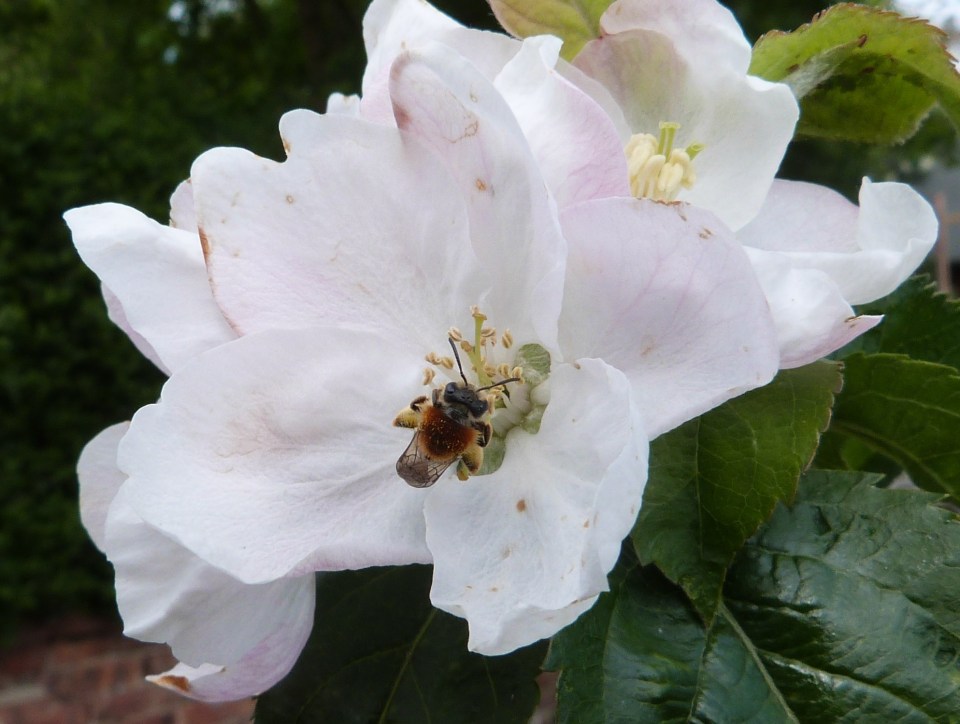
Bee on apple blossom - 1st May 2015

The over-arching themes of this blog have been about understanding biodiversity; the science behind its study; why it’s important; how it contributes to human well being, (including both intangible and economic benefits); and how policy informed by science can support the conservation of species and ecosystems.  These are all issues that have a global perspective beyond the bounds of my home country (the United Kingdom), or even my continent (Europe) because species, ecosystems and the threats to them do not respect political borders.

Enter IPBES – the Intergovernmental Science-Policy Platform on Biodiversity and Ecosystem Services (sometimes shortened to Intergovernmental Platform on Biodiversity and Ecosystem Services).

IPBES is a United Nations body established in 2012 that in many ways is a parallel entity to the IPCC ( Intergovernmental Panel on Climate Change), bringing together scientists, policy makers and stakeholders, with a mission:

to strengthen the science-policy interface for biodiversity and ecosystem services for the conservation and sustainable use of biodiversity, long-term human well-being and sustainable development

Which has got to be a good thing: science informing policy, what’s not to like?

The first output from IPBES will be a Thematic Assessment of Pollinators, Pollination and Food Production, and it’s just been discussed (today) at the 4th Plenary meeting of IPBES in Kuala Lumpur – here’s a link to the press release.

In the coming weeks I’ll talk more about IPBES and its Thematic Assessment (for which I acted as a reviewer), but for now I’ll just repeat some of the headline figures from the report:

  • 20,000 – Number of species of wild bees. There are also some species of butterflies, moths, wasps, beetles, birds, bats and other vertebrates that contribute to pollination.
  • 75% – Percentage of the world’s food crops that depend at least in part on pollination.
  • US$235 billion–US$577 billion – Annual value of global crops directly affected by pollinators.
  • 300% — Increase in volume of agricultural production dependent on animal pollination in the past 50 years.
  • Almost 90% — Percentage of wild flowering plants that depend to some extent on animal pollination*.
  • 1.6 million tonnes – Annual honey production from the western honeybee.
  • 16.5% — Percentage of vertebrate pollinators threatened with extinction globally.
  • +40% – Percentage of invertebrate pollinator species – particularly bees and butterflies – facing extinction.


*They are quoting a figure that I calculated, and very proud of it I am too 🙂

Rewilding reconsidered: academic disagreements, big science, and beavers.

P1110320Rewilding has been the topic of a couple of blog posts over the last few years  (for example here, in relation to the George Monbiot-narrated video about the wolves of Yellowstone Park; and also here, about the notion that perhaps we should also think about rewilding the human digestive ecosystem).

Since then there’s been a lot of activity with respect to rewilding, some of it practical and adding to the evidence base, some of it conceptual and controversial.  So I thought I’d do a quick round up of rewilding-related items I’d seen recently: feel free to suggest others.

In an open-access paper in Current Biology, entitled “Rewilding is the new Pandora’s box in conservation” David Nogués-Bravo and colleagues ask “what exactly is rewilding, and is it based on sound ecological understanding?”  Their conclusion is that “there is a worrying lack of consensus about what rewilding is and what it isn’t” and that “scientific support for the main ecological assumptions behind rewilding, such as top-down control of ecosystems, is limited”.  They go on to discuss the potential dangers of (re)introducing species into existing ecosystems, including both ecological and economic concerns.

Meanwhile Jens-Christian Svenning and colleagues have an open access paper in Proceedings of the National Academy of the USA about “Science for a wilder Anthropocene: Synthesis and future directions for trophic rewilding research” which takes a much more positive view of the potential benefits of rewilding, though still urges caution and further research, pointing out that “empirical research on trophic rewilding is still rare, fragmented, and geographically biased, with the literature dominated by essays and opinion pieces.”  Science writer John Carey provides some useful wider context to this discussion in a companion piece.

Subsequently Dustin and Daniel Rubenstein critiqued the Svenning et al. paper with an opinion piece called “From Pleistocene to trophic rewilding: A wolf in sheep’s clothing“, to which Svenning and colleagues replied: “Time to move on from ideological debates on rewilding“.

Svenning et al.‘s request for more empirical data on the effects of rewilding has been heeded this month by a study in Freshwater Biology from Alan Law and colleagues on “Habitat engineering by beaver benefits aquatic biodiversity and ecosystem processes in agricultural streams“.  Focusing on the recent reintroduction of beaver to Scotland, these researchers documented positive effects of the beaver on removal of inorganic nutrients from streams, and overall freshwater invertebrate diversity.

I find it really exciting that so much interesting debate and data are now being generated on the topic of rewilding: it’s fascinating and important science with a clear practical component that could leave the planet richer and in better condition for future generations.  It certainly deserves to be better funded, perhaps taking a slice of the “big science” pie from physics and astronomy, an argument that has been raised several times by Charley Krebs on his Ecological Rants blog.

As a researcher I don’t have a horse in this race (or even a Konick pony, such as are being used in a small-scale rewilding project at Wicken Fen). However I do wonder what a “rewilded” landscape would look like for pollinators in Britain, given that most of their diversity and abundance is associated with open grassland and heathland habitats, which were rare in these islands prior to human deforestation.  Having said that, a greater density of large mammalian herbivores can certainly open up woodland – see Bakker et al.‘s paper on “Combining paleo-data and modern exclosure experiments to assess the impact of megafauna extinctions on woody vegetation“.

As a teacher these discussions provide a lot of scope for interesting class exercises and seminars on the topic, which I’ll certainly be developing more next year.  Expect this to be an ongoing topic on the blog.


Pollinators and pollination – something for the weekend #9

The latest in an (ir)regular series of posts to biodiversity-related* items that have caught my attention during the past few weeks; this one’s focused on pollinators and pollination because there’s been so much emerging on this recently it’s been impossible to decide what to write more fully about!


Feel free to recommend links that have caught your eye.

*Disclaimer: may sometimes contain non-biodiversity-related items.

Tropical Zombies: Moles & Ollerton (2016) is now published

P1080615Back in March 2014 I reported about a guest blog that Angela Moles (University of New South Wales) and I had written for the Dynamic Ecology blog entitled “Are species interactions stronger and more specialized in the tropics?”  The post generated a lot of comments, not all of them supportive of what we were saying.  It also resulted in an invitation from the editor of the journal Biotropica to write up the post as a commentary.  This we did and duly submitted, it went through a couple of rounds of peer review, and has now finally been published.

The paper is currently open access on the Biotropica website as an early view item; here’s the reference hyperlinked to it:

Moles, A. & Ollerton, J. (2016) Is the notion that species interactions are stronger and more specialized in the tropics a zombie idea? Biotropica DOI: 10.1111/btp.12281 

Ecological intensification and pollinator diversity: a new study by Garibaldi et al. (2016)

2013-04-15 13.54.19-2Think of “farming” and those of us living in the more industrialised parts of the world usually envision large fields that are intensively worked using heavy machinery and regular inputs of fertilisers, pesticides and herbicides. But for 2 billion of the world’s farmers, agriculture takes place on smallholdings of less than 2 ha in size, with little money available for vehicles and chemicals.  Maximising food outputs in such systems can be difficult.

Now a new study by Lucas Garibaldi, Luisa Carvalheiro and colleagues entitled “Mutually beneficial pollinator diversity and crop yield outcomes in small and large farms” has demonstrated that these small-scale farmers can increase the yields from insect pollinated crops on their farms by allowing native vegetation to grow alongside the crops, which supports a greater diversity and abundance of pollinators that then spill over into the adjacent fields.

It’s a great study that delivers a message that large agro-chemical firms probably will not wish to hear: that yields can be enhanced without throwing ever more fertiliser or pesticides onto the crops.

The paper is paywalled so you’ll have to ask the authors for a copy unless you (or your institution) has an e-subscription to Science.  But here’s the original abstract:

Ecological intensification, or the improvement of crop yield through enhancement of biodiversity, may be a sustainable pathway toward greater food supplies. Such sustainable increases may be especially important for the 2 billion people reliant on small farms, many of which are undernourished, yet we know little about the efficacy of this approach. Using a coordinated protocol across regions and crops, we quantify to what degree enhancing pollinator density and richness can improve yields on 344 fields from 33 pollinator-dependent crop systems in small and large farms from Africa, Asia, and Latin America. For fields less than 2 hectares, we found that yield gaps could be closed by a median of 24% through higher flower-visitor density. For larger fields, such benefits only occurred at high flower-visitor richness. Worldwide, our study demonstrates that ecological intensification can create synchronous biodiversity and yield outcomes.


The challenge from this paper is two-fold.  First of all it’s how to operationalise this kind of research on the ground, to farmers and agronomists who are unlikely to be readers of the journal Science.  This is where organisations such as the UN’s FAO, country-level government agencies, and non-governmental organisations  have a crucial role to play, translating research into action.

The second challenge is likewise difficult – how do we bring “ecological intensification” into the industrialised agriculture of more developed nations?  I have no immediate answer to that, but research such as this shows what the potential benefits can be, for both agriculture and biodiversity.

The reference is:  Garibaldi, L.A. et al. (2016) Mutually beneficial pollinator diversity and crop yield outcomes in small and large farms.  Science 351: 388-391

Book review: A Veritable Eden – The Manchester Botanic Garden, a History by Ann Brooks (2011)

This is a book review that’s been in press for many months in the Manchester Region History Review, and I finally found out that it had appeared and I’d missed it!  Anyway I thought this would be a good opportunity to present the review to a wider audience who might be interested, and to correct a couple of typos in the printed version.

A Veritable Eden – The Manchester Botanic Garden, a History. Ann Brooks (2011). Windgather Press, Oxford. RRP – £25.

The plant kingdom globally contains an estimated diversity of 350,000 species. In the UK we can boast only some 1500 native species, a legacy of both our status as a collection of modestly sized, temperate zone islands, and the effect of the last ice age which scoured much of the land surface of its previously established flora. A depauperate flora, combined with plant envy of the botanical riches of other countries, may be one reason why British botanic gardens have been important in cataloguing and describing the world’s plant diversity, and in augmenting that flora by cramming our gardens with exotic specimens from overseas.

This long history of plant study and horticulture can be traced back to at least the mid 17th century, with the founding of what was to become Oxford Botanic Garden. Since that time, Britain’s botanic gardens have played a significant role in the economic development of both the country and its former Empire, and continue to be important in science and education, and in the leisure and recreation of the British people.

Previous work on the history of botanic gardens in Europe has tended to concentrate on the large metropolitan botanic gardens, particularly Kew, with their star botanists and international networks of contacts and collectors (e.g. Brockway 1979, Endersby 2010, Ollerton et al. 2012). The smaller provincial botanic gardens, in contrast, have been rather neglected by historians, despite the fact that almost every large British city possessed one, and that they have been an important part of local leisure and education. This is a tradition that stretches from the early 19th century and continues through to the more recent founding of the Eden Project and the National Botanic Garden of Wales.

The history and current utility of such spaces is, as their study reveals, a story that extends far beyond the horticultural and botanical realms, into social, political and economic history. In A Veritable Eden Ann Brooks introduces us to the “chequered history including national fame and financial disaster” of Manchester Botanic Garden, which existed from 1831 to 1908. This meticulously researched book explores not only the role of the Garden in local social life, but also the local political intrigues, personality clashes and mismanagement that ultimately doomed the garden. This is exemplified in the way that an un-Victorian attitude to financial prudence (commissioning ambitious building works when finances were in poor shape) collided with a very Victorian snobbery: by refusing to allow the paying general public entry to the Garden more than one afternoon a week, a funding stream that may have saved the Garden was effectively curtailed. To paraphrase the author, exclusivity was more important than income.

This was not the only policy that appears inexplicable to the modern reader. Early in its history the subscribing, largely middle class membership of the Garden made it clear that pleasurable perambulations around the site were all that they were interested in, and any pretence to education went when “in 1848 science was eliminated and the horticultural garden…was dismantled”. In this regard it was undoubtedly the people of Manchester, rather than botanical science per se, who were the principle losers, as the large botanic gardens of European capital cities dominated plant exploration and plant science up to the present day. Nonetheless the policy jars with Victorian notions of self-improvement.

A Veritable Eden originated as Dr Brooks’ PhD thesis and in general it is engagingly written, demonstrating the author’s fascination for her subject, and well illustrated with material from her personal collection and elsewhere. But there are some places where a firmer editorial hand would have made for a better book. It is clear that a few small sections have been replicated from the thesis out of context, for example a paragraph about the role of a “putter-out” on pp. 60-61. On p. 91, to give another example, we read that a Garden report concluded that “the Curator should be charged with ‘gross ignorance and mismanagement’ and that he should be replaced”; this is repeated, only three lines later, as “a charge of ‘gross ignorance and mismanagement’ should be brought against [the Curator]”. Finally, to anyone with a botanical, as opposed to historical, training the misspelling and misrendering of scientific names for some plants will jar, such as “Dickensonia” for Dicksonia and “Victoria Regia” for Victoria regia (itself an old synonym, the plant is now called Victoria amazonica).

Such editorial oversights detract only a little from the telling of the story of Manchester Botanic Garden and could easily be rectified if the book goes to a second edition. Which I hope it does; it’s a great contribution both to the local history of the city and to our understanding of the history of provincial botanic gardens.


References

Brockway, L.H. (1979) Science and Colonial Expansion: The Role of the British Royal Botanic Garden. Yale University Press.

Endersby, J. (2010) Imperial Nature: Joseph Hooker and the Practices of Victorian Science. University of Chicago Press.

Ollerton, J., Chancellor, G. & van Wyhe, J. (2012) John Tweedie and Charles Darwin in Buenos Aires. Notes and Records of the Royal Society 66: 115-124


Originally published as:  Ollerton, J. (2014) Book review of: “A Veritable Eden” by A. Brooks. Manchester Region History Review 25: 153-154



Tight But Loose – just what is “biodiversity”?

Fleet photo 1

Ever since I set up the Biodiversity Blog in 2012 I’ve had it in mind to write a post asking the question “Just what is “biodiversity”?”, but have never quite got round to it, there’s been too many other interesting and important things to write about on here!  This week over at the Dynamic Ecology blog Brian McGill has beaten me to it with a really interesting post entitled:  Biodiversity and pizza – an extended analogy leading to a call for a more multidimensional treatment of nature.

I’m not entirely sure that the pizza analogy works, it’s a little tortuous, but none the less the post is provocative and interesting, and has generated a lot of comments.  I strongly recommend it.

In the interests of recycling, and because the readership of my blog only overlaps partially with that of Dynamic Ecology, thought I’d restate a few things that I brought up in the comments to Brian’s post (but this certainly won’t substitute for going over and reading it yourself”.

One of the questions that Brian asks is:  “Is biodiversity a useful term or has it outlived its usefulness?”  It’ll come as no surprise to readers that I like the word “biodiversity”: I used it for the title of my blog and for my professorship, because it captures a lot about what I value in the natural world, and because it’s a term that I’ve (professionally speaking) grown up with. To my mind it is an umbrella term that can mean different things to different people; some see this as a disadvantage but I think that, as long as we qualify precisely what we are referring to, using “biodiversity” in a loose way is not a problem. Perhaps an appropriate analogy is with politics: if someone describes themselves as a “conservative” or a “socialist” or a “liberal”, those terms cover huge internal variation and political scope, but it’s not a problem because it broadly describes the beliefs of that individual.

As an instance of when “biodiversity” may not be a useful concept for nature conservation, Brian gives an example of salt marsh, often areas with rather low species diversity, as being of low priority for conservation because they are poor in “biodiversity”.  But this ignores the fact that all of the “official” definitions of biodiversity explicitly include diversity of habitats/communities/ecosystems/biomes in a defined geographical area.  For example the United Nations Convention on Biological Diversity defines it as:

“the variability among living organisms from all sources including, inter alia, terrestrial, marine and other aquatic ecosystems and the ecological complexes of which they are part; this includes diversity within species, between species and of ecosystems.” [my emphasis]

Thus destroying an area of salt marsh may indeed result in few species being lost, but it would be a significant loss of biodiversity at that higher level of community/ecosystem, if a region has only salt marsh, woodland and grassland in it: in essence you’ve lost one third of your biodiversity because you’ve lost one third of your habitats.

Something that’s occurred to me over the last couple of days of reading comments and thinking about the questions that Brian posed is that “nature” and “biodiversity” are not actually synonymous at all. When people say they like “being in nature” or they “value contact with nature”, what they are usually saying is that they enjoy landscapes, seascapes, changes in the weather, being out of doors, etc., things which are not strictly part of what we understand as “biodiversity”.

Likewise, “protecting the environment” includes a whole set of non-biodiversity related questions and actions such as air and water quality, wastes management, sustainable use of resources, etc., much of which may not directly affect biodiversity at all.

“Biodiversity” has a specific meaning, as the definition above shows, even though that meaning can be broadly defined. Which sounds like a contradiction, but it’s not – and brought to mind the title of the Led Zeppelin fanzine: “Tight But Loose”*.  Biodiversity as a concept and as a field of research and action involves so many different types of stakeholder (ecologist, botanist, zoologist, artist, conservationist, activist) that (as I said) it provides a useful (loose) umbrella.  Problems only occur when people use different tight definitions and talk past one another.

The other aspect to Brian’s post is around the pros and cons of valuing ecosystem services, which is a much bigger argument in some ways, and I’m going to point readers to two blog posts, one recently from Steve Heard which I think is a very nice, concrete example that captures a lot of the uncertainties that Brian describes:

https://scientistseessquirrel.wordpress.com/2015/08/04/invasions-beauty-and-ecosystem-services-a-conundrum/

The second is one of mine from last July related to the value of valuing nature, which was prompted by the Costanza et al. update paper:

https://jeffollerton.wordpress.com/2014/07/27/how-do-we-value-nature/

These are fascinating discussions that will run and run, I have no doubt.


*I’m fond of bringing musical examples into these blog posts 🙂