Category Archives: Biodiversity

A “weed” that you should be eating and an introduction to our new garden

It’s been a rather nomadic couple of years. After Karin and I sold our house in Northampton, we travelled around in the UK and then in Denmark, renting places as we needed them, plus we spent a month in Kenya. We’ve now become more settled in Sjælland and, after some deliberation about whether to buy a house or continue renting, we’ve reached a compromise and bought into an andelsbolig, one of the many Danish cooperative housing schemes – see this article in The Guardian for more details.

The development of twenty-eight small properties has been newly built to the highest standards of insulation and is plugged into the district heating system which uses a combination of solar warming and gas (in part using methane generated from food waste).

It’s nice to have a garden again. I hadn’t realised how much I’d missed having a space in which to plant and potter. All gardens present challenges, of course, and this one is no exception. Until about 600 years ago the area was under the shallow Kattegat sea. It’s now above sea level due to post-glacial rebound and in fact this whole region of Odsherred is a UNESCO Global Geopark because of the postglacial landscape.

What this means for us is that we are gardening on “soil” which has a very high sand content and is filled with stones, large and small.

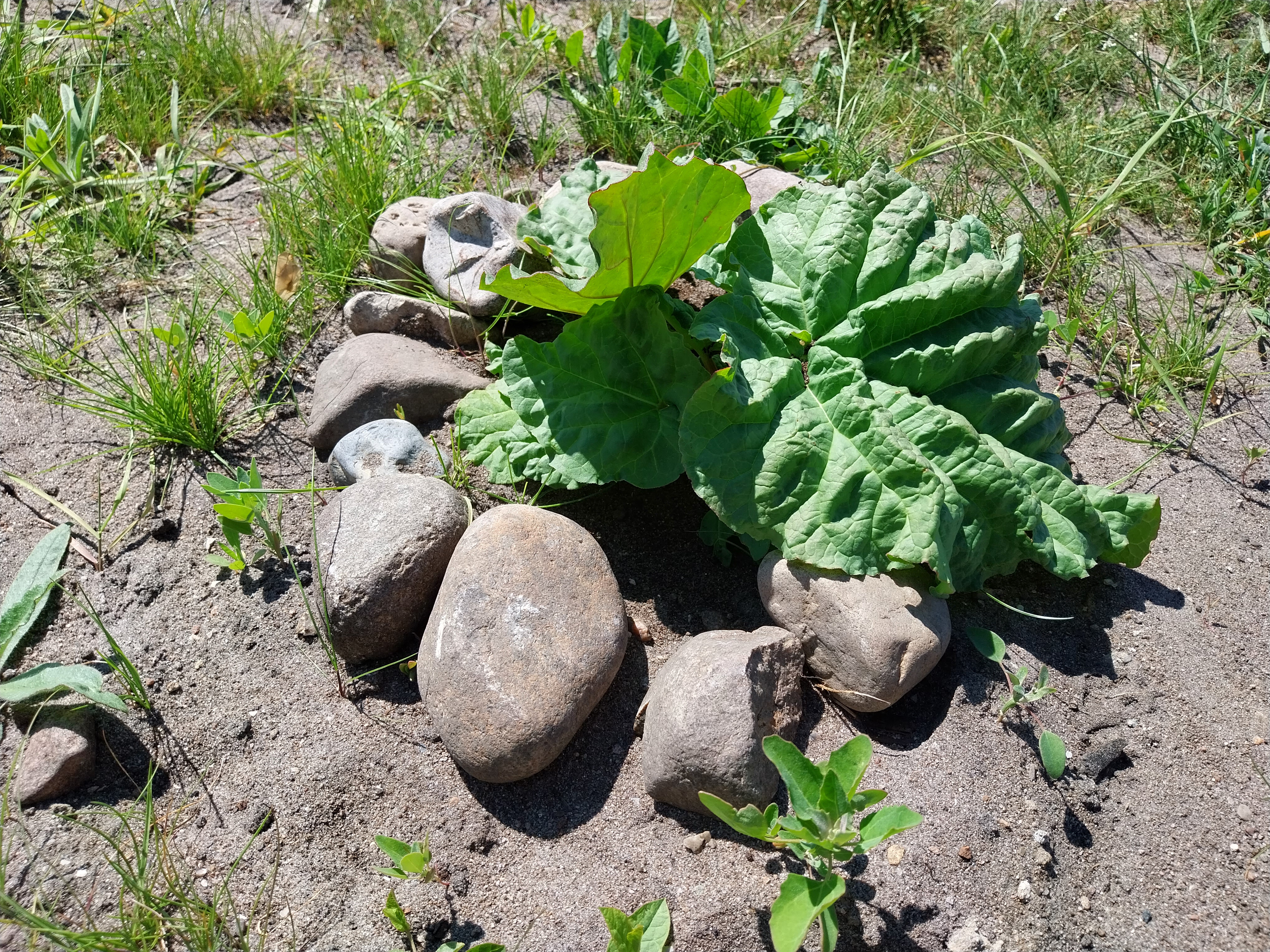
Added to that, we’re in one of the driest parts of Denmark (certainly this year) and a persistent coastal wind rapidly strips the moisture from the soil. So as we dig up or find large stones we are using them around plants to retain water and mulching with the smaller stones that we find in abundance. As yet we don’t have any rain water butts so we’re using the kitchen water from washing up to supplement the hosepipe.

It’s not easy gardening here, but we like a challenge and we’re calling in favours from friends and family to provide us with cuttings and divisions of plants from their own gardens, which should mean that they are better adapted to the local conditions than most of the shop-bought plants. We’ve also started a small vegetable and fruit patch and planted apples and pears around a paved patio that over time we will train as self-supporting espaliers.

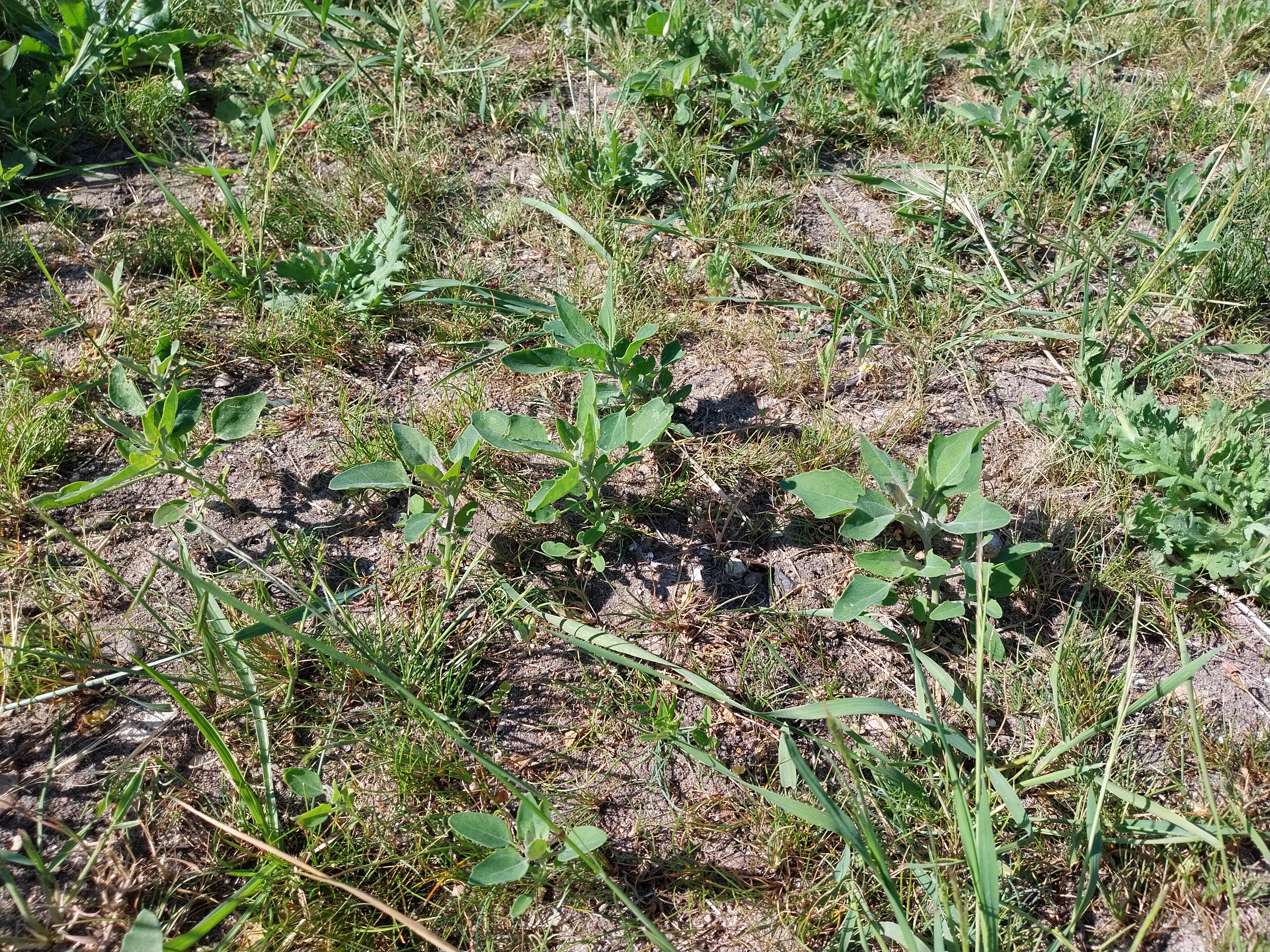
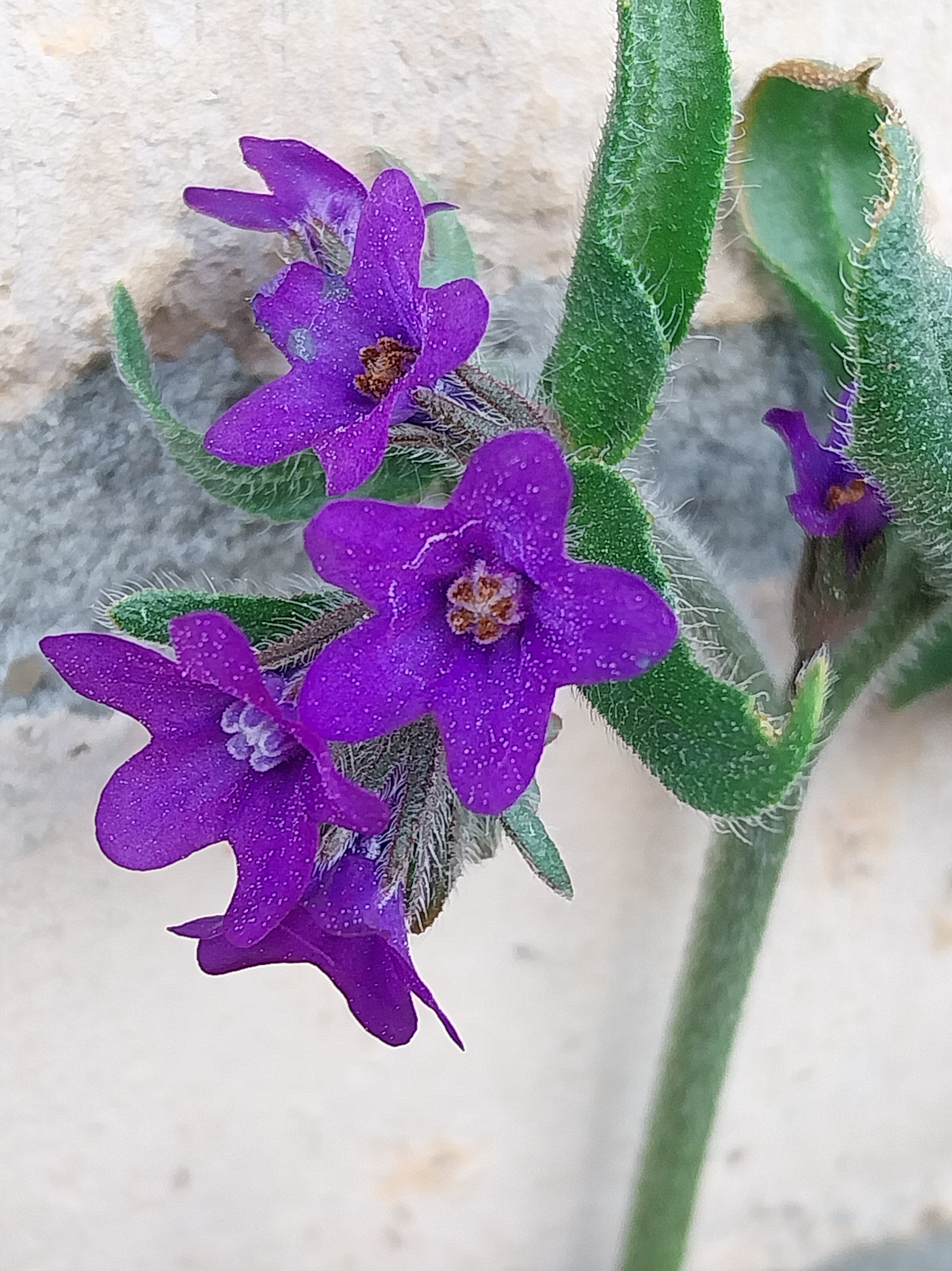
Gradually we’ll fill up the space and move things around as needed. But for now I’m also interested in seeing what plants come up spontaneously, especially the annual species that are benefitting from the disturbance. I don’t use the term “weed” to refer to these: weeds are just plants in the wrong place at the wrong time. Many such plants are ecologically important, especially as nectar and pollen sources for bees and other insects. This includes Common Bugloss (Anchusa officinalis) with its richly purple, velvet-textured flowers.

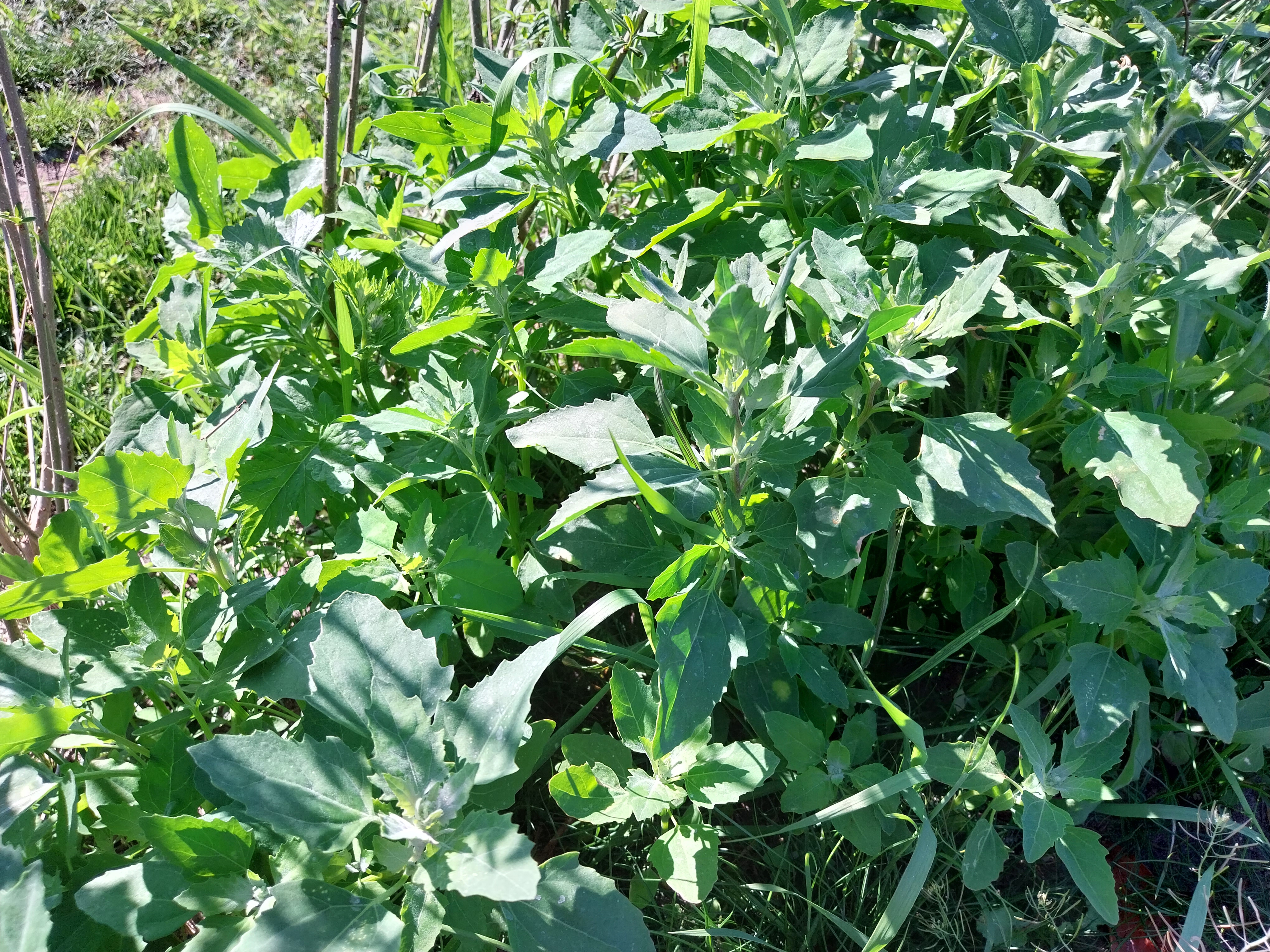
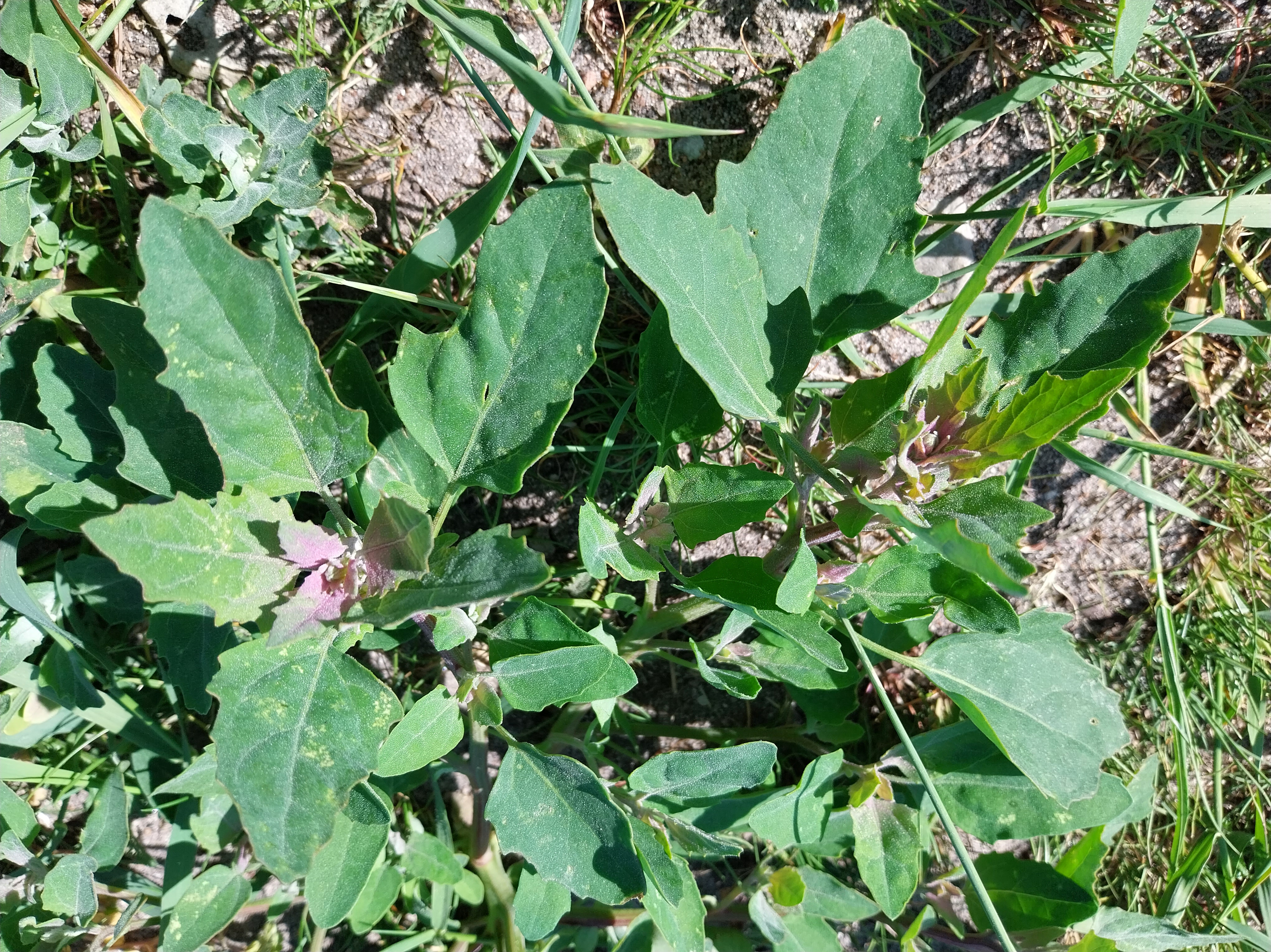
Another plant that we are tolerating is a fast-growing relative of spinach that’s variously called Goosefoot or Fat Hen (Chenopodium album). I’d long known that it was edible (it’s grown as a crop in parts of Asia) but until last night I’d not cooked with it.

In fact it’s delicious! I threw some roughly chopped leaves and stems into a mushroom omelette and I have to say that it was better than any commercial spinach I’ve bought or grown. In particular, the texture is much nicer as the leaves are very water-repellant which mean that they don’t absorb as much moisture during cooking. Highly recommended as an alternative to spinach but make sure you correctly identify the plant before you try it – there’s some good advice on this website: https://www.wildfooduk.com/edible-wild-plants/fat-hen/.

As well as Fat Hen we also have the close relative Tree Spinach (Chenopodium giganteum), with it’s beautiful magenta-tinged leaves, coming up in the garden. I’m looking forward to trying that too:

I’ll try to post more as the garden progresses, if I have time. But as I mentioned yesterday, even though the manuscript is complete and submitted to the publisher, there’s still lots to do on my next book! Have a good weekend.

That’s a wrap! The manuscript of my next book is with the publisher

Yesterday I sent the manuscript of my next book Birds & Flowers: An Intimate 50 Million Year Relationship to my publisher, Pelagic. I’d promised the full draft by the end of May, and I did it!

But just as when a movie director says “That’s a wrap” at the end of the final day of filming, the hard work does not stop here. Two people have read the full manuscript as I was producing chapters and their suggestions have been incorporated into this draft. The publisher will now send it to a third, independent beta reader and once their feedback has been acted on it will go to a copy editor who will suggest stylistic changes, check for logic and consistency, and so forth.

At the same time I will be choosing which plates to put in the book, which images to use on the back cover, writing their descriptions and deciding where to cite them; checking the sources and further reading sections for each chapter and formatting the references; and producing an appendix that lists the scientific names against the vernacular names that I am using in the book. I also need to finalise the acknowledgements section.

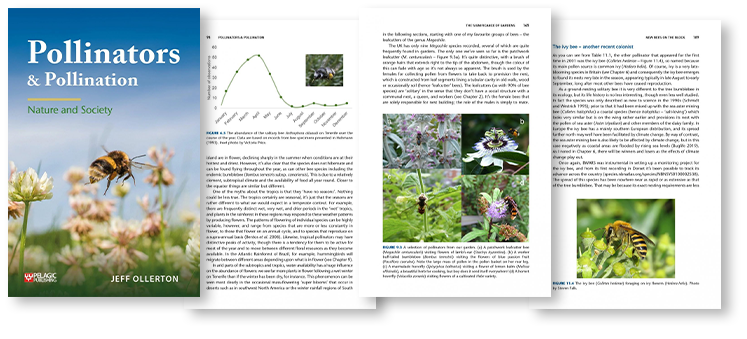
Once all of that is done, the publisher will type set the book and send me the proofs to check. At the same time as I’m checking those I will construct the index, a process which worked well for my last two books, Pollinators & Pollination: Nature and Society (also for Pelagic) and Plant-Pollinator Interactions: From Specialization to Generalization (which I co-edited with Nick Waser for the University of Chicago Press).

As an author, producing a book is a long process that doesn’t end with the actual writing of the manuscript. It’s incredibly satisfying, however, and working with Pelagic on my second book for them has been a great experience. All being well, Birds & Flowers should be out by early winter.

Now, I have three options for the next book that I’m writing….which one to choose…?

Book review: Everything you hadn’t realised you need to know about houseplants

When I was growing up, my dad took out a subscription to the Reader’s Digest book club. One of the books he bought was called Success With Houseplants, which first appeared in 1979. I still have it and I think that it’s one of the best volumes on this topic that’s ever appeared in print. Over the years I’ve often dipped into its pages and it provided my first introduction to exotic plant families that I would later see in the wild, including Gesneriaceae, Commelinaceae, and of course my beloved Apocynaceae.

Dad loved propagating and the windowsills of our small house were cluttered with jars of water-rooted cuttings and trays of sown seed. Growing houseplants is still a passion for me though now that it’s become a social media craze it’s hard to keep up with the latest trends in plants for the home.

Enter Jane Perrone, whose writing and podcasting has opened up the world of houseplants to a wider audience and helps us navigate this sometimes confusing and faddish world with humour and sensible advice. Jane has now published a book called Legends of the Leaf: Unearthing the secrets to help your plants thrive. and I’ve had the mixed pleasure of reading it over the last few days. “Mixed” not because there’s anything wrong with the book (far from it) but because Karin and I have COVID and we’ve been laid low for the past five days and counting. The silver lining is that it’s forced me to get on with the ever-mounting to-read pile, in between scratching away at the last few chapters of my next book.

In Legends of the Leaf, Jane has taken 25 iconic house plants, and provided us with a potted (sorry) account not only of their growing requirements, but also of their origin, ecology, history in cultivation, and some fascinating cultural and sociological context. I learned a lot from this book and it elevates the plants with which we share our homes from being simply decorative to become co-habitants with rich and fascinating stories to tell us. The author also has an imaginative line in metaphors, for example likening the flowers of hearts-on-a-string (Ceropegia woodii) to miniature turkey basters, or the dried seed capsules of living stones (Lithops spp.) to a Trivial Pursuit game counter.

A huge amount of research has gone into this book and Jane does not shy away from telling us about some of the darker aspects of houseplant history including colonial attitudes, treatment of enslaved peoples, and misogynous attitudes. It all makes for an absorbing read and I guarantee that you’ll never look at your leopard lily (Dieffenbachia seguine) the same way again.

Full disclosure: I advised on the section about Ceropegia woodii which earned me a mention, which seems fitting: seeing the account of this species in Success With Houseplants was what started me on a quest to understand the pollination biology of Ceropegia.

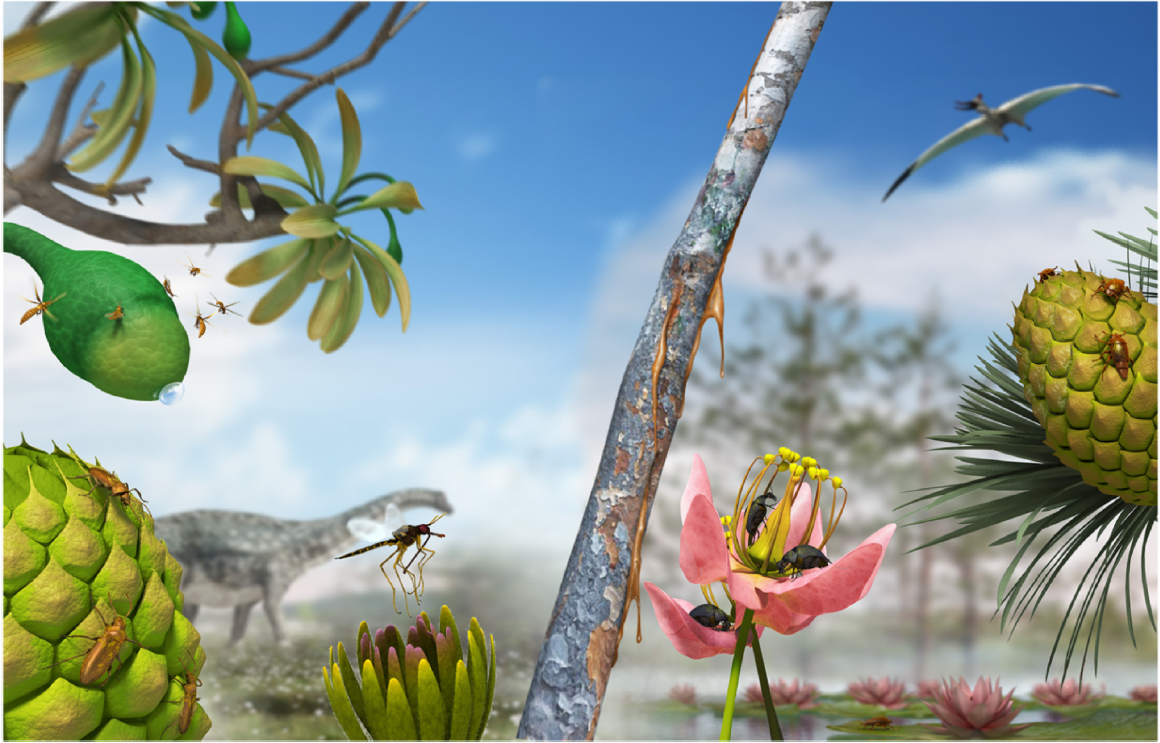
Insect pollination in deep time – a new review just published

As a teenager one of my main interests was collecting fossils. In search of specimens I wandered for hours, scouring the Carboniferous coal shale heaps and Permian reef outcrops of my native Sunderland. I spent so much time bothering the geology curator at the local museum with my inquiries that he offered to host me for a year as the placement part of my college course. If I had been able to convince my tutors that paleontology was really just biology in deep time I may have ended up as a professional fossil researcher. But it was not to be and instead I spent a (mostly happy) year working in the microbiology laboratory of a local brewery.

My interest in the ecology of the past has never left me, and over the years I’ve contributed a few articles to journals commenting on the latest fossil findings as they relate to pollination and flowering plant evolution. So I was delighted to be asked by Spanish paleontologist David Peris to help with a new review of insect pollination in deep time, led by PhD candidate Constanza Peña-Kairath. That review has just been published in Trends in Ecology & Evolution, and for the next 50 days it’s available for free download by following the link in the reference:

Peña-Kairath, C., Delclòs, X., Álvarez-Parra, S., Peñalver, E., Engel, M.S., Ollerton, J. & Peris, D. (2023) Insect pollination in deep time. Trends in Ecology & Evolution (in press)

Here’s the abstract:

Inferring insect pollination from compression fossils and amber inclusions is difficult because of a lack of consensus on defining an insect pollinator and the challenge of recognizing this ecological relationship in deep time. We propose a conceptual definition for such insects and an operational classification into pollinator or presumed pollinator. Using this approach, we identified 15 insect families that include fossil pollinators and show that pollination relationships have existed since at least the Upper Jurassic (~163 Ma). Insects prior to this can only be classified as presumed pollinators. This gives a more nuanced insight into the origin and evolution of an ecological relationship that is vital to the establishment, composition and conservation of modern terrestrial ecosystems.

Pesticides and pollinators: please sign this petition!

As part of our roles as ambassadors of the new conservation organisation Restore (more of which later this year), several of us including Dave Goulson, George McGavin, and myself, are promoting this online petition to get the government to take the issue of neonicotinoid pesticides seriously. Here’s some text from Dave explaining the situation with a link to a petition that you can sign:

“For three years in a row our government has granted farmers special permission to use banned neonicotinoid pesticides on sugar beet. This is contrary to the expert advice of their own Expert Committee on Pesticides, who specifically recommended that permission should not be granted.  It also flies in the face of a huge body of scientific evidence showing that these chemicals are phenomenally toxic to all insect life, and that their use on any crop contaminates soils, hedgerow plants, and nearby streams and ponds for years to come. We are in a crisis, with insect populations in freefall. It is about time our government woke up to this, and acted accordingly. This petition https://petition.parliament.uk/petitions/631948 is a necessary means of holding the government to account. Please sign and share, as signing will ensure the issue is debated in Parliament.”

This petition now has more than 15,000 signatures which ensures that it gets a response from the Government. If it reaches 100,000 mark, it will trigger a debate in Parliament. Please sign and promote this important initiative! 

Announcing my new book: “Birds & Flowers: An Intimate 50 Million Year Relationship”

For the past year I’ve been keeping a secret from all but a few trusted confidantes: the subject and title of my next book! My publisher – Pelagic – has now announced it on their website and so it’s time to make it public. “Birds & Flowers: An Intimate 50 Million Year Relationship” will be the first book that covers bird pollination in its entirety, going beyond just hummingbirds, sunbirds and honeyeaters, to consider the more than 60 other bird families that interact with flowers, and the tens of thousands of plants that rely on them as pollinators. You can read more about it on Pelagic’s website.

The 3D mock-up of the cover shown above features an illustration by my good friend Stephen Valentine, a very talented artist who you may remember produced this painting of waxwings that Karin bought for my birthday a few years ago. I’m extremely pleased with how Pelagic have incorporated this into the design of the cover.

The book will be available by autumn I hope, if my writing schedule goes to plan!

Pollinators and the UN Sustainable Development Goals – free webinar on Monday!

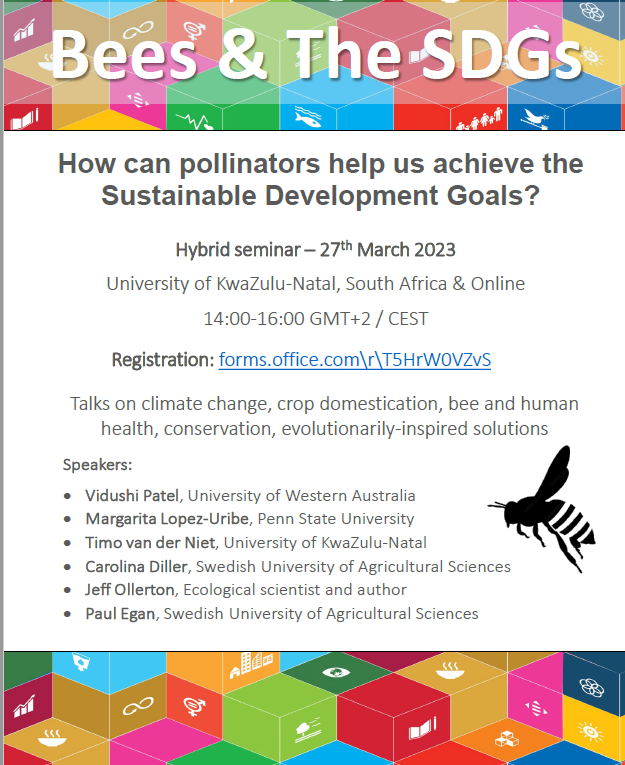
There’s been a lot of discussion recently about how pollinators can contribute to the United Nations’ 17 Sustainable Development Goals. It’s a topic that I reflected on in Pollinators & Pollination: Nature and Society, and I’ve seen a few papers and articles that raise the subject – see here for instance. This free webinar on Monday 27th March is therefore very timely! To register, follow this link: forms.office.com\r\T5HrW0VZvS

Although I’m one of the speakers, I can’t make it in person as I’ve got teaching commitments at Roskilde University, so I’ve recorded my ten minute piece and I’m happy to answer questions via the Contact page on my website.

Join me tomorrow evening for an online talk about pollinators in the UK!

It’s been a couple of years since I last did a talk or workshop for the Wildlife Trust for Bedfordshire, Cambridgeshire & Northamptonshire. But I’m pleased to say that they’ve invited me back and you can join me tomorrow evening for an online introductory talk about pollinators and pollination in the UK.

The talk starts at 7pm UK time and full details of how to sign up are in the link below:

https://www.wildlifebcn.org/events/2023-02-22-online-pollinators-and-pollination-professor-jeff-ollerton

I look forward to seeing some of you there!

Celebrating successes in the Chequered Skipper Reintroduction Project

It’s been quite a while since I posted about the Chequered Skipper Reintroduction Project – see my earlier posts here and here. But my involvement has continued, albeit geographically removed from Northamptonshire, and I thought I’d give a brief update with two good news stories.

The headline story is, of course, the success of the project. Since its reintroduction in summer 2018, the Chequered Skipper population has thrived and grown and is now the first self-sustaining population in England since it went extinct there in 1976. Not only that, but the management within Rockingham Forest that was designed to improve the habitat for this butterfly has also benefitted a range of other species, including plants, insects and birds.

How do we know this? Well, the situation on the ground is being intensively monitored by the project team and the passionate volunteers who are helping to count butterflies and other species every year. The data collected from these activities has fed into Jamie Wildman’s PhD thesis where he’s collated and analysed the results. And that’s the second item of good news: yesterday Jamie successfully defended his PhD thesis and was awarded a pass with very minor corrections!

I’m actually not surprised because it’s a great thesis with some fascinating results that not only document this reintroduction but also rewrite the history of the decline and extinction of the English populations of Chequered Skipper. The first paper from that is out – see this post – and there’s more to follow shortly.

Once again, huge congratulations to Jamie and thanks to the project team and the other supervisors for their hard work. Here’s my favourite photo of Jamie, second from the left and just starting out on his PhD journey back in 2018.

Soybean is more dependent on bee pollination in the tropics – a new study just published

It’s been an interesting start to the year in the world of pollinators and pollination. The European Union has revised its 2018 initiative for pollinator conservation with an update called “A New Deal for Pollinators“. At the same time the UK Government has released its plans for Post-Brexit farm subsidies, many of which focus on environmental action that can support pollinators, such as planting hedgerows. I think that it’s fair to say that there’s been a mixed response to these planned subsidies. There’s also mixed news in Butterfly Conservation’s State of the UK’s Butterflies 2022 report. The headline figure is that 80% of butterflies in the UK have decreased since the 1970s. However there are enough positive conservation stories in that report to demonstrate that this decline does not have to be irreversible, we can turn things around.

Against this wider backdrop of pollinator actions, I was pleased to have a new research paper published this week, which is an output from the SURPASS2 project with which I’ve been involved. Led by Brazilian researcher Nicolay Leme da Cunha, this paper assess the variability of soybean dependence on pollinators. Although soybean is one of the most widely grown crops globally, there’s still much that we don’t understand about which of the many different varieties have improved yields when visited by bees, and which are purely self-pollinating. One of our main findings was that for some varieties, especially in the tropics, an absence of pollinators results in a decline in yield of about 50%.

The paper is open access and you can download a copy by following the link in the reference:

da Cunha, N.L, Chacoff, N.P., Sáez, A., Schmucki, R., Galetto, L., Devoto, M., Carrasco, J., Mazzei, M.P., Castillo, S.E., Palacios, T.P., Vesprini, J.L., Agostini, K., Saraiva, A.M., Woodcock, B.A., Ollerton, J. & Aizen, M.A. (2023) Soybean dependence on biotic pollination decreases with latitude. Agriculture, Ecosystems & Environment 347, 108376

Here’s the abstract:

Identifying large-scale patterns of variation in pollinator dependence (PD) in crops is important from both basic and applied perspectives. Evidence from wild plants indicates that this variation can be structured latitudinally. Individuals from populations at high latitudes may be more selfed and less dependent on pollinators due to higher environmental instability and overall lower temperatures, environmental conditions that may affect pollinator availability. However, whether this pattern is similarly present in crops remains unknown. Soybean (Glycine max), one of the most important crops globally, is partially self-pollinated and autogamous, exhibiting large variation in the extent of PD (from a 0 to ∼50% decrease in yield in the absence of animal pollination). We examined latitudinal variation in soybean’s PD using data from 28 independent studies distributed along a wide latitudinal gradient (4–43 degrees). We estimated PD by comparing yields between open-pollinated and pollinator-excluded plants. In the absence of pollinators, soybean yield was found to decrease by an average of ∼30%. However, PD decreases abruptly at high latitudes, suggesting a relative increase in autogamous seed production. Pollinator supplementation does not seem to increase seed production at any latitude. We propose that latitudinal variation in PD in soybean may be driven by temperature and photoperiod affecting the expression of cleistogamy and androsterility. Therefore, an adaptive mating response to an unpredictable pollinator environment apparently common in wild plants can also be imprinted in highly domesticated and genetically-modified crops